This room’s got a history and a new future. You can feel both pretty quick.
Le Coq is, technically, a Parisian steakhouse—the grand final creation from one of San Diego’s most notable restaurant groups, Puffer Malarkey.
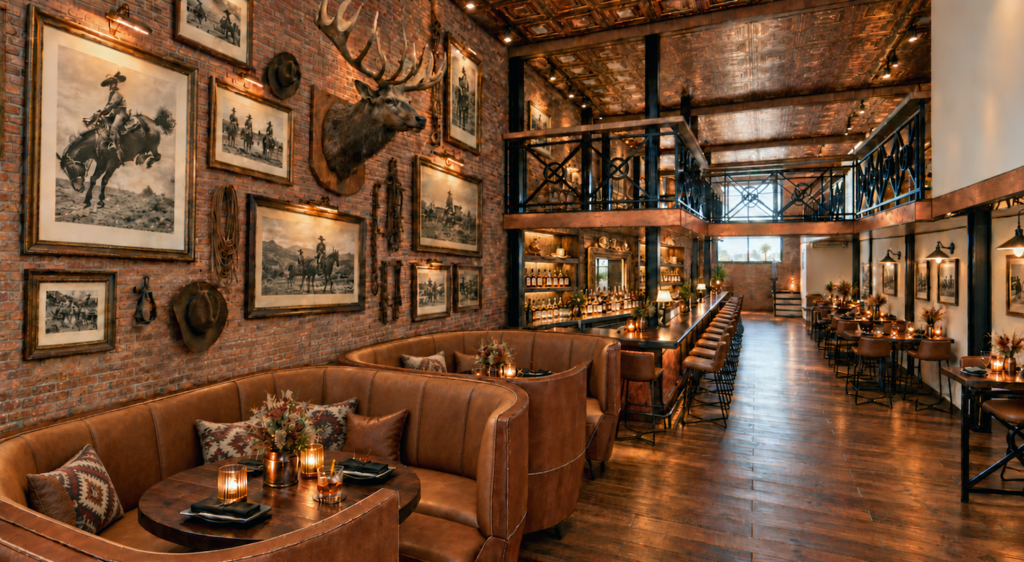
Enter by the fireplace—shaped like a white-hot flame or a tall wisp of smoke. The roof is retractable, letting in that famed La Jolla ocean air. Lit candles line the marble bar, the light doing Liberace dazzle on crystal bottles. In the dining room, ’60s and ’70s clippings from French magazines add the right kind of libido to the walls. Chairs are velveteen cheetah print. And, of course, there are chandeliers. You can’t Parise without chandeliers. Below, some light jungle foliage and plush booths that are good for both secrets and the kind of good times that have no interest in volume control.
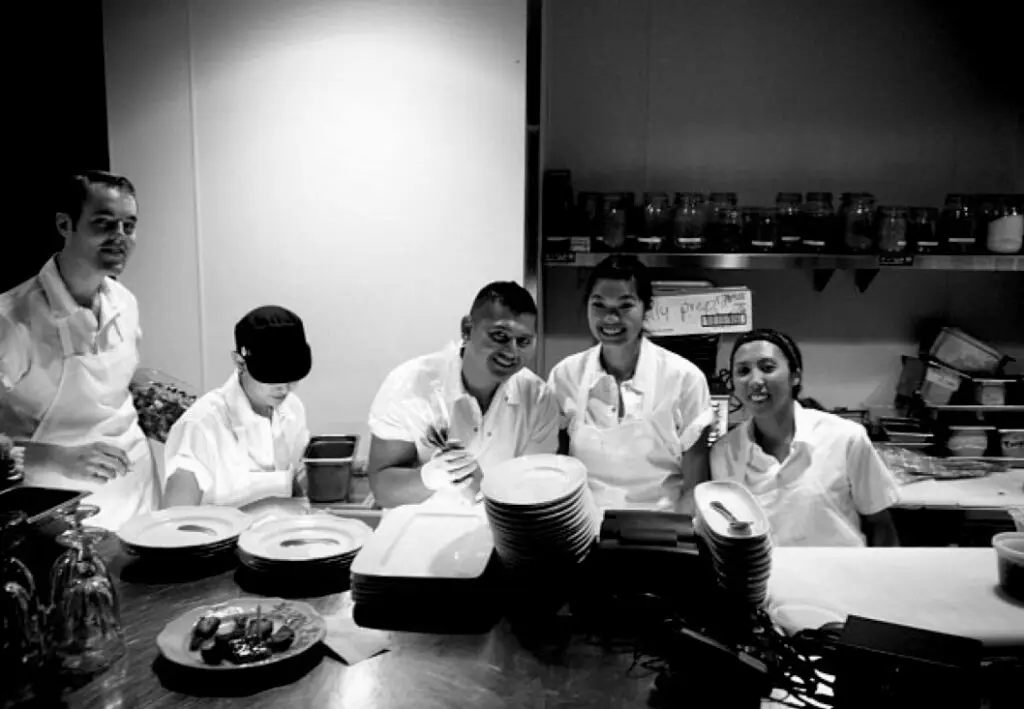
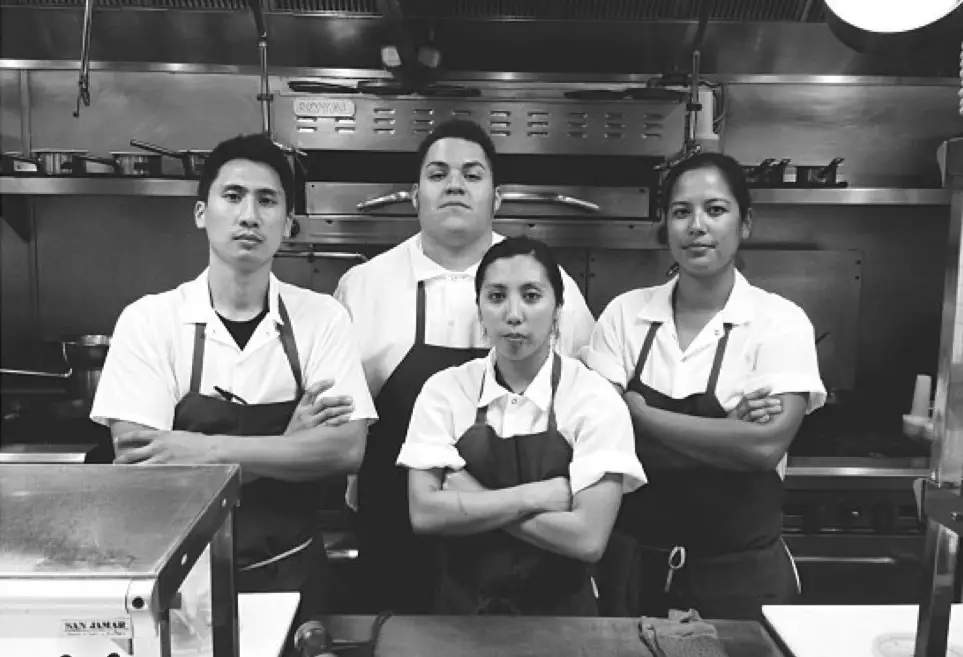
Mood is a specialty—it has been of every place Chris Puffer and chef Brian Malarkey have created since they landed Herb & Wood in San Diego in 2013. Le Coq’s mood is the je nais se qua of Paris after dark, where it feels right to lean a little closer to your date or whomever’s game. In the kitchen is James Beard finalist Tara Monsod, who cut her teeth in this 1930s building (a former Oldsmobile dealership) back when it was Herringbone—where a young Puffer and Malarkey were starting to make their dent in the local restaurant world.
After her Herringbone shifts, a younger Monsod would grab a pizza to-go, meet her partner outside, and amble over to the cove. “Working long hours, we fit in date night whenever we could,” she remembers.
Now she’s got national acclaim, has spent years earning that acclaim, and as such, she runs Le Coq as an elaborate show where you can have a very significant night out. But she wanted to create a little side world here—an approachable, date-friendly menu for people like her young cook self.
The result is Le Coq’s new three-course Date Night menu, designed for two, just in time for cozy season. A James Beard–caliber dinner at an un-Beardy, local-bistro price: $98 all-in.
“Everyone deserves to dine this way,” she says. “We recognize this is a special occasion establishment, and we are here to make your night feel special.”
The menu is a classic steak dinner, tweaked with nods to Monsod’s own culture and life as a cook. She grew up in LA eating her family’s Filipino food, while also sampling the city’s massive restaurant culture—from hole-in-the-wall to corner stall to fine dining, tacos to noodles to Jewish food on Sundays. That culture- and flavor-hopping has been one of her calling cards.
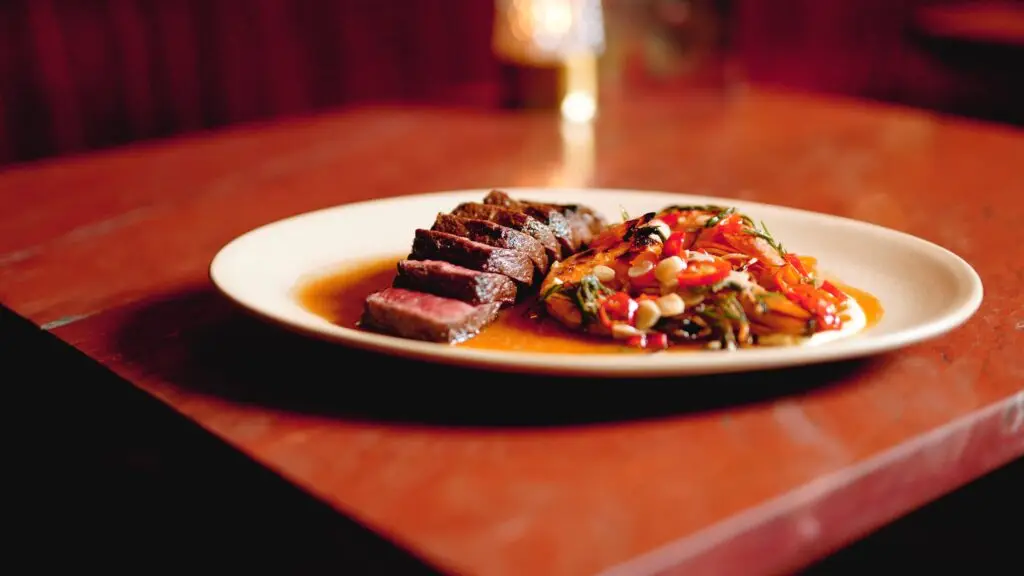
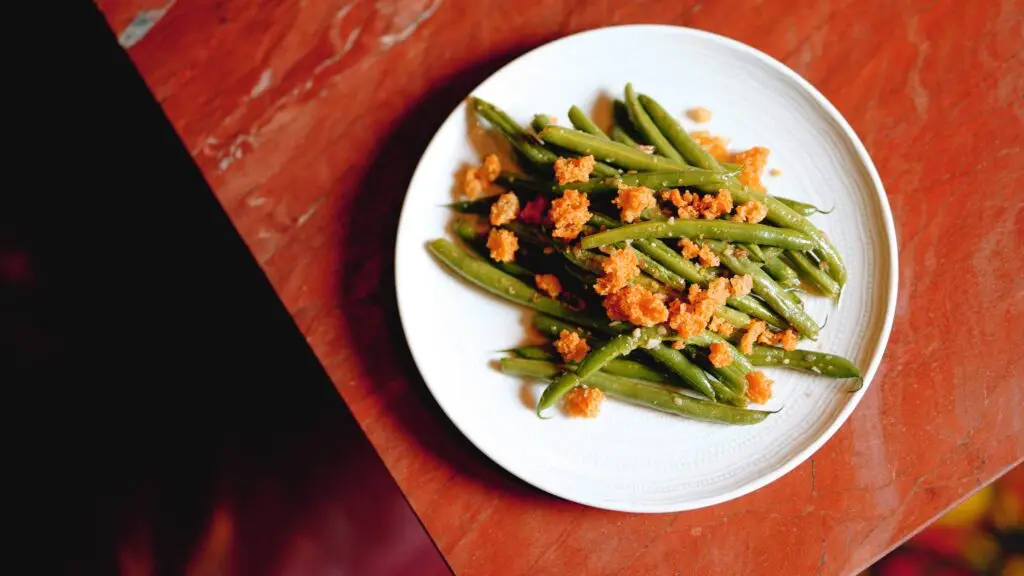
First course of Date Night is salmon rillette, a spread served with house-baked, pull-apart bing bread (Chinese flatbread) that’s brought to your table oven-warm so the rillette melts into it. Then surf and turf—an expertly sliced Denver cut of Snake River Farms Wagyu next to flambéed giant prawns with hand-whisked aioli and sprinkled with sea grass and chiles. Naturally, there’s pomme purée and haricots verts on the side, and “a lot of frickin’ butter,” Monsod adds.
Those Asian touches that she’s known for at Animae (which earned her two James Beard nominations) also take stage at Le Coq: Over flames in the kitchen, Monsod glazes the prawns with juice from yuzu—the tart, aromatic East Asian fruit that adds an pretty electric, not-usual citrus note. And the bing (which you don’t see on many menus) is a layered, fluffy wheat-flour round of Chinese flatbread.
Charged with pairing drinks, Lucien Conner—long one of San Diego’s best bar minds, now Puffer Malarkey director of opps—recommends the martini à la Le Coq. It has to be one of the few martinis on the planet to be made with créme fraîche, plus basil and hazelnut to add warmth to the traditional blanc vermouth. For the steak, he’ll bring out the Italian Barbera. Prawns get a Chateaux Roquefort sauvignon blanc.
Dessert comes with a surprise finale (we won’t give it away, but a hint: It’s a nightly indulgence Parisians expect in any self-respecting French steakhouse). Then a little French chocolate mousse jazzed up with cocoa bitters, scooped into a quenelle (a petite, sophisticated food football) by chef de cuisine Derek Feldman. It’s topped with créme fraîche, housemade fish sauce caramel, and candy cacao nibs, then drizzled with tangerine agrumato Two spoons.
As for the experience, Le Coq is a two-part production. Start with the mellow, intimate dinner with those candles and French mag clippings and dangling crystal. Then stay for the after-hours DJ (check Instagram for artists and dates), move your ass a little, hit the bar. “The night starts off romantic and intimate, then transitions to a fun DJ,” Monsod says. “You can get fancy and then take it as far as you want to go.”
For Monsod, the Date Night menu is both a core memory and a way she can bring more people to her table.
“Almost 15 years later, I’m back in this refreshed space, in the same building, keeping that memory going,” she says. “Dining out is a privilege. We respect that our guests are choosing to spend money to come here, so we work hard to show everyone hospitality.”
Today’s seniors are more connected than ever, with a renewed focus on retirement as a time of discovery and enriching experiences. The ultimate reward for a retirement well-earned is the wisdom to appreciate it all, and what better place to enjoy that unique perspective than Vi at La Jolla Village, in the heart of San Diego.
All-access pass to good living.
As a Continuing Care Retirement Community (CCRC), Vi provides access to a connected and fulfilling community while making it easy to plan for future care, should the need ever arise. With a care plan in place, residents enjoy greater financial predictability and long-term value, freeing them to focus on making the most out of retirement.
Resort-style amenities at the epicenter of a cultural hub like San Diego offer a retirement experience unlike any other. Paired with exceptional dining, spacious accommodations and dedicated staff, the best of maintenance-free living is all around. And with the introduction of Vista 360 Well-Being, Vi’s panoramic approach to wellness, there are more ways than ever for residents to access it all.
The harmony of mind, body and community.
Courtesy of Vi at La Jolla Village
The key to longevity is striking the right balance in maintaining an active lifestyle with an active mind in a fulfilling community. With newly renovated community spaces and restaurants, Vista brings a variety of opportunities for residents to elevate their well-being through Vi-exclusive “Signature Experiences.”
Vista Enrich takes an evidence-based approach to brain vitality, keeping residents at the forefront of cognitive health through exergaming (exercising + gaming), nutritional plans and informative workshops. It is also home to The Brain Vitality Studio, an innovative facility dedicated to cognitive fitness that has garnered national recognition.
Vista Discover invites residents into stimulating educational experiences, from chef-led cooking demos and guided wine tastings to lectures at local universities and intimate lectures following cultural outings.
While Vista Enrich focuses on brain health and Vista Discover engages residents intellectually, Vista Explore cultivates a sense of adventure through curated travel and local excursions. But broadening one’s horizons doesn’t always require a plane ticket. One recent event brought a taste of the world right to the community: an onsite “jazz cruise” featuring live music and global cuisine served at a series of themed “ports” all within the community’s own ballroom.
“Location, location, location”
Courtesy of Vi at La Jolla Village
One of the biggest perks of life at Vi at La Jolla Village is its proximity to just about everything. With easy access to transportation and local attractions just steps away, residents can explore and engage with their community at their own pace.
“There are trolley and bus stops within a 5-minute walk that will get you to the beach, UCSD Campus, medical appointments, downtown La Jolla or San Diego, et cetera. We rarely use our car,” said resident Tom Yager.
With the best of San Diego just steps away, residents don’t just live in the city, they live within reach of everything that makes it special.
The best of all worlds.
Courtesy of Vi at La Jolla Village
At Vi at La Jolla Village, retirement isn’t a chapter to slow down; it’s an invitation to discover more. Tailored community experiences created by Vista, paired with the vibrant pulse of San Diego just outside the door, mean that residents don’t have to choose between security and adventure, connection and independence. They get all of it.
This is what an all-access pass to good living looks like: the comforts of an elevated lifestyle, a community built for growth and a city made for discovery – all in one place.
To learn more about Vi at La Jolla Village or for details on available floor plans, visit ViatLaJollaVillage.com/SDM.
In the last several years, there’s been a surge in FDA approvals for what’s known as oral oncolytics. Oral oncolytics are targeted cancer therapies that come in tablet, capsule or liquid form that patients can take at home, rather than in an infusion clinic. Scripps physicians have seen exponential growth using this approach, with patients citing convenience as a major quality-of-life enhancement in their cancer treatment. This approach also allows treatments to be customized based on specific genetic mutations and a patient’s unique disease biology. Find out more about oral oncolytics here.
For more nutrition, wellness, and healthy living tips, sign up for the San Diego Health newsletter here.
Meet San Diego’s leading healthcare professionals, delivering exceptional medical and dental care through innovation, expertise, and dedication to patients.
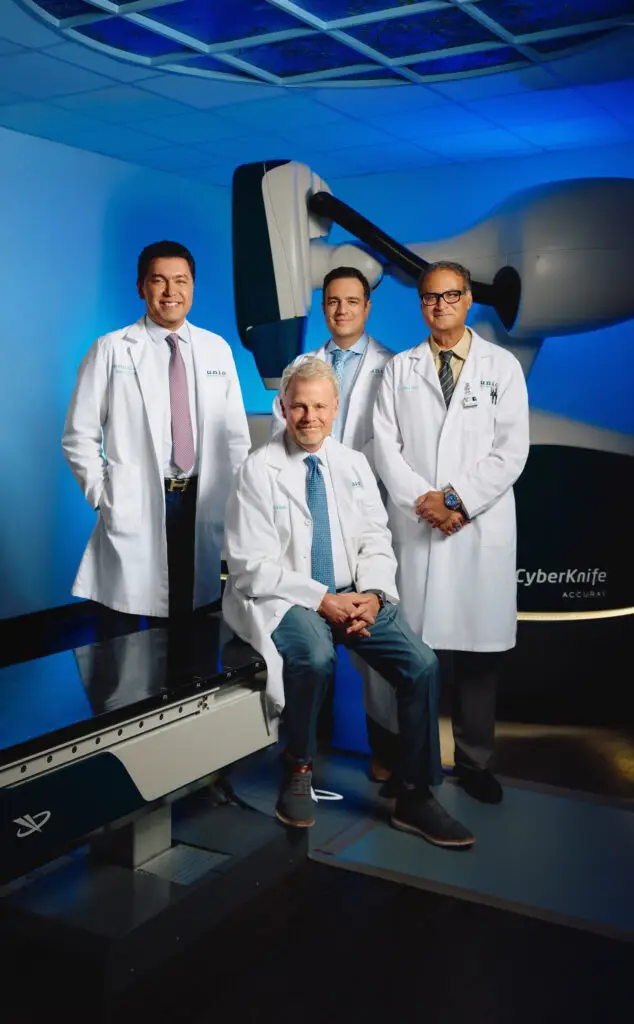
Unio Specialty Care is a multi-specialty practice specializing in urology, gastroenterology, and radiation oncology.
Unio’s Radiation Oncology team—Dr. Donald B. Fuller, Dr. Tahir Ijaz, Dr. Reza Shirazi, and Dr. Siavosh Vakilian—combines extensive clinical experience with a commitment to personalized cancer care. The RO team treats cancerous and non-cancerous conditions using precision therapies including SBRT, IGRT, and the CyberKnife® S7 System, the only system of its kind in Southern California. Their expertise spans prostate, breast, lung, gastrointestinal, pancreatic, and central nervous system cancers, as well as low-dose radiotherapy for osteoarthritis.
In 2026, Dr. Shirazi and Dr. Vakilian were recognized as San Diego Top Doctors, joining Dr. Fuller and Dr. Ijaz, who have previously received this distinction.
Faces of Healthcare 2026: San Diego Fertility Center
Meet San Diego’s leading healthcare professionals, delivering exceptional medical and dental care through innovation, expertise, and dedication to patients.
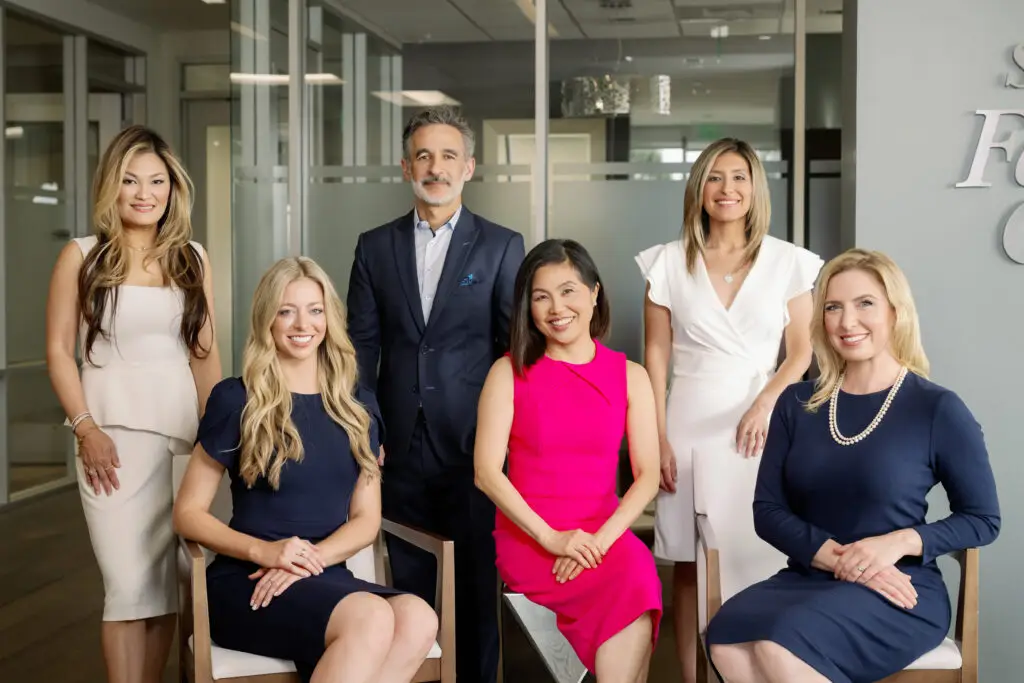
Susanna Park, MD; Sandy Chuan, MD; Brooke Friedman, MD; Said Daneshmand, MD; Valerie Flores, MD; Bryn Willson, MD
At San Diego Fertility Center, parenthood starts with personalized, cutting-edge care. Nationally recognized physicians offer individualized plans spanning IVF, PGT, egg donation, surrogacy, Gentle IVF, fertility preservation, and LGBTQ+ family building. Newsweek ranked them among America’s Best Fertility Clinics in 2026: top 6% of 450+ clinics nationwide, and best in San Diego.
“Remind yourself you are not alone! You don’t have to have all the answers before you walk through the door,” says Dr. Friedman. “Our job is to listen, explain your options, and guide you toward what makes sense for you. Because fertility care isn’t one-size-fits-all — and building your family should feel like your journey, supported every step of the way.”
Faces of Healthcare 2026: North County Cardiovascular Specialists
Meet San Diego’s leading healthcare professionals, delivering exceptional medical and dental care through innovation, expertise, and dedication to patients.
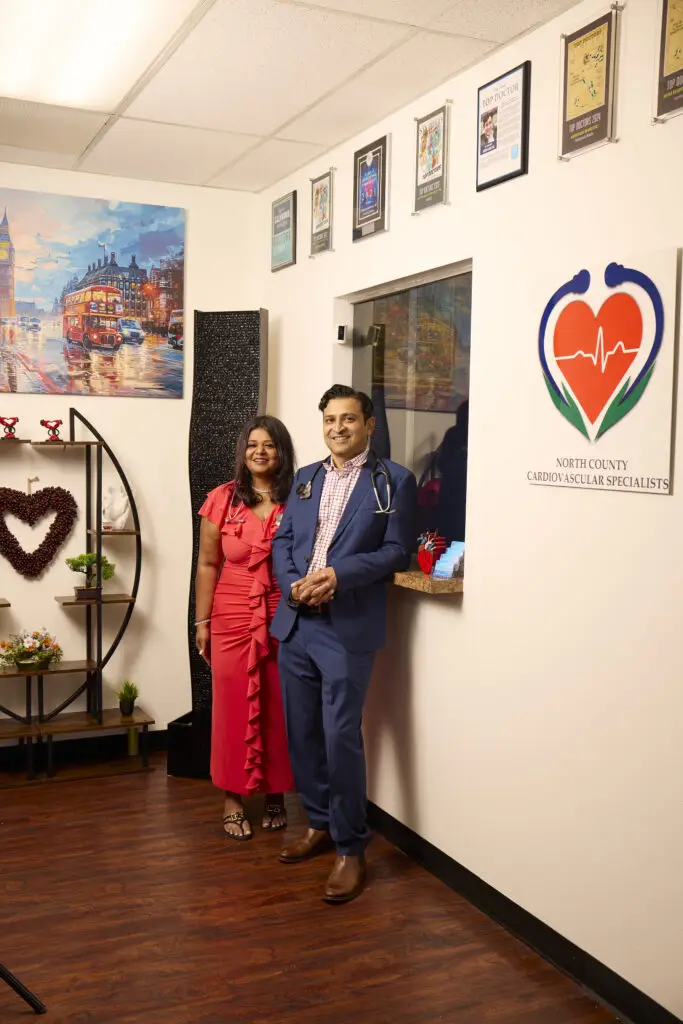
At NCCS, both doctors take a personal, traditional approach to cardiovascular care. Patients speak directly with their physicians and build lasting relationships with doctors who know them.
“We became doctors to care for patients, not to run a business,” says Dr. Kabra, who trained in England and the United States and leads the practice’s office-based cardiac care. Dr. Rajamanickam, an interventional cardiologist trained under renowned Dr. Samin Sharma, shares the same philosophy.
Guided by evidence-based medicine, they tailor care to each patient’s unique history, physiology, lifestyle and goals. Both are respected, well-reviewed physicians and four-time Top Doctors.
Visit
3142 Vista Way, Suite 206, Oceanside, CA 92056 760-224-7776
Meet San Diego’s leading healthcare professionals, delivering exceptional medical and dental care through innovation, expertise, and dedication to patients.
Community health is about more than just vaccines and checkups, At Neighborhood Healthcare, patients receive whole-person care, giving them access to the resources they need to live their best lives—whether that’s primary care, pediatrics, dental care, behavioral health, lab services, or pharmacy needs.
Neighborhood Healthcare is a private, non-profit community health organization in San Diego, Riverside, and San Bernardino Counties. Primary Care Physician James H. Schultz, MD goes above and beyond in serving people with high integrity, professionalism, and collaboration. Alongside the entire Neighborhood Healthcare staff, he works to improve the health and happiness of the community, regardless of situation or circumstance.