
Everything SD
A Home That Grows Old With You
Read article


The institution begins its expansion into a 1929 fire and police station by San Diego’s most innovative architect
In the reverent space of a gallery, deep sounds emerge from earthen vessels. Electronic chirps, squeals, and winds surround you. On display in Oceanside through March 22, San Diego artist Francisco Eme’s Future Ritual 1 – to Remember the Birds when They no Longer Exist (part of his exhibition Future Rituals & La Eco-Resistencia) merges the natural and the manmade, this world and others. It’s fitting, then, that you can see it at the Oceanside Museum of Art (OMA), a portion of which occupies a century-old building designed by San Diego architect Irving Gill. His arches are gateways between outdoor and indoor spaces, between gardens and galleries. Their curves soften the edges of the architecture and guide you from the everyday into other realms.

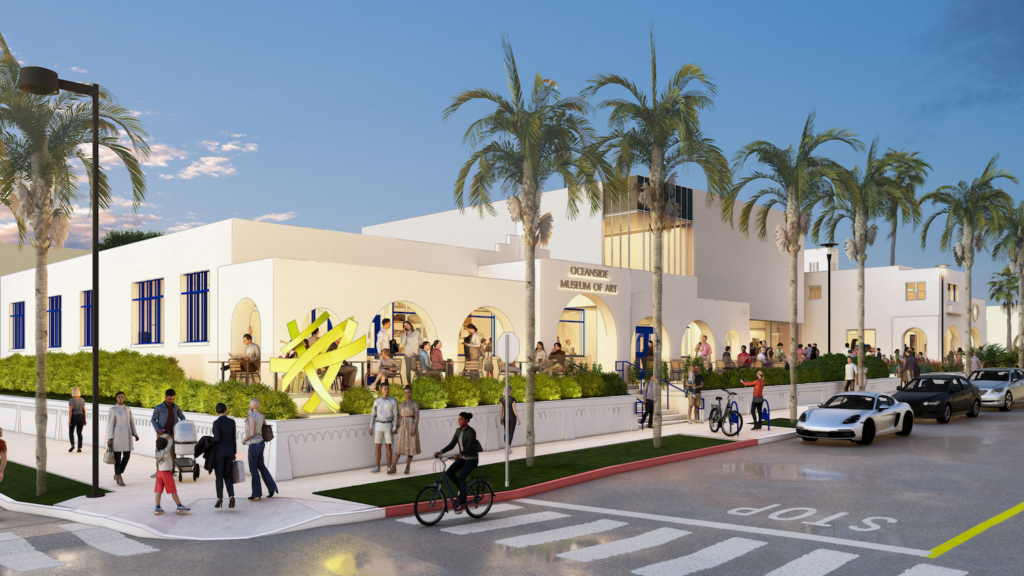
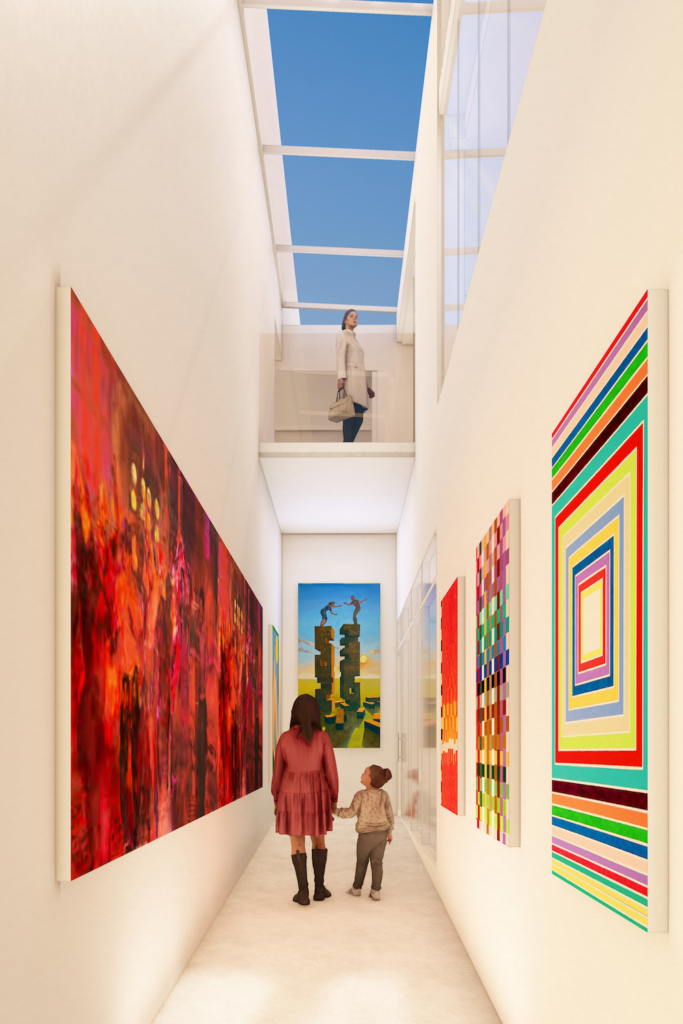
Now, the museum a few blocks from the ocean is dropping into a new wave, with plans to annex Gill’s adjacent 1929 fire and police station on the other side of its contemporary central pavilion. Construction is due to begin next year. The station’s exterior will be restored to its original glory, while the interior will be re-imagined as museum space. OMA will also build a new two-story structure at the back.
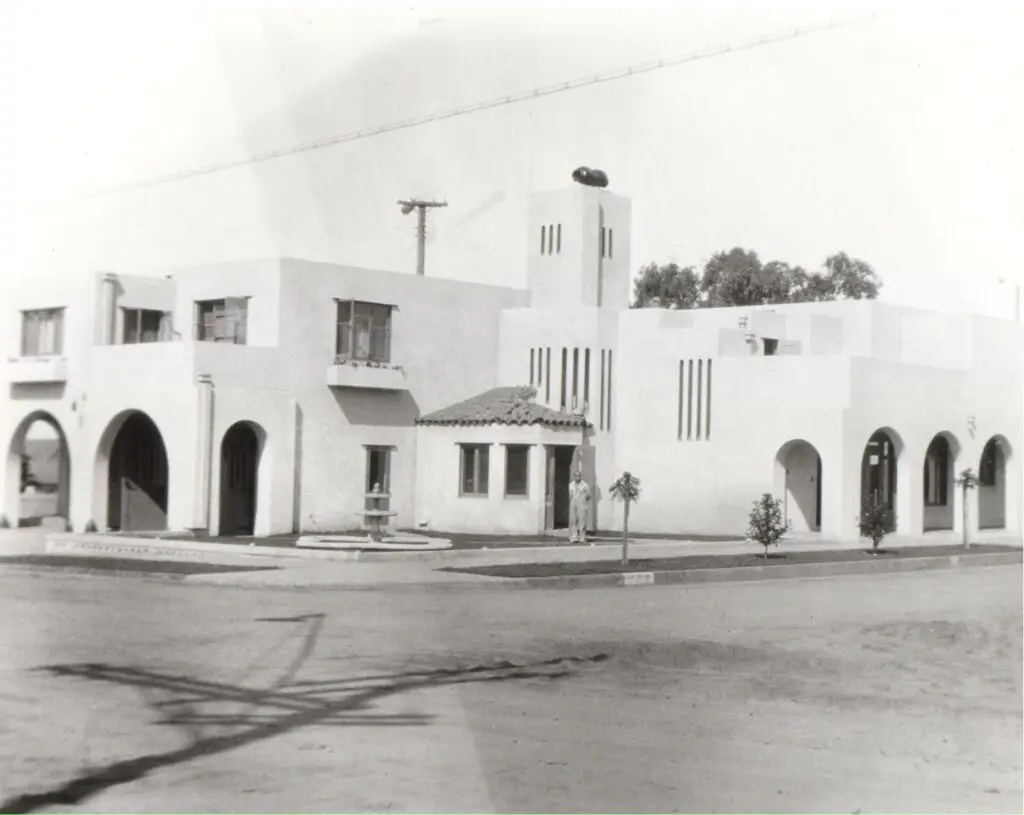
The project’s designers, San Diego’s Safdie Rabines Architects, will have the delicate challenge of seamlessly merging historical and contemporary architecture. Luckily, they have a previous example to go off: OMA opened in 1997 in Gill’s 1934 former city hall and library. In 2008, Frederick Fisher and Partners added on a contemporary building that expanded the museum’s footprint.
Growing that footprint even more from 20,000 to 30,000 square feet will give OMA three new galleries and office space, plus an education center for painting and art classes; lectures; the Literacy Through Art program for local third graders; and the ArtQuest STEAM (science, technology, engineering, art, and math) program for fifth graders, which emphasizes that art is a vital part of a complete education. The museum is also increasing underground storage for its permanent collection from 600 square feet to 2,000.
“We will remain committed to our mission: sharing the art and stories of Southern California artists,” says Maria Mingalone, the museum’s executive director. “There is no shortage of artists between North Los Angeles and Baja California. In many ways, it is OMA’s superpower to be a leader in the regional arts scene and meet the needs of a growing creative community.”
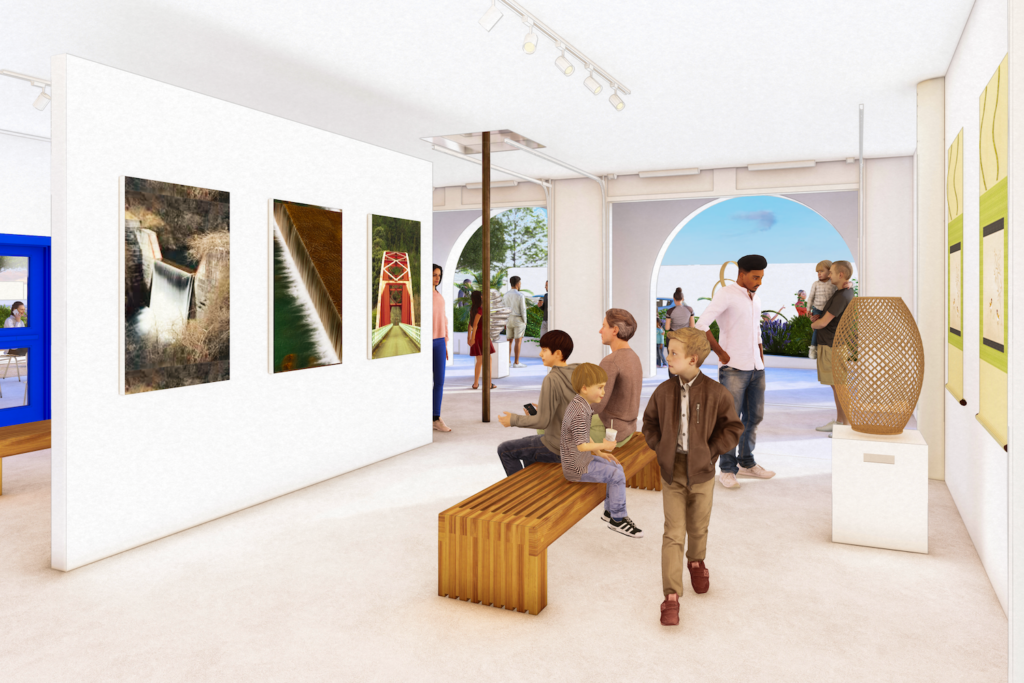
Over the course of three decades, OMA’s exhibitions have featured prominent artists such as Imogen Cunningham, Françoise Gilot, and Faith Ringgold (and, of course, Eme, who lives in San Diego but has shown across the US), as well as dozens of creators whose lives and art are distinctly rooted in our region, its multicultural glory, its conflicts and harmonies, with works in most any medium you might imagine. The extra space will allow the museum’s team to further that regionally focused mission.
OMA selected Safdie Rabines from among three finalists (the others were LA’s Fisher, who handled the 2008 expansion, and San Diego’s Luce et Studio)—for good reason. The firm was also named last fall as local architect of record for Foster + Partners’ major expansion of the San Diego Museum of Art in Balboa Park.
Taal Safdie and Ricardo Rabines, partners in life and work, have a charming kind of mindmeld. Finishing each other’s sentences, they explain that their overarching goal in combining the OMA’s old and new buildings is to “make it into something that feels like a coherent experience. It’s important that you don’t feel like your experience is broken up into different fragments.”
The expansion’s planned design is so subtle that you won’t know you are wandering among buildings constructed a century apart—except for a vintage firepole and a few other preserved elements.
OMA can be considered part of architect Charles Moore’s sprawling Oceanside civic center, making it a public complex that combines significant architecture from several generations into an organic heart of the city. Moore, who died in 1993, not long after the civic center’s completion, was an unpredictable architect of whimsy. Among his famous works are Piazza d’Italia in New Orleans, a postmodern assemblage of columns, arches, tile, and stone, and Sea Ranch, a community of modest shed-roofed homes along the coast north of San Francisco. In Rancho Santa Fe, you’ll find his marvelous Church of the Nativity.
Meanwhile, Irving Gill arrived in San Diego from Chicago in the 1890s and, after working in various styles, took a radical turn early in the 20th century, veering off on a singular path of his own. His buildings became strikingly minimalist: unadorned white walls, inspired by San Diego’s missions, forming stark cubes edged with arcades to provide daylight, shade, and semi-private outdoor spaces.
You can see his designs in Coronado (First Church of Christ, Scientist, as well as several homes), San Diego (such as churches and a noteworthy cluster of homes around his Marston House on 7th Avenue), and La Jolla (The Bishop’s School and La Jolla Woman’s Club). Los Angeles also has several buildings by Gill.
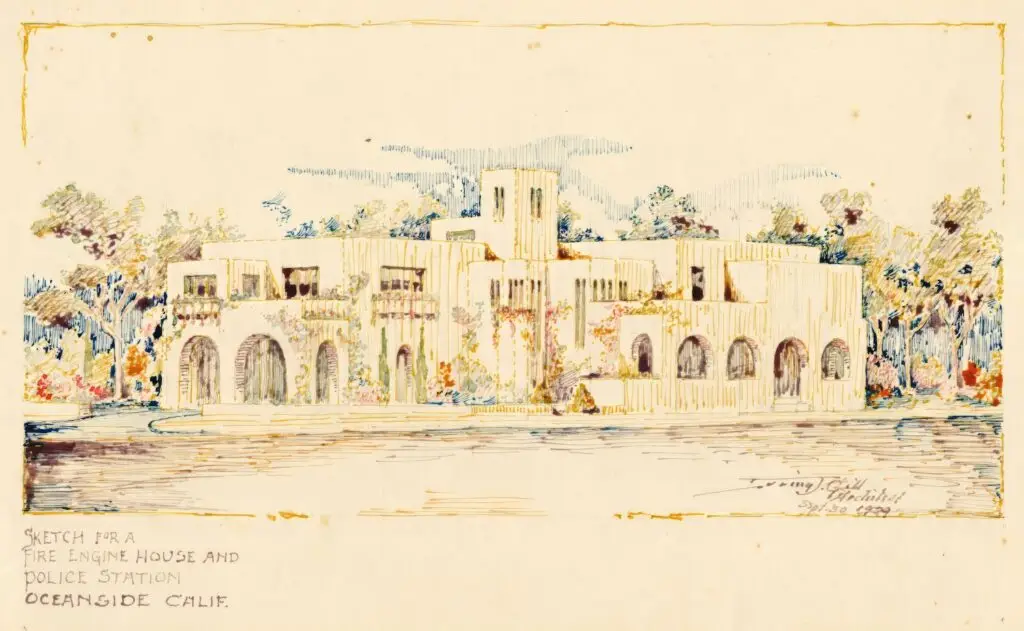
Oceanside’s assortment of Gill-designed structures (including what is now the Blade 1936 restaurant) represents the architect’s Depression-era burst of fresh creativity before his death in 1936. He was remarkable for his experiments in concrete, along with contemporaries such as LA’s Rudolf Schindler (he designed the El Pueblo Ribera Court duplexes in La Jolla) and Bernard Maybeck in the Bay Area. The Woman’s Club (1914) has walls of concrete that were formed on the ground and tilted into place. Oceanside’s city hall and fire station have board-formed concrete walls. Not only is the material beautiful in its sculptural simplicity, but it is exceedingly durable and a tremendous insulator that regulates the interior temperatures.
Gill remains San Diego’s most beloved and revolutionary architect. If that sounds like hyperbole, it’s backed by renowned architecture scribes from past decades, among them Lewis Mumford, who ranked Gill alongside Frank Lloyd Wright, and Esther McCoy, who called Gill “one of the few wholly original architects in the United States.” Most of the evidence is right here in San Diego—and the fire station’s restoration will offer further proof.
Financing is always an obstacle for arts institutions, but with $3.59 million in state funding for the expansion announced by Senator Catherine S. Blakespear last fall, and with fundraising picking up steam, OMA’s $10 million project is well on its way to breaking ground. The museum will remain open during construction.
The ambitious project also marks a turning point in Mingalone’s career. “I did not know a thing about Irving Gill when I moved here in 2016,” admits Mingalone, who lives close enough to bike to work. “Running a museum that preserves historical buildings means that we are caring for a living piece of history in our community. We like to say that we are expanding from Gill to Gill.”

Dirk Sutro has written about architecture and design for a variety of publications. He is the author of architectural guidebooks to San Diego and UC San Diego and contributes a monthly column called CityScape to Times of San Diego online.
