Featured articles
Featured articles
Featured articles
What's next
Featured articles
Featured articles
Featured articles
Ready to know more about San Diego?
SubscribeReady to know more about San Diego?
Dr. Stephen Kingsmore's team is the first to achieve a genetic diagnosis in just 26 hours
The first effort to sequence our genome, the Human Genome Project, took 13 years—an amazing feat, though not immediately relevant for patients. But now researchers from San Diego and Kansas City have made that leap, achieving genetic diagnoses in 26 hours—a new Guinness World Record.
This is a big deal. Many children born with genetic conditions wait years for answers. Infants with acute conditions can die before being diagnosed. Sequencing a sick kid’s genome—finding the genetic variants hidden in DNA’s four billion bases and quickly determining the significance of those variants—could provide crucial diagnostic information and drive life-saving treatments.
On April 25, National DNA Day, Stephen Kingsmore, president and CEO of the Rady Children’s Institute for Genomic Medicine, along with collaborators from Children’s Mercy Hospital in Kansas City and San Diego-based Illumina and Edico Genome, celebrated their world record at Rady Children’s Hospital. But the achievement means far more than international bragging rights.
“Diagnosing acutely ill babies is a race against the clock, which is why it’s so essential for physicians to have access to technology that will provide answers faster and help set the course of treatment,” said Kingsmore a few days before the ceremony.
The project, which was conducted by Kingsmore at Children’s Mercy, bested the team’s previous record of 50 hours. To shave off those crucial hours, the group used an Illumina sequencing machine optimized to move faster (kind of like putting a Tesla in insane mode). From there, the gene reads were put through Edico’s DRAGEN platform, which is designed to analyze genomic data.
The whole process took 26 hours from blood sample to initial diagnosis, results that could have a big impact on sick infants. In the original study, 65 percent of the diagnoses improved care.
But this was only one study on a handful of kids. The next step for Kingsmore and colleagues is to scale up the process so that every hospital NICU can take advantage of fast sequencing.
“I look forward to collaborating with both parties (Illumina and Edico) to implement this approach at Rady Children’s Institute for Genomic Medicine and ultimately neonatal and pediatric intensive care units across the country,” said Kingsmore.
The World Record That Could Save Lives
PARTNER CONTENT
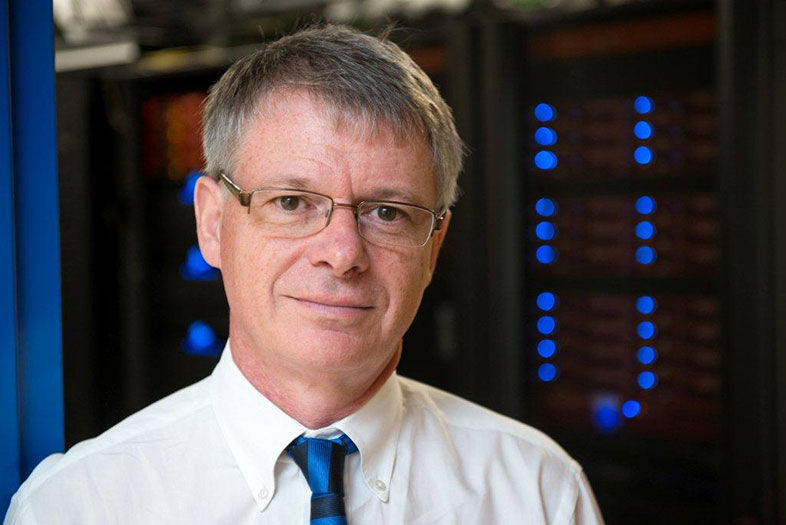
Stephen Kingsmore is the president and CEO of the Rady Children’s Institute for Genomic Medicine
The winners received more than $15,000 altogether for their businesses
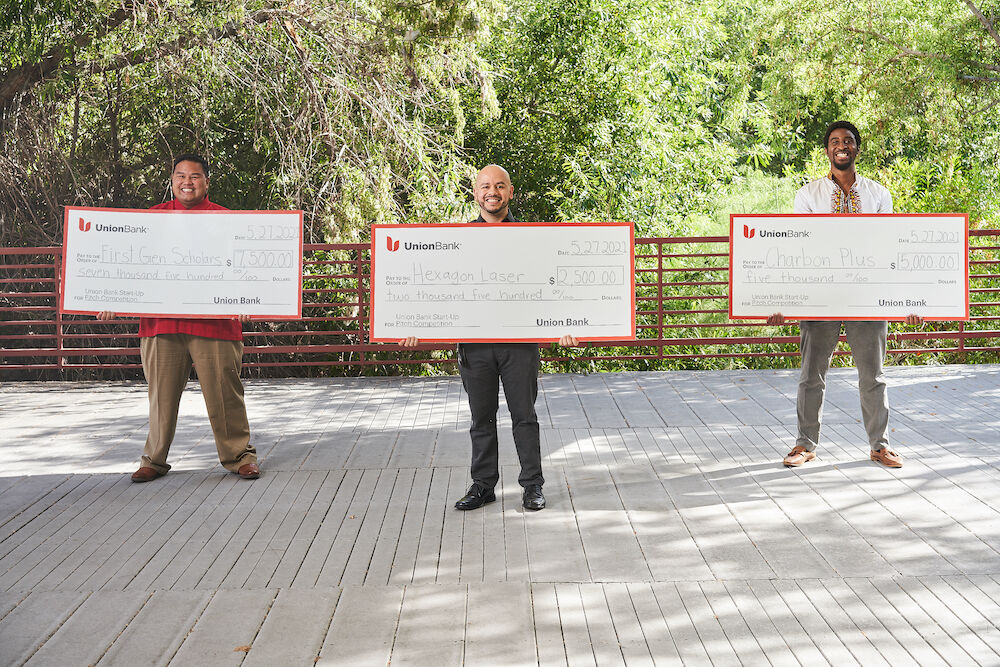
The founders of 11 small businesses competed in Union Bank’s fourth startup pitch competition on May 27, and three were awarded a total of more than $15,000 in funding. All the entrepreneurs are recent graduates of a business accelerator program hosted by Connect All @ the Jacobs Center, which is dedicated to minority-owned companies. Contestants completed a four-month training program, and then had just five minutes to pitch their ideas in a video presentation to a panel of judges. (Full disclosure: I participated as a judge in this year’s program.)
The first-place winner was First Gen Scholars, a startup founded by Jonathan Burgos. First Gen Scholars’ mission is to help high school students who are the first person in their family to attend college—they not only assist with the college application process, but provide mentorship until the students graduate. Burgos won the $7,500 prize, and he also won this year’s Audience Choice award, which was decided by public vote through the Jacobs Center’s YouTube channel.
“Jonathan Burgosdid an outstanding job showcasing the importance of First Gen Scholars and highlighting the market opportunity and the long-term vision for the company,” said Bruno Rodriguez, Union Bank branch manager for the El Cajon Valley location and a judge on the panel. “Union Bank is proud to support the future of business in San Diego through this competition.”
The second-place winner was Charbon Plus, founded by Lucien Eloundou, which produces skincare products for Black and brown skin. The unique ingredients for the charcoal mask are sourced from Cameroon. Eloundou won a prize of $5,000 to expand the line.
Taking third place this year was Hexagon Laser, a design and manufacturing company founded by Oscar Corral that specializes in artwork using laser engraving on wood. The company has created coasters and tap handles for local craft breweries such as Novo Brazil, and it also has a line of wall art and home decor. Corral won a prize of $2,500.
Other companies that participated in this year’s pitch competition included Hola Swim, Girlie Garage, and Tabby Manor.
Connect All is a partnership between the city of San Diego, the Jacobs Center for Neighborhood Innovation, and Connect with San Diego Venture Group.
Jonathan Burgos, Oscar Corral, and Lucien Eloundou won the fourth Union Bank Start-Up Pitching Competition.
From beer tech to the next big idea, here's something to do for everyone June 13-17
This year’s Startup Week is jam-packed with events, spread out over 5 days and 10 different tracks. We have rounded up the best talks, panels, and parties for beer lovers, designers, tech geeks, and aspiring entrepreneurs.
June 13, 4:30 p.m., 101 West Broadway Ste 800
Can you run a successful craft brewery in 2016 without solid tech integration? Find out what technology can do for San Diego beer at this Monday afternoon session.
June 16, 4:45 p.m., 550 West B Street 4th Floor
Are you new to beer, or just want to refine your taste? TapHunter’s panel of brew experts are here to help! This session is guaranteed to have you thirsting for a cold pint afterwards.
#CraftBeer: Building a Fan Base Through Social Media
June 15, 3:30 p.m., 101 West Broadway Ste 800
Many successful San Diego breweries are already utilizing social media to create brand buzz and drive sales. Here they’ll be sharing all their secrets.
June 13, 9:30 a.m., 101 West Broadway Ste 800
There’s a fine line between genius and madness. This interactive session will help you identify that line.
From Idea to App with User-Centered Design Techniques
June 13, 1:30 p.m., 1 Columbia Place CR 300
There’s not an app for it yet? Learn how to turn your idea into a functioning app with Zipdev Co-Founder Mike Lenny.
Design Forward: A Designer<>Entrepreneur Mixer
June 16, 5:00 p.m., Broadway Pier Pavilion
Put on your networking pants and connect with some of San Diego’s most brilliant design and entrepreneur minds.
June 13, 10:45 a.m., 707 Broadway Conference Room B1
Indulge in the three Ts during this panel focused on entrepreneurial opportunities across the border.
3D Printing: What´s all the Fuss about
June 13, 3:15 p.m., SD Library Innovation Center
It’s the future! Learn what 3D printing is really about, in terms you don’t need a PhD to understand.
Multi-Use Technology Symposium
June 15, 7:30 a.m.-5:00 p.m., San Diego Central Library
This all-day event is focused on defense and cyber security, and includes a panel titled “Be the Next Tony Stark.”
June 13, 9:30 a.m., 1 Columbia Place 24th Floor Room B
Come out sounding like a seasoned player in the startup game after this fun talk with Derric Hayne, CEO of SplashOPM.
Getting Started Guide – The Idea
June 13, 10:45 a.m., 1 Columbia Place 24th Floor Room B
Ideas are crucial for anyone looking to get into entrepreneurship, but not all ideas are good ideas. The Lean Brand author Jeremiah Gardner can help you identify the bad ones early.
Shit Startup Founders Don’t Talk About
June 15, 4:45 p.m., EvoNexus
If the title wasn’t enough to get you intrigued, this session will include honest conversation on “the good, bad and ugly” with some top San Diego startup founders.
San Diego Startup Week is June 13-17. View the full schedule of events here.

The Best Events at San Diego Startup Week 2016
San Diego Startup Week is June 13-17

A new data-mining project can help downtowns stay vibrant, and TwitchCon is moving to San Diego
A new report in The Atlantic CityLab by well-known urban studies guru Richard Florida puts San Diego at 7th on the list of Metro areas with the largest venture capital investment, ahead of Seattle. Topping the list are the obvious places such as San Francisco, San Jose, New York, and Boston. For San Diego, a town that is always lamenting the lack of venture funding, this may help dispel that thinking.
Amazon-owned Twitch has just announced it is moving its annual gaming convention, TwitchCon, from the Marscone Center in San Francisco to more spacious digs at the San Diego Convention Center.
Twitch is the world’s leading social video platform and community for gamers. It boasts 100 million community members and 1.7+ million broadcasters per month, catering to the entire video game industry.
Last year’s convention—the inaugural event—brought 20,000 people to San Francisco. With an added day and the positive buzz surrounding the event and the move, they are expecting to top that number this year.
The event takes place September 30-October 2 and you can find the details here. Game on.
Andrew Gazdecki, CEO and founder of Bizness Apps, penned this piece for TechCrunch about why he moved his San Francisco based mobile app builder business to San Diego. He makes a pretty good case. (Read a Q&A with Gazdecki here.)
A new data-mining project out of the University of Trento in Italy might help shed some light on how to ensure a vibrant city. In her 1961 book, The Death and Life of Great American Cities, urban sociologist Jane Jacobs identifies four conditions that are essential for a vibrant city. Overall she argues a physically diverse city will flourish. Specifically, she says cities need the following four characteristics. First, the city must serve more than two functions so it attracts people with different purposes at different times of the day. Second, she recommends small city blocks that give people a chance to interact with each other. Third, the buildings must also be diverse with old and new to attract diverse economic groups. Last, it’s all density—of people and buildings. Until now there has been no cost effective way to test these ideas.
The new research has used technology to create a faster, easier way to analyze a city. By using OpenStreetMap, census data, land use data, and Foursquare data, researchers were able to prove that Jacobs actually knew what she was talking about. For downtowns striving to stay vibrant centers, like San Diego, this new research could help identify areas for improvement. I would love to see some of our local open data minds (I’m looking at you, Ben Katz) take this on.
Reflexion Health, a digital health solution for physical therapy, has a new CEO. Replacing Spencer Hutchins who left in December is Dr. Joe Smith. Smith is moving to the streets of downtown from the Mesa, where he has been leading the health cost savings charge as the chief medical and science officer at West Health for the last several years. He recently stepped in as interim CEO at Reflexion and now has made it official. (Disclosure: this is my client.)
Tech Coast Angels is recruiting analysts for their Spring Volunteer Analyst Training Program. Applications are due Thursday, April 14.
1 Million Cups: Pet Wireless
Wednesday, April 6, 9 a.m.
The VineSD, 101 West Broadway
Startup San Diego hosts Startup Night at the Gulls Game
Every company attending receives a scoreboard message, a free t-shirt and $2 beers
Wednesday, April 6, 6 p.m.
Valley View Casino Center
Startup Grind San Diego hosts Steven Cox, Founder and CEO of Take Lessons
Thursday, April 14, 6 p.m.-9 p.m.
101 West Broadway
Things Will Be Great When You’re Downtown
Amazon-owned Twitch is moving its annual gaming convention, TwitchCon, to the San Diego Convention Center | Photo by f11photo / Shutterstock.com
Stake Chophouse & Bar brings contemporary classics and old-school service to the heart of Coronado
Stake Chophouse & Bar isn’t your average steakhouse. Blue Bridge Hospitality’s Coronado outpost is a modern interpretation of a big-city steakhouse nestled in the heart of the small coastal community. The team at Stake has reimagined the whole steakhouse experience. By prioritizing a seasonal farm-to-table sourcing philosophy, a personalized guest experience, and unique service touches, like a formal steak presentation and a bespoke knife selection process, Stake distinguishes itself in a sea of steakhouses.
Exceptional steaks, including Wagyu from Japan, Australia, and the U.S., and fresh seafood flown in daily form the core of Stake’s culinary identity. The menu features a five-course omakase-style steak experience highlighting house favorites, plus an array of cuts, and classic steakhouse staples—think a wedge salad, baked potato, or pasta carbonara—refined for a contemporary palate without losing their traditional appeal. Stake focuses on seasonal sourcing from the region’s best family farms and specialty purveyors, and incorporates intentionally unexpected touches to create something truly unique.
“I challenge our chefs and myself to take it a step further in sourcing,” says Chef Ronnie Schwandt. “It’s important to us to highlight different farms, unique one-off farms—whether it’s cattle, strawberries, a local fisherman or from anywhere in the United States, we’re always trying to find that niche.”
Beyond the menu, Stake emphasizes outstanding service, says Vinny Spatafore, Director of Hospitality Operations. Staff maintains detailed notes, allowing them to remember guests by name, recall previous orders such as a favorite martini (also memorable for the customer since it’s served in an extra tall, distinctly-shaped glass), and celebrate special occasions like birthdays and anniversaries.
“When you have those points of topic that you remember about a guest, they appreciate that,” he says. “Our servers are really good with that—we have a couple servers who have been here since the beginning and they’ll remember somebody from years ago, their name, their kids’ names, where they live. I’m really thankful to have a great front of house staff.”
Award-winning wines, rare whiskeys, special events, and a complementary black car service that provides transportation for guests throughout Coronado add to Stake’s appeal.
Schwandt stresses that Stake offers more than a meal; they aim to give patrons something unforgettable.
“It starts when you walk up the stairs and are greeted by the hostess—that sets the tone for the night. Then you’re greeted by a server, who may know you by name, and can guide you through the menu and curate as they get to know you,” says Schwandt. “Most people leave kind of blown away; they leave feeling like they just had an experience. That’s the goal, right? Whether you’re serving smash burgers or high-end steak, you want somebody to leave thinking, Wow, that was awesome.”
At the annual Future of Genomic Medicine Conference, geeks are revered
#FOGM16 The closest I’ll ever be to George Church #legend pic.twitter.com/YB9DQTr9OI
— Hunter Ferrel (@hferrel08) March 3, 2016
The fan tweet seemed more fitting to Coachella than Scripps Pier. A selfie included a bearded man in the background: “The closest I’ll ever be to George Church #legend.”
George Church, right?! You know, professor of genetics at Harvard Medical School and serial entrepreneur. He helped invent genomic sequencing in 1984, created the Personal Genome Project and The Brain Initiative, cloned a woolly mammoth, co-founded nine companies.
So maybe Church doesn’t normally get the Mick Jagger treatment, but at the annual Future of Genomic Medicine Conference, geeks are revered.
Hosted by Eric Topol and the Scripps Translational Science Institute (STSI), the conference was held on March 3 and 4 at Scripps Seaside Forum and offered a quick snapshot of genomic science: successes, shortcomings, ethical considerations and everything else. It’s about as inclusive as scientific conferences get. Researchers share the stage with MDs, entrepreneurs, policy wonks, technology gurus, journalists, and patients.
And there was plenty to discuss: the Cancer Moonshot; patient access to their own genetic data; incorporating genomic sequencing into daily care; crunching petabytes of data; and what to make of CRISPR, the revolutionary genomic editing technique that allows scientists to add or remove specific genes.
CRISPR was the cause célèbre at this year’s conference. The technique offers great promise and ethical pitfalls. Many rare diseases could be repaired with a single gene fix. On the other hand, the technique is a little Gattaca for some. One of the cool things about the conference is watching scientists work through these issues in real time.
In addition to Church, the conference featured Biotech billionaire Patrick Soon-Shiong, who recently announced Cancer MoonShot 2020; Anne Wojcicki, who co-founded consumer genomics company 23andMe; Andrew Conrad, CEO of Google Life Sciences and Atul Butte, who leads the UCSF Institute for Computational Health Sciences and slayed the standing-room audience with arcane medical code humor. Okay, you had to be there.
With head-high surf pounding in the background, Soon-Shiong detailed plans to embrace immunotherapy against cancer. Rather than targeting the cancer, he believes we must target the patient, giving the immune system new tools to wipe out the disease. The Moonshot is a massive collaboration between researchers, drug companies, government agencies and others to share data and develop groundbreaking therapies.
George Church discussed more in 20 minutes than some people do in a lifetime: disease prevention, age reversal, gene editing. The buzz for his presentation was especially intense as one of his companies, Veritas, had just announced full genome sequencing and genetic counseling for $999, a new low.
The enthusiastic crowd included MDs, corporate and academic researchers, curious consumers and a high school group from Reno. Each year, science teacher Laurie Bissonette brings some of her brightest Sage Ridge High School students to the conference and STSI comps the fee—good job STSI.
The students prepare by reading some of the presenters’ research and sharing with the group. These kids are no joke. Senior Elyse Olesinski has her fingers crossed for Harvard and wants to be an oncologist and a bench researcher—attacking the problem from both sides. Junior Hunter Ferrel is looking forward to studying biology—it was her George Church tweet.
“I met George Church; that was the highlight of my trip,” said Ferrel. “He’s a legend; he’s my absolute role model. The research he’s doing in gene editing, it’s just so cool.”
La Jolla’s Geek Woodstock
The Future of Genomic Medicine Conference was held on March 3 and 4 at Scripps Seaside Forum
Top incubator looks for new companies
Super slick office space, mentorship and no equity stakes or fees taken by EvoNexus (thanks to support from corporate partners like Qualcomm, Viasat and Interdigital). Find more details here. If you have a company and would like to join the city’s top incubator, get moving. Deadline for applications is Monday.
Last Chance on EvoNexus!
Scripps study shows that some patients may be able to taper their dose and maintain results
While glucagon-like peptide-1 (GLP-1) receptor agents have been used to treat Type 2 diabetes for more than 20 years, their recent emergence as weight-loss wonder drugs marked a new frontier in medicine. But their effectiveness has left some patients wondering what to do once they’ve reached their goal. Stopping the medication could mean regaining some, if not all, of the weight. A Scripps Clinic internal medicine physician recently conducted a small study of whether GLP-1 patients who had reached their goal weight could maintain that weight by taking their regularly prescribed injection every other week instead of weekly. Spoiler alert: 30 of 34 patients did. Read more about the study here and what that may mean as pharmaceutical companies roll out oral GLP-1s.
For more nutrition, wellness, and healthy living tips, sign up for the San Diego Health newsletter here.