Ready to know more about San Diego?

Subscribe
Charitable SD DECEMBER 8, 2016

Wanted: Millennials Who Love the Arts

Fine art institutions have found creative ways to court a new generation of donors.
Wanted: Millennials Who Love the Arts

It’s been a truism for decades in the performing arts that the existing base of loyal supporters—subscribers and donors, the lifeblood of nonprofit arts organizations—is getting older, with no significant younger base rising up to replace it. Whatever the underlying reasons—a faltering economy, changing tastes in entertainment, cuts to arts education in the schools—this demographic change is seen as a real existential threat to arts organizations, not just in San Diego but across the country.

As a result, performing arts organizations lay out a variety of programs to reach out to younger audiences and try to convert them into supporters. These can include school programs, discounted tickets, and special events. But with the domination of online entertainment and social media, this outreach has become more important than ever. We checked in with some local mainstays of the art scene to see what they’re doing to ensure long-term survival.

Taking the opera to the streets

Expanding the audience base became suddenly, especially crucial to San Diego Opera after its unprecedented 2014 campaign to save the company succeeded. One of the first decisions made by new general director David Bennett was to begin rebuilding education and outreach programming that had been decimated by the previous administration in an effort to cut costs. This included bringing back the popular Opera on the Concourse program, in which singers from the current opera perform free lunchtime concerts on the concourse in front of San Diego Civic Theatre. It also meant reinstating the policy of allowing students and their chaperones to stay for the entire performance at student dress rehearsals.

Previous generations had more exposure to the arts than young people do now—they were raised to believe the arts as part of civic life was a given.

Bennett engaged in an extensive listening tour during his first year as general director, and he says that the community felt it was important for them to have an opera company, but they weren’t sure why.

“Having a different opera repertoire in different spaces, creating a pathway for people to engage with opera where they are, reduces the barriers to them going to the theater,” Bennett says. That led to the launch of the opera’s new Shiley Detour Series, which will present “everything other than grand opera,” at smaller venues. This season the series includes the premiere of Soldier Songs by composer David T. Little, based on reflections on war by veterans who were involved in five major foreign conflicts; and Peter Brooks’s Tragedy of Carmen, an intense, stripped-down version of the popular opera Carmen.

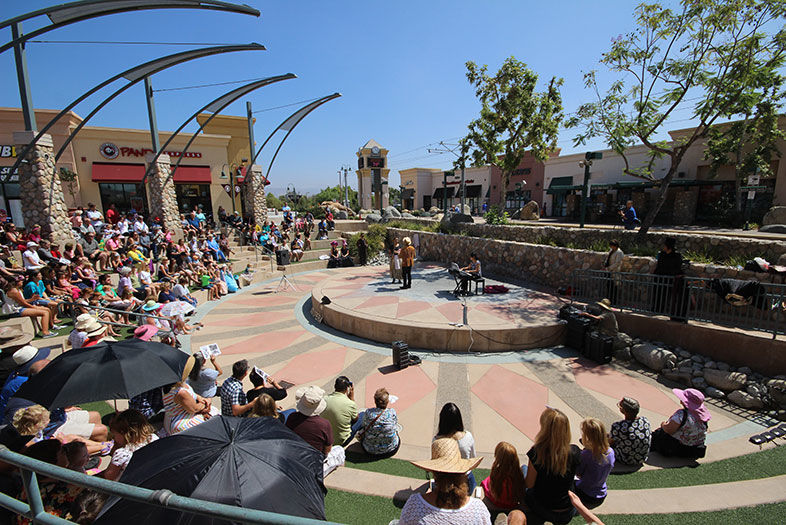
Another new initiative launched by San Diego Opera this season is Opera on Track, a collaboration with the Metropolitan Transit System to bring the Opera’s young artists to trolley stops and venues within close walking distance of the trolleys to perform a 30-minute version of Rossini’s Cinderella, which opens the 2016–17 season. The first Opera on Track performances in September were a hit: entire families attended and kids even dressed up in Cinderella costumes. Will these convert to ticket buyers during the main season, and eventually subscribers and donors? It’s too soon to tell, but Bennett says the bottom line is only part of the point.
Wanted: Millennials Who Love the Arts

Wanted: Millennials Who Love the Arts

Cast members with San Diego Opera performed short concerts from Rossini’s Cinderella near the trolley station in Santee as part of the new Opera on Track program.

“We now realize that it’s less linear than people think,” he explains, referring to the theory that investing in education and outreach programs should result in “butts in seats.”

“Providing an experience for audiences to see performances in nontraditional venues is every bit as valid as seeing grand opera on the stage, in the theater. It shows the opera company is an active part of the civic fabric of the community, and can be outwardly focused while still producing great work onstage.”

“We’ve been talking about the aging of the donor base since the 1960s,” Bennett continues. “It’s just a fact that as people get older, they often have more resources and free time, and that’s when they become more active as supporters. But previous generations had more exposure to the arts than young people do now—they were raised to believe the arts as part of civic life was a given. So our task is to create a conversation so that successful entrepreneurs should see why they should not just sink money into other entrepreneurs, but give back to the city to make it a better and more attractive place for entrepreneurship.”

Art after dark

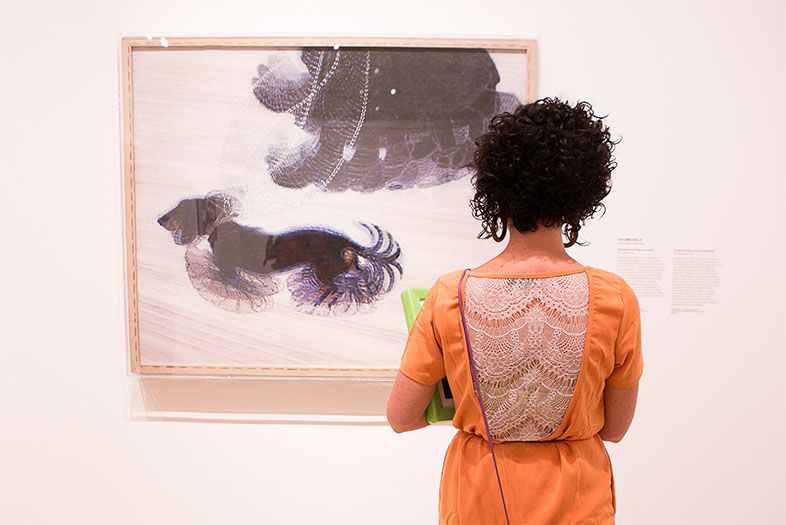
Without live performances to preview and take to the streets, the San Diego Museum of Art has to take a different tack to attract young patrons. Director of Museum Advancement Elizabeth Kaplan says SDMA’s strategy to draw in millennials falls into two categories: events and digital efforts. Or, to put it another way: great parties and social media.

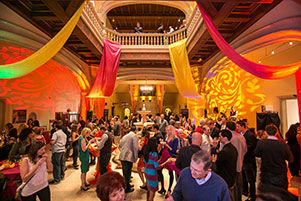
Begun eight years ago, the museum’s quarterly Culture & Cocktails parties have exploded in popularity, and today draw between 1,200 and 1,400 attendees. These after-hours events are themed for a current exhibition at the museum, such as The Art of Music or Venetian Views, and feature exotic cocktails, a DJ, special activities, and an Insta-worthy photo booth. Kaplan says Culture & Cocktails has become so popular that tickets are now sold online in advance. Attending Culture & Cocktails is also a good introduction to becoming a museum member, since the discounted ticket ($5 for members versus $25 for nonmembers) makes it well worth the cost of membership if you attend just a few times.
Wanted: Millennials Who Love the Arts

Wanted: Millennials Who Love the Arts

San Diego Museum of Art’s quarterly Culture & Cocktails event has become popular and often sells out.

SDMA has also wholeheartedly embraced the social media boom. “It’s clear to us that millennials really want to connect that way,” says Kaplan, who joined SDMA in 2015. “For something as visual as an art museum, it’s crucial for us to be active on Instagram, Snapchat, Facebook, Twitter—the whole gamut.” SDMA’s social media feeds give people a look behind the scenes and make them feel like insiders, she adds.

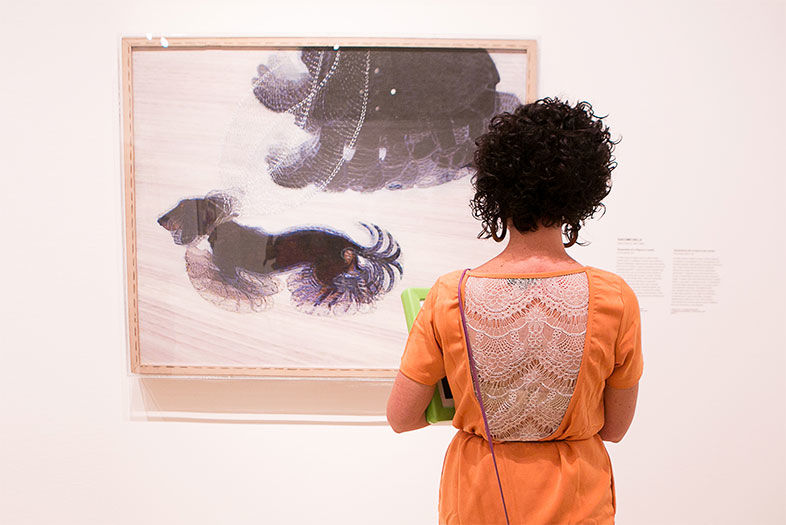
It seems no effort has escaped the museum’s strategy to target millennials. Their app has an augmented reality feature that brings self-guided tours of the museum to life, and offers games and other features to spur learning. They’ve hosted social media meetups and flash mobs in the galleries, and drawn in visitors from the hip Panama 66 brewpub—located in the museum’s sculpture garden—with an “Art After Hours” $5 admission until 8 p.m. on Fridays.

What’s the return for all these efforts? Kaplan has no doubt that they will pay off in the long run. “We must change with the times,” she says forcefully. “We cannot be the old, stodgy museum. Young kids and teens are interactive; that’s where they live. We have to be doing all we can to bring them in and teach them something interesting. It’s very challenging for all museums and age groups—the older generation used to support as a matter of course. The younger ones need to be convinced. But if we do not bring them in, we may not exist in 10 or 20 years. Yes, we are pouring resources into these outreach efforts, but we’re being smart about how we go about it, keeping a tight budget. And it will be worth it.”

Bringing out the Bard

For its part, The Old Globe theater now considers outreach to the community such a priority that in 2015 it created the new position of director of arts engagement, filled by a transplanted New Yorker named Freedome Bradley-Ballentine. The theater has given him a lot of leeway to redesign how it connects to the community and to younger patrons.

In addition to student outreach via residency programs at high schools and seminars at community colleges, the theater launched Globe for All, a new program that tours stripped-down Shakespeare productions to unconventional venues like prisons, homeless shelters, and veterans’ centers.

The Globe also hosts Out at the Globe, a preshow mixer in support of the LGBT community including drinks, appetizers, and door prizes. And to make tickets affordable for a younger audience base, anyone under the age of 30 can qualify for $20 discounted tickets for select performances.

Banding together

San Diego Symphony’s CEO, Martha Gilmer, echoes the feeling that access and affordability, as well as feeling welcome, go a long way toward encouraging younger people to try something new. “When you attend our concerts, you will see many young people in the audience, but, of course, we all could be doing so much more,” she says. “I think millennials are interested in the total experience, which includes not only the performance, but also the opportunity to learn more and have a sense of what happens behind the scenes.”

Wanted: Millennials Who Love the Arts

Wanted: Millennials Who Love the Arts

The Symphony’s Summer Pops Concerts bring music to the bayside.

Gilmer, who took over as CEO in 2014, says this year they are launching a new “Encore” membership group that will offer some type of event every month. For a $150 membership, which includes tickets to four concerts over the course of the season, members can have a backstage tour, meet the musicians, help out at a children’s concert, and meet up with new friends to learn to play an instrument, if they like.

“We are also partnering with every downtown residence within walking distance of the Jacobs Music Center and offering two free tickets to one concert as a way to ‘get to know our neighbors,’” Gilmer says. “Since many young people are moving into downtown, we really want them to feel that the Jacobs Music Center is a place to go for classical, jazz, world music—every kind of music. And it’s affordable.”
Wanted: Millennials Who Love the Arts

Subscribe to our newsletters

Select Options

By subscribing you confirm that you agree with our Terms and Conditions and Privacy Policy.

Charitable SD AUGUST 19, 2026

MANA de San Diego Is Building a Community of Mentors

For nearly four decades, the Latina mentorship organization has connected volunteers with girls and young women

MANA de San Diego Is Building a Community of Mentors
Courtesy of MANA de San Diego

MANA de San Diego has spent the past 38 years building a community to help girls and women thrive. Short for hermana, Spanish for sister, MANA de San Diego is part of a national organization that aims to empower Latinas to reach their full potential through programs like its Hermanitas mentoring program for middle and high school students, which has served more than 600 girls and young women since its inception and, in recent years, boasts 100 percent high school graduation and college admission rates.

Volunteers like Brenda Lemas are essential to MANA de San Diego’s mission. Here, she details her service with the organization and why, for her, mentoring is truly paying it forward. 

How did you first get involved with MANA de San Diego?

I had just come back from a conference that was sponsored by LATINA Style magazine. I was receiving an award while I was still on active duty in the Navy. It was all women, all different branches of the military. The environment I was in excited me so much. I had never been in a room full of women who just wanted to help each other out.

When I came back to San Diego, I started looking for that type of community. I found MANA and I volunteered at its Latina Success Conference. It was just incredible. I stayed connected with MANA, but because I was still on active duty, I couldn’t fully engage as a volunteer. When I retired, I wanted to go back to it. They wanted me to do the Latina Success Leadership Program, and during that, one of the women asked me if I wanted to be a mentor. I really enjoy mentoring. When I was in the military on active duty, that was something that was at the top of my priorities. I always wanted to mentor people. 

What do your duties entail? 

I was asked to be in the leadership program, so I became part of the leadership team and did that for a year. And I have done a consulting gig with them. Right now I’m a mentor, and help any time I can with any of the events. I really love the community that they have. 

For me, what it means is giving back. I didn’t have a strong female role model when I was growing up. I kind of always searched for that. But I think slowly, life shapes you and molds you and I sort of became that for other people.

I’ve always looked at mentors as somebody to provide guidance. And that’s what we do. The program is for young women, and the purpose is to encourage them to continue in their academic journeys. As a woman in a professional space, you’re offering that guidance to that young woman, and the goal is to get them through high school and eventually for them to pursue higher education. Then some of them come back and they become mentors. It’s a holistic way to empower young women. 

What do you like best about volunteering at MANA de San Diego?

My favorite part has been seeing my mentee grow. You always learn something different from each person that you get to mentor. The experience is not one-way; they get a lot from it, but then as a mentor, you gain a lot of knowledge. With my mentee now, she was going through some stuff when she first started the program that I didn’t fully understand. But it allowed me to gain some insight into what it looks like for a young adult and how to help her and support her. And I really didn’t have to do much other than be a strong presence for her. She’s a very smart, intelligent young woman. 

Can you describe your favorite or most memorable experience while volunteering?

It is the whole process. I look back, like, if I had only had somebody in my life that could have been there, I probably would’ve done most of the things that [my mentee] has done. None of what she’s accomplished I was able to do in my young lifetime. She’s just so motivated; it’s a confidence that I can’t explain, and a complete 180 from where she started. 

Any advice for someone considering volunteering as a way to give back?

The question for them is, ‘What are you trying to get out of it?’ Most of us volunteer for a reason, like a higher purpose or something like that. But I would recommend finding a community where you feel like you belong and just do it. It doesn’t have to necessarily be difficult. Just go out there and start asking people, ‘Where can I help?’ 

Sarah Sapeda

About Sarah Sapeda

Sarah Sapeda is San Diego Magazine’s Custom Content Editor. In her 15 years in San Diego journalism, she has covered charitable events, health care, education, crime, current events, and more.

Charitable SD AUGUST 19, 2026

13 Charitable Events to Attend in September 

Here’s where to celebrate, connect, give back, and make a difference this month

13 Charitable Events to Attend in September 
Courtesy of Del Mar Wine & Food Festival

September 4: Margaritaville Hotel San Diego Gaslamp Quarter Day of Service

Margaritaville Hotel San Diego Gaslamp Quarter will honor the legacy of the late Jimmy Buffet with a fundraiser for the San Diego Music Foundation. Its Day of Service at its rooftop bar will feature a performance by The Buffett Band, a travel and experience themed silent auction, and interactive entertainment. 

September 5: McAlister Institute Walk for Sobriety

Hundreds of San Diegans will gather at NTC Park at Liberty Station for the McAlister Institute’s 14th Annual Walk for Sobriety. In addition to the walk, the event will include a resource fair with more than 35 nonprofits, healthcare providers, and community organizations that are part of a network of support for those in recovery. 

September 12: Drew Brees Celebrity Pickleball Event

Celebrities, athletes, and other notable names will face off for a great cause at the Drew Brees Celebrity Pickleball Event at the Barnes Tennis Center. The friendly competition, part of the Del Mar Wine + Food Festival, will benefit Feeding San Diego. 

September 14: Promises2Kids Dream On Concert Gala 

Foreigner will take the stage to benefit Promises2Kids at its Dream On Concert Gala at a private home in La Jolla. Proceeds from the exclusive event will help Promises2Kids create a brighter future for local foster kids. 

September 17: Lucky Duck Foundation 2026 Showcase Soirée

The Lucky Duck Foundation will host its annual Showcase Soirée at the Estancia La Jolla Hotel & Spa. Proceeds from the event will support the nonprofit’s mission to prevent and alleviate the suffering of homelessness throughout San Diego County. 

September 17: Emilio Nares Foundation Harvest for Hope

Show your support for families of local children with life-threatening diseases at the Emilio Nares Foundation’s Harvest for Hope at the Fairmont Grand Del Mar. Funds raised will benefit programs like Ride With Emilio, which provides no-cost transportation for families seeking medical treatment, and Healing Through Nature activities for kids in recent cancer remission. 

September 18: Girl Scouts San Diego Urban Campout 2026

To celebrate the 50th anniversary of Girl Scouts San Diego’s Camp Winacka, the organization will host a nostalgic evening under the stars. This year’s Urban Campout: Ignite the Possibilities at Girl Scouts San Diego’s Balboa Campus will feature camp-inspired cuisine, cocktails, and activities. 

September 19: Boys and Girls Clubs of Greater San Diego’s An Evening of Changing Lives

The Boys and Girls Clubs of Greater San Diego will celebrate its impact on local youth at its 13th annual An Evening of Changing Lives. Proceeds from the gala at the Marriott Marquis San Diego Marina support programs that promote academic success, character development, and healthy lifestyles.

September 19: Youth Tennis San Diego Annual Gala 

Youth Tennis San Diego will honor the sport’s American icons at its annual gala at the Barnes Tennis Center. An Evening Celebrating Tennis Heritage & Legends will help the nonprofit make tennis accessible to all youth in San Diego, regardless of background or skill level. 

September 19: Serving Seniors Sunshine Gala 

Serving Seniors will produce a Jukebox Broadway-style show for its highly anticipated Sunshine Gala. The evening at the Hilton San Diego/Del Mar will support Serving Seniors’ compassionate and life-changing services for seniors in need throughout San Diego. 

September 26: Doors of Change 2026 Concert of Hope

Tom Petty Tribute Band, PettyBreakers, will take the stage at the Doors of Change 2026 Concert of Hope at the California Center for the Arts in Escondido. This year, the nonprofit will celebrate its 25th year of transforming the lives of unhoused youth. 

September 26: Boys to Men Mentoring 100 Wave Challenge

Boys to Men Mentoring will celebrate 30 years of service this year at its annual 100 Wave Challenge. The annual surf-a-thon event welcomes hundreds of surfers who attempt to catch 100 waves in one day and raise $1,000 or more to support Boys to Men Mentoring.

September 26: The Party in the Park

The San Diego Automotive Museum will host The Party in the Park to raise money for the museum and programs that equip youth for careers in the automotive industry. The Roaring 20s-themed event at the Balboa Park institution will feature live jazz and an exhibit of 1920s automobiles. 

Sarah Sapeda

About Sarah Sapeda

Sarah Sapeda is San Diego Magazine’s Custom Content Editor. In her 15 years in San Diego journalism, she has covered charitable events, health care, education, crime, current events, and more.

Charitable SD JULY 27, 2026

Where San Diego Seniors Find Support and Community

Serving Seniors provides meals and coordinated services to more than 13,000 older adults each year, aided by a dedicated volunteer network

Where San Diego Seniors Find Support and Community
Courtesy of Serving Seniors

Seniors today face challenges that were unimaginable to previous generations, and some turn to nonprofit organizations to bridge the gap. Serving Seniors helps low-income older adults with housing assistance, social services, and more. The nonprofit provides 1.5 million meals and coordinated services to 13,265 older adults each year, the majority living on less than $1,125 per month. 

Dedicated volunteers, like Fred Davis, help make this important work possible. Since roughly 2008, Davis has spent six days a week at the Serving Seniors Gary and Mary West Senior Wellness Center serves as a liaison to help clients access much-needed resources. Here, he shares what keeps him coming back day after day. 

Courtesy of Serving Seniors

What made you want to get involved with Serving Seniors?

I have a community outreach ministry and my grandson and I were on the streets downtown handing out sack lunches, water, hygiene products, clothes and shoes, and things like that and I noticed that most of the people I met appeared to be seniors. So the next logical step for me was to find a senior group that I could work with. I heard about Serving Seniors, and I made a few phone calls. No one really responded to me, so I showed up. They opened the door for me and now they can’t get rid of me. I found a home. I’ve met some really good people over the years. And as it turned out, I’ve been here longer than most of them. I’ve been here at the West Center ever since the doors opened. And matter of fact, I was the one who gave Gary and Mary West an award for their generous donation that made it possible to open up this center.

What do your volunteer duties entail? 

I’m in ministry, but I don’t want that to be the highlight of what I do. It’s not just a passion for serving people, it’s a calling. I like the idea of giving and serving people and trying to meet their needs. So I counsel, I oversee the serving of the lunches, and I work with the head of the volunteer group. I’m involved in different activities. Matter of fact, this coming Saturday, I’m going to take a group of seniors out sailing. I also helped start the Civic Engagement Group. It was a group of us, and there are about three members that are left from when we originally started it. Now Serving Seniors is taking it over, and my role is to work with them. I also took it a little bit further and ended up joining Aging and Independent Services and sat on that advisory board for a number of years. That led to me being elected to the California Senior Legislature. So I’ve been advocating for seniors for a very long time. They’re a vulnerable group. They worked hard and don’t always get the respect that they deserve. 

Courtesy of Serving Seniors

What do you like best about volunteering at Serving Seniors? 

The people—this is my target group right here. I don’t have to walk the streets like my grandson and I did anymore; they’re right here. I’m here every day at the West Center but Sunday. 

What’s the biggest challenge you’ve faced? 

The biggest challenge is not being able to help someone who really needs the help. But we try to find a way. I reach out to different organizations, faith-based organizations or other nonprofits, sometimes with success and a lot of times without success. There are quite a few people that are in need who are hardworking people, dedicated people who still want to provide for themselves and their family, and they’re just caught in that void.

Courtesy of Serving Seniors

Can you describe your favorite or most memorable experience while volunteering?

I was handing out clothes; I usually have a sock drive and I gave a homeless person a pair of socks. As they peeled their filthy socks off their feet, this person cried. You don’t know how important these little things are that we take for granted. It was really touching. 

Any advice for someone considering volunteering as a way to give back?

A lot of people use the term giving back, but I just say giving. When you say ‘giving back,’ that means you’re trying to repay something and you’re taking credit. But giving is a passion. It’s something that you do from your heart, not out of obligation. 

Sarah Sapeda

About Sarah Sapeda

Sarah Sapeda is San Diego Magazine’s Custom Content Editor. In her 15 years in San Diego journalism, she has covered charitable events, health care, education, crime, current events, and more.

Studio S AUGUST 10, 2026

The Secret to a Home That Feels Just Right

Behind every beautiful space is a thoughtful process, and ASID San Diego is helping homeowners understand the value of professional design.

The Secret to a Home That Feels Just Right
Courtesy of ASID

A perfectly designed home rarely happens by accident. Those kitchens that feel effortless and rooms that seem to tell a story the second you walk in? They’re usually the work of someone who knows exactly what they’re doing.

It’s knowing which ideas will actually work, which materials will hold up over time, and how to turn a collection of choices into a space that feels intentional. That’s where a professional interior designer comes in.

For the American Society of Interior Designers (ASID) California San Diego Chapter, the goal is to help people see interior design as more than just the finished look. Behind every well-designed space is a process built on technical expertise. Designers are educated in everything from professional software and construction details to building codes, space planning, materials, and functionality.

Courtesy of ASID

“People don’t always realize how much goes on behind the scenes,” Kirsten Recce , current president of the ASID California San Diego Chapter, says. “Our designers are not just doing furniture placement and color selection and picking out new fluffy pillows. That’s not what they’re trained for.”

ASID members bring formal education, continued learning, and industry knowledge to their projects, helping create spaces that are not only beautiful, but designed to work. A paint color that changes completely depending on the lighting. A material that looks beautiful in a showroom but doesn’t make sense for everyday life. A layout that photographs well but doesn’t function for the people living there. These are the details where professional guidance can make all the difference.

Still, one of the biggest misconceptions about hiring an interior designer is that it’s reserved for massive renovations, luxury homes, or people who already know exactly what they want. The process can feel intimidating. Where do you begin? Is a designer worth the investment? What if you only need help with one room?

ASID’s answer: start with one hour.

ASID’s Spruce Up events break down one of the biggest barriers between homeowners and professional design: knowing where to begin. Held twice a year, the community program gives homeowners the chance to work directly with an ASID designer through a one-hour, $125 consultation in their own home. Whether you’re looking for advice on furniture placement, window treatments, kitchen and bath updates, remodeling ideas, vacation rentals, color selections or something else entirely, the upcoming September 2026 event offers an approachable way to get expert guidance before committing to a full project. Signups are open through Sept. 7, with consultations taking place Sept. 21 through Oct. 31. Proceeds benefit ASID San Diego’s educational and community programs. Register here!

Courtesy of ASID

“It’s a great opportunity for people who are in that exploratory phase,” Recce says. “Maybe they’re not sure they want to hire an interior designer yet, or they think it sounds daunting or expensive. This gives them a chance to discover what working with a designer is actually like.”

Design is personal. A good designer isn’t just creating a beautiful room; they’re helping create a space that fits the way someone lives.

“We’re a resource to all of San Diego County,” Recce says. “It doesn’t cost anything to pick up the phone and call and ask. We’ll answer.”

Follow ASID San Diego on Instagram, LinkedIn, and Facebook for updates on upcoming events, or connect with the chapter directly at [email protected] or 619-548-8847.

Partner Content
Charitable SD JULY 22, 2026

SAY San Diego Has Been Helping Families for 55 Years

What began as a small youth organization now reaches more than 45,000 San Diegans annually through community programs

SAY San Diego Has Been Helping Families for 55 Years
Courtesy of SAY San Diego

For more than five decades, SAY San Diego (Social Advocates for Youth) has been helping local kids, families, and seniors navigate challenges they can’t face alone. The nonprofit serves as a beacon for local residents by offering more than 30 programs that range from youth mentorship and crisis support to increasing access to stable housing and mental health services to substance-use prevention and workforce development.

“For 55 years, SAY’s story has been shaped by listening to the community and being willing to grow with it,” says Louie Nguyen, SAY San Diego’s president and CEO. “Our mission is to partner with youth, adults, families, and communities so they can reach their full potential. That keeps us focused on the whole person, not just one immediate need. As San Diego evolves, we listen, work alongside trusted community partners, and adjust our services so they remain accessible, relevant, and rooted in opportunity, equity, and well-being.” 

SAY San Diego started as a grassroots nonprofit with one paid employee and a budget of $1,500. The organization has since evolved from humble beginnings as a youth-focused agency into a comprehensive and far-reaching social services organization. 

Several milestones mark SAY San Diego’s success, including partnering with local schools and neighborhoods to expand its child and youth development programs, family resource centers, and school-based mental health services; the creation of the San Diego Military Family Collaborative, one of the largest of its kind in the nation; and the opening of its licensed early childhood center that introduced an employer-supported childcare model. 

What underscores SAY San Diego’s programs and opens the doors for lasting change is a willingness to listen and grow in response to emerging needs, says Nguyen. 

“Lasting change comes from consistent support, strong relationships, and services that work together,” says Nguyen. “Our school-based programs have an especially broad reach, serving more than 6,500 young people across 57 school sites each day in places families already know and trust. Our mental health programs also stand out, with 72 percent of participants reporting improved emotional well-being. But the real strength of SAY is that a family can connect with early childhood care, parenting support, youth development, mental health services, or community resources as their needs change over time.” 

Much of SAY San Diego’s impact is possible thanks to partnerships with individuals and organizations across the county. Nguyen hopes to further expand that community investment through initiatives like its Play 4 SAY fundraiser, which brings together corporate partners, foundations, and other supporters. However, challenges remain in “meeting rising demand while public funding, workforce capacity, and the broader nonprofit environment remain uncertain,” he says.

As economic instability, rising housing and childcare costs, and access to mental health services continue to affect San Diegans, SAY San Diego’s role is more important than ever. The organization hopes to build on the foundation it has built over the past 55 years and continue to help kids, families, and communities thrive. 

“Today, we reach more than 45,000 San Diegans each year, but our goal is not simply to grow larger, it is to create a deeper, more lasting impact,” says Nguyen. “Our next chapter is about strengthening what works, expanding access to mental health and family support, investing in our people, and bringing partners together to build a stronger San Diego.”

Sarah Sapeda

About Sarah Sapeda

Sarah Sapeda is San Diego Magazine’s Custom Content Editor. In her 15 years in San Diego journalism, she has covered charitable events, health care, education, crime, current events, and more.

Charitable SD JULY 22, 2026

In Photos: San Diego’s Scoop Ice Cream Festival

The beloved annual festival raised a record-breaking $60,000 for Feeding San Diego

In Photos: San Diego’s Scoop Ice Cream Festival
Photos Courtesy of Scoop Ice Cream Festival

More than 6,000 ice cream lovers devoured tasty treats at this year’s Scoop Ice Cream Festival for a great cause. The event on June 28 launched an ongoing partnership with Feeding San Diego and raised $60,000, or enough to provide 120,000 meals to San Diegans facing hunger. 

See photos from the night below.

Sarah Sapeda

About Sarah Sapeda

Sarah Sapeda is San Diego Magazine’s Custom Content Editor. In her 15 years in San Diego journalism, she has covered charitable events, health care, education, crime, current events, and more.

Partner Content AUGUST 21, 2026

This Scripps Clinic Physician is Serving Up Care

Laika Nur, MD, takes her love of volleyball from the court to the clinic as team physician for the San Diego Mojo

This Scripps Clinic Physician is Serving Up Care
Courtesy of Scripps Health

Growing up, Laika Nur, MD, Scripps Clinic sports medicine specialist, loved watching beach volleyball when the Association of Volleyball Professionals tour came to her hometown of Chicago. A talented volleyball player herself, she remembers sitting in the stands all day, and once, even got a couple autographs. Years later, Dr. Nur was attending a professional event focused on women’s sports, and the discussion turned to a new professional women’s volleyball league. The general manager and coaching staff  for San Diego’s team, the Mojo, happened to be in attendance, and Dr. Nur took the opportunity to ask them if they needed a team doctor. Flash forward to the Mojo’s inaugural 2024 season, when Dr. Nur officially became the team physician. Click here to read more about Dr. Nur and how she incorporates lessons she learned on the court into her practice. 

For more nutrition, wellness, and healthy living tips, sign up for the San Diego Health newsletter here.

Partner Content

Make an Impact in San Diego.

Once a month, get an inside look at the people, causes, and events behind the good in our city and how to be part of it.

Close the CTA

Contact Us

1230 Columbia Street, Suite 800,

San Diego, CA