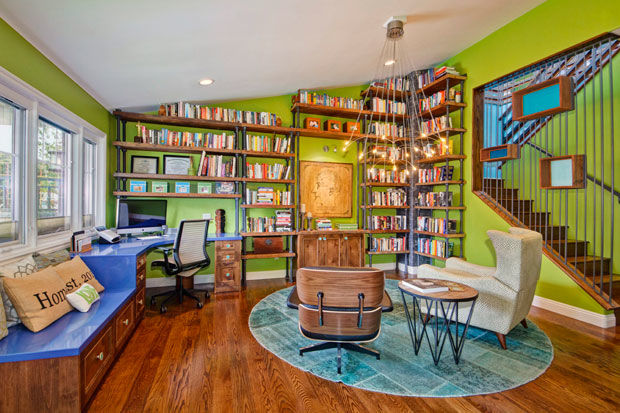
Welcome to the bright and colorful world of Shannon Lerach and Todd Murphy. The young Solana Beach couple was inspired by photos of an old library and coral reefs with bright blues and greens. This space, complete with his and her chairs, serves as the main entry. Before the remodel, it was a formal dining room. “I knew that we didn’t need a formal dining room,” Lerach says. “But I love to read and knew I wanted a library or office.” She credits Murphy, an artist and DJ by trade, with the bold color choices. “I knew I’d want to wake up every day to something that made me happy and inspired me,” explains Murphy, who’s been drawing and painting since he was a kid. Together, the couple worked with Sol Quintana Wagoner of Jackson Design & Remodeling to realize their vision. Here, books become the art. A welder created the shelving system, with reclaimed wood and long threaded poles. The low-voltage pendant is by LBL Lighting, and the blue desktop is made of Silestone.
The rendition of Gustav Klimt’s The Kiss by Stacy Vosberg was meant to be an actual surfboard, but instead, the couple decided to hang it in their stairwell.
CURB APPEAL
The couple got rid of the white-picket and painted-yellow exterior. They chose a seaside blue-gray for the overall color, and added a natural stacked stone wall, customizing its height to accommodate their three dogs. The landscaping is laden with plants that thrive in a beach environment, and the design was kept simple for easy maintenance.
“People always say to us, ‘Are you going to like that color in five years?’” says homeowner Todd Murphy. “And I always think, ‘It’s no big deal. We’ll just repaint!’”
PUP PORTRAITS
Murphy painted these colorful pop- art portraits of the couple’s three dogs (from left to right): Chloe (a white boxer), Francis (a red Boston terrier), and Pig (a French bulldog). Inspired by graffiti street art and the works of Andy Warhol, Murphy says, “Having a house reflects your creativity.” This converted garage is his favorite spot to hang out. The designers added engineered vinyl flooring to make it feel more like an art studio. Murphy stores his paint supplies and DJ equipment in there—plus the couple’s wide assortment of bikes, surfboards, wetsuits, and tools. “I love that all my hobbies and interests can live in one room,” he says. “I like to open the garage doors and let the ocean breeze in.”
Yep, they have that many pairs of running shoes—and they’re all just as colorful as the house itself. “We aren’t 18 shades of beige. We like bright colors,” says Lerach, who jokes that Lululemon is her stylist and REI is her Mecca. It’s worth noting that the closet, along with the rest of the home, is always this organized. The self- proclaimed Container Store junkie adds, “I love to organize, alphabetize, and label!”
INDOOR SUNSET
The couple was thrilled when they discovered NYC- based wallpaper company Flavor Paper. Now almost every room in their house has a state- ment wall with a different pattern on it. “We didn’t just want to cover our walls with stuff,” Lerach says. “The wallpaper gives character to the rooms.” The upstairs hallway mural is called Undertow, designed by Steve Ellis.
SLIDING DOORS
Rustic barn doors serve as the entry to the upstairs master suite and a downstairs guest room. The wood adds warmth to the space, and complements the new stair railings. “It was a very collaborative project, with lots of custom details,” says designer Sol Quintana Wagoner.
SOFT SILENCE
Cozy and quiet, the master suite is Lerach’s favorite room in the house. “I love the bright colors in the rest of the house,” she admits. “But there’s nothing like taking a big exhale in here at the end of the day. You just fall into the room.” The wintery wallpaper mural behind the bed is called Soft Silence, designed by Boone Speed (available at Flavor Paper).
Edna Harper asked for one thing before she died: that the next owner of her iconic Mission Hills home keep the street-facing “garden.” Which is essentially asking the future residents to be curators of a whimsical and obsessive, delightful and strange, classic, cartoony and slightly unhinged sculpture museum. Harper, who died in January at the age of 87, poured her heart into this topiary bonanza, and it’s right there for everyone to see.
Like thousands (or millions, there’s no formal estimation) of others, I had scrolled through the photos of this topiary fantasia before I ever stood in front of it. As of this writing, Harper’s Topiary Garden is No. 227 of 2,686 Things to Do in San Diego on Tripadvisor, making it a popular tourist stop between fish tacos, a day at the beach, and a stroll in nearby Presidio Park. But crowdsourced photos quickly snapped in direct overhead sunlight tend to flatten the shapes that, while meticulously manicured, refuse to behave. In person, Harper’s figures seem to be in motion and, given that they’re sculpted out of bushes, they literally are. (I’d love to see a maintenance timelapse.)
Animals emerge out of shrubs as if they have impish ideas. A fanciful whale, a man in a sombrero, a random spiral twisting skyward, otherworldly creatures that defy categorization—all of these exist together in a neatly trimmed cascade pouring down the steep front slope of the property.
You don’t accidentally end up with a yard like this. You decide to create it and choose to cultivate it, and then you keep deciding and cultivating—for decades.
Although a consistent parade of looky-loos have visited over the years, most have never been inside the home, which is on the market for the first time since Harper and her husband, Alex (who died in 2020), bought it in 1969.
Courtesy of Christopher Delgado
“It was and is a landmark,” says Christopher Delgado, Harper’s cousin and trustee of her estate. “She specialized in Chinese brush art and Japanese art called ‘sumi-e,’ a form of Zen art. She was a creator … she was very, very talented.”
I can’t stop thinking about Harper, sitting at the kitchen window, looking down at her masterpiece and the watchers watching it. The image of Harper enjoying the joy the public took from her handiwork makes me want to understand the woman behind the work. Because topiary, as an art form, has always been a little… loaded.
Topiary has always had a bit of an identity crisis—and that’s part of its charm.
When I think of topiary, I immediately think: Fancy. French bourgeoisie. Palace of Versailles. Mais non! Topiary has its origins in Rome. According to the Center forArchitecture, the word “topiary” has its origins in late 16th century English, which combines the Greek word “topos” for place and the Latin word “topiarius” for ornamental gardner.
Photo Credit: Casiel Sanchez
Topiary started as a flex, really. A Julius-Caesar-adjacent pastime for the most ancient one-percenters; an expression accessible only to those with land, labor (or, put more plainly, enslaved people), and spare time. In its earliest form, topiary was about control: bending nature into submission. It’s where symmetry and precision signaled order, taste, and money.
But with the collapse of the Roman Empire and the Dark Ages that followed, the topiary almost preceded the Dodo Bird in extinction. Monks quietly kept the art alive by growing herbs and manicuring the gardens and hedges within the courtyards of their monasteries.
It wasn’t until the Renaissance nine centuries later when topiary saw a resurgence—ah, Versailles!—and this form of pleasure gardening went into overdrive. Nature became architecture. The French pruned their foliage into iconic cones and obelisks, walls to keep out the riffraff, and ornamentation designed to impress. The Dutch got a little freaky, as they do, and sculpted complicated figures, animals, and even furniture.
Inevitably, the pendulum swung again, and topiary fell out of favor once it became viewed as excessive and even absurd. Even so, it never really disappeared. It just migrated to exist in a completely different paradigm. It was less Versailles and more, “What if this bush were a mouse?”
Fast forward to Disneyland in 1963. That year, the park opened a topiary garden in Fantasyland with verdant sculptures of giraffes, camels, elephants, and hippos all inspired by Denmark’s Tivoli Gardens.
Disney’s interpretation of topiary—which is still a fixture of park decor today—falls more into the realm of imagination and possibility than restrained aristocratic performance.
That’s one of the stranger throughlines of topiary: It moves from elite to everyday, from stiff and formal to playful and silly, from symbol of control to something steeped in personal expression.
Which is what makes a place like Harper’s Topiary Garden so compelling and the woman behind it utterly intriguing.
Courtesy of Christopher Delgado
Born in 1938, Edna Harper was something of a Renaissance woman. She worked for two decades as a dental assistant, and she later became a notable painter, calligrapher, and stained glass artist (the house itself is adorned with her work). But she was also savvy in other ways.
“She graduated [with a degree in dental assisting] from San Diego City College and wanted to have her own money and her independence,” says Delgado. “Most people didn’t know that she was such a great businessperson, and for many years, she managed all of [the couple’s] properties on her own. She was great at building relationships … she touched a lot of people’s lives.”
Her friend and fellow artist Julie Roth attributes her artistry to her relationship with Harper. The pair met two decades ago at an art class at Oasis in Mission Valley.
“She was just the most encouraging person,” Roth says. “I didn’t know I could paint, but apparently I can. She was a tremendous person.”
I asked Roth what she’d want people to know about her friend.
“Her empathy and diplomacy,” she says. “[She had] a sharp eye for other talent. She spotted me, but I’m not the only one she encouraged.”
That sharp eye suggests attention, the same kind it takes to look at a bush and also see a whale. Or a spiral. Or something that doesn’t exist yet, but could.
Photo Credit: Casiel Sanchez
Nothing about Harper’s life suggests someone chasing attention. And yet, she ended up creating something that demanded hers, and she took great pleasure in seeing people enjoy her creations.
The garden didn’t happen all at once. It grew out of years of travel, observation, and collaboration. Harper often traveled without her husband, always returning from trips to Japan, Thailand, and other parts of Asia with ideas and impressions captured through sketches in a notebook.
“She would get creative ideas from her travels … she’d come back with ideas and pictures, and they’d go about cutting that topiary bush into shape,” Delgado says.
For the past 25 years, she had the help of her gardener, Pedro Duran—who’s still employed by the trust and has maintained the garden since Harper’s passing.
In the early topiary years, Harper worked closely with Duran in what Delgado describes as a kind of shared “labor of love.” She would share her sketches and together the pair would shape the bushes into something deliberate.
Photo Credit: Casiel Sanchez
“As she got older, she would increasingly draw her ideas and [Duran] would [carry them out],” Delgado says.
That collaboration reinforces that her garden was not an act of control, but one of creative collaboration and translation. From memory to sketch. From sketch to shrub. From something seen, somewhere else in the world, to something rooted in the soil of a steep hillside in Mission Hills.
Harper also made sure that the lawn’s boisterous energy made its way into the house on Union Street. Apparently, she threw legendary parties.
“Fairly regularly, in the late ’70s and ’80s, she would host Super Bowl parties with 200 people. She had TVs everywhere,” Delgado says.
It’s not hard to square that image with the stillness of the garden which, despite the careful pruning and intentional design, is voluminous and nearly vibrating.
And, damnit, I wish I’d watched some sportsball on her shocking number of TVs and wandered out front to the topiary—slightly wine-drunk with an orange smear of wing sauce on the corner of my mouth—to marvel at the leafy hippo and this woman’s elaborately creative life.
Photo Credit: Casiel Sanchez
I can hear Delgado smiling as we talk on the phone. He’s going back to his childhood, when he talks about being one of the cousins Harper doted on when he visited.
“The adults were inside, and we’d be out in the camper,” he says, “and [Harper] would come check on us, make sure we were okay. She always had gifts for us. If it was Easter, there were chocolate eggs. If it was Christmas, stockings. We were the beneficiaries of them not having kids because they showered us with all their love.”
Knowing this and taking a look at her garden again, you can see it’s not the work of a shut-away curmudgeon. It’s wondrous, inviting, and the right kind of weird.
“Ultimately, she did it for herself and family, first and foremost,” Delgado says of Harper’s Topiary Garden.
Harper’s one request of whomever buys her home may seem like a focus on basic maintenance, about hedges and upkeep and preserving something visually striking. But it’s really about attention. And maybe, too, about legacy. Not hers, per se, but the legacy of community, relationships, art, creativity, possibility, adventure, culture, dedication, and love.
For now, it’s there for anyone to see, and its future is in the hands of whomever comes next.
Aaryn Belfer is a writer and editor specializing in nonfiction across art, architecture, and culture. Once upon a time, she wrote a provocative column for San Diego CityBeat (RIP). She was a runner up in the 2025 Matchbook Stories contest at the San Diego Central Library and is irrationally happy about it. Currently in her Soft Girl Era, Aaryn has expensive taste in (mostly flat) shoes and will choose a great art exhibit or live jazz concert over almost anything else. Except, possibly, Javier Bardem.
San Diego is just out here minding its own business. It’s long been cast as Los Angeles’s less ambitious sibling—the chill one, the one who shows up late for dinner reservations in flip-flops with a few provocative opinions. Architecturally it’s often cast the same: secondary, derivative, a footnote to California modernism that seems to begin and end with the Stahl House (Case Study House #22). LA has Pierre Koenig, Craig Ellwood, John Lautner. San Diego has the original fish taco.
But this version of the story is redacted, metaphorically speaking.
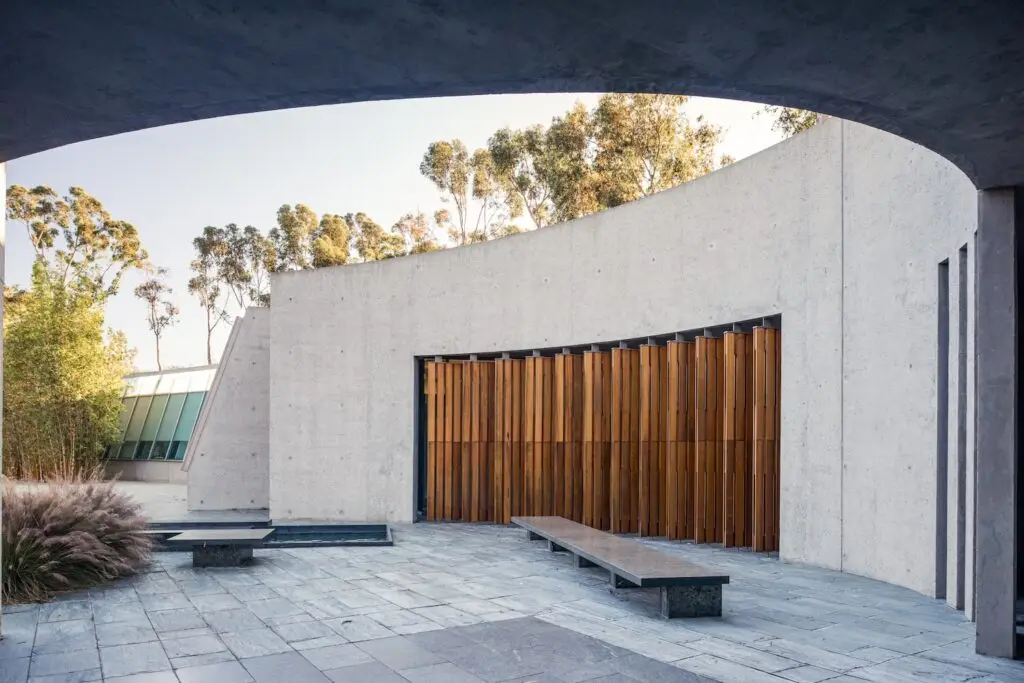
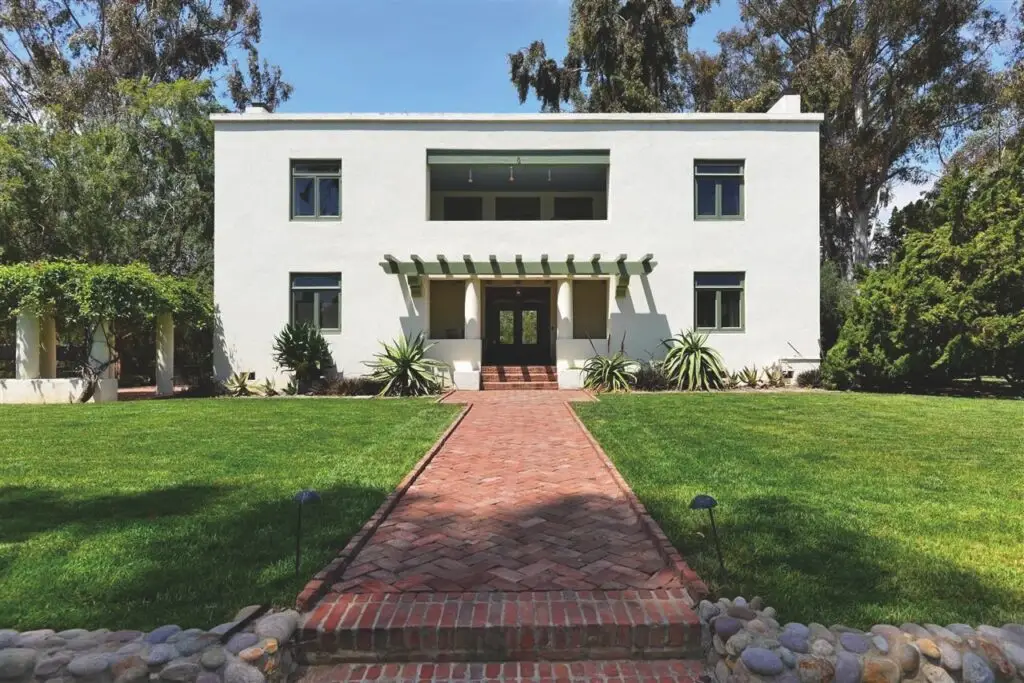
While the jazz hands of Hollywood and its hills cast a spell on historians and architecture buffs, San Diego had, and has, its own quiet evolution: It invented and reinvented itself through homegrown modernism, beginning with The Allen House (1907) in Bonita by Irving J. Gill.
“The biggest misconception is that San Diego was following Los Angeles,” says Keith York of Modern San Diego, one of the city’s top guides to modernist architecture. “Those who consider Rudolph Schindler and Richard Neutra as the fathers of Southern California Modernism often fail to recognize the outsize influence Gill and his buildings had on their work.”
Courtesy of Keith York
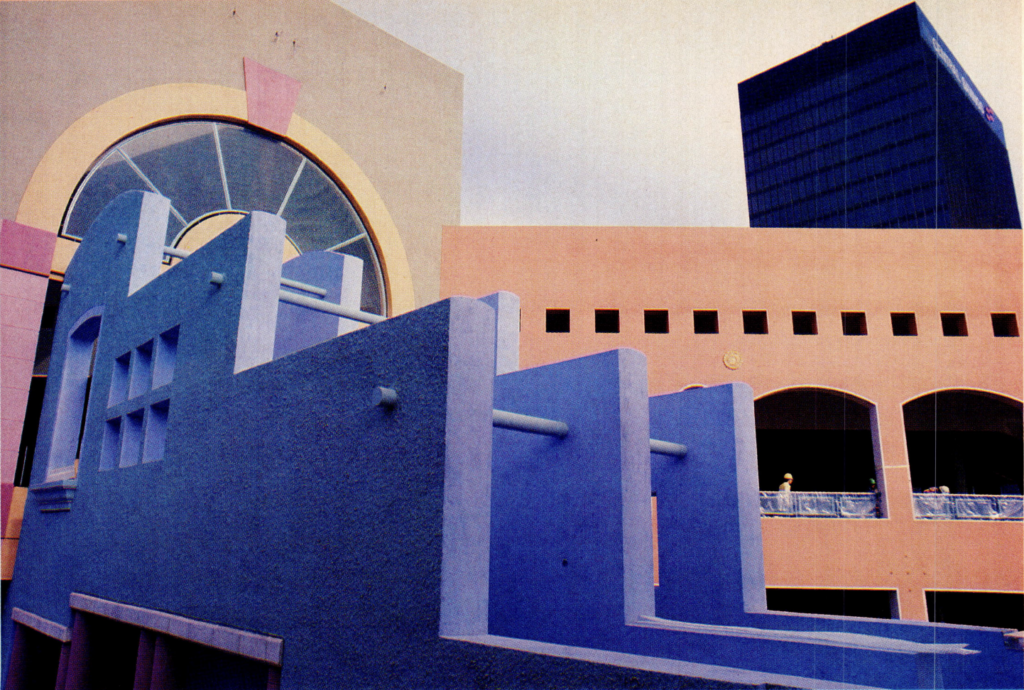
A new book, The Distinct Modernism of San Diego—written by Mark Hargreaves and Hallie Swenson, published by York—focuses on eight architects who were born, raised, or built their careers in San Diego. It illustrates how the city wasn’t hosting weekend warrior architects on side quests. It was a staging ground for a less look-at-me modernism from luminaries like Gill, Lilian J. Rice, Richard Requa, Lloyd Ruocco, Frederick Liebhardt, Kendrick Bangs Kellogg, Sim Bruce Richards, and Cliff May.
“Absent the backstabbing competition for projects, a collegial group of architectural peers collaborated and maintained lasting friendships with one another as they designed in response to the temperate climate and slower economy,” York says.
Largely unknown until the mid-1960s, Gill is a marquee name today. He arrived here from the East Coast at a moment when San Diego was still defining itself, which gave him the freedom to invent something new, experiment, rebel.
Instead of imposing the flourishes and frills of the time, he considered San Diego’s climate, light, landscape, history—the joie de vivre—and designed for this place. “[Architects of the west] must have the courage to fling aside every device that distracts the eye from structural beauty, must break through convention and get down to fundamental truths,” he once said, a sentiment that nails the un-ornate, total lack of pretension that’s defined San Diego people and culture.
And, lo, did Gill fling: His flat roofs, clean lines, and almost no ornamentation—though not necessarily modernism in the Eames or Eichler sense—foreshadowed what would later be called minimalism. Gill eventually became synonymous with the Los Angeles narrative, but broader architectural histories overlook the fact that his most progressive designs happened here.
Courtesy of Keith York
Another key to San Diego’s architectural movement was Lilian J. Rice, who often worked behind the scenes with little credit. She was one of only about 10 women in America licensed as architects at the time. Even though she died from cancer at 43, she somehow managed to complete an estimated 170 projects in the region, many in Rancho Santa Fe.
Born and raised in National City, Rice also wasn’t importing ideas. She shaped her own based on her understanding of this region and her commitment to protect the natural environment. Her work has been categorized as Spanish Colonial Revival, but she wasn’t reviving as much as she was refining a style suited to our border region—serene, mirroring nature, beautiful.
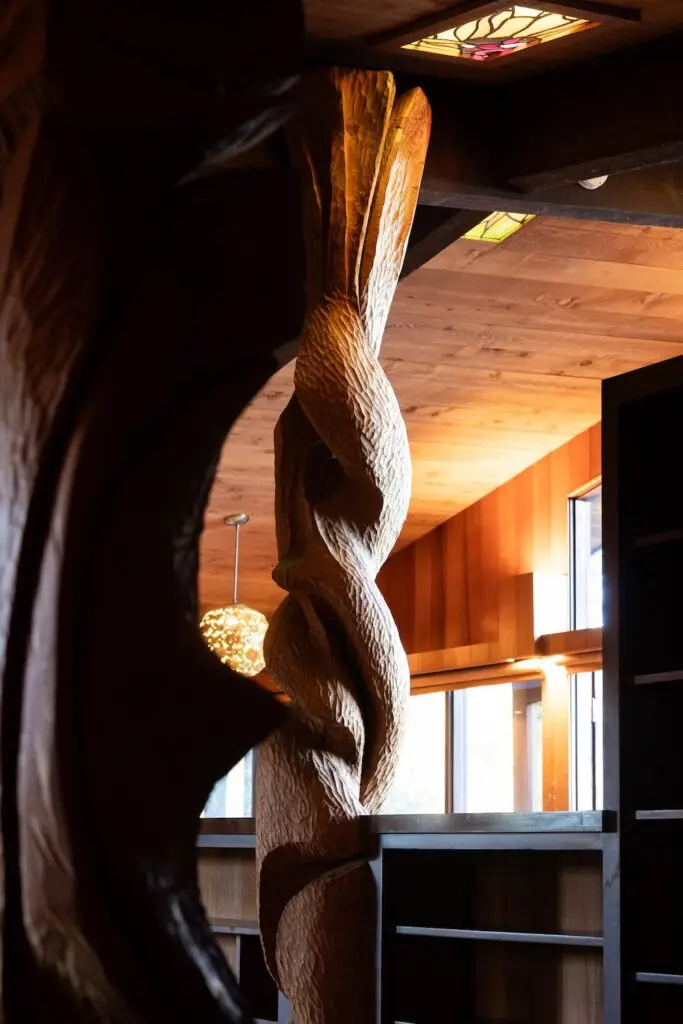
Like Sim Bruce Richards, who was his own way of life. While Gill stripped away ornamentation and Rice focused on the peace of open spaces, Richards came along several decades later and went full emo. By then, modernism had grown deep roots; its steel-and-glass structures took themselves very seriously. Richards came to party.
Photo Credit: Ollie Patterson
An eccentric, unpredictable man with half a face (part of his jaw was removed following a bone infection when he was a child), his life was a jalopy of adventures. He was opinionated and passionate about design, music, texture—and he created what he called a “sensuous environment.” He wanted his clients and their guests to feel the spaces as much as to be in them, appealing to the visual, tactile, nasal (“a cedar house smells good”), auditory (“acoustically superior”), even taste. “Though, I‘ve never had a client lick my houses,” he once wrote.
Organic, woodsy, textured, aromatic—if you ever find yourself in a Sim Bruce Richards house, a licking impulse might not seem so outrageous.
Gill, Rice, Richards and the other architects in Distinct Modernism built a legacy in San Diego that resonates nationally. And the work of these heavy hitters isn’t stuck in an inaccessible collectors realm: This October, homes by Kellogg and Liebhardt will open to the public as part of the La Jolla Modernism Home Tour—an opportunity to experience it not as a museum relic or magazine image (ahem), but as something alive.
Modernism in San Diego was never about glamour or an intention to be iconic. What transpired here is more nuanced, more ingrained with a less shouty aesthetic. A very San Diego aesthetic.
Aaryn Belfer is a writer and editor specializing in nonfiction across art, architecture, and culture. Once upon a time, she wrote a provocative column for San Diego CityBeat (RIP). She was a runner up in the 2025 Matchbook Stories contest at the San Diego Central Library and is irrationally happy about it. Currently in her Soft Girl Era, Aaryn has expensive taste in (mostly flat) shoes and will choose a great art exhibit or live jazz concert over almost anything else. Except, possibly, Javier Bardem.
Kelvins. If you’re anything like me, you probably haven’t thought about them since high school chemistry. Lately, though, they’ve become one of the more hotly debated measurements in interior design.
Kelvins measure the color temperature of light, which is a technical way of saying they’re key to whether a room feels calming or slightly unsettling. The wrong Kelvin temperature can suddenly give your bedroom the vibe of a hospital corridor. Warmer Kelvin temperatures cue relaxation. Cooler ones sharpen alertness. Interior designers now talk about Kelvins the way chefs talk about salt: invisible when it’s right, immediately obvious when it’s not.
That focus on light reflects a broader shift in San Diego homes—people are worried less about how spaces look and more about how they hold you over the course of a day. Design decisions now favor what fades into the background and silently improves daily life. And once you start thinking that way, it’s hard not to apply the same logic to everything else in the house.
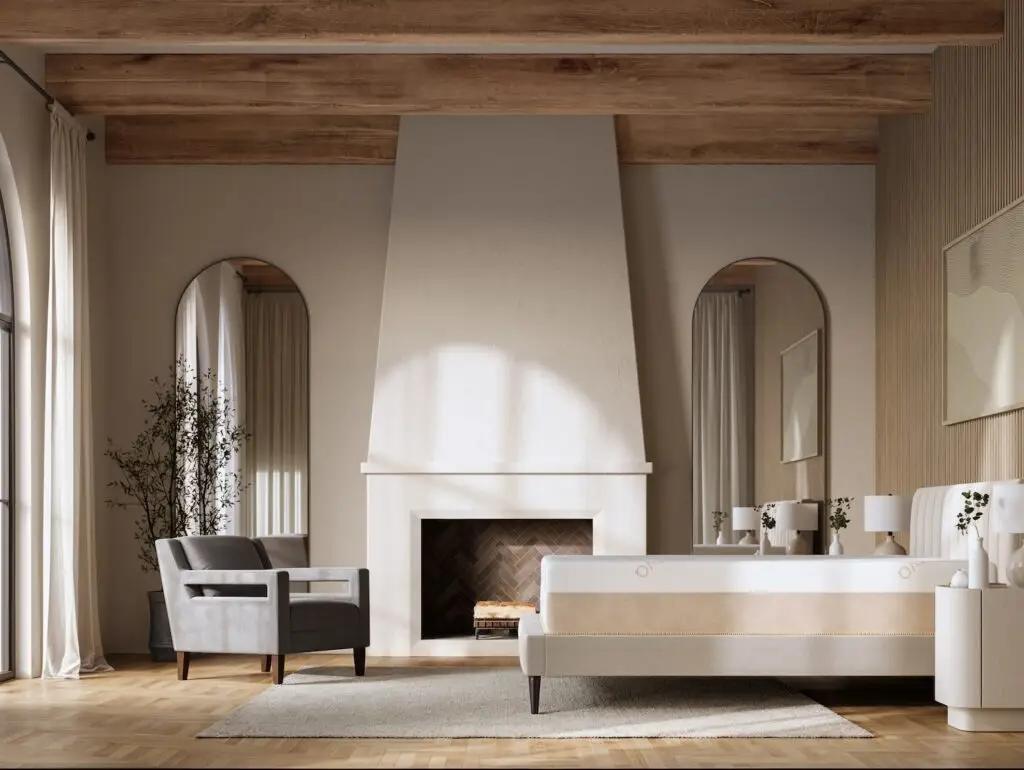
My husband and I felt that impulse firsthand last year while shopping for a mattress. We spent multiple weekends wandering the showrooms at Westfield UTC, lying on beds in our outside clothes, asking questions about spinal alignment, breathability, and temperature regulation. We debated coils versus foam, read studies on sleep stages and thermoregulation, and compared notes in the parking lot like two people deciding whether to buy a house.
Courtesy of Saatva
Eventually, we chose the Saatva Contour—a name that sounds more like a luxury sedan than something you sleep on. That felt fitting, given the amount of deliberation we put into it. We picked it for its spinal support and ability to dissipate heat through the night, two factors consistently tied to deeper, less fragmented sleep. At the time, it felt overly academic, but it made its case experientially: We experience fewer disruptions at night and wake with the unexpected sense of being genuinely rested.
Eventually, I realized that our search had been less about shopping for comfort and more about shopping for recovery.
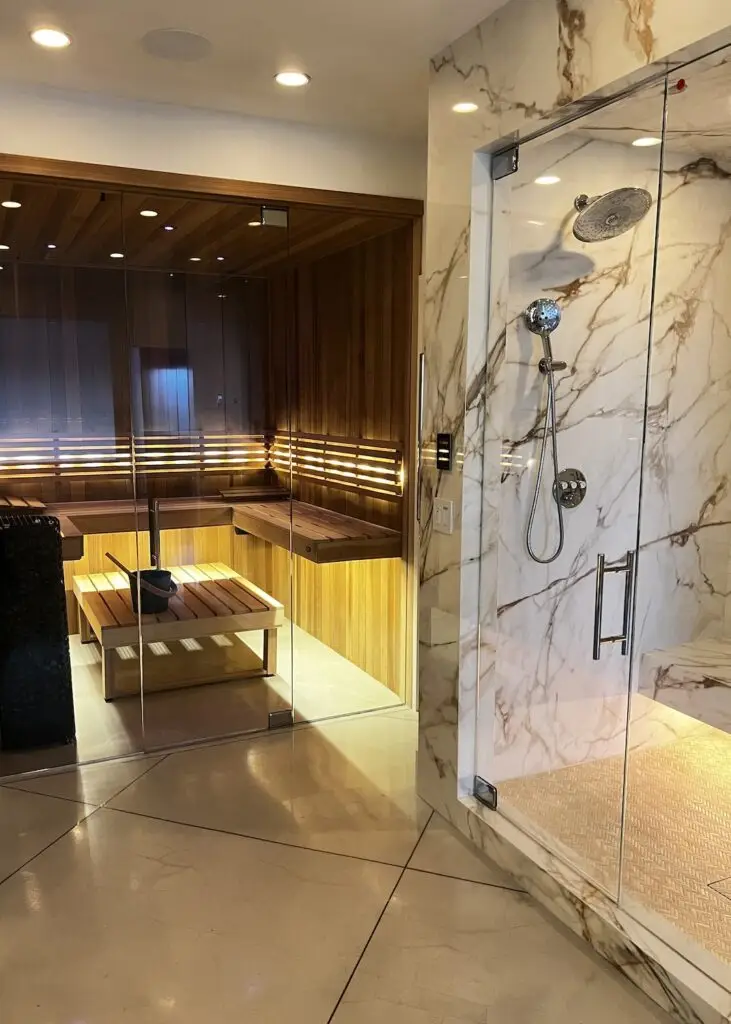
Now when I wake up, I usually head straight to our little sauna, which sounds much more impressive than it actually is. It sits just outside the house, tucked into a narrow corner of our small backyard. Technically, it’s meant to live indoors, but we adapted it for outdoor use because that was the only place it would fit. The door closes with a soft thud; the scent of cedar blooms as the heat sets in. Inside, there’s a single bench and barely room to stretch my legs. It isn’t glamorous, but the science on sauna use is compelling: Regular heat exposure has been linked to improved cardiovascular health, reduced inflammation, and more efficient recovery via circulation and the nervous system. To me, its real value is something simpler—a few quiet minutes that are mine before the day and its noise begin to make their claims on me.
Courtesy of James Denton Designs
For a long time, luxury meant square footage, statement kitchens, and bonus rooms designed to impress people who don’t actually live there. Homeowners are making different choices today.
“These days, the questions my clients ask are, ‘Will I actually use this?’” says James Denton, senior architectural and interior designer and owner of James Denton Design. “‘Will it help me sleep better? Will it simplify my routines?’”
Interior designer Maegan Ayukonchong, owner of M. Swabb Interior Design Collective, sees that shift in nearly every project. Clients want layouts that reduce friction, storage that actually functions, and spaces that feel uncrowded. “It’s less about filling rooms,” she says, “and more about designing homes that support how people want to live.”
That recalibration accelerated during the pandemic, when homes were suddenly forced to perform at full capacity. Living rooms became offices, kitchens became classrooms, closets became refuges for phone sessions with your therapist. Denton says he noticed clients suddenly confronting how their homes actually functioned.
Ashley Chavez, a realtor with Compass Real Estate in San Diego, watched the same awareness show up in buyer behavior. “After spending so much uninterrupted time at home, buyers started noticing things they used to overlook,” she says, like the amount of natural light, how rooms flow into one another, and whether spaces feel peaceful or overstimulating.
Health conversations widened beyond workouts to include sleep, stress, and recovery, areas where the home environment plays a defining role. Chavez notes that buyers may not use the word “wellness,” but their priorities are clear. “Clients comment on how a home feels,” she says. “They notice whether bedrooms are quiet, whether the layout supports their routines without constant adjustment.”
The results show up in what people choose to build and invest in. Spare bedrooms become infrared saunas. Massage chairs edge out media consoles. Red light panels replace bar carts, delivering low-level light that supports cellular repair, muscle recovery, skin health, and circadian signaling (it’s worth noting that cocktails pretty much do the opposite of all that). Rooms once dedicated to entertaining are reimagined for restoration.
Clement Qaqish drops into a chaise in the living room of his Solana Beach home with the familiarity of someone used to managing fatigue. A maxillofacial surgeon by day and an endurance athlete by choice, he’s completed 14 full Ironman races and a dozen Half Ironmans. “When you’re training this much, recovery isn’t optional,” Qaqish says. “And even if you’re not doing Ironmans, your body still has to recover—from stress, from sitting, from whatever you ask of it.”
Normatec compression boots sit coiled on the floor beside him—long black sleeves that look part medical device, part sci-fi costume. He slides his feet in one at a time, zipping them up to the thighs. They inflate, with air pulsing upward in slow waves, rhythmically compressing his legs to push blood and lymphatic fluid back toward his heart. The soft mechanical whir fills the room. The goal is faster recovery and less soreness after heavy training. “Most people wait until [their legs are] broken,” he says, smiling slightly. “I’d rather not get there.”
When Qaqish and his wife, Gabby Galleo, a biotech executive, moved into the house, those priorities shaped the abode early on. “The first thing I bought for our home was an infrared sauna for Clem’s birthday,” Galleo says. “Once we had the space, it just made sense.”
Courtesy of Nordic Wellness
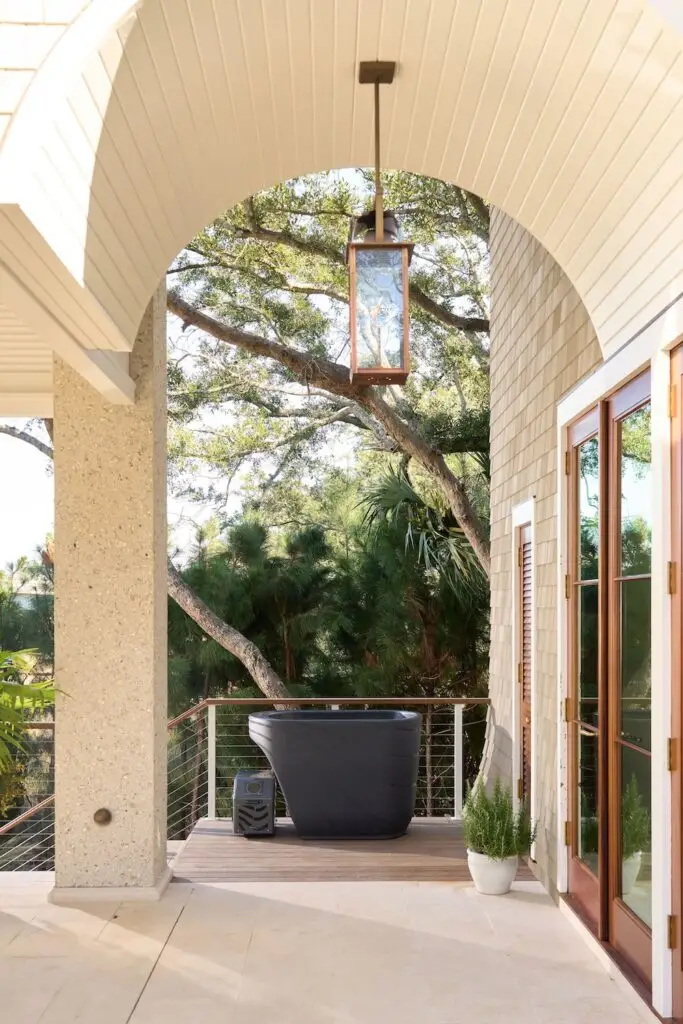
From there, the rest followed naturally: a Nordic Wave Cold Plunge on the patio (to support nervous-system resilience and curb inflammation), compression boots by the couch, a red light mask on the armoire (to promote cellular repair and skin tone). Tools more commonly found in a training facility or high-tech spa are folded into the feng shui of the home. With all the tech scattered around the house, “it’s easier to do it than to avoid it,” Galleo says. “You’re just moving through your day, and it’s there. We didn’t want it to feel like a production. If it required driving somewhere or scheduling around it, we knew we wouldn’t do it consistently.”
While fancy equipment certainly helps you unwind after a hard workout, most of the changes that make a home extra restful can be accomplished without hiring a contractor or taking out a loan for the latest technology.
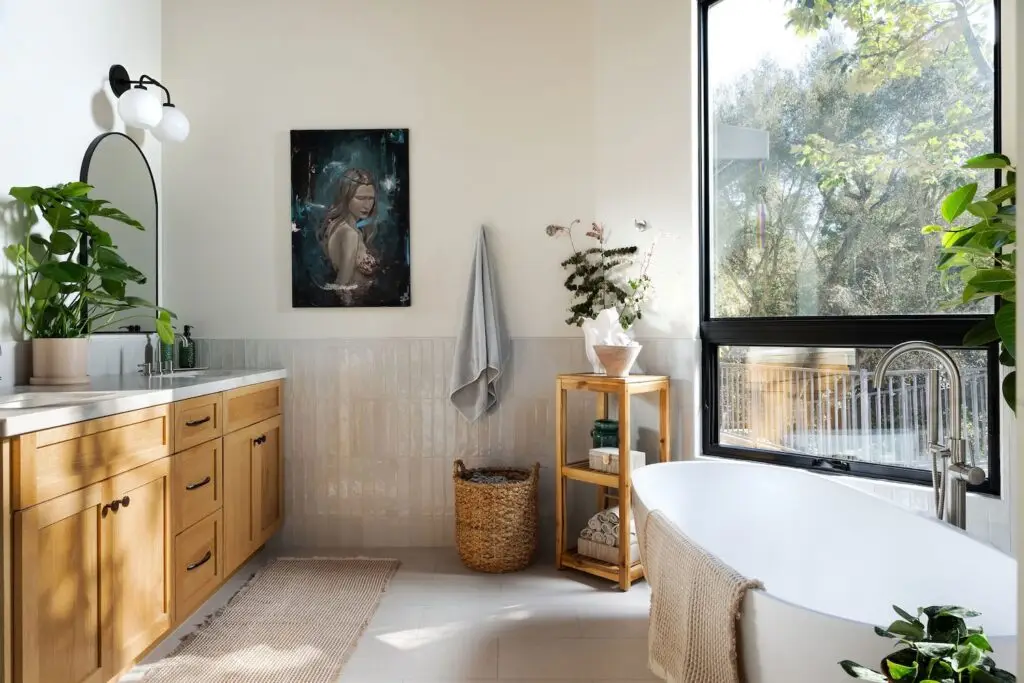
“Editing is the new flex,” Ayukonchong says. “The most impactful shifts are often the simplest ones: Add live plants for a fresh, calming boost; reorganize storage; replace heavy window treatments with breathable linens to soften natural light.”
In general, lighting is a low-cost approach to achieve an outsized impact. Denton recommends “warmer tones in bedrooms for relaxation, cooler bulbs in workspaces for focus, and dimmers that let rooms shift with the day,” (gotta get those Kelvins right!).
From there, he turns to details most of us overlook, even as research increasingly shows how powerfully they shape how we think and feel. “Start with acoustics. They are key to reducing stress and mental fatigue,” he says. According to research from the University of California, Davis, chronic background noise raises stress hormones and cognitive fatigue, which is why oversized rugs and soft window treatments that dampen sound can matter just as much as aesthetics.
And you can double up on the boons from your houseplants by intentionally placing mirrors near or across from them. Studies on biophilic design link visual exposure to greenery—even if it’s reflected—with improved mood and lower stress, while blank walls offer no such benefit.
Air quality is the final layer. Indoor air can be more polluted than outdoor air, and poor ventilation has been associated with headaches, brain fog, and disrupted sleep. Simple upgrades, like higher-grade HVAC filters or a modest air purifier, address a problem quietly and persistently affects many homes.
Courtesy of James Denton Designs
Even simply designating one chair for reading, one corner for stretching, or one surface for tea or journaling can reshape how a home functions. Research in environmental psychology suggests that context-dependent cues help the brain switch states more efficiently, making it easier to relax or focus when an activity is consistently paired with a specific place. Over time, the space itself becomes a signal, reducing decision fatigue and allowing the nervous system to settle more quickly.
Dr. Jenn Chang, a physical therapist, yoga therapist, and founder of The Movement Mechanic PT, walks me through her small Carmel Valley condo. “I didn’t have room to include things casually,” she says. “Everything had to earn its place.”
In her home office, where she sees clients, a yoga wall with mounted bars and straps that support alignment and traction anchors one side of the room. “It feels like a bonus,” she says. “I can use it with patients, but it’s also there for my own practice.”
In the garage, an infrared sauna sits snugly against the wall. Despite the condo’s limited storage, Chang is careful to keep the area around it uncluttered. “If the space starts filling up, the sauna stops feeling inviting,” she explains. “I notice that right away.”
Aerial yoga hammocks hang from the ceiling for her kids (with safety mats below). A compact Swedish ladder supports dead hangs and calisthenics and doubles as something her children climb on. A vibrating foam roller and a Theragun are stored nearby. “The easier it is to use and put away,” Chang says, “the more likely it becomes part of your day.”
For a long time, I resisted getting a cold plunge myself. It felt unnecessary, even a little excessive. But after spending time with people who treated it as just another part of the house, I eventually purchased one, setting it up on my patio, steps away from the sauna that shields me from notifications and the mattress that we spent so long researching. All together, they offer me permission to do less, move a little slower, incorporate recovery into my everyday life. In a culture that never stops asking what’s next, that feels like the most radical thing.
Ingrid Yang, M.D., J.D. is a hospital-based physician in San Diego, CA, certified yoga therapist, and longevity specialist. She loves *double hearts* San Diego and spends her days helping people fully engage in long, healthy lives through evidence-based lifestyle medicine. Her books include Adaptive Yoga, Zen Mindfulness, and Hatha Yoga Asanas. When she’s not leading international wellness retreats, she is chasing sunsets, handstanding in nature, or geeking out over mitochondria.
A perfectly designed home rarely happens by accident. Those kitchens that feel effortless and rooms that seem to tell a story the second you walk in? They’re usually the work of someone who knows exactly what they’re doing.
It’s knowing which ideas will actually work, which materials will hold up over time, and how to turn a collection of choices into a space that feels intentional. That’s where a professional interior designer comes in.
For the American Society of Interior Designers (ASID) California San Diego Chapter, the goal is to help people see interior design as more than just the finished look. Behind every well-designed space is a process built on technical expertise. Designers are educated in everything from professional software and construction details to building codes, space planning, materials, and functionality.
Courtesy of ASID
“People don’t always realize how much goes on behind the scenes,” Kirsten Recce , current president of the ASID California San Diego Chapter, says. “Our designers are not just doing furniture placement and color selection and picking out new fluffy pillows. That’s not what they’re trained for.”
ASID members bring formal education, continued learning, and industry knowledge to their projects, helping create spaces that are not only beautiful, but designed to work. A paint color that changes completely depending on the lighting. A material that looks beautiful in a showroom but doesn’t make sense for everyday life. A layout that photographs well but doesn’t function for the people living there. These are the details where professional guidance can make all the difference.
Still, one of the biggest misconceptions about hiring an interior designer is that it’s reserved for massive renovations, luxury homes, or people who already know exactly what they want. The process can feel intimidating. Where do you begin? Is a designer worth the investment? What if you only need help with one room?
ASID’s answer: start with one hour.
ASID’s Spruce Up events break down one of the biggest barriers between homeowners and professional design: knowing where to begin. Held twice a year, the community program gives homeowners the chance to work directly with an ASID designer through a one-hour, $125 consultation in their own home. Whether you’re looking for advice on furniture placement, window treatments, kitchen and bath updates, remodeling ideas, vacation rentals, color selections or something else entirely, the upcoming September 2026 event offers an approachable way to get expert guidance before committing to a full project. Signups are open through Sept. 7, with consultations taking place Sept. 21 through Oct. 31. Proceeds benefit ASID San Diego’s educational and community programs. Register here!
Courtesy of ASID
“It’s a great opportunity for people who are in that exploratory phase,” Recce says. “Maybe they’re not sure they want to hire an interior designer yet, or they think it sounds daunting or expensive. This gives them a chance to discover what working with a designer is actually like.”
Design is personal. A good designer isn’t just creating a beautiful room; they’re helping create a space that fits the way someone lives.
“We’re a resource to all of San Diego County,” Recce says. “It doesn’t cost anything to pick up the phone and call and ask. We’ll answer.”
Welcome to the inaugural San Diego Magazine Home + Design Awards, where we celebrate the brilliance of local interior designers, architects, landscapers, craftspeople, builders, and home service experts within San Diego’s vibrant home design scene.
These awards are a celebration of the creative forces shaping the aesthetics of San Diego and its surroundings. Like brushstrokes on a canvas, we aim to bring attention to the talent and services that turn spaces into living masterpieces.
Your submission is your invitation to step into the limelight. The winners will be featured in the April Issue of San Diego Magazine and posted online. San Diego Magazine is read by more than 164,700 readers each month, and sandiegomagazine.com receives more than 403,000 monthly page views. Your nomination is an opportunity to captivate our affluent readers who turn to San Diego Magazine for insight into culture, food, arts, and the latest in home design.
To Enter
You can nominate a business or tradesperson whose work and physical business is located within San Diego County. Please provide the name of the business and tradesperson with their contact information. In addition, please include your name and contact information with your entry.
For Transformation entries, provide a high-quality before and after photo to be eligible for the Reader’s Choice vote. We’ve set up an easy-to-use Canva template for your convenience here.
Reader’s Choice Voting
Rally Your Troops! After your masterpiece is nominated, it’s time to gather the votes! From January 8 to 15, unleash the power of your design community. Share, shout, and let your network know that your creation deserves the Reader’s Choice Award, and ask them to vote for your entry.
Important Dates
Nomination Period: December 4, 2023 – January 12, 2024 12 PM Reader’s Choice Voting: January 12, 2024 3 PM – January 19, 2024
Winners will be announced in the April issue of San Diego Magazine and online at sdmag.com
Nominating Categories
Best Interior Transformations (Before and After) Bathroom Bedroom Closet Dining Room Game Room Garage Home Gym Kids Room Kitchen Living Room Nursery Office Stairs/Staircase
Best Exterior Transformations (Before and After)
ADU (Accessory Dwelling Unit) Backyard Landscaping Conversion to water-wise landscape Exterior Home Renovation Front yard landscaping Garden Patio + Porch Sheds Swimming Pools
Best Home Businesses + Services
Appliance Store Architect Carpet/Flooring Cleaning Services Closet Remodeling Door + Window Electrician Escrow Company Furniture Store Gardener General Contractors Handyman / Repairman Heating, Cooling, and Air Home Remodeling Home Security Interior Designer Landscaper Lighting Stores Nursery / Garden Center Painters Pest Control Pile + Masonry Plumber Pool Services Real Estate Agent Real Estate Company Roofing Solar Tree Services Turf Upholstery
Homes of the Year
Interior Categories
Bohemian Coastal Contemporary Eclectic Green Industrial Maximalist Midcentury Minimalist Modern Multifamily Residence Rustic
Exterior Categories
Beach Home Multifamily Residence Contemporary Craftsman Green Mediterranean-Style Midcentury Modern Mountain Home Ranch Style Spanish-Style Suburban Home Tudor-Style Urban Home Victorian
Inside the remodeled 1970s craftsman of local pastry chef and Extraordinary Desserts owner Karen Krasne
Photo Credit: Zack Benson
By Ashtyn Douglas-Rosa
The similarities between baking a cake and remodeling a home might be slim in the minds of most. But to renowned pastry chef and owner of Extraordinary Desserts Karen Krasne, paying attention to detail when decorating anything—be it a gorgeous wedding cake or her 2,200-square-foot house in Mission Hills—is the recipe for a tasteful design.
Krasne began remodeling her 1970s craftsman into the dynamic, contemporary space it is today with the help of local architect Aaron Anderson nearly 15 years ago. “We started with this custom gate, actually,” Anderson says, pointing to a large, suspended steel-and-glass opening at the entrance of the Krasne residence.
Photo Credit: Cole Novak
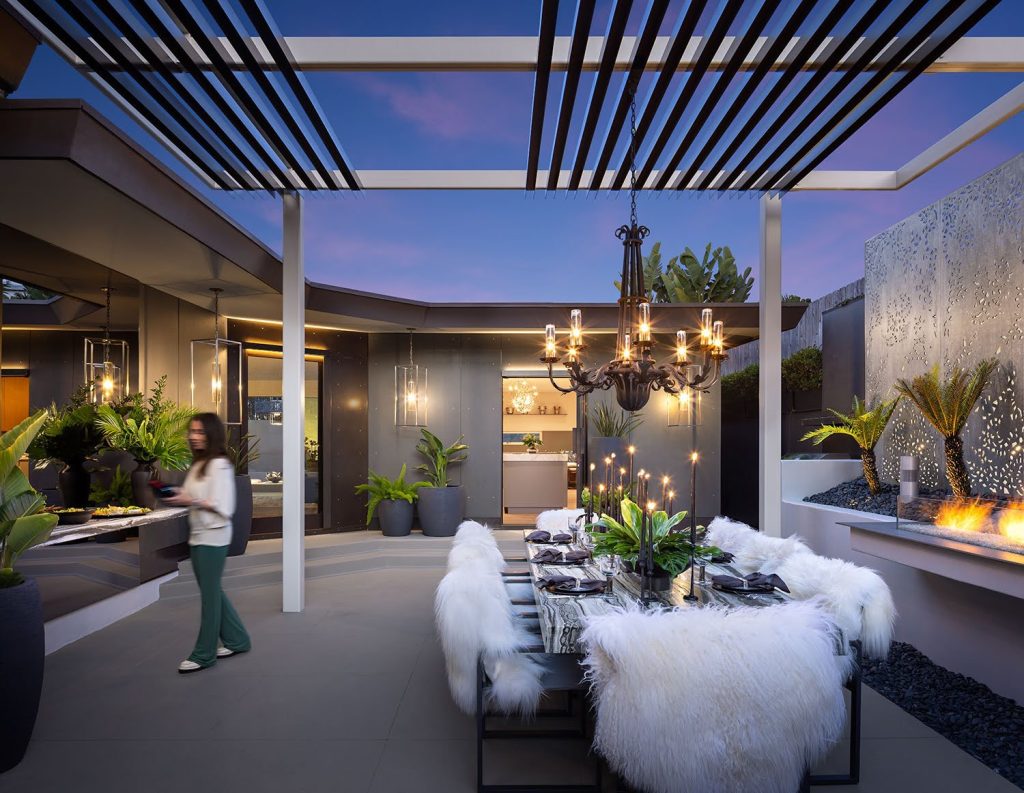
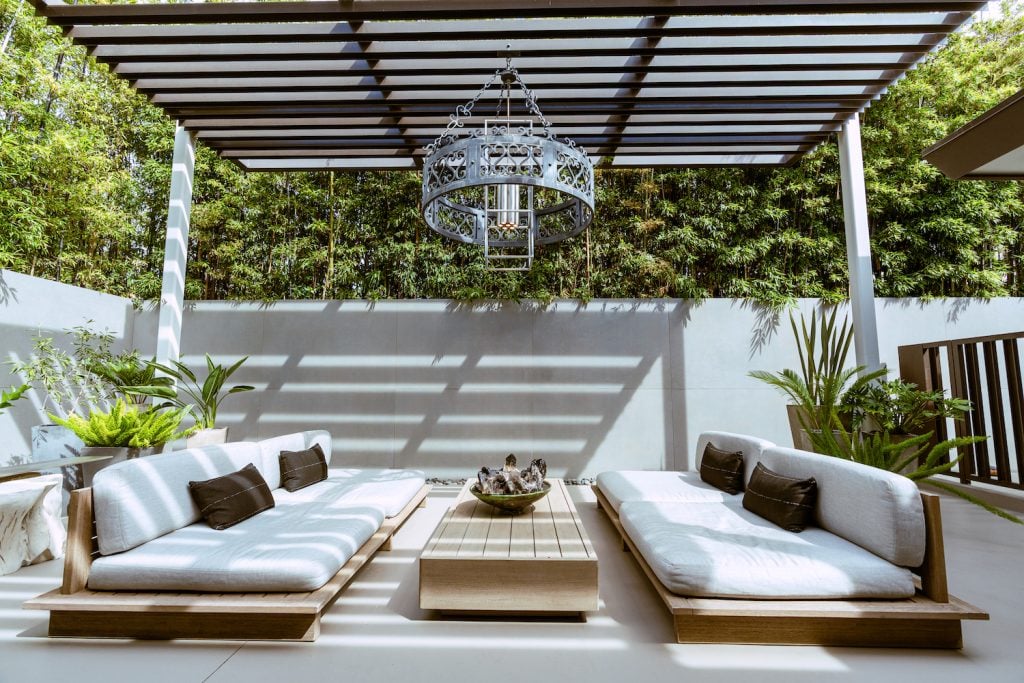
Past the gate, guests step into the front courtyard that serves as an outdoor dining room. Beneath a custom steel canopy filtering sunlight into the space—an effect inspired by the oak trees of San Diego County—sits a grand stainless-steel communal table topped with zebra quartzite stone. Along the north wall, a smoky gray mirror magnifies the space.
The intimate courtyard brings the outdoors in, while the architecture and design of the house spill outwards.
Photo Credit: Cole Novak
“Both Karen and I grew up in San Diego, so the house is heavily influenced by that sort of outdoor living,” Anderson says. “But the interesting thing about Karen is her travels. What she does, as a chef, is heavily influenced by her international travel, so we also brought all that influence into the house. It’s anchored in San Diego, but it has all kinds of international flourishes.”
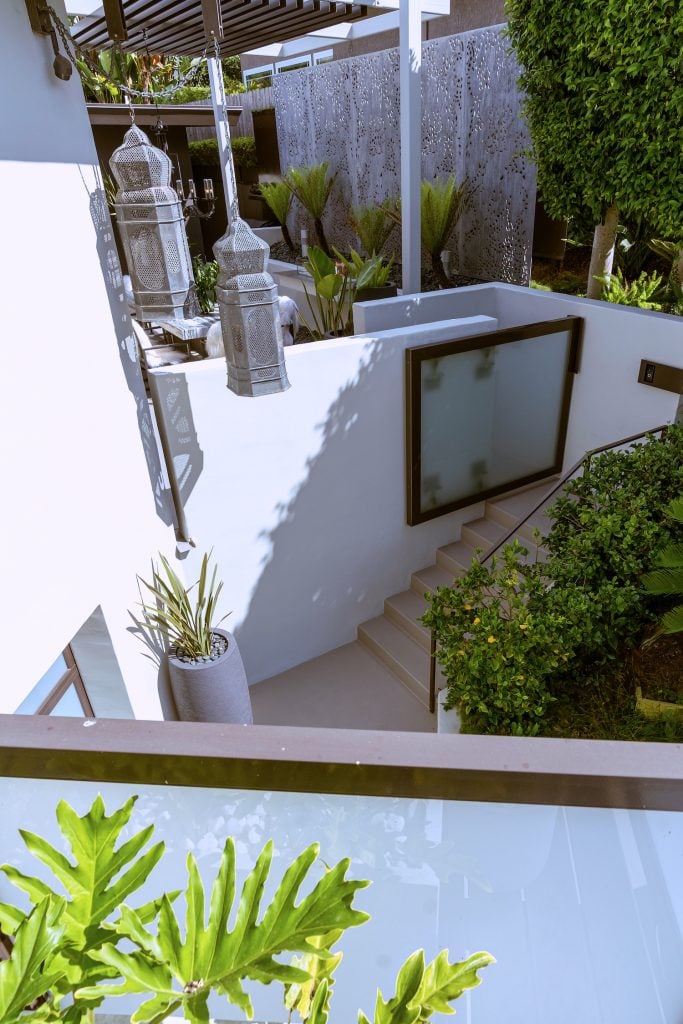
The south wall of the courtyard is a striking cement fiberboard privacy screen that’s been pierced with an intricate design. “The very first day I met Karen, she brought these Moroccan lanterns she bought on a trip to Marrakech into my office and she said she wanted the front part of the house to be about these,” Anderson remembers. “I had [the lanterns] on my desk, and we just thought about unrolling them and cutting out the design onto a piece of slim fiberboard. The piece is backlit so, at night, this side glows just like a lantern does.”
Photo Credit: Cole Novak
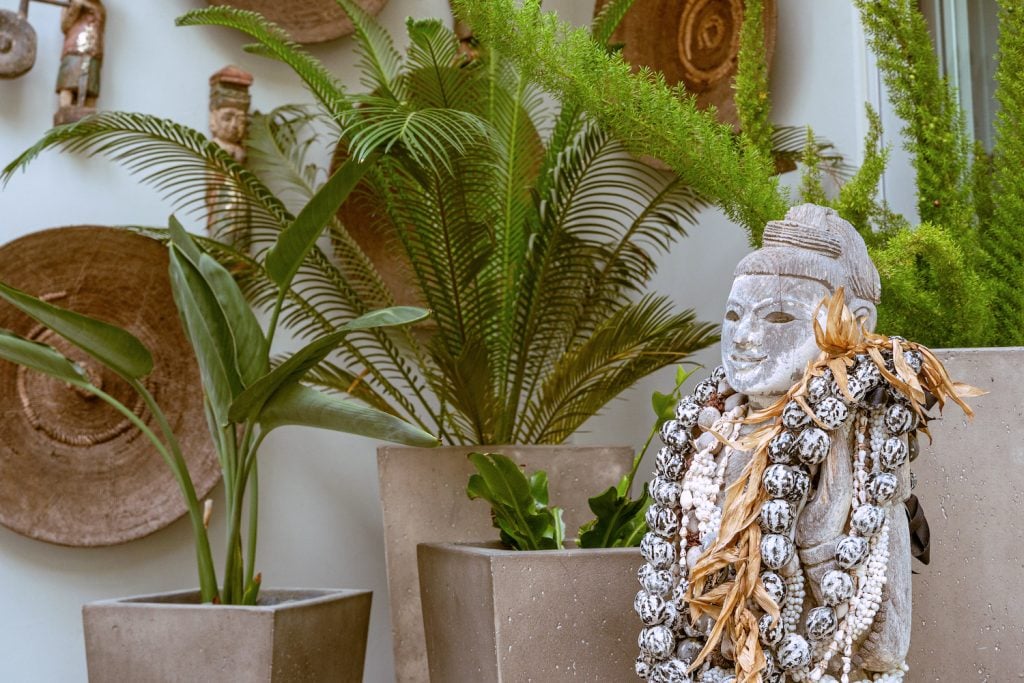
The old-world, international influences don’t stop in the courtyard. Inside the home, Krasne’s love of traveling is reflected in every room. A hand-carved wooden Moroccan cabinet has been repurposed into a bathroom door. Ornate candle holders from Bali adorn the master bathroom countertop. And in the living room—which expands into a second, bamboo-flanked courtyard through massive stacking glass doors—a feature wall was inspired by traditional azulejos tile Krasne once saw in Spain.
Photo Credit: Cole Novak
“We tried to take all these different influences—Morocco, Bali, and Paris, where Karen went to culinary school—and balance them with the edgier, modern stuff,” Anderson says. “It’s really hard to take a craftsman house and modernize it without it looking terrible, so I think one thing we all did well was elevating it without overtaking it.”
Photo Credit: Zack Benson
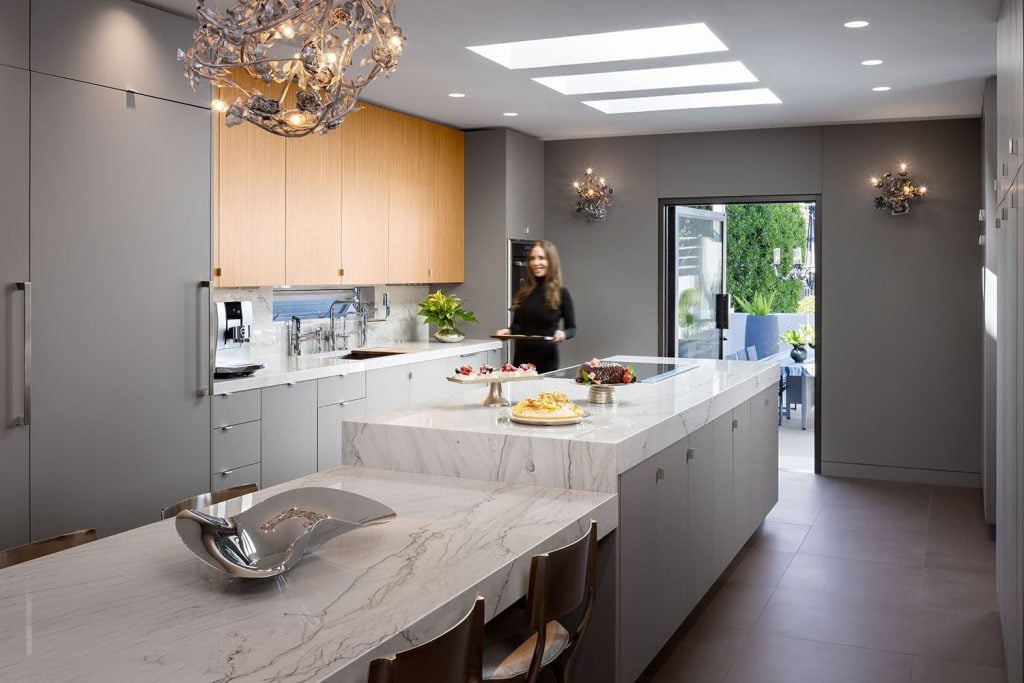
The kitchen, where Krasne spends most of her time while she’s at home, was renovated last. A large island topped with a Japanese-inspired lithograph on natural quartz sits in the middle of the sunlit room, nearly always covered in a food spread for Krasne’s family and friends. Floor-to-ceiling, built-in cabinetry is coated with a self-healing gray Fenix laminate, giving the space a calming atmosphere.
Photo Credit: Cole Novak
“Those,” Kranse says, gesturing to ornate, art-deco chandeliers hanging over the kitchen table, “are from an old opera house in Austria. I had them sprayed silver to match the sconces, which all came from the same opera house. I also wanted to bring in French Champagne buckets—I really wanted the space to be about us drinking wine and entertaining.”
The Champagne buckets line a shelf hung above built-in lounge seating. Next to the lounge is an in-wall desk with a stack of her favorite cookbooks on display. There, Krasne researches and experiments with new recipes.
“I have a huge office at my restaurant, but I can’t think straight there,” Krasne says. “You feel the frenetic energy, you hear the tamping of the espresso machine and the phones ringing.” It’s here, in this calming, creative space (and in her personal gym downstairs), that Krasne finds inspiration.
As we exit Krasne’s kitchen and step back out into the front courtyard, she jokes with Anderson that she recently came up with a landscaping idea for the front entrance while on a trip to Puerto Vallarta with her husband.
“I know, with Karen, there’s actually a good chance that it’ll happen,” Anderson laughs. “Karen knows more about construction and putting a house together than any other client I’ve ever worked with. We actually get to a detailed level of thought and design. That’s super rare.”
Growing up, Laika Nur, MD, Scripps Clinic sports medicine specialist, loved watching beach volleyball when the Association of Volleyball Professionals tour came to her hometown of Chicago. A talented volleyball player herself, she remembers sitting in the stands all day, and once, even got a couple autographs. Years later, Dr. Nur was attending a professional event focused on women’s sports, and the discussion turned to a new professional women’s volleyball league. The general manager and coaching staff for San Diego’s team, the Mojo, happened to be in attendance, and Dr. Nur took the opportunity to ask them if they needed a team doctor. Flash forward to the Mojo’s inaugural 2024 season, when Dr. Nur officially became the team physician. Click here to read more about Dr. Nur and how she incorporates lessons she learned on the court into her practice.
For more nutrition, wellness, and healthy living tips, sign up for the San Diego Health newsletter here.