Ready to know more about San Diego?

Subscribe
Features DECEMBER 18, 2019

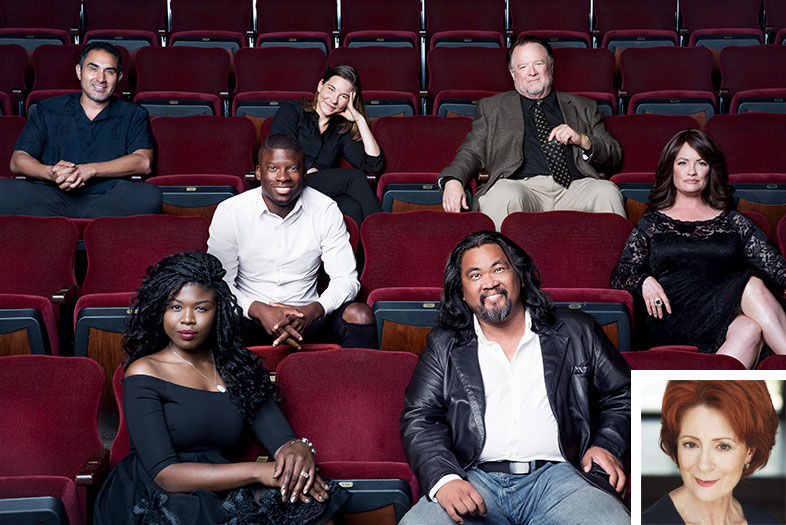
8 San Diego Actors Share What Makes the Local Theater Scene Unique

How did you get your start in the San Diego theater community? Stephenson: I started here in 1981 in the San Diego Rep’s production of A Christmas Carol—I think we were six, seven actors playing 66 roles. And this was before Horton Plaza, in the old Lyceum, which isn’t around anymore. And I kinda set […]
8 San Diego Actors Share What Makes the Local Theater Scene Unique

How did you get your start in the San Diego theater community?

Stephenson: I started here in 1981 in the San Diego Rep’s production of A Christmas Carol—I think we were six, seven actors playing 66 roles. And this was before Horton Plaza, in the old Lyceum, which isn’t around anymore. And I kinda set to work after that: Got a full-time job to pay the bills, and worked at Lamb’s Players and the Rep, and that was enough to keep me busy at the time.

Bowman: I was the angel in the Nativity show every year in grade school… but I did my first professional show at The Old Globe when I was 12, and that’s when I got the bug. I’ve been acting ever since.

Reynolds: I was in northern Wisconsin and saw a magazine about The Old Globe; that’s what prompted me and my husband to come here. I called Craig Noel at the Globe and said I’d like to audition. It was shortly after their theater had burned down, but still he invited me in.

Johnson: My start here was with Ruff Yeager at Southwestern College. We did a really cool production entitled The Bomb-itty of Errors. Hip-hop Shakespeare—need I say more?

Guerrero: I started acting in high school because I used to be deadly shy, but I felt like I had a voice. I always wanted to speak up in class, but there was something stopping me. To deal with the shyness I took a drama class, but I never really took it seriously until college. Then I looked at it as something I could do with my life.

VanWormer: I started professionally at 18, and because I’ve always looked younger than I am, for many years I was always cast as a teenager. That continued even into my late 20s, because it’s easier for a company to hire an adult who can drive and legally work than an actual teenager. As I was starting to push 30, I thought, You know, I would really like to play a grown-up once in a while.

What’s unique about San Diego’s theater scene that you might not find in other cities, like LA?

Johnson: I really admire the level of education and professionalism here. Los Angeles follows suit, but San Diego deserves recognition for being the home of top-ranking theatre programs in our nation, like UCSD and The Old Globe.

Bowman: Goodness. I love how everyone knows of one another. All the theaters support one another. I want to say it’s the same everywhere, but I can’t speak to that.

Chan: Sizable as it is, the community here is very intimate. You tend to see the same faces over and over again. Whereas up in LA, people are more pursuing television and film, adding in theater to cultivate their need for an “artistic outlet.” Actors here really do theater for the love and artistry of it.

Jones: People who create theater here go see other theater. The friends I’ve gained in this community have come to see my things, and I make it a habit to go see theirs. It’s almost like a reunion every time I see another show, and it doesn’t matter how big the show is. That is a real and very supportive community.

Guerrero: When I first started I lived in LA, because I thought that’s just where you go. LA is awful. There’s no theater there! It’s all film, film, film. Then I come back here thinking I won’t be doing film because I’m in San Diego, but lo and behold there’s stuff being filmed here too and there’s a big theater community. It’s awesome.

Stephenson: I heard somewhere that two percent of the general population goes to the theater. We’ve got a pretty thriving community. When I started in 1981 it seemed like there were less than 20 actors in town, and now—gosh, you go to the awards night and there’s what, 400 people there? Designers, directors, actors, it’s amazing. The growth has been remarkable.

Reynolds: In LA you live, eat, and breathe the business and can’t get away from that sense of anxiety. What’s the next thing? And actors have that anyway. But San Diego is a much more encouraging environment. The hardest thing I’ve discovered here is doing any production when it’s single-ticket sales. It’s a catch-22—theaters rely on subscriptions to finance their season, but sometimes they’re beholden to their subscription base. Musicals and comedies work every time. I’m always pushing theaters to do drama; sometimes they underestimate the interest their audience might have in something that challenges them. It takes a skilled artistic director to challenge your base without alienating them. A large part of it is “getting bums in seats,” to quote Shakespeare in Love.

What’s going on right now in local theater that you’re excited to be a part of?

Chan: Bold, nontraditional casting choices, and doors opening for actors of color. Specifically, if you look at my résumé—I don’t know how this happened, but with the exception of Miss Saigon I’ve never played an Asian. Which I’m rather proud of. I hope that trend continues, because it’s breaking down a lot of barriers that I’ve experienced coming up.

Jones: As an African American woman, I’ve gotten very good at trying to figure out how to make myself safe. I even change my hair depending on what theater or what role I receive, and I’m super excited to see the acceptance of what I come with. In Voyeurs de Venus I was able to wear my natural hair. It was a uniquely black story; it was bold and unapologetic, not sugarcoating or trying to make black culture or black experience safe. Sometimes it’s raw. It’s scary, and this is truth.

Bowman: A lot of theaters are doing work by new playwrights and new composers, and that’s exciting, especially if they’re from San Diego. Years ago, there weren’t five theaters; now a lot of new ones have started and people are taking chances, going out on a limb.

Johnson: A whole lot of August Wilson plays are coming to our town in upcoming seasons, in some pretty major theaters. I’m excited to see those produced (if not fortunate to be cast).

Guerrero: San Diego does mostly musicals, and I hope they start doing plays that are a little grittier. San Diego doesn’t tend to challenge the audience. I wish they would balance it out.

VanWormer: About 15 years ago there was a whole crop of new companies—New Village Arts, Cygnet, Moxie—that popped up within the same few years of each other, and it’s really cool to see the longevity they’ve had, how they’ve rooted themselves to make room for newer folks like Backyard Renaissance and the Roustabouts and New Fortune.

Who has been your favorite role to play so far?

Bowman: That’s like asking who your favorite child is! You know, for me the most challenging were the most gratifying. When I played Judy Garland in End of the Rainbow, that was terrifying. Playing someone who’s such a legend, and was so specific in how she looked, moved, and sang. I thought the pressure might be too much. Sometimes I would come home from rehearsals and just cry. You can only do your homework so much, and then you just hope.

Chan: I got to play Judas in Jesus Christ Superstar; that had always been a bucket-list role for me. And I believe I’m the first Asian American to play Lonny in a professional Equity production of Rock of Ages. Hats off to Sean Murray, the director; I don’t think I would’ve gotten the opportunity without him.

Reynolds: Mary in Long Day’s Journey into Night is one of the most amazing things I did. There’s such an overarching theme of despair. O’Neill’s writing is operatic; he has these long riffs of dialogue that you’ve just got to run with; you can’t break them up. And The Glass Menagerie, for similar reasons. Tennessee Williams is a poet, so to submerge yourself into that musicality and roll with it is amazing.

Guerrero: Nelson in Cloud Tectonics at New Village Arts. He’s a crazy, war-torn kid who’s brash, rude, but also has compassion. So it was nice playing both sides of that character. He jumped from one end of the spectrum to the next in a matter of two lines. I also enjoyed playing Abel in Fade. His arc wasn’t as intense as Nelson’s, but he had a really intense backstory. The character was very similar to me, so it was easier to bite my teeth into him.

Jones: In high school, I was fortunate to do a production of For Colored Girls Who Have Considered Suicide / When the Rainbow Is Enuf. I did not know how my 17-year-old brain would wrap around playing Lady in Green. Not the most dramatic or traumatizing character in the show, but still, stepping up to the plate with other powerful women was a huge feat for me. That was the moment when my family accepted—and I myself accepted—that this was going to be what I do for my life.

Johnson: I played multiple characters in a two-man production called Blue Door, directed by Delicia Turner Sonnenberg. And to be challenged in that way, finding all those guys, telling all their stories truthfully, was a task that made me grow as an actor. I really appreciate Delicia; she’s always giving me roles that teach me how to be a better man.

Stephenson: This is my eighth year doing Scrooge in A Christmas Carol at Cygnet. I may be painting with a broad brush, but Scrooge is on every actor’s bucket list. It’s such a great opportunity.

VanWormer: Many years ago, when Cygnet was in Rolando, I played Thomasina Coverley in Arcadia by Tom Stoppard, which Sean Murray directed. That role is a 13-year-old, and it’s one I might be ready to tackle now. She’s a math genius in the Jane Austen era, when intelligent young female people were not even acknowledged. She’s a genius and a child at the same time; you see that a kid can be a kid and understand more than we give them credit for; that doesn’t mean they’re not childish, and doesn’t mean they’re not brilliant.

When a role requires you to summon huge, even traumatic emotions night after night, how do you leave those feelings at the stage door when you go home? Or do they follow you?

Reynolds: It does follow you. When I played Mary, I lived a very eccentric life; my husband and daughter were in Wisconsin, so I wouldn’t get to bed until three in the morning and my indulgences certainly increased. Generally, there’s a wonderful sense of escape, going to the theater and for two hours being somebody else so completely. I do a lot of work finding their emotional range and balance, but I’m not digging up my own personal experiences. Some actors do, and good for them. I can’t substitute my own life experiences into this character’s, because it’s not the character. It’s powerfully cathartic to have that much pain onstage, so that when I’m done I actually feel pretty good. It’s not me going through that; I’m a conduit. Sometimes you cry and sometimes you don’t; I can’t anticipate it. But if you’re truly in your character’s experience, then it’s spontaneous that certain moments move you to tears or to rage. There’s always nights when it feels flat. Then you don’t push it. Anyway, only a very small portion of the audience sees tears. The objective is to make the audience cry, not you. There are many ways you can suggest to the audience what a person is feeling even if you’re not feeling it. Gesture is tremendously important. As humans, it’s built into us to recognize what another person is feeling by their physical actions.

VanWormer: I do very much leave the show at the theater. Not that it isn’t on my mind, but for the sake of sanity, health, relationship, and day job, it’s important to have a strong emotional delineation between life and stage. My main goal when presented with a new character is to first understand before feel. If I can understand where a character’s coming from, from an objective point of view, then it’s much easier for me to do it.

Bowman: You know, it’s never been an issue for me. Judy Garland was as traumatic as you could get; she deals with everything at a 25, and I try to keep things calm and positive and happy. Sometimes your body doesn’t know the difference. I would feel exhausted physically.

Stephenson: I don’t believe they follow you and I do. I see the work as work, and don’t carry much around that I’m conscious of. I just try to ride the roller coaster of their emotions in the story as it goes.

Chan: Learning how to separate that comes with experience. To make those moments real, you have to bring in something very personal to yourself—then you have to learn the coping mechanisms to get back to zero before you go home. I know when I did This Beautiful City, putting on Mikey Weinstein’s skin was probably one of the hardest things I’ve ever had to do, because he was so angry. I would walk offstage and have to take, like, five cleansing breaths just to get him out of my system because I would be shaking. All of the actors backstage knew to leave me alone for that moment. It’s definitely a skill you learn.

Johnson: That might actually be the part I enjoy most. But it’s also the hardest task. Summoning a character’s emotional state takes a level of spirituality that I consider an accomplishment if you get there. I’m usually really thankful if I’m used as a channel. I usually shed by just being social. My friends and I are pretty honest with each other, so I rely on them to tell me if I’m trippin’ after a particularly heavy role. Because sometimes your perspective is changed on a lot of things because of what you’ve been studying or portraying.

Guerrero: There’s an exercise you practice in acting school called the “magic what-if.” In Fade, for instance: I’ve never had to punch a woman to protect my daughter, but what situation in my life evoked the emotions I needed to get to that place? So I replace it. I only use it at the beginning; once I get there and I know the feeling, I don’t think about it anymore.

Jones: Saartjie Baartman in Voyeurs de Venus—she took me through it. I had to. She was a real person and I wanted to honor her story the best I could. My grandmother told me to let God protect Joy and fully let Saartjie step in and have this vessel. One of the first things my teacher in high school taught me, Ms. Jennings, was that when you’re done with the show, you have to step away and say, “I am Joy; I am not Saartjie. I have to leave you here at this theatre; I will come back tomorrow.” But you do take certain things. There was a lot of physical contact in the show, so in my personal life, I was very aware how people touched me. If I didn’t know you or didn’t know the intentions behind your touch, it made me very uncomfortable. Onstage if Joy was upset with how someone touched me, I can’t respond with however Joy would; I have to respond with how Saartjie would. So I would become more sensitive to that in life, because I have the agency to say, “Don’t touch me.” She did not.

Tell me about your other creative pursuits or side gigs. Do they inform your acting in turn?

Jones: All of it does. I started modeling when I was eight years old. Once I got into Kinder High School for the Performing and Visual Arts in Houston, I realized I wasn’t being artistically fulfilled by modeling alone; I wanted to do more. I created this silly character every time I hit the runway. The little things I brought to modeling, I got to expand onstage, because I’ve always said it’s not Joy doing these things, it’s my character. Once I got married, the opportunity to perform was not as frequent. I had all this creative energy pent up and I started writing. I’m working on putting my great-grandmother’s stories into a show now.

VanWormer: I make my living gig by gig, and I’m fortunate that there are enough arts organizations in San Diego that I’m able to make almost all of my income in some capacity from the arts. I do show camps in Solana Beach with 8-to-12-year-olds; I work for North Coast Rep, teaching; I do the coordination every year for the California Young Playwrights Contest. I also do a lot of work with Write Out Loud; they’re a theater company that performs literature read by professional actors. We go into schools with poetry and literary and public speaking programs.

Chan: Before I became a full-time professional actor, I was a sound design guy. I also arranged music. I got to meet Rick Dees—this really big radio DJ personality—and he said, “Everyone is built to do something.” It feels like all of my experiences have built me to do what I do onstage. If for some reason I wasn’t able to do this, I think everything I do would be related to it.

Guerrero: I’m also a musician; I’ve been playing music for far longer than I’ve been acting. I use it a lot in my acting—for me a play is like a song. An arrangement with ups and downs, times of calm, and there’s almost a meter in my head while I’m doing a monologue. Like a beat; it comes out in a rhythm.

Reynolds: I’m lucky to be acting and directing, because one informs the other. As an actor I know what I want out of the director, so I try to apply that when I’m directing—encouraging actors without telling them exactly “I want you to do this.” I try to give them room but also gently guide them where I want them (and hopefully make them think it’s all their idea). Manipulative? Sure. But in a gentle way. Actors can be very indulgent. They love to cry, to wail, to be angry. Those are the easiest emotions to do, because it’s juicy and it feels good. They’ll come up with stuff that doesn’t fit the big picture. You have to find a balance with everybody. But it’s the nuances of humanity and the unpredictable elements you want to bring out. You have to let the audience do some of the work.

Bowman: I’ve had a dog walking company for six or seven years because I love animals so much. I do that and I do my acting. I don’t really have time to do anything else! Having a job during the day helps with my nervous energy. There’s nothing better than knowing you get to perform that night, and there’s nothing worse than sitting at home going, “I have seven hours before I have to go to the theater; what am I going to do?”

What’s your advice for someone just starting out in this field?

Stephenson: Training is good, experience is good. Training and experience is best. Denzel Washington’s advice to actors is “be prepared, be prepared, be prepared.”

Guerrero: First, get good training. Before you audition, you should know what you’re doing. That’s the most important thing. I’ve seen a lot of people who are so in their head about everything—caught up thinking about their next line, where they should go next, what they look like—but good acting calls for letting go of all that, being focused on the people you’re acting with and delivering the lines as truthfully as you can.

Chan: Learn that rejection is not personal. There will be a thousand reasons why you won’t get cast in something, and it’s not because of you. Just brush off the rejection and move on to the next thing; that’s the best skill you can learn.

Jones: Be kind to yourself. Learn from your failures. And—you’re invincible! Honestly, that’s the biggest thing. Don’t be afraid of going for the big stuff. Do it!

VanWormer: The best advice I ever got was “do plays.” Find a way to do the thing you want to do. Which means persistence, showing up to every audition, every open call, signing up for workshops, for classes, reading, educating yourself as much as possible. And always recognizing that you have room to improve and grow. Work hard, show up, represent yourself as best you can.

Johnson: Have a lot of fun. Save your money! And in the words of my great mentor, Professor Segun Ojewuyi, head of directing at Southern Illinois University: “If you are here to be famous, leave.”

Who would play you in the Hollywood movie adaptation of your life?

Reynolds: That’s kind of sneaky, because whoever you choose is an interesting perspective of how you see yourself. For some reason I thought Judy Carne, who used to be on Laugh-In.

Guerrero: Maybe Andy Garcia.

Chan: That kid who plays Ned in the Spider-Man movies.

VanWormer: Meryl Streep. Why not? Or Judi Dench.

Stephenson: Well, the obvious answer is Brad Pitt. But that’s not gonna happen. Maybe a low-key Charles Laughton.

Bowman: A fabulous drag queen. That’s what I would want.

Jones: The easy answer would be Gabrielle Union in her Bring It On days. But the real answer is myself. I plan on keeping this face for the rest of my life.

Javier Guerrero

Local Bonafides

“I was born in Tijuana, and I’ve been living here pretty much my whole life.”

Recent Standout Role

Abel in Fade at Moxie Theatre* (2018)

Craig Noel Award

*2018 Outstanding Featured Performance in a Play, Male (nominated)

Where to See Him Next

Latinx New Play Festival at the Lyceum Space, August 30-September 1


Rachael VanWormer

Local Bonafides

“I have lived in San Diego my whole life.”

Recent Standout Role

Harper Pitt in Angels in America at Cygnet Theatre (2019)

Craig Noel Award

2008 Outstanding Featured Performance in a Play, Female

Where to See Her Next

Ring Around the Moon at Lamb’s Players Theatre, October 10–November 11


Tom Stephenson

Local Bonafides

“I started here in 1981.”

Recent Standout Role

Roger in The Hour of Great Mercy at Diversionary Theatre (2019)

Also Known For

Playing Ebenezer Scrooge in A Christmas Carol at Cygnet Theatre eight years running

Craig Noel Award

2017 Outstanding Featured Performance in a Play, Male; 2014 Actor of the Year; 2014 Outstanding Lead Performance in a Play, Male; 2002 Performance in a Musical

Where to See Him Next

The Virgin Trial at Cygnet Theatre, September 11–October 6


Cortez L. Johnson

Local Bonafides

“I’m from Chicago originally. Been in San Diego five years now.”

Recent Standout Role

Chris in Sweat by San Diego Repertory Theatre (2019)

Craig Noel Award

2017 Actor of the Year, Male; 2017 Lead Performance in a Play, Male (nominated)


Eileen Bowman

Local Bonafides

“Born and raised here.”

Recent Standout Role

Lily Garland in On the 20th Century at Cygnet Theatre (2017)

Also Known For

Being the lead singer of the 61st Academy Awards opening act

Craig Noel Award

2012 Outstanding Featured Performance in a Musical, Female

Where to See Her Next

Roadshow by Off Broadway Live in Santee, September 7–October 20


Joy Yvonne Jones

Local Bonafides

“I’m from Houston, Texas; this is my second year in San Diego.”

Recent Standout Role

Saartjie Baartman in Voyeurs de Venus at Moxie Theatre* (2018)

Craig Noel Award

*2018 Outstanding Featured Performance in a Play, Female

Where to See Her Next

Dance Nation at Moxie Theatre, August 17–September 15

Victor E. Chan

Local Bonafides

With brief exceptions, “I’ve always been in San Diego.”

Recent Standout Role

Lonny in Rock of Ages at Cygnet Theatre (2019)

Also Known For

Originating the role of Crush in Finding Nemo: The Musical at Disney World

Rosina Reynolds

Local Bonafides

“I first came to San Diego from Wisconsin in… ’78? ’79?”

Recent Standout Role

Hannah Pitt in Angels in America at Cygnet Theatre (2019)

Craig Noel Award

2016 Outstanding Solo Performance; 2011 Outstanding Lead Performance in a Play, Female; 2007 Outstanding Lead Performance in a Play, Female; 2004 Outstanding Solo Performance; 2002 Direction

Subscribe to our newsletters

Select Options

By subscribing you confirm that you agree with our Terms and Conditions and Privacy Policy.

Everything SD JUNE 25, 2026

The Former Comedian Who Became the Internet’s Bee Guy

Jeff Russell traded dreams of SNL for bee rescues, building a social media following of more than 4 million people along the way

The Former Comedian Who Became the Internet’s Bee Guy
Courtesy of Mr. & Mrs. Bee Rescue

The Groundlings improv theater has churned out world-famous comedic talents like Will Ferrell and Maya Rudolph. And in San Diego, a former Groundling has used that training to campaign for a higher power. The power to protect bees.

“The goal was to try and get on SNL,” says Jeff Russell of his time in the improv troupe. “[But now], I have an audience, and I get to crack jokes and be silly and entertain and educate.”

That audience? The over 4 million people who follow Mr. and Mrs. Bee Rescue in the socialmediaverse. Jeff and his wife, Julie, operate the business, which means they remove unwelcome bees without harming them and rehome them to apiaries throughout the county. Their social media is a hub of videos of Jeff peeling open car trunks, flooring, barbecues—any cozy spot for a bee to set up shop—and using smoke to coax them out of the hive (sometimes working sans gloves or protective gear).

Bees in a hive will follow their queen, so finding and moving her helps speed along the relocation process. It’s “a really hard game of Where’s Waldo,” Julie says. But there’s a secret to it: “If the bees start running completely in some random opposite direction in a hurry, then we know that the queen is probably that direction,” says Jeff. Their social videos document this process in a way that turns a reasonable nightmare (being swarmed by bees) into a form of entertainment and advocacy. The Russells spread the apian gospel, sharing why relocating bees is the only option to consider.

Since the 1960s, bee populations across the US have shrunk drastically for a slew of reasons—habitat loss (postwar industrialization led to fewer farms and crops), climate change (petulant temps affect blooming schedules), and pesticides (when used improperly, they can be toxic for bees).

Bees are also responsible for up to 75 percent of all flowering plants; 35 percent of food crops rely on animal pollinators to reproduce. So, basically, we’d be living in a flowerless world fueled by a diet of wind-pollinated oats and Red Dye 40 without them.

Jeff and Julie met on Tinder in 2016. “It would have been more appropriate if we met on Bumble,” Julie says. A photographer and graphic designer, she had no experience in a swarm of stingers before 2018. When Jeff broke his back surfing, she had no choice but to step in. Later, when she was laid off from her job in 2020, she focused on growing Mr. and Mrs. Bee Removal’s social media accounts. That’s when their business took off. These videos work. People are learning.

“Quite a lot of my customers were [initially] like, ‘Why don’t we just kill?’” Jeff says. “Now, the vast majority are like, ‘You take them alive, don’t you?’”

Emma Veidt

About Emma Veidt

Emma Veidt is an editor at San Diego Magazine. She earned her bachelor's and master's degrees from the Missouri School of Journalism. She loves running, hiking, and rock climbing, but really, she mostly loves encounters with the street cats around North Park.

Everything SD JUNE 25, 2026

The Ancient Idea Behind One of San Diego’s Biggest Tech Success Stories

Jordan Glazier's Wildfire Systems is reinventing loyalty rewards for some of the world's biggest brands

The Ancient Idea Behind One of San Diego’s Biggest Tech Success Stories
Photo Credit: Matt Furman

You visit your favorite ancient Egyptian merchant, and as you’re buying some papyrus to hieroglyph your way to the 3000 B.C. version of a Pulitzer, he slips you a special token as a thank you for being so loyal. It’s the least he can do for keeping him in business, and you can use that reward to barter for anything you want—like beer.

A few thousand years later, those tokens would evolve to copper coins that American retailers handed out so you could spend. The Sperry & Hutchinson company introduced its groundbreaking “Green Stamps” program in the late 1800s. Today, your sandwich shop’s loyalty card is one hole punch away from giving you a free sub. And you’ve surely justified some extravagant purchases in the name of airline miles.

Point is: Free stuff has always been a compelling way to earn human loyalty. And with his Solana Beach–based company Wildfire Systems, Jordan Glazier has built one of the city’s biggest tech companies by modernizing that simple, ancient idea.

“Being able to save money when you shop is nice to have when times are good,” Glazier says. “When you have periods of inflation or financial stress, that nice-to-have becomes a must-have.”

He launched Wildfire in 2017. It’s essentially a white-label platform that builds and operates programs for enterprise brands across most industries—from banking (Visa, Citi) to travel (TravelArrow) to fintech (Sezzle, Acorns), to rewards (Shop Your Way, KashKick), you name it. Customers of, say, RBC (also a client), can install a browser extension or enable a feature on a mobile app that activates savings and cashback offers. Wildfire has now spent three straight years on Inc. 5000’s list of the fastest-growing private companies.

Glazier’s no stranger to scaling new ideas. As one of the early executives at eBay, he built and ran the consumer electronics, computer, and industrial equipment verticals. Later he turned San Diego tech company Eventful into the world’s largest online calendar and events discovery platform (CBS acquired it in 2014).

“Part of being an entrepreneur is building things and solving for things that haven’t been solved before,” he says.

It’s a lesson he learned early on. His grandparents started a women’s clothing manufacturing company in Chicago in the 1910s, and it remained a family business for over seven decades. Preteen Glazier would punch in as a stock boy and sit with the sales team making phone calls.

“That was my very first paycheck,” he says with a smile.

Now he and his own team of 70 have grown Wildfire’s revenue 721 percent over the past three years.

“I want to make sure we are building a business that’s built to last,” he says. “We are eight years in, and I feel like we’re just getting started.”

Glazier named the company because of how people recommend products and services to each other. Great shirt, where’d you get it? Anyone know of a good sushi spot? “Word of mouth,” he says, “spreads like wildfire.”

San Diego’s tech industry seems to come and go. There were predictions that the post-pandemic, remote work world would see all luminous brains migrating south to our famous clime, but that has been only partially the case. As tides turn, big names like Glazier’s hold anchor.

“San Diego is such a great place to live and to build a business,” he says. “I always feel sorry for people who don’t live here.”

Matt Eisenberg is an award-winning writer and photographer based in San Diego. A former ESPN editor, his work has also been published by CNN, Bleacher Report and the New York Daily News.

Everything SD JUNE 23, 2026

San Diego Pride 2026: Everything You Need to Know

A complete guide to the festival, the parade, the lineup, and all the good stuff in between

San Diego Pride 2026: Everything You Need to Know
Courtesy of San Diego Pride

There are two types of San Diegans in July: those who have their Pride Festival tickets, and those who wish they’d bought them sooner. Summer in San Diego already feels like a fever dream of sunshine and saltwater, and with Balboa Park turning it up to a level best described as joyfully unhinged, we wouldn’t have it any other way.

That’s right: San Diego Pride 2026 is bigger, louder, and more necessary than ever. From July 18–19, expect a full, unapologetic, flags-everywhere kind of weekend where the city opens its arms and means it. Here’s everything you need to know about San Diego Pride 2026.

When and where is the 2026 San Diego Pride Festival?

The San Diego Pride Festival takes over Marston Point in Balboa Park (6th Ave. & Laurel St.) on Saturday, July 18 (12 p.m. to 10 p.m.) and Sunday, July 19 (12 p.m. to 9 p.m.). 

How much are San Diego Pride Festival tickets?

Buy tickets early because prices go up closer to the weekend. Regular GA is priced at $45 for a single day or $75 for the full weekend. Once Pride Weekend pricing kicks in, that bumps to $48 for one day and $85 for two days. VIP Weekend starts at $269, and if you want a Meet & Greet with Hailie Sahar on July 18 at 2 p.m., tickets are $106. 

Seniors 65 years and older can grab a ticket at the box office for $15, and high schoolers and younger get in free, though they still need to stop by the box office for a ticket before entering. Regular pricing is available through July 17, so don’t wait until the last minute.

What to expect at the festival?

The San Diego Pride Festival isn’t just a typical party. Expect Balboa Park at maximum capacity and maximum heart with five stages, hundreds of vendors, and more joy per square foot than anywhere else in the city that weekend. 

At the heart of it all is the Stonewall Stage, the main event where legends and newcomers alike make their San Diego Pride debut. The Mundo Latino Stage brings Rock en Español, DJs, drag shows, and multicultural performers to the mix. The Movement Stage offers a full celebration of Black LGBTQIA+ arts, music, and culture through hip hop, urban contemporary, and local DJs, plus a Queer Locals Marketplace full of LGBTQ-owned small businesses selling handmade art, wellness goods, literature, community resources, and more. 

For the people who came to actually dance, the Euphoria Stage delivers electronic music and groundbreaking talent. Prism For All is where art, libraries, and history collide, with workshops, performances, and a makerspace hosted by Art of Pride, the San Diego Public Library, and Lambda Archives. And the Youth Zone gives LGBTQIA+ young people their own dedicated area to meet, get creative, play, and find support.

Who is featured on the 2026 San Diego Pride Festival lineup?

The lineup includes

Saturday, July 18

  • Krewella

Sunday, July 19

  • MARINA

Both Days 

  • HAYLA
  • Altégo
  • Wreckno
  • Haute & Freddy
  • Mad Tsai
  • Sam Blacky
  • DJ Holographic
  • Cortisa Star
  • Disco Shrine
  • David Harness
  • Juliet Mendoza
Courtesy of San Diego Pride

How can I get involved?

The San Diego Pride Festival 2026 runs on the energy of over 2,000 volunteers every year. With more than 30 departments to choose from, whether you’re a people person, a behind-the-scenes organizer, or just someone who wants to do something good in a great outfit, there’s a spot with your name on it. Head to the San Diego Pride website to sign up.

When and where is the San Diego Pride Parade?

San Diego’s Pride Parade calls the parade “the region’s largest single-day civic event,” drawing more than 250,000 attendees annually. This year it takes place on Saturday, July 18 from 10 a.m. to 3 p.m. and starts at University Avenue and Normal Street. Then it travels west on University Avenue, south on Sixth Avenue, and ends near Balboa Park/Quince Drive.

When and where is the San Diego Pride 5K and Walk?

The Pride 5K Run & Walk is one of the highlights of Pride Week, drawing as many as 1,700 runners and walkers from around the world and raising approximately $40,000 for charity partners San Diego Pride and The LGBT Center’s Youth Housing Project. This year it also takes place on July 18, just a bit earlier at 8 a.m., at the corner of Centre and University Ave in Hillcrest. 

What are pride donations used for?

Of course, buying a ticket is a guaranteed good time, but it’s also funding something real. San Diego Pride is a registered 501(c)(3) nonprofit, and proceeds go toward supporting organizations that host community events, programs, and fundraisers advancing pride, equality, and respect for LGBTQ+ communities locally, nationally, and globally.

That includes virtual youth programming like Pride’s Youth Leadership Academy, which reaches more than 4,000 LGBTQ children and young adults, as well as coalitions like the QAPIMEDA Coalition, Black LGBTQ Coalition, and Latinx Coalition, and more than 30 LGBTQ programs and events throughout the year

What items are prohibited at the San Diego Pride Festival?

The prohibited items list is lengthy (no balloons, no selfie sticks, no bubble-making devices, trust us they’ll make up for it elsewhere), but the big ones to keep in mind: clear bags only (max 12″x6″x12″), no outside food, no alcoholic beverages, no glass, no large umbrellas, and no knives or weapons of any kind. Leave the drone at home too. For the full list, head to sdpride.org/entry-policies

Check out San Diego Pride’s frequently asked questions page for more details.

Isabella Dallas is a freelance writer for San Diego Magazine and the Arts and Culture Editor at The Daily Aztec in her final year at San Diego State University. She previously worked as an editorial intern for SDM, but when she’s not writing, you can find her trying the best coffee spots in SD, devouring the latest rom-coms, and indulging in anything and everything pop culture.

Studio S JUNE 15, 2026

A Modern Take on Steak

Stake Chophouse & Bar brings contemporary classics and old-school service to the heart of Coronado

A Modern Take on Steak
Courtesy of Stake Chophouse

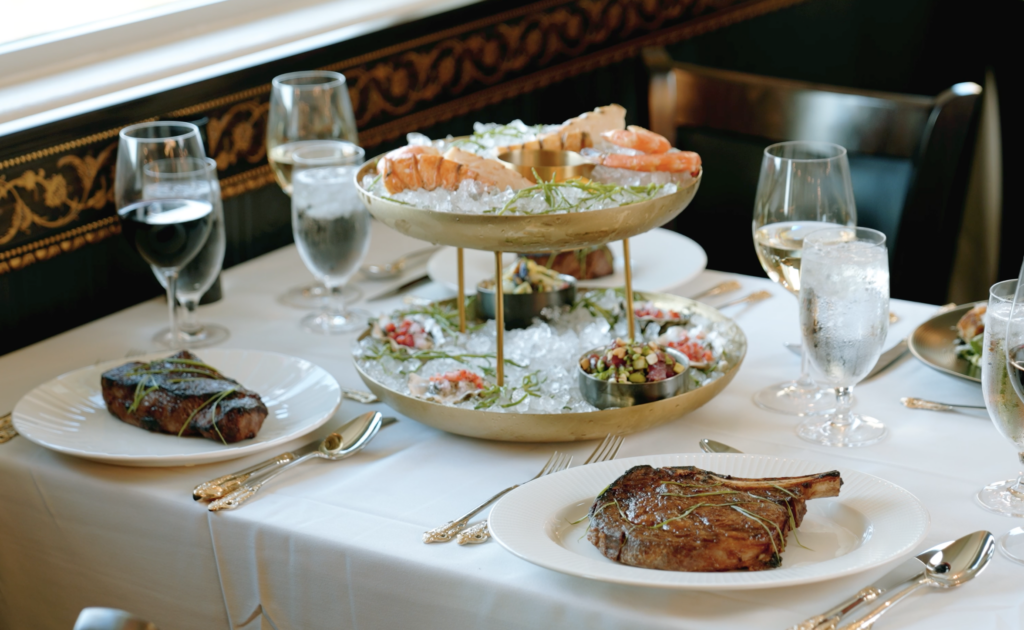
Stake Chophouse & Bar isn’t your average steakhouse. Blue Bridge Hospitality’s Coronado outpost is a modern interpretation of a big-city steakhouse nestled in the heart of the small coastal community. The team at Stake has reimagined the whole steakhouse experience. By prioritizing a seasonal farm-to-table sourcing philosophy, a personalized guest experience, and unique service touches, like a formal steak presentation and a bespoke knife selection process, Stake distinguishes itself in a sea of steakhouses.

Exceptional steaks, including Wagyu from Japan, Australia, and the U.S., and fresh seafood flown in daily form the core of Stake’s culinary identity. The menu features a five-course omakase-style steak experience highlighting house favorites, plus an array of cuts, and classic steakhouse staples—think a wedge salad, baked potato, or pasta carbonara—refined for a contemporary palate without losing their traditional appeal. Stake focuses on seasonal sourcing from the region’s best family farms and specialty purveyors, and incorporates intentionally unexpected touches to create something truly unique.

“I challenge our chefs and myself to take it a step further in sourcing,” says Chef Ronnie Schwandt. “It’s important to us to highlight different farms, unique one-off farms—whether it’s cattle, strawberries, a local fisherman or from anywhere in the United States, we’re always trying to find that niche.”

Beyond the menu, Stake emphasizes outstanding service, says Vinny Spatafore, Director of Hospitality Operations. Staff maintains detailed notes, allowing them to remember guests by name, recall previous orders such as a favorite martini (also memorable for the customer since it’s served in an extra tall, distinctly-shaped glass), and celebrate special occasions like birthdays and anniversaries.

“When you have those points of topic that you remember about a guest, they appreciate that,” he says. “Our servers are really good with that—we have a couple servers who have been here since the beginning and they’ll remember somebody from years ago, their name, their kids’ names, where they live. I’m really thankful to have a great front of house staff.”

Award-winning wines, rare whiskeys, special events, and a complementary black car service that provides transportation for guests throughout Coronado add to Stake’s appeal.

Schwandt stresses that Stake offers more than a meal; they aim to give patrons something unforgettable.

“It starts when you walk up the stairs and are greeted by the hostess—that sets the tone for the night. Then you’re greeted by a server, who may know you by name, and can guide you through the menu and curate as they get to know you,” says Schwandt. “Most people leave kind of blown away; they leave feeling like they just had an experience. That’s the goal, right? Whether you’re serving smash burgers or high-end steak, you want somebody to leave thinking, Wow, that was awesome.”

Partner Content
Arts & Culture JUNE 23, 2026

17 Things to Do in San Diego This Weekend: June 23–28

Kick off summer at The Rady Shell, enjoy the Omakase Open at JULEP, and see a Padres vs. Dodgers showdown at Petco Park

17 Things to Do in San Diego This Weekend: June 23–28
Courtesy of Taste of Adams Avenue

Summertime in San Diego may bring about blue skies and sun-drenched days, but it doesn’t stop there. There’s also the top-notch concerts, tasting events and wallet-friendly fixtures that make this season feel extra special. Fans of contemporary and classical music can check out performances by the San Diego Symphony Orchestra, the Beach Boys and Kool & The Gang at The Rady Shell or the annual Mainly Mozart All-Star Orchestra Festival in La Jolla. Local gourmands can sign up for a spot at our Omakase Open, indulge in cold desserts at Scoop San Diego or journey across a two-mile stretch of good eats during the Taste of Adams Avenue. As for free events, there’s a new edition of San Diego Made: LIVE at San Diego Made Factory, the Pride Party at Museum of Us and the return of the Ocean Beach Street Fair & Chili Cook-Off. 

Food & Drink | Concerts & Festivals | Theater & Art Exhibits | More Fun Things to Do

Courtesy of Scoop San Diego

Food & Drink Events in San Diego This Weekend

Omakase Open at JULEP

June 25

Japanese omakase dining is an artform built on trust, in patrons allowing their chef to entirely curate their meal. That’s why, this Thursday from 6-9 p.m., San Diego Magazine is gathering the city’s finest sushi and omakase chefs to showcase their skills during the 21-plus Omakase Open at JULEP. Guests can enjoy live music, all you can eat food and drink, plus the chance to converse with local culinary masterminds and decide on the night’s best bites, all while supporting the Convoy Pan Asian Cultural and Businesses Innovation District. General admission ($85) is full up, but join the waitlist in case more tickets become available. 

1735 Hancock Street, Mission Hills

Taste of Adams Avenue

June 28

From University Heights to Kensington and the unique neighborhoods in between, Adams Avenue is home to a host of must-try flavors. During the 25th annual Taste of Adams Avenue, happening this Sunday from 11 a.m. to 3 p.m., 45 spots along Adams Avenue will offer samples, with brunch-inspired bites, refreshing ales, world-class gelato on the menu. Attendees can make the most of their self-guided tasting tours by walking, biking or riding from end-to-end on a complimentary trolley. Tickets are $55 online and $65 the day of. 

Adams Avenue

Scoop San Diego Ice Cream Festival

June 28

It’s a scientific fact (source: trust me) that a little sweet treat, like say ice cream, paletas or shaved ice, has the power to make any day instantly better. Meaning, it’s only right to treat yourself to a dessert-filled afternoon during the 8th annual Scoop San Diego Ice Cream Festival, where three dozen local vendors will serve up their finest specialties this Sunday from noon to 4 p.m. in North Park. General admission ($49) comes with 10 shareable two-ounce samples; all net proceeds will go towards Feeding San Diego.

30th Street & North Park Way, North Park

Concerts & Festivals in San Diego This Weekend

Mainly Mozart All-Star Orchestra Festival

Through June 27

Week two of the 38th Annual Mainly Mozart All-Star Orchestra Festival begins Tuesday (7 p.m.) with a performance of Mozart’s “Jenamy” and pieces by Lully and Strauss, followed by Mozart’s “Jupiter,” and works by with Schumann and Pärt on Thursday (7 p.m.), both at The Conrad; tickets range from $71 to $163 for each concert. The festival will then conclude Saturday (7 p.m.) with Mozart, Brahms and a performance of Beethoven’s Symphony No. 5 at Epstein Family Amphitheater; tickets range from $26 to $263. And if that’s not enough Mozart for you, pianist Anton Nel will lead a prelude concert in the JAI prior to Tuesday and Thursday’s shows. 

The Conrad: 7600 Fay Avenue, La Jolla | Epstein Family Amphitheater: 9500 Gilman Drive, La Jolla

Opening Weekend at The Rady Shell

June 26–28

A star-studded opening weekend is in store to kick off The Rady Shell’s summer season. On Friday (7:30 p.m.), Rafael Payare will conduct the San Diego Symphony Orchestra in an effusive Opening Night program featuring violin soloist Stefan Jackiw; tickets range from $57 to $124. The following night at 7:30 p.m., the orchestra will pair up with The Beach Boys, plus special guest John Stamos, for a rousing tribute to Pet Sounds; tickets range from $78 to $268. Then, on Sunday (7:30 p.m.), audiences can boogie their way to Monday with Kool & the Gang and hip-hop pioneers the Sugarhill Gang; tickets range from $68 to $152.  

222 Marina Park Way, Embarcadero

Ocean Beach Street Fair & Chili Cook-Off

June 27

Ryan Hardison is a freelance arts and entertainment writer and recent graduate of San Diego State. When he's not staring at his laptop, he's likely eating an adobada burrito or getting sunburnt at the beach.

Features JUNE 18, 2026

The Perfect Shot with SD’s Top Food Photographers

We ask the city's best food photographers to choose their favorite pics and share their secrets to capturing a drool-worthy pic

The Perfect Shot with SD’s Top Food Photographers
Photo Credit: Luciana McIntosh

Food is a notorious diva to photograph. The wrong lighting can make José Andrés’ paella look like a jaundiced grain bowl. You could be staring at the best sandwich of your life, but shoot it from above and—hey, congrats on that abandoned piece of lettuce bread. A cottage meme industry has been built around the hilariously bad photos on review sites that make Michelin-star food look like Michelin tires.

Especially in a visual modern media world, food culture depends on great photographers capturing the painstaking work in equally deserving ways. We asked four of San Diego’s top food photographers for their favorite shot from another year of documenting what we eat.

Photo Credit: Kimberly Motos

Kimberly Motos

Birdman Sandwich at Chick & Hawk

Getting this kind of shot takes a bit of yoga. Asana yourself into the corner, hold your breath, pray that a chef on the move doesn’t back into your light stand.

“You’re stepping into someone’s workspace during their busiest moments, so it’s a balance of being present to get the shot and being invisible to not slow anything down,” Kimberly Motos says.

The subject here is the Birdman sandwich from Chick & Hawk—hot fried chicken thigh, tangy slaw, kimchi comeback sauce, sweet and spicy pickles, potato brioche bun—getting a hearty dousing of its difference-maker seasoning. Motos captures the parts of the process that diners don’t usually see: the chaos behind something that looks so simple.

Photo Credit: Lucianna McIntosh

Lucianna McIntosh

Oysters + Jewel of the Sea Martini at The Fishery

“I love this image because it feels like a moment you want to step into,” says Lucianna McIntosh. A warm, sunny day at The Fishery in PB with oysters, caviar, and martinis. Yes, please.

The little details—the glass sweating a little, the direct afternoon light creating stark shadows, the oyster glistening on the tray—are the main characters. Instead of trying to overly control the setup, McIntosh “followed the light and lines that draw you in more,” she says. “This was one of those moments where everything lined up on its own for a second. I love it when the shadows end up being just as important as the food itself.”

Photo Credit: Eric Wolfinger

Eric Wolfinger

Herb-Roasted Golden Chicken at Fleurette

La Jolla native Eric Wolfinger—who won a James Beard Award for Tartine Bread, one of the most stunning bread books of all time—says he doesn’t have a signature style. His style is a conduit.

“I see my job is to translate the chef’s point of view into something you can feel,” he says.

For this shot, Fleurette chef Travis Swikard had one directive: cuisine du soleil (“cuisine of the sun”). With a spread of leeks vinaigrette, herb-roasted golden chicken, and beets, Wolfinger wanted to create a scene that felt straight out of the French Riviera, relaying the light, bright style of Swikard’s new spot.

Some bonus additions here: Extra lights—to add lots of warmth—and a clipping from an olive tree.

Photo Credit: Dee Sandoval

Dee Sandoval

Espresso Ice Cream at Lucien

Timing and light are everything in food photography. In Lucien—La Jolla’s tasting-menu-only restaurant with moody ambiance—a single strobe flash creates the ideal spotlight.

Dee Sandoval says she uses the “natural, just-plated energy” of the dish to “create a portrait of moment and craft.” That’s why this Mostra Ghost Bear espresso ice cream—with San José dark chocolate mousse, soy-miso caramel, and koji shoyu chocolate sauce—looks like it might dissolve halfway to your mouth.

Emma Veidt

About Emma Veidt

Emma Veidt is an editor at San Diego Magazine. She earned her bachelor's and master's degrees from the Missouri School of Journalism. She loves running, hiking, and rock climbing, but really, she mostly loves encounters with the street cats around North Park.

Partner Content JUNE 25, 2026

Summer Nights at SeaWorld San Diego

SeaWorld dazzles with a drone show, big-name entertainers, new animal adventures and more 

Summer Nights at SeaWorld San Diego

Nights are heating up at SeaWorld San Diego. The quintessential summertime staple on Mission Bay is transforming into a destination for unforgettable day-to-night adventures, bringing back some of its most popular Summer Nights programming and introducing exciting new experiences sure to delight both kids and adults alike. 

The 2026 Summer Day to Night at SeaWorld San Diego is the park’s most ambitious season yet. SeaWorld has planned a highly anticipated entertainment lineup that features nine weeks of throwback concerts featuring R&B and hip‑hop favorites from the ‘90s and early 2000s, including Jordin Sparks, Too $hort and Warren G, Ashanti, and an array of boy band heartthrobs performing together as part of the Pop 2000 Tour. 

New this season is perhaps the park’s most visible update: a nightly drone show, Ocean of Dreams, which illuminates the sky with hundreds of synchronized sparklers. Drones form sea otters, sharks, dolphins, and a majestic orca that tell a breathtaking 12-minute story of marine life and underwater ecosystems. The show culminates with a spectacular electric neon finale celebrating hope, wonder, and ocean stewardship.

Nighttime visitors are also in store for animal adventures that fuse education with high-energy fun and the dreamy ambiance of nighttime. The park has launched two all-new animal presentations: Shamu’s Celebration: Light Up the Night and Dolphins: Touch the Sky. Shamu’s Celebration: Light Up the Night features vibrant lighting, music, and dynamic choreography that celebrates the power and beauty of killer whales. Dolphins: Touch the Sky showcases playful bottlenose dolphins and the special connection between humans and the natural world. And back by popular demand is fan-favorite Sea Lions Tonite. See the charming pinnipeds splash, play, and parody pop culture in this refreshed crowd-pleaser. 

More must-sees: a newly reimagined Shark Encounter, one of the country’s more immersive exhibits highlighting 11 different species up close, SeaWorld’s beloved BMX Blast! stunt show, and high-seas escapade, Pirates Ahoy! The Battle for Mermaid Cove. And don’t miss the park’s all-new Deep Sea Disco, which encourages guests to dance the night away under the glow of the SkyTower, and vibrant closing time laser light display Laser Reef Summer Spectacular. 

Amp up the nighttime vibe with local craft beers, curated cocktails, and nostalgic theme park treats with $1 beer all summer long. SeaWorld is the place for day to night summer fun. When the sun goes down, SeaWorld lights up, and inspires guests of all ages to embrace their inner whimsy and see why generations of San Diegans head to SeaWorld to make memories they’ll never forget. 

Thousands of savvy locals already get it.

San Diego's best restaurants, experiences, and events—handpicked and delivered to your inbox weekly. You in?

Close the CTA

Contact Us

1230 Columbia Street, Suite 800,

San Diego, CA