Featured articles
Food & Drink
Features
Food & Drink
Featured articles
Things to Do
Food & Drink
Things to Do
Featured articles
Things to Do
Food & Drink
Food & Drink
Featured articles

podcast-ep
podcast-ep

podcast-ep
Featured articles

Food & Drink
Features
Food & Drink
Featured articles
Things to Do
Food & Drink
Features
Ready to know more about San Diego?
SubscribeReady to know more about San Diego?
Meet the new mayor's fiancée
Bob Filner’s fiancee, Bronwyn Ingram
Sam Hodgson
The day after Bob Filner was elected mayor of San Diego, he held the obligatory post-election press conference. He thanked his supporters, congratulated his opponent on a campaign well fought, and laid out some preliminary plans for his new administration.
Then, in response to a question about the woman at his side, Filner shot the camera his trademark grin, put his arm around her, and introduced San Diego’s next First Lady.
Bronwyn Ingram is a 48-year-old disability analyst for the Social Security Administration. She grew up in Orange County, earned a bachelor’s degree in psychology from Cal State Fullerton, and has worked for the disabled community for more than 20 years. She helped found Americans Against War with Iraq. She has traveled to Vietnam with governmental representatives and organizations to figure out how to finally rid the country of the remnants of Agent Orange.
In short, the petite, soft-spoken, driven woman is a doer.
And in January of 2012, after meditating with a monk at a Buddhist temple in Vietnam, she told Filner, 70, that she would spend the rest of her life with him.
The wedding—his third, her second—likely won’t happen until October. Ingram is expected to move from her current home in LA to San Diego when the Social Security Administration opens an office in Rancho Bernardo. Despite the delay, her relationship with Filner makes Ingram San Diego’s newest First Lady. It’s a role for which both she and Filner have big plans.
“I think you’re going to see a different First Lady,” Filner said during the November 7 press conference. “You’re going to see a team that is really aggressive and visible in terms of communities that tend to be neglected in our city.”
Unlike other major cities such as New York City and Philadelphia, San Diego hasn’t always been home to visible and active First Ladies. Even in smaller places such as Albuquerque, the First Lady, Maria Berry, is an active player in city functions. She and her team refashioned the mayor’s annual charity event into a ball that has raised half a million dollars for area organizations. She also helps survey the homeless throughout the city to determine how City Hall can serve them better.
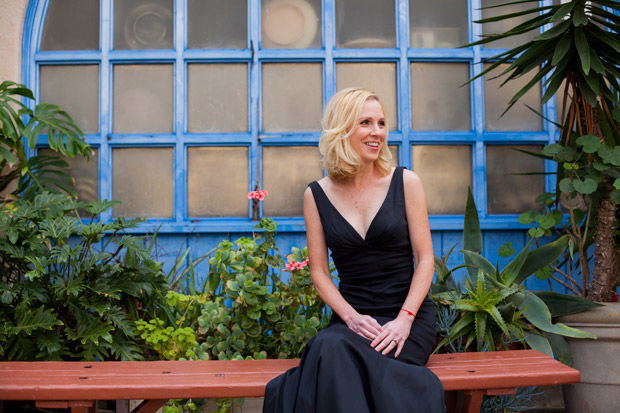
Bronwyn Ingram
Sam Hodgson
While she isn’t paid and has no designated office in City Hall, Ingram acknowledges that her association with Filner alone gives her a platform unlike any other in city politics.
Kris Michell, who heads the Downtown San Diego Partnership and served as chief of staff for Mayor Sanders until late 2010, says whatever Ingram does with that platform will be good for the homeless population, but will also be beneficial to the reputation of the city as a whole.
“I see it as a net positive for San Diego,” Michell says. “Bronwyn will have tremendous credibility. Rana Sampson had tremendous credibility… I truly just don’t see a downside. I only see upsides. In fact, it’s great.”
Sampson, the wife of former mayor Jerry Sanders, says she didn’t exactly jump headfirst into the role. She wasn’t even sure she wanted him to run in the first place.
When Sanders won, Sampson made a priority of attending mayoral events and making sure communities, nonprofit organizations, and other groups throughout San Diego knew of his commitment to them, all while she was running her own consulting business and focusing on crime reduction.
She could easily be spotted at the mayor’s annual State of the City address, initiating standing ovations for the man she says is the most extraordinary person she’s ever known.
But that first term was difficult, she says, and it made the decision to run for a second even harder.
“He felt like he could fix it if he had a little more time and that was the really, really, really hard decision… because I wasn’t in favor of that,” Sampson says. “So, like any good lawyer, I negotiated.”
Sampson cut a deal with her husband. If he won another four years at City Hall, he’d pack up at the end of the term and live with his wife in a foreign country. The two left for a three-month trip to Italy in January.
Jan Murphy, wife of former mayor Dick Murphy, had the same feelings when it came to sharing a spouse with the top office in town. Murphy was a pediatric physical therapist from Massachusetts who worked at Rady Children’s Hospital-San Diego for years. In her words, she “has always been more interested in medicine and children than government and politics.”

Bob Filner and Bronwyn Ingram
Gregory Bull
Despite her reluctant support of her husband’s choice to run for office in 2000, Murphy said she enjoyed her early years as First Lady, during which she met interesting people and attended events in support of her husband.
But, as she put it in a written statement, “the glare of the spotlight is intense.”
Murphy resigned in 2005 after being described by Time magazine as one of the three worst big-city mayors in the United States.
Both former first ladies say that dealing with criticisms of the mayor and his office is likely to be the most difficult part of taking on an active role in city politics.
Ingram’s secondary struggle will be separating the political persona from the personal relationship she has with Filner, says Sampson.
“I’m not a shy, reserved type, but I also know that I’m not the person that anybody in the city would be turning to to figure out how to… solve pension problems,” Sampson says. “Part of it is to know that’s not your role.”
To Filner, Ingram is a support system on the political front. But on a personal level, she’s the person he always looks for from the podium. Ingram recalls one campaign event at which Filner couldn’t find her from where he stood, waiting to speak to supporters. She was stuck behind a much taller onlooker, and it put Filner off his game as he tried unsuccessfully to locate her.
It’s slight and only noticeable to Ingram and Filner’s staff, but with her there, “he feels a little bit more confident. It’s just being a team together,” Ingram says.
Being a team in life and in office was always the plan.
In the two years leading up to the election, Filner, who lives in the Vantage Pointe apartments downtown, says the pair combined movie nights, dinners, and vacations with talk about what she would do if he took office.
“We talked about it the whole campaign—what would be her role,” Filner says. “We were on the streets every day trying to get a sense of how she might help and how she might do things. “
Even before the final votes were tallied in November, Filner’s aides had come up with a list of causes, issues, and ideas for Ingram to take up as her own on a volunteer basis.
“I had some people coming up to me Election Day and the day after, saying ‘We’re so excited about Mayor Bob Filner and we’re so excited to have you as First Lady. You’re going to do some great things,’” she says. “They literally said ‘We’ve already met, we’ve already been talking about some projects for you.’”
In a move that channeled her late mother, the woman she used to watch make hundreds of lunches on Sunday to distribute to those in need, Ingram picked homelessness as the issue that deserved her attention first.
She started by making weekly visits to the city’s temporary homeless shelter, touring possible sites for future affordable housing developments, and setting meetings with leaders of community organizations.
As of early December, she topped her list of homeless-eradication activities with a meeting that brought together Father Joe Carroll of Father Joe’s Villages, Bishop George McKinney of St. Stephen’s Cathedral, and representatives from Girls Think Tank, the Rotary Club, and several other groups to discuss the homelessness problem, their collective resources, and ways they could come together as a united front against homelessness.
With those resources, Filner’s position as mayor, and Ingram’s bright-eyed outlook and drive, her hope is that the anti-homelessness front is stronger than ever.
PARTNER CONTENT
“It needs all these great minds working together,” Ingram says of the issue. “There’s never been so much potential to make a serious dent in the problem as there is now.”
Estimates say only 20 Indigenous languages will remain by 2050—but Danielle Boyer seeks to change that stat
“I didn’t think I was an inventor for years,” says robotics engineer Danielle Boyer. But the 23-year-old Ojibwe creator embodied the title long before she embraced it—she designed her first robot at 17. That initial prototype became EKGAR (which stands for “Every Kid Gets a Robot”), a $20 remote-control car kit that teaches Indigenous students technical skills. She 3D prints them from recycled plastic in her home studio and has shipped more than 11,000 at no cost to recipients.
“Equitable access to tech education is vital for Indigenous students to make sure we don’t get left behind,” she says.
Boyer’s second robot, SkoBot, is her baby, born to help teach the endangered Ojibwe language, Anishinaabemowin, and other Indigenous languages. SkoBots are about 10 inches tall, wearable, and pretty freakin’ cute. The latest generation includes a makwa (bear) and a waabooz (rabbit) designed in collaboration with an Ojibwe tattoo artist from Boyer’s home state of Michigan. “Kids love them; kids relate to them,” Boyer says.
SkoBots sense motion and say “boozhoo” (hello) and other phrases in response. Boyer’s nonprofit, STEAM Connection, provides the kits for free, and students build the SkoBots themselves. Boyer is currently recording more words in the voices of Ojibwe children and elders (including her grandmother) to expand the robots’ repertoire.
Boyer takes her robots on the road to demonstrate technology as a tool to communicate, advocate, and relate while imparting hands-on engineering skills. But, she says, she hasn’t always felt welcome in STEM.

During her childhood in a tribal community in Sault Ste. Marie, MI, it took Boyer two years to save $800 to join the public high school’s robotics club. She was the only girl and the only Indigenous student.
“People in my community experience financial and other inequities in education, and that was a barrier to my own STEM education,” she recalls. “And then there’s the troubling energy around women in STEM. Even my own dad said women weren’t meant to be engineers.”
So, she’s here to prove that Indigenous women do belong in STEM—and wherever they choose to showcase their talents and make their voices heard.
Boyer has already racked up an impressive list of accomplishments: She was part of the White House Tribal Youth Forum and received the Echoing Green Fellowship and Robert Wood Johnson Foundation prize. She moved to San Diego three years ago and travels frequently. With trips to Poland, the UK, Ghana, and China coming up, she’ll show people all over the world how tech can help preserve cultural history for the next generation.
“To be Indigenous is a protest and a constant advocating for the future of your community,” she says. “There’s a myth that Indigenous people exist only in the past. But we’re here now and we will be here in the future.”
Leorah Gavidor won her first essay contest at age 5. She writes features, news, and non-fiction in San Diego.
Meg Ferrigno couldn't find biodegradable pads for those who needed them most—so she developed them herself
Meg Ferrigno had already been living and working among nomadic Tibetans for years when she went on the service trip that would change everything. “I was translating for a midwife,” Ferrigno recalls. “We saw over 100 patients and every single one of them was reporting severe infections and horrible symptoms.” Lacking access to menstrual products, the women in the area stemmed blood flow with items like straw and yak wool, which caused preventable health problems.
Determined to help, Ferrigno started distributing pads—only to realize that the plastic-loaded products were solving one problem but causing another. She partnered with a factory and, after much trial and error, developed a compostable pad that degrades within six months.
During the pandemic, “I spent a lot of time in the sanitary hygiene aisles,” Ferrigno says. “I recognized that there weren’t compostable products readily available for menstruators [in the US].” In 2022, she began selling her sustainable period products under the name Moon Pads, a certified B Corp operating with a “buy one, give one” model to distribute free pads in Tibet, India, Nepal, Nigeria, Mexico, and the States, where, according to Period.org, one in four students struggles to afford necessary menstrual products.

“Giving people access to these products helps improve public health,” Ferrigno says. “It helps improve school attendance, which helps improve literacy. It helps improve our economy, because if menstruators aren’t working for a week out of each month, that hits our economy. People don’t realize it’s a huge, cross-cutting issue.”
Amelia Rodriguez is a writer and journalist and winner of the San Diego Press Club's 2023 Rising Star Award and 2024 Best of Show Award, she’s also covered music, food, arts and culture, fashion, and design for Rolling Stone, Palm Springs Life, and other national and regional publications. After work, you can find her hunting down San Diego’s best pastries and maintaining her five-year Duolingo streak.
Dilkhwaz Ahmed's nonprofit License to Freedom creates safe spaces for immigrant and refugee women
Six days before 9/11, Dilkhwaz Ahmed arrived in the US from the Kurdistan region of Iraq to attend a conference. Ahmed, who had opened one of the first women’s domestic violence shelters in Iraq, applied for asylum after the attack, knowing she couldn’t go back. She already received threats at home for providing shelter for women and could sense that the situation would get worse.
Yet her efforts never stopped. In 2003, Ahmed cofounded License to Freedom in El Cajon, an organization that helps immigrant survivors of domestic violence and sexual assault.
“I grew up in a system where women did not have the privilege they were supposed to have,” Ahmed says. “What led me [to this work] is the lack of opportunity where I grew up.” Ahmed now returns to Iraq at least once a year to collaborate with organizations on the ground helping those who have experienced domestic violence.
License to Freedom not only addresses the immediate concerns of women facing violence but tries to tackle systemic issues by providing other resources, like youth and economic development programs, mental health services, and treatment for offenders in multiple languages. Looking forward, Ahmed hopes License to Freedom can push for policy shifts in El Cajon to improve housing affordability and quality for immigrants in the city.

“We recognize that refugees come from the colonial system—that tells you how to talk, how to act,” she says. “Restoring of justice is always restoring of power.”
Maya Srikrishnan is a San Diego-based journalist. Her work has appeared in the Los Angeles Times, Voice of San Diego and the Center for Public Integrity.
Yes, Chef! winner Emily Brubaker leads the robust culinary program at Omni La Costa Resort & Spa
For Executive Chef Emily Brubaker, Omni La Costa Resort & Spa feels like home. She grew up just a mile-and-a-half away from the 400-acre property and fondly recalls walking the golf course perimeter as a kid. Though her ambitions led her away from San Diego for nearly two decades in which she honed her craft in some of the highest of high-profile Las Vegas restaurants—including triple Michelin-starred Joël Robuchon at MGM Grand—they ultimately brought her back to North County.

Today, the classically French-trained chef, who’s fresh off a victory on NBC’s Yes, Chef!, judged by Martha Stewart and José Andrés, oversees Omni La Costa Resort & Spa’s seven distinct dining concepts. Her goal is to elevate the resort’s culinary program with her creative, hyperlocal ingredient-driven approach while maintaining the Spanish- inspired flavors and fresh California coastal cuisine that are the bedrock of its culinary identity.
“The San Diego food scene is really growing, and in North County alone, it’s really exploded in the last five years,” Brubaker says. “There are Michelin stars, beautiful tasting menus, craft bakers, and all this food—when I was growing up in La Costa, it was fish tacos. Now there are really cool things popping up, and I’m so happy to be here to see where it’s going to go.”
Brubaker gives chefs de cuisine at each individual restaurant autonomy, however, her influence is evident across the resort.
For example, lobby restaurant Bar Traza serves as Omni La Costa’s culinary centerpiece and features bold Spanish flavors in a lively, social atmosphere. Brubaker overhauled the menu to be more consistent and centered on casual bites with that signature vibe. Think smoky paprika, vibrant citrus, and Spanish meats and cheeses.
At VUE, the focus is on seasonal offerings, California coastal cuisine, and Baja-inspired dishes. She and Chef de Cuisine Cameron Dixon change the menu biannually, which heading into summer, will highlight farm-fresh produce and hyperlocal ingredients—the resort even has its own herb garden and honeybee hives.

Poolside dining options are leaning into the country’s 250th this summer with a selection of classic American dishes with an Omni La Costa twist. And Bob’s Steak & Chop House (Brubaker is a trained butcher) offers a classic steakhouse experience with elevated service.
The chef and company also plan menus for special events at the resort where her creativity can really shine. For an upcoming National Ski Association dinner, the banquet hall will be transformed into an Alpine-themed winter wonderland complete with a snow machine, savory sausages, and melty, decadent raclette. A recent dinner was built around the Carlsbad Flower Fields and each course was matched to a color of ranunculus (Did you know pink dragonfruit are grown in North County? You do now.).
“It’s my zen to be in the kitchen playing with food,” Brubaker says.
Omni La Costa’s culinary program is a key part of the resort experience. And with Brubaker’s leadership, it’s becoming a draw for visitors and locals alike.
“These aren’t just hotel restaurants, these are restaurants that you should go to. They’re destinations, and I’m really hoping for the future that’s where we’re going,” Brubaker says.

Brubaker is also channeling her experience on Yes, Chef! into the culture at Omni La Costa—more emphasis on teamwork and collaboration, empowering her staff to share constructive critiques, and embracing different perspectives. Alongside her leadership role, Brubaker has become an advocate for mental health in the hospitality industry, serving as chief ambassador for the Burnt Chef Project and serves on the Board of Advisors for the Apex Culinary Program, where she mentors and develops future talent.
For more on Omni La Costa Resort & Spa and its dining program, please visit omnihotels.com/hotels/san-diego-la-costa.
The former DEI director left retirement to become CEO of the San Diego Black Chamber of Commerce to help fight the city's systemic challenges
Donna DeBerry moved to San Diego from Austin to “hang at the beach and have a good time,” she says. After a successful diversity, equity, and inclusion (DEI) career spanning several cities and prominent corporations—Indeed.com, Starbucks, Nike, Wyndham—DeBerry thought she was ready to retire. But the beach would have to wait.
“I decided that something was missing from my life at that moment, and once more I needed to give back,” DeBerry says.
In January 2020, she became president and CEO of the County of San Diego Black Chamber of Commerce (CSDBCC), where she supports minority- and women-owned enterprises. “Everybody should live for a legacy transforming and shaping peoples’ lives for the better,” she says.
Early in her career, corporate HR roles offered DeBerry insight into the systemic challenges women and Black people face in the business world. DeBerry founded her consulting business to show executives how inclusive policies positively impact companies’ bottom line.
“The struggles are still real for women, especially women of color, in business,” DeBerry says. “It’s a question of equality versus equity. Yes, we might have an equal opportunity to start a business, but we don’t have equitable access to the capital that we need to compete.”

In March 2024, CSDBCC launched the Women’s Kitchen Table as a safe space to network and organize. DeBerry keeps tabs on San Diego’s wealthiest institutions, like SDG&E and UC San Diego—just two of the many organizations CSDBCC partners with—to make sure minority-owned businesses have access to vendor contracts, along with funding to support growth. Under her tenure, San Diego–based corporations have donated hundreds of thousands of dollars to support CSDBCC initiatives—Sony Electronics alone has contributed more than $200,000.
“[Something] I’m proud of, personally and professionally, is that any time I’m in an influential position, I bring more women along,” DeBerry says. “It’s my responsibility to open those doors.”
DeBerry recently sold her Carlsbad home and moved onto a boat at Pier 32. At 69, she has raised four children and now has four grandchildren. “This is my best life, doing something good for the community,” she says.
Leorah Gavidor won her first essay contest at age 5. She writes features, news, and non-fiction in San Diego.
From December Nights to the Asian Film Festival, Social Artistry founder Lauren Garces creates spaces that foster connection and community
“The goal is always to create spaces of belonging, where all guests can feel respected, be themselves, and form connections, while cultural learning is happening,” says Lauren Garces, the creative mind behind event production company Social Artistry. “I constantly ask myself, ‘How can I intentionally build these spaces?’”
The daughter of Filipino immigrants, Garces grew up in Hawai‘i. After earning a degree in marketing at SDSU and working in event production for more than a decade, she started her company in 2020 with the intent of helping her community come together during the pandemic.
One of Social Artistry’s first “events” was not exactly a gathering. Called Box Creations, it was a response to the fear AAPI women felt while venturing out in a time when hate aimed at people of Asian descent was on the rise. Garces partnered with the Asian Business Association, Cox, SDG&E, and local artists to paint electrical boxes along Convoy with messages of hope and healing.
Garces is also part of the organizing force behind Balboa Park’s December Nights and helped make the beloved event a “drive-through” during the pandemic.

“We created a piece of San Diego history,” she recalls. “There was nothing else like it—people were honking along to ‘Jingle Bells’ while they waited in line in their cars. It brought San Diegans together at a time when we were so alone.”
Garces has now added her magic to Convoy San Diego Night Market, the Linda Vista Multi-Cultural Fair, and the Asian Film Festival, designing gatherings that connect local art, food, dance, music, entertainment, crafts, and cultural organizations to welcome visitors and residents alike. “One big event could be a celebration of a special time, but we also want it to be a showcase for what that community offers,” she says. “We want to inspire action to support our communities year-round.” She’s been invited to work on several Lunar New Year celebrations in 2025.
Most of the events Garces organizes are free to attend, backed by city, county, and local sponsors. She also co-chairs the San Diego Asian Pacific Islander Coalition, a partnership of more than 40 organizations from around the county. The coalition has secured empowerment grants from San Diego Foundation and driven a new research study of the AAPI diaspora in San Diego.
Leorah Gavidor won her first essay contest at age 5. She writes features, news, and non-fiction in San Diego.
President and CEO Jewish Community Foundation San Diego and Miriam and Jerome Katzin Presidential Chair
Marjory Kaplan
Marjory Kaplan
What is your background? I was in the corporate world in banking, both in human resources and investments. When I moved to San Diego from San Francisco, I spent some time in banking with Wells Fargo and also with Scripps Foundation. I joined the Jewish Community Foundation San Diego 20 years ago, and three years ago the chair was endowed by Miriam and Jerome Katzin.
Jewish Community Foundation San Diego is the largest grant maker in San Diego. Why is that? The Jewish community is very generous, although not all members are Jewish. People choose our foundation because we build trust through good service, and we manage their donor-advised funds well. In 2012 we gave away $98 million. Since its inception in 1967, the foundation has given $859 million, and we want to reach our billion-dollar goal within the next couple of years.
What is the advantage of a foundation? It is a convenient way and a community-minded way to give. There are some tax benefits. It is more focused giving and more strategic.
How many researchers do you have? Our total staff is 16. They are all very dedicated, hardworking and skilled in what they do. We have longevity with our staff. Sometimes I have to remind them when it is time to go home.
What drives you? This is such a great position for a person with my background to be able to serve the community. Corporate human resources and investments—one is knowing about people and management, and the other is knowing about the financial world.
What is your life away from work? Work is very life-giving, but everyone needs to get away. I go back to San Francisco. I love to read, so I frequent my favorite bookstores in San Francisco. I enjoy hiking. I have great friends and a wonderful husband. This is such a joyful position. I have been teaching Positive Board Cultures at the USD Governance Symposium for the past three years.
How do you mentor? There are a lot of ways to mentor. Look around your world. It is just being the person you are. It’s a generosity of spirit that we all need to show each other. We need to share the glory and give credit to others. I am interested in mentoring on the management side. We need more positive managers who will really encourage and develop people.
How do you support the community? I work with many organizations including the Grantmakers, Association of Fundraising Professionals, University of San Diego, and others.
What is your advice to others? The most important thing is to take care of yourself. Figure out what you need to do and then do it. You can be really good at what you do, but you have to show kindness and gratitude to make it work. People can excel through discipline, competence and gratitude.
Which of your accomplishments are you most proud of? Building an organization that has so much trust in the community and one that passes on to generations of families. One of my most gratifying roles is helping people plan their charitable legacies. It often feels like a sacred moment to be the one carrying out their wishes after a lifetime of involvement.
What would you be doing if you were not with the foundation? I would continue working in the community, teaching, mentoring. Our city is large enough to be interesting and small enough to be friendly.