Ready to know more about San Diego?

Subscribe
Features JANUARY 28, 2019

The Big Family in Little Italy

Troy Johnson pulls up a seat for dinner with San Diego's iconic Italian family, the Busalacchis

The Big Family in Little Italy

Joe Busalacchi would like to invite you to his birthday party. All of you. He didn’t, technically. But I feel confident. That’s what Joe does. He invites yous.

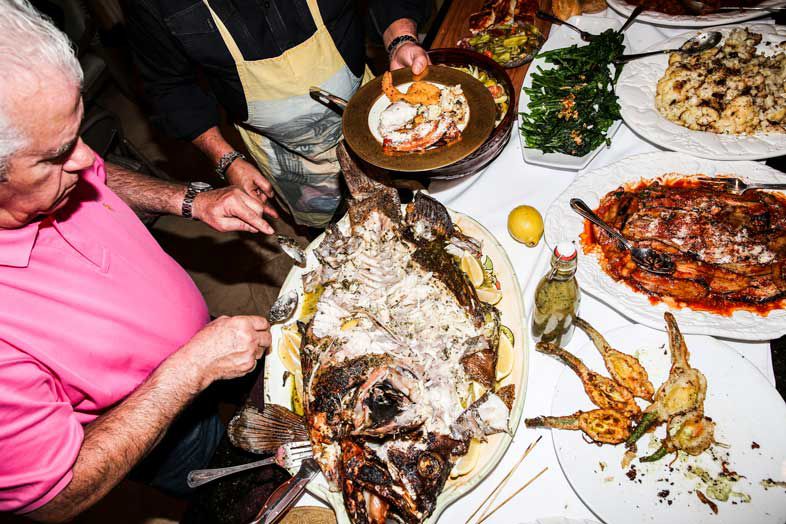
On the outdoor grill at his gated Mission Hills home—with a three-point view of downtown, the airport runway, and, most critically, of Little Italy—lies a whole grouper, scored and slathered with salmoriglio sauce (anchovy, capers, garlic, shallots, oregano, parsley, lemon juice, fresh-squeezed orange, olive oil). He’d like to give you the cheeks, a delicacy for people who truly know and love fish. Since you’re not here, he gives it to me. That’s what Joe does. Joe gives the best parts to strangers. Has been for 42 years.

For example: Within 15 minutes of my being in his home for the very first time, he invites me for Christmas. Not a restaurant opening, or something that would benefit his business by having a writer publicize it. With unrestrained earnestness, Joe announces to his entire family that this stranger is invited to the holiday where they all wear pajamas. And no one bats an eye. Yes, they agree, the stranger should come to Christmas in his pajamas.
The Big Family in Little Italy

The Big Family in Little Italy

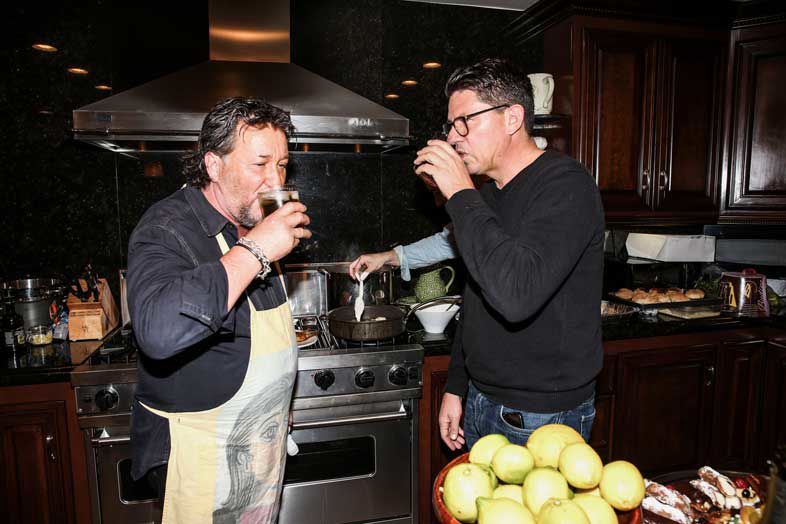
“The most important thing that you don’t get in a lot of restaurants now is the ‘Hi, how you doin,’ lemme buy you a glass of wine,’” says 61-year-old Joe, as he surveys the dozens of dishes assembled in his kitchen, wearing an apron emblazoned with a Picasso print. “You gotta make people feel like a million dollars. Restaurateurs now are doing so many covers and don’t have time. You should make a friend, then make a customer.”

I feel like a friend. Should I show up on Christmas morning, I have no doubt Joe would answer the door and insist I was late.

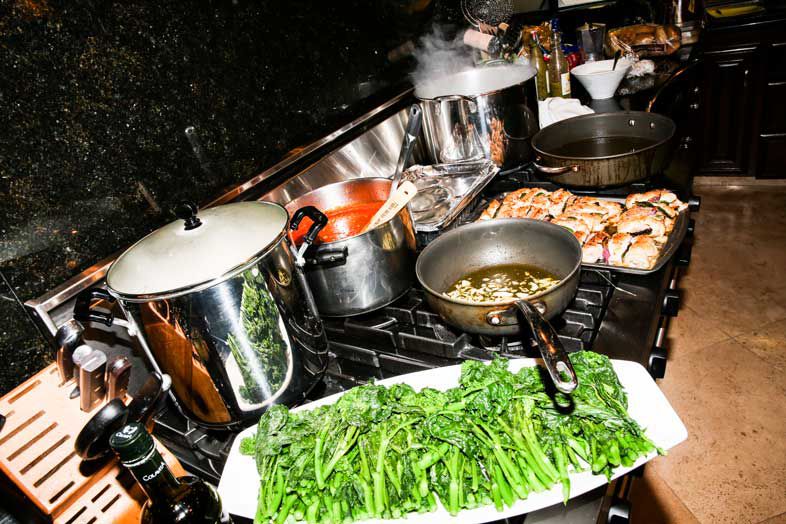
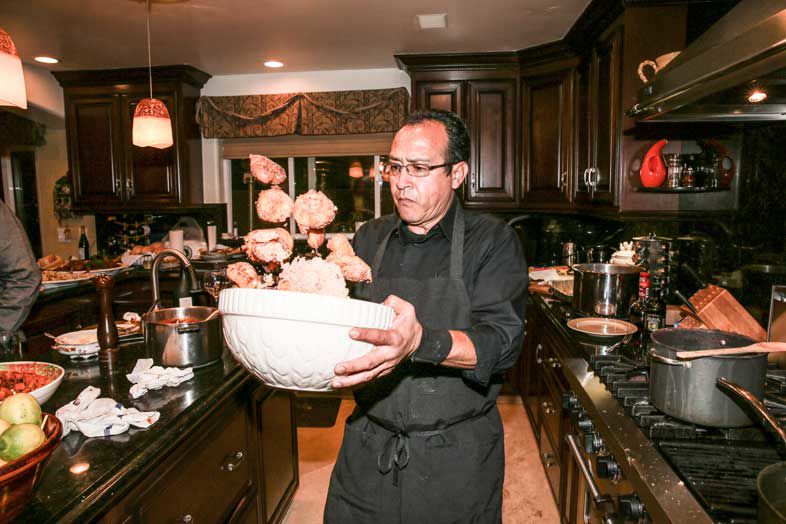
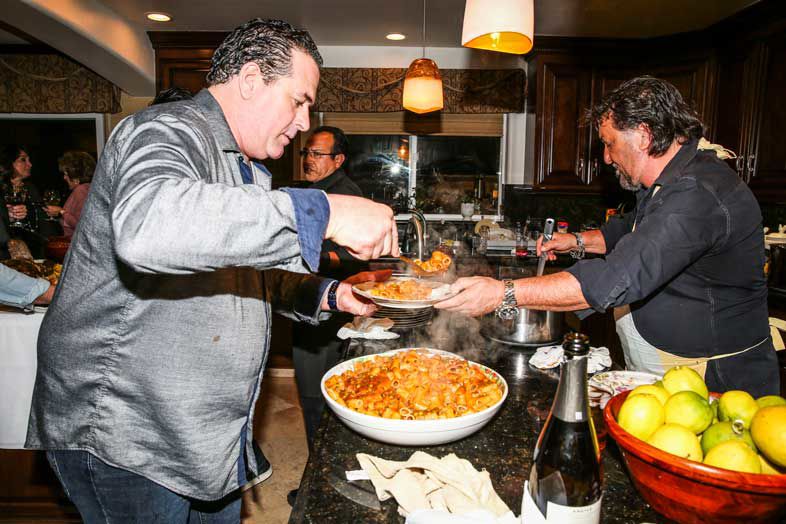
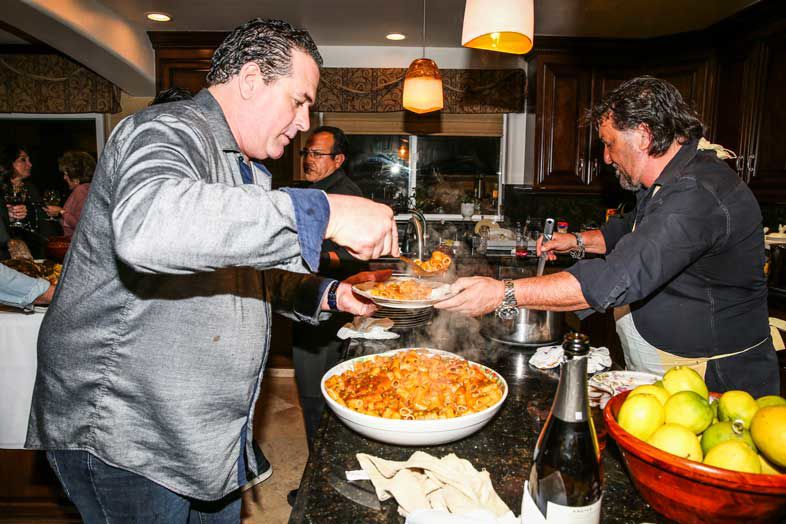
About a dozen Busalacchi specialties are being prepared for this family meal tonight, overseen by no fewer than six family members. Joe’s son Michael helps Cousin Nino monitor the squash blossoms, vibrating in hot oil like a Van Gogh painting of flowers. On another burner, Nonna’s Bolognese sauce lightly simmers (always for at least three hours). Joe’s other sons, PJ and Joey Jr., handle the hospitality, making sure cups are filled, introductions are made, and embarrassing stories are given properly mortifying light.
The Big Family in Little Italy

The Big Family in Little Italy

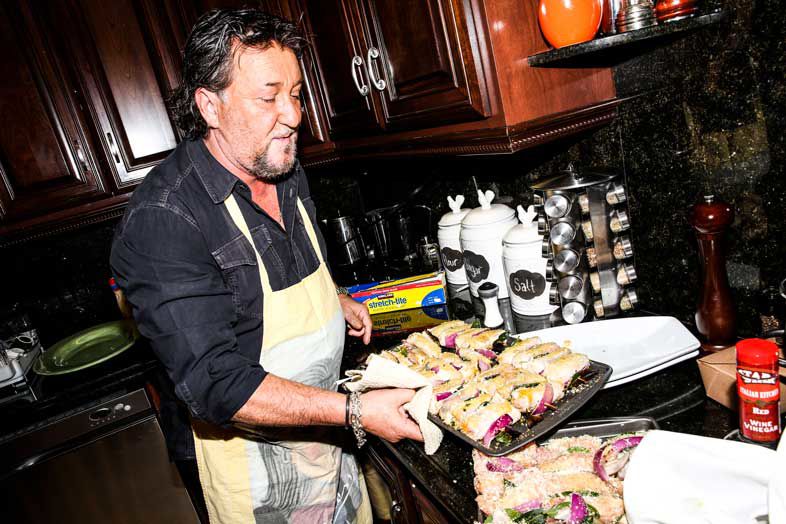
Everyone has brought a plate of food. A typical Busalacchi family meal consists of dishes made by between 20 and 25 Busalacchis. There is someone poking and prodding the spiedini, a Sicilian specialty of ground pork stuffed with bread crumbs, currants, prosciutto, and cheese (“We were the first in San Diego to serve these,” beams Joe’s nephew, Nino, who’s now the chef of their newest Little Italy restaurant, Barbusa). Pendant kitchen lights glint off the fresh orange juice squeezed on razor-thin slices of fennel for the finocchio salad. Sicilian meatballs the size of toddler fists bask in crushed tomatoes flecked with herbs.

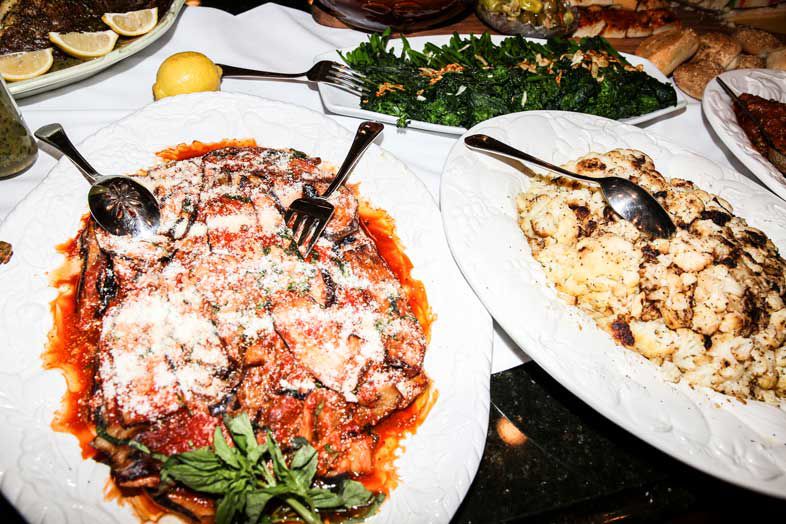
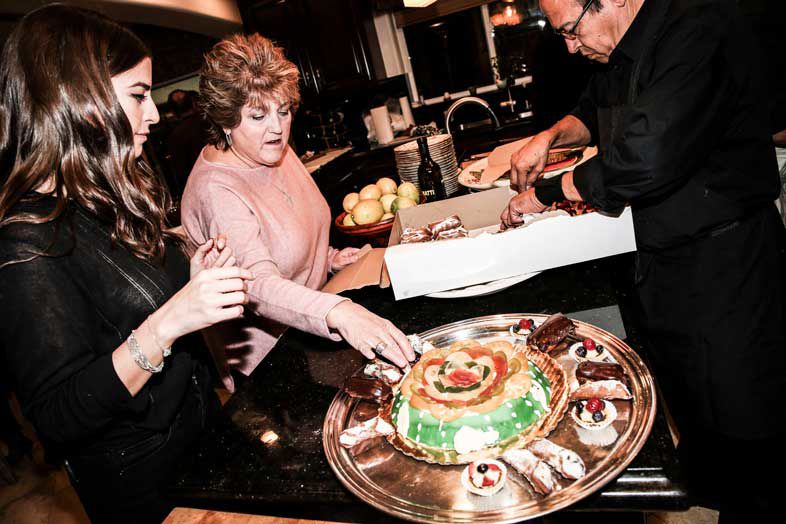
An aunt produces a warm basket of her bread topped with sesame seeds, toasted brown as desert dusk. There are layers of zucchini upon layers of eggplant—”blanched first, so they don’t get so oily,” explains Joe. Sfingi, a gossamer Italian donut is made, tonight and always, by Joe’s sister, Anna. And, of course, there’s cannoli. In Italian, a night without cannoli is called a mistake.

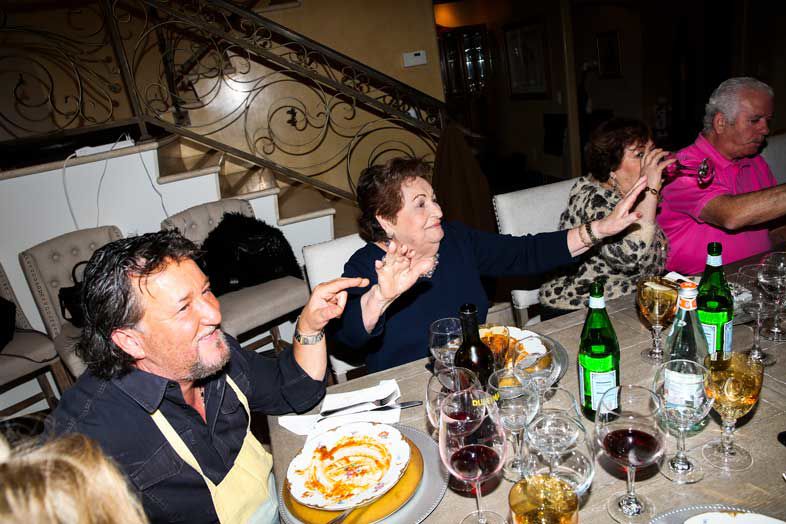
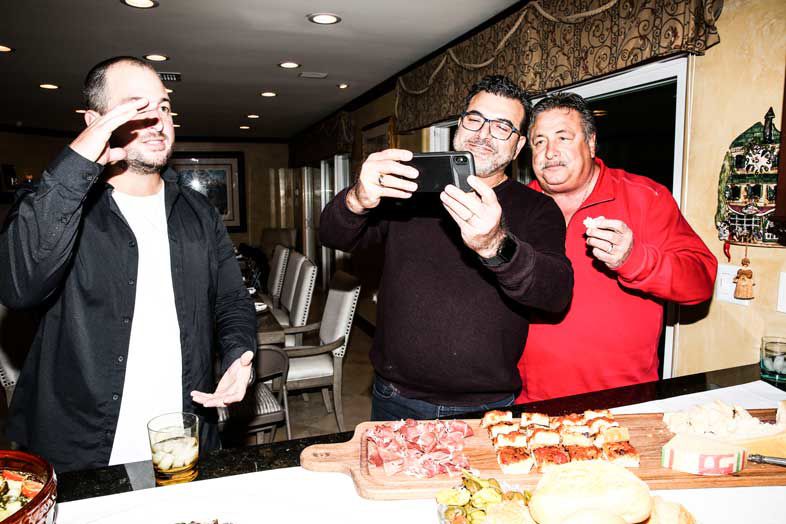
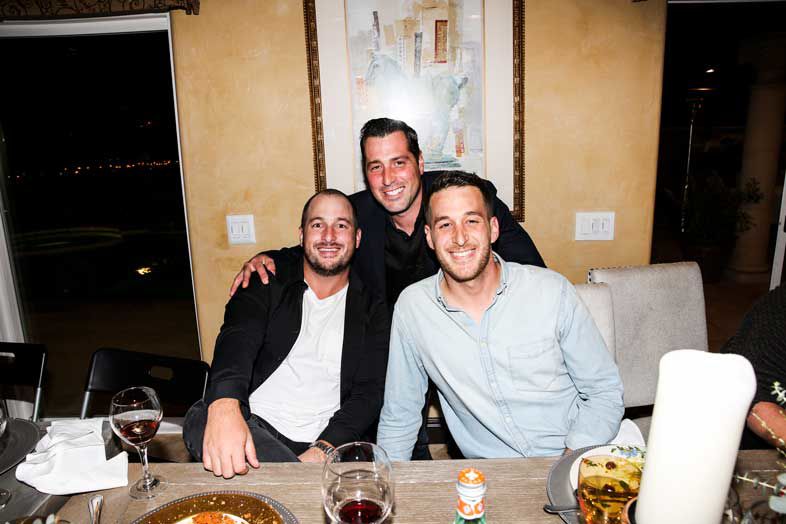
As the dishes are finalized, men gather in the TV room to see a football team that used to play in San Diego and then left the city without ceremony, and are therefore watched with a mix of obligation, habit, and derision. In the corner, a door leads to a modest wine room filled with immodest and sentimental reds. Most of the women converse around a large table outside by the pool. It’s there that my girlfriend asks how they’ll know what time is proper and polite to move inside to eat. “Oh, you’ll know,” a woman laughs. Two minutes later, Nino opens the sliding glass door and yells, “LET’S EAT!” The table must be 30 feet long, an Uber-able distance from end to end. Actually, it’s two tables. When you’re a Busalacchi, you own two tables, just in case family happens. And family always happens. Gold crosses glint from almost every open shirt collar. Each seat is elaborately set with wine glasses, each with a specific purpose (an aperitif glass, a dinner-wine glass, a digestif glass). Italians, much like the French and Russians, have an extensive tool set for dinner. I’m sitting in the center. The room is full of Busalacchis. Nearly 20, for sure. There’s Joe’s three sons, PJ, Joey Jr., and Michael. Joe’s brother Frank, his sons. Then nephews and girlfriends and boyfriends. If you ever need to borrow an aunt or uncle for any aunting or uncling scenario, they’ve got extra. They’re all laughing and spilling family secrets and moaning over the fiori di zucca (those fried squash blossoms, stuffed with four cheeses and topped with apricot jam, one of the standouts at Barbusa).
The Big Family in Little Italy

The Big Family in Little Italy

Our family meal begins when Nonna—Joe’s 87-year-old mother, Christina—serves us the pasta course, as she always does. It’s her celebrated Bolognese, which is on the menu at their other Little Italy restaurant—appropriately named Nonna. Forks twirl and voices climb as a flood of family stories come. The table takes on the roar of the stock exchange floor, with less panic and more bonhomie.

After the pasta course, we take our plates, go to the kitchen, and load up. It’s impossible not to be obscene about this, with a tonnage of food that befits Thanksgivings and last meals. Impossible for everyone except Joey Jr., whose plate is virtually empty. “Oh yeah, that,” he says, a little sheepish. “I don’t really eat. I eat fried food and meat and cheeses, but that’s about it. I don’t think I’ve ever had a vegetable. My dad used to get so mad. He once held up a piece of arugula and said, ‘I swear to God if you eat this right now I’ll buy you a car!’ I didn’t eat it.” Before coming to dinner, I called a handful of restaurant people to ask about Joe. They all said the same thing—good restaurateur, and one funny guy. Real funny. People always mentioned the funny.

“C’mon, dad, show him the video!” begs Joey Jr., plate still empty.
The Big Family in Little Italy

The Big Family in Little Italy

Joe does not want to show the video. But soon the cajoling gets him. He stares down to the head of the table, his shoulders sulk, his face flushes. For the first time that night, he doesn’t look like a self-made restaurateur who helped build both Hillcrest and Little Italy into culinary destinations. He looks like a child with a Bic lighter and a bad idea.

“She’s gonna be so mad,” he says, trying to contain the laughter.

“She” is Nonna, dressed tonight in a proper blue sweater with a significant necklace and earrings.

Joey Jr. produces the infamous family video on his iPhone. His father turns his back to Nonna and reluctantly narrates. They’d finally gotten her a flip phone, he explains. She wanted to program it like a smartphone: press one for Joe, two for brother Frank, and so on. Joe, divining rod of funny, convinced her that these newfangled phones can only be programmed by loudly speaking the person’s name and then banging on a cooking pot with a wooden spoon. Joe had helpfully arranged the necessary materials for her on a kitchen table. The video shows this sweet woman almost screaming the names of her beloveds into the phone and banging with shocking authority on the pot. Like a gong.
The Big Family in Little Italy

The Big Family in Little Italy

When pot banging didn’t work, he convinced her—oh yeah oh yeah sorry Ma I forgot—she has to do it lying down. So the next video is her wearing a conservatively elegant nightgown in bed, loudly proclaiming the names of her grown children into the phone. The poor woman; the good sport. Her fault, though, for raising a Joe.

At this point, Nonna has caught wind that she’s the inspiration for the laughter. She casts a narrow side-eye that is loving and deadly. She quietly mutters something in Sicilian.

No one can hush a roomful of Sicilians like Nonna. With a look or a whisper. Throughout the night, the Busalacchi home is not merely loud, it is a leading cause of tinnitus. Men and women talk over each other, a constant rising and falling of voices. People yell to fill our wine glasses (Joe makes his own wine, called Due Matti). They yell to be heard. In a jumbo-sized family with jumbo-sized personalities, if you don’t yell you might as well be carpet. But when Nonna opens her mouth, the assembled generations zip it. The Busalacchi Earth stops spinning and will return to its regularly scheduled decibels after these important messages.
The Big Family in Little Italy

The Big Family in Little Italy

Someone—an uncle or a cousin or a brother or some stranger who walked in off the street and was welcomed—translates for me: “She said ‘Why you gotta talk about me?” Nonna shakes her head with the kind of annoyed permission parents give when their pride for their children outweighs the crime.

She should be proud. Joe had help from his brother, his ex-wife Lisa (who raised their sons so that Joe could raise the business, often feeding the three young’uns in the restaurants before opening hours), his cousins, aunts, uncles, and eventually his grown sons. But it was mostly Joe who built a restaurant empire that provided for a few generations. And he did it by learning to cook at Nonna’s side when he was knee high.

Nonna and her husband brought the family to San Diego from Sicily when Joe was eight years old. “When I’m telling you they had nothing,” explains PJ, “I mean nothing.”
The Big Family in Little Italy

The Big Family in Little Italy

At age 19, Joe was hired as the chef for one of San Diego’s tuna boats. At the time, the city’s tuna boats were the equivalent of floating Google campuses—more or less economic juggernauts. Usually, boat cooks were ad hoc parents who cleaned, did dishes, mopped, and grunted through the necessary and unwanted work. Joe was so good, his brother explains, the crew didn’t make him do any of that.

“I used to take about 50–60 cookbooks out fishing and read all day,” Joe explains. “All I had to do was make a call and they’d deliver me fish to our house. And they let me have access to the wine locker.”

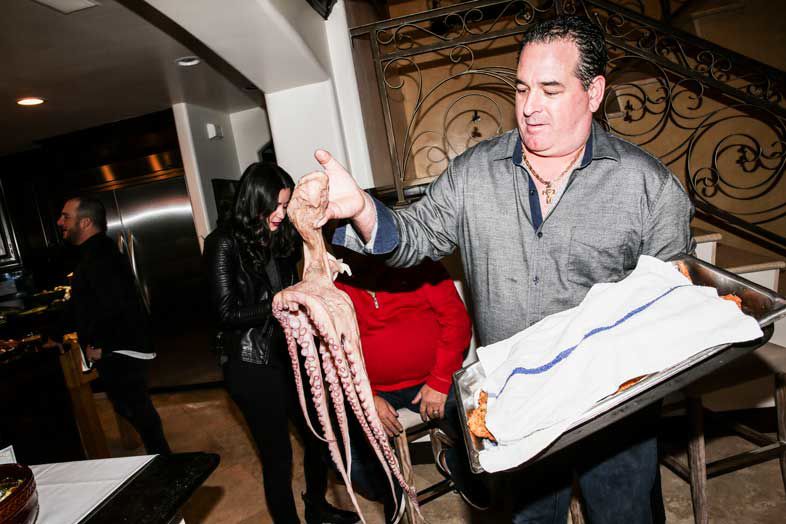
He opened his first restaurant 35 years ago in La Mesa at Grossmont Center, Casanova’s Pizza. That same year, with his fishing contacts, he opened Busalacchi’s Fish Company. Two years later, in a converted Craftsman home in Hillcrest, he christened the restaurant that would make his name—Busalacchi’s on Fifth. The dishes, largely based on Nonna’s recipes and tweaked with Joe’s expanding talent, were a revelation. But it was bittersweet, because San Diego diners at the time weren’t adventurous. “I used to get so sick of people saying, ‘You make the best fucking lasagna in the world,’” Joe grouses. “I didn’t want to make the best fucking lasagna in the world.” He wanted to serve them Sicilian specialties like calamari, or octopus with lemon (which, at family dinners, is always served as a late-night snack and always, always cut by Uncle Frank Z.). “I couldn’t get fettuccine alfredo off the menu,” he grumbles.
The Big Family in Little Italy

The Big Family in Little Italy

Busalacchi’s on Fifth—which moved one block away and was renamed Busalacchi’s A Modo Mio in 2011—lasted as an icon for 24 years. When the lease was up and the landlord’s new terms were too steep, Joe opted to close it. This became a recurring theme. When faced with a spike in rent, many owners often just pay it, because that particular patch of earth is the birthplace of so many emotions. Joe crunches the numbers. If those numbers don’t pencil out, he cuts bait and opens somewhere they do. He had already made inroads in Little Italy, opening Trattoria Fantastica and a bakery called Cafe Zucchero in 1994 and 1995, respectively. (Joe’s brother Frank went to Sicily, studied Italian pastry, and returned to help open Zucchero). At that time, the price per square foot in Little Italy was 99 cents. Now it’s eight dollars.

“Tell them about the bullet holes, Dad,” urges Joey Jr. as we sit outside after dinner, cigars aflame.

“It was a ghetto,” Joe admits. “Seven thirty, eight o’clock it was dead. I’d love to say I saw what Little Italy would become, but I had no idea. It was just so affordable.”

“We used to have to put things underneath the patio tables because the sidewalks slanted down toward the street,” Joey Jr. remembers.

“You could lay in the middle of India Street and never get hit by a car,” adds Nino. “The lease was a single piece of paper.”
The Big Family in Little Italy

The Big Family in Little Italy

Joe was one of the independent business owners who changed that, by taking a chance on Little Italy. Landlords wanted a Busalacchi joint. Joe’s food and jokes de vivre made people come, which made landlords’ buildings more valuable. They offered him rent for proverbial pennies. At one point he had six concepts in the neighborhood, from Grape Street to Cedar.

“I couldn’t say no,” he says.

Then Little Italy exploded. Craft & Commerce, Prepkitchen, Bencotto, Underbelly, Café Gratitude, Born & Raised, Ironside—all the hip restaurants arrived. Rent went up, way up. Between 2015 and 2017, he sold or reconcepted seven restaurants, five in Little Italy alone. From an outsider’s perspective, the Busalacchi starshine seemed a little dusty.

“It wasn’t that we lost it,” explains Joe. “We were done with the leases. I sold one of them to one of the managers who worked with me. I wanted to give him an opportunity. And so we concentrated on coming back, all hands on the one idea.”
The Big Family in Little Italy

The Big Family in Little Italy

That idea was Barbusa. The lease for his steakhouse restaurant, Po Pazzo, was up. He wanted out. His sons wouldn’t let him, at least not without a fight. PJ and Joey Jr. wanted to take Dad and Cousin Nino’s food and put it in a more modern setting. Ditch the white tablecloths, the formal service, the classic—and possibly outdated—earmarks of restaurant culture Joe made his name on.

“We fought with him over every little thing—decor, music, the food,” says PJ.

“I was coming from the old school with the linens and tiles or carpet,” says Joe in his defense. “They had all these big changes, of concrete floors and no linens, different-style chairs, mix-matched spoons. I was like, ‘Wow, what’s goin’ on here? You guys are crazy.’ But apparently they were right and I was wrong.”

It worked. Barbusa, which opened in 2016, is a hit, arguably Busalacchi’s biggest in a decade. PJ and Joey Jr. run the front of the house, trying their best to make strangers feel the same way I, a stranger, feel in their home tonight. Father Joe oversees it all. There are plans to open more Barbusas outside of Little Italy, maybe even in other cities.
The Big Family in Little Italy

The Big Family in Little Italy

“I’m still at the restaurants at six in the morning,” says Joe. “I still check the sauces and prep some. But I’m all over the place. I’m consulting with my kids, keeping them on their toes, changing menus, and handling the business end of it. You might see us at the edge of a table, fighting.”

It’s 42 years in the making, this Busalacchi thing. And the boy who worked on a tuna boat at age 19, who opened a pizza joint with a few bucks and a dream, is watching the second wave carry the name.

Near the end of the night, I look down at Nonna in her spot at the head of the table. She hasn’t moved. That is her place. The cook who started it all.


Cook Like a Busalacchi

San Diego’s first family of Italian food shares three hallmark recipes passed down through the generations, including Nonna’s famous Bolognese. Mangia!
The Big Family in Little Italy

The Big Family in Little Italy

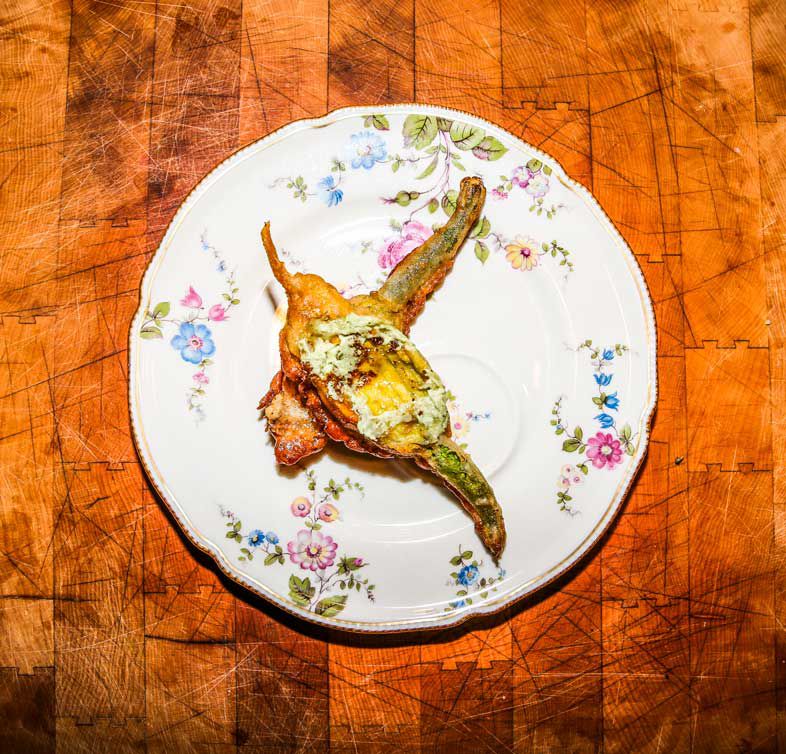
Fiori di Zuccha

“Squash blossoms are an ingredient that intimidates many people but, in reality, are very easy to work with,” says Barbusa Executive Chef Nino Zizzo. They are a great example of a fresh dish that you can change up by experimenting with different stuffings according to your preference, and they will consistently impress your guests.”

Serves 6

Prep time: 10–15 minutes

Cook time: 2–4 minutes per blossom

Ingredients

Filling:

6 squash blossoms

¼ cup mascarpone cheese (can substitute cream cheese)

2 tablespoons Parmesan cheese

¼ cup mozzarella cheese

1 teaspoon chopped shallots

Pinch of salt

Pinch of pepper

Sauce:

¼cup apricot preserves

½teaspoon Calabrian chilies, minced

½teaspoon serrano chilies, minced

Batter (can substitute store-bought tempura batter):

1 cup flour

¼ cup corn starch

1 egg

Sparkling water to preference

Directions

Filling:

1. Combine all ingredients (except squash blossoms) in a large bowl.

2. Roll into small balls, then stuff each squash blossom to capacity (will depend on blossom size).

Batter:

Combine all ingredients in a bowl, using enough water to achieve preferred consistency.

Sauce:

Combine all ingredients in a bowl and plate under the blossoms.

Blossoms:

1. Once stuffed, pat the blossoms in flour, then dip in the batter.

2. Heat your skillet with oil or heat the fryer to 375 F.

3. Fry each blossom until golden brown, about 1–2 minutes on each side.

4. Plate the squash blossoms over the sauce.
 

The Big Family in Little Italy

The Big Family in Little Italy

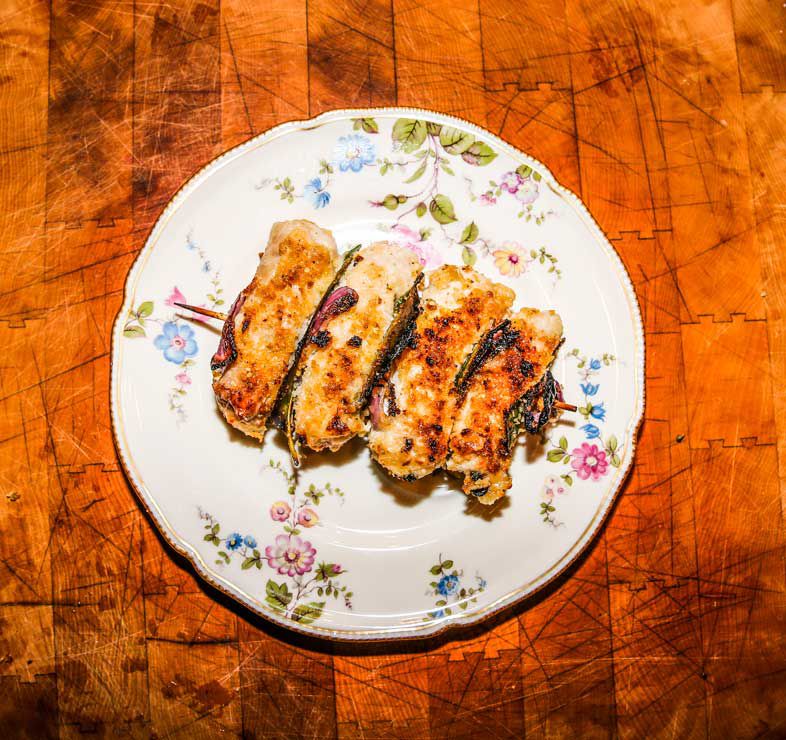
Spiedini

“Spiedini are a traditional Italian dish historically reserved for holidays and special occasions,” Zizzo says. “Whether it’s Christmas, Easter, or a family member’s first communion or reconciliation, the whole family gets together and participates in the preparation.”

Serves 4

Prep time: 45 minutes–1 hour

Cook time: Varies according to preference

Ingredients

Stuffing:

½ sweet onion

2 bunches of green onions

½ cup olive oil

⅛ pound salami

⅛ pound prosciutto cotto (ham)

⅛ pound pecorino Romano cheese

⅛ pound mozzarella cheese

1 teaspoon black currants

1 teaspoon pine nuts

½cup tomato sauce

Panko breadcrumbs

1 sprig Italian parsley

Salt and pepper to taste

Meat:

2–2 ¼ pounds pork or veal, cut into 2 ounce medallions (4–5 medallions per skewer)

1 red onion, slivered

20 bay leaves

Extra virgin olive oil

Panko breadcrumbs

Directions

Stuffing: 

1. Chop onion and green onion into slices the width of a quarter.

2. Sauté the onion and green onion in olive oil, then transfer to a bowl.

3. Chop the salami, prosciutto cotto, pecorino Romano, and mozzarella and add to mixture.

4. Add in black currants and pine nuts, then mix in tomato sauce.

5. Add Panko breadcrumbs until the mixture becomes doughy.

6. Add parsley and salt and pepper to taste.

Meat:

1. Place meat medallions on plastic wrap and pound until thin.

2. Take a generous dollop of stuffing, roll it up, and place on meat.

3. Using a three-tuck fold, roll the stuffing up in the meat.

4. After they are rolled, place 4 to 5 portions of meat on each skewer, inserting a sliver of red onion and 1 bay leaf between each portion

5. Dip both sides of the loaded skewer in extra virgin olive oil, and roll the skewer in Panko breadcrumbs.

6. Barbecue the skewers on the grill, cooking to preference and until cheese in the middle has melted.
The Big Family in Little Italy

The Big Family in Little Italy

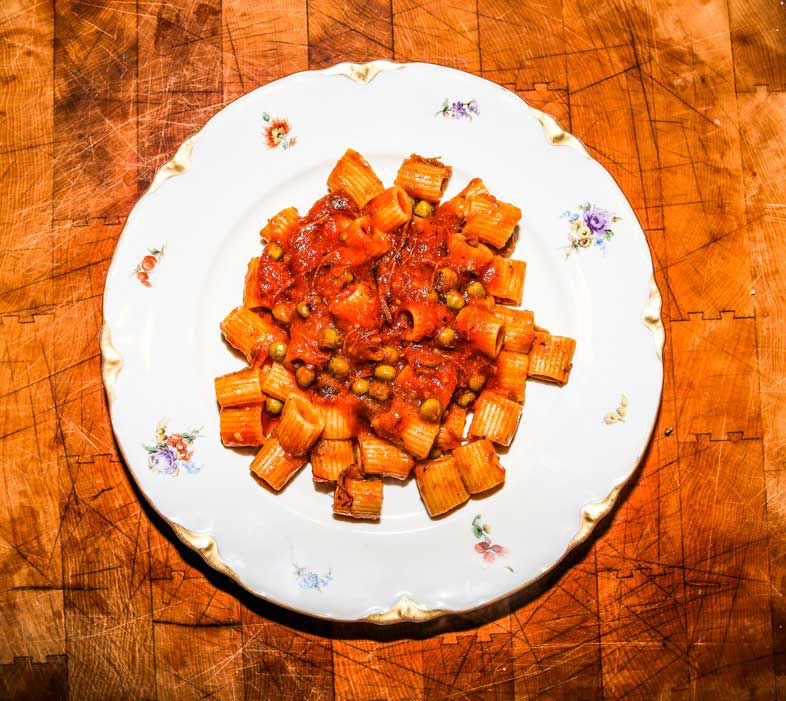
Nonna’s Bolognese Sauce

“Our Bolognese aims to instantly bring back the memories of walking into Nonna’s kitchen for Sunday family dinner,” Zizzo says. “The recipe comes directly from our grandmother and serves as a reminder of simpler times with a great meal and family.”

Serves 4

Prep time: 30 minutes

Cook time: 1 hour

Ingredients

1 white onion

1 large carrot

2 stalks celery

¼ pound pancetta

3 garlic cloves

½ cup olive oil

1 ½ pounds ground beef

1 pound Italian pork sausage

2 tablespoons salt

1 teaspoon black pepper

1 cube beef bouillon

24 ounces tomato paste

½ cup whole milk

1 gallon water

2 cups green English peas (sweet peas)

Directions

1. Mince the onion, carrot, and celery in a food processor.

2. Add the pancetta and garlic, then transfer to a large pot and sauté in olive oil.

3. Add the ground beef and sausage, then add salt, pepper, and the beef bouillon.

4. Once the meat has browned, add in the tomato paste.

5. Mix well, then add in milk, water, and peas.

6. Cook on low heat for one hour.

7. Depending on desired consistency, add more water or cook for longer.
The Big Family in Little Italy

Subscribe to our newsletters

Select Options

By subscribing you confirm that you agree with our Terms and Conditions and Privacy Policy.

Everything SD SEPTEMBER 16, 2026

Where to See Celebs at the 2026 Del Mar Wine & Food Festival

Check out the stacked lineup of talent participating in this year’s celebration of food, cocktails, wellness, and SoCal energy

Where to See Celebs at the 2026 Del Mar Wine & Food Festival
Courtesy of Del Mar Wine & Food Festival

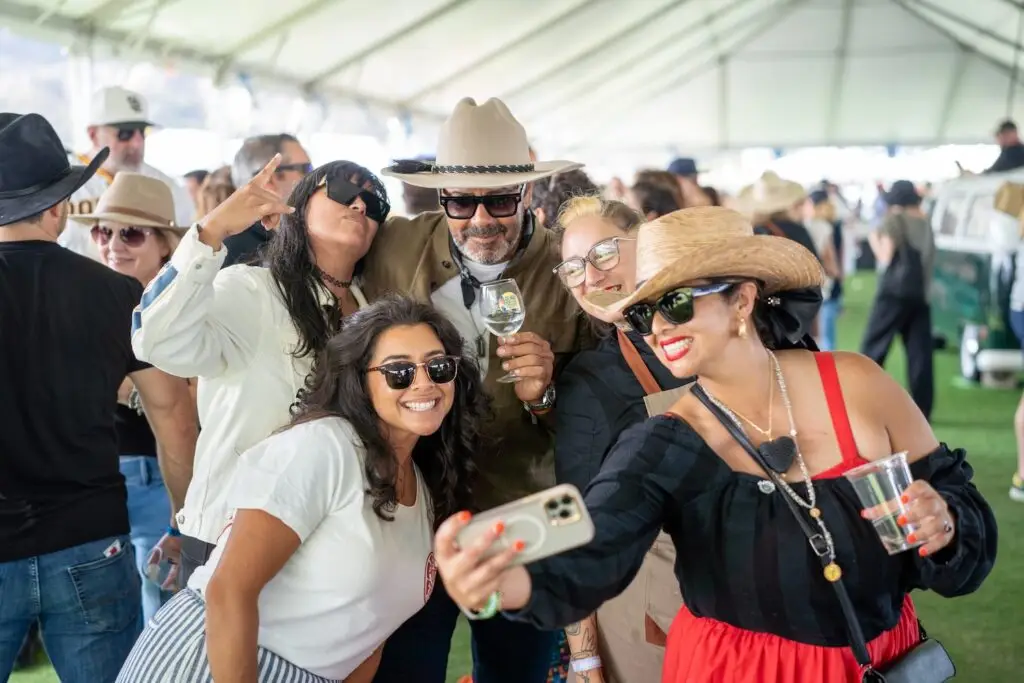
Tickets to the Del Mar Wine & Food Festival get you in the door. The real fun is figuring out who you’ll run into once you’re there. This year’s weeklong schedule of exclusive events, running September 30–October 4, includes dinners, tastings, and loosely-supervised chaos where celebrity chefs and local icons finally let their hair down.

The festival has a track record of the unexpected: Bryan Cranston and Aaron Paul once toasted their mezcal brand Dos Hombres with an intimate dinner at the Lodge at Torrey Pines (and then, evidently unsatisfied, kept drinking it on the cliffs above Blacks Beach with a rotating cast of San Diego and Food Network chefs. Alex Morgan showed up for a dinner under the lights honoring the country’s most badass women chefs). Drew Brees ran a celebrity pickleball tournament where the guy from It’s Always Sunny in Philadelphia got absolutely humbled by locals.

If you scored a ticket to last year’s Grand Tasting, you might’ve caught Guy Fieri doing exactly what Guy Fieri does: strolling the grass, signing t-shirts and foreheads, and hanging off the DJ surf van like it was built for him. Meanwhile, local chef Ethan Yang of Glass Box walked off with the Chef Competition surfboard.

So whether your plan for 2026 is to corner legendary San Diego chefs like Victor Jimenez of Cowboy Star and Jon Sloan of Juniper & Ivy in person, or just aim for a spontaneous golf cart ride with a Food Network star—here’s your cheat sheet for where to run into a celebrity chef, TV personality, award-winning winemaker, or pro athlete at this year’s Del Mar Wine & Food Festival.

Courtesy of Del Mar Wine & Food Festival

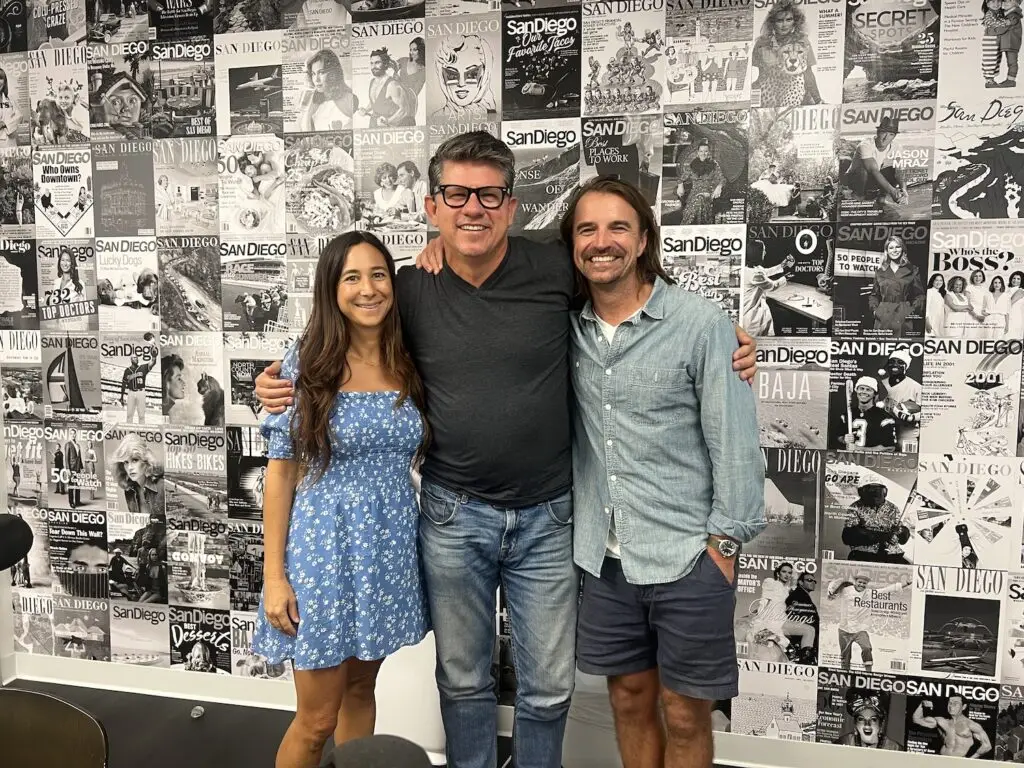
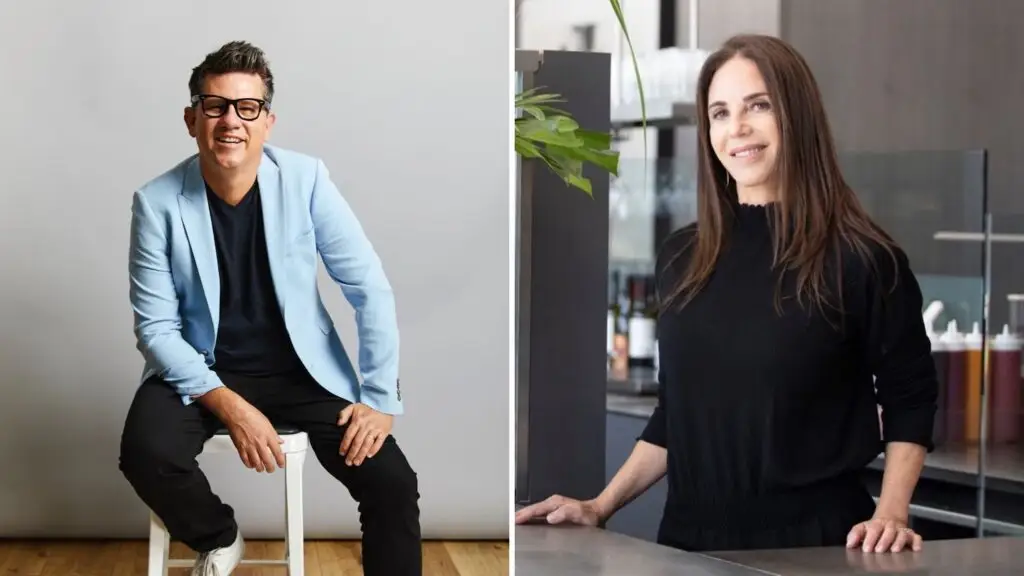
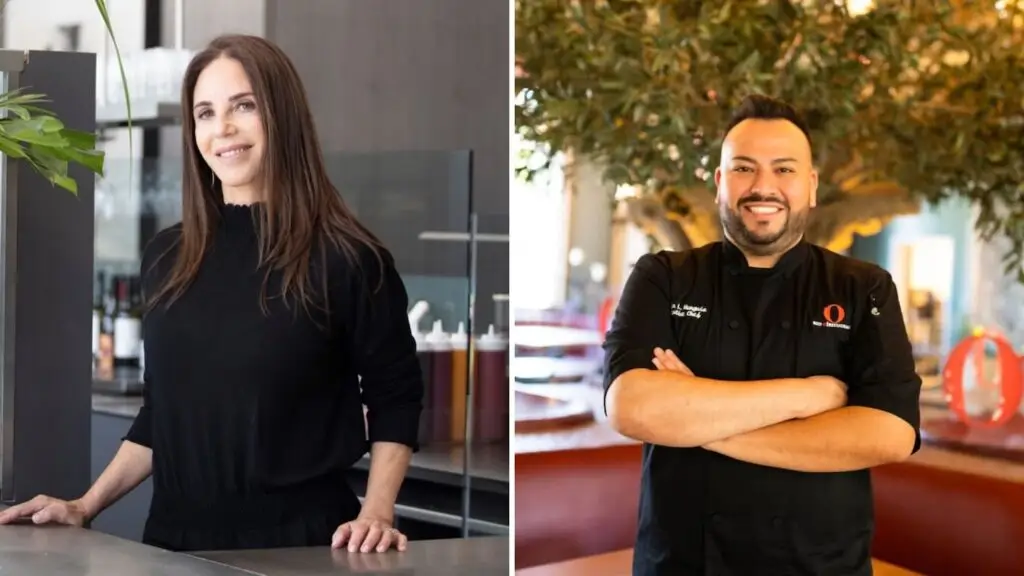
Troy Johnson, Karen Krasne

Signature San Diego Opening Night Party

September 30 | 6 – 9 p.m. | Monarch Ocean Pub 

Consider this your soft landing into festival week—the walk-around tasting that eases you in before things get chaotic later on. Monarch Ocean Pub hands its patio over to the flavors that define San Diego eating: Baja seafood done right, coastal bites, Mexican flavors with some heat behind them, all the staples locals will fight you over. 

The celebrity sightings here lean more “bump into” than “spot from across the room.” Troy Johnson—Food Network judge, San Diego Magazine chief content officer and co-owner, Emmy-winning host, a man who has eaten his way across the entire country professionally—is the type to materialize at whichever station has the longest line, because he already knows it’s worth the wait. Ask him what he’s had so far. He’ll have opinions.

Then there’s celebrity pastry chef Karen Krasne, owner and executive pastry chef of Extraordinary Desserts, James Beard House alum, and a woman Forbes once ranked among the top 10 pastry chefs in the country—which tracks, because you might find her holding court next to a tray of her roasted pecan shortbread dipped in white chocolate, explaining exactly why this is the flavor combination. You will listen to every word, too, because you’ll want to try that cookie.

This is an opening night party where the person next to you in line might just be the one who baked the thing you’re about to eat.

Courtesy of Del Mar Wine & Food Festival

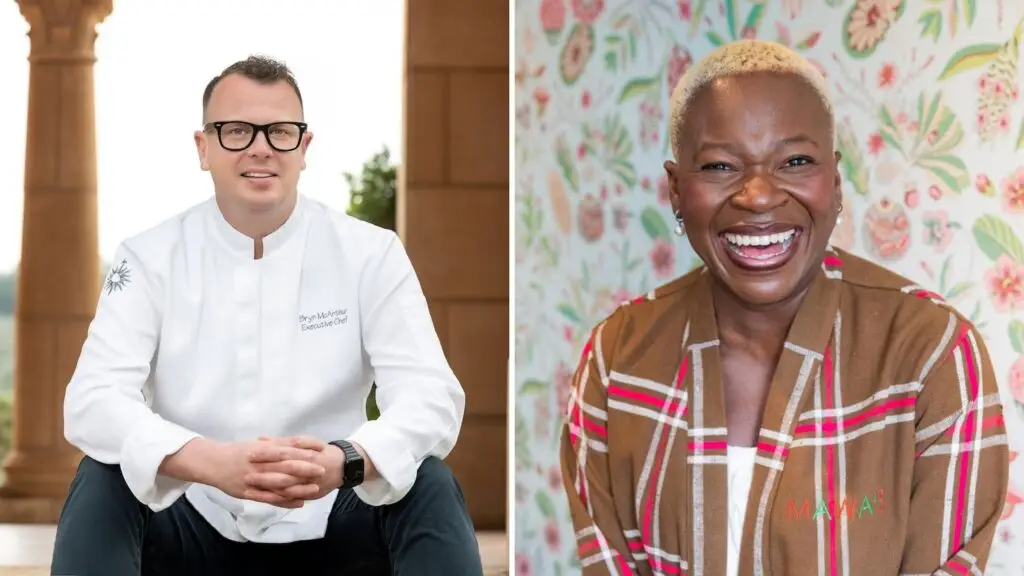
Bryn McArthur, Mawa McQueen

Chateau Montelena’s 50th Anniversary Celebration

October 1 | 6 – 9 p.m. | Fairmont Grand Del Mar

Fifty years ago, a Napa Chardonnay beat France at its own game and rewrote what the world thought it knew about wine. This dinner is that legacy, poured by the family who built it, course by course.

Under the arches at Fairmont Grand Del Mar, Ernie Hahn and the Hahn family, who partnered with the Barretts to revive Chateau Montelena into the Napa powerhouse it is today, host an evening built entirely around the winery’s most iconic pours. Every course gets its own pairing straight from the Montelena portfolio, so you’re not just hearing about the Judgment of Paris, you’re tasting the wine that started it.

Chef Mawa McQueen, a former James Beard Best of the West winner out of Aspen, brings globally inspired cuisine and serious technique to the table. Alongside her, Fairmont Grand Del Mar’s executive chef Bryn McArthur leans into farm-to-table sensibility shaped by a career of global kitchens. Together they’re building a menu meant to hold its own against wine that already changed history once.

This is the rare dinner where the wine isn’t just accompanying the meal, it’s the reason the meal exists. Fifty years after Paris, the rematch is happening right here in Del Mar.

Courtesy of Del Mar Wine & Food Festival

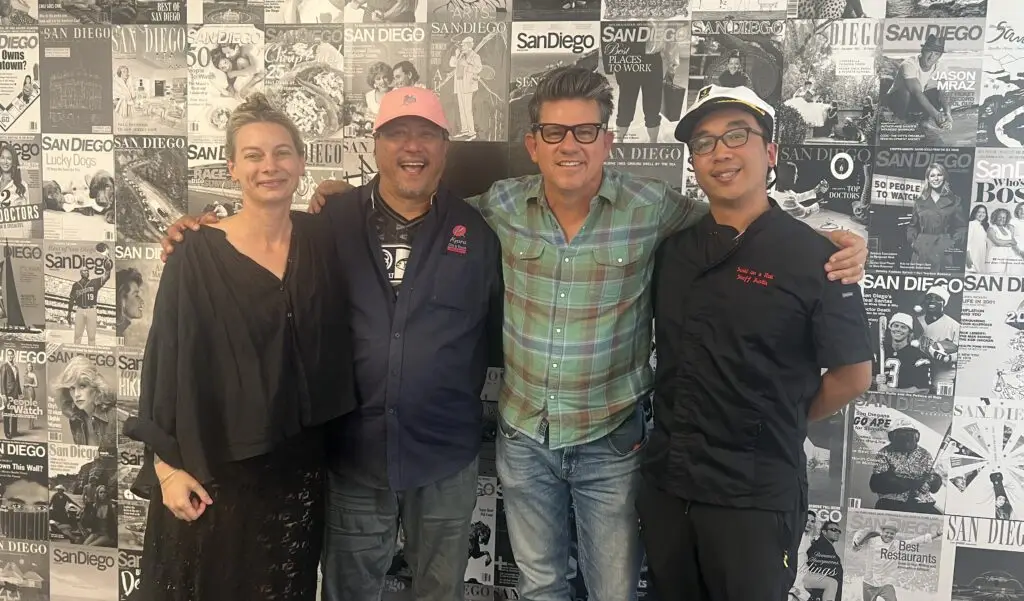
Karen Krasne, Martin Munguia

Rioja Uncorked

October 1 | 6 – 9 p.m. | Rancho Valencia 

Isabella Dallas is a freelance writer for San Diego Magazine and the Arts and Culture Editor at The Daily Aztec in her final year at San Diego State University. She previously worked as an editorial intern for SDM, but when she’s not writing, you can find her trying the best coffee spots in SD, devouring the latest rom-coms, and indulging in anything and everything pop culture.

Arts & Culture SEPTEMBER 14, 2026

What Will It Take to Make San Diego a Global Arts City?

Jonathon Glus on the Art + Design District, investing in the creative economy, keeping artists in the city, and what we can learn from places like London and Chicago

What Will It Take to Make San Diego a Global Arts City?
Photo Credit: Stacy Keck

Jonathon Glus is the Prebys Foundation senior fellow leading the development of the Art + Design District at the Downtown San Diego Partnership. He has been asked what an arts and design district is many times. In our conversation, I asked him instead to describe what it isn’t. His answer opened up a broader discussion about what San Diego has and hasn’t invested in, what it has the capacity to become, and what other cities have done that we haven’t. Glus speaks about global art fairs and architecture biennials in Chicago and long tables at dinner parties all with the same fluency. He also discusses who gets to live in the neighborhoods where creative work happens, and what it means when they can’t afford to stay.

Claire Johnson: You have been asked what an arts and design district is many times. Can you tell me what it isn’t?

Jonathon Glus: It is not a place designed intentionally and specifically for tourists. Of course there will be opportunities for tourists to come, but the district is really focused on creatives, on creative education, and on the creative workforce—as well as our major performing arts organizations. That is the emphasis.

What does the district need to do in the next five years for you to consider it a success?

[It needs to] develop greater connectivity between the anchor institutions—the symphony, Broadway San Diego, the opera, all the wonderful things happening in Balboa [Park]—and the creative workforce that will be living and working in that neighborhood 24/7.

What does San Diego not have that you wish it did?

We have not been intentionally investing in the contemporary art product that other major cities have been building. A contemporary art fair. A biennial that reflects the ethos of this region. Chicago developed an architecture biennial about eight years ago. London has a design biennial. Desert X, right here in Southern California, invests in and elevates contemporary artists inside a city. We have not really been playing in the global art market in a way that we have the capacity to.

What capacity do we have?

We have a wonderful foundation. Two theater companies that produce work that goes to Broadway more than many regional theaters in the country, major museums, artists teaching at UC San Diego and University of San Diego. What a city does when it wants to take itself to the next level is intentionally create the product. Miami went after the Art Basel fair; they did not passively receive it. You have to have the intention and the will, and you have to go after it. We haven’t done that in the way that other cities have.

Look at what we did with the tech sector; we’re now a major tech center. That was intentional. Leadership organized around it. We have to do the same thing around the arts. We have a lot of contemporary art collectors here. We have a lot of galleries. But the ecosystem of the business of contemporary art is not as organized or as visible as it should be.

Which city is your North Star?

It’s bits and pieces of different cities. Dubai has invested very quickly and very intentionally in contemporary art—art fairs, design fairs, higher education, artist residencies from all over the world. London has centered artists and creatives in the contemporary zeitgeist in a way that was not true 40 years ago. They built biennials. They ensured British artists had affordable housing and workspace. They made sure the media paid attention to what they were doing.

If you don’t have an artist at your dinner table, it’s not a dinner party. That sounds elitist, but it’s true. It shows the value that artists have in a community. Our relationship culturally with Tijuana is really significant here because artists in Baja seem to be at the table.

We’ve talked before about how food, fashion, design, and art aren’t siloed anymore.

They aren’t. When super creative people are in a community doing extraordinary work, that draws other super creative people doing extraordinary work. That’s why other arts and design districts around the world end up populated with some of the most interesting restaurants and young fashion designers. Creatives want to be around other creatives.

Which leads to the economic argument…

Our creative economy already employs about 170,000 people and generates more than $11 billion in economic activity. It’s large and robust. But we must center all of this in accessibility and affordability. Williamsburg used to be affordable. Artists can’t afford to live there anymore. Wicker Park and Bucktown in Chicago—artist central, now unaffordable. If we’re going to invest in this district, we have to be really intentional about housing and workspace, so creatives have a place in the future of this district.

I see all these new supper clubs and creative collectives popping up. What is the lesson there for San Diego in terms of the commercialization of cultural and creative groups?

I think the lesson is that nothing changes. What do people love? Long tables. Why? Because you’re with a lot of people—some you may have known your entire life, but most you don’t. And if it’s driven by a creative process, all the better. We know one of the best ways to do that is around food, but also music.

For the Art + Design District, part of why we’re leaning into the process is because, culturally, we’re bringing down the barriers between film, fashion, multimedia, tech, and architecture. It’s an experiential mashup in the best possible way.

And it’s not just about art and design, but community writ large. Creative expression is something we all desire. Whether it’s at a long table, at the opera, or in your studio, we gravitate toward creative expression as a way of building community and communicating with the people around us.

Is there a question I should have asked you but haven’t?

I hope you are writing about this in seven years when the district is fully mature. But this is just the beginning for all of this. I think that’s what’s most exciting to me. We don’t know what this is going to be like, but we know it’s going to be creatively centered, and that’s super exciting to me.

Arts & Culture SEPTEMBER 11, 2026

San Diego FC’s Vision Goes Beyond the Soccer Field

A conversation with Sebastián Morúa on art, community, and why the club’s future heroes should include the creatives helping build it

San Diego FC’s Vision Goes Beyond the Soccer Field
Photo Credit: Xavier Hernandez

Sebastián Morúa is the Senior Vice President of Brand & Innovation for San Diego FC. He oversees Playmakers, the program through which the club has, over the past three years, engaged with over 80 working artists—not as marketing partners, but as co-creative directors.

Morúa didn’t build Playmakers as a community-outreach program bolted onto a Major League Soccer franchise. He built it as the identity of the franchise. When we sat down, he talked about the World Cup, San Diego’s creative workforce, his challenge to other sports franchises in the city, and the mural of heroes he hopes people will see one day when they close their eyes and picture San Diego FC.

Claire Johnson: Why does an MLS team invest in arts and culture?

Sebastián Morúa: I want to answer that in two parts. Philosophically first—because I think what you’re really asking is why should any sports team do this when most don’t.

Sport is a platform for transformation. It has proven that over and over. We saw it this summer with countries participating in the World Cup for the first time and what that did in their home countries—the sense of self-identification, pride, possibility. That is the power of sport.

When you take a sports team that’s fueled by that principle and understands what it could mean for other stakeholders in a community, you start to think about what you can accomplish in collaboration with them. One of those stakeholders, very early on, was the creative community. If we were going to build a team that represents this place and its people, we needed to go to the source. Artists are uniquely positioned to translate the essence and the soul of a community. When you zoom out and look at the multitude of artists in a place, you start to see the fabric of that local culture. That’s where the sense of pride and possibility gets unlocked.

But you’re also San Diego FC specifically. That matters.

Our mission is to create opportunities for talent to flourish and make San Diego shine. That means the club is a platform. When we started doing the early research for the brand, we brought artists into our focus groups. The response was immediate. There was a clear need. In 2024, we ran the first full year of what became Playmakers, working with more than 20 artists to help us tell the story of how San Diego FC could weave 18 distinct communities together.

We’re in the business of developing communities through sport. We’re not in the business of fútbol to entertain communities. That is an outcome—but not the purpose.

When you started, were you thinking about the profitability of this type of program?

No. I wasn’t thinking about where this was going or how much it would cost. It instinctively felt aligned with our organizational purpose, and we made a decision to go for it. Now it’s become what it’s become.

What does Playmakers look like in 10 or 20 years?

If a fan closed their eyes 20 years from now and tried to paint a mural of the heroes that make up the club, they would see a big percentage of Playmakers artists on that mural. Ask any fan about the team they’ve supported for decades, and they’ll tell you about players, maybe a coach, maybe an owner. We’re expanding that. In our mural, there’ll be artists, entrepreneurs, community leaders, youth coaches. The community will be present.

Three to five years from now, Playmakers is an established community of creatives who have co-directed the identity of the club and the evolving identity of San Diego. If we keep the pace we’ve kept, we should have collaborated with 150 to 200 artists whose stories we’ve told and whose next steps we’ve helped support.

What would you tell another organization considering this kind of investment?

There’s a huge benefit for us as a club and as a brand. This is symbiotic. The artists have a need, we can support that need, and in return the community cares more about our club because of the investment we’re doing in the community. That’s what I would tell another organization.

What excites you most about how San Diego is changing?

San Diego is waking up to how much it has to offer the global conversation around culture. There’s a purity to life here—partly because of the weather, which allows us to spend so much time outside, in nature—and that exists alongside this incredible richness in food, music, art, and now sports.

I have a sense that San Diego is ready to unlock its full potential. You see it in the artists and creatives here. They’re ready. There’s very little hesitation. It’s more like: “Hell yeah, of course I want to do this. I know I’m talented. I’ve been waiting for something like this.”

That energy, combined with the unique lifestyle and character of this place, creates a really exciting sense of what San Diego can become in the years ahead.

Is there a question I should have asked you that I haven’t?

I would ask: What would you say to the other big players in San Diego who are—or could be—shaping the cultural fabric of our community? Do they understand the symbiotic benefit? Are they supporting it?

Because Playmakers, in the end, is a cultural compass. It’s making sure that San Diego still feels—and will always feel—represented in the creative process of building San Diego FC and what that means for San Diego.

The pitch is a canvas. Athletes are painting collectively during every game. There is a story in every game. That’s the link between sport and art. At the core, it’s the same creative process.

Arts & Culture Q&A
Studio S SEPTEMBER 11, 2026

Vi at La Jolla Village – Senior Living in the Heart of Everything

At Vi at La Jolla Village, residents don't have to choose between security and adventure, connection and independence. They get all of it.

Vi at La Jolla Village – Senior Living in the Heart of Everything
Courtesy of Vi at La Jolla Village

Today’s seniors are more connected than ever, with a renewed focus on retirement as a time of discovery and enriching experiences. The ultimate reward for a retirement well-earned is the wisdom to appreciate it all, and what better place to enjoy that unique perspective than Vi at La Jolla Village, in the heart of San Diego.

All-access pass to good living.

As a Continuing Care Retirement Community (CCRC), Vi provides access to a connected and fulfilling community while making it easy to plan for future care, should the need ever arise. With a care plan in place, residents enjoy greater financial predictability and long-term value, freeing them to focus on making the most out of retirement.

Resort-style amenities at the epicenter of a cultural hub like San Diego offer a retirement experience unlike any other. Paired with exceptional dining, spacious accommodations and dedicated staff, the best of maintenance-free living is all around. And with the introduction of Vista 360 Well-Being, Vi’s panoramic approach to wellness, there are more ways than ever for residents to access it all.

The harmony of mind, body and community.

Courtesy of Vi at La Jolla Village

The key to longevity is striking the right balance in maintaining an active lifestyle with an active mind in a fulfilling community. With newly renovated community spaces and restaurants, Vista brings a variety of opportunities for residents to elevate their well-being through Vi-exclusive “Signature Experiences.”

Vista Enrich takes an evidence-based approach to brain vitality, keeping residents at the forefront of cognitive health through exergaming (exercising + gaming), nutritional plans and informative workshops. It is also home to The Brain Vitality Studio, an innovative facility dedicated to cognitive fitness that has garnered national recognition.

Vista Discover invites residents into stimulating educational experiences, from chef-led cooking demos and guided wine tastings to lectures at local universities and intimate lectures following cultural outings.

While Vista Enrich focuses on brain health and Vista Discover engages residents intellectually, Vista Explore cultivates a sense of adventure through curated travel and local excursions. But broadening one’s horizons doesn’t always require a plane ticket. One recent event brought a taste of the world right to the community: an onsite “jazz cruise” featuring live music and global cuisine served at a series of themed “ports” all within the community’s own ballroom.

“Location, location, location”

Courtesy of Vi at La Jolla Village

One of the biggest perks of life at Vi at La Jolla Village is its proximity to just about everything. With easy access to transportation and local attractions just steps away, residents can explore and engage with their community at their own pace.

“There are trolley and bus stops within a 5-minute walk that will get you to the beach, UCSD Campus, medical appointments, downtown La Jolla or San Diego, et cetera. We rarely use our car,” said resident Tom Yager.

With the best of San Diego just steps away, residents don’t just live in the city, they live within reach of everything that makes it special.

The best of all worlds.

Courtesy of Vi at La Jolla Village

At Vi at La Jolla Village, retirement isn’t a chapter to slow down; it’s an invitation to discover more. Tailored community experiences created by Vista, paired with the vibrant pulse of San Diego just outside the door, mean that residents don’t have to choose between security and adventure, connection and independence. They get all of it.

This is what an all-access pass to good living looks like: the comforts of an elevated lifestyle, a community built for growth and a city made for discovery – all in one place.

To learn more about Vi at La Jolla Village or for details on available floor plans, visit ViatLaJollaVillage.com/SDM.

Partner Content
Food & Drink SEPTEMBER 11, 2026

A Taste of Osaka Is Popping Up Around San Diego

Surf’n Slaw founder Kumi Alexander is introducing local farmers market crowds to okonomiyaki, the savory Japanese pancake she grew up eating

A Taste of Osaka Is Popping Up Around San Diego
Courtesy of Surf’n Slaw

After 15 years married, my husband and I tend to agree on most things. But there’s one argument we both refuse to bend on—I prefer okonomiyaki Osaka-style, and he’s a die-hard Hiroshima-style devotee. (To be fair, we both adore both styles, but at this point, it’s just fun to have a low-stakes disagreement.)

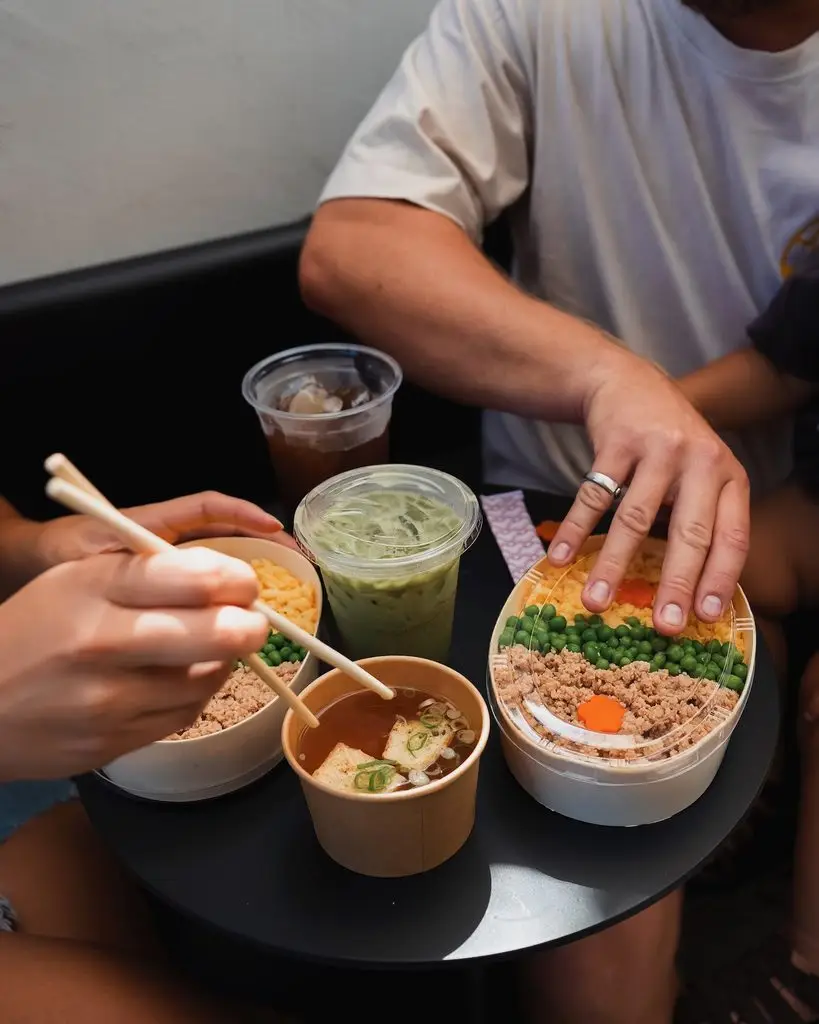
Okonomiyaki is one of Japan’s greatest comfort foods, a savory pancake that’s about the size of a DVD, if you aren’t too young to know what that is. It’s not terribly hard to make—it’s flour, eggs, dashi stock or water, and a whole heap of shredded cabbage, plus optional fillings like green onions, pork belly, or bonito flakes, all cooked fresh on a flat top griddle. Drizzle some kewpie mayo and okonomiyaki sauce on top, and you’re hot to go. 

However, it’s not easy to make well, and as you now know, people have capital-O Opinions about Osaka-versus-Hiroshima. Hiroshima-style layers the ingredients one by one rather than mixing them together, adding a layer of soba or udon noodles and topping it all off with a fried egg. For Osaka-style,  all the ingredients are mixed together and then cooked on the griddle, so every bite includes every ingredient in a hodgepodge of deliciousness. (One Osaka variation called modan-yaki does include soba noodles mixed in the batter, but they’re not traditionally used in that regional version.) 

Despite a childhood spent in Osaka, Japan, Kumi Alexander specializes in making Hiroshima-style okonomiyaki. “Okonomiyaki has been part of my life for as long as I can remember,” she explains. “My parents ran their own business when I was growing up, so Saturdays were often busy, and okonomiyaki was one of my mother’s go-to lunches because it was simple and easy to make.” 

Alexander came to San Diego seven years ago with a desire to bring a part of her culture with her—not just a product, but a feeling. “When I thought about what could do that, the answer was almost obvious: okonomiyaki,” she says. 

She originally launched Surf’n Slaw as a mobile pop-up food stand in August 2025, offering what Alexander calls Japanese-meets-California okonomiyaki. “Our full Surf’n Slaw includes cabbage, noodles, umami dough, beef, shrimp, and vegetables,” she explains. The menu also has a “Green Wave Slaw,” an Osaka-style version that can be made vegan and gluten-free, as well as matcha drinks. 

Currently, Surf’n Slaw pops up at farmers markets in North Park, Scripps Ranch, Hillcrest, La Jolla, and La Mesa, as well as other local markets and community events. Eventually, she may expand to a permanent location, but that’s a future goal. And while Alexander hopes that one day okonomiyaki will be as well-known to American audiences as ramen or sushi, for now, she’s just happy to share a bit of home with San Diego. 

San Diego Restaurant News & Food Events

Beth’s Bites

  • Izola Bakery announced big plans for a second location and bakery HQ (checks notes) over three years ago and it’s kind of been crickets since then. But there may be movement in the expansion plan—the East Village bakery recently put out a hiring call for “the people we need to help us build what’s next.” Here’s hoping things get cooking (or baking, as the case may be) soon. 
  • As a California-born, East Coast-raised foodie, I can confidently say the East Coast has the deli game on lock. So whenever anyone announces they’re bringing an East Coast-style sandwich to the West Coast, I remain cautiously optimistic until proven otherwise. (Big Jim’s in Pacific Beach is a phenomenal example of a transplant done exceptionally well.) Los Angeles-based Ggiata Delicatessen recently announced plans to open a location in Encinitas, promising authentic Italian staples like meatball parmesan subs, cheesesteaks, and Italian cold cuts. Don’t let me down, guys!
  • Unfortunately, it’s not all openings and expansions. Nola on 5th in Hillcrest permanently ceased operations without warning or explanation. We can probably pick from one (or more) squares on Restaurant Closure Bingo for the reason (increased costs for ingredients, labor, equipment, etc.), but for the jambalaya enthusiast, it doesn’t really matter why. It’s simply adieu to a slice of The Big Easy in San Diego. 

Listen Now: The Latest in San Diego’s Food and Drink Scene

Have breaking news, exciting scoops, or great stories about new San Diego restaurants or the city’s food scene? Send your pitches to [email protected].

Beth Demmon

About Beth Demmon

Beth Demmon is an award-winning writer and podcaster whose work regularly appears in national outlets and San Diego Magazine. Her first book, The Beer Lover's Guide to Cider, is now available. Find out more on bethdemmon.com.

Food & Drink SEPTEMBER 9, 2026

Hako Hako Will Bring Japanese Konbini Culture to Hillcrest

San Diego entrepreneur Kenji Blouin-Ito is turning a tiny Uptown Inn space into a destination for bentos, coffee, snacks, and more

Hako Hako Will Bring Japanese Konbini Culture to Hillcrest
Courtesy of Hako Hako

Tokyo unquestionably holds the title as one of the best, if not the best, food cities of the world. But despite the plethora of Michelin-starred kaiseki restaurants and hole-in-the-wall ramen joints, you’d be remiss in walking past glowing signs beckoning you to enter one of the 56,000-plus konbini across the country.

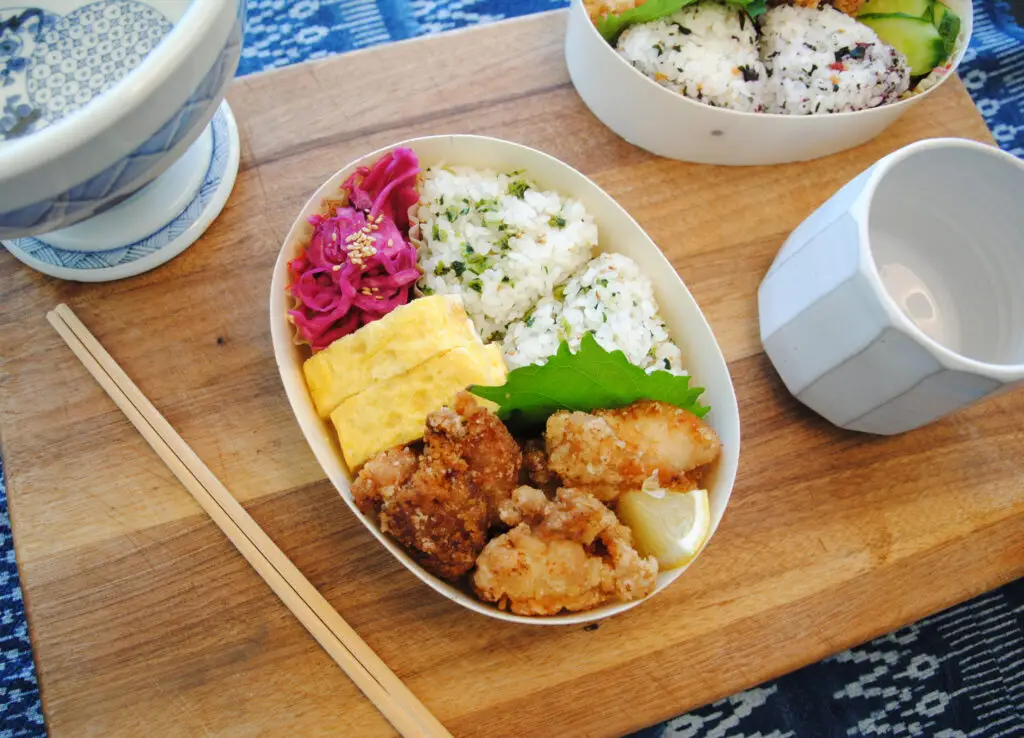
Konbini cafes like Lawson’s, FamilyMart, and 7-Eleven may look like run-of-the-mill convenience stores, but convenience store culture is a completely different animal there. Absent are the sad, floppy hot dogs sizzling sweatily on a rotating wheel of misery. Instead, konbini are stocked with a bevy of hot and cold drinks in every imaginable flavor, meals like tamago sandos (Japanese egg salad sandwiches) and prepacked bento boxes, snacks like onigiri (handheld triangles of rice and seaweed, often filled with fish or pickled plum), and even limited-edition merchandise (not unlike Wawa’s line of merch). 

Soon, Hillcrest will get a taste of konbibi culture. Hako Hako opens in front of Uptown Inn by Vantaggio, next to Ramen Ryoma, in early 2027.

Kenji Blouin-Ito, a half-Japanese, half-French San Diego native grew up eating Japanese food at home and during trips across the Pacific. “I remember looking forward to eating bentos on the train,” he says, grabbing quick items to munch on without sacrificing quality or succumbing to cost. When in France, he saw a rise of appreciation for casual Japanese cuisine, “long before it happened here.” 

Courtesy of Hako Hako | Photo Credit: @josh_walker.26_genteel

So he decided to bring it here. After AB 626 passed in 2018 to allow different jurisdictions to permit Microenterprise Home Kitchen Operations (MEHKOs), Blouin-Ito launched Foodnome, the first legal marketplace for homemade food in the US. Eventually, the national nonprofit The Cook Alliance took over the project, leaving him open to the next new idea but with the experience of running a food-based business. 

“That experience changed how I think about food, not just what makes it good but what makes it work,” he explains. Bento boxes felt affordable in a time of inflation, convenient in a bustling world, and versatile to a variety of palates. When he got the chance to open a konbini himself, he went for it. 

His family runs Uptown Inn, a mix of apartments and hotel rooms that’s seen increased food traffic over the past few years. “We had a small space in front of the building that wasn’t being used, and it just made sense,” he says. Hako means “box” in Japanese, a reference to both bentos and small space from where he’ll sling freshly made bentos, coffee, drinks, pastries, snacks, and a small retail selection.

Hako Hako will initially open for morning and afternoon hours, but you don’t have to wait until next year to get a taste of Japanese culture. Blouin-Ito’s concept is popping up at various coffee shops around San Diego, with a few coming up: Easy Does It on September 19 and Cafe Moto on October 17. Until then, practice the art of gaman: patience with grace. 

Hako Hako opens at 819 University Avenue in Hillcrest in early 2027.

San Diego Restaurant News & Food Events

Beth’s Bites

  • Sushi Tadokoro held on to its Michelin star for three years—no mean feat for anyone. But now, the Old Town restaurant is changing things up, eliminating lunch and à la carte service at the end of September before transforming into an omakase-only experience in October. The dining room will close from October 1 through October 22 to make the change, but promises it will be “more intimate. More personal. More focused on each guest and every piece we serve.” Sounds worth the wait.
  • Bock brought new life to South Park when the German-inspired beer bar opened after a long construction process by owner Brian Jensen (Vino Carta, Bottlecraft). Now, Bock is getting its own shot in the arm with a new in-house kitchen from the people behind Majorette, Love Letters Pizza, and Scrimshaw Coffee. Kurz, or “quick” in German, is already open, serving European-inspired bites like the requisite currywurst, Bavarian pretzel, and schnitzel, along with some newcomers like a pierogi and famous “Majorette burger.” (I can confirm it’s a damn good burger.) Reminder: Bock and Kurz are 21+, so leave the kinders at home.
  • The popular Japanese dessert chain Warabimochi Kamakura already has 70-plus locations in Japan, Australia, China, Thailand, and the U.K. (to name a few), but is finally opening a location in Convoy District at 8322 Clairemont Blvd. After a successful pop-up test run at Asa Bakery, Warabimochi Kamakura will bring its signature warabimochi (a traditional simple, jelly-like dessert), plus tea like matcha and hojicha, as well as soft serve as soon as October, but possibly November. (Although warabimochi is sometimes considered a summer treat, I’m pretty sure I can make an exception for autumn.)

Listen Now: The Latest in San Diego’s Food and Drink Scene

Have breaking news, exciting scoops, or great stories about new San Diego restaurants or the city’s food scene? Send your pitches to [email protected].

Beth Demmon

About Beth Demmon

Beth Demmon is an award-winning writer and podcaster whose work regularly appears in national outlets and San Diego Magazine. Her first book, The Beer Lover's Guide to Cider, is now available. Find out more on bethdemmon.com.

Partner Content SEPTEMBER 5, 2026

NewBridge School

San Diego Magazine's Private School Guide 2026

NewBridge School
Jog-a-thon

NewBridge School is San Diego’s only school dedicated to the education of students with dyslexia and related learning profiles. For 30 years we have successfully served students with dyslexia, dysgraphia, dyscalculia, receptive/expressive language disorders, ADHD, executive functioning and memory deficits. Students transition successfully into academically rigorous high schools and colleges across the country. Why NewBridge? Training, training, training (plus intensive individualization, and comprehensive program design). All teachers are trained and retrained biennially in Orton-Gillingham, the only approach proven to remediate dyslexia based on Science of Reading research, and complete a year-long training program. Every aspect of our program is designed around our students’ learning styles and needs. Every class is taught by a highly-trained expert, and our Speech/Language and Occupational Therapy teams embed throughout the day. Our multisensory, multi-tiered math program has been developed in conjunction with sister schools and experts across the country. Don’t wait—early intervention is magic!

Enrollment: 100

Grades: K – 8

Tuition: $30,000

Deadline: Rolling

Gender:  All-inclusive

Details  Nonsectarian

Open House  Tours by appointment


12285 Oak Knoll Road • Poway, California 92064
858-679-5744 • [email protected]thenewbridgeschool.com

Partner Content

Eat Like a Local (Who Knows a Guy).

Restaurant news, culinary storytelling, and Troy Johnson’s sharp takes delivered straight to your inbox twice a month.

Close the CTA

Contact Us

1230 Columbia Street, Suite 800,

San Diego, CA