Ready to know more about San Diego?

Subscribe
Food & Drink OCTOBER 29, 2014

Behind the Baja Story

An American writer silences his fear echo and rediscovers Baja

Some people don’t go to Tijuana because of the smell. Some don’t go because of its violent reputation. Some don’t go because of an unnamable, generalized fear.

Maybe that’s not such a bad thing.

The cover story of this month’s San Diego Magazine is my account of going back to Baja for the first time since all the blood. I had written off Tijuana. I knew the violent years were over. I’d seen the crime statistics (you have a greater chance of getting murdered in Chicago). I just had a fear echo.

As a kid growing up in San Diego, there was no shortage of slander about Mexico. The country was like that reclusive man in your neighborhood with the limp and the dead lawn who was known to bury children in his backyard. Adults told us bad men lurked on the other side of the border fence, waiting for white people with nice shoes. They pointed guns at you until you jumped in their sack. Then they called your family and asked for money. You might make it home. All of your fingers would not.

I started sneaking down there in 1987 when I was 14. At 4’11″ and still pre-pubescent, I had all the manliness of a Christmas elf. But I was able to get a fake ID at a small store in Downtown San Diego whose relationship with the Better Business Bureau was probably complicated. I drank buckets of Coronas at Peanuts & Beer, dancing to Salt N Pepa under black lights next to 18 year-old SDSU freshmen and menopausal hookers. I showed Tijuana far too little respect, partially because it didn’t seem interested in much.

I never got drugged or kidnapped. I did get shaken-down by two police officers. Paid one off with $6. The other got $50 after he took issue with the Swiss Army Knife in my pocket and told me I was going to jail forever and ever.

But I also saw another side of Baja. We’d drive 160 kilometers south of Ensenada and turn down nameless dirt roads until we hit water. We parked our trucks on the sand, camping and surfing for days. Just us, a wet horizon and sweet boredom. Gentle old fishermen traded us lobsters for t-shirts, knowing full well we were getting a deal in the exchange. The locals at the occasional side-road tienda welcomed us with warmth, looked after us.

That part of Baja seemed like a home. Like people had roots, a sense of place and pride. Whereas no one—not the cops or the curio shop owners or the bat shit crazy white people—seemed compelled to honor or preserve or make Tijuana better.

Then Nortec Collective happened. That band of Tijuana DJs, musicians and artists stole the spotlight back from the donkeys painted like zebras (zonkeys). My San Diego art friends moved to TJ. Partially because rent was $200. Partially because TJ was the only thing south of L.A. that was remotely edgy or artistic.

And then 2006 happened. The Mexican government stopped doing blow at parties with the cartels and started arresting them. That seemed like great news, but it wasn’t. When you remove the big dog from the yard, the smaller dogs fight over the bone. Up-and-coming cartels fought in the streets for control of the crime market. Tijuana became a bloodbath. Kidnapping became municipal sport.

Now, the dust has settled and—lo and behold—Baja is one of the most buzzed-about food and drink destinations on the planet. “Baja Med” is the name of its famous cuisine (even if some locals and chefs chuckle at it). News headlines about the food scene in the warm-climate region tend to use the word “hot” or “sizzling.”

Two years ago, star Tijuana chef Javier Plascencia told the New Yorker and the New York Times that he wanted to turn Baja into an international food destination. Just like San Francisco or Mexico City. Two months ago, photographer Jaime Fritsch and I set out on a series of day trips to see how far Plascencia and his colleagues had come.

I am a very different sort of tourist than I was in 2006. Which is good, because Baja is a very different sort of tourist destination. The pattern of consumption is moving away from the excessive intake of mediocre things, and more toward moderate intake of good things. Less tequila poppers, more snifter Mezcal.

After spending time there speaking with its innovators, I left with so many reasons why Baja’s food, wine and culture is terribly, terribly exciting. But the one idea locals expressed again and again goes something like this:

The violent years were awful. But this cultural surge might not have happened without them. When tourists stopped coming, Baja created a culture for its own people. They stopped catering to tourists’ wants and desires, and catered to their own. Ironically, that’s what’s made it especially attractive. After all, who wants to arrive in Paris only to realize it’s been designed to live up to American stereotypes of Paris (painters in berets talking snootily about sex)?

I want to experience Baja on its terms, not my own.

My story, “The Baja Moment,” ends with an anecdote some people feel I shouldn’t have told. Driving back from Valle de Guadalupe, we were pulled over by a police officer in Tecate. He said we didn’t come to a complete stop and we’d have to go down to the station. We were intimidated, missed our families, and didn’t know how to properly handle the situation. So we asked if we could take care of the ticket right there. We paid him off.

I was incredibly bummed. It’s my job to tell a true, firsthand experience as an American writer returning to Baja. And now he forced himself into my experience. When I relayed the story to the Baja tourism director, he was livid. He asked for his badge number (I didn’t think to get it), and told me about a hotline that Americans can call in situations like that. If it ever happens again, maybe I will.

But a crooked cop won’t keep me away from Baja. Neither will the fact that in some parts, Tijuana smells like shit. As more than a few locals told me: Baja isn’t for everyone, and that’s OK.

It’s definitely for me.

I hope you enjoy the story. I researched it exhaustively and relay a lot of statistics and ideas from the people who are creating Baja. It’s not meant to be a complete history or almanac. There are so many innovators and important people who helped shape the region’s food and drink scene that I wasn’t able to include simply due to space and time.

I start the story with Derrik Chinn, an American journalist living in Tijuana who has been bringing Americans down to experience the city in a real, non-tourist way for years. I felt apprehensive that the first voice you hear in a story about the region is a non-Mexican. But I wanted to organize the story as the typical American might experience it themselves—start through another American’s eyes—and then get to know the natives and influential people who have been building their native culture for a long, long time. Plus, Chinn is an eloquent, passionate participant in Baja culture.

The hardest part for me with this story is limitations. I could have written a book. I ended up with 5,000 words. But we also needed space in the magazine for Jaime’s beautiful photos. So I cut it down to 3,000 words. Fernando Gaxiola, owner of Baja Wine + Food and the largest importer of Baja wines, has a fascinating perspective on the wine regions that I need to tell. One of my favorite humans in Valle de Guadalupe—Natalia Badan, a sort of spiritual mother of the Valle—isn’t included here at all. Javier Plascencia’s phenomenal assistant Diana Jimenez was basically our tour guide and gave us invaluable insight. We had to cut it for space.

I had so many insightful conversations with people in Baja. We would talk for a half hour, maybe an hour. Then it was my job to bottle our entire conversation into one paragraph. Then take that one paragraph and bottle it into a sentence or two. There are so many great truths and ideas in the story; and yet so much is lost, too.

Over the next few weeks, I’ll present some of those ideas and interviews on SD Food News. Because they were so insightful and helpful to understanding the region, and I don’t like wasting people’s breath.

I’d like to thank everyone who took their time to help me on this story and yet who aren’t included: Diana Jimenez, Fernando Gaxiola, Jay Porter, Antonio from Life + Food and Club Tengo Hambre, Genaro Valladolid (Bustamante Realty Group), Flor Franco and Natalia Badan.

Thanks for reading. Now go to Baja.
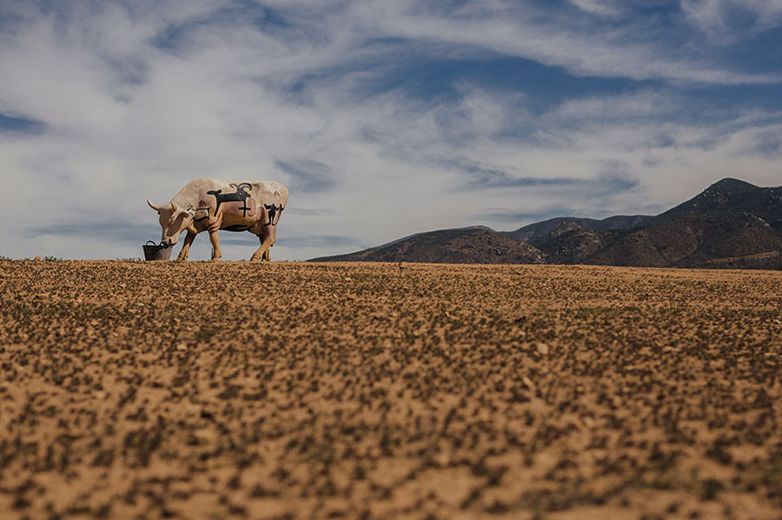
Baja. Desert magic.

Jaime Fritsch

Subscribe to our newsletters

Select Options

By subscribing you confirm that you agree with our Terms and Conditions and Privacy Policy.

Features SEPTEMBER 8, 2025

6 Top Wine Regions in California to Visit in 2025

Your ultimate guide to the state's best oenophile destinations—where to stay, what to sip & what to explore

6 Top Wine Regions in California to Visit in 2025
Photo Credit: David Collier

For some, September signals the bittersweet end of summer. For others, it’s a new beginning: the height of harvest season in California wine country. Vineyard grapes reach optimal ripeness for picking, stomping, and fermenting, while the warm, dry, and temperate weather invites wine lovers across the country outdoors to see the vineyards for themselves. Craving a vino vacation of your own? Here’s what to do, eat, and drink, plus where to stay.

California winery South Coast Winery Resort & Spa in Temecula
Courtesy of South Coast Winery Resort & Spa
South Coast Winery Resort & Spa’s villas come equipped with cozy patios where guests can gaze out at lush hills of vineyards.

Temecula

Families, in particular, should start in the Riverside County city of Temecula, where anyone age 6 or above can sightsee from the skies with family-run company Cielo Balloons. Those who prefer to keep their feet firmly on the ground might go for a sunset horseback ride with California Ranch Company before turning in for the night at the ultra-luxurious South Coast Winery Resort & Spa—the first and only five-time winner of the “Golden State Winery of the Year” award, as granted by the California State Fair Commercial Wine Competition—or a room at the Spanish-style Ponte Vineyard Inn, which has its own vineyard and is within walking distance of two more.

Interior of California winery Peltzer Family Cellars
Courtesy of Peltzer Family Cellars

From there, stroll to Bottaia Winery, where creative types looking to play winemaker for a day can blend their own vinos and bring them home as a souvenir to age. Hop in the car for your five-minute drive to lunch at the upper veranda of Flower Hill Bistro at Miramonte Winery. Wrap up your day with a tasting at the nearby Peltzer Family Cellars before heading into town for a last hurrah dinner at the 98-year-old, storied Swing Inn Cafe & BBQ.

Guide to California's best restaurants from acclaimed chefs featuring Providence in Los Angeles

Temecula Wines to Try

  • 2019 Wild Horse Peak Il Temporale at South Coast Winery: Firm-bodied with notes of black cherry. Bright acidity and velvety tannins.
  • 2023 Blush at Bottaia Winery: Simple and clean with notes of raspberry, melogold grapefruit, and lime.
  • 2024 Sauvignon Blanc at Peltzer Family Cellars: Light and crisp, with apple blossom and honeydew melon notes.
Exterior of Seven Gables Inn’s ocean-front rooms
Photo Credit: Matt Weir
Seven Gables Inn’s seaview rooms are spread across seven Victorian-era houses, including a three-story mansion constructed in 1886.

Central Coast

Head north and stop for a meal at the Hotel Californian’s Blackbird restaurant in Santa Barbara, where executive chef Travis Watson and his staff host a once-monthly series featuring a different winery or spirits company. Patrons who don’t want to build their schedule around that event can still savor offerings from local wineries like Lincourt and Firestone before checking in at The Inn at Mattei’s Tavern in Los Olivos.

After spending some time in the property’s airy restaurant and renowned spa, continue onwards to Paso Robles, where you should plan ahead to book a table at the Michelin-starred Six Test Kitchen. There, the seating counter—which can only accommodate 12—wraps around the kitchen for a real-time, behind-the-scenes view of the staff whipping up 12 delicate courses using the bounty of the area’s farms. (Traveling next month? You’re in luck— October is the region’s Harvest Wine Month, when many wineries host special events.)

California winery Lincourt Wines in central california
Courtesy of Lincourt Wines

If you’re looking instead to prioritize the “coast” part of the region’s namesake, follow Carmel-by-the-Sea’s free, self-guided wine walk (get the app for discounts on included wineries’ tastings) before holing up at the romantic, 19th-century Seven Gables Inn, which overlooks Lovers Point Beach in Monterey. Admire the stained glass windows and Victorian architecture; plus, every single one of its 25 rooms offers views of the water.

Central Coast Wines to Try

  • 2022 Estate Collection Soul of a Lion at Daou Vineyards: Fragrances of violet and strawberry jam; flavors of red fruit and chocolate-covered blueberry.
  • 2024 Rosé at Peachy Canyon: Notes of strawberry, guava, and elderberry liqueur with a spicy Tajín aftertaste.
The Livermore Wine Trolley
Courtesy of Livermore Wine Trolley
Travel between tastings on the Livermore Wine Trolley.

Livermore

Take the 101 straight to Livermore’s iconic Wine Trolley, which shuttles riders to three local vineyards for tastings. Or sit down for a casual picnic at Del Valle Regional Park with a sandwich from Ofelia’s Kitchen and a bottle from First Street Wine Company. Make a stop at McGrail Vineyards before unpacking your suitcase for a stay in one of The Purple Orchid Resort & Spa’s 10 fireplace-equipped rooms and suites. Nibble on a complimentary, made-to-order breakfast while looking out at the garden or olive orchard from every room. Guests can also enjoy a community event each evening, featuring an olive oil tasting, wine, and cheeses.

Livermore Valley’s Taste festival
Courtesy of Livermore Valley Winegrowers Association
Julie Bogen

About Julie Bogen

Julie Bogen is an experienced writer and digital strategist whose work has been featured in The Atlantic, The 19th News, Cosmopolitan Magazine, and more. She is passionate about storytelling that centers women and marginalized communities, and when not working she's either with her family or in a barre studio.

Features MAY 7, 2025

5 Tijuana Tacos to Try Before You Die

The tastiest excuse for your next trip across the border, according to a seasoned local

5 Tijuana Tacos to Try Before You Die
Courtesy of Tacos El Franc

No trip to TJ is complete without tacos by the kilo, so we asked TJ native Angel Miron, who runs the tour company Let’s Go Clandestino, to do the impossible: narrow down a list of great tacos in his hometown. Here are five of his favorite.

Tacos Machatlán

These guys serve fried fish and shrimp tacos” on a bustling corner in El Centro de Tijuana, Miron says. “Don’t leave without trying the BBQ-grilled smoked marlin taco on a smoky tortilla.”

Tacos Fitos

Miron likes the tacos dorados de birria from this Tijuana shop. “The taquero is known for pumping them out super fast and does a trick with the consomé—pouring it onto the taco without looking,” Miron says.

Iconic Tijuana taqueria Tacos El Franc's first US location will be in National City.

Tacos El Franc

While Tacos El Franc’s addition to the Michelin Guide has brought an influx of attention, Miron has long been familiar with its charms. “This is the place I used to go to all the time growing up in Tijuana, especially after a night out with the boys,” Miron says. “[Its] specialty is adobada. I really like the suadero taco.”

Tacos A Vapor El Güero

Founded in 1960, this place keeps it simple with three taco options: shredded beef, beans and cheese, or chicharrón. “They’re what you would call ‘steamed tacos’ because they are prefilled and then kept hot or steamed in pots,” Miron explains. “Then [the restaurant staff] slaps ’em with shredded cabbage, onion, and salsa roja.”

El Tío Pepe

While this casual spot has multiple locations, its original outpost in the Gabilondo neighborhood is still considered the best. “Not only [does it] have tacos dorados de birria, but amazing carnitas—get the masisa with guacamole,” Miron recommends. “And another specialty here is the torta ahogada [or ‘drowned sandwich’] with birote shipped from Guadalajara.”

Mateo Hoke

About Mateo Hoke

Mateo Hoke is a journalist and author. His books include Six by Ten: Stories from Solitary, and Palestine Speaks: Narratives of Life Under Occupation.

Amelia Rodriguez is a writer and journalist and winner of the San Diego Press Club's 2023 Rising Star Award and 2024 Best of Show Award, she’s also covered music, food, arts and culture, fashion, and design for Rolling Stone, Palm Springs Life, and other national and regional publications. After work, you can find her hunting down San Diego’s best pastries and maintaining her five-year Duolingo streak.

Food & Drink FEBRUARY 13, 2025

A Weekend at Napa’s Annual Truffle Festival

Northern California's wine country is the epicenter of the growing American truffle industry—here's what to expect for next year's event

A Weekend at Napa’s Annual Truffle Festival
Courtesy of American Truffle Company

People visit Napa for the wine. I went for the fungi. 

Every winter, a quiet revolution in American gastronomy unfolds among the vine-flecked hills of California wine country in January. Winter is truffle season, and at the annual Napa Truffle Festival, chefs, farmers, and foodies convene to celebrate that elusive, glamorous, sumptuous, subterranean fungi. 

The first Napa Truffle Festival took place in 2010, spearheaded by Robert Chang and Paul Thomas, two entrepreneurs whose combined expertise in engineering and mycology has reshaped the nascent American truffle industry

Périgord black truffles from the American Truffle Company known for their Napa Truffle Festival in California
Courtesy of American Truffle Company

The global market has long been dominated by the usual suspects: France, Italy, and Spain, with China and Australia edging in. Chang, an engineer by training, and Thomas, a mycologist, have been working tirelessly to get America into that lucrative club. They focus on cultivating the Périgord black truffle which, at $1,500 per pound, is one of the most expensive fungi on earth (the Oregon black truffle, a lesser product, goes for $50 per pound). California, with its Mediterranean climate and bountiful farmland, is well-poised to grow it. 

Hiking trail head at the San Luis Rey riverbed a popular San Diego destination for wild plant foraging

Chang first encountered truffles in Munich in 2002. Where most would have simply seen a delicious plate of well-garnished tagliatelle, he saw a business opportunity. Soon after, he founded the American Truffle Company (ATC) and recruited Thomas, who had earned a PhD at the University of Sheffield in mycorrhiza, the symbiotic relationship between fungi and plant roots—the very stuff of truffle concoction. 

American Truffle Company founders Robert Chang and Paul Thomas foraging in Napa
Courtesy of American Truffle Company
(L-R) Napa Truffle Festival founders Robert Chang and Paul Thomas

Truffles require patience. After one inoculates the roots of a suitable tree—usually an oak or hazelnut—with spores, it takes around 12 years for a truffle to appear. They require very particular soil conditions. This is why attempts to cultivate truffles in the US have been met with a 98 percent failure rate, Chang says. 

Unlike in parts of Europe, where black Périgords flourish naturally, American growers must artificially recreate the precise soil and climate conditions truffles demand. Over a decade in, ATC says they have perfected this formula and claim a 95 percent success rate (one of the key strategies is to add lime to the soil). “The biggest risk in growing truffles isn’t disease or insects,” Chang adds. “It’s the human factor.”

Truffle food dish at the Napa Truffle Festival in California
Courtesy of American Truffle Company

And it is a good time to be figuring it out, as American truffle demand is on the rise. Just look around: truffle burgers, truffle fries, truffle mac and cheese. This surge of demand is apparent at the Napa Truffle Festival, which has attracted over 300 participants this year. Mostly, these are farmers and landowners who want to get into truffle growing; restaurateurs scouting for new suppliers; and curious foodies like myself and my wife, Ali.

We sit through powerpoint presentations on truffle-dog raising and other esoterica; visit the stalls at Oxbow Market, a bougie food hall in downtown Napa, to taste truffle-laced specialties; and attend dinners served by the Michelin-starred chef Ken Frank, who has crafted truffle-infused dishes for over 40 years at his restaurant, La Toque

But it is in the forests and fields of Napa Valley where the true truffle magic begins.

Our Saturday starts with a foraging expedition in Las Posadas State Forest. From the Four Seasons Napa, our luxurious retreat for the weekend in sleepy Calistoga, we drive out in the Lucid, a flashy high-end electric sports car on offer to guests. After navigating a fog-laden mountain road, we emerge beneath cathedral-esque oak trees. The morning air reeks of damp earth. It is sunny and cold. Crows caw. 

Foragers for truffles in Napa Valley, California for the Napa Truffle Festival
Courtesy of American Truffle Company

Truffle quiche in hand, we meet our guide, Norm Andresen, a seasoned fungi forager. His black utility vest bristles with tools: a small brush, a spade, a pocket knife for slicing fungi from their hiding places. “Mushrooms are like marriages,” he quips to our small group of foragers. “They’re either symbiotic or parasitic.”

Andresen leads us down a trail that snakes into a misty valley dense with pines. The fog is good for the mushrooms. “On average, most mushrooms are not poisonous,” Andresen informs us. 

We pass pockets of red, yellow, and pink mushrooms, and Andresen explains the ways of the forest. “You can see the war between the redwoods and conifers,” he says, noting how the towering redwoods shade out their rivals. “They’re putting an embargo on the sun.” We marvel at the mycological diversity piling up in a basket as we go: turkey tail, King Alfred’s cake, a perfectly golden chanterelle. 

Dog foraging for truffles in Napa Valley, California for the Napa Truffle Festival
Courtesy of Truffle Dog Company

But mushroom foraging is a tranquil affair. The real action takes place a few hours later, when we get to see the truffle dogs at work. About 60 festival-goers gather at Raymond Vineyards in St. Helena for a demo, sipping Champagne beside a small orchard of hazelnut and oak trees. The air is bright and crisp, with the Napa hills rising green and rocky in the distance. Frogs croak from the reedy banks of a dark pond. 

Three handlers fit their dogs with harnesses, signaling go-time. There is a corgi, a German shepherd, and two Lagotto Romagnolos; Alana McGee, founder of Truffle Dog Co., explains that this latter breed has been trained for centuries in Italy to sniff out truffles. Unlike pigs, which were traditionally used for truffle hunting in Europe, dogs don’t have a taste for the prized fungi (though sometimes they still do try to eat them, she notes). 

The excitement is palpable when Flora, the German shepherd, darts between the hazelnut trees, sniffing intently at the roots. We all watch, mesmerized, as Flora finds her first prize, scratching wildly into the dry earth. “Don’t eat it! Do not eat it!” her handler, Aiko Vail, shouts. When Vail and Flora aren’t truffle hunting, they’re doing search and rescue work around Washington state. Vail herself does not like the taste of truffles. 

She pulls out a treat from her fanny pack, calling “Candy!” Flora bounds towards her, and Vail whispers sweet praise into her ear. 

Dog foraging for truffles in Napa Valley, California for the Napa Truffle Festival
Courtesy of American Truffle Company

“Some dogs don’t want any chit chat,” she announces. “Some love it. You have to know your dogs.” It is clear that their relationship is a symbiotic one. 

Truffle farmers don’t unearth their finds until they have a buyer. With a half-life of a mere five days, fresh truffles begin to decay quickly, one reason they’re so pricey. So truffle dog handlers hired by orchard owners mark each discovery, so that the owners can wait until the last moment to harvest. 

Once unearthed, black truffles smell like “pineapple and cake batter,” Vail says, while white ones have an aroma resembling “gasoline” or “horseradish.” European truffle supplies have been declining due to climate change, which are making conditions too dry. But in Napa, through scientific intervention, growers like Raymond Vineyards are creating an American future for the industry. 

On our last day, Ali and I embark on a morning hike near our hotel. The Oat Hill Mine Trail affords splendid views of vineyards sun-bating in the valley below. Afterwards, we enjoy a wine tasting at the nearby Elusa Winery before grabbing lunch—turkey sandwiches with truffle chips and a local rosé—at Oxbow Market. For dinner at Truss, an onsite restaurant at the hotel, we decide to lean into the spirit of the weekend and go full fungi: roasted chicken with black truffle jus and tagliatelle in black truffle butter. Rich, earthy, delectable. You can practically taste the effort. 

Brent Crane

About Brent Crane

Brent Crane is a freelance reporter based in South Park, San Diego. His reporting has been published in the Economist, the New Yorker, Bloomberg Businessweek and elsewhere. Check out his work at www.brent-crane.com.

Studio S JUNE 15, 2026

A Modern Take on Steak

Stake Chophouse & Bar brings contemporary classics and old-school service to the heart of Coronado

A Modern Take on Steak
Courtesy of Stake Chophouse

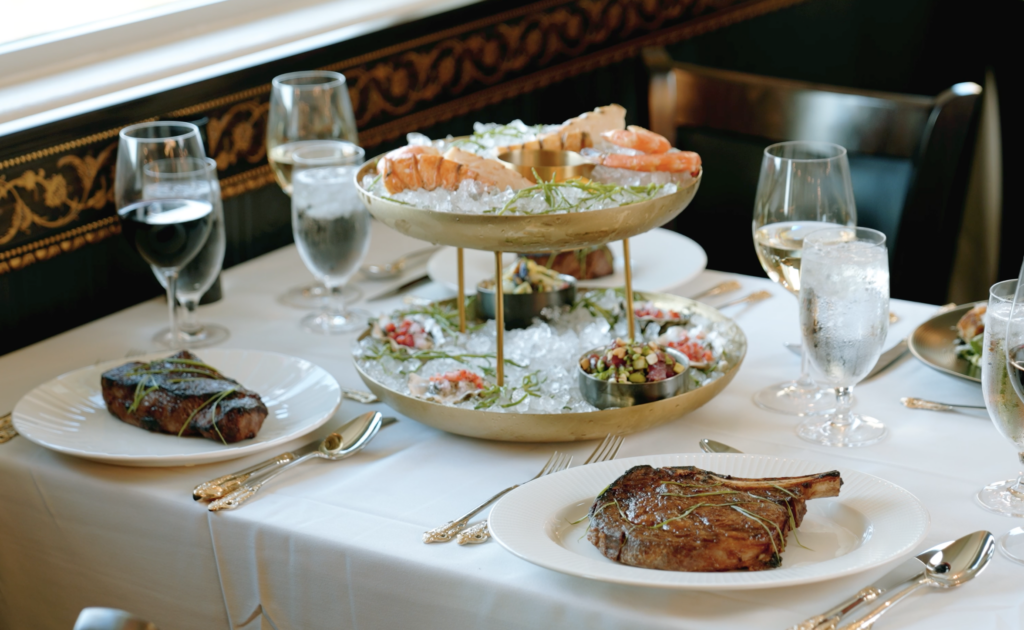
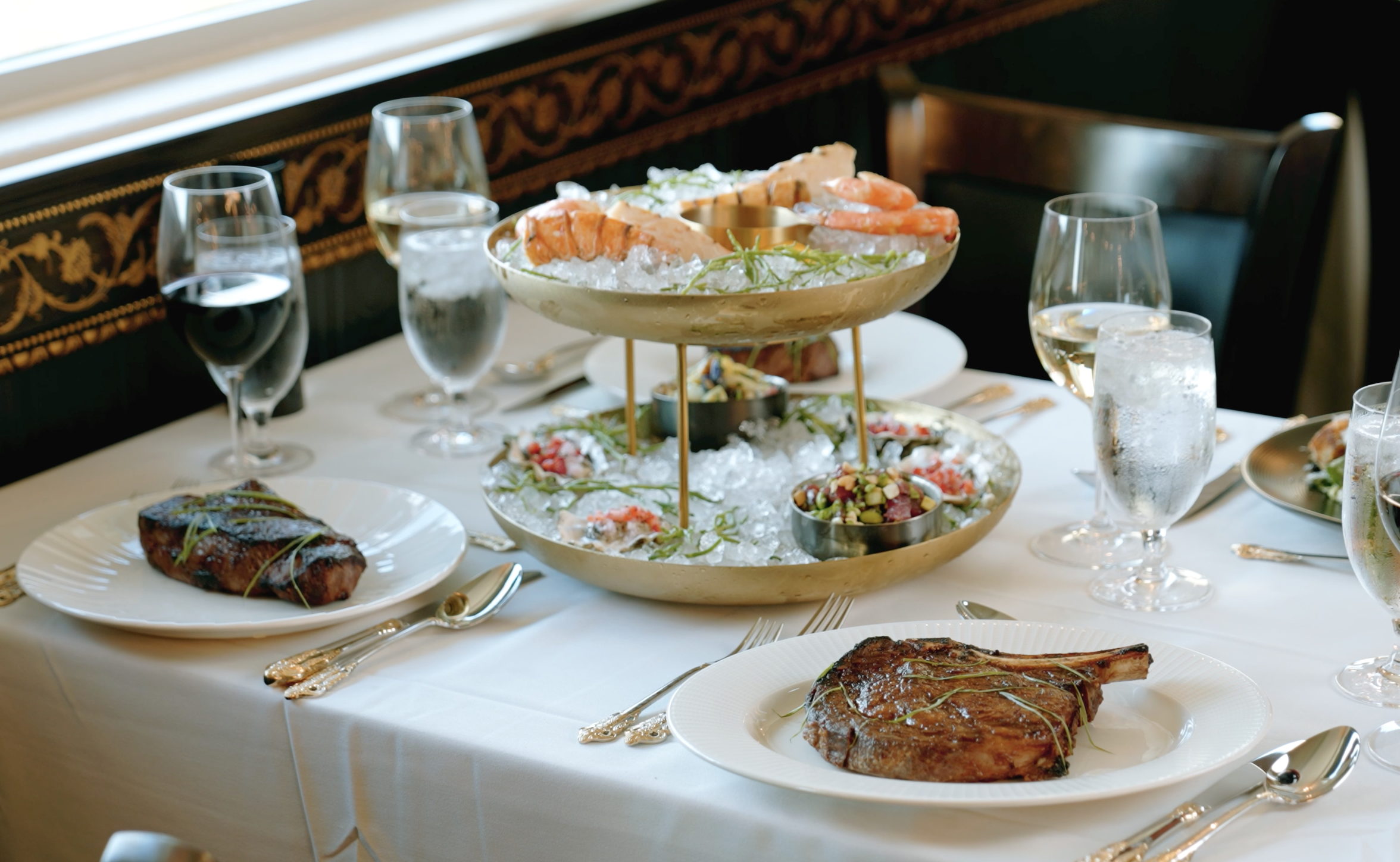
Stake Chophouse & Bar isn’t your average steakhouse. Blue Bridge Hospitality’s Coronado outpost is a modern interpretation of a big-city steakhouse nestled in the heart of the small coastal community. The team at Stake has reimagined the whole steakhouse experience. By prioritizing a seasonal farm-to-table sourcing philosophy, a personalized guest experience, and unique service touches, like a formal steak presentation and a bespoke knife selection process, Stake distinguishes itself in a sea of steakhouses.

Exceptional steaks, including Wagyu from Japan, Australia, and the U.S., and fresh seafood flown in daily form the core of Stake’s culinary identity. The menu features a five-course omakase-style steak experience highlighting house favorites, plus an array of cuts, and classic steakhouse staples—think a wedge salad, baked potato, or pasta carbonara—refined for a contemporary palate without losing their traditional appeal. Stake focuses on seasonal sourcing from the region’s best family farms and specialty purveyors, and incorporates intentionally unexpected touches to create something truly unique.

“I challenge our chefs and myself to take it a step further in sourcing,” says Chef Ronnie Schwandt. “It’s important to us to highlight different farms, unique one-off farms—whether it’s cattle, strawberries, a local fisherman or from anywhere in the United States, we’re always trying to find that niche.”

Beyond the menu, Stake emphasizes outstanding service, says Vinny Spatafore, Director of Hospitality Operations. Staff maintains detailed notes, allowing them to remember guests by name, recall previous orders such as a favorite martini (also memorable for the customer since it’s served in an extra tall, distinctly-shaped glass), and celebrate special occasions like birthdays and anniversaries.

“When you have those points of topic that you remember about a guest, they appreciate that,” he says. “Our servers are really good with that—we have a couple servers who have been here since the beginning and they’ll remember somebody from years ago, their name, their kids’ names, where they live. I’m really thankful to have a great front of house staff.”

Award-winning wines, rare whiskeys, special events, and a complementary black car service that provides transportation for guests throughout Coronado add to Stake’s appeal.

Schwandt stresses that Stake offers more than a meal; they aim to give patrons something unforgettable.

“It starts when you walk up the stairs and are greeted by the hostess—that sets the tone for the night. Then you’re greeted by a server, who may know you by name, and can guide you through the menu and curate as they get to know you,” says Schwandt. “Most people leave kind of blown away; they leave feeling like they just had an experience. That’s the goal, right? Whether you’re serving smash burgers or high-end steak, you want somebody to leave thinking, Wow, that was awesome.”

Partner Content
Features OCTOBER 17, 2024

A Guide to Toronto’s Diverse Culinary Scene

Where to eat in the Canadian metropolis boasting a variety of international cuisines and global fare

A Guide to Toronto’s Diverse Culinary Scene
Courtesy of Ardak Yorkville

Sometimes it seems the whole world is in Toronto— just one five-hour, nonstop flight from San Diego. Immigrants make up nearly half of the Canadian city’s population, and among its 174 neighborhoods are a “village,” “town,” or “little” version of almost every community you can think of.

Searching for saganaki? Hit Greek town on the Danforth. Thali? Head to Little India in the east end. Momos? Parkdale’s Tibetan dumplings come fried or baked. Craving sweets? Little Portugal slings pastéis de nata, the tiny, cinnamon-dusted offspring of a créme brulée and a tart. And shumai? There are two Chinatowns downtown and four more in the Greater Toronto area. The range of food options speaks to the diversity of the city, as do its hotels, which bear their own global influences.

The Shangri-La Toronto, for instance, nods to the traditional décor of the hotel chain’s Hong Kong hometown in its sleek and expensive guest rooms. Its onsite spa, however, draws upon the Middle East, while the hotel restaurant, Bosk, offers Northern Italian food by way of Canadian produce.

Interior of the Gladstone House hotel in Toronto, Canada
Courtesy of Gladstone House

For a hipper vibe, go with the historic Broadview Hotel in the east end. It has a lively rooftop restaurant with a view and rooms equipped with quirky wallpaper and vinyl record players. Or choose the Gladstone House on Queen West, one of Toronto’s oldest hotels. A refresh brought local art and funky mood lighting to contrast the building’s exposed brick walls.

 Kensington Market, Toronto is a downtown area where old Victorian houses have been converted into colorful shops selling vintage clothing and exotic foods.

To do Toronto right, start at Kensington Market. On a food tour from Chopsticks & Forks, I learn that Kensington began as a Jewish market. By 1931, 80 percent of all Jewish people dwelling in Toronto lived in and around the Kensington Market neighborhood just west of downtown, most from Eastern Europe. After the second World War, however, waves of immigration brought people from all over the world—from Asia, the Caribbean, Eastern Europe, and beyond.

Jumbo Empanadas restaurant in Toronto, Canada
Courtesy of Chopsticks & Forks
Jumbo Empanadas

These days, two synagogues call the area home alongside a cultural collision of many different communities. As you explore the market’s streets, you may hear a Bob Marley song emanating from one door, someone playing an accordion down the street, and an old man busking on an erhu (akin to a Chinese fiddle) on the corner. In less than three hours, we sample foods from nine countries and five continents, passing vintage clothing boutiques, bulk spice stores, butchers and cheese shops, specialty markets, and bohemian cafés along the way. After a smoked trout bagel sandwich from NU Bügel—a bakery started up by two Venezuelan friends—I scarf Jamaican food at Golden Patty, then wash down bites from Chilean-owned Jumbo Empanadas with a bright yellow Peruvian soft drink called Inca Kola. At Koi Japan Sushi, I nibble salmon avocado sushi, wrapped in tofu instead of seaweed and sprinkled with flakes of 18-karat gold. We finish our tour with a stop for a cookie and a rooibos tea at Fika Café, a Swedish coffee shop with a cozy room in the back where one wall is papered with open books.

A cookie and tea drink from FIKA Café in in Toronto, Canada
Courtesy of FIKA Café

And Kensington is just one of many markets in the city. St. Lawrence Market was the city’s first, beginning operations in 1803. Now spread over three buildings, it’s hopping with people picking up fresh fruit and vegetables; visiting seafood stalls, bakers, and butchers; and buying local favorites, like the peameal bacon sandwich.

Of course, food choices aren’t merely sequestered in the city’s markets. There are almost 9,500 restaurants in Toronto, including more than 80 Michelin-recognized spots, so visitors can’t run out of places to explore, even if they try.

Food dish from Indian restaurant Adrak Yorkville in Toronto, Canada
Courtesy of Ardak Yorkville

At Adrak Yorkville, a fine-dining Indian restaurant, the rani kachori my husband and I share resembles a dispatch from Barbieland, its yogurt sauce dyed bright pink with beetroot and its crispy, puffed puri shell stuffed with veggies and adorned with edible flowers.

where to eat in tokyo

The next night, we dine on an outdoor patio at Viaggio, an Italian restaurant near the west end’s Polish turned-hipster Roncesvalles Village. We began with the panzanella, the implied stodginess of a bread salad made light and refreshing with the addition of heirloom tomatoes, buffalo mozz, and wild leeks. It stands in perfect contrast to our next plate, the mafaldine, a rich tomato-based ragu with bone marrow, sausage, and rapini. And then dessert: tiramisu pancakes drenched in a warmed espresso syrup and topped with mascarpone mousse and a dash of cocoa.

Dumplings from a restaurant in in Toronto, Canada featured on the Chopsticks & Forks food tour
Courtesy of Chopsticks + Forks

The following week, we bike downtown to the Northern Thai spot PAI, where we descend a staircase into a labyrinth of connecting rooms with colorful flags draped from the ceiling. Our meal begins with the plum mule cocktail, a sweet, spicy take on the Moscow mule with plum wine in the mix.

A couple of nights later, I end up at BB’s Diner, an unpretentious Filipino restaurant bearing cozy booths and stools perched around an omakase-style bar. I start with the G&T—made with a cordial based on calamansi, a citrus native to the Philippines—then dig into the Adobo fried chicken with pineapple habanero sauce.

Toronto, truly, is a great place to get full. But while food tells you much about a city’s culture, Toronto’s diversity is also something you can see, feel, and hear.

The city loves its street festivals, from celebrations of salsa dancing on St. Clair and the Polish festival on Roncesvalles to the Ukrainian Festival on Bloor West and the Toronto Caribbean Carnival, the largest of its kind in North America. The colder months bring an ice sculpture fest, light shows, and winter markets.

Courtesy of Art Gallery of Ontario

Toronto’s more than 60 galleries and museums, too, reflect the breadth of the city’s cultures. Venture beyond standbys like the Royal Ontario Museum, Art Gallery of Ontario, and Museum of Contemporary Art to wander lesser-known but equally fascinating spaces such as the Aga Khan Museum, which showcases Islamic art and artifacts amid stunning, rectilinear architecture. The museum also hosts lectures and poetry, music, and dance performances, including the Duende Flamenco Festival, taking place November 14 to 17.

The newly opened Toronto Holocaust Museum was intentionally designed, says Marketing and Communications Director Michelle Fishman, as a “contemplative space” where visitors are invited to “approach the content through the lens of their own unique immigration experiences, efforts at acculturation, [or] lived trauma.” Across town, the Native Canadian Centre of Toronto offers free tours, giving visitors the chance to explore the city’s Indigenous Canadian roots.

Courtesy of Hotel X Toronto

Wellness opportunities also abound, accommodating more customs and budgets than other towns might. An hour-long Thai massage on Bahn Thai Spa’s traditional floor mats will set you back a mere 100 Canadian dollars (about 75 US bucks), while those seeking decadence can invest hundreds into a facial with French ingredients at Hotel X’s fancy Guerlain spa. At the South-Western Bathhouse, tucked in a back alley on the side of a strip mall in Mississauga, you can unwind the Russian way, sweating in a cedar parilka or Finnish sauna and indulging in the strangely soothing charms of a venik, essentially a whipping with a bundle of tree branches. Throw back a shot of vodka, cup of tea, or hearty bowl of goulash before you leave.

Then, relaxed and fortified, find the nearest map, close your eyes, and point. Chances are, wherever your finger lands, Toronto provides the opportunity to explore a multitude of cultures mere steps away.

Diana Ballon

About Diana Ballon

Diana Ballon is a Toronto-based travel and lifestyle writer. Her travel writing focuses on outdoor adventure, wellness, fitness, cool hotels, and food and drink. Her stories have appeared in many major North American publications, including The Toronto Star, Zoomer Magazine, The Ethel from AARP, Broadview Magazine, CAA Magazine, Azure Magazine, Canadian Cycling Magazine, Daily Hive, Travel Life Magazine, Cruise & Travel Lifestyles Magazine, Wander Magazine, Vacayou Magazine, vacay.ca and hotel-addict.com.

Food & Drink FEBRUARY 20, 2024

Exclusive First Look: Rumorosa

The Sheraton San Diego Hotel & Marina's new restaurant debuts fine-dining Mexican fare with a side of SoCal chill

For years, high-end Mexican food was a hard sell in San Diego, where diners seemed frustratingly unwilling to let the cuisine out of the taco shop. Not anymore. Now, if the city’s big-deal food scene has a signature, it’s without a doubt Cali-Baja—the multinational food of our mega-region.

Opened on Feb 18, Rumorosa brings a new face to that scene. Technically, it is the signature fine-dining room of the new, $100-million remodeled Sheraton San Diego Hotel & Marina. But the hotel’s exec chef Marcos Seville knows purely upscale menus can be intimidating for those of us who don’t know our mousses from our mignonettes. He hopes executive chef Cesar Oceguera’s homegrown Baja dishes will eliminate any high-end hesitation. There will be Valle de Guadalupe wines and fresh Baja oysters, but there will also be nachos. 

“Rumorosa can be anything that you want it to be,” Seville says of the all-day restaurant. 

Oceguera has roots on both sides of the border, and Rumorosa is a tribute to the flavors and ingredients he grew up with. Born and raised in San Diego, he grew up working for his father’s Tijuana catering company. So he knows Baja-Cali cuisine, and he knows this property. His first job out of high school was here, as the cafeteria attendant. Seventeen years later—after working with Bobby Flay at Mesa Grill and Brian Malarkey at Searsucker—he’s back with a bit more experience, and more expectations. 

“When I create menus, I go pure nostalgic memories,” he says. “It’s the food I like to eat and cook but presented in a way that’s approachable for everybody. I don’t want to say it was easy, but I had a good idea of what I wanted to do.”

For example, the aguachile. In Sinaloa, where Oceguera’s family is from, the lime-heavy crudo dish is served spicy. But here, he’s tweaked the recipe by marrying the tequila-cured salmon with a silky, spicy-sweet sauce that uses an unexpected San Diego staple: Carlsbad strawberries. Unexpected could be the theme of this contemporary restaurant named after a two-lane mountain bypass that is as challenging to drive as it is picturesque. Usually, a restaurant picks a lane: casual or upscale. By design, Rumorosa swerves between them both.

There’s a private, 16-person dining room for invite-only occasions and communal bar seating for last-minute plans. There’s a massive illuminated tree structure you’ll want to Instagram and waterfront views that nudge you to put your phone down. There’s a 24-ounce grilled bavette steak for dinner, and street tacos for lunch.

Rumorosa is the first of four new dining concepts to open as part of the Sheraton’s big unveil. Brewery X Harborside, Sunglow Pool Lounge, and Strada Marketplace are also slated to open this year.

Emily Blackwood is a freelance journalist based in San Diego, CA. She covers entertainment, wellness, travel, home, food, culture—all the things that make life interesting, tantalizing, and just the right amount of weird. Her work has been published in SELF, HuffPost, and YourTango. You can learn more at emily-blackwood.com.

Troy Johnson

About Troy Johnson

Troy Johnson is the magazine’s award-winning food writer and humorist, and a long-standing expert on Food Network. His work has been featured on NatGeo, Travel Channel, NPR, and in Food Matters, a textbook of the best American food writing.

Partner Content SEPTEMBER 27, 2022

Visit Tuolumne County to Find the Unmistakable Spirit of Fall and Winter

Take a refreshing trip to Tuolumne County, where your senses will get their fill and your wallet will stay full with off-peak accommodation prices

Visit Tuolumne County to Find the Unmistakable Spirit of Fall and Winter
Gold Country Columbia Stage Coach.jpg

Gold Country Columbia Stage Coach.jpg

It’s that time when all of your senses are awakened by the unmistakable feel, sights, tastes, smells, and sounds of fall and winter. Experience them all in Tuolumne County in Northern California! Discover a different side of Yosemite National Park in the quieter and less crowded destinations. Watch as history comes to life with local tales and vibrant colors in Gold Country. Temperatures are dropping, but cooler adventures are found on the trails and slopes of the High Sierra and at unique events throughout the County.

Take a refreshing trip to Tuolumne County, where your senses will get their fill and your wallet will stay full with off-peak accommodation prices.

Find Serenity in Less-Crowded Yosemite National Park and Surrounding Area

Yosemite

Yosemite

Yosemite has quieted down, and now’s the time for national park adventures and new explorations. Find yourself in awe as you take in the sights among the giant sequoias backdropped by colors of maples and dogwoods and maybe some glistening snow in the Tuolumne Grove of Giant Sequoias. Or, hike around stunning Hetch Hetchy Reservoir.

Wander in Groveland, outside of Yosemite, and enjoy a warming pumpkin spice latte or a one-of-a-kind seasonal brew. Feel like shopping? Pop into some of the unique shops in town to find gifts and seasonal decor to bring home.

Discover an Era Past in Gold Country

Gold Country Jamestown - Railtown SHP Roundhouse-3.jpg

Gold Country Jamestown – Railtown SHP Roundhouse-3.jpg

Explore Gold Country starting with the nooks of Columbia State Historic Park, and let your eyes and nose lead you into candle, candy, and provisional shops where their seasonal creations will warm your heart. Listen for clanging from the blacksmith shop or clinking of the authentic stagecoach as it enters town.

In nearby Jamestown, become immersed by the smells, sounds, and sights of Wild West railroad culture at Railtown 1897 State Historic Park, and stroll down Main Street where you’ll find shops, restaurants, and inns housed in picturesque historic buildings.

In Downtown Sonora, you’ll find many shops and restaurants located in historic buildings; as you step inside, you’ll see some interiors are left to show the architecture of 150 years ago. Also, take in a show at the Gold Country’s premier theater company, Sierra Repertory Theatre.

Reach the Mountain Tops in the High Sierra

High Sierra Ski_Photo Credit-Dodge Ridge Mountain Resort.jpg

High Sierra Ski_Photo Credit-Dodge Ridge Mountain Resort.jpg

High Sierra adventures await where brisk mountain breezes are the perfect excuse for a cozy sweater. Take a hike along the Pinecrest Lake Loop Trail, and catch unreal views of changing leaves set against rugged granite mountains. Feel the invigorating wind in your face as you ski, snowboard, or snow tube down glorious mountain sides.

Visit the nostalgic mountain town of Twain Harte and enjoy a relaxing stroll to find some fun fall fashions or handy cooking gadgets to help with upcoming holiday cooking or gift giving.

Stir Up Your Seasonal Cheer

Events Sonora Christmas Parade.jpg

Events Sonora Christmas Parade.jpg

Seasonal cheer is found in every town throughout Tuolumne County. Events include Fall Fest at Indigeny Reserve in Sonora and Harvest Festifall in Columbia State Historic Park in October. The night-time Sonora Christmas Parade, the night after Thanksgiving, and the sights and activities of Christmas Town Sonora delight all ages.  The Polar Express departs Railtown 1897 State Historic Park for the North Pole on weekends following Thanksgiving.

Plan Your Trip to Tuolumne County

Rush Creek Lodge

Rush Creek Lodge

You’ll need a place to stay during your visit. Pick from mountain resorts, historic inns, cozy vacation cabins (perfect for gathering the family), distinctive B&Bs, and full-service RV parks.

Start planning your vacation with the help of travel inspiration and information delivered directly to your mailbox. Request your FREE Tuolumne County Travel Guide at VisitTuolumne.com today. Or, call the Visit Tuolumne County team at 209-533-4420.

Travel Yosemite

Eat Like a Local (Who Knows a Guy).

Restaurant news, culinary storytelling, and Troy Johnson’s sharp takes delivered straight to your inbox twice a month.

Close the CTA

Contact Us

1230 Columbia Street, Suite 800,

San Diego, CA