Featured articles
Featured articles
Featured articles
What's next
Featured articles
Featured articles
Featured articles
Ready to know more about San Diego?
SubscribeReady to know more about San Diego?
Fresh picks, now open, what's in season, and more
The Mexican Slow Cooker cookbook
parsnips
If you’ve ever seen a root vegetable that you could have sworn was a carrot—except it was almost white—no doubt it was a parsnip. They are related to carrots (and are delicious paired with them) but, for some reason, terribly ignored. I think the flavors are more complex and intense. They’re sweet but herbal, perfectly fine raw but truly shine when roasted, mashed in butter with garlic and horseradish, or steamed. Turn them into a gratin or soup—or fries. Yes, parsnip fries.
Leaf & Kettle tea
Chad_Thompson
Tea
For years I enjoyed bopping into Halcyon, James Bowman’s little South Park tea shop. But he closed it earlier last year, and opened a new spot, Leaf & Kettle, at the Del Mar Highlands Town Center last August. He’s got a wide range of spectacular teas (try the bright orange rooiboos or deep-steamed sencha fukamushi), and now you can sit at a bar or table and taste them. He still has a terrific, irresistible collection of teaware—plus, tea-based spa products and even culinary tea seed oil. leafandkettle.com
Savory Spice Shop spices
Now Open
PARTNER CONTENT
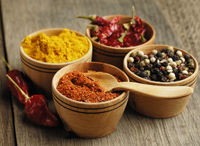
In one year, San Diego’s gained two spice shops. First Penzeys Spices moved into Hillcrest, and now Encinitas has Savory Spice Shop. Located in The Lumberyard on South Coast Highway, the shop has more than 400 herbs, spices, and blends. I found four types of saffron, a huge selection of chili powders, various vanillas, BBQ rubs—you name it. They even encourage customer blends. Get on the mailing list to learn when they hold classes for things such as mustard making. savoryspiceshop.com
Coffee nerd shop from Pasadena to open in East Village
Mmm. That morning coffee smell nice? Like warm, dark life juice? Have you started getting geeky about your coffees with Hario V60s pour-overs and cold brews? No? Well, it’s time. Yes? Well, today’s a good news day. Copa Vida—one of Pasadena’s top hangouts for coffee-and-tea nerds—is opening in the Diamond View Tower in East Village. The original opened in 2013 under owner Steve Chang, coffee czars Frank La and Sam Hong (ex of Café Dulce), plus tea specialist Do Kim. Their Pasadena outpost is a spacious, beautiful, modern space. Assuming the business model is the same, they’ll have three coffee bars in the space. First is a “Go” honor bar, where late-for-workers can get coffee on a Fetco or cold brew on tap for iced coffee—and pay on “their honor” to a basket so they don’t have to wait in line. They’ll also have an “Enjoy” barista bar with all sorts of fancy machines for tea and coffee. And then the “Experience” slow bar where they might do a full Tung Ting tea service or teach a class about the intricacies of the coffee arts. Their chef Erick Lee bakes bread daily from his own starter and serves a lunch menu with a croque madame (ham, caramelized onions, tomato, gruyere cheese, egg, béarnaise), various sandwiches (roasted veggie, smoked turkey melt) and salads (faro, kale, spinach). They’re currently hiring for the SD location. Resumes go to [email protected].
INCOMING: Copa Vida
Coffee nerd shop from Pasadena to open in East Village
Mmm. That morning coffee smell nice? Like warm, dark life juice? Have you started getting geeky about your coffees with Hario V60s pour-overs and cold brews? No? Well, it’s time. Yes? Well, today’s a good news day. Copa Vida—one of Pasadena’s top hangouts for coffee-and-tea nerds—is opening in the Diamond View Tower in East Village. The original opened in 2013 under owner Steve Chang, coffee czars Frank La and Sam Hong (ex of Café Dulce), plus tea specialist Do Kim. Their Pasadena outpost is a spacious, beautiful, modern space. Assuming the business model is the same, they’ll have three coffee bars in the space. First is a “Go” honor bar, where late-for-workers can get coffee on a Fetco or cold brew on tap for iced coffee—and pay on “their honor” to a basket so they don’t have to wait in line. They’ll also have an “Enjoy” barista bar with all sorts of fancy machines for tea and coffee. And then the “Experience” slow bar where they might do a full Tung Ting tea service or teach a class about the intricacies of the coffee arts. Their chef Erick Lee bakes bread daily from his own starter and serves a lunch menu with a croque madame (ham, caramelized onions, tomato, gruyere cheese, egg, béarnaise), various sandwiches (roasted veggie, smoked turkey melt) and salads (faro, kale, spinach). They’re currently hiring for the SD location. Resumes go to [email protected].
INCOMING: Copa Vida
Upon closing, a restaurateur gives an honest look at the tricky math behind local, sustainable food
Two days ago, we announced that Sea Rocket Bistro—a hardline local, sustainable seafood bistro in North Park—was closing its doors after five and a half years. It’s not alone. North Park’s local food trailblazer The Linkery recently shuttered. The owner of The Local Habit in Hillcrest sold his operation, too.
It’s raised a question: Just how hard is it to do a local, sustainable restaurant?
Fans of the Sea Rocket loved them for their principles as much as their food. Every restaurateur talks about being local and sustainable, but very few stick to their guns when they take a look at the real costs in doing so. Sea Rocket was militant about their ethics, which ultimately lead to their closing.
Partner Elena Rivellino gives a rare insiders look at how the numbers play out. This analysis doesn’t take into account the subjective quality of the finished product (some locals absolutely loved their grilled sardines and live local uni, others weren’t so impressed). Nor does it consider real estate (Sea Rocket is located in a sort of no-man’s land between North Park and South Park). But it does give a rare glimpse at the sheer costs of trying to be a progressive, local seafood restaurant.
Sea Rocket’s final meal will be served on Dec. 8. Consider the following the next time you complain about the menu price of local lobster.
Is sustainability a sustainable restaurant model?
Unfortunately ours wasn’t. Or at least we weren’t able to make it so. Places like Chez Panisse have worked for years. Who knows if it’s simply a market/demand recognition, real estate, being able to charge more and serve less volume of food, operating more hours than we did (which we tried, but couldn’t get going enough to make it worth continuing). It’s probably a combination of it all and maybe San Diego just can’t support that combination of a place quite yet. I feel our type of restaurant has been quite successful elsewhere. Hopefully it’s all just part of a natural evolutionary/devolutionary process.
Let’s talk operational costs—which I’m sure was a big factor in Sea Rocket closing.
The cost of doing business for a locally sourced, sustainable-only foods restaurant are SOO high. You do have to pay for quality, but we just felt that we couldn’t charge high-end, fine-dining prices in a casual neighborhood bistro in North Park, so we just didn’t get the markup we needed on a lot of our menu items. We wanted to be reasonably priced to best serve the area, which means we probably should have picked a different kind of food to serve, because seafood is notoriously expensive compared to any other food you could focus on. Maybe that explains why there are so many pizza/salad/sub/burger places.
Industry standard says, to be profitable, restaurants must keep their food costs (what they pay wholesale for food supplies) between 25-30%…
First you kind of have to have an understanding of markups, which can vary between businesses. For example, those with a full liquor license can sell their food cheaper because they have a way bigger markup on the alcohol, which is where they typically make their money—the food almost being a wash or convenience. Any restaurant owner with decent food will tell you that they wouldn’t have made it without the hard liquor advantage—or an incredibly high volume of business, which is hard to sustain.
You sell your live local uni for $18. How much should you have been charging to reach a sustainable profit margin?
We should be charging like $25 per urchin. But we only charge $18 because we’re pretty sure that nobody (except maybe international travelers from Japan) would ever buy them at that price! A long time ago we charged $13 (also not appropriately priced) but then the cost went up a year or two later and we didn’t want to just stop serving them, so we raised the price by $5 to compensate. This is actually why we did entirely stop serving certain things- like local spiny lobster when it’s in season.
You had to stop serving local lobster?
We have not served local spiny lobster in two years, which is very, very sad. The first year, we bought and served a lobster risotto all winter. It was our highest-priced entree, but people recognized the value and bought it happily. The next year, the price went up, so we made a lobster dip instead, which utilized less meat per order so that we could charge less and still sell it. The next year, the price was like $15-$18/lb WHOLESALE or something like that. (I forget the exact price.) For 1/4 of the lobster, we would have wanted/needed to charge like $20 for a plate. Who’s gonna pay $20 for a very small portion of lobster? That year, we got it just once in a while, usually getting a deal on those animals with broken claws and such, and only offered it as a special.
As we’ve heard before, local lobster is going to Asia, right?
All of the lobster gets sent to Asia where people will pay $20/lb or whatever. We as a business and diners have been priced and pushed out of the market for this seafood. It’s being shipped halfway around the world, adding to pollution, etc. while most of the west coast and other parts of this country import much cheaper, different lobster from places like Maine, or Mexico. Doesn’t make much sense, does it?
If you don’t meet the basic markup margins on food, is the restaurant necessarily doomed?
It doesn’t always lead to losing money. You try to balance out your menu with other less expensive items that you can maybe charge a little more for than you need to—to make up for those other high-cost dishes. But overall, we had to compromise on too many items, and that’s only food cost we’re talking about.
What about labor costs?
They really add up, too. We ordered ingredients from lots of different sources day to day. We needed time to juggle lots of different orders and information and emails. We couldn’t consolidate trucking/shipping charges with one bigger company. Also, we made everything from scratch in-house—dressings, sauces, spice blends, and use creative culinary techniques like sous viding, smoking, curing, etc.
So restaurateurs wanting to buy local don’t have a single supplier/distributor—which would streamline and lessen costs?
Some consolidation of distribution costs for local goods is absolutely needed in order for this business model to work. Most places, farms and other vendors, etc. now charge a fuel surcharge every single time they bring something to you, no matter how much or heavy or expensive it is. That adds to your bottom line of ingredient cost, too.
What about the bar tab?
I also was not able to keep my beverage costs at the point we were always aiming for. If we had never discounted any of our drinks, I could probably have made that goal. But the specials we ran for both food and drink cut into what tiny margin we may have otherwise had. If we could have cut out all happy hour discounts altogether while still retaining those people who would come in during that time to take advantage of them—oh wait, yeah, that wouldn’t work.
Is there a way to cheat the system?
A lot of places offer cheap prices for cheap product—rather than an actual discount on your usual amazing product, which is what we did. If we didn’t offer discounts, people will go where there are discounts. If I had only served a few craft beers or organic, small-batch wines, and then balanced out my list with a bunch of cheaper, lower quality stuff, I probably could have made it work. But that’s not what we were about, and we weren’t willing to start chipping away at our entire concept one cost at a time, which would eventually have turned it into a completely different kind of place.
In summary…
If your food costs are high but everything else isn’t, or your beverage cost is high, but everything else isn’t, or your labor cost is high, but everything else isn’t, you could probably make it work. But take high food, beverage AND labor costs and roll it all into one business, and you have no profit. (Oh, and don’t forget to budget for all of your miscellaneous expenses!). Sometimes the math just doesn’t work and you need to move onto the next problem.
For all the positive memories (and there are plenty), visit Sea Rocket’s blog at http://www.searocketbistro.com/category/blog.
Unsustainable Sustainability
Gary Allard (www.garyallardphoto.com)
The annual event honors middle market companies creating jobs, scaling up, and investing in the region
San Diego is known for its startup culture and innovation economy, but what happens when the company moves beyond its early-stage years? The San Diego Business Impact Awards aim to answer that question, spotlighting the middle market businesses helping drive the region’s economy.
Hosted by San Diego Regional Economic Development Corporation (EDC) and JPMorganChase, the second annual awards celebration takes place on Thursday, July 23, from 4:30 to 7:00 p.m. at Scripps Research Auditorium. More than 200 executives, entrepreneurs, and business leaders are expected to attend the networking and cocktail event honoring some of San Diego County’s fastest-growing companies.
Businesses headquartered in San Diego County that have operated for at least two years are encouraged to submit their nomination by Thursday, June 18 at 4 p.m. Companies across industries—from technology and life sciences to tourism and consumer products, as well as pre-revenue startups—are eligible for recognition.
For EDC President and CEO Mark Cafferty, the event is as much about building connections as celebrating success. “We’ve had a longtime partnership with JPMorganChase; their work aligns with our efforts to support underserved communities and drive talent development,” says Cafferty. “And the networking was invaluable last year. I’m still in touch with people I met at last year’s awards.”

EDC is an independently-funded nonprofit that works directly with San Diego companies to help them grow the local economy, make the region as a whole more competitive, and attract and retain top-tier talent with quality jobs. Through EDC, companies can get help starting or expanding their business with support for things like site selection, permit navigation, and regulatory guidance, plus connections to local resources and potential business collaborators.
The San Diego Business Impact Awards began as an idea with one of EDC’s longtime strategic partners, JPMorganChase. The two organizations share a commitment to San Diego and are dedicated to bolstering middle market businesses.
“We’re blessed with a robust innovation economy and startup community,” says Aaron Ryan, San Diego Region Manager for JPMorgan’s Commercial and Investment Bank and vice chair of the firm’s’ San Diego Market Leadership Team. “But one of the segments of the business community we felt was overlooked was emerging middle market companies—the businesses that are no longer small but not yet large.”
Ryan says supporting those companies is critical as they scale and decide where to invest, hire, and grow.
San Diego’s high cost of living remains one of the region’s biggest business challenges, making talent recruitment and retention increasingly competitive. But local leaders point to the region’s quality of life, climate, and collaborative business community as advantages that continue to attract employers and workers.

“In order to support thriving households, there has to be enough high-quality jobs for people to be able to afford to live here,” Cafferty says. “Once a company grows and excels past that middle market point in their growth cycle, they become much more likely to pay higher wages and compete globally.”
Both Cafferty and Ryan proudly tout the unique collaboration that exists among San Diego County businesses. Bringing together top universities producing high-quality talent, cutting-edge research institutions, a robust military and defense presence, leading ocean science and environmental organizations, and a binational, cross-border identity creates a distinct business ecosystem that defines and strengthens the San Diego region.
Last year’s San Diego Business Impact Awards celebrated nearly 60 honorees from 49 industries, representing a total of 8,232 jobs across eight sectors, including: software and technology, healthcare and life sciences, consumer goods, professional services, finance, construction and manufacturing, defense, and hospitality and tourism. On average, honoree companies doubled their revenues over the previous year, employed more than 145 San Diegans each, and offered an average annual compensation of $192,415.
Top honorees included defense contractor Innoflight, environmental consulting firm Bancroft Construction Services, life sciences startup Element Biosciences, defense technology contractor GALT Aerospace, organic grocery store chain Jimbo’s, and biopharmaceutical company LENZ Therapeutics. During the event, Innoflight Founder and CEO Jeff Janicik held a fireside chat offering his insights on investing in the community and embracing San Diego culture.
This year, organizers hope to continue highlighting the middle market players driving economic impact across the region. Nominations are now open through June 18 at 4 p.m. Get your tickets to the San Diego Business Impact Awards celebration to enjoy drinks by Snake Oil Cocktail Co., light bites, live music, and networking.
Cupcakes Squared in UTC
I first met Robin Ross five years ago when she opened up Cupcakes Squared in Point Loma. The idea was simple: use fresh ingredients (nothing artificial and no trans-fats) to create longtime favorite and unique flavor combinations in a square-shaped cupcake—both regular and gluten free. The shape was key. After all, they’re easier to pack and transport and they lend themselves to forming large cakes. Brilliant!
The business has thrived and Ross has become a mainstay at numerous fundraisers. In fact, “C2” donates fresh-baked goods a few times a week to the Rescue Mission and Just Call Us Volunteers. Ross gets around. So, was it any surprise that the folks at Westfield’s UTC mall got in touch with her to invite Cupcakes Squared into their renovated food court?
Banana Split cupcake
Banana Split Kid-Friendly Two-Pack Squares
Kid-Friendly Two-Pack
Banana Split Kid-Friendly Two-Pack Squares
Local Bounty: June 24
Banana Split Kid-Friendly Two-Pack Squares
Ross moved in just a couple of weeks ago. You can find C2 at the foot of the food court’s secondary entrance. It’s a small space, perhaps 60 square feet. Certainly, no baking is done there, but every morning Ross brings in six varieties of cupcakes—both full size and minis—and her brownie-like squares. And, for those in the area who want to choose from her complete flavor repertoire, you can go online to see what’s available, call in your order at the Point Loma store, and pick them up at UTC.
Prices depend on the size of the cupcake, whether they’re regular or gluten free, and the packaging. The full size ranges from $4 for one ($4.25 for gluten free) to $7.75 for two or $15 for four. Minis go from $4 for a package of two, to $7.75 for a package of four, to $11.75 for a package of six.
I, of course, had to sample some of her new flavors and flavor combinations. Here are a few standouts:
All that’s missing here is the maraschino cherry, but you won’t miss it thanks to all the goodies packed into this small package. Inside the banana cake are pieces of fresh strawberries and pineapple, along with chocolate chips. Crowning it is smooth vanilla buttercream, dotted with chopped peanuts and chocolate sprinkles, and finished off with a salted caramel drizzle.
The afternoon I stopped by I was expecting my cousin, his wife, and their two little kids for a visit, so I wanted cupcakes they’d enjoy—and you know how picky little ones can be. Ross suggested her Kid-Friendly two-pack that holds her Smores and Vanilla flavors. The Smores is a warm graham cracker cake with chocolate chips and a hint of cinnamon. It’s topped with chocolate buttercream and a mini marshmallow. The Vanilla appears to be your straightforward vanilla cake, but there’s nothing straightforward about the flavor. Ross likes to call it her Hawaiian Vanilla cupcake because of the deeply rich Hawaiian vanilla that goes into it and the luxuriant vanilla buttercream sporting little vanilla “vermicelli” sprinkles from Callebaut. Both were a big hit with the kids. Oh, and the adults.
Robin may have a business built around cupcakes, but her squares—both regular and gluten free—are favorites of mine. They’re really a cross between a brownie and a cookie and she packs as many goodies in each of the six flavors as is possible—and still have the connective tissue that’s the dough. So your almond apricot will be bursting with nuts and chunks of dried apricot. The pistachio cherry is punched up with pistachios and tart dried cherries. Then there’s the black and white (chocolate chip), chocolate coconut almond, peanut chocolate, and what may be my favorite—cranberry white chocolate. It’s tart, it’s sweet, it’s chewy. Oy! The squares are $2 apiece and $10 for a package of six.
Cherries Jubilee!
We’re just entering what might be the most delectably bountiful time of the year as spring turns into summer and what I think of as happy produce comes into season. I mean the stuff that truly puts a smile on your face on a sultry day. The slice of ice cold watermelon with sweet juice that dribbles down your chin. Stone fruit that sings with sugar—and is especially wonderful in pies and cobblers. Corn on the cob that doesn’t even need to be cooked. Day-glo summer squash that I like to grate and make pancakes with. Tomatoes. No need to say anything about the joy of summer tomatoes.
This week my eye is on cherries, which, yes, are considered a stone fruit. I found four varieties of cherries this week at Specialty Produce. Now you may be used to seeing Bings and the Raniers I plucked today. But Specialty Produce’s Dana Chaldekas introduced me to three other varieties you’ve got to try. And, sure you can nosh on them raw, but consider any of them for an easy clafoutis, ice cream, sauces that are just as perfect over angel food cake or in a crepe as over pork, duck or chicken. Jam them, pie them, add them to fruit salad. Just enjoy them now! They’re all $7 a pound at Specialty Produce.
cherries
Clockwise from top left: Brooks, GG1, Sequoia, Ranier cherries | Photos by Caron Golden
These dark, glossy red cherries from Murray Family Farms in Bakersfield, have a pretty red flesh, not unlike the Bing. Sweet but not cloyingly so. They’re a hybrid of Burlat and Rainer varieties, great for eating out of hand, but terrific with savory ingredients like arugula, pine nuts, bacon, and tuna. They won’t last long, so get to them quickly once you get them home.
Sequoia cherries are a little brighter red and larger than the Brooks. Also from Murray Family Farms, they too have a light red flesh, but a complex sweet-tart flavor and they’re very juicy. Snacking is probably their best use, but pair them raw with burrata cheese, dark chocolate, berries, mint, and yogurt. They’re even good for jamming.
These deeply dark giant cherries, again from Murray Family Farms, are like none you’ve ever eaten. With just the right balance of sugar and acidity and plenty of juice, you probably won’t have any left over from addictively snacking to do any cooking with them. But if you can, these would make a beautiful jam or sauce—or clafoutis.
Rainiers may be the most distinctive of the cherry varieties due to their multi-colored skin of pink and red with a blush of gold. Also unlike the other varieties here, their flesh is yellow, sometimes with red streaks near the pit. These Rainiers are from Frog Hollow Farm in Brentwood, Calf. (not that Brentwood; there’s one in Northern California). They can be a little acidic, but when they are at peak ripeness, sweet and mellow. Add these stunners to a fruit or cheese plate of fresh chevre, burrata, or aged cheeses to show them off. Pit them and mix together with basil, cilantro, mint, or oregano, perhaps some fruity olive oil, and chopped chiles to create a sauce for grilled pork chops or chicken. They’re also perfect for baking in pies, cakes, and tarts.
Scripps study shows that some patients may be able to taper their dose and maintain results
While glucagon-like peptide-1 (GLP-1) receptor agents have been used to treat Type 2 diabetes for more than 20 years, their recent emergence as weight-loss wonder drugs marked a new frontier in medicine. But their effectiveness has left some patients wondering what to do once they’ve reached their goal. Stopping the medication could mean regaining some, if not all, of the weight. A Scripps Clinic internal medicine physician recently conducted a small study of whether GLP-1 patients who had reached their goal weight could maintain that weight by taking their regularly prescribed injection every other week instead of weekly. Spoiler alert: 30 of 34 patients did. Read more about the study here and what that may mean as pharmaceutical companies roll out oral GLP-1s.
For more nutrition, wellness, and healthy living tips, sign up for the San Diego Health newsletter here.