Ready to know more about San Diego?

Subscribe
Food & Drink DECEMBER 28, 2020

Miss Traveling? Pretend You’re on Vacation With These International Wines

Our wine expert selected her top picks for traveling via wine glass (it's a thing)

Miss Traveling? Pretend You’re on Vacation With These International Wines
Maksym Kaharlytskyi / Unsplash

South Africa

South Africa is not just about safaris and shark diving; they also produce incredible wines, especially in the Stellenbosch and Paarl wine regions, positioned along the beautiful Cape Town coastline. South African vineyards most often grow chenin blanc, a versatile white grape that produces as a dry, sweet, or sparkling wine, and pinotage, South Africa’s signature red varietal. Try a sparkling wine from Graham Beck or a pinotage from Kanonkop or L’Avenir Provenance—you’ll almost be able to smell the salty coastal air with each sip.


Portugal

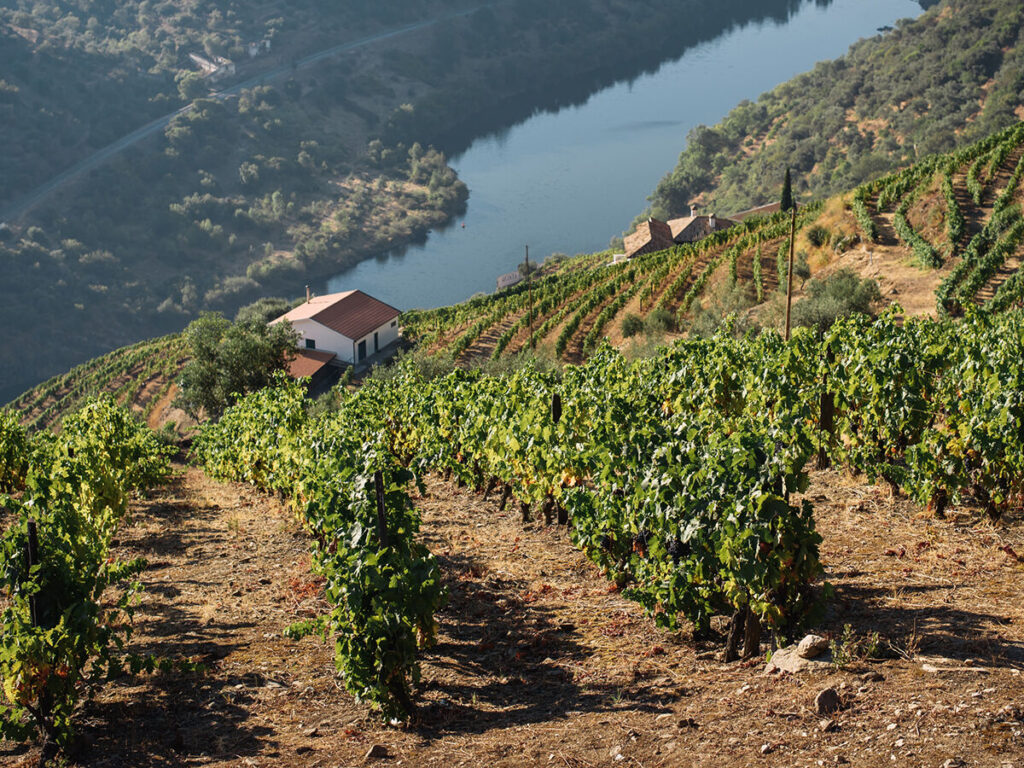
Portugal’s Douro Valley is famous for its breathtaking terraced vineyards framing the Douro River, making for some of the most stunning and memorable views in the world. The Douro is best known for producing port, a sweet fortified wine (meaning it’s a blend of wine and brandy). In recent years, the Douro’s red wines, most often produced using Portugal’s flagship red grape, Touriga Nacional, have also gained popularity. Some fantastic port producers include Quinta de la Rosa and Ramos Pinto, and my favorite dry reds are the budget-friendly Silk and Spice red blend and Touriga Nacional from the famous Quinta do Noval.
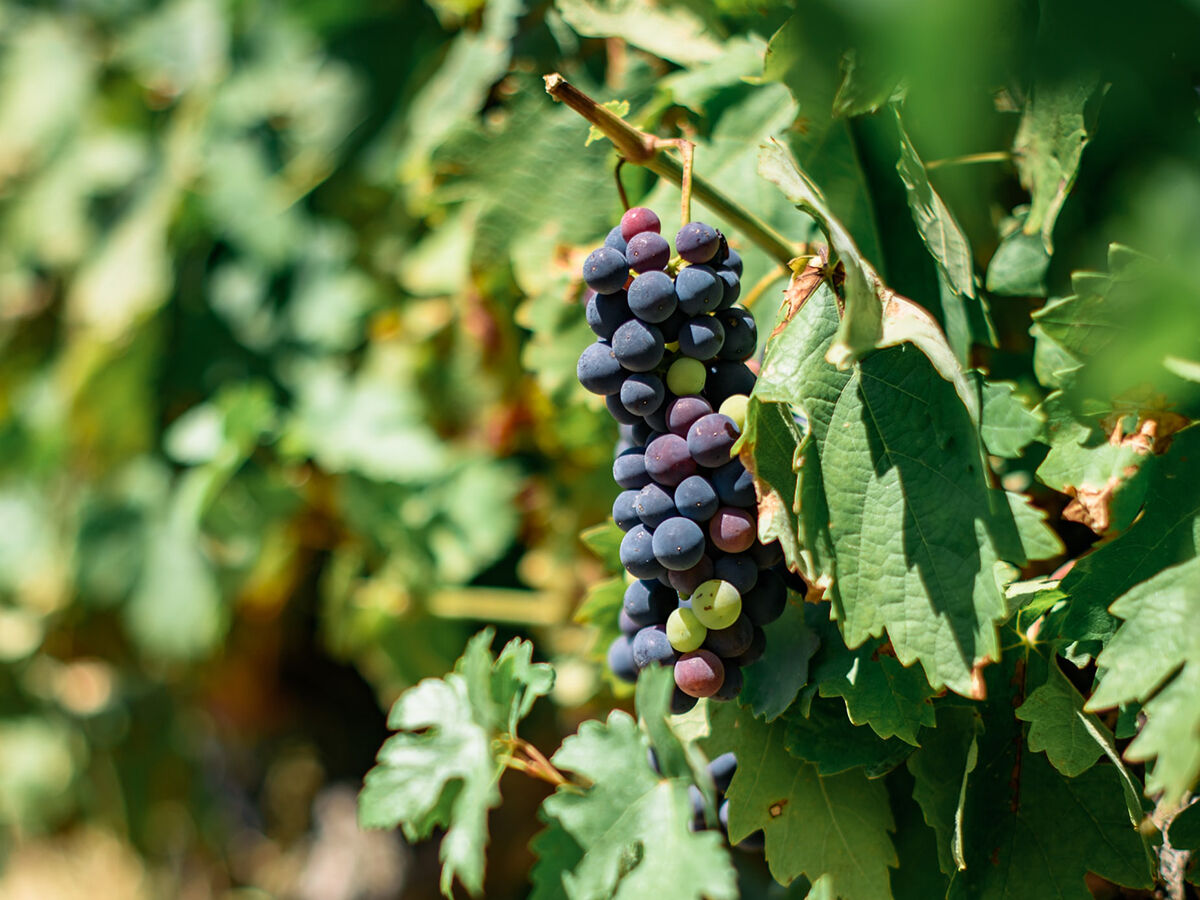
Travel by Wine / Douro Valley Grapes

Portugal’s Douro Valley

Maksym Kaharlytskyi / Unsplash


Chile

Chile’s wine country is situated between the Pacific Ocean and the Andes Mountains, making for a photo-worthy vineyard backdrop. Chilean wine really made its mark when French winemakers relocated to Chile and imparted their techniques in the local vineyards. Chile is now best known for Bordeaux varietals, including cabernet sauvignon, merlot, and carménère. Look out for the Escudo Rojo Bordeaux-style blend, and try Vina Vik’s La Piu Belle red blend and rosé, or their flagship Vik Bordeaux-style blend!


The Greek Islands

The Greek islands are known for postcard views, white-sand beaches, and winemaking that dates back thousands of years. Greece is home to many native grapes that aren’t found anywhere else in the world, including assyrtiko, agiorgitiko, and malagousia. Look out for always-refreshing, acidic, citrus-edged assyrtikos from Santo Wines and Domaine Sigalas, produced in the volcanic soils of Santorini. Cabernet lovers should check out agiorgitiko produced by Gaia for a velvety and delicious red.


Shop for international finds locally at Vino Carta in Little Italy, The 3rd Corner Wine Shop and Bistro in Ocean Beach and Encinitas, Bird Rock Fine Wine in La Jolla, and San Diego Wine and Beer Co. in Miramar.


Nia Gordon is a psychologist by day, and spends her free time writing about wine—but most often just sipping it. Her blog is themoreyoubordeaux.com. @themoreyoubordeaux
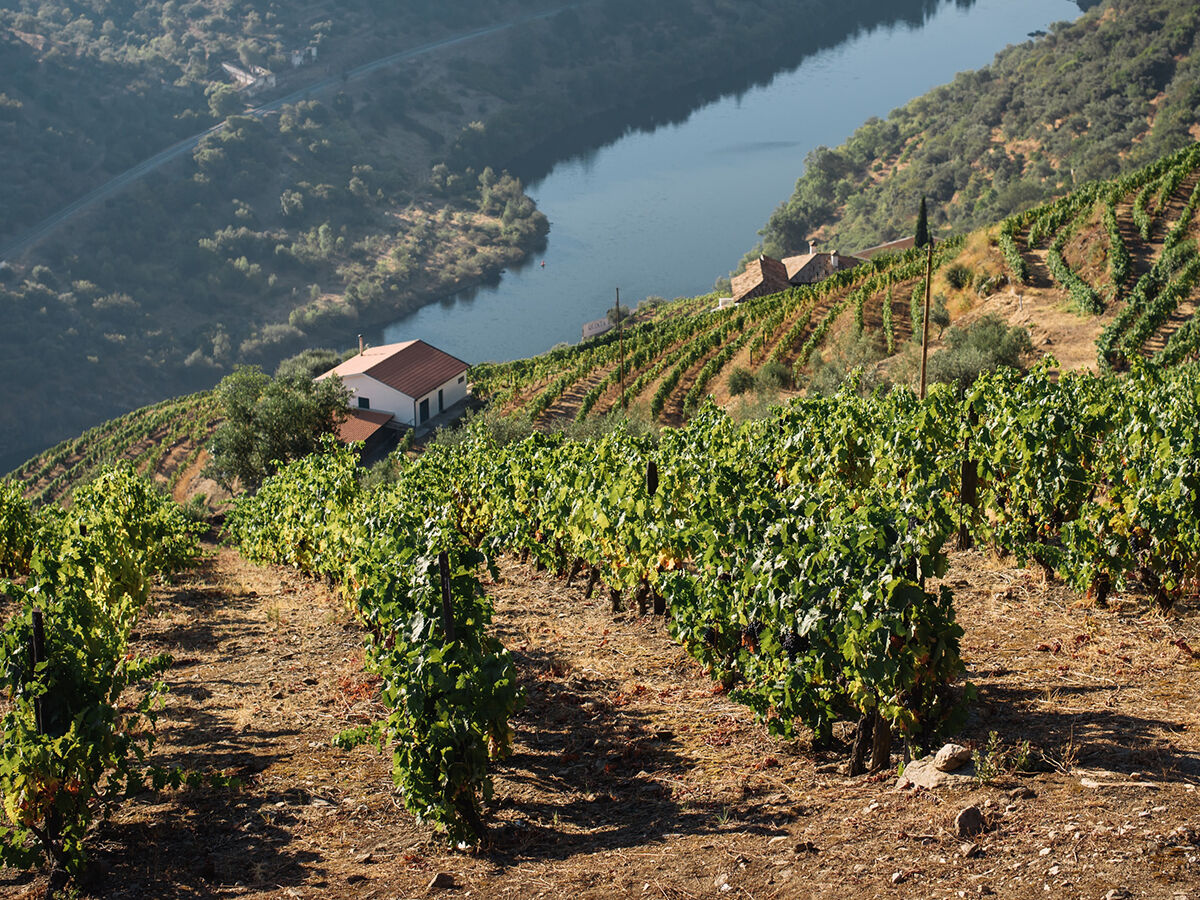
Terraced vineyards in Portugal’s Douro Valley

Maksym Kaharlytskyi / Unsplash

Wine

Subscribe to our newsletters

Select Options

By subscribing you confirm that you agree with our Terms and Conditions and Privacy Policy.

Food & Drink NOVEMBER 14, 2023

Oddish Wine’s Newest Pour Has Us Dreaming Of Europe

The North Park winery & Mabel’s Gone Fishing collab on a special San Diego vermouth

Oddish Wine’s Newest Pour Has Us Dreaming Of Europe
Courtesy of Billy Beltz, Oddish Wine

Nerdy drinks people and Euro-philes, alike, rejoice. Bay Park’s Oddish Wines has just released a special edition white vermouth with Michelin Bib Gourmand-awarded restaurant Mabel’s Gone Fishing. Called “Mabel’s Gone Foraging or: How I Learned to Stop Hurrying and Love the Biome,” it’s a hyperlocal fortified wine—perhaps the first of its kind on the market in San Diego. 

The base wine is chardonnay. Botanicals like sagebrush, mugwort, sagewort, Torrey pine, Pinyon pine, Cleveland sage, fig leaf, coriander, elderflower, Oro Bianco grapefruit zests, and Sorrento lemon zest, all of which were foraged in San Diego County, were used to bitter and aromatize. Sweetening was accomplished with local wild buckwheat honey.

Courtesy of Billy Beltz, Oddish Wine

I am so relieved that vermouth culture is finally catching on here in the United States. I know, I sound like one of 800 people you follow who just got back from their August Italian vacations, waxing poetic on the way Europeans just know how to live

The thing is, your annoying friends are kind of right. At least when it comes to drinking. Vermouth culture on the Iberian peninsula and in Italy is a social event, made to be shared with friends, especially during happy hours or weekends. Northern Italy is particularly known for its aperitivo culture, which boasts vermouth-spiked cocktails with salty bites as a pre-meal indulgence.

In Spain, “la hora del vermut” is typically the time where people gather at a cafe in a square to drink dark red vermouth on the rocks with an orange slice and maybe a spritz of soda water, also with salty snacks. It’s an excuse to chill out, shoot the shit.

What do these gorgeous locales have in common with our fair city? Sunshine, a temperate climate, arid hills ripe for growing grapes, and salt water. There’s a reason San Diego’s climate is referred to as Mediterranean. So, it makes sense that the Oddish x Mabel’s vermouth fits right in here. 

“This vermouth IS San Diego,” reads the Instagram post about Gone Foraging. “It smells and tastes like walking through a trail along the bluffs in La Jolla or in Switzer Canyon or Lake Hodges or Mt. Laguna. Not sure there is anything that expresses the terroir and native flora of this beautiful region like this here bottle.”

“We were very stoked that we could find the bittering botanicals right here in San Diego,” says Oddish Wine owner Billy Beltz. “When we first started the project, we assumed we’d have to use gentian root or rhubarb root or something more common in vermouth that wouldn’t be native [to San Diego].”

Mabel's Gone Forgaing, new wine
Courtesy of Billy Beltz, Oddish Wine

He added that foraging was a “team effort” over several months with both the Mabel’s and Oddish crews, as well as some hospitality industry friends.

“I love that vermouth is so broad and regional in its experience,” says Chelsea Coleman, co-owner of Mabel’s, to that point. “My palate leans agrodulce, so it’s kind of my dream aperitif. When I drink vermouth I can believe, if only for a moment, I’m at a cafe table in a lively European square. Maybe with a cigarette. Definitely with olives and some kids playing futbol.” 

It’s a nice dream, to be sure. Good thing I know a place in town where this can be a reality. Pick up the bottles in Oddish’s El Cajon Boulevard tasting room or at Mabel’s on 30th street.

Jackie is a long-time freelance journalist covering cannabis, food/restaurants, travel, labor, wine, spirits, arts & culture, design, and other topics. Her work has been selected twice for Best American Travel Writing, and she has won a variety of national and local awards for her writing and reporting.

Features OCTOBER 9, 2023

Under the Temecula Sun

Small but increasingly mighty, California’s hottest emerging wine region is just up the road

Under the Temecula Sun
Callaway Winery

The sun is just starting to set, and it seems like every table is popping bottles at Bluewater Grill in downtown Temecula. The sustainable seafood restaurant lets diners bring two bottles of local wine with no corkage fee, making it a favorite among winemakers and visitors alike.

With 17 Temecula wines available by the glass or as part of a flight, this is also a great place to begin a visit to Temecula Valley and get a taste for which wineries you prefer. Raul Ramirez’s tempranillo pairs remarkably well with chipotle blackened swordfish, while Carter Estate’s Blanc de Blanc cuts through the rich beurre blanc sauce dousing the restaurant’s sautéed sand dabs.

Like many wineries in the area, newcomer Altísima focuses on the Italian and Spanish varietals that thrive in Temecula’s Mediterranean climate

Within a two-hour drive from 21 million people in surrounding cities (including San Diego, Los Angeles, and Palm Springs), Temecula has become an unlikely wine destination in Southern California. In recent years, Temecula wines have achieved impressive scores from national critics, with Wine Enthusiast naming Temecula one of the top wine travel destinations in the world in 2019.

John Kelliher, founder of Grapeline Wine Tours, has seen the region explode since he began operations in 2002.

“When we started, there were between 14 and 17 wineries that you could go to in Temecula for a wine tasting,” he recalls. “Now, there are more than 50 wineries.”

The vast majority (more than 90 percent) of Temecula wines are sold direct-to-consumer, making it rare to find bottles on store shelves or restaurant wine lists. If you haven’t visited, you probably haven’t tasted them before. Some people may have the misconception that it’s too hot here to grow great grapes, but the large diurnal swing and mountain gaps allow cool air to funnel through the decidedly Mediterranean climate.

“Twenty years ago, it was pretty easy to find a bad wine and it was pretty hard to find a good one in Temecula,” Kelliher says. “Nowadays, the level of winemaking has really gone up, and I think that all of the new competition coming in just keeps raising the bar.”

Temecula winemaker Olivia Bue of Robert Renzoni Vineyards strolls between barrels of aging wine
Winemaker Olivia Bue of Robert Renzoni Vineyards strolls amid barrels of aging wine and grapes awaiting processing

Italian and Spanish Varietals Thrive

For a tiny wine region with just 1,300 acres planted to vine, Temecula is impressively diverse, growing more than 30 different grape varietals. Many of the most successful wineries embrace the Spanish and Italian grapes that thrive here rather than sticking to the same Bordeaux blends that are common throughout California.

Olivia Bue, winemaker at Robert Renzoni Vineyards, recently ripped out 28-year-old estate cabernet sauvignon vines and planted Montepulciano, a medium-bodied red wine grape cultivated widely in central Italy. Bue is also growing sangiovese and barbera. All three of Renzoni’s wines made with these Italian varietals have achieved scores of 92 points or higher from Wine Enthusiast.

“Barbera thrives in Temecula Valley,” Bue says. “The vines love heat and produce high-yielding clusters, and the roots integrate deep into our soil, producing complex, layered flavor profiles year after year no matter what climate challenges come our way.” The ruby-red wine is naturally acidic, but low in tannins, making it easy to pair with food.

Similarly, Nick Palumbo, owner and winemaker at Palumbo Family Vineyards, replaced his original merlot vines with sangiovese. One of Temecula’s newest wineries, Altísima Winery shines with garnacha and Super Tuscan Italian red blends, paired with Spanish charcuterie and grilled octopus.

“Temecula is similar to the warmer regions where vitis vinifera [or grape vines] originally evolved,” says Greg Pennyroyal, vineyard manager at Wilson Creek Winery and professor of viticulture at Mount San Jacinto College. “We can produce rich expressions of wines that are considered less noteworthy table wines in their traditional regions.”

Two kids at Peltzer Winery's annual fall pumpkin patch lifting a pumpkin into a wheelbarrow
Looser land-use ordinances allow Temecula vineyards to host family-friendly activities like Peltzer Winery’s annual fall pumpkin patch

Fun, Casual, and Immersive

Compared to some of California’s more established wine regions, the Temecula Valley Wine Country Community Plan is a lot more permissive, with land-use ordinances allowing wineries to operate restaurants, events, and lodging. For example, Europa Village offers multiple wineries, hotel rooms, restaurants, and event spaces (plus a wine cave where guests can book a private sound-bath meditation) under one roof. South Coast Winery Resort has a full-service spa and heated, outdoor saltwater pool.

You can blend your own bottle of wine at Bottaia Winery, experimenting with estate-grown Italian varietals like aglianico, sangiovese, sagrantino, and barbera in a wine lab complete with beakers. There’s no right or wrong answer here—just whatever suits your personal taste.

When it comes to dining, Leoness Cellars and Avensole Winery have some of the best bites and views in the region, and Peltzer Winery features food trucks and live music. The fifth-generation family farm hosts an annual autumn pumpkin farm and petting zoo and builds an 8,400-square-foot ice-skating rink each winter. At times, it might feel a little like the Disney World of wine—but you’re allowed to have fun when your wines are this damn good.

And, after all, fun is what keeps people coming back. “We have a lot of loyal customers that we call ‘repeat offenders,’” Kelliher says. “Temecula becomes their regular getaway and mini vacation. They like that we’re not pretentious like some other wine regions.”

Temecula Wines to Try

Start your Temecula wine-tasting journey with one of these 10 winners.

Wiens Cellars 2022 Vermentino ($32)

An ideal bottle on hot summer days, flavors of pineapple and pink grapefruit in this crisp white wine whisk you away to a tropical paradise. Pair it with mild cheeses or oysters.

Carter Estate Brut ($39)

It’s rare to find a traditional Champagne-method wine in Temecula, but this racy sparkling wine with notes of apple, lemon zest, and toasted brioche is an improbable Champs dupe.

Akash Winery 2021 Estate Parlez Vous Rosé ($39)

Easy to drink on its own, and a nice complement to charcuterie or spicy Chinese stir-fry, this is a fun, crushable zinfandel rosé reminiscent of strawberry and orange Starbursts.

Robert Renzoni Vineyards 2020 Barbera ($48)

Winemaker Olivia Bue’s favorite, this high-acid, low-tannin barbera is rich with ripe strawberry and pomegranate flavor. Sip the lighter-bodied red with red-sauce pasta, pizza, and grilled vegetables.

Peltzer 2022 Syrah Rosé ($40)

Syrah is one of Temecula’s signature grapes, and this vibrant rosé is a delicate expression of syrah’s intense flavor, displaying the subtle sweetness of plump red cherries and aromatic rose petals.

South Coast Winery Wild Horse Peak Il Temporale ($39)

This velvety Super Tuscan is predominantly sangiovese, rounded out with touches of merlot, cabernet, and syrah. Drink it now with grilled meat, but it’s sure to age gracefully, too.

Masia de la Vinya Winery 2016 Syrah ($46)

Rhône grape varietals do well in Temecula, and this powerful syrah is a prime example
by winemaker Justin Knight. Bold black cherry on the palate leads to a savory, peppery finish.

Doffo Winery 2019 Mistura ($52)

This plummy, Bordeaux-style field blend is the first wine that Marcelo Doffo made in his garage two decades ago. It received a gold medal at the San Francisco Chronicle Wine Competition.

Altísima Winery 2020 La Reina ($65)

An elegant blend of sangiovese, syrah, malbec, mourvedre, petite sirah, and merlot, this red wine displays a soft, well- rounded complexity punctuated by a bright, elderberry finish.

Gershon Bachus Vintners 2017 Astraea GSM ($65)

Named for the ancient Greek goddess of justice, this grenache, syrah, and mourvedre blend has been aged for 30 months in Hungarian oak, creating a creamy palate and hints of smoked raspberry.

Features MARCH 14, 2023

Sand-Reckoner’s High Desert Wines

The local wine label is bringing the Sonoran Desert’s fruitful offerings to Tucson

Sand-Reckoner’s High Desert Wines
sand-Reckoner wine

Sand-Reckoner’s wines are made from grapes grown on the Willcox Bench, a couple of hours southeast of Tucson.

Arizona’s desert-born wine scene is starting to heat up, like a summer day just before dawn. In Tucson, Sand-Reckoner Vineyards is, at the moment, the only local wine label with a downtown tasting room. Here, curious wine drinkers can stretch their assumptions about the saguaro-speckled Sonoran Desert’s fruitful offerings. The first is challenging the notion that the desert produces wine at all.

“The soil is very good,” Sarah Fox says. She owns Sand-Reckoner with winemaker Rob Hammelman. Fox is referring to the dirt in the ringed-by-mountains Willcox wine region located about an hour and a half southeast of Tucson. Its earthy terroir comes from a Chex Mix of sand, clay, and minerals. Burrow three feet further down, and you hit limestone. In other words, it’s a classic wine soil profile, similar to France’s famed Burgundy region.

This part of the desert also touts an elevation of at least 4,000 feet and seasonal monsoon weather flowing up from the Gulf of Mexico. The elemental combination prevents grapes from shriveling into raisins during scorching summers. During monsoon season, producers have to play lifeguard, lest the fruit drown. And some growers have learned to cultivate varieties that play nice with a little extra hydration. “Sangiovese is very well-behaved in the vineyard,” Fox says. So are syrah and tempranillo.

When it comes to wine making, Sand-Reckoner has transitioned to a mostly low-intervention approach. That means opting for organic sprays, eschewing herbicides, and using naturally occurring yeast—a critical ingredient that turns sugar into alcohol. In the glass, Sand-Reckoner wines are an elegant ballroom dance. Its malvasia bianco bursts with lychee. Its grenache rosé is more understated than other punchy or candied strawberry-watermelon bottles. Its sangiovese includes grapes from Sand-Reckoner’s own vineyard and hints at bright cherry and earth.

Well-known grapes like cabernet sauvignon and chardonnay grow well in most areas, but Fox says exploring “outside of the norm” grapes in Arizona’s unique terroir is more exciting. By fall 2023, Fox and Hammelman hope to move into a larger space within the downtown Warehouse Arts District, where their current tasting room is situated, to include room for bottling, cellaring, and tasting. “It takes a certain amount of grit to forge forward in an area that’s not known yet for grape growing,” Fox says.

The Citizen Hotel, Tucson

What used to be a newspaper building is now Tucson’s Citizen Hotel, which boasts wine-soaked amenities like a bottle fridge in every room.

Courtesy of The Citizen Hotel

Where to Stay

Keep the wine theme going at The Citizen Hotel. What was once Tucson’s first newspaper press building was reimagined in 2022 with muted pastels and light wood, stone, and bronze accents that mimic the desert landscape. Vino-centric amenities include wine fridges in each of its 10 high-ceilinged rooms. In the world of shrinking hotel perks, an in-room French press coffee kit, a soaking tub, and bathrobes feel luxurious.

A minimalistic lobby bar offers red, white, and fortified wines made by regional producers from Arizona and Mexico and occasional complimentary wine tastings. Around town, find more local wine at bottle shops and specialty markets like nearby Pearly Baker Fermentables and Time Market.

Ligaya Malones grew up in Kaua’i, Hawai’i and is a San Diego-based writer covering the intersection of food, travel, and culture. Her work has appeared in publications including Food52, Condé Nast Traveler, Lonely Planet, and Salt & Wind Travel.

Wine
Studio S JUNE 15, 2026

A Modern Take on Steak

Stake Chophouse & Bar brings contemporary classics and old-school service to the heart of Coronado

A Modern Take on Steak
Courtesy of Stake Chophouse

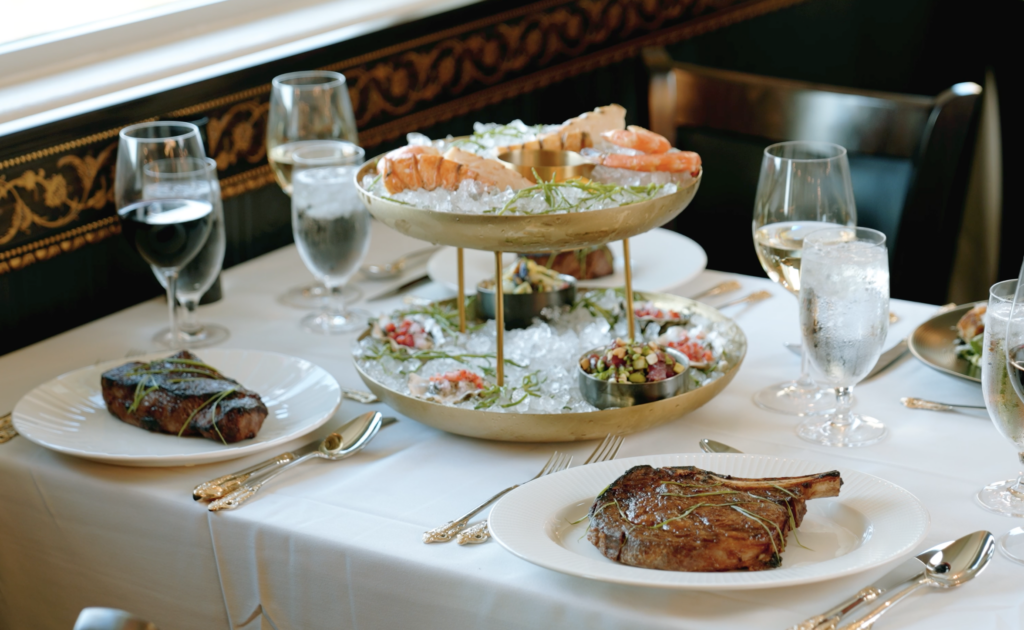
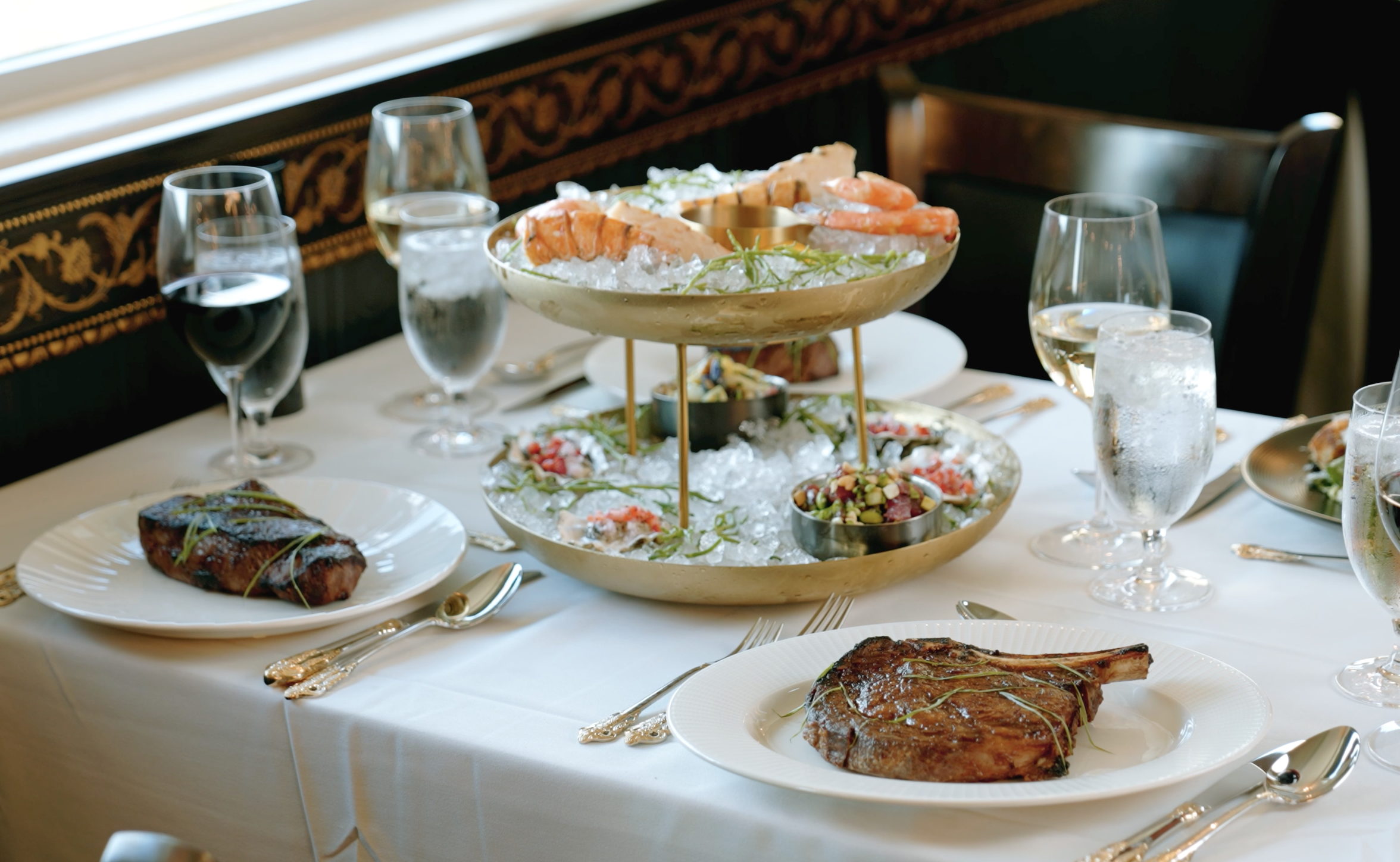
Stake Chophouse & Bar isn’t your average steakhouse. Blue Bridge Hospitality’s Coronado outpost is a modern interpretation of a big-city steakhouse nestled in the heart of the small coastal community. The team at Stake has reimagined the whole steakhouse experience. By prioritizing a seasonal farm-to-table sourcing philosophy, a personalized guest experience, and unique service touches, like a formal steak presentation and a bespoke knife selection process, Stake distinguishes itself in a sea of steakhouses.

Exceptional steaks, including Wagyu from Japan, Australia, and the U.S., and fresh seafood flown in daily form the core of Stake’s culinary identity. The menu features a five-course omakase-style steak experience highlighting house favorites, plus an array of cuts, and classic steakhouse staples—think a wedge salad, baked potato, or pasta carbonara—refined for a contemporary palate without losing their traditional appeal. Stake focuses on seasonal sourcing from the region’s best family farms and specialty purveyors, and incorporates intentionally unexpected touches to create something truly unique.

“I challenge our chefs and myself to take it a step further in sourcing,” says Chef Ronnie Schwandt. “It’s important to us to highlight different farms, unique one-off farms—whether it’s cattle, strawberries, a local fisherman or from anywhere in the United States, we’re always trying to find that niche.”

Beyond the menu, Stake emphasizes outstanding service, says Vinny Spatafore, Director of Hospitality Operations. Staff maintains detailed notes, allowing them to remember guests by name, recall previous orders such as a favorite martini (also memorable for the customer since it’s served in an extra tall, distinctly-shaped glass), and celebrate special occasions like birthdays and anniversaries.

“When you have those points of topic that you remember about a guest, they appreciate that,” he says. “Our servers are really good with that—we have a couple servers who have been here since the beginning and they’ll remember somebody from years ago, their name, their kids’ names, where they live. I’m really thankful to have a great front of house staff.”

Award-winning wines, rare whiskeys, special events, and a complementary black car service that provides transportation for guests throughout Coronado add to Stake’s appeal.

Schwandt stresses that Stake offers more than a meal; they aim to give patrons something unforgettable.

“It starts when you walk up the stairs and are greeted by the hostess—that sets the tone for the night. Then you’re greeted by a server, who may know you by name, and can guide you through the menu and curate as they get to know you,” says Schwandt. “Most people leave kind of blown away; they leave feeling like they just had an experience. That’s the goal, right? Whether you’re serving smash burgers or high-end steak, you want somebody to leave thinking, Wow, that was awesome.”

Partner Content
Beer FEBRUARY 28, 2023

Telling the Stories of BIPOC in the Alcohol Industry

Cassandra Schaeg, founder of Escondido’s Sip Wine & Beer, highlights diverse entrepreneurs in the first season of <i>Fresh Glass</i>

Telling the Stories of BIPOC in the Alcohol Industry
cassandra-schaeg-sdm-0223.JPG

cassandra-schaeg-sdm-0223.JPG

Eight years ago, Cassandra Schaeg opened Sip Wine & Beer in Escondido to support “local, women, and BIPOC [Black, Indigenous, and people of color] brands.” Launching then and there was a risk, she admits, one that she wasn’t sure was going to pan out.

But Sip didn’t just survive. It thrived, allowing Schaeg to feature diverse entrepreneurs and producers that tend to face high barriers of entry in the beverage alcohol space. “To be here eight years later is obviously a sign of how important and necessary it is to continue doing the work,” she says.

During that time, Sip’s ground-breaking efforts have both continued and evolved. At the peak of Covid-19, Schaeg met Theresa Hoiles, a television producer with an idea: Why not take the Sip mission further, creating a TV series to improve representation in wine, spirits, beer, and beyond? That series, dubbed Fresh Glass, debuted on September 15, 2022 as a six-episode series on KPBS and PBS.

fresh-glass-episode-three-sdm-0223.JPG

fresh-glass-episode-three-sdm-0223.JPG

The initial guests were all people behind brands Schaeg already carried at Sip. The existing foundation of history and trust allowed the unscripted discussions to reach new heights. “It’s as real and raw as it gets,” Schaeg says.

She describes the series as “an intentional circle,” one that began with Camins 2 Dreams, a Santa Barbara-based winery founded by Tara Gomez, the only Native American woman winemaker in the country, and her wife Mireia Taribó, a Spanish winemaker. The couple uses old-world techniques to make wow-worthy wines in Lompoc, California. Their bottles can be found in various locations, including Alila Marea Beach Resort in Encinitas.

iris-rideau-sdm-0223.jpeg

Iris Duplantier Rideau

The season’s final episode features Iris Duplantier Rideau, the first Creole woman to own a winery in the United States. “I think God gave me something that made me different, that made me strong, that made me determined,” Rideau says in the episode. She outlines her life and her journey from New Orleans to Los Angeles, with multiple self-made careers along the way.

Schaeg points to Rideau as a pioneer in multiple fields, even outside of wine. “She grew up [under] Jim Crow … She was the first Black woman to hold a city contract with the city of L.A., [and] she started the 457 pension program for the city of L.A.,” Schaeg says. “Her story is now cemented in history on television as part of her legacy. Opening a winery was just the cherry on top.”

Toward the end of the episode, Rideau reflects on her accomplishments and laughs. “You know what I want on my tombstone?” she remarks to Schaeg. “’Don’t cry for me, I did it all!’”

fresh-glass-pbs-sdm-0223.JPG

fresh-glass-pbs-sdm-0223.JPG

These guests, along with those featured in other episodes, represent diversity not only in the beverage alcohol industry, but within leadership positions in that space.

“If you turn on the TV and you watch the news or television shows, Black people or people of color aren’t displayed in the light of entrepreneurship [or] leadership, or [that representation is] very few and far between,” Schaeg says. “It’s very hard for people to see themselves in spaces where they can’t see it in real life. So this was the opportunity to show it in real life.”

Schaeg says the possibility of a second season remains in question. “The reality is it costs money,” she explains. “Now that the show is out there, I believe it has the meat and the chops to go on a bigger scale, and we’re trying to see how that could happen in the future.” But regardless of the hurdles, Schaeg is committed to the work.

“There’s so many stories out there,” she says. “I am going to do my damnedest to figure out how to continue sharing those stories.”

Stream Fresh Glass on the KPBS app or online at KPBS.org/show/fresh-glass.

Beth Demmon

About Beth Demmon

Beth Demmon is an award-winning writer and podcaster whose work regularly appears in national outlets and San Diego Magazine. Her first book, The Beer Lover's Guide to Cider, is now available. Find out more on bethdemmon.com.

Beer Wine
Love & Dating JANUARY 19, 2023

Party of Fun

This Valentine’s Day, celebrate the single life by reclaiming solo travel

Party of Fun
Bloodlust inside.jpg

Bloodlust inside.jpg

The last time I liked someone was two years ago. We had lingering picnics at Balboa Park. We played our favorite songs on my record player while lying side by side on my apartment floor. We were annoyingly adorable—but we hadn’t kissed. Then, he took me to Julian. After filling the sexual tension with road-trip chatter, we explored the town. We cooed at its charm, snapped polaroids in the graveyard, and somehow didn’t eat any pie. Eventually, like most romances, it ended, but the trip stuck with me.

Before our demise, we talked about visiting more of those cozy, romantic places I had wanted to go to: Idyllwild, Valle de Guadalupe, Catalina, and all of the California spots where coupledom seems to be the visa required for entry—if Instagram is to be believed—or are at least more enjoyable with someone by your side.

After the breakup, I felt like those destinations were off-limits. And if I did go, I thought it might be a study in boredom. But after spending a good chunk of time researching the single life, I am happy to report that there’s plenty of other places and ways to fill one’s time.

As we look towards Valentine’s Day—a holiday typically reserved for couples—I think it’s high time to buck the romance myths of these San Diego–adjacent getaways and enjoy them solo. No partner required.

Bloodlust Valle

Bloodlust Valle

Valle de Guadalupe

Valle de Guadalupe is a home away from home for the oenophiles of San Diego. It’s closer than Napa and has a culinary scene that can put its dukes up against any Thomas Keller concept.

Don’t have SENTRI? Start your cross-border sojourn by securing a driver to pick you up once you land in Tijuana. People & Planet is a friendly service that offers custom tours or simple driver service if you want to plan your own itinerary.

There is no shortage of wineries in the valley, but the standouts are natural wines made by female winemakers. Be sure to visit Pouya, helmed by Fernanda Para. Last seen in San Diego at 2022’s NatDiego natural wine festival, Para makes natural wines that complement, rather than fight, the natural terroir of Valle. Try her skin-contact chenin blanc and—if there are any bottles left—her collab with Tecate’s Bichi Winery, a pét-nat of colombard called (wait for it…) Pichi. Henri Lurton and Bruma also make the shortlist for winery visits.

For an overnight stay, Siempre Valle is a hotel-meets-vacation rental that has sprawling views of vines and some of the best off-season rates around. Take a quick room respite, then start your evening with some local bubbles and oysters at the charming Conchas de Piedra to, well, aphrodisiac yourself.

Cap off a stay with dinner at the newly opened hipster staple, Bloodlust, a wine bar. The architecture of the grounds nearly outshines the stellar food and natural wine list, as it plays host to an amphitheater- like stage for live music, while local DJs command the decks inside the garlic-bulb-shaped restaurant. (Blood… vampires… garlic… get it?) If you didn’t get enough wine in, stop by Baja Divina, a wine shop brought to you by Lauren Plascencia, daughter of chef and hospitality giant Javier Plascencia.

Julian cidery

Julian cidery

Julian

To keep it even more local, go quaint with a jaunt to Julian. Known for its homespun charm, Julian is an ideal place to stroll on your own and take things slow. Bring a journal and snag a bench in the Julian Pioneer Cemetery that overlooks the town, featuring famous corpses dating back to the 1870s, including Julian’s founder, Drury Bailey.

Once you depart the home of the departed, peruse the bucolic vendors on Main Street, like the Antique Boutique that peddles vintage wares or the Julian Book House to find funky used volumes. Take a breather from touristing and settle in for bites and sips at Julian Beer Co., your North Park away from home, featuring nearly 15 rotating house beers and a shaded patio. If you’re abstaining, head to the cute and kitsch at the Julian Tea & Cottage Arts where you can have high tea for one with finger sandwiches and all the Laura Ashley décor you can handle.

On the way home, take a detour at Lake Cuyamaca, the 110-acre body of water that is surrounded by the wilderness of Lake Cuyamaca State Park, with campgrounds and water activities. Since you’re by yourself and can’t make out on the docks, opt for a meditative walk or a paddle boat (quite the workout for one) or kayak rental. Grab lunch at The Pub at Cuyamaca, partly owned by the same folks as Julian Beer Co.

Rebecca-Hicksville Pines-HighRes-18.jpg

The 420 room at Idyllwild’s Hicksville Pines is decked out in plush furnishings and glow-in-the- dark psychedelic velvet posters.

Idyllwild

Due north some ways in the mountains is Idyllwild. This unassuming mountain town is home to some of the most creative getaways, namely the 420-friendly Hicksville Pines Chalets & Motel. With 11 themed rooms, ranging from a palace of Dolly Parton worship to a Twin Peaks reimagination of David Lynch’s Black Lodge and a suite rocking perennial Christmas trimmings, there is a room for everyone’s quirk. Pro tip? Enjoy the gratis nug you get upon arrival while lounging in the jacuzzi. (Bonus points if you go when the tub is surrounded by mounds of snow.) Who needs company for that?

After your submerged relaxation, head to the town to find a string of thrift stores and search for the off-the-beaten-path Speakeasy Books for graphic novels, books, and games. Interested in less indoors and more outdoors? Gear up for a hike at loops like Suicide Rock, Deer Springs Trails, and Panorama Point. Things close early in town, so get ready for the wind down with a bottle from the Wine Finch natural wine shop or wine and dine yourself at Ferro, the town’s hotspot Italian bistro.

Two Harbors

Bustling-with-boat-traffic Avalon Harbor on Catalina Island.

Photo: Love Catalina

Catalina

For San Diegans, snow is a novelty, but water is home. Catalina Island is familiar enough with its beachy surroundings but exotic and far away enough to soothe the travel itch. Drive up to Dana Point, then take in the sea air on the hour-and-a-half Catalina Express ferry that will set you back just under $100 for a round-trip ticket to the main town of Avalon. Rent a golf cart to see the beachy cliffs and local Bison lowing, or bathe in the winter sun (it does exist) at Crescent Beach.

Sink into the island life and take yourself out to Luau Larry’s. Is it a tourist trap? Yes, but if someone has to cuff me, I want it to be Larry. This decades-old tiki bar is an institution for a reason. Have a Wicki Wacker and revel in your excellent decision-making. To make things chicer, head to the Naughty Fox and sup on crab sandwiches in modern surroundings. If you decide to stay the night (probably a good idea after Larry’s) and want to splurge, consider houseboat rentals to live as some intrepid locals do. If you want to do a deep dive of the island, head to the only other town, Two Harbors, and glamp it at Whites Landing with its two-person tents just to yourself, just offshore.

Danielle is a freelance culture journalist focusing on music, food, wine, hospitality, and arts, and founder-playwright of Yeah No Yeah Theatre company, based in San Diego. Her work has been featured in FLAUNT, Filter Magazine, and San Diego Magazine. Born and raised in Maui, she still loves a good Mai Tai.

Partner Content AUGUST 26, 2014

10th Annual Chocolate & Vino

Perfect pairings make this fundraiser one of our favorites

10th Annual Chocolate & Vino

The San Diego Young Professionals Committee (YPC) and the University Club Charity Classic will host the 10th Annual Chocolate & Vino on Friday, September 5th at the University Club. Deemed an “Around the World Tasting,” guests get to sip and sample their way through different cuisines and wines of the world. Take in the city views from the 34th floor where the sunset alone is worth the ticket price. Proceeds from the event go to three different local organizations: Big Brothers Big Sisters, ALS Therapy Development Institute and Employee Partners Care Foundation. 

Event Details:

Friday, September 5, 2014

The University Club atop Symphony Towers 

750 B Street Suite 3400, San Diego CA 92101

6:00-9:00PM

Tickets: $60 per person 

Purchase tickets HERE

10th Annual Chocolate & Vino

Eat Like a Local (Who Knows a Guy).

Restaurant news, culinary storytelling, and Troy Johnson’s sharp takes delivered straight to your inbox twice a month.

Close the CTA

Contact Us

1230 Columbia Street, Suite 800,

San Diego, CA