Ready to know more about San Diego?

Subscribe
Food & Drink MAY 19, 2014

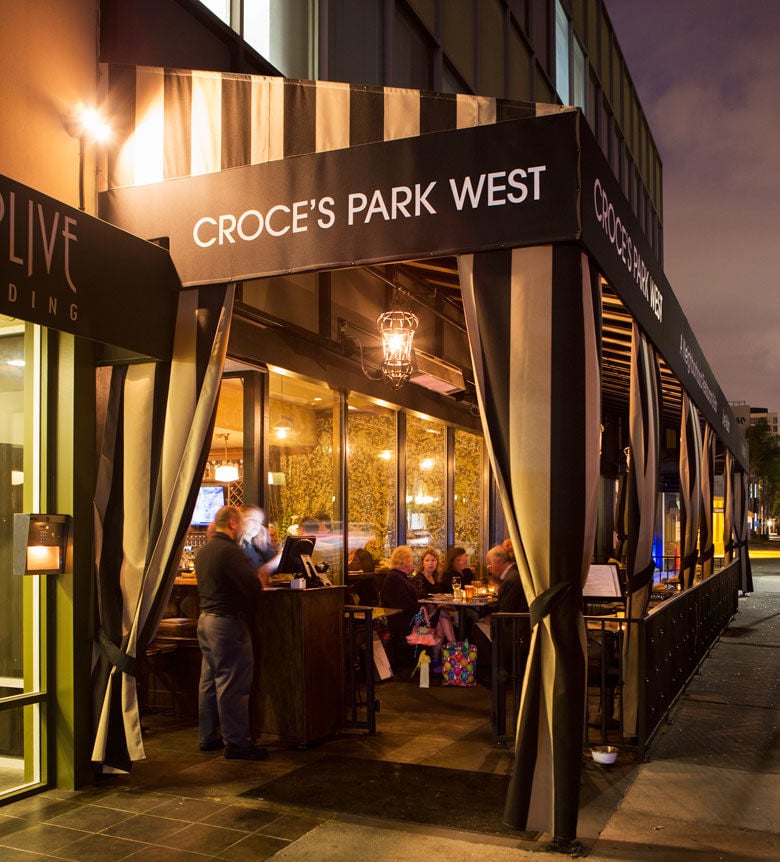
Restaurant Review: Croce’s Park West

Squeezed out of downtown, Croce's has never looked more alive

Restaurant Review: Croce's Park West

Croce’s Park West

Croce’s Park West

Croce’s Park West

2760 Fifth Avenue, Bankers Hill

TROY’S PICKS
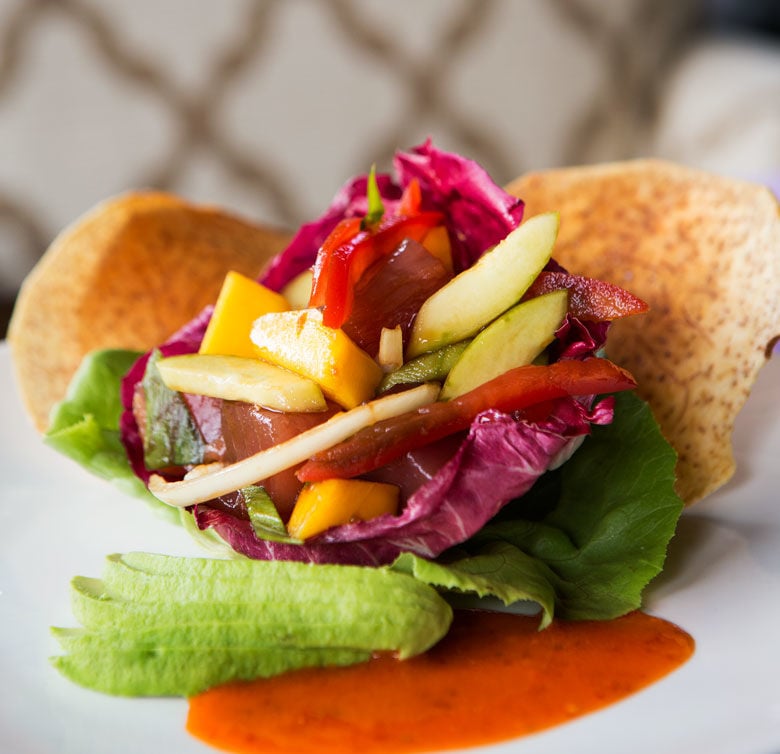
Ahi poke
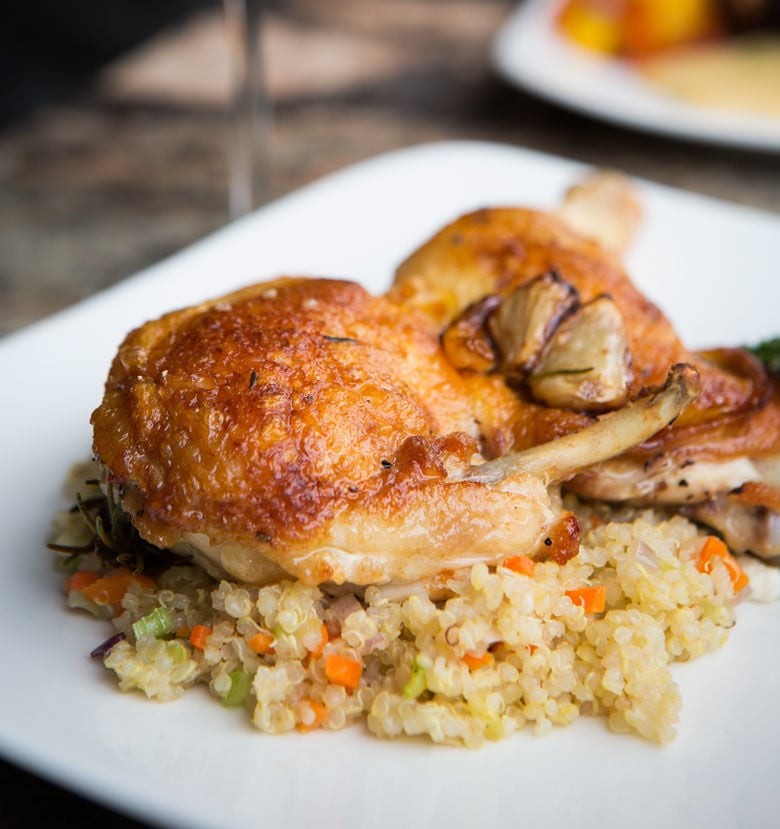
Roasted chicken
Mushroom bruschetta

Moving hurts. There’s physical strain (This couch is heavy), financial strain (Two Men and A Wad Of Your Cash Move You), and emotional strain (That old house was where little Alistair said his first curse word). If it’s voluntary, the promise of new horizons keeps you going. But being forcibly removed turns an already loathsome experience into an ordeal. Boxes filled with resentment are heavier.

By all accounts, Croce’s felt forced out of downtown. Ingrid Croce claimed the occasional teeth-rattling music of the basement nightclub below (at that point, The Pussycat Dolls—now Coyote Ugly) was driving diners away from her white-tablecloth piano restaurant. Plus, some Pussycat employees hung outside Croce’s in itsy bitsy teeny-weeny attire. The landlord seemed to say Oh, lighten up—the basement had always been a nightclub of some sort.

Meanwhile, Ingrid and her husband, Jimmy Rock, had been maneuvering to buy Avenue 5 in Bankers Hill. They’d intended it to be an expansion. But when downtown lease negotiations fell apart, Croce’s pulled out of the Gaslamp.
Restaurant Review: Croce's Park West

Poke

Poke with mango, green onions, and ginger in sambal vinaigrette

This wasn’t small news. In the ’70s, Ingrid and her first husband—legendary folk singer Jim Croce—moved to San Diego from Philly. They expected to find a happening downtown scene. Instead, they found a great place to get mugged, drugged, and marginalized. The Gaslamp was home to the strung-out and kicked-out. Still, Jim pointed to the spot on Fifth Avenue and F Street and said that was where they should open a place of their own.

A week later, Jim Croce died in a plane crash. Ingrid spent the next 10 years in music litigation. Then she received a notice that the spot Jim had pointed to was for lease. She took it as divine notification and opened Croce’s in his honor. The dainty folk singer gal had the guts to build something nice among the pre- and post-incarceration crowd. For nearly 30 years, Croce’s stood as an icon of a crucial turning point in downtown’s development. It wasn’t the vanguard of cuisine; Nirvana didn’t play there. It was classic, it was timeless, and now it’s gone.

Croce should send her former landlord a thank-you note. On a Friday night, Croce’s Park West—located on the bottom floor of an office building at Fifth and Olive in Bankers Hill—is jammed. It’s a mostly older crowd, but not soporific or age-pigeonholed by any means. Fact is, while Croce may have been content in the Gaslamp for 30 years, most of her friends and clientele weren’t. The Gaslamp is—and probably always will be—kryptonite for locals over the age of 30. The parking headache, the tourist-gouging price points, the brash peacocking spectacle of club life. It’s as if Croce’s longtime friends have been waiting for this to happen.
Restaurant Review: Croce's Park West

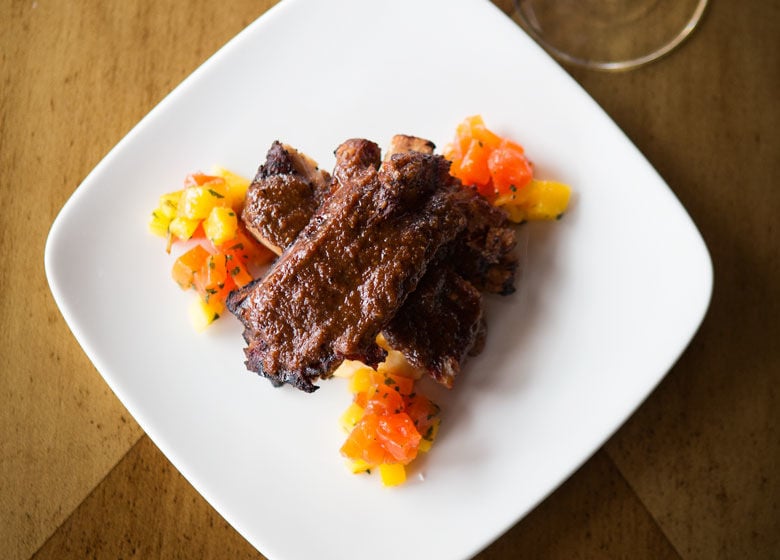
Jamaican jerk baby back ribs

Jamaican jerk baby back ribs

A 50-something woman next to us is dressed like Zandra Rhodes, with the wizened, unfazeable presence of a New York art scene dowager. Over wine, she tells a friend how much she misses smoking cigarettes. Another stylish older woman in a statement red Gael Greene hat holds her phone in the air, trying to use an app to figure out who the jazz artist is on the speakers. Croce’s Park West is where diners care enough to Shazam jazz. A three-piece jazz trio sets up in the large back room—the former home of the drag queen cabaret Lips.

Croce was able to bring all of her staff from the original location, and it shows. The valets (in vests) and hostesses have the easy rapport of a well-functioning family. Inside, it’s all dark wood floors, brass tabletops, a 1930s-style wooden bar that spans 60 feet. There are oil paintings—a woman in outdoor recline, a Latin guitarist. Both seem to have misplaced their pants. The entrance lounge is one long, dark leather banquet. There are dark-stained, heavily lacquered wooden booths. It has the nicely aged, well-oiled feel of a grandfather’s leather cocktail chair. In the back room, there’s a shrine to Jim Croce, patron saint of musicians in the room (who play Wednesdays through Sundays).
Restaurant Review: Croce's Park West

Roasted chicken

Perfectly roasted chicken

We try two cocktails. A cilantro-cucumber with lychee juice and lime is well-balanced, a little spa treatment for your mouth. The Smokey Local, on the other hand—Woodford Reserve bourbon, lemon juice, agave syrup, and Lagavulin 16-year Islay Scotch rinse—is a hammer, with Scotch’s aggro punch atop bourbon’s Kentucky wallop, and not enough agave syrup. If it’s meant as a challenge to my manhood, I politely withdraw from the competition.

“I attempt to call the bluff on the menu’s ‘perfectly roasted chicken’ only to discover it is a perfectly roasted chicken.”

For appetizers, the flavor that chef James Clark gets from his mushrooms in the bruschetta is remarkably good, and it’s not all from the truffle oil. I’m not sure how I feel about the lobster-“scented” risotto with edamame. Indeed, the whiff of lobster is significant. But the “scent” of lobster is like the “notion” of sex. A titillating evocation, unfulfilled.

Clams come swimming in an excellent harissa broth, thicker than most. If the kitchen had properly purged the clams, it would’ve been smiles all around. But all of a sudden I’m seven years old on the beach at La Jolla Shores, eating sand. But the poke with mango, green onions, and ginger in sambal vinaigrette is delicious, the Indonesian chili paste giving the mellow cubes of fruit and meat the spark they need.
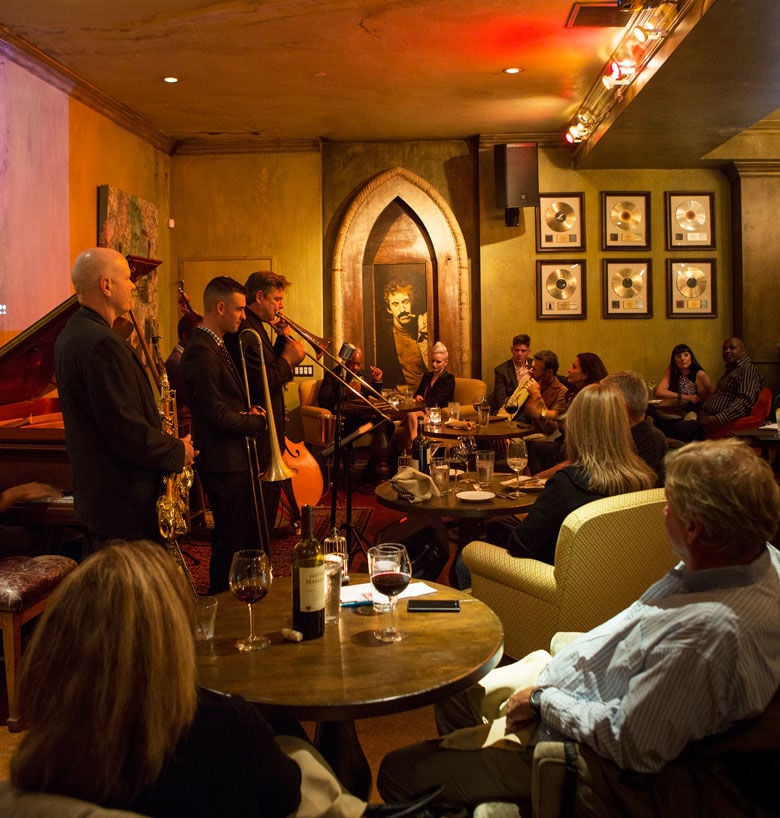
Restaurant Review: Croce's Park West

Live jazz

Live jazz under the gaze of Jim Croce

All entrees come in full- or half-sized portions—a great service to small-platers and price-conscious regulars. I’m not sure I’ve ever seen a restaurant sear quite as well as Croce’s. I attempt to call the bluff on the menu’s “perfectly roasted chicken” only to discover it is a perfectly roasted chicken. Golden brown, almost crackable, and yet still with a moist interior, over a quinoa pilaf and kale salad in a lemon vinaigrette. The skin on the duck confit, too, is wondrously crisped next to cherries whose tart has been tempered by a soak in Pinot Noir. Both the duck and the chicken have excellent, deeply developed flavors. Absolute wins. I’m not sure the kitchen is as comfortable with swimmers. The sear on the sea bass is, again, perfect. But the crispy pancetta is over-rendered, nearly burnt, and the “broken mushroom vinaigrette” is hardened and refrigerated to the plate. Since the fish depends on its supporting cast for the flavor development, it’s left in the cold. And the tuna poivre is almost shocking in its execution—covered in a thick epidermis of pepper that looks and tastes like it might be a quarter of an inch thick. It’s nearly pepper-spray tuna.

Ordering right, you can have a very good meal at Croce’s. Regardless, it already feels like a sophisticated neighborhood favorite. At least on the nights I’m there, it’s packed with generations of music and food lovers. More alive than Croce’s Gaslamp had been in a long time. A different kind of alive. A calmer, less Gaslamp-y alive. But alive nonetheless. As if Croce’s real home has been here for quite a while, waiting for Ingrid to realize.
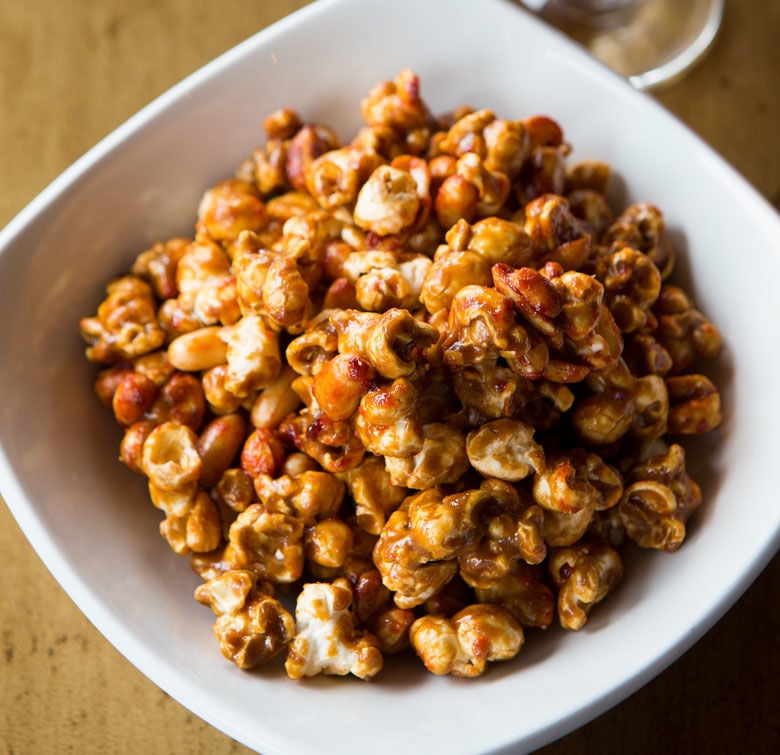
Restaurant Review: Croce's Park West

Spicy cracker jacks

Spicy cracker jacks

Spicy cracker jacks

Subscribe to our newsletters

Select Options

By subscribing you confirm that you agree with our Terms and Conditions and Privacy Policy.

Food & Drink DECEMBER 9, 2025

Farmers Market Favorite Mi Pan Bakery Opening In Mission Gorge

The specialty sourdough bakery will expand to more pastries, sandwiches, and coffee in its first brick-and-mortar space, opening in 2026

Farmers Market Favorite Mi Pan Bakery Opening In Mission Gorge

Stop me if you’ve heard this one before: person gets laid off during the pandemic. Bored at home, they turn to baking. A passing interest turns into a passion, and before you know it, they’re launching a full-fledged bakery. 

Yes, that’s the story of how Mi Pan Bakery started, and yes, 10,000 other aspirational bakeries began the exact same way. But the difference is that Mi Pan’s baker and owner Alejandro Gomez didn’t stop at making a few loaves of sourdough for his friends and family.

He’s spent the last five years building a beloved local business whose bread and pastries are now sought out at three different farmers markets, was nominated for both Best Bread and Best Farmers Market Food Vendor in San Diego Magazine’s Best of San Diego Reader’s Choice Awards for 2025, and only decided to finally move from baking in his garage to their first brick-and-mortar location in order to keep up with sheer demand. 

Interior of new San Diego cocktail bar Carlo inside Mission Hills restaurant Cardellino in Mission Hills

“I talked to my wife, and I said ‘Listen, if we’re not going to move out of the garage, I don’t think I can keep doing this, because I’m baking pretty much 10 to 12 hours a day,’” Gomez laughs. “I think it’s time.”

After a year of looking for the right location—where Gomez and his wife and business partner Alejandra Ruelas could open Mi Pan with enough space for an expanded commercial kitchen, an area for hosting workshops, and an onsite retail store—they found it. Mi Pan Bakery’s first brick-and-mortar location will open in the first half of 2026 at 6435 Mission Gorge Road in Grantville.

Once open, Mi Pan will still remain at all of the farmers markets: Tuesdays in Pacific Beach, Saturdays in Little Italy, and Sundays in Chula Vista. They hope to add one more to their rotation once they have the ability to increase production. Gomez says he also plans to launch a wholesale side of the bakery, something he says multiple businesses have approached him about, but he hasn’t been able to take on with his small operation. And then, maybe one day, maybe even a second location in North County. 

Gomez also didn’t work as a baker previously, unlike other pandemic-launched operations like Companion Bread Company and Relic Bakery. But in the past five years, he’s taught himself the craft and traveled across the world to places like France, Spain, and Mexico City to both take and teach various baking classes, something he also plans to offer at the new space. 

Mi Pan’s menu will remain small, offering its signature sourdough and pastries—especially medialunas, an Argentinian pastry that’s a cross between a flaky croissant and soft brioche with a light glaze on top. “If you haven’t tried it, you should,” he promises. “They’re amazing.” They’ll also add sandwiches using its own bread, as well as coffee. (Most of this will be intended to-go, but it’ll have a few tables onsite if people wish to enjoy their goodies right away.) But above all, Gomez says what they’re building is meant to last, modeled after the family-owned neighborhood cafes of his native Mexico and across Europe.

“It’s not about being the kind of trendy bakery that’s hyped for six, seven months, or a year, and then after that, they disappear,” he says. “We want an atmosphere that feels like home, and then when you come back… you’re greeted by name. I think that’s what we want—a warm, reliable, everyday bakery where the community feels welcome and you always find exceptional bread and pastries.”

Mi Pan Bakery will open at 6435 Mission Gorge Road in Grantville in mid-2026.

San Diego Restaurant News & Food Events

Beth’s Bites

Beth Demmon

About Beth Demmon

Beth Demmon is an award-winning writer and podcaster whose work regularly appears in national outlets and San Diego Magazine. Her first book, The Beer Lover's Guide to Cider, is now available. Find out more on bethdemmon.com.

Features DECEMBER 5, 2025

Restaurant Review: Vulture in University Heights

Inside the plant-based steakhouse from the creatives behind Kindred and Mothership

Restaurant Review: Vulture in University Heights

The Perfect Order: Vulture Martini | Potato Pavé | Crab Cake

Kory Stetina is a long way from learning what vegan food was through a pamphlet at punk-rock shows in his teens. He stands in his dream restaurant, Vulture, wearing a non-sportsy sports coat. He’s married with a child. There’s a very non-punk potato pavé on the monogrammed plate, the servers are in tux-adjacent attire, and this whole building in University Heights has been turned into a plant-based funhouse with formidable, obsessive style.

Interior of new San Diego vegan restaurant and bar Vulture in University Heights
Photo Credit: James Tran
Visitors stroll through the white-and-bright diner Dreamboat before stepping into Vulture’s moody bar.

Despite the earmarks of midcentury continental formalism, five out of 10 people in here wear arcane t-shirts. Word got out early on that Vulture was a fine-dining experience, and while there’s a tableside Caesar and velvet curtains and soft, artful furniture, that was never the intent. Stetina had to do some PR legwork to pop the “special occasion” balloon that floated over the project—another collaboration between himself and Arsalun Tafazoli of CH Projects—and it seems to be working.

One of the t-shirt people I recognize: Justin Pearson of The Locust and Three One G Records. A thoughtful and progressive punk force in SD, he’s seated at a corner table with individuals who look like they’ve at least dabbled in if not dedicated their lives to graphic design and can casually play a theremin near a rare fern. Vulture captures that same dinner-party-for-creative-people mood that the Middletown bar Starlite first brought to the city.

Interior of new San Diego vegan restaurant and bar Vulture in University Heights
Photo Credit: James Tran
Every upholstery in Vulture is tufted, every bust underlit for drama, every detail obsessively detailed.

It’s a place for grown-up punks, for ideas and ideals.

(Obtrusive but important note about punk rock and plant eaters: The rather genuine punk music of the 1970s and ’80s that eventually birthed Green Day and Nirvana and even, I guess, My Chemical Romance emerged from a philosophical and creative instinct to challenge status quos, which often meant expressing unpopular and political opinions in an excessively loud and urgent manner—pretty much exactly what Simon & Garfunkel were doing but far more invigorating and annoying. There were plenty of bands who got big because they had great hair and a good producer; there were other bands who got cult-famous based on the holy-wow way they expressed uncomfortable ideas, making people question the way they lived. Eating only plants was a part of this live-different worldview, and, like any good movement, it got co-opted by the tad too righteous, moral, and shame-mongery. It should be said that Stetina made his name in San Diego by being a philosophical vegan who’s un-mongery.)

Food and cocktails from new San Diego vegan restaurant and bar Vulture in University Heights
Photo Credit: James Tran
The Vulture martini, the result of a year of tinkering—a near-frozen booze concerto of three different gins and four vermouths.

To get to Vulture, you enter through Dreamboat, a well-lit, bright, Mr. Clean-ish, ’60s-era, plant-based, romantically American diner that’s all white and chrome and charm—poodle-skirt notions and connoisseur coffee and smoked potato latkes and Impossible burgers and baked goods and milkshakes and cocktails. Seating occupancy: one-and-a-half people on Ozempic (fine, it’s 10).

In the back corner of this tiny diner is an antique host stand. The host takes you through a velvet curtain, down the short hall, and through a door, until you enter into, what?

Interior of new San Diego vegan restaurant and bar Vulture in University Heights
Photo Credit: James Tran
Bedecked in red velvet, Vulture was five years in the making.

Some will call it a speakeasy, but it’s really just a fun surprise restaurant (“speakeasies” do still exist, but they’re not on OpenTable, and almost everyone with a project they call a “speakeasy” will, on their most honest days, admit it’s not a speakeasy).

Food from new San Diego Italian restaurant Corallino opening in Point Loma

You’ll step into cavernous, amber-glow, lava-lamp darkness. So, the first experience Vulture offers all of us is temporary blindness, followed by the opportunity to behold the shockingly slow ability of human eyes to adjust to radical shifts in light. The music is on point, a mix of obscure indie tracks and guilty-pleasure soft-rock bangers. Thanks to listening bars, restaurants have become the stereo-system showrooms of America. Remember that guy in high school who one day showed up with box speakers in his trunk and a $6,000 head unit, an amp, subwoofers, and EQs, and his car sounded like Dr. Dre’s and Rick Rubin’s place of business? That guy is restaurants.

Food from new San Diego vegan restaurant and bar Vulture in University Heights
Photo Credit: Arlene Ibarra
The “crab” cake, made with hearts of palm.
Troy Johnson

About Troy Johnson

Troy Johnson is the magazine’s award-winning food writer and humorist, and a long-standing expert on Food Network. His work has been featured on NatGeo, Travel Channel, NPR, and in Food Matters, a textbook of the best American food writing.

Features OCTOBER 1, 2025

Six Weeks, One Michelin Star: The Story of Lilo

After two decades of work and four years of waiting, the Carlsbad restaurant's opening came with a big splash

Six Weeks, One Michelin Star: The Story of Lilo

It had been open six weeks when it got the Michelin star. At six weeks, a restaurant is a newborn. Newborns wail and struggle to breathe. They’re cracking open their first panic attack. Nine months in the flotation tank of the mom spa, then—blammo—the landlord shuts off the water and fairly traumatically evicts them into a drafty world that has no clue about mood lighting.

It’s old food critic wisdom that restaurants need six months to get running and ready for real analysis. Crew members will have lied on their resumes, narcissists will find themselves bored, the strangely emotional demands of diners will break newbies. It’s a fresh organism dedicated to executing nightly public theater, and it takes time for all the parts to learn how to operate as a fluid whole—develop mutually beneficial roles, nail the timing, speak the unspoken language.

2025 Best Restaurants San Diego Magazine list featuring local restaurant Campfire in Carlsbad

Granted, the team at Lilo in Carlsbad aren’t newcomers, and they’ve had way more time than they ever wanted to plan this out. Plus, the partners—restaurateur John Resnick and chef Eric Bost—helped earn their restaurant across the street, Jeune et Jolie, a Michelin star (and they run its raved-about sister restaurant, Campfire, down the block).

Interior of San Diego Michelin star restaurant Lilo in Carlsbad
Photo Credit: Elodie Bost
Analog music helps set the mood in here.

“We’re lucky,” Resnick says. “About 80 percent of the people on our team, we either worked with immediately or they came back because they were excited about this project.”

The project is a 22-seat, tasting menu–only restaurant featuring Bost, longtime chef de cuisine Dusan Todic, wine director Savannah Riedler (formerly of Post Ranch Inn and two-Michelin-starred Saison), and beverage director Andrew Cordero (Jeune et Jolie and Campfire). It’s four years in the making. When a 10,000-square-foot building became available on State Street in 2021—the last of its kind on one of Carlsbad’s most up-and-coming drags—they jumped at it. The plan was to build a massive all-day restaurant (Wildland, now open) and, behind it, tiny Lilo, where they could showcase what their vision of the ultimate San Diego dinner experience could be. It’s the kind of James Beard Award and Michelin bait that ambitious restaurateurs dream of and makes basic sense when they have a chef-partner like Bost.

“Campfire and Jeune—from the time leases were signed to opening doors—took about 12 months,” Resnick says. “So I kind of felt like, alright, 18 months should be doable.” He pauses. “It was not.”

Exterior patio at San Diego Michelin star restaurant Lilo in Carlsbad
Photo Credit: Kimberly Motos
Your meal begins in the serene courtyard.

At that time, the pandemic was still slowly releasing its chokehold. Supply chains had been shot with a billion tranquilizer darts. Building two restaurants at a time while exhibiting a noble American amount of ambition was no picnic. The week after the project finally broke ground, the construction lead on the project—“the only person more essential to the buildout than us as owners,” Resnick says—departed. A fun idiosyncrasy of construction in North County is that most contractors live 40 minutes away and prefer freelance gigs closer to home. So, finding help was hard. Plus, a new ordinance had been passed in Carlsbad since Resnick opened his first two restaurants.

San Diego restaurant Lilo in Carlsbad featuring food dsish kaluga caviar

“I was down in Baja having lunch when I got an email about needing a ‘minor site development plan,’” Resnick remembers. “I was like, ‘Well, it’s got the word minor in it; it’s probably not a big deal.’ That one thing added nine months to the project.”

Project costs ballooned. Hems were hawed. The buzz on this project had been loud, and now the scene wondered and whispered. I ask Bost and Resnick if there was a time they considered giving up or drastically reducing the vision.

“It came up, yeah,” Resnick says. “At the end of the day, it was a ‘the only way out is through’ type of thing.”

They thought they’d launch in July 2023. The doors opened in April 2025.

Food from San Diego Michelin star restaurant Lilo in Carlsbad
Photo Credit: Elodie Bost
A tartlette made with vin jaune, or “yellow wine,” a dry French white aged for years under a film of yeast.

The Redemption

For Bost, the unveiling of that restaurant was especially redeeming. In 2020, he’d lost what felt like everything. He’d spent 20 years working his way through some of the world’s best kitchens: Le Cirque, The Ritz-Carlton in St. Thomas, Alain Ducasse, and both The Lodge at Torrey Pines and The Inn at Rancho Santa Fe in San Diego. He hit the top when he was named executive chef for Guy Savoy, launching the famed French chef’s elaborate Vegas restaurant and then overseeing his places in Singapore. In 2017, ready to do his own thing, he returned to SoCal and spent two years developing the idea for his dream restaurant. He finally opened his unpretentious tasting-menu place, Auburn, in LA in 2019.

Troy Johnson

About Troy Johnson

Troy Johnson is the magazine’s award-winning food writer and humorist, and a long-standing expert on Food Network. His work has been featured on NatGeo, Travel Channel, NPR, and in Food Matters, a textbook of the best American food writing.

Studio S APRIL 15, 2026

10 Years In, Puffer and Malarkey Are Just Getting Started

A look back at the risks, grit, and instincts behind the local restaurant powerhouse

In this city, chef Brian Malarkey and restaurateur Chris Puffer are kind of like peanut butter & jelly, tacos and Tuesday, Padres and Petco—they just go together. This month, the duo celebrates 10 years of partnering on some of San Diego’s top restaurants including their first venture, Herb & Wood.

To celebrate this milestone, we stepped back and revisited their journey becoming some of this city’s most successful restaurateurs.

But first, let’s go back to the beginning. The duo met at Oceanaire in 2007 where they both worked. Malarkey was still riding the high from his stint on Top Chef Season 3 where he won runner-up. He was a great chef, Puffer recalls, if not a tad arrogant. Whatever he was doing, though, it worked. Sales doubled under his watch.

In 2009, Malarkey was approached by some patrons to start what would become Searsucker. He knew he wanted Puffer to be his partner. They had great chemistry and loved hospitality and food. “We both came to this with a bit of a chip on our shoulder,” says Malarkey. “We wanted to prove it to other people that we know what we’re doing.”

Courtesy of Puffer Malarkey Collective

Searsucker, Gabardine, and Herringbone (under the Fabric of Social Dining restaurant group) were born through the new partnership. But in 2012, they sold their concepts to Hakkasan and soon partnered on a new lease.

That building would eventually become Herb & Wood. “We were going to do it differently this time around,” says Malarkey as he reflects on Wood’s early days. “And we [wanted to] build it to last.”

The vision: Great food. Great music. Great service. It’d be a place where diners would let go, put their phones down, and be fully present to enjoy a meal together. When they walked into 2210 Kettner Blvd, they knew they had found their spot. 

The only problem was that, at the time, that area of Little Italy was still severely underdeveloped. In a 8,500-square-foot space, they were going to have 230 seats to fill. “It may as well have been on Mars,” says Troy Johnson, San Diego Magazine publisher, content chief, and the city’s longtime food critic.

Courtesy of Puffer Malarkey Collective

And, of course, there were the naysayers. The prevailing feeling in the dining world was, “Let’s see what these f**king idiots do,” recalls Malarkey. The duo let all the noise be noise. In fact, the noise fueled them. “We weren’t going to cater to the haters,” Puffer says.

Their next hurdle would be to tackle the restaurant’s design. “There was nothing. It was literally a box,” says Puffer of the former space. Design teams were too expensive or didn’t quite get their vision—no, they didn’t want exposed beams or wooden tables made from reclaimed barns. “Then, Puffer was like, ‘f**k it, dude, I’m going to design this restaurant.’”

Having never really designed something like this before, he decided not to work in the programs that most professionals use to create their layouts. 3D mockup? Didn’t need it. CAD? That’s what a paper and pencil are for.

Courtesy of Herb & Wood

“It was all in my head,” he recalls. “I had this moment where I was like, ‘If I died right now, no one would know where any of this shit goes.’”

“Yeah, it made no sense,” Malarkey says.

And it still doesn’t if you hear him explain it. A mishmash of vignettes from the inner workings of his memory bank, evoking everything from Mississippi riverboats to Eiffel tower ironwork, Kensington home façades, an old theater he frequented, and a canoe, because why not? Yet somehow, it all worked.

“It’s a sense of nostalgia,” says Puffer. “People might say, ‘Oh, my gosh, this feels good’ and they don’t realize it reminds them of the time they were in Paris.’”

“We don’t play trends,” Malarkey says. “We play timeless.”

Courtesy of Herb & Wood

Over the course of many years and plenty of trial and error, the partnership has continued to thrive. And, the Puffer Malarkey Collective has found its sweet spot within their restaurants: The service had to be kind and unpretentious and the food had to come out quick, delicious, and consistent. “Consistency is key!” says Puffer.

They also learned to balance out one another. “He’s a go-go-go-go [person],” says Puffer, “I’m a let’s-take-a-deep-breath-and-sleep-on-it [type of person].”

So, when they opened the doors to Herb & Wood in April of 2016, with those lessons in place, everything was just right. “We knew it had to fire on all cylinders,” says Puffer. “And it did.”

Courtesy of Puffer Malarkey Collective

There was no pretense and the dress code was exceedingly simple. “Money in your pocket,” says Malarkey. “That’s all you need.”

The phones rang, the seats filled, and the haters had to give it to them, those gnocchi hit. People began embracing every aspect of the place, even the edgier ones.

“We thought people were going to complain about all the paintings with boobs,” says Puffer of the many John Lanes on the wall. “But the amount of people who take pictures in front of the boobs is amazing.”

They even had a middle finger statue that Puffer had picked up from a yard sale. If a table was rude or antagonistic toward the staff, he’d walk over to them with the finger. “Congratulations,” he’d say, handing it over. “You’ve won asshole of the night.”

Courtesy of Puffer Malarkey Collective

The point is, they were ready to laugh (and not take shit from anyone). When someone wrote a review of Herb & Wood and called it Weed & Boners, they both had a laugh. It’s one of the keys to longevity.

Along with the fun and deliciousness, they’ve also served as a culinary talent incubator for San Diego. “It’s like a centrifuge,” says Johnson about Herb & Wood. “They train up all these young chefs and start spinning all this talent into different parts of the city.”

There’s Sebastian Becerra with Pepino, Samantha Bird of Relic Bakery, Aidan Owens at Herb & Sea, and Tara Monsod of Animae and Le Coq (San Diego’s first James Beard award finalist) to name a few. “They’ve expanded the footprint of the food revolution in San Diego,” says Johnson.

Their plans for the next 10 years? 

“We’re just going to keep the magic going,” says Malarkey. 

Everything SD AUGUST 5, 2025

Review: El Indio Restaurant

The Middletown restaurant reminds us that when you invent something as iconic as the taquito, you’re allowed to rest a bit on your laurels

Review: El Indio Restaurant

Every year for the Best of San Diego issue, we ask readers to nominate and vote for a San Diego classic restaurant they want food critic Troy Johnson to review. Whichever they vote for, he goes. Last year, they sent him to Rocky’s Crown Pub. This year… Mexican classic, El Indio.


The Perfect Order: Taquitos with Everything | Chicken Tamale | Mordiditas

When you’re credited with inventing the entire concept of the taquito, pretty much every other dish you create is going to pout in that cigar-shaped shadow. Unless you sous vide a couple narwhals, the taquito is gonna dominate your story.

San Diego’s El Indio is widely cited as the global birthplace of the taquito. (Note from our nonexistent legal team: Like any food origin story, it’s contentious—many will tell you a small, rolled taco had been a staple in Mexico for generations; others claim an LA taco stand beat SD to it. But by and large, El Indio has been granted paternity for the word “taquito” and cited as the first in the US to both sell and widely popularize the iconic thing—which happens to fit our narrative nicely, so we’re leaning in.)

So, El Indio’s mordiditas are that almost-famous entourage dish that deserves more applause. Sliced segments of taquito, about the size of pigs in a blanket, are assembled in a heap on a plate and absolutely waterboarded with nacho cheese and pickled jalapeños. They’re essentially loaded taquito nachos, an idea whose glory, in a just world, will outlive us all and echo in Valhalla. They solve a longstanding problem with every single batch of nachos that has been made in humankind—that each and every chip is denied an equitable amount of cheese or load.

San Diego Mexican restaurant El Indio in Middletown which invented taquitos
Photo Credit: Kimberly Motos

Most nachos are built as an altar to American capitalism: The top couple of chips accumulate a vast majority of the cheese and the rest of the chips just keep hearing rumors of a trickle-down until they protest. If our species ever gets cut from the roster of the universe, the fact that we put a man on the moon but could never equally dress our nachos should be examined by our successor species as a possible cause.

El Indio’s taquito rubble comes in a biblical flood of nacho cheese. It’s a snack-bar treat for people whose therapists have listened to their fantasy of placing their open, eagerly receptive mouths beneath the queso pump—albeit with far better taquitos made from scratch.

The dish isn’t gonna knock your socks off, but it’s satisfying in a calorie-gargling way, a celebration of the fact that merely entering a taco shop releases us from acknowledging the physical limits of human arteries. Would El Indio’s mordiditas be better if the cheese was scaled back and partnered with a crema, or if the cheese was lovingly dirtied with chipotle in adobo, or if they came topped with a lawn-sized pile of cilantro and onions and activated charcoal ash from the sacred cenotes of Chichén Itzá? Shut up and eat your naquitos.

San Diego's first tortilla-making machine created by El Indio restaurant owner Ralph Pesqueira Sr.
Photo Credit: Kimberly Motos

It feels simultaneously excessive and absolutely correct to say El Indio is a San Diego legend and global food icon. In 1940, Ralph Pesqueira Sr. was working in one of the many aerospace headquarters that surrounded Lindbergh Field (the SD International Airport’s original name), building planes and war machines. As a side dream, he started making and selling fresh corn tortillas by hand on the corner of Grape and India Streets.

Mortiditas from San Diego Mexican restaurant El Indio
Photo Credit: Kimberly Motos

As with most food success stories, there was a key moment of technological innovation (consider In-N-Out’s invention of the two-way speaker or Pizza Hut introducing online ordering to the pie masses). Around 1945, Pesqueira—who we might call the Thomas Edison of Mexican food—invented San Diego’s first tortilla-making machine. By hand, he could whip up 30 dozen a day; with the machine, he cranked out 30 dozen an hour. A full-fledged tortilla factory was born, the effect of which was massive for putting training wheels on the local Mexican food culture that would boom decades later.

When aero coworkers asked him if he could make a handheld, good-travelin’ food for lunch pails, he thought of flautas (a Mexican staple with global roots—a flour tortilla usually wrapped around meat and rolled into the shape of a flute, then fried).

He did a smaller version with fresh masa corn tortillas. The taquito entered the world. He sold each for 18 cents.

Historic photo of El Indio Mexican Restaurant in San Diego's Middletown opened in 1940
Photo Credit: Kimberly Motos
A slice of El Indio’s storied past.
Troy Johnson

About Troy Johnson

Troy Johnson is the magazine’s award-winning food writer and humorist, and a long-standing expert on Food Network. His work has been featured on NatGeo, Travel Channel, NPR, and in Food Matters, a textbook of the best American food writing.

Features JUNE 27, 2025

Review: The Tiny Golden Hill Bistro Winning Over the Food Scene

Food critic Troy Johnson heads to Juan Jasper Kitchen & Wine, an eminently lovable and literal hole in the wall in his latest review

Review: The Tiny Golden Hill Bistro Winning Over the Food Scene

The Perfect Order: Wedge Salad | French Fries | Steak of Choice

Don’t come here.

If you do, locals will TP my place of residence. If you’re going to go, go at 4 p.m. If someone waddles over in their bathrobe with that feral need-a-steak look in their eyes, consider offering your seat as a tribute to their OG-ness. Or maybe they’ll sit on your lap. This feels like the kind of place where strangers become fast, lap-sitting friends.

Juan Jasper Kitchen & Wine isn’t a restaurant as much as it is a porch with a stove, a pop-up that stayed popped. It’s a granny dining flat in Golden Hill, a clubhouse with ribeyes and wine. It started with the old-school butcher shop next door, Sepulveda Meats & Provisions. Opened in 2016, Sepulveda is run by John Sepulveda and his nephew Nick Swing.

Interior of San Diego butcher shop Sepulveda Meats & Provisions right next door to Juan Jasper restaurant in Golden Hill
Photo Credit: Kimberly Motos

The shop serves the regional gold-standard Brandt beef (drug-free, source-ID’ed, ethically raised) in all its forms and in various marinades (prime cuts and off cuts, pâtes, bones, tri-tip, carne asada, sausages, ground beef, the whole meat rainbow), plus chicken and quail and turkey and pork and all the things, including housemade pastas and sauces. The sausages are local folklore, made fresh every Thursday (try the jalapeño-cheddar). Like The Wise Ox in North Park, the family-run joint is basically a house of high-quality protein consultants offering recipes and tips and tricks to people who know them by name. Indie butcher shops are a classic, more human American art form (with deep German immigrant roots) lost to the efficiencies of bulk grocering.

San Diego butcher shop Wise Ox in North Park and La Costa featuring a variety of cuts of raw meat

When the hairdresser beside Sepulveda closed, the team cut a hole in the wall, ripped out the salon chairs, and essentially built a test kitchen for the butchery’s array of goods. Named Juan Jasper in honor of the owners’ fathers, it quickly became the mighty, DIY meat-and-wine bistro that local food people tried to keep secret.

Steak from San Diego restaurant Juan Jasper Kitchen & Wine in Golden Hill with meats provided by Sepulveda Meats & Provisions
Photo Credit: Kimberly Motos

It doesn’t have a phone number. No reservations. It doesn’t take credit cards—only Venmo or whatever “cash” is. At some places, you can rack up credit card points. Dine at Juan Jasper, and I’m pretty sure Amex deducts some.

It’s got one-and-a-half seats that masquerade as 20 or so, and it seems everyone—owners, cooks, servers, guests, dogs—lives in the apartment complex across the street, sharing sourdough starters, reverse-sear tips, and a love for Gavi wine and a screamin’ deal on good food. Some hyper-local spots like this can give off a get-off-my-lawn wariness to outsiders (hi there, Rocky’s Crown Pub), but Juan Jasper is friendly as hell. As if you were invited to crash the dinner party of a family who truly gets along and isn’t trying to salve deep generational trauma with taco night.

Exterior of San Diego restaurant Juan Jasper Kitchen & Wine in Golden Hill
Photo Credit: Kimberly Motos

We show up at 4 p.m. on a Wednesday, and we have to hurry for a seat. By 5 p.m., servers are bringing folding chairs onto the sidewalk for the crowd that’s patiently waiting. A man carries out an extra table, slaps a not-serious tablecloth on it, and makes room for a couple more.

Best wine bars in San Diego featuring

Whoever’s doing the wine list knows a thing or two and doesn’t care for the usual suspects, which is what you want out of a wine bar (the thrill of discovery). There are Gavis and roussannes, Blaufränkisch (a great chilled red from Austria), a red from Palestine (baladi grapes). And the staff raves about them in detail and without pretense.

Staff from San Diego restaurant Juan Jasper Kitchen & Wine in Golden Hill
Photo Credit: Kimberly Motos

I’m not sure I’ve come across a more down-to-earth, likable, knowledgeable staff. There’s a certain “sit; chill; life’s pretty decent” that radiates from people when they genuinely dig working at a place. Solare in Liberty Station’s like that. Not since our dear, departed Cafe Chloe in East Village has a restaurant exuded so much plucky, open-arms charm. Chloe was San Francisco chic, had that art-major touch.

Juan Jasper’s charm is more “emotionally available dad in Home Depot.” You see it in the antique plates with floral patterns, in the wine bottles that have been turned into candle lamps for the outside tables (there are no inside tables, just a counter in front of the cooks). You see it in the photo of a dad teaching his son to pee on a side road (the manager’s dad and brother). Walking to the restroom, you often have to do the hands-up, “not trying to get fresh here” scoot.

Chorizo deviled eggs dish from San Diego restaurant Juan Jasper Kitchen & Wine in Golden Hill
Photo Credit: Kimberly Motos

Juan Jasper changes the menu just about all the time but keeps some local favorites on there pretty consistently, like the deviled eggs with chorizo made in-house at Sepulveda. The ones that hit our table are nice, but they’re served a tad too cold and missing something. That something is definitely acid.

The “devil” in deviled eggs has always been the mustard—the note that stings in the right ways; puts some welcome sado in the mouth masochism; offsets the big, fatty bass notes of eggs. This is why eggs are almost always better with hot sauce (or ketchup if you’ve got middle-America glory in your heart and you’re kinda nasty), because they need that foil. It looks like the arugula below is decorative, but it helps to eat the eggs with a few leaves.

Mackerel toast from San Diego restaurant Juan Jasper Kitchen & Wine in Golden Hill
Photo Credit: Kimberly Motos

There are always daily specials up on the board. The day we were there, a cook (formerly of Nolita Hall) had whipped up a skin-on mackerel filet with blistered tomatoes and chili oil on charred toast. Mackerel’s an oily little sucker, which can make it taste a bit too proud of its own musk. But this is perfectly done.

The wedge salad? One of the best I’ve had, and it is absolutely because of the decadent, slutty lardons on top (and the dressing). I’m not a wedge guy, mostly because iceberg lettuce has been bringing near-zero flavor or nutrients to the table for far too long. It’s the LaCroix of lettuce, and we’re implicit in its slacker brassica success because “it’s crunchy” and makes a cool sound when we eat it. Iceberg slow-quit us years ago and did some light embezzling and we’re still inviting it to the company Christmas party.

Wedge salad from San Diego restaurant Juan Jasper Kitchen & Wine in Golden Hill
Photo Credit: Kimberly Motos

But I’ll order Juan Jasper’s every time. It’s more of a “loaded” wedge, with thin-sliced red onions, tomatoes, croutons, huge chunks of blue cheese, and a rough-chopped spice blend (a sort of Juan Jasper furikake or everything bagel seasoning that’s on a lot of dishes). Does the kitchen put too much blue cheese dressing on it? You bet. Know what a decent solution for that is? Scraping some off. But those lardons—thick, tender nubs of perfectly smoked pork—are party drugs.

The house-cut Kennebec fries are dreamy: sturdy and showing some skin, but fluffy on the inside. The fry scene is pretty evenly split between steak and shoestring, and these are the truce in the middle. They’re salted as fries should be—to aortically concerning levels.

Burger and fries from San Diego restaurant Juan Jasper Kitchen & Wine in Golden Hill
Photo Credit: Kimberly Motos

The corn and shrimp fritters are more corn and shrimp than fritters, and the moisture content of both of those things makes the interior a tad soupy rather than fluffy. But the poblano sauce underneath is a floral beaut.

Juan Jasper’s burger patty is phenomenally good, made from the ribeye and NY strip trimmings next door at the butcher shop. Order it however you enjoy your quality steak— pink, leaning bloody. If you prefer quality steaks well-done, consider corrective surgery. The burger is a Spartan thing, just a potato roll bun and melted gouda, served floating in an infinity pool of Bordelaise. It’s excellent… save for the bread. Juan Jasper is house-making the potato roll. Noble spirit and effort, but it’s a little airy—and a patty that special deserves an equally special co-host.

Is Juan Jasper the apex culinary menu in San Diego? No. Is the food pretty effing good and the vibe immaculate, and do the people and neighborly pricing make it taste like 13 Michelin stars? You bet. Juan Jasper is not a secret. But it sure as hell feels like a shared one. I’d eat here a thousand times out of 100.

Troy Johnson

About Troy Johnson

Troy Johnson is the magazine’s award-winning food writer and humorist, and a long-standing expert on Food Network. His work has been featured on NatGeo, Travel Channel, NPR, and in Food Matters, a textbook of the best American food writing.

Partner Content JUNE 5, 2026

Beautiful Balboa Park: Nine Ways to See the City’s Crown Jewel in a New Light

San Diego Magazine's 2026 Guide to Balboa Park.

Beautiful Balboa Park: Nine Ways to See the City’s Crown Jewel in a New Light

Balboa Park is San Diego’s cultural heart.

The iconic 1,200-acre preserve’s history dates back more than 150 years, evolving from a scrub-filled plot atop a mesa overlooking what’s now Downtown to an urban oasis—the largest of its kind in the country—filled with an array of museums, attractions, gardens, trails, restaurants, and more. Balboa Park is an epic playground where San Diegans and visitors alike can experience the great outdoors just as easily as they can enjoy a world-class performance or explore groundbreaking discoveries.

Tucked away in the Spanish Colonial Revival-style architecture are 18 diverse museums that allow visitors to spend the day learning about, well, anything. A great place to start is the San Diego History Center. Located in the Casa del Balboa building, the museum tells the story of the city’s past, present, and future through photographs and art, clothing and textiles, and interviews with people who witnessed history-making events firsthand. The San Diego Natural History Museum takes visitors even farther back with interactive exhibitions that show what the region was like up to 75 million years ago. 

Blast off on a simulated trip to space at the San Diego Air & Space Museum, then check out artifacts from aviation legends, including the Wright brothers, Amelia Earhart, and Buzz Aldrin. Discover new perspectives revolutionizing the science world, learn about an often overlooked but overutilized utility, and exercise your creativity at the Fleet Science Center.  

Calling all theater-lovers, Balboa Park has something for you, too. The San Diego Junior Theatre will present their musical take on beloved children’s book A Bad Case of the Stripes from June 26 through July 12. And laugh, cry, and marvel in awe as the pros of The Old Globe perform Kim’s Convenience, the award-winning comedy that inspired the popular series, from May 15 to June 14. 

There’s nowhere else in Balboa Park quite like WorldBeat Cultural Center. The institution celebrates African diaspora and indigenous cultures around the world using art, music, dance, and education. The building, a renovated water tower covered in colorful murals, houses a performing arts center, museum, gift shop, cafe, and outdoor classroom.

If you’d like a side of nature with your culture, Balboa Park has you covered there, too. Stroll through the gardens of the Japanese Friendship Garden & Museum, a monument to the relationship between San Diego and its sister city, Yokohama, Japan. Inspired by traditional Japanese design dating back centuries, the 10-acre respite features a living exhibition that showcases plants native to both cities. 

If there seems like a lot going on in Balboa Park, it’s because there is. Let the Balboa Park Cultural Partnership be your guide. The organization is the umbrella for 24 of the park’s institutions and offers an Explorer Pass that allows visitors to access multiple museums for one affordable price. The hardest part is picking where to start.

16 Museums, One Pass

Save on admission to San Diego’s top museums with the Balboa Park Explorer Pass. Explore 16 museums of art, science, history and culture across Balboa Park — all with one affordable pass. Choose the option that fits your pace: the Limited Pass (one day for up to four museums), the Parkwide Pass (seven consecutive days of access to all 16 museums) or the Annual Pass (365 days of unlimited exploring).

Looking for an experience-driven gift? Let the museum lover in your life enjoy their favorite museums all year with a Balboa Park Explorer Annual Pass gift voucher.

BuyMyExplorer.com | Phone: 619-232-7502, Press 2 for Explorer 

Fleet Science Center

Bigger experiments, brighter ideas, and boundless curiosity await at the newly reimagined Fleet Science Center. This summer, the Fleet debuts Element 8 Cafe, an expanded theater queuing and concessions space, two new gallery spaces, and, for the first time, a free entrance gallery exploring science in and around San Diego. The transformation marks a new chapter for the Fleet, keeping it a vital, innovative, and accessible science hub for the region. Visitors are invited to explore the experience this summer and connect with the power of science like never before.

Address: 1875 El Prado, San Diego, CA 92101
Website: FleetScience.org
Hours: 10 a.m. to 5 p.m. daily
Phone: 619-238-1233

Japanese Friendship Garden & Museum

An accredited cultural gem, the Japanese Friendship Garden & Museum brings traditional Japanese garden design to life with koi ponds, curving walkways and layers of greenery. Guests explore bonsai trees, streams and peaceful nooks while taking part in exhibits, educational programs and festivals that illuminate Japanese culture. Situated in the heart of Balboa Park, the garden doubles as a meditative retreat and a dynamic gathering place, welcoming visitors to slow their pace and connect more deeply.

Address: 2215 Pan American Road E, San Diego, CA 92101
Website: Niwa.org
Hours: 10 a.m. to 7 p.m. daily; last admission at 6 p.m.
Phone: 619-232-2721

The Old Globe

A San Diego summer favorite, The Old Globe invites audiences to experience a beloved local tradition in its outdoor Lowell Davies Festival Theatre. 

This summer, the 2026 Shakespeare Festival presents two thrilling tales of power, passion and romance. Measure for Measure, running June 14 through July 12, 2026, is a riveting story of justice and hypocrisy that asks who holds power, who is punished and what it truly means to be virtuous. Much Ado About Nothing, playing Aug. 2–30, 2026, is a classic rom-com packed with schemes, sparks and laughter as opposites attract. Audiences can enjoy both shows for $44.

Address: 1363 Old Globe Way, San Diego, CA 92101
Website: TheOldGlobe.org
Hours: Box office open Tuesday–Sunday, 1 p.m. to final curtain
Phone: Box office, 619-234-5623

San Diego Air & Space Museum

Aviation and space exploration come to life at the San Diego Air & Space Museum. See an airworthy replica of the Spirit of St. Louis, a Gee Bee racer and historic aircraft from World War I, World War II and the Korean and Vietnam eras. Get up close to the Apollo 9 command module — one of only 11 of its kind in the world — along with Mercury and Gemini capsules, Mission Control and space shuttle simulators, and a selfie spot beside a lunar lander on the moon. Running through 2026, Ripley’s Believe It or Not! brings oddities from around the world to Balboa Park.

Address: 2001 Pan American Plaza, San Diego, CA 92101
Website: SanDiegoAirAndSpace.org
Hours: 10 a.m. to 5 p.m.
Phone: 619-234-8291

San Diego History Center

History belongs to everyone. At the San Diego History Center, two experiences bring that history to life this summer: America at 250 and the Center for Women’s History. America at 250 traces San Diego’s place in 250 years of U.S. history, while summer programs invite children to learn and explore. The Center for Women’s History amplifies the voices of women whose leadership and creativity have shaped our region.

By understanding our past, we build a more vibrant and inclusive community together. These vital educational experiences are only possible through generous community support. Discover your roots, spark meaningful dialogue, and help keep San Diego’s stories alive for future generations.

Address: 1649 El Prado, Suite 3, San Diego, CA 92101
Website: SanDiegoHistory.org
Hours: 10 a.m. to 5 p.m. Wednesday–Sunday
Phone: 619-232-6203

San Diego Junior Theatre

Junior Theatre is San Diego’s longest-running youth theatre program, empowering students ages 4 to 18 to explore storytelling, performance, and collaboration in a supportive environment. Through classes, camps, and productions, young artists build confidence, creativity, and lifelong skills onstage and off. Each season features a wide range of opportunities, from introductory experiences to advanced training in acting and musical theatre. 

Looking for a summer adventure? Junior Theatre’s Summer Camps deliver dynamic programs for grades K–12, including musical theater intensives, acting academies and immersive JT Studio experiences. It’s a place where imagination truly takes center stage.

Address: 1650 El Prado, Suite 208, San Diego, CA 92101
Website: JuniorTheatre.com
Hours: 10 a.m. to 5 p.m.
Phone: 619-239-1311

San Diego Natural History Museum (The Nat)

This summer, The Nat is talking trash—literally. Their newest exhibition, Washed Ashore: Art to Save the Sea, features larger‑than‑life marine sculptures made of ocean debris collected from beaches. It invites visitors to explore the impact of plastic pollution and discover ways to take action.

But the experience doesn’t stop at the gallery doors. Friday nights, the exhibition transforms into an ocean-themed “dive bar” during Nat at Night. Select Sundays bring something brand new: a rooftop brunch with sweeping Balboa Park views. Add two new giant-screen films and five floors of nature to explore, and The Nat is shaping up to be one of the season’s must-visit destinations.

Address: 1788 El Prado, San Diego, CA 92101
Website: SDNat.org
Hours: 10 a.m. to 5 p.m. daily; 10 a.m. to 11 p.m. Fridays in summer
Phone: 619-232-3821

WorldBeat Cultural Center

The WorldBeat Cultural Center is a nonprofit multidisciplinary cultural organization dedicated to promoting, presenting and preserving Indigenous cultures worldwide through music, art, dance, education, sustainability and community programs. WorldBeat elevates multicultural artists, expands opportunities for cultural enrichment and fosters deeper understanding across traditions. WorldBeat offers a holistic cultural experience that inspires pride, unity, connection and belonging for all ages.

Address: 2100 Park Blvd., San Diego, CA 92101
Website: WorldBeatCenter.org
Hours: Classes: Monday, Wednesday, Thursday, 6–9 p.m. Exhibits and café: Friday–Sunday, 11 a.m.–6 p.m.
Phone: 619-230-1190


Event Calendar

Throughout 2026: Ripley’s Believe It Or Not!

Step into a world of the weird and wonderful at Ripley’s Believe It or Not! at the San Diego Air & Space Museum in Balboa Park. Explore hundreds of bizarre artifacts, interactive displays and unbelievable stories that celebrate the curious and the extraordinary.

San Diego Air & Space Museum | 2001 Pan American Plaza, San Diego, CA 92101

Throughout 2026: San Diego’s Lost Neighborhoods

Presented in partnership with the San Diego Museum of African American Fine Arts, San Diego’s Lost Neighborhoods uses augmented reality, oral histories, and archival materials to explore communities and residents displaced by redlining, freeway construction, and other discriminatory policies.

San Diego History Center | 1649 El Prado, Suite 3, San Diego, CA 92101

June –Aug: The 2026 Shakespeare Festival

Spend a summer night at The Old Globe. The Lowell Davies Festival Theatre stages Measure for Measure (June 14–July 12) and Much Ado About Nothing (Aug. 2–30), offering two unforgettable Shakespeare productions for just $44.

The Old Globe | 1363 Old Globe Way,
San Diego, CA 92101

June 8–Aug. 7: Theatre Summer Camps

Summer camps at Junior Theatre spark creativity for grades K–12 with hands-on training, musical theatre intensives, acting academies, and JT Studio experiences.

San Diego Junior Theatre | 1650 El Prado, Suite 208, San Diego, CA 92101  

June 14, July 12, Aug 9: Brunch at The Nat


A museum visit turns into a Sunday Funday with the addition of rooftop brunch, featuring mimosas, bloody Marys, and brunch bites from Wolfish by Wolf in the Woods (June 14, August 9) and Hash House a Go Go (July 12). 

San Diego Natural History Museum (The Nat)
1788 El Prado, San Diego, CA 92101

June 21: Harriet Tubman Freedom Bird Walk

Celebrate Juneteenth weekend with guided birding, storytelling, soul food, native planting and an African peace drum circle.

WorldBeat Cultural Center | 2100 Park Blvd., San Diego, CA 92101

Aug 7-8: Toro Nagashi Festival

Nagashi at the Japanese Friendship Garden & Museum by floating a lantern to honor loved ones who have passed. Stroll merchant booths, enjoy cultural performances in the Inamori Pavilion, and sample food vendors plus a beer and sake garden in the lower garden.

Japanese Friendship Garden & Museum | 1649 El Prado, Suite 3, San Diego, CA 92101


Explore arts, science, history, and culture in the Balboa Park Cultural District with one convenient, affordable Pass. The Balboa Park Explorer Pass is your ticket to up to 16 museums and endless fun! Purchase your pass at BuyMyExplorer.com.

Partner Content

Eat Like a Local (Who Knows a Guy).

Restaurant news, culinary storytelling, and Troy Johnson’s sharp takes delivered straight to your inbox twice a month.

Close the CTA

Contact Us

1230 Columbia Street, Suite 800,

San Diego, CA