Featured articles
Food & Drink
Food & Drink
Food & Drink
Featured articles
Things to Do
Features
Features
Featured articles
Things to Do
Things to Do
Everything SD
Featured articles
podcast-ep
podcast-ep
podcast-ep
Featured articles
Features
Features
Features
Featured articles
Things to Do
Food & Drink
Partner content
Ready to know more about San Diego?
SubscribeReady to know more about San Diego?
It’s no secret that cats get a bad rap, and catfishing is certainly no exception to the rule, especially in dating.
Catfish Story
It’s no secret that cats get a bad rap, and catfishing is certainly no exception to the rule, especially in dating. If you haven’t been a victim of it, you’re truly one of the lucky ones.
For those who’ve been catfishing victims, you know what I’m about to explain. For those unfamiliar with catfishing, listen up because not only am I going to help you identify when it’s happening, but I’m going to give you some tips on how to avoid falling prey.
But first, let’s begin with a discussion of what catfishing is.
Catfishing is an online scam where the catfisher pretends to be someone they’re not. The catfisher then zeroes in on their target, usually with the intention of getting that target to fall in love with them so they can ask for money. It should be noted that there can be other reasons for catfishing, discussed below.
Catfishers lure their prey through various means that generally build over time. The deception can involve sending online messages or texts as well as images of individuals they pretend are them. Depending on the catfisher’s style, there may also be emails, letters, and phone calls.
Once the catfisher gains their target’s trust, they’ll move in for what they’re really after, which isn’t love. They’ll often say they need “help” to accomplish some type of task, such as meeting their target in person. Depending on the catfisher’s goal, this in-person meeting will likely never occur.
With financial catfishing, once the target sends the payment the catfisher requested, the promise of a visit goes unfulfilled. At that time, either the catfisher disappears or comes up with further excuses about why they need more money to accomplish their goal. This can go on for as long as the target stays hooked.
The reasons for catfishing vary, and you’ll likely never know why someone was motivated to do it in the first place. A common reason for catfishing is money. Other reasons people catfish are to stalk or harass their target, cyberbully them, have the target perform illegal acts on the catfisher’s behalf, sexually abuse the target, and for the purposes of obtaining information from the target. Yet another is loneliness.
Sometimes there is more than one reason for catfishing, as revealed in the recent Netflix documentary, “Untold: The Girlfriend Who Didn’t Exist.” The two-hour documentary details the story of Hawaiin-born Notre Dame football player Manti Te’o, who was catfished online.
A rising football star who appeared both intelligent and kind, he demonstrated how easy it is to become the victim of catfishing. Not to mention the damage it can cause, which can be far-reaching and long-lasting.
Fortunately, a catfisher often exhibits certain signs that they may not be on the up and up. The most common of them are:
They have no online presence or one that is very limited. (A caveat: some catfishers are skilled at creating what appears to be a well-developed social media presence.)
When pressed, they decline any interactions, such as FaceTime or in-person meetings.
Their profile was created very recently. (They may have numerous posts within a short period of time to make the profile appear older than it is, so always look at the dates of the posts).
The pictures appear to be professional or stock photos. Or something about the photos makes you suspect the images may have been stolen. (Tip: If you’re suspicious, try doing an image search.)
The person asks you for money (or some other favor, including explicit photos) fairly quickly.
Your gut tells you something isn’t quite right.
Unfortunately, it’s pretty difficult to avoid attempts from catfishers altogether, even if you keep your social media accounts private and are protective of your personal information. People who catfish can be pretty crafty and persistent when they want something.
Your intuition is your best friend, so be sure to listen to them if they’re whispering in your ear that something smells fishy about an interaction online.
Don’t honor the catfisher’s request; don’t send money, photos, or anything else the catfisher requests, including personal information.
Block the suspicious account.
Report the suspicious account to the platform it came from.
If you’ve already been a victim of catfishing and have, for example, sent money to an individual you now realize catfished you:
Block the suspicious account.
Report the suspicious account to the platform it came from.
Contact law enforcement or file a complaint with the FBI’s Internet Crime Complaint Center.
According to recent data, as of January 2022, in the U.S. alone, 13% of those surveyed said they had “definitely believed they had interacted with a catfish online.” Seventeen percent said they “probably” did.
In the U.S., other data reveals that the average catfishing victim lost more than $15,000. Equally as disturbing, catfishing costs victims more than $187 million yearly.
The bottom line? Catfishing is a major problem that doesn’t appear to be going away anytime soon. But with enough attention, you can help prevent yourself from becoming a statistic. If you have any questions about your interactions online, I can help. Call me today.
Cassie Keim
CEO and Founder of Innovative Match
415-259-8714
https://www.innovative-match.com/

.
ArtsConnect brings those experiences into view, helping residents discover what they can see, hear and create at UC San Diego while experiencing the campus in a new way.
Ask most people what UC San Diego is known for, and the arts may not be the first answer. Yet this fall, San Diegans can watch Ghostbusters with a live orchestra, try their hand at glassmaking and wander among more than 20 works of public art woven throughout the university’s La Jolla campus.
ArtsConnect brings those experiences into view, helping residents discover what they can see, hear and create at UC San Diego while experiencing the campus in a new way.

“The arts are at the heart of UC San Diego’s student-centered mission and vision,” says Alysson Satterlund, Vice Chancellor for Student Affairs and Campus Life. “Whether creating, participating in, or experiencing performances, the arts are essential to a healthy and truly fun Triton student experience.”
That invitation often begins where the arts intersect with other fields.
“Some of the most innovative work and discovery happen where disciplines don’t usually share a stage,” says Cristina Della Coletta, Dean of the UC San Diego School of Arts and Humanities. “So through our unique intersection of the arts with science, technology, and medicine, we are improving lives, physically and emotionally.
Take The Inaudible Ocean, a collaboration between Department of Music Professor Lei Liang and Scripps Institution of Oceanography Assistant Project Scientist Josh Jones. Over eight years, the pair recorded earthquakes, ship noise, whale songs and other sounds in remote underwater locations. They transformed those recordings into a live music experience that allowed audiences to hear the ocean in an entirely new way. The work premiered on campus in May and continues to evolve.
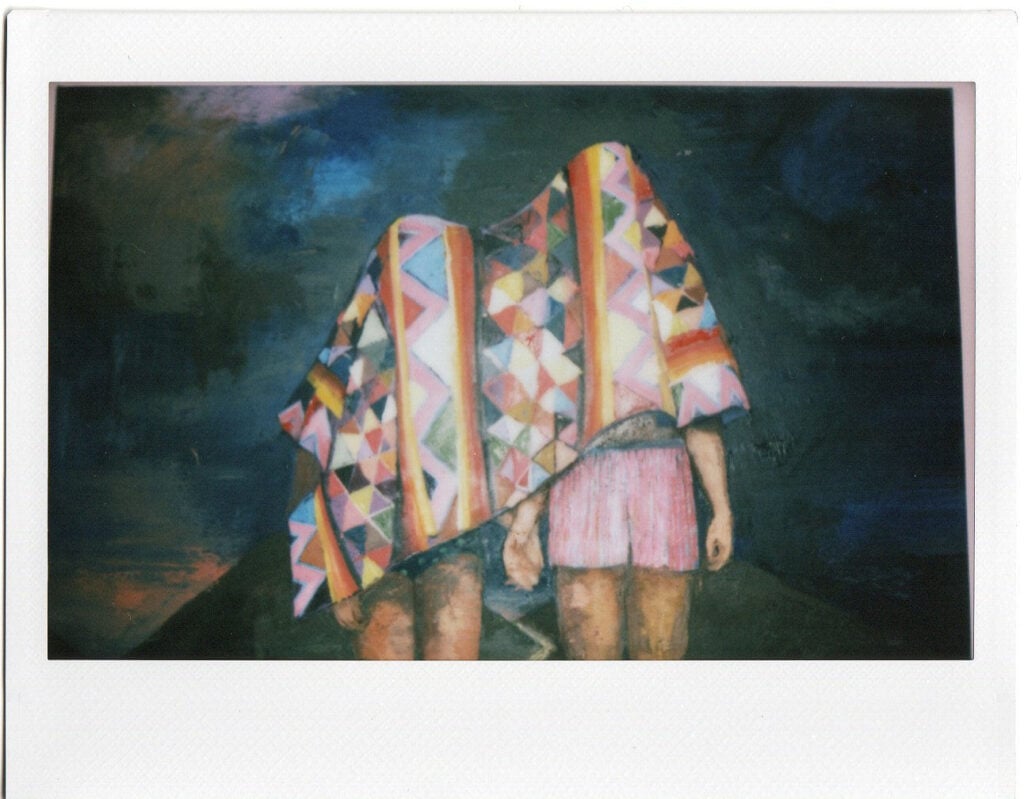
The arts also connect the campus to the global art world and diverse perspectives. Chief Campus Curator Jessica Berlanga Taylor recently curated the Mexico Pavilion at the 61st Venice Biennale, featuring RojoNegro, the collective formed by Noé Martínez and María Sosa. The collective will unveil a compelling new permanent installation for UC San Diego’s celebrated Stuart Collection later this fall.

ArtPower offers another easy entry point, bringing touring performers to venues including the outdoor Epstein Family Amphitheater and the intimate Loft. The nearly three dozen performances featured through its 2026-2027 season span music, dance, film, theater and conversation.
Among the fall highlights is Ghostbusters in Concert on Sept. 25, pairing the beloved 1984 film with a live performance of Elmer Bernstein’s score. Tickets start at $35, and the amphitheater is located next to the UC San Diego Blue Line trolley station.
“Every member of our community should have access to world-class art, so we work hard to remove the barriers that stand in the way,” says Colleen Kollar Smith, executive artistic director of the Campus Performances and Events Office. “That means affordable ticket prices, and performances, voices and experiences where people see themselves reflected on stage and know they belong.”
The arts at UC San Diego are not only something to watch. The Craft Center offers public classes and workshops in ceramics, jewelry, woodworking, culinary arts and even surfboard shaping. At the new Glass Center, beginners and experienced makers can explore glassmaking through classes, demonstrations and studio experiences.
Whether you want to attend a performance, make something yourself or spend an afternoon exploring public art, there is an easy way in. And the invitation extends well beyond students and alumni.
Kollar Smith says it best: “Visit, participate, spectate or create. You’re invited, and we hope you’ll connect with us soon.”
Explore upcoming experiences at ucsd.edu/artsconnect.
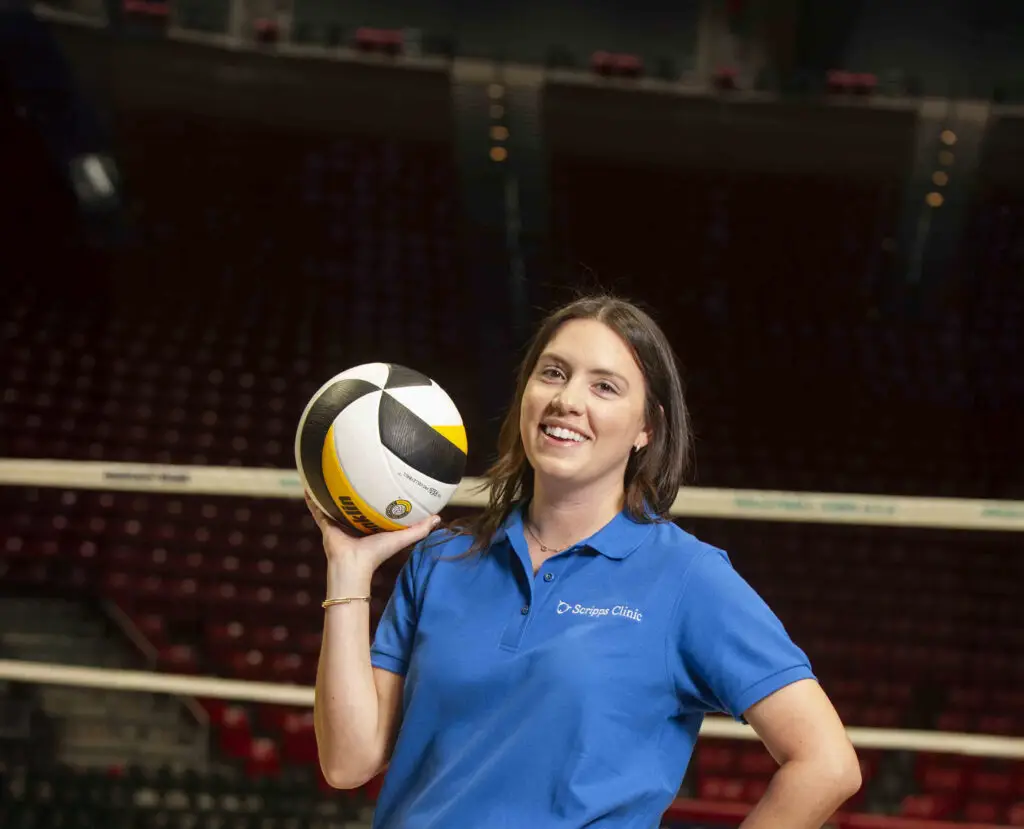
Laika Nur, MD, takes her love of volleyball from the court to the clinic as team physician for the San Diego Mojo
Growing up, Laika Nur, MD, Scripps Clinic sports medicine specialist, loved watching beach volleyball when the Association of Volleyball Professionals tour came to her hometown of Chicago. A talented volleyball player herself, she remembers sitting in the stands all day, and once, even got a couple autographs. Years later, Dr. Nur was attending a professional event focused on women’s sports, and the discussion turned to a new professional women’s volleyball league. The general manager and coaching staff for San Diego’s team, the Mojo, happened to be in attendance, and Dr. Nur took the opportunity to ask them if they needed a team doctor. Flash forward to the Mojo’s inaugural 2024 season, when Dr. Nur officially became the team physician. Click here to read more about Dr. Nur and how she incorporates lessons she learned on the court into her practice.
For more nutrition, wellness, and healthy living tips, sign up for the San Diego Health newsletter here.
How local orthopedic specialists are pioneering the future of foot and ankle care
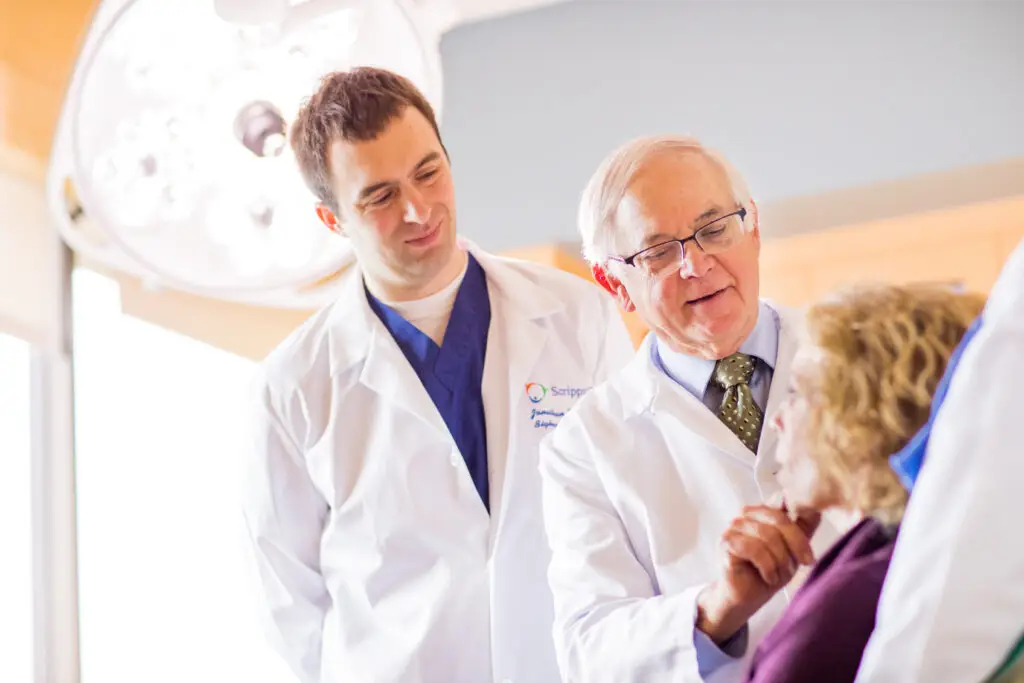
Your feet and ankles probably aren’t something you give much thought to—until something goes wrong. Orthopedic surgeons at Scripps Clinic are on the leading edge of foot and ankle reconstruction, treating patients with sports injuries, deformities, traumatic injuries and other conditions. That includes repairing torn Achilles tendons with a minimally invasive procedure that shrinks the incision site to less than a centimeter, and performing advanced ankle replacement on some patients with ankle arthritis. Read more about Scripps’ innovations in foot and ankle care here.
For more nutrition, wellness, and healthy living tips, sign up for the San Diego Health newsletter here.
A new program guides new moms through high-risk pregnancy and into the “fourth trimester”
Mai Vue was just 34 weeks pregnant when she delivered her baby. Her pregnancy had been complicated, and she’d had a recent second trimester pregnancy loss, which led to her receiving specialized care from Sean Daneshmand, MD, a Scripps Clinic perinatologist who oversees high-risk pregnancies. Dr. Daneshmand and his team took care of Mai during her pregnancy, through the birth of her healthy baby girl and beyond. Mai was part of a program Scripps launched to provide support to new moms in the weeks and months after delivery. The postpartum program, known as Scripps Health’s Fourth Trimester Continuum of Care, provides care for women with high-risk pregnancies to optimize their health after childbirth and reduce the risk of complications in future pregnancies. Click here to learn more.
For more nutrition, wellness, and healthy living tips, sign up for the San Diego Health newsletter here.
Scripps Clinic’s Mohs surgery center is one of the most sophisticated in the country.
It’s estimated that one in five people in the U.S. will develop skin cancer at some point in their lives. When you factor in living in a sun-soaked city like San Diego and the outdoorsy lifestyle that comes with it, that figure can jump to as high as one in three, which makes early detection and intervention all the more important. Dermatologists at Bighorn Mohs and Dermatology Center are using innovative imaging methods and advanced surgical techniques to diagnose and treat skin cancer. For certain cancers in sensitive spots, like the face, dermatologists perform Mohs surgery, removing skin tissue layer by layer until reaching healthy, cancer-free tissue. They also use a process called immunohistochemistry to view tissue samples taken during Mohs surgery in far greater detail than previous methods. Read more about how Scripps is advancing skin cancer care here.
For more nutrition, wellness, and healthy living tips, sign up for the San Diego Health newsletter here.
Scripps Cancer Center helps an endurance athlete overcome his greatest challenge yet and get back in the race
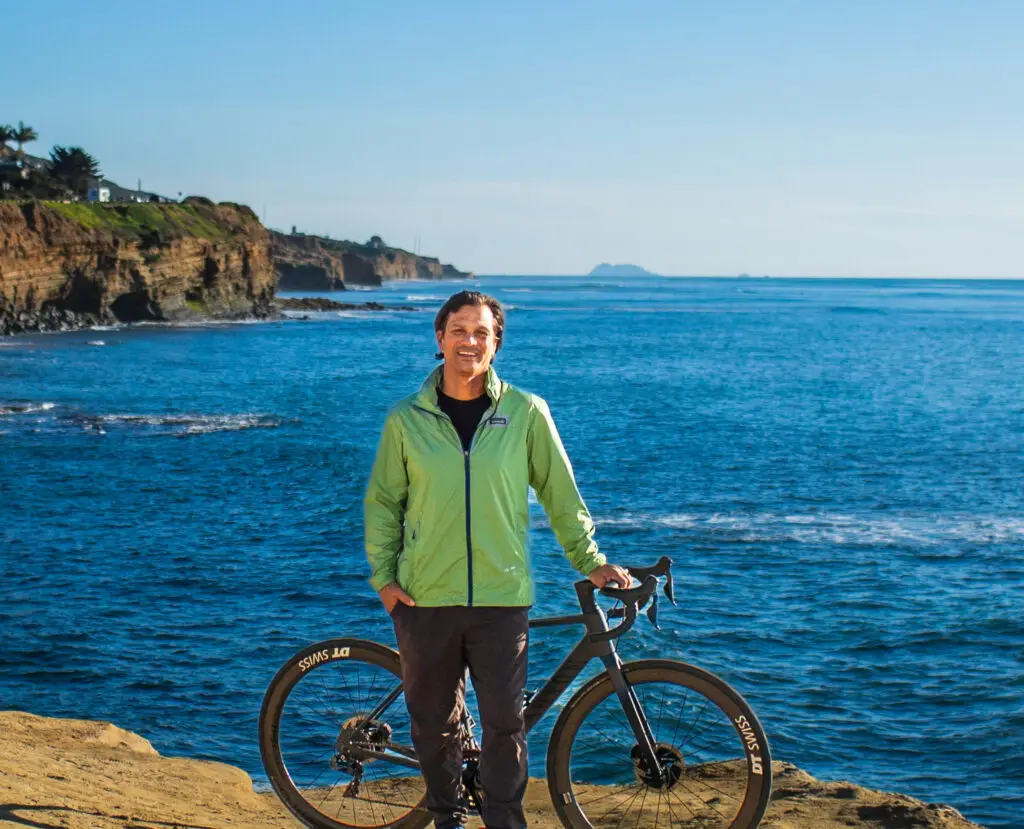
When endurance athlete Isaac Sanchez learned he had cancer, he felt blindsided. He was healthy, surfed often and was training for an Ironman triathlon. But he had to put that on hold to undergo treatment. His physicians at Scripps Cancer Center developed a plan to treat the cancer in his tonsil and lymph nodes that included six-and-a-half weeks of near-daily radiation and weekly chemotherapy. He also worked with a Scripps Cancer Center dietitian to enhance his nutrition to promote strength and healing. Today, Isaac’s back to doing what he loves. Read more of his story here.
For more nutrition, wellness, and healthy living tips, sign up for the San Diego Health newsletter here.