
Featured articles
Featured articles
Featured articles
What's next
Featured articles
Featured articles
Featured articles
Ready to know more about San Diego?
SubscribeReady to know more about San Diego?
One cross-border gallery captures the state of the city's art scene
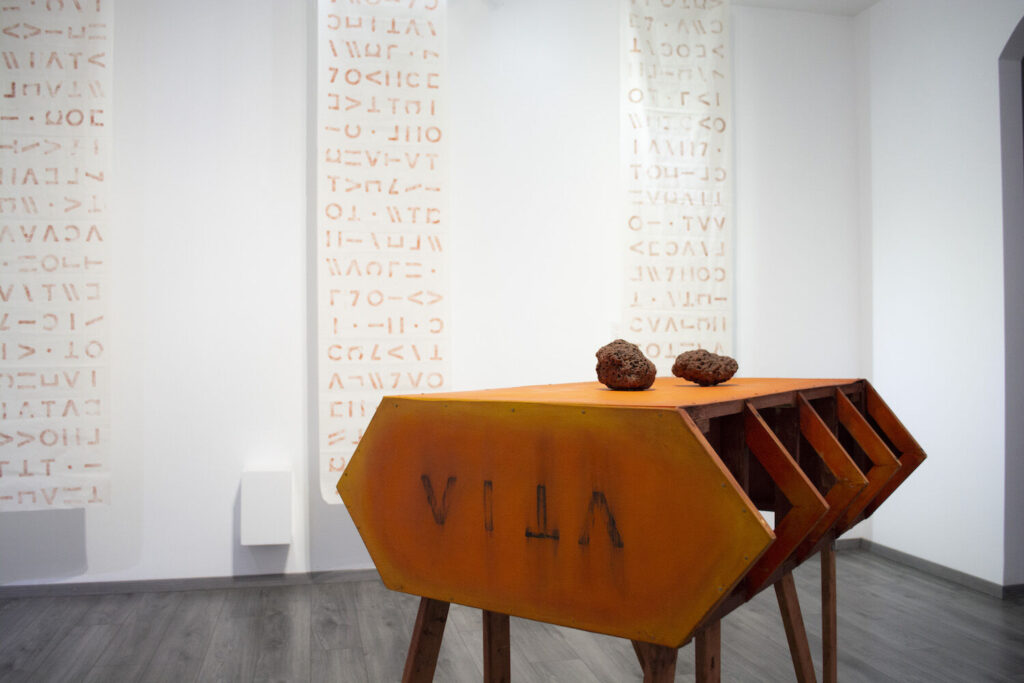
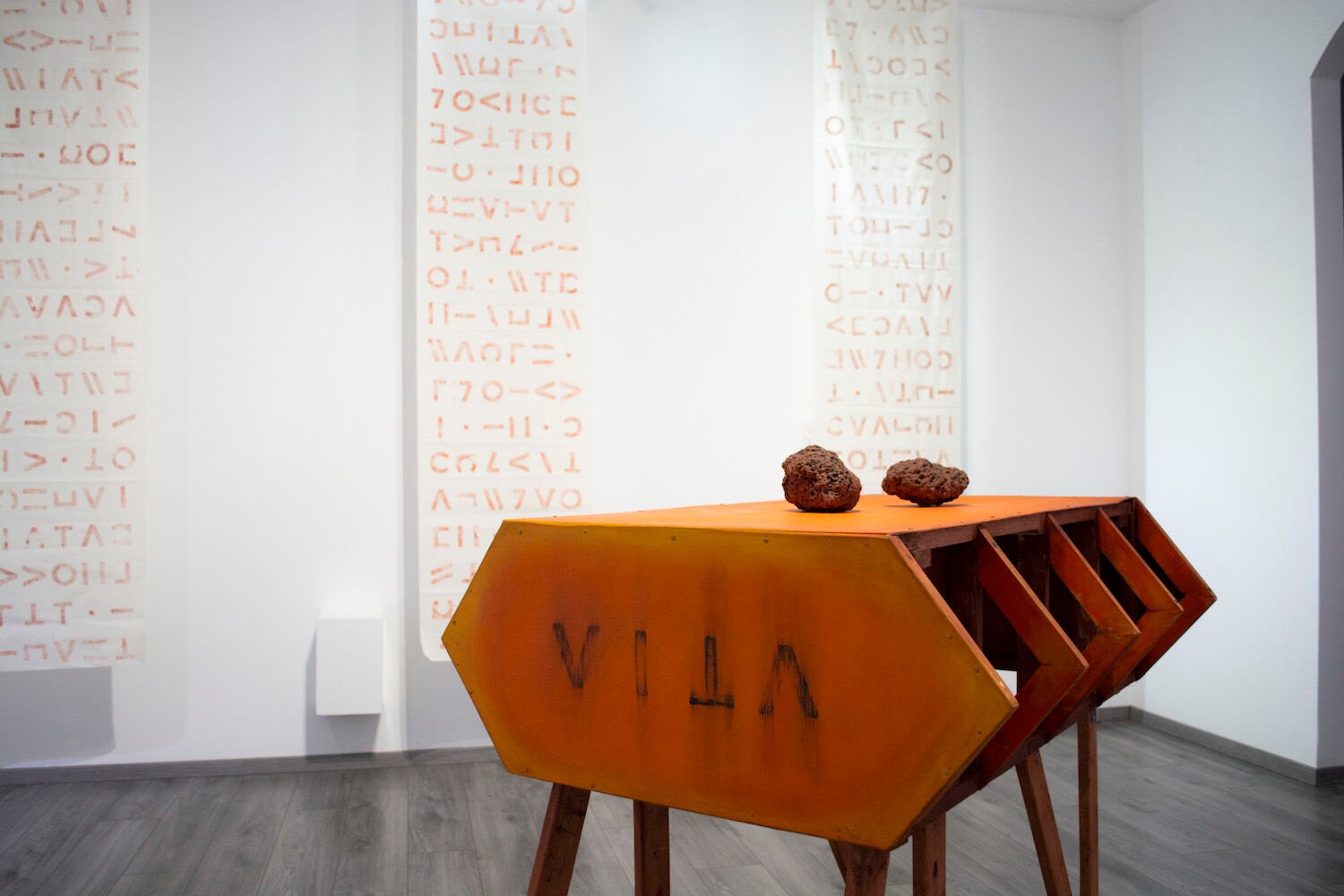
A selection of pieces from Omar Khâlid’s BRAKE AND TAKE OFF, prototypes for failure at 206 Arte Contemporáneo in Tijuana
It takes 18 minutes, a taxi ride, and ten bucks to find myself tucked away in a neighborhood off the bustling, pharmacy-laden corners of the city center of Tijuana. My destination: 206 Arte Contemporáneo, the unassuming hub of the city’s arts scene. I enter its disarming residential façade and traverse a humble stairway towards work that feels uniquely at home in a border town gallery.
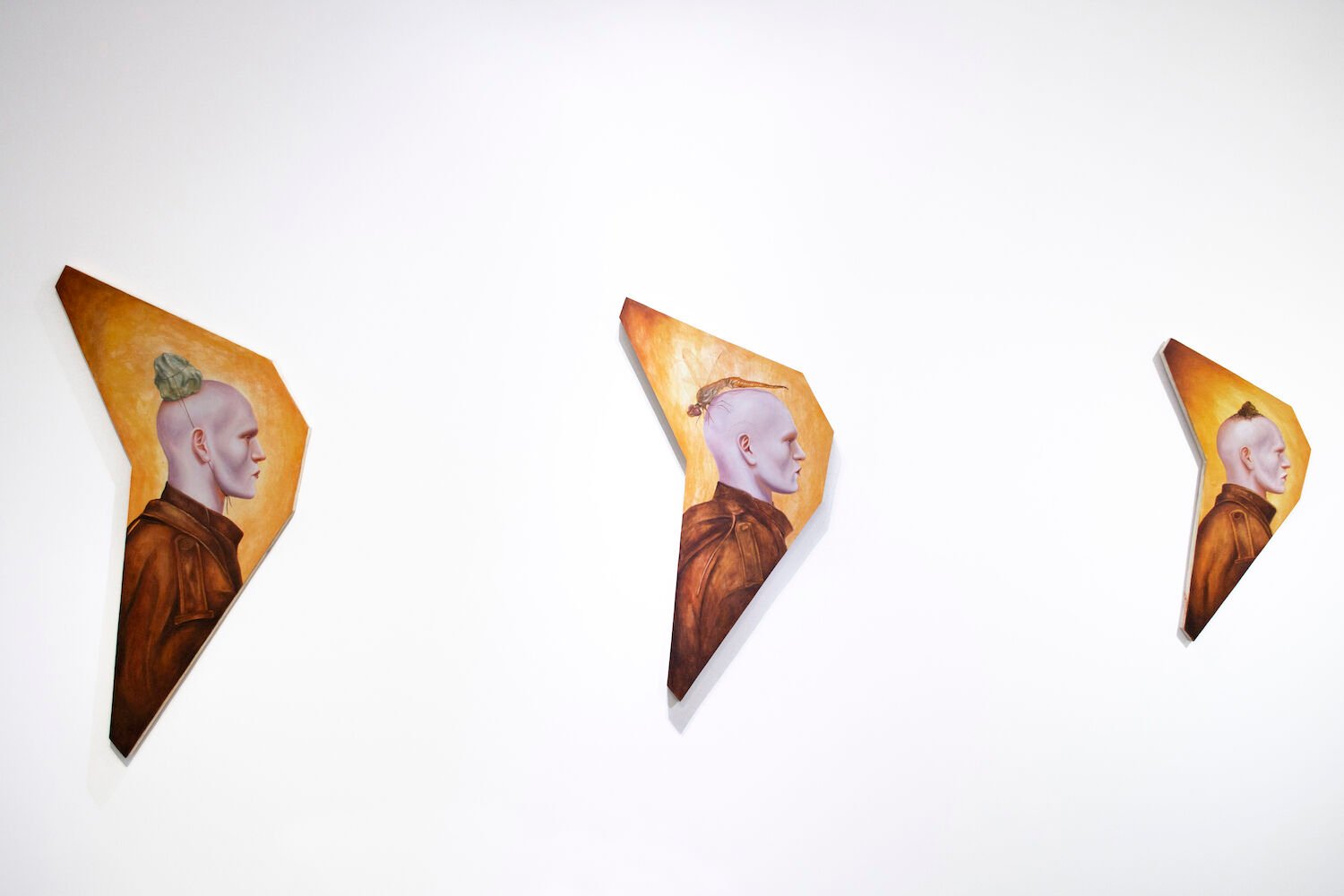
Omar Khâlid’s Brake and Take Off Tijuana Art 2
206 is run by twin sisters Mónica and Melisa Arreola. This creative duo supports the greater Tijuana and Baja Norte art community through their mediums—architecture for both, as well as photography and music, respectively. Mónica showed her stoic and overcast photos of the buildings of Valle San Pedro, an abandoned town outside Tijuana, as part of the 2022 Whitney Biennial, while Melisa is the frontwoman for the band Cuarto Paisaje, a dreamy patchwork of indie rock and languid electronic effects. Their performances seem equal parts rock show and sonic installation.
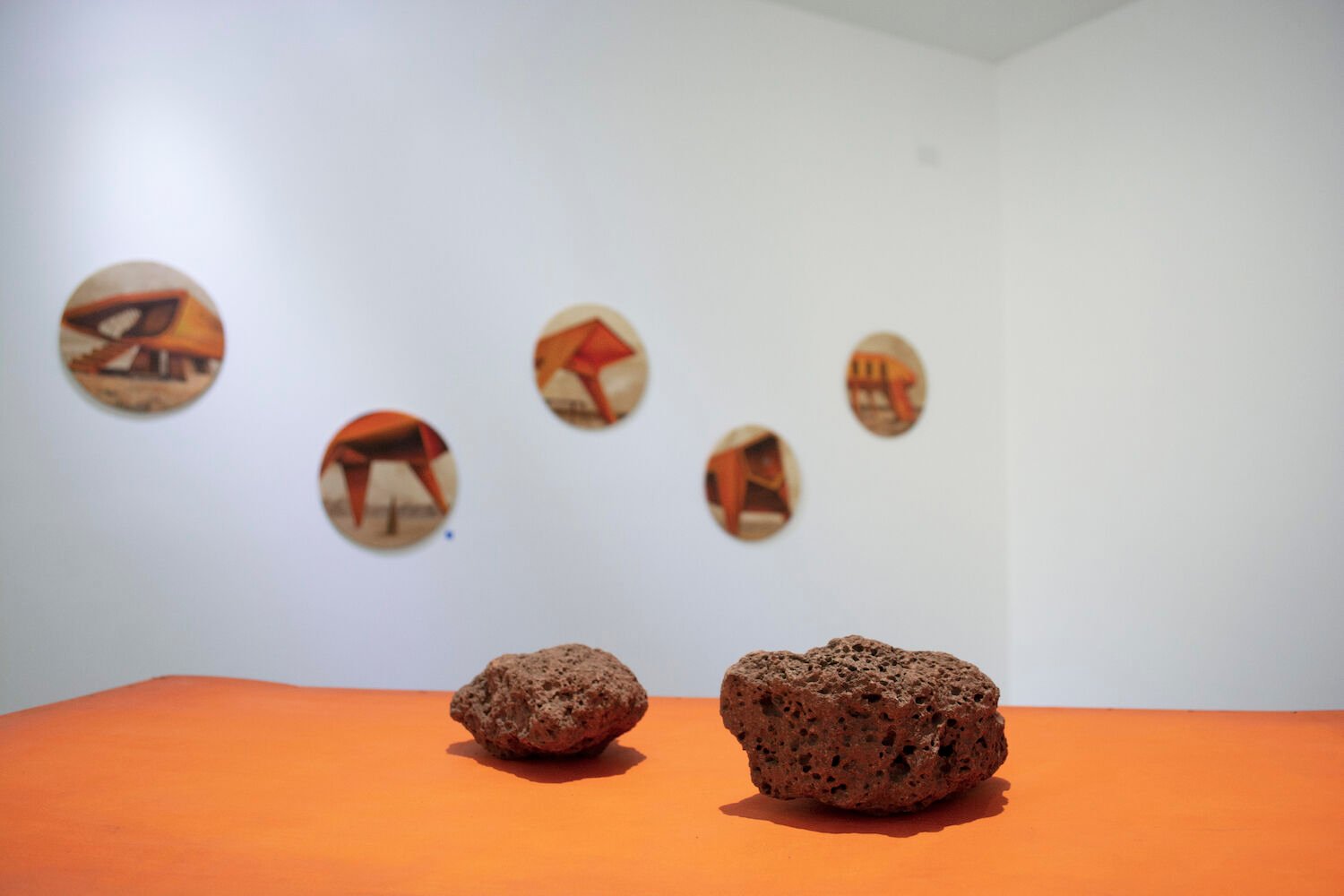
Omar Khâlid’s Brake and Take Off Tijuana Art 6
In 2012, the Arreolas nabbed a space on the main drag of Avenida de Revolucion, which was still rebuilding after the 2008 reign of terror from narcos left many buildings on the strip abandoned. Two years ago, as rents soared downtown, they moved the arts institution to this new, light-filled space with views of the city.“
Today, there’s a unique opportunity to have an independent space that is not in downtown,” Mónica says. The move, perhaps inadvertently, brought a more plugged-in and intentional audience. There’s no stumbling onto this spot after a margarita at Caesar’s.
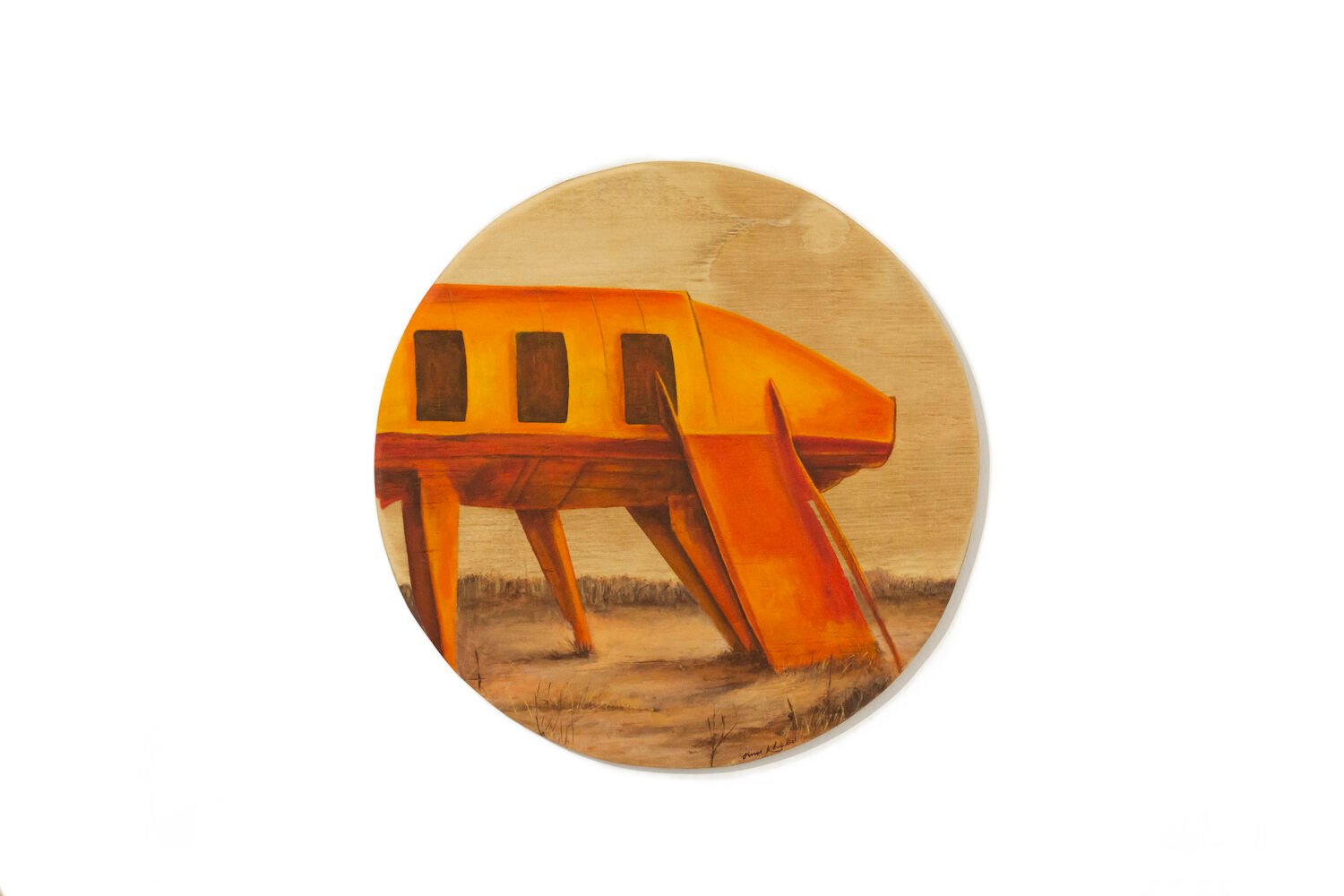
Omar Khâlid’s Brake and Take Off Tijuana Art 3
The current exhibition, which runs through July, is BRAKE AND TAKE OFF, prototypes for failure. It features the work of Omar Khâlid, a former student at the Autonomous University of Baja California. Of the works that the Arreolas host in the gallery, about “90 percent come from university [alumni],” Mónica says. Khâlid is soft-spoken but assured as we chat through his interpreter, Guillermo Estrada. Estrada is a fellow artist in the Arreolas’ orbit who moonlights as Memo Navajas in his band, Rancho Shampoo & The Indian Dub Orchestra.
PARTNER CONTENT
“The idea of the work is the alien aesthetic,” Estrada explains, or “martiana” in Spanish. Looking around the gallery, you’re met with small, unframed vignettes of rust-hued extraterrestrial life forms and their broken-down airships. A prototype lies in the center of the space, untouched and unusable. Khâlid also created an alien script that adorns the walls, draped on canvas in a carven, stela-like style.The script translates to nothing, so the Martians keep their secrets, or viewers invent their own.

Danielle is a freelance culture journalist focusing on music, food, wine, hospitality, and arts, and founder-playwright of Yeah No Yeah Theatre company, based in San Diego. Her work has been featured in FLAUNT, Filter Magazine, and San Diego Magazine. Born and raised in Maui, she still loves a good Mai Tai.
Explore the latest attractions blooming in these warm-weather destinations near-ish San Diego
From artsy, boutique hotels in New Mexico to a revolutionary restaurant in Baja, explore what’s new in these desert cities around San Diego.
Serenity-seeking guests (and, presumably, the free-spirited ghosts of naked people) roam this 13-room wellness escape that was once a clothing-optional resort. Opened a year ago, it offers exclusive, 24-hour access to a Himalayan salt sauna, cold plunge pool, and rain room. For food and drink, it’s tonics and juice cleanses, plus poolside bites from Michael Beckman, exec chef of the nearby Workshop Kitchen + Bar.
Opened last year on the historic, two-acre Movie Colony neighborhood property originally built by actor Errol Flynn (it was called the Normandy then), this is a micro-hotel for people who love Taschen books. Casa Palma reimagined the place as a minimalist, veneers-white 33-room escape with pickleball; tennis; and a mountain view bistro serving breakfast, salads, and sandwiches.
“Surfing in the desert” sounds like an absurd ayahuasca notion, but the Coachella Valley already has one wave pool (Palm Springs Surf Club), and, soon, a 5.5-acre surf lagoon will anchor DSRT Surf, an incoming resort at the Desert Willow Golf Courses. Planned for completion in mid-2026, it’ll include a 139-room hotel, 57 luxury villas, and restaurants.

Last spring, the Casetta Group (the same folks who own SD’s Pearl Hotel) resuscitated an old motor lodge in Taos, a longtime beacon for creatives, and named it after Willa Cather (who finished her novel Death Comes to the Archbishop in town). The 51-room Hotel Willa has adobe architecture, an artist residency, a pool with a giant weeping willow nearby, and a seasonal restaurant from husband-and-wife duo chef Johnny Ortiz Concha and artist Maida Branch.
Originally built in 1965 as the Downtowner, a classic, six-story inn on the motel-culture strip of Route 66 in downtown Albuquerque cycled through several identities before last year, when Palisociety reimagined it with the Secret Gallery (featuring modern work from Southwest artists), a cocktail bar, a restaurant, and 137 dog-friendly rooms. Like any good desert road trip hotel, Arrive Albuquerque hotel is a cheeky, midcentury affair centered around an umbrella-shaded pool scene and those strappy ’80s patio loungers.

After forming Vital Spaces, an org that leased abandoned warehouses and rented them at a low cost to artists, furniture designer Jonathan Boyd launched Leo’s, a no-signage, no-reservations restaurant last August with James Beard Award–winning chef Zakary Pelaccio. It focuses on Thai and Malaysian dishes—catfish sum tum, pork belly with garlic prik phao, fried chicken with tofu-mustard sauce and jiao chili sauce—plus natural wines and inventive cocktails. It promptly landed on Esquire’s Best New Restaurants of 2025.
Trailborn is the base camp of hotel groups. It’s focused on America’s grand outdoorsy arenas, with spots in the Rockies; the Blue Ridge Mountains; and now, Williams, a mile from the Grand Canyon Railroad Depot. This kitchy, 96-room roadside hotel offers a moody, wood-paneled steakhouse; adventure excursions; free breakfast inside a bustling “camp hall;” and front-row access to the fanfare of Route 66’s centennial celebration this year.
Early this year, Paradise Valley (the mountain-wrapped town neighboring Scottsdale) will welcome the 40-acre Kimpton Miralina, with six pools; more than 400 rooms and villas; and three restaurants, including Hecho Libre, a new Baja-inspired concept from fellow Beard semifinalist Wes Avila (known for Angry Egret Dinette and MXO in Los Angeles).
As cities grow and stargazing becomes an endangered pastime, an org called International Dark Sky Places works to protect the best areas in the world to behold night skies. One of them is Fountain Hills on the outskirts of Phoenix. This summer, it’ll get even better with a $28 million discovery center featuring a massive telescope, a planetarium, science exhibits, and a stargazing terrace.

Cote is the only Michelin-starred Korean steakhouse in the US, an idea from Seoul-born and James Beard nominated chef and restaurateur Simon Kim. Part of The Venetian’s $1.5 billion renovation, it’s a show—18,000 square feet, with stadium seating, VIP skyboxes, a crow’s nest DJ booth, a glowing central bar, 1,200 wine bottles, and the inimitable buzz of energetic impulse spending.
2025 was a big year for Formula 1 racing—the sport celebrated 75 years with a Brad Pitt film (for which Rancho Bernardo–based Sony Electronics created a one-of-a-kind camera that took viewers inside the cockpit), and Caesars Palace welcomed a 21,000-square-foot F1 Arcade where fans can flex their inner Lando Norris with 87 racing simulators.
When built in the 1970s as the MGM Grand, the Grand Sierra Resort was one of the biggest hotels in the world with over 1,000 rooms. Almost 50 years later, it’s nearly doubled its occupancy and is undergoing a billion dollar upgrade. The star will be the $435 million, 10,000-seat GSR Arena, which broke ground in September. Once completed (hopefully in fall 2027), it’ll be home to the University of Nevada men’s basketball team.

Utah’s High West Distillery was a groundbreaker, the first legal distillery in Utah when it opened in 2006. Now High West’s master distiller Brendan Coyle has left to open his dream project with his wife, Carly. They purchased 20 acres in Kamas Valley at the foothills of the Uinta mountain range, where they’re growing high elevation apples and flipping them into bone-dry boozy cider with Dendric Estate. You can tour the estate or wait for the onsite tasting room, planned for 2027.
In 2020, Robert Redford sold his famed, conservationist-minded mountain ski resort to Broadreach Capital Partners and Cedar Capital Partners, who promised to keep his “build some, preserve more” vision going. Since, it’s earned a Michelin Key. This month, The Inn at Sundance Mountain Resort—a 63-room, ski-in/ski-out inn—opens with views of the 12,000-foot Mount Timpanagos. Perched right out front, the Outlaw Express chair lift takes you to the Mandan summit in seven minutes (getting there used to take 20). There’s a wrap-around porch, relaxation pools, a sauna, outdoor showers, and a cold plunge at The Springs.
Four years after hosting the Winter Olympics, famed ski-only resort Deer Valley is undergoing a massive expansion of its East Village, including eight new hotels (the Grand Hyatt is already there, and the Four Seasons and others are incoming). Scheduled to open this summer, Canopy will be Hilton’s 180-room, ski-in/ ski-out property with après-ski and rooftop lounges. Deer Valley has also added 2,000 additional acres of skiable slopes, 100 new runs, and 10 new chairlifts.

In the 2010s, Ensenada-born chef Diego Hernández was a headliner in the food-culture revolution in Valle de Guadalupe with Corazón de Tierra—named number 30 in the 2018 “World’s 50 Best Restaurants” list. It closed in 2020 (damn pandemic!). Last January, he returned with an eponymous 40-seat restaurant, Diego, inside Valle’s Museo de La Vid y El Vino, relying on onsite gardens and in-house butchery to prepare seasonal, multi-course tasting menus and à la carte dishes nodding to his Corazón roots.
Over the years, the trend in Cabo resorts has been to get away from the action with secluded beachfront hideouts. Well, not all who travel to Cabo want to be tucked away. Last October, Mexico Grand Hotels (known for elaborate luxury resorts like Marina Fiesta and El Encanto) opened a smaller but still opulent thing: Kadún, a 110-room hotel with a rooftop pool and sundeck. It’s within walking distance to the Cabo Marina (the Vegas of Baja’s southern tip) and Medano Beach (one of the only swimmable beaches in Cabo).

Carnival Cruise Line has a vested interest in building up the ports it parks in. It’s established spots in Grand Turk, Roatan, and Cozumel, and its next elaborate disembarkment project is a $26 million beachside playground in Ensenada, planned for completion in 2027. Expect a sort of Pinocchio’s Island isthmus packed with zip lines, dune buggy rides, river rides, an adult pool, thermal springs, a spa, and wine and cheese pairings from Valle de Guadalupe (the wine region is 15 minutes inland).
Troy Johnson is the magazine’s award-winning food writer and humorist, and a long-standing expert on Food Network. His work has been featured on NatGeo, Travel Channel, NPR, and in Food Matters, a textbook of the best American food writing.
Amelia Rodriguez is a writer and journalist and winner of the San Diego Press Club's 2023 Rising Star Award and 2024 Best of Show Award, she’s also covered music, food, arts and culture, fashion, and design for Rolling Stone, Palm Springs Life, and other national and regional publications. After work, you can find her hunting down San Diego’s best pastries and maintaining her five-year Duolingo streak.
The lowdown on where to go, what to do, and what to drink in Baja's wine country
A wooden sign and an unpaved road got you here, and now you’re looking out at a desert transformed into rolling fields of fruit while a tasting room manager explains that, yes, it is possible to filter wine with green beans. You can sense it: Something special is happening here in Valle de Guadalupe.
Mateo Hoke is a journalist and author. His books include Six by Ten: Stories from Solitary, and Palestine Speaks: Narratives of Life Under Occupation.
Amelia Rodriguez is a writer and journalist and winner of the San Diego Press Club's 2023 Rising Star Award and 2024 Best of Show Award, she’s also covered music, food, arts and culture, fashion, and design for Rolling Stone, Palm Springs Life, and other national and regional publications. After work, you can find her hunting down San Diego’s best pastries and maintaining her five-year Duolingo streak.
Executive editor Mateo Hoke reflects on the unexpected magic of the Baja peninsula, where danger, beauty, and creativity collide just beyond the border
Around here, we are lucky—damned lucky—to have such a cool neighbor as Baja, sprawling south from our sleek San Diego lives.
I remember the first time I drove the length of the peninsula. Crossing into Tecate knowing I had a thousand miles of trouble and rapture ahead of me, I was content. The long, feverish vein of Highway 1 unraveling before me like a dare and plenty of country music on the radio? Surely this is what dreams are made of.
I soon found out. Highway 1 is a raving, dangerous road requiring concentration, skill, and luck. Goddess help you if you’re careless—the narrow asphalt twists like a rattlesnake that’s been spotted. Eighteen-wheelers come at you around blind turns with barely enough lane for one. Vehicles of questionable roadworthiness demand a pass. Checkpoints. Searches. Propinas. But if you’ve got a lunatic’s stomach and you’re willing to wrestle the beast, the rewards are many.
Ping-ponging between coasts, watching a sun wet with golden glitter rise over the gulf at dawn, only to smother itself into the Pacific come nightfall from some no-name beach found at the end of a scrub brush–shrouded turnoff in the desert. Nights under a billion cold stars. Waking in a truck bed; coffee on a small gas stove. Sweaty mornings watching whales breaching, their breathy spouts blessing the dawn with holy water. Endangered California condors in the high country; Seussian forests of endemic Boojum trees near Cataviña. No algorithm can match this.
If you do it right—with respect to the land, the people, and the uncertainty—this place can prove a pilgrimage. A baptism. A reset from polite society. It is a land that reporter Fernando Jordan called “el otro México” in his 1951 book of the same name. The other Mexico. A place Jordan saw as radically different—geographically, culturally, and historically—from the rest of the country. To Jordan, Baja California represented a Mexico that had been neglected and misunderstood for centuries yet was rich in natural beauty, mystery, and potential. He was right. His book remains a classic.
Like San Diego, Baja is blessed with variety. Deserts, mountains, coast. But San Diego this is not. Baja is a dagger of dusty granite thrust down into the Pacific like a sheath on California’s waistband. Savage, sunburned, reckless. It’s a place where wild animals and wild ideas thrive.
But before you get to the chaos, there’s Valle. A sane jaunt south and you’re steeped in a different kind of alchemy, spun from agriculture and intention, where improbable grapes grow in a valley of avant-garde experimentation and audacious plates can be found at the end of rivulet-scarred gravel driveways. It’s an artful retreat from the peninsula’s ruggedness where something unrestrained still lives—you can taste it in the terroir and see it in the architecture. The community in Valle de Guadalupe is doing surprising, creative, and delicious things. If you haven’t been recently, consider this an invitation.
Few places on Earth encompass as much fire and flavor as Valle, which is why, for our annual travel issue, we’re focusing on this nearby piece of paradise and checking in on the rest of the peninsula from Tijuana to Cabo, where the good people of Baja are cooking up new concepts and bucket-list meals. So pack a cooler and tent, gas up the RV, or simply pop down for a weekend. With this as your guide, you’re sure not to get lost—unless that’s what you’re itching for. In that case, get gone. There’s no shortage of reasons to cross the border and to cross it often.
Mateo Hoke is a journalist and author. His books include Six by Ten: Stories from Solitary, and Palestine Speaks: Narratives of Life Under Occupation.
The annual event honors middle market companies creating jobs, scaling up, and investing in the region
San Diego is known for its startup culture and innovation economy, but what happens when the company moves beyond its early-stage years? The San Diego Business Impact Awards aim to answer that question, spotlighting the middle market businesses helping drive the region’s economy.
Hosted by San Diego Regional Economic Development Corporation (EDC) and JPMorganChase, the second annual awards celebration takes place on Thursday, July 23, from 4:30 to 7:00 p.m. at Scripps Research Auditorium. More than 200 executives, entrepreneurs, and business leaders are expected to attend the networking and cocktail event honoring some of San Diego County’s fastest-growing companies.
Businesses headquartered in San Diego County that have operated for at least two years are encouraged to submit their nomination by Thursday, June 18 at 4 p.m. Companies across industries—from technology and life sciences to tourism and consumer products, as well as pre-revenue startups—are eligible for recognition.
For EDC President and CEO Mark Cafferty, the event is as much about building connections as celebrating success. “We’ve had a longtime partnership with JPMorganChase; their work aligns with our efforts to support underserved communities and drive talent development,” says Cafferty. “And the networking was invaluable last year. I’m still in touch with people I met at last year’s awards.”

EDC is an independently-funded nonprofit that works directly with San Diego companies to help them grow the local economy, make the region as a whole more competitive, and attract and retain top-tier talent with quality jobs. Through EDC, companies can get help starting or expanding their business with support for things like site selection, permit navigation, and regulatory guidance, plus connections to local resources and potential business collaborators.
The San Diego Business Impact Awards began as an idea with one of EDC’s longtime strategic partners, JPMorganChase. The two organizations share a commitment to San Diego and are dedicated to bolstering middle market businesses.
“We’re blessed with a robust innovation economy and startup community,” says Aaron Ryan, San Diego Region Manager for JPMorgan’s Commercial and Investment Bank and vice chair of the firm’s’ San Diego Market Leadership Team. “But one of the segments of the business community we felt was overlooked was emerging middle market companies—the businesses that are no longer small but not yet large.”
Ryan says supporting those companies is critical as they scale and decide where to invest, hire, and grow.
San Diego’s high cost of living remains one of the region’s biggest business challenges, making talent recruitment and retention increasingly competitive. But local leaders point to the region’s quality of life, climate, and collaborative business community as advantages that continue to attract employers and workers.

“In order to support thriving households, there has to be enough high-quality jobs for people to be able to afford to live here,” Cafferty says. “Once a company grows and excels past that middle market point in their growth cycle, they become much more likely to pay higher wages and compete globally.”
Both Cafferty and Ryan proudly tout the unique collaboration that exists among San Diego County businesses. Bringing together top universities producing high-quality talent, cutting-edge research institutions, a robust military and defense presence, leading ocean science and environmental organizations, and a binational, cross-border identity creates a distinct business ecosystem that defines and strengthens the San Diego region.
Last year’s San Diego Business Impact Awards celebrated nearly 60 honorees from 49 industries, representing a total of 8,232 jobs across eight sectors, including: software and technology, healthcare and life sciences, consumer goods, professional services, finance, construction and manufacturing, defense, and hospitality and tourism. On average, honoree companies doubled their revenues over the previous year, employed more than 145 San Diegans each, and offered an average annual compensation of $192,415.
Top honorees included defense contractor Innoflight, environmental consulting firm Bancroft Construction Services, life sciences startup Element Biosciences, defense technology contractor GALT Aerospace, organic grocery store chain Jimbo’s, and biopharmaceutical company LENZ Therapeutics. During the event, Innoflight Founder and CEO Jeff Janicik held a fireside chat offering his insights on investing in the community and embracing San Diego culture.
This year, organizers hope to continue highlighting the middle market players driving economic impact across the region. Nominations are now open through June 18 at 4 p.m. Get your tickets to the San Diego Business Impact Awards celebration to enjoy drinks by Snake Oil Cocktail Co., light bites, live music, and networking.
The region's tastemakers weigh in on the best new, trendy, and noteworthy spots across the border
Splash Rosarito Baja California Restaurant Mexico
Courtesy of Splash Baja Restaurant
We all have that friend who was there first, who knows the spots before the influencers, before the Michelin Guide furtively dines, who lives like locals do, and seem to make friends at each coveted location.You annoyingly see a gorgeously arranged plate sans filter on Instagram at a restaurant that doesn’t even have a geotag. Then, a story from a hotel with views that aren’t out-of-this-world in another country—like say, Mexico.With so many exciting new things coming out of Baja these days, we looked to those people—the region’s tastemakers, local experts, and even a few of our San Diego friends—to give us the inside scoop on new, noteworthy, trendy, or hidden gems across the border.Here are 12 places to go in Baja right now as recommended by Monica Arreola, co-owner of Arte Contemporaneo in TJ; Dang Nguyen, consultant for Coyote Projects hospitality group in Baja; Hank Morton (founder and president) and Geoff Hill (director of brand & marketing) of Baja Bound; and our friends at the tourism authority on the latest developments.
Nook Hotel Tijuana Baja California Mexico
Courtesy of Nook Hotel
A block away from the much-more famous—though slightly dustier—Caesar’s Hotel, is this boutique gem. With pastel, Mondrian-like paintings hung over their gallery walls and chic, nouveau furnishings throughout, it gives more Downtown L.A. than Zona Central. It’s also open 24 hours for your carousing convenience.
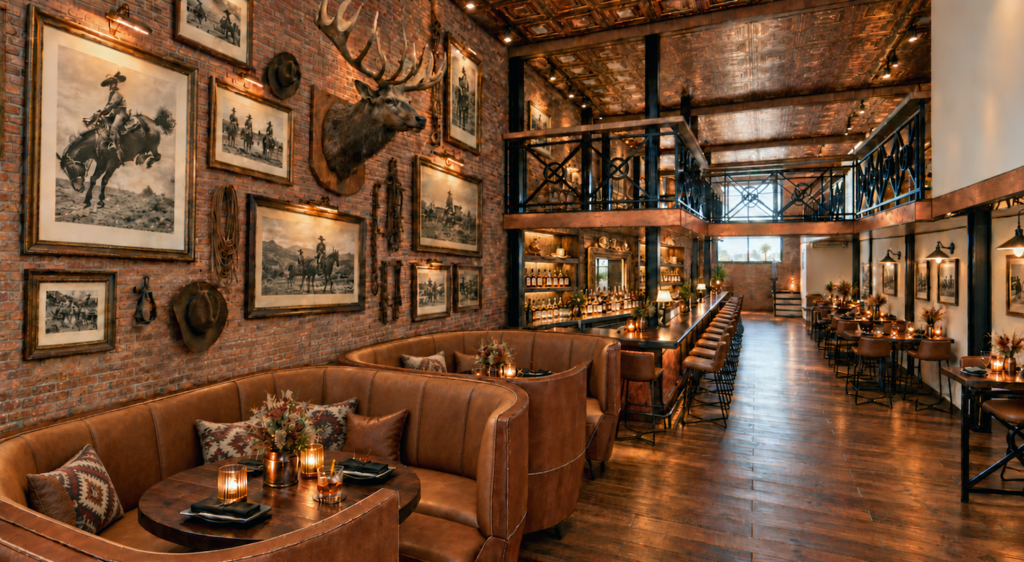
Less Jon Voight, more Juan Voight. This caballero-inspired border saloon is so new, you won’t even be able to find the address without a DM. Reach out for a reservation, snag the code, and find yourself in a glow-up version of every ranch hand’s dream home (on the range), with marble countertops, ornamental horseshoes, and leather coasters. Try tipples like the Desperado, a concoction of agave spirits, Benedictine, and Fernet Branca.
Casa Tijuana Restaurant Baja California Mexico
Courtesy of Casa Tijuana
Don’t have friends in Tijuana who can invite you over for a home-cooked meal? Think again. Chef Juan Cabrera Barrón would like to welcome you into his. Enter Casa Tijuana, a restaurant in an actual house, in a thriving neighborhood on the outskirts of town, where the dining room is every room. Bedecked with personal effects from Barrón’s own life, the cozy, abuelita décor style belies the food’s modern edge. Labeling itself as Mexican comfort food, this local eatery has a bite to satisfy every palette. Pro Tip: Work up an appetite perusing local, modern artists’ work at 206 Arte Contemporaneo then take a five-minute drive here to dish on all your favorite pieces—and dishes.
Splash Baja California Rosarito Restaurant Mexico
Courtesy of Splash Baja Restaurant
Seemingly carved out of the cliffs, this old casita-turned-restaurant is a classic spot to post up on your way to Valle, or before hitting traffic on the way back home. Though erring a little toward the Americanized palate, “El Cielito Lindo” is on heavy mariachi rotation for some traditional fun and their margaritas don’t disappoint.
Winner of 2023’s “Best Seafood Restaurant” from Galardón Gastronómica, this unassuming Puerto Nuevo eatery highlights the region’s freshest seafood with modern techniques, plus all the al fresco, the-UV-index-is-peaking-but-that’s-what-sunscreen-is-for, summer vibes.
K41 (also known as the Mexican mile marker, Kilometer 41) is the X marking the spot for finding some of the region’s best sushi alongside a much-need, post-surf sesh brew in Playas de Rosarito. A restaurant focusing on fresh catches from its shores and four in-house brands under the collective: Cerveza Surf, Colectivo Sagrado Mezcal, Amor del Mar Vino, and Kaffiso 100 percent Café Orgánico.
Bloodlust Restaurant Valle de Guadalupe Baja California Mexico
Courtesy of Bloodlust
Mimetic architecture never tasted so good. Shaped like an entire bulb of ajo (garlic), this wine and vermouth bar specializes in natural wine and sophisticated plates without the pretense of some other Valle notables. Be sure to check their ‘gram so you can coordinate your visit with a live band playing in their amphitheater or a vinyl selector manning the decks indoors for a meal fit for an audiophile.
Danielle is a freelance culture journalist focusing on music, food, wine, hospitality, and arts, and founder-playwright of Yeah No Yeah Theatre company, based in San Diego. Her work has been featured in FLAUNT, Filter Magazine, and San Diego Magazine. Born and raised in Maui, she still loves a good Mai Tai.
Discover eateries, outings, and shops within this inland North County community
Just south of Lake Hodges near 4S Ranch and Poway, Rancho Bernardo is a suburban community that blends residential neighborhoods with industrial pockets, elevated by a decidedly diverse food scene.
Over 60 years ago, this North County neighborhood was once part of a family ranch. Since that time, big tech companies have taken up residence here, including Amazon, Sony Electronics, Oura Ring, HP, Teradata, and ASML. Rancho Bernardo Inn serves as a community hub, with locals frequently meeting at the hotel’s restaurants, golf course, and spa.
Whether it’s work or a round of golf that brings you to Rancho Bernardo, we’ve taken care of the agenda planning with our guide to the area’s best restaurants, activities, and shops.

Sample ingredients plucked straight from Rancho Bernardo Inn’s onsite garden and served at their signature restaurant Avant. One of the neighborhood’s most upscale dining options, they serve a French-inspired menu with nods to California, including many seafood options. Don’t miss their more casual sister restaurant Veranda for al fresco dining.
17550 Bernardo Oaks Drive
Wood-fired pizzas and handmade pastas are standouts at The Kitchen, Bernardo Winery’s counter-service restaurant specializing in Sicilian flavors. Charcuterie boards and bruschetta make for great starters or snacks while wine tasting.
13330 Paseo Del Verano Norte
Fast-casual and family-owned eatery Bushfire Kitchen recently opened a location in Rancho Bernardo, serving sandwiches, bowls, salads, burgers, protein plates, and housemade empanadas. Bushfire prepares comfort food with healthy ingredients, and offers plenty of vegetarian and vegan options.
11962 Bernardo Plaza Drive, Suite 110
Some might call The Cork & Craft an overachiever. This gastropub has an in-house craft brewery and winery: Abnormal Beer and Wine. The more, the merrier. Their sushi menu is definitely worth exploring, but don’t miss other specialties like garlic noodles, chicken wings, and pork belly.
16990 Via Tazon

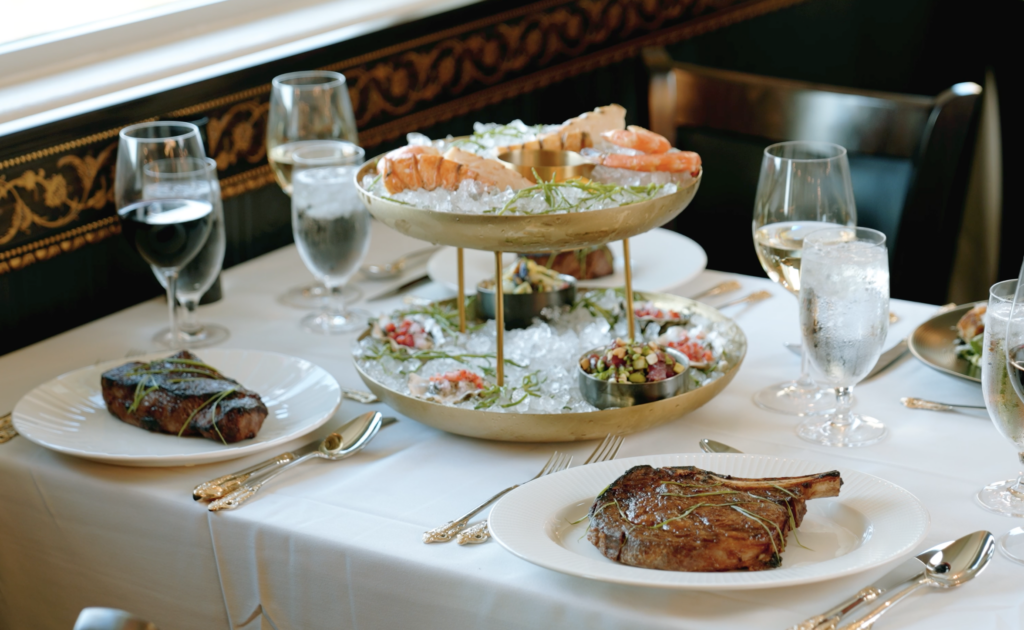
You don’t have to leave Rancho Bernardo to get a white tablecloth steakhouse experience. Carvers Steaks & Chops has prime rib (their best seller), filet, ribeye, porterhouse, New York strip, and other cuts, served alongside crab-stuffed mushrooms, wedge salad, French onion soup, potato skins, and other steakhouse specialties.
1940 Bernardo Plaza Drive
This no-frills Burmese restaurant is known for its traditional tea leaf salad that’s topped with sesame and sunflower seeds, garlic chips, peanuts, tomatoes, jalapeños, fried yellow beans, and fermented green tea leaf dressing. Tucked into a nondescript strip mall, Burma Place is a great takeout option when you want to eat garlic noodles, fried rice, chicken curry, and samosas from the comfort of your couch.
16719 Bernardo Center Drive, Suite A
Find authentic Vietnamese cuisine at Phở Ca Dao, including favorites like phở noodle soup, vermicelli noodles, broken rice dishes, and spring rolls. One of eight locations throughout San Diego, this family-owned chain uses robot servers for food delivery.
11808 Rancho Bernardo Road, Suite 100
It’s all about the sauce at fast-casual Mediterranean restaurant The Kebab Shop. Smothering your chicken shawarma, gyro, or falafels in garlic yogurt, cilantro jalapeno, fire chili, and dill yogurt sauce is practically a rite of passage. The hardest part is deciding whether to order a wrap, bowl, or salad.
11980 Bernardo Plaza Drive
Get a taste of South Asian flavors at Casa Lahori, a Pakistani restaurant noted for its grilled meat kabobs. Other best-selling dishes include beef nihari, chicken biryani, and shahi paneer— best enjoyed with naan bread.
11975 Bernardo Plaza Drive
Grill your own meat on the tabletop at Kangnam Korean BBQ, an interactive, all-you-can-eat experience that’s well-suited for large groups. Marinated beef bulgogi, grilled galbi short ribs, and spicy pork are served alongside traditional banchan dishes like kimchi, japchae glass noodles, and flavorful stews. Weekday lunch specials provide a nice discount on these filling meals.
11828 Rancho Bernardo Road, Suite 117–119

Dig in to your favorite curries and kebabs at Curry & More Indian Bistro. Most entrees are served with a choice of two side dishes, including basmati rice, potatoes with cumin, daal, naan, or mixed greens. Help offset the spice with one of their sweet mango or strawberry lassi drinks.
11808 Rancho Bernardo Road, Suite 123
Kai Oliver-Kurtin is a San Diego-based writer who covers travel, dining, events, and culture. Her writing has been published in USA Today, Condé Nast Traveler, Fodor's Travel, Marie Claire, and HuffPost, among others.
Scripps study shows that some patients may be able to taper their dose and maintain results
While glucagon-like peptide-1 (GLP-1) receptor agents have been used to treat Type 2 diabetes for more than 20 years, their recent emergence as weight-loss wonder drugs marked a new frontier in medicine. But their effectiveness has left some patients wondering what to do once they’ve reached their goal. Stopping the medication could mean regaining some, if not all, of the weight. A Scripps Clinic internal medicine physician recently conducted a small study of whether GLP-1 patients who had reached their goal weight could maintain that weight by taking their regularly prescribed injection every other week instead of weekly. Spoiler alert: 30 of 34 patients did. Read more about the study here and what that may mean as pharmaceutical companies roll out oral GLP-1s.
For more nutrition, wellness, and healthy living tips, sign up for the San Diego Health newsletter here.