
Featured articles
Food & Drink
Food & Drink
Food & Drink
Featured articles

Things to Do
Everything SD
Everything SD
Featured articles
Things to Do
Things to Do
Things to Do
Featured articles
podcast-ep
podcast-ep
podcast-ep
Featured articles
Everything SD
Everything SD
Everything SD
Featured articles

Food & Drink
Things to Do
Everything SD
Ready to know more about San Diego?
SubscribeReady to know more about San Diego?
SAN's major terminal overhaul and seasonal flights, including a nonstop to Munich!
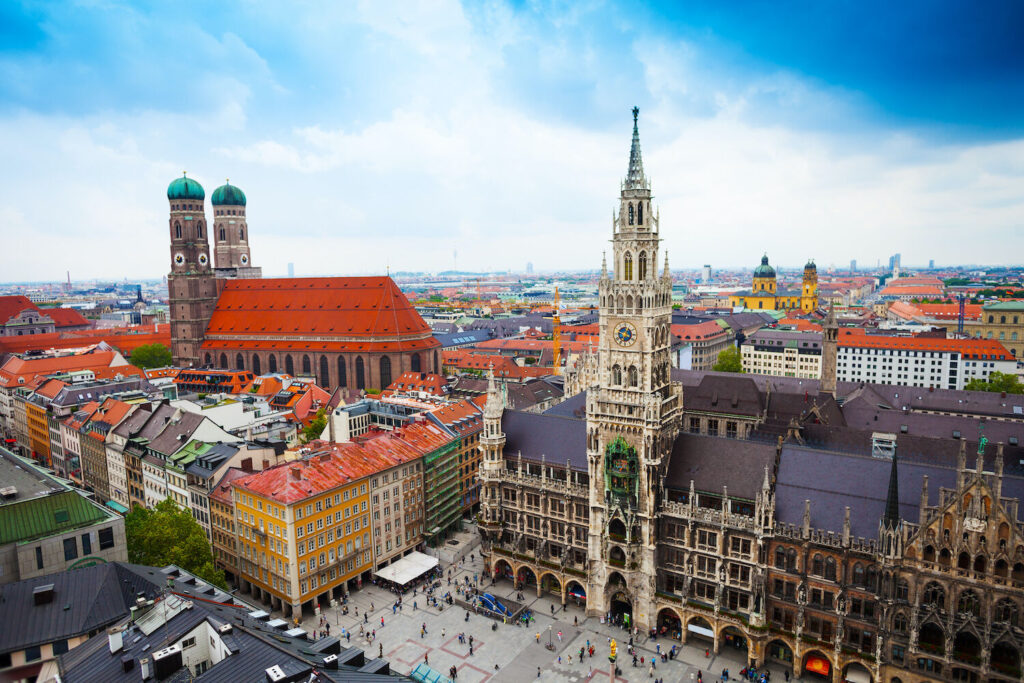
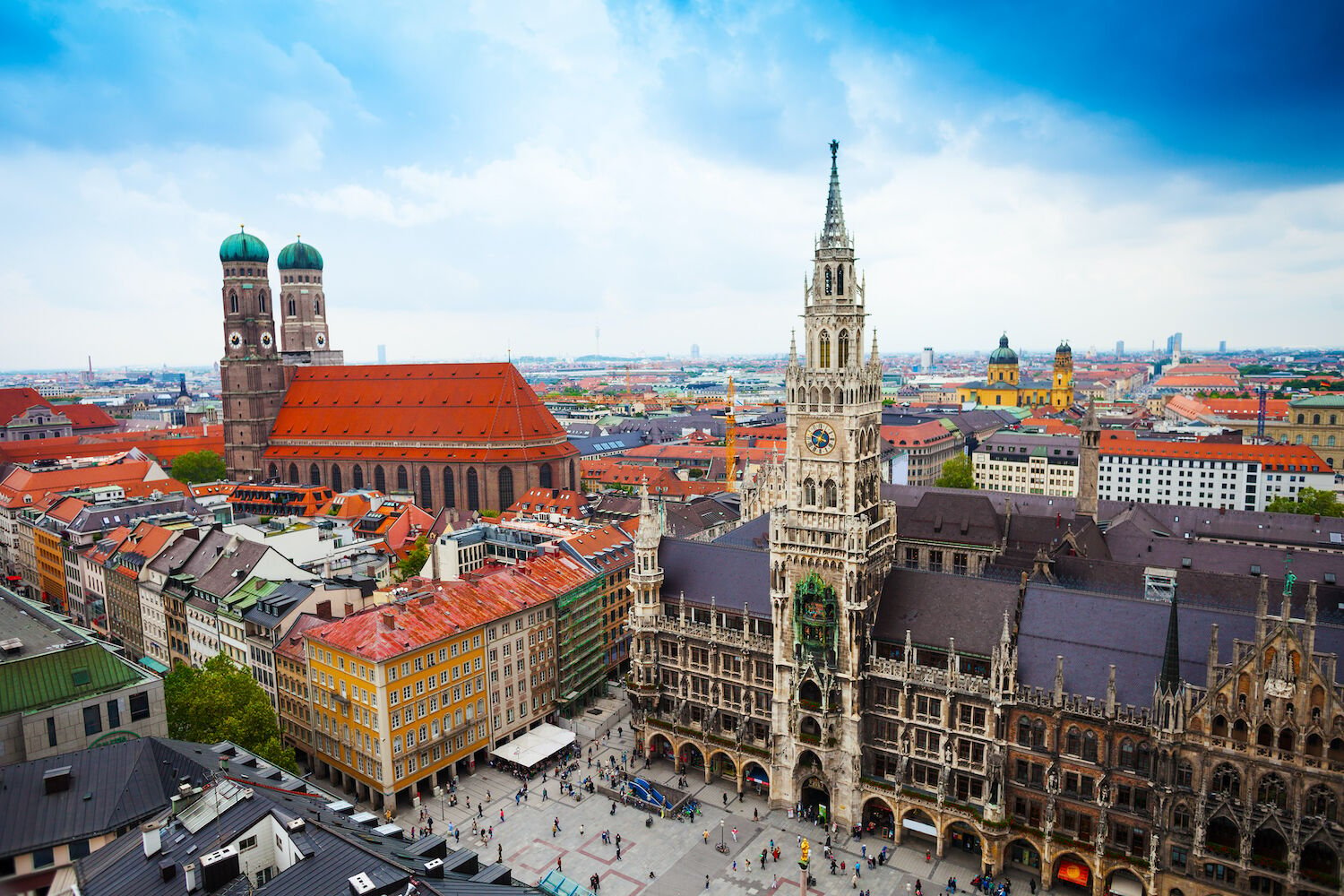
The Glockenspiel in Munich, Germany, where Lufthansa will begin offering direct flights from San Diego
Thanks to new direct seasonal flights and a major terminal renovation in the works, your future travel plans through SAN just got shinier. Plus, read up on the latest openings and happenings in Tijuana. Consider this the highlight reel of local travel news you should know.
San Diego International Airport broke ground on the new Terminal 1 last fall, starting the multiyear $3.4 billion undertaking of giving travelers spruced-up amenities, art, and accessibility.
The San Diego County Regional Airport Authority has commissioned six artists to dream up design-forward outdoor plazas with views of the bay, play areas, and lobbies to modernize and stylize the way you prepare for your flight. But the most important part of the project is its focus on accessibility, including streamlining interior spaces, roadways, and aircraft movement. They’ll be adding 30 gates to the new terminal, a dual-level roadway for arrivals and departures, a parking structure with over 5,000 spaces, pre- and post-security connections to Terminal 2, and a much bigger security checkpoint to cut down on wait times.
The renovation is scheduled to occur in phases through mid-2028, but visitors will see some change starting next year, when the airport authority expects their new administration building will open.

Rendering of the new roadway into Terminal 1 at San Diego International Airport
Hallo, Deutschland! Starting this month, Lufthansa is offering direct flights between San Diego and Munich. It’s the first nonstop service ever between the two cities and will begin with flights three times a week (Wednesdays, Fridays, and Sundays) before expanding to five days a week in May. Bavaria (and beer) awaits!
Allegiant Air has rolled out a number of direct flights across the country for the summer season. From our home turf, you can travel to Phoenix, Arizona; Pasco, Washington; and Eugene and Medford, Oregon; all starting in May. And on Alaska Airlines, you can travel directly to Kalispell, Montana (gateway to Glacier National Park) beginning in June.
Flight schedules are subject to change; check airline websites for the most up-to-date information.
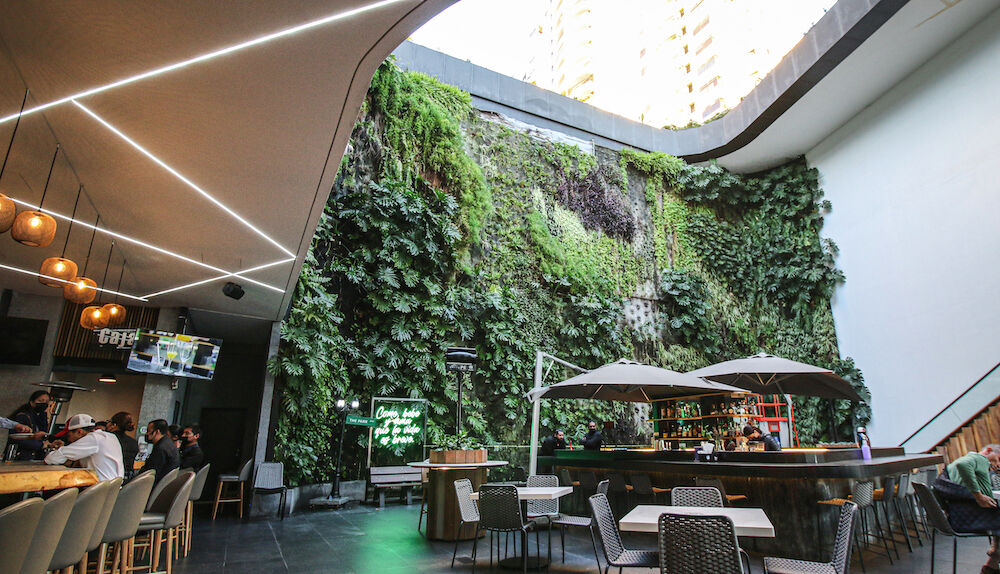
The Park at NewCity Medical Plaza
The funky and colorful Banger Rooftop sits atop Fin de California, where you can take in the views of the city’s skyscrapers. On the menu are pasta and pizza to share while you sip zippy cocktails with friends. NewCity Medical Plaza welcomed its very own food hall in late 2020, The Park, which has expanded to more than 10 businesses, including local favorites Lion Fish, Alma Verde, and ice cream shop Tepoznieves. Ziba offers guests a taste of the Mediterranean with hummus, gyros, and seafood in a Greek atmosphere complete with white walls and bright blue doors. At Brunch Club you can grab a photo of the colorful matcha waffles and chow down on avocado toast all day long. And Pangea Café puts a strong emphasis on low-waste consumption with eco-conscious to-go cups (only if you forget your thermos!) and a water system that ensures they’re using only as much as they need to for your drink. Plus, check out the shop’s mural by artist Pigmento. —Roxana Becerril

PARTNER CONTENT
Hotel Lafayette in Tijuana
The tastiest excuse for your next trip across the border, according to a seasoned local
No trip to TJ is complete without tacos by the kilo, so we asked TJ native Angel Miron, who runs the tour company Let’s Go Clandestino, to do the impossible: narrow down a list of great tacos in his hometown. Here are five of his favorite.
“These guys serve fried fish and shrimp tacos” on a bustling corner in El Centro de Tijuana, Miron says. “Don’t leave without trying the BBQ-grilled smoked marlin taco on a smoky tortilla.”
Miron likes the tacos dorados de birria from this Tijuana shop. “The taquero is known for pumping them out super fast and does a trick with the consomé—pouring it onto the taco without looking,” Miron says.
While Tacos El Franc’s addition to the Michelin Guide has brought an influx of attention, Miron has long been familiar with its charms. “This is the place I used to go to all the time growing up in Tijuana, especially after a night out with the boys,” Miron says. “[Its] specialty is adobada. I really like the suadero taco.”
Founded in 1960, this place keeps it simple with three taco options: shredded beef, beans and cheese, or chicharrón. “They’re what you would call ‘steamed tacos’ because they are prefilled and then kept hot or steamed in pots,” Miron explains. “Then [the restaurant staff] slaps ’em with shredded cabbage, onion, and salsa roja.”
While this casual spot has multiple locations, its original outpost in the Gabilondo neighborhood is still considered the best. “Not only [does it] have tacos dorados de birria, but amazing carnitas—get the masisa with guacamole,” Miron recommends. “And another specialty here is the torta ahogada [or ‘drowned sandwich’] with birote shipped from Guadalajara.”
Mateo Hoke is a journalist and author. His books include Six by Ten: Stories from Solitary, and Palestine Speaks: Narratives of Life Under Occupation.
Amelia Rodriguez is a writer and journalist and winner of the San Diego Press Club's 2023 Rising Star Award and 2024 Best of Show Award, she’s also covered music, food, arts and culture, fashion, and design for Rolling Stone, Palm Springs Life, and other national and regional publications. After work, you can find her hunting down San Diego’s best pastries and maintaining her five-year Duolingo streak.
From taco stands to speakeasies, two locals share their favorite ways to experience the real Tijuana
Tijuana is a city shaped by movement. Home to the busiest border crossing in the world, TJ is astir like nowhere else. Despite being a place countless people travel through, the city is no stopover; it’s a destination in its own right. Just make sure you arrive hungry.


Better known as “Nana,” Sánchez is a proud Tijuanense and the founder of walking tour company Nana en Tijuana, with which she showcases the real Tijuana, far beyond border town clichés. We asked her for her insider’s view.
Tijuana native Kevin Gómez’s pandemic project, Aruba Day Drink, quickly became a West Coast cocktail destination, landing on The World’s 50 Best list for North American bars in 2023 and 2024. Gómez knows what new spots are worth trying and which underground classics still warrant a trip, so we hit him up for where to go when touring TJ.
Sánchez says to start in Zona Centro (downtown) or Zona Río, the city’s main hubs for food, shopping, and entertainment. The Cacho neighborhood is the go-to spot for trendy cafés and bars, while Hipódromo offers a bustling stadium and the massive Casino Caliente. Sports fans should visit between January and May to catch a Xolos soccer match, a Toros baseball game, or a Zonkeys basketball showdown, she adds.

Want the ultimate introduction to the city? Book a walking tour with Nana En Tijuana. Stroll through Avenida Revolución, explore the Pasajes for unique local shopping, and visit the history museum in the Antiguo Palacio Municipal. Tijuana’s Cultural Center is the heart of the city’s arts scene, hosting free exhibits and performances. Looking for something quirky? Check out the The Taco Museum for an interactive food experience.

Tijuana is a foodie’s paradise, starting with tacos. Sánchez’s top picks? Birria Sí for rich, flavorful birria tacos; Mariscos El Mazateño for fresh seafood tacos; and Tacos La Pasadita De La 20 for unbeatable carne asada. Want a sit-down experience? Lion Fish serves up incredible seafood, La Casa Del Mole is a must for traditional Mexican cuisine, and Misión 19 delivers a high-end dining experience.
Gómez digs Tacos El Francés‘ carne asada and adobada tacos and recommends that you “make a reservation at Oryx to try the tasting menu and the signature taco negro”—a tweak on the classic Ensendada-style fish taco. Still seeking more tacos? “You can’t go wrong with Las Tres Salsas, Tacos El Vaquero, Vicky’s Tacos, or Taco-N-Todo,” Gómez points out. For seafood, try the ceviche at Mariscos Raúl.
Of course, it’s not only Mexican fare in TJ. To explore other cuisines, “I’d go to Chan’s Bistro for Chinese food, grab a burger at 80/20, or have a pizza slice at Mr. Wink,” Gómez says.
And, there’s Caesar’s, where its namesake salad was invented just over a century ago. “Order half a salad and some snacks from the tapas menu,” Gómez advises. “Trust me, it’s not a tourist trap.”

When it comes to caffeinated bevs, Gómez is partial to Pichino’s Coffee & Crew, Montenegro Café, and Unity Coffee House.
For boozier concoctions, Gómez often heads across the street from Aruba Day Drink to Minimal, an appropriately sleek cocktail bar doing creative and sciencey things with traditional Mexican ingredients. And more mixed drinks await at Nórtico, a speakeasy behind Oryx. Or drop by Dandy Del Sur for its frozen marg. “Order it with Cascahuín Blanco or Orendain,” Gómez suggests.
If craft beer is more your style, try Farland Aleworks, Madueño Brewing Co., and Cervecería Insurgente.
And many of these spots can slake a thirst for cultura, too. “Lately, the jazz scene has been growing in different bars and coffee shops around the city,” Gómez says. “It’s a fantastic midweek option.”
Sánchez starts her day with coffee—recent favorites include Serenne Café for a chagaccino, Brewja Barra De Café for cold brew, or Container Coffee Roaster Co. for house-roasted beans. For breakfast, Carmelita Molino Y Cocina (and its in-house coffee shop Jacinto) is a must, while Inspiración 9 offers a delicious vegan lunch. Dinner? Keep it casual with Los Muñecos’ tacos de papa. To end the day, explore Tijuana’s nightlife— join a free dance lesson, catch a lucha libre match, or do an impromptu bar crawl through Zona Centro.
Mateo Hoke is a journalist and author. His books include Six by Ten: Stories from Solitary, and Palestine Speaks: Narratives of Life Under Occupation.
Amelia Rodriguez is a writer and journalist and winner of the San Diego Press Club's 2023 Rising Star Award and 2024 Best of Show Award, she’s also covered music, food, arts and culture, fashion, and design for Rolling Stone, Palm Springs Life, and other national and regional publications. After work, you can find her hunting down San Diego’s best pastries and maintaining her five-year Duolingo streak.
Photographer Ariana Drehsler captures life on the Tijuana side of this park that straddles two nations
Just 20 miles south of downtown San Diego, there’s a park that overlooks where the sand starts to disappear into the Pacific Ocean—and where the US border fence does the same. Straddling the US-Mexico border, this half acre is known as Friendship Park in San Diego, Parque de la Amistad in Tijuana, and it serves as both a gathering place and a dividing line between two nations. During one afternoon on the Mexican side, we met some of the regulars, as well as those who’d traveled far and wide to be there.
Friendship Park — The Accordion Player
Ariana Drehsler
Musician José Luis Rodriguez lives in Chula Vista. He’s been playing the accordion for 20 years and occasionally travels to Miami and Los Angeles to perform with his band, José Luis y Los Amos del Norte. He doesn’t go to Tijuana often, but decided to visit today to see what was happening at the park.
Friendship Park — Student Concert
Ariana Drehsler
Middle and high school students of teacher Sarah Koo hold a concert to open a service from Pastor Guillermo Navarrete, of the Methodist Church of Mexico. Today’s performers came all the way from Irvine and Los Angeles. Before Navarrete drives them back to the border crossing, he asks them to describe the experience in one word; their responses include “hopeful,” “moving,” and “inspiring.” (In the background, Isabel and Isidro, a married couple from Veracruz, Mexico, along with some family members, speak to their sons through the fence.)
Friendship Park — Family Reunion
Ariana Drehsler
Isabel talks with her grandchildren. Her son Juan, a US citizen, brought the kids across the border so they could visit their grandparents face to face. Her and Isidro’s other sons, Isidro Junior and Rodolfo, are undocumented and had to stay behind on the US side, but they’re still risking a visit to the border to see their parents for the first time in 15 years. The family exchanges an emotional goodbye when the US side of the park closes at 2 p.m. As the family leaves, Isabel and Isidro walk back to take one last look.
Friendship Park — Church Alfresco
Ariana Drehsler
Pastor Navarrete prays with his congregation. He and Pastor John Fanestil of First United Methodist Church of San Diego hold a tandem, binational service here every Sunday afternoon called The Border Church (though Fanestil is absent today). Navarrete is from Tamaulipas and moved to Tijuana 45 years ago with his parents and brother. He first attended The Border Church eight years ago, and has been involved ever since. In the future, he hopes they will have more tents, a good sound system, and will continue being a sounding board for migrants facing injustice.
Friendship Park — The Binational Gardener
Ariana Drehsler
Dan Watman grew up in Modesto, California, and is a former Spanish teacher at UC San Diego who now lives in Tijuana. He started the binational garden in 2007. It grows on both sides of the fence, tended by a group he founded, Border Encuentro, whose goal is to build friendships between the two countries. On the Tijuana side, the garden includes vegetables for the needy. Watman says his volunteers usually help, but they needed a break after working two days straight.
Friendship Park — Border Art
Ariana Drehsler
Artists and activists from the group Quetzal Migrante, as well as some migrants staying in shelters in Tijuana, help paint a mural on the fence. The group is a collaboration between artists from San Francisco’s East Bay and migrants from Central and South America. Dulce María López (in the flower top) is one of the artists. A Jalisco native with a degree in media studies from UC Berkeley, she says the project is a symbol of empowerment and unity—“Quetzal” is the Nahuatl word for a colorful bird found in Central America, and is an ancient Mayan symbol for liberty.
Friendship Park — The Vendors
Ariana Drehsler
Street vendors set up in front of Friendship Park at Playas de Tijuana, selling ice-cold drinks, snacks, and trinkets.
Friendship Park — Los Estadosunidenses
Ariana Drehsler
Beachgoers on the US side at Border Field State Park peer at the international boundary from a secondary barrier that was built in 2009. In San Diego, Friendship Park provides the only access to the border fence, heavily monitored by Border Patrol and open only on weekends from 10 a.m. to 2 p.m.; sometimes the number of people allowed through the park gate is limited. Meanwhile, there are no such restrictions on the Mexican side.
Stake Chophouse & Bar brings contemporary classics and old-school service to the heart of Coronado
Stake Chophouse & Bar isn’t your average steakhouse. Blue Bridge Hospitality’s Coronado outpost is a modern interpretation of a big-city steakhouse nestled in the heart of the small coastal community. The team at Stake has reimagined the whole steakhouse experience. By prioritizing a seasonal farm-to-table sourcing philosophy, a personalized guest experience, and unique service touches, like a formal steak presentation and a bespoke knife selection process, Stake distinguishes itself in a sea of steakhouses.
Exceptional steaks, including Wagyu from Japan, Australia, and the U.S., and fresh seafood flown in daily form the core of Stake’s culinary identity. The menu features a five-course omakase-style steak experience highlighting house favorites, plus an array of cuts, and classic steakhouse staples—think a wedge salad, baked potato, or pasta carbonara—refined for a contemporary palate without losing their traditional appeal. Stake focuses on seasonal sourcing from the region’s best family farms and specialty purveyors, and incorporates intentionally unexpected touches to create something truly unique.
“I challenge our chefs and myself to take it a step further in sourcing,” says Chef Ronnie Schwandt. “It’s important to us to highlight different farms, unique one-off farms—whether it’s cattle, strawberries, a local fisherman or from anywhere in the United States, we’re always trying to find that niche.”
Beyond the menu, Stake emphasizes outstanding service, says Vinny Spatafore, Director of Hospitality Operations. Staff maintains detailed notes, allowing them to remember guests by name, recall previous orders such as a favorite martini (also memorable for the customer since it’s served in an extra tall, distinctly-shaped glass), and celebrate special occasions like birthdays and anniversaries.
“When you have those points of topic that you remember about a guest, they appreciate that,” he says. “Our servers are really good with that—we have a couple servers who have been here since the beginning and they’ll remember somebody from years ago, their name, their kids’ names, where they live. I’m really thankful to have a great front of house staff.”
Award-winning wines, rare whiskeys, special events, and a complementary black car service that provides transportation for guests throughout Coronado add to Stake’s appeal.
Schwandt stresses that Stake offers more than a meal; they aim to give patrons something unforgettable.
“It starts when you walk up the stairs and are greeted by the hostess—that sets the tone for the night. Then you’re greeted by a server, who may know you by name, and can guide you through the menu and curate as they get to know you,” says Schwandt. “Most people leave kind of blown away; they leave feeling like they just had an experience. That’s the goal, right? Whether you’re serving smash burgers or high-end steak, you want somebody to leave thinking, Wow, that was awesome.”
Here's our coast-to-coast guide with over a dozen itineraries that will make you want to book a ticket ahora.
There’s never been a better time to explore our next-door neighbor. It’s now a breeze to hop on a flight out of Tijuana airport, and Mexican airlines have launched many new nonstops, making much of the country more accessible than ever to San Diegans. That’s why we went beyond Baja to cover the country from coast to coast. It’s not a comprehensive guide, but a good jumping-off point to experience the magical parts of the country. Through these pages, take a quick tour of Mexico starting at the jungles and shores on its Caribbean side, then work your way west back home. ¡Vámonos!
Cancún || Oaxaca City || San Miguel de Allende
Mexico City || Guadalajara || Mazatlán || Puerto Vallarta
Los Cabos || Loreto || Ensenada || Rosarito || Valle de Guadalupe || Tijuana
There’s more to this Caribbean paradise than clubs filled with spring breakers—if you know where to stay.
Guide to Mexico – Cancún
“Just play it cool, Letchworth,” my wife says as we exit our airport shuttle. “You belong here as much as anyone else.” I immediately fail this test when a bellhop asks if he can take my heavy suitcase, and on instinct I say, “Oh, no thanks! I can manage.” To his credit, he nods and waits until I’m distracted—by the two glasses of Champagne at check-in—to whisk it off anyway. We’re not at the Interstate Frontage Road Super 8 anymore, Toto.
This is just the first taste of a consistent standard of luxurious attendance at Grand Fiesta Americana Coral Beach (rooms from $347). Kohleun and I pride ourselves on being seasoned travelers, but as our 20s waned, so did our capacity for sleeping on the floor of the Amtrak observation car. On our first trip as a couple, it took only one night sharing a hostel room with six backpackers to realize we could afford to raise our standards a little.
And yet, stepping into our king-size suite, which could hold both my old studio apartments and opens onto a perfect Caribbean horizon, I’m still out of my depth. We’ve gotten the resort’s new premium package, “Ú,” whose amenities are so numerous we keep stumbling across their brochures like a scavenger hunt.
“Complimentary 30-minute WaveRunner ride for two?” I boggle.
“Unlimited access to the Gem Spa!” Kohleun prioritizes.
And just as I tear into the minibar’s unlimited supply of peanut-butter crackers, she waves the room service menu at me and says, “Let’s think bigger.”
It’s easy to imagine how differently this trip might’ve gone back when we were living on barista and adjunct-professor money and still had iron livers. We passed by that scene on our way in: the all-night Señor Frog and Friends party district. Since the drinking age in Mexico is 18, Cancún’s Hotel Zone is notorious for attracting American coeds looking for a spring break they’ll never remember.
But we’re here to give Cancún a second look, from the perspective of someone who can appreciate finer things at a more deliberate pace. And the Grand Fiesta Americana doesn’t disappoint: Its philosophy of service is to anticipate their guests’ every need.
Overhearing us mention wanting to go into town, a lobby rep offers a primer on local public transit. At Le Basilic restaurant, the servers not only place our napkins in our lap but replace them whenever we leave the table. In the “Grand Club” VIP beach section, an attendant bounds up with fresh towels whenever we emerge from the sea. There’s even somebody waiting by the back doors to wash the sand from our feet. Middle-class guilt flaring, it’s all we can do to make it rain with tips.
They must be on top of Quintana Roo’s reported seaweed problem, too, as both the hotel’s private beach and the closest public one are equally pristine. I embark on the Gem Spa’s Ten-Step Hydrotherapy Program with an open mind (and a stomach full of carbs, which step one, The Steam Room, expressly warns against). Kohleun loves step three, The Clay Room. I’m skeptical of step six, The Ice Room (aka “rub a snowball on yourself”), but the uninterrupted device-free time to be present, the hourlong massage add-on, and the concluding nap under a warm blanket turn my biological clock back a year.
Granted, you don’t have to leave the country (or even the county) to vacation like royalty. So what does Cancún have for the over-30 crowd that you can’t see anywhere else? The Mayan cities of Chichen Itza and Tulum are 138 and 84 miles away, respectively, but since we can’t spare a day trip on our brief stay, we get our archaeology fix at the nearby Museo Maya and at El Rey, a village with surviving temple walls, lintels, and colonnades from the sixth century, now home to an iguana kingdom.
In eight short years, Baja’s gone from a virtual dead zone to one of the globe’s top food and drink destinations. With the world watching, how will innovators in Tijuana and Valle de Guadalupe handle growing crowds and attention—without selling their souls? The Baja Moment Misión 19’s trio of local ceviches over a bed of […]
In eight short years, Baja’s gone from a virtual dead zone to one of the globe’s top food and drink destinations. With the world watching, how will innovators in Tijuana and Valle de Guadalupe handle growing crowds and attention—without selling their souls?
The Baja Moment
Misión 19’s trio of local ceviches over a bed of rusty nails and seaweed, a tribute to a local beach.
That smell has always saddened me. That’s Tijuana’s handshake to the world—a pungent spritz of sewage? The Tijuana River Basin runs under the San Ysidro border crossing, carrying a flotilla of discarded grossness. Most tourists like their travel destinations more redolent of spa eucalyptus. The smell is why some of them don’t come here.
“Tijuana’s not for everybody, and that’s okay,” says Derrik Chinn, an American journalist who’s lived there since 2007. Chinn owns Turista Libre!, leading gringos on cultural excursions through Tijuana. When he started, Mexican cabbies threw rocks at his bus. In September, the TJ newspaper hailed his contribution to the city.
“The city’s been a tourist trap since Prohibition,” he says. “The drug wars and border waits gave the city a much, much-needed chance to define itself for itself. The tourists weren’t coming. What if they never came back?”
Prohibition is why Tijuana became what it became. Hollywood A-listers came here to gamble at Caliente, watch bullfights on acid, escape America’s crushing sobriety. Preachers called it “Satan’s Playground.” By the ’80s, Avenida Revolucion was a prolific vice market made grotesque by the drastic socioeconomic divide between the sellers and the buyers. It was the place to get drunk, drugged, mugged, prostituted, marginalized, corrupted, blasphemed, kidnapped, and thrown in a moldy jail forever and ever.
Of course, that was always part of Tijuana’s allure—fear being the catalyst for pleasure that it is.
The Baja Moment
Chef Javier Plascencia
Then Nortec Collective happened. In 1999, this small army of Tijuana DJs, musicians, and artists became internationally famous. Art stole the spotlight back from the donkeys painted like zebras (zonkeys).
Then there was blood. In 2006, the Mexican government stopped partying with the cartels and started arresting them. With a power vacuum created, aspiring cartels fought in the streets over the lucrative crime market. American media peeked over the fence and inflamed the scene even more.
The Baja Moment
“Raining Machetes in Mexico!”
“How to Survive A Battery Acid Attack in TJ!”
Americans overreacted and wrote off the entire country. Like someone from Mexico City saying, “Sorry, niños. There’s murder in Chicago. No Disneyland this year.”
Now, the dust has settled and Baja is one of the most buzzed-about culinary destinations on the planet. Anthony Bourdain, Andrew Zimmern, and Rick Bayless are praising it on TV. The Wall Street Journal is taking it seriously enough to critique the region’s wines. This year’s esteemed S. Pellegrino list of Latin America’s Top 50 Best Restaurants included two in Baja.
A couple years ago, star Tijuana chef Javier Plascencia told the New Yorker and the New York Times he wanted to see Baja become an international food destination one day. Just like San Francisco or Mexico City.
That day is now.
Tijuana’s most brilliant tourism initiative seems to have been ignoring tourists. By doing so, they created an exciting native culture that’s attracting a more sophisticated breed of visitor.
“People are open to seeing Tijuana less as a tourist, and more as a traveler,” Chinn suggests. “As a tourist, the city is adapting to you. As a traveler, you’re adapting to the city.”
This time, chefs were the Nortec Collective—cultural ambassadors luring foreigners back to Mexico. Famed chefs like Benito Molina (Manzanilla), Diego Hernandez (Corazon de Tierra), and Miguel Angel Guerrero (La Querencia) cooked at events in the U.S. Jair Téllez—often called the Thomas Keller of Baja—helped design the menu at former San Diego restaurant El Take It Easy. Top San Diego restaurants have added Baja Med dishes (grilled octopus, tiraditos, gourmet tostadas, etc.).
The Baja Moment
Baja California’s wealth of locally caught seafood and farmers market produce is helping spur a culinary renaissance.
A lot of credit has deservedly gone to Plascencia. The chef was raised on both sides of the border. He’s bilingual. He looks like a Mexican George Clooney. Most importantly, he can really cook. He is the gateway.
Scripps study shows that some patients may be able to taper their dose and maintain results
While glucagon-like peptide-1 (GLP-1) receptor agents have been used to treat Type 2 diabetes for more than 20 years, their recent emergence as weight-loss wonder drugs marked a new frontier in medicine. But their effectiveness has left some patients wondering what to do once they’ve reached their goal. Stopping the medication could mean regaining some, if not all, of the weight. A Scripps Clinic internal medicine physician recently conducted a small study of whether GLP-1 patients who had reached their goal weight could maintain that weight by taking their regularly prescribed injection every other week instead of weekly. Spoiler alert: 30 of 34 patients did. Read more about the study here and what that may mean as pharmaceutical companies roll out oral GLP-1s.
For more nutrition, wellness, and healthy living tips, sign up for the San Diego Health newsletter here.