


Local Charities
9 Charitable Events to Attend in November
Read article

Featured articles
Food & Drink

Food & Drink
Food News
Featured articles

Things to Do

Everything SD

Everything SD
Featured articles
Local Charities
Things to Do

Things to Do
Featured articles
podcast-ep

podcast-ep

podcast-ep
Featured articles

Features

Features

Features
Featured articles
Local Charities

Charitable SD
Food & Drink

Greig Tor Guthey, Associate Professor of Public Policy and Planning & Geography Coordinator, leads Food Worlds: Studies in Comparative National Cuisines at CSU San Marcos. He also teaches Food Systems and Emerging Markets to upperclassmen.
Maybe they are all secretly foodies, or maybe they are going to find out that they are foodies by the time I am done with them. But one thing is for sure: They are going to have fun and learn a lot about different cuisines around the world. The class is aimed at getting students to think about how diverse the world of food is, why, and how complicated it can be.
I have made my mother’s so-called “Norwegian pancakes” for some classes before. My hope is that this class will feature trips to local restaurants that offer the sorts of food we are learning about. But I will consider any and all offers of free food if someone wants to cook for 40, and I’ll find an article to go along with it. The only requirement for this class is that it be from some place other than the U.S.
You can look at food and find a lot of politics of all kinds. One of the texts we will be reading looks at the transformation of British cuisine through colonialism. Another looks at how Palestinian Israeli cuisine is. Much of what people think of when you consider foodie culture is artfully created food. Food as art. But then there is really great street food all around the world. And I find it interesting that most people in the United States today don’t really cook. That says a lot about the state of people’s lives and how busy their schedules are. Other societies have slower paces and better meals.
The fact that something like fish and chips, which is so indelibly associated with Britain, isn’t actually British is absolutely riveting. Fish and chips was brought to Britain and has Kosher and French origins.
I do like to travel and wherever I go, I seek out excellent food. My cousin in France serves an unbelievable foie gras. The Flat Whites in New Zealand are good. I really like the cream cakes and coffee in Norway. And I think a lot about this black bean dip I had in Guatemala years ago. But what strikes me about these examples is that each of them also involve friends and family.
I always say Paris, France. It is my favorite city in the world. But so is San Diego, so I guess Paris is my second favorite.
I co-wrote a book called California Cuisine and Just Food. A few things stand out to me from that work. I think people are a bit more aware of what terms like slow food and sustainable farming mean, especially in California, and they are also more aware of the shortcomings of the food movement and the food system. We have come a long way in terms of providing food to people worldwide and we have a long way to go.
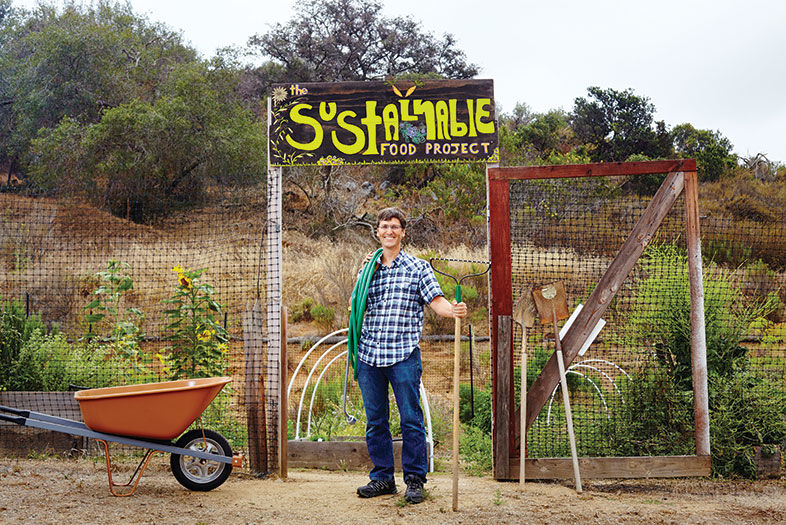
I started the Sustainable Food Project with students in my Food Systems class a few years ago. We as a class get to go sit outside and watch things grow while reading about ongoing changes in the food system. We sit in the garden or weed or do whatever has to be done and talk about food. It allows students to engage with nature on a regular basis. That is something people don’t do anymore, and our ecology and our food is worse off because of it. It also turns out that many of my students have never set foot on a farm. We try to have field trips, but when we can’t, we have the garden as a weekly field trip into alternative forms of food. Students eat the proceeds and the surplus is given away. Sometimes stuff doesn’t grow, too. That is another teaching moment.
I like Fish 101 in Encinitas, my favorite burger is from Burger Lounge, and I like Urban Pizza in Vista. You can have a beer at Mother Earth across the street and have a pizza delivered.
My students tell me my classes change their lives by getting them to think about the food they eat. My wife is a physician’s assistant. She tells me that sort of behavioral change is what she sees her patients needing. So I guess I’d like to see the general population develop more complicated understandings of the food they eat and then make choices to eat better and healthier, and improve the food system. Wouldn’t it be cool to change the world through a garden?
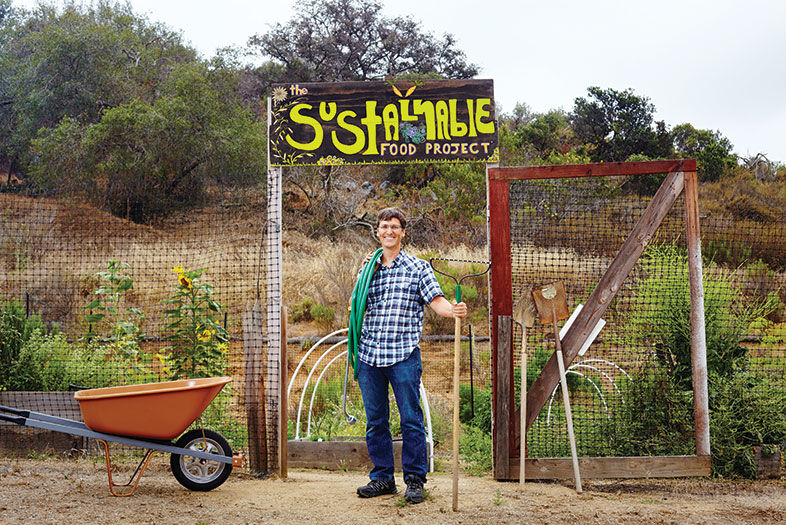
The Garden is His Classroom
Photo by Avid Studios
