In a recent interview for the UT I was asked, “What keeps you up at night?” “A frequent victim of insomnia, I lay awake at night dreaming up new business ideas and plotting world takeover.” After my usual smartass remarks, I then gave an honest answer. It is the constant worry that I am not being a good mom. It’s the never-ending uphill battle to balance career with family. I work long hours during the week and am often not home for a family dinner, to read Leo a book or tuck him in. Add in house work? Ugh…
On my trip to DC I had ten days with no parental responsibilities, no cleaning duties, didn’t have to cook one meal nor drive for that matter… In terms of work, killed it. So it got me thinking… What could I accomplish if I worked 16+ hour days and didn’t have to worry about anything else? Yes, world domination would be a cinch… but what would I be sacrificing? And where are the other women out there also driving themselves nuts with this same internal conflict?
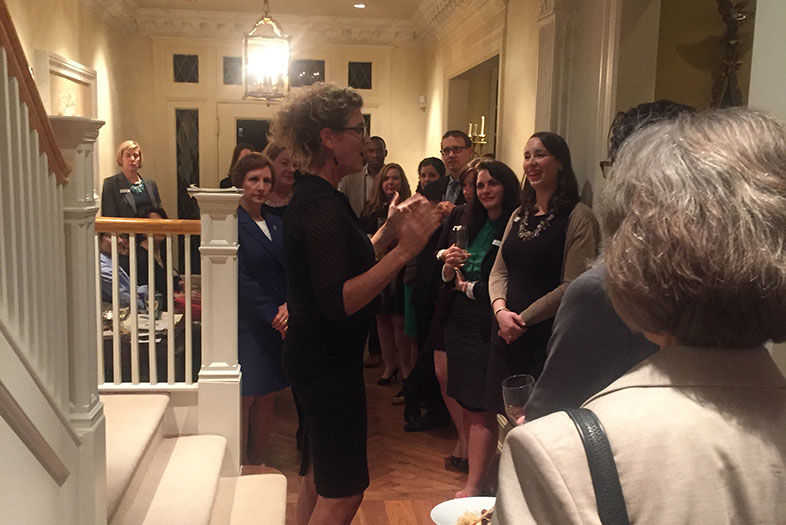
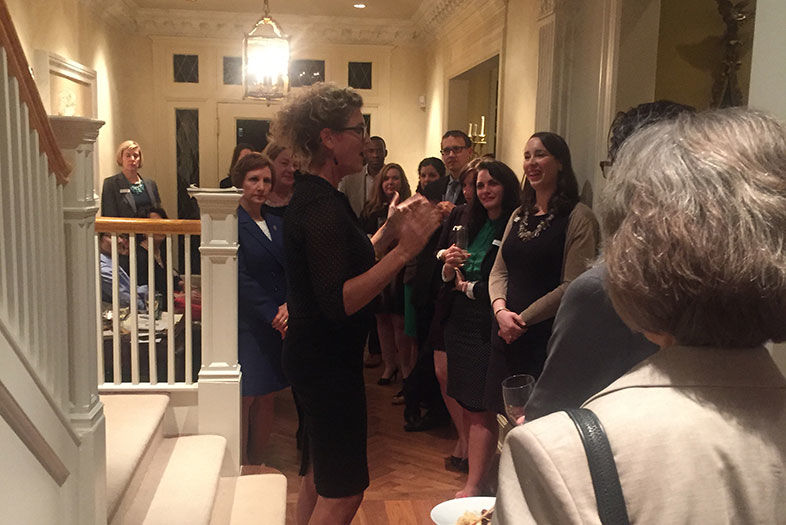
And as fate would have it, I found myself walking up the steps of this beautiful home on Cathedral Avenue NW in D.C. Who knew there would be such amazing women waiting on the other side of the front door to welcome me? Host and Chair Maggie Kavalaris and Executive Director Erin Loos Cutraro were raising funds and awareness for their non-profit, She Should Run. Congresswoman Suzanne Bonamicci paved the way for a great conversation about the organization’s mission and how women can balance career and family and should be encouraged to participate in politics. As the women pointed out that evening, we are 51% of the population and 17% of elected officials.
Back in high school, I had political aspirations and thought I’d always end up in our nation’s capitol. It never occurred to me that there were so few female politicians. Representative Bonamicci emphasized she was not seeking a career in politics—she was asked to run. Why don’t we consider politics a viable career choice? Sitting in the backyard engaged in the most amazingly intelligent conversations while on a Pinot Grigio drip, I thought to myself, these women are doing it. They are finding a way to balance their lives and are sharing their personal stories with the rest of us so that we get inspired and become activists.
It will be interesting to throw the interview question of what keeps me up at night to next week’s “Who Runs the World?” panel. MC for the evening and running candidate for the bio-tech region’s City Council position, Barbara Bry, will have the opportunity to ask local power women such as Silvia Mah, CEO of Hera-LABS (whose photo I saw sprawled across the bus next to me on the way to the café), Kim Kamdar, Partner at Domain Associates, Sabrina Johnson, CFO/COO of Calibr, and Navrina Singh, Head of Innovation at Qualcomm, that very question.
Upcoming Events (I’ll be at the fun table…)
Alliance4Empowerment & UC San Diego Inaugural Global Empowerment Summit New kids on the block Alliance4Empwerment (A4E) are teaming up with UC San Diego to bring us their Inaugural Global Empowerment Summit. This event is the brainchild of A4E co-founder, Naila Chowdhury. Naila worked seventeen years alongside Nobel Peace Prize winner Professor Mohammed Yunus in microfinance. She now brings her expertise and global connections to San Diego. This event will bring together though-leaders from around the globe and from our own community to share stories, roll up their sleeves and get to work empowering the lives of others. Oct 17, 8 a.m.-5 p.m.
Athenaeum Jazz Concert Series The Charles Lloyd Quartet will be jammin’ this Tuesday at TSRI for their Athenaeum Jazz Concert Series. Lloyd just snatched up the highly coveted title and award National Endowment for the Arts Jazz Master. He is hands-down one of the leading jazz artists of our times. Lloyd will be on tenor sax and flute, Gerald Clayton on piano, Reuben Rogers on bass and Kendrick Scott coming through on drums. Back to the sax and flute. Anyone else having visions of that YouTube video, “Sexy Sax Man,” or Ron Burgundy on the jazz flute? Fear not, the Charles Lloyd Quartet is one classy act, San Diego. Oct 20, 7:30 p.m., TSRI
ResearchHERS: Women Scientists of TSRI And yet another awesome manifestation of empowered women this week on the Mesa as our friends bring us “ResearchHERS: Women Scientists of TSRI.” Two snaps for the name, and is it me or does TSRI seem to be on fire these days? Anyone who heard their new presidente speak at Tuesday’s EDC meeting at Salk on the Economic Impact of SD’s Research Institutes would agree. Talks of new buildings and now a new business model aligning the institute with local non-prof drug companies like Calibr to serve as a “beacon to attract talent to the region” is making waves along the Mesa.
Back to our power lady. Dr. Linda Sherman will be in the spotlight on the 21st discussing her research on the immune system and potential treatments for Cancer and Type 1 diabetes. Oct 21, 4-6 p.m., TSRI
Sitting on the edge of my seat scared to even exhale. It was my first go at a piano concert, and what a moving production executive producer Karen Davis and the Salk Institute brought to the Conrad Prebys auditorium last Sunday. The series includes piano and musical performances paired with a science lecture. Science lecture? Gulp. During intermission I ran into their speaker whom I see often at the Bella Vista and gently requested him to “school house rock that shit.” Dr. Tony Hunter, Director of Salk’s Cancer Center, nailed it. “Why is cancer so hard to cure?” resonated with every single member of the audience. Bravo Dr. Hunter for a concise presentation that was both engaging and unintimidating.
And before I get to the pianist, Vadym Kholodenko, just a bit of unsolicited advice for other first time piano concert goers. If you are whispering to the person next to you, we can hear you. Mime that shit. Unzipping your purse, it’s a distraction. Opening a plastic bottle of water… nails on a chalkboard. Walking in late in flip flops… are you kidding me? Clearing your throat… No, I don’t go to the movies often. So come prepared. Pack a bag with Chloraseptic if you must and spray the hell out of your throat. Have some Cepacol lozenges, already unwrapped, ready in your pocket. Seems trivial, but you really could hear a pin drop and every sound took away from the beauty going on up on stage. And I’ll be damned if I am “that girl” whose phone goes off in the middle of Schumann’s Nachtstucke Op. 23. Ladies and gents, if I can sit there quiet as a mouse through the entire show, you’ve definitely got this.
Find yourself a seat where you can see the pianist’s hands in motion and immerse yourself in the music.
This man, Kholodenko, was a genius. I never even really looked up at his face, my eyes were glued to those graceful fingers and the magic they were creating. And I’d be lying if I say I wasn’t tempted to lean over to the grandma sitting next to me to ask “Are you thinkin’ what I’m thinkin’?” Don’t worry, kept that one to myself and remained silent as a mouse. Nasdrovia.
Always,
Amanda
That’s What SHE Said: The D.C. Adventures, Part II
She Should Run Fundraiser in D.C.
Archive
OCTOBER 23, 2023
The Problem With Bright Red Tuna
Many Americans still think bright red tuna means it's fresher (it's not)
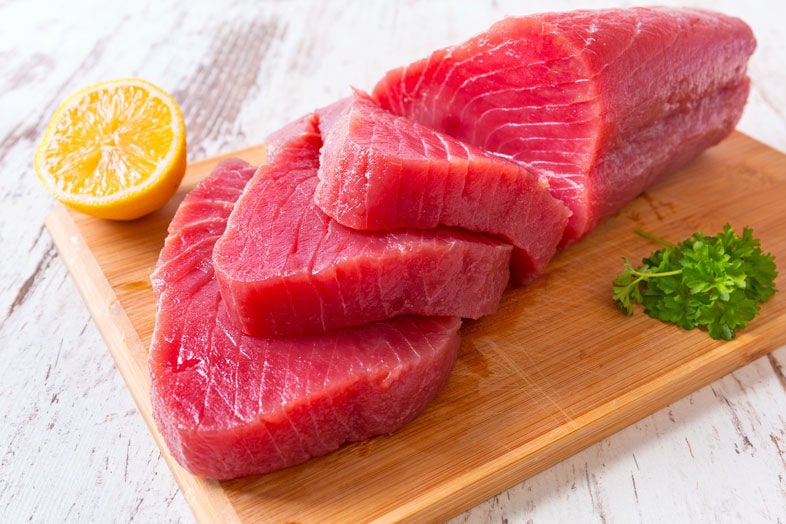
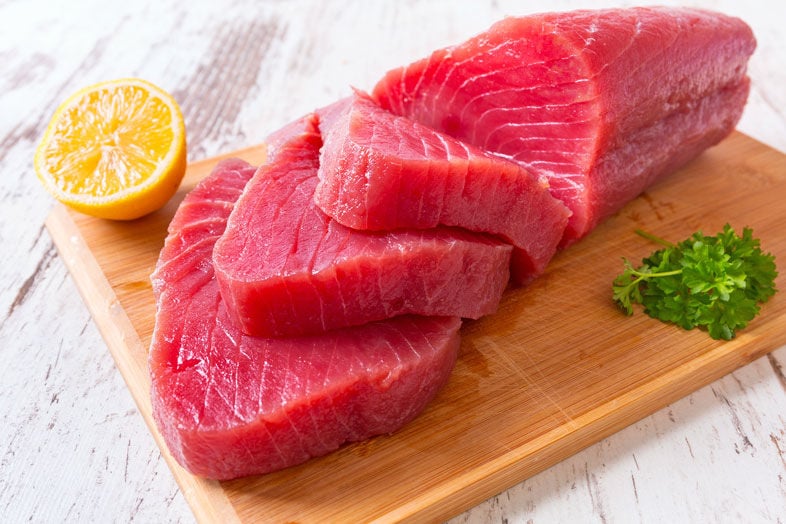
You know the tuna I’m talking about. It’s easy to mistake for a cube of watermelon. It’s the color of a Lyft logo. Appears to be glowing a vibrant, tantalizing purity. Tuna that bright red or pink means it’s… what, extremely fresh? Bursting with nutrients?
I thought this was widely known, but a chef recently told me very few of his staff members were aware of this, and almost none of his customers. So, especially with the recent proliferation of poke joints, I thought I’d be helpful with this PSA of sorts.
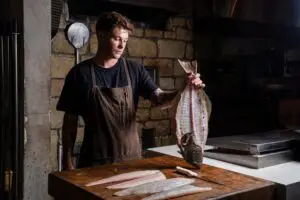
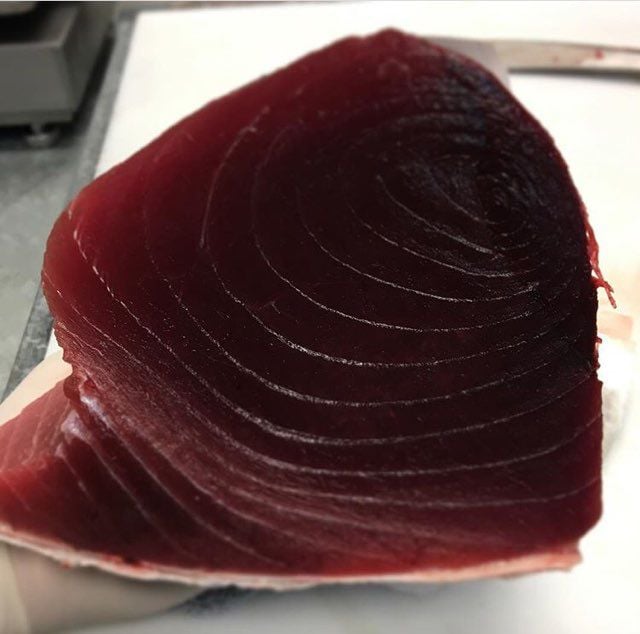
Bright red or pink tuna means it has been gassed. In its natural state, fresh tuna is dark red, almost maroon, sometimes even chocolatey-looking.
But here’s why I personally tend to back away when I see bright red or pink tuna:
1. IT’S MUCH HARDER TO TELL IF IT’S FRESH OR NOT.
It can be left out for days and it will not turn brown. In one study, the University of Florida found that carbon monoxided tuna kept its bright red color for 11 days in the fridge. “The carbon monoxide actually hides the quality of a fish,” says Tommy Gomes, fifth-generation San Diego fisherman, host of The Fishmonger on Outdoor Channel, and owner of seafood shop Tunaville in Point Loma. “It’ll make a poor-quality fish pretty like a rose. I’ve seen them take an old piece of brown tuna [and] put the gas on it, and it comes out looking like cherry lemonade.” The gas also masks the smell of old tuna (which is one way you can tell if tuna’s getting past its eat-by stage). “Since there’s no smell, it falsifies the freshness,” Gomes explains.
2. I TRUST GOVERNMENT HEALTH ORGANIZATIONS, BUT ALSO RECOGNIZE THEY’RE NOT PERFECT.
The 1992 USDA food pyramid suggested carbs should be the bulk of our diet (they corrected that in 2005 and 2011). The government approved the fat substitute Olestra, which gave people all sorts of tummy issues. Margarine and other trans fats were also approved, then banned in May 2019. There are some smart humans in the government, but even geniuses make mistakes. So I tend to go with my gut: tuna in its natural state, or tuna treated with carbon monoxide? Easy choice.
So why gas tuna at all? Because of us. Consumers don’t like brownish fish. Tuna oxidizes quickly. It’s difficult for tuna fishermen and women to get it to market quick enough before it turns that brownish or chocolatey color. Customers erroneously think all brownish-looking fish is old or bad and will pay more for “fresher-looking” fish. So in the 1990s, the FDA allowed companies to gas the tuna and keep it artificially bright red for long stretches at a time.
“There’s nothing wrong with a hot chocolate–looking tuna loin,” says Gomes. “But, here in America, we want [it] seared on the outside, rosy pink on the inside.”
What fresh tuna should look like
Gassed tuna is also often imported and less inexpensive than fresh, un-gassed tuna, says Gomes. “So, to be fair and honest,” Gomes acknowledges, “for families on a budget, gassed tuna is one of the best alternatives out there for frozen seafood.”
In theNew York Times article cited above, a sushi restaurant owner reported his sales of tuna tripled when he started using gassed tuna. So that’s obviously good for the small business owner, as well as grocery stores. Food waste is a massive epidemic—the US throws out about half of edible seafood. If gassed tuna gets Americans to eat perfectly edible tuna they otherwise might throw out, that’s a step in a good direction.
But it’d be better if we as consumers knew that fresh, non-gassed tuna is supposed to be dark red or maroon—not bright red or watermelon pink, like a majority of the tuna I’ve seen at local poke shops. Ideally, we would look at a piece of bright red/pink tuna and think “Oh, hey there, carbon monoxide.”
The most important things about buying tuna is to trust the source (whether grocery store, fishmonger, or sushi joint). It also should be shiny and somewhat translucent, and not have slime or an off-smell.
Troy Johnson is the magazine’s award-winning food writer and humorist, and a long-standing expert on Food Network. His work has been featured on NatGeo, Travel Channel, NPR, and in Food Matters, a textbook of the best American food writing.
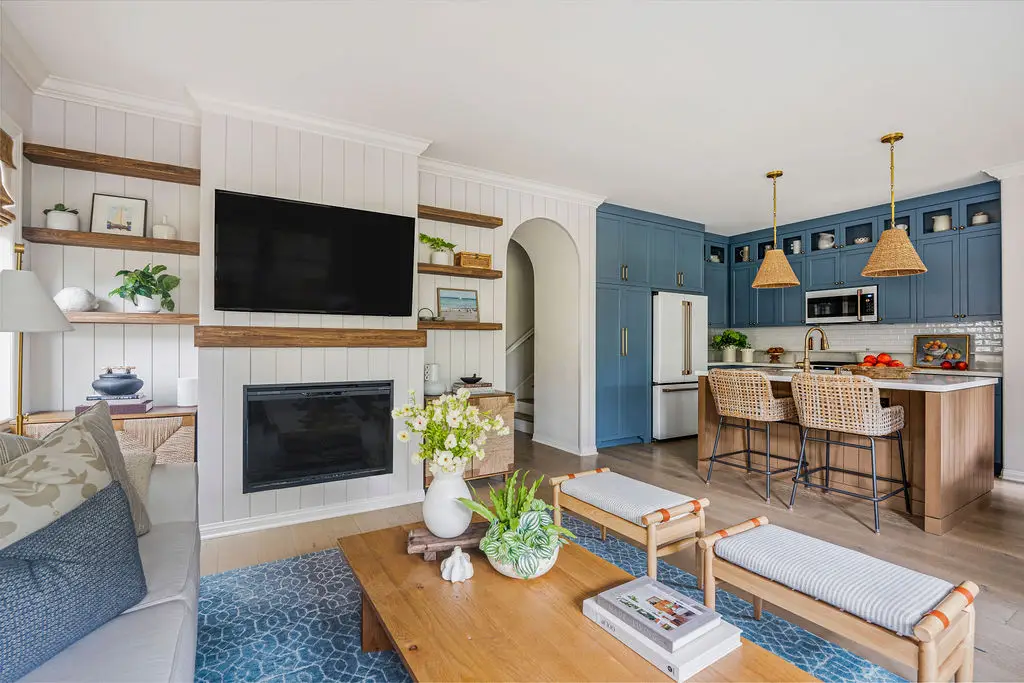
A perfectly designed home rarely happens by accident. Those kitchens that feel effortless and rooms that seem to tell a story the second you walk in? They’re usually the work of someone who knows exactly what they’re doing.
It’s knowing which ideas will actually work, which materials will hold up over time, and how to turn a collection of choices into a space that feels intentional. That’s where a professional interior designer comes in.
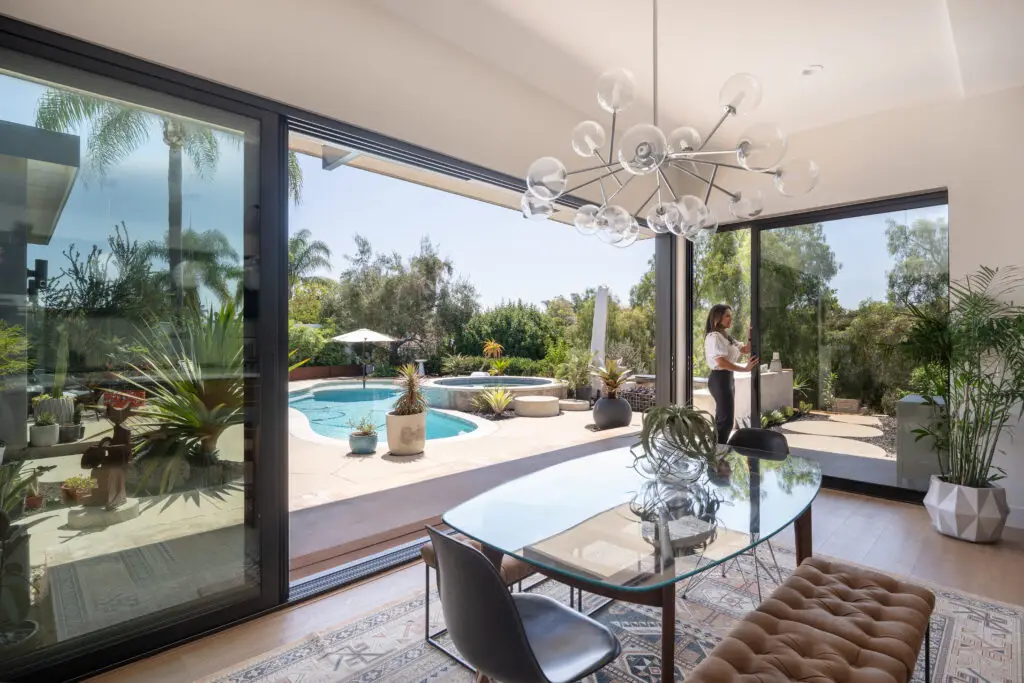
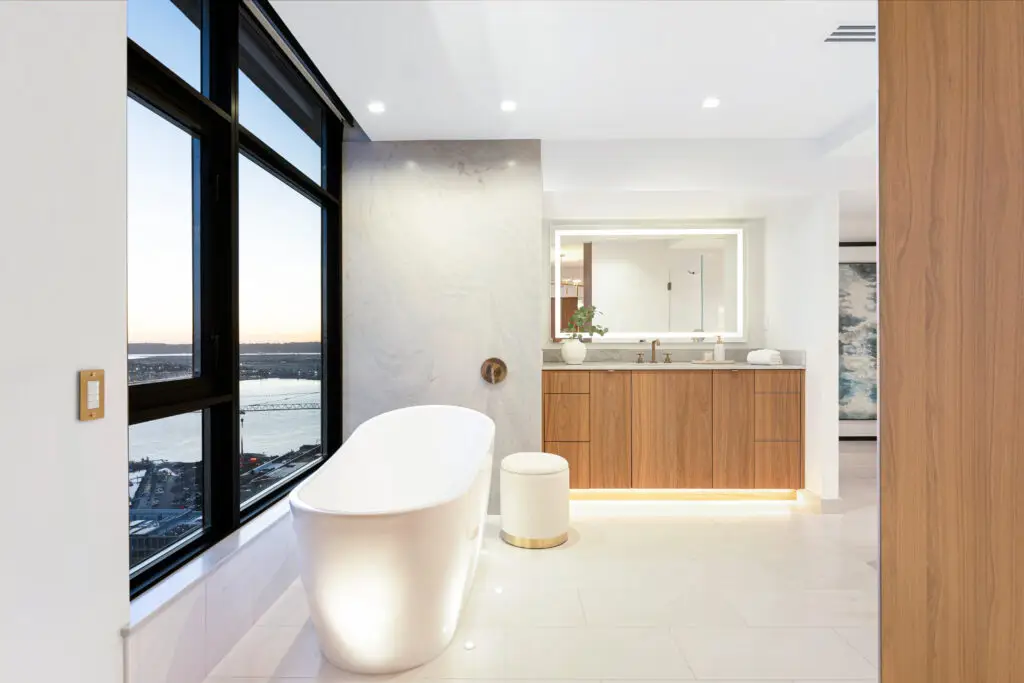
For the American Society of Interior Designers (ASID) California San Diego Chapter, the goal is to help people see interior design as more than just the finished look. Behind every well-designed space is a process built on technical expertise. Designers are educated in everything from professional software and construction details to building codes, space planning, materials, and functionality.
Courtesy of ASID
“People don’t always realize how much goes on behind the scenes,” Kirsten Recce , current president of the ASID California San Diego Chapter, says. “Our designers are not just doing furniture placement and color selection and picking out new fluffy pillows. That’s not what they’re trained for.”
ASID members bring formal education, continued learning, and industry knowledge to their projects, helping create spaces that are not only beautiful, but designed to work. A paint color that changes completely depending on the lighting. A material that looks beautiful in a showroom but doesn’t make sense for everyday life. A layout that photographs well but doesn’t function for the people living there. These are the details where professional guidance can make all the difference.
Still, one of the biggest misconceptions about hiring an interior designer is that it’s reserved for massive renovations, luxury homes, or people who already know exactly what they want. The process can feel intimidating. Where do you begin? Is a designer worth the investment? What if you only need help with one room?
ASID’s answer: start with one hour.
ASID’s Spruce Up events break down one of the biggest barriers between homeowners and professional design: knowing where to begin. Held twice a year, the community program gives homeowners the chance to work directly with an ASID designer through a one-hour, $125 consultation in their own home. Whether you’re looking for advice on furniture placement, window treatments, kitchen and bath updates, remodeling ideas, vacation rentals, color selections or something else entirely, the upcoming September 2026 event offers an approachable way to get expert guidance before committing to a full project. Signups are open through Sept. 7, with consultations taking place Sept. 21 through Oct. 31. Proceeds benefit ASID San Diego’s educational and community programs. Register here!
Courtesy of ASID
“It’s a great opportunity for people who are in that exploratory phase,” Recce says. “Maybe they’re not sure they want to hire an interior designer yet, or they think it sounds daunting or expensive. This gives them a chance to discover what working with a designer is actually like.”
Design is personal. A good designer isn’t just creating a beautiful room; they’re helping create a space that fits the way someone lives.
“We’re a resource to all of San Diego County,” Recce says. “It doesn’t cost anything to pick up the phone and call and ask. We’ll answer.”
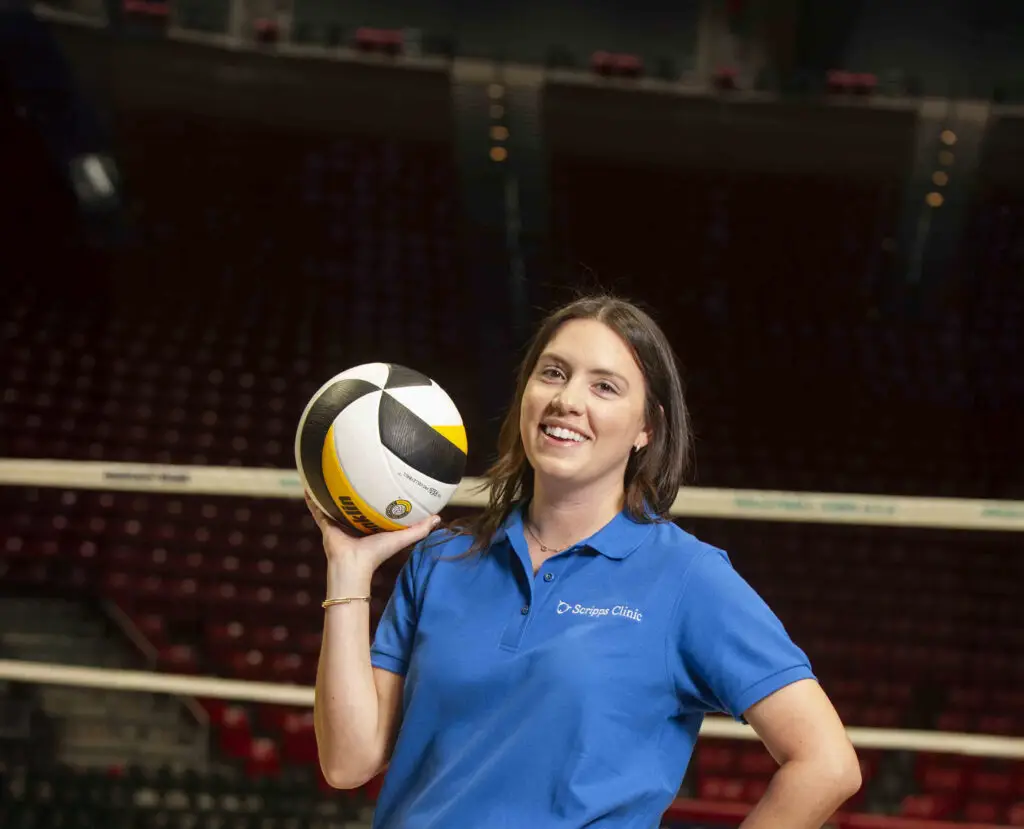
Growing up, Laika Nur, MD, Scripps Clinic sports medicine specialist, loved watching beach volleyball when the Association of Volleyball Professionals tour came to her hometown of Chicago. A talented volleyball player herself, she remembers sitting in the stands all day, and once, even got a couple autographs. Years later, Dr. Nur was attending a professional event focused on women’s sports, and the discussion turned to a new professional women’s volleyball league. The general manager and coaching staff for San Diego’s team, the Mojo, happened to be in attendance, and Dr. Nur took the opportunity to ask them if they needed a team doctor. Flash forward to the Mojo’s inaugural 2024 season, when Dr. Nur officially became the team physician. Click here to read more about Dr. Nur and how she incorporates lessons she learned on the court into her practice.
For more nutrition, wellness, and healthy living tips, sign up for the San Diego Health newsletter here.