Ready to know more about San Diego?

Subscribe
Food & Drink FEBRUARY 17, 2026

Global Brand Zuma Opening First California Outpost at The Guild Hotel

Opening downtown this summer, the contemporary Japanese restaurant-lifestyle concept signals a new phase for West Broadway’s growing hospitality corridor

Global Brand Zuma Opening First California Outpost at The Guild Hotel
Courtesy of Oram Hotels

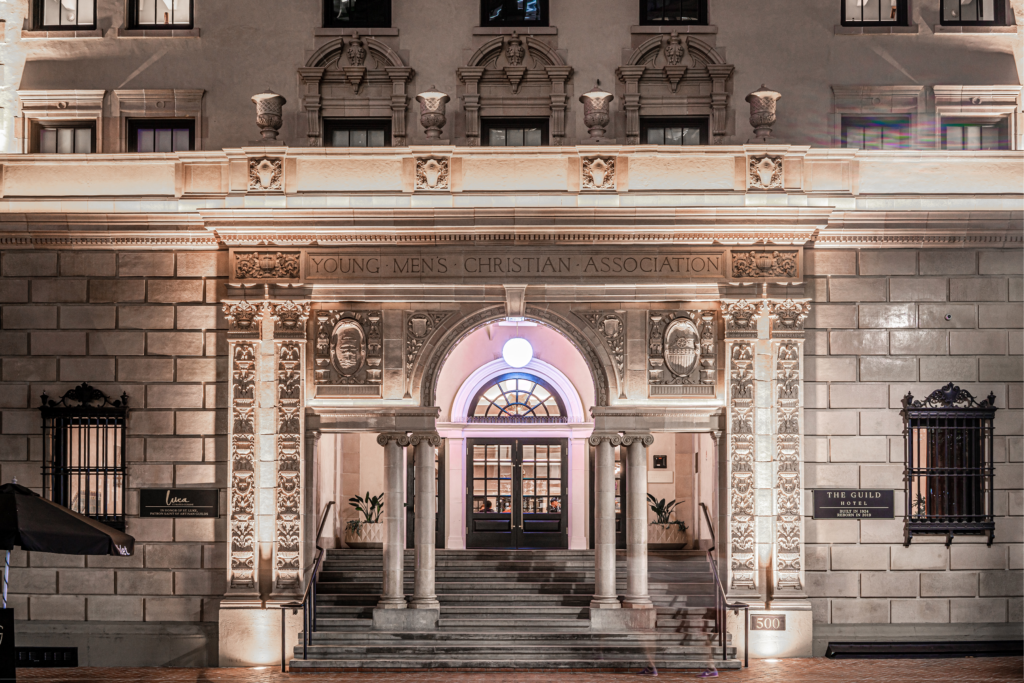
Luxury Japanese restaurant brand Zuma is opening at the Guild Hotel this summer in downtown San Diego, marking its first California location. The move places the city more firmly within a high-end global hospitality circuit that it has historically operated just outside of.

Since launching in London in 2002, the contemporary izakaya restaurant has expanded into cities that already treat dining as cultural infrastructure and whose diners also love a bit of a scene—Hong Kong, Dubai, Istanbul, Miami, New York, Rome, Mykonos, Madrid, Riyadh, Ibiza. The brand’s rooms are large, tightly designed environments where sushi and robata anchor the menu, but the space’s energy does just as much work. Dinner rarely feels like the end of the night. At many Zuma locations, there are also pools and beaches. 

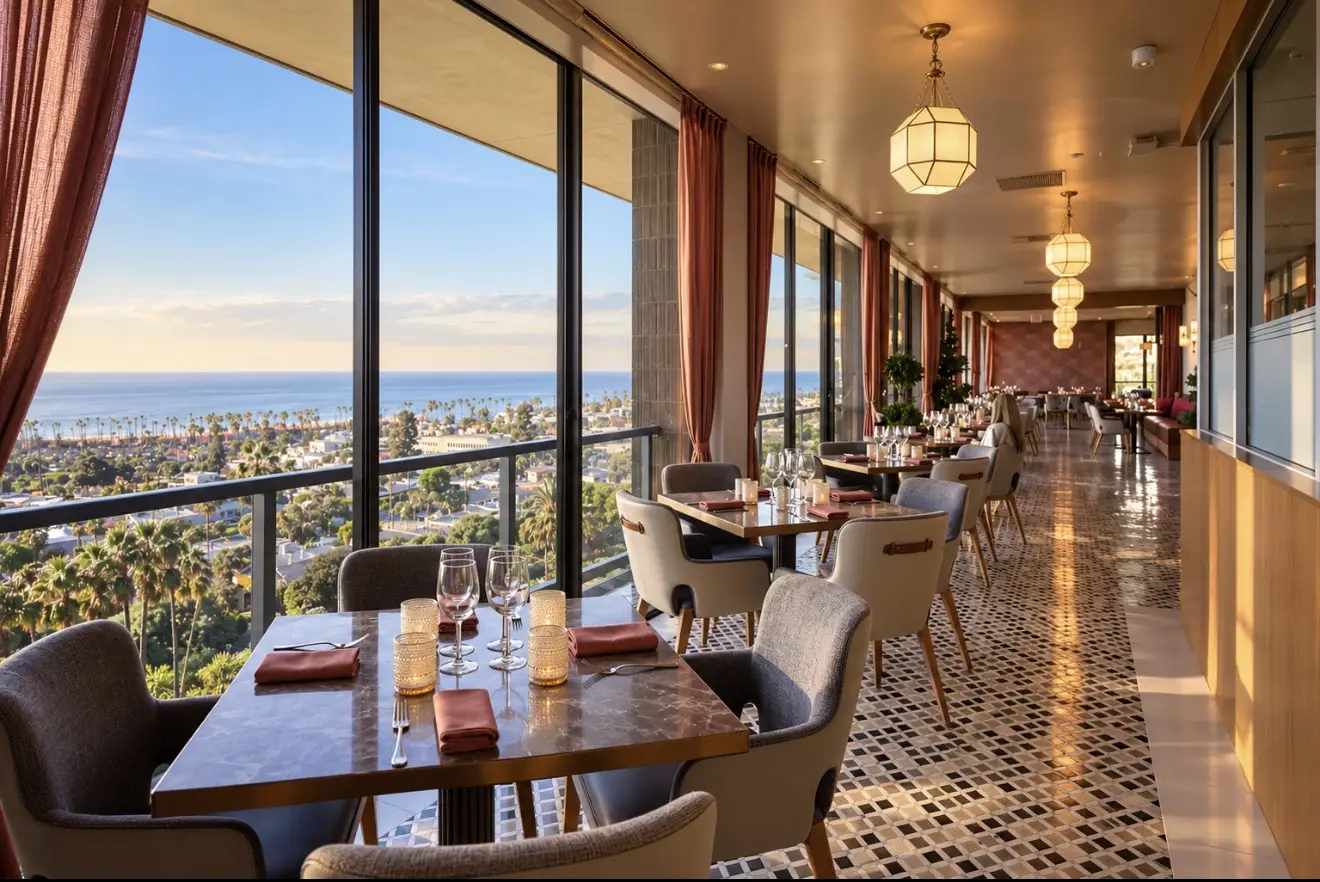
The San Diego build follows that model. The restaurant will span approximately 12,000-square-feet and will seat around 270 guests. It will be an indoor-outdoor concept designed around a formal arrival sequence: Guests enter through a tunnel and approach from a terrace before reaching the dining room, rather than passing through a traditional hotel lobby. 

Inside, Zuma’s signature design language carries through—modern Japanese elements layered with natural materials and low lighting create a comfortable yet quietly luxurious aesthetic.

The way Kevin Mansour, The Guild Hotel and Granger Hotel co-founder, describes Zuma is like it’s the 1970’s conversation pit of restaurants: a lifestyle-driven room people build evenings around. In other markets, he notes, it’s common for guests to show up late or drift in after dinner elsewhere. 

“You’re gonna probably come, even if you’re eating dinner somewhere else,” he says. “You’re going to come to Zuma after dinner and grab a dessert or drinks.” That kind of late-night restaurant energy—not a nightclub, not a quiet tasting counter—is something he believes downtown hasn’t consistently managed to hold onto.

Over the past decade, much of San Diego’s most dynamic restaurant growth has unfolded outside the traditional downtown core in neighborhoods such as North Park, South Park, Golden Hill, Normal Heights, University Heights, Little Italy, along the coast, and in suburban pockets from North County to the South Bay. Downtown, meanwhile, has been in a slower process of reinvention, easing away from its older nightlife identity without fully settling into a new one. 

Mansour believes the shift is beginning to take shape along West Broadway, near the waterfront and the northern edge of downtown, where increased residential density and recent luxury openings like Equinox gym have begun to concentrate foot traffic and add more energy into a corridor that loosely connects to Little Italy.

Courtesy of Oram Hotels

“I think downtown is now growing up,” says Mansour, a San Diego native. “We’re in this kind of quiet calm before the storm phase in a good way.” He describes the corridor and the hotel’s role in it as “an anchor,” a stretch that feels less scattered than it did a decade ago.

All of this lands at a moment when West Broadway is being reshaped by both public and private investment. Holland Partner Group’s multi-block redevelopment near Union Street has already delivered new residential and retail space, with additional mixed-use phases underway. The Downtown Property and Business Improvement District is in the process of renewal and expansion, funding enhanced cleaning, maintenance, and placemaking efforts along key corridors, including Broadway. 

At the same time, downtown office vacancy has prompted developers to pursue residential conversions, including the planned housing transformation at 707 Broadway. That physical reinvestment is unfolding alongside intensified homelessness enforcement under the city’s encampment ban, which allows police to clear camps when shelter beds are available. Together, those forces—redevelopment, density, enforcement, and hospitality—are reshaping the rhythm of the corridor where the Guild is staking its claim.

Zuma’s arrival coincides with broader changes at the Guild. A street-level pool and garden lounge are under construction adjacent to Zuma, integrated at ground level rather than perched above the building, part of what Mansour describes as repositioning the property toward an urban resort identity. The hotel is also rolling out a new cocktail program led by Dushan Zarić, co-founder of Employees Only and Macao Trading Co., two bars that helped define modern craft cocktail culture and frequently appeared on the World’s 50 Best lists. At the same time, the Guild and neighboring Granger Hotel are expanding their arts platform, including the Border Series curated by global art advisor Jennifer Findley, which explores identity, migration, and cross-border creative exchange.

“This is more than just a restaurant being added to the hotel,” Mansour says. “We were a great hotel, but now we’re going to the top.”

The project also unfolds as Zuma expands into Cabo, reinforcing what Mansour frames as a shared regional corridor between San Diego and Tijuana. “If you do the numbers, it’s probably over 7 million people, the true metro of San Diego,” he says. Current figures put the San Diego-Tijuana metropolitan area at around 5.3 million, including Carlsbad and Oceanside, but it’s also true that nearby Orange County adds a cool 3.2 million people before anyone even considers Los Angeles.

In January, Zuma’s parent company announced a multi-year collaboration with the Mercedes-AMG PETRONAS Formula One Team, naming the restaurant group its official lifestyle and dining curator, elevating its presence in the luxury space beyond restaurant hospitality. Mansour won’t speculate on how that partnership will translate locally, but he doesn’t downplay the positioning. “It just elevates the brand,” he says, while also agreeing that the “F1 type” is precisely the type of customer he hopes to attract to The Guild.

The target opening is July. Mansour believes adding Zuma only bolsters the Guild acting as an anchor in downtown. “They’ve done this in other markets where they’re very early, and then everybody kind of follows,” he says, adding, “They have the power to move an entire market single-handedly.”

Jackie is a long-time freelance journalist covering cannabis, food/restaurants, travel, labor, wine, spirits, arts & culture, design, and other topics. Her work has been selected twice for Best American Travel Writing, and she has won a variety of national and local awards for her writing and reporting.


Subscribe to our newsletters

Select Options

By subscribing you confirm that you agree with our Terms and Conditions and Privacy Policy.

Features JUNE 18, 2026

The Perfect Shot with SD’s Top Food Photographers

We ask the city's best food photographers to choose their favorite pics and share their secrets to capturing a drool-worthy pic

The Perfect Shot with SD’s Top Food Photographers
Photo Credit: Luciana McIntosh

Food is a notorious diva to photograph. The wrong lighting can make José Andrés’ paella look like a jaundiced grain bowl. You could be staring at the best sandwich of your life, but shoot it from above and—hey, congrats on that abandoned piece of lettuce bread. A cottage meme industry has been built around the hilariously bad photos on review sites that make Michelin-star food look like Michelin tires.

Especially in a visual modern media world, food culture depends on great photographers capturing the painstaking work in equally deserving ways. We asked four of San Diego’s top food photographers for their favorite shot from another year of documenting what we eat.

Photo Credit: Kimberly Motos

Kimberly Motos

Birdman Sandwich at Chick & Hawk

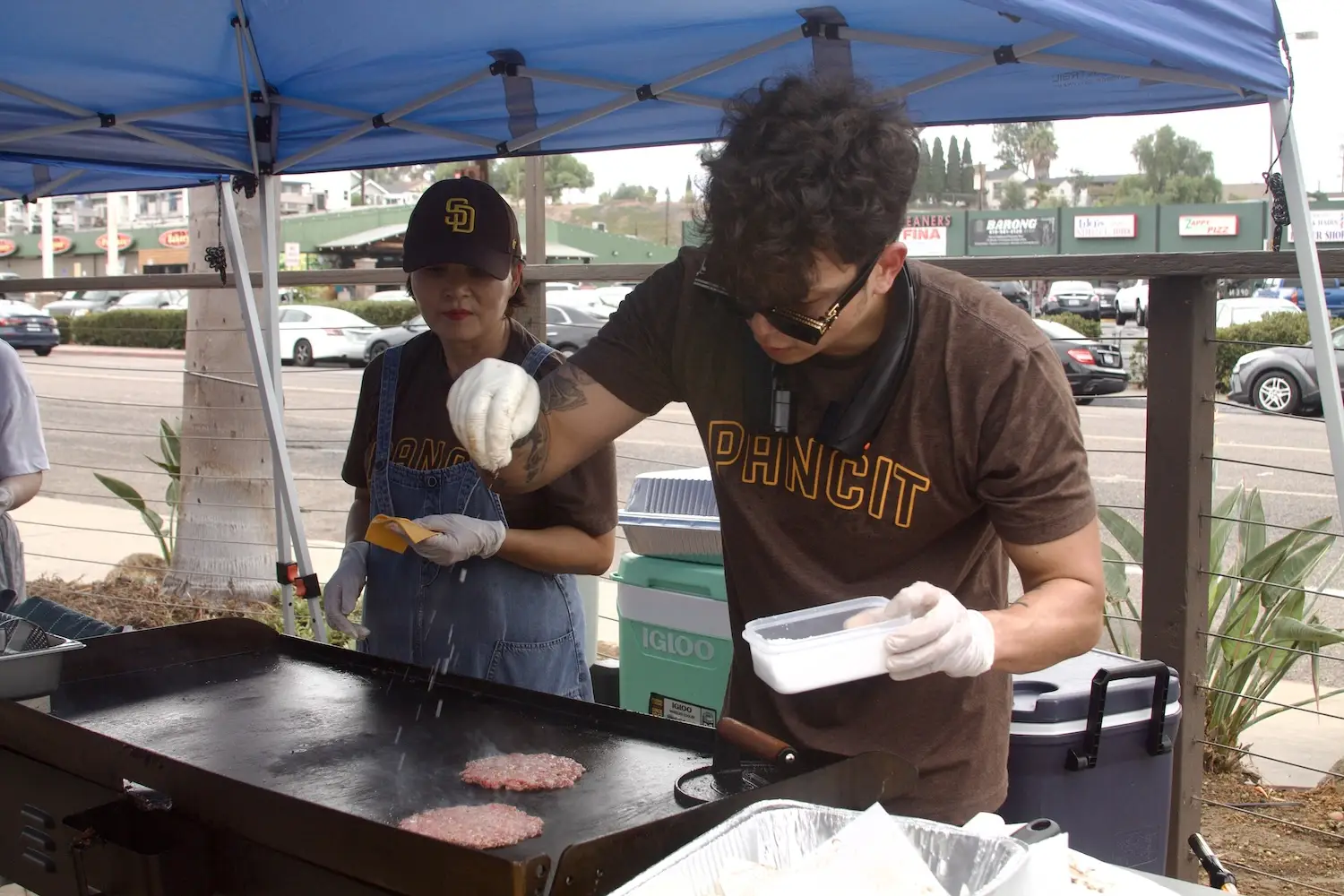
Getting this kind of shot takes a bit of yoga. Asana yourself into the corner, hold your breath, pray that a chef on the move doesn’t back into your light stand.

“You’re stepping into someone’s workspace during their busiest moments, so it’s a balance of being present to get the shot and being invisible to not slow anything down,” Kimberly Motos says.

The subject here is the Birdman sandwich from Chick & Hawk—hot fried chicken thigh, tangy slaw, kimchi comeback sauce, sweet and spicy pickles, potato brioche bun—getting a hearty dousing of its difference-maker seasoning. Motos captures the parts of the process that diners don’t usually see: the chaos behind something that looks so simple.

Photo Credit: Lucianna McIntosh

Lucianna McIntosh

Oysters + Jewel of the Sea Martini at The Fishery

“I love this image because it feels like a moment you want to step into,” says Lucianna McIntosh. A warm, sunny day at The Fishery in PB with oysters, caviar, and martinis. Yes, please.

The little details—the glass sweating a little, the direct afternoon light creating stark shadows, the oyster glistening on the tray—are the main characters. Instead of trying to overly control the setup, McIntosh “followed the light and lines that draw you in more,” she says. “This was one of those moments where everything lined up on its own for a second. I love it when the shadows end up being just as important as the food itself.”

Photo Credit: Eric Wolfinger

Eric Wolfinger

Herb-Roasted Golden Chicken at Fleurette

La Jolla native Eric Wolfinger—who won a James Beard Award for Tartine Bread, one of the most stunning bread books of all time—says he doesn’t have a signature style. His style is a conduit.

“I see my job is to translate the chef’s point of view into something you can feel,” he says.

For this shot, Fleurette chef Travis Swikard had one directive: cuisine du soleil (“cuisine of the sun”). With a spread of leeks vinaigrette, herb-roasted golden chicken, and beets, Wolfinger wanted to create a scene that felt straight out of the French Riviera, relaying the light, bright style of Swikard’s new spot.

Some bonus additions here: Extra lights—to add lots of warmth—and a clipping from an olive tree.

Photo Credit: Dee Sandoval

Dee Sandoval

Espresso Ice Cream at Lucien

Timing and light are everything in food photography. In Lucien—La Jolla’s tasting-menu-only restaurant with moody ambiance—a single strobe flash creates the ideal spotlight.

Dee Sandoval says she uses the “natural, just-plated energy” of the dish to “create a portrait of moment and craft.” That’s why this Mostra Ghost Bear espresso ice cream—with San José dark chocolate mousse, soy-miso caramel, and koji shoyu chocolate sauce—looks like it might dissolve halfway to your mouth.

Emma Veidt

About Emma Veidt

Emma Veidt is an editor at San Diego Magazine. She earned her bachelor's and master's degrees from the Missouri School of Journalism. She loves running, hiking, and rock climbing, but really, she mostly loves encounters with the street cats around North Park.

Everything SD JUNE 18, 2026

How to Build the Ultimate Home Bar in San Diego

Spruce up your home bar setup with product recommendations from local cocktail aficionado and Collins & Coupe owner Gary McIntire

How to Build the Ultimate Home Bar in San Diego
Courtesy of Viski

I peel myself off my couch, crack my back, and force myself to the bar (23 years old, by the way). It’s a Friday night, and my smart watch is already informing me my body battery is critically low.

Nevertheless, party we must.

Because, to be fair, one of the best things about going out—dive bar, velvet-clad cocktail lounge, or anywhere in between—is the performance of it all. Watching a bartender shake and stir like it’s choreography, finishing the drink with a sprig or petal placed just so, feeling like your collection of mixers and spirits is worth pouring into the Holy Grail.

One of the worst things about going out, though? Being out.

So I thank God for the home bar.

No lines, no cover, no shouting your order over someone named Kyle who just discovered the AMF. No $19 cocktails that taste suspiciously like juice. Just me, my apartment (where I can play whatever music I want), and the quiet confidence of knowing I can make something decent without putting on real pants.

A home bar, I’ve learned, doesn’t have to be impressive. It just has to be intentional—a few bottles you actually like, some tried-and-true tools, and at least one drink you can make without Googling. That’s it. That’s the barrier to entry.

To create the ultimate home bar collection, we tapped the folks at San Diego cocktail supply shop Collins & Coupe to give us some of their recommendations. Pick and choose what you need, and start cocktailing.

Courtesy of Collins & Coupe

The Must-Haves

Shaker Tin

You won’t get very far in your cocktail-making-journey without shaker tins. Boston shakers (two pieces, tin-on-tin) and cobbler shakers (three pieces with a strainer and cap) are the most classic styles, but if you want to avoid the tins getting stuck (or creating a mess on the floor), Boston shakers are the way to go.

Essential: 28-ounce Koriko Weighted Boston Shaker Tin

“Koriko Tins by Cocktail Kingdom are the gold standard for every bar worth their salt. Every new bar we help outfit with tools insists on this brand and model,” says Collins & Coupe co-owner Gary McIntire.

Splurge: Sertodo Solid Copper Boston Shaker Tin Set

“These are handmade, 100 percent solid copper and will last a lifetime,” McIntire says. “Because they are solid, there is no plated finish to wear off, and they will only look more beautiful with age.”

Bar Spoon

According to the pros, don’t even bother getting bar spoons shorter than 12 inches. One foot long is the magic length to get the best stirring results: “Rule of thumb is at least 50 percent of the spoon should be out of the glass,” says McIntire.

Essential: 12-inch Stainless Steel Bar Spoon

Interior decorations for a living room from San Diego furniture store Rove Concepts

Splurge:

Sugar Skull Bar Spoon
Cocktail Kingdom Enamel Lucky Cat Bar Spoon

Strainer

Pulp in your orange juice? We’ll allow it. But in your cocktail? Smooth and strained is optimal. You have two choices here: Hawthorne strainers have a spring that attaches snugly to shaking tins; julep strainers have no tabs or springs (originally created to drink mint juleps before straws became commercially available).

Style Choice:

Bull in China Julep Strainer, Brushed Stainless Steel
Barfly Two-prong Heavy Duty Hawthorne Strainer

Jigger

We’ve all seen those seasoned bartenders with the arm tats and haughty demeanors who can assemble perfect drinks with their eyes shut. The rest of us, however, need training wheels. Jiggers—those hourglass-shaped measuring tools—make consistent cocktail-making easy, although cheap versions tend to be inaccurate. Don’t skimp out on these.

Courtesy of Bull in China

Essential: Superfly Jigger

“Heavy-duty and made of one piece,” McIntire says. “We use [this jigger] in our classes and at home. It comes in a bell-shaped version and a Japanese version, which is tall and narrow.”

Splurge: Bull in China Japanese Jigger, Mother of Pearl

Glassware

“Glassware is always essential to the cocktail experience,” says McIntire. The martini glass is an avatar for American hair-loosening for a reason: sleek, viciously “V,” and highly spillable (danger always looks good). To start, look for a coupe glass (the fancy cat bowl-looking thing), a highball (glassware with posture), and a rocks glass (the blue collar hero).

Style Choice:

Milo Crystal Rocks Glass by Viski
Savage Coupe by Nude Glassware
Meridian Highball with Gold Rim by Viski

The Next Level

Mesh Strainer

You know how Caesar dressing tastes way better when you don’t think about the fact that there are anchovies in it? The same goes for cocktails and raw egg whites. Some of your favorites rely on the frothy ingredient to shine (whiskey sours, gin fizzes, etc.). Mesh strainers help make that magic happen. According to McIntire, always get the conical version; the round, bowl style could cause spills.

Essential: Coco Conical Fine Mesh Strainer by Cocktail Kingdom

Splurge: Fine Mesh 2 Prong Hawthorne Strainer, Stainless Steel

Lili Kim

About Lili Kim

Lili Kim is a content coordinator and writer for San Diego Magazine, with experience highlighting local businesses and communities. When not writing or shooting film, she is likely brewing her seventh cup of tea of the day or strolling along Sunset Cliffs.

Food & Drink JUNE 17, 2026

Steady State Roasting Co. Perks Up In San Marcos  

After eight years and numerous awards, the cafe and roastery expands its operations in North County

Steady State Roasting Co. Perks Up In San Marcos  
Courtesy of Steady State Roasting

San Diego’s coffee industry has yet to hit its ceiling. There are at least 850 coffee shops across the county (possibly over 1,000 at this point) and more specialty cafes and roasters seem to join the roster every other week. 

Some newcomers, like Chance’s Coffee, focus on specialties like Vietnamese coffee; other stalwarts, like Bird Rock Coffee Roasters, have helped put the local coffee scene on the map with internationally acclaimed beans and baristas for 20 years. You can get a classic pour-over or an ultra, whipped cream–topped strawberry lavender basil blueberry matcha latte sprinkled with unicorn glitter—whatever your coffee style, San Diego’s got it… somewhere.

Steady State Roasting falls more in the former category, focusing on traceable, sustainable sourcing and no-nonsense roasting (no unicorn glitter here, sorry!). Founder and lead roaster Elliot Reinecke first started Steady State in a garage behind his house, roasting small batches until expanding slightly to a shared and not-quite-permitted space before landing in a lucky spot on State Street in Carlsbad. 

Now, eight years later, Steady State is scaling up once more, opening its second cafe in San Marcos next to their roastery. The new location offers the same food and drink menu as the original Carlsbad location, and Reinecke says he plans to add an onsite bakery to bake items like English muffins and country loaves to supplement Prager Brothers’ more specialized pastries. 

He doesn’t plan on opening more cafes, though. Rather, Reinecke plans to expand roasting operations and strategic sourcing. Currently, he sources beans from Colombia, Panama, across Africa, and as of this year, Costa Rica. “We’ve had Costa Rican coffee before, but we went to origin a few months ago and bought six different lots from there, all from really good high-end local farmers,” he explains. 

The rising cost of sourcing does present some challenges, as does changes within coffee culture itself. Coffee has moved from a mass-market beverage to a highly personalized artisanal experience, but the current feeling is moving back towards focusing on quality over flashiness, says Reinecke. 

If Reinecke’s prediction is right, coffee is headed on a similar trajectory to craft beer. Ten years ago, no one knew what Citra hops were. Now, even casual beer fans are versed in hop varieties, and that attention to detail is spilling over to coffee as well. How many of San Diego’s 1,000 coffee shops will remain once the unicorn glitter’s luster fades? My bet is on anyone remaining steadfast to sourcing, sustainability, and simplicity. 

Steady State San Marcos is now open at 1320 Grand Avenue, Suite #9, San Marcos. Initial operating hours are Tuesday through Saturday, 7 a.m. to 2 p.m. 

San Diego Restaurant News & Food Events

Beth’s Bites

  • Sake lovers would do well to keep September 27 open. The 10-year anniversary of the San Diego Sake Festival is coming to Julep Venue in Mission Hills with over 150 different sakes and shochus from across Japan, plus VIP tickets get special access to unlimited tastings from Michelin-starred Soichi Sushi. VIP opens at 2:30 p.m. and general admission is 3:30 p.m., but early bird tickets are limited to the first 40 people. I mean c’mon, sushi and sake? If you’re even remotely interested in learning more about sake (or already know you’re a fan), this is the event of the year. 
  • The uber-luxe spa The Golden Door in Escondido has been rejuvenating guests for over six decades, even winning Best Bathhouse Remodel in our Best of San Diego 2023 for its multi-million dollar overhaul. Now, you can try making the property’s signature nourishing cuisine at home with Chef Greg Frey, Jr.’s debut cookbook The Golden Door Table. There are over 100 recipes ranging from potassium broth to miso black cod, plus desserts, breakfast items, and a ton more to inspire your own wellness journey. The book hits shelves on September 15, but preorders are available now. 
  • Love her or hate her, Gwyneth Paltrow has undeniably created a wellness dynasty with Goop, her blog-turned-brand with locations across California. Soon, San Diego will get its own shot of Paltrow-power when the first Goop store opens in One Paseo later this year, followed by an on-campus location at UCSD’s Triton Center. Charge your crystals and send out good energy to the construction and permitting entities…

Listen Now: The Latest in San Diego’s Food and Drink Scene

Have breaking news, exciting scoops, or great stories about new San Diego restaurants or the city’s food scene? Send your pitches to [email protected].

Beth Demmon

About Beth Demmon

Beth Demmon is an award-winning writer and podcaster whose work regularly appears in national outlets and San Diego Magazine. Her first book, The Beer Lover's Guide to Cider, is now available. Find out more on bethdemmon.com.

Studio S FEBRUARY 26, 2026

Chef Aidan Owens Thinks Your Fish is Boring

The 29-year-old culinary director at Herb & Sea is making seafood sexy (and approachable) again

Implementing a farm-to-table model hardly deserves acknowledgement these days. It’s not a stretch. It’s not innovative. “It’s the bare f**king minimum,” says Herb & Sea‘s executive chef Aidan Owens.  

When I arrive at the Encinitas restaurant, I’m ready to talk sustainability, farm-to-table stuff, with Owens. “Did you see the chin on that?” he says of the extra big jiggly chin on the sheephead that just arrived with the day’s fresh catch. I did. It was Jay Leno adjacent.

I learn quickly that he somehow oozes both charm and stone-cold honesty. Maybe he could construct a new dish with chin goo, like he did when he had a bunch of tuna scraps and voila’d it into a smooth and crowd-pleasing ‘nduja. “I want to know what’s in there,” he says.    

Courtesy of Herb & Sea

The instinct to look closer, to dig into what others might discard, says a lot about the chef’s approach. I guide him back to our topic, but he has something else on his mind. “We’re overcomplicating food—what happened to just cooking good food and having fun with it?”

Owens grew up on a farm in Byron Bay, Australia, where sustainability wasn’t a concept you chat about so much as a way of life. Think dirt roads, backyard chickens, pulling vegetables straight from the ground, and a mother who believed that if you couldn’t pronounce the ingredients on a package, you shouldn’t eat what was inside.

Food wasn’t precious or performative. Making it was what you did because you were hungry and that’s still what inspires Owens today. “I like to cook good food because I like to eat good food,” he says.

His approach to sustainability at Herb & Sea began so naturally that it felt just like instinct. “I was just like, ‘Let’s order food from the people who live and work here,’” he says.

Courtesy of Herb & Sea

And why wouldn’t he when lives in San Diego? Cities all over the world vie for our goods. Our tuna is sent overseas. Our spiny lobsters hit dinner plates in China and Japan. Not to mention California’s producing a third of the country’s vegetables and three-quarters of its fruits and nuts. 

“Why would we outsource when it’s all here?” Owens asks.

Sustainability, in this context, is about cooking what exists in abundance, nearby, right now. “I love the local fish here. It’s f**king delicious and San Diego citrus, I mean, it is so f**ing good,” he says.

Instead of importing ingredients, Owens also looks for nearby alternatives. “You can find really cool things in the local waters,” he says, pointing out that stingray cheeks taste similar to scallops.

Courtesy of Herb & Sea

Whatever he finds in that sheephead chin might just be the next substitute for marrow. But to make this work, it means getting diners amped up about the slightly unfamiliar. 

Tasting menus, where diners are completely in his hands, become an opportunity to gently push boundaries. “I’ll serve mackerel, because people think they hate it,” Owens says, noting that the abundant local fish can have some fishiness. “But when it’s fresh, it’s arguably one of the best fish in the ocean.”

He also tweaks the language on the menu so people might feel more compelled to give dishes a try without preconceived notions. He might use “lengua” instead of “tongue.” “Whelk” instead of “snail.” When he puts “stingray throat” on the menu, he disarmingly calls it “skate.” 

To reduce waste, scraps aren’t always discarded but rather turned into something new. Sometimes they’re smoked, cured or fermented. Apples going bad turn into apple ponzu. Lemons turn to marmalade, which stretches their usefulness far beyond peak season. “And it’s super tasty on our pizza,” he says.

What makes the food even richer, is the relationships he’s built with farmers. Though it didn’t always feel natural, Owens sought personal connection first. He recalls approaching a fisherman at the Tuna Harbor Dockside Market. “I was awkward,” he says. “I went up to him and said, ‘I like your fish.’”

Owen’s is now so close to his suppliers—like fishermen Ryan Sebo and Joe Daly—that he gets texted pictures of fresh catches right as they flop on the boat. The messages always ask if he wants first dibs. “I say yes to a lot of fish,” Owens says, noting that Herb & Sea can go through 2,000 pounds of seafood a week.

Courtesy of Herb & Sea

The next evolution of sustainability, in his view, will be chefs working directly with producers such as his alliance with Sebo, cutting out middlemen and purveyors where possible. “It will put more money in the pockets of the people doing the work,” he says.

It will mean that chefs can’t just know their local farmers and producers, but they’ll choose to work with the ones who have the best practices. Dining and sustainability will become much less about the final plate. “It will be more about the impact that plate has on the Earth,” he says.  

Ultimately, he believes sustainability doesn’t need to be loud. It doesn’t need hashtags. It just needs to be honest.

“We aren’t saving lives. We’re feeding people good food,” he says.

And yet, in feeding people well—simply, thoughtfully, responsibly—something meaningful happens. Guests leave satisfied. Ingredients are respected. Local ecosystems are supported and food returns to what it has always been at its core: nourishment, pleasure, and a quiet reflection of the place it comes from.

No buzzwords required.

Food & Drink JUNE 15, 2026

Carlsbad’s Newest Restaurant Is All About One Perfect Dish

The team behind Harumama and Blue Ocean will open Little Kiki Katsu & More on June 15, serving premium cutlets, Japanese sandos, and curated sake pairings

Carlsbad’s Newest Restaurant Is All About One Perfect Dish
Photo Credit: Arlene Ibarra

Every culture has its own comfort foods—cozy dishes that nurture the soul as much as the body. In the US, dipping a grilled cheese sandwich in a bowl of tomato soup can feel as satiating as pulling a warm sweater out of the dryer. In China, a steaming bowl of congee is basically a miracle remedy for anything you can imagine. I’m pretty sure Italian carbonara could achieve world peace. And in Japan, katsu remains one of the most universally satisfying inventions of the past century.

Katsu was originally invented as a riff on côtelette de veau, the classic French veal cutlet coated with breadcrumbs and pan-fried in butter. In 1899, a Western-style restaurant called Rengatei in Tokyo decided to put their own spin on the dish by pounding the cutlets until thin, then coating them with softer panko and deep-frying versus pan frying (like tempura) for a crispier, lighter, crunchier bite. Today, pork—called tonkatsu in Japanese—tends to be the most common base for katsu.

The dish has yet to achieve the same mainstream status as say, chicken nuggets, in the US. But Little Kiki Katsu & More hopes to change that, when the katsu-focused restaurant opens in Carlsbad on June 15.

Created by the team behind Harumama and Blue Ocean, Little Kiki will focus on premium katsu dishes paired with sake and around a dozen small bites like miso soup, karaage, edamame, and Japanese pickles. Executive chef James Pyo, who co-owns all three restaurants with his wife Jenny, created a menu that features proteins like Berkshire Kurobuta pork, Jidori chicken, salmon, scallops, and dry-aged Pacific cod for the katsu and grilled stone selections. (Note: the grilled stone options will be offered for dinner only.)

Photo Credit: Arlene Ibarra

The lunch menu includes Japanese-style sandos like a tonkatsu sandwich with pork, housemade bread, and tonkatsu sauce (available regular or spicy). Dessert options are simple to start—yuzu cheesecake, matcha crème brûlée, and mango/yuzu mochi ice cream. The Pyos curated a selection of premium sakes as well, specifically for pairing purposes, as well as offering some beer and cocktails.

Little Kiki, which is named for Jenny’s cat, seats 25-30 guests inside with room for only a few more on the small outdoor patio as well. Designer and assistant Yoojin Jang says the vibe is meant to be warm and welcoming but modern, using colors like olive green, cream, and pops of orange against Japanese-style wood slats.

Initially, Little Kiki will only be open for dinner service, but aims to introduce lunch hours for the grand opening on July 1. Due to the limited seating, Jang encourages guests to make reservations, and while the restaurant will offer takeout, it will not be available on food delivery apps like Uber Eats or DoorDash to motivate guests to come experience it for themselves.  

“Come in curious and leave satisfied,” says Jang. And keep your eyes open for subtle cat motifs—she promises they are hidden all over the place. Whimsy, it seems, is also on the menu. 

Little KiKi Katsu & More soft opens on June 15, 2026 at 2958 Madison Street, Suite 101 in Carlsbad. Hours are Monday, Wednesday, Thursday, and Sunday from 11:30 a.m. to 3 p.m. for lunch and 5 p.m. to 9:30 p.m. for dinner; Friday and Saturday from 11:30 a.m. to 3 p.m. for lunch and 5 p.m. to 10 p.m. for dinner; closed Tuesday. 

Courtesy of San Diego Restaurant Week

San Diego Restaurant News & Food Events

Beth’s Bites

  • The Cygnet Theater in Liberty Station roared back to life last summer and hasn’t slowed down since. Their current show, The SpongeBob Musical, runs through July 12, and anyone who wants to enjoy a meal from a Michelin-recognized restaurant before the curtain drops need only pop next door to Solare Ristorante. The local Italian favorite just nabbed multiple accolades in this year’s Best Restaurants issue (Reader’s Pick for Top Five Restaurants, Critic’s Pick for Best Gluten-Free Menu, and runner-up for Best Wine List in San Diego) and is offering a prix-fixe menu for the show for $59 per person. With choices like “Bikini Bottom Bruschetta” and “Squidward’s Shell City Risotto,” parents and kids can both enjoy a cheeky evening out. 
  • It’s the most wonderful time to eat—or at least, it’s coming soon. San Diego Restaurant Week returns September 13 through 20 to celebrate everything delicious the area has to offer for eight gloriously gluttonous days. Over 120 restaurants in every corner of the county will have pre-set menus to showcase their crème de la crème dishes, so at three meals a day, that’s at least 24 meals you can check off your list. But if you decide to go for triple-digits, I certainly won’t judge you. 
  • Following Vanguard Culture’s 10-year anniversary dinner series, artist Ben Guerrette will once more take over The Chapel at Liberty Station for Ritual:SOLSTICE, an immersive dining experience to celebrate the summer solstice. On June 20, he’ll light up the chapel with his signature illumination experience, with Riva providing the smooth sounds of jazz, Beth Guerrette and company showcasing their choreography and dance, and Snake Oil Cocktail Company on hand for specialty cocktails. What better way to commemorate the sun’s slow retreat than with an explosion of creative energy to carry you through the next seasons?

Listen Now: The Latest in San Diego’s Food and Drink Scene

Have breaking news, exciting scoops, or great stories about new San Diego restaurants or the city’s food scene? Send your pitches to [email protected].

Beth Demmon

About Beth Demmon

Beth Demmon is an award-winning writer and podcaster whose work regularly appears in national outlets and San Diego Magazine. Her first book, The Beer Lover's Guide to Cider, is now available. Find out more on bethdemmon.com.

Food & Drink JUNE 11, 2026

Spanish Wine, Tapas, Paella & More Coming to UTC

Telefèric Barcelona will open its first San Diego location early this summer

Spanish Wine, Tapas, Paella & More Coming to UTC
Courtesy of Telefèric Barcelona

Westfield UTC mall is adding yet another “first” to the ever-growing roster of restaurants. The first US location for China’s stir-fry sensation Chef Fei is on the way later this year, Japan already reinvented crispy rice pioneer Katsuya by opening the first Katsuya Ko, and now, it’s Spain’s turn—Telefèric Barcelona opens early this summer. 

The family-owned, Barcelona-based tapas joint first opened in the US 10 years ago in Walnut Creek, California, but co-founder and CEO Xavi Padrosa says they’ve had their eye on San Diego for years. Westfield UTC “just clicked,” he says, pointing to the burgeoning collection of world-class eateries already within the mall’s walls. Plus, La Jolla’s breezy vibe echoes Spain’s easygoing tapas culture.  

The indoor/outdoor space spans 5,526-square-feet, with seating for 150 inside, 60 on the patio, and 16 more at the bar. Xavi’s sister and co-owner Maria Padrosa designed the Mediterranean-inspired space as a contemporary take on coastal Catalonia, using imported furniture and materials from Spain like hand-glazed tiles and wood accents. And if all the dining spaces are planets, the center of the suite’s universe is the bar.

Courtesy of Telefèric Barcelona

Padrosa points to signature favorites like patatas bravas (fried potatoes drizzled with a spicy red sauce and house aioli), jamón ibérico de bellota (Spanish ham from free-range pigs raised on acorns, cured for 38 months and sliced to order), gambas al ajillo (garlic shrimp), pulpo Telefèric (octopus with potato purée and pimentón XO, a spicy Spanish/Cantonese fusion sauce), and croquetas (a popular fried tapas dish coated in breadcrumbs and made with béchamel mixed with fillings like jamón or king crab.

There are a very small handful of legit paella spots in San Diego (Costa Brava in Pacific Beach and Cafe Sevilla in Gaslamp Quarter come to mind), so I’m personally looking forward to giving Telefèric’s a go—especially the squid ink paella negra, which is perhaps the most goth paella of all. Every location also offers different weekend specials, La Jolla’s being seafood-driven and meant to pair with beverage director Alex Serena’s drinks. There are over a hundred Spanish wines, Spanish-inspired cocktails, sangria, and of course, plenty of twists on the iconic gin and tonic. The restaurant will also have a gourmet market called The Merkat with imported Spanish sundries. 

Courtesy of Telefèric Barcelona

With more US locations in the works (Newport Beach will open soon after La Jolla), Padrosa says the company hopes to open more across California, but are open to anywhere in the country that feels right. “We don’t know exactly what new cities will appear on our map in the coming years,” he says. But in true Catalan fashion, anywhere they go should be ready for big plates of hearty Spanish cuisine.   

Telefèric Barcelona La Jolla opens early summer 2026 in Westfield UTC. Opening hours will be Monday through Thursday, 11:30 a.m. to 10 p.m.; Friday and Saturday, 11:30 a.m. to 11 p.m.; and Sunday, 11 a.m. to 10 p.m.

Photo Credit: Gretchen Dunn

San Diego Restaurant News & Food Events

Arcana In Encinitas Is Now Anigma

Most of the time, you have to be 18 years old to change your name. In Arcana’s case, it was about a month. The immersive speakeasy behind Archive in Encinitas updated their moniker to Animga (a play on “enigma”) earlier this month, after what one can only assume was an upset letter from a similarly-named business. However, partner Paula Vrakas promises that the concept remains the same—mystery, cocktails, and a forthcoming bottle locker membership club. Since the only constant is change, Anigma is off to a good start!

Courtesy of Good Honey

Beth’s Bites

  • It’s not a salad barMary’s Gourmet Salads is a salad experience. And soon, Bankers Hill will get a taste of the green when the local eatery opens its third location at the corner of Sixth Avenue and Upas Street in the Park Summit building. Yes, that’s the same building as Cowboy Star’s new venture She Rode West, so it sounds like veggie lovers and carnivores alike will be covered. 
  • Speaking of expansion plans, La Corriente is likewise on a roll. The Mexican seafood concept opened its first location in the US in La Jolla in 2024, followed by Coronado in 2025, and announced plans to open a third branch in Oceanside in the Freeman Collective. With neighbors like Tanner’s Prime Burgers and Little Fox ice cream, the culinary collective is only getting more ridiculously tasty.
  • One delicious event that will occur before both of the aforementioned openings is a honey + cheese + focaccia tasting at Pastaria Vivi on July 17. With the help of Good Honey (which took top honors as the highest-rated honey in the U.S. at the International London Honey Awards) and Point Reyes Farmstead Cheese Company (easily one of the best artisanal cheesemakers in California), the Encinitas-based pasta shop and market will host a free pairing event from noon to 3 p.m. And if you’re an aspiring apiologist, don’t miss Good Honey’s on-site observation hive to watch these busy bees in action.

Listen Now: The Latest in San Diego’s Food and Drink Scene

Have breaking news, exciting scoops, or great stories about new San Diego restaurants or the city’s food scene? Send your pitches to [email protected].

Beth Demmon

About Beth Demmon

Beth Demmon is an award-winning writer and podcaster whose work regularly appears in national outlets and San Diego Magazine. Her first book, The Beer Lover's Guide to Cider, is now available. Find out more on bethdemmon.com.

Partner Content FEBRUARY 16, 2026

Torch Heroes: Why San Diego’s Most Trusted Businesses Win by Doing the Right Thing

In a world overflowing with shortcuts, marketing fluff, and “good enough,” there are still companies that choose a different answer. And in San Diego, there are plenty of them.

Torch Heroes: Why San Diego’s Most Trusted Businesses Win by Doing the Right Thing
2025-Torch-SD-09131839 (2)

In a world overflowing with shortcuts, marketing fluff, and “good enough,” there are still companies that choose a different answer.

Integrity guides how they show up every day. They make hard decisions, hold themselves accountable, and build trust the old-fashioned way, one action at a time. At the Better Business Bureau, we call these businesses Torch Heroes: leaders who demonstrate that ethical leadership strengthens businesses and drives long-term success.

And in San Diego, there are plenty of them.

Take House Collective Marketing Solutions, a Carlsbad-based digital agency that won the 2025 Torch Award for Ethics for its people-first approach to marketing. Instead of pushing flashy campaigns, the team often takes a step back to make sure clients’ foundations are strong before going big. Their philosophy? Truth over transaction builds partnerships that last.

Or look at Young Black & N’ Business, where integrity shows up through community action. When a local school lost art funding, founder Roosevelt Williams III and his team stepped in with workshops, mentorship, and hands-on support to help restore creative opportunity. That kind of engagement reflects ethical leadership rooted in real impact.

And in Vista, Lotus Sustainables carried its commitment to ethics all the way to the product line. After discovering defects in a shipment of eco-friendly products, the company issued full refunds and redesigned its offerings at its own expense, a choice that shaped its identity and reinforced to customers that ethics guide every decision.

In North County, Greenway Landscape Design & Build brings integrity into everyday service. When a client’s glass was damaged, likely not by their crew, owner Scott Lawn chose responsibility over blame and covered the repair personally. For Greenway, doing the right thing serves as a north star, guiding every interaction through transparent pricing, accountable partnerships, proactive communication, and follow-through long after the job is done.

Other honorees include At Your Home Familycare, whose leadership turned down a lucrative state contract during the pandemic to protect vulnerable clients and staff, and Bill Howe Family of Companies, where hiring practices, training, and service centers around shared values, every day, on every call.

What connects these diverse businesses, from marketing to nonprofit support to home services, isn’t size, industry, or revenue. It’s something deeper: a commitment to trust as a business strategy.

In San Diego’s competitive marketplace, that trust gives companies an edge. Clients invest in relationships. They refer friends. They stay loyal when others fade.

As one Torch Award winner puts it, integrity isn’t a section in the employee handbook. It’s the operating system of the company,  the invisible code that determines every choice, every day.

And that’s exactly the point of the BBB Torch Awards for Ethics: to spotlight companies that dispel the myth that ethics and success are at odds. These businesses show that when leaders choose honesty, fairness, and accountability, especially when it’s hard, they build brands that matter.

At BBB, we see nominations come in from clients, employees, and business partners who have witnessed ethical leadership up close. These submissions aren’t polished promotions. They’re stories of moments when a company chose people over profit, clarity over confusion, and trust over convenience.

The nomination window for the 2026 Torch Awards for Ethics is open through March 31, 2026, and there are more Torch Heroes waiting to be recognized.

Who comes to mind in San Diego’s business community?

  • A vendor who always delivers — and always explains why.
  • A competitor who chooses the high road even when shortcuts tempt.
  • A team within your own company whose day-in, day-out choices reflect deep character.

And yes, businesses can nominate themselves. We encourage it. If you’ve built your business on principles rather than buzzwords, we want to hear your story.

Because in a world full of noise, integrity still deserves the spotlight, and San Diego is full of stories worth telling. Nominate your hero now

Eat Like a Local (Who Knows a Guy).

Restaurant news, culinary storytelling, and Troy Johnson’s sharp takes delivered straight to your inbox twice a month.

Close the CTA

Contact Us

1230 Columbia Street, Suite 800,

San Diego, CA