

Ready to know more about San Diego?

Subscribe
Health & Fitness SEPTEMBER 26, 2014

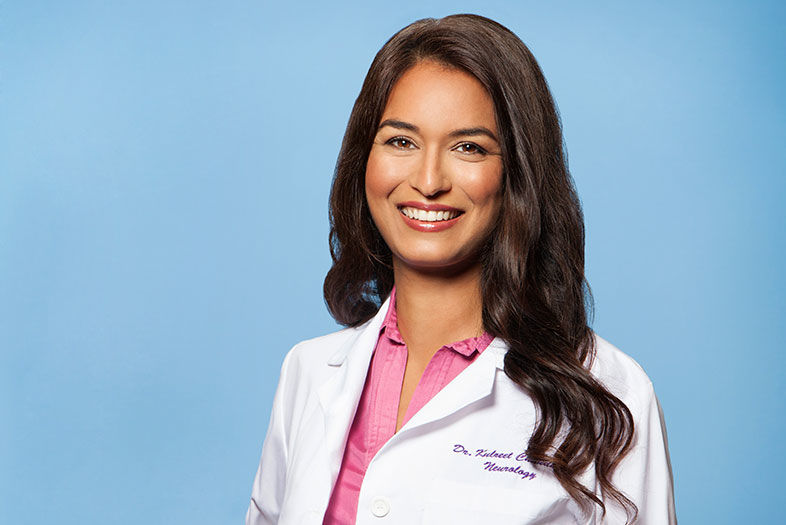
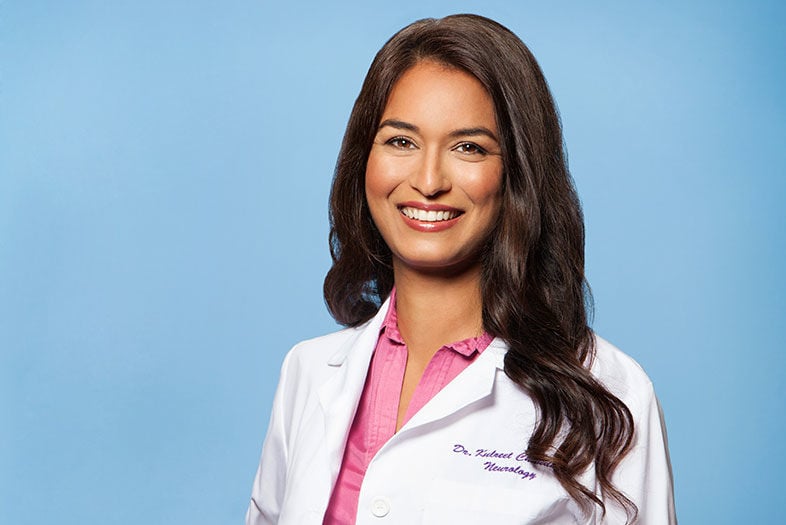
Top Docs 2014: Dr Kulreet Chaudhary

The renowned neurologist, wellness expert, and frequent Dr. Oz guest talks pills, meditation, and why San Diego is a healthy place to live
Top Docs 2014: Dr Kulreet Chaudhary
Photography by Jen & Bec

SDM: You say that the answer to illness does not lie in a pill. Really? Advil doesn’t cure all?

KC: In neurology, if there is an answer, you’re going find it in my prescription pad somehow. That’s pretty convenient until you yourself become a patient. I started getting migraine headaches. But, as I tried the medications, I was having side effects. I didn’t just wake up one day with migraine headaches. There was a story that got me to that. I was fatigued, I wasn’t thinking clearly, my digestion was completely off. I started changing what I was eating, things I was doing on a daily basis, and my headaches not only went away, my energy went up. When we give our patients just a pill to get rid of a symptom, we’re actually depriving them of an opportunity of fixing even more.

SDM: So how do we integrate that into today’s traditional medicial system?

KC: The medical system is great at acute stuff. If my guts suddenly rip out onto the floor, medicine is fantastic. We’re really good at that. But for chronic stuff, forget about it! It’s just a disaster. It’s a system that is incomplete.

SDM: Do you think people just want a quick fix?

KC: That’s a generational myth. I think young moms in particular are ridiculously proactive. They’re like, “I don’t want my kids on all of these antibiotics,” because they are going kill off their gut bacteria. This is fantastic. And I have a lot of people who are in the prime of their life, 40s and 50s, who are doing well in their industry and saying, “I want 20 more years of this. I want to be sharp.”

“When we give our patients just a pill to get rid of a symptom, we’re actually depriving them of an opportunity of fixing even more.”

SDM: Wellness is a buzzword. What does it mean to you? 

KC: It is not destination. It is a journey. When you’re really sick, you have one idea of what wellness is. For somebody who has migraine headaches like myself, for example, all I wanted to be was headache-free. And to me, that was being well. Once you get there, you suddenly have a whole new platform from which you can view your goals. Wellness to me is like a moving target.

SDM: Let’s talk about two more buzzwords—stress and sleep.

KC: Start with very small steps. People look at stress as, “This person here is stressing me out. You get rid of the person over here, and I’m not going to be stressed.” I look at stress as more of a biochemical event. Your diet contributes to it. Your sleep habits contribute to it, your exercise routine, whether you meditate or not. Maybe you can’t change your boss, or the fact that you have a loved one who’s sick. But you can change what you’re putting into your mouth. People don’t realize that the foods you eat can stress you out, and it can interrupt sleep.

SDM: What kind of foods stress you out?

KC: Artificial anything, preservatives, any of the artificial sweeteners are really horrible. Foods that are really high in sugar drain your system.

SDM: What are some healthy ways to reduce stress?

KC: Start with reducing your coffee intake, which increases your cortisol levels, reducing your soda intake, making sure you’re eating lunch, which is a meal that is really important in terms of determining your energy levels for the second half of the day. Same for sleep. Start waking up 30 minutes earlier, and going to bed 30 minutes earlier. Do that for two weeks. Then wake up another 30 minutes earlier; go to bed another 30 minutes earlier, for another two weeks. In America, we’re all about the big. We underestimate the value of really small consistent steps in the direction of our goal. As soon as you get close to your goal, you’re going to have another one anyway. It’s not a rush.

SDM: Do you agree with what Dr. Oz’ “Head Space Guy” says about meditation? He recommends meditation for every single day. You start out at 10 minutes, and then increase to 20.

KC: I don’t even understand how people are surviving today without meditation. It should be a part of everybody’s heath insurance that they’re given meditation. My mom taught me to start meditating when I was nine years old, for short periods. If I had to look back at the most important single event of my life, I would say that it would be learning meditation at that age.

SDM: We talk about a lot of doctors in this issue. What can we all do to have a better relationship with our doctors? 

KC: I enjoy when patients interact with me and challenge beliefs and ask questions, like, “Why are we doing it, what are some of the other options?” I realize that’s not the case for most doctors. My favorite patient to this day was an investment banker who was diagnosed with MS. She came in with all of the research studies in a binder, and said, “I’ve been to 14 neurologists, you’re number 15, number 16 is scheduled for next week.” This was somebody who understood that this was really her responsibility. I’m there to guide her, but her body is ultimately her responsibility. Most patients haven’t engaged in communication with their doctors. They’re so afraid of even contradicting them.

SDM: With electronic records, it seems like our relationships with docs are changing. What’s the future hold?

KC: We’re swinging the pendulum in one direction: Everything is technical, and everything is computerized. I think that one of the big trends over the next one to two decades on a managed care level is that we’re going realize that lifestyle is important. The next realization is going to be that change can’t happen without human interaction. And so, I think that we are going to either evolve to a level of documentation that is like verbally recording or something, that still allows us to interact with our patients, or we’re going to really reconsider our current system and say “this is not working.” The doctors have to have a human relationship with their patients, and that’s not going to occur if they are just staring at a screen.

SDM: What’s your daily routine like in terms of diet and exercise? 

KC: I wake up between 4:30 a.m. and 5 a.m. I can’t remember the last time I’ve used an alarm clock, and it’s just because I’m not tired. The first thing I do is take my herbs. Then I meditate for about an hour in the morning. I take my shower. If I have time, I’ll get a really quick workout on the elliptical machine for 10 minutes. Then I get my very simple breakfast. I make my lunch the night before in a slow cooker. It’s usually some kind of lentil that I cook overnight. I’ll see patients from 9 a.m. to about 4 p.m. And at lunch, I spend a lot of time with my food and eating in a quiet environment. I take a 20-minute nap after I eat, almost every single day. Even if I don’t fall asleep, I lie down after lunch, just so that my body relaxes. I work until 4 p.m. and then I go and pick up my son from school. We eat early; 6 p.m. would be the latest. Then I spend some time with my son. I do some evening meditation. He usually falls asleep in my lap when we’re doing evening meditation. Then, I go to sleep by 9 p.m. at the latest.

SDM: What foods should we all be eating?

KC: Turmeric. Everyone should be cooking with turmeric. If you can’t cook with it, just take it as a pill. Cumin powder, coriander powder, and fennel powder, if you have any digestive problems at all. Ginger also is so good for digestion. Most of our problems today are linked to digestion. Instead of using iodized table salts, switching to Himalayan sea salt, which is healthier. Switching refined white sugar to organic coconut palm sugar is far less inflammatory, and so much tastier. And then… water! People don’t drink water. If people come over and ask what do we have to drink, I say, “Oh, we have water. That’s what human beings drink!” To help with food cravings, one of the first things to do is to drink water! You’re probably just thirsty.

“Maybe you can’t change your boss, or the fact that you have a loved one who’s sick. But you can change what you’re putting into your mouth. People don’t realize that the foods you eat can stress you out, and it can interrupt sleep.”

SDM: Is 30 minutes of walking several times a week enough to be healthy? 

KC: Thirty minutes is more than enough, but it’s not enough to counteract really horrible dietary habits. So it’s not like, “I’m going go to McDonald’s, I’m going drink a Big Gulp, but I’m walking 30 minutes a day, so hey, that’s enough.” I do less than 30 minutes a day, but that’s because I’m doing a lot in terms of my diet and my stress.

SDM: What about the 10,000 steps a day rule?

KC: The reason why we have to exercise so much is because so many of our other habits are so extreme. There’s a middle ground here. People have a harder time changing their diet first. They think it will be easier to move, but there really is no amount of movement that counteracts what you’re doing in terms of your diet.

SDM: So you can’t exercise your way out of a bad diet?

KC: You can’t. You really just can’t.

SDM: What vitamins or supplements do you take?

KC: I don’t take vitamins. I take ayurvedic supplements, including ashwaganda, an ayurvedic herb for chronic day-to-day stress, and triphala. It’s a combination of three berries that really helps to get rid of any toxin accumulation in your body in a gentle, daily way.

SDM: What are the advantages of living in a place like San Diego?

KC: Because I am so food-conscious, if I didn’t live in a place like San Diego, I would never eat out. There would just be no options for me. There wouldn’t be restaurants where I feel like I have any healthy [choices]. Just being able to be by the ocean and the sand is also so healing. Being in salt water is a treatment in itself, and it is walking distance from so many places in San Diego. In Encinitas, there are so many meditation communities. It’s really hard to throw a rock in San Diego and not hit a yoga studio.

SDM: What are your favorite restaurants?

KC: Native Foods, which is great for people like me who are 90 percent vegan. Veggie Grill for the same reason. Even Burger Lounge, for example. They have an organic quinoa burger. True Food Kitchen. I can go to those places, and safely feel, “I’m not going to be completely ill after this meal.”

SDM: And then the disadvantages—things like too much sun and a high cost of living?

KC: I think the biggest disadvantage is the traffic! Most people in San Diego commute at least 40 minutes a day. They’ve done studies that traffic in itself is a risk factor for disease. It’s just not healthy to be sitting and that stressed out twice a day.

SDM: And … Doctor OZ! What’s that relationship entail and what is he like?

KC: He has this certain intensity, and he’s so comfortable with sharing the stage. You don’t get the sense that he is trying to be the star. He’s very interested in educating people, and doesn’t come off as, “I already know this, I’m smarter than you.” There’s a level of thoughtfulness that only happens when you truly care about other human beings.
Top Docs 2014: Dr Kulreet Chaudhary

Photography by Jen & Bec

Subscribe to our newsletters

Select Options

By subscribing you confirm that you agree with our Terms and Conditions and Privacy Policy.

Everything SD AUGUST 13, 2026

A Rare Look Inside Callaway Golf’s San Diego Test Center

The Ely Callaway Performance Center is where tour-level fittings, cutting-edge technology, and golf equipment you can’t buy yet all come together

A Rare Look Inside Callaway Golf’s San Diego Test Center
Courtesy of Ely Callaway Performance Center

“Come test something.”

Those are quite possibly my three favorite words in the English language—all due respect to “I love you” or the highly underrated “you were right.”

I’ve been a PGA Golf Professional since 1994, and yes, full bias disclosure, a Callaway Golf Ambassador for 18 years. One of the bonuses that comes with that combo is access to the Ely Callaway Performance Center—a place so exclusive it gives “velvet rope” vibes.

Originally opened in 2006 as a highly functional (yet not exactly breathtaking) test facility, the ECPC got a serious glow-up in 2018 when Gil Hanse (along with partner Geoff Shackelford) turned it into what can only be described as a fully engineered golf playground. Hanse is no stranger to golf course renovations. In 2024, he completed an extensive redesign of the Omni La Costa North Course in Carlsbad, so it could host the NCAA Division 1 Golf Championships. He also worked on acclaimed courses like Winged Foot, Merion Golf Club, and Oakmont Country Club.

In just two months, it went from a standard test center and R&D lab to a fully dialed-in golf playground.

Courtesy of Ely Callaway Performance Center

What was once purely practical is now intentionally designed to be both precise and inspiring. The targets are staggered with purpose—forcing creative shot-making while also calling you out on your actual distances (no more “that’s my 150-yard club … ish”).

Add a massive hitting area, bunkers and greens that mimic real on-course conditions, a “Himalayas” putting green (named for its roller-coaster undulations), an upgraded indoor putting lab, and a 120-decibel sound system blasting a very golf-appropriate playlist, and suddenly it’s a rare blend of high-performance testing facility and “don’t mind if I stay here all day” energy. Since this isn’t exactly open to the public, SDM asked me to take you behind the curtain.

As the iron gates part, it feels less like arriving at a practice facility and more like being granted backstage access at a rock concert—if the bandmembers were made entirely of launch monitors and perfectly manicured turf.

There are no mats. No guessing. No “I think that one felt good?” Just conditions that mirror exactly what tour players see in competition. Because when you’re testing equipment at this level, accuracy isn’t a bonus—it’s the whole point.

Even the sand matters. Different textures. Different densities. Because bunkers have personalities, too, and they are often unfriendly. And the golf balls? Brand. New. Not the usual “these have seen some things” range balls. New balls mean consistent spin, truer trajectory, and no surprises. The older a golf ball gets—and the more it’s been baked in the sun, scuffed, or generally lived a full and complicated life—the less reliable it becomes. Think of it like this: fresh ball, predictable performance; old range ball, slight chaos with a side of mystery.

I’m escorted to my personal hitting bay—basically a pop-up shaded oasis stocked with enough equipment to make a gear junkie weak in the knees. Shafts in every weight and profile imaginable. Heads lined up like they’re waiting to be drafted by their favorite team.

Courtesy of Ely Callaway Performance Center

Toptracer technology was patiently waiting to track every one of my swings, each shot instantly delivering ball speed, launch, spin, carry distance, and dispersion (a polite way of saying consistency, or lack thereof), so there’s no guessing—just data telling the truth, whether I like it or not.

We start with irons. Different heads, different feels, different results. When I miss a shot, the ball tends to leak right, so we check lie angle. A quick adjustment—2 degrees upright—and suddenly the clubface is consistently square at impact like it remembered its job. Effort level: down. Ball flight: improved. Confidence: creeping back.

Next we look at the different shaft options—because nothing says “fun afternoon” like realizing a higher kick point can change your entire golf identity. Shaft flex (how much the shaft bends during your swing) helps determine whether you get more height and distance or more control, while kick point (where the shaft bends the most) influences your ball flight—lower kick point for higher launch, higher kick point for a flatter, more penetrating shot. In other words, one small tweak and suddenly you’re hitting shots you’d normally only describe later, slightly exaggerated, over a glass of wine.

Then we move through the bag: hybrids, fairway woods, drivers, wedges. It’s a full rotation of “try this,” “now try this,” and “okay wait … THAT one.”

And yes—the new Quantum driver and fairway woods made an appearance. Without getting too deep in the weeds, they’re faster, more forgiving, and smarter (thanks to AI face mapping) than previous models. Translation: Even your mishits are now slightly less embarrassing. And they were not the only things getting tested. My patience was under attack because the driver and woods would not be available to the public for a good three months.

Courtesy of Ely Callaway Performance Center

Watching the fitting team work is like watching a Formula 1 pit crew. Clubs are swapped in seconds. Shafts tightened, adjusted, replaced. One minute you’re swinging something that seems “fine,” and the next, you’re holding a club that feels like it is a part of your DNA.

Then there’s the putter fitting. Drivers are physics. Putters are therapy. Inside the putting lab, sensors track everything—tempo, face angle, path—things you didn’t even know could be measured. Within minutes, my data politely informs me that my putter face is slightly closed at impact. Not shocking, but also not ideal.

A few quick adjustments—different head (with a bit more weight at the toe to discourage the face swinging closed at impact), shorter shaft (so I feel more over the ball, which helps my eyeline)—and suddenly the ball starts rolling exactly where I’m aimed.

Same stroke. Same golfer. Completely different outcome. If only the rest of life worked like that.

And then there’s the part that feels slightly classified. The ECPC isn’t “just” a performance center—it’s also where future equipment lives before the public even knows it exists. I’ve been there when certain clubs were basically under surveillance. Not “don’t touch,” but more “please keep phones in your pocket.”

It’s golf’s version of Area 51. Except instead of aliens, it’s drivers that won’t hit shelves for another year—and like I mentioned, waiting is not my strong suit.

Getting to test the newest equipment isn’t just a perk—it’s part of the job. It’s what allows me to stand in front of students and say, “I’ve tried it. I know what works and what doesn’t. And more importantly, I know why.” And if I happen to sprint to my car every time the phone rings and someone says, “Come test something” … well, that’s just professional courtesy.

Other Fitting Spots in SD

Callaway isn’t the only place to get your swing analyzed and clubs fitted. You can stroll into big retail spots like The Golf Mart or Golf Galaxy, book a next-level session at a dedicated studio like Club Champion or True Spec Golf, test brand-specific gear at various manufacturing companies (many located in Carlsbad), or even combine a lesson and a fitting at GOLFTEC. And let’s not forget your local golf course, where fittings happen on actual turf, on a driving range you have some history with—many times with the golf professional who is familiar with your swing so they can give you valuable input. With this many options, there’s really no excuse, other than pride, to keep blaming your clubs.

Everything SD AUGUST 12, 2026

San Diego’s Skateboarding Scene Rolls Into a New Era

The county that helped push skating into the mainstream is now nurturing the competitors, communities, and culture shaping its future

San Diego’s Skateboarding Scene Rolls Into a New Era
Photo Credit: Taylor Ballard

It was the summer of 1999. MTV, The Matrix, and first-generation PlayStation glowed on tube TV sets all over America. What a time to be alive. Smartphones weren’t yet stealing people from the moment. Cultural was a shared reality. During the last few minutes of the monoculture, Tony Hawk executed the first-ever 900 at X Games V in San Francisco. That’s two and a half aerial rotations with a side of the dizzies.

The time had run out on the Vert Best Trick competition long before the 11th attempt when he pulled off the fateful feat. Nobody cared. Not the judges, not the competition, and certainly not the crowd. “Let that bird fly,” they said. Once the trick was landed, they partied like it was 1999 … because it was.

That was the tipping point when the skateboarding world exploded, going from counterculture to a national phenomenon. Shortly after that, “Tony Hawk’s Pro Skater” video game came out, introducing millions of kids to what skate culture looked like. Oh, the game had a killer punk soundtrack, too.

Linda Vista skatepark in San Diego featuring skaters on the side of a half-pipe

We can all thank Hawk for the globalization of skateboarding. But we can also recognize his local influence and how San Diego County continues to be a hub for skateboarders young and old, for competitors and street skaters. To see it all, go to Park De La Cruz in City Heights—or, heck, any other skatepark in the county—which, at 19,000 square feet, is about twice the size of the average skatepark and has signature features like an M-shaped transition ramp. The amount of talent that continues to evolve in this county is a testament to deep-rooted skate culture and world-class athletes supporting the next generation.

Photo Credit: Casiel Sanchez

The Skatepark

I’m a little early for a skate lesson with pro skater Mike Owen when I get to Linda Vista Skatepark. In the 2010s, Owen ranked as one of the world’s top bowl riders. He’s the founder of San Diego Skateboarding and has “helped thousands of kids, teens, and adults learn to skate safely, confidently, and with style,” the company’s site says. And now it’s my turn. We start the lesson on the nearby tennis courts, getting my basic foot mechanics down. Safety before style.

In terms of street plaza features, the massive Linda Vista Skatepark is loaded with rails, stairs, manuals, and ledges. There are more bowls than you can get from Cava: a flow bowl, backyard-style pool, and vert bowl. The main feature is a full pipe for advanced line riders. It’s a hell of a park, even if somebody just wants to watch the action from the 100-foot-long pedestrian skybridge overhead.

Right now, San Diego has over 50 public skateparks scattered throughout the county. “There are now more [skateparks], more resources for them, and more terrain,” Owen tells me. “Now, they’re offering different competitive style skateparks that help for competitions. The best parks have a variety of different terrain where you have things for beginners and bigger transitions. Not every town has that.”

San Diego, luckily, does. But despite the bounty, Owen believes there should still be more—public skateparks are safe spaces for all to learn and develop on-board skills. Without them, a huge portion of San Diego’s culture withers. Encinitas could be the next city to add a skatepark to the county’s roster: In early July, the Encinitas City Council appointed 12 local skaters and community members for the newly established Skate Feature Committee. In partnership with two councilmembers, the committee’s purpose is to design a working skatepark or feature for the city.

But like any big project, Owen says, it’s a long process to add another skatepark to the community.

“I wish it were easier,” he says. “When there are different contractors for different things, [there’s only] a certain amount of time to build. It gets tricky.”

Then there’s the matter of funding the actual construction and development of the skatepark. That usually comes from grants, fundraisers, and donations. For reference, Linda Vista Skatepark was built on a $4.46 million grant from the California Department of Housing and Community Development in 2014. With an additional $40,000 donated by the Tony Hawk Foundation, the park opened in 2018 and is the largest in San Diego’s Parks and Recreation system. The best way to get a skatepark in your neighborhood, Owen says, is to start a petition and reach out to your city.

Photo Credit: Blair Alley

The Street Skaters

Jordan Thrower’s first street skate sesh at San Diego City College in 2003 ended with a police chase. The campus was swarming with skaters riding rails, jumping stairs, and grinding tricks on benches, curbs, and ledges. When the cops got on their loudspeaker telling them not to run, everyone obviously ran. Back then, cops would give tickets and confiscate boards. The vibe has loosened since. “Now, the police don’t really care,” Thrower says. “They just make you leave. It’s not anything crazy.”

Street skating is when riders use real-world urban obstacles, rather than pristinely designed bowls or ramps—such as in college campuses, downtown areas, corporate buildings, and malls. Abandoned mini-golf courses and construction sites do the trick, too.

Thrower says the street skating hub here isn’t as huge as it once was. Thanks to modern technology and social media, skaters aren’t tied to any certain place to create skate videos. You know, those videos that could have been taken this year but have the low-fi vibe of 2004, where skaters carve down stairwells into parking lots, over mailboxes, or across park benches. The silver lining: Even though there are fewer street skaters than there once was, those who stayed in San Diego are still tight.

“Everyone skates with each other and knows each other here,” Thrower says. “In LA, it’s not really like that. It’s small there, but not everybody knows each other, and they don’t really skate with each other too much. They just have a lot of little crews.”

Back in 2015, Thrower started his own street team and brand that sells boards and shirts called Tantrum. The Tantrum team is split between San Diego and San Francisco. It doesn’t take much to be a part of a skate team. You just have to be a good hang.

“The way I pick people [for the team] is if I can get along with them,” he says. “It doesn’t even really matter if they’re that good. If you’re likable and funny, you can pretty much be on the team.”

Photo Credit: Marc Wierenega

The Future

Running it up to North County, a Vista-based nonprofit organization called Exposure Skate has been shaping up the youth since 2012. Its mission is to give more opportunities to otherwise underrepresented women, girls, and non-binary individuals by offering classes and camps. This, to build up confidence and community. We could all use a little bit of that, eh?

Thanks to Exposure Skate, 13-year-old Joey Yarbrough has found herself competing in the LA Olympic trials. (Her first time on a skateboard came at just 18 months old at an Exposure Skate Rising event.)

While competing for Team USA in Rome in June of this year, she finished 13th at the first Olympic qualifier for LA28. Currently ranked 21st in the world and 5th among American women, the young prodigy is blooming. And she’s in good company and mentorship from her biggest influence, Bryce Wettstein.

“She taught me at the first Exposure Skate Rising when I was little,” Yarbrough recalls. “I compete and skate with her all the time now, and it’s super fun. [At Exposure,] it feels so good to have someone there to help me whenever I need it. They’re like my family, always encouraging me and always there for me.”

Yarbrough will be just 15 years old when the Olympics go down in LA. She’s following the Olympic torch carried by other locals such as Wettstein, Ruby Lilley, Jordyn Barratt, and Exposure Skate’s Amelia Brodka.

“I’m working my hardest to get there,” she says. “I’ll also work my hardest to go higher in the Olympics, maybe on podium. That’s just my dream. So, hopefully it’ll come true.”

Jake Peterson is a San Diego-based journalist and culture writer. His work explores the city’s music scene, sports, local characters, and the offbeat corners of San Diego’s subcultures.

Arts & Culture AUGUST 5, 2026

The Best of San Diego 2026: Readers’ Picks

From tacos to tailors and trainers to travel, these are the businesses, people, and places that earned San Diego readers' votes

The Best of San Diego 2026: Readers’ Picks
Photo Credit: Narrative Images

Beauty + Cosmetic

Brow Studio

Elicia Marie Beauty

Hair Removal Business (Non-Laser)

Brazilia Skin Care

Laser Hair Removal

San Diego Aesthetics and Med Spa

Lash + Brow Technician

Elicia Soltesz, Elicia Marie Beauty

Lash Studio

Cupid Complexion

Makeup Artist

Ashley Fierro, Ashley Fierro Makeup

Microblading Artist

Sunny Olais, Sunny Bee Brows

Microneedling

Michelle Langston, MSN, APRN, FNP-BC, HNB-BC, Starlite Aesthetics

Spa for Skin Care (Non–Med Spa)

Honest Skin

Spray Tan Artist

Alysa Espiritu, Afterglo Beauty Lounge

Spray Tan Studio

Afterglo Beauty Lounge

Waxer

Tracy McMaster, The Wax Lady

Cosmetic or Beauty Product: San Diego–Based

KOA+ROY

Barber

Ronnie Page, Gold Comb Barbershop North Park

Barbershop

Hillside Barber

Courtesy of The Blow Dry Lounge

Blow Dry Bar

The Blow Dry Lounge

Colorist (Balayage)

Mariela Urbina, Rinse Salon

Colorist (Highlights)

Ryleigh Hunter, Headbang Salon

Colorist (Single-Process)

Mariela Urbina, Rinse Salon

Hair Extensions

The Hair Extension Bar

Hair Salon

Pixiedot Salon

Hair Stylist

Ann Teresa Degischer, Maen the Salon

Keratin or Smoothing Treatment Specialist

Lindsay Axelrod, Pixiedot Salon

Scalp Treatment Specialist

Cheng Tan, Koda Salon

Manicurist

Moni, Clawed Up by Moni

Nail Salon

Lulu Nails

Pedicurist

Zoe Walter, Pure Nailz

Piercing Studio

Enigma

Tattoo Artist

Lauren Skinker, Lucky Cat Tattoo

Tattoo Studio

Lucky Cat Tattoo

Courtesy of SUVA Fitness

Fitness

5K Run

Father Joe’s Villages Turkey Trot

Aerial Fitness Studio

Aerial Revolution

Barre Studio

barre3

Best New Class/Program, Opened 2025

SUVA Fitness

Best New Fitness Studio, Opened 2025

Sculpted. A Lagree Studio

Body Sculpting Studio

Move Madly

Boutique Gym

MK Fitness

Boxing Studio

City Boxing

Climbing Gym (Indoor Rock Climbing)

Mesa Rim Climbing

CrossFit Studio

Invictus Fitness

Dance Studio

Madhouse Dance

Fitness Bootcamp

The Camp Transformation Center, West Chula Vista

Fun Run

San Diego Santa Run

Golf Clinic

Singing Hills Golf Club at Sycuan

Half Marathon

Carlsbad Half Marathon

HIIT Studio

Orangetheory Fitness

Kickboxing Studio

9Round Kickboxing Fitness

Lagree Studio

Rise Lagree Studio

Courtesy of Rock ‘n’ Roll San Diego

Marathon

Rock ‘n’ Roll San Diego

Martial Arts Studio (Including Jiu-Jitsu, Judo, Karate, Krav Maga, and MMA)

Legacy San Diego

Personal Trainer

Camila Casanueva, The Yard Gym

Pickleball Courts

Barnes Tennis Center

Pickleball Lessons

The Hub Pickleball Club

Pilates Studio

SaltVault

Pole Fitness Studio

The Dollhouse Fitness

Spin Studio

Activate House

Surf Lessons

Little Groms Surf Camp

Tennis Club

Balboa Tennis Club

Tennis Courts

La Jolla Beach & Tennis Club

Tennis Lessons

Mission Hills Tennis

Traditional Gym/Fitness Center

Fit Athletic Club

Triathlon

San Diego Triathlon Series

Yoga Studio

Yoga Box

Photo Credit: James Tran

Food + Drink

Açaí Bowl

everbowl

Bagel

Big City Bagels

Bakery

Valerio’s Bakeshop

Bar

Happy Medium

Bartender

Austin Harrington, Captain’s Quarters

Best Local Alt-Drink, Alcoholic

Bivouac Ciderworks, Savoy Dry Apple Cider

Best New Bar Opened 2025

Kiku Room

Best New Brewery Opened 2025

Good Pressure Brewing Company

Birria

Birria El Rey

Bloody Mary

Waterfront Grill

Bread

Izola

Brewery

Harland Brewing Company

Burrito

The Taco Stand

Canned Cocktails

Cutwater

Caterer

Snake Oil Cocktail Company

Cheese Shop

Venissimo Cheese

Chips & Salsa

La Puerta

Chocolate Shop

San Diego Chocolate Co.

Coffee Beans/Roaster

Bird Rock Coffee Roasters

Craft Cocktails

Happy Medium

Distillery

Cutwater

Dive Bar

Aero Club

Donuts

Nomad Donuts

Farmers Market

Little Italy Mercato

Farmers Market Food Vendor

Flavors of East Africa

Fish Market

Tunaville Market and Grocery

Fish Taco

Oscars Mexican Seafood

Food Truck

Shawarma Guys

Fries

The Crack Shack

Gourmet Grocery Store

Lazy Acres

Happy Hour

La Puerta

Ice Cream/Gelato

Stella Jean’s

Juice Bar

Señor Mangos

Kombucha

Juneshine

Liquor Store

Old Town Liquor

Local Agave Spirits (Tequila/Mezcal)

Bebemos

Local Beer

Pure Project

Courtesy of Seven Caves Distillery

Local Gin

Seven Caves Distillery

Local Vodka

619 Spirits North Park

Local Whiskey

Skrewball Whiskey

Local Wine

Bernardo Winery

Margarita

Cantina Mayahuel

Martini

Turf Supper Club

Mocktails

Juniper and Ivy

Negroni

Sonny’s Pizza

Old Fashioned

Cowboy Star

Pasta

Pazza Market & Cucina

Phở

Phở Ca Dao

Pizza

Tribute Pizza

Pop Up

Mon Chourie

Produce Market

Specialty Produce

Romantic Bar

Starlite

Rooftop Bar

Communion

Sandwich

Big Jim’s Roast Beef

Smoothies

Señor Mangos

Sommelier

Missi Burns, Et Voila

Speakeasy

Raised by Wolves

Specialty Food Store

The Wise Ox

Sports Bar

Fairplay

Taco

Tacos El Gordo

Taproom/Tasting Room

Pure Project

Tequila/Mezcal Bar

Cantina Mayahuel

Whiskey Bar

Seven Grand

Wine Bar

Finca

Wine Store

Vino Carta

Winery

Gianni Buonomo Vintners

Wings

OB Noodle House

Courtesy of Four Moons Spa

Health + Wellness

Aesthetics + Med Spas: Aesthetician for Facials/Peels/Non-Medical Skincare

Cara Paymaster, CARA Studios

Aesthetics + Med Spas: CoolSculpting/Body Contouring Clinic

Cosmetic Laser Dermatology

Aesthetics + Med Spas: Hormone Therapy/Anti-Aging Clinic

Prospera Internal Medicine and Aesthetics

Aesthetics + Med Spas: IV Therapy/Hydration Lounge

San Diego Aesthetics and Med Spa

Studio S AUGUST 10, 2026

The Secret to a Home That Feels Just Right

Behind every beautiful space is a thoughtful process, and ASID San Diego is helping homeowners understand the value of professional design.

The Secret to a Home That Feels Just Right
Courtesy of ASID

A perfectly designed home rarely happens by accident. Those kitchens that feel effortless and rooms that seem to tell a story the second you walk in? They’re usually the work of someone who knows exactly what they’re doing.

It’s knowing which ideas will actually work, which materials will hold up over time, and how to turn a collection of choices into a space that feels intentional. That’s where a professional interior designer comes in.

For the American Society of Interior Designers (ASID) California San Diego Chapter, the goal is to help people see interior design as more than just the finished look. Behind every well-designed space is a process built on technical expertise. Designers are educated in everything from professional software and construction details to building codes, space planning, materials, and functionality.

Courtesy of ASID

“People don’t always realize how much goes on behind the scenes,” Kirsten Recce , current president of the ASID California San Diego Chapter, says. “Our designers are not just doing furniture placement and color selection and picking out new fluffy pillows. That’s not what they’re trained for.”

ASID members bring formal education, continued learning, and industry knowledge to their projects, helping create spaces that are not only beautiful, but designed to work. A paint color that changes completely depending on the lighting. A material that looks beautiful in a showroom but doesn’t make sense for everyday life. A layout that photographs well but doesn’t function for the people living there. These are the details where professional guidance can make all the difference.

Still, one of the biggest misconceptions about hiring an interior designer is that it’s reserved for massive renovations, luxury homes, or people who already know exactly what they want. The process can feel intimidating. Where do you begin? Is a designer worth the investment? What if you only need help with one room?

ASID’s answer: start with one hour.

ASID’s Spruce Up events break down one of the biggest barriers between homeowners and professional design: knowing where to begin. Held twice a year, the community program gives homeowners the chance to work directly with an ASID designer through a one-hour, $125 consultation in their own home. Whether you’re looking for advice on furniture placement, window treatments, kitchen and bath updates, remodeling ideas, vacation rentals, color selections or something else entirely, the upcoming September 2026 event offers an approachable way to get expert guidance before committing to a full project. Signups are open through Sept. 7, with consultations taking place Sept. 21 through Oct. 31. Proceeds benefit ASID San Diego’s educational and community programs. Register here!

Courtesy of ASID

“It’s a great opportunity for people who are in that exploratory phase,” Recce says. “Maybe they’re not sure they want to hire an interior designer yet, or they think it sounds daunting or expensive. This gives them a chance to discover what working with a designer is actually like.”

Design is personal. A good designer isn’t just creating a beautiful room; they’re helping create a space that fits the way someone lives.

“We’re a resource to all of San Diego County,” Recce says. “It doesn’t cost anything to pick up the phone and call and ask. We’ll answer.”

Follow ASID San Diego on Instagram, LinkedIn, and Facebook for updates on upcoming events, or connect with the chapter directly at [email protected] or 619-548-8847.

Partner Content
Everything SD JULY 31, 2026

The Best of San Diego 2026: Health & Outdoors

From getting your sweat on at hip-hop class to celebrating with a zero-proof cocktail, here are San Diego's top fitness and wellness spots

The Best of San Diego 2026: Health & Outdoors
Photo Credit: Brett Butterstein

Best We Named It What for Why Oh Dear

Cush-pii

For thousands of years, the Kumeyaay who lived in this area called a mountain south of Julian Cush-pii, meaning “sharp peak.” Then, after the Civil War, Confederate sympathizers saw that same mountain and decided to rename it Stonewall Peak—after General Stonewall Jackson. The name stuck for nearly a century and a half, until Cuyamaca Rancho State Park announced earlier this year that the name will return to its original, Cush-pii. Hike to the summit for expansive views of the Coronado Islands to the west and Mexico to the south.

Courtesy of Culture Shock San Diego

Best Pop and Lock Spot

Culture Shock

In 1993, Angie Bunch gathered a group of hip-hop dancers—called Culture Shock Dance Troupe—and gave them a space to practice and perform. As hip hop grew through the ’90s, so did Culture Shock. It has since become a nonprofit, a space for young and old, beginner and expert dancers. Culture Shock has also expanded to Los Angeles, Oakland, Las Vegas, Chicago, Atlanta, New York City, and Washington, D.C., as well as Ottawa and Toronto, Canada.

Best Way to Sweat on a Lava Lamp

Yoga Box

In 2019, Amanda Leach created the Yoga Box method, which takes high-energy flows and adds strength-building poses in heated, vibey, lava-lamp-lit studios. What started on Grand Avenue in Pacific Beach has spread to 15 locations across the county, with even more trickling into Denver, Chicago, and Brooklyn. The best part? Mindfulness newbies who can’t touch their toes and six-packed contortionists can hang in the same class. You can customize each session based on your ability and fitness level.

Courtesy of Fit Athletic Club

Best Leg Day Turned Social Hour

Fit Mission Beach

A gym taking over a historic beachfront pool sounds like the setup for a new season of Love Island, but Fit Mission Beach operating the nearly 100-year-old Plunge at Belmont Park is real. The independent fitness brand has spent the past several years building a loyal following through group fitness classes, community events, and a members’ social club overlooking the ocean. Upstairs, members can work remotely, meet friends, or hang out long after their workout ends. Between the Plunge, the coworking-style lounge, and a packed calendar of events, Fit has evolved into something bigger than a gym. It’s a clubhouse for San Diego’s fitness crowd.

Best Place to Learn What a Vagus Is

Breathe Degrees

The wellness world is finally transitioning away from HIIT workouts and cult-like spin classes, where your heart rate hits Zone 5 within minutes and stays there until cooldown. Good. At Breathe Degrees, wellness takes the form of zenned-out communal breathing sessions or vagus nerve–activating cold plunges. Breathwork is said to boost your mood in the short term and improve your heart health in the long term, and maybe that’s why everyone’s coming back for more. You can’t run into someone in Carlsbad who hasn’t dropped into at least one breathwork session, and now the studio has opened a second location in Liberty Station.

Photo Credit: Shot On Us

Best Pilates Studio for People With Tiny Roommates

Soul Pilates and Care

Pilates wasn’t just popular this year; it was practically a requirement for maintaining your San Diego residency. New studios seemed to appear weekly across San Diego, each promising stronger cores and better posture, but Soul Pilates and Care found a way to stand out by addressing a challenge many parents know well: finding time to exercise at all. Fitness doesn’t have to compete with parenting responsibilities. Parents can drop their kids off with trained caregivers while they head into reformer classes, eliminating one of the biggest barriers to working out. The studio has earned strong reviews for both its instruction and family-friendly approach.

Best Million-Dollar Massage

Spa at The Del

The Hotel del Coronado’s sweeping $550 million restoration touched nearly every corner of the historic resort, but one of the most anticipated unveilils was the debut of its redesigned spa. The oceanfront wellness destination now features 21 treatment rooms, a relaxation lounge, a sauna, steam room, and a treatment menu inspired by the coastal environment just steps away. The redesign blends the Del’s Victorian legacy with a cleaner, more contemporary aesthetic, creating a space that feels distinctly SoCal rather than generic luxury hotel. For locals who don’t have time for a vacation, it’s the next best thing.

Best Cheers Without Beers

Good News Bar

As non-alcoholic beverages continue their meteoric rise, Good News Bar has become one of San Diego’s most compelling arguments for a booze-free evening. The University Heights hotspot serves a menu of carefully crafted zero-proof cocktails that borrow techniques and ingredients from traditional cocktail programs (it’s not just fancy juices and soda water), minus the hangover. The space also hosts regular community events and has quickly become a gathering place for everyone from sober San Diegans to the merely sober-curious. In a nightlife industry built around alcohol sales, Good News proved there’s plenty of demand for connection without the buzz.

Everything SD JULY 22, 2026

There’s a New SPF for Men Called 4-Skin (Yes, Really!)

Why a well-known San Diego restaurateur launched a skincare brand with a name you can’t unhear

There’s a New SPF for Men Called 4-Skin (Yes, Really!)
Courtesy of 4-Skin

In Mexico for a wedding, a friend got a tourist-level sunburn. One of San Diego’s top restaurateurs—Arturo Kassel, founder of Catania and Gravity Heights—was on hand. He made a joke about how basic sunscreen literacy seems to be a male-pattern blindness.

“I said, ‘You know what? I’m going to start a men’s sunscreen brand, and I’m going to call it 4-Skin—because men are dicks and they need to cover up,’” he explains. “We spent the whole weekend thinking of puns and innuendos for this hypothetical brand we were never actually going to launch.”

The joke refused to die. Days later, one of the Mexico-wedding friends—a top marketer in the city—called Kassel and said the highly intentional dude humor might have a couple top notes of genius. So Kassel did a little digging into men and very basic skincare/sunscreen usage. Turns out, 1 in 29 are at risk of developing melanoma compared to 1 in 40 women.

“I was shocked to learn that only about one in 10 men actively use sunscreen, and that’s at the beach, on the golf course, or at the pool, when you’re going to get fried,” he says. “Daily use is essentially nonexistent.” During the process, Kassel became part of the story.

“My dermatologist called and told me I had basal cell carcinoma,” he says. “At that point, it went from being a business to a very personal mission. I became determined to move the needle when it comes to men’s apathy toward sunscreen.” And so—hundreds of hours later, including a still-going crash course on launching a CPG brand—a local restaurateur launched a jarringly named sunscreen and moisturizer for men. Broad spectrum, high-quality, SPF 50, lightweight, goes on clear, all the things. The daily-use morning routine version is called Morning Rub. Of course it is.

Kassel reached out to his friend Troy Johnson—San Diego Magazine co-owner and co-founder of Here We Are Studios,—to collaborate on creating two commercials for the brand. They launched July weekend. Friends went down to the beach to talk to strangers about their 4-Skin. Awkward, funny, and if all goes to plan: making men rethink their relationship to the blazing ouchie star in the sky. 

“4-Skin is funny as a brand, but there’s nothing funny about skin cancer,” says Kassel. “That’s the one-two punch: we got your attention, maybe we made you laugh. And now we can tell you something that might extend your life.”

For this special-edition podcast from Here We Are Studios, Troy and Arturo sit down and tell the entire story of how a joke became a brand with a serious mission.

Partner Content AUGUST 19, 2026

Best Feet Forward

How local orthopedic specialists are pioneering the future of foot and ankle care

Best Feet Forward
Courtesy of Scripps Health

Your feet and ankles probably aren’t something you give much thought to—until something goes wrong. Orthopedic surgeons at Scripps Clinic are on the leading edge of foot and ankle reconstruction, treating patients with sports injuries, deformities, traumatic injuries and other conditions. That includes repairing torn Achilles tendons with a minimally invasive procedure that shrinks the incision site to less than a centimeter, and performing advanced ankle replacement on some patients with ankle arthritis. Read more about Scripps’ innovations in foot and ankle care here

For more nutrition, wellness, and healthy living tips, sign up for the San Diego Health newsletter here

Partner Content

Thousands of savvy locals already get it.

San Diego's best restaurants, experiences, and events—handpicked and delivered to your inbox weekly. You in?

Close the CTA

Contact Us

1230 Columbia Street, Suite 800,

San Diego, CA
