Featured articles
Food & Drink
Food & Drink
Food & Drink
Featured articles
Everything SD
Everything SD
Things to Do
Featured articles
Things to Do
Things to Do
Guides
Featured articles
podcast-ep
podcast-ep
podcast-ep
Featured articles
Everything SD
Everything SD
Food & Drink
Featured articles
Everything SD
Everything SD
Food & Drink
Ready to know more about San Diego?
SubscribeReady to know more about San Diego?
Troy Johnson reviews Gang Kitchen
Gang Kitchen
Gang Kitchen
A pizza guy does Asian fusion and it’s nowhere near as bad as that sounds
The only thing alive in here is the people.
No Flowers. No plants. Just concrete walls and black beams and menacing industrial fans that spin at a morbidly slow pace. Then there’s a 20-foot graffiti art of an Asian woman who looks like maybe she knows where the dead bodies are because she put them there.
Gang Kitchen is severe. The aesthetic of owner Jon Magnini (who’s also behind BASIC and URBN) seems to be: Find an industrial building, gut it, put in chairs.
It’s real sexy, though-one of the last creations from modernist local architect Graham Downes, who tragically died this year. Chains dangle 20-plus feet from the ceiling, holding the hostess stand like a biker wallet. The stair banisters leading to the second level are semi- rusted slabs of metal. Blacksmith- chic. There is zero to no reclaimed wood, thanks be to the gods.
345 Sixth Avenue
TROY’S PICKS
Shanghai beef
Crispy calamari salad
Spicy gingerbread ice cream sandwich
Gang also represents Mangini’s most ambitious culinary effort. BASIC and URBN are mostly pizza-and-drinks joints (highly suc- cessful ones). For Gang, he pulled in longtime chef pal Jo Ann Plympton, whose long career includes two of her own restaurants (one of which, Bridge CafeÌ, got kudos from the New York Times) and a bit of training at three-star Michelin Le Gavroche. During the last 12 years she’s been a chef at CB5 Restaurant Group, creating high-end concepts (Asian, Italian, American) for fancy hotels.
CB5 is where she met Mangini, who pulled her back into the restaurant kitchen full-time for this Asian fusion concept.
Asian fusion. It makes food snobs break out in blotches. Under- standable. Americans don’t have centuries of culinary bedrock to an- chor our identity. When we see an American chef do Asian food, it not only feels like artifice, but also like we’re dismissing our own uniquely national cuisine. It also seems like a cheap way to add cultural cachet to a concept.
The solution is to not give a damn. Authenticity has its place, which is not in a fusion restaurant. JoeÌl Robuchon and David Chang both fuse. And Plympton brings a little cream, butter, and Culinary Institute of America-grad saucing skills to Asian dishes at Gang. The white woman also makes one hell of a scallion pancake.
Her menu starts with a bevy of Eastern gluten. The edamame wontons are excellent, pureÌed with butter, cream, and white truffle oil and finished with mushroom broth and nori. Truf- fle oil—a potent, crude chemical imitation of the real thing—can destroy dishes, but Plympton uses the right amount of restraint. It also shows up in her mushroom potstickers, filled with diced por- tobello, white, shiitake, and por- cinis, plus cream and panko and finished with ponzu sauce. This is excellent, just different enough from the truffle-edamame. The steamed shrimp dumplings were pretty uninspiring by comparison.
Like kale chips? Then you gotta try Plympton’s crispy spinach. Dried, crispy, lightly fried with oil, it’s basically a really healthy green disguised as fair food. Kindly resist shoving your face into the bowl.
Lobster creÌpes are unsurpris- ingly good. Maine lobster is tossed with shiitakes, shallots, chiles, ginger, and garlic in a lobster- coconut sauce, then tucked into housemade scallion creÌpes. Her barbecued pork spare ribs are fine, daintily messy with a citrus- sweet glaze. The only misstep we found at Gang was noodles. A buckwheat noodle salad in roasted peanut sauce is mistakenly served hot and a little dried out. The pork belly pad Thai is also a little dry. Too bad, because the fatty pork cubes are perfectly cooked and the dish otherwise pops with flavor, with veggies, sunflower sprouts, fish sauce, and peanuts. Crispy calamari salad, though not terribly crispy mixed in with the miso vinaigrette, has excellent flavor, and it’s not shy with the heat index.
For entrees, the barbecued salmon couldn’t have been cooked better, with a blowtorched honey-soy-miso skin that lifts easily off to barely pink-centered meat (even if the accompanying greens in Chinese mustard sauce were fairly bland). The roasted Peking duck with black vinegar sauce (black and balsamic vin- egar, cream, stock, cream, pepper) is served with sake and spiced pineapple, plums, grapefruit, and orange. It’s a chippier riff on the traditional sweet-fruit accompani- ment for duck. And again with the scallion cakes, good enough to eat out of hand by themselves. The whole fried fish was just so- so—a striped sea bass deep-fried in tempura and served with a red chile sauce that was a little too tart (sugar, fermented black beans, fish sauce, rice vinegar).
But that Shanghai beef—a dish so stereotypically gringo- Asian that Minute Rice has an official version—is a real swooner. Seven ounces of aged beef in its whoa-Jesus sauce (shallot, ginger, garlic, red chile, mirin, soy, good ol’ butter). A heap of fried potato strings under Chinese mustard vinaigrette make it one hell of a meat-and-potatoes offering.
Don’t skip desserts here. The housemade spicy gingerbread ice cream sandwich (actually creÌme fraiÌche gelato) with a side of pineapple-mango-habanÌero salsa, yuzu curd, and cilantro is excellent. Sip your tea and wait for it to soften just right, because it’s served rock hard. If you’re more of a churro/baked goods type, try the banana spring rolls with a walnut frangipane, fried and dusted with cinnamon and sugar—served with ginger gelato and miso caramel.
Plympton doesn’t shy away from a few restaurant kitchen shortcuts—namely truffle oil and butter—but it doesn’t matter when it tastes this good. Combine that with the Blade Runner-meets- Japanese horror flick deÌcor and creative cocktails from URBN bartender Jason O’Bryan (try the Broken Oath, with chamomile-in- fused bourbon, lemon, and apricot liqueur)… and, well, I couldn’t find much of anything to complain about at Gang.
PARTNER CONTENT
Oh, the chairs are shorter than the banquettes, so whoever sits on the banquette is taller than their dining companion (good for the Tom Cruises of the world, I guess). There, that’s persnickety. Otherwise, just go.

How a survival technique deepened my love affair with eating
“How are you not morbidly obese?”
For the past 11 years, it’s been my job to write about food. Longer than I expected, especially since my first reaction when told I’d have to edit the dining section of a magazine was, “**** food.” I’d spent the first 20 years of my career writing about music—punk and jazz and experimental bands I often wonder if I championed as a challenge rather than pleasure. I wrote about art, man. I didn’t think of food as art. The food writing I’d read up until that point was flowery, indulgent, comically aristocratic. Microgreens sounded like something people named Perry and Genevieve would discuss around a fire feature in their Aspen timeshare, wearing soft sweaters.
But it was 2007, the American economy was muttering to itself in an alley that smelled like broken homes and Enron’s deplorable musk. I’d lost two-thirds of my freelance income in the span of a week. I needed a job. So I lied and told my prospective editor that I would love to write about what people eat. Having gotten myself in far, far over my head, I studied like mad. I read food dictionaries and cookbooks and Gael Greene and Anthony Bourdain and Calvin Trillin. In my Golden Hill apartment, I huddled every night in a tornado of flashcards and cigarette smoke, and gave myself an ad hoc culinary degree. I ate at restaurants and learned from chefs. I ate at more restaurants. And more. When I wasn’t eating out, I was cooking to learn.
After 4,000-plus days in this profession, I’ve stared down more warm calories than many humans will in an entire lifetime. I eat at anywhere between three and 25 restaurants a week (during special issues, I taste five dishes at five restaurants every day). I’ve shot over 100 episodes of Guy’s Grocery Games on Food Network, and each episode we taste nine dishes. And these dishes are usually not dainty affairs. Though restaurant culture is starting to cook lighter, a great portion of menus are still a tantalizing alchemy of butter, meat, salt, fat, and sugar. Yesterday in Ann Arbor, Michigan, filming Campus Eats for the Big Ten Network, I sampled a chorizo sandwich (pork sausage, coleslaw, guacamole, spicy aioli, shoestring fries, a sunnyside egg, on a brioche bun), four shakes (coconut, passion fruit, espresso, and chocolate), and churros with chocolate sauce.
My Instagram, which is where I document my favorite foods I find in San Diego and across the country, looks like a delicious way to demise. When dining at restaurants, my table looks like a cry for help, as I often sit alone in front of six or seven plates of food. Other diners point and whisper and wonder what terrible life event has crash-landed me at this point. And why I’ve chosen to try and spackle the dent in my soul with pork bellies and sabayons.
Other diners point and whisper and wonder what terrible life event has crash-landed me at this point.
Being a food writer is a very lucky, inspiring profession. I’ve been honored to taste food made by some of the most talented, creative chefs and cooks in the country. But it’s also a dangerous job. When former New York Times food critic Frank Bruni retired, he went on a small crusade to warn people that the food writing career is unhealthy, if not deadly. We inhabit bodies, not compost machines.
There is a very real potential for a food writer to become unhealthily obese. Yet, somehow, I’ve so far managed to contain the caloric assault without requiring medical intervention. How? The two-bite rule. Sure, I do the normal things like exercise (I surf, and replaced my dining room table in my tiny Ocean Beach cottage with a treadmill). Every breakfast is an insanely healthy smoothie. Though I’m no gym rat, my position is occasionally plank.
None of my close friends would ever accuse me of excessive restraint. I’ve smoked cigarettes. I’m a friend of the wine and the whiskey. But somehow, I’ve managed to restrain myself from crushing every donut I’ve encountered over the past 11 years because of the two-bite rule. The first is just for sheer pleasure. I don’t overthink it. The second bite is a math problem. I look at the elements on the plate and try to imagine what the chef intended as the perfect bite, and construct it onto a utensil. I close my eyes. I let the bite sit in my mouth for extra seconds, and I start forming opinions and writing its story, good or bad. And then I’m done.
I do everything I possibly can to make sure the food I leave on the plate doesn’t go to waste. Sometimes I’ll take it home and cook with the ingredients. I’ll ask if the kitchen staff will eat the leftovers, and try not to get my dirty fork all over the uneaten portions. If the staff declines, I’ll take it to go and try to find someone on the streets who looks hungry.
I’m not a professional eater. I’m a professional taster, much like wine critics who spit $50 sips of Bordeaux into a bucket. By no means am I thin. My abs took refuge years ago and haven’t been seen since. My underwear modeling prospects were never very bright, but they were doomed the day I took this job.
The two-bite rule has has taught me how to truly appreciate my food.
The two-bite rule has not only extended my lifespan and saved money I’d have to spend on pants, but it’s also taught me a whole new way of eating that I will carry on long after this job is done. It’s taught me how to truly appreciate my food. Buddhists and health professionals talk about mindful eating, and that’s essentially what the two-bite rule is.
When you only have two bites to make an informed impression of a meal, you get off your phone, you stop talking, you eat slow, you tune out as much noise as possible. You focus on that ancient pleasure of tasting food. The temporary tattoo in your memory lasts longer. The pleasure meter goes higher. Raised in a household that admonished “finish what’s on your plate,” I realized that no, thank you, I don’t have to. I can eat until a comfortable satiation, and then take the rest for a later snack.
For much of my life I ate mechanically. The fork was a shovel and my mouth was an efficient, fast machine to break it down. I notice many of my friends still eat this way, and I wish they could experience what I have—the slow, thoughtful, focused enjoyment of tasting food. The two-bite rule has not only saved my mortal coil, but it’s intrinsically altered the way I eat. It’s made it better, and deepened my love affair with what America is cooking.
The Two-Bite Rule
At the Patio on Goldfinch, plant walls and missing rooftops are pure magic
4020 Goldfinch Street, Mission Hills
thepatioongoldfinch.com
Dutch pancake
Loup de mer
Spanish octopus
Remember fern bars? They were big in the 1970s. On Three’s Company, Jack Tripper’s friend Larry did most of his sleazing in fern bars. They were dead sexy. The idea was to flip your expectations. You’re inside a 1970s bar. You expect lacquered wood and wet moustaches. Instead, you find a rainforest.
Well, fern bars are back. Only this time they’re called plant wall restaurants. Plant walls are a grand statement piece of interior decor. Almost an entire wall—traditionally hung with a black-and-white photo or some old, rusty thing from Restoration Hardware—is transformed into a living, breathing green space. They’ve started showing up in San Diego restaurants over the last few years at The Pearl, Bankers Hill Bar + Restaurant, and Vin de Syrah. (Technically, Vin de Syrah’s is a fake plant door. But that’s just an ironic, low-maintenance plant wall.)
Most plant walls are made with succulents—humble desert greenery that doesn’t need much water and doesn’t grow too fast (trimming a vertical garden isn’t simple work, nor is tending to its soil).
Restaurant Review: The Patio on Goldfinch
LOUP DE MER: European sea bass with hêrbes de Provence and couscous
The two plant walls at The Patio on Goldfinch in Mission Hills are not like that whatsoever. They are how a drag queen might design a plant wall—showy, a touch gaudy, and so, so awesome. Tropical ferns jut out here, red tropical flowers burst over there. The plant walls are thick and wild, like craft beer beards. I wouldn’t be surprised to see an entire family of pumas emerge from them or learn that a coffee farmer is stuck in there somewhere. They are two of the most beautiful things I’ve seen in a restaurant.
During one meal, a dead leaf falls on one of our plates. The price you must pay for extreme plant walling.
It’s not just the walls. The Patio is one of the most inspiring restaurant spaces in San Diego. Designed by Lahaina Architects, it’s a lovely indoor-outdoor cave with reclaimed slat wood, brass, massive windows with roll-over metal “shutters.” The waiting bench outside is made of driftwood, just like your single dad’s 1978 coffee table. The most compelling part is that “patio.” Really, that’s a misnomer. It’s more a room without a roof—a truly special environment with its own fireplace that takes full advantage of San Diego’s perfect weather. People will fall in love or lust here.
Goldfinch is the second restaurant for the group, under owner Gina Champion Cain and chef John Medall. Their first, in Pacific Beach at the old Lamont Street Grill (renamed The Patio on Lamont), is a huge success. Serving breakfast, brunch, lunch, and dinner, Goldfinch is a pretty enormous undertaking.
Restaurant Review: The Patio on Goldfinch
Luis :Garcia Luis Garcia
We start with Sunday brunch. The day’s special—a filet mignon hash with a chipotle sauce and a poached egg—is very good, a steak-and-eggs worthy of a bistro in a border town. Also suggested is the bourbon Dutch pancake, stuffed with caramelized bananas and apples, drizzled with berry compôte, agave-maple syrup, and Chantilly cream. The chilaquiles, however, fall a bit flat for a reason I’ll encounter repeatedly over three meals. It’s not that the flavors are off; in fact, they’re reasonably good. It’s just that they all rest in the same warm comfort zone with smoked chicken, cheese, eggs, avocado, tomatillo sauce, and sour cream. It lacks an acidic pop (the tomatillo is very mild)—a bright bite of vegetables (peppers would be great), a pepper-based sauce, or even a smattering of herbs.
Restaurant Review: The Patio on Goldfinch
MELT IN YOUR MOUTH: Wild mushroom risotto topped with Boschetto cheese
The Patio has built a glass cheese cave, aging its own with help from top local cheese store Venissimo. Grilled cheese sandwiches made with fancy cheese sound like such a good idea, right? Only, I’m rarely sold that the added level of complexity is worth the extra cash ($13 in this case). When I’ve seen it done well, the bread is treated very lightly—just a silent messenger to deliver the gourmet cheese’s good word. The Patio’s bread is really nicely buttered and caramelized into a state of significant umami. May as well be bulk Cheddar underneath at that point.
At lunch, poke tacos are made with sushi-grade ahi in a soy-sambal marinade, tucked into a fried wanton shell. It’s a creative Mexinese idea. But sambal is Indonesian hot sauce. I’m expecting a compelling punch—and get a polite handshake. The marinade is very light. What you’re left with is quality sushi (and you have a side of very flavorful wasabi), so the consolation prize is no depressing bit of food. Again, it feels timidly played.
There are zero problems with the spaghetti squash with lemon ricotta, sun-dried tomato tapenade, and a chiffonade of basil, tarragon, and parsley. Baked, it gets a nice crispy texture and tastes like a fall farmers market version of angel hair pasta. A watermelon salad (compressed with lime juice and simple syrup) has great flavor development with sweet melon, peppery arugula, smoked feta, and pickled onion and lemon vinaigrette. But whoa, that pine nut brittle. It literally chews like a Now & Later, simultaneously able to crack your teeth and yank them out. The Beef & Bleu flatbread is a parade of deep umami notes (New York steak, gorgonzola, bread, roasted garlic sauce, mushrooms, white truffle oil). It’s nice and rich. But a singular high note (onions, sambal, horseradish) would have set it off perfectly.
Restaurant Review: The Patio on Goldfinch
Armed with flavor: Octopus with gigante beans, pork belly, and pine-nut butter
At the bar, it’s craft beers (why in San Diego would it be anything else?). The main focus is more than 60 types of tequilas and 14 mescals, plus two kinds of raicilla (Mexican moonshine). Their riff on the mule is house-infused pineapple and vanilla bean blanco tequila with ginger beer that’s carbonated to order. It’s a fantastic drink, not too sweet or too heavy on the ginger. The Mr. Chow is also very good, with gin, Ty Ku soju, cucumber, lime, and a splash of sriracha hot sauce. We try the housemade sangrita, but the spice makes it a challenge, not a pleasure to drink.
Restaurant Review: The Patio on Goldfinch
Pele Fizz: Bombay Sapphire gin, pomegranate juice, orgeat, and citrus
Medall’s octopus is phenomenal—a huge tentacle perfectly tenderized and well-charred, served over a gigante bean ragout with house-smoked pork belly and pine nut butter. Unless you’re currently avoiding pleasure, try the house-made monkey bread made with vanilla ice cream (yes, ice cream baked in there) and served with mascarpone-honey butter. It’s like eating Prozac-dusted endorphins. This menu is no prescription for weight loss.
A trio of Panko-crusted abalone, however, is just a miss. Shy on seasoning, the main flavor note is Panko. It does come with very good sun-dried tomato mashed potatoes, so we treat the abalone discs like canapés. The loup du mer—a European sea bass stuffed with hêrbes de Provence and served whole over Mediterranean couscous—is beautifully cooked and moist. But, again, it’s faint on flavor. It really could benefit from an aioli or sauce. The short rib with a demi-glace, however, is excellent over whipped parsnips served rustic with nice chunks of parsnips. The wild mushroom risotto has black truffle butter, cheese in the rice, and a thick layer of Boschetto cheese atop. It’s fairly delicious, though closer to fondue than risotto. At this point I start to see a pattern in Medall’s menu. Cheese everywhere. Nut butter in the ragout. Ice cream in the bread. Truffle oils. He’s not shy with life’s most pleasurable flavor enhancers. That’s bound to please a lot of people.
The Patio is a truly special place. Even when I’m grumping on about the lack of acid and greens and herbs in its life, I’d happily do so sitting under that plant wall drinking a mule, eating octopus, and listening for the screams of missing coffee farmers.
Restaurant Review: The Patio on Goldfinch
At the Patio on Goldfinch, plant walls and missing rooftops are pure magic
4020 Goldfinch Street, Mission Hills
thepatioongoldfinch.com
Dutch pancake
Loup de mer
Spanish octopus
Remember fern bars? They were big in the 1970s. On Three’s Company, Jack Tripper’s friend Larry did most of his sleazing in fern bars. They were dead sexy. The idea was to flip your expectations. You’re inside a 1970s bar. You expect lacquered wood and wet moustaches. Instead, you find a rainforest.
Well, fern bars are back. Only this time they’re called plant wall restaurants. Plant walls are a grand statement piece of interior decor. Almost an entire wall—traditionally hung with a black-and-white photo or some old, rusty thing from Restoration Hardware—is transformed into a living, breathing green space. They’ve started showing up in San Diego restaurants over the last few years at The Pearl, Bankers Hill Bar + Restaurant, and Vin de Syrah. (Technically, Vin de Syrah’s is a fake plant door. But that’s just an ironic, low-maintenance plant wall.)
Most plant walls are made with succulents—humble desert greenery that doesn’t need much water and doesn’t grow too fast (trimming a vertical garden isn’t simple work, nor is tending to its soil).
Restaurant Review: The Patio on Goldfinch
LOUP DE MER: European sea bass with hêrbes de Provence and couscous
The two plant walls at The Patio on Goldfinch in Mission Hills are not like that whatsoever. They are how a drag queen might design a plant wall—showy, a touch gaudy, and so, so awesome. Tropical ferns jut out here, red tropical flowers burst over there. The plant walls are thick and wild, like craft beer beards. I wouldn’t be surprised to see an entire family of pumas emerge from them or learn that a coffee farmer is stuck in there somewhere. They are two of the most beautiful things I’ve seen in a restaurant.
During one meal, a dead leaf falls on one of our plates. The price you must pay for extreme plant walling.
It’s not just the walls. The Patio is one of the most inspiring restaurant spaces in San Diego. Designed by Lahaina Architects, it’s a lovely indoor-outdoor cave with reclaimed slat wood, brass, massive windows with roll-over metal “shutters.” The waiting bench outside is made of driftwood, just like your single dad’s 1978 coffee table. The most compelling part is that “patio.” Really, that’s a misnomer. It’s more a room without a roof—a truly special environment with its own fireplace that takes full advantage of San Diego’s perfect weather. People will fall in love or lust here.
Goldfinch is the second restaurant for the group, under owner Gina Champion Cain and chef John Medall. Their first, in Pacific Beach at the old Lamont Street Grill (renamed The Patio on Lamont), is a huge success. Serving breakfast, brunch, lunch, and dinner, Goldfinch is a pretty enormous undertaking.
Restaurant Review: The Patio on Goldfinch
Luis :Garcia Luis Garcia
We start with Sunday brunch. The day’s special—a filet mignon hash with a chipotle sauce and a poached egg—is very good, a steak-and-eggs worthy of a bistro in a border town. Also suggested is the bourbon Dutch pancake, stuffed with caramelized bananas and apples, drizzled with berry compôte, agave-maple syrup, and Chantilly cream. The chilaquiles, however, fall a bit flat for a reason I’ll encounter repeatedly over three meals. It’s not that the flavors are off; in fact, they’re reasonably good. It’s just that they all rest in the same warm comfort zone with smoked chicken, cheese, eggs, avocado, tomatillo sauce, and sour cream. It lacks an acidic pop (the tomatillo is very mild)—a bright bite of vegetables (peppers would be great), a pepper-based sauce, or even a smattering of herbs.
Restaurant Review: The Patio on Goldfinch
MELT IN YOUR MOUTH: Wild mushroom risotto topped with Boschetto cheese
The Patio has built a glass cheese cave, aging its own with help from top local cheese store Venissimo. Grilled cheese sandwiches made with fancy cheese sound like such a good idea, right? Only, I’m rarely sold that the added level of complexity is worth the extra cash ($13 in this case). When I’ve seen it done well, the bread is treated very lightly—just a silent messenger to deliver the gourmet cheese’s good word. The Patio’s bread is really nicely buttered and caramelized into a state of significant umami. May as well be bulk Cheddar underneath at that point.
At lunch, poke tacos are made with sushi-grade ahi in a soy-sambal marinade, tucked into a fried wanton shell. It’s a creative Mexinese idea. But sambal is Indonesian hot sauce. I’m expecting a compelling punch—and get a polite handshake. The marinade is very light. What you’re left with is quality sushi (and you have a side of very flavorful wasabi), so the consolation prize is no depressing bit of food. Again, it feels timidly played.
There are zero problems with the spaghetti squash with lemon ricotta, sun-dried tomato tapenade, and a chiffonade of basil, tarragon, and parsley. Baked, it gets a nice crispy texture and tastes like a fall farmers market version of angel hair pasta. A watermelon salad (compressed with lime juice and simple syrup) has great flavor development with sweet melon, peppery arugula, smoked feta, and pickled onion and lemon vinaigrette. But whoa, that pine nut brittle. It literally chews like a Now & Later, simultaneously able to crack your teeth and yank them out. The Beef & Bleu flatbread is a parade of deep umami notes (New York steak, gorgonzola, bread, roasted garlic sauce, mushrooms, white truffle oil). It’s nice and rich. But a singular high note (onions, sambal, horseradish) would have set it off perfectly.
Restaurant Review: The Patio on Goldfinch
Armed with flavor: Octopus with gigante beans, pork belly, and pine-nut butter
At the bar, it’s craft beers (why in San Diego would it be anything else?). The main focus is more than 60 types of tequilas and 14 mescals, plus two kinds of raicilla (Mexican moonshine). Their riff on the mule is house-infused pineapple and vanilla bean blanco tequila with ginger beer that’s carbonated to order. It’s a fantastic drink, not too sweet or too heavy on the ginger. The Mr. Chow is also very good, with gin, Ty Ku soju, cucumber, lime, and a splash of sriracha hot sauce. We try the housemade sangrita, but the spice makes it a challenge, not a pleasure to drink.
Restaurant Review: The Patio on Goldfinch
Pele Fizz: Bombay Sapphire gin, pomegranate juice, orgeat, and citrus
Medall’s octopus is phenomenal—a huge tentacle perfectly tenderized and well-charred, served over a gigante bean ragout with house-smoked pork belly and pine nut butter. Unless you’re currently avoiding pleasure, try the house-made monkey bread made with vanilla ice cream (yes, ice cream baked in there) and served with mascarpone-honey butter. It’s like eating Prozac-dusted endorphins. This menu is no prescription for weight loss.
A trio of Panko-crusted abalone, however, is just a miss. Shy on seasoning, the main flavor note is Panko. It does come with very good sun-dried tomato mashed potatoes, so we treat the abalone discs like canapés. The loup du mer—a European sea bass stuffed with hêrbes de Provence and served whole over Mediterranean couscous—is beautifully cooked and moist. But, again, it’s faint on flavor. It really could benefit from an aioli or sauce. The short rib with a demi-glace, however, is excellent over whipped parsnips served rustic with nice chunks of parsnips. The wild mushroom risotto has black truffle butter, cheese in the rice, and a thick layer of Boschetto cheese atop. It’s fairly delicious, though closer to fondue than risotto. At this point I start to see a pattern in Medall’s menu. Cheese everywhere. Nut butter in the ragout. Ice cream in the bread. Truffle oils. He’s not shy with life’s most pleasurable flavor enhancers. That’s bound to please a lot of people.
The Patio is a truly special place. Even when I’m grumping on about the lack of acid and greens and herbs in its life, I’d happily do so sitting under that plant wall drinking a mule, eating octopus, and listening for the screams of missing coffee farmers.
Restaurant Review: The Patio on Goldfinch
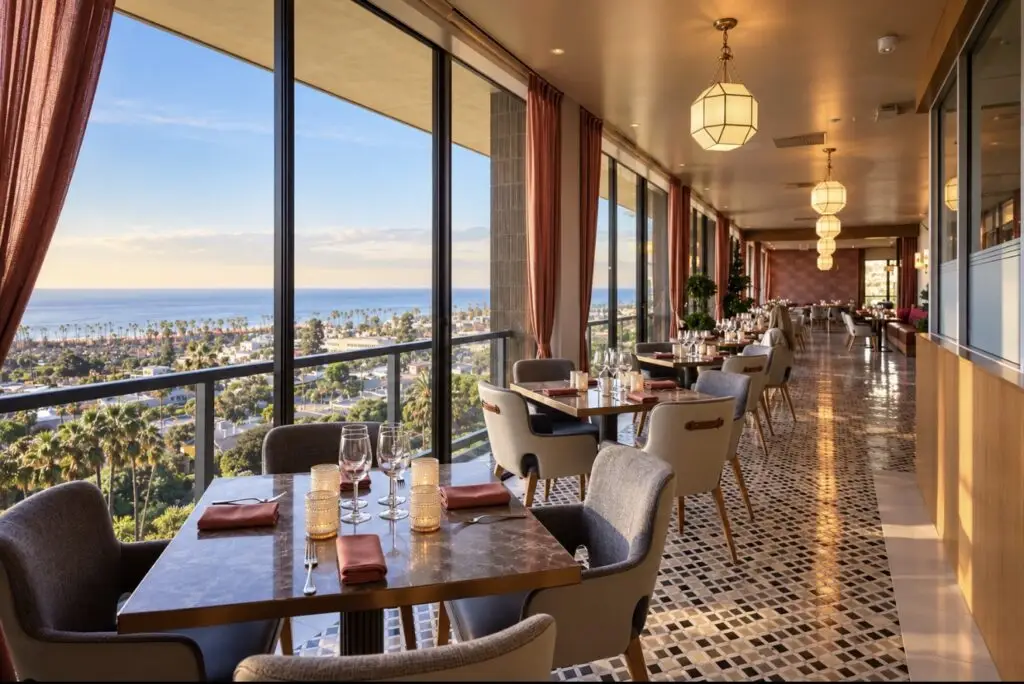
Stake Chophouse & Bar brings contemporary classics and old-school service to the heart of Coronado
Stake Chophouse & Bar isn’t your average steakhouse. Blue Bridge Hospitality’s Coronado outpost is a modern interpretation of a big-city steakhouse nestled in the heart of the small coastal community. The team at Stake has reimagined the whole steakhouse experience. By prioritizing a seasonal farm-to-table sourcing philosophy, a personalized guest experience, and unique service touches, like a formal steak presentation and a bespoke knife selection process, Stake distinguishes itself in a sea of steakhouses.
Exceptional steaks, including Wagyu from Japan, Australia, and the U.S., and fresh seafood flown in daily form the core of Stake’s culinary identity. The menu features a five-course omakase-style steak experience highlighting house favorites, plus an array of cuts, and classic steakhouse staples—think a wedge salad, baked potato, or pasta carbonara—refined for a contemporary palate without losing their traditional appeal. Stake focuses on seasonal sourcing from the region’s best family farms and specialty purveyors, and incorporates intentionally unexpected touches to create something truly unique.
“I challenge our chefs and myself to take it a step further in sourcing,” says Chef Ronnie Schwandt. “It’s important to us to highlight different farms, unique one-off farms—whether it’s cattle, strawberries, a local fisherman or from anywhere in the United States, we’re always trying to find that niche.”
Beyond the menu, Stake emphasizes outstanding service, says Vinny Spatafore, Director of Hospitality Operations. Staff maintains detailed notes, allowing them to remember guests by name, recall previous orders such as a favorite martini (also memorable for the customer since it’s served in an extra tall, distinctly-shaped glass), and celebrate special occasions like birthdays and anniversaries.
“When you have those points of topic that you remember about a guest, they appreciate that,” he says. “Our servers are really good with that—we have a couple servers who have been here since the beginning and they’ll remember somebody from years ago, their name, their kids’ names, where they live. I’m really thankful to have a great front of house staff.”
Award-winning wines, rare whiskeys, special events, and a complementary black car service that provides transportation for guests throughout Coronado add to Stake’s appeal.
Schwandt stresses that Stake offers more than a meal; they aim to give patrons something unforgettable.
“It starts when you walk up the stairs and are greeted by the hostess—that sets the tone for the night. Then you’re greeted by a server, who may know you by name, and can guide you through the menu and curate as they get to know you,” says Schwandt. “Most people leave kind of blown away; they leave feeling like they just had an experience. That’s the goal, right? Whether you’re serving smash burgers or high-end steak, you want somebody to leave thinking, Wow, that was awesome.”
How a rock fish changed my relationship to food
A few years ago, I was invited to a designer sushi spot in a wealthy part of San Diego along the coast for an omakase, which essentially means “chef’s choice” in Japanese.
There were no windows in this sushi den. It was all mood lighting, designed to hide the harsh reality that aging really makes us humans look like old cauliflower. Since very few 20-somethings can afford to live in the surrounding neighborhood, the restaurant is frequented by middle-aged women and their retrofitted curvy parts. It’s a crowd full of half-tipsy, half-married people. The employees, however, are all 20-somethings produced from the super-loins of supermodels. They have composure, and appear to be excellent service professionals. But their main purpose is to serve as balls of yarn for the cougar clientele to bat around with their eyes.
The thought of omakase was a little intimidating. As a food writer, chefs seem to think we’ve gone deep into the Vietnamese jungle to find the stream that supplied the world’s first bowl of pho. That we’ve dined on caviar-bedazzled oselots and monkey brains sporting toupées of foie gras. I’m sure that’s a square meal for Anthony Bourdain. But most of us just run around town eating burgers for yet another Top 10 list.
Still, chefs don’t bother giving food writers the prime rib or fries. We’re more likely to get a sous vide cow snout, each nostril filled with deep-fried chicken ovaries.
My friend and I sit at the sushi bar. The only thing between us and the itamae is a glass case of raw seafood. Red fish, yellow fish, orange fish, white fish, purple fish. It reminds me of Amsterdam’s Red Light District—a collection of flesh behind glass, some beautiful, some more suited for fetish.
The chef starts us with gigantic sushi rolls called futomaki. Easy enough. Huge sushi rolls are custom made for Americans. In America, people are less concerned with quality than they are girth. We prefer our food share attributes with top-shelf porn penis.
About halfway through the meal as sake massages our bloodstreams, we notice the chef start to build a really elaborate plate. Garnishes everywhere. Most sushi is served minimally, echoing its origins as Japanese street food. But what he’s designing looks like an Indian wedding or the lobby of a Waikiki Marriott.
He then walks over to the aquarium, which I had thought to be a sadistic interior décor choice—like having cows grazing in the corner of a burger restaurant. He unfolds a step stool, climbs up and grabs a net. He dips it into the water.
The fish look a little concerned. Pick up their pace a bit. But for the most part they keep their composure. Humans wouldn’t be nearly as calm or collected if every few hours, the large hand of god just reached down and scoops up a Volvo full of us. That would make us twitchy.
The chef eventually corners a red rockfish and pulls it out in the net. It doesn’t really struggle. I’m not sure if this is because it’s in shock, or maybe the fish is self-aware. Maybe he realizes he’s a fish, and this is how his fish life goes. It just lays there, a muscular comma in a hammock.
My buddy elbows me and asks me what I think the chef is gonna do with it.
I have no idea. I’m thinking he might ceremoniously present the fish to us, then an apprentice will hurry it back into the kitchen and cook it. I’m not sure why I think they’ll cook it in a sushi restaurant. Eating it raw just doesn’t seem like a very polite option. I mean, unless you find yourself starving in the wilderness, shouldn’t there be a mandatory waiting period between killing an animal and eating it?
I realize I am uncomfortably close to my food’s impending death.
My father didn’t fish. Sure we dangled a few strings over a pier on the resort island of Catalina. But the only fish we caught was a Garibaldi. It was protected by the state because it was orange and adorable. The one we caught seemed fairly cocky about this fact. Just threw itself on the hook to mock us. But no Johnson had ever actually gutted anything, unless you count the time we remodeled the kitchen.
My entire life, the carnivorous process has been comfortably removed from my view. I never saw the slaughter, butchering, transport or packaging. Meat was just a glistening whoopee cushion of flesh under a sheet of cellophane at the grocery store.
And this rockfish… well, it seemed to deserve a little due process. It was a local celebrity. It was an essential part of the interior design. A mascot. Twenty minutes ago, the child of a well-martini’d cougar had been marveling at this fish, joy in his little cougar-child face.
The chef holds the fish tightly in one hand. He’s got a grim, nervous look. That’s when I realize—oh, no. He presses the fish, now struggling a little bit, down onto the cutting board. Then he quickly shanks him in the back of the neck. No other way to say it. When the fish is still alive, it’s not a “knife cut.” It’s a shanking. Same thing that happens when you take the last baked potato in the jail cafeteria.
What happens next is even creepier. He carefully inserts the knife into the fish’s side, and starts to cut.
Oh, jesus.
I’m immediately emotionally scarred. Not a minor, comical scarred. But “Mom, there’s something in Santa’s pants” scarred.
The chef begins to work his knife down the length of the fish. His hands are shaking a little bit. It’s brutal to watch. You see, I’m an animal-loving carnivore. Growing up, I was the weird boy who knocked on our elderly neighbor’s door to ask if I could pet her poodle. I realize our food animals aren’t Thai-massaged until they die of extreme pleasure. I’ve always blindly hoped animals were killed quickly and efficiently.
There is nothing quick about this.
The chef begins to make a series of careful, exacting cuts into the side of the fish’s body. And then—oh Jesus that isn’t…—yes it is. A piece of sashimi dislodges and falls onto the cutting board. The chef cuts a little more. Another piece falls. More cutting, another piece.
The chef carefully places the rockfish down on the plate. He presents it to us without saying a word, and backs away. He’s real solemn about it. Sad. Reverent.
I look down. Half of this fish’s body is still intact. The other half is now perfect pieces of sushi, propped up against the flap of skin where all these pieces of sushi had just been dislodged.
The fish is still alive.
(Note: I’ve since been told that fish move their mouths for a few minutes after they’re dead. So it might have been dead. But at the time, I’m convinced it’s alive. That’s all that matters.)
My friend and I don’t look at each other for a few long seconds. We don’t want to see the horror on each other’s face. Plus, what if the insanity of the situation makes one of us let out a confused chuckle? I’m always afraid at weddings that I’ll just stand up and scream curse words.
I stare at the fish. It stares back. It’s still gasping. My instinct is to take my beer glass and hit it over the head. Finish the job. Or I could just refuse the dish, saying thank you chef but no thank you, serial killer ***hole.
But the chef had shown nothing but reverence. He didn’t fist bump a coworker. It didn’t seem to be a bad fraternity prank, or like flexing in the mirror at the top of the food chain. What if this is a centuries-old Japanese ritual I just don’t know about? Whatever it is, I’m out of my league.
All I can think about the documentary film The Cove. It’s about an area of Japan where dolphins are lured into a bay, harpooned, and used for food. Every American I knew was outraged by the film. What I saw was a bunch of white people who don’t eat dolphins went over to a country where they do eat dolphins. I was wholly unsurprised that the white people were mortified and cried. Frankly, it seemed a little sanctimonious. Just because I love dogs doesn’t mean I’m going to shame someone from a completely different culture for slow-cooking a Chihuahua at 275 degrees. America loves its tasty burger, which freaks Hindus out.
I make a mental note to Google “rock fish tolerance for pain” or “ability to grasp torture” when I get home. Even if I would forever refuse this sort of experience again in my life, I decide to go with it. I am a houseguest, I reason. I’ve been presented a pretty grisly welcome gift. And I’m going to accept it, experience it, see and feel everything it has to teach me.
On instinct, I clasp my hands together, make a minor, awkward head bow toward the fish, and say, “Thank you.”
As a child, I had been taught to say grace before meals. But I’m lucky to have grown up in an environment where eating was a daily, commonplace thing. To be thankful for it seemed like being thankful for air or fingernails.
But this was the first time in my life I’ve ever on a deep, emotional level truly felt grace—a whole-body, overwhelming sense of gratitude.
The fish is… still… alive.
Die, man, die.
It’s not only alive, but it seems to be staring at me. As if to express, Really, guy? You’re going to eat half of me while I fade to black? You’re a real son of a bitch, aren’t ya?
I stick the first piece of sashimi in my mouth. It’s remarkably wet—almost juicy like citrus. The flavors are brilliantly sharp. It’s as if I can literally taste residual electricity that made the muscles twitch and swim. The meat is crunchy, not having gone through rigor mortis needed to become silky smooth.
Between the first and the second bites, the rockfish takes its last gasp. I’m looking into its eyes when this happened. The taste of its own flesh is in my mouth. The sushi chef stands nearby, still quiet. His hands are still shaking. No one would get out of this experience without a little twitch.
Since that night, I’ve talked with sushi chefs about the experience. It’s called izikuri, a Japanese tradition dating back thousands of years. Most cultures aren’t as attached to or squeamish about food animals as Americans. The allure of izikuri is ultimate freshness, and I’m sure a little bit of alpha-species spectacle. It seems even the revered ancient Japanese cultures had a frat boy element. During izikuri, mere seconds pass between death and eating. Or, in cases like ours, they overlap.
There is a point where you’re willing to bend your own ethics out of respect for a cultural tradition. It’s called being a good guest. I never want dinner fed live to me again. But whether it’s an honorable tradition or cruel torture—it changed me on a deep, cellular level. As a carnivore, I was forced to watch what must happen in order for me to eat meat. I actively closed the circle of life. This wasn’t an abstract documentary. This wasn’t a PBS special. This was my dinner. I’ve never been so humbled.
My friend and I ate the rest of the sushi. When done, the chef removed the other half of the rockfish, sent it to the back, and it and returned it roasted whole. We felt it our duty not to waste one bit of the life-sustaining protein we’ve just helped kill. We eat the cheeks, the eyeballs, the bits.
We get drunk. Dead drunk.
Ideally, I wouldn’t have to eat an animal as it dies to learn this lesson. Ideally, I could intellectually fill in the gaps. But you can intellectualize skydiving, and then you can jump out of a plane at 10,000 feet and feel the adrenaline rip through your insides like desert lightning.
That meal is tattooed on my memory. I think about it nearly every time I eat.
I’m still a carnivore. If I become a better person or if all of my taste buds die in a fire, I might become vegetarian. But I have tried to waste as little meat as someone in my profession can. But once I saw life become food on my plate, I wasted even less.
From that day forward I’ve said grace at every meal. That rockfish altered me for good.
It took the anonymity out of the carnivore process. It reconnected my emotions into my food. I don’t like to think—I know—I’m a better human for it.
Look Your Food in the Eye
How a rock fish changed my relationship to food
A few years ago, I was invited to a designer sushi spot in a wealthy part of San Diego along the coast for an omakase, which essentially means “chef’s choice” in Japanese.
There were no windows in this sushi den. It was all mood lighting, designed to hide the harsh reality that aging really makes us humans look like old cauliflower. Since very few 20-somethings can afford to live in the surrounding neighborhood, the restaurant is frequented by middle-aged women and their retrofitted curvy parts. It’s a crowd full of half-tipsy, half-married people. The employees, however, are all 20-somethings produced from the super-loins of supermodels. They have composure, and appear to be excellent service professionals. But their main purpose is to serve as balls of yarn for the cougar clientele to bat around with their eyes.
The thought of omakase was a little intimidating. As a food writer, chefs seem to think we’ve gone deep into the Vietnamese jungle to find the stream that supplied the world’s first bowl of pho. That we’ve dined on caviar-bedazzled oselots and monkey brains sporting toupées of foie gras. I’m sure that’s a square meal for Anthony Bourdain. But most of us just run around town eating burgers for yet another Top 10 list.
Still, chefs don’t bother giving food writers the prime rib or fries. We’re more likely to get a sous vide cow snout, each nostril filled with deep-fried chicken ovaries.
My friend and I sit at the sushi bar. The only thing between us and the itamae is a glass case of raw seafood. Red fish, yellow fish, orange fish, white fish, purple fish. It reminds me of Amsterdam’s Red Light District—a collection of flesh behind glass, some beautiful, some more suited for fetish.
The chef starts us with gigantic sushi rolls called futomaki. Easy enough. Huge sushi rolls are custom made for Americans. In America, people are less concerned with quality than they are girth. We prefer our food share attributes with top-shelf porn penis.
About halfway through the meal as sake massages our bloodstreams, we notice the chef start to build a really elaborate plate. Garnishes everywhere. Most sushi is served minimally, echoing its origins as Japanese street food. But what he’s designing looks like an Indian wedding or the lobby of a Waikiki Marriott.
He then walks over to the aquarium, which I had thought to be a sadistic interior décor choice—like having cows grazing in the corner of a burger restaurant. He unfolds a step stool, climbs up and grabs a net. He dips it into the water.
The fish look a little concerned. Pick up their pace a bit. But for the most part they keep their composure. Humans wouldn’t be nearly as calm or collected if every few hours, the large hand of god just reached down and scoops up a Volvo full of us. That would make us twitchy.
The chef eventually corners a red rockfish and pulls it out in the net. It doesn’t really struggle. I’m not sure if this is because it’s in shock, or maybe the fish is self-aware. Maybe he realizes he’s a fish, and this is how his fish life goes. It just lays there, a muscular comma in a hammock.
My buddy elbows me and asks me what I think the chef is gonna do with it.
I have no idea. I’m thinking he might ceremoniously present the fish to us, then an apprentice will hurry it back into the kitchen and cook it. I’m not sure why I think they’ll cook it in a sushi restaurant. Eating it raw just doesn’t seem like a very polite option. I mean, unless you find yourself starving in the wilderness, shouldn’t there be a mandatory waiting period between killing an animal and eating it?
I realize I am uncomfortably close to my food’s impending death.
My father didn’t fish. Sure we dangled a few strings over a pier on the resort island of Catalina. But the only fish we caught was a Garibaldi. It was protected by the state because it was orange and adorable. The one we caught seemed fairly cocky about this fact. Just threw itself on the hook to mock us. But no Johnson had ever actually gutted anything, unless you count the time we remodeled the kitchen.
My entire life, the carnivorous process has been comfortably removed from my view. I never saw the slaughter, butchering, transport or packaging. Meat was just a glistening whoopee cushion of flesh under a sheet of cellophane at the grocery store.
And this rockfish… well, it seemed to deserve a little due process. It was a local celebrity. It was an essential part of the interior design. A mascot. Twenty minutes ago, the child of a well-martini’d cougar had been marveling at this fish, joy in his little cougar-child face.
The chef holds the fish tightly in one hand. He’s got a grim, nervous look. That’s when I realize—oh, no. He presses the fish, now struggling a little bit, down onto the cutting board. Then he quickly shanks him in the back of the neck. No other way to say it. When the fish is still alive, it’s not a “knife cut.” It’s a shanking. Same thing that happens when you take the last baked potato in the jail cafeteria.
What happens next is even creepier. He carefully inserts the knife into the fish’s side, and starts to cut.
Oh, jesus.
I’m immediately emotionally scarred. Not a minor, comical scarred. But “Mom, there’s something in Santa’s pants” scarred.
The chef begins to work his knife down the length of the fish. His hands are shaking a little bit. It’s brutal to watch. You see, I’m an animal-loving carnivore. Growing up, I was the weird boy who knocked on our elderly neighbor’s door to ask if I could pet her poodle. I realize our food animals aren’t Thai-massaged until they die of extreme pleasure. I’ve always blindly hoped animals were killed quickly and efficiently.
There is nothing quick about this.
The chef begins to make a series of careful, exacting cuts into the side of the fish’s body. And then—oh Jesus that isn’t…—yes it is. A piece of sashimi dislodges and falls onto the cutting board. The chef cuts a little more. Another piece falls. More cutting, another piece.
The chef carefully places the rockfish down on the plate. He presents it to us without saying a word, and backs away. He’s real solemn about it. Sad. Reverent.
I look down. Half of this fish’s body is still intact. The other half is now perfect pieces of sushi, propped up against the flap of skin where all these pieces of sushi had just been dislodged.
The fish is still alive.
(Note: I’ve since been told that fish move their mouths for a few minutes after they’re dead. So it might have been dead. But at the time, I’m convinced it’s alive. That’s all that matters.)
My friend and I don’t look at each other for a few long seconds. We don’t want to see the horror on each other’s face. Plus, what if the insanity of the situation makes one of us let out a confused chuckle? I’m always afraid at weddings that I’ll just stand up and scream curse words.
I stare at the fish. It stares back. It’s still gasping. My instinct is to take my beer glass and hit it over the head. Finish the job. Or I could just refuse the dish, saying thank you chef but no thank you, serial killer ***hole.
But the chef had shown nothing but reverence. He didn’t fist bump a coworker. It didn’t seem to be a bad fraternity prank, or like flexing in the mirror at the top of the food chain. What if this is a centuries-old Japanese ritual I just don’t know about? Whatever it is, I’m out of my league.
All I can think about the documentary film The Cove. It’s about an area of Japan where dolphins are lured into a bay, harpooned, and used for food. Every American I knew was outraged by the film. What I saw was a bunch of white people who don’t eat dolphins went over to a country where they do eat dolphins. I was wholly unsurprised that the white people were mortified and cried. Frankly, it seemed a little sanctimonious. Just because I love dogs doesn’t mean I’m going to shame someone from a completely different culture for slow-cooking a Chihuahua at 275 degrees. America loves its tasty burger, which freaks Hindus out.
I make a mental note to Google “rock fish tolerance for pain” or “ability to grasp torture” when I get home. Even if I would forever refuse this sort of experience again in my life, I decide to go with it. I am a houseguest, I reason. I’ve been presented a pretty grisly welcome gift. And I’m going to accept it, experience it, see and feel everything it has to teach me.
On instinct, I clasp my hands together, make a minor, awkward head bow toward the fish, and say, “Thank you.”
As a child, I had been taught to say grace before meals. But I’m lucky to have grown up in an environment where eating was a daily, commonplace thing. To be thankful for it seemed like being thankful for air or fingernails.
But this was the first time in my life I’ve ever on a deep, emotional level truly felt grace—a whole-body, overwhelming sense of gratitude.
The fish is… still… alive.
Die, man, die.
It’s not only alive, but it seems to be staring at me. As if to express, Really, guy? You’re going to eat half of me while I fade to black? You’re a real son of a bitch, aren’t ya?
I stick the first piece of sashimi in my mouth. It’s remarkably wet—almost juicy like citrus. The flavors are brilliantly sharp. It’s as if I can literally taste residual electricity that made the muscles twitch and swim. The meat is crunchy, not having gone through rigor mortis needed to become silky smooth.
Between the first and the second bites, the rockfish takes its last gasp. I’m looking into its eyes when this happened. The taste of its own flesh is in my mouth. The sushi chef stands nearby, still quiet. His hands are still shaking. No one would get out of this experience without a little twitch.
Since that night, I’ve talked with sushi chefs about the experience. It’s called izikuri, a Japanese tradition dating back thousands of years. Most cultures aren’t as attached to or squeamish about food animals as Americans. The allure of izikuri is ultimate freshness, and I’m sure a little bit of alpha-species spectacle. It seems even the revered ancient Japanese cultures had a frat boy element. During izikuri, mere seconds pass between death and eating. Or, in cases like ours, they overlap.
There is a point where you’re willing to bend your own ethics out of respect for a cultural tradition. It’s called being a good guest. I never want dinner fed live to me again. But whether it’s an honorable tradition or cruel torture—it changed me on a deep, cellular level. As a carnivore, I was forced to watch what must happen in order for me to eat meat. I actively closed the circle of life. This wasn’t an abstract documentary. This wasn’t a PBS special. This was my dinner. I’ve never been so humbled.
My friend and I ate the rest of the sushi. When done, the chef removed the other half of the rockfish, sent it to the back, and it and returned it roasted whole. We felt it our duty not to waste one bit of the life-sustaining protein we’ve just helped kill. We eat the cheeks, the eyeballs, the bits.
We get drunk. Dead drunk.
Ideally, I wouldn’t have to eat an animal as it dies to learn this lesson. Ideally, I could intellectually fill in the gaps. But you can intellectualize skydiving, and then you can jump out of a plane at 10,000 feet and feel the adrenaline rip through your insides like desert lightning.
That meal is tattooed on my memory. I think about it nearly every time I eat.
I’m still a carnivore. If I become a better person or if all of my taste buds die in a fire, I might become vegetarian. But I have tried to waste as little meat as someone in my profession can. But once I saw life become food on my plate, I wasted even less.
From that day forward I’ve said grace at every meal. That rockfish altered me for good.
It took the anonymity out of the carnivore process. It reconnected my emotions into my food. I don’t like to think—I know—I’m a better human for it.
Look Your Food in the Eye
Scripps study shows that some patients may be able to taper their dose and maintain results
While glucagon-like peptide-1 (GLP-1) receptor agents have been used to treat Type 2 diabetes for more than 20 years, their recent emergence as weight-loss wonder drugs marked a new frontier in medicine. But their effectiveness has left some patients wondering what to do once they’ve reached their goal. Stopping the medication could mean regaining some, if not all, of the weight. A Scripps Clinic internal medicine physician recently conducted a small study of whether GLP-1 patients who had reached their goal weight could maintain that weight by taking their regularly prescribed injection every other week instead of weekly. Spoiler alert: 30 of 34 patients did. Read more about the study here and what that may mean as pharmaceutical companies roll out oral GLP-1s.
For more nutrition, wellness, and healthy living tips, sign up for the San Diego Health newsletter here.