

Everything SD
Feeling Unheard at the Doctor's Office? Here's What Might He...
Read article

Featured articles

Food & Drink

Food & Drink

Food & Drink
Featured articles

Everything SD

Everything SD

Features
Featured articles
Things to Do

Things to Do

Things to Do
Featured articles

podcast-ep

podcast-ep

podcast-ep
Featured articles
Features

Features

Features
Featured articles
Everything SD
Things to Do

Partner content

Inside the icon
THE PRICE IS RIGHT
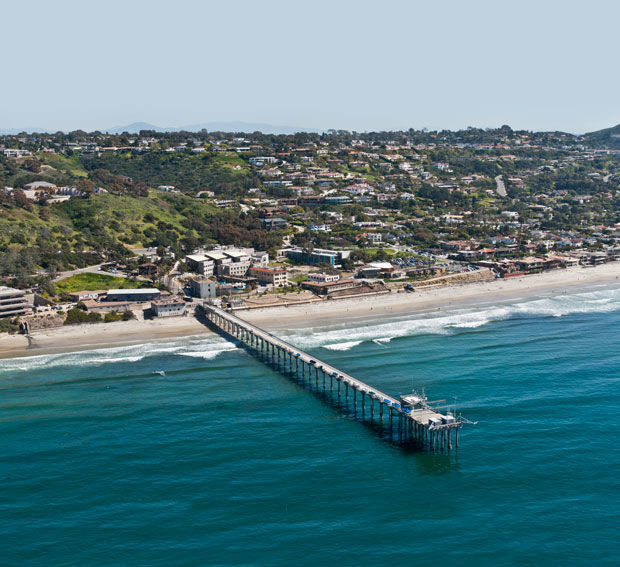
The original wooden pier, built in 1915–16, cost just $36,000. (Thanks, Ellen Browning Scripps!) Its stronger concrete replacement, built in 1987, cost $3.95 million. (Thanks, state of California!)
PHOTOGRAPHERS, TAKE NOTE
Twice a year, in early May and August, the setting sun perfectly aligns under the pier’s concrete supports, allowing a picture-perfect framing of the sun beneath the pier—as long as there’s no marine layer.
PIER FOR RENT
The pier used to be available for rent, though no one ever did. The price tag: $15,000 per event. A few informal faculty weddings have happened here, says pier manager Christian McDonald.
LABS AND LIGHTS
The building at the end houses lab space and seawater pumps. Amid the gauges, monitors, and scientific equipment on the roof is a pole used only for Christmas lights.
Scripps Pier
Scripps Pier
PUMP IT UP
The pier is built on a slight incline. Pumps suck as much as 1.8 million gallons of seawater each day into a trough that runs the length of the pier. Gravity takes care of getting the water to the Scripps Institution of Oceanography’s campus. The water is used for experimental aquariums and the Birch Aquarium’s exhibits.
MISSION LAUNCH
A 3-ton hoist at the end of the pier lowers small boats into the ocean 500 times a year for research missions.
RIPPLE EFFECT
A tsunami gauge kept track when the sea rose almost a foot here after the deadly March 2011 Japanese tsunami.
GREAT TRACK RECORD
Scientists have tracked the ocean’s daily temperature at the pier continuously since 1916, the longest of such readings. Devices on the pier also track ocean acidity, the weather, cliff erosion, tide levels, and even the locations of tagged leopard sharks.
