
Ready to know more about San Diego?

Subscribe
Charitable SD DECEMBER 17, 2025

Working Toward a Wilder Tomorrow With the CA Wolf Center

The Julian sanctuary aims to protect a vanishing species and educate the public about their vital role in the ecosystem
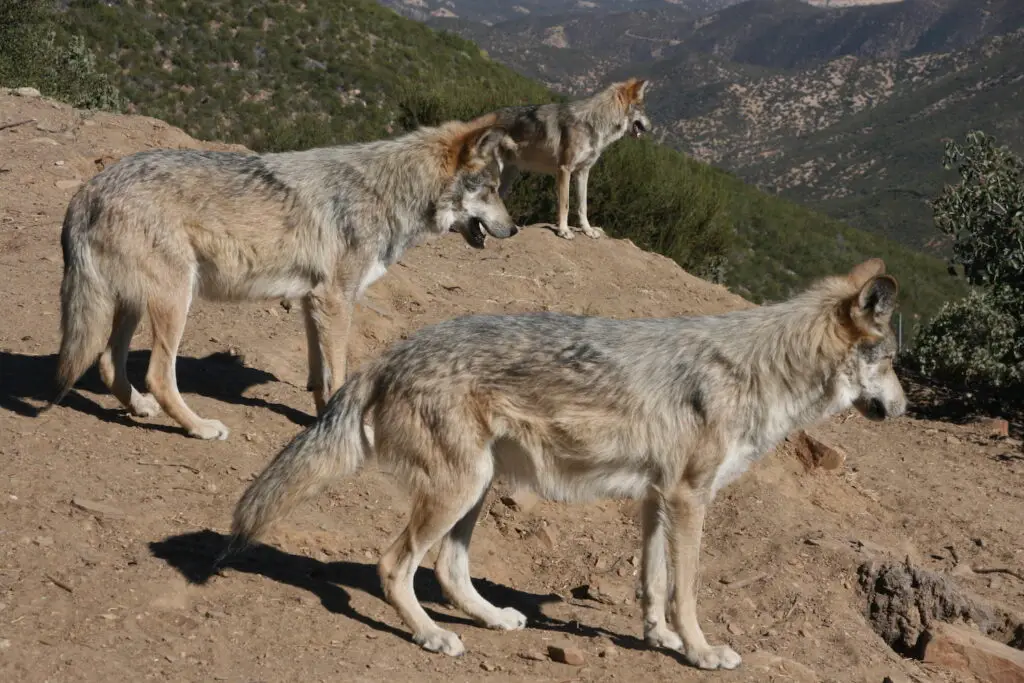
Working Toward a Wilder Tomorrow With the CA Wolf Center
Courtesy of California Wolf Center

Tucked away on the outskirts of Julian, just a few miles from antique shops and apple pie, is an organization fighting to protect one of the world’s most misunderstood predators.

In 1977, Paul and Judy Kenis opened the Julian Center for Science and Education, now called the California Wolf Center. They and their original pair of northwestern gray wolves set out to educate the public about wolves and their vital role in the ecosystem. Over the years, additional passionate people signed on, and the movement grew into a mission to create a future in which wolves and humans can safely coexist.

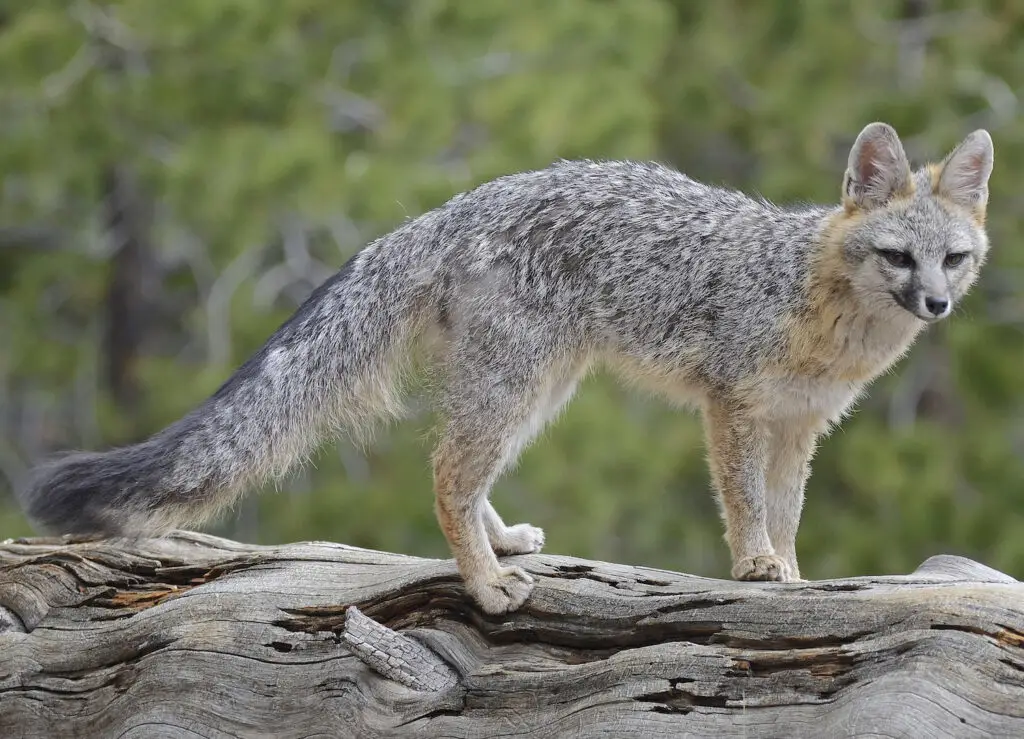
San Diego wildlife on hiking trails featuring a gray foxes

“What inspires me most about this work is seeing how understanding transforms fear to awe and respect,” says Christine Barton, executive director of the California Wolf Center. “When people experience these animals up close, it changes the way they think about wolves and wildness, the balance in nature, and our shared responsibility to protect them.”
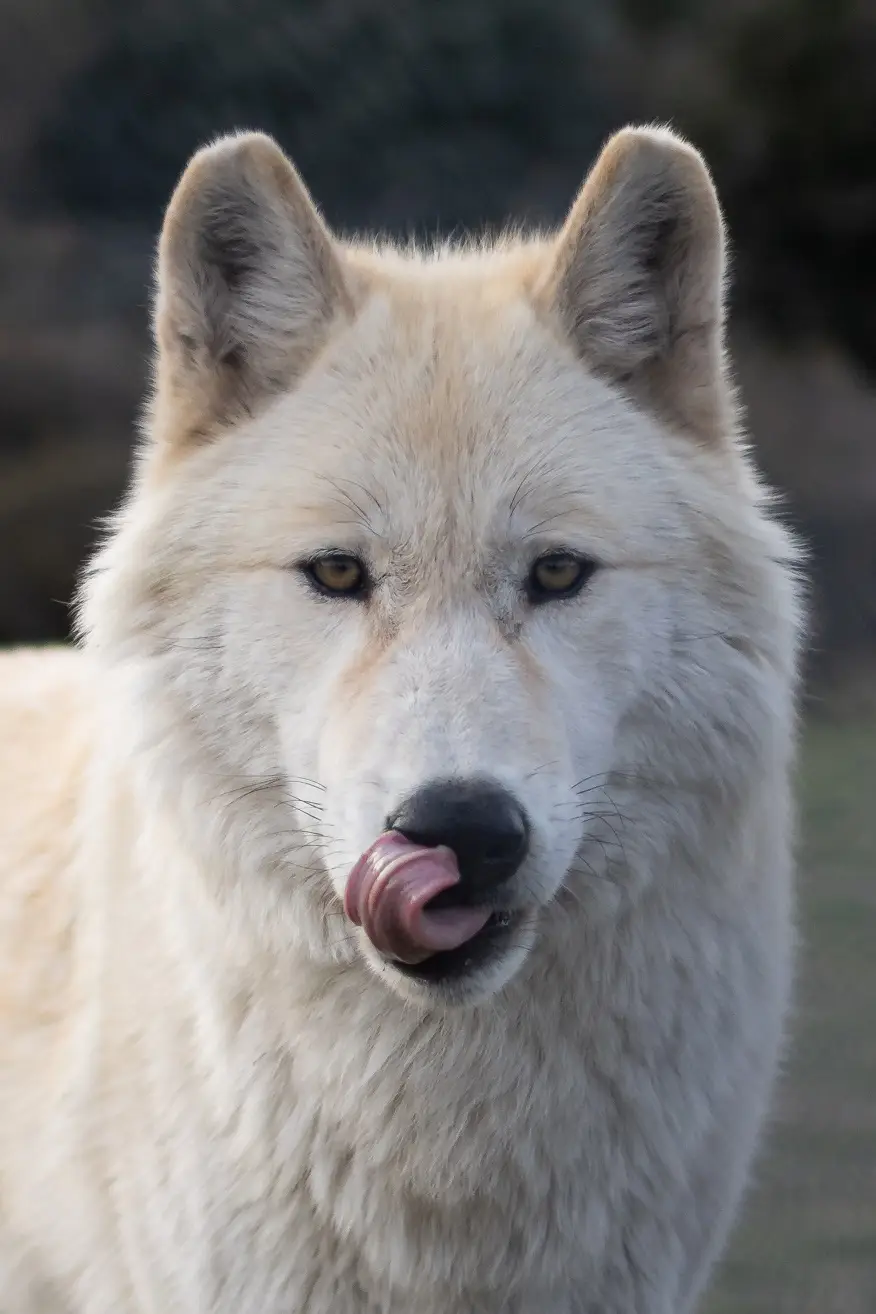
Wolf at San Diego's California Wolf Center in Julian
Courtesy of California Wolf Center

Protecting the Predators

There was once a time when wolves were common in California. However, the nomadic predators got a bad rap as a danger to people and livestock, and by the 1920s, wolves were wiped out statewide. The stigma endured for generations, and by the time the California Wolf Center was founded, just 13 of the Mexican gray wolf subspecies were left in the wild.

Though wolves have returned to Northern California, notably starting with an animal called OR-7, who journeyed south from Oregon in 2011, they remain on the state’s endangered species list.

The California Wolf Center has taken a proactive approach to helping the species recover. The organization has been a part of the Association of Zoos and Aquariums’ SAFE (Saving Animals From Extinction) program since 1997. The goal is to increase genetic diversity among the Mexican gray wolf population so more can be reintroduced to the wild. To date, 85 Mexican wolf pups have been born at the facility in the Cuyamaca Mountains. Of the 60 institutions in US and Mexico that participate in the AZA SAFE program, the California Wolf Center is among the top three with regards to the number of Mexican wolves in human care.

The California Wolf Center factors in the human side of the equation, too, working with nonprofits and government agencies to support wolf recovery with cross-fostering, range riders, and field volunteers. It also collaborates with communities throughout the Southwest who share their environment with the returning wolf population, providing information on and financial support for techniques that ranchers can use to reduce wolf-livestock conflict.

“We are one of only a very few organizations that, by raising funds through our Mexican wolf conservation program, donate directly to supporting ranchers and the communities living with Mexican gray wolves in the wild,” Barton says. “It’s important to us to help ranchers and communities, as well as the wolves, because we all have to live together. We supply non-lethal deterrents and fund education efforts to teach practical coexistence solutions on how to peacefully live with Mexican gray wolves in the wild [so] not just wolves can thrive, but the ranchers and communities that share the landscape with them thrive, too.”
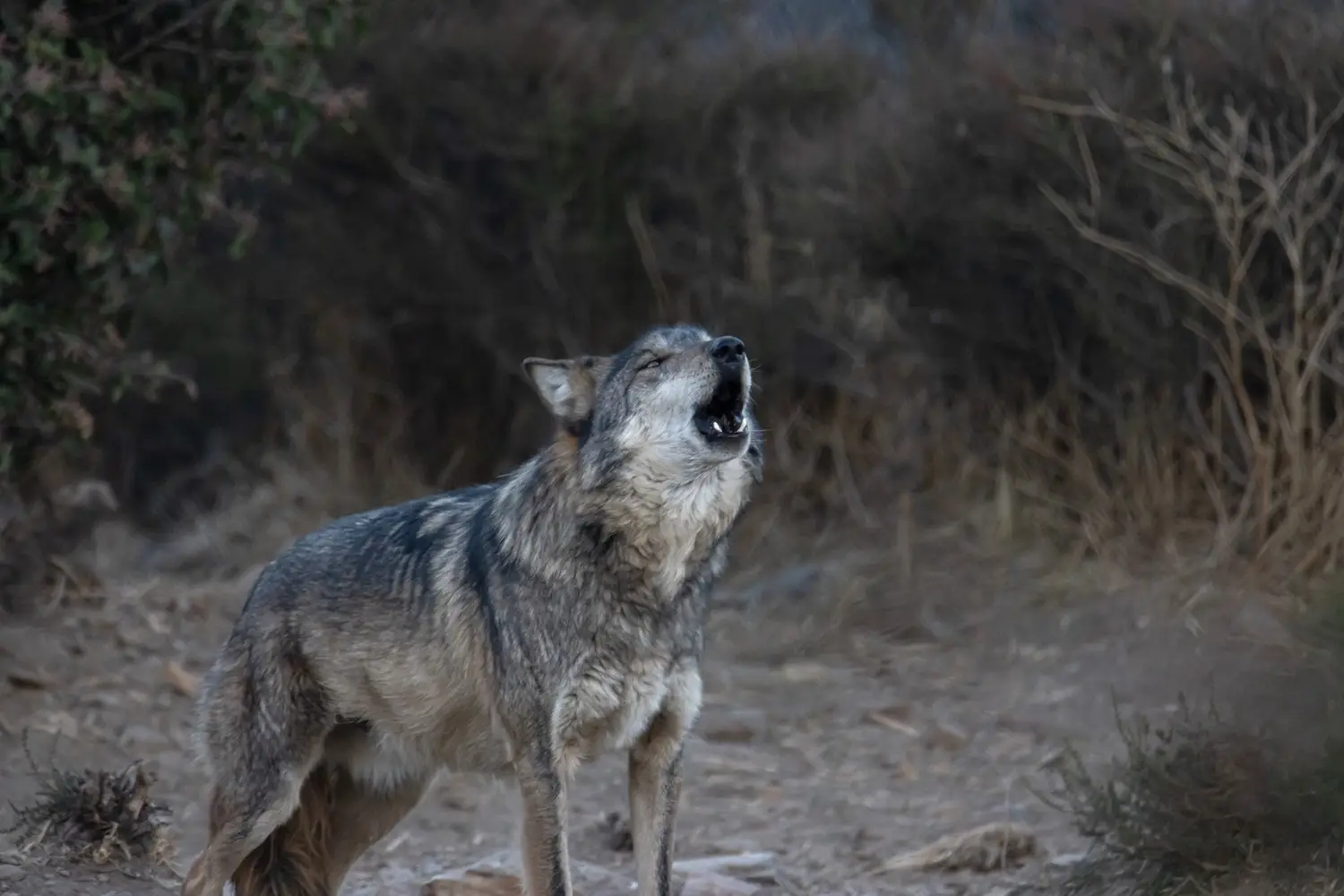
Wolf howling at San Diego's California Wolf Center in Julian
Courtesy of California Wolf Center

Fighting Extinction with Education

Though conservation groups have made progress in restoring wolf populations over the years, there are only around 286 Mexican gray wolves in the wild in Arizona and New Mexico (no Mexican wolves currently live outside of captivity in California). Conservation efforts still face challenges. Genetic diversity among Mexican gray wolves is limited and, unfortunately, habitat loss and human-caused mortality continue to be issues.

A vital part of the California Wolf Center’s mission is changing perceptions by educating the public about the important role these keystone predators play in the ecosystem. Through education and outreach, center staff emphasize that without apex predators like wolves, environmental systems begin to fall out of equilibrium.

“One of the main things we do is teach about the balance of nature, and the shared responsibility to protect it,” Barton says. A handful of the center’s lupine residents act as ambassadors, and five others are shown to the public locally—the California Wolf Center offers guided public, private, and school tours of the facility. The center’s remaining wolf population is not on display. Instead, the animals on the property live in large acre habitats.

“We work hard to bridge the gap between conservation goals and community realities through collaboration, education, and transparency. We welcome visitors to learn about these incredible animals—Mexican gray wolves and the northwestern wolves that reside right here in California,” Barton says. “We share and educate on how conservation connects directly to healthy landscapes and communities.”

The center also welcomes volunteers and interns who are interested in hands-on experience and knowledge. Some volunteers train with the center’s educational staff. Others who are not so comfortable getting up close and personal with the wolves or their habitat work in the offsite visitor center and nature store in downtown Julian. Interns who are pursuing a career in wildlife conservation, biology, or other life science fields collaborate with staff members to care for the center’s 21 resident wolves and interact with visitors.

Working Toward a Wilder Tomorrow

The California Wolf Center is currently aiming to expand its programs and facilities to engage even more people in wolf recovery and ecosystem conservation, Barton says.

“We’re now looking ahead to an exciting new chapter at the California Wolf Center,” she adds. “We want to fulfill the need in San Diego to want to make an even bigger impact for wolves and wild places, not just with Mexican wolves in New Mexico and Arizona, but with our wolves and wildlife right here in California. I’m really looking forward to sharing that journey with everyone—whether it’s through our programs or educational efforts or by simply helping people connect with nature in a meaningful way.”

But they can’t do it alone. It takes collaboration between different agencies, facilities, and organizations, along with support from the public.

“The strength of our mission lies in community—staff, volunteers, partners, and supporters all play a crucial role,” Barton says. “We want to see wolves and other wildlife be here for many, many years to come.”

Sarah Sapeda

About Sarah Sapeda

Sarah Sapeda is San Diego Magazine’s Custom Content Editor. In her 15 years in San Diego journalism, she has covered charitable events, health care, education, crime, current events, and more.

Subscribe to our newsletters

Select Options

By subscribing you confirm that you agree with our Terms and Conditions and Privacy Policy.

Charitable SD JULY 27, 2026

Where San Diego Seniors Find Support and Community

Serving Seniors provides meals and coordinated services to more than 13,000 older adults each year, aided by a dedicated volunteer network

Where San Diego Seniors Find Support and Community
Courtesy of Serving Seniors

Seniors today face challenges that were unimaginable to previous generations, and some turn to nonprofit organizations to bridge the gap. Serving Seniors helps low-income older adults with housing assistance, social services, and more. The nonprofit provides 1.5 million meals and coordinated services to 13,265 older adults each year, the majority living on less than $1,125 per month. 

Dedicated volunteers, like Fred Davis, help make this important work possible. Since roughly 2008, Davis has spent six days a week at the Serving Seniors Gary and Mary West Senior Wellness Center serves as a liaison to help clients access much-needed resources. Here, he shares what keeps him coming back day after day. 

Courtesy of Serving Seniors

What made you want to get involved with Serving Seniors?

I have a community outreach ministry and my grandson and I were on the streets downtown handing out sack lunches, water, hygiene products, clothes and shoes, and things like that and I noticed that most of the people I met appeared to be seniors. So the next logical step for me was to find a senior group that I could work with. I heard about Serving Seniors, and I made a few phone calls. No one really responded to me, so I showed up. They opened the door for me and now they can’t get rid of me. I found a home. I’ve met some really good people over the years. And as it turned out, I’ve been here longer than most of them. I’ve been here at the West Center ever since the doors opened. And matter of fact, I was the one who gave Gary and Mary West an award for their generous donation that made it possible to open up this center.

What do your volunteer duties entail? 

I’m in ministry, but I don’t want that to be the highlight of what I do. It’s not just a passion for serving people, it’s a calling. I like the idea of giving and serving people and trying to meet their needs. So I counsel, I oversee the serving of the lunches, and I work with the head of the volunteer group. I’m involved in different activities. Matter of fact, this coming Saturday, I’m going to take a group of seniors out sailing. I also helped start the Civic Engagement Group. It was a group of us, and there are about three members that are left from when we originally started it. Now Serving Seniors is taking it over, and my role is to work with them. I also took it a little bit further and ended up joining Aging and Independent Services and sat on that advisory board for a number of years. That led to me being elected to the California Senior Legislature. So I’ve been advocating for seniors for a very long time. They’re a vulnerable group. They worked hard and don’t always get the respect that they deserve. 

Courtesy of Serving Seniors

What do you like best about volunteering at Serving Seniors? 

The people—this is my target group right here. I don’t have to walk the streets like my grandson and I did anymore; they’re right here. I’m here every day at the West Center but Sunday. 

What’s the biggest challenge you’ve faced? 

The biggest challenge is not being able to help someone who really needs the help. But we try to find a way. I reach out to different organizations, faith-based organizations or other nonprofits, sometimes with success and a lot of times without success. There are quite a few people that are in need who are hardworking people, dedicated people who still want to provide for themselves and their family, and they’re just caught in that void.

Courtesy of Serving Seniors

Can you describe your favorite or most memorable experience while volunteering?

I was handing out clothes; I usually have a sock drive and I gave a homeless person a pair of socks. As they peeled their filthy socks off their feet, this person cried. You don’t know how important these little things are that we take for granted. It was really touching. 

Any advice for someone considering volunteering as a way to give back?

A lot of people use the term giving back, but I just say giving. When you say ‘giving back,’ that means you’re trying to repay something and you’re taking credit. But giving is a passion. It’s something that you do from your heart, not out of obligation. 

Sarah Sapeda

About Sarah Sapeda

Sarah Sapeda is San Diego Magazine’s Custom Content Editor. In her 15 years in San Diego journalism, she has covered charitable events, health care, education, crime, current events, and more.

Charitable SD JULY 22, 2026

In Photos: San Diego’s Scoop Ice Cream Festival

The beloved annual festival raised a record-breaking $60,000 for Feeding San Diego

In Photos: San Diego’s Scoop Ice Cream Festival
Photos Courtesy of Scoop Ice Cream Festival

More than 6,000 ice cream lovers devoured tasty treats at this year’s Scoop Ice Cream Festival for a great cause. The event on June 28 launched an ongoing partnership with Feeding San Diego and raised $60,000, or enough to provide 120,000 meals to San Diegans facing hunger. 

See photos from the night below.

Sarah Sapeda

About Sarah Sapeda

Sarah Sapeda is San Diego Magazine’s Custom Content Editor. In her 15 years in San Diego journalism, she has covered charitable events, health care, education, crime, current events, and more.

Charitable SD JULY 21, 2026

13 Charitable Events to Attend in August

Here’s where to celebrate, connect, give back, and make a difference this month

13 Charitable Events to Attend in August
Courtesy of Las Patronas

August 1: Curebound Cancer Challenge 

Raise money for cancer research while you work out at the Curebound Cancer Challenge. Fundraisers will cycle along the San Diego coastline, run a 10K on the UC San Diego campus, and participate in group spin, yoga, and strength classes. 

August 1: No Curveballs: Rally for Type 1 Diabetes Early Detection
The San Diego Padres, Nick Jonas’ nonprofit Beyond Type 1, and the King of the Hill Foundation will host No Curveballs: Rally for Type 1 Diabetes Early Detection at Gallagher Square. Padres pitchers Mason Miller, who lives with Type 1 diabetes, and Michael King, whose wife, Sheila, lives with T1D, will share their stories during a panel discussion, and on-site education and screening will be available.

August 1: No Curveballs: Rally for Type 1 Diabetes Early Detection

The San Diego Padres, Nick Jonas’ nonprofit Beyond Type 1, and the King of the Hill Foundation will host No Curveballs: Rally for Type 1 Diabetes Early Detection at Gallagher Square. Padres pitchers Mason Miller, who lives with Type 1 diabetes, and Michael King, whose wife, Sheila, lives with T1D, will share their stories during a panel discussion, and on-site education and screening will be available.

August 1: Club Masterpiece: One Haute Havana Night

Patrons of the Prado will channel 1950s Havana at this year’s Masterpiece Gala. Club Masterpiece: One Haute Havana Night will raise money for Balboa Park cultural institutions and will include a special honor for philanthropists Joan and Irwin Jacobs. 

August 3: CaddyHack Golf Festival 

Golfers will tee off to support Boys to Men Mentoring at the CaddyHack Golf Festival. Celebrating its 10th anniversary this year, the charity golf tournament will include golf, music, food, and fun at Fairbanks Ranch Country Club. 

August 7: Music By Eras Fundraiser for TERI Campus of Life

Acclaimed San Diego musicians will join together to support TERI’s programs and services for individuals with intellectual and developmental disabilities. The Music By Eras performance at TERI’s Bornemann Theatre will feature artists Whitney Shay, Jesse Ray Smith, Lauren Leigh, and Will Stucky. 

August 8: 80th Annual Jewel Ball 

Las Patronas will recreate the magic of Venice at its 80th annual Jewel Ball. Las Patronas has spent the entire year preparing for the event, as well as raising money to support nonprofit organizations across San Diego County. 

August 14: Shelter to Soldier Be the Light Gala

Help Shelter to Soldier train rescue dogs to be psychiatric service animals for local veterans at the 14th annual Be the Light Gala aboard the USS Midway Museum. The gala will include silent and live auctions, dinner, dessert, and appearances by canine ambassadors and veteran recipients. 

August 15: Haute with Heart Fashion Show 

St. Madeline Sophie’s Center will celebrate its “hidden diamonds” at its 48th annual Haute with Heart Fashion Show. The lively event at the Hilton San Diego Bayfront will include a pre-luncheon reception, live music, a live auction, a stunning fashion show, and surprise entertainment to benefit the nonprofit’s programs for adults with intellectual and developmental disabilities.

August 15: Symphony at Salk’s Concert Under the Stars

The Bacon Brothers will perform with the San Diego Symphony at this year’s Concert Under the Stars. Now in its 30th year, Symphony at Salk supports research in areas such as cancer, Alzheimer’s, wellness, and agriculture. 

August 22: SummerFest Gala 2026

La Jolla Music Society supporters will enjoy an evening of exclusive performances at its SummerFest Gala 2026. The event at the Museum of Contemporary Art San Diego will raise money for La Jolla Music Society’s artistic, learning, and engagement programs. 

August 28: 2026 Alpha Project Golf Tournament 

Tee off to help San Diegans facing homelessness at Alpha Project’s 16th Annual Charity Golf Classic. The four-person scramble at the Rancho Bernardo Inn Golf Resort and Spa will support the Alpha Project’s housing, employment, recovery, and support services. 

August 29: Relay for Life of San Diego

Walkers will join forces to celebrate cancer survivors and remember those who lost their fight at the annual Relay for Life of San Diego. The 24-hour relay at Liberty Station NTC Park is part of a global network of similar events that raise money for the American Cancer Society. 

August 29: A Night United: Illuminating the Way

United Way of San Diego County will host its A Night United: Illuminating the Way gala at Eve, an event destination on San Diego Bay. The elegant evening will benefit UWSD’s mission to improve lives and strengthen communities across the region. 

Sarah Sapeda

About Sarah Sapeda

Sarah Sapeda is San Diego Magazine’s Custom Content Editor. In her 15 years in San Diego journalism, she has covered charitable events, health care, education, crime, current events, and more.

Studio S MAY 5, 2026

Artistry, Aesthetics, and Inclusive Luxury

KQ Aesthetic Society goes beyond cosmetic to provide comprehensive care and transformative results

Artistry, Aesthetics, and Inclusive Luxury

Kelly H. Harfouche, founder of KQ Aesthetic Society, knows firsthand that cosmetic treatments like fillers, neurotoxins, and microneedling, can not only enhance a person’s appearance and restore confidence, they have the power to truly change a person’s life. An expert injector has the ability to tailor treatments to each individual patient’s anatomy and goals for personalized results. Harfouche, a board-certified nurse practitioner, has spent nearly a decade perfecting her craft as an aesthetic injector and integrating her multifaceted artistic skills with precision patient care. Her commitment to continual education and training, plus a passion for helping people look—and feel—their best, set KQ Aesthetic Society apart in a sea of local medspas. 

For many people considering nonsurgical treatments, the intent is to look refreshed and refined. KQ Aesthetic Society’s philosophy eschews a cookie cutter approach that bases treatments around units, instead working to understand each person’s unique goals, then curating a treatment plan to fit that vision. Harfouche focuses on “inclusive luxury,” the belief that everyone deserves access to aesthetic treatments, respective of budget restrictions. She develops long-standing trusted relationships with her patients, and works with each one to achieve their aesthetic objectives and address the underlying causes of their concerns. 

“For me, forming an honest and open relationship with every patient who walks through the door is essential. This means understanding them on a deeper level and meeting them where they are to define and achieve their individual goals,” she says. 

Drawing on her artistic background, which inspired her transition into medical aesthetics, Harfouche sees each client as a “unique canvas.” Rather than relying on standardized procedures, the practitioner’s distinctive approach combines her profound understanding of the physiological and anatomical changes associated with aging with an unwavering commitment to ongoing education about the newest products and their mechanisms of action. Her goal is to make each patient feel beautiful in their own skin and to embrace their individuality. 

She has also pioneered a way to combine her talent for aesthetic artistry with her philanthropic nature. Harfouche is one of only a handful of providers using dermal fillers to treat patients with lip asymmetry and scarring resulting from cleft lip surgery. Patients travel from around the country for this transformative treatment, noting increased confidence and a restored identity. She hopes to eventually launch a training program to help fill the void in this space.  

“My passion has always been connecting with people and giving back in any capacity that I can,” she says. In the rapidly advancing landscape of aesthetic medicine, you can place your confidence in Harfouche and KQ Aesthetic Society to deliver exceptional care. To learn more or book a consultation, please visit kqaestheticsociety.com.

Everything SD JULY 17, 2026

10 Local Skincare Products We’re Loving Right Now

For a city that lives outdoors, these hometown makers understand exactly what your complexion is up against

10 Local Skincare Products We’re Loving Right Now
Courtesy of Saffron & Sage

San Diego has always worshipped at the altar of good skin. Equal parts surf town, biotech hub, and wellness capital, it’s a city where lunch breaks become beach walks and sunscreen sits beside car keys by the front door. The products that get used here earn their place. With 266 sunny days a year and one of the highest rates of skin cancer in the country, we take skincare seriously. Dr. Bronner’s has been making soap in North County since the 1960s. Sun Bum was born in Encinitas and is now on shelves in over 70 countries. The tradition runs deep.

The best skincare routine for sun protection according to dermatologists featuring someone putting on sunscreen

“Living in San Diego means your skin is exposed to sun almost every day of the year,” says Sue Zhang, M.D., a San Diego physician specializing in aesthetic medicine. “The products that tend to succeed here are the ones that can keep up with daily life, UV exposure, sweat, and movement, while still supporting long-term skin health.”

From a mineral powder that solves the sunscreen-over-makeup problem to an acorn oil serum rooted in Indigenous plant medicine, the local San Diego shelf is more diverse, and comprehensive, than most of us realize.

Courtesy of Kopari

Kopari

Sun Shield Body Glow SPF

A hydrating gel-oil hybrid that applies like a body treatment and leaves skin with a sheen that reads as healthy rather than oily. La Jolla–founded Kopari built its reputation on cold-pressed coconut oil sourced from family farms in the Philippines, and the Sun Shield Body Glow SPF is exactly that in summer form: coverage that doubles as skincare.

4-Skin

Morning Rub

The name is intentional. The founder got a basal cell carcinoma diagnosis that his dermatologist caught—she’s now his business partner. The question he couldn’t shake was why the skincare industry hadn’t yet figured out how to talk to men, and 4-Skin is the answer: a premium sunscreen and skincare line built around the kind of blunt, self-aware humor that gets guys to pay attention. Men’s skincare has needed this for a long time, and the formulas are serious enough to deliver.

Courtesy of Coola

Coola

Classic Face Sunscreen SPF 50

Carlsbad-based Coola was formulating organic SPF before “clean sunscreen” was a marketing category, and the Classic Face Sunscreen is the brand’s thesis: protection that disappears into skin and layers cleanly under makeup. Sheer and lightly hydrating, it makes sunscreen easy to reapply before an afternoon walk at Torrey Pines.

Saffron and Sage

Glow Finishing Oil

Squalane, argan, jojoba, and CoQ10: a short ingredient list that does a lot. The Glow Finishing Oil from Mission Hills wellness sanctuary Saffron and Sage is plant-based, scientifically grounded, and formulated to absorb rather than sit on the skin. The brand started as an integrative health practice where acupuncture, naturopathic care, and functional medicine share a roof, and the skincare line runs on the same philosophy.

Courtesy of Alastin

Alastin

Restorative Skin Complex with TriHex+

The Restorative Skin Complex is powered by TriHex+, a patented peptide blend developed by Carlsbad-based Alastin’s team of SkinMedica veterans. It promises to clear out damaged collagen and elastin while supporting new production, the kind of gradual improvement that makes a product hard to quit.

Courtesy of Dehiya Beauty

Dehiya Beauty

Alia Jouj Liquid Argan Beldi Cleanser

Beldi is a multi-functional cleansing tradition rooted in Moroccan hammam culture, dating back over 12 centuries. Alia Jouj is the brand’s flagship product, and San Diego–based founder Dr. Mia Chae Reddy built a brand around it. Alia Jouj uses 100 percent organic, cold-pressed argan oil and the same ancient saponification method to produce a honey-thick liquid cleanser that softens skin without stripping it.

Courtesy of N8iV Beauty

N8iV Beauty

Móyla Moon Polish

Acorn oil has been used by California’s Indigenous communities as plant medicine for generations. Ruth-Ann Thorn, an enrolled member of the Rincon Band of Luiseño Indians, built N8iV around it as the first Native American–owned skincare brand to reach the national mainstream. The Móyla Moon Polish, named for the Luiseño word for moon, is an exfoliant centered on acorn oil Thorn gathers herself each year from the La Jolla reservation. Find it at the Gaslamp Quarter store Thorn owns at the historic Yuma Building.

Courtesy of Colorescience

Colorescience

Sunforgettable Total Protection Brush-On Shield SPF 50

This product solved the reapplication problem. As a brush applicator, this mineral SPF goes over makeup without disturbing it, which is why it has been on derm-office retail shelves in Carlsbad and beyond for over two decades. The tinted version doubles as foundation.

Courtesy of Tubby Todd

Tubby Todd

All Over Ointment

This steroid-free, petroleum-free eczema treatment was built specifically for babies and toddlers (although grown-ups can use it, too). It’s centered on FDA-approved 1 percent colloidal oatmeal with a base of sunflower seed oil, beeswax, and jojoba. The “linoleic-acid-rich sunflower oil is helpful for atopic, eczema-prone skin that is often deficient in that fatty acid,” says Dr. Zhang. Gentle enough for newborns, safe for daily use, and tested by both pediatricians and dermatologists.

Korej

The Mandelic Night Serum

The Mandelic Night Serum pairs mandelic acid, an AHA derived from almonds and gentler than glycolic acid on sensitive skin, with lactic acid, niacinamide, and urea to brighten, smooth texture, and reduce breakouts overnight. Fragrance-free, vegan, cruelty-free. The brand name is the initials of the founder’s five daughters, pronounced like courage. Dr. Zhang also says she “really value[s] [the founder’s] mission to create pregnancy-safe skincare products that are both effective and wallet-friendly.”

Ingrid Yang

About Ingrid Yang

Ingrid Yang, M.D., J.D. is a hospital-based physician in San Diego, CA, certified yoga therapist, and longevity specialist. She loves *double hearts* San Diego and spends her days helping people fully engage in long, healthy lives through evidence-based lifestyle medicine. Her books include Adaptive Yoga, Zen Mindfulness, and Hatha Yoga Asanas. When she’s not leading international wellness retreats, she is chasing sunsets, handstanding in nature, or geeking out over mitochondria.

Arts & Culture JULY 13, 2026

How Scrojo Became One of Rock’s Most Prolific Poster Artists

The San Diego designer has created more than 3,000 concert posters over nearly 40 years for artists including the Rolling Stones and the Red Hot Chili Peppers

How Scrojo Became One of Rock’s Most Prolific Poster Artists
Courtesy of Scrojo

Let’s start with his name.

No, not his birth name, Craig McKenzie Haskett.

Scrojo.

When he was in high school, he and his friends were trying to come up with the perfect name for their punk band that would encapsulate all their personas. Nicaragua. The Freds.

One of his friends said he was going to go by Jimmy Stacks and called it “the perfect rock and roll name.” Their names changed so much that Haskett erupted: “Fine, I’m f—ing Scrotum Joe, the true defender of the Open West.”

Their response: Wow, that’s a great name.

As a teenager, he drew chalkboards for Del Mar’s Pannikin coffee shop and would design T-shirts for surf/skate brand Life’s a Beach. He signed the shirts with his moniker, but even in punk rebellion, who wants a shirt with the words Scrotum Joe on it? “They just cut out the ‘t-u-m,’ and the next thing you know, a client referred to me as that, and it stuck,” he says.

Courtesy of Scrojo

Scrojo could have been part of a band as iconic as The Misfits—had he been able to learn the famously cumbersome bassline to The Kingsmen’s “Louie Louie.” Becoming one of the most renowned concert poster designers—someone who quite literally designed the cover of Art of Modern Rock: The Poster Explosion—is a pretty good Plan B.

“To my knowledge, he’s done more rock posters than anybody else alive,” says Dennis King, whose D. King Gallery in Berkeley, California, serves as one of the largest private rock poster collections in the world. “He’s the hardest-working guy in the poster business.”

King not only co-authored the sequel to music historian Paul Grushkin’s The Art of Rock, but he also handles distribution and sales for all of Scrojo’s work. That’s more than 3,000 different posters over nearly 40 years. (That’s over one poster each week. For four decades straight.)

For anything from boxing matches to rodeos, posters have long been used as promotional items. Toulouse-Lautrec’s famous lithographs advertised Moulin Rouge in the late 1800s. Around the same time, Hatch Show Print in Nashville was making handbills for the Grand Ole Opry.

“I propose this: Cave paintings are the first poster art,” Scrojo says.

Courtesy of Scrojo

Rock and roll posters took off in the 1960s, when the hippie counterculture era replaced conformity and suburbia. Artists like Jimi Hendrix and the Grateful Dead used their vibrant, psychedelic prints as a form of rebellion from the mainstream. Posters were promotional, commemorative, collectible, and especially expressive.

If the name Scrojo is any indication, he doesn’t shy away from imagery that toes the line of being too provocative. He focused more on what inspired him instead of trying to be offensive for the sake of getting attention.

“Didn’t want to show it to my grandmother, but my parents were fine with it,” Scrojo says with a laugh.

“We’ve had to ask him to put a Band-Aid over a nipple every now and then,” says Chris Goldsmith, president of Belly Up Tavern in Solana Beach, where Scrojo started out and hundreds of his posters currently line the walls.

Scrojo spent six weeks at Otis College of Art and Design for a summer semester before drugs, alcohol, and a self-described lack of discipline prevented him from enrolling full time. Still, he taught himself concepts like text hierarchy and later found his niche at the Belly Up and in the surfing and skating world, working with brands like Quiksilver, Rip Curl, Scorpion Bay, and DGK.

His first concert poster was for North County band Borracho y Loco, of which Goldsmith was bass guitarist. Scrojo drew an abstract version of the Belly Up’s iconic shark with colorful calypso and tiki themes.

Early on, he would craft using a pencil, pen, non-reproduction blue pencil, X-Acto knife, rubber knife, and proportion scale to create each poster, and the finished product could take a week or even longer.

Courtesy of Scrojo

“I recommend every artist coming up to do that for like six weeks,” Scrojo says. “It forces you to think about every design decision as you’re going along.”

He has since mastered vector imagery through Adobe Illustrator to the point where, depending on the level of detail needed, he could finish two projects in a day. Still, he fills sketchbook after sketchbook to blueprint.

“I liked his line in particular, and he knows how to draw, which a lot of people don’t really know how to do these days,” King says.

Scrojo would research what each musician’s merchandise looks like to get a feel for each artist’s tone and voice. Once he has his central image in mind, he focuses on what and where to place the text.

He doesn’t have one specific style, ranging his talents from art deco to psychedelic and everything in between (and outside the lines). Want a pop surrealist comic book cartoon devil with splattered paint textures, halftone dot patterns, and pure chaos? Red Hot Chili Peppers, February 1986. Want a minimalist graphic portrait with bold strokes and graffiti text? P!nk, October 2023. Want a carnival sideshow style piece with a tasteful caricature of Jeff Bridges? The Big Lebowski, August 2011.

Scrojo calls himself a jack of all trades because he can create posters for all music genres. King calls him a chameleon for his ability to adapt his voice to new eras.

Courtesy of Scrojo

“The variety of his skillset makes it possible for us to put 50 of his posters on a wall next to each other and have it look compelling, not just a bunch of the same thing over and over,” Goldsmith says.

Some of Scrojo’s favorite posters are when he feels a personal connection to the artist or the album. He has a vivid memory as a child of being trapped in a closet filled with marijuana leaves while playing hide and seek and staring at Jimmy Cliff’s “The Harder They Come” LP. “For whatever reason, as a kid, that sparked a desire to do graphic design,” Scrojo says.

Fast forward to February 2012, Cliff is performing at Belly Up. Scrojo decided to modify Cliff’s original album cover from rainbow gradient fills to classic reggae psychedelia while preserving Cliff’s striped pants and bold hat. Cliff’s manager called him and said they wanted to use it for the rest of their tour.

“We always get artists requesting that he does their posters,” Goldsmith says. “A lot of artists don’t want venues to go all rogue because they want to control how they’re being presented. With him, they’re like, ‘Let him go nuts.’”

Matt Eisenberg is an award-winning writer and photographer based in San Diego. A former ESPN editor, his work has also been published by CNN, Bleacher Report and the New York Daily News.

Partner Content MARCH 26, 2026

Design Leaders & Innovative Interiors: AVRP Studios

A look at San Diego's top designers creating unique environments that combine creativity and function

Design Leaders & Innovative Interiors: AVRP Studios


AVRP Studios’ tradition for Design Excellence and Innovation began in 1976 with Doug Austin, FAIA, in Solana Beach, California. The firm has since grown to complete major projects throughout the United States and Canada. We think of ourselves as a family and we care deeply about people. We want to inspire, help make their lives richer and more complete through our efforts. We believe that architecture is one of the most important art forms because of the impact it can have on the lives of those it touches. We’re delighted to have been recognized with over 150 awards for design excellence.

703 16th Street, Suite 200, San Diego, California 92101  |  619-704-2700  |  avrpstudios.com

Make an Impact in San Diego.

Once a month, get an inside look at the people, causes, and events behind the good in our city and how to be part of it.

Close the CTA

Contact Us

1230 Columbia Street, Suite 800,

San Diego, CA