Featured articles
Food & Drink
Food & Drink

Food & Drink
Featured articles

Everything SD
Everything SD
Things to Do
Featured articles
Things to Do
Things to Do
Guides
Featured articles
podcast-ep
podcast-ep

podcast-ep
Featured articles
Everything SD
Everything SD
Food & Drink
Featured articles
Everything SD
Everything SD
Food & Drink
Ready to know more about San Diego?
SubscribeReady to know more about San Diego?
Free advice from women more accomplished and experienced than a lot of us

My job as editor puts me in front of a lot of accomplished, interesting people. I’m lucky to have this kind of access—most people, when they make a cold call looking for advice or a mentor or job, have to just ask to “pick your brain over coffee.” I’m always looking for compelling anecdotes and helpful nuggets for my readers, but sometimes I get to ask stuff that selfishly is just for my benefit. Here are 10 lessons I learned from some of the women I interviewed this year:
“In society, we see people that rise to power but fall because they’ve taken so many shortcuts. And their ego gets so large because they haven’t actually grinded away at the daily work. We see this in the college admissions scandal. Shortcuts, especially in the area of hard work and character, are dead ends.”
“When I got to E4 [petty officer], it was the proudest moment of my Navy career… I remember hearing people say, ‘I wonder who she had to do to get that.’ It makes you a bit resentful toward the other sex. I was angry a lot. It wasn’t until later in my career that I realized it’s up to us as women to change that perception, right? Having mentors helped me realize that there’s a much bigger purpose we could all serve. Being a woman, being a veteran, being in the industry that I’m in, that’s what helped push me out of being negative to realizing that I am worth it and I am capable. I work seven days a week, 16 hours a day, so there’s not one person that can say I’m undeserving of what I’ve been able to accomplish.”
Related: Senator Toni Atkins also told me about mentors redirecting her anger: “By the time I was able to get to college on a scholarship and Pell Grants, I had a lot of anger about life’s inequities. But one of my early mentors helped me understand that it was important to channel that anger into action.”
“A lot of times in meetings, when women say something, it’s brushed over until a male counterpart says it later in the meeting, and I’ll point out, ‘That’s exactly what so-and-so said earlier. I’m so glad we got the point now.’”
Christina de Vaca, CEO of Corporate Directors Forum
“The reason women don’t know what being on a board is about is because they’ve never been in the boardroom. But if you’re in the C-suite, you’ve probably presented to the board. The more women reach the C-suite, the more opportunities there will be for women on boards because then the board members know who you are. It’s another opportunity for you to showcase your talents.”
“I have four-year-old twins… they ask, ‘Where are you going?’ and I’m like, ‘I’m going to go change the world.’ So it’s important to me to share that I love what I do. I grew up with entrepreneurial parents, and they’re passionate and wanted to do that every day. Seeing that come from your parents is inspiring.”
Related: NASA astronaut Ellen Ochoa told me she left two toddlers at home went she went to outer space on her fourth mission.
“I am a two-time cancer survivor. I don’t have a victim mentality. Take the time you need to stress and cry and mourn over the news—you really do need time to feel sorry for yourself—but at some point I imagine putting all of those emotions in a box. I put the box on a shelf and say, ‘Now I’m going to go do something else. I will focus on my kids, on my work, I’m going to laugh, joke, and if I need to feel sorry for myself, I’ll just take the box down.’ And more often than not, you don’t take the box down again.”
Verna Griffin-Tabor, CEO, Center for Community Solutions
“Vicarious trauma is real. We do a lot of teaching at the agency around self-care. And for me, honestly, when I get to a problem during the day, what grounds me is, survivors would really like to have this be their problem. When I go home, I have learned how to separate. I ride bikes, I work out, I do yoga. I meditate, and I have a very full life outside of here so I can come back recharged. I had to learn to take breaks. I looked at myself when I wasn’t taking regular vacations. Not only was I not being the person I wanted to be, but I also didn’t give a good message to our leadership team. We have very capable leaders, and they are just fine when I’m not here. As a matter of fact, if they’re not, what kind of foundation did we really build?”
“It was an El Niño year; the surf was giant every day and I was seven months postpartum. It was probably the hardest time in my personal life to do [the lifeguarding academy], but I look back and think, If I can do that, I can do anything. I still breastfed my son for a couple months after I got out of the academy so while I was working it was like, hey, if there’s an emergency, give me an extra 30 seconds notice than you normally would because I’m going to have to detach real quick if you need me. But the crew I worked with was super supportive, they made it work. And it shows other women that we can do this job and be moms.”
“I was managing my daughter and she was singing. I’d say, ‘Anisha, finish your album,’ and Tony would say, ‘What about yours? When are you going to do yours, Lish?’ So, he would always push me to do it. I think that’s my only regret, that I’m not doing it while he’s alive.”
“Figure out what is rewarding about your job that might be translatable someplace else. It may not be the industry. It might be the thing you’re doing in the place—being in human resources, managing people, being at a computer, solving problems. What are the things you find interesting and rewarding? Then grow in that so it stays interesting and rewarding, internally and intellectually and psychologically and morally and ethically—but always financially.”
Related: A lot of women said they did not have a five-year plan, or that you could have one but you should be prepared to deviate and constantly update. Susan Brandt told me that looking back on her career, it appears planned—but it wasn’t. She was just working in areas that interested her—wine, travel, film. Put yourself in a place where you’re happy and you’ll see more and more opportunities.

10 Career & Life Lessons I Learned from the Women I Interviewed in 2019
PARTNER CONTENT
Photo by Madison Parker
Discover eateries, outings, and shops within this inland North County community
Just south of Lake Hodges near 4S Ranch and Poway, Rancho Bernardo is a suburban community that blends residential neighborhoods with industrial pockets, elevated by a decidedly diverse food scene.
Over 60 years ago, this North County neighborhood was once part of a family ranch. Since that time, big tech companies have taken up residence here, including Amazon, Sony Electronics, Oura Ring, HP, Teradata, and ASML. Rancho Bernardo Inn serves as a community hub, with locals frequently meeting at the hotel’s restaurants, golf course, and spa.
Whether it’s work or a round of golf that brings you to Rancho Bernardo, we’ve taken care of the agenda planning with our guide to the area’s best restaurants, activities, and shops.

Sample ingredients plucked straight from Rancho Bernardo Inn’s onsite garden and served at their signature restaurant Avant. One of the neighborhood’s most upscale dining options, they serve a French-inspired menu with nods to California, including many seafood options. Don’t miss their more casual sister restaurant Veranda for al fresco dining.
17550 Bernardo Oaks Drive
Wood-fired pizzas and handmade pastas are standouts at The Kitchen, Bernardo Winery’s counter-service restaurant specializing in Sicilian flavors. Charcuterie boards and bruschetta make for great starters or snacks while wine tasting.
13330 Paseo Del Verano Norte
Fast-casual and family-owned eatery Bushfire Kitchen recently opened a location in Rancho Bernardo, serving sandwiches, bowls, salads, burgers, protein plates, and housemade empanadas. Bushfire prepares comfort food with healthy ingredients, and offers plenty of vegetarian and vegan options.
11962 Bernardo Plaza Drive, Suite 110
Some might call The Cork & Craft an overachiever. This gastropub has an in-house craft brewery and winery: Abnormal Beer and Wine. The more, the merrier. Their sushi menu is definitely worth exploring, but don’t miss other specialties like garlic noodles, chicken wings, and pork belly.
16990 Via Tazon

You don’t have to leave Rancho Bernardo to get a white tablecloth steakhouse experience. Carvers Steaks & Chops has prime rib (their best seller), filet, ribeye, porterhouse, New York strip, and other cuts, served alongside crab-stuffed mushrooms, wedge salad, French onion soup, potato skins, and other steakhouse specialties.
1940 Bernardo Plaza Drive
This no-frills Burmese restaurant is known for its traditional tea leaf salad that’s topped with sesame and sunflower seeds, garlic chips, peanuts, tomatoes, jalapeños, fried yellow beans, and fermented green tea leaf dressing. Tucked into a nondescript strip mall, Burma Place is a great takeout option when you want to eat garlic noodles, fried rice, chicken curry, and samosas from the comfort of your couch.
16719 Bernardo Center Drive, Suite A
Find authentic Vietnamese cuisine at Phở Ca Dao, including favorites like phở noodle soup, vermicelli noodles, broken rice dishes, and spring rolls. One of eight locations throughout San Diego, this family-owned chain uses robot servers for food delivery.
11808 Rancho Bernardo Road, Suite 100
It’s all about the sauce at fast-casual Mediterranean restaurant The Kebab Shop. Smothering your chicken shawarma, gyro, or falafels in garlic yogurt, cilantro jalapeno, fire chili, and dill yogurt sauce is practically a rite of passage. The hardest part is deciding whether to order a wrap, bowl, or salad.
11980 Bernardo Plaza Drive
Get a taste of South Asian flavors at Casa Lahori, a Pakistani restaurant noted for its grilled meat kabobs. Other best-selling dishes include beef nihari, chicken biryani, and shahi paneer— best enjoyed with naan bread.
11975 Bernardo Plaza Drive
Grill your own meat on the tabletop at Kangnam Korean BBQ, an interactive, all-you-can-eat experience that’s well-suited for large groups. Marinated beef bulgogi, grilled galbi short ribs, and spicy pork are served alongside traditional banchan dishes like kimchi, japchae glass noodles, and flavorful stews. Weekday lunch specials provide a nice discount on these filling meals.
11828 Rancho Bernardo Road, Suite 117–119

Dig in to your favorite curries and kebabs at Curry & More Indian Bistro. Most entrees are served with a choice of two side dishes, including basmati rice, potatoes with cumin, daal, naan, or mixed greens. Help offset the spice with one of their sweet mango or strawberry lassi drinks.
11808 Rancho Bernardo Road, Suite 123
Kai Oliver-Kurtin is a San Diego-based writer who covers travel, dining, events, and culture. Her writing has been published in USA Today, Condé Nast Traveler, Fodor's Travel, Marie Claire, and HuffPost, among others.
From San Diego’s coastline to Los Angeles stadium and fan zones across the region, here’s how to experience soccer’s biggest event
When three nations and 16 cities come together to host the FIFA World Cup 2026, the scale stops feeling like a tournament and starts feeling like geography. A continent becomes the stage as borders soften into corridors. And Southern California—shaped by migration, sport, entertainment, and constant movement—sits inside that landscape with all eyes on it.
San Diego and Los Angeles have always felt connected. Hop on the Pacific Surfliner, and the trip unfolds in one continuous stretch of coastline, passing beach towns, neighborhoods, and city centers.
Traveling from San Diego, everything still feels slightly suspended as the Pacific Surfliner follows the coast north with ocean on one side and a slow suburban blur on the other. San Diego stays in exhale. Los Angeles is already building toward something louder.
This summer, Los Angeles will host eight matches of the FIFA World Cup at Los Angeles Stadium, including the US Men’s National Team opener on June 11, while the region stretches into 39 days of programming across stadiums, parks, transit hubs, beaches, and neighborhoods. Instead of one massive fan hub, Los Angeles is embracing a citywide celebration, with fan zones spread across its entirety.
But this pattern has been rehearsed here for decades. In 1994, Southern California became one of the defining stages of the World Cup, when matches at the Rose Bowl placed global attention on the region and turned local stadiums into international landmarks, confirming its ability to hold the world at scale.
What distinguishes Southern California is not just infrastructure, but cultural permeability. Fashion, music, film, art, and sport constantly overlap here, creating an environment where identity is flexible and always in motion. From the Venice boardwalk, where skate culture shaped modern street style, to global soccer stars rubbing shoulders with Hollywood celebs, to authentic Spanish cuisine moving up and down the I-5 corridor, everything circulates.
The World Cup is not introducing anything new here, it’s showing up for the summer and showing out, revealing what this city has always known about itself. What follows is a look at the fan zones and how Los Angeles turns itself into a city-wide stage for the tournament, one neighborhood at a time.

As the heart of Los Angeles, Union Station is an official Fan Zone June 25-28 during the World Cup, but in practice it never really stops being one.
It is the city’s circulation point, its meeting ground, its pressure valve. Commuters, travelers, match-day crowds, and everyday Angelenos all move through the same space, and everything mixes, overlaps, and scales in real time. In a way, this is where the World Cup stops arriving in Los Angeles and starts moving through it.
The Pacific Surfliner from San Diego to Los Angeles makes that shift feel almost too easy. No stress or gridlock anxiety, just a straight line up the coastline with ocean on one side and everything slowly becoming more built on the other. It’s one of the rare ways into LA that doesn’t feel like arrival as friction. You can sit with a laptop, watch the Pacific drift past, grab coffee from the café car, and let the city come to you in pieces.
That’s the beauty of arriving at Union Station. Instead of feeling like you’re on the edge of the city, you’re immediately surrounded by it. And, inside, the station already reads like a World Cup nerve center: banners, movement, multilingual energy, the sense that something global is about to funnel through this exact point. The Heart of the City Fan Zone only sharpens that feeling, with simultaneous match screens, DJ sets, meet and greets, and immersive activations built around marquee games like USA vs. Türkiye.
From there, the city splits outward.
ROW DTLA feels like the first exhale after arrival. A converted industrial campus turned creative district where restaurants, retail, and open-air courtyards form a self-contained ecosystem. If you’re looking for the perfect first meal in LA, make it lunch at Pizzeria Bianco. The thin-crust pizza is reason enough to go, but the space leaves just as much of an impression.
What I liked most about ROW DTLA is how quickly it resets you after the train. One minute you are stepping off at Union Station, and the next you are in a space that feels like its own version of LA, a city inside a city with some of the most curated shopping I’ve ever seen.
Bodega hides itself behind a convenience-store front, a sneaker and streetwear space disguised as something ordinary, like LA refusing to make anything feel too obvious. The whole campus moves like that, part retail, part gallery, part neighborhood you are only temporarily inside.
Isabella Dallas is a freelance writer for San Diego Magazine and the Arts and Culture Editor at The Daily Aztec in her final year at San Diego State University. She previously worked as an editorial intern for SDM, but when she’s not writing, you can find her trying the best coffee spots in SD, devouring the latest rom-coms, and indulging in anything and everything pop culture.
We rounded up the city’s best events, activities, and restaurants to celebrate Dad on June 21
Father’s Day is often the overlooked summer holiday that doesn’t quite get the extravagant brunch treatment or overflowing bouquets that Mother’s Day does. Sure, there’s the annual pair of socks, Padres hat you’re convinced he doesn’t already own, beer subscriptions, phone case doubling as a wallet, plus the classic “Best Dad” keepsakes. But this year, let’s flip the narrative with events, activities, and specials made with Dad in mind.
Whether he wants a quiet dinner, a big screen full of San Diego sports and wings, or a weekend that somehow includes NASCAR, a jazz festival, and a Broadway reimagining, there is something for every dad. Here’s your guide to a memorable Father’s Day in San Diego.
Jump To: Activities | Bars & Drinks | Dining Specials

Nothing says “Happy Father’s Day” like the sound of engines ripping across Naval Base Coronado. NASCAR is turning this into a historic race weekend that feels less like a casual outing and more like a full-scale San Diego moment people will be talking about long after June is over. This is the first time a NASCAR Cup Series race has ever taken place on an active military base, which instantly puts it in “you had to be there” territory.
It’s fast, loud, and very on-brand for a Father’s Day where Dad suddenly becomes an expert on tire strategy, pit stops, and track positions. The bar might be set unreasonably high for every Father’s Day that follows, but that’s a next-year problem, right?
Price: Tickets available on Ticketmaster
Dates: June 19–21 | Weekend Schedule
Address: Naval Base Coronado
At Humphreys, Father’s Day gets a little more sophisticated. Roger Friend and an all-star lineup of jazz musicians bring decades of international experience to the bay, where dads can lean into their musical side with head nods and shoe taps. It’s smooth, layered, and exactly the amount of jazz you didn’t realize your playlists were missing.
Price: Tickets available on Ticketmaster
Time: 6 p.m. – 10 p.m.
Address: 241 Shelter Island Drive, San Diego
Belmont Park is rolling out a Father’s Day lineup that basically turns Mission Beach into a living garage scene, with a free car show featuring everything from polished 1960s Camaros to classic Bel Airs and lowriders. If he has a ride of his own, vintage car owners can join the lineup for $35 per vehicle. After the chrome tour, it’s straight into a Mission Beach classic: boardwalk strolls, fish tacos on the sand, and rides at Belmont Park.
Price: Free to attend | Register vehicle here
Time: 10 a.m. – 3 p.m.
Address: Belmont Park, 3146 Mission Boulevard, San Diego
I think it’s an unspoken rule that dads love Bob Dylan. Mine is already figuring out how he’s getting to San Diego for this. But this isn’t just a Father’s Day activity, it’s a cultural event that happens to land on Father’s Day weekend and immediately becomes the plan. Bob Dylan at The Rady Shell means you’ll be surrounded by city lights sparkling across the harbor, legacy music, and at least one moment where Dad leans over and whispers, “You know, this guy wrote everything.” And honestly? He’s not wrong.
Price: Tickets available on Ticketmaster
Time: 6:30 p.m.
Address: 222 Marina Park Way, San Diego
The San Diego County Fair returns with fried everything, questionable decisions, rides that definitely looked safer in the 2000s, and Dad’s very confident plan to “just walk around for an hour” that somehow turns into an entire day. It’s also the biggest, longest-running community event in San Diego County, running Wednesday, June 10 through Sunday, July 5, with a “Once Upon a Fair” theme. It basically becomes part of the Father’s Day season whether you planned it or not. So, consider this your annual reminder that “happily ever after” can, in fact, involve Cajun honey dogs, cinnamon rolls, a Ferris wheel you swore you wouldn’t go on, and Dad somehow knowing exactly which booth has the best Spam wonton tacos.
Price: Tickets available here: website
Date & Time: June 10 – July 5 (closed Mondays & Tuesdays) | 11 a.m.
Address: 2260 Jimmy Durante Blvd, Del Mar
Isabella Dallas is a freelance writer for San Diego Magazine and the Arts and Culture Editor at The Daily Aztec in her final year at San Diego State University. She previously worked as an editorial intern for SDM, but when she’s not writing, you can find her trying the best coffee spots in SD, devouring the latest rom-coms, and indulging in anything and everything pop culture.
Stake Chophouse & Bar brings contemporary classics and old-school service to the heart of Coronado
Stake Chophouse & Bar isn’t your average steakhouse. Blue Bridge Hospitality’s Coronado outpost is a modern interpretation of a big-city steakhouse nestled in the heart of the small coastal community. The team at Stake has reimagined the whole steakhouse experience. By prioritizing a seasonal farm-to-table sourcing philosophy, a personalized guest experience, and unique service touches, like a formal steak presentation and a bespoke knife selection process, Stake distinguishes itself in a sea of steakhouses.
Exceptional steaks, including Wagyu from Japan, Australia, and the U.S., and fresh seafood flown in daily form the core of Stake’s culinary identity. The menu features a five-course omakase-style steak experience highlighting house favorites, plus an array of cuts, and classic steakhouse staples—think a wedge salad, baked potato, or pasta carbonara—refined for a contemporary palate without losing their traditional appeal. Stake focuses on seasonal sourcing from the region’s best family farms and specialty purveyors, and incorporates intentionally unexpected touches to create something truly unique.
“I challenge our chefs and myself to take it a step further in sourcing,” says Chef Ronnie Schwandt. “It’s important to us to highlight different farms, unique one-off farms—whether it’s cattle, strawberries, a local fisherman or from anywhere in the United States, we’re always trying to find that niche.”
Beyond the menu, Stake emphasizes outstanding service, says Vinny Spatafore, Director of Hospitality Operations. Staff maintains detailed notes, allowing them to remember guests by name, recall previous orders such as a favorite martini (also memorable for the customer since it’s served in an extra tall, distinctly-shaped glass), and celebrate special occasions like birthdays and anniversaries.
“When you have those points of topic that you remember about a guest, they appreciate that,” he says. “Our servers are really good with that—we have a couple servers who have been here since the beginning and they’ll remember somebody from years ago, their name, their kids’ names, where they live. I’m really thankful to have a great front of house staff.”
Award-winning wines, rare whiskeys, special events, and a complementary black car service that provides transportation for guests throughout Coronado add to Stake’s appeal.
Schwandt stresses that Stake offers more than a meal; they aim to give patrons something unforgettable.
“It starts when you walk up the stairs and are greeted by the hostess—that sets the tone for the night. Then you’re greeted by a server, who may know you by name, and can guide you through the menu and curate as they get to know you,” says Schwandt. “Most people leave kind of blown away; they leave feeling like they just had an experience. That’s the goal, right? Whether you’re serving smash burgers or high-end steak, you want somebody to leave thinking, Wow, that was awesome.”
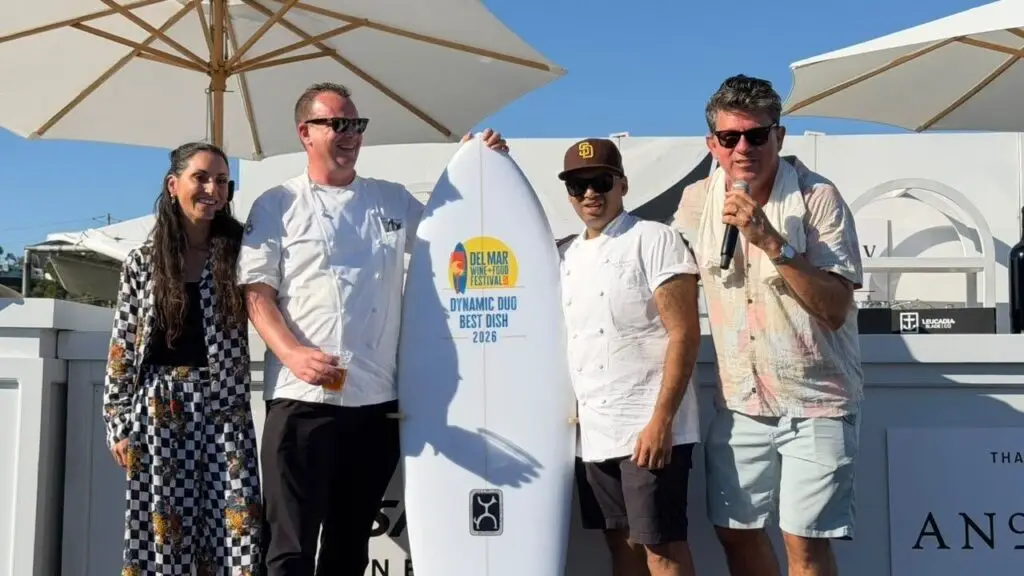
San Diego’s biggest food and drink festival is back for a week-long celebration of SoCal’s best restaurants, chefs, and wineries from Sept. 30–Oct. 4
Maybe it was when Breaking Bad stars Bryan Cranston and Aaron Paul drank mezcal with chefs from San Diego and Food Network on the cliffs over Blacks Beach. Or the dinner outside under lights with Alex Morgan, celebrating some of the country’s most badass women chefs. Or the celebrity pickleball tournament hosted by NFL Hall of Famer Drew Brees, where the star of It’s Always Sunny in Philadelphia made thwacking sounds with locals. Or when Iron Chef winner Beau MacMillan commandeered (some say “stole”) a golf cart and delivered drinks and ice to chefs.
Whatever it is, Del Mar Wine & Food seems to have become the food and wine festival for people who don’t usually like food and wine festivals. The most San Diego thing.

Two years ago, Thrillist named it one of the best food festivals in the country. Last year, 10,000 people came out to experience it, including Guy Fieri. Afterward, the founders spent a couple days trying to put their finger on why it felt so special. They had to name it, lean into whatever that was.
“It all came back to play,” says one of those founders, SDM co-owner Troy Johnson, a longtime San Diego food writer and Food Network judge. “Making world-class bread is serious, but breaking bread shouldn’t be. We gather all these incredibly talented people who take their craft very, very seriously—work their butts off all year to make some of the best food and drink in the country—and then we all just kinda play in the grass. We believe it’s possible to create something of incredible value and make the experience of that thing a laidback, easygoing, unpretentious experience. That’s what this is, and who we are in San Diego. The whole reason we did this was to shine a national spotlight on the people who make our food and drink culture hum.”

The festival dropped its 2026 lineup today.
Headlining the fest are Food Network chefs Jet Tila, Maneet Chauhan, and Aarti Sequeira; Top Chef winner and Michelin-starred Buddha Lo; Iron Chef alum Beau MacMillan; MasterChef winner Kelsey Murphy; MasterChef Latinos winner Michelle Mathelin, chef and Guy’s Grocery Games judge Catherine McCord, chef and former Masterchef Mexico judge Benito Molina, Top Chef alum Jackson Kalb, Michelin-starred chef Drew Deckman, Michelin-starred chef Javier Plascencia, James Beard award-winning chef Brady Ishiwata Williams, and James Beard-nominated chef Mawa McQueen.
The party kicks off on Wednesday, September 30 at Monarch Ocean Pub with Signature San Diego, a walk-around tasting of the city’s greatest bites, from Baja seafood to bold Mexican flavors. From there, the energy carries into a celebrity pickleball tournament hosted by Drew Brees at Barnes Tennis Center on October 2, pairing friendly competition with an all-inclusive tasting experience in support of Feeding San Diego.
The main event is the two-day Grand Tasting at Surf Sports Park on Oct. 3 and 4. The city’s top chefs, food people from TV lands, and local tastemakers gather on the weirdly perfect grass to serve up everything from juicy Wagyu burgers and beef tallow fries to yellowtail tuna tostadas and veggies dressed up in their Sunday best. Wine and cocktail pairings are designed to round out the whole experience, including activations from Aperol Spritz, Hendrick’s Gin, Tequila Ocho, Mezcal Vago, Rioja wines, and Temecula producers.

A VIP lounge offers exclusive access to curated small plates from Michelin-level chefs and pour from some of SoCal and Napa’s finest wineries and drink makers. The Official After Party at Guesthouse La Valle on October 3, a spirited walk-around tasting just steps from the Grand Tasting, where cocktails take center stage through imaginative bites inspired by the smoky, citrus-forward, and bittersweet flavors of classic drinks.
Zones return with activations including the Big Queer Food Fest celebrating queer chefs and queer-owned businesses; the Wellness Zone led by Novo Dia offering a built-in reset with non-alcoholic mocktails, movement-driven activations, and wellness-forward moments. Coastal lifestyle and locally made brands are also integrated throughout the festival.
“We are excited for the fourth edition of the Del Mar Wine & Food Festival this fall, which has quickly become one of the largest food and wine experiences on the West Coast,” says co-founder Chris Finn. “As the festival continues to grow, we are constantly looking to add events, experiences, and partners that will resonate with our San Diego community, and embody the Southern California way of life.”
Returning as the festival’s partner is local nonprofit Feeding San Diego. To date, Del Mar Wine & Food has raised $100,000 to support their ongoing fight against hunger across the region.
Stay tuned for additional events hosted by festival partners including Rob Machado, San Diego Wave, San Diego FC, Town & Country, and San Diego Mojo.

The 2026 Del Mar Wine & Food Festival will take place September 30–October 4 throughout San Diego County.
The week culminates with the Grand Tasting at Surf Sports Park (formerly the Del Mar Polo Fields) at 14989 Via De La Valle, Del Mar.
A wide variety of exclusive dinners, drink tastings, and other lifestyle events will be announced soon and available for purchase individually on Del Mar Wine & Food Festival’s website. These festivities include chef-curated dining experiences across San Diego’s hottest restaurants, a celebrity pickleball tournament, wine tastings, and more.
The Grand Tasting takes place this year on Saturday, October 3 and Sunday, October 4.
General admission for the single-day Grand Tasting starts at $185. An Early Access option is also available at $235, which includes an extra four hours before general admission to meet, mingle, and feast. For a two-day pass, General Admission starts at $275, while Early Access is $375.
VIP tickets begin at $425 for a single day, offering access to pre-festival experiences, exclusive food vendors, a dedicated VIP area, and more. For the full weekend in VIP, passes are priced at $765.
Buy tickets today at DelMar.Wine.
Unfortunately, only service animals are allowed at the venue. All attendees must be 21 years or older.
Isabella Dallas is a freelance writer for San Diego Magazine and the Arts and Culture Editor at The Daily Aztec in her final year at San Diego State University. She previously worked as an editorial intern for SDM, but when she’s not writing, you can find her trying the best coffee spots in SD, devouring the latest rom-coms, and indulging in anything and everything pop culture.
San Diego's "First Couple of Tennis" reflects on the past as they get ready to move on from Ray's Tennis, a Hillcrest landmark
Ray’s Tennis doesn’t look like much from the outside. Never has. It’s just a green box with cloudy windows in Hillcrest, just steps away from a McDonald’s on University Avenue. But for nearly 60 years, this place has been the genesis for three generations of San Diego tennis dreams. Head inside, and you enter one of the tennis world’s great cornucopias.
For years, there was a tennis court behind the store, where owner Bob Ray gave countless lessons. It was like a racket-sport speakeasy; most customers didn’t realize the court existed unless Bob or his wife, Hiroko, guided them through the back door of the shop. Eventually they converted it into a half-court indoors—where a patron might take a racket for a few trial thwacks, trying to avoid rounders of tennis clothes that shared the space.
The shop is an abridged living history. Relics hang from the ceiling: a model of an old metal racket used by fiery lefthander Jimmy Connors in his heyday, and a version of the wooden Donnay that Björn Borg wielded on his way to five consecutive Wimbledon championships from 1976 to 1980.
And just inside the front door is Hiroko eternally stringing new rackets, carefully threading and adjusting the tension of the polyester strings, back and forth, until she has the entire racket head strung.

“I worked seven days a week—five days off in the year,” she says. “My hearing is still good. Physically, I’m as good as I was. Working seven days a week, standing all day. I’m mentally healthier than most people.”
The racket stringing is an operation she does up to 20 times a day—and one that, in some ways, resembles the thread work done by her father decades ago, when he ran a tailor’s shop in Japan.
Hiroko, now 81, was born in the city of Yokosuka at the tail end of the WWII. Her family evacuated to the countryside to escape the bombing raids, and she remembers growing up surrounded by rice fields and mountains. It was in Japan that Hiroko met Bob, a third-generation San Diegan, in the late 1960s, when he was stationed there with the Navy.
Among his possessions at the time was a tennis racket. Inherited from his father, who died when Bob was 11, this racket changed the trajectory of his life: He played constantly, filling up his school days, afternoons, and evenings on the tennis court. He was one of the highest-ranked teen players in the state, and he dreamed of joining the international tournament circuit after his stint in the Navy. But—speaking plainly—he acknowledges that he wasn’t quite good enough to compete with the best of the best. So, instead, he modified his dreams. He and Hiroko returned to San Diego in 1968, and he took a job as the club pro at Morley Field. By their mid-20s, in lieu of touring the world on the tennis circuit, the couple was running the club’s tennis store.
They spent 11 years at Morley Field, which at the time was one of the city’s tennis epicenters, hosting major tournaments for juniors. When the city handed over the store lease to a wealthier applicant, the Rays took over the property on University Avenue and moved in their tennis gear. They have been there ever since—through the McEnroe and Navratilova and Evert eras; the rise of Agassi and Sampras and Graf; the reign of the Williams sisters; the Federer-Nadal-Djokovic rivalry; and into the Alcaraz era. In the near-half century they have sold tennis gear in Hillcrest, the Rays became beloved anchors of the neighborhood’s business community, symbols of stability in an ever-changing environment.
At 84, Bob is still lean and, in his Lacoste tracksuit and Adidas cap, remains every bit the club pro. Like Hiroko, he comes to the store every day—though sometimes, if he is playing tennis in the morning, he might arrive a little later.

But time has started to take its toll. His hearing isn’t what it used to be, and the aging process is revealing itself to be true. And much to the disappointment of their loyal clientele, San Diego’s “First Couple of Tennis” is retiring, a milestone that marks the end of an extraordinarily long chapter in the city’s tennis history.
But Ray and Hiroko didn’t sell the building to a developer for condos or to a big-box retailer looking to open a boutique outpost. Determined that Ray’s should remain a tennis temple, they have negotiated a sale to a former employee who wants to continue the Rays’ legacy.
As of this writing, Hiroko and Bob remain in charge, Hiroko stringing rackets, Bob sharing his expertise about new gear. As much as they love what they’ve built, their hope is to move on soon.
For Hiroko, the prospect of retirement is bittersweet. “What am I going to do?” she asks. “Am I going to be ok? I never had a boring life. Always busy. Business first. I’m so involved in the business—because I didn’t want to fail.”
She looks around her store as she continues stringing. For her, the gladiatorial nature of tennis has always been a metaphor for how to succeed in life. “People have to have a drive,” she says. “You can’t just quit because you lose to so-and-so. Tennis players have that mindset.”
She pauses to talk about all the people who have come through the store’s door over the decades, and the relationships she has built with them. “It’s wonderful to have a great customer. That’s probably the reason I lasted this long.”
Sasha Abramsky is the West Coast correspondent for the Nation magazine and the author of nine books. His tenth book, Chaos Comes Calling, will be published by Bold Type Books in September.
Scripps study shows that some patients may be able to taper their dose and maintain results
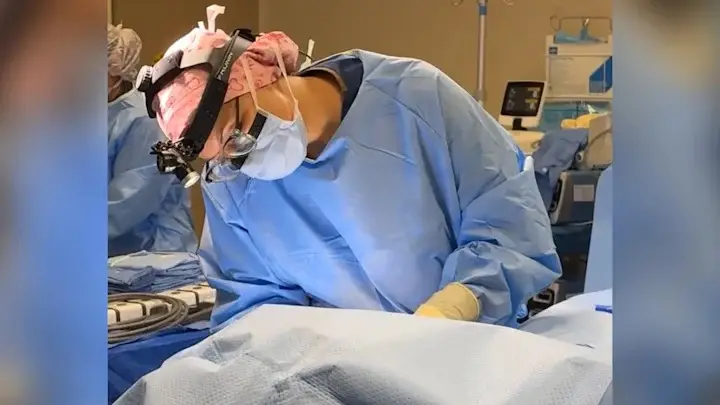
While glucagon-like peptide-1 (GLP-1) receptor agents have been used to treat Type 2 diabetes for more than 20 years, their recent emergence as weight-loss wonder drugs marked a new frontier in medicine. But their effectiveness has left some patients wondering what to do once they’ve reached their goal. Stopping the medication could mean regaining some, if not all, of the weight. A Scripps Clinic internal medicine physician recently conducted a small study of whether GLP-1 patients who had reached their goal weight could maintain that weight by taking their regularly prescribed injection every other week instead of weekly. Spoiler alert: 30 of 34 patients did. Read more about the study here and what that may mean as pharmaceutical companies roll out oral GLP-1s.
For more nutrition, wellness, and healthy living tips, sign up for the San Diego Health newsletter here.