Featured articles
Food News
Food News
Food & Drink
Featured articles
Things to Do
Things to Do
Everything SD
Featured articles
Things to Do

Things to Do

Everything SD
Featured articles
podcast-ep
podcast-ep

podcast-ep
Featured articles

Food & Drink
Everything SD
Everything SD
Featured articles
Food News
Things to Do
Things to Do
Ready to know more about San Diego?
SubscribeReady to know more about San Diego?
Volunteer Graydon Rose shares his experience bringing the joy of surfing to local foster and at-risk youth
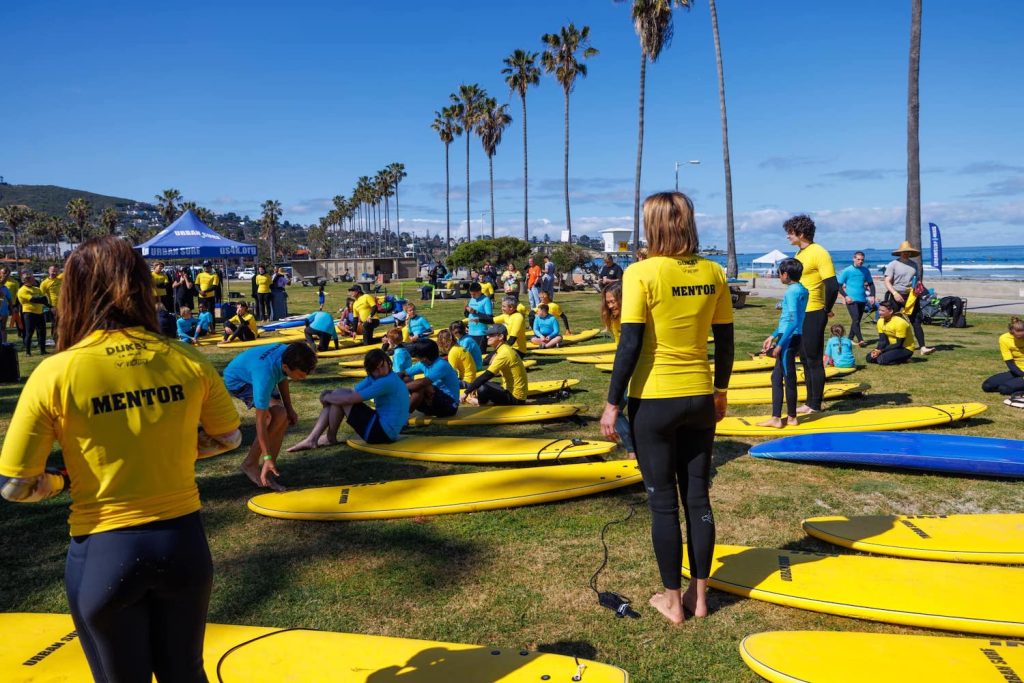
For some San Diego kids in foster care, the beach can seem a world away. Urban Surf 4 Kids is working to change that. The nonprofit aims to build ohana and increase access to sand and sea for foster youth in San Diego and Orange counties. And it wouldn’t be possible without the help of volunteers like Graydon Rose.
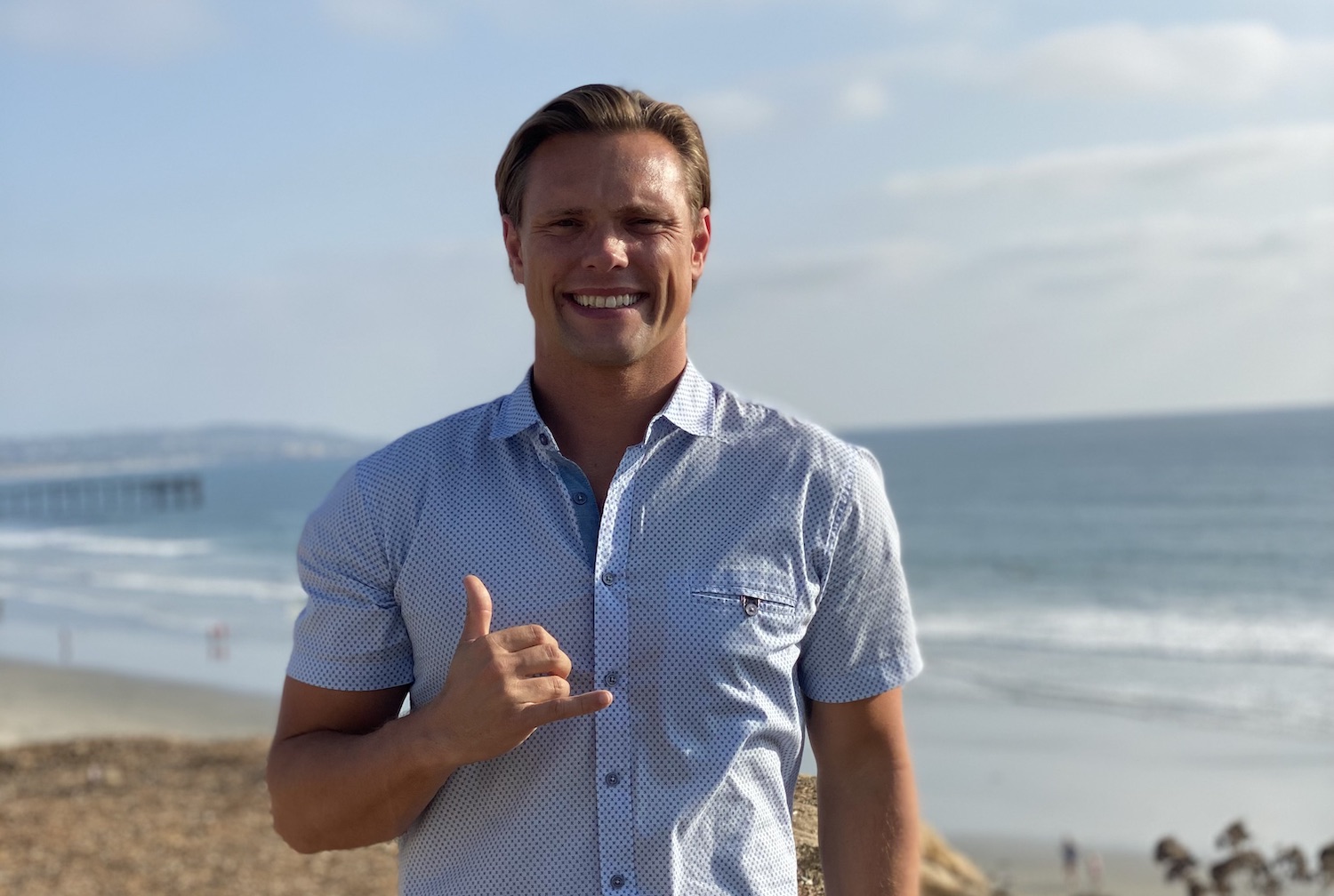
When Rose isn’t busy at his day job as a deputy public defender, he’s serving on the board of directors for Urban Surf 4 Kids and planning an upcoming legal community Casino Night fundraiser, set for September 20. He has also volunteered as a mentor in the nonprofit’s Hanai program (hanai translates to “family” or an informal adoption in Polynesian culture), a surf camp leader, and has helped the organization in a variety of other roles.
I’m born and raised here in the Ocean Beach area. Growing up, I was fortunate to spend much of my youth around aquatic activities at the beach, so that was important. I also was introduced to volunteering growing up. I spent about 12 years in the Bay Area, but San Diego was still close to my heart. In early 2020, I was back down here in training at the public defender’s office, then Covid happened.
I was going a little stir crazy, and I wanted to find organizations to try to be part of, and initially, I worked with a few. It was very rewarding, but when things started to normalize that summer, I wanted to reconnect with the surf community and the youth. So, I looked up youth development-slash-surf and Urban Surf 4 Kids popped up. There are a million phenomenal organizations that work with youth, but Urban Surf is unique.
I wanted to get involved as much as I could. I started out as a volunteer and Hanai mentor. The purpose of the Hanai group is to have a dedicated group of volunteers that would commit six to eight months—one outing a month—with a dedicated group of kids.
It takes time to build trust and relationships and that’s the purpose of Hanai. For six to eight months, if not more, we’re meeting once a month doing some positive activity. It centers around aquatics, but it can be anything that’s an outdoor activity. We’ve done FootGolf, days at the beach; we’ve had hikes. It can take years to feel comfortable trying activities such as getting on a surfboard. And that’s the real benefit of it—that long-term mentorship that you only get with consistency and time.
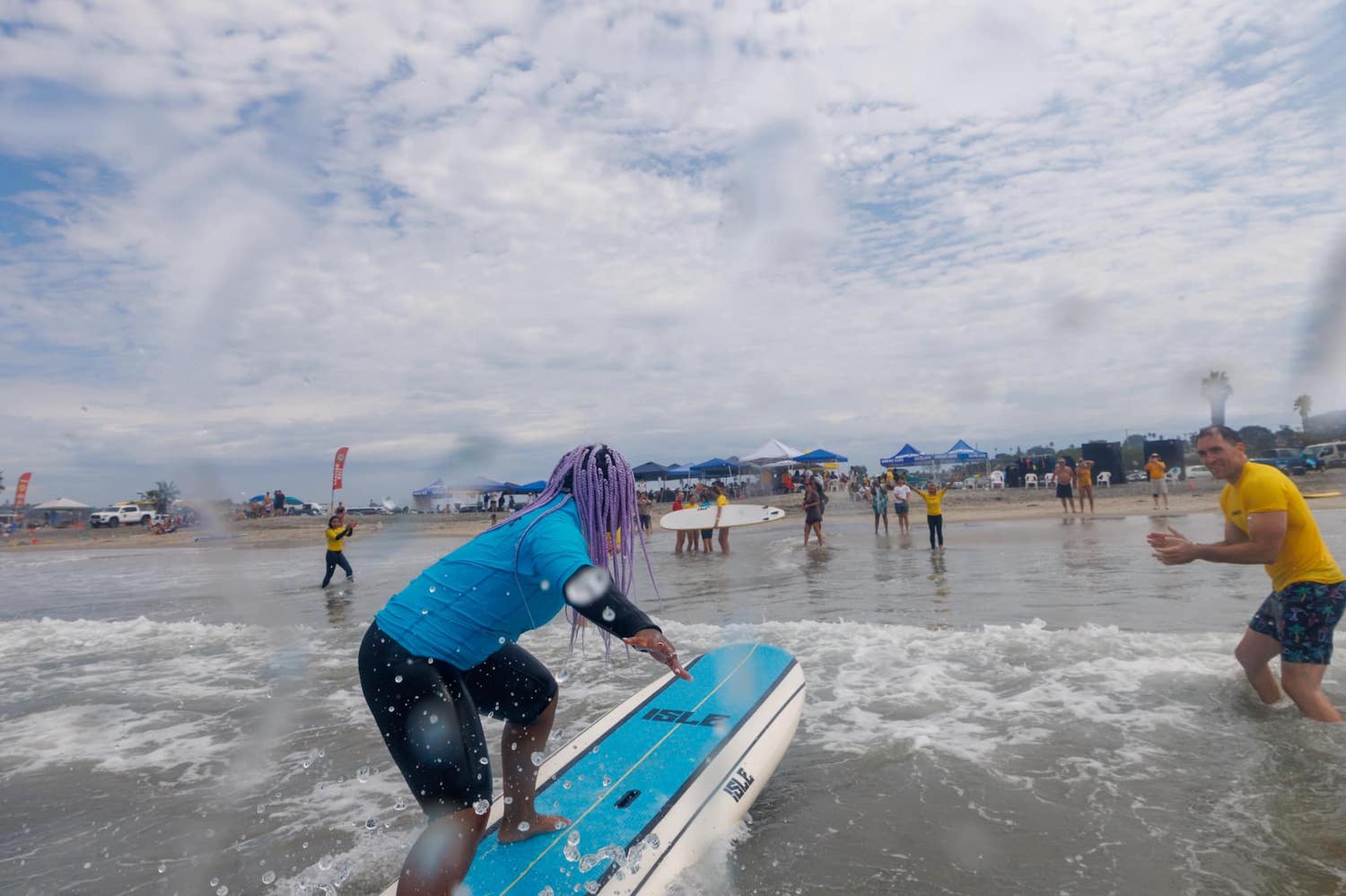
The second or third year with a particular group of kids from a local group home, one of the participants was 15 or 16, and for the first couple of years, he was hesitant to venture into the water, which is understandable—it can certainly be an imposing place. But one day at the end of last season, we were going surfing. It was the second or third time he’s been in the water. After throwing on a life jacket, we hopped on a surfboard and off we went. And on the second or third try, the kid starts hopping up on the surfboard—second or third time in the water, and up on the surfboard.
Often it takes years to work with some of the participants. If you put your toes in the water, that’s surfing, or if you’re standing up shredding gnarly kickbacks, that’s surfing. That was a particularly special moment.
It’s a whole different realm when you’re working and volunteering with youth experiencing trauma. You may not see the positive impact you’re having right away. It may seem like a participant, on a given day, is not having a good time, but maybe at the next surf camp or maybe years from that, without a doubt, that particular experience is going to have some positive impact. It’s about consistency, patience, and openness, and meeting participants where they’re at.
I’d recommend considering areas that they’re interested in—you’re going to want to participate more readily if you enjoy what you’re doing. Also, be mindful of your time commitment. If you only have one day a year, one day a month, be realistic. Urban Surf does not discriminate and will take all the love and help we can get. Any nonprofit has that same mindset—whether it be a little or a lot, it absolutely makes a difference.
We’re trying to build community for some of our most vulnerable and at-risk youth in San Diego. The therapeutic value of the ocean, whether it be just sitting next to it or hopping on a surfboard, we’ve seen a lot of intrinsic benefits of being around it. And if someone doesn’t go in the water, not a problem. If that isn’t their cup of tea, then there are other events we’re involved in with the community.

Sarah Sapeda is San Diego Magazine’s Custom Content Editor. In her 15 years in San Diego journalism, she has covered charitable events, health care, education, crime, current events, and more.
Inspired by her own experience, founder Elena Barbour has set out to help struggling women thrive
Divorce, adjusting to single motherhood or coparenting, and the unexpected adjustments that come with it can turn even the most put-together woman’s life upside down. For many, these shifts trigger a profound loss of identity as that chapter of life officially comes to an end.
While Elena Barbour was navigating a divorce and raising two young children, other women in her circle shared similar experiences—one, a high-powered attorney, said divorce was the hardest thing she’d ever gone through. Barbour realized that women like them who’d gone through divorce, separation, or trauma needed support, but unless they qualified for low-income assistance or could pay top dollar for private services, there weren’t a lot of options. That led to the creation of the Luma Initiative, a nonprofit organization that aims to connect women with the practical resources needed to rebuild after a major life transition. The organization is currently developing its programming and plans to open to its first (already full) three-month cohort of women this fall.
“I consider myself a very strong, competent woman, but what I went through shook me,” Barbour says. “[There were] all these things that I did not expect, and that a lot of people looking from the outside couldn’t see necessarily. It was hard to relate. And I found that after coming out of this divorce, I needed to reshift my community a little bit because the challenges and the life stage of where I was compared to where they were now was just so different—even though I was surrounded by people, I felt very alone.

“So [we’re] trying to create that sense of community in this place for women to be like, ‘All these women are going through something similar and when I talk with them, I don’t feel so alone and I can let go of some of the negative feelings I’m feeling, and I can […] start to rebuild.’”
Luma Initiative’s program will include licensed therapist-guided support groups, and support via financial literacy advisors, life coaches who specialize in career building, and family law attorneys, plus therapeutic yoga at sister business Luma Yoga. They’ll also work with other nonprofit organizations as needed to create a “one-stop, well-rounded, holistic approach to supporting women who are going through this really big transition of life,” Barbour explains.
Barbour says Luma Yoga Studio in Little Italy will serve as Luma Initiative’s physical base, transforming into a familiar community-centered home away from home where women can feel safe. She leaned into yoga and the breathwork, meditation, and mindfulness that often come with the practice to get through tough times, and carries those tools with her “off the mat.” She hopes that other women will find that same sense of nervous system regulation. She emphasizes that Luma Initiative and Luma Yoga work as an ecosystem that provides both wellness and tangible support.
“The goal with Luma Initiative will be to help these women come back to themselves and their identity through community, and use community as a platform to rebuild,” she says.
Sarah Sapeda is San Diego Magazine’s Custom Content Editor. In her 15 years in San Diego journalism, she has covered charitable events, health care, education, crime, current events, and more.
The 24-year-old nonprofit helps teens celebrate the milestone while promoting fashion sustainability
Prom is a rite of passage for high schoolers, but a flashy new dress can cost hundreds of dollars. The Princess Project helps girls cut costs while promoting fashion sustainability. The nonprofit collects new and gently used formal dresses and accessories throughout the year, then when prom season rolls around, launches pop-up boutiques where girls can shop for their dream dress at no cost. The only criteria is they have to be a high school student who’s going to prom.
The Princess Project started in San Francisco in 2002 with a small dress drive. The movement grew exponentially over the years, and expanded to San Diego in 2008. Today, it’s headquartered at Parkway Plaza in El Cajon and has chapters in San Francisco, Silicon Valley, and Sonoma.
“We really want to celebrate teens, make them feel good about themselves, and save them some money because it costs a lot to go to prom. This is one way that we can help alleviate the cost,” says Karen Martin-Spellerberg, corporate board chairman and head of the San Diego chapter. “There’s no financial requirement to come get a dress with us because we are all about everybody being equal and having the same opportunity.”
The experience is more than just picking out a dress, says Martin-Spellerberg. The Princess Project works to create a bubble of inclusiveness and confidence, where all shapes and sizes are celebrated, and all comments are positive.

In the months leading up to prom season, teens can book an hour-long appointment at the Parkway Plaza location to try on dresses and accessories, which they get to keep. Volunteers act as personal shoppers, curating an experience unique to each kid. This year, the Princess Projects also brought dresses to eight library branches throughout San Diego County to reach girls who couldn’t make it to the main event.
Because the Princess Project relies on donations, they often do not receive enough dresses in “fringe sizes” (00-2 and 14 and up), so they hold fundraising events to purchase new dresses in those specific sizes to maintain an inclusive range. Its signature $5 Dress Sale Fundraiser event will take place on May 30-31 at Parkway Plaza, where non-prom dresses (cocktail, casual, business) donated throughout the year are sold for a minimum $5 donation per dress. All proceeds from this fundraiser are used to purchase the understocked sizes.
“We’ve got dress drop off sites throughout San Diego County and people sometimes will donate dresses that are non-prom—sometimes they’re cocktail, casual, summer, business. So, what happens is when we are done with the season, we flip our dress store and we put out all of the non-prom dresses,” says Martin-Spellerberg. “People can come shop and get as many dresses as they want and 100 percent of the proceeds go toward us purchasing dresses in the sizes we don’t have enough of.”
The Princess Project also relies heavily on volunteers, including teen ambassadors, the latter who meet monthly, help organize the store, work outreach tables, and host a fashion show to help spread the word to their fellow students that the dresses are premium-quality and “ready to wear, beautiful and amazing.”
“It’s all about kindness and making kids feel good about themselves,” says Martin-Spellerberg.
Sarah Sapeda is San Diego Magazine’s Custom Content Editor. In her 15 years in San Diego journalism, she has covered charitable events, health care, education, crime, current events, and more.
Here’s where to celebrate, connect, give back, and make a difference this month
St. Germaine Children’s Charity will host its annual grant awards dinner at the Museum of Contemporary Art San Diego. The grant funds that will be donated to local agencies that work to end child abuse were raised at various St. Germaine Children’s Charity fundraisers and events throughout the year.
Help San Diego seniors age gracefully at Senior Prom: Forever Young, a fundraiser for Meals on Wheels San Diego County. The retro school dance-themed gala at the Kona Kai San Diego Resort will help the nonprofit continue to deliver daily nutritious meals and friendly visits to local seniors.
San Diego nonprofit GenerateHope and international charity Freedom Challenge will host a 45-mile, three-day walk from Oceanside to Coronado to help combat human trafficking. Funds raised will go toward Freedom Challenge’s work around the world and GenerateHope’s local programs that serve survivors of sex trafficking.
Roughly 300 guests will gather at a private residence in Solana Beach for bites prepared by San Diego’s top sustainable chefs, along with fine wine, craft beer, and small batch mezcal and tequila to support coastal conservation in the U.S. and Mexico. Funds raised at Wildcoast’s Baja Bash will help expand its programs in 2026 and beyond.
Local law enforcement, first responders, and military personnel will face off in a boxing match aboard the USS Midway Museum to raise money for the Community Youth Athletic Center. Now in its 21st year, the Battle of the Badges supports CYAC’s boxing programs for underprivileged youth.
Sarah Sapeda is San Diego Magazine’s Custom Content Editor. In her 15 years in San Diego journalism, she has covered charitable events, health care, education, crime, current events, and more.
Stake Chophouse & Bar brings contemporary classics and old-school service to the heart of Coronado
Stake Chophouse & Bar isn’t your average steakhouse. Blue Bridge Hospitality’s Coronado outpost is a modern interpretation of a big-city steakhouse nestled in the heart of the small coastal community. The team at Stake has reimagined the whole steakhouse experience. By prioritizing a seasonal farm-to-table sourcing philosophy, a personalized guest experience, and unique service touches, like a formal steak presentation and a bespoke knife selection process, Stake distinguishes itself in a sea of steakhouses.
Exceptional steaks, including Wagyu from Japan, Australia, and the U.S., and fresh seafood flown in daily form the core of Stake’s culinary identity. The menu features a five-course omakase-style steak experience highlighting house favorites, plus an array of cuts, and classic steakhouse staples—think a wedge salad, baked potato, or pasta carbonara—refined for a contemporary palate without losing their traditional appeal. Stake focuses on seasonal sourcing from the region’s best family farms and specialty purveyors, and incorporates intentionally unexpected touches to create something truly unique.
“I challenge our chefs and myself to take it a step further in sourcing,” says Chef Ronnie Schwandt. “It’s important to us to highlight different farms, unique one-off farms—whether it’s cattle, strawberries, a local fisherman or from anywhere in the United States, we’re always trying to find that niche.”
Beyond the menu, Stake emphasizes outstanding service, says Vinny Spatafore, Director of Hospitality Operations. Staff maintains detailed notes, allowing them to remember guests by name, recall previous orders such as a favorite martini (also memorable for the customer since it’s served in an extra tall, distinctly-shaped glass), and celebrate special occasions like birthdays and anniversaries.
“When you have those points of topic that you remember about a guest, they appreciate that,” he says. “Our servers are really good with that—we have a couple servers who have been here since the beginning and they’ll remember somebody from years ago, their name, their kids’ names, where they live. I’m really thankful to have a great front of house staff.”
Award-winning wines, rare whiskeys, special events, and a complementary black car service that provides transportation for guests throughout Coronado add to Stake’s appeal.
Schwandt stresses that Stake offers more than a meal; they aim to give patrons something unforgettable.
“It starts when you walk up the stairs and are greeted by the hostess—that sets the tone for the night. Then you’re greeted by a server, who may know you by name, and can guide you through the menu and curate as they get to know you,” says Schwandt. “Most people leave kind of blown away; they leave feeling like they just had an experience. That’s the goal, right? Whether you’re serving smash burgers or high-end steak, you want somebody to leave thinking, Wow, that was awesome.”
The 50-year-old nonprofit provides transitional housing and financial literacy services to youth leaving the system
For young adults transitioning out of foster care, housing instability is often among the greatest challenges they face. This, along with underemployment or unemployment and a sudden lack of support and resources, significantly increases the likelihood that they will ultimately slip through the cracks.
Walden Family Services, a 50-year-old nonprofit that helps find stable, supportive home environments for local youth in foster care, is addressing the problem head-on through transitional housing programs that integrate financial literacy, case management, and life-skills development to help young adults learn how to live independently.
“It was pretty much a foster care to homelessness pipeline—or prison,” says Teresa Stivers, Walden Family Services CEO. In response, Walden Family Services launched an initiative called Independent Futures to help clients between 18 and 21 acclimate to their newfound independence. There’s also an extended care program for those ages 22 to 24.
Clients are provided furnished housing, food, and job training, and learn basic life skills, like how to cook and grocery shop, save money, pay bills, and budget. They pay rent that’s deposited into a savings account and matched by Walden Family Services. Clients are also required to work, attend school, or do a combination of both for 40 hours a week.

Roughly 90 percent of existing clients live in safe, sustainable housing, 83 percent maintain stable employment, and 83 percent leave the program with significant savings.
“There’s a reason why every young person in this country can be on their parents’ health benefits until 26. Research shows that’s about how long it takes for someone to fully take off—and that’s for somebody who grew up with their parents and maybe went to college,” says Stivers. “As you can imagine, it’s more difficult for someone who went from family to family, school to school, exiting at 18 without a diploma.”
The program’s success stories exemplify its impact, Stivers says. Clients have gone on to become entrepreneurs, advocates, scholars, and loving parents who break the cycle of child abuse and neglect. Many also want to give back and help other kids in the foster care system. Walden Family Services is working to develop an alumni program and build a mentoring component into its transitional program.
“We’ve done all kinds of peer mentoring, peer therapy, and have a lot of staff members who grew up in our program or have lived experience, and it’s been really impactful. So now we want to formalize that program for our alumni and give our graduates an opportunity to help other folks,” Stivers says.

Walden is also looking ahead, focusing on expanding housing partnerships, strengthening prevention efforts, and increasing community involvement to meet growing demand. However, rising housing costs and funding constraints are taking their toll on nonprofits like Walden Family Services.
“It’s challenging for all of us,” Stivers says. “We are all still trying to provide the best care that we can with the limited dollars.”
Those considering ways to help can make a monetary donation to the organization or attend a fundraising event like the Walden Family Services’ “There’s No Place Like Home” gala on April 30 at The Thursday Club. The organization is currently looking for volunteers to host activities or training sessions for clients, help out in the office, serve on the board, or participate in holiday drives. If you’re a local property owner, they’re also looking for partnerships with those willing to rent reasonably priced apartments to their clients.
“There are so many things that people can do to make an investment in their community,” Stivers says. “Many people don’t realize that there are children in their own backyard who are going hungry, who are sad and scared and lonely, and that they can make a difference. We hope that people will do that so we can all benefit.”
Sarah Sapeda is San Diego Magazine’s Custom Content Editor. In her 15 years in San Diego journalism, she has covered charitable events, health care, education, crime, current events, and more.
The annual fundraiser helped provide university scholarships for women in low-income countries
On April 11, San Diego–based nonprofit U-GO hosted a fundraiser at Cucina 2051 in Carlsbad to support women in low-income countries pursuing higher education. The U-GO San Diego Wine Dinner raised money to fund university scholarships for young women from underserved communities around the world.
Photo Credit: Madilynn Saige Photo


Sarah Sapeda is San Diego Magazine’s Custom Content Editor. In her 15 years in San Diego journalism, she has covered charitable events, health care, education, crime, current events, and more.
Scripps study shows that some patients may be able to taper their dose and maintain results
While glucagon-like peptide-1 (GLP-1) receptor agents have been used to treat Type 2 diabetes for more than 20 years, their recent emergence as weight-loss wonder drugs marked a new frontier in medicine. But their effectiveness has left some patients wondering what to do once they’ve reached their goal. Stopping the medication could mean regaining some, if not all, of the weight. A Scripps Clinic internal medicine physician recently conducted a small study of whether GLP-1 patients who had reached their goal weight could maintain that weight by taking their regularly prescribed injection every other week instead of weekly. Spoiler alert: 30 of 34 patients did. Read more about the study here and what that may mean as pharmaceutical companies roll out oral GLP-1s.
For more nutrition, wellness, and healthy living tips, sign up for the San Diego Health newsletter here.