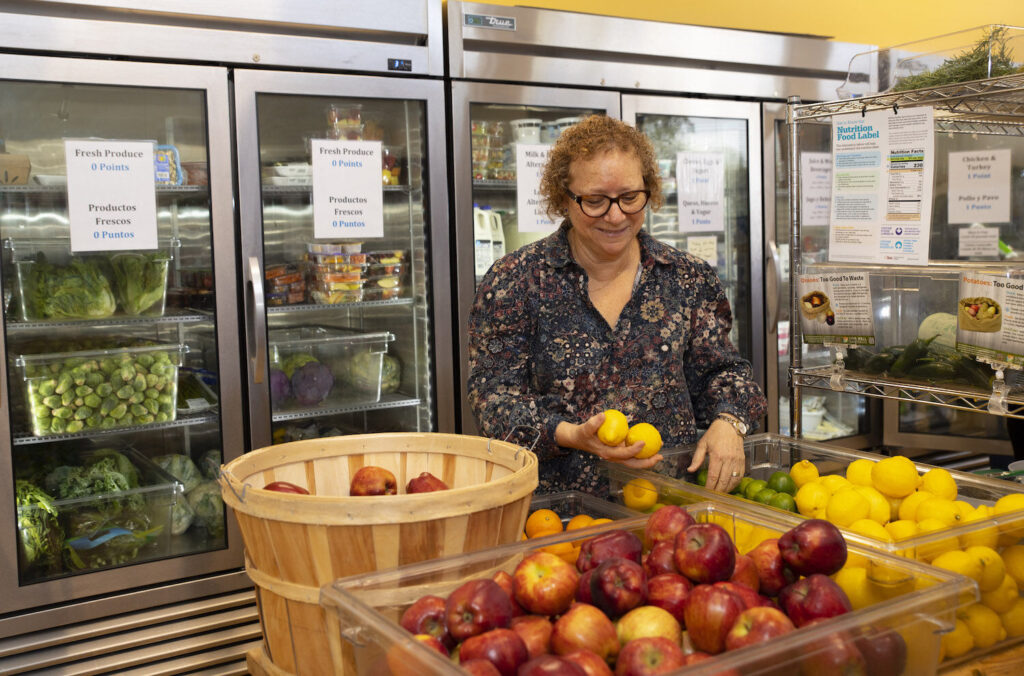
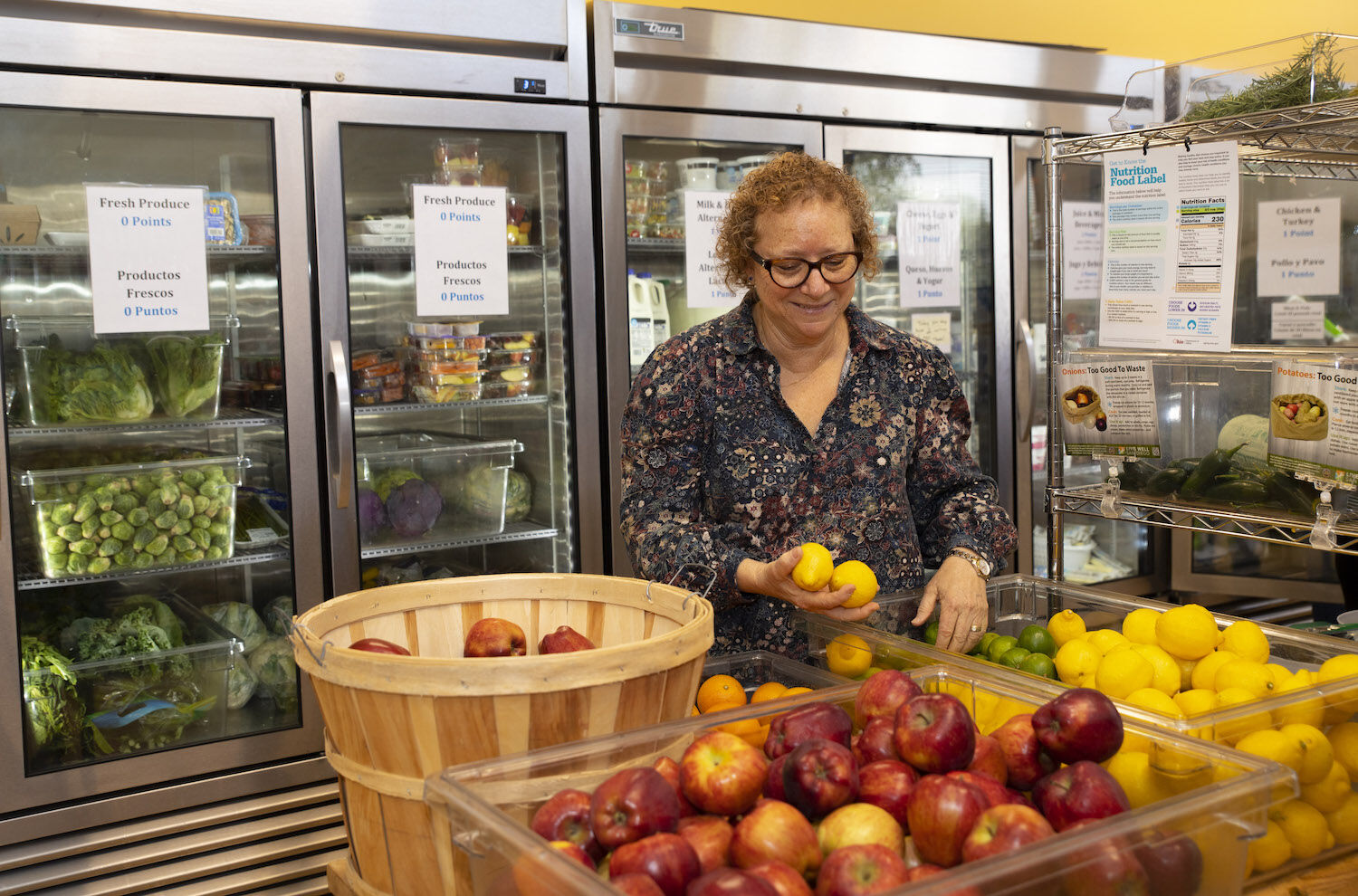
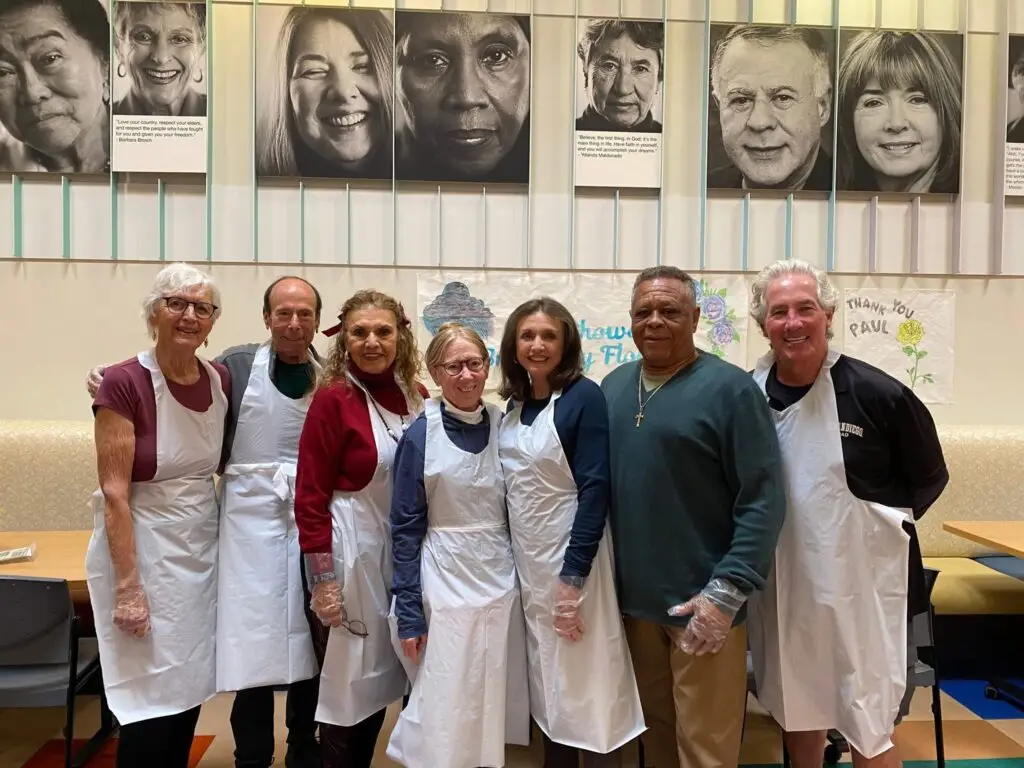
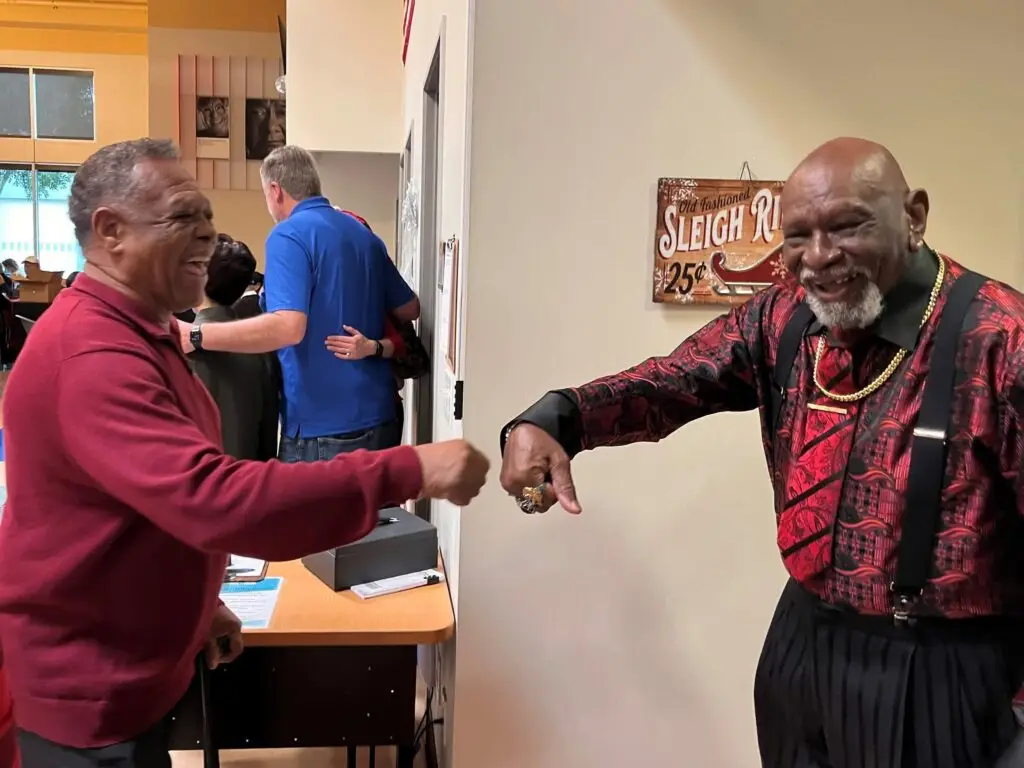
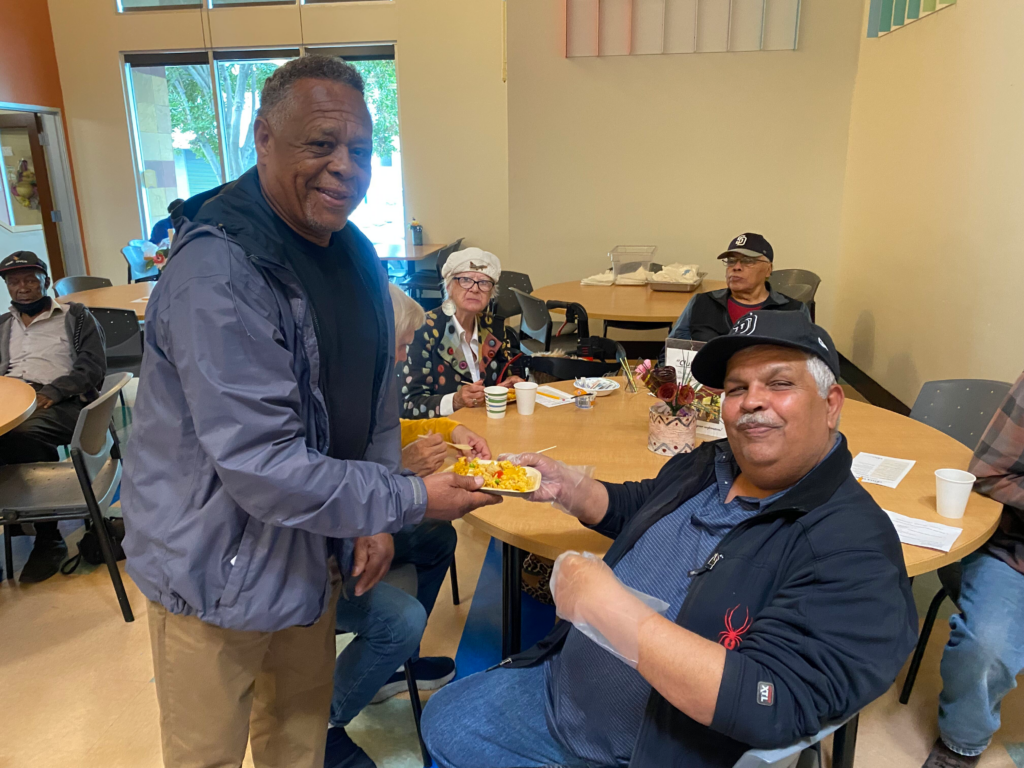
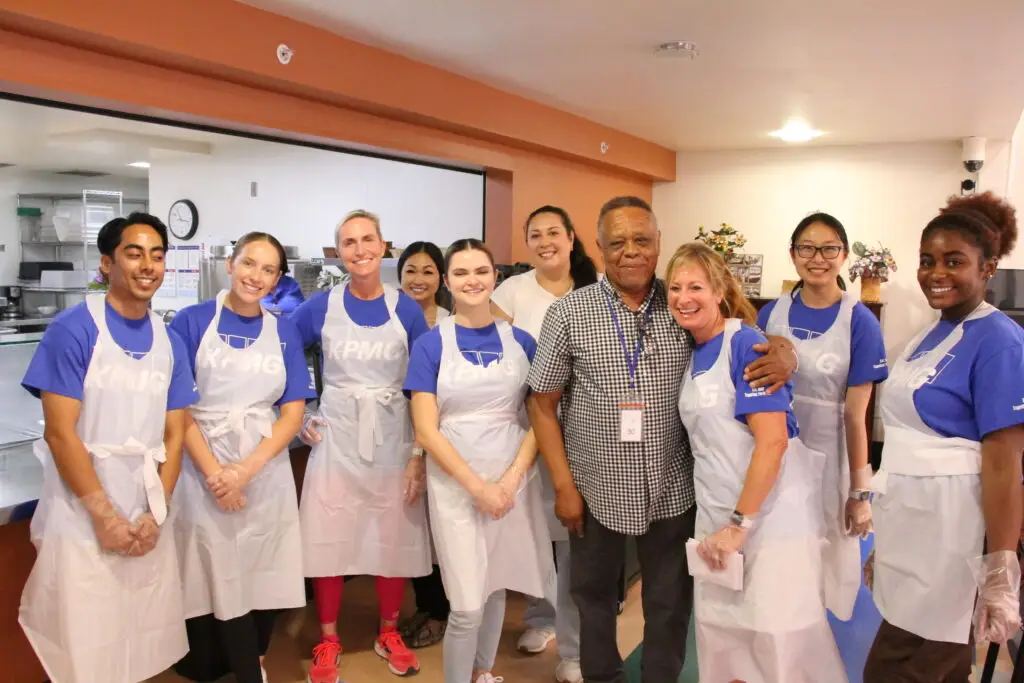
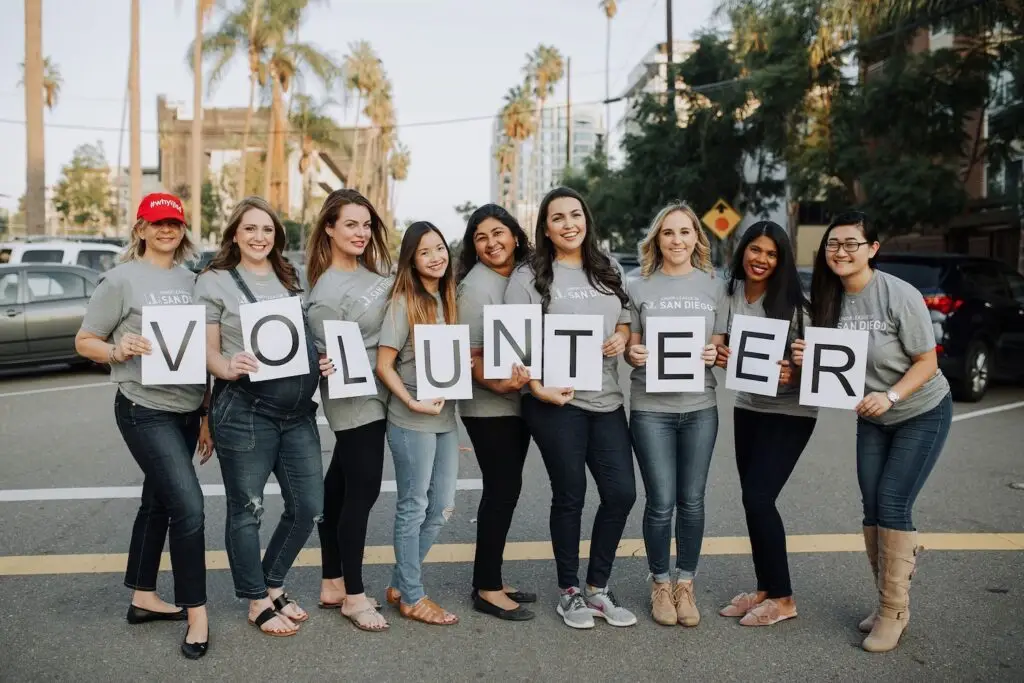
Jewish Family Service has been empowering vulnerable San Diegans since 1918. Through its community programs, transportation assistance, counseling services, and other initiatives, JFS is working toward a stronger, healthier, and more resilient San Diego. Volunteers like Shelley Miller-Odelson help make its mission to move forward possible. She gives back by donating her time to stock shelves and assist clients at the JFS Corner Market, a food pantry on the nonprofit’s Joan & Irwin Jacobs Campus in Kearny Mesa that feeds hungry San Diegans and reduces food waste.
What made you want to become a volunteer for Jewish Family Service?
When I was looking at volunteer opportunities nine years ago, [I noticed that] JFS offered a large variety of services to the community. Many of these were in areas that needed volunteer assistance to function effectively. I had worked as a personal chef for 20-plus years and knew the amount of waste that occurred in the food service and grocery industries. I was looking for a way to help fight the growing food insecurity that was occurring in our community, and I was excited to work with an organization that saved and repurposed food that was otherwise destined to go to the landfill. An added bonus for me was the friends made through the camaraderie of volunteering with others on a weekly basis.
What do your volunteer duties entail?
Merchandising and restocking and client assistance. On Monday mornings, we clean out spent produce, out-of-date dairy, and [stale] baked goods. Then we restock the market with fresh produce, dairy, baked goods, and meats, which have been either donated or saved from participating grocery stores, and fill in the shelves with canned vegetables, meats, soups, fruit, and dry goods, such as cereal, beans, rice, pasta, and protein bars. When we are really fortunate, we also receive household and personal care items that clients can choose from. We also work with clients as they shop in the market. The Corner Market client shopping is based on a point system, rather than requiring money. Clients are assigned shopping points based on family size and can use these points monthly to shop, giving them more freedom and dignity. We help clients make healthy choices and maximize their points by explaining the value of fresh produce (zero points), frozen meats (a point per pound), and fresh dairy (generally a point per item), and lower-salt and/or [lower-]sugar canned and dry items. They may also choose from dessert and salty snack items, but those are priced higher. By allowing clients to choose their own food, they are taking ownership of making healthy choices, and not wasting food they don’t like.
After completing a background check, a few hours of online training were required. This focused primarily on JFS systems, privacy issues, and working respectfully with the JFS client base. Hands-on training in the Corner Market came from working with staff and other experienced volunteers.
What is the time commitment?
I generally volunteer two days a week, for about three hours each shift.
What was your best day as a volunteer?
The best days are when client shoppers leave happy with the bounty of produce, meats, and other goods they were able to “purchase.” It is also really fun to help explain to a shopper how to prepare something they’ve never previously eaten or cooked with. The thanks we get from our shoppers are endless.
What has been the biggest challenge?
I had been working with the Corner Market for several years before Covid and was fortunate to be able to continue to work with JFS staff to get food to so many more people in need once everything closed down due to Covid. With the Corner Market shut down, we switched from in-person shopping to preparing boxes of groceries for delivery; bagging produce, baked goods, dairy, and prepared foods for daily drive-through pick-up; and assembling boxes of frozen prepared meals for homebound clients. We sifted through a tremendous amount of salvaged produce from donor grocery stores and from Senior Gleaners, bagged fresh and frozen donations from Starbucks, and welcomed whatever was available from Feeding San Diego, the San Diego Food Bank, and any other organization that had food to spare. I was truly amazed by the number of households we were able to help feed every day. From March 2020 to July 2022, the JFS Hand Up Food Pantry was able to provide just over 1.8 million meals!
Charitable SD
JULY 27, 2026
Where San Diego Seniors Find Support and Community
Serving Seniors provides meals and coordinated services to more than 13,000 older adults each year, aided by a dedicated volunteer network
Seniors today face challenges that were unimaginable to previous generations, and some turn to nonprofit organizations to bridge the gap. Serving Seniors helps low-income older adults with housing assistance, social services, and more. The nonprofit provides 1.5 million meals and coordinated services to 13,265 older adults each year, the majority living on less than $1,125 per month.
Dedicated volunteers, like Fred Davis, help make this important work possible. Since roughly 2008, Davis has spent six days a week at the Serving Seniors Gary and Mary West Senior Wellness Center serves as a liaison to help clients access much-needed resources. Here, he shares what keeps him coming back day after day.
Courtesy of Serving Seniors
What made you want to get involved with Serving Seniors?
I have a community outreach ministry and my grandson and I were on the streets downtown handing out sack lunches, water, hygiene products, clothes and shoes, and things like that and I noticed that most of the people I met appeared to be seniors. So the next logical step for me was to find a senior group that I could work with. I heard about Serving Seniors, and I made a few phone calls. No one really responded to me, so I showed up. They opened the door for me and now they can’t get rid of me. I found a home. I’ve met some really good people over the years. And as it turned out, I’ve been here longer than most of them. I’ve been here at the West Center ever since the doors opened. And matter of fact, I was the one who gave Gary and Mary West an award for their generous donation that made it possible to open up this center.
What do your volunteer duties entail?
I’m in ministry, but I don’t want that to be the highlight of what I do. It’s not just a passion for serving people, it’s a calling. I like the idea of giving and serving people and trying to meet their needs. So I counsel, I oversee the serving of the lunches, and I work with the head of the volunteer group. I’m involved in different activities. Matter of fact, this coming Saturday, I’m going to take a group of seniors out sailing. I also helped start the Civic Engagement Group. It was a group of us, and there are about three members that are left from when we originally started it. Now Serving Seniors is taking it over, and my role is to work with them. I also took it a little bit further and ended up joining Aging and Independent Services and sat on that advisory board for a number of years. That led to me being elected to the California Senior Legislature. So I’ve been advocating for seniors for a very long time. They’re a vulnerable group. They worked hard and don’t always get the respect that they deserve.
Courtesy of Serving Seniors
What do you like best about volunteering at Serving Seniors?
The people—this is my target group right here. I don’t have to walk the streets like my grandson and I did anymore; they’re right here. I’m here every day at the West Center but Sunday.
What’s the biggest challenge you’ve faced?
The biggest challenge is not being able to help someone who really needs the help. But we try to find a way. I reach out to different organizations, faith-based organizations or other nonprofits, sometimes with success and a lot of times without success. There are quite a few people that are in need who are hardworking people, dedicated people who still want to provide for themselves and their family, and they’re just caught in that void.
Courtesy of Serving Seniors
Can you describe your favorite or most memorable experience while volunteering?
I was handing out clothes; I usually have a sock drive and I gave a homeless person a pair of socks. As they peeled their filthy socks off their feet, this person cried. You don’t know how important these little things are that we take for granted. It was really touching.
Any advice for someone considering volunteering as a way to give back?
A lot of people use the term giving back, but I just say giving. When you say ‘giving back,’ that means you’re trying to repay something and you’re taking credit. But giving is a passion. It’s something that you do from your heart, not out of obligation.
Sarah Sapeda is San Diego Magazine’s Custom Content Editor. In her 15 years in San Diego journalism, she has covered charitable events, health care, education, crime, current events, and more.
For more than five decades, SAY San Diego (Social Advocates for Youth) has been helping local kids, families, and seniors navigate challenges they can’t face alone. The nonprofit serves as a beacon for local residents by offering more than 30 programs that range from youth mentorship and crisis support to increasing access to stable housing and mental health services to substance-use prevention and workforce development.
“For 55 years, SAY’s story has been shaped by listening to the community and being willing to grow with it,” says Louie Nguyen, SAY San Diego’s president and CEO. “Our mission is to partner with youth, adults, families, and communities so they can reach their full potential. That keeps us focused on the whole person, not just one immediate need. As San Diego evolves, we listen, work alongside trusted community partners, and adjust our services so they remain accessible, relevant, and rooted in opportunity, equity, and well-being.”
SAY San Diego started as a grassroots nonprofit with one paid employee and a budget of $1,500. The organization has since evolved from humble beginnings as a youth-focused agency into a comprehensive and far-reaching social services organization.
Several milestones mark SAY San Diego’s success, including partnering with local schools and neighborhoods to expand its child and youth development programs, family resource centers, and school-based mental health services; the creation of the San Diego Military Family Collaborative, one of the largest of its kind in the nation; and the opening of its licensed early childhood center that introduced an employer-supported childcare model.
What underscores SAY San Diego’s programs and opens the doors for lasting change is a willingness to listen and grow in response to emerging needs, says Nguyen.
“Lasting change comes from consistent support, strong relationships, and services that work together,” says Nguyen. “Our school-based programs have an especially broad reach, serving more than 6,500 young people across 57 school sites each day in places families already know and trust. Our mental health programs also stand out, with 72 percent of participants reporting improved emotional well-being. But the real strength of SAY is that a family can connect with early childhood care, parenting support, youth development, mental health services, or community resources as their needs change over time.”
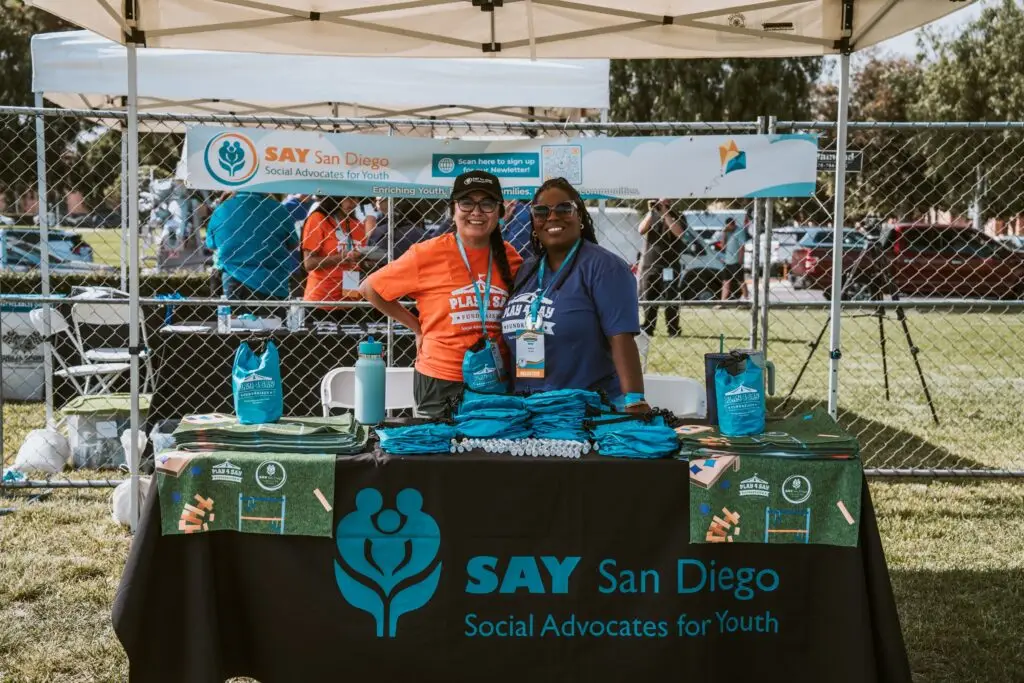
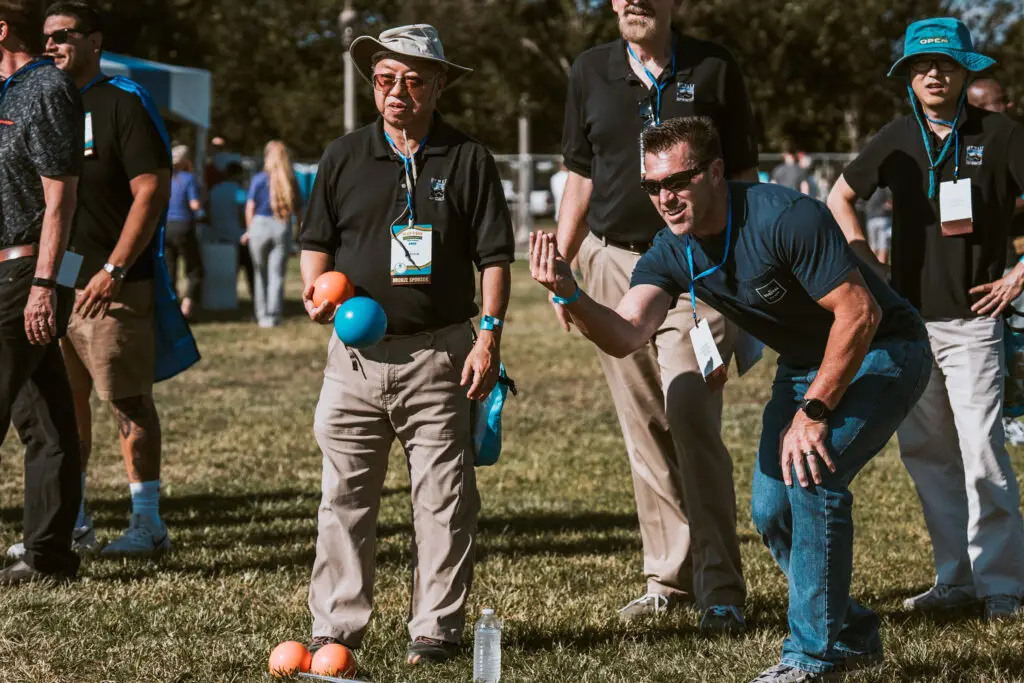
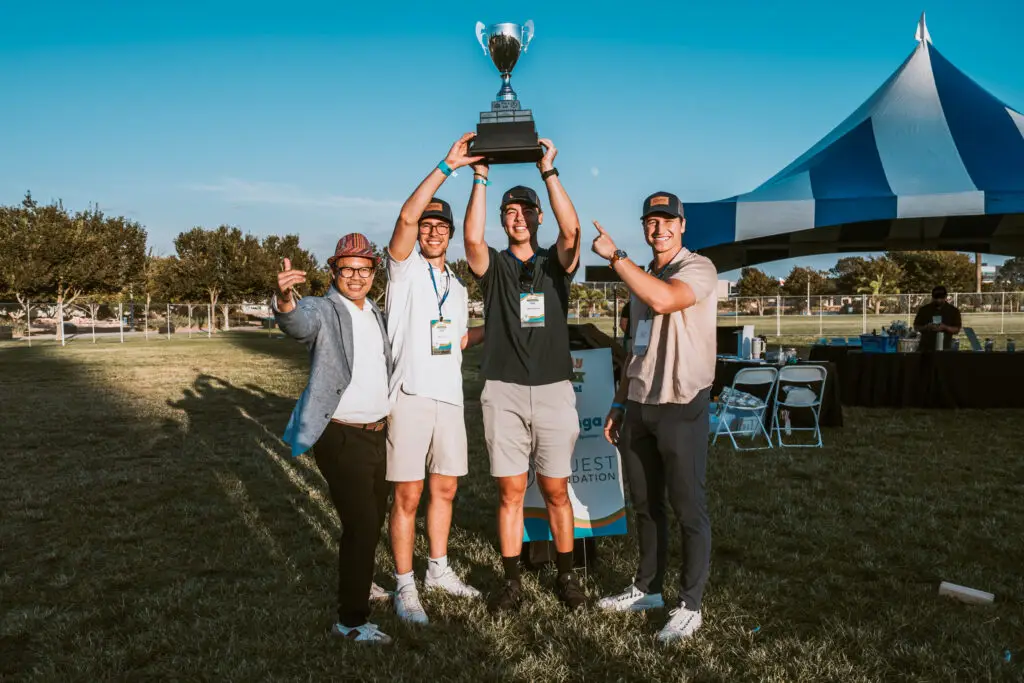
Much of SAY San Diego’s impact is possible thanks to partnerships with individuals and organizations across the county. Nguyen hopes to further expand that community investment through initiatives like its Play 4 SAY fundraiser, which brings together corporate partners, foundations, and other supporters. However, challenges remain in “meeting rising demand while public funding, workforce capacity, and the broader nonprofit environment remain uncertain,” he says.
As economic instability, rising housing and childcare costs, and access to mental health services continue to affect San Diegans, SAY San Diego’s role is more important than ever. The organization hopes to build on the foundation it has built over the past 55 years and continue to help kids, families, and communities thrive.
“Today, we reach more than 45,000 San Diegans each year, but our goal is not simply to grow larger, it is to create a deeper, more lasting impact,” says Nguyen. “Our next chapter is about strengthening what works, expanding access to mental health and family support, investing in our people, and bringing partners together to build a stronger San Diego.”
Sarah Sapeda is San Diego Magazine’s Custom Content Editor. In her 15 years in San Diego journalism, she has covered charitable events, health care, education, crime, current events, and more.
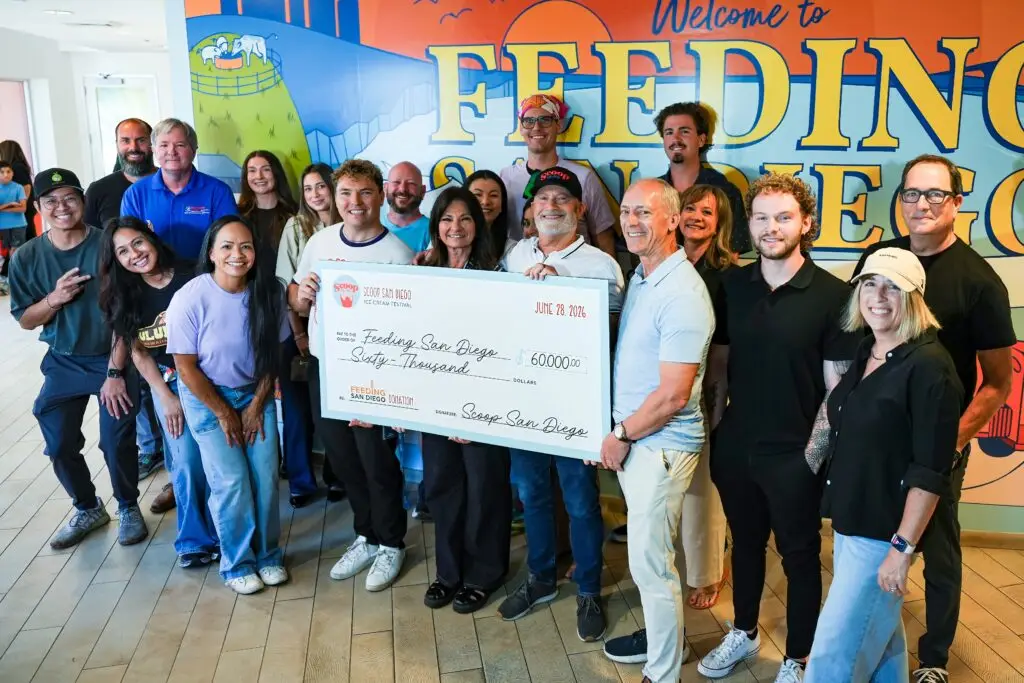
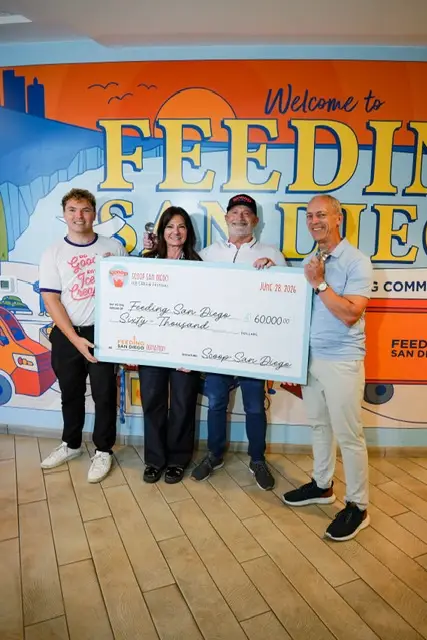
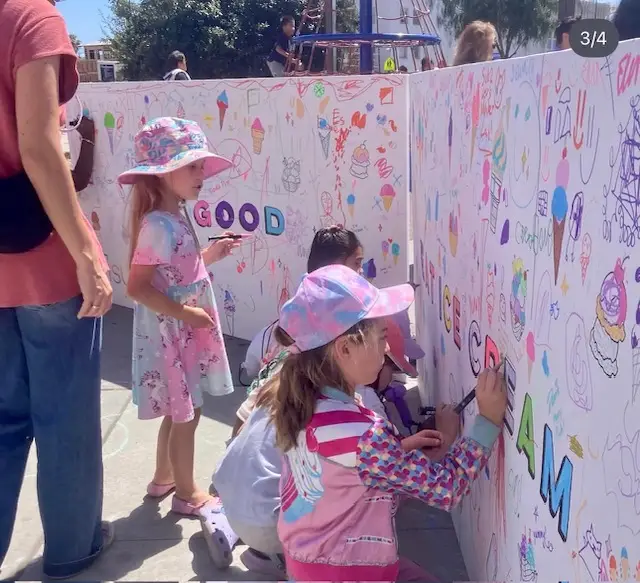
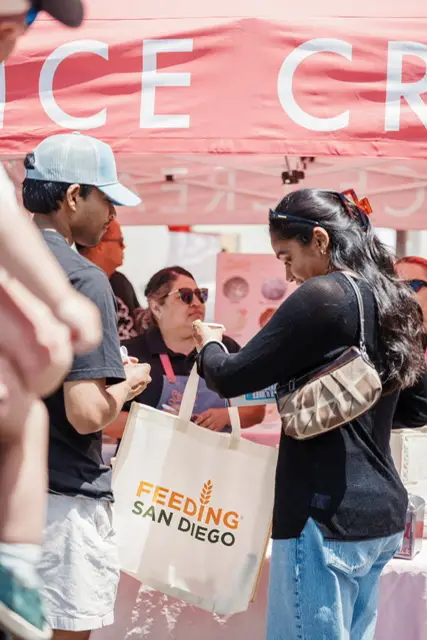
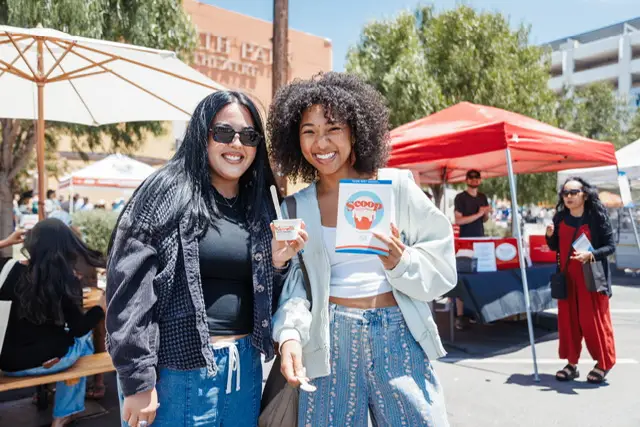
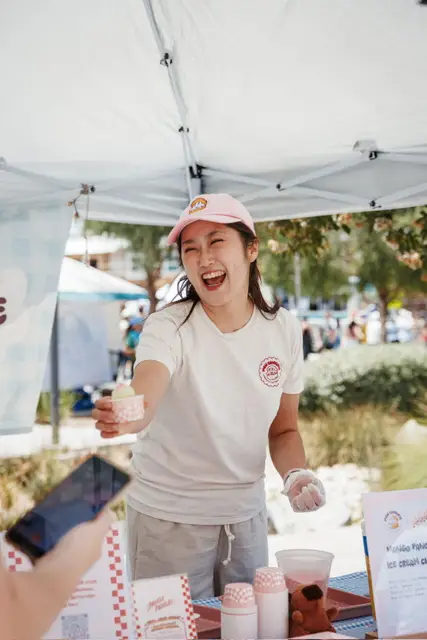
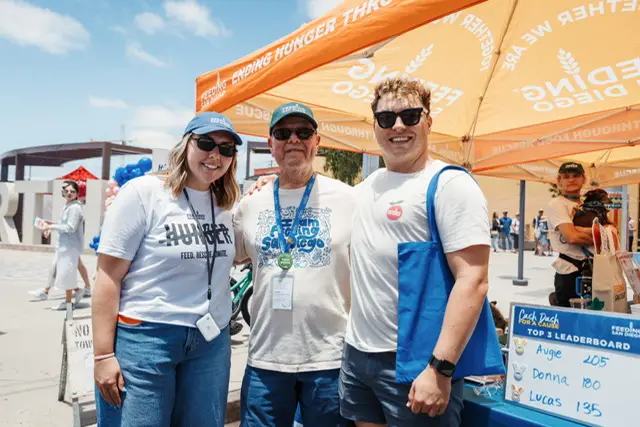
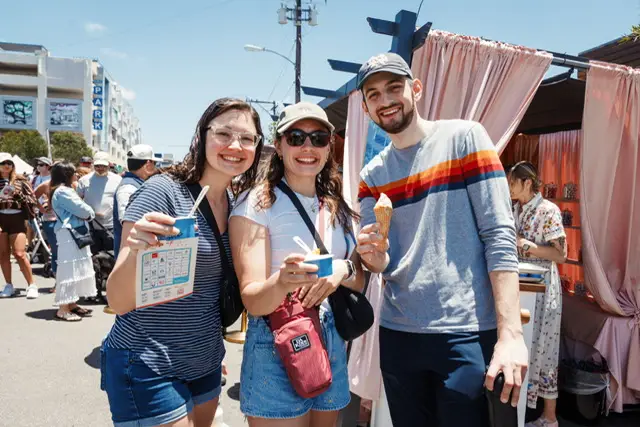
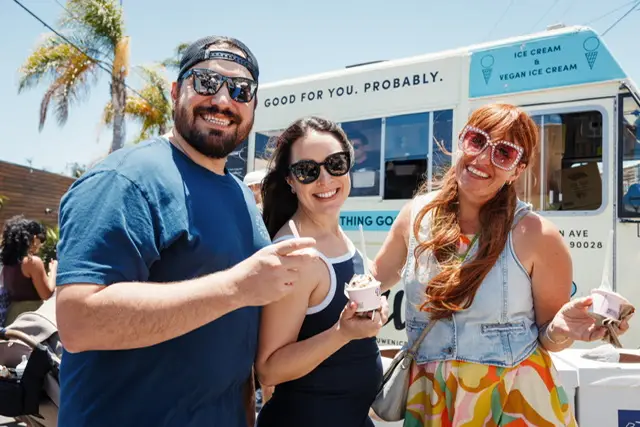
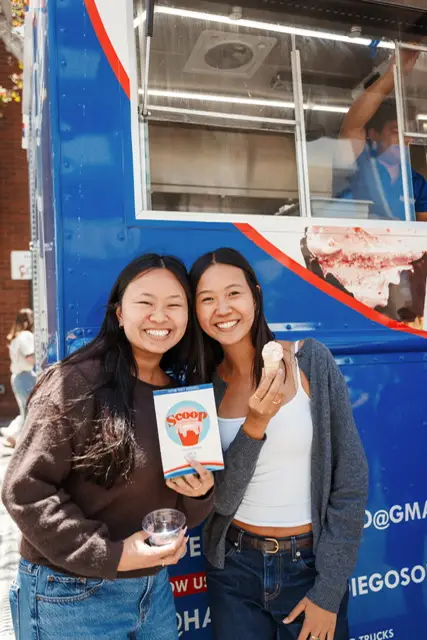
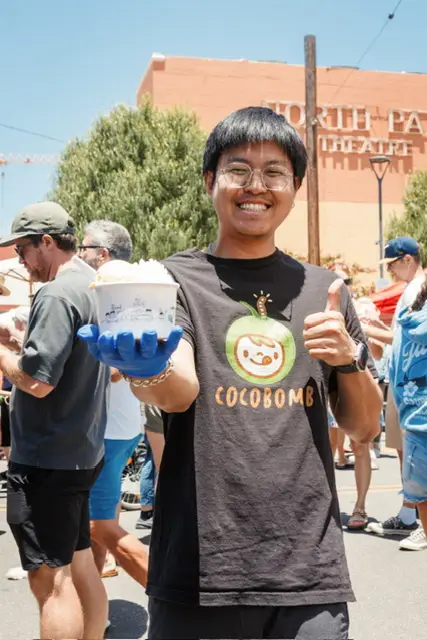
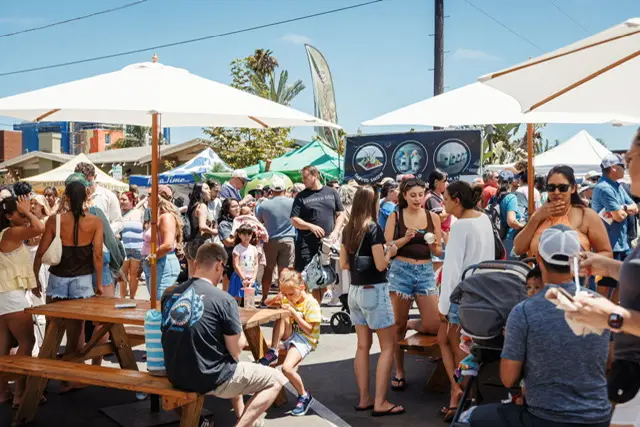
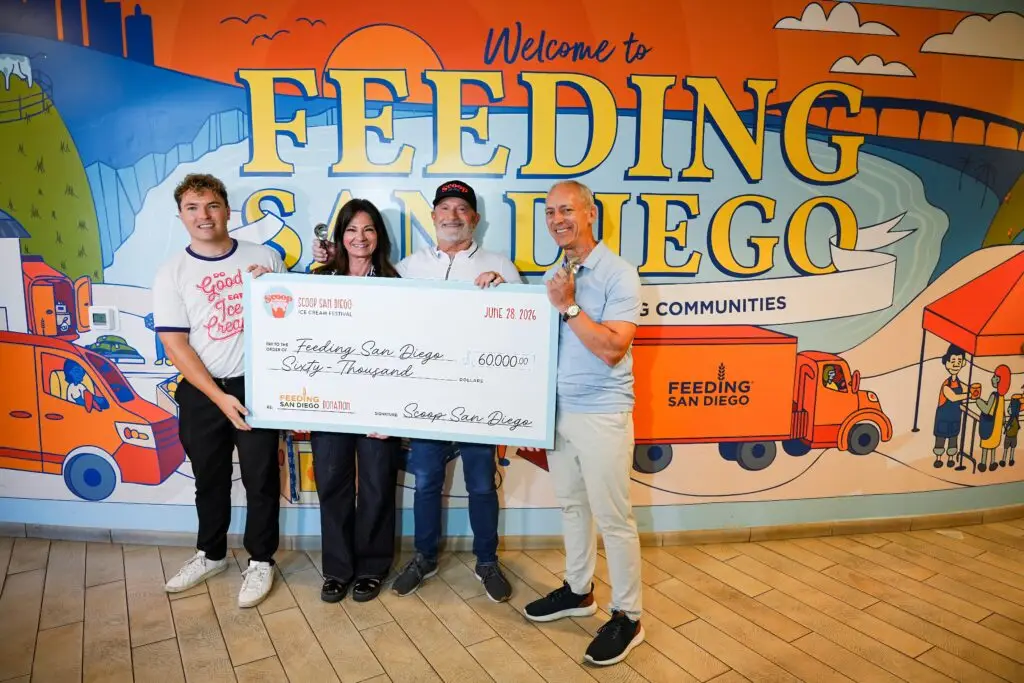
More than 6,000 ice cream lovers devoured tasty treats at this year’s Scoop Ice Cream Festival for a great cause. The event on June 28 launched an ongoing partnership with Feeding San Diego and raised $60,000, or enough to provide 120,000 meals to San Diegans facing hunger.
Sarah Sapeda is San Diego Magazine’s Custom Content Editor. In her 15 years in San Diego journalism, she has covered charitable events, health care, education, crime, current events, and more.
Renewable energy companies building hundreds of power plants. Biotech startups using artificial intelligence to create personalized medicine for children with rare diseases. Hospitality companies quietly powering thousands of local events. Consumer brands growing from beach-town startups into national businesses. These are the kinds of companies driving San Diego’s economy today, and the businesses recognized at this year’s San Diego Business Impact Awards offer a snapshot of where the region is headed.
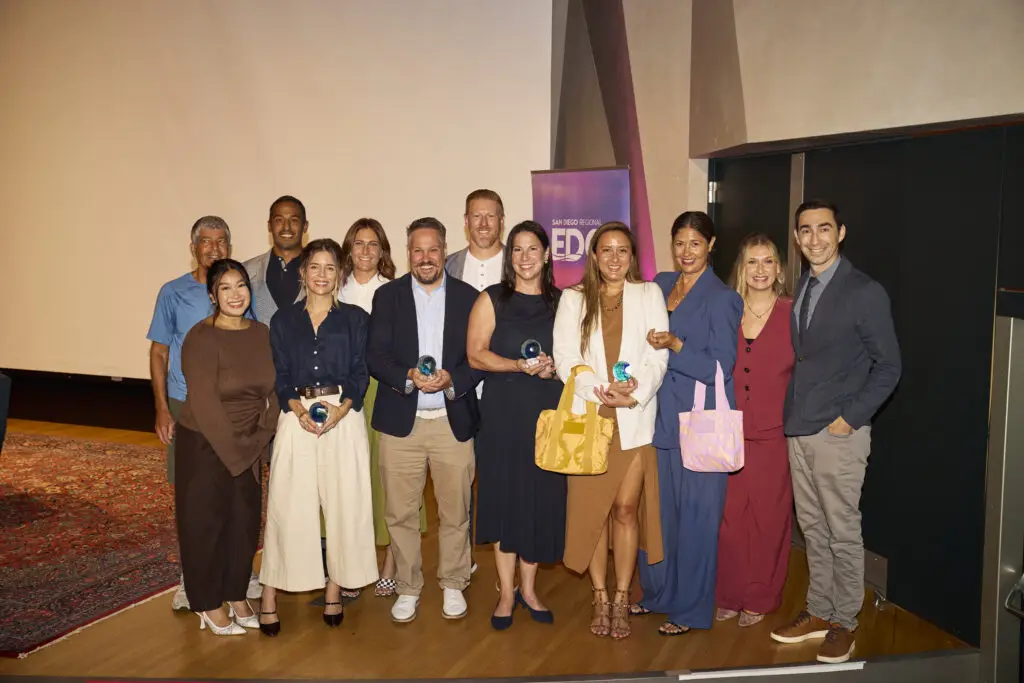
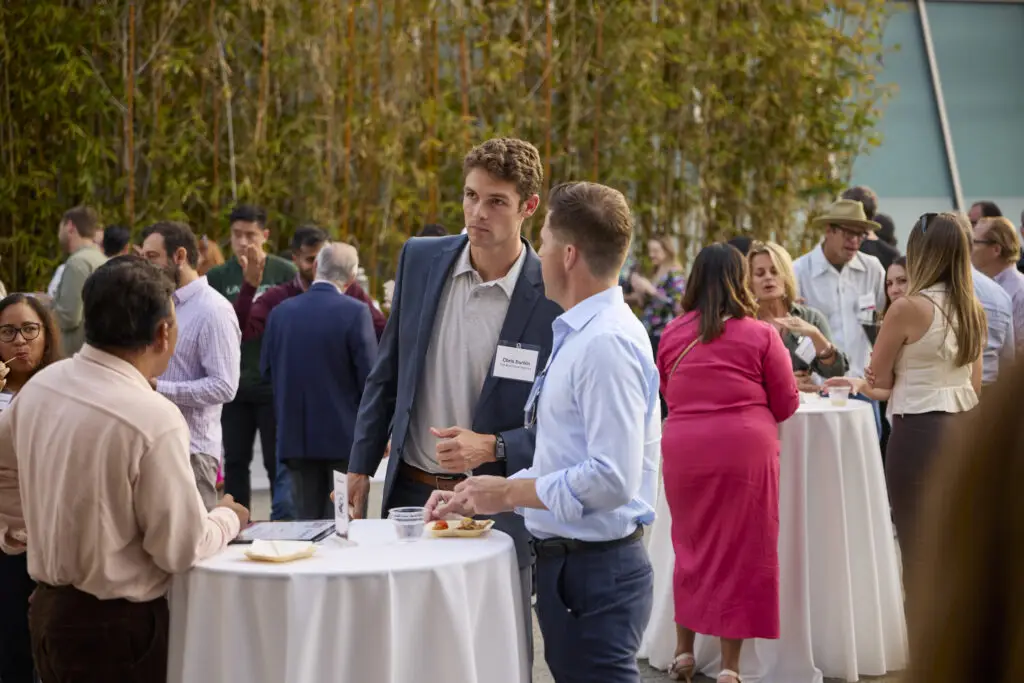
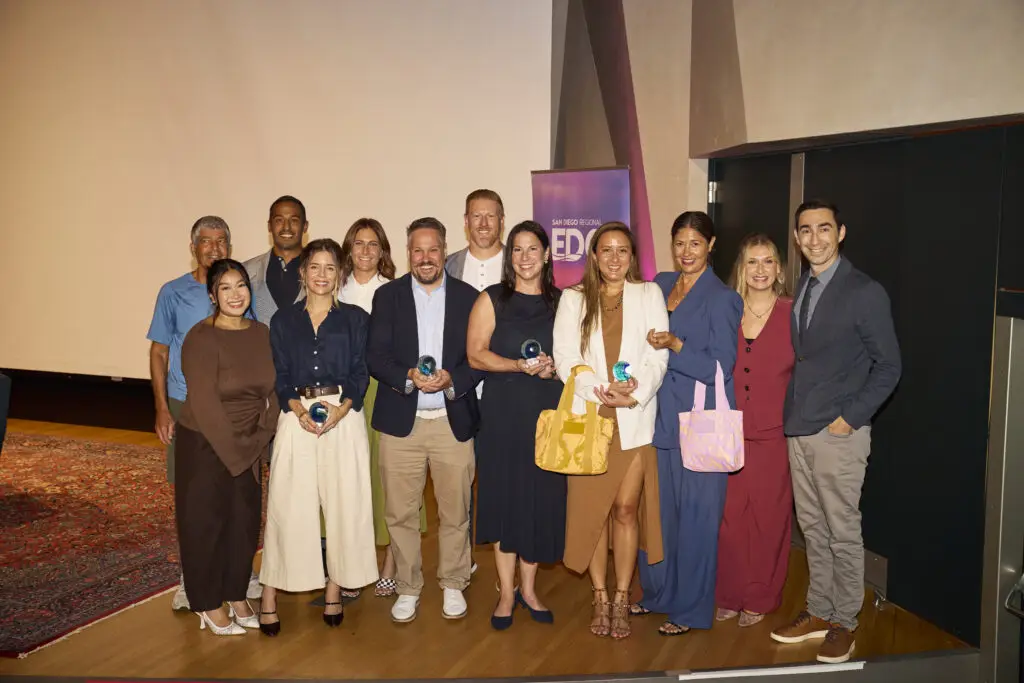
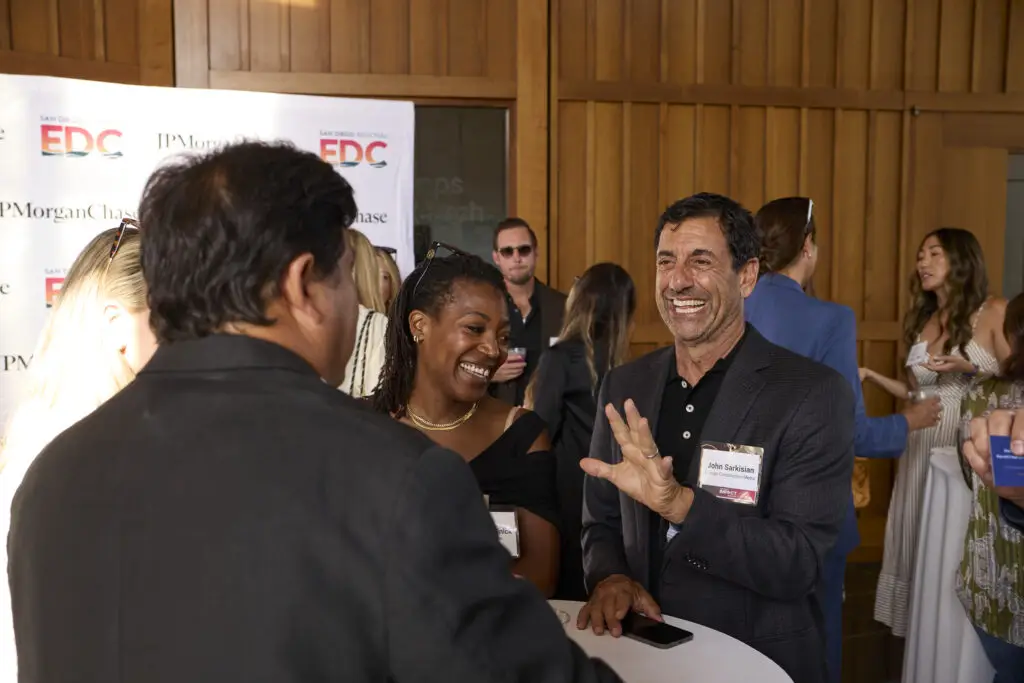
Hosted July 23 by San Diego Regional Economic Development Corporation (EDC) and JPMorganChase, the second annual awards event honored four local companies for innovation, growth, and economic impact. More than 100 nominations from San Diego’s middle-market businesses were reviewed by a 10-person judging committee, with winners selected across four categories: startup, early-stage innovator, rising star, and established heavyweight.
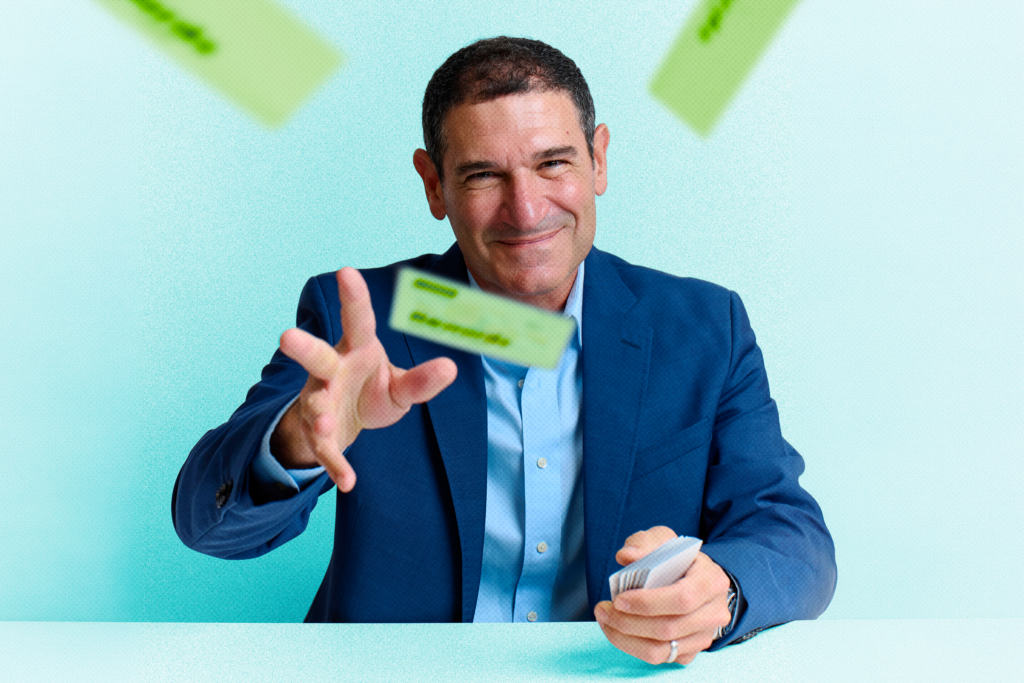
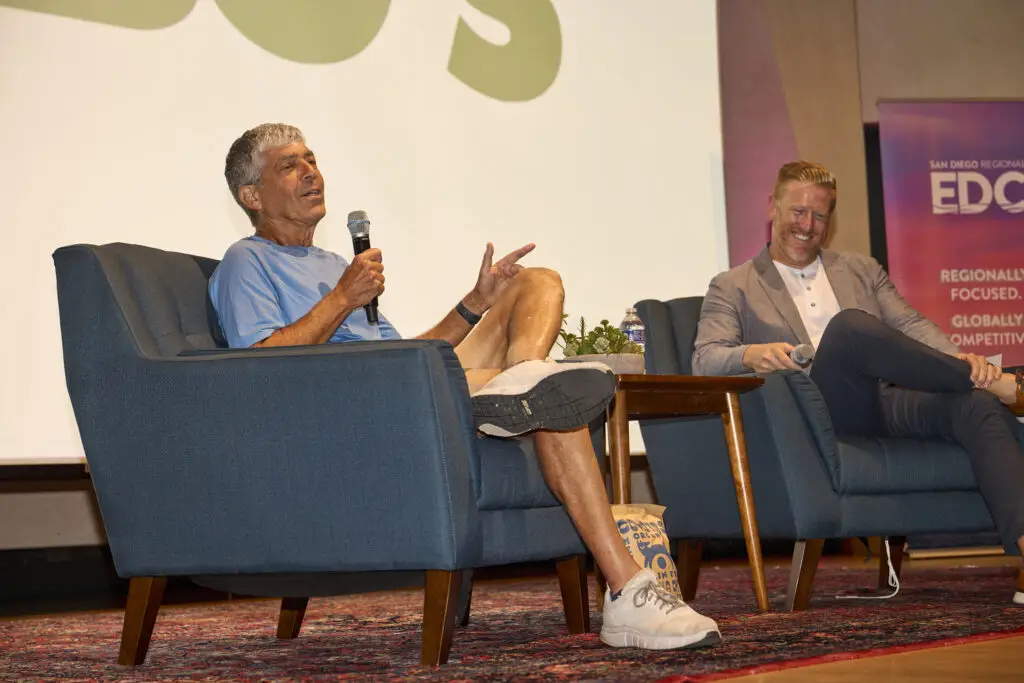
Two-time honoree Jimbo Someck, founder of Jimbo’s organic grocery stores, also joined the event for a fireside chat on buying local, supporting emerging brands, and giving back to the community.
“San Diego’s strength comes from its makers and builders—the resilient people who endure great risks and overcome obstacles to build and scale a company,” says Aaron Ryan, San Diego Region Manager and Middle Market Banking at JPMorganChase & Co. “These awards aren’t just recognition; they spotlight the talent, grit, and innovation shaping our region’s future. By celebrating those who create and build, we foster connections and fuel the growth that keeps San Diego thriving.”
Photo Credit: Matt Furman
Building the Infrastructure Behind Clean Energy
Heavyweight honoree SOLV Energy has grown alongside the country’s rapid investment in renewable power. “It’s an exciting time for SOLV Energy as we are experiencing significant growth,” says CEO George Hershman. “The business has doubled over the last year and has almost double-digit growth since its inception.”
The Rancho Bernardo-based company designs, builds, operates, and maintains utility-scale solar and energy storage facilities. Since its founding in 2008, SOLV Energy has built more than 500 power plants.
Growth has translated directly into hiring. About 200 employees work from the company’s local headquarters, including roughly 20 interns. “Our intern program is a big part of the way that we grow our workforce,” Hershman says. “Last year, 43 percent of our interns became full-time employees. We believe San Diego is a great community to build and grow a high-tech infrastructure and technology company because of the incredible workforce—the ability to attract top talent and draw from world-class universities.”
Photo Credit: Matt Furman
Developing Medicine One Patient at a Time
Startup honoree La Jolla Labs is tackling one of medicine’s biggest challenges by developing personalized RNA therapeutics for patients with rare diseases—many of them children with neurological disorders like ALS. Using proprietary artificial intelligence and machine learning tools, the biotech company develops treatments tailored to each patient’s specific genetic mutation.
CEO Tamar Grossman says the recognition reflects how far the company has come despite limited resources. “We’re honored to be recognized for our ability to change and save patients’ lives and turn our lean startup into a clinical company with very minimal resources,” she says.
Grossman credits San Diego’s concentration of research institutions—including UC San Diego, the Salk Institute, and Scripps Research—with creating a pipeline of talent and collaboration. “San Diego is one of the world-leading centers for technology, genomics, and RNA therapeutics,” she says. “We have over 30 RNA therapeutics companies here, and we support each other and help with anything related to drug discovery.”
She says that collaborative spirit extends beyond formal partnerships. “You can walk around Torrey Pines, go into a café, and find colleagues from the industry and have an ad hoc conversation,” Grossman says. “That’s something very unique to San Diego.”
While Snake Oil Venue Company may not be a household name, chances are many San Diegans have attended one of its events. The early-stage innovator honoree has expanded from beverage catering and mixology consulting into venue management, operating Julep Venue in Mission Hills, Bramble Bay Venue in Imperial Beach, Vesper Venue, the Chapel at Liberty Station, and five outdoor venues throughout Liberty Station—more than 500,000 square feet of event space altogether.
“We do a lot of launch parties for corporations and new products,” says CEO Mike Esposito. “I really like working on the entrepreneur side of things, where new businesses are entering the San Diego market and looking to make a splash.”
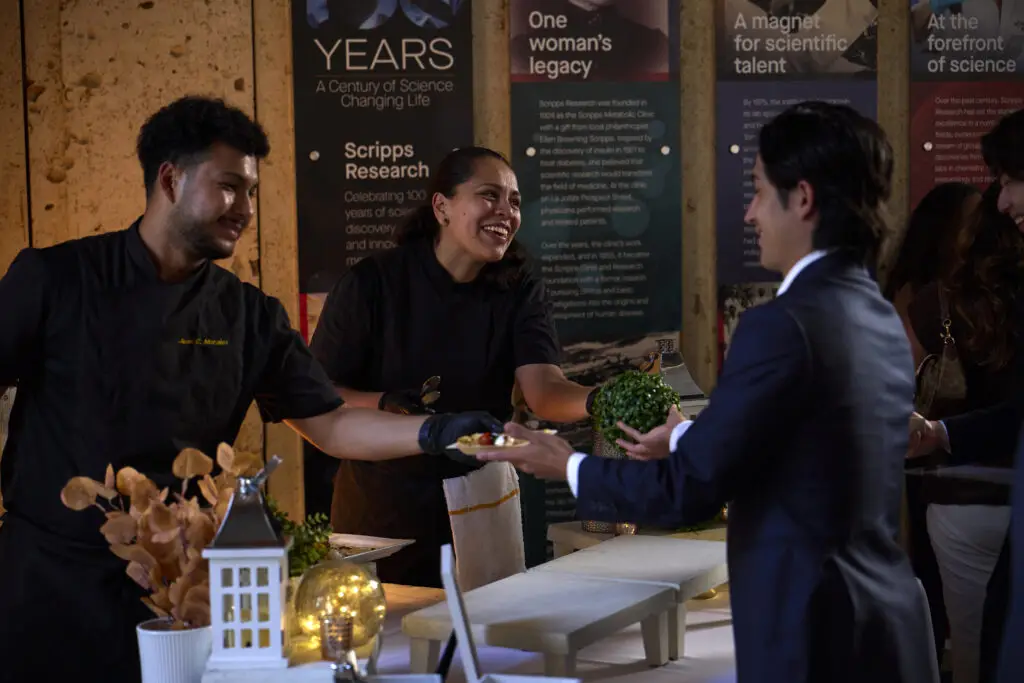
Snake Oil has executed more than 16,000 events, employed more than 1,000 people, and partnered with more than 900 local vendors, including caterers, florists, photographers, entertainers, and other hospitality businesses. The company also works with many of San Diego’s nonprofits, museums, and cultural institutions. “We get to celebrate people’s most important moments,” Esposito says. “Whether that’s a wedding, celebration of life, or quinceañera, we’re fortunate to be involved in the community in so many different ways.”
Photo Credit: Matt Furman
Growing a Beach-Town Brand into a National Business
Rising star honoree ALOHA Collection is proof that a simple idea can grow into a thriving company. Founded by two roommates who wanted a better way to carry wet swimsuits after a day at the beach, the lifestyle brand has grown into a business while maintaining strong year-over-year growth.
Now headquartered in Carlsbad, ALOHA Collection employs more than 100 people and operates its California flagship store in Encinitas, which is slated for a remodel. With roots in Hawaii, the company is known for its lightweight, splash-proof travel bags that have become a familiar sight on beaches in San Diego and beyond.
“‘Aloha’ is part of our name, but it’s also how we move through the world,” says CEO Lynna Barnard. “It’s how we show up for people, the way we travel, the way we give back.” Since day one, the company has maintained a 5 percent giveback to Hawaii conservation efforts, contributing millions of dollars over the years.
“I think what’s so inspiring about ALOHA Collection, and the founders in particular, is when you dream big, those dreams can come true when you work hard and trust in the universe,” Barnard says. “It’s inspiring to be a role model for other people wanting to start businesses from humble beginnings. Start small and watch it grow.”
Together, businesses like these form a cornerstone of San Diego’s economy—not only through the jobs and revenue they generate—but through the local workers they hire, vendors they support, and investments they make in the region. Their growth doesn’t happen in isolation; it ripples outward, strengthening the broader business community and the people who call San Diego home.
Raise money for cancer research while you work out at the Curebound Cancer Challenge. Fundraisers will cycle along the San Diego coastline, run a 10K on the UC San Diego campus, and participate in group spin, yoga, and strength classes.
August 1: No Curveballs: Rally for Type 1 Diabetes Early Detection The San Diego Padres, Nick Jonas’ nonprofit Beyond Type 1, and the King of the Hill Foundation will host No Curveballs: Rally for Type 1 Diabetes Early Detection at Gallagher Square. Padres pitchers Mason Miller, who lives with Type 1 diabetes, and Michael King, whose wife, Sheila, lives with T1D, will share their stories during a panel discussion, and on-site education and screening will be available.
August 1: No Curveballs: Rally for Type 1 Diabetes Early Detection
The San Diego Padres, Nick Jonas’ nonprofit Beyond Type 1, and the King of the Hill Foundation will host No Curveballs: Rally for Type 1 Diabetes Early Detection at Gallagher Square. Padres pitchers Mason Miller, who lives with Type 1 diabetes, and Michael King, whose wife, Sheila, lives with T1D, will share their stories during a panel discussion, and on-site education and screening will be available.
August 1: Club Masterpiece: One Haute Havana Night
Patrons of the Prado will channel 1950s Havana at this year’s Masterpiece Gala. Club Masterpiece: One Haute Havana Night will raise money for Balboa Park cultural institutions and will include a special honor for philanthropists Joan and Irwin Jacobs.
August 3: CaddyHack Golf Festival
Golfers will tee off to support Boys to Men Mentoring at the CaddyHack Golf Festival. Celebrating its 10th anniversary this year, the charity golf tournament will include golf, music, food, and fun at Fairbanks Ranch Country Club.
August 7: Music By Eras Fundraiser for TERI Campus of Life
Acclaimed San Diego musicians will join together to support TERI’s programs and services for individuals with intellectual and developmental disabilities. The Music By Eras performance at TERI’s Bornemann Theatre will feature artists Whitney Shay, Jesse Ray Smith, Lauren Leigh, and Will Stucky.
August 8: 80th Annual Jewel Ball
Las Patronas will recreate the magic of Venice at its 80th annual Jewel Ball. Las Patronas has spent the entire year preparing for the event, as well as raising money to support nonprofit organizations across San Diego County.
August 14: Shelter to Soldier Be the Light Gala
Help Shelter to Soldier train rescue dogs to be psychiatric service animals for local veterans at the 14th annual Be the Light Gala aboard the USS Midway Museum. The gala will include silent and live auctions, dinner, dessert, and appearances by canine ambassadors and veteran recipients.
August 15: Haute with Heart Fashion Show
St. Madeline Sophie’s Center will celebrate its “hidden diamonds” at its 48th annual Haute with Heart Fashion Show. The lively event at the Hilton San Diego Bayfront will include a pre-luncheon reception, live music, a live auction, a stunning fashion show, and surprise entertainment to benefit the nonprofit’s programs for adults with intellectual and developmental disabilities.
August 15: Symphony at Salk’s Concert Under the Stars
The Bacon Brothers will perform with the San Diego Symphony at this year’s Concert Under the Stars. Now in its 30th year, Symphony at Salk supports research in areas such as cancer, Alzheimer’s, wellness, and agriculture.
August 22: SummerFest Gala 2026
La Jolla Music Society supporters will enjoy an evening of exclusive performances at its SummerFest Gala 2026. The event at the Museum of Contemporary Art San Diego will raise money for La Jolla Music Society’s artistic, learning, and engagement programs.
August 28: 2026 Alpha Project Golf Tournament
Tee off to help San Diegans facing homelessness at Alpha Project’s 16th Annual Charity Golf Classic. The four-person scramble at the Rancho Bernardo Inn Golf Resort and Spa will support the Alpha Project’s housing, employment, recovery, and support services.
August 29: Relay for Life of San Diego
Walkers will join forces to celebrate cancer survivors and remember those who lost their fight at the annual Relay for Life of San Diego. The 24-hour relay at Liberty Station NTC Park is part of a global network of similar events that raise money for the American Cancer Society.
August 29: A Night United: Illuminating the Way
United Way of San Diego County will host its A Night United: Illuminating the Way gala at Eve, an event destination on San Diego Bay. The elegant evening will benefit UWSD’s mission to improve lives and strengthen communities across the region.
Sarah Sapeda is San Diego Magazine’s Custom Content Editor. In her 15 years in San Diego journalism, she has covered charitable events, health care, education, crime, current events, and more.
Divorce, adjusting to single motherhood or coparenting, and the unexpected adjustments that come with it can turn even the most put-together woman’s life upside down. For many, these shifts trigger a profound loss of identity as that chapter of life officially comes to an end.
While Elena Barbour was navigating a divorce and raising two young children, other women in her circle shared similar experiences—one, a high-powered attorney, said divorce was the hardest thing she’d ever gone through. Barbour realized that women like them who’d gone through divorce, separation, or trauma needed support, but unless they qualified for low-income assistance or could pay top dollar for private services, there weren’t a lot of options. That led to the creation of the Luma Initiative, a nonprofit organization that aims to connect women with the practical resources needed to rebuild after a major life transition. The organization is currently developing its programming and plans to open to its first (already full) three-month cohort of women this fall.
“I consider myself a very strong, competent woman, but what I went through shook me,” Barbour says. “[There were] all these things that I did not expect, and that a lot of people looking from the outside couldn’t see necessarily. It was hard to relate. And I found that after coming out of this divorce, I needed to reshift my community a little bit because the challenges and the life stage of where I was compared to where they were now was just so different—even though I was surrounded by people, I felt very alone.
Courtesy of Luma Initiative
“So [we’re] trying to create that sense of community in this place for women to be like, ‘All these women are going through something similar and when I talk with them, I don’t feel so alone and I can let go of some of the negative feelings I’m feeling, and I can […] start to rebuild.’”
Luma Initiative’s program will include licensed therapist-guided support groups, and support via financial literacy advisors, life coaches who specialize in career building, and family law attorneys, plus therapeutic yoga at sister business Luma Yoga. They’ll also work with other nonprofit organizations as needed to create a “one-stop, well-rounded, holistic approach to supporting women who are going through this really big transition of life,” Barbour explains.
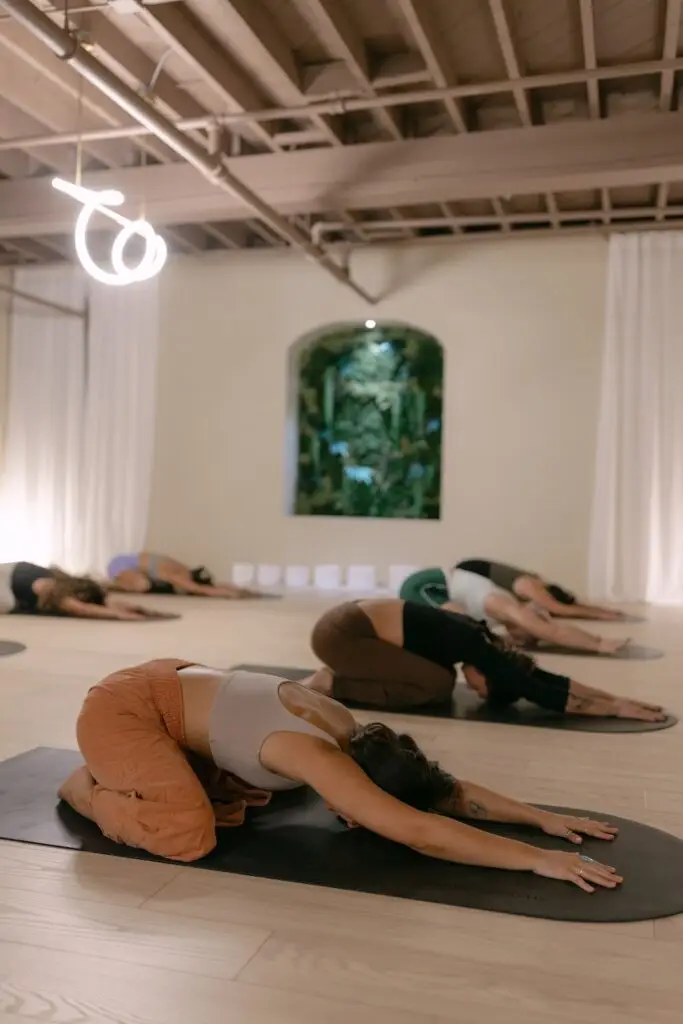
Barbour says Luma Yoga Studio in Little Italy will serve as Luma Initiative’s physical base, transforming into a familiar community-centered home away from home where women can feel safe. She leaned into yoga and the breathwork, meditation, and mindfulness that often come with the practice to get through tough times, and carries those tools with her “off the mat.” She hopes that other women will find that same sense of nervous system regulation. She emphasizes that Luma Initiative and Luma Yoga work as an ecosystem that provides both wellness and tangible support.
“The goal with Luma Initiative will be to help these women come back to themselves and their identity through community, and use community as a platform to rebuild,” she says.
Sarah Sapeda is San Diego Magazine’s Custom Content Editor. In her 15 years in San Diego journalism, she has covered charitable events, health care, education, crime, current events, and more.
From advancements in cellular biology and molecular research to innovations that deepen our understanding of complex biological systems, biotechnology continues to influence how researchers explore some of science’s most important questions.
While major discoveries often capture headlines, the process behind those breakthroughs receives far less attention. Scientific progress depends on a vast network of researchers, laboratories, manufacturers, and specialized organizations working together to support ongoing investigation and discovery.
The Growing Importance of Biotechnology
In recent years, biotechnology has moved beyond the walls of research institutions and into mainstream conversation. Increased access to scientific information, educational content, and expert commentary has sparked growing public interest in the biological sciences.
Topics once discussed primarily within academic circles are now reaching broader audiences through podcasts, documentaries, digital media, and online communities. As a result, more people are developing an appreciation for the research, experimentation, and innovation that drive scientific advancement.
This growing visibility has transformed biotechnology from a largely specialized field into a subject of interest for educators, innovators, investors, and curious observers alike.
The Hidden Infrastructure Behind Discovery
Scientific breakthroughs often capture public attention, but the infrastructure that makes those breakthroughs possible rarely receives the same recognition. Behind every new discovery are years of investigation, testing, analysis, and refinement.
Behind nearly every research project is a network of laboratories, suppliers, technical specialists, and research-focused organizations working together to support scientific exploration. Laboratory infrastructure, specialized materials, quality standards, and reliable methodologies all contribute to the integrity of the research process.
When these foundational elements are in place, researchers can focus on generating insights, exploring new ideas, and building upon existing knowledge. Although much of this work occurs behind the scenes, it plays a critical role in helping science move forward.
Why Discovery Depends on More Than Researchers Alone
As biotechnology continues to evolve, research-focused organizations have become increasingly important contributors to the broader scientific ecosystem.
Among them is NewBioRx, a company operating within the biotechnology and life sciences sector. Like many organizations operating within the broader research ecosystem, NewBioRx contributes to the network of suppliers, laboratories, and scientific stakeholders that help support ongoing research efforts.
As scientific research becomes increasingly sophisticated, organizations that help support the research environment contribute to a culture where innovation can continue to thrive. Their work may not always be visible to the public, but it forms part of the foundation that enables scientific progress.
Why Science Is Reaching Wider Audiences
One of the most notable developments in recent years has been the growing public fascination with science and human biology.
Scientific concepts that were once primarily discussed within research settings are now reaching wider audiences through educational content, podcasts, digital media, and online communities. People are becoming increasingly interested not only in scientific outcomes, but also in the process of discovery itself.
The growing visibility of science has also created new connections between scientific communities and broader audiences. Individuals who operate across multiple worlds—including fitness, media, and life sciences—have helped introduce scientific topics to audiences that may not have engaged with them previously.
One example is Sam Sulek, co-founder of NewBioRx, whose involvement across fitness culture and the life sciences sector reflects the growing intersection between public curiosity and scientific exploration.
As co-founder of NewBioRx, he has helped champion a research-focused approach to scientific inquiry while supporting broader conversations around scientific literacy and discovery.
As scientific discovery becomes increasingly collaborative, public attention is beginning to extend beyond individual breakthroughs and toward the broader ecosystem that makes those breakthroughs possible. From researchers and laboratories to the organizations that support them, scientific progress remains a collective effort built on curiosity, expertise, and long-term commitment.