Arts & Culture DECEMBER 20, 2023

Behind the Cover: Q&A With Artist Taylor Chapin

We chat with the Encinitas artist to learn more about her work, inspirations, and upcoming projects

Each month in 2023, we’re asking a local artist to recreate one of our iconic covers from the past 75 years. For December, we tapped artist Taylor Chapin to help us recreate San Diego Mag‘s January 1965 cover. Check out her unique translation here and learn more about Chapin in the Q&A below:

Tell us about how you found your distinguished style and how you honed your skills.

The style I’m currently working in was developed during my recent time in grad school at UCSD. I’ve always been fascinated by branding and advertising, and my earlier work explored this very overtly through painting brands and products representationally.

During my time experimenting in school, I was challenged to think of new ways to explore these themes, and I had the idea of very literally covering up the products and brands I was painting with fabric so that their form was obscured. I began painting these covered forms as a way of critiquing how value is represented. This led to my current obsession of covering everything—including the human form. 

I’ve always been really into pattern and detail since I was a kid, and now I’ve found ways to incorporate all the patterns I’m attracted to into my work through this act of covering the form in fabric. I’ve honed my skills over the years through countless hours of painting, and I continue to do so by painting pretty much everyday. Painting never ceases to challenge me, and I love working through the process slowly and methodically and learning more as I go. 

What artists do you admire or look up to?

There’s so many artists I look up to. I’m currently really inspired by the work of Amy Adler, she was one of my advisors in grad school. I’m also really into the work of Jean Lowe, Hilary Pecis, Ken Gun Min, and Ilana Savdie, to name a few.
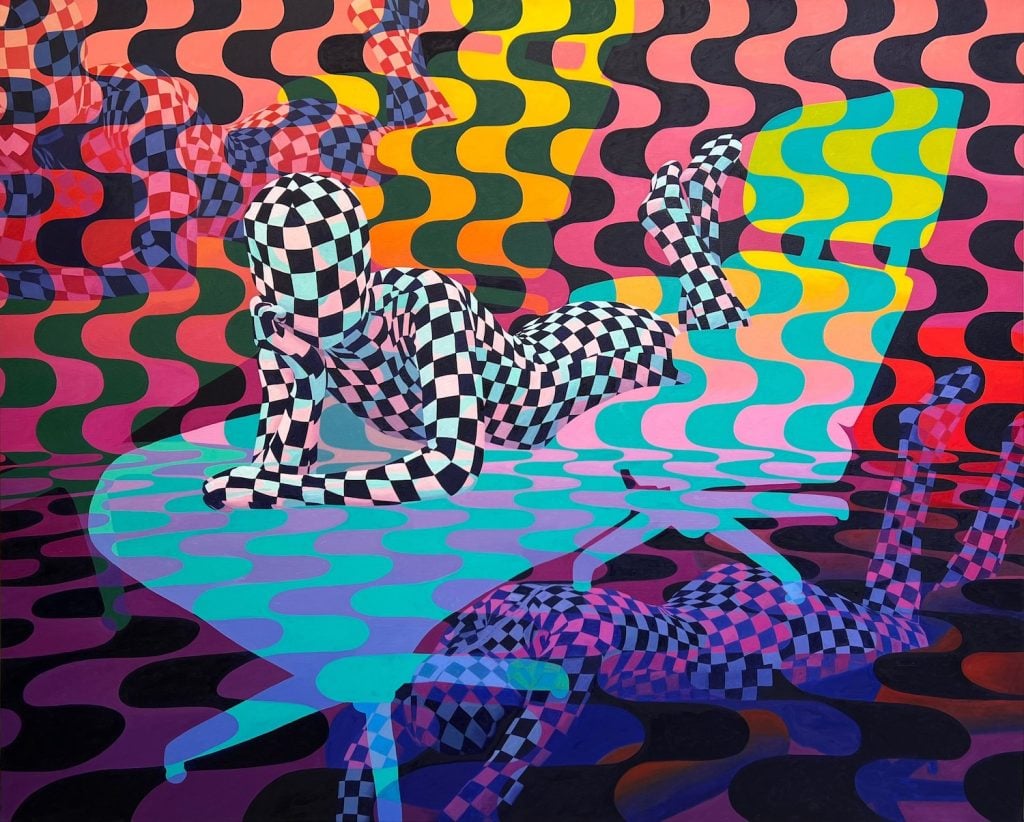
Art Piece by San Diego artist Taylor Chapin responsible for San Diego Magazine's December 2023 cover
Tell Me About Yourself by Taylor Chapin

How do you think your art reflects the Southern California lifestyle or plays a role in the way your art comes to life?

To me, Southern California has such a specific color palette and aesthetic associated with it. I think my palette of bright and contrasting colors is very much inspired by Southern California. I also think my interest in consumption and consumerism is related to my observations and experience of living in Southern California, because it is a capital for conspicuous consumption, entertainment, and the performance of wealth and beauty. I think being in such close proximity to this type of display has heightened my fascination with our culture of consumption.  

What was your big break?

I was in a group show in 2018 at Hill Street Country Club, a nonprofit arts space in Oceanside. Dinah Pollenitz, the cofounder and curator at Hill Street, subsequently offered me a solo show there in 2019. This first solo show has led to so many other amazing opportunities throughout San Diego, and I am forever grateful to Dinah for supporting my work and providing me with one of my first opportunities to show my work in an art space in San Diego

What do you have on the horizon workwise?

I have a solo show with Quint Gallery in La Jolla in March of 2024 that I’m currently working on. I will also be doing a public mural in Pacific Beach next year, and I have a few other projects that are currently in their early stages of development.  

Where can people find your work to admire or hire you?

People can check out my work on my website. I have a show up at ICA North through the end of this year. I also have a few murals around San Diego including one on the side of Warren Hall at UCSD, an indoor mural at Corner Pizza in Oceanside, and one on the south-facing side of the Leucadia Donut Shoppe. I am available for hire via the contact form on my website. 

Subscribe to our newsletters

Select Options

By subscribing you confirm that you agree with our Terms and Conditions and Privacy Policy.

Arts & Culture JUNE 10, 2026

Artist India Thompson Weaves New Meaning into Everyday Items

On view at Mingei International Museum now through October 18, Thompson's basketry invites viewers to notice the seemingly mundane

Artist India Thompson Weaves New Meaning into Everyday Items
Photo Credit: Ron Kerner

When was the last time you really looked at your fridge? Not for milk or ketchup or that takeout you hope is still good, but really looked at it. Considered it. Its texture. Its shape. Its role in your life. “Never” is probably your answer here. But once you’ve seen India Thompson’s life-size fridge made of reed, you’ll probably pause the next time you’re in your kitchen.

Thompson’s new Looks Like Home exhibit on view at Mingei International Museum takes everyday items that most of us use on a daily basis—the things that usually make our lives faster and more convenient—and renders them useless but beautiful as intricately woven reed sculptures.

The museum’s name comes from the philosophy of Yanagi Sōetsu, who wrote in the essay “The Beauty of Miscellaneous Things” that “when one becomes too familiar with a sight, one loses the ability to truly see it. Habit robs us of the power to perceive anew, much less the power to be moved.”

Thompson joins artists who use material transformation to remake the familiar, like Katarina Kamprani who redesigns everyday objects in ways that render them physically unusable, or Do Ho Suh who recreates domestic spaces through labor-intensive processes. Thompson’s approach is quieter, more tender: She doesn’t distort. She weaves.

Photo Credit: Ron Kerner

Seeing her work for the first time brought up emotions I hadn’t felt since I was a kid watching The Brave Little Toaster, the movie that taught me to hold space for the invisible servants that make up our homes. Thompson’s collection encourages a kind of reckoning with what it means to ignore the essential. It asks you to reconsider what “home” means in an era where so few can afford to buy one. Her sculptures are like a challenge to pause where you usually press on. Being close to her work is like taking a breath and not realizing how long you’ve been holding it.

Thompson was born in Los Angeles and is now a multidisciplinary artist based in San Diego. While ceramic is her primary artistic medium, this exhibition highlights her exploration of basketry—a thousand-year-old, time-consuming process and an art form she describes as one of “care and memory-keeping.”

Thompson also happens to 9-to-5 as Mingei’s studio program specialist. Assistant Curator Ariana Torres didn’t know about Thompson’s basketry work until she saw Thompson post a picture of her woven toilet paper on Instagram. Then came a woven microwave.

“It seemed really poignant and uncanny,” Torres says. “It was mundane, but it was also kind of quiet … something you wouldn’t think anybody would focus on.”

Photo Credit: Ron Kerner

Thompson began making art five years ago in her college ceramic class called Handbuilding, and she immediately fell in love. The first art she ever shared with others were her ceramic figurines: round, red-clayed pot-like sculptures with minimalist, barely-there faces in a variety of expressions. Some look surprised. Some look very concerned. Some look like they spend Friday nights at a Star Wars cantina. She calls them “Moots.”

The definition of the English word moot, in verb form, is “to gather and discuss an important topic,” as Thompson explains. “They look so serious … like they’ve wriggled through the earth to talk to each other.”

Thompson found her way to basketry three years ago and learned by watching YouTube videos.

“It’s something you can do at home,” she says. “And I love a repetitive process.”

The toilet paper roll came to her while making a cylinder that she thought looked like a roll of Charmin. Then she thought maybe she should make one on purpose. “I just thought it would be funny and really challenging, too,” she says. “Because there’s no tutorial for that. Why would there be, right?”

She figured it out and shared it on Instagram. People loved it. It received more than double the amount of likes and comments she usually got, but what really struck her was how many people came up to her in person to talk about how they connected with it. That, to her, was even more meaningful than the online response.

So she kept going and chose to make a microwave next.

Photo Credit: Ron Kerner

“[It’s an] object we all own and we all need,” she says. “Yet no one really cares about a microwave.”

She started the collection during a time when her landlord was coming into her apartment constantly with a crew of people, making notes of what they were going to remodel without ever acknowledging her in the room.

“It was such a weird fishbowl moment,” she says. “I technically don’t own my apartment, but I still consider it home. I live here and I pay to live here, but this isn’t mine. We live in this space and I call it my apartment. I call it my refrigerator. But it could be taken away at any moment.”

It dawned on her how much we depend on things we don’t own, how little we notice the things we rely on every day, and how temporal the word “my” can be.

The woven refrigerator is the largest in Thompson’s collection at Mingei, and inside it you can find additional woven items like a ranch bottle, a Brita filter, and a sandwich on a plate. You can’t open the freezer door, but if you look carefully between the gaps of woven reed, you might be able to see a few other things Thompson made and placed inside.

“If you really look closely,” she explains, “you’ll be rewarded.”

Features JUNE 8, 2026

5 Unsung Heroes of the San Diego Culinary World

From dedicated line cooks to seasoned bartenders, these are the people making magic happen in city's top restaurants

5 Unsung Heroes of the San Diego Culinary World
Courtesy of The Marine Room

Chefs have done gobs of thankless, lumbar-breaking work over years to land the role. Restaurateurs put their entire livelihoods on the line, microdosed sleep, took ultimate responsibility for every minor stress. They earned the spotlight they get. But ask one of them, and they almost always defer to a line cook who’s showed up for years, been deep in the thing, and whose absence would bring the kitchen to its knees. Or the bartender with a warmth that draws people whether they’re thirsty or not. Or the noble and spreadsheetable soul in charge of purchasing everything needed for the nightly show.

They call it the “heart of the house.”

Spotlight or not, these are the people who make a food culture hum at its daily core.

For this year’s “Best Restaurants” issue, we asked a handful of the top chefs and one restaurant owner—Tara Monsod (Animae/Le Coq), Jason McLeod (Ironside Fish & Oyster), Ananda Bareño (The Marine Room), Owen Beatty (A.R. Valentien), and Ryan Thorsen (Mister A’s)—who that person is for them.

These are the hearts of houses.

Photo Credit: Matt Furman

Roger Feria Krile

Line Cook, Animae

Roger Feria Krile is not only the guy you want to be friends with at work, but also the guy you want to hire: respectful, nose-to-the-grindstone, versatile. And he’ll drop off a fresh batch of cinnamon rolls at your house for the holidays. Born in Tijuana, Krile moved to the US with his mom and sister when he was in elementary school. He saw the sacrifices his mother made to give her children a better life, and he pushed himself to live up to that brighter future.

He came to cooking during the pandemic, asking himself, “What do I really love to do?” His answer: “Bake cakes for friends and break bread with people,” he says. That led to a culinary school degree and a stint in a Michelin-starred NYC kitchen, where he grew to “love and understand” fine dining. Now back in San Diego, Krile’s showing up at Animae in a major way. He does prep work three mornings a week and comes later in the day twice a week for dinner service. Most line cooks do one or the other, but he requested both tours of duty.

“Gotta get my reps, keep my skills sharp,” Krile says, “and I don’t want to miss the rush.” Prep work in the mornings helps him learn how Executive Chef Tara Monsod uses each ingredient to the fullest. Krile’s not just a line cook. One-quarter Filipino (and learning about his culinary heritage from mentor Monsod), he’s building his own Mexican-Filipino pop-up concept. Look for Sarsa—Filipino for salsa—where every dish is a play on words fusing Mexican and Philippine Spanish or Tagalog. He’s already R&D’d a breakfast sandwich, the tortantalong: a torta filled with a signature Filipino eggplant omelette called a tortang talong. Friends in the industry say it’s unexpectedly delicious.

“He shows up every day with a clear goal of one day opening his own restaurant, and that drive pushes him to go above and beyond,” says Monsod. “He is constantly learning, asking questions, and absorbing as much as possible, all while leading by example on the line.”

Photo Credit: Matt Furman

Ruben Martinez

Purchasing Manager, Mister A’s

Ruben Martinez knows every bottle of wine at Mister A’s—not necessarily by taste (though he was on the tasting committee for years), but by where they are in storage and whether they need replenishment. Owner Ryan Thorsen wants the wine list at 100 percent available every night, and Martinez’s job is to make that a reality. He’s been keeping inventory on Mister A’s wines since the 1970s, back when he worked for founder John Alessio. And it’s not just vino: Martinez also procures the ingredients, arriving at 5 a.m. to meet delivery trucks, stock shelves, and alert chefs if anything’s amiss.

Then he hits the dining room for a once- or twice-over to find any imperfections. If a light is out, if the plumbing acts up, if something major happens after he leaves in the afternoon, he’ll fix it all. He’s the best guy to ask, anyway; he knows every inch of Mister A’s. “Before ‘Google it,’ there was ‘Call Ruben,’” Thorsen says.

Martinez started out in hospitality at 17 with his father at Hotel Del. “I thought it would be easy working with my dad,” he says. “But early on, he caught me fooling around with the boys and told me, ‘We’re here to make money for the company. If you’re not willing to work, get out of here.’” That set him straight and set the foundation for Martinez’s lifelong dependability.

He moved to Mister A’s a couple years later, and after over five decades, he’s now the indispensable purchasing manager who worked with Alessio, Betrand Hug, and now Thorsen. Later this year, he’s planning on retiring—though he’s already offered to keep showing up a couple days a week and help out with Thorsen’s new project at Liberty Station.

Thorsen knows this man is a gem. “I don’t think we fully grasp what it will feel like without him,” he says. Last year, he threw Martinez a surprise birthday party in Mister A’s Blue Room, inviting Martinez’s family and a whole cast of coworkers going back to Alessio days. Martinez says he had to leave the room to hide his tears.

Photo Credit: Matt Furman

Patrick Mattoon

Lead Prep Cook, Ironside Fish and Oyster

There’s an hour most people never see, when a restaurant’s technically awake but not yet accountable, and that’s where Patrick Mattoon lives. He’s been the foundation of Ironside’s prep team for the past five years, quietly guiding the day toward success. He and his team are the first in, and they turn on ovens, check deliveries, catch mistakes before they become problems, and fix everything without ceremony so the chefs and line cooks walk into a day that already works.

Mattoon organizes, but more importantly, he owns. There’s no job too small, no detail beneath notice. In a kitchen, bad prep’s the one thing you can’t fix later, no matter how talented of a chef is at the helm.

Five years in, Mattoon still approaches each day with the same care and intensity that he had on day one. He takes every task seriously and sees it through completely—the kind of consistent work that doesn’t draw attention but makes everything else possible. When the restaurant got a soft serve machine, a notorious maintenance nightmare, he taught himself how to clean and run it just to make sure it never broke, not for credit but because that’s just how he’s wired.

“He is a silent leader who has the respect of the entire team due to leading by example,” says Ironside chef Jason McLeod.

Photo Credit: Matt Furman

Arturo Celestino

Lead Line Cook, A.R. Valentien at the Lodge at Torrey Pines

Through 23 years, three executive chefs, and a recent kitchen remodel, lead line cook Arturo Celestino is a constant at A.R. Valentien. He’s there at 6:30 a.m. five days a week—sometimes six—for the Lodge’s breakfast service. That means he’s up early prepping potatoes, slicing mushrooms, whisking pancake batter, and stirring sauces “always with a smile,” says Owen Beatty, the restaurant’s new chef de cuisine. “He’s a good leader.”

Celestino shows the younger guys how to make the eggs fluffy, so the omelettes are always perfect (don’t stop twirling the spatula!). He keeps his line in line when their spirits start to naturally droop during the morning shift home stretch when his crew just wants to get out of there. As the lead, he’s also the one chefs turn to when newbies need motivation.

His secret sauce: “mucho talking!” It keeps people happy, and it also helps the chefs retain talent in the kitchen.

Celestino learned to cook out of “necesidad,” he says. He cut his teeth on fine dining at Pacifica Del Mar at the Hyatt and moved to A.R. Valentien in 2003, just a few months after it opened in 2002.

“I’ve had good jefes,” Celestino says of the three executive chefs he’s known at A.R. Valentien: Jeff Jackson, Kelli Crosson, and now Michelin-starred Eric Sakai. Under Jackson—who’s known for pioneering farm-to-table dining in San Diego—Arturo learned to appreciate local ingredients.

“My favorite is basil,” he says, “added to tomato sauce with garlic, it’s mmm.” Fresh basil plays the supporting role in A.R. Valentien’s signature brunch plate, which is also Celestino’s top choice on the menu (to make and to eat), via the Bull’s Eyes: slow-roasted eggplant with sunny-side-up eggs, tomato sauce, and La Quercia prosciutto.

“I love my job,” Celestino says as he flashes that smile. “It’s not just a plate of food. It’s an experience.”

Photo Credit: Matt Furman

Tony Suarez

Bartender, The Marine Room

If you’ve been to The Marine Room, you’ve probably met bartender Tony Suarez. With his charming Cuban accent and dapper vest and tie, he makes it his business to regale guests coming and going—even while he’s pouring, mixing, shaking, polishing glasses, and taking orders.

“Over 90 percent of our guests are celebrating a special occasion,” he says. “So I keep up the celebration throughout their whole visit.” He’ll make you a sparkling toast and a customized cocktail, and on your way out, he’ll wish you a happy birthday (again) and invite you back for drinks on him.

“My goal is always to delight the guest,” he says. “I like to discover how you feel and lead you to what you would like to drink.” That spirit of experimentation has led to new signature cocktails, such as the Gerald—crafted for a neighbor who’s a regular—featuring housemade pomegranate puree and bourbon, or the I Drink of You with local Bebemos tequila, Gran Marnier, and Green Chartreuse. You won’t find this anywhere else.

“[Suarez] has mastered the art of the personalized guest experience,” says Marine Room’s Executive Chef Ananda Bareño. “He remembers the small details and favorite orders that make our regulars feel like family.”

Suarez’s tenure at the Marine Room started with a walk on the beach and a knock on the door. He was impressed by the beautiful location, and he asked if they were hiring. He immediately started as a server assistant—right before Valentine’s Day. The bartender took Suarez under his wing, and he took to the books to learn all about spirits.

He’s taken on the bartender role with wisdom and grace, offering a sympathetic ear, a pick-me-up, and a “human to human connection,” he says. Ten years into his career, the surroundings still inspire him as much as they did on day one.

“The Marine Room, the windows onto the ocean, [all] have a healing effect,” he says.

Leorah Gavidor won her first essay contest at age 5. She writes features, news, and non-fiction in San Diego.

Arts & Culture JUNE 1, 2026

The Best Things to Do in San Diego: June 2026

From jazz concerts to devouring fried foods at the fair, here are all the best things to do this month in San Diego

The Best Things to Do in San Diego: June 2026
Courtesy of Switchfoot BRO-Am Beach Fest

June Gloom isn’t stopping San Diegans from making the most out of the month. There’s something for every music lover, from swaying to smooth jazz at The Rady Shell to rocking out at Slightly Stoopid’s Field of Dreamz Festival. Art enthusiasts can visit the Mingei for an exhibit showcasing Native American and Pacific Rim heritage, while foodies can try the latest fried fad at the San Diego County Fair. Whatever your interests, it’s time to text the group chat and make some plans. Here are all the best things to do in San Diego this month:

Concerts & Festivals | Theater & Art Exhibits | More Fun Things to Do

Concerts & Festivals in San Diego This Month

13 & 14

World-class jazz musicians are returning to The Rady Shell for the San Diego Smooth Jazz Festival.

13

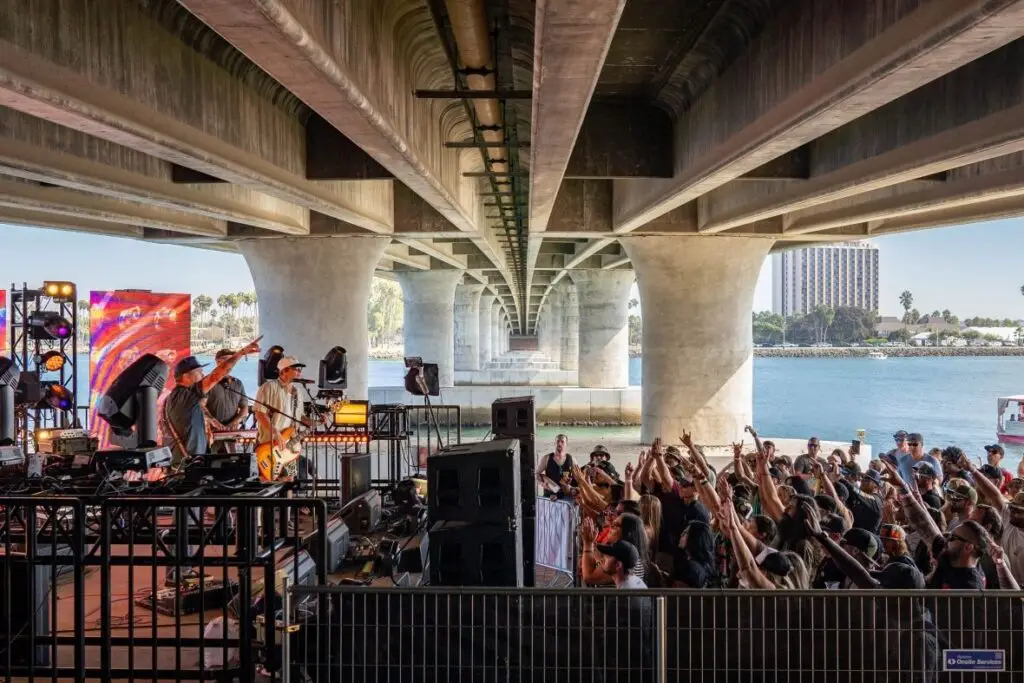
“If you build it, they will come,” and so they shall to Slightly Stoopid’s inaugural Field of Dreamz Festival. The OB-native rock band will share the lineup with Stephen Marley, Sublime, Pepper, and more at Petco Park.

22

Khalid is headlining his first tour since 2019—this time for the R&B and pop showstopper After the Sun Goes Down—and he’s ready to dance through Cal Coast Credit Union Open Air Theatre.

Photo Credit: Angela Babby / Courtesy of Angela Babby

Theater & Art Exhibits in San Diego This Month

6/5–7/19

With a beat that can’t be stopped, New Village Arts will revive the joyful musical Hairspray, a fusion of teen pop stardom and racial integration in Civil Rights–era Baltimore.

6/13–9/13

Cat Gunn poignantly examines the impact of forced separation from ancestral lineage through If Only by the Light of a New Moon, their solo museum debut at ICA Central.

6/27–9/20

See lasting visions of cultural heritage via Clearly Indigenous: Native Visions Reimagined in Glass, a traveling showcase for Native American and Pacific Rim glassmakers at Mingei International Museum.

Courtesy of Scoop Ice Cream Festival

More Fun Things to Do in San Diego This Month

6 & 7

Proceed to Pride Month with the Out & Abt Festival, featuring a carnival-themed playground at The Soap Factory, an afterparty hosted by Gossip Grill, and the next day, a sapphic poolside bash at the Hard Rock Hotel.

6/10–7/5

Imagine and experience your favorite fairytale ending during the San Diego County Fair, which returns this summer with a new theme: Once Upon a Fair.

11 & 13

The return of the Switchfoot Bro-Am means two things: an elegant seaside fundraiser in North County and a free bash at Moonlight Beach full of sun, surf competitions, and live music.

19–21

For the first time, NASCAR will start its engines in San Diego. Naval Base Coronado will host this one-of-a-kind racing spectacle to commemorate the U.S. Navy’s semiquincentennial.

25

Itadakimasu! In other words: Let’s eat! Sample, then rank, the best Pan-Asian dishes from local eateries at Julep Venue during SD Mag’s 21+ Omakase Open, done to support the Convoy District.

28

If you ever needed a reason to eat ice cream and gelato, here’s a charitable one. Raise money—one waffle cone at a time—for Feeding San Diego during this year’s Scoop San Diego festival.

Ryan Hardison is a freelance arts and entertainment writer and recent graduate of San Diego State. When he's not staring at his laptop, he's likely eating an adobada burrito or getting sunburnt at the beach.

Studio S JUNE 12, 2026

Nominations Open for the San Diego Business Impact Awards

The annual event honors middle market companies creating jobs, scaling up, and investing in the region

Nominations Open for the San Diego Business Impact Awards
Photo Credit: Kimberly Motos

San Diego is known for its startup culture and innovation economy, but what happens when the company moves beyond its early-stage years? The San Diego Business Impact Awards aim to answer that question, spotlighting the middle market businesses helping drive the region’s economy.

Hosted by San Diego Regional Economic Development Corporation (EDC) and JPMorganChase, the second annual awards celebration takes place on Thursday, July 23, from 4:30 to 7:00 p.m. at Scripps Research Auditorium. More than 200 executives, entrepreneurs, and business leaders are expected to attend the networking and cocktail event honoring some of San Diego County’s fastest-growing companies.

Businesses headquartered in San Diego County that have operated for at least two years are encouraged to submit their nomination by Thursday, June 18 at 4 p.m. Companies across industries—from technology and life sciences to tourism and consumer products, as well as pre-revenue startups—are eligible for recognition.

For EDC President and CEO Mark Cafferty, the event is as much about building connections as celebrating success. “We’ve had a longtime partnership with JPMorganChase; their work aligns with our efforts to support underserved communities and drive talent development,” says Cafferty. “And the networking was invaluable last year. I’m still in touch with people I met at last year’s awards.”

Photo Credit: Kimberly Motos

EDC is an independently-funded nonprofit that works directly with San Diego companies to help them grow the local economy, make the region as a whole more competitive, and attract and retain top-tier talent with quality jobs. Through EDC, companies can get help starting or expanding their business with support for things like site selection, permit navigation, and regulatory guidance, plus connections to local resources and potential business collaborators.

The San Diego Business Impact Awards began as an idea with one of EDC’s longtime strategic partners, JPMorganChase. The two organizations share a commitment to San Diego and are dedicated to bolstering middle market businesses.

“We’re blessed with a robust innovation economy and startup community,” says Aaron Ryan, San Diego Region Manager for JPMorgan’s Commercial and Investment Bank and vice chair of the firm’s’ San Diego Market Leadership Team. “But one of the segments of the business community we felt was overlooked was emerging middle market companies—the businesses that are no longer small but not yet large.”

Ryan says supporting those companies is critical as they scale and decide where to invest, hire, and grow.

San Diego’s high cost of living remains one of the region’s biggest business challenges, making talent recruitment and retention increasingly competitive. But local leaders point to the region’s quality of life, climate, and collaborative business community as advantages that continue to attract employers and workers.

Photo Credit: Kimberly Motos

“In order to support thriving households, there has to be enough high-quality jobs for people to be able to afford to live here,” Cafferty says. “Once a company grows and excels past that middle market point in their growth cycle, they become much more likely to pay higher wages and compete globally.”

Both Cafferty and Ryan proudly tout the unique collaboration that exists among San Diego County businesses. Bringing together top universities producing high-quality talent, cutting-edge research institutions, a robust military and defense presence, leading ocean science and environmental organizations, and a binational, cross-border identity creates a distinct business ecosystem that defines and strengthens the San Diego region. 

Last year’s San Diego Business Impact Awards celebrated nearly 60 honorees from 49 industries, representing a total of 8,232 jobs across eight sectors, including: software and technology, healthcare and life sciences, consumer goods, professional services, finance, construction and manufacturing, defense, and hospitality and tourism. On average, honoree companies doubled their revenues over the previous year, employed more than 145 San Diegans each, and offered an average annual compensation of $192,415.

Top honorees included defense contractor Innoflight, environmental consulting firm Bancroft Construction Services, life sciences startup Element Biosciences, defense technology contractor GALT Aerospace, organic grocery store chain Jimbo’s, and biopharmaceutical company LENZ Therapeutics. During the event, Innoflight Founder and CEO Jeff Janicik held a fireside chat offering his insights on investing in the community and embracing San Diego culture.

This year, organizers hope to continue highlighting the middle market players driving economic impact across the region. Nominations are now open through June 18 at 4 p.m. Get your tickets to the San Diego Business Impact Awards celebration to enjoy drinks by Snake Oil Cocktail Co., light bites, live music, and networking.

Arts & Culture MAY 19, 2026

16 Things to Do in San Diego This Weekend: May 19-25

Hear The Inaudible Ocean, see the San Diego Ballet in action, and eat your fill of fruit at the Vista Strawberry Festival

16 Things to Do in San Diego This Weekend: May 19-25
Courtesy of The Rady Shell at Jacobs Park

Summer may technically be a month away, but San Diegans can tap into the summertime spirit as soon as this weekend. Outdoor explorations include the return of Summertime Spectacular at SeaWorld San Diego, along with another monthly edition of Fit Yoga at The Rady Shell. Those looking for full-day fun can try the Vista Strawberry Festival or the Santee Street Fair & Craft Beer Festival, both of which offer free admission and a full slate of activities. Or, plan a day at the ballpark to cheer on the Padres and hopefully see Fernando Tatis Jr. hit his first home run of the season (manifesting this one). 

Food & Drink | Concerts & Festivals | Theater & Art Exhibits | More Fun Things to Do

Courtesy of Vista Strawberry Festival

Food & Drink Events in San Diego This Weekend

ARTIFACT at Night: To Catch a Fish

May 21

As evidenced by the To Catch a Fish exhibition at Mingei International Museum, fishing is a significant element of culture, cuisine and everyday life on a global scale. For Thursday’s ARTIFACT at Night dinner, the 36th edition of the monthly series, seafood is all over the four-course menu, including roasted blue barramundi and squid stuffed with spicy Calabrian sausage. Reservations are $95 per person and come with optional beverage pairings. Seatings available are from 5-8:30 p.m.; menu modifications will not be accommodated. 

1439 El Prado, Balboa Park

Santee Street Fair & Craft Beer Festival

May 23

Spend the day shopping, watching live entertainment, and tasting locally-made brews during the free Santee Street Fair & Craft Beer Festival. This Saturday from 10 a.m. to 6 p.m., check out over three hundred vendors, complimentary workshops, live music, dance and street performances, a kids zone and the event’s inaugural classic car show at Trolley Square. As for the suds, 21+ attendees can purchase discounted pours and bring their dogs along too. Pre-sale drink tokens (five 16 oz. pours for $30) are available to purchase online.

Town Center Parkway & Riverview Parkway, Santee

Vista Strawberry Festival

May 24

Every May, Downtown Vista unearths the seeds of its bygone berry heritage. This Sunday from 8 a.m. to 6 p.m., the free annual Vista Strawberry Festival will offer much more than just a chance to eat fresh fruit and decadent strawberry desserts—though both are certainly encouraged. The festival will feature over 450 vendors, live music, a youth film festival, a 5K race and kids runs (one mile and ¼ mile), and several contests, including prizes for those with the best strawberry couture and the biggest appetites for strawberry pies and sundaes. 

Main Street, Vista

Courtesy of The Paper Kites

Concerts & Festivals in San Diego This Weekend

The Inaudible Ocean at Conrad Prebys Concert Hall 

May 20

Oceans cover more than two-thirds of the Earth, and their watery depths preserve much more than just marine creatures and aquatic mysteries. To composer Lei Liang and oceanographer Joshua Jones, the most fascinating thing concealed is the range of sounds, many of which are imperceptible to humans. Through The Inaudible Ocean, premiering this Wednesday at 7 p.m. at UC San Diego’s Conrad Prebys Concert Hall, audiences will be treated to the oft-hidden magic of underwater frequencies via a chamber music trio. General admission is $20 for this concert.

9410 Russell Lane, La Jolla

Russell Dickerson at Gallagher Square

May 21

Like all genres, country music is far from monolithic, and Russell Dickerson is a prime example of its versatility. Dickerson’s musical persona is that of a kind and reminiscent soul, musing on good times and crafting hard-to-forget hooks, like on his newest single “Boots” with Fetty Wap. Plus, when he hits the road, Dickerson embraces his lifelong love for wrestling, meaning fans will get to see him in full WWE garb during his RussellMania show this Thursday at 6:30 p.m. at Gallagher Square. Country pop crooner and prolific songwriter-for-hire Niko Moon will open the show. Tickets start at $54 for this concert. 

899 J Street, Downtown

American Football at The Observatory North Park

May 24

For nearly two decades, it looked as if American Football would be a one-album wonder, since the emo rock pioneers never reconvened for a follow-up. But since reuniting in 2014, the band has produced three new self-titled albums, and though they nearly broke up again in the making of their most recent offering, LP4, their music is still as sharp and emotionally devastating as ever. This Sunday at 8 p.m., they’ll play at The Observatory North Park with opener Mei Semones, a tonally opposite artist whose music explores J-pop, jazz and blissful indie rock. Tickets start at $35 for this concert; $1 from every ticket sold will go towards the artist nonprofit PLUS1.

2891 University Avenue, North Park

The Paper Kites at House of Blues San Diego

May 25

Ryan Hardison is a freelance arts and entertainment writer and recent graduate of San Diego State. When he's not staring at his laptop, he's likely eating an adobada burrito or getting sunburnt at the beach.

Everything SD MAY 15, 2026

The Last Rally at Ray’s Tennis

San Diego's "First Couple of Tennis" reflects on the past as they get ready to move on from Ray's Tennis, a Hillcrest landmark

The Last Rally at Ray’s Tennis
Photo Credit: Matt Furman

Ray’s Tennis doesn’t look like much from the outside. Never has. It’s just a green box with cloudy windows in Hillcrest, just steps away from a McDonald’s on University Avenue. But for nearly 60 years, this place has been the genesis for three generations of San Diego tennis dreams. Head inside, and you enter one of the tennis world’s great cornucopias.

For years, there was a tennis court behind the store, where owner Bob Ray gave countless lessons. It was like a racket-sport speakeasy; most customers didn’t realize the court existed unless Bob or his wife, Hiroko, guided them through the back door of the shop. Eventually they converted it into a half-court indoors—where a patron might take a racket for a few trial thwacks, trying to avoid rounders of tennis clothes that shared the space.

Illustration of the Club Raquetas Chula Vista tennis club for San Diego's latino community featuring tennis players on a court

The shop is an abridged living history. Relics hang from the ceiling: a model of an old metal racket used by fiery lefthander Jimmy Connors in his heyday, and a version of the wooden Donnay that Björn Borg wielded on his way to five consecutive Wimbledon championships from 1976 to 1980.

And just inside the front door is Hiroko eternally stringing new rackets, carefully threading and adjusting the tension of the polyester strings, back and forth, until she has the entire racket head strung.

Photo Credit: Matt Furman

“I worked seven days a week—five days off in the year,” she says. “My hearing is still good. Physically, I’m as good as I was. Working seven days a week, standing all day. I’m mentally healthier than most people.”

The racket stringing is an operation she does up to 20 times a day—and one that, in some ways, resembles the thread work done by her father decades ago, when he ran a tailor’s shop in Japan.

Hiroko, now 81, was born in the city of Yokosuka at the tail end of the WWII. Her family evacuated to the countryside to escape the bombing raids, and she remembers growing up surrounded by rice fields and mountains. It was in Japan that Hiroko met Bob, a third-generation San Diegan, in the late 1960s, when he was stationed there with the Navy.

Among his possessions at the time was a tennis racket. Inherited from his father, who died when Bob was 11, this racket changed the trajectory of his life: He played constantly, filling up his school days, afternoons, and evenings on the tennis court. He was one of the highest-ranked teen players in the state, and he dreamed of joining the international tournament circuit after his stint in the Navy. But—speaking plainly—he acknowledges that he wasn’t quite good enough to compete with the best of the best. So, instead, he modified his dreams. He and Hiroko returned to San Diego in 1968, and he took a job as the club pro at Morley Field. By their mid-20s, in lieu of touring the world on the tennis circuit, the couple was running the club’s tennis store.

They spent 11 years at Morley Field, which at the time was one of the city’s tennis epicenters, hosting major tournaments for juniors. When the city handed over the store lease to a wealthier applicant, the Rays took over the property on University Avenue and moved in their tennis gear. They have been there ever since—through the McEnroe and Navratilova and Evert eras; the rise of Agassi and Sampras and Graf; the reign of the Williams sisters; the Federer-Nadal-Djokovic rivalry; and into the Alcaraz era. In the near-half century they have sold tennis gear in Hillcrest, the Rays became beloved anchors of the neighborhood’s business community, symbols of stability in an ever-changing environment.

At 84, Bob is still lean and, in his Lacoste tracksuit and Adidas cap, remains every bit the club pro. Like Hiroko, he comes to the store every day—though sometimes, if he is playing tennis in the morning, he might arrive a little later.

Photo Credit: Matt Furman

But time has started to take its toll. His hearing isn’t what it used to be, and the aging process is revealing itself to be true. And much to the disappointment of their loyal clientele, San Diego’s “First Couple of Tennis” is retiring, a milestone that marks the end of an extraordinarily long chapter in the city’s tennis history.

But Ray and Hiroko didn’t sell the building to a developer for condos or to a big-box retailer looking to open a boutique outpost. Determined that Ray’s should remain a tennis temple, they have negotiated a sale to a former employee who wants to continue the Rays’ legacy.

As of this writing, Hiroko and Bob remain in charge, Hiroko stringing rackets, Bob sharing his expertise about new gear. As much as they love what they’ve built, their hope is to move on soon.

For Hiroko, the prospect of retirement is bittersweet. “What am I going to do?” she asks. “Am I going to be ok? I never had a boring life. Always busy. Business first. I’m so involved in the business—because I didn’t want to fail.”

She looks around her store as she continues stringing. For her, the gladiatorial nature of tennis has always been a metaphor for how to succeed in life. “People have to have a drive,” she says. “You can’t just quit because you lose to so-and-so. Tennis players have that mindset.”

She pauses to talk about all the people who have come through the store’s door over the decades, and the relationships she has built with them. “It’s wonderful to have a great customer. That’s probably the reason I lasted this long.”

Sasha Abramsky is the West Coast correspondent for the Nation magazine and the author of nine books. His tenth book, Chaos Comes Calling, will be published by Bold Type Books in September.

Partner Content JUNE 10, 2026

New Options for GLP-1 Users

Scripps study shows that some patients may be able to taper their dose and maintain results

New Options for GLP-1 Users
Courtesy of Scripps Health

While glucagon-like peptide-1 (GLP-1) receptor agents have been used to treat Type 2 diabetes for more than 20 years, their recent emergence as weight-loss wonder drugs marked a new frontier in medicine. But their effectiveness has left some patients wondering what to do once they’ve reached their goal. Stopping the medication could mean regaining some, if not all, of the weight. A Scripps Clinic internal medicine physician recently conducted a small study of whether GLP-1 patients who had reached their goal weight could maintain that weight by taking their regularly prescribed injection every other week instead of weekly. Spoiler alert: 30 of 34 patients did. Read more about the study here and what that may mean as pharmaceutical companies roll out oral GLP-1s.

For more nutrition, wellness, and healthy living tips, sign up for the San Diego Health newsletter here.

Partner Content

Thousands of savvy locals already get it.

San Diego's best restaurants, experiences, and events—handpicked and delivered to your inbox weekly. You in?

Close the CTA

Contact Us

1230 Columbia Street, Suite 800,

San Diego, CA