




A little girl floats into a night sky above a color-saturated Harlem, her arms outstretched, her two braids flying behind her. Cassie Lousie Lightfoot is weightless, soaring above the George Washington Bridge. In the award-winning 1991 children’s book Tar Beach, the act of flying is about imagination and freedom; a metaphor for the inequality faced by Black people who built it but couldn’t be part of it. Author and mixed media artist Faith Ringgold understood the duality and that—for Black women and girls—imagination isn’t just escape, it’s authorship.
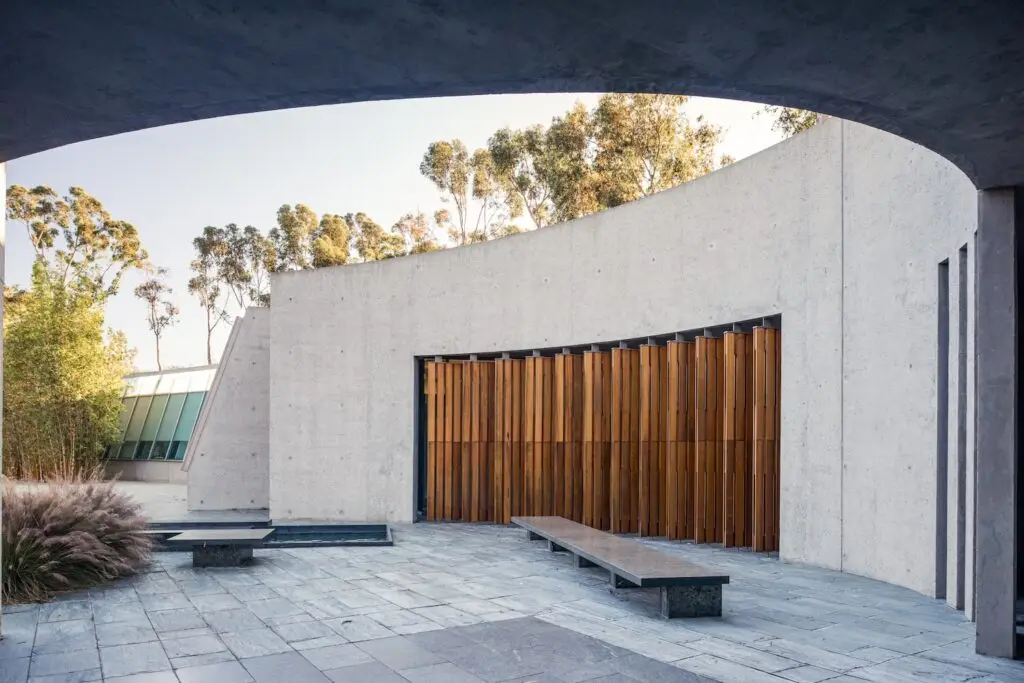
Ringgold’s expansive vision and vibrant canon has found a temporary home in La Jolla, where ArtLeadHER’s Mashonda Tifrere has curated an exhibition of Ringgold’s work at Mandeville Art Gallery on the UC San Diego campus. Faith Ringgold: Full Circle—The Teachings and her Legacy isn’t just a retrospective (the prolific Ringgold died in 2024 at age 93), it’s another kind of homecoming: Ringgold was an art professor here, in this community, from 1984 to 2002 and changed the trajectory of what art could be and who it could be for. She’s so revered that this show was hung by students in the art program.

Opened on February 28, Full Circle is free to the public and remains on view through May 1. Art lovers have a fleeting window to experience a small fraction of Ringgold’s historic and urgently present larger body of work.
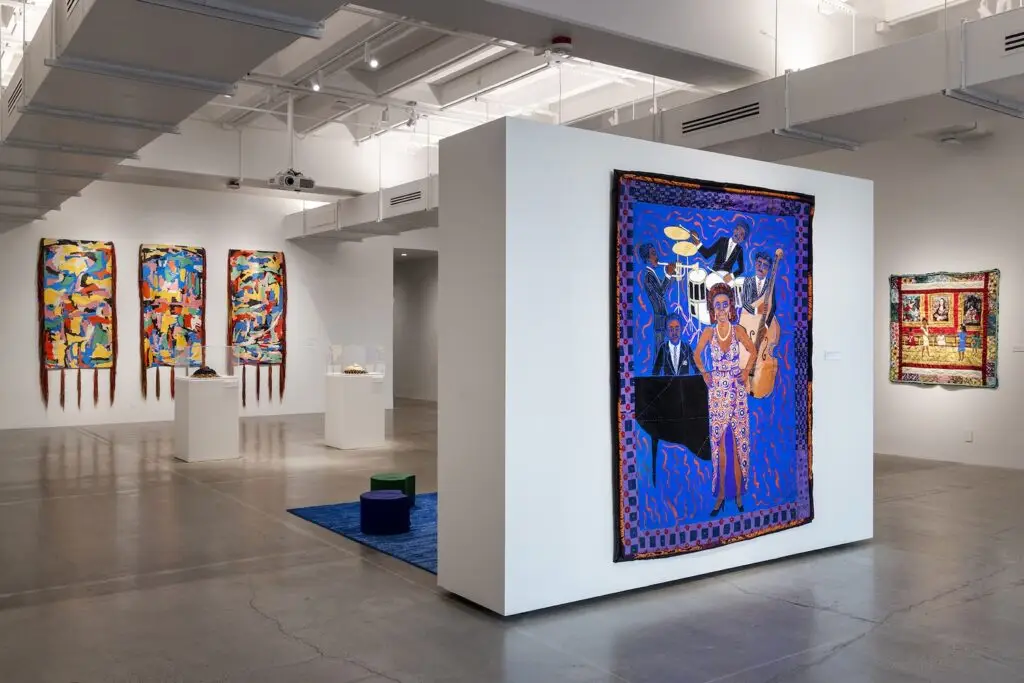
Ringgold had a vibrant imagination from her earliest days. As a child, she suffered from severe asthma and often missed school. Confined at home, Ringgold became an observer, building her own visual language and creating stories with it.
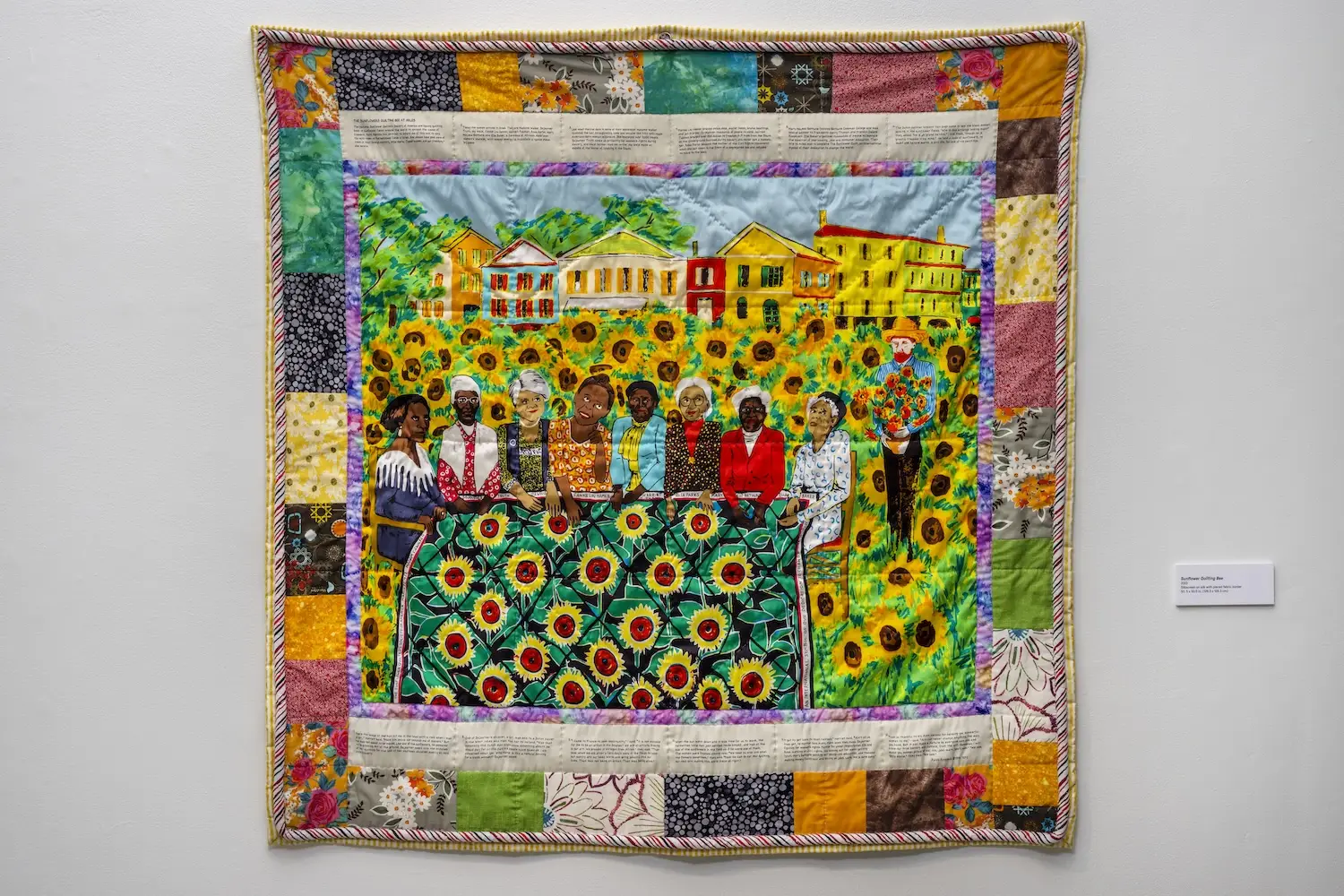
Her mother was her coconspirator: Willie Posey, a designer and seamstress, fed her daughter’s creative interior life by providing her with art supplies and teaching her how to work with fabric, pattern, and color. Perhaps one of the most transformative skills Posey taught her daughter was quilting, and she eventually helped Ringgold create her first story quilt, Echoes of Harlem, and story quilts became the young artist’s signature.
Quilting has deep roots in Black American history and is tied to the world of enslaved women who made quilts not just for function, but as storytelling devices, historical preservation, and coded expression. When, due to racism and sexism, Ringgold couldn’t be a landscape painter she turned to quilting and relied on the resilience of her ancestors. When she couldn’t get her writing published, she wrote her stories directly onto her quilts, sometimes in Sharpie. And much later, quilts enabled Ringgold to make art accessible on a wider scale: This medium could be folded and rolled and easily shipped.
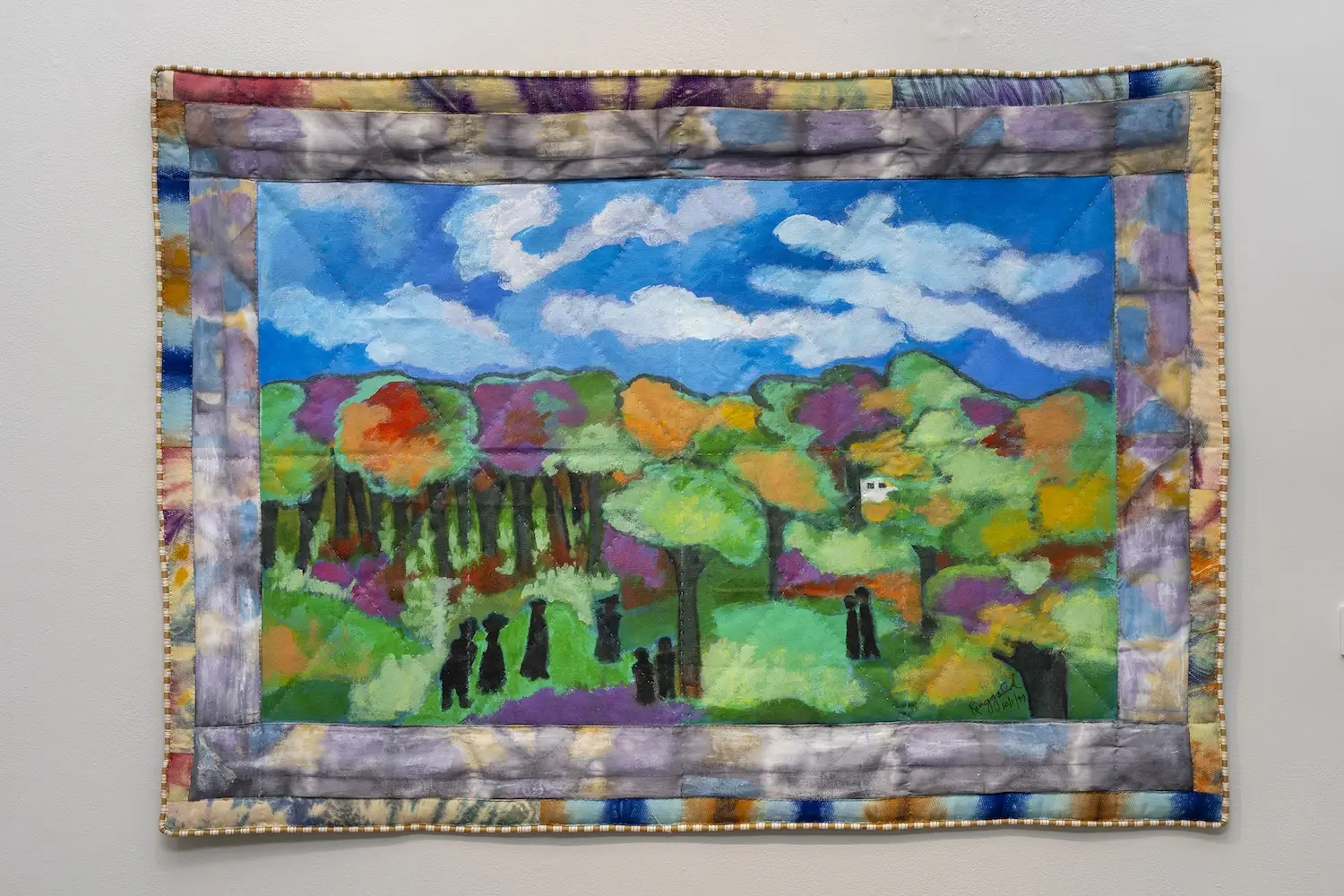
Ringgold didn’t wait for permission. She never did. Whenever the artist met a barrier, she found her way under, over, or around it. She pushed beyond the male-dominated art world that excluded her and women who looked like her. By adding written narratives to her quilts, she inadvertently lifted them from the realm of a craft into something more expansive. Her quilts—stitched and painted on—universal appeal, at once historical, political, personal, and emotional.
“Faith’s work feels like a story crafted for the soul,” Tifrere says. “Everything about it is intentional…the emotions on her pages, canvases and quilts are clear. She didn’t shy away from complexity or imperfection.”
That’s part of what makes Ringgold’s work feel so immediate and immediately accessible: You don’t stand in front of it and feel nothing. You enter it and feel everything. Each piece, from her story quilts to her quilted masks, to her political prints and her rare abstract paintings (“California Dah” which the artist painted after the death of her mother is on display as part of Full Circle) is its own universe just like her quilt Tar Beach I, which later became the storybook with our flying protagonist.
Recurring throughout her work are bridges, which Ringgold once described as a personification of women. “Bridges unite people across barriers, and that’s what we do with our families: We hurdle obstacles, we stay together, we pass it on just like a bridge.”
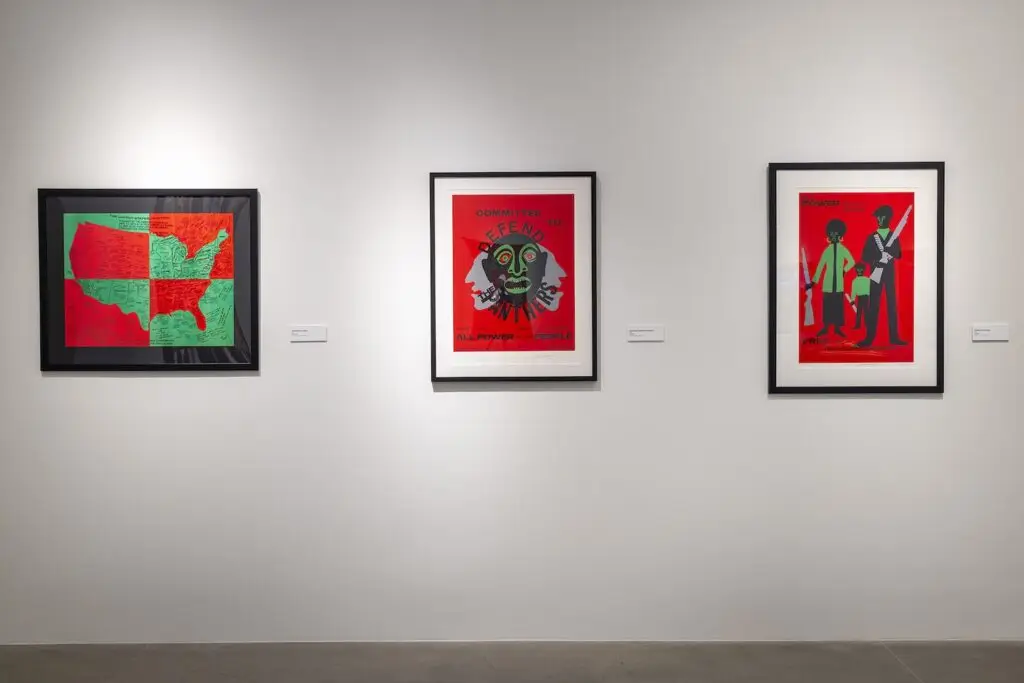
It’s impossible not to see that same connection in her work. There’s a throughline between Harlem and La Jolla (nobody’s ever said that before), between Ringgold and Tifrere: Also raised in Harlem, Tifrere understands this work not just from the perspective of a curator, but as someones who’s work is grounded in lived experience.
“What makes me stop is a blend of familiarity and shock,” she says. And of their shared Harlem: “I recall the scents of soul food and incense… the loud vibrations of music… [E]verything was art. Now, when I encounter art from a curatorial lens, I immediately connect with the emotions it evokes on every level.”
And that’s why this show lingers: Not just colors and textures or even the story, but the larger permissions (or lack of) behind this provocative work.
PARTNER CONTENT


At the end of Tar Beach, Cassie tells her little brother BeBe that anyone can fly—that “all you need is somewhere to go that you can’t get to any other way.” Standing in the gallery, surrounded by work that disregarded boundaries feels eternally instructive.
Faith Ringgold: Full Circle—The Teachings and Her Legacy runs through May 1, 2026, at Mandeville Art Gallery. Admission is free.
