

Featured articles
Everything SD
Things to Do
Featured articles
Things to Do
Food & Drink
What's next
Featured articles
Featured articles
Featured articles
Everything SD
Things to Do
Food & Drink
Ready to know more about San Diego?
SubscribeReady to know more about San Diego?
Meet the powerhouse names, coaches, and players leading our city's newest home team, the San Diego Loyal Soccer Club
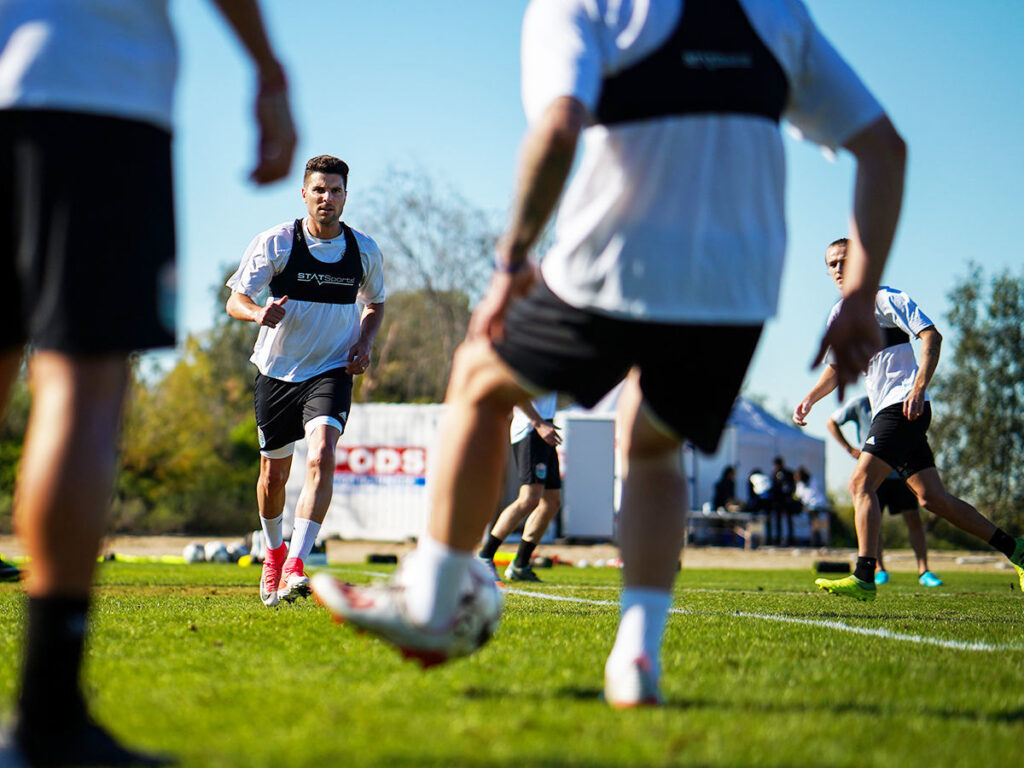
Beg and plead and, importantly, be the US city with the most World Cup watchers, and you may just receive… a professional soccer team.
That’s what Warren Smith is delivering in the form of the San Diego Loyal Soccer Club, the newest member of the USL Championship league (USLC), which ranks just one division below Major League Soccer (MLS)—and means our city has never been closer to having a major league team.
“The market speaks for itself,” says Smith, SD Loyal president. “You have more people that actually play the sport, from youth to adult, than any city per capita in the nation and you also have more people watching soccer than any other city in the nation. It’s a huge soccer community and it’s been underserved from a professional standpoint.”
On paper, all signs point to the SD Loyal being in good hands. Smith’s a serial entrepreneur who has a track record of growing professional sports teams. He founded Sacramento’s USL team in 2012 and five years later handed it off for MLS expansion. Before that, he revived Portland’s USL team to a degree that it too was granted a spot in the MLS.
Now Smith has high hopes for San Diego: In the long run, a stadium for the SD Loyal to call its own, and hey, maybe being owned by or graduated to an MLS team. But he admits that it all starts with filling seats.
“Right now, it’s all about reintroducing this sport to people from a professional standpoint and building a following. Our goal is to be the best damn USL club in the country.”
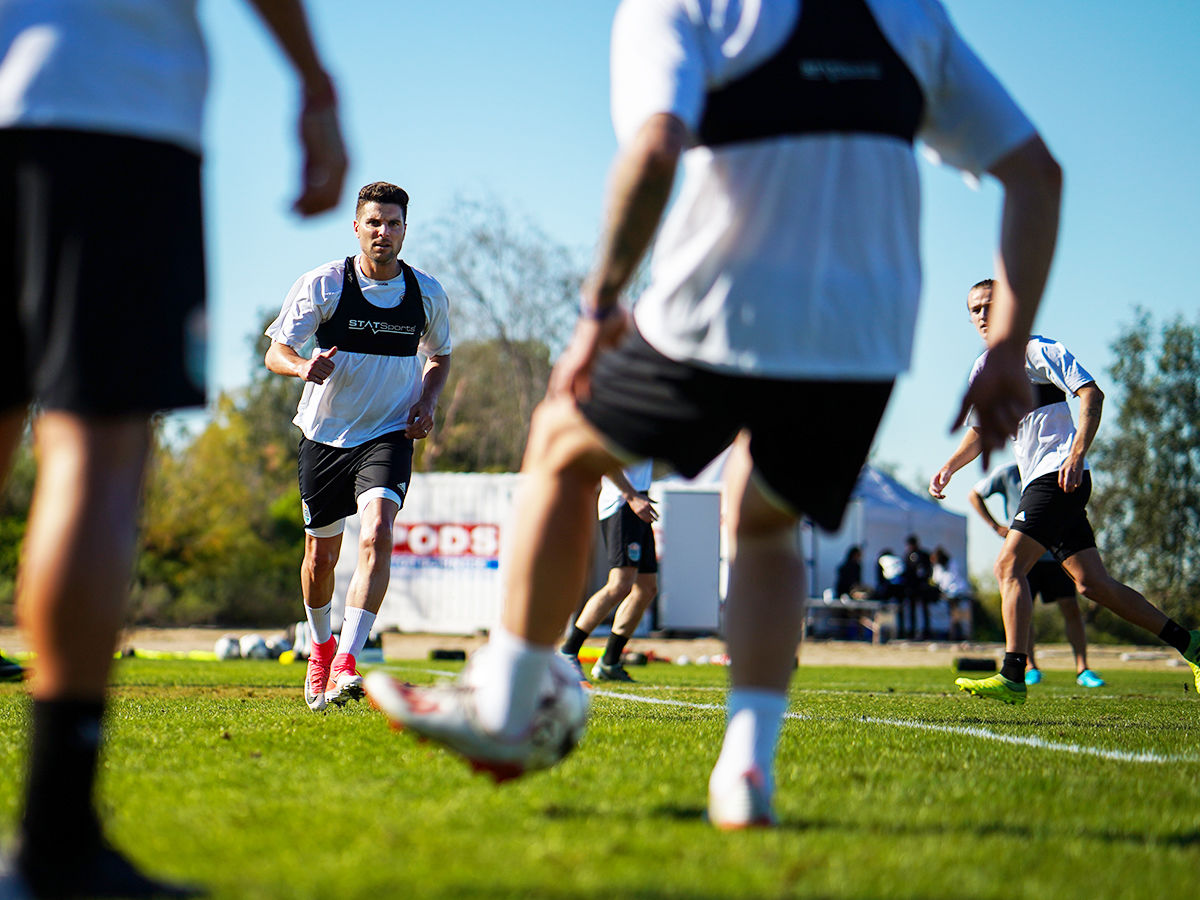
To help, we’ve pored over the roster and handpicked a few notable locals and newcomers you should cheer loud and proud for this inaugural season, kicking off March 7 versus the Las Vegas Lights FC at University of San Diego’s Torero Stadium.
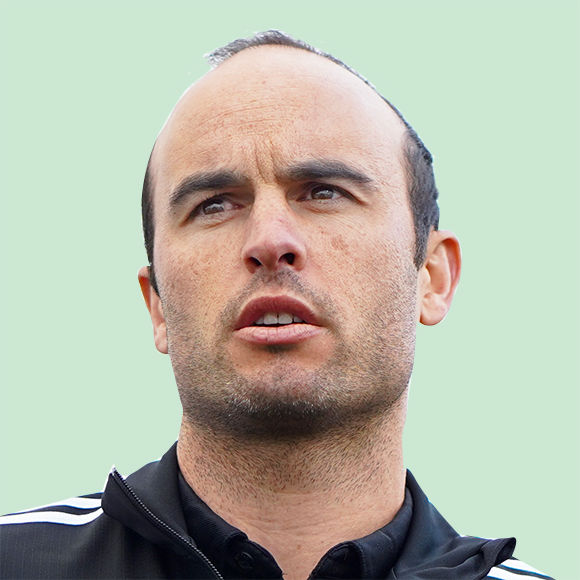
San Diego Loyal – Landon Donovan
Ryan Young / SDLoyal.com
Manager and Executive Vice President of Soccer Operations, 37, Redlands, CA
He spent most of his career with the LA Galaxy, and the MLS renamed its MVP award after him. He’s played in six MLS Cups and holds the league’s record in assists, goals, and playoff goals. He’s represented the US in three FIFA World Cups and is the only US player to surpass both 50 goals and assists in his career.
“The on-field part is comfortable for me. The off-field part has been more challenging, but you don’t really know what goes into something until you actually spend time doing it. Interacting with agents, players, staff, and so on has been fascinating.”
Came out of retirement three times, most recently to join the San Diego Sockers.
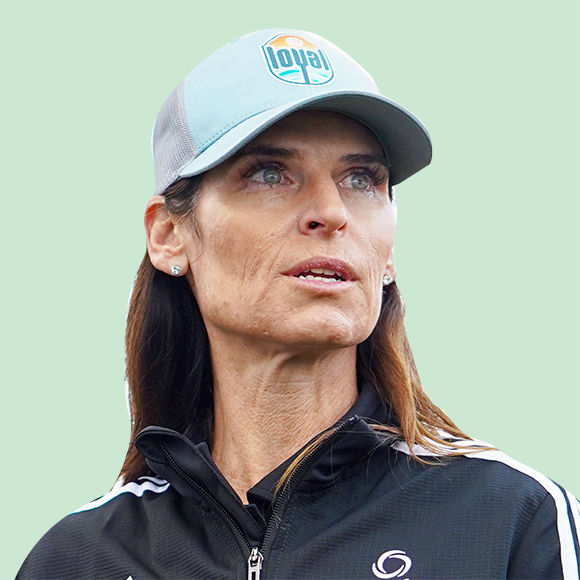
San Diego Loyal – Carrie Taylor
Ryan Young / SDLoyal.com
Assistant Coach, 47 (“but feels 37”), Flint, MI
She’s currently the only female coach of a US men’s professional soccer team.
“Soccer has the same rules no matter the gender playing. Men coach women all the time in every sport, so being a female coaching a male should be the same. Building respect and trust with players is first and foremost, and gender should not play a role in that.”
She has an albino pet rabbit named Stinky, who stands on her hind legs to beg for treats.
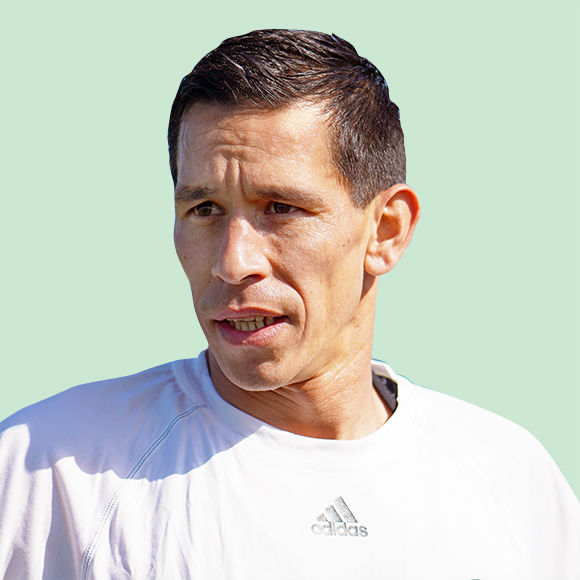
San Diego Loyal – Eric Avila
Ryan Young / SDLoyal.com
32, Carlsbad, CA
La Costa Canyon High School alumni, perhaps. And any avid followers of the MLS. He’s played over 150 games for FC Dallas, Toronto FC, Chivas USA, and Orlando City SC. Most recently, he was on the Birmingham Legion USL team.
“When I was a kid, I always wanted to play for the San Diego Flash, and it became a dream to play here in front of my family and friends. SD Loyal has brought me back to where it all started. [He has been playing against teammate Sal Zizzo since they were in club soccer.] I hope to give kids in San Diego a team to look up to and one day have a dream like I did to play for their home city.”
He loves coffee and hopes to open a café someday.
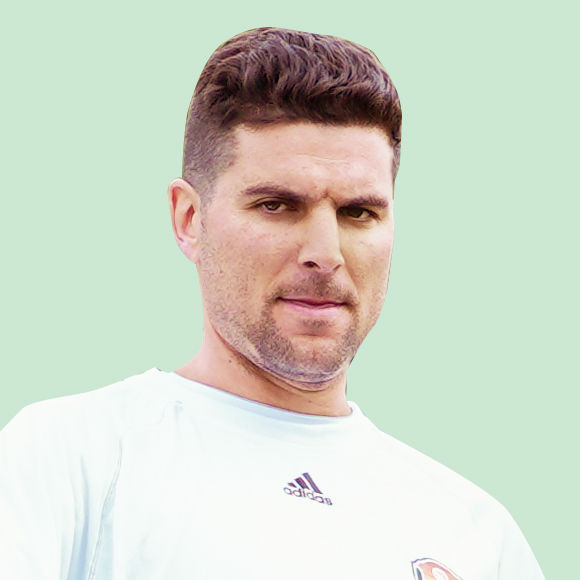
San Diego Loyal – Salvatore “Sal” Zizzo Jr.
Ryan Young / SDLoyal.com
32, San Diego, CA
Winning the MLS Cup in 2018 with the Atlanta United. Like Avila, he’s played in over 150 MLS games, but for Chivas USA, the Portland Timbers, Sporting Kansas City, the New York Red Bulls, and the Atlanta United. Locally, you may have spotted him at Barbusa or Nonna + Zucchero—he’s a member of the Busalacchi restaurateur family.
“Joining the SD Loyal means everything to me. I’ve always wanted to play for my hometown, and this team has given me the opportunity to do that. I’ve never been more excited to play for a team.”
He and two former teammates host BSI: The Podcast, where they interview soccer players from around the world.
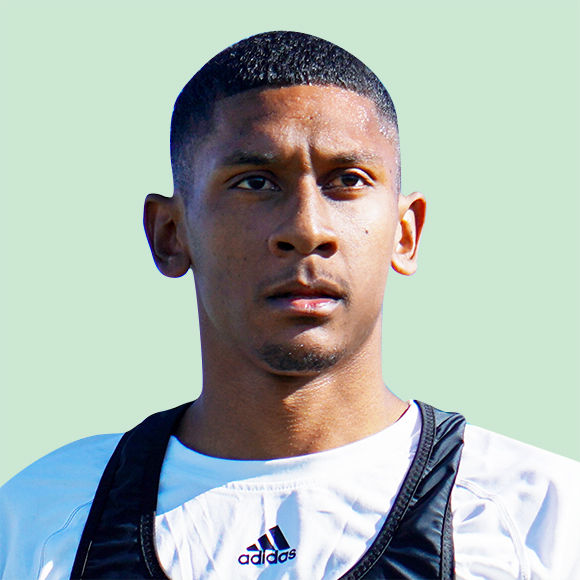
San Diego Loyal – Ashley Nazira
Ryan Young / SDLoyal.com
24, Mauritius
Because the SD Loyal is his US debut—and the first US debut of any Mauritian soccer player. The rookie’s one to watch, as he’s a four-time top scorer in the Mauritian League and was named the country’s National Player.
“I was six or seven years old. We played in the street back in my city. I would score and score all the time. I started to play as a striker with a team in the region and was always the top scorer. The feeling of scoring has kept me passionate.”
He always puts on his left “boot” (cleat) before his right.
San Diego Loyal – Feature
Ryan Young / SDLoyal.com
The county that helped push skating into the mainstream is now nurturing the competitors, communities, and culture shaping its future
It was the summer of 1999. MTV, The Matrix, and first-generation PlayStation glowed on tube TV sets all over America. What a time to be alive. Smartphones weren’t yet stealing people from the moment. Cultural was a shared reality. During the last few minutes of the monoculture, Tony Hawk executed the first-ever 900 at X Games V in San Francisco. That’s two and a half aerial rotations with a side of the dizzies.
The time had run out on the Vert Best Trick competition long before the 11th attempt when he pulled off the fateful feat. Nobody cared. Not the judges, not the competition, and certainly not the crowd. “Let that bird fly,” they said. Once the trick was landed, they partied like it was 1999 … because it was.
That was the tipping point when the skateboarding world exploded, going from counterculture to a national phenomenon. Shortly after that, “Tony Hawk’s Pro Skater” video game came out, introducing millions of kids to what skate culture looked like. Oh, the game had a killer punk soundtrack, too.
We can all thank Hawk for the globalization of skateboarding. But we can also recognize his local influence and how San Diego County continues to be a hub for skateboarders young and old, for competitors and street skaters. To see it all, go to Park De La Cruz in City Heights—or, heck, any other skatepark in the county—which, at 19,000 square feet, is about twice the size of the average skatepark and has signature features like an M-shaped transition ramp. The amount of talent that continues to evolve in this county is a testament to deep-rooted skate culture and world-class athletes supporting the next generation.

I’m a little early for a skate lesson with pro skater Mike Owen when I get to Linda Vista Skatepark. In the 2010s, Owen ranked as one of the world’s top bowl riders. He’s the founder of San Diego Skateboarding and has “helped thousands of kids, teens, and adults learn to skate safely, confidently, and with style,” the company’s site says. And now it’s my turn. We start the lesson on the nearby tennis courts, getting my basic foot mechanics down. Safety before style.
In terms of street plaza features, the massive Linda Vista Skatepark is loaded with rails, stairs, manuals, and ledges. There are more bowls than you can get from Cava: a flow bowl, backyard-style pool, and vert bowl. The main feature is a full pipe for advanced line riders. It’s a hell of a park, even if somebody just wants to watch the action from the 100-foot-long pedestrian skybridge overhead.
Right now, San Diego has over 50 public skateparks scattered throughout the county. “There are now more [skateparks], more resources for them, and more terrain,” Owen tells me. “Now, they’re offering different competitive style skateparks that help for competitions. The best parks have a variety of different terrain where you have things for beginners and bigger transitions. Not every town has that.”
San Diego, luckily, does. But despite the bounty, Owen believes there should still be more—public skateparks are safe spaces for all to learn and develop on-board skills. Without them, a huge portion of San Diego’s culture withers. Encinitas could be the next city to add a skatepark to the county’s roster: In early July, the Encinitas City Council appointed 12 local skaters and community members for the newly established Skate Feature Committee. In partnership with two councilmembers, the committee’s purpose is to design a working skatepark or feature for the city.
But like any big project, Owen says, it’s a long process to add another skatepark to the community.
“I wish it were easier,” he says. “When there are different contractors for different things, [there’s only] a certain amount of time to build. It gets tricky.”
Then there’s the matter of funding the actual construction and development of the skatepark. That usually comes from grants, fundraisers, and donations. For reference, Linda Vista Skatepark was built on a $4.46 million grant from the California Department of Housing and Community Development in 2014. With an additional $40,000 donated by the Tony Hawk Foundation, the park opened in 2018 and is the largest in San Diego’s Parks and Recreation system. The best way to get a skatepark in your neighborhood, Owen says, is to start a petition and reach out to your city.

Jordan Thrower’s first street skate sesh at San Diego City College in 2003 ended with a police chase. The campus was swarming with skaters riding rails, jumping stairs, and grinding tricks on benches, curbs, and ledges. When the cops got on their loudspeaker telling them not to run, everyone obviously ran. Back then, cops would give tickets and confiscate boards. The vibe has loosened since. “Now, the police don’t really care,” Thrower says. “They just make you leave. It’s not anything crazy.”
Street skating is when riders use real-world urban obstacles, rather than pristinely designed bowls or ramps—such as in college campuses, downtown areas, corporate buildings, and malls. Abandoned mini-golf courses and construction sites do the trick, too.
Thrower says the street skating hub here isn’t as huge as it once was. Thanks to modern technology and social media, skaters aren’t tied to any certain place to create skate videos. You know, those videos that could have been taken this year but have the low-fi vibe of 2004, where skaters carve down stairwells into parking lots, over mailboxes, or across park benches. The silver lining: Even though there are fewer street skaters than there once was, those who stayed in San Diego are still tight.
“Everyone skates with each other and knows each other here,” Thrower says. “In LA, it’s not really like that. It’s small there, but not everybody knows each other, and they don’t really skate with each other too much. They just have a lot of little crews.”
Back in 2015, Thrower started his own street team and brand that sells boards and shirts called Tantrum. The Tantrum team is split between San Diego and San Francisco. It doesn’t take much to be a part of a skate team. You just have to be a good hang.
“The way I pick people [for the team] is if I can get along with them,” he says. “It doesn’t even really matter if they’re that good. If you’re likable and funny, you can pretty much be on the team.”

Running it up to North County, a Vista-based nonprofit organization called Exposure Skate has been shaping up the youth since 2012. Its mission is to give more opportunities to otherwise underrepresented women, girls, and non-binary individuals by offering classes and camps. This, to build up confidence and community. We could all use a little bit of that, eh?
Thanks to Exposure Skate, 13-year-old Joey Yarbrough has found herself competing in the LA Olympic trials. (Her first time on a skateboard came at just 18 months old at an Exposure Skate Rising event.)
While competing for Team USA in Rome in June of this year, she finished 13th at the first Olympic qualifier for LA28. Currently ranked 21st in the world and 5th among American women, the young prodigy is blooming. And she’s in good company and mentorship from her biggest influence, Bryce Wettstein.
“She taught me at the first Exposure Skate Rising when I was little,” Yarbrough recalls. “I compete and skate with her all the time now, and it’s super fun. [At Exposure,] it feels so good to have someone there to help me whenever I need it. They’re like my family, always encouraging me and always there for me.”
Yarbrough will be just 15 years old when the Olympics go down in LA. She’s following the Olympic torch carried by other locals such as Wettstein, Ruby Lilley, Jordyn Barratt, and Exposure Skate’s Amelia Brodka.
“I’m working my hardest to get there,” she says. “I’ll also work my hardest to go higher in the Olympics, maybe on podium. That’s just my dream. So, hopefully it’ll come true.”
Jake Peterson is a San Diego-based journalist and culture writer. His work explores the city’s music scene, sports, local characters, and the offbeat corners of San Diego’s subcultures.
The Ely Callaway Performance Center is where tour-level fittings, cutting-edge technology, and golf equipment you can’t buy yet all come together
“Come test something.”
Those are quite possibly my three favorite words in the English language—all due respect to “I love you” or the highly underrated “you were right.”
I’ve been a PGA Golf Professional since 1994, and yes, full bias disclosure, a Callaway Golf Ambassador for 18 years. One of the bonuses that comes with that combo is access to the Ely Callaway Performance Center—a place so exclusive it gives “velvet rope” vibes.
Originally opened in 2006 as a highly functional (yet not exactly breathtaking) test facility, the ECPC got a serious glow-up in 2018 when Gil Hanse (along with partner Geoff Shackelford) turned it into what can only be described as a fully engineered golf playground. Hanse is no stranger to golf course renovations. In 2024, he completed an extensive redesign of the Omni La Costa North Course in Carlsbad, so it could host the NCAA Division 1 Golf Championships. He also worked on acclaimed courses like Winged Foot, Merion Golf Club, and Oakmont Country Club.
In just two months, it went from a standard test center and R&D lab to a fully dialed-in golf playground.

What was once purely practical is now intentionally designed to be both precise and inspiring. The targets are staggered with purpose—forcing creative shot-making while also calling you out on your actual distances (no more “that’s my 150-yard club … ish”).
Add a massive hitting area, bunkers and greens that mimic real on-course conditions, a “Himalayas” putting green (named for its roller-coaster undulations), an upgraded indoor putting lab, and a 120-decibel sound system blasting a very golf-appropriate playlist, and suddenly it’s a rare blend of high-performance testing facility and “don’t mind if I stay here all day” energy. Since this isn’t exactly open to the public, SDM asked me to take you behind the curtain.
As the iron gates part, it feels less like arriving at a practice facility and more like being granted backstage access at a rock concert—if the bandmembers were made entirely of launch monitors and perfectly manicured turf.
There are no mats. No guessing. No “I think that one felt good?” Just conditions that mirror exactly what tour players see in competition. Because when you’re testing equipment at this level, accuracy isn’t a bonus—it’s the whole point.
Even the sand matters. Different textures. Different densities. Because bunkers have personalities, too, and they are often unfriendly. And the golf balls? Brand. New. Not the usual “these have seen some things” range balls. New balls mean consistent spin, truer trajectory, and no surprises. The older a golf ball gets—and the more it’s been baked in the sun, scuffed, or generally lived a full and complicated life—the less reliable it becomes. Think of it like this: fresh ball, predictable performance; old range ball, slight chaos with a side of mystery.
I’m escorted to my personal hitting bay—basically a pop-up shaded oasis stocked with enough equipment to make a gear junkie weak in the knees. Shafts in every weight and profile imaginable. Heads lined up like they’re waiting to be drafted by their favorite team.

Toptracer technology was patiently waiting to track every one of my swings, each shot instantly delivering ball speed, launch, spin, carry distance, and dispersion (a polite way of saying consistency, or lack thereof), so there’s no guessing—just data telling the truth, whether I like it or not.
We start with irons. Different heads, different feels, different results. When I miss a shot, the ball tends to leak right, so we check lie angle. A quick adjustment—2 degrees upright—and suddenly the clubface is consistently square at impact like it remembered its job. Effort level: down. Ball flight: improved. Confidence: creeping back.
Next we look at the different shaft options—because nothing says “fun afternoon” like realizing a higher kick point can change your entire golf identity. Shaft flex (how much the shaft bends during your swing) helps determine whether you get more height and distance or more control, while kick point (where the shaft bends the most) influences your ball flight—lower kick point for higher launch, higher kick point for a flatter, more penetrating shot. In other words, one small tweak and suddenly you’re hitting shots you’d normally only describe later, slightly exaggerated, over a glass of wine.
Then we move through the bag: hybrids, fairway woods, drivers, wedges. It’s a full rotation of “try this,” “now try this,” and “okay wait … THAT one.”
And yes—the new Quantum driver and fairway woods made an appearance. Without getting too deep in the weeds, they’re faster, more forgiving, and smarter (thanks to AI face mapping) than previous models. Translation: Even your mishits are now slightly less embarrassing. And they were not the only things getting tested. My patience was under attack because the driver and woods would not be available to the public for a good three months.

Watching the fitting team work is like watching a Formula 1 pit crew. Clubs are swapped in seconds. Shafts tightened, adjusted, replaced. One minute you’re swinging something that seems “fine,” and the next, you’re holding a club that feels like it is a part of your DNA.
Then there’s the putter fitting. Drivers are physics. Putters are therapy. Inside the putting lab, sensors track everything—tempo, face angle, path—things you didn’t even know could be measured. Within minutes, my data politely informs me that my putter face is slightly closed at impact. Not shocking, but also not ideal.
A few quick adjustments—different head (with a bit more weight at the toe to discourage the face swinging closed at impact), shorter shaft (so I feel more over the ball, which helps my eyeline)—and suddenly the ball starts rolling exactly where I’m aimed.
Same stroke. Same golfer. Completely different outcome. If only the rest of life worked like that.
And then there’s the part that feels slightly classified. The ECPC isn’t “just” a performance center—it’s also where future equipment lives before the public even knows it exists. I’ve been there when certain clubs were basically under surveillance. Not “don’t touch,” but more “please keep phones in your pocket.”
It’s golf’s version of Area 51. Except instead of aliens, it’s drivers that won’t hit shelves for another year—and like I mentioned, waiting is not my strong suit.
Getting to test the newest equipment isn’t just a perk—it’s part of the job. It’s what allows me to stand in front of students and say, “I’ve tried it. I know what works and what doesn’t. And more importantly, I know why.” And if I happen to sprint to my car every time the phone rings and someone says, “Come test something” … well, that’s just professional courtesy.
Callaway isn’t the only place to get your swing analyzed and clubs fitted. You can stroll into big retail spots like The Golf Mart or Golf Galaxy, book a next-level session at a dedicated studio like Club Champion or True Spec Golf, test brand-specific gear at various manufacturing companies (many located in Carlsbad), or even combine a lesson and a fitting at GOLFTEC. And let’s not forget your local golf course, where fittings happen on actual turf, on a driving range you have some history with—many times with the golf professional who is familiar with your swing so they can give you valuable input. With this many options, there’s really no excuse, other than pride, to keep blaming your clubs.
Imperial Beach has some of the finest surf in San Diego—and the nation’s most contaminated shores
Every year, when winter swells bring San Diego’s best waves to their fullest potential, local surfers flood the lineups of popular spots like Black’s and Swami’s. But some of the heaviest and most dangerous surf lies further south, off the coast of Imperial Beach. The area’s crown jewel, Tijuana Sloughs, sometimes serves up 20-plus-foot waves that break up to a half-mile from shore.
Even as the surfing population has exploded, however, IB remains empty in comparison to the rest of San Diego, thanks to the pollution that plagues its waters. Surfers in IB don’t just check the surf cams and swell forecasts—they monitor the water data from the nearby International Boundary and Water Commission.
“It’s almost a science to go out for a surf and not get sick,” says resident Dwayne Fernandez. “My wife hates that I still surf here; she gets worried. I check the reports every day to see if it’s safe, which has been rare these days. If it’s not, I may have to drive over an hour just to get in the ocean—and I live minutes from the beach in IB.”

According to the Surfrider Foundation, IB has the unfortunate distinction of being the most polluted beach in America. Built in 1996 with the capacity to manage 25 million gallons of wastewater a day, the nearby South Bay International Wastewater Treatment Plant (SBIWTP) is frequently overwhelmed. Anything that exceeds the limits of the SBIWTP comes out as raw sewage, clearly visible in the water as a dark brown plume with an accompanying nasty smell.
The sewage flow can sometimes hit hundreds of millions of gallons in a single day. “You don’t want to be out there when that happens, and it can happen quickly,” says Adam Wraight, an Imperial Beach lifeguard sergeant, junior lifeguard coordinator, and longtime local surfer.

But that hasn’t stopped some residents, despite mandates prohibiting surfing and swimming during beach closures. If the waves are good, surfers are probably out there. Why take the chance, though, when there are so many other good waves—with cleaner water—in the county?
It’s partly a point of local pride. The surf history in IB runs deep. Stories of the Tijuana Sloughs on its good days are the stuff of legend, discussed in hushed tones in the core San Diego surf community.

“The Sloughs was never a spot meant for everyone,” says Jeff Knox, a former lifeguard and lifelong IB surfer. “The paddle-out alone was enough of a deterrent for most. The shorebreak took care of the rest. It’s mostly locals out there; we like it that way. It’s one of the best waves around and, for that very reason, we never used to talk about it. But those days are long gone. We need all the help we can get—the more attention, the better. Because this is a huge problem.”
It’s also been part of the deal for decades. “I started surfing IB in the ’60s, [and] we’ve always had to deal with pollution,” Knox adds. “Throughout my entire life, it’s never been as bad as the last 10 years. The last five have been absolutely terrible.”
Additionally, there’s the simple fact of convenience. While IB’s median rent cost of $3,000 is well under the staggering housing costs in other surf-adjacent ’hoods like Encinitas and Del Mar, locals still pay a pretty penny to live a few blocks from the beach. And they often pay a price for surfing there.

Scientists have identified 175 toxic pollutants in IB’s waters. Surfers have contracted everything from diarrhea and bacterial infections like MRSA to neurological disorders and hepatitis A.
“As a lifeguard, I see all the data. I check the flows daily and monitor the testing just to see if I can go for a surf during my break or after work. There are plenty of people who don’t check anything—they just see waves and go out—but even they get spooked when they hit the water and everything feels and smells wrong,” Wraight says. “Our responsibilities are definitely different from other [lifeguard] stations and, unfortunately, so much of what we do revolves around the pollution. It can get pretty negative, and it takes a toll on morale and recruitment.”

The problem has driven some local diehards from the water completely. Ramon Chairez, an activist and educator with the nonprofit Un Mar de Colores, has lived in IB for decades, but in 2020, he “made a conscious decision to stop surfing IB,” he says. “I saw too many people around me getting sick. It wasn’t worth it. The last five to 10 years have really been pivotal in the consciousness of the population, especially the kids—they know it’s polluted and unsafe.”
As a junior lifeguard coordinator, Wraight once trained the next generation in IB. But, now, he and the local kids he works with must travel to other beaches in the county. YMCA’s Camp Surf, a program that attracts children and teens from all over the nation with the allure of learning to surf in San Diego, can no longer take participants into the area’s waters.

They must head to other neighborhoods or stick to land-based activities. “The biggest tragedy is the youth,” Wraight says. “They’re growing up not being able to enjoy the ocean like we did—their whole life experience is affected by the pollution.”
Despite the toxic water, IB still feels like a classic beach town, a callback to a time before $8 lattes and luxury condos dominated the coast. It’s charming, quaint, and beautiful, with the open space of the Tijuana Estuary to the south, mountains in the distance, and the mighty Pacific to the west. It has one of the most unique coastal views of all of San Diego—and some of its best waves. If only you could safely surf them.
Chris Dodds has been falling in love with San Diego for the past 10 years. He's passionate about the protection and preservation of our natural areas, especially our coastline and waterways.
Earlier this year, Fit quietly dropped "athletic" from its brand, from Fit Athletic Clubs to simply Fit, and started calling itself something new: a social wellness club.
There’s a version of San Diego that lives in two extremes. On one side, the 5 a.m. crowd: biohackers, marathoners, people who’ve already logged a cold plunge before your alarm goes off. On the other, the after-dark crowd, the ones chasing sunset happy hours and late dinners with friends. Everyone seems to be either optimizing or unwinding, and most of us feel like we’re failing at both.
Fit, San Diego’s reigning Best Gym for the third year running, has built its entire identity around erasing that divide.
Walk into one of Fit’s three San Diego locations on a Tuesday afternoon and the lines blur fast. Someone’s mid-set on the squat rack. Someone else has a laptop open at a café table a few feet away, half-working, half-people-watching. A group is trading plans for the weekend’s event by the recovery lounge. Nobody’s in a rush to leave.
“We’re not competing for the same people,” says Emily Waybright, Public Relations Manager at Fit, addressing the arrival of a national luxury gym chain in San Diego this year. “We don’t really feel like we’re in the gym category. It’s this unique thing.”
That unique thing has a name now. Earlier this year, Fit quietly dropped “athletic” from its brand, from Fit Athletic Clubs to simply Fit, and started calling itself something new: a social wellness club.
It’s a small wording change with a bigger idea behind it. Fit was never built around escaping the workday. It was built around the people who genuinely like what they do, and who want workouts, work, and friendships to happen in the same place instead of three separate ones. Because sometimes red light therapy with a stranger turns into weekend plans.
Fit’s philosophy traces back to its founder, who started the brand nearly two decades ago after failing to find a gym he actually wanted to belong to. He looked instead to the old-school country club, where people came for a shared interest and stayed for the community. His version was made for a younger generation, minus the golf, plus the loud music.
Which makes it a little ironic that the very award putting Fit back in the spotlight this year is Best Gym.
What does the best traditional gym look like when the definition of a gym is becoming less traditional? It’s a fair question, and Fit’s answer is that the fitness industry itself is shifting. The 45-minutes-in, 45-minutes-out model is giving way to something closer to a genuine third space, the kind of role the office and the bar used to play before remote work and changing nightlife habits rearranged how people spend their time
For Fit, community isn’t a marketing add-on to fitness. It’s the through-line. Members aren’t just paying for a treadmill; they’re paying for an entire day of social wellness that’s built on performance, recovery, connection, and a plan for the next event on the calendar. That’s a much harder membership to walk away from.
Ambition and ease aren’t opposites here, they exist side by side, where passion and play share the same morning. On September 12, Fit is hosting Sol, a full day wellness festival at Fit Social. The morning focuses on wellness classes and vendors and then the evening is a full party with multiple DJ sets and an open bar. Think of it as a kick-off to locals’ summer in San Diego.
Ready to see what a social wellness club actually looks like? Visit fitclubs.com, or follow along at @thefitclubs on Instagram.
Home to major brands like Callaway and TaylorMade, the North County city has been the site of game-changing golf innovations for four decades
“I started playing golf when I was 16,” David Moon says. “I’m married to the game, and I love this brand.”
His affection for Honma Golf is understandable. Clubs from the BERES line, with smooth metals dyed silver, gold, and red, look more like pieces of jewelry than they do sporting goods. It’s Moon’s job, as the company’s ecommerce and customer service manager, to sell those clubs, although that title doesn’t fully capture his role running Honma Golf’s three-person Carlsbad operation.

Founded in Japan in 1959, the company developed a devout following, mostly in Asia, for its meticulously designed and unusually sophisticated golf clubs. They aren’t manufactured so much as they are crafted, but for decades that luxury went largely unnoticed in North America. In an effort to grow in Western markets, Honma Golf setup shop in Torrance in Los Angeles County, then Cyprus in Orange County. Finally, in 2019, the company landed in Carlsbad, known as the “golf equipment capital of the world.”
That may sound like a roadside oddity or an obscure Guinness World Record, but in Carlsbad the moniker is serious business. A block from Honma Golf is Titleist’s Carlsbad office. TaylorMade and Callaway are headquartered on the other side of Palomar Airport. That makes three of golf’s “Big Four” brands within two miles of each other, and you can’t swing a club without hitting dozens of smaller companies like Cobra and Honma. “It’s good to be in the mix with the big companies,” Moon says. “We’re not moving any time soon.”

According to a report from the city’s economic development division, there are no less than 116 firms in the sports innovation and design industry cluster, which includes the city’s world-renowned golf equipment manufacturers. “We’re claiming over 2,300 employees in that sector, which is more than six times the national average,” says Bret Schanzenbach, president and CEO of the Carlsbad Chamber of Commerce. “It also generates good income—averaging $130,000 per employee per year in annual earnings.”
Callaway and TaylorMade together earn over $5 billion annually, or about $5 for every golf ball the world manufactures in a year. And the story of selling golf balls is inextricably linked with the story of Carlsbad.
Long a farming town, Carlsbad didn’t incorporate until 1952. Its population as of the 1960 census was just over 9,000, and not many people outside of San Diego County had heard of the town until the La Costa Resort, opened in 1965, began hosting the PGA’s Tournament of Champions in 1969. A 34-year-old Gary Player, at the height of his legendary career, fended off the likes of Jack Nicklaus, Arnold Palmer, and Lee Trevino for the trophy that year.

“I believe it is the way courses should be set,” Player told The New York Times after his victory at La Costa, now known as the Omni La Costa Resort & Spa. “It’s as fine a course as I won on.” High praise from a man who had taken the crown at the British Open nine months prior. La Costa would go on to host the tournament for the next 30 years, and the city grew around it.
That’s due in large part to Ely Callaway and Gary Adams. A textiles executive from Georgia, Callaway brought his fledgling golf club company to Carlsbad in 1983. A year later, Adams came to town with TaylorMade, a company he started in Illinois that had some success hawking “metalwoods,” a departure from the traditional all-wood sets.
In 1991, Callaway took the novel idea a step further and invented the Big Bertha driver, the first made entirely of stainless steel. The club head was massive yet light in the hand. It felt like the future, because it was. The story of golf—and Carlsbad—became centered around engineering, research and development, and technological advances. It mirrored the digital revolution rooted in Northern California. The Bay Area had Silicon Valley. Carlsbad had Titanium Valley. Honma Golf resides on Innovation Way.

“If you’re a golf company, do you want to be based in Illinois, or are you going to go to a place like California where you can golf year round?” Schanzenbach says. Carlsbad has “infrastructure, plus the weather, plus the quality of life, and the ability to bring in top [golf] professionals to your facility to test out your equipment,” he adds. “You want to bring them to a place where, afterwards, you can go out to a really nice course with beautiful weather and treat them.”
But the local industry has hit the rough in recent years. According to the city, employment in the sector declined 16.3 percent between 2018 and 2020, a trend that started back in 2013, despite overall golf participation being up 30 percent since 2016, according to the National Golf Foundation. While the weather in Carlsbad is still perfect, some of the factors that fueled its explosive growth, especially cheap land and plentiful labor, are today tilting against it.

“Coming out of Covid, one of the biggest things we were hearing from our membership was the challenge with finding and then retaining talent for their companies,” Schanzenbach says. “I know TaylorMade has done a good job with it. But [for] the middle-tier companies, it’s hard.”
Honma Golf felt this firsthand.
PGA tour pro Justin Rose signed with the company in early 2019, and a few weeks later, he won the Farmers Insurance Open in San Diego. Honma was finally making inroads in the US, then Covid hit. “All the momentum stopped,” Moon says.
Sales slumped, then the company struggled with staff turnover and recruiting executive and marketing teams to achieve its goals in North America. The realities of high costs, intense competition, and hiring challenges set in, but Honma Golf is undeterred. By reorganizing its marketing team and refocusing on its core market segment of golfers interested in premium clubs, the company feels there are better days ahead. “2025 is going to be a good year,” Moon predicts.

It’s a retrenchment not unlike Callaway Golf’s. In September, the company announced it was spinning off Topgolf, the chain of entertainment-focused driving ranges it acquired just four years earlier. The company wants to focus on its traditional golf equipment and apparel business, the one based in Carlsbad—the one that helped make Carlsbad.
After Covid’s industry-wide disruptions, the future of the local golf manufacturing industry is coming into focus. So far, it looks a lot like the first 40 years: You can’t play golf without Carlsbad.
Brendan Dentino is a U.S. Navy veteran, writer, and public servant based in San Diego. He writes weekly about baseball and politics at Out in Left.
Get ready to tee off at some of the top golf courses across the county
San Diego, with its gorgeous coastal views and year-round sunny weather, is a golfer’s paradise, offering an impressive array of courses that cater to all skill levels, whether your scorecard usually consists of eagles or bogies. For locals and out-of-towners alike, exploring these courses will not only test your skills but also immerse you in the breathtaking scenery that San Diego is known for.

Coronado Golf Course, opened in 1957, is one of San Diego’s more walkable courses. Cited as a top SD course by the Golf Channel, the well-maintained public course offers views of the Coronado bridge and boats out on the water. The onsite restaurant serves American bites (including vegan options) for brunch and lunch.
2000 Visalia Row, Coronado

Consistently ranked as one of Golf Digest’s 100 greatest courses, the challenging Torrey Pines Golf Course in La Jolla hosted the 2021 US Open and puts on the annual PGA TOUR’s Farmers Insurance Open. Named after the rare Torrey Pine tree, which only grows along the San Diego coastline and Santa Rosa Island, the course has made its way onto many golfers’ bucket lists.
11480 N Torrey Pines Road, La Jolla

Located at the luxurious Fairmont Grand Del Mar, The Grand Golf Club and its 50,000-square-foot driving range are open to hotel guests. Three-hundred-and-sixty degree views of each hole are available online, helping give you a leg up if you’re trying to improve your handicap. And if your kiddo dreams of becoming a future Masters champion, this course is the perfect place to take them, as children 12 and under can play and rent clubs for free.
5300 Grand Del Mar Way, Del Mar

Aviara Golf Club is San Diego’s only course designed by the legendary Arnold Palmer. Situated within Carlsbad’s Park Hyatt Aviara, this layout includes strategically placed bunkers and water features that provide both pretty views and tough obstacles. And, if you’d like to level up your gear game, the course’s TaylorMade Aviara Performance Center allows you to test clubs with 3D motion analysis technology. The club offers both public and resort fees, as well as online course videos that provide insight into hole details and potential strategies.
7447 Batiquitos Drive, Carlsbad

Designed by golf course architect William Francis Bell, the Rancho Bernardo Inn Golf Course has hosted both PGA and LPGA events. Its 18th hole, surrounded by old-growth trees, is a fan favorite. Golf lessons are also available at the Carlsbad course, whether you’re just starting out or a seasoned golfer needing a couple tips or tweaks.
17550 Bernardo Oaks Dr, Rancho Bernardo

Singing Hills Golf Club supplies golfers with three courses in the Dehesa Valley of San Diego County. The Willow Glen course runs along the Sweetwater River and features narrow fairways, while the Oak Glen course is known for rolling greens and a beautiful, yet difficult, fifth hole. The nine-hole Pine Glen course is ideal for beginners or those looking to squeeze in a quick round.
3007 Dehesa Road, El Cajon

The course at Mt. Woodson Golf Club in Ramona is tough—but you don’t need to worry about having an audience for any whiffs. Each hole is so secluded it’ll feel like you and your buddies are the only ones on the course. Open to the public and surrounded by serene, rocky hills, the club also houses a bar and grill with some of the best prices in town (hello, post-birdie BLT for under $9).
16422 North Woodson Drive, Ramona

Originally built in 1952, Oceanside’s Goat Hill Park Golf Club was one of the first golf courses in San Diego County and began as a regulation-length nine-hole setup. In the early 1990s, it was redesigned into an 18-hole course, enhancing its appeal to golfers seeking a fun time on the links and a laid-back atmosphere.
2323 Goat Hill Drive, Oceanside

Admiral Baker Golf Course, located within the historic Navy complex near Tierrasanta, is notable for its two distinct 18-hole courses—the North and South. The lush fairways and well-maintained greens are complemented by facilities like a driving range and eatery.
2400 Admiral Baker Road, No. 3604, Tierrasanta

Jordyn Berg is a freelance writer whose favorite topics include food and travel. A Pacific Northwest native, she delights in exploring the best of San Diego, by searching for hidden gems, experiencing must-try restaurants, and soaking in the city’s amazing views.
Senior Vice President, Public Affairs San Diego Padres
Sarah Farnsworth
Barney & Barney G.R.O.W. logo
geneenm
How did you make the leap from Washington, D.C., to the Padres in San Diego? Tom Garfinkel, CEO of the Padres, asked me if I would consider working for a baseball team. I thought it was a joke. I didn’t know anything about baseball. After 19 years in D.C. I wanted the opportunity to become a part of a community, and that is what I saw in San Diego. It’s an opportunity for me to give back.
You are engaged to marry a retired Marine, and you have a young daughter. What role did they play in your decision to join the Padres? It was a family decision. We decided together. I was working in a job that really wasn’t a career. With the Padres I have a career where I can be challenged, and I am part of a civic asset. Since my fiancé is retired, he plays a big role in my daughter’s care when I have work demands.
How did you get involved in politics? I was living in New York when the Democratic National Convention was held there; 22 years old and just out of college, I volunteered at the convention. From there I was assigned to do advance for Hillary Clinton during Bill’s first run for president. That was 1992. When Bill won the presidency, I was asked to work on the inauguration in 1993. From there I went to work on the First Lady’s staff in the East Wing. I was responsible for planning all events in the Rose Garden, the South Lawn, and basically anything in the White House. And the Clintons were very active, with many events going on!
Tell me about your time in the White House. I worked seven and a half years and left to marry, but returned for the last six months at the end of the Clinton term. I celebrated my 30th birthday at the second Clinton inauguration.
Where did you work when you left the White House? I was chief of staff at the USO and traveled frequently to Afghanistan and Iraq. I was working in the world headquarters for then-General Jim Jones, who later became President Obama’s national security advisor. President Obama asked me to become senior advisor to the national security advisor, so that put me working in the West Wing of the White House. When General Jones resigned in 2010, I was asked to work in the Pentagon.
You spent so much time working for presidents in both wings of the White House. How did you keep your feet on the ground? I never thought of it as politics, but as being part of an historical institution. There was a plaque on the wall in the White House that I passed by every day. The bottom line was “one day you will be on the other side of the iron gate.” That puts it in perspective.
What challenges have you faced? After being to Iraq and Afghanistan, challenges take on a different meaning. As long as my family is healthy, I don’t have any bad days.
What adjustments did you have to make when you joined the Padres? I have had to earn trust and credibility in a whole new profession, I had to learn baseball, and I have had to earn trust in the community.
What is in your future? I’m here with the San Diego Padres as long as they will keep me.