Ready to know more about San Diego?

Subscribe
Features FEBRUARY 28, 2018

8 San Diegans Take us Inside Their Favorite Spaces

Remarkable locals let us into their personal sanctuaries, from a painter's secret garden to a luxe, party-ready speakeasy
8 San Diegans Take us Inside Their Favorite Spaces

8 San Diegans Take us Inside Their Favorite Spaces

My Studio

Natalie Bessell, Artist

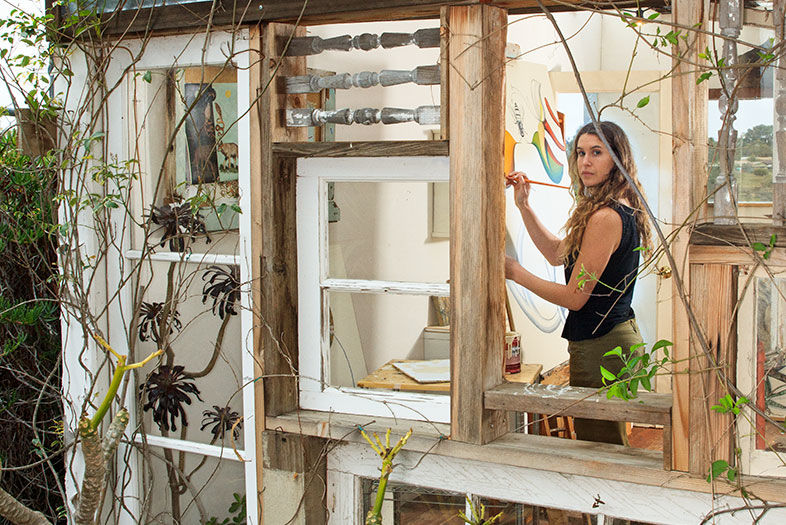
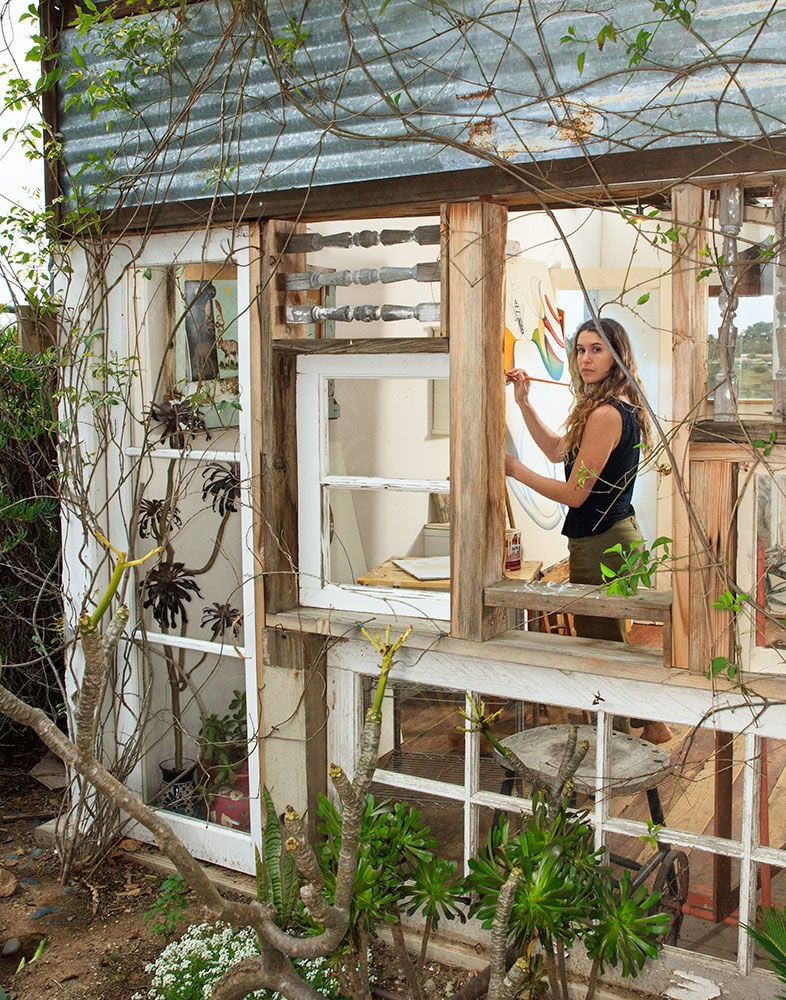
Natalie Bessell is not a night owl. She paints only in the natural light that pours into her “sanctuary,” a studio overlooking Tecolote Canyon Natural Park.

Five years ago, Bessell’s boyfriend and her dad—world-renowned surfboard shaper Tim Bessell—built the space off of a freestanding window wall in her backyard, bordering a vegetable garden dilapidated by squirrels, rats, coyotes, and raccoons.

Constructed almost entirely from reclaimed materials, the studio is grounded by fence posts Bessell found discarded in an alley. The ceiling is reclaimed corrugated roofing material, strung with the same lights that run through her backyard.

But she doesn’t use them much, because her creativity flourishes most in the middle of the day, when the sun is shining and the wildlife that inspires her work is awake, when she can hear hummingbirds chirping and see falcons clutching doves in their talons. (The food chain is a common theme in her work.)

Like the antique frames, paint tubes, and easels that line the studio walls, at the end of the day Bessell says her space is merely a tool for her craft.

“The most important thing is the paintings that come out of it … and the inspiration that surrounds it.”
8 San Diegans Take us Inside Their Favorite Spaces

8 San Diegans Take us Inside Their Favorite Spaces

My Drink Nook

Elexia de la Parra, Owner of Artelexia

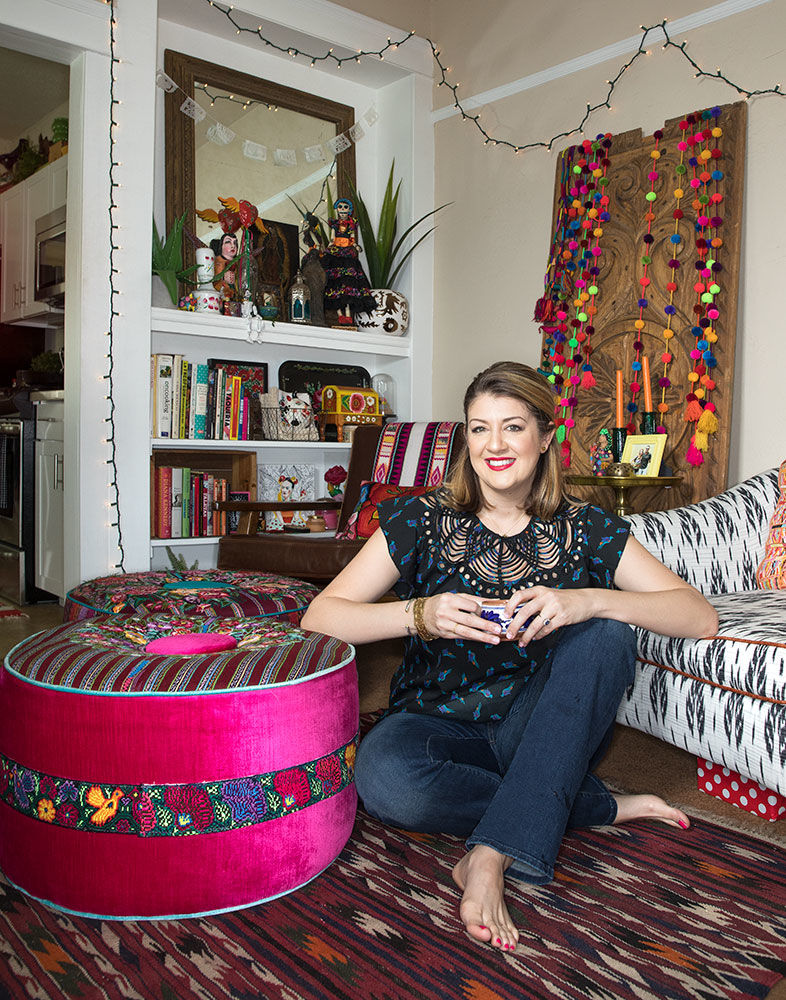
Walk into Elexia de la Parra’s apartment and you might think you stepped into Artelexia, the kaleidoscopic boutique she launched nine years ago in Little Italy and moved to her own North Park neighborhood in 2017.

Both spaces are bathed in florals and folk art dedicated to her Mexican heritage. But as much as she lives her brand, it’s in this nook that she can let her hair down.

“My husband and I sit and have what we call our ‘coffee talk’ over cappuccinos with Oaxacan chocolate,” she says. “Then after dinner, we’ll come here, turn on the candles. Miguel has mezcal, I have wine. We just chat.”

The nook is anchored by his and hers chairs: an ikat print chair and two ottomans by San Diego–based Folk Art Project—a brand she sells in her shop—plus a leather chair from World Market. De la Parra has a knack for collecting, whether it’s the antique door draped in pom-poms from San Miguel Allende or Day of the Dead figurines alongside milagro charms. Shelves are filled with books on Mexican folk art and cooking, evidence of her culinary arts degree.

“Color just makes me happy,” she says. “I sit here all the time and I tell my husband, ‘I love our space.’ It makes me extremely happy.”
8 San Diegans Take us Inside Their Favorite Spaces

8 San Diegans Take us Inside Their Favorite Spaces

Our Spokeeasy

David & Rebecca Vigil, Board Member & President at Pinarello US and Retired Court Reporter

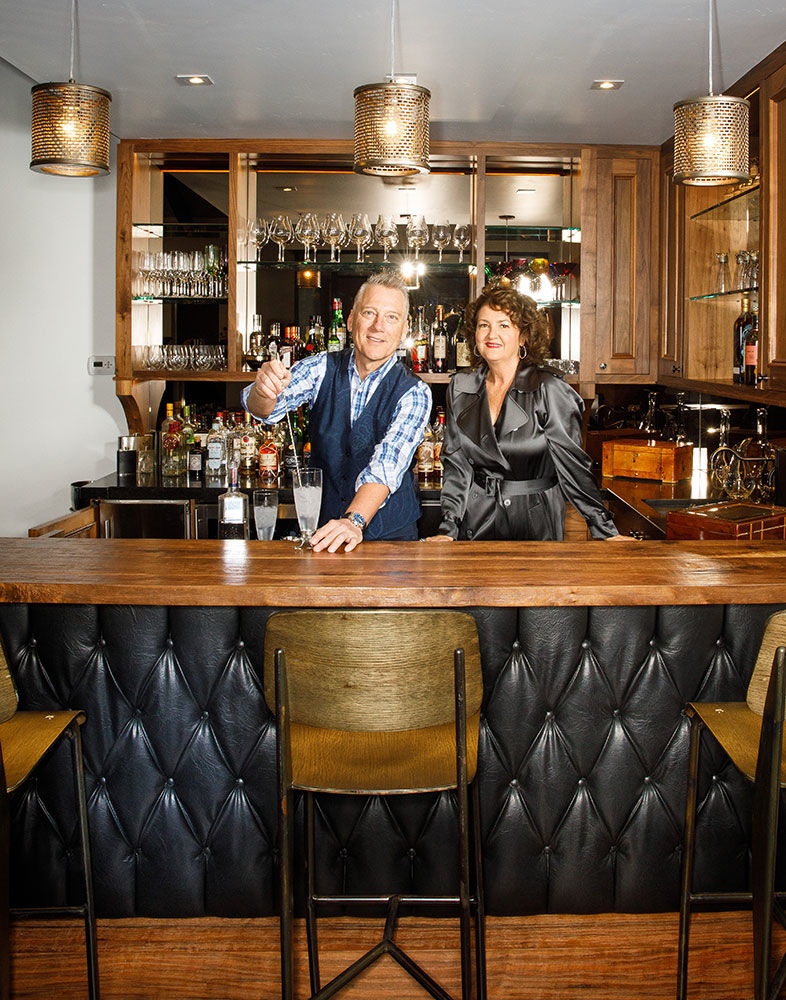
It’s spokeeasy, not speakeasy. That’s what the Vigils call this tricked-out entertaining space in their six-bedroom Rancho Santa Fe abode. The name’s not past tense—it nods to David’s love of cycling.

“I have a vision of opening a bike shop that turns into a speakeasy by night,” says David, who worked at Qualcomm for 20 years before joining the high-end bike brand Pinarello. “I even have the domain name.”

To enter, they press a button in their library. Inside is a wooden bar with Monkey 47 gin, Pappy Van Winkle’s, and Suntory Whisky, to name a few. “We were into mixology before the craze started.”

McCulley Design Lab led the home renovation, with David’s friend, award-winning Atlanta bartender Greg Best, chiming in on bar design. There’s also a glass-door wine cellar, with bottles of Hundred Acre, Screaming Eagle, and dozens more.

On the other side of the 1,100-square-foot room are quirky paintings, two TVs, a golf course view, a pool table, and a Louisville Slugger signed by Tony Gwynn. The Oscars, Super Bowl, Christmas—they’re all celebrated in the spokeeasy.

“We can have a lot of people here. We have all we need for entertaining, and we can go outside for sunsets,” Rebecca says. “It’s a party room for friends and family—and we come in by ourselves, too!”
8 San Diegans Take us Inside Their Favorite Spaces

8 San Diegans Take us Inside Their Favorite Spaces

My Coffee Shop

Tom Wong, UC San Diego Associate Professor of Political Science

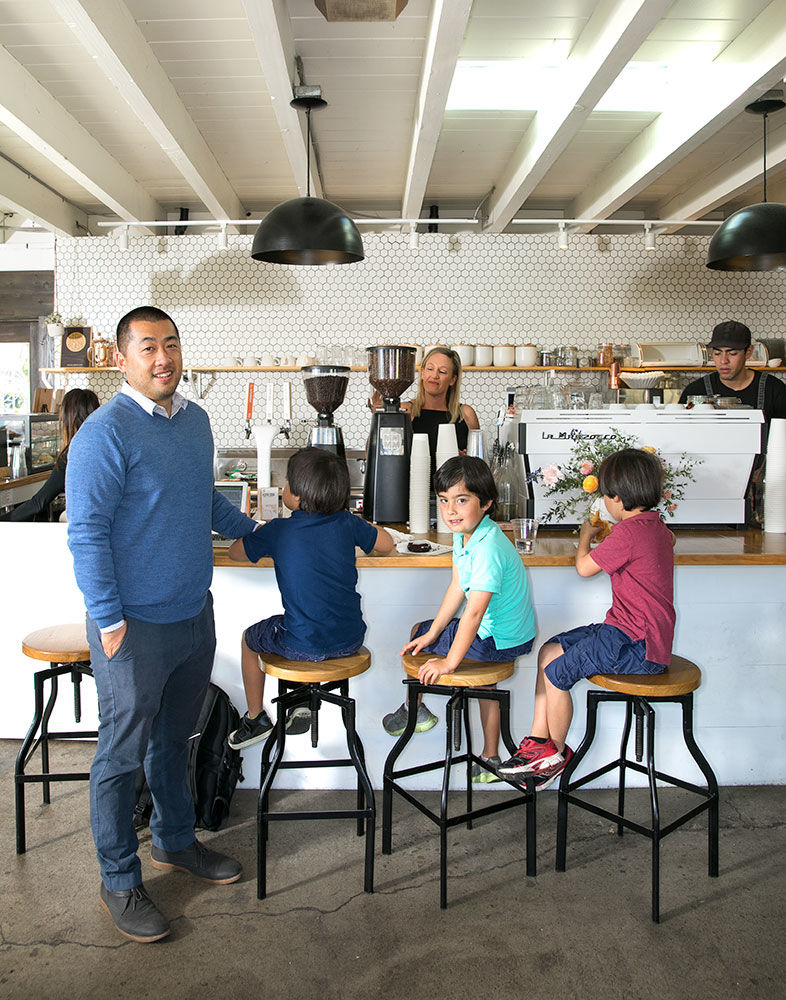
A few times a week you can find Tom Wong with his “back to the world,” totally engaged in his laptop at North Park’s Communal Coffee. He’ll have his headphones in and his go-to, espresso and black tea.

Wong has triplets at home and research assistants in his office at UCSD, so Communal provides the perfect low-stakes hum of distraction—the bustle of baristas, Wu-Tang Clan playing over the speakers—to most productively analyze his data.

“When I need to unplug, I’ll literally unplug my headphones and swivel my chair around,” he says. “This data, it has to be perfect.”

That’s because this data is personal. It’s validating DACA, which Wong could have been a recipient of, “if I hadn’t gotten married,” he says.

Wong didn’t know he was undocumented until he tried to get his driver’s license at age 16. He married his high school sweetheart and dedicated his career to immigration and citizenship studies. In his last year of graduate school, his triplet sons were born: Soul, Pace, and Ever.

Seven years and a stint as an advisor in the Obama White House later, Wong occasionally brings his boys to his favorite space to show them how he lives out his American dream—from a swivel stool at Communal Coffee.
8 San Diegans Take us Inside Their Favorite Spaces

8 San Diegans Take us Inside Their Favorite Spaces

My Tiny Kitchen

Holly Haines, Web Designer & Food Blogger

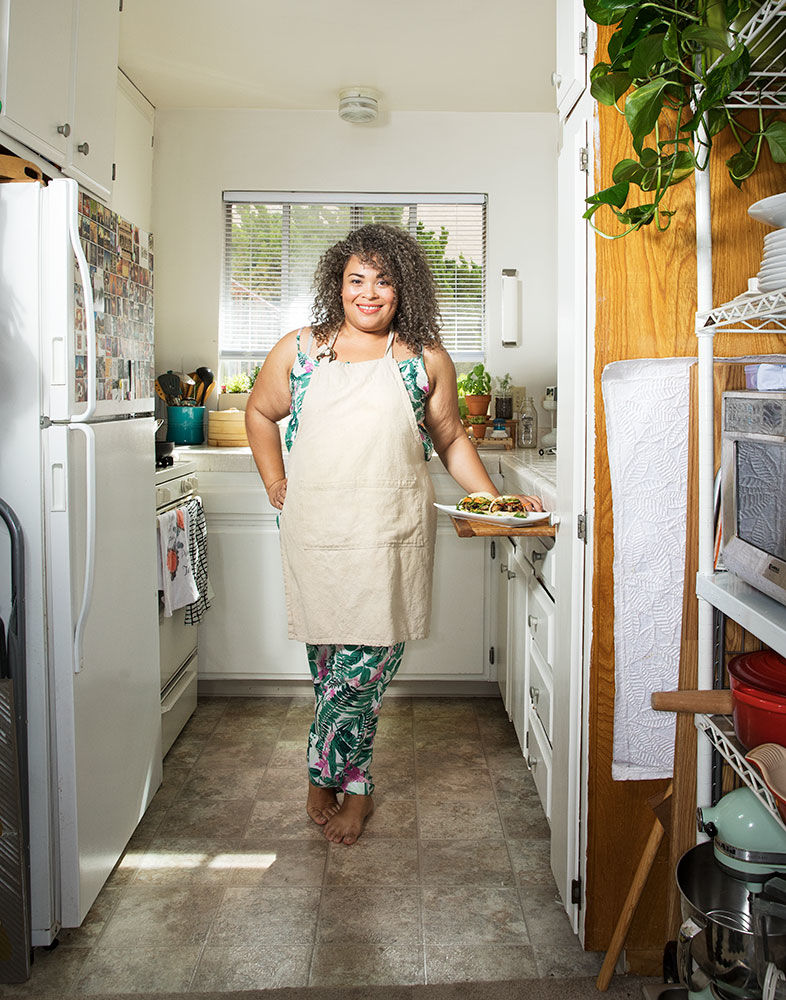
Holly Haines’s microwave, mixer, skillets, and cooking utensils are in her living room. Her dinner and drinkware, too, have received the kitchen-cabinet boot.

That’s because her “impossibly tiny kitchen,” as she puts it, is reserved solely for her ingredients—spices, flours, “so many salts,” four different types of butter, a basket of soy sauces, year-old unopened anchovy paste. “I need it all,” she says of her University Heights space. “I could make anything out of this kitchen.”

A full-time web designer and, for fun, a private chef and food blogger at From My Impossibly Tiny Kitchen, Haines learned the art of comfort food from her mother. Her love for cooking went viral when she competed on NBC’s Food Fighters in 2015. She’s releasing a cookbook, How to Eat Your Feelings, this spring.

She moved into her “so ’80s” one-bedroom apartment nine years ago. At the time, the gas stove was the only thing that turned her on to the 64-square-foot kitchen. Still, Haines made do, lining the windowsill with living herbs and “organizing in a way that’s quick for me.”

Obviously, it’s a love/hate relationship with her favorite space.

“The kitchen is where I’m comfortable,” she says. “I love it for what it is.”
8 San Diegans Take us Inside Their Favorite Spaces

8 San Diegans Take us Inside Their Favorite Spaces

My Concert Hall

Gina Freize, Co-Owner at Venissimo Cheese

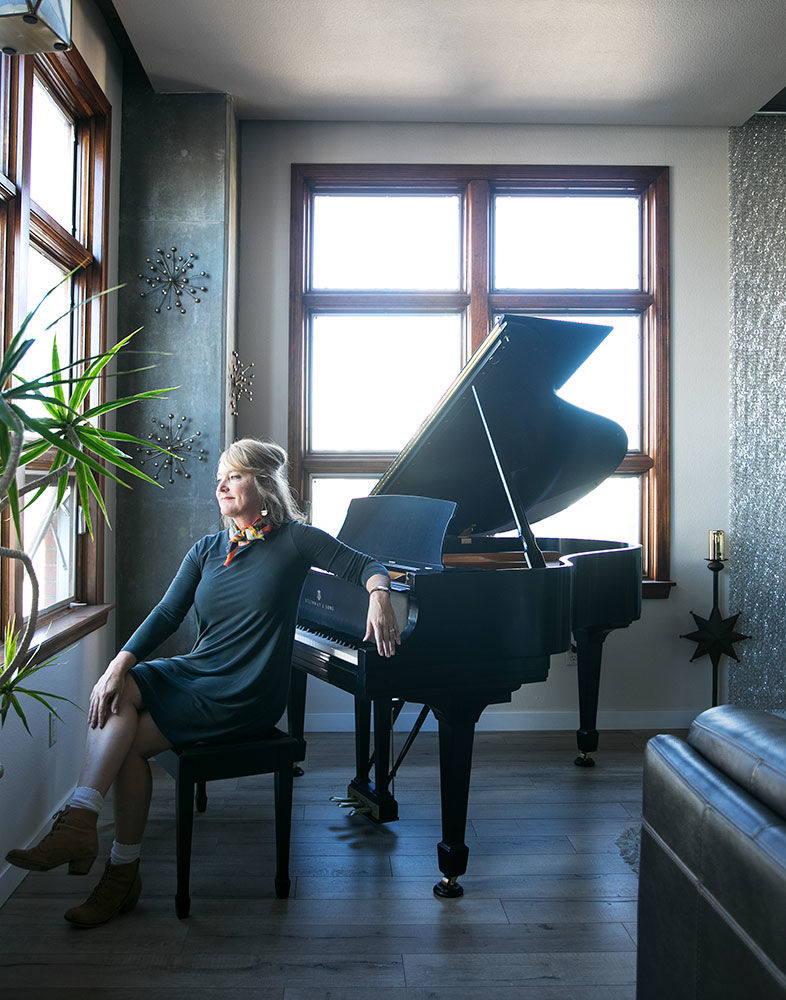
“My whole life, the thing I’ve loved other than cheese is music,” says Gina Freize. After 14 years of educating San Diegans about triple creams and blues at gourmet cheese shop Venissimo, she and her husband finally made good on their dream of moving downtown. It’s just the two of them, but they’ve got an inanimate roommate in the beautiful black Steinway that first left the factory floor on December 1, 1936.

Situated between two corner windows that look out over city life below, that bench is where she holds court with friends, playing pop songs and some basic Mozart (“I don’t venture off the key of C when it comes to Mozart,” she says). “I’ve always wanted to live downtown. Having this loft space has been a dream forever. I can see the planes fly by my window every 30 seconds. I’m always dreaming if they’re just visiting or living here, and if they’ll love it like I do.”

Also nearby in the loft is a 35-pound stone hippo that she and her husband bought while on a safari in South Africa. “They said it would take six weeks to get here. It took six months. So we named it Hope the Hippo, because we weren’t sure if it’d ever make it.”
8 San Diegans Take us Inside Their Favorite Spaces

8 San Diegans Take us Inside Their Favorite Spaces

My Train Room

Davin Waite, Chef-Owner at Wrench & Rodent Seabasstropub

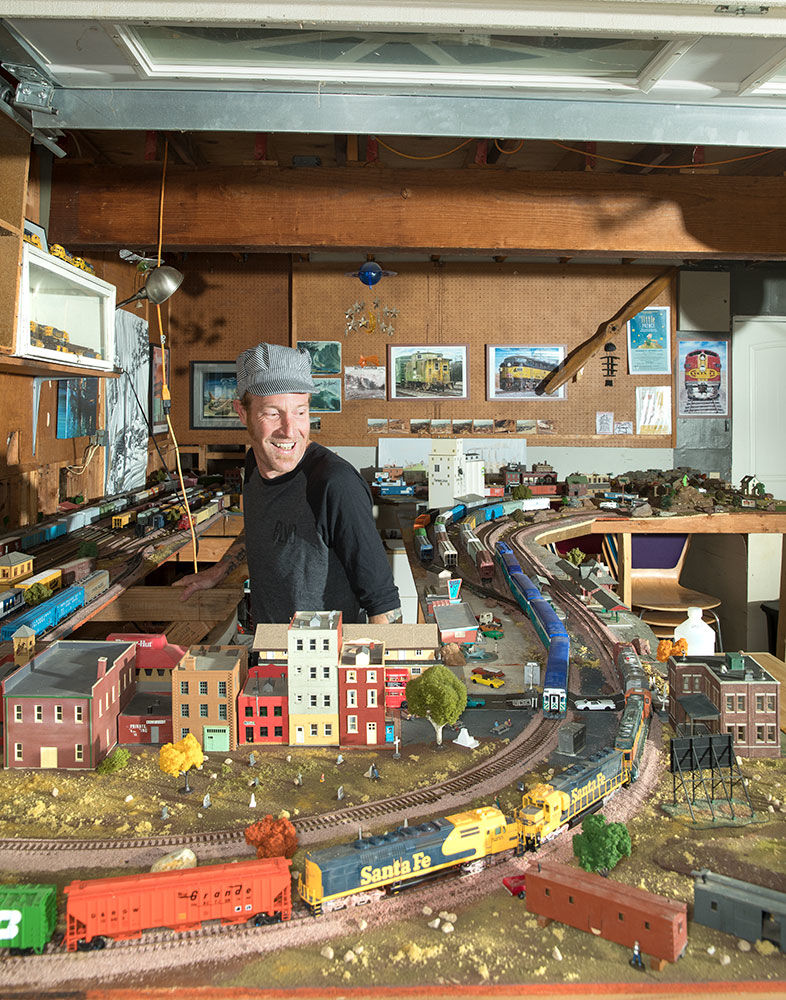
When Davin Waite first got sober, he needed something else to mess around with. “I couldn’t just surf all day,” he says. The North County native hit rock bottom with drugs and alcohol years ago, but after becoming sober, he built a reputation as one of the city’s top sushi chefs at Wrench & Rodent. The life of a chef, husband, dad, and small-business owner isn’t an easy or sane one. Waite has a live-wire, high-energy personality, but he’s learned to focus it on better things—like the train world in the garage of his Oceanside home, which helps calm any lingering stress reactions.

“I was born into trains,” he says. “My dad’s a train nut. We grew up watching trains by the tracks in Carlsbad.” At a train swap meet when he was a kid, he noticed a custom model of Carlsbad’s historic south Twin Inns building, which is now home to his friend Rob Ruiz’s restaurant, The Land & Water Co. “I had a few hundred bucks in my pocket,” he recalls. “The guy said, ‘Oh, give me $5.’”

Other pieces, selected over 30 years, also evoke events from his life, like a locomotive he had custom built to mirror the tattoo on his arm, or the London bus from his family’s time across the pond. It may never be finished. “The fact that it’s half finished is important. I’m terrified of finishing it.”

Subscribe to our newsletters

Select Options

By subscribing you confirm that you agree with our Terms and Conditions and Privacy Policy.

Features JUNE 18, 2026

The Perfect Shot with SD’s Top Food Photographers

We ask the city's best food photographers to choose their favorite pics and share their secrets to capturing a drool-worthy pic

The Perfect Shot with SD’s Top Food Photographers
Photo Credit: Luciana McIntosh

Food is a notorious diva to photograph. The wrong lighting can make José Andrés’ paella look like a jaundiced grain bowl. You could be staring at the best sandwich of your life, but shoot it from above and—hey, congrats on that abandoned piece of lettuce bread. A cottage meme industry has been built around the hilariously bad photos on review sites that make Michelin-star food look like Michelin tires.

Especially in a visual modern media world, food culture depends on great photographers capturing the painstaking work in equally deserving ways. We asked four of San Diego’s top food photographers for their favorite shot from another year of documenting what we eat.

Photo Credit: Kimberly Motos

Kimberly Motos

Birdman Sandwich at Chick & Hawk

Getting this kind of shot takes a bit of yoga. Asana yourself into the corner, hold your breath, pray that a chef on the move doesn’t back into your light stand.

“You’re stepping into someone’s workspace during their busiest moments, so it’s a balance of being present to get the shot and being invisible to not slow anything down,” Kimberly Motos says.

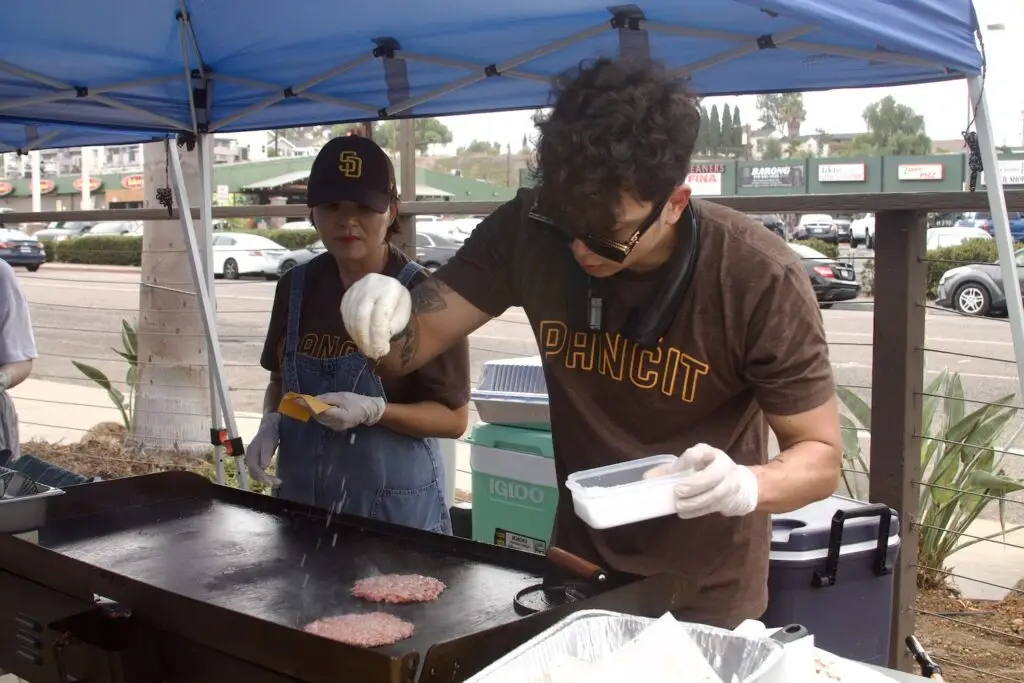
The subject here is the Birdman sandwich from Chick & Hawk—hot fried chicken thigh, tangy slaw, kimchi comeback sauce, sweet and spicy pickles, potato brioche bun—getting a hearty dousing of its difference-maker seasoning. Motos captures the parts of the process that diners don’t usually see: the chaos behind something that looks so simple.

Photo Credit: Lucianna McIntosh

Lucianna McIntosh

Oysters + Jewel of the Sea Martini at The Fishery

“I love this image because it feels like a moment you want to step into,” says Lucianna McIntosh. A warm, sunny day at The Fishery in PB with oysters, caviar, and martinis. Yes, please.

The little details—the glass sweating a little, the direct afternoon light creating stark shadows, the oyster glistening on the tray—are the main characters. Instead of trying to overly control the setup, McIntosh “followed the light and lines that draw you in more,” she says. “This was one of those moments where everything lined up on its own for a second. I love it when the shadows end up being just as important as the food itself.”

Photo Credit: Eric Wolfinger

Eric Wolfinger

Herb-Roasted Golden Chicken at Fleurette

La Jolla native Eric Wolfinger—who won a James Beard Award for Tartine Bread, one of the most stunning bread books of all time—says he doesn’t have a signature style. His style is a conduit.

“I see my job is to translate the chef’s point of view into something you can feel,” he says.

For this shot, Fleurette chef Travis Swikard had one directive: cuisine du soleil (“cuisine of the sun”). With a spread of leeks vinaigrette, herb-roasted golden chicken, and beets, Wolfinger wanted to create a scene that felt straight out of the French Riviera, relaying the light, bright style of Swikard’s new spot.

Some bonus additions here: Extra lights—to add lots of warmth—and a clipping from an olive tree.

Photo Credit: Dee Sandoval

Dee Sandoval

Espresso Ice Cream at Lucien

Timing and light are everything in food photography. In Lucien—La Jolla’s tasting-menu-only restaurant with moody ambiance—a single strobe flash creates the ideal spotlight.

Dee Sandoval says she uses the “natural, just-plated energy” of the dish to “create a portrait of moment and craft.” That’s why this Mostra Ghost Bear espresso ice cream—with San José dark chocolate mousse, soy-miso caramel, and koji shoyu chocolate sauce—looks like it might dissolve halfway to your mouth.

Emma Veidt

About Emma Veidt

Emma Veidt is an editor at San Diego Magazine. She earned her bachelor's and master's degrees from the Missouri School of Journalism. She loves running, hiking, and rock climbing, but really, she mostly loves encounters with the street cats around North Park.

Everything SD JUNE 18, 2026

How San Diego’s Most Serious Wine Collectors Store 20,000 Bottles

San Marcos-based Vintage Cellars designs and builds customized, high-end wine storage with calibrated humidity, racking systems, and LED lighting

How San Diego’s Most Serious Wine Collectors Store 20,000 Bottles
Courtesy of Vintage Cellars

The floor is made of glass. Under your feet, you can see the cellar—15-foot ceilings, soft light, and stained white oak walls the color of desert silt.

Tucked behind the wood, inside the doors, and in the ceiling is a highly advanced and very specific network of tech assembled in San Marcos—perfectly calibrating the room for humidity and temperature with vapor barriers, specialized insulation, and LED lights. Along the walls on matte blag pegs lay 1,000-plus bottles of wine—some iconic collector vintages, some with stories, some earmarked for major life moments.

This is a very serious wine home, built by someone whose obsession eventually leads to a call with Chris Noel.

“We have some clients who have been collecting wine since the ’60s and the ’70s, and they have collections of 15,000 or 20,000 or more bottles,” says Noel, owner of Vintage Cellars, the San Marcos–based designer of custom wine vaults for some of the region’s top restaurants and super-collectors. “[For them], collecting wine is similar to Jay Leno collecting cars.”

Courtesy of Vintage Cellars

Before the wheel, there was wine. Fermenting fruit sugars into alcohol was a thing as early as 4100 B.C. (wheel, circa 3500 B.C.), most likely a happy accident. Unsurprisingly, the tipsy breakthrough in juice arts was a huge hit. The challenge was that it was also hugely perishable.

The first efforts to save it from spoil were clay vessels called amphora, often fully or partially buried to create a sun-proof, temperature-stable environment. The terra-cotta pots were pointy-bottomed, which stacked and traveled better, encouraged gas circulation (thus preventing oxidation, the famed wine ruiner), and helped separate sediments.

Once basic preservation was figured out, makers noticed the aging process ushered in a moodier magic. So they engineered structures to tinker with the possibilities of the long haul. Those first wine holes in the dirt evolved into entire catacombs, tombs, quarries, and caves.

Courtesy of Vintage Cellars

Ancient Romans engineered wine storage rooms called fumariums, built facing north to avoid the sun and filled with smoke to speed the aging process (no doubt rapidly aging the cellar workers in the process).

For centuries, specialized wine storage was mostly a commercial venture. Serious wine people would (and still do) outsource their collections to a bonded storage facility or turn to professional cellarers who run giant chilled warehouses of cabernets.

A few major social moments sparked a more serious at-home cellar trend. First, the “Judgment of Paris” in 1976 (California wines famously besting the French in a blind tasting) established US wineries as worthy of collections.

A few years later came the 1982 Bordeaux, one of the most-coveted vintages in history. It was championed by a US lawyer named Robert Parker, whose 100-point scale rating system would quickly become the gold-standard for grading wines, creating a huge boom of wine collectors for the next few decades (wine as an economic investment became a thing).

The US economy also boomed in the ’80s, while France hit a skid. With the dollar trading 6-1 against the franc, US collectors had a rare chance to pick up Grand Crus at serious bargains, which demanded equally serious storage.

Courtesy of Vintage Cellars

Given that framing, 1990 was a fairly great time for Vintage Cellars to get into the game. Noel—who worked his way up at the company and then eventually took over as owner in 2020—and his team work with architects, designers, and builders to create cellars that both fit the space and act as an attraction in multimillion-dollar homes across the region, and at top restaurants like Pamplemousse Grille in Del Mar and Avant Restaurant in Rancho Bernardo Inn. They hide cooling systems in brick-walled enclosures, bend bottle racks around curved walls, create standalone pavilions—engineer structures for cabs.

Their cellars hover between 50 to 70 percent humidity to keep the cork appropriately moist. Air too dry, and a cracked cork will give up the ghost—O2, in excess, turns wine into vinegar. If the air’s too dry, it can shrink the cork, eventually evaporating the wine and creating a low pressure that will pull in destruction. Too humid, and mold contaminates the works.

California winery Domaine Carneros in the Nap Valley featuring vineyards

Light’s a big no-no for wine, too. Incandescent or halogen lights were the norm for cellars 20 years ago, but they emitted heat. Like Schrödinger’s Cat, these bulbs would risk the subject in order to view it. Vintage Cellars adopts LED lighting and, for glass cellars in the sightline of bright windows, mechanized shades that lower during UV exposure times.

Custom circumference-cut cove trays, leather saddles, and pegs stabilize bottles in Vintage Cellars storage areas; movement disturbs the tannins and upsets the aging process. And these cellars are smart, with app-based monitoring, remote temperature monitoring, and eSommelier cellar management. Don’t fret, Siri’s got your Syrah.

The most important decision, however, is deciding when to uncork that special bottle.

“[A lot of times, people] are saving those wines for specific moments in life—maybe a 50th anniversary or when their firstborn turns 21,” says Noel. “That’s how they look at it: as social and also to create memories.”

Pete Peterson has served as high as Editor-in-Chief of an enthusiast media magazine and as low as writer of his own bio… In addition to contributing to San Diego Magazine, Pete authored the YA novel One Tiger One Teen and is working on his second novel. Slightly more info is available at petepetersonauthor.com.

Troy Johnson

About Troy Johnson

Troy Johnson is the magazine’s award-winning food writer and humorist, and a long-standing expert on Food Network. His work has been featured on NatGeo, Travel Channel, NPR, and in Food Matters, a textbook of the best American food writing.

Everything SD JUNE 16, 2026

Teenage Car Theft Drove Me into NASCAR’s Arms

As NASCAR lands in San Diego this weekend, a recently burgled dad is irregularly excited

Teenage Car Theft Drove Me into NASCAR’s Arms
Courtesy of NASCAR San Diego

My 15-year-old daughter tried to steal our car this week, so I’m ready to become a NASCAR dad. It would be appropriate discipline. We just relocated to a nice suburb within walking distance of her high school. The suburbs are like living in a Tesla commercial. I am pretty far from the wealthiest dad in this neighborhood (I am the least wealthy dad in this neighborhood), more than a few engineering degrees short of being in the running.

I’m fairly certain watching NASCAR is a violation of our HOA and a violation of my daughter’s emotional HOA. But NASCAR hits San Diego this weekend and I have a fever I’ve never felt before. I want to watch 111 drivers do dangerous things in cars and trucks on an active military base in the ocean. Since my lifelong exposure to NASCAR is limited to Talladega Nights and every single iteration of the movie Cars, I can only base my plan of attack on oafish stereotypes.

So while other neighbor dads are sizing bubble jackets for their golf simulators, I’m gonna grow a Ricky Bobby, run the extension cord for the TV out into the carport we share with six other condos, fill a cooler with a proper 80-20 split of Hamm’s and Mountain Dew, treat a lawn chair like an ADU, and spend a few hours yelling ohsheeeit as if it’s a single, nine-syllable word.


The quality parents in our neighborhood seem highly attuned to the sound of any vehicle breaching the 6 MPH threshold, so I should gather a crowd pretty fast. They may come over with strongly worded emails in their hearts, but one glimpse of Shane van Gisbergen and hometown hero Jimmy Johnson guzzling the last remaining drops of gasoline on the planet in a dazzling display of carmanship—they’ll join my NASCAR pop-up party.

By the time my daughter brings her friends over, we’ll have a real welcoming committee.

Because, like I said, my daughter tried to steal my car.

She wasn’t going to Mexico. But while Claire and I were off doing businessy stuff to afford my teen’s skincare rituals, she and a friend decided to teach themselves stick shift. She’s never driven a stick before. I’m not saying she has, but if she has driven a vehicle at all—it would have been done in a remote, abandoned parking lot where the only possible thing she could destroy was the concept of driving itself.

But a couple TikTok videos later, she and her friend felt a certain level of mastery had been achieved, and they gave it a go. They backed our VW Bug out of the garage with a series of stalls and transmission seizures, and managed to get it into the carport, attempting to do “donuts.” That’s when I got a call from a resident, who had taken an active interest in this experiment.

Which got me wondering about the power and might of vehicles. Turns out, even at carport speeds there exists a bit of potential fireworks. A garage door could become not a garage door anymore. At 145 MPH on Naval Base Coronado this weekend (don’t worry, they slow down to 100 MPH for turns), NASCAR drivers are essentially doorbell ditching gods. I didn’t register the temperature after my daughter’s trial run, but the track at NASCAR races usually hits a cool 130-150 degrees, enough to lightly sear some Nikes (the tires themselves hover in the 200 degree range).

And that is at least part of our fascination with NASCAR (the other fascination is the legendary pit parties, which either set humanity back a few evolutionary links, or advance it by the same amount of links). These drivers do something all of us do every day in a very efficient, boring way—drive a car—and take it to its extreme impulse. Grace and precision at the thunderous edge of shit going terribly wrong. Most of us have looked at San Diego home prices and felt a burning desire to see how fast our Honda Pilot could make it to our new home in Vegas. So NASCAR drivers are acting on our own wildest impulse.

Troy Johnson

About Troy Johnson

Troy Johnson is the magazine’s award-winning food writer and humorist, and a long-standing expert on Food Network. His work has been featured on NatGeo, Travel Channel, NPR, and in Food Matters, a textbook of the best American food writing.

Studio S JUNE 15, 2026

A Modern Take on Steak

Stake Chophouse & Bar brings contemporary classics and old-school service to the heart of Coronado

A Modern Take on Steak
Courtesy of Stake Chophouse

Stake Chophouse & Bar isn’t your average steakhouse. Blue Bridge Hospitality’s Coronado outpost is a modern interpretation of a big-city steakhouse nestled in the heart of the small coastal community. The team at Stake has reimagined the whole steakhouse experience. By prioritizing a seasonal farm-to-table sourcing philosophy, a personalized guest experience, and unique service touches, like a formal steak presentation and a bespoke knife selection process, Stake distinguishes itself in a sea of steakhouses.

Exceptional steaks, including Wagyu from Japan, Australia, and the U.S., and fresh seafood flown in daily form the core of Stake’s culinary identity. The menu features a five-course omakase-style steak experience highlighting house favorites, plus an array of cuts, and classic steakhouse staples—think a wedge salad, baked potato, or pasta carbonara—refined for a contemporary palate without losing their traditional appeal. Stake focuses on seasonal sourcing from the region’s best family farms and specialty purveyors, and incorporates intentionally unexpected touches to create something truly unique.

“I challenge our chefs and myself to take it a step further in sourcing,” says Chef Ronnie Schwandt. “It’s important to us to highlight different farms, unique one-off farms—whether it’s cattle, strawberries, a local fisherman or from anywhere in the United States, we’re always trying to find that niche.”

Beyond the menu, Stake emphasizes outstanding service, says Vinny Spatafore, Director of Hospitality Operations. Staff maintains detailed notes, allowing them to remember guests by name, recall previous orders such as a favorite martini (also memorable for the customer since it’s served in an extra tall, distinctly-shaped glass), and celebrate special occasions like birthdays and anniversaries.

“When you have those points of topic that you remember about a guest, they appreciate that,” he says. “Our servers are really good with that—we have a couple servers who have been here since the beginning and they’ll remember somebody from years ago, their name, their kids’ names, where they live. I’m really thankful to have a great front of house staff.”

Award-winning wines, rare whiskeys, special events, and a complementary black car service that provides transportation for guests throughout Coronado add to Stake’s appeal.

Schwandt stresses that Stake offers more than a meal; they aim to give patrons something unforgettable.

“It starts when you walk up the stairs and are greeted by the hostess—that sets the tone for the night. Then you’re greeted by a server, who may know you by name, and can guide you through the menu and curate as they get to know you,” says Schwandt. “Most people leave kind of blown away; they leave feeling like they just had an experience. That’s the goal, right? Whether you’re serving smash burgers or high-end steak, you want somebody to leave thinking, Wow, that was awesome.”

Partner Content
Everything SD JUNE 15, 2026

Sunday Golf Is Making the Game Lighter

In a sport obsessed with prestige, a San Diego–born golf brand is betting on something more fun and less fussy

Sunday Golf Is Making the Game Lighter
Courtesy of Sunday Golf

Music drifts across the fairway. Someone’s in flip flops. The Pacific flashes in the distance. Sun peeks onto shoulders through the palm trees. It’s spring, technically, but the air reads suspiciously like summer. At the par-3 course at Liberty Station, the longest hole barely stretches past 120 yards, and no one looks particularly interested in becoming the next PGA legend.

This is where Sunday Golf was born.

“I got dragged to a par-3 course in 2019 —The Loma Club—and it was way more my jam,” says Ronan Galvin, CEO and co-founder of Sunday Golf, a company that makes lightweight golf bags for players who’d rather carry less and laugh more. “It was a lot different than the stereotypical ideas you have about golf where it’s kind of long, uptight, and exclusive.”

Galvin spent over a decade in the golf industry working in product development, sourcing and manufacturing. But he didn’t grow up swinging clubs. Basketball and football were more his speed. What clicked for him was a simpler, more relaxed kind of play: shorter rounds and weekend games built for fun rather than formality. The kind of golf that resonated for him felt accessible, effortless, and surprisingly his lifestyle.

Courtesy of Sunday Golf

He noticed something else, too.

On a course where five clubs do the job, players were still lugging 14. So Galvin built something smaller. Lighter. A bag designed specifically for par-3 rounds, the Loma Bag is sleek, functional, and refreshingly unfussy. It’s practical minimalism in a sport known for excess.

Sunday Golf was slated to launch in January 2020. Then, COVID hit. Shipments stalled; lost at sea. The future felt shaky. But the series of catastrophes for the young company turned out to be anything but: By the time inventory arrived that August, golf had become one of the few activities people could safely do.

“It introduced and brought so many people back to the game,” Galvin says. “It created a habit for a lot of people, which is a big reason golf is on its growth trajectory.” 

San Diego golf company TaylorMade golf in Carlsbad featuring The Kingdom golf club fitting and production facility

It turns out Americans can’t get enough of golf. Forty-eight million of them swung clubs last year, a 41 percent jump since 2019, and the National Golf Foundation says the total could top 50 million by the end of 2026.

The brand rode this unlikely momentum. Since 2021, Sunday Golf has expanded into larger lightweight bags and continues evolving from there. A major reason for the company’s success is its approachability, a value so central that it’s literally written on the office walls in the form of the company’s guiding mission: “Get 500,000 golfers having more fun by 2027.” This goal is measured, fittingly, by golf bags sold. 

Sunday Golf has already passed 300,000 bags sold.

But the numbers aren’t the point.

Courtesy of Sunday Golf

“To remind the world that life is meant to be enjoyed,” Galvin says of the brand’s why. In an era dominated by screens, golf offers something analog. “People are outside, touching grass with their friends. A golf bag is a golf bag, but our products are vehicles to help support that.”

Unlike legacy golf giants promising proximity to Rory McIlroy-level greatness, Sunday Golf leans into what Galvin jokingly calls “diet golf” or “golf light”—weekend rounds, driving range sessions, company scrambles. The bags are built for the casual golfer, and the fit feels obvious.

That philosophy resonates across Southern California, where year-round sunshine means golf courses never really hibernate for winter. As Galvin puts it, “the laid-back lifestyle of San Diego kind of seeps into everyone’s veins.”

Sometimes the validation arrives via email: a 76-year-old customer is able to walk the course again because their golf bag is lighter. Parents are able to take their children out with Sunday Golf’s kids line.

For Galvin, that’s the real win. Not perfection. Not prestige. Just more people outside, enjoying themselves. In San Diego, that might be the most natural mission of all.

Isabella Dallas is a freelance writer for San Diego Magazine and the Arts and Culture Editor at The Daily Aztec in her final year at San Diego State University. She previously worked as an editorial intern for SDM, but when she’s not writing, you can find her trying the best coffee spots in SD, devouring the latest rom-coms, and indulging in anything and everything pop culture.

Arts & Culture JUNE 15, 2026

Art Plus Story Equals Culture

Announcing a partnership between Art & Design District, SDFC Playmakers, and San Diego Magazine

Art Plus Story Equals Culture
Photo Credit: Richard Barnes

FOR IMMEDIATE RELEASE

SAN DIEGO, CA — [June 15th, 2026] — Art plus story equals culture. Today, three local groups deeply invested in advancing San Diego arts and cultureSan Diego FC Playmakers, Art & Design District, and San Diego Magazine—have joined forces to tell its stories.

The initial project will be a landmark September edition of San Diego Magazine—fully dedicated to the people, ideas, and identities of the city’s creative community. After its release, those stories and more will extend across six months of integrated digital, social, and multi-platform coverage. Art & Design District and SDFC Playmakers will serve as co-publishers of the expanded editorial vision.

The Art & Design District is evolving into San Diego’s first home for the performing arts at iconic downtown venues like the Civic Theatre and Jacobs Music Center alongside research and development programs focused on artist live/work spaces, galleries, studios, and New School of Architecture & Design.

“[The Art & Design District initiative] is a long-term investment in San Diego’s creative life and the creative workforce that powers our cultural experiences and creative industries here at home and across the world,” says Jonathan Glus, Prebys Senior Fellow for Art & Design in Residence at Downtown San Diego Partnership. “But infrastructure alone is not enough. The public needs to see, understand, and participate in what’s being built and why. Joining as co-publisher of this issue means helping ensure that the story of San Diego’s creative community—its artists, its institutions, its future—gets told at the level of ambition the moment requires.”

San Diego has entered a defining chapter in how the region invests in its creative community, with civic and philanthropic leaders working alongside artists, brands, institutions, and people to chart a new model of public-private support for arts and culture.

As digital co-publishers of San Diego Magazine‘s arts and culture coverage, SDFC’s Playmakers partnership will include a six-month integrated collaboration designed to sustain the visibility of San Diego’s creative community well beyond a single issue.

“The Playmakers program was built on the belief that the creative community is essential to what makes San Diego, San Diego,” says Sebastian, San Diego FC’s SVP of Brand and Innovation. “Investing in local media that tells those stories—and reaches the audiences who need to hear them—is one of the most direct ways we can support the artists, organizations, and cultural leaders shaping this city’s future. We’re proud to step in as digital co-publishers of San Diego Magazine‘s arts and culture coverage and the founding partner of this new editorial program.”

Under the partnerships:

  • The Art & Design District joins as Co-Publisher of the September 2026 Arts & Culture Issue, undwriting San Diego Magazine‘s most ambitious editorial event of the year. 
  • SDFC Playmakers joins as Digital Co-Publisher of San Diego Magazine‘s arts and culture coverage, founding a six-month integrated partnership that includes co-publisher presence in the September issue. 

The partnership represents a new model for regional media: civic and cultural institutions providing the resources required for sustained, ambitious, local editorial media focused on the neighborhoods it serves. 

“For 78 years, the magazine has told the story of arts and culture here,” says Claire Johnson, CEO of San Diego Magazine. “But the fragmentation of traditional media has made it harder than ever to cover this community at the depth and scale it deserves. SDFC Playmakers and the Art & Design District have recognized something critical: Media is not separate from the civic conversation, it’s the stage for the conversation.”

San Diego Magazine retains full editorial control over all reporting, features, and original content produced under both partnerships.

“Our role in this ecosystem is to tell the story of San Diego’s culture and provide context for our readers.” says Johnson. “These partnerships give us the resources to do justice to that responsibility—and to extend that commitment well beyond a single issue. Our readers also deserve to know exactly how this work was funded. I’m grateful to our partners, and to the arts and culture community in San Diego for letting us tell this story.”

The September Arts & Culture Issue will be released early September 2026, with digital, social, video, and podcast coverage rolling out through early 2027.


ABOUT SAN DIEGO MAGAZINE For 78 years, San Diego Magazine has been the region’s leading lifestyle and culture publication, reaching approximately 6 million readers monthly across print, digital, newsletter, and social platforms. Owned and operated locally, the magazine has been the connective tissue of San Diego’s cultural conversation since 1948.

ABOUT SDFC PLAYMAKERS The Playmakers program is an ongoing initiative that seeks to identify and showcase the talent of San Diego creatives who are contributing to the culture, substance, and flow of our community. We want to bring the San Diego community together by marrying football and creativity to provide a platform for these Playmakers who are positively impacting our culture by pushing the boundaries through innovative ideas. The goal is to create a program that consistently provides growth and exposure opportunities for San Diego creatives, while shaping an authentic direction for San Diego FC’s brand and community-building process. Through this program we hope to contribute to the creative fabric of our city by providing paid jobs, projects, collaborations, as well as networking opportunities for Playmakers.

ABOUT THE ART & DESIGN DISTRICT The Art & Design District is a Downtown San Diego Partnership initiative, supported by the Prebys Foundation, working to shape a connected, vibrant arts and design district in downtown San Diego. Led by Art and Culture Expert Fellow Jonathan Glus, the initiative convenes artists, cultural leaders, civic stakeholders, and residents in service of a downtown that reflects the creativity, identity, and diversity of the region. Learn more at downtownsandiego.org.

Partner Content JUNE 10, 2026

New Options for GLP-1 Users

Scripps study shows that some patients may be able to taper their dose and maintain results

New Options for GLP-1 Users
Courtesy of Scripps Health

While glucagon-like peptide-1 (GLP-1) receptor agents have been used to treat Type 2 diabetes for more than 20 years, their recent emergence as weight-loss wonder drugs marked a new frontier in medicine. But their effectiveness has left some patients wondering what to do once they’ve reached their goal. Stopping the medication could mean regaining some, if not all, of the weight. A Scripps Clinic internal medicine physician recently conducted a small study of whether GLP-1 patients who had reached their goal weight could maintain that weight by taking their regularly prescribed injection every other week instead of weekly. Spoiler alert: 30 of 34 patients did. Read more about the study here and what that may mean as pharmaceutical companies roll out oral GLP-1s.

For more nutrition, wellness, and healthy living tips, sign up for the San Diego Health newsletter here.

Partner Content

Thousands of savvy locals already get it.

San Diego's best restaurants, experiences, and events—handpicked and delivered to your inbox weekly. You in?

Close the CTA

Contact Us

1230 Columbia Street, Suite 800,

San Diego, CA