Featured articles
Featured articles
Featured articles
What's next
Featured articles
Featured articles
Featured articles
Ready to know more about San Diego?
SubscribeReady to know more about San Diego?
A father’s mission to create a safe crossing over the river where his son died has been impacted by federal decisions to slash California education, healthcare, and public safety funds
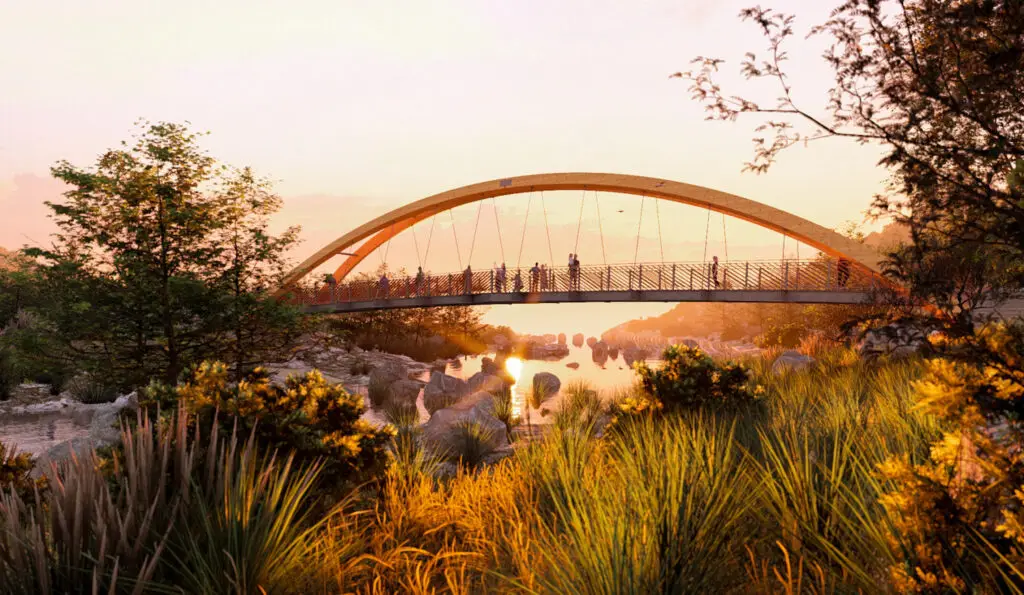
When Ben LeNail’s son Max drowned while crossing the San Diego River in Mission Trails Park, LeNail immediately vowed to build a bridge across the river in honor of his child.
That was in January 2021. Now, after more than four years of tireless effort, LeNail says he’s given up. He has issued a stop-work order on all activities for the Max Lenail Memorial Bridge. “I’m very sad. It’s like Max dying a second time, my tribute to him not coming to fruition,” LeNail reflects. “It’s a huge missed opportunity because it has universal support. Everybody wants it. I’m questioning myself, how I couldn’t get to the final stretch.”
But by all accounts, LeNail did everything right. The issue is that building in Mission Trails over the San Diego River requires a massive number of permits and studies on the impacts of the surrounding environment. LeNail was hoping a federal grant secured by Congresswoman Sara Jacobs would pay for much of that, but when President Trump took office, the funding was cut off.
“I’m, of course, looking back here and wondering if I did something wrong. I don’t think I did,” LeNail says. “I think I was totally taken by surprise. I knew that soft costs were going to increase as we were getting closer to obtaining the permits. But they increased very suddenly and dramatically. The spending went up dramatically in the last three months.”
Those costs covered studies needed for permits, and LeNail explains that he expects he’d need another $500,000 to do everything required.
“On top of that, literally on May 31st, the head of the Mission Trails Regional Park Foundation, Jennifer [Morrissey]—who’s wonderful—informed me that the state grant of $1.5 million that we have for the bridge is really earmarked for construction and should not be tapped for pre-construction activities,” LeNail adds.
On the same day, LeNail heard from Jacobs that “because of the Trump cuts to California education, healthcare, and public safety, she was not going to be able to make the federal grant happen.”
The news forced LeNail’s efforts to a halt. “Suddenly, we’re out of money. We don’t have any reserves to tap,” he says. “We’ve exhausted all avenues, and I have to idle my team. I have to have a sober assessment of the fact that maybe I took it as far as I could go, and I have to put a hard hold on it and turn it over to the San Diego authorities and say, ‘Now, if you want a bridge, you have to make it happen.’”
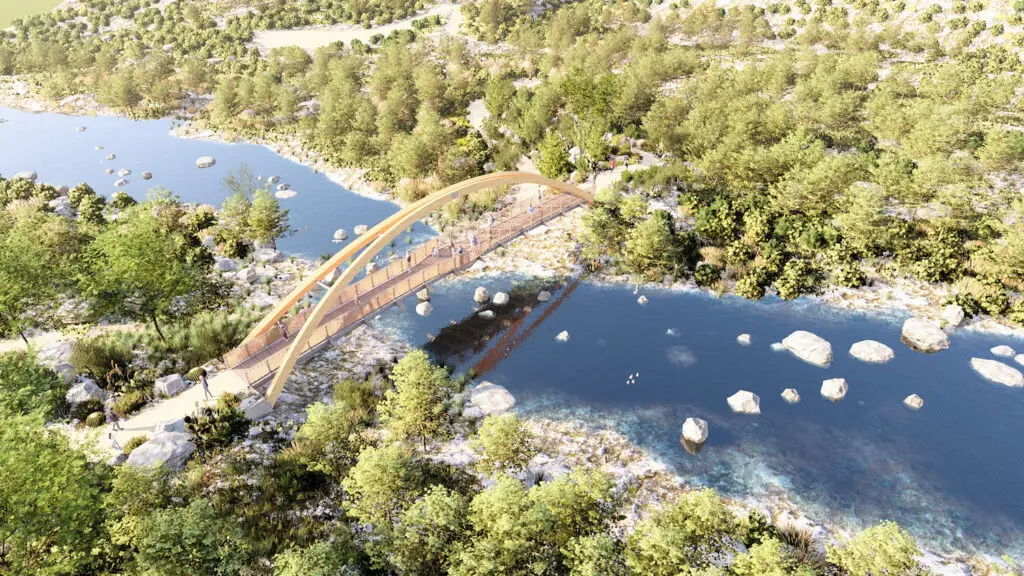
This was after LeNail raised $1 million, secured the state grant, spent 3,000 hours, and made 18 trips to San Diego from Palo Alto to work on the project. “A huge amount of intellectual, emotional, and practical investment, and without success,” he says. “That’s very hard.”
And all of that time spent working on the project means LeNail has been continually reliving the tragedy that ended his son’s life.
More than four years ago, LeNail’s son Max was five minutes away from wrapping up his run after climbing South Fortuna in Mission Trails. A massive hail storm began, and Max kept going, following the San Diego River Crossing trail, which he thought would lead him back to his car in the parking lot. But instead, he came to the rushing river and no bridge.
It’s unclear what happened next, but Max’s GPS watch shows that he hesitated at the side of the river, then decided to cross it. Usually, the river’s waterline is fairly low, but with the rains that winter, it was a rushing torrent. The next day, Max was found dead further downstream. He was almost 22 and about to graduate from Brown University, with plans to become a doctor.
Almost immediately, LeNail and Max’s mother Laurie Yoler committed to building the bridge. Despite living nearly 500 miles away, they became fixtures in the San Diego political scene, working to get the job done.
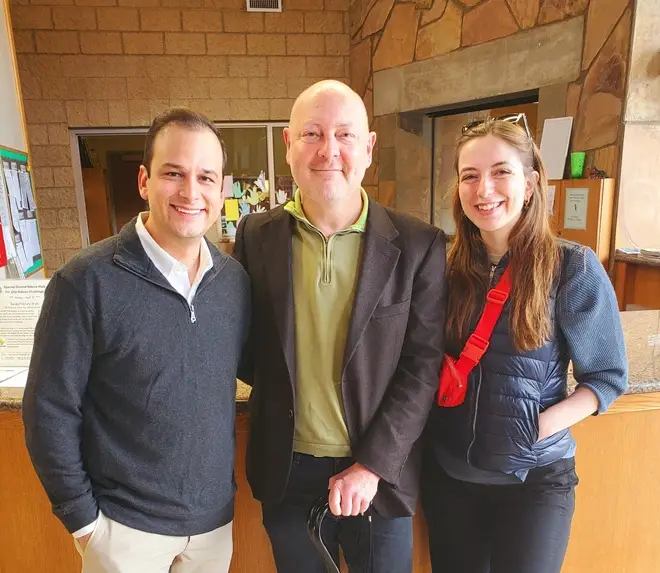
Councilman Raul Campillo, who represents the area that includes Mission Trails, says not all hope is lost.
“I think that, with a concerted effort, there’s really nothing [LeNail] and [Yoler] can’t get done. But right now, it is in a wait-and-see pattern,” he explains. “Whatever they ask me to do, I’m going to do my best to get it done. I’m 100 percent behind this project. It’s not just for their family—it’s for the public safety of everyone who crosses the river right there, which is tens of thousands of people a year.”
Indeed, people wade across the river or walk on tip-toes along the rocks to try to cross on a daily basis. Campillo says just as the river increases the danger, it increases the complications of construction.
“As soon as you have two or more levels of government bureaucracy that have to sign off, it almost always compounds the problem,” he adds. “This is not unique to San Diego. We’re seeing this across the entire state. I just don’t understand how policymakers at other levels of government—especially on a public safety project like this—don’t take it more seriously and fast-track the process.”
For now, the path forward, Campillo says, is to convince state and federal agencies “to really get on board” and make the permitting process easier.
“It’s just really disappointing and yet not at all surprising that state and federal agencies are in the way and are just really not in any rush to make sure these approvals can get in place as costs escalate,” says.
He adds that if involved parties are able to raise more funds, the project can push through. But that money will not likely come from the federal government. “With DOGE basically putting a stop on so much highly impactful scientific research, trying to get money for a bridge over the river—which is a really important public safety project, to be very clear—I think the hope of that is very, very low,” Campillo says.
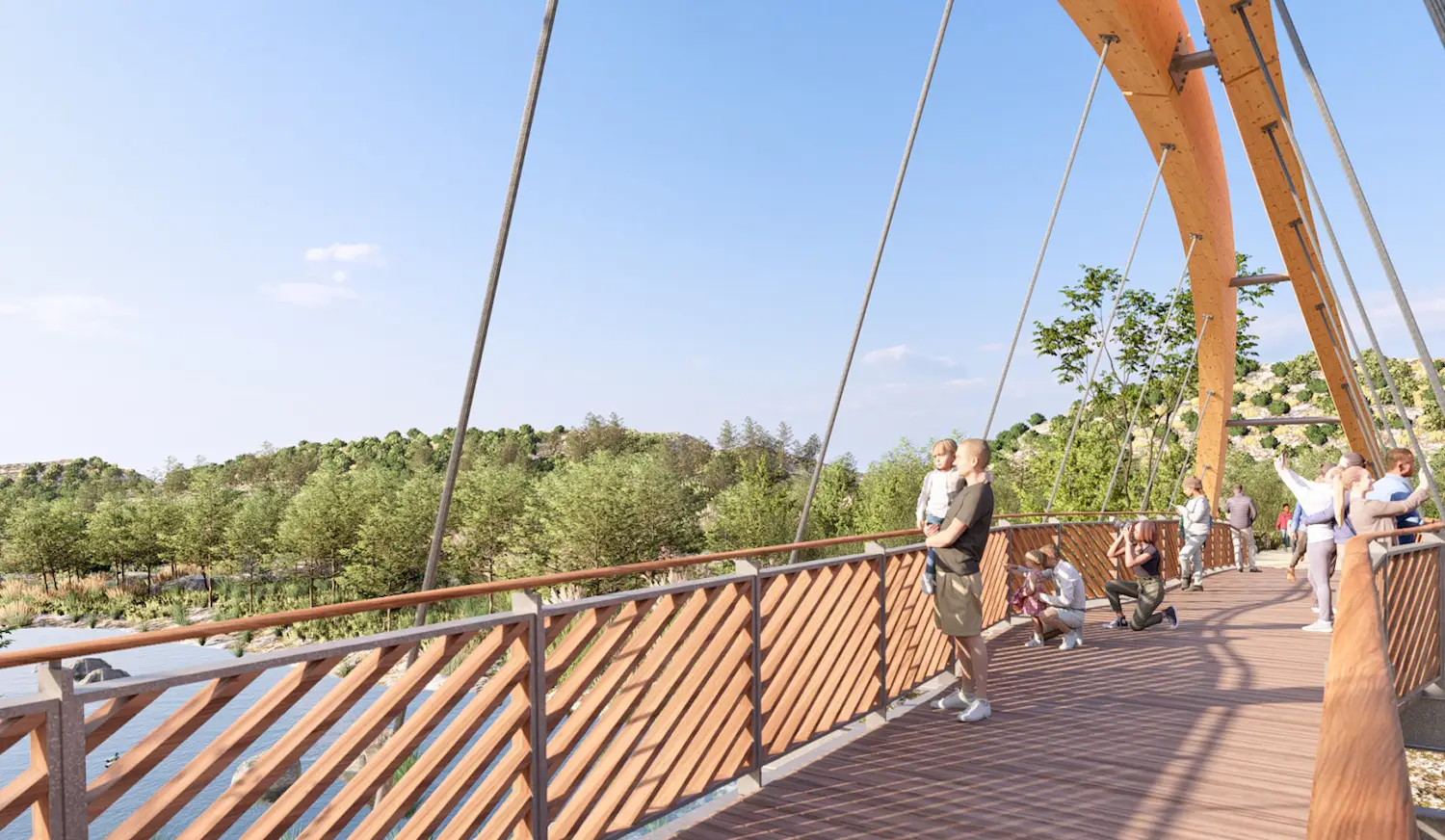
Jacobs said in a statement that Max Lenail’s accidental drowning was tragic “and entirely preventable if we had the necessary safeguards in place. Mission Trails needs this pedestrian and bicycle bridge to ensure public safety and save lives … I’m disheartened that the Army Corps of Engineers’ stop-work order and their eligibility requirements for federal grants have prevented progress from being made on this project. My office will continue to explore ways to get this bridge built to benefit our entire community.”
LeNail is now making one last push to see if he can use the $1.5 million in state grants to help with the permits, even though he was told it has to be saved for construction.
“I’m making a sort of symbolic case to see if we can tap the state grant to get the permits,” he says. “Once issued, they’re valid for two years. The city told us they could maybe extend that to three years. Then we’d have to raise more money to build, but at least we’d have a two- to three-year window to do that. I would love that, if we could get the permits and show that we succeeded in that.”
PARTNER CONTENT
In the meantime, LeNail adds, the danger is still there.
“I think a bridge is needed more than ever,” he emphasizes. “It’s a dangerous spot. It’s a popular spot. Any time I’ve been there, I’ve seen dozens of people crossing in a matter of minutes. I think there could very well be another fatality there sometime in the next three or four years.”

Claire Trageser has been writing for San Diego Magazine for 10 years. She also is a reporter at KPBS and writes for The New York Times, National Geographic, Marie Claire, Elle and Runner's World.
The city's pet-friendly courses combine scenic greens, wagging tails, and a round that’s as much about your pup as your swing
Golf doesn’t have to mean stiff collars, pleated khakis, whisper-talking on the green, or pretending your sand trap fails aren’t actually hilarious. Around San Diego, a handful of rebel courses are quietly rewriting the rules of an afternoon round, making them more relaxed, more social, and yes, more dog-friendly. These are the fairways where leashed pups pad alongside their people; where a suspenseful search for a golf ball in the bushes or—no!no!no!no!no!—in the water hazards are part of the fun; where every polite golf clap comes with a smiling, panting audience. If your ideal golf day includes a walk, a drink, and your dog riding shotgun, this is your teeing ground.
For proof that a golf course can be approachable without being boring, look no further than Emerald Isle Golf Course in Oceanside. The executive course delivers consistently beautiful greens, rolling elevations, and just enough challenge to keep you engaged, not stressed—unless your pup breaks free and runs for the rolling elevations, in which case you’ll be very engaged and maybe a little stressed. Locals love holes like the canal carry on No. 3 and the wildlife-dotted pond on No. 16, while golden-hour sunsets steal the show most evenings. Dogs are genuinely welcome here, not an afterthought. Grab them a slice of watermelon from the clubhouse, pose in the cart for Instagram cameos with an Emerald Isle scarf (it doubles as an adorable bandana for your four-legged friend), or introduce them to the course’s resident pups like Bogey, the assistant director of instruction, and shop dogs Karl and Frank. Affordable, friendly, and no-frills, Emerald Isle feels like golf you and doggo can’t wait to play.
660 S El Camino Real, Oceanside

The Loma Club is where golf goes social. Set in Liberty Station, this historic 9-hole par-3 course trades country club stiffness for an easy, neighborhood energy that feels distinctly San Diego. The course is walkable and unintimidating, with skyline and harbor views doing most of the heavy lifting. The Loma Club is just dipping its paws into the dog-friendly trend, and welcomes them on the mini course and off the fairways. Though your pup is the epicenter of your world, the patio at Loma Club is the real star, hosting live music, trivia (even the smartest dogs are stumped), and cocktails that rival golf itself. You don’t even need clubs to enjoy it. Show up with your dog, wander the course, grab something from the clubhouse, and stay for hours. You’ll feel like you’re exactly where you’re supposed to be.
2960 Truxtun Rd, San Diego

Calling Goat Hill Park a golf course almost undersells it. Known as the “People’s Park,” this historic Oceanside staple operates more like a community space where golf happens. Expect dogs strolling alongside the players, music streaming from magnetic speakers attached to golf carts, beginners smacking balls alongside serious talent, and locals and tourists sharing the same teeing grounds with a few four-legged besties trotting alongside. Saved from redevelopment in 2014, Goat Hill embraces a raw, unpolished look that’s both intentional and refreshing. With ocean views, a “19th-hole” fire-pit, and zero pretense, it’s golf at its most human…because: dogs.
2323 Goat Hill Dr, Oceanside

Ready to add your pup’s name to the illustrious list of golf greats? Same. At the iconic The Club at Omni La Costa, the vibe is equal parts championship-caliber and casually fabulous. Emerald fairways so perfect you’ll hesitate to step on them, palm-lined paths practically begging for a golden-hour strut, and rolling greens that ripple in the sun. And just when you thought it couldn’t get any better, your four-legged plus-one enters the chat: For members and overnight guests, the La Costa lifestyle rolls out the (very chic) welcome mat for your (leashed) pup, turning tee times into a social affair of breezy, citrus-kissed luxury and leisurely strolls. Really—what are you waiting for? Even your dog’s got a standing invite.
2100 Costa Del Mar Rd, Carlsbad
Isabella Dallas is a freelance writer for San Diego Magazine and the Arts and Culture Editor at The Daily Aztec in her final year at San Diego State University. She previously worked as an editorial intern for SDM, but when she’s not writing, you can find her trying the best coffee spots in SD, devouring the latest rom-coms, and indulging in anything and everything pop culture.
Stop by the San Diego County Fair, rock out at the inaugural Field of Dreamz and visit Bikini Bottom via The Spongebob Musical
Charitable gatherings, downtown music festivals and theater premieres—of both the heartwarming and thought-provoking variety—are among San Diego’s standout events this weekend. You can’t spell fundraising without ‘fun,’ and both elements are central at Poway OnStage’s Taste of the Towne and the Switchfoot Bro-Am. Listeners of blues, reggae rock and silky smooth jazz can check out the East Village Blues Fest, Field of Dreamz and the San Diego Smooth Jazz Festival, respectively. As for the city’s thespian community, new shows include Cygnet Theatre’s production of Broadway favorite The Spongebob Musical and the world premiere of the OnWord Theatre show Marti Gobel’s Adult Storytime: A Caregiver’s Guide To The Blues.
Food & Drink | Concerts & Festivals | Theater & Art Exhibits | More Fun Things to Do
The tasteful appetizer to Switchfoot Bro-Am’s annual Beach Fest is the laid-back Benefit Party, returning this Thursday from 6-10 p.m. at Viasat. Guests will be treated to a curated dining menu, a performance by Switchfoot with special guests, and the chance to bid on live and silent auction items, including local excursions, apparel packages, and deluxe arts experiences. Individual ticket options include general admission ($300) and reserved seating ($450); the money raised will go towards youth-centered programming at six local nonprofits.
6155 El Camino Real, Carlsbad
Patrons of Poway OnStage are invited to Taste of Our Towne, the organization’s annual culinary fundraiser, this Saturday at 5 p.m. at Poway Center for the Performing Arts. The evening will begin with auctions, plus bites and libations from over a dozen local vendors before magician Chris Funk, aka The Wonderist, takes the stage for an interactive comedy show. General admission is $115 for Taste of Our Towne; proceeds from this event will benefit Poway OnStage’s Professional Performance Series and Arts in Education Initiative.
15498 Espola Road, Poway
Before (potentially) riding off into the sunset, British rocker Rod Stewart is strutting his stuff stateside with the unconventional voice and unquestionable verve that’s propelled his nearly six decade-long solo career. Though the “Da Ya Think I’m Sexy?” artist’s days on the road may be dwindling, that’s even more reason to give him his flowers in the present. Stewart’s upcoming show this Friday at 7:30 p.m. at North Island Credit Union Amphitheatre will feature prolific singer-songwriter Richard Marx as the opening act. Tickets start at $40.
2050 Entertainment Circle, Chula Vista
Following Thursday’s Benefit Party, the 22nd annual Switchfoot Bro-Am will switch (get it?) from its fundraiser to a free day at Moonlight Beach for Saturday’s all-day Beach Fest. From 7 a.m. to 3 p.m. there will be surf competitions—including surf jousting—and from noon to 5 p.m., Sun Room, Telephone Friends, Kimiko, a handful of special guests and, of course, Switchfoot will perform for attendees. Additionally, throughout the day, there will be a variety of vendors and brand activations to explore. Admission is free with RSVP, while VIP pit tickets are $195.
400 B Street, Encinitas
As the mysterious saying goes, ‘If you build it, they will come,’ but instead of Iowa cornfields, this time the message is coming from inside SD’s home ballpark. This Saturday, Ocean Beach natives Slightly Stoopid will headline the first-ever Field of Dreamz Festival, and they’ve brought along a handful of ska, reggae and island-inspired rock acts for the ride. Doors will open at 3 p.m., and fans can see sets by Stephen Marley, Pepper, Sublime—whose first album with frontman Jakob Nowell drops Friday—and more. Ticket options include standard admission ($125), floor tickets ($188), plus All-Star VIP ($244) and Hall of Fame VIP ($610) passes.
100 Park Boulevard, Downtown
Ryan Hardison is a freelance arts and entertainment writer and recent graduate of San Diego State. When he's not staring at his laptop, he's likely eating an adobada burrito or getting sunburnt at the beach.
Peruse the EXPO Design Market, savor the Sabor Del Barrio, and see a plethora of sets at North Park Music Fest
There’s a creative inertia that resides in San Diego, producing a near-constant stream of cool events. Fortunately, this weekend is no different. Those with an artistic inkling can search for inspiration at MCASD’s EXPO Design Market or admire the mixture of live performance and neighborhood charm during the North Park Music Fest. Foodies can dine (with wine) at Stake Chophouse & Bar during its ZD Wines Dinner or explore Barrio Logan’s standout eats at the Sabor Del Barrio. Plus, Pride Month is already in full swing in SD with the return of DISCO RIOT’s Queer Mvmnt Fest and the two-day Out & Abt Music Festival.
Food & Drink | Concerts & Festivals | Theater & Art Exhibits | More Fun Things to Do

Stake Chophouse & Bar is collaborating with Napa Valley’s ZD Wines—a family-run winemaking institution that’s been around since 1969—on an intimate four-course dinner this Thursday at 6:30 p.m. Throughout the meal, each dish will be paired with a curated pour from ZD Wines, with patrons set to receive a chardonnay, pinot noir, and pair of cabernet sauvignons. Dinner guests will also be treated to insight on the night’s wine pairings from ZD Wines’ senior winemaker Chris Pisani. Reservations are $210 pre-paid through OpenTable.
1309 Orange Avenue, Coronado
Take advantage of all the dynamic attractions that the Barrio Logan Cultural District has to offer—and eat very well while you’re at it—during the third annual Sabor Del Barrio. This Sunday from noon to 4 p.m. attendees can devour their way through 35 neighborhood staples and traverse the tasting stops on foot, by bike, via a free trolley shuttle, or a combination of the three. Tickets are $40 online ($55 day of) and come with complimentary admission to Quint Gallery, the Athenaeum Art Center, and the Chicano Park Museum & Cultural Center, plus a free tour of Tao of Clay.
Barrio Logan
Survey the depth of oral storytelling during the free annual Sam Hinton Folk Heritage Festival this Saturday from 10 a.m. to 4 p.m. at Old Poway Park. Named for harmonica virtuoso, marine biologist, and longtime San Diegan Sam Hinton, this event highlights folk artists who specialize in time-honored traditions. Throughout the day, attendees can see performances by musicians with roots in Americana, Cajun, and Appalachian rhythms on the main stage, dance in the Templars Hall, and hear historical tales from the Storytellers of San Diego in the Porter House.
14134 Midland Road, Poway
Psychedelic rockers Frankie and the Witch Fingers will headline an eclectic lineup at the North Park Music Fest. This Saturday, enjoy sets from noon to 1:45 a.m. from over thirty performers—including DJs, bands, and local acts—across a dozen North Park venues. Ticket options include general admission ($25 online, $35 day of) and VIP passes ($65) which come with lounge access at Granada House, line-skipping privileges and more; festival proceeds will go towards the North Park Business & Neighborhood Foundation. Plus, performances at Pure Pawsh, Visual Art + Supply, Overland, and Playground Art + Coffee will be open to the public.
North Park
The calendar has just flipped to Pride Month, and Out & Abt is celebrating in style. The two-day Out & Abt Music Festival begins Saturday from 3-10 p.m. at The Soap Factory with drag shows, circus acts, a manic pixie dream market, two stages of live music, and last but not least, a mechanical bull. The festivities will continue with an after party from 10 p.m. to 2 a.m. at Gossip Grill and conclude with an afternoon pool party at Hard Rock Hotel San Diego on Sunday from 1-7 p.m. Ticket options include weekend general admission passes ($70), and entry to the music festival ($30), after party ($17) and pool party ($27).
Citywide

Fresh off its Drama Desk Award-winning run in the Big Apple this past winter, The Monsters will have its first West Coast production beginning Tuesday in the Mandall Weiss Forum at La Jolla Playhouse. Written by and co-starring Ngozi Anyanwu, The Monsters finds its reconciliatory narrative in a young woman yearning to repair her relationship with her estranged older brother in the brutal and unforgiving world of mixed martial arts. The Monsters will have preview performances this Tuesday through Thursday at 7:30 p.m., Saturday at 2 & 8 p.m. and Sunday at 1 & 7 p.m., with tickets ranging from $30-$74.
Ryan Hardison is a freelance arts and entertainment writer and recent graduate of San Diego State. When he's not staring at his laptop, he's likely eating an adobada burrito or getting sunburnt at the beach.
KQ Aesthetic Society goes beyond cosmetic to provide comprehensive care and transformative results
Kelly H. Harfouche, founder of KQ Aesthetic Society, knows firsthand that cosmetic treatments like fillers, neurotoxins, and microneedling, can not only enhance a person’s appearance and restore confidence, they have the power to truly change a person’s life. An expert injector has the ability to tailor treatments to each individual patient’s anatomy and goals for personalized results. Harfouche, a board-certified nurse practitioner, has spent nearly a decade perfecting her craft as an aesthetic injector and integrating her multifaceted artistic skills with precision patient care. Her commitment to continual education and training, plus a passion for helping people look—and feel—their best, set KQ Aesthetic Society apart in a sea of local medspas.
For many people considering nonsurgical treatments, the intent is to look refreshed and refined. KQ Aesthetic Society’s philosophy eschews a cookie cutter approach that bases treatments around units, instead working to understand each person’s unique goals, then curating a treatment plan to fit that vision. Harfouche focuses on “inclusive luxury,” the belief that everyone deserves access to aesthetic treatments, respective of budget restrictions. She develops long-standing trusted relationships with her patients, and works with each one to achieve their aesthetic objectives and address the underlying causes of their concerns.
“For me, forming an honest and open relationship with every patient who walks through the door is essential. This means understanding them on a deeper level and meeting them where they are to define and achieve their individual goals,” she says.

Drawing on her artistic background, which inspired her transition into medical aesthetics, Harfouche sees each client as a “unique canvas.” Rather than relying on standardized procedures, the practitioner’s distinctive approach combines her profound understanding of the physiological and anatomical changes associated with aging with an unwavering commitment to ongoing education about the newest products and their mechanisms of action. Her goal is to make each patient feel beautiful in their own skin and to embrace their individuality.
She has also pioneered a way to combine her talent for aesthetic artistry with her philanthropic nature. Harfouche is one of only a handful of providers using dermal fillers to treat patients with lip asymmetry and scarring resulting from cleft lip surgery. Patients travel from around the country for this transformative treatment, noting increased confidence and a restored identity. She hopes to eventually launch a training program to help fill the void in this space.

“My passion has always been connecting with people and giving back in any capacity that I can,” she says. In the rapidly advancing landscape of aesthetic medicine, you can place your confidence in Harfouche and KQ Aesthetic Society to deliver exceptional care. To learn more or book a consultation, please visit kqaestheticsociety.com.
From jazz concerts to devouring fried foods at the fair, here are all the best things to do this month in San Diego
June Gloom isn’t stopping San Diegans from making the most out of the month. There’s something for every music lover, from swaying to smooth jazz at The Rady Shell to rocking out at Slightly Stoopid’s Field of Dreamz Festival. Art enthusiasts can visit the Mingei for an exhibit showcasing Native American and Pacific Rim heritage, while foodies can try the latest fried fad at the San Diego County Fair. Whatever your interests, it’s time to text the group chat and make some plans. Here are all the best things to do in San Diego this month:
Concerts & Festivals | Theater & Art Exhibits | More Fun Things to Do
World-class jazz musicians are returning to The Rady Shell for the San Diego Smooth Jazz Festival.
“If you build it, they will come,” and so they shall to Slightly Stoopid’s inaugural Field of Dreamz Festival. The OB-native rock band will share the lineup with Stephen Marley, Sublime, Pepper, and more at Petco Park.
Khalid is headlining his first tour since 2019—this time for the R&B and pop showstopper After the Sun Goes Down—and he’s ready to dance through Cal Coast Credit Union Open Air Theatre.

With a beat that can’t be stopped, New Village Arts will revive the joyful musical Hairspray, a fusion of teen pop stardom and racial integration in Civil Rights–era Baltimore.
Cat Gunn poignantly examines the impact of forced separation from ancestral lineage through If Only by the Light of a New Moon, their solo museum debut at ICA Central.
See lasting visions of cultural heritage via Clearly Indigenous: Native Visions Reimagined in Glass, a traveling showcase for Native American and Pacific Rim glassmakers at Mingei International Museum.

Proceed to Pride Month with the Out & Abt Festival, featuring a carnival-themed playground at The Soap Factory, an afterparty hosted by Gossip Grill, and the next day, a sapphic poolside bash at the Hard Rock Hotel.
Imagine and experience your favorite fairytale ending during the San Diego County Fair, which returns this summer with a new theme: Once Upon a Fair.
The return of the Switchfoot Bro-Am means two things: an elegant seaside fundraiser in North County and a free bash at Moonlight Beach full of sun, surf competitions, and live music.
For the first time, NASCAR will start its engines in San Diego. Naval Base Coronado will host this one-of-a-kind racing spectacle to commemorate the U.S. Navy’s semiquincentennial.
Itadakimasu! In other words: Let’s eat! Sample, then rank, the best Pan-Asian dishes from local eateries at Julep Venue during SD Mag’s 21+ Omakase Open, done to support the Convoy District.
If you ever needed a reason to eat ice cream and gelato, here’s a charitable one. Raise money—one waffle cone at a time—for Feeding San Diego during this year’s Scoop San Diego festival.
Ryan Hardison is a freelance arts and entertainment writer and recent graduate of San Diego State. When he's not staring at his laptop, he's likely eating an adobada burrito or getting sunburnt at the beach.
"The Distinct Modernism of San Diego" tells the story of how some architects pioneered their own style in 20th-century San Diego
San Diego is just out here minding its own business. It’s long been cast as Los Angeles’s less ambitious sibling—the chill one, the one who shows up late for dinner reservations in flip-flops with a few provocative opinions. Architecturally it’s often cast the same: secondary, derivative, a footnote to California modernism that seems to begin and end with the Stahl House (Case Study House #22). LA has Pierre Koenig, Craig Ellwood, John Lautner. San Diego has the original fish taco.
But this version of the story is redacted, metaphorically speaking.
While the jazz hands of Hollywood and its hills cast a spell on historians and architecture buffs, San Diego had, and has, its own quiet evolution: It invented and reinvented itself through homegrown modernism, beginning with The Allen House (1907) in Bonita by Irving J. Gill.
“The biggest misconception is that San Diego was following Los Angeles,” says Keith York of Modern San Diego, one of the city’s top guides to modernist architecture. “Those who consider Rudolph Schindler and Richard Neutra as the fathers of Southern California Modernism often fail to recognize the outsize influence Gill and his buildings had on their work.”

A new book, The Distinct Modernism of San Diego—written by Mark Hargreaves and Hallie Swenson, published by York—focuses on eight architects who were born, raised, or built their careers in San Diego. It illustrates how the city wasn’t hosting weekend warrior architects on side quests. It was a staging ground for a less look-at-me modernism from luminaries like Gill, Lilian J. Rice, Richard Requa, Lloyd Ruocco, Frederick Liebhardt, Kendrick Bangs Kellogg, Sim Bruce Richards, and Cliff May.
“Absent the backstabbing competition for projects, a collegial group of architectural peers collaborated and maintained lasting friendships with one another as they designed in response to the temperate climate and slower economy,” York says.
Largely unknown until the mid-1960s, Gill is a marquee name today. He arrived here from the East Coast at a moment when San Diego was still defining itself, which gave him the freedom to invent something new, experiment, rebel.
Instead of imposing the flourishes and frills of the time, he considered San Diego’s climate, light, landscape, history—the joie de vivre—and designed for this place. “[Architects of the west] must have the courage to fling aside every device that distracts the eye from structural beauty, must break through convention and get down to fundamental truths,” he once said, a sentiment that nails the un-ornate, total lack of pretension that’s defined San Diego people and culture.
And, lo, did Gill fling: His flat roofs, clean lines, and almost no ornamentation—though not necessarily modernism in the Eames or Eichler sense—foreshadowed what would later be called minimalism. Gill eventually became synonymous with the Los Angeles narrative, but broader architectural histories overlook the fact that his most progressive designs happened here.

Another key to San Diego’s architectural movement was Lilian J. Rice, who often worked behind the scenes with little credit. She was one of only about 10 women in America licensed as architects at the time. Even though she died from cancer at 43, she somehow managed to complete an estimated 170 projects in the region, many in Rancho Santa Fe.
Born and raised in National City, Rice also wasn’t importing ideas. She shaped her own based on her understanding of this region and her commitment to protect the natural environment. Her work has been categorized as Spanish Colonial Revival, but she wasn’t reviving as much as she was refining a style suited to our border region—serene, mirroring nature, beautiful.
“San Diego architects were designing for a way of life, not just a look,” says York.
Like Sim Bruce Richards, who was his own way of life. While Gill stripped away ornamentation and Rice focused on the peace of open spaces, Richards came along several decades later and went full emo. By then, modernism had grown deep roots; its steel-and-glass structures took themselves very seriously. Richards came to party.

An eccentric, unpredictable man with half a face (part of his jaw was removed following a bone infection when he was a child), his life was a jalopy of adventures. He was opinionated and passionate about design, music, texture—and he created what he called a “sensuous environment.” He wanted his clients and their guests to feel the spaces as much as to be in them, appealing to the visual, tactile, nasal (“a cedar house smells good”), auditory (“acoustically superior”), even taste. “Though, I‘ve never had a client lick my houses,” he once wrote.
Organic, woodsy, textured, aromatic—if you ever find yourself in a Sim Bruce Richards house, a licking impulse might not seem so outrageous.
Gill, Rice, Richards and the other architects in Distinct Modernism built a legacy in San Diego that resonates nationally. And the work of these heavy hitters isn’t stuck in an inaccessible collectors realm: This October, homes by Kellogg and Liebhardt will open to the public as part of the La Jolla Modernism Home Tour—an opportunity to experience it not as a museum relic or magazine image (ahem), but as something alive.
Modernism in San Diego was never about glamour or an intention to be iconic. What transpired here is more nuanced, more ingrained with a less shouty aesthetic. A very San Diego aesthetic.
A look at San Diego's top designers creating unique environments that combine creativity and function


AVRP Studios’ tradition for Design Excellence and Innovation began in 1976 with Doug Austin, FAIA, in Solana Beach, California. The firm has since grown to complete major projects throughout the United States and Canada. We think of ourselves as a family and we care deeply about people. We want to inspire, help make their lives richer and more complete through our efforts. We believe that architecture is one of the most important art forms because of the impact it can have on the lives of those it touches. We’re delighted to have been recognized with over 150 awards for design excellence.
703 16th Street, Suite 200, San Diego, California 92101 | 619-704-2700 | avrpstudios.com