Featured articles
Featured articles
Featured articles
What's next
Featured articles
Featured articles
Featured articles
Ready to know more about San Diego?
SubscribeReady to know more about San Diego?
A closer look at the numbers, stats, and facts driving our city's soaring housing market
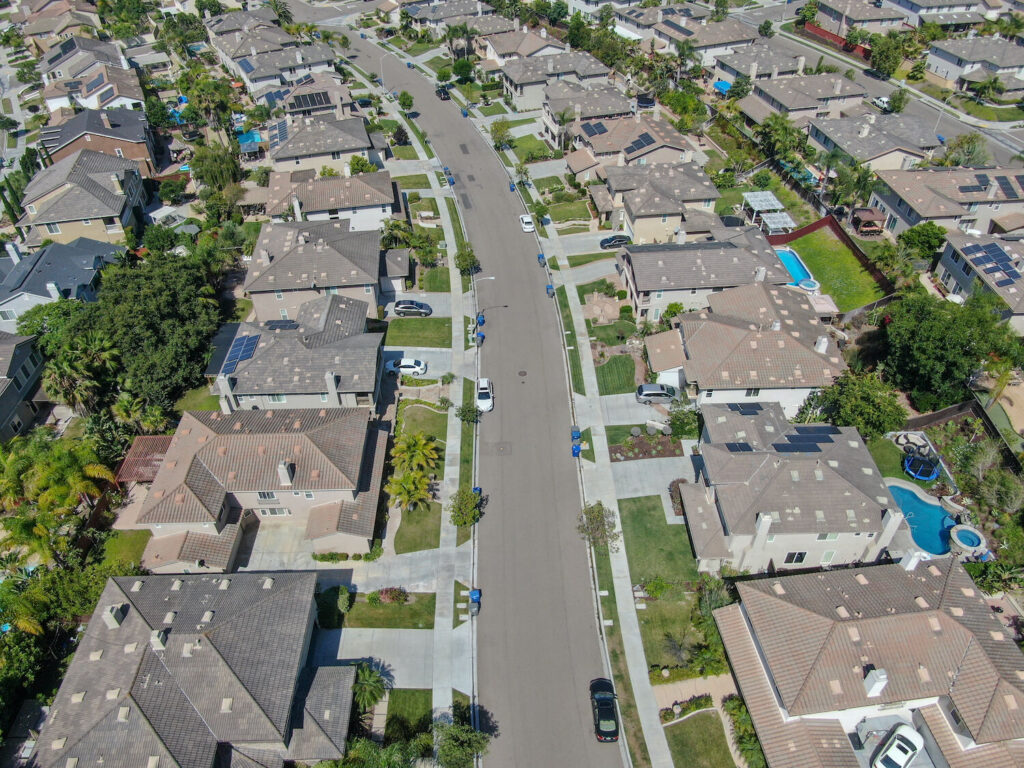
The median home price in San Diego reached a high of $873,250 in June of 2021
Shutterstock.com
Nobody was calling the San Diego real estate market affordable back in 2019, when the median price for single-family homes peaked at $673,000. But we were practically wistful after summer 2020 pushed that number to $741,180. And even that looks adorable in retrospect, as a frenzy of activity in 2021 vaulted the median home price to $873,250 by June. This data, compiled by online brokerage and listing aggregator Redfin, reveals just how bleak the landscape is for aspiring home buyers.
It’s difficult to uncouple the alarming rise in home values from the pandemic. Conventional wisdom says that millions of white-collar Americans shifted to remote work all at once, prompting a wholesale change in housing needs that placed a premium on extra square footage.
According to Taylor Marr, a deputy chief economist at Redfin, urban and suburban prices per square foot typically rise at similar rates, but that changed in 2020. In many suburban areas, the median price per square foot pushed over $400—and even $500—meaning buyers were forced to redefine what they consider to be a million-dollar home. But the desire for home offices is only part of the story.
Over the past two years, historically low interest rates, and millennials coming of age as home buyers, increased demand while supply remained on par with previous years. And unlike previous years, new listings in 2019 would remain on the market for more than three weeks. In 2021, the median selling time dropped to nine days.
Any given weekend, home buyers targeting certain neighborhoods—Mount Helix, Poway, Carmel Valley, and San Carlos—would find only a handful of options available. As Chris Anderson, president of the San Diego Association of Realtors, explains, this made the notion of a dream home unattainable, as frustrated buyers grew increasingly aggressive with their offers. “If there’s 30 offers and yours doesn’t get taken,” she says, “the other 29 are going to be against you on the next one, too.”
By now we’ve all heard the shocking tales. Bidding wars pushing values eight percent above asking price. High-paid tech workers from San Francisco stepping in with an all-cash offer to snare a listing they’ve never seen in person.
Anderson confirms the rumor that people have been buying homes “sight unseen,” noting that some out-of-town buyers have been ready to board a plane to get the jump on a listing, but others have been satisfied with video walk-throughs. She’s been a Realtor since 1989, but says “the game has changed.” She’s even gone to a home with a prospective buyer on a FaceTime call so she can walk them through the property.
So how much did Bay Area buyers actually fuel this price spike? To figure it out, Marr points to Redfin home buyer searches, which have proven a reliable predictor of census movements. Recent data shows that 14 percent of searches for San Diego properties came from the Bay Area. This figure may include a set of buyers Anderson has encountered: survivors of recent Northern California wildfires, who received insurance checks after their properties were destroyed. However, the data also shows that, by volume, more than 50 percent of searches came from Los Angeles.
Regardless of their origin, Marr’s research reveals that an out-of-town buyer showed up with a budget 7.6 percent higher than what locals could spend. While metropolitan real estate markets across the country have boomed during the pandemic, he suspects that migrating home buyers fueled a phenomenon relatively unique to San Diego in 2021: Urban homes and condo prices catching up to the gains seen in the suburbs.
The outlook may not be encouraging to San Diegans seeking to own their homes. If there’s any good news to be found, it’s that prices have eased slightly, and with interest rates rising, experts expect the market to slow down.
PARTNER CONTENT
For first-time buyers, the last glimmer of hope may be condos. “You can pretty much always find a condo,” says Marr. “Just do it when you’re not going to compete with other buyers as much.”
At home with restaurateur and entertainment venue mastermind Ty Hauter
Ty Hauter, his wife Suzannah, and daughter Presley Royce
Neighborhood
Coronado
Stats
4 bedrooms,
5 bathrooms
plus a detached guesthouse
FIREPLACES
fireplaces 10 (one in every room)
THEIR STORY: Meet Ty Hauter, the former bouncer turned businessman who has been instrumental in revamping San Diego’s East Village. His company, Good Time Design, owns and operates 11 local restaurants and bars, including the original Whiskey Girl, Bub’s at the Ballpark, and Southpaw Social Club. The most recent, Moonshine Flats, a 10,000-square-foot country rock bar and entertainment venue, just opened in February. He also bought the Palm Restaurant on J Street and has plans for a new concept, set to open this summer. So how does he bring the hustle and bustle of his work life home? He doesn’t, really. Ty and his wife, Suzannah, share a surprisingly quiet existence at their new house in Coronado. As with all of his projects, quality mattered. To help with the details, Suzannah recruited Darcy Kempton of Simply Stunning Spaces, who crafted a cozy yet streamlined look. Paint colors and fabric swatches aside, the house has one star attraction: the couple’s 18-month-old daughter, Presley Royce. She’s a one-of-a-kind design.
At home with restaurateur and entertainment venue mastermind Ty Hauter
Ty Hauter, his wife Suzannah, and daughter Presley Royce
Neighborhood
Coronado
Stats
4 bedrooms,
5 bathrooms
plus a detached guesthouse
FIREPLACES
fireplaces 10 (one in every room)
THEIR STORY: Meet Ty Hauter, the former bouncer turned businessman who has been instrumental in revamping San Diego’s East Village. His company, Good Time Design, owns and operates 11 local restaurants and bars, including the original Whiskey Girl, Bub’s at the Ballpark, and Southpaw Social Club. The most recent, Moonshine Flats, a 10,000-square-foot country rock bar and entertainment venue, just opened in February. He also bought the Palm Restaurant on J Street and has plans for a new concept, set to open this summer. So how does he bring the hustle and bustle of his work life home? He doesn’t, really. Ty and his wife, Suzannah, share a surprisingly quiet existence at their new house in Coronado. As with all of his projects, quality mattered. To help with the details, Suzannah recruited Darcy Kempton of Simply Stunning Spaces, who crafted a cozy yet streamlined look. Paint colors and fabric swatches aside, the house has one star attraction: the couple’s 18-month-old daughter, Presley Royce. She’s a one-of-a-kind design.
Discover eateries, outings, and shops within this inland North County community
Just south of Lake Hodges near 4S Ranch and Poway, Rancho Bernardo is a suburban community that blends residential neighborhoods with industrial pockets, elevated by a decidedly diverse food scene.
Over 60 years ago, this North County neighborhood was once part of a family ranch. Since that time, big tech companies have taken up residence here, including Amazon, Sony Electronics, Oura Ring, HP, Teradata, and ASML. Rancho Bernardo Inn serves as a community hub, with locals frequently meeting at the hotel’s restaurants, golf course, and spa.
Whether it’s work or a round of golf that brings you to Rancho Bernardo, we’ve taken care of the agenda planning with our guide to the area’s best restaurants, activities, and shops.

Sample ingredients plucked straight from Rancho Bernardo Inn’s onsite garden and served at their signature restaurant Avant. One of the neighborhood’s most upscale dining options, they serve a French-inspired menu with nods to California, including many seafood options. Don’t miss their more casual sister restaurant Veranda for al fresco dining.
17550 Bernardo Oaks Drive
Wood-fired pizzas and handmade pastas are standouts at The Kitchen, Bernardo Winery’s counter-service restaurant specializing in Sicilian flavors. Charcuterie boards and bruschetta make for great starters or snacks while wine tasting.
13330 Paseo Del Verano Norte
Fast-casual and family-owned eatery Bushfire Kitchen recently opened a location in Rancho Bernardo, serving sandwiches, bowls, salads, burgers, protein plates, and housemade empanadas. Bushfire prepares comfort food with healthy ingredients, and offers plenty of vegetarian and vegan options.
11962 Bernardo Plaza Drive, Suite 110
Some might call The Cork & Craft an overachiever. This gastropub has an in-house craft brewery and winery: Abnormal Beer and Wine. The more, the merrier. Their sushi menu is definitely worth exploring, but don’t miss other specialties like garlic noodles, chicken wings, and pork belly.
16990 Via Tazon

You don’t have to leave Rancho Bernardo to get a white tablecloth steakhouse experience. Carvers Steaks & Chops has prime rib (their best seller), filet, ribeye, porterhouse, New York strip, and other cuts, served alongside crab-stuffed mushrooms, wedge salad, French onion soup, potato skins, and other steakhouse specialties.
1940 Bernardo Plaza Drive
This no-frills Burmese restaurant is known for its traditional tea leaf salad that’s topped with sesame and sunflower seeds, garlic chips, peanuts, tomatoes, jalapeños, fried yellow beans, and fermented green tea leaf dressing. Tucked into a nondescript strip mall, Burma Place is a great takeout option when you want to eat garlic noodles, fried rice, chicken curry, and samosas from the comfort of your couch.
16719 Bernardo Center Drive, Suite A
Find authentic Vietnamese cuisine at Phở Ca Dao, including favorites like phở noodle soup, vermicelli noodles, broken rice dishes, and spring rolls. One of eight locations throughout San Diego, this family-owned chain uses robot servers for food delivery.
11808 Rancho Bernardo Road, Suite 100
It’s all about the sauce at fast-casual Mediterranean restaurant The Kebab Shop. Smothering your chicken shawarma, gyro, or falafels in garlic yogurt, cilantro jalapeno, fire chili, and dill yogurt sauce is practically a rite of passage. The hardest part is deciding whether to order a wrap, bowl, or salad.
11980 Bernardo Plaza Drive
Get a taste of South Asian flavors at Casa Lahori, a Pakistani restaurant noted for its grilled meat kabobs. Other best-selling dishes include beef nihari, chicken biryani, and shahi paneer— best enjoyed with naan bread.
11975 Bernardo Plaza Drive
Grill your own meat on the tabletop at Kangnam Korean BBQ, an interactive, all-you-can-eat experience that’s well-suited for large groups. Marinated beef bulgogi, grilled galbi short ribs, and spicy pork are served alongside traditional banchan dishes like kimchi, japchae glass noodles, and flavorful stews. Weekday lunch specials provide a nice discount on these filling meals.
11828 Rancho Bernardo Road, Suite 117–119

Dig in to your favorite curries and kebabs at Curry & More Indian Bistro. Most entrees are served with a choice of two side dishes, including basmati rice, potatoes with cumin, daal, naan, or mixed greens. Help offset the spice with one of their sweet mango or strawberry lassi drinks.
11808 Rancho Bernardo Road, Suite 123
Kai Oliver-Kurtin is a San Diego-based writer who covers travel, dining, events, and culture. Her writing has been published in USA Today, Condé Nast Traveler, Fodor's Travel, Marie Claire, and HuffPost, among others.
The annual event honors middle market companies creating jobs, scaling up, and investing in the region
San Diego is known for its startup culture and innovation economy, but what happens when the company moves beyond its early-stage years? The San Diego Business Impact Awards aim to answer that question, spotlighting the middle market businesses helping drive the region’s economy.
Hosted by San Diego Regional Economic Development Corporation (EDC) and JPMorganChase, the second annual awards celebration takes place on Thursday, July 23, from 4:30 to 7:00 p.m. at Scripps Research Auditorium. More than 200 executives, entrepreneurs, and business leaders are expected to attend the networking and cocktail event honoring some of San Diego County’s fastest-growing companies.
Businesses headquartered in San Diego County that have operated for at least two years are encouraged to submit their nomination by Thursday, June 18 at 4 p.m. Companies across industries—from technology and life sciences to tourism and consumer products, as well as pre-revenue startups—are eligible for recognition.
For EDC President and CEO Mark Cafferty, the event is as much about building connections as celebrating success. “We’ve had a longtime partnership with JPMorganChase; their work aligns with our efforts to support underserved communities and drive talent development,” says Cafferty. “And the networking was invaluable last year. I’m still in touch with people I met at last year’s awards.”

EDC is an independently-funded nonprofit that works directly with San Diego companies to help them grow the local economy, make the region as a whole more competitive, and attract and retain top-tier talent with quality jobs. Through EDC, companies can get help starting or expanding their business with support for things like site selection, permit navigation, and regulatory guidance, plus connections to local resources and potential business collaborators.
The San Diego Business Impact Awards began as an idea with one of EDC’s longtime strategic partners, JPMorganChase. The two organizations share a commitment to San Diego and are dedicated to bolstering middle market businesses.
“We’re blessed with a robust innovation economy and startup community,” says Aaron Ryan, San Diego Region Manager for JPMorgan’s Commercial and Investment Bank and vice chair of the firm’s’ San Diego Market Leadership Team. “But one of the segments of the business community we felt was overlooked was emerging middle market companies—the businesses that are no longer small but not yet large.”
Ryan says supporting those companies is critical as they scale and decide where to invest, hire, and grow.
San Diego’s high cost of living remains one of the region’s biggest business challenges, making talent recruitment and retention increasingly competitive. But local leaders point to the region’s quality of life, climate, and collaborative business community as advantages that continue to attract employers and workers.

“In order to support thriving households, there has to be enough high-quality jobs for people to be able to afford to live here,” Cafferty says. “Once a company grows and excels past that middle market point in their growth cycle, they become much more likely to pay higher wages and compete globally.”
Both Cafferty and Ryan proudly tout the unique collaboration that exists among San Diego County businesses. Bringing together top universities producing high-quality talent, cutting-edge research institutions, a robust military and defense presence, leading ocean science and environmental organizations, and a binational, cross-border identity creates a distinct business ecosystem that defines and strengthens the San Diego region.
Last year’s San Diego Business Impact Awards celebrated nearly 60 honorees from 49 industries, representing a total of 8,232 jobs across eight sectors, including: software and technology, healthcare and life sciences, consumer goods, professional services, finance, construction and manufacturing, defense, and hospitality and tourism. On average, honoree companies doubled their revenues over the previous year, employed more than 145 San Diegans each, and offered an average annual compensation of $192,415.
Top honorees included defense contractor Innoflight, environmental consulting firm Bancroft Construction Services, life sciences startup Element Biosciences, defense technology contractor GALT Aerospace, organic grocery store chain Jimbo’s, and biopharmaceutical company LENZ Therapeutics. During the event, Innoflight Founder and CEO Jeff Janicik held a fireside chat offering his insights on investing in the community and embracing San Diego culture.
This year, organizers hope to continue highlighting the middle market players driving economic impact across the region. Nominations are now open through June 18 at 4 p.m. Get your tickets to the San Diego Business Impact Awards celebration to enjoy drinks by Snake Oil Cocktail Co., light bites, live music, and networking.
We asked, you voted, and food critic Troy Johnson chose his favorites—these are the top food and drink people and places in the city
Some keep lists of favorite books, of quotes, of enemies whose time shall come. At SDM we keep vast, nuanced, hotly debated lists of the best food and drink in the city. Menus are our smut novels. From Michelin stars to mom and pops, our list constantly evolves over hundreds of new bites tried every year. Here’s the 2026 list from food critic Troy Johnson and 129,000-plus votes from our readers, who really, really know their food.
Troy Johnson is the magazine’s award-winning food writer and humorist, and a long-standing expert on Food Network. His work has been featured on NatGeo, Travel Channel, NPR, and in Food Matters, a textbook of the best American food writing.
This historical East County community offers numerous hikes, family-owned shops, and a slower pace of life.
You don’t have to go far to get your forest fix in San Diego County—just take the 8 East past El Cajon and gain altitude in the Cuyamaca Mountains and you’ll hit Alpine, a quasi-rural community of 15,000 with sweeping views. Surrounded by national forest land and two reservations and perched at 2,000-feet elevation, Alpine is only about 30 miles east of downtown San Diego, perfect for a day trip when you’re in the mood for a small-town outing (or a stop along the way to the desert or Viejas).
The Kumeyaay hunted, gathered, and farmed in what is now Alpine more than 12,000 years ago before Spanish missionaries forced them to convert their villages to rancherias. By the late 1840s, after California and Mexico declared independence from Spain, the rancherias were consolidated into one massive “rancho,” and, in the 1850s, the area became a stopover on the “Jackass Mail,” SoCal’s first regular postal route. Then came the Gold Rush and a road to Julian, followed by another kind of gold: Alpine was California’s leading producer of honey in the late 1800s.
Former historical society president and honorary mayor Bob Ring says that during WWI, Alpine became known for having the “best climate” in the United States—healthy for soldiers’ convalescence or those with respiratory issues. Good weather, agriculture, and deer hunting brought folks to Alpine as it grew from hunting shacks to cottages to family homes.
Nowadays, Alpine is a place where “you have to get in touch with nature—because we have no movie theaters,” jokes real estate broker and former chamber of commerce board member Jeff Campbell, a resident since 1974. Getting outdoors in Alpine might mean joining 4-H or Future Farmers of America; hiking or dog-walking at Wright’s Field or Loveland Reservoir; riding horses, ATVs, and mountain bikes; or hitting the trails to discover seasonal waterfalls like Cedar Creek Falls, which cascades into a swimmable pool. Alpine is also the place to get up close with raptors at Sky Falconry and meet rescued big cats at the animal sanctuary Lions Tigers and Bears.


“Here’s how favorites work in Alpine: We all have our preferred menu items at each of our town’s 11 eateries,” Campbell explains. The restaurants are mostly concentrated along Alpine Boulevard right off the 8.
Ring likes the rolled tacos at family-owned Alpine Taco Shop, with extra guac and cheese, while Campbell is partial to the fried fish tacos at Casino Inn Bar & Grill. According to Campbell, Franca’s Italian Kitchen and Bar has the best baked rigatoni not only in Alpine but in all of San Diego County. Ring goes there for family dinners and says he could be satisfied with “just the homemade bread with balsamic and olive oil.” Or head to Mediterraneo (locals call it “the Med”) for vegetarian lasagna. “I’m a keto dude, but it’s that good,” Campbell says.
For coffee, there’s The Well Cafe, where Cecilia Kennedy runs the shop and her husband Alan roasts beans in micro batches at home. Try the dark roast for drip and Mexican mocha for something a little fancier. Breakfast is a must at Janet’s Montana Cafe, which Campbell says serves the fluffiest pancakes, with no syrup needed. “[Janet’s has] homemade everything,” Ring adds, “but try the pies.” Grab supersized treats at Steph’s Donut Hole, and lunch is on the go at Barons Market, where you can pick up soup and salad.

With two award-winning breweries in town, Alpine has a good beer scene for its size. Campbell gets the Assaulted By Feather Pillows IPA at Mike Hess Brewing and the Apricot Bells Bluff blonde ale at Mcilhenney Brewing Co.
The town also has a healthy populace of gearheads: Locals like to bring out their classic cars, motorcycles, dune buggies, and fifth wheels. Hang out on a Sunday to ogle old Thunderbirds, Mustangs, and Corvettes. For fun, Alpine parents take their kids to Viejas Outlet Center for outdoor ice skating in winter (and roller skating the rest of the year) or games at the center’s big arcade.
Overall, Campbell and Ring agree, you gotta have humor and heart to live in Alpine. “The culture of this community is that people are always willing to help, even in these busy times,” Ring says.

Change in Alpine is incremental. Campbell anticipates Alpine’s mix of historic and suburban-type housing won’t shift dramatically in the near future, but he has seen some movement by the county to rezone some of its land to encourage more affordable units. “It’s my greatest hope for Alpine,” he says. “Nothing is deeded yet, but it’s on the county’s radar.”
Caltrans is also paying attention to the area, with a recent freeway expansion east of Alpine to Pine Valley, which means more road enhancements could be coming to the two-lane stretch of the 8 that leads from El Cajon west to Alpine.
A new state law that took effect in 2026 will certainly bring changes to Alpine’s mountain aesthetic: Homeowners and businesses must remove all combustible materials within five feet of any structure to help prevent fires. Compliance means replacement of existing landscaping with bare soil, rocks, gravel, concrete, or stone. It could be a whole different look for a rugged town with natural smatterings of oaks, bushy sage, and chaparral.
Campbell has recently seen positive growth and possible expansion in the tribal areas, with new housing subdivisions. In Alpine, he’s noticed a gradual ADU trend, gaining momentum but not catching on as quickly as in other parts of San Diego—“because people come out here for elbow room,” he says.
It’s kind of big news that there’s talk of a small grocery store incoming (the first supermarket to arrive in town since Barons in 2015). New businesses in Alpine used to be heralded with ribbon-cuttings by the chamber of commerce, which disbanded last year—but, Campbell has heard, the organization may get revived soon and bring back this charmingly small-town style of welcome. “Alpine has a need for a center to elevate business to a new level,” he says.
Franca’s Italian Kitchen and Bar
Leorah Gavidor won her first essay contest at age 5. She writes features, news, and non-fiction in San Diego.
How companies are re-energizing their employees and workplace culture
Main_Image_1.jpg
The office now feels different to pre-pandemic days.
With more people splitting their work hours between home, the office and other locations, many workplaces are seeing peaks and troughs in employee numbers throughout the week, with different teams crossing paths less frequently than before.
It’s now up to companies to find new ways to re-energize the office to make the commute feel worthwhile and support employees who may be battling feelings of isolation and disconnection.
JLL’s Regenerative Workplace research found that 36 percent of employees feel they lack energy while working, while a quarter feel too exhausted by work and family life to take care of their health and wellbeing. A third even say their company is no longer a good place to work.
Yet good energy levels are intrinsic to employee engagement and motivation, driving creativity and innovation.
Image_2.jpg
Energy to engage
Although remote work has helped many employees achieve a better work-life balance, video meeting fatigue and longer workdays have also taken their toll.
A McKinsey survey of attitudes to post-pandemic work found that many employees now fear their work-life balance will suffer. Mental health is now a top priority and employee expectations that companies will support their well-being are growing.
Companies like JLL are taking note; taking measures to promote employee well-being, including flexible work schedules, and providing more support for mental health issues such as stress, anxiety, and depression, which often are hidden.
Elsewhere, other HR-driven initiatives are helping people to build new connections with colleagues. A renewed focus on mentorship programs and teambuilding activities can develop valuable workplace relationships that many employees felt were negatively impacted by remote work, while specialized onboarding for people who were hired during the pandemic is helping them feel part of the team.
Image_3.jpg
Designed to energize
The workplace itself has an important role in encouraging community and boosting energy levels. Workplace design that emphasizes collaborative space over individual workstations can nurture communal energy when fewer employees are in.
Meeting spaces that are equipped with high-quality screens and audio technology make it easier and more enjoyable to collaborate with remote colleagues. Open-air work areas such as terraces and rooftops can significantly improve employees’ sense of wellbeing while adding more greenery – such as green walls and desk plants – can boost energy and reduce stress.
Space dedicated to health and wellbeing also benefits energy levels, whether that’s quiet rooms, fitness zones or break areas. In the JLL San Diego office, having a transition space where employees can switch off between different tasks and avoid back-to-back meetings helps people to recharge. It also provides an opportunity for social experiences, which helps develop personal connections.
Image_4.jpg
It’s this sense of shared purpose and personal connection that today’s companies need to fuel a new type of office buzz in the hybrid work era.
As work takes place in an increasingly digital environment, the physical office is more relevant than ever as the space which brings people together, whether they’re employees or clients. While people may spend less time there, the experience is more sophisticated, carefully designed to support a vibrant community and nurture sustainable, long-term performance.
About JLL
JLL knows San Diego commercial real estate: past, present, and future. With over 1,300 lease transactions totaling 18.1 million square feet and $5 billion in sales under our belt since 2019 – our trusted advisors have the local market knowledge and insight you need to address changing business demands, challenges, and risks. Learn more here.