Featured articles
Featured articles
Featured articles
What's next
Featured articles
Featured articles
Featured articles
Ready to know more about San Diego?
SubscribeReady to know more about San Diego?
During the first season in decades without a baseball game to narrate, he’s giving the play-by-play on fishing, cooking with family, and rewatching “The West Wing”
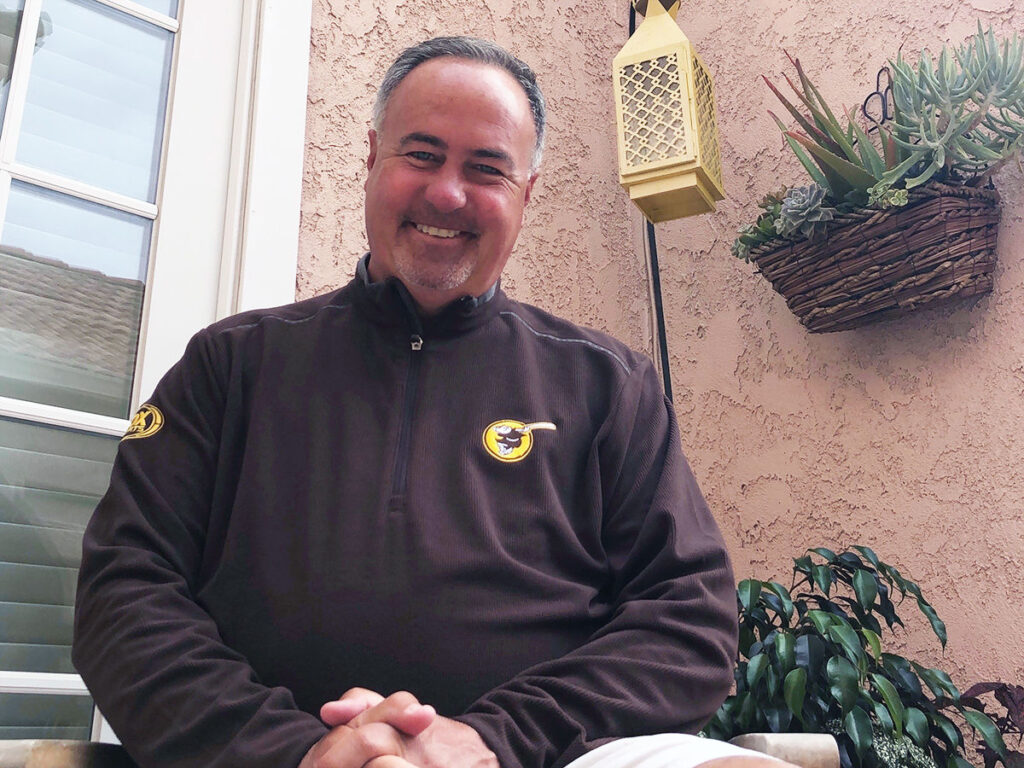
Coronado Cays
TV play-by-play announcer, San Diego Padres
Me and my wife Kathy. Our daughters Sydney and Lauren have spent some time here during the pandemic with us as we group social distance.
Walk every morning a little over an hour. I have two routes, in the neighborhood and on the Silver Strand State Beach across the way. I try to rotate daily to mix it up. I think it’s a little over four miles.
I love to cook, and this time has given me the chance to try some new things. Mostly Italian, and many on the grill. Lots of seafood!
I’m actually rewatching The West Wing. My wife hadn’t seen it, so I’ve had the chance to see all the seasons over again and have thoroughly enjoyed it. Since there are no concerts, The Dave Matthews Band rerun shows from last summer’s tour have filled quite a few nights for me.
It’s funny—in my now 20 years in the Majors, I have had nothing but daily rituals in a normal 162-game season. But now it’s fishing, fishing, and more fishing. With varying degrees of success. I have a paddleboat and pedal out into the bay, anchor down, and fish most afternoons. Calming. Any time I can spend out there, I cherish.
My family. For the last 30 years I have always been working or on the road all over the country broadcasting baseball, beginning in February every spring and all summer. This year we’ve had a great amount of time spent together. Simply time we ordinarily wouldn’t have had.
Shorts, boat shoes, polo or fleece of some kind. Generally repping my team. I have a ton of comfortable Padres hangout gear. During spring training, with the Padres changing back to brown this year, I had to really update my wardrobe. So I was ready.
PARTNER CONTENT
Broadcast baseball and do what I love. Going to stadiums, calling great games, and having all the Friar Faithful be there and be able to attend without fear, and for them to just be able to enjoy a day or night at Petco Park again when able.
It’s been spent in my wife Kathy’s office. We have been doing virtual Padres broadcasted games and shows on social media and Fox Sports San Diego from home. It’s where the laptop is and has the best WiFi for video and audio purposes.
We breakdown the upcoming seasons for the Padres, San Diego FC, and the Wave FC with insights from coaches to give us an insider’s sneak peek
As the clock wound down on August 23, 2025, San Diego FC had one thing on their mind: clinching the postseason for their new hometown. It wasn’t a night of dramatic late goals or last-second strikes—it was a steady, controlled run against the Portland Timbers. Snapdragon Stadium roared with the hopes of 35,000 locals, who’d spent years waiting for a championship team to call their own.
When the referee blew the whistle at the end of the game, the scoreboard remained at a draw, 0-0. But history had been made nonetheless—SDFC became the first team in the league to lock up a 2025 Audi MLS Cup Playoffs berth, securing their place with six matches still to play in their inaugural season.
A month later, after nabbing a Wild Card spot, the Padres punched their ticket to the postseason with catcher Freddy Fermin delivering an RBI single in the 11th inning. The 5–4 walk-off win over the Milwaukee Brewers marked the team’s fourth postseason appearance in six seasons (and the second straight season that San Diego reached October baseball). This was a new team, the kind the franchise hadn’t seen in decades.
Finally, in October, the Wave FC reminded us why it only took them a matter of months to build a record-breaking NSWL fanbase. In the first 18 minutes of the game, the team struck three goals (the fastest trio of goals in club history) and continued the momentum throughout the game against the Chicago Stars. Their 6–1 victory that night landed them in the postseason.
If last year’s playoffs run didn’t convince you that San Diego is a sports town once again, you weren’t paying close enough attention. Now, with the 2026 baseball and soccer seasons kicking off, we break down what to expect from the Padres, San Diego FC, and the Wave FC this year and ask their coaches to give us an insider’s sneak peek.

Freddy Fermin nearly did it. Down to the last out of the wildcard playoff series—the last chance for the Padres’ 2025 season—he put a charge into a fly ball that made all of Wrigley Field hold its breath. Of course, the potential game winner fell into the glove of the Cubs’ center fielder. Season over. So close. Less than two weeks later, manager Mike Shildt announced the stress was getting to him and retired.
To many fans, Fermin’s flyball felt like a metaphor. The late Peter Seidler had put a charge into the franchise, investing in the team like no Padres owner ever had. The Padres’ lease agreement with Petco Park runs through 2033. But every season, the team falls just short. With a 2027 lockout looming, was 2025 the final year of the Padres’ window to finally bring a World Series championship to the city? Or does it remain open for 2026?
There’s still massive, all-star talent on the team—Manny Machado, Jackson Merrill, Fernando Tatís Jr., Mason Miller, Michael King, Joe Musgrove, Adrian Morejon, Nick Pivetta (who surprised everyone by becoming a legitimate ace last year). After a few down years, Xander Bogaerts showed flashes of the elite talent that inspired his hefty contract.

Everyone knows general manager AJ Preller is a maverick who loves to make blockbuster moves. But to fill the managerial role, he only had to make a call down to the bullpen to Craig Stammen—a former Padres relief pitcher who’d been working as a special assistant, mentoring players.
“If I said it was going to be easy, I’d be lying to myself,” Stammen admits. “My whole life there have been different things that prepared me for what I’m about to do. Obviously playing gave me a lot of experience, and the special assistant role gave me a lot of knowledge of what it’s like behind the curtain—what the front office is thinking about, what the coaches are all trying to accomplish during the season. I feel like I got a taste of a little bit of everything.”
As manager, Stammen is going to be leading guys who used to be his teammates. Much like when a colleague gets promoted above you at work, there’s uncertainty around how team dynamics will shift. But Stammen believes it’s going to be a positive.
“At this point, I haven’t had to make very many tough decisions with those guys, but there may come a time during the season where that may happen,” he says. “If it does, I just have to be very up front and honest and be the same person I’ve always been. We’ll do our best to keep our friendship [what it is] and use that to our advantage as much as we can.”

Stammen has a reputation as a calm, supportive leader who can connect with players. And the move for an internal hire makes sense with such a turbulent offseason (they lost headlining players Dylan Cease, Luis Arráez, and Robert Suárez, and retirement rumors swirl around Yu Darvish). Bringing continuity, he’s somebody the Padres think can keep the clubhouse steady and focused. “There’s a trust level between AJ Preller, [Assistant General Manager] Josh Stein, and me,” he says. “They’ve seen my leadership qualities up close and personal.”
One of the biggest strengths of the team remains the pitching. “Great pitchers make a manager look really good,” Stammen says.
Then, there’s the fans. The Padres sold out 72 of 81 games last season, making them number-two in attendance behind only the Dodgers. Petco Park is a layer of hell for opposing teams. “When the fans show up to the ballpark,” Stammen says, “they’re helping our ball club win a baseball game. Without our homefield advantage, it would be very difficult to get to the playoffs and accomplish our goals.”
Those team goals? “To reach our potential,” Stammen confirms. “We obviously have a team we think can compete for a division championship and compete in the National League and have a chance to bring something to San Diego that’s never happened before. But you can’t think about that stuff right now. Right now, we’ve just got to be able to focus on reaching our potential.

It’s hard to imagine a dreamier kickoff to the MLS era in San Diego. In their debut year, San Diego FC broke multiple league records for an expansion team—most points (63), most wins (19), fastest to clinch a playoff berth. They won the Western Conference and came one victory away from the MLS Cup.
Near perfection. Now, can they follow it up?
The biggest headline entering year two is the end of “Chuckymania.” Mexican national star Hirving “Chucky” Lozano was supposed to be the face of the franchise, but it didn’t pan out. After he experienced some injuries and well-documented internal conflicts with the coach and team, SDFC decided to part ways with their original headliner.

Instead, the team invested in the vision of coach Mikey Varas, extending his contract by multiple years.
“They could see that the project was moving in the right direction,” Varas says. “When I was signed [last year], there had to be some question marks. I hadn’t been in this role before. Fortunately, everyone saw the alignment was 100 percent in sync. Our visions and values align. It’s where I’m supposed to be.” Any questions were answered when the franchise burst out of the gates winning.
In 2026, “it’s about asking ourselves individually and collectively: Now what?” Varas says. The answer shapes this year’s vision.
With their superstar departing and forward Marcus Ingvartsen coming off an injury-plagued season, the club wants people who have a point to prove—and, just as important, players and staff who push team chemistry. “We really do believe our collective is our superpower,” Varas adds. “That means having people who care about understanding how to play better with and for their teammates.”
Building off last year’s roster, the team snatched up versatile forward/ winger Lewis Morgan off waivers in December. The move will add front-line depth to supplement their other star forward Anders Dreyer, who was given a guaranteed contract extension through the 2028–2029 season—deservedly so, since he scored 19 goals and was named 2025 MLS Newcomer of the Year. On a planet without Lionel Messi, Anders Dreyer would arguably be the reigning league MVP.

“We’re also really excited about [developing] guys that started with us at ground zero and seeing what kind of steps they take,” Varas says. “The Luca Bombino who was playing for us last year can’t be the Luca Bombino who shows up this season. He’s got to be a better version of himself. There’s freshness coming from all different angles.” Bombino was also awarded a contract extension through the 2028–2029 season.
And now that the team isn’t surprising anybody with their pressing style of play, being overlooked by other clubs will no longer be an advantage going into this season. “That’s okay,” Varas says. “We like that kind of challenge.”
There’s already a resounding buzz coming from fans, supporters, staff, and players for 2026. When a team gets within striking distance of the MLS Cup (they lost 3-1 to Vancouver in the Western Conference final), the audience only gets hungrier to smell more Snapdragon fireworks.

In the final game of last year’s regular season, the San Diego Wave held their fate in their own hands: win or watch the playoffs from home. They responded, blowing away Chicago FC 6-0 and setting a club record for goals in a single game.
The offensive hangover came quick—they lost 1-0 in the first round to Portland. But our rose-tinted glasses are squarely on, so, as far as we’re concerned, just being back in the playoffs after missing out in 2024 was a good sign for a team that has been one of the country’s biggest stories in women’s sports since its inception four years ago.
“I think there were a lot of learnings during the season,” says head coach Jonas Eidevall, who is beginning his second year leading the Wave. “There were parts of last season that were really successful. I think we established an identity and a way of playing that was clear and a good fit for the club and the players: [We’re] creative. We want to express that on the pitch.”
During the offseason, December was a volatile month for the Wave. They started it off by capturing gold at the World Sevens tournament. On the tournament’s reduced-size pitch, they outscored the other teams 14-3. With midfielders playing forward early and burners playing wide, speed was the attacking tool that overwhelmed their opponents’ defenses.

More importantly, it allowed the team to step into an unknown together. Instead of 11 players per side, there were just seven. The format encourages a high-tempo style of play where every possession is threatening. “It helped us understand what we need to learn, change, and adapt [for regular-season play],” Eidevall says. “We did that well in the Sevens tournament, and that’s a mindset we can keep on going with in the season.”
Shortly following the team’s victory in Sevens, offseason moves started. Roster shakeups always cause some broken hearts—but fans were particularly shocked when the team abruptly announced in late December that goalkeeper and captain Kailen Sheridan’s contract would be terminated. (Along with Kristen McNabb, Sheridan was one of just two remaining players from the franchise’s original team.) As of press time, the Wave hasn’t announced who will take the captain’s reins from Sheridan.

With the team’s esteemed back-line leader out, the Wave signed goalkeeper Leah Freeman to a one-year contract. Last year, Freeman spent her rookie season with Bay FC after a decorated collegiate career playing for both University of Oregon and Duke. While at Oregon, she earned Pac-12 Goalkeeper of the Year honors in 2022. At Duke, she nabbed the same Atlantic Coast Conference honor in 2024.
Among returning members, “one player who was making a good impact for us already with limited time with the team was Dudinha,” Eidevall says. “I’m really excited to see what she can do in the league here with a full preseason.” The Brazilian forward netted five goals in just 12 games. In rare company with former Wave legends Alex Morgan and Jaedyn Shaw, Dudinha matched a club record by scoring in three consecutive games last fall.
Even with the loss of a face of the franchise like Sheridan, “going into the season, both expectations and the know-how of what it takes to achieve what we want to achieve is much clearer,” Eidevall says. “We laid the foundation last season, which we now need to build upon. Players we’re bringing in can be picked to fit into that [creative] identity.”
Jake Peterson is a San Diego-based journalist and culture writer. His work explores the city’s music scene, sports, local characters, and the offbeat corners of San Diego’s subcultures.
With the Padres dominating in one of their best seasons ever, we catch up with star players Manny Machado, Jackson Merrill, and Fernando Tatis Jr.
The Padres were supposed to be a mess this year. But thanks to an unstoppable start, star power veterans, and some of the best young talent in the league, this has been a season to binge. When it comes to a World Series run, fans may still sometimes feel like cats in a room full of rocking chairs, but we’re glued to the show, and the Pads are packing Petco. It’s been a hell of a carnival.
After a 2024 season that crescendoed into the playoffs with the highest of high drama, only to end in a whimper, the team entered 2025 under a storm cloud. In the aftermath of beloved owner Peter Seidler’s death, the club’s front office had started to resemble a Succession spinoff. Lawsuits, power struggles, mysterious silence from the top—the vibes seemed cursed, unbefitting men of the cloth. 2025 appeared doomed to play out like a tedious hangover.
But, somehow, they kicked down the doors. The team opened this season 5–0, then hit 13–3, then went nuclear with a 11–0 home streak. Suddenly, this team that was supposed to be in a rebuilding phase became MLB trivia fodder: best start in franchise history, first team since the ’66 Indians with six shutouts in 16 games. And as of press time, the team leads the league in shutouts with 13.
Manny Machado has been Manny Machado. He smacked his 350th career homer, got his 2,000th hit, and was voted starting third basemen for the NL All-Star team. Elite. Jackson Merrill is building on his legendary rookie campaign and has committed his career to the Padres, signing on to a nine year, $135 million contract extension. Fernando Tatis Jr. started the season playing at an MVP level and was rewarded with a trip to his third All-Star game. Relievers Jason Adam and Robert Suárez are also headed to the Midsummer Classic.
And the city is showing up like it’s 1998 all over again. Petco is packed tighter than the 8 East at rush hour. It’s Mission Beach on the Fourth of July every home game—beach balls flying, swagger in the stands. SD is ranked third in the league for overall attendance this year. You’d think a fanbase that’s been through recurring heartbreak and an ownership system error might back off. Instead, they’re louder and more eager than ever.
This season shouldn’t be happening. But here we are, with a team worth celebrating. The Padres are chaotic, occasionally frustrating, and eminently watchable. SD didn’t merely get a solid baseball team this year. We got prestige programming. Now we just need that deep playoff run.

I think it was kind of just a little bounce-back from last year. We had such a good year, but we fell short. So we really wanted to start this season on the right foot. That’s all we were talking about during spring training: “How can we be better than last year?” Once we got back to Petco and felt the energy of the fans and the city, we just hit the ground rolling.
I love pizza, so I go to Garage [Kitchen + Bar in the Gaslamp]. That’s one of my favorite spots. I keep it simple—pepperoni or cheese. Barbusa [in Little Italy] is another. The hospitality there is unreal. I’ve gone three times and haven’t even looked at a menu—they just send food out. Everything they bring is awesome. The Henry [in Coronado] is the same way—great people, great energy. I’ve always been that guy who sticks to a few good places.
I always listen to music. We’ve got a solid playlist in the clubhouse—Lil Wayne, Jay-Z, Bad Bunny, Rick Ross. That’s the rotation.
Coffee. Always a latte. I make it at home. I’ve been working on my latte art. Sometimes it looks like a flower; sometimes it just looks like… something.
It used to be Skittles, Goldfish, Cheez-Its. I’ve cut most of that out. But McDonald’s? That’s the one I can’t give up.
Definitely. Big homers tend to do that. The walk-off we had here last year. A walk-off against the Giants. My three-homer game in Baltimore—my third was a grand slam. It’s like everything just slows down. You instantly know what’s going to happen. It’s kind of crazy.
Roberto Clemente. Not just for what he did on the field, but to pick his brain about what he did for Puerto Rico and the community. What he did was special. He influenced so many of us.
Yeah. I’ve seen one. It was actually my grandfather, at my house. Not haunted or anything—just him saying hello.

Mateo Hoke is a journalist and author. His books include Six by Ten: Stories from Solitary, and Palestine Speaks: Narratives of Life Under Occupation.
Hovering in the middle of MLB standings, will the team’s talent turn things around in time for the playoffs?
One out, bottom of the fourth, man on second. Tie score in the Padres’ June 10 game against the Oakland Athletics. Pads shortstop and fan favorite Ha-Seong Kim is at the plate. He lashes at a fastball, the bat-on-ball sounding like someone stomped on a bag of chips. Fans at Petco Park erupt as the A’s left fielder watches the ball sail over his head, though he collects it after it caroms off the wall and flings it toward the infield. Those in the stands who jump to their feet only get a better view of Kim getting thrown out at second base.
One step forward, one step back. Such is the story of the 2024 San Diego Padres.
“It’s been a confusing, back and forth season,” says AJ Cassavell, MLB.com’s Padres beat reporter. The team has hovered around .500 and have been unable to separate from the pack in a wide open National League wild card race. That’s in large part because, “the star players haven’t been up to their normal standards,” according to Cassavell. The stats bear that out.
Limited by a lingering elbow injury and a recent strain in his hip, franchise cornerstone Manny Machado is having the most difficult season of his illustrious 13-year career. Second baseman Xander Bogaerts struggled before a broken shoulder shelved him indefinitely. Right fielder Fernando Tatís—arguably the most talented player in baseball—played like a mere mortal during the first two months of the season. The Padres’ most productive player by Wins Above Replacement, a metric that quantifies overall value, is outfielder Jurickson Profar, a journeyman signed to a one-year, $1 million deal.
It’s not all bad. It can’t be when a team wins roughly half its games. Cassavell credits this to the “role players who have been really good,” including center fielder Jackson Merrill, infielder and hitting machine Luis Arráez, and reliever Jeremiah Estrada, who as recently as November could have added #OPENTOWORK on his player profile and by June had struck out 13 consecutive batters, an MLB record. “The Padres might have found the best bullpen bargain in baseball,” proclaimed Sports Illustrated.
Padres general manager A.J. Preller has long focused on big free agent signings and splashy trades. At last, he found worthy compliments to a high-priced core, and despite Kim’s baserunning mistake it seemed to have all come together against the A’s on Monday, June 10.
Starting pitcher Dylan Cease scattered eight hits across six innings. Tatis scalded a ball that left the yard so fast it belonged on the Autobahn. Second baseman Jake Cronenworth hit a gentler homer, though one that scored a run all the same. Closer Robert Suarez struckout the side in the ninth to end the game. The stars played like stars, and to Padres manager Mike Shildt the 6-1 victory served as “the blueprint for winning baseball games. You get your starter [to] limit damage, then you get an offense that just completely takes relentless at-bats.“
True to form, the Padres didn’t follow that blueprint for very long. After sweeping the A’s in the three-game set, they flew to New York and gave those three games back to the Mets. The Pads then traveled down I-95 to Philadelphia, only to continue scuffling. They won five of the six games prior to heading east, then lost five of six on the road trip. One step forward. One step back.
Still, Shildt stands by his team. “Short-term? We got to figure it out. We need to be a little more consistent, a little better,” he said after a 9-2 loss to the Phillies. “Long-term concern? None. Zero. I know we’re going to end up right where we want to end up, and that is in October.”
Fans appear to share in the belief that their team will make the playoffs. The Padres rank 15th in winning percentage, smack in the middle of MLB’s thirty teams, but rank second in total attendance. It’s as if Padres fans are motivating the role players to step up, and willing the star players to shine again.
“Can we go on a [playoff] run? Absolutely,” says Hugo “Randy” Salgado, a longtime season ticket holder. Salgado and his family are such big Padres supporters his nickname derives from his father’s fandom of legendary Padres pitcher Randy Jones. Salgado’s little brother’s given name? Randy.
From his seats in right field Salgado sees the struggles of the team’s core, but he also recognizes what could be. “We’re weathering a perfect storm” of injuries and tough scheduling, he says, and making the playoffs “would mean everything to this city, it would mean everything to us fans.”
Brendan Dentino is a U.S. Navy veteran, writer, and public servant based in San Diego. He writes weekly about baseball and politics at Out in Left.
The annual event honors middle market companies creating jobs, scaling up, and investing in the region
San Diego is known for its startup culture and innovation economy, but what happens when the company moves beyond its early-stage years? The San Diego Business Impact Awards aim to answer that question, spotlighting the middle market businesses helping drive the region’s economy.
Hosted by San Diego Regional Economic Development Corporation (EDC) and JPMorganChase, the second annual awards celebration takes place on Thursday, July 23, from 4:30 to 7:00 p.m. at Scripps Research Auditorium. More than 200 executives, entrepreneurs, and business leaders are expected to attend the networking and cocktail event honoring some of San Diego County’s fastest-growing companies.
Businesses headquartered in San Diego County that have operated for at least two years are encouraged to submit their nomination by Thursday, June 18 at 4 p.m. Companies across industries—from technology and life sciences to tourism and consumer products, as well as pre-revenue startups—are eligible for recognition.
For EDC President and CEO Mark Cafferty, the event is as much about building connections as celebrating success. “We’ve had a longtime partnership with JPMorganChase; their work aligns with our efforts to support underserved communities and drive talent development,” says Cafferty. “And the networking was invaluable last year. I’m still in touch with people I met at last year’s awards.”

EDC is an independently-funded nonprofit that works directly with San Diego companies to help them grow the local economy, make the region as a whole more competitive, and attract and retain top-tier talent with quality jobs. Through EDC, companies can get help starting or expanding their business with support for things like site selection, permit navigation, and regulatory guidance, plus connections to local resources and potential business collaborators.
The San Diego Business Impact Awards began as an idea with one of EDC’s longtime strategic partners, JPMorganChase. The two organizations share a commitment to San Diego and are dedicated to bolstering middle market businesses.
“We’re blessed with a robust innovation economy and startup community,” says Aaron Ryan, San Diego Region Manager for JPMorgan’s Commercial and Investment Bank and vice chair of the firm’s’ San Diego Market Leadership Team. “But one of the segments of the business community we felt was overlooked was emerging middle market companies—the businesses that are no longer small but not yet large.”
Ryan says supporting those companies is critical as they scale and decide where to invest, hire, and grow.
San Diego’s high cost of living remains one of the region’s biggest business challenges, making talent recruitment and retention increasingly competitive. But local leaders point to the region’s quality of life, climate, and collaborative business community as advantages that continue to attract employers and workers.

“In order to support thriving households, there has to be enough high-quality jobs for people to be able to afford to live here,” Cafferty says. “Once a company grows and excels past that middle market point in their growth cycle, they become much more likely to pay higher wages and compete globally.”
Both Cafferty and Ryan proudly tout the unique collaboration that exists among San Diego County businesses. Bringing together top universities producing high-quality talent, cutting-edge research institutions, a robust military and defense presence, leading ocean science and environmental organizations, and a binational, cross-border identity creates a distinct business ecosystem that defines and strengthens the San Diego region.
Last year’s San Diego Business Impact Awards celebrated nearly 60 honorees from 49 industries, representing a total of 8,232 jobs across eight sectors, including: software and technology, healthcare and life sciences, consumer goods, professional services, finance, construction and manufacturing, defense, and hospitality and tourism. On average, honoree companies doubled their revenues over the previous year, employed more than 145 San Diegans each, and offered an average annual compensation of $192,415.
Top honorees included defense contractor Innoflight, environmental consulting firm Bancroft Construction Services, life sciences startup Element Biosciences, defense technology contractor GALT Aerospace, organic grocery store chain Jimbo’s, and biopharmaceutical company LENZ Therapeutics. During the event, Innoflight Founder and CEO Jeff Janicik held a fireside chat offering his insights on investing in the community and embracing San Diego culture.
This year, organizers hope to continue highlighting the middle market players driving economic impact across the region. Nominations are now open through June 18 at 4 p.m. Get your tickets to the San Diego Business Impact Awards celebration to enjoy drinks by Snake Oil Cocktail Co., light bites, live music, and networking.
Padres trade Juan Soto, San Diego FC signs first player, Wave acquires Savannah McCaskill—what it could mean for our "small market" city
2023 was a tough year for Padres fans. The team in 2023 scuffled through possibly their most disappointing season ever, let their manager leave for a division rival, had to take out a $50 million loan to address apparent cash flow issues, traded away all-world outfielder Juan Soto, and watched the Los Angeles Dodgers sign the second coming of Babe Ruth. Yet, like Lloyd Christmas, they believe they still have a chance.
“Hopefully, it’s a deal that works both ways,” said Padres president of baseball operations and general manager A.J. Preller, according to The Athletic, referring to Soto’s trade to the New York Yankees, “and we’re seeing him in the postseason next year.” Since the Yankees play in the American League, that would mean the Padres playing in the 2024 World Series. Maybe that’s not so crazy.
The Pads will bring back all-stars and fan favorites in Manny Machado, Fernando Tatis, Ha-Seong Kim, Joe Musgrove, and Yu Darvish. The Soto trade returned several solid contributors, and they signed Japanese pitching star Yuki Matsui. This core will be led by new manager Mike Shildt, who was once named the National League Manager of the Year and led the St. Louis Cardinals to three consecutive postseason appearances. The Padres have never made the playoffs in three consecutive seasons.
Even though they’ll likely lose top pitchers Blake Snell and Josh Hader in free agency, the Pads still possess a “huge amount of talent,” said Michael Baumann, staff writer at FanGraphs. “Preller tried to build not just a good team, but a superteam.” Unfortunately, there are other super teams in the N.L. West.
The Dodgers being the Dodgers, signed two-way superstar Shohei Ohtani to a contract that exceeds the gross domestic product of ten countries. The salary structure is so team-friendly, though, it has allowed the team to splurge on pitcher Tyler Glasnow and they’re homing in on Yoshinobu Yamamoto, the prized free agent pitcher from Japan.
For their part, the San Francisco Giants signed away star outfielder Jung Hoo Lee from his native Korea, and the Arizona Diamondbacks return more or less the same roster that steamrolled three supposedly better teams in this year’s playoffs on their way to the World Series. (There is a fifth team in the N.L. West, the Colorado Rockies, which is about all that can be said of them.)

But the most impactful, and heartbreaking, development for the Padres this year was the loss of beloved team owner Peter Seidler. “The best thing a team can have is an owner that cares about winning,” Baumann said, and Seidler certainly did.
He gave Preller free rein to put together a superteam. He invested in the minor leagues and player development, which, either through promotions or trades, resulted in players like Tatis and Soto. He invested in Petco Park, making a Padres game one of the best game day experiences in professional sports. He even invested in his city, having emerged as a civic leader in the fight against homelessness. He did all this despite San Diego being a so-called “small market” team.
Following Seidler’s death in November, news trickled in about how the Padres would manage their roster. The consensus became that they still want to compete, but also need to shed high-cost players after carrying the third-largest payroll in the sport and missing the playoffs.
Looming over this strategic decision and the roster intrigue are larger questions about the direction of the franchise. Will the Padres keep pushing to win that elusive World Series championship? Or will they retreat to more familiar, more modest terrain? After trading Soto but recruiting Matsui, the jury is still out, and it seems San Diego’s other major league sports teams are at a similar crossroads.

Earlier this month, Duran Ferree became San Diego FC’s first-ever signing, and in turn, the answer to a trivia question coming to a bar near you. Of course, local soccer fans hope Ferree becomes better known as the goalkeeper for Major League Soccer’s next great team. To the club, Ferree’s signing “underscores the Club’s commitment to identify and develop young talent, and build a youthful, dynamic and winning organization.”

SD Wave have reached the National Women’s Soccer League semi-finals in back-to-back years, and this year they were the best team in the regular season. They were primed to contend again—at least, they were before the recent NWSL expansion draft, which was necessitated by two new teams starting play next year.
Forward Rachel Hill was poached by Bay FC, and SD Wave had to expend assets to get midfielder Sierra Enge back in the fold. Captain Alex Morgan was not pleased, and the team responded by signing midfielder Savannah McCaskill, a two-time NSWL Player of the Month. “We are confident that Savannah’s ability and experience will prove to be an important part of our continued success,” the team said.

San Diego has fans willing to invest in these teams. Despite their struggles, the Padres set an attendance record in 2023 and at one point saw 25 consecutive sellouts. Eight thousand people went to Snapdragon Stadium just to attend SDFC’s brand announcement event, and the Wave were the biggest draw in the NWSL this season. Even our hometown rugby team, The Legion, set a league attendance record.
What’s to be determined in 2024 is if San Diego has teams who, in the face of setbacks, continue to invest in their rosters and turn their pronouncements about winning into reality.
Brendan Dentino is a U.S. Navy veteran, writer, and public servant based in San Diego. He writes weekly about baseball and politics at Out in Left.
The Padres' disappointing season speaks volumes about San Diego, in a good way
Photo Credit: Matt Thomas/San Diego Padres
In one way, Padres fans brought pain upon themselves this year. The Padres ousted the Los Angeles Dodgers from last year’s playoffs, finishing three wins shy of the World Series. The fans’ impassioned commitment to the team afforded an unprecedented investment in the roster.
For the 2023 season, the Padres put together their most talented and expensive team in franchise history. Those lofty hopes and stark dollars set up 2023 to become the most maddening and disappointing season in franchise history.
I believe this is a good thing. Hear me out.

For years, San Diego has been characterized as a “small market.” It’s how the city ended up as a one-sport town. It’s how it could have ended up as a no-sport town. On one hand, San Diego ranks just 30th in market size, and the region’s large transplant population might not pledge allegiance to the Padres.
On the other hand, the county is the fifth-most populous in the United States and has a diverse economy, international marketing opportunities, and perfect weather.
Padres team owner Peter Seidler seemed to have skipped the market-size class in business school, or said the hell with it. He spent money on his team like the New York Yankees do—or, at least, how they used to. Padres fans were used to being coupon-clipping underdogs, but now their team was setting the market.
Since 2019, Seidler has committed more than $1.2 billion to third baseman Manny Machado and fellow all-stars Fernando Tatís, Yu Darvish, Xander Boegarts, Jake Cronenworth, and Joe Musgrove. The team traded for top players Blake Snell, Juan Soto, and Josh Hader.
They signed away Ha-seong Kim from his native South Korea, watching him become one of the best all-around players in baseball and a fan favorite. On opening day this year, the Padres possessed the third-highest payroll in baseball, representing a spending spree so rare in San Diego sports they should hang a banner for it.

The roster moves were fueled by a few things. First, Siedler must have realized his unique opportunity. With no NFL, NBA, or NHL team competing for pro-sports eyeballs in the city, the Padres have the opportunity to own San Diego. And it worked. This year, the Padres had their first-ever season ticket waitlist. Jersey sales of Machado and Tatís were among the best-selling in the sport.
In February, fans turned the casual FanFest into baseball Woodstock. Those fans hoped the Padres would finally end the Dodgers’ reign atop the National League West, and they hoped their team would win San Diego’s first major sports championship. Those hopes felt pretty unrealistic after just the first month of play.
“Don’t jump on the bandwagon later on when we start f— raking and we’re doing what we’re supposed to be doing,” Machado said after his team lost ten of their first eighteen games. The raking never came. The unraveling did, though, along with a historic string of bad luck when it mattered most.
Cases in point: The 1969 Montreal Expos are the only other team to have lost their first 12 extra-inning games in a season. The 1935 Boston Braves are the last team to be as pitiful in one-run games. A September surge allowed the Padres to avoid their eleventh losing record in thirteen seasons, but it came too late to matter. They missed the playoffs in the most anticipated season in team history.
The Athletic pinned the disastrous season on the management style of general manager A.J. Preller; the San Diego Union-Tribune attributed it to the performance and personality of Machado. This all made for what was “easily, hands down, not even close, the worst season” Ryan Cohen can remember. Cohen, whose love for the Padres has garnered him a sizable following on social media, has spent most of 2023 grasping at the thinnest silver linings.
As most of those faded away, there remained only one: the fans.
Machado called for their support and they responded: despite an underwhelming team and an outing at Petco Park costing as much as a student loan payment, the Padres drew three million people to their games this year for just the second time in franchise history. Only the Dodgers and Yankees—baseball’s evil empires—drew more fans.
At the final home game in September, a sellout crowd watched the Padres’ playoff hopes die yet another death. The home team lost again in extra innings, this time to the lowly St. Louis Cardinals. The loss dropped their record on the year to 76-79. It seemed impossible, and advanced statistics agreed.
The Padres outscored opponents by more than 100 combined runs during the season—which should have resulted in a 92-win team. It’s as if the fan base tried to will that theoretical team into existence, right until the bitter end.
Since the season concluded on October 1, the San Diego Union-Tribune reported that the Padres will likely pare back its player payroll next season. That makes sense considering the team missed out on the TV money, gate receipts, and memorabilia sales that come with a playoff run.
But for a single season, a franchise, its fans, and its host city shed the “small market” label and exposed it for what it is: an excuse for mediocrity. If Padres fans experienced more pain than ever this year, it’s because their team at last strove for greatness.
The end results didn’t pan out for the Padres in 2023, but the crowd kept showing up. They knew that the investments in their team gave them better odds than ever, and that odds eventually pan out if you play enough times.
After all, the Padres recorded MLB’s best record in this season’s final month, and most of the Padres’ star players return next season. Of course, so will the fans. That’s a scary thing for the rest of the league.
Brendan Dentino is a U.S. Navy veteran, writer, and public servant based in San Diego. He writes weekly about baseball and politics at Out in Left.
At Petco Park, there are charms beyond the outfield wall that no other seat can muster
First, the upfront: This is a paid partnership with the Padres. Second, that’s not going to stop me from reliving one of my favorite kid memories.
I was 11 years old when the Padres played the Chicago Cubs in the playoffs. The Padres were a large part of my world. My mom, a baseball nut, taught me how to keep score in an official book that year. We had season tickets, which meant we were able to get seats for the playoff games. Padres lost the first two games, came back to San Diego on the ropes.
Mom and I were sitting in the left field bleachers when Kevin McReynolds hit a towering fly ball in our direction. The ball got bigger and bigger and bigger. The Cubs’ left-fielder ran toward us, ran fast until he ran out of room. The ball landed, and the stadium exploded. It landed right… HERE. It landed at US.
Up until that moment, I’d always envied the other, closer seats.
Three days later, I was sitting in the upper deck when Craig Nettles threw the ball to Alan Wiggins and the team rioted into a human pile of happy in the center of the field. The Pads’ first trip to the World Series.
The bleachers are where us fans harvest homers. Send us your dingers, your dongers, goners, taters, oppo tacos, no-doubters, moon shots, your grand salamis, and your Machados. Slam Diego isn’t a fictional place. It’s a seat. And that seat… is right here. It’s a tad louder in the bleachers because, well, joy and happiness aren’t quiet. Welcome to the party at the end of the home run rainbow.
The Padres are now playing their final stretch of games. All of them at Petco. I split season tickets this year with a friend specifically for this reason. To have a chance to get those seats again, relive that McReynolds moment, that Garvey time.
It’s down to the wire, the biting of nails. Machado and Soto and Joe and Yu and Snellzilla and all the players with great hair could use locals at the finish line. Get a seat. Any seat. All have their unique charms. And should you decide to become a member (partial or whole season tickets for 2023), the list of perks is pretty impressive, including:
—priority access to Postseason tickets (and, baseball gods be willing, World Series)
—before each game, it’s happy hour (more than half-off select beer, wine, and cocktails)
—invitation to watch batting practice to catch homers (if you get a ball with gold-stitching, you get a free Pads jersey of your choice)
—10% off all schwag (City Connect calling your name)
Go Pads.
Matt Thomas/San Diego Padres