Features JUNE 8, 2022

Behind the Lens of La Jolla Native Eric Wolfinger

Wolfinger takes us behind the scenes of his James Beard Award-winning photography career
Behind the Lens of La Jolla Native Eric Wolfinger
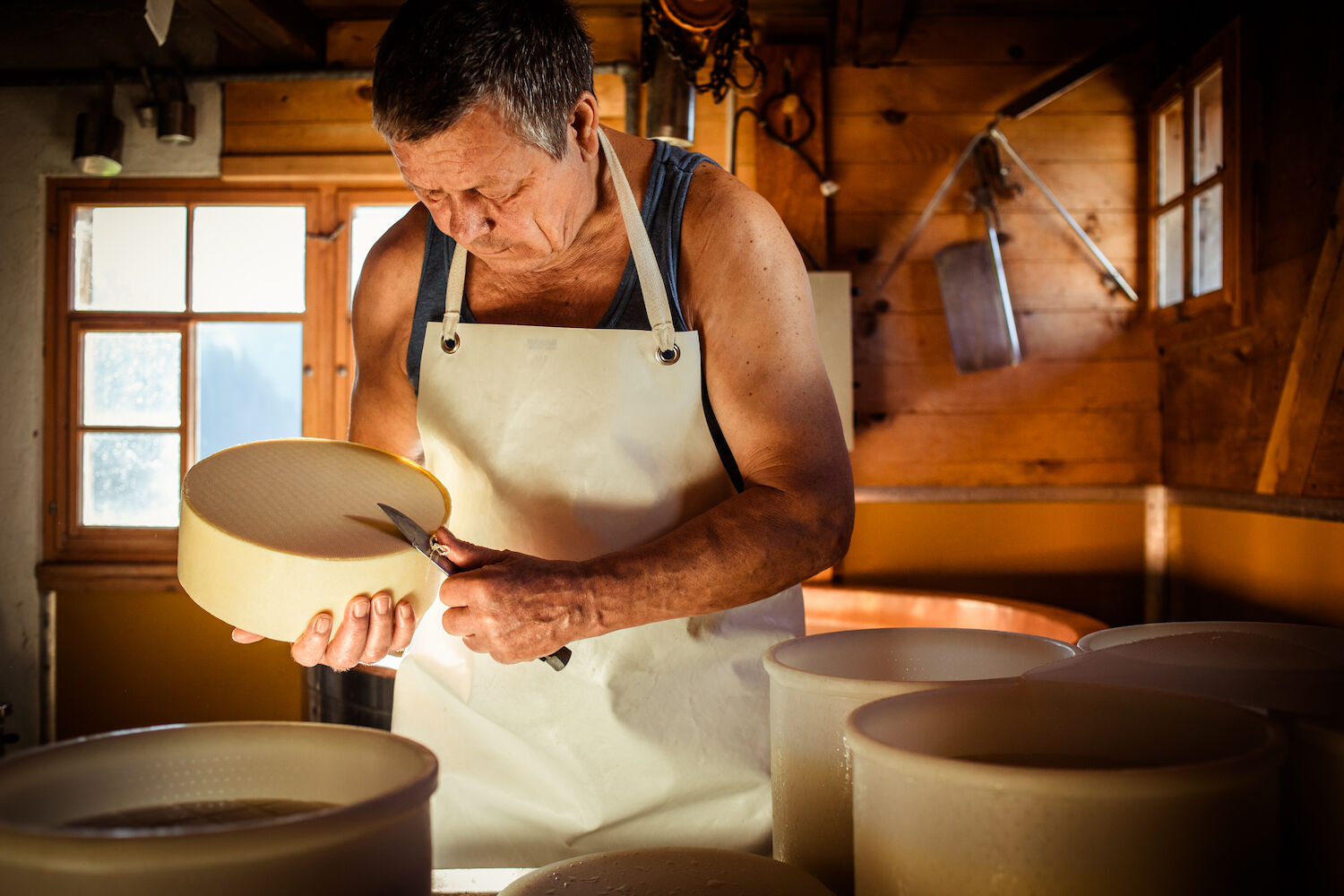
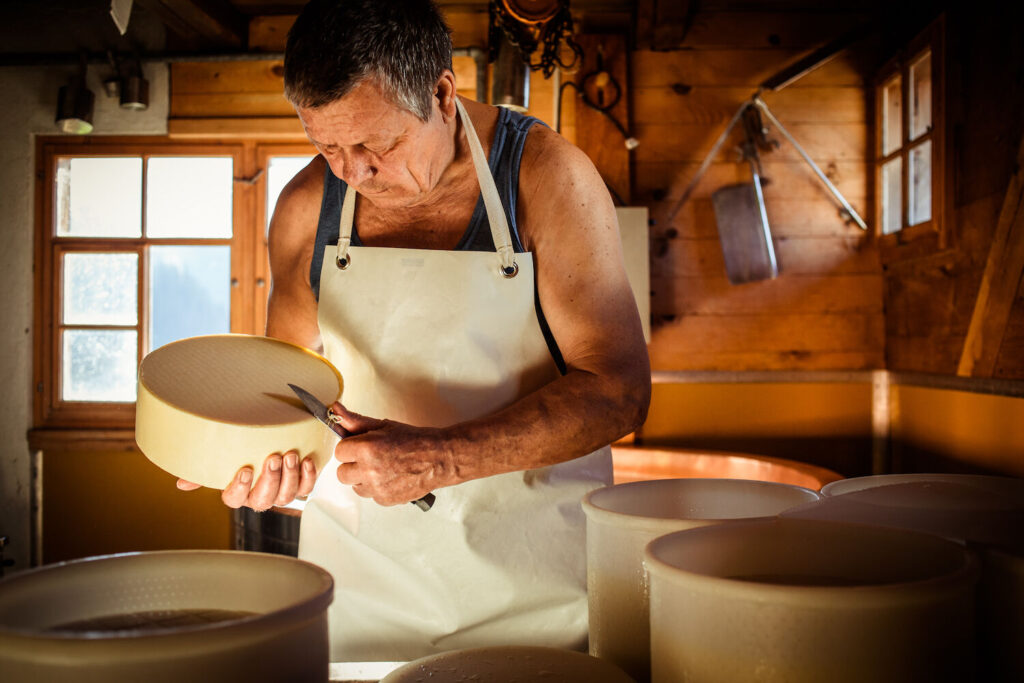
Eric-Wolfinger-alp-cheese-sdm-0622.jpg.jpg

Eric-Wolfinger-alp-cheese-sdm-0622.jpg.jpg

When The New York Times describes you as the “Annie Leibowitz of food photography” and Food & Wine knights you “one of the world’s best food photographers,” it’s safe to assume Eric Wolfinger could rest on his laurels, content in the fact that he found his true calling.

But the multiple James Beard Award nominee is downright self-deprecating at times. Credit his La Jolla roots, his proletariat beginnings as a food writer for his college newspaper and, later, as a bread baker’s apprentice in San Francisco. Or, perhaps it’s his almost-daily surfing habit. Either way we slice it (pun intended), Wolfinger is as zen as they come.

“I’m still the same dude I was pre-award,” says Wolfinger, referring to the James Beard Award Media award he won in 2020 for his photography in the stunning James Funke cookbook, American Sfoglino: A Master Class in Handmade Pasta.

Since beginning to photograph food in the mid ’00s, Wolfinger’s intent has remained consistent: to bring a “sense of humanity” to every picture. That even when it’s a picture of a piece of bread or an elaborate spread, the viewer stares not just at a picture of food, but at the world itself.

“It’s not just food on a plate, right? It came from somewhere, it came from someone, and it arrived in front of you with some intention,” says Wolfinger, who recently returned to La Jolla after living in San Francisco for the last 20 years. “I want to convey all those things. I want to capture that, and I want the viewer to feel that absolutely.”

Fresh off the recently released Bludso’s BBQ Cookbook: A Family Affair in Smoke and Soul, we asked Wolfinger to pick and reflect on his all-time favorite shots from his nearly two-decade career, and while it wasn’t an easy task for him, both the images and words speak loudly.

Follow Eric Wolfinger on Instagram at @ericwolfinger

La Jolla

Subscribe to our newsletters

Select Options

By subscribing you confirm that you agree with our Terms and Conditions and Privacy Policy.

Everything SD MARCH 2, 2026

The Locals’ Guide to Visiting La Jolla, CA

Explore the ins-and-outs of this coastal beach town, including what to do, see, and eat

The Locals’ Guide to Visiting La Jolla, CA
Photo Credit: Ariana Drehsler

Need help deciding which of La Jolla’s seemingly endless beaches to lay your towel out at today? Each little sandy sliver between the neighborhood’s sea cliffs has its own name and character: the Cove for swimming, Children’s Pool for seal-watching, Wipeout Beach for skim-boarding. Head to La Jolla Shores for that wide, sandy, picnic-with-the-family feel, and if you know what you’re doing, go surfing at Windansea or Bird Rock (if you’re a beginner, opt instead for the Shores, where most of San Diego learned to surf).

Surfers at Blacks Beach San Diego

Of course, beachy isn’t La Jolla’s only vibe. The Village (locals don’t call it downtown anymore, says La Jolla resident and senior editor of lajolla.ca Elisabeth Frausto) is La Jolla’s most walkable area—highlighted by the main drag, Prospect Street—with a wide radius of shop-lined roads sloping down to the coast.

At long standing neighborhood staples like Warwick’s bookstore and Harry’s Coffee Shop, “old-timers still belly up to the counter and talk politics,” Frausto says. Art enthusiasts visit to peruse through its many galleries, including Quint and Joseph Bellows, and check out what’s on at the Museum of Contemporary Art San Diego (MCASD). Shoppers wander Girard Avenue, picking out activewear at Lululemon and Vuori and fancier digs at Thread + Seed and Sigi’s Boutique. Friends gossip and sip coffee at locally owned outposts like Flower Pot Cafe and Il Giardino Di Lilli.

Il Giardino Di Lilli
Courtesy of Il Giardino Di Lilli

Once isolated from the rest of San Diego, La Jolla became a popular resort destination when the San Diego, Pacific Beach, and La Jolla Railway arrived in the 1890s and made the area more accessible to visitors (who wanted to spend time there so badly they stayed in tents during the summer). Some of those tourists got creative, too.

“Our tradition of supporting the arts goes back to the days of the Green Dragon Artist Colony that was founded in 1894,” says Athenaeum Music & Arts Library Executive Director Christie Mitchell. Anna Held started the Green Dragon Colony to attract visiting artists to La Jolla for a weekend getaway; it quickly became a venue for ad-hoc performances and bohemian artists’ salons.

However, it was Ellen Browning Scripps more than anyone who shaped La Jolla into the neighborhood we know today, commissioning buildings like the structure that now houses MCASD. The arrival of the Scripps Institution of Oceanography in 1907 laid the foundation for the establishment of UC San Diego 53 years later at the longtime site of the military base Camp Matthews. All of these developments helped establish La Jolla’s layered identities: high-dollar beach town, arts magnet, academic research hub.

Athenaeum Music & Arts Library
Photo Credit: Ariana Drehsler

Facts About La Jolla, CA

  • Ellen Browning Scripps commissioned Irving Gill to design a building for the La Jolla Woman’s Club in 1914; it still meets today in the same building.
  • La Jolla’s scenic beauty is a backdrop for many movies, including Thor, Gattaca, Traffic, Mr. Jones, and Andy Warhol’s 1968 experimental film San Diego Surf.
  • Every summer, thousands of pregnant female leopard sharks gather in La Jolla’s Marine Protected Areas to incubate their pups.
  • Zillow reports the average home price in La Jolla is $2.3 million.
  • Old Hollywood film star and La Jolla native Gregory Peck was one of the founders of La Jolla Playhouse, which opened its doors in 1947.
Christie Mitchell
Photo Credit: Ariana Drehsler

Locals’ Guide to La Jolla, CA

Athenaeum Music & Arts Director Christie Mitchell is a bona fide La Jolla local, having grown up in the LJ neighborhood of Bird Rock. Her dad still surfs, and Mitchell met her own surfer husband at La Jolla High (their toddler has already tried surfing, too). Mitchell’s mom still lives in Bird Rock, and “it’s gotten a lot livelier and more pedestrian-friendly,” she says.

On weekends, she makes sure to hit Wayfarer Bread for “the gooiest, heaviest, stickiest cinnamon loaf—definitely preorder because there’s always a line,” she advises. Friday and Saturday are pizza night at Wayfarer, and the bakery’s industry collabs produce some unique pies. For coffee, head to Bird Rock Coffee Roasters, of course, where you can grab a cup and hang out in the open-air seating or stroll to La Jolla Hermosa Park for ocean views (and a skate park and bike paths for little ones to tire themselves out on).

One of Mitchell’s favorites for lunch with coworkers in the Village is Peruvian-inspired Pepino, owned by one of her high school classmates. “The sweet potato bowl is really good,” she says.

The Marine Room
Courtesy of The Marine Room

She also cherishes La Jolla institutions. The Ascot Shop, a longtime men’s clothing boutique, is a go-to for gifts; founded by a local fisherman, El Pescador Fish Market is the place for the freshest seafood and fish tacos; and The Marine Room is for special occasions, with on-point service against a backdrop of crashing waves. “And nothing says ‘La Jolla’ like George’s at the Cove,” Mitchell adds. “With the John Baldessari mural and the view, it’s a great mix of the arts and the ocean.”

There’s a surprising amount to do on the weekdays in La Jolla, Mitchell says, with free live music every Monday at the Athenaeum (and weekly ticketed events), late-night DJ sessions at Le Coq, acts at The Comedy Store, concerts at the The Conrad (home of La Jolla Music Society), and the monthly First Friday Art Walk.

Lucien La Jolla
Photo Credit: Kimberly Motos

What’s About to Happen

The biggest talk of the town for La Jollans? Possible secession from the city of San Diego, Frausto says. Proponents want to separate so La Jolla can maintain its own infrastructure and make decisions about development (critics say La Jolla should contribute taxes to the rest of the city). If the initiative advances, final say would come down to a city-wide vote.

Additionally, locals and visitors alike are witnessing a genuine culinary explosion. Restaurateur Sami Ladeki’s Roppongi, a Japanese fusion and sushi favorite that closed in 2015, reopened in December 2025 under returning chef Alfie Szeprethy. Michelin-starred chef Elijah Arizmendi launched tasting-menu-only restaurant Lucien last year, and chef Accursio Lota of North Park’s Cori Trattoria Pastifico opened his new spot Dora in November. Local designers Paul Basile and Jules Wilson are building Roseacre, 5,000 square feet of culinary concepts on Girard Avenue. And one of La Jolla’s favorite restaurant families is opening a completely new eatery near Torrey Pines Golf Course in summer 2026: From the guys behind Puesto and Marisi comes an Eastern Mediterranean spot called Ikaria.

Back in the Village, a new boutique hotel by Orli is landing in the old nurses’ quarters (now condos) next to the original 1924 Scripps hospital (the institution moved to Genesee Avenue in 1964). La Jolla is also getting in on the thrifting trend—Goodwill opened a shop on Herschel Avenue in early 2026.

Pedestrian-friendly changes are afoot in two of LJ’s walkable areas. At La Jolla Shores, look for enhancements to Avenida de la Playa from El Paseo Grande to Calle de la Plata, where the street has been closed to vehicles since 2020 for outdoor dining. The Village Streetscape Plan is coming to Girard Avenue between Silverado Street and Prospect Street, bringing expanded walking areas, corner parks, improved lighting, new seating, public art, and landscaping to create shade canopies and gathering spaces.

La Jolla
Photo Credit: Ariana Drehsler

Also look for beautification projects along the coast. The 1920s stairs leading down to the tide pools at Whale View Point are finally getting a redo; Ellen Browning Scripps Park will receive fresh sod and much-needed widened sidewalks. And ADA trail improvements and a new restroom facility are on their way at Torrey Pines State Natural Reserve, making the beloved natural area more accessible.

As for housing, Frausto says, affordable units are hard to come by, and that probably won’t change soon. Most new homes and apartments are geared toward the luxury market, like La Jolla’s first new gated community in 40 years, Foxhill, which broke ground in October 2025 on the site of a former golf course—with empty lots selling for more than $8 million.

Where to Eat in La Jolla

Le Coq

Marisi

Catania

Where to Shop in La Jolla

Mitch’s Surf Shop

Mood Indigo

Gracie James Co.

More Things to Do in La Jolla

Birch Aquarium

Torrey Pines Gliderport

La Jolla Kayak

Leorah Gavidor won her first essay contest at age 5. She writes features, news, and non-fiction in San Diego.

Features JUNE 9, 2025

Behind San Diego’s Food Scene: Comedor Nishi’s Low-Key Stardom

For our Best Restaurants issue, we nod to the trends that marked the year including the arrival of a new brunch spot from an acclaimed Mexico City chef

Behind San Diego’s Food Scene: Comedor Nishi’s Low-Key Stardom
Photo Credit: Luis Meza

With all the splashy free-agent acquisitions, the La Jolla spot that seemed to slip under the radar was Comedor Nishi from Pancho Ibáñez and his wife Daniela.

For about a decade, Ibañez was the right-hand man of chef Enrique Olvera at Pujol in Mexico City-which has been hailed by nearly every food media outlet as one of the best restaurants on the planet. Daniela, meanwhile, was pastry chef at the revered Máximo in Mexico City (another “Top 50″ spot).

2025 Best Restaurants San Diego Magazine list featuring local restaurant Campfire in Carlsbad

Ibáñez was hired full time as the culinary director of Showa Hospitality (The Taco Stand, Convoy Music Bar), and Comedor Nishi is his and Daniela’s Mexican breakfast-brunch-lunch spot-he soaks triple-cut brioche French toast overnight and house-cures salmon with yuzu kosho-spiked guacamole, and she bakes the pan dulces and cookies and incredible Mexican candies.

Troy Johnson

About Troy Johnson

Troy Johnson is the magazine’s award-winning food writer and humorist, and a long-standing expert on Food Network. His work has been featured on NatGeo, Travel Channel, NPR, and in Food Matters, a textbook of the best American food writing.

Features JUNE 5, 2025

Behind San Diego’s Food Scene: La Jolla Secedes in Style

For our Best Restaurants issue, we nod to the trends that marked the year including all the top-tier talent heading to the beachside neighborhood

Behind San Diego’s Food Scene: La Jolla Secedes in Style
Courtesy of Lucien

Weirdest thing. Travis Swikard didn’t open a French restaurant.

When he returned home to San Diego after 10 years as the right-hand to world-famous, very French chef Daniel Boulud, we all just assumed Swikard’s first restaurant would have some fermented riff on coq au vin. Instead, he went Mediterranean, North African, and Middle Eastern with gangbusters-good Callie. He needed to step out of the shadow before digging into his roots—which is what he’ll do when he opens the modern French spot Fleurette this fall at La Jolla Commons.

2025 Best Restaurants San Diego Magazine list featuring local restaurant Campfire in Carlsbad

La Jolla is officially the Los Angeles Dodgers of San Diego’s food scene. After a long dip and some yawns, the village has started gobbling up an unreasonable amount of top-tier talent, Michelins and James Beards and Top 50s. It harkens back to the ’90s, when LJ and Hillcrest were the peak of the food scene.

Interior rendering of New San Diego restaurant Lucien in La Jolla from chef Elijah Arizmendi
Rendering Courtesy of Lucien

Lucien opens this month, a third-floor, 30-seat tasting menu from chef Elijah Arizmendi, who worked in some of the best kitchens (Per Se, Daniel) before heading to l’abeille, where he earned a Michelin star as the chef de cuisine. Obviously hoarding restaurants as it preps for its secession, La Jolla also gets Roseacre, owned and built by two of San Diego’s most well-known designers, Paul Basile and Jules Wilson. The chef? Erik Anderson, who went through Noma and The French Laundry before helming the three-Michelin-starred Coi.

And, finally, up in Leucadia, San Diego will get a local-heroes collaboration on the more casual side of life: Chick & Hawk, the fried chicken sando concept from chef Andrew Bachelier (Atelier Manna, ex-Jeune et Jolie) and Tony Hawk, will finally open. Praise the merciful and hungry gods.

Troy Johnson

About Troy Johnson

Troy Johnson is the magazine’s award-winning food writer and humorist, and a long-standing expert on Food Network. His work has been featured on NatGeo, Travel Channel, NPR, and in Food Matters, a textbook of the best American food writing.

Studio S JUNE 12, 2026

Nominations Open for the San Diego Business Impact Awards

The annual event honors middle market companies creating jobs, scaling up, and investing in the region

Nominations Open for the San Diego Business Impact Awards
Photo Credit: Kimberly Motos

San Diego is known for its startup culture and innovation economy, but what happens when the company moves beyond its early-stage years? The San Diego Business Impact Awards aim to answer that question, spotlighting the middle market businesses helping drive the region’s economy.

Hosted by San Diego Regional Economic Development Corporation (EDC) and JPMorganChase, the second annual awards celebration takes place on Thursday, July 23, from 4:30 to 7:00 p.m. at Scripps Research Auditorium. More than 200 executives, entrepreneurs, and business leaders are expected to attend the networking and cocktail event honoring some of San Diego County’s fastest-growing companies.

Businesses headquartered in San Diego County that have operated for at least two years are encouraged to submit their nomination by Thursday, June 18 at 4 p.m. Companies across industries—from technology and life sciences to tourism and consumer products, as well as pre-revenue startups—are eligible for recognition.

For EDC President and CEO Mark Cafferty, the event is as much about building connections as celebrating success. “We’ve had a longtime partnership with JPMorganChase; their work aligns with our efforts to support underserved communities and drive talent development,” says Cafferty. “And the networking was invaluable last year. I’m still in touch with people I met at last year’s awards.”

Photo Credit: Kimberly Motos

EDC is an independently-funded nonprofit that works directly with San Diego companies to help them grow the local economy, make the region as a whole more competitive, and attract and retain top-tier talent with quality jobs. Through EDC, companies can get help starting or expanding their business with support for things like site selection, permit navigation, and regulatory guidance, plus connections to local resources and potential business collaborators.

The San Diego Business Impact Awards began as an idea with one of EDC’s longtime strategic partners, JPMorganChase. The two organizations share a commitment to San Diego and are dedicated to bolstering middle market businesses.

“We’re blessed with a robust innovation economy and startup community,” says Aaron Ryan, San Diego Region Manager for JPMorgan’s Commercial and Investment Bank and vice chair of the firm’s’ San Diego Market Leadership Team. “But one of the segments of the business community we felt was overlooked was emerging middle market companies—the businesses that are no longer small but not yet large.”

Ryan says supporting those companies is critical as they scale and decide where to invest, hire, and grow.

San Diego’s high cost of living remains one of the region’s biggest business challenges, making talent recruitment and retention increasingly competitive. But local leaders point to the region’s quality of life, climate, and collaborative business community as advantages that continue to attract employers and workers.

Photo Credit: Kimberly Motos

“In order to support thriving households, there has to be enough high-quality jobs for people to be able to afford to live here,” Cafferty says. “Once a company grows and excels past that middle market point in their growth cycle, they become much more likely to pay higher wages and compete globally.”

Both Cafferty and Ryan proudly tout the unique collaboration that exists among San Diego County businesses. Bringing together top universities producing high-quality talent, cutting-edge research institutions, a robust military and defense presence, leading ocean science and environmental organizations, and a binational, cross-border identity creates a distinct business ecosystem that defines and strengthens the San Diego region. 

Last year’s San Diego Business Impact Awards celebrated nearly 60 honorees from 49 industries, representing a total of 8,232 jobs across eight sectors, including: software and technology, healthcare and life sciences, consumer goods, professional services, finance, construction and manufacturing, defense, and hospitality and tourism. On average, honoree companies doubled their revenues over the previous year, employed more than 145 San Diegans each, and offered an average annual compensation of $192,415.

Top honorees included defense contractor Innoflight, environmental consulting firm Bancroft Construction Services, life sciences startup Element Biosciences, defense technology contractor GALT Aerospace, organic grocery store chain Jimbo’s, and biopharmaceutical company LENZ Therapeutics. During the event, Innoflight Founder and CEO Jeff Janicik held a fireside chat offering his insights on investing in the community and embracing San Diego culture.

This year, organizers hope to continue highlighting the middle market players driving economic impact across the region. Nominations are now open through June 18 at 4 p.m. Get your tickets to the San Diego Business Impact Awards celebration to enjoy drinks by Snake Oil Cocktail Co., light bites, live music, and networking.

Features JUNE 3, 2025

Behind San Diego’s Food Scene: The Rebirth of A.R. Valentien

For our Best Restaurants issue, we nod to the trends that marked the year including the reimagining of a classic hotel restaurant

Behind San Diego’s Food Scene: The Rebirth of A.R. Valentien
Courtesy of The Lodge at Torrey Pines

A couple decades ago, San Diego’s food scene had too much ho in its hum. A handful of standalone restaurants and chefs were doing good work (like Bertrand Hug at Mister A’s, Michael Stebner with Region, Trey Foshee of Georges at the Cove, and Jeffrey Strauss of Pamplemousse Grille), but most world-class food was being made at hotels and resorts—especially at The Lodge at Torrey Pines’ A.R. Valentien.

2025 Best Restaurants San Diego Magazine list featuring local restaurant Campfire in Carlsbad

That’s where Bocuse d’Or USA winner Jeff Jackson was one of just a few people doing tip-to-tail and farm-to-table cooking, essentially becoming the test kitchen for famed Chino Farm. In many ways, the restaurant was ground zero for San Diego’s modern food ascent, laying the groundwork for the French-trained, Mediterranean-ish, market-driven style now called California cuisine. Kelli Crosson trained under Jackson for over a decade, taking the reins two years ago.

One problem: The kitchen she inherited was 23 years old, cramped, wilfully un-modernized. So, for eight months starting last year, A.R. Valentien’s dining room shut down. Crosson and chef de cuisine Tiffany Tran cooked in trailers while The Lodge built their dream kitchen: a massive pastry operation, a whole-animal butchery outpost, all new gadgets and toys (including combi ovens, which most chefs will tell you is the single most crucial restaurant invention).

Front entrance of San Diego restaurant A.R. Valentien in La Jolla at The Lodge at Torrey Pines
Courtesy of A.R. Valentien

Now fully equipped, the kitchen—a new engine for the place that kickstarted a city’s food movement—reopened this May. This is the year to see what Crosson can do with a full arsenal of tools. “It may not be the sexiest story, but we’re over the moon and counted down the minutes until we could get back there,” she says.

Troy Johnson

About Troy Johnson

Troy Johnson is the magazine’s award-winning food writer and humorist, and a long-standing expert on Food Network. His work has been featured on NatGeo, Travel Channel, NPR, and in Food Matters, a textbook of the best American food writing.

Features JANUARY 3, 2025

Restaurant Review: Le Coq

The people who brought us Herb & Wood and Animae present their grand finale in San Diego

Restaurant Review: Le Coq
Photo Credit: Eric Wolfinger

The Perfect Order: Mussels À La Paris | Rack Of Lamb | Creamed Spinach

We gotta address the name. Yeah, it means rooster in French. And, yeah, it’s pronounced the way you think it is. How I feel about that doesn’t matter as much as how La Jolla feels about it. Let’s not over-stereotype. I know many advisory-boarding La Jollans who don’t wilt under the burden of a porny curse word. But there is a deep culture of manners and social restraint here; you get the feeling that tawdry newcomers find themselves with a surprising amount of audits and parking tickets.

Yet the name is true to Puffer Malarkey, the restaurant group behind Le Coq and three of the city’s best spots of the last decade: Herb & Wood, Herb & Sea, and Animae. From the get-go, its MO has been to build elaborate, high-end restaurants and then lightly or cartoonishly mock the haughty decorum of high-end restaurants. (Herb & Wood famously has a middle-finger sculpture, handed to the worst guest of the night with much fanfare.)

Portrait of James Beard nominee and executive chef of Le Coq restaurant in La Jolla Tara Monsod
Photo Credit: Eric Wolfinger
Executive Chef Tara Monsod

Le Coq is the group’s final grand effort, a victory lap from an operator (Chris Puffer) and chef (Brian Malarkey) unafraid to make sex a central theme. (The duo’s other restaurants will continue to evolve, but Malarkey told SDM this is their last one as a team in San Diego.) The Parisian steakhouse features James Beard nominee and Animae exec chef Tara Monsod. Monsod is a formidable talent and force of good in San Diego’s food scene. And the location brings Puffer Malarkey full circle. When the duo started almost 20 years ago with restaurants named after textiles (Searsucker was the first), they turned this former auto shop—a lovely, spacious hangar—into Herringbone. That concept was sold, but the gents always wanted it back, standing outside its window like boombox-era John Cusacks.

Interior of San Diego French restaurant Le Coq in La Jolla
Photo Credit: Eric Wolfinger
Le Coq is a temple of both carnal and carnivorous desire.

Inside, erotic art photos line the walls. Surprisingly, they’re not large-format, but small prints, clustered into little lust farms. The restraint is unexpected. It must have killed them not to turn one of Robert Mapplethorpe’s most socially fire-setting nudes into 3,000 square feet of wallpaper and shrink wrap the whole shebang. And the carpet—Le Coq has casino flooring, so thick and luxurious it might have a sleep number. I haven’t seen a carpet this loamy since the ’80s, when a padded bottom was a restaurant status symbol. The softer the underfoot, the more spendy the baked Alaska.

Food from San Diego restaurant Paradisaea in La Jolla

Designers removed those famed Herringbone trees from the dining room. Honestly, I’d ask for them back. Without them or something like them to create distinct parts of the room, it feels like an ornate wedding hall—one giant eating space, wide open with all of us kind of rawly looking at each other. It seems they only changed the bottom half of the restaurant, keeping the top rustic-historic Herringbone (wooden rafters, exposed air ducts, faded brick walls) and turning the bottom into what looks like a very nice Golden Nugget (velvet booths, a massive curtain that appears to be mylar or Bjork’s dress from Coachella). It’s a design mullet: hard-working Americana up top, glitzy flesh party below.

Steak from San Diego French restaurant Le Coq in La Jolla
Photo Credit: Eric Wolfinger

Resist the urge to complain about Le Coq’s prices on the internet. Too late for some of you. This is a high-end steakhouse in an era when the cost of ingredients has never been higher, with one of the country’s top young chefs, and the group spent millions on creating a memorable space. Cross-checking menus, it’s reasonably priced for the game being played—around the same as Steak 48 and maybe even a bit lower than indie favorite Cowboy Star. (For PR’s sake, I’d probably not charge $20 for a taste of four sauces. While I respect the art and time that goes into them—a thick bearnaise, a silky chicken glacé, a potent anchovy herb oil, and an incredible bordelaise—some steakhouses automatically include sauces. Tuck that cost into the steak itself. Proclaiming in print you’re charging five bucks per drizzle feels like an optics issue.)

Assuming restaurants are sourcing the best dry-aged money can buy and know how to sear and properly temp, steaks don’t differentiate steakhouses. Apps and sides do.

Baguette arrives with Pamplie butter from San Diego French restaurant Le Coq in La Jolla
Photo Credit: Eric Wolfinger
The warm baguette arrives with Pamplie butter, high-fat, slow-churned, fermented dairy magic from France.

Dinner starts with a warm baguette with Pamplie butter. Made in western France, slow-churned in a barrel, fermented for 48 hours using a recipe that’s been unchanged for 120 years, and protected by the French government—well, it’s one of the best butters on the planet, with more fat than most American butter (84 percent versus 81). The restaurant offers chicken-skin butter as well, but I’d stick with the pure form.

Tuna tartare from San Diego French restaurant Le Coq in La Jolla
Photo Credit: Eric Wolfinger

Monsod’s tuna tartare is a fantastic taste of local waters. On paper, raw tuna in cream sounds like a fairly indigestible idea, but we’ve been slathering all kinds of dairy manifestations on seafood since the beginning of reason—mayo for a sushi roll’s krabby center, Thomas Keller’s butter jacuzzis for lobster, you name it. Monsod’s cubes of sushi-grade ahi come with crème fraîche and horseradish, then get acidified with pickled gooseberries. It’s a dinner cousin to lox and cream cheese, minus the bagel. It’s actually so soupy it could use some form of bread, like toast points (the bagel of steakhouses).

“Head cheese” is arguably the least appetizing phrase in the history of food, all due respect to “moist.” It’s an iconic art form of European food culture, rarely cooked for American audiences since we have some pretty arbitrary food hangups. It’ll always baffle me that most Americans will gobble hot dogs like baseball breath mints, but organ meats in any other form are seen as mouth crimes.

Pork croquette from San Diego French restaurant Le Coq in La Jolla
Photo Credit: Eric Wolfinger
Pork croquette

Monsod delicately fries her head cheese into a croquette. Smart move. Frying is how chefs do the “choo choo… here comes the train” trick to get guests to embrace intimidating foods (think calamari). Head meat will always taste like it just got done with a vigorous workout, and it’s up to you if you like that funk or not. I crave it. Most American food is an offensive deluge of inoffensiveness, a sleepwalking cuisine of breast meat and subs and cheese sauces and medium salsas. That boredom drives us to the pricklier charms of lamb and duck and liver and foods that taste like they have an opinion. Monsod’s croquette—Thompson Heritage pork (an incredible local ranch) with sauce gribiche (a thick, cold, creamy French predecessor to tartar sauce, a fusion of hard-boiled eggs and mustard)—is an opinion well-executed (it takes a full week to make).

Mussels à la Paris from San Diego French restaurant Le Coq in La Jolla
Photo Credit: Eric Wolfinger
Mussels à la Paris

Le Coq’s celery salad is a shocking winner. Welcome to the crunchiest salad you’ll ever eat. Celery is always the backup dancer for great food, an underdog sautéed into anonymity at the bottom of a mirepoix; stuck playing the plucky, uneaten sidekick to a chicken wing. Monsod gives it the stage, albeit topped with a party-wig amount of the famed semi-hard cheese P’tit Basque. With golden raisins and celery seed vinaigrette, it’s a weird, willful, Provençal kind of idea, best eaten with a cinematic slow-clap and “Rudy! Rudy! Rudy!” in your head.

Kanpachi crudo from San Diego French restaurant Le Coq in La Jolla
Photo Credit: Eric Wolfinger
Kanpachi crudo

Order the steak frites if only to try Monsod’s au poivre. Done wrong, au poivres can taste of booze and bitterness (sometimes from burnt butter or from cooking in reactive pans like a cast iron). Hers is textbook. Concede all your self-governance to this sauce.

Creamed spinach is simultaneously the weary foot soldier of the steakhouse industry and one of America’s warmest and deepest food emotions. Monsod’s is excellent because of the onion soubise—a thick, smooth, French sauce in which onions are cooked in butter, then puréed with heavy cream or bechamel.

Rack of lamb from San Diego French restaurant Le Coq in La Jolla
Photo Credit: Eric Wolfinger
Rack of lamb

Other standouts are the sweet-sour riff on a rack of lamb, which offers a far more creative take than the usual chimichurri—with kalamata olives and French sorrel, plums and pickled grapes. When it comes to the mussels, everything (meat, bread) is merely vessel for the star: the broth. Usually, it’s wine and herbs and cream and, in San Diego, chorizo. But here the chef gives us wine and blue cheese (similar to a southern France idea called Roquefort sauce). It is magic. White wine and blue cheese and silky mussel meat are like charcuterie masquerading as a warm bowl of comfort.

Pistachio Paris–Brest from San Diego French restaurant Le Coq in La Jolla
Photo Credit: Eric Wolfinger
Pistachio Paris–Brest

For dessert, you have to try the Paris–Brest—a French pastry classic rarely seen in modern rooms. Shaped like a bicycle wheel (pastry chef Louis Durand of the famed Pâtisserie Durand created it in homage to the Paris–Brest–Paris bike race), it’s baked pâte à choux (cream puff pastry) split in half, filled with pistachio crème mousseline, and studded with caramelized pistachios and powdered sugar.

Exterior of San Diego French restaurant Le Coq in La Jolla
Photo Credit: Eric Wolfinger
Le Coq hasn’t yet added a marquee bearing its name to its façade, perhaps to avoid offending La Jollan sensibilities.

Back to the sex. Feels like it belongs in a steakhouse, both being fleshy desires and whatnot. Maybe La Jolla could benefit from a touch of risqué. Or maybe the planning group’s pitchforks smell of kerosene. As of writing, there’s no external marquee that says “Le Coq,” so perhaps a treaty has been signed.

Troy Johnson

About Troy Johnson

Troy Johnson is the magazine’s award-winning food writer and humorist, and a long-standing expert on Food Network. His work has been featured on NatGeo, Travel Channel, NPR, and in Food Matters, a textbook of the best American food writing.

Partner Content JUNE 10, 2026

New Options for GLP-1 Users

Scripps study shows that some patients may be able to taper their dose and maintain results

New Options for GLP-1 Users
Courtesy of Scripps Health

While glucagon-like peptide-1 (GLP-1) receptor agents have been used to treat Type 2 diabetes for more than 20 years, their recent emergence as weight-loss wonder drugs marked a new frontier in medicine. But their effectiveness has left some patients wondering what to do once they’ve reached their goal. Stopping the medication could mean regaining some, if not all, of the weight. A Scripps Clinic internal medicine physician recently conducted a small study of whether GLP-1 patients who had reached their goal weight could maintain that weight by taking their regularly prescribed injection every other week instead of weekly. Spoiler alert: 30 of 34 patients did. Read more about the study here and what that may mean as pharmaceutical companies roll out oral GLP-1s.

For more nutrition, wellness, and healthy living tips, sign up for the San Diego Health newsletter here.

Partner Content

Thousands of savvy locals already get it.

San Diego's best restaurants, experiences, and events—handpicked and delivered to your inbox weekly. You in?

Close the CTA

Contact Us

1230 Columbia Street, Suite 800,

San Diego, CA