














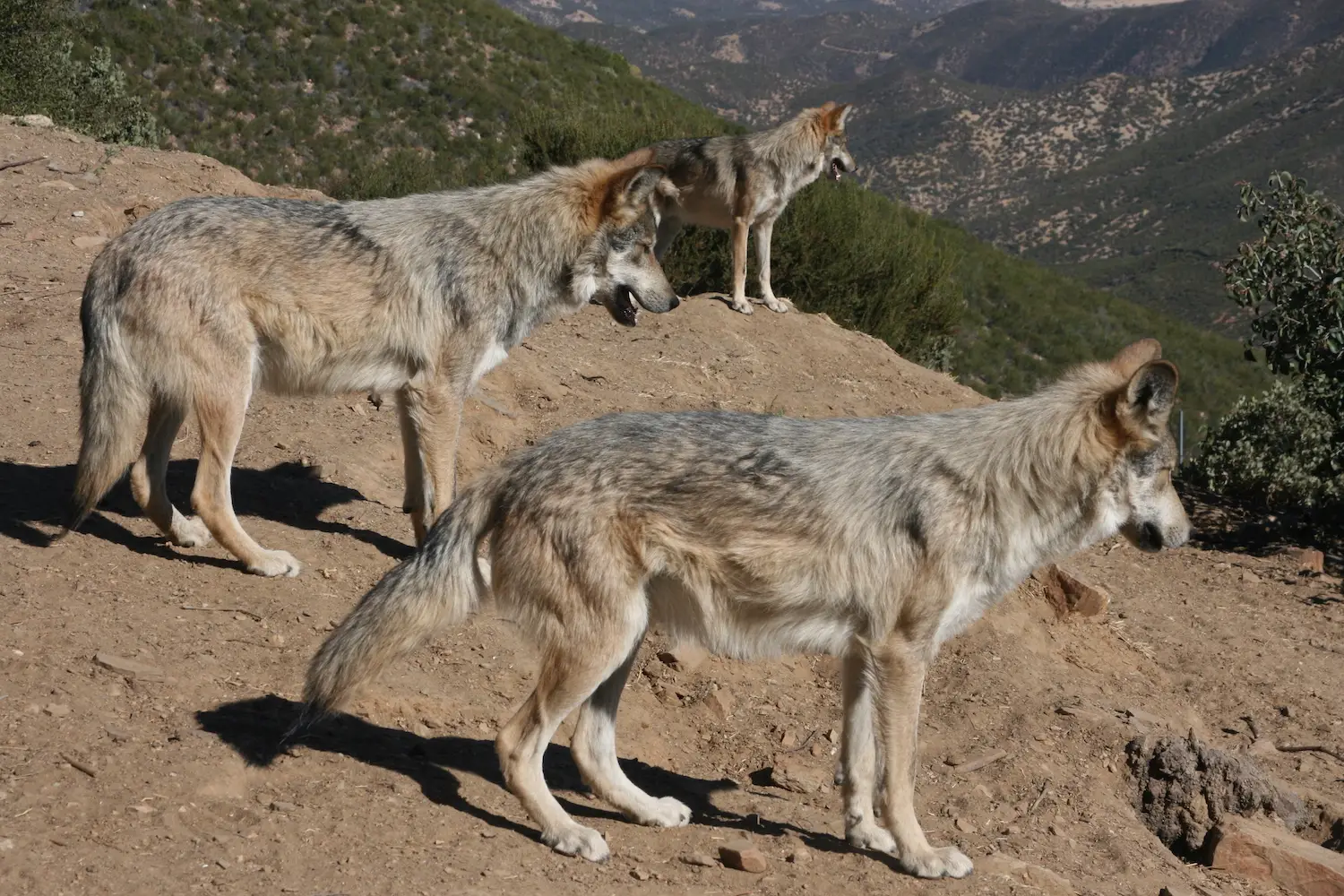

Tucked away on the outskirts of Julian, just a few miles from antique shops and apple pie, is an organization fighting to protect one of the world’s most misunderstood predators.
In 1977, Paul and Judy Kenis opened the Julian Center for Science and Education, now called the California Wolf Center. They and their original pair of northwestern gray wolves set out to educate the public about wolves and their vital role in the ecosystem. Over the years, additional passionate people signed on, and the movement grew into a mission to create a future in which wolves and humans can safely coexist.
“What inspires me most about this work is seeing how understanding transforms fear to awe and respect,” says Christine Barton, executive director of the California Wolf Center. “When people experience these animals up close, it changes the way they think about wolves and wildness, the balance in nature, and our shared responsibility to protect them.”
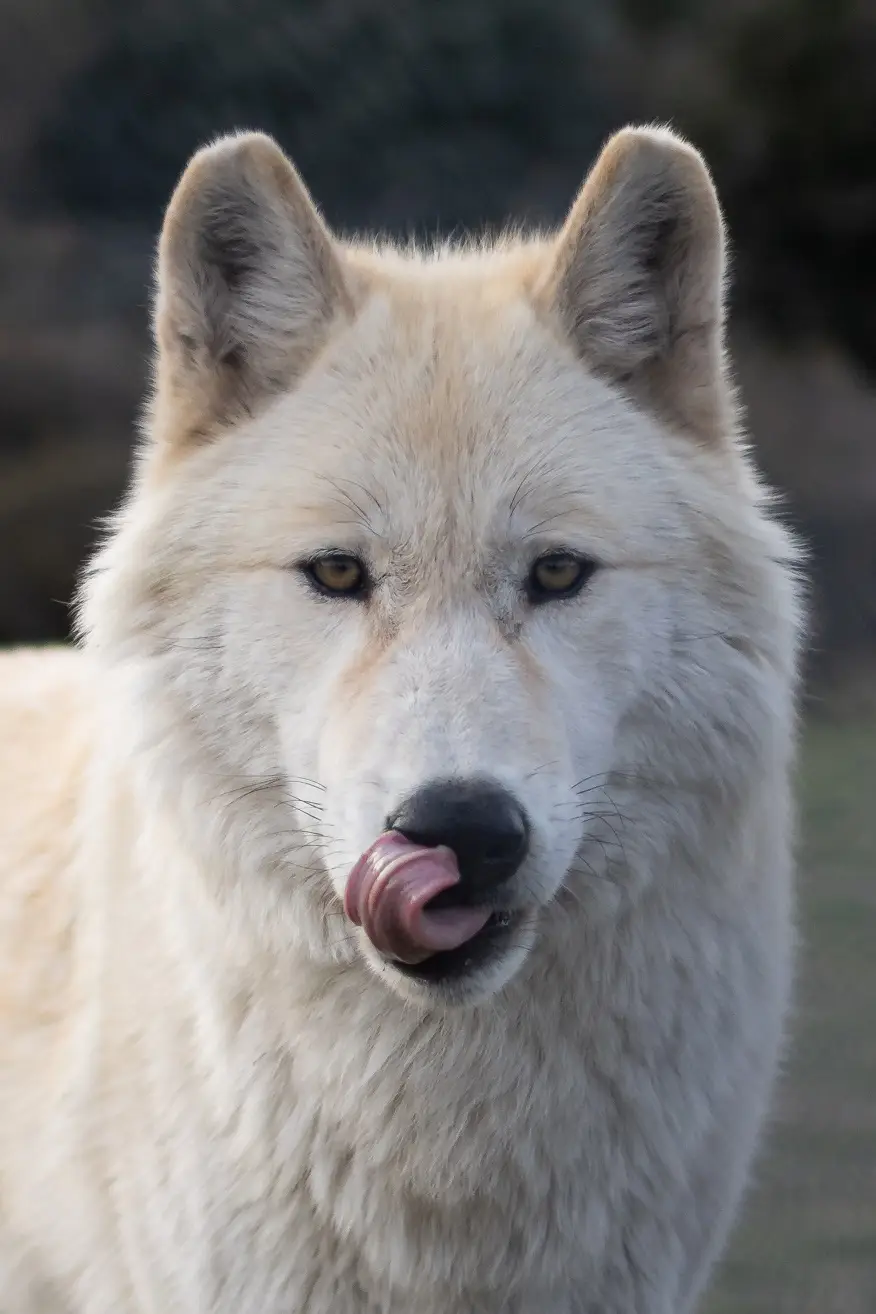
Protecting the Predators
There was once a time when wolves were common in California. However, the nomadic predators got a bad rap as a danger to people and livestock, and by the 1920s, wolves were wiped out statewide. The stigma endured for generations, and by the time the California Wolf Center was founded, just 13 of the Mexican gray wolf subspecies were left in the wild.

Though wolves have returned to Northern California, notably starting with an animal called OR-7, who journeyed south from Oregon in 2011, they remain on the state’s endangered species list.
The California Wolf Center has taken a proactive approach to helping the species recover. The organization has been a part of the Association of Zoos and Aquariums’ SAFE (Saving Animals From Extinction) program since 1997. The goal is to increase genetic diversity among the Mexican gray wolf population so more can be reintroduced to the wild. To date, 85 Mexican wolf pups have been born at the facility in the Cuyamaca Mountains. Of the 60 institutions in US and Mexico that participate in the AZA SAFE program, the California Wolf Center is among the top three with regards to the number of Mexican wolves in human care.

The California Wolf Center factors in the human side of the equation, too, working with nonprofits and government agencies to support wolf recovery with cross-fostering, range riders, and field volunteers. It also collaborates with communities throughout the Southwest who share their environment with the returning wolf population, providing information on and financial support for techniques that ranchers can use to reduce wolf-livestock conflict.
“We are one of only a very few organizations that, by raising funds through our Mexican wolf conservation program, donate directly to supporting ranchers and the communities living with Mexican gray wolves in the wild,” Barton says. “It’s important to us to help ranchers and communities, as well as the wolves, because we all have to live together. We supply non-lethal deterrents and fund education efforts to teach practical coexistence solutions on how to peacefully live with Mexican gray wolves in the wild [so] not just wolves can thrive, but the ranchers and communities that share the landscape with them thrive, too.”
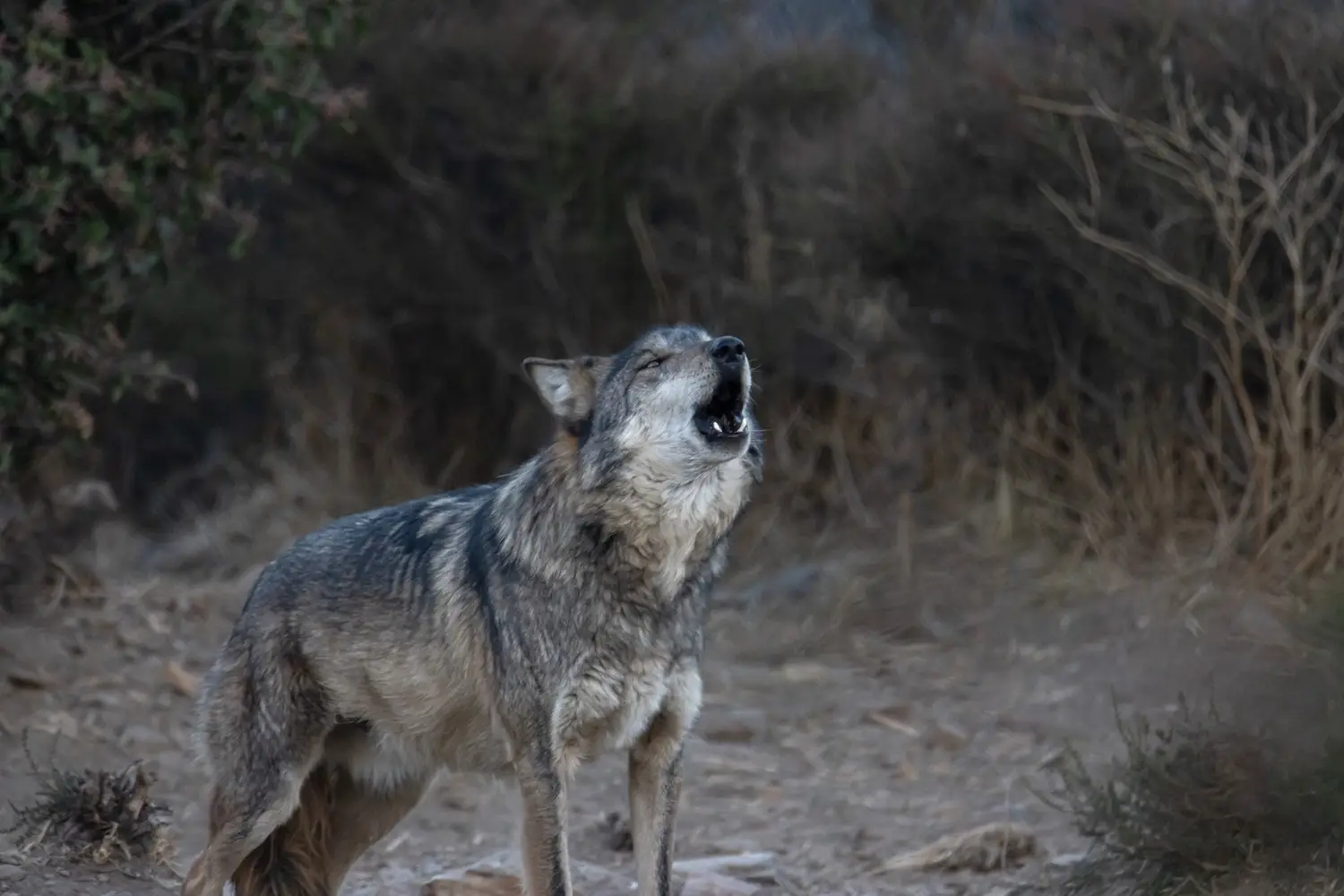
Fighting Extinction with Education
Though conservation groups have made progress in restoring wolf populations over the years, there are only around 286 Mexican gray wolves in the wild in Arizona and New Mexico (no Mexican wolves currently live outside of captivity in California). Conservation efforts still face challenges. Genetic diversity among Mexican gray wolves is limited and, unfortunately, habitat loss and human-caused mortality continue to be issues.
A vital part of the California Wolf Center’s mission is changing perceptions by educating the public about the important role these keystone predators play in the ecosystem. Through education and outreach, center staff emphasize that without apex predators like wolves, environmental systems begin to fall out of equilibrium.
“One of the main things we do is teach about the balance of nature, and the shared responsibility to protect it,” Barton says. A handful of the center’s lupine residents act as ambassadors, and five others are shown to the public locally—the California Wolf Center offers guided public, private, and school tours of the facility. The center’s remaining wolf population is not on display. Instead, the animals on the property live in large acre habitats.
“We work hard to bridge the gap between conservation goals and community realities through collaboration, education, and transparency. We welcome visitors to learn about these incredible animals—Mexican gray wolves and the northwestern wolves that reside right here in California,” Barton says. “We share and educate on how conservation connects directly to healthy landscapes and communities.”
The center also welcomes volunteers and interns who are interested in hands-on experience and knowledge. Some volunteers train with the center’s educational staff. Others who are not so comfortable getting up close and personal with the wolves or their habitat work in the offsite visitor center and nature store in downtown Julian. Interns who are pursuing a career in wildlife conservation, biology, or other life science fields collaborate with staff members to care for the center’s 21 resident wolves and interact with visitors.
Working Toward a Wilder Tomorrow
The California Wolf Center is currently aiming to expand its programs and facilities to engage even more people in wolf recovery and ecosystem conservation, Barton says.
“We’re now looking ahead to an exciting new chapter at the California Wolf Center,” she adds. “We want to fulfill the need in San Diego to want to make an even bigger impact for wolves and wild places, not just with Mexican wolves in New Mexico and Arizona, but with our wolves and wildlife right here in California. I’m really looking forward to sharing that journey with everyone—whether it’s through our programs or educational efforts or by simply helping people connect with nature in a meaningful way.”
But they can’t do it alone. It takes collaboration between different agencies, facilities, and organizations, along with support from the public.
PARTNER CONTENT


“The strength of our mission lies in community—staff, volunteers, partners, and supporters all play a crucial role,” Barton says. “We want to see wolves and other wildlife be here for many, many years to come.”
