
Featured articles
Food & Drink
Food & Drink
Food & Drink
Featured articles
Everything SD
Everything SD
Things to Do
Featured articles
Things to Do
Things to Do

Things to Do
Featured articles
podcast-ep

podcast-ep

podcast-ep
Featured articles

Features

Features

Food & Drink
Featured articles
Everything SD
Partner content
Everything SD
Ready to know more about San Diego?
SubscribeReady to know more about San Diego?
The action and advocacy behind the San Diego nonprofit's fight to preserve our oceans
Determined not to flip the kayak, I paddle hard, straight into the swell, following my guide Lillie Mulligan’s lead. The offshore wind drives a brisk fog atop the San Diego-Scripps Coastal State Marine Conservation Area, challenging our forward momentum. “Paddle harder,” Mulligan yells as our kayak ascends a wave.
I pray we don’t topple over onto a stingray, thinking maybe kayaking isn’t the best tactic to get acquainted with our coast. Though I’ve lived in San Diego for four years, I have an embarrassingly flimsy relationship with the sea. In summer, I occasionally paddle board the bay, boogie board Moonlight Beach, toss tennis balls for my dog in OB, or amble along Sunset Cliffs. But after reading that La Jolla Cove boasts the densest variety of animal life at any US beach—even those in Hawaii or Alaska—I couldn’t help becoming curious about our front yard, a destination that over 4 million people visit annually.
Which is how I found myself here, battling the surf with Mulligan, an ocean conservation coordinator for local nonprofit Wildcoast, an environmental organization co-founded by whale scholar Serge Dedina and turtle conservationist Wallace J. Nichols 25 years ago. Today, Dedina still helms Wildcoast, but he’s quick to give credit for the robustness of La Jolla’s marine protected areas (MPAs) to his staff—70 percent of which are women.
“Look at all these people recreating,” Mulligan exclaims, motioning at the clumps of kayakers and paddle boarders mingling outside the caves in the MPA that Wildcoast actively monitors. “They’re here because they know they will see marine animals.”
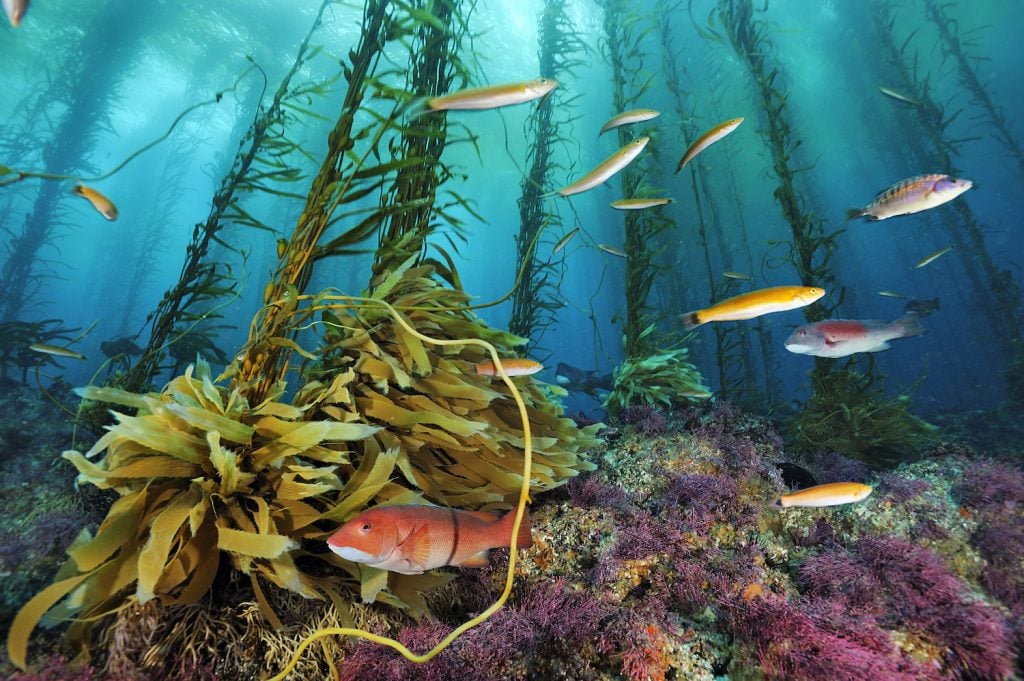
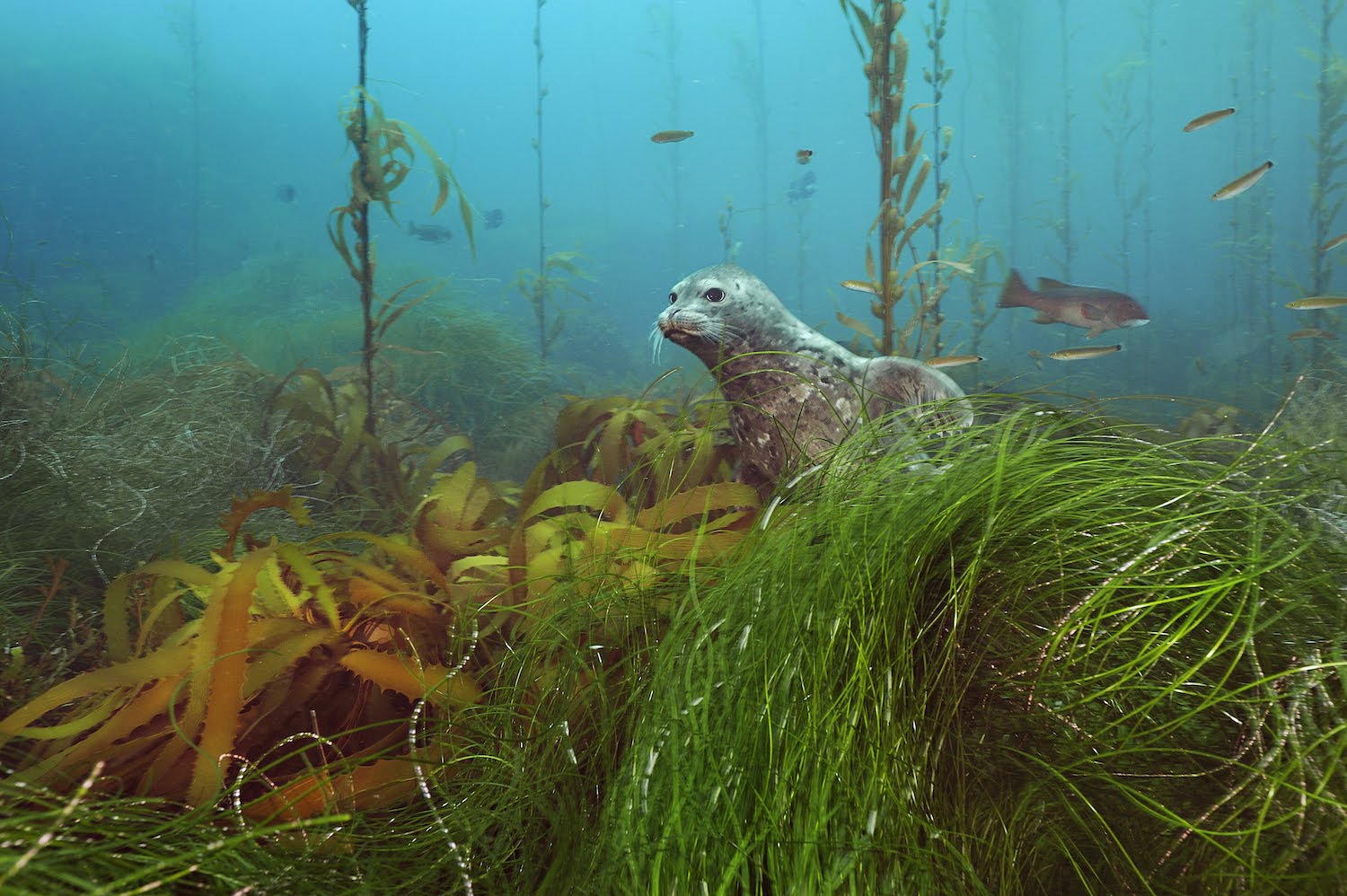
She points out silvery bait fish darting amid kelp forests, along with orange Garibaldi (California’s state fish), leopard sharks, cormorants, and pelicans, all markers of ocean health. “Look for the green sea turtles,” she adds, tying her hair into a knot and peering into the water. “La Jolla has four.”
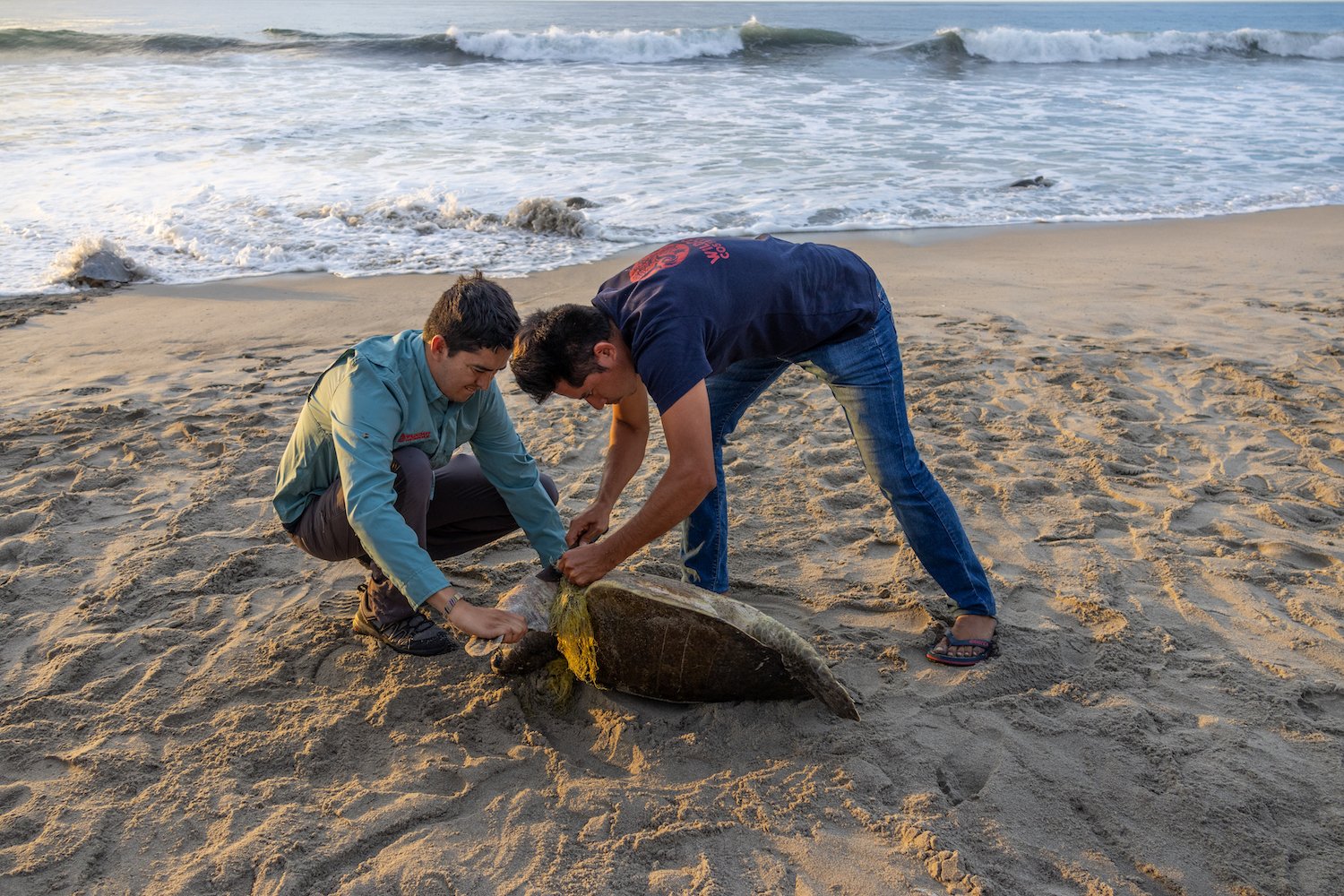
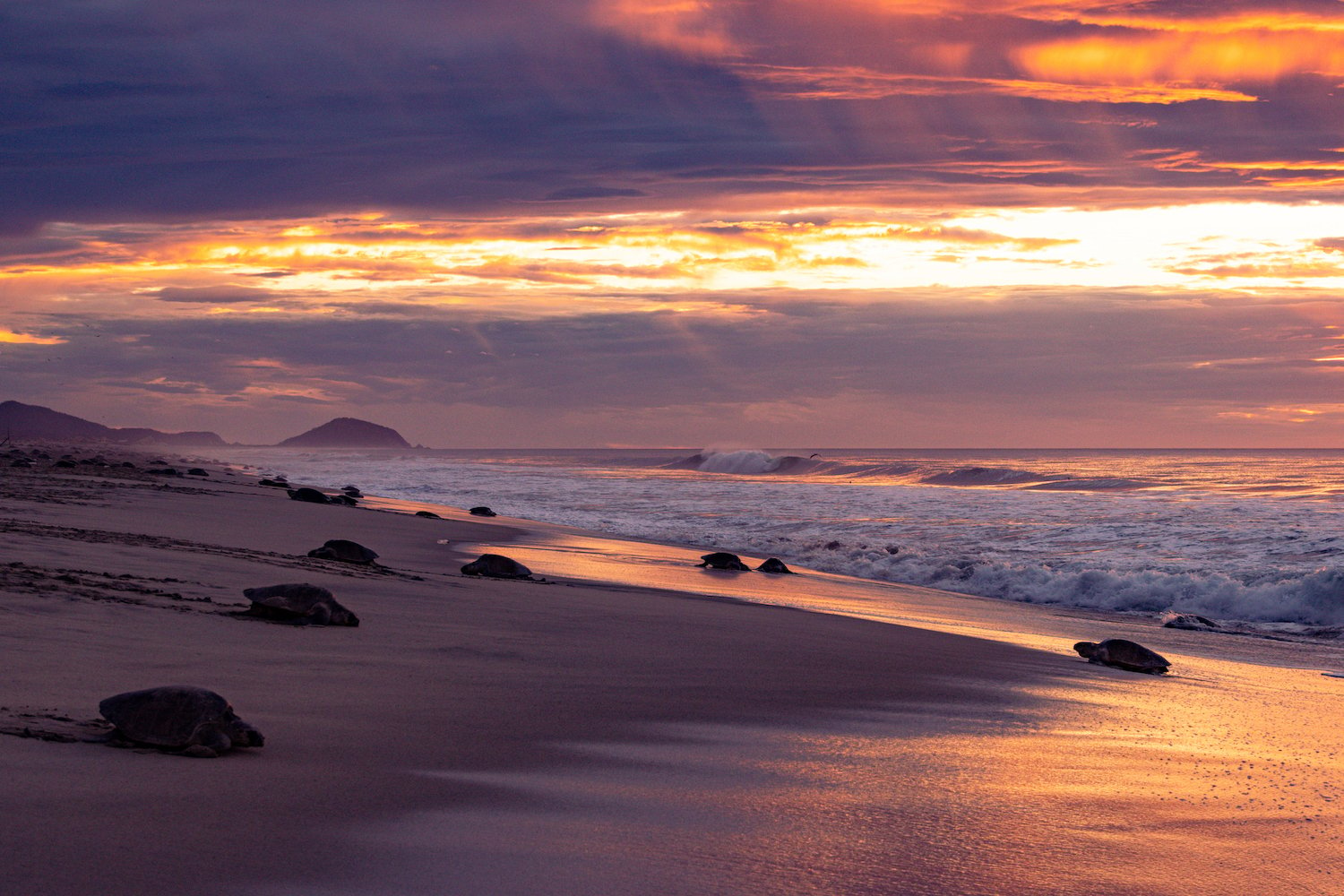
Dedina calls the Eastern Pacific green sea turtle one of Wildcoast’s biggest success stories. When he and Nichols were young PhD candidates surfing southern Baja, they only ever saw dead turtles. Over 30,000 were slaughtered annually to serve as a pre-Viagra food that purportedly increased male virility.
Wildcoast’s earliest campaign, masterminded by communications and policy director Fay Crevoshay, rallied the pope to speak out in support of protected places for nesting mothers. The team put up signs on beaches, on billboards, and in newspapers; on them, a model posed beside the words “My man doesn’t need turtle eggs, because he knows they don’t make it more powerful” in Spanish. This got locals educating their neighbors about not eating turtles.
The latter became a key part of Wildcoast’s approach: Start small by encouraging residents to protect their wildlands. Rather than having some outside wonks policing fragile ecosystems, collaborate with folks on the ground, teaching and inviting them to become invested in safeguarding their backyards from harm. Turns out that working with Mexican communities to protect sea creatures south of the border benefits the overall health and diversity of San Diego’s coastal regions, too.
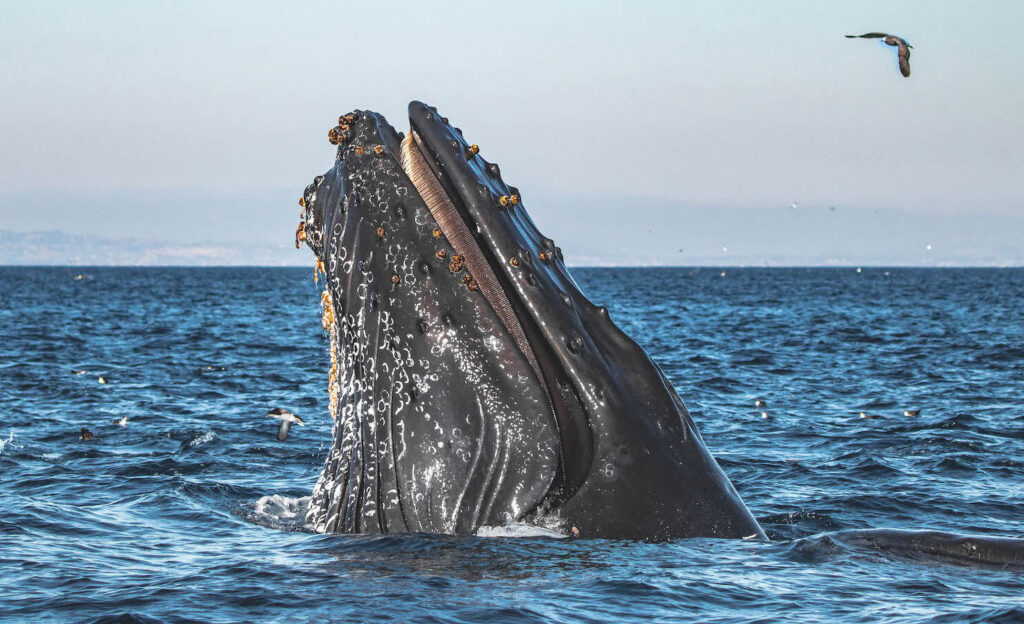
After seeing too many stories of blue whale sightings off San Diego’s coast to ignore, I book a summer whale-watching trip. Eager faces peer into the blue, seeking an Instagrammable moment. As La Jolla’s palaces shimmer atop fragile sandstone cliffs, docents wax poetic about San Diego’s rich waters. It is possible to see whales year-round here: gray, humpback, orca, fin, Bryde’s, blue.
“Whales rebounded because we stopped whaling,” says Russell D. Moore, whale-watching boat captain with Xplore Offshore. “Today, our waters are a testament to a well-managed biosystem. Wildcoast has contributed to that.”
It’s true. Twenty-five years ago, a coalition of conservationists, including Wildcoast, stopped Mitsubishi from constructing a massive salt mine in San Ignacio Lagoon in Baja, an important gray whale breeding site. Five years later, the team helped to permanently safeguard 450,000 acres there. Today, that space is a marine protected area and a UNESCO World Heritage Site. With their breeding site preserved, the whales are thriving.
“More whales mean we have another problem,” Moore says. “San Diego is the Wild West of whale watching—boats are harassing whales by getting too close.”
So, in response, Wildcoast’s Ann Wycoff, Annelise Tappe, and Devon Lukasiewicz developed the Protect the Locals campaign to educate whale-watching guides and visitors on the importance of keeping a safe distance, so our beloved whales’ breeding and migration patterns aren’t disrupted by our adoration.
On my whale-watching venture, none grace us with their presence. Surprisingly few visitors appear disappointed. Rather, people seem energized by the salty wind on our faces; the pod of dolphins that swoops in to say hello isn’t a shabby consolation prize, either.
Another morning on the water, this time on a speedboat gliding north from Mission Bay. The resident dog, a mutt called Captain, sits next to Joe Cooper, the boat’s true captain, barking whenever she spots a sea lion or dolphin.
Despite my kayaking struggles, Mulligan and Cooper invited me on one of their monitoring excursions to educate fishers about marine protected areas. San Diego County boasts 11 MPAs: Tijuana River Mouth (Tijuana Estuary), Cabrillo (off southern Point Loma), Famosa Slough (between Old Town and OB), two in south La Jolla, Matlahuayl (La Jolla Caves), San Diego-Scripps (La Jolla Shores), San Dieguito Lagoon (Del Mar), San Elijo Lagoon (Escondido), Batiquitos Lagoon (Carlsbad), and Swami’s (Encinitas).
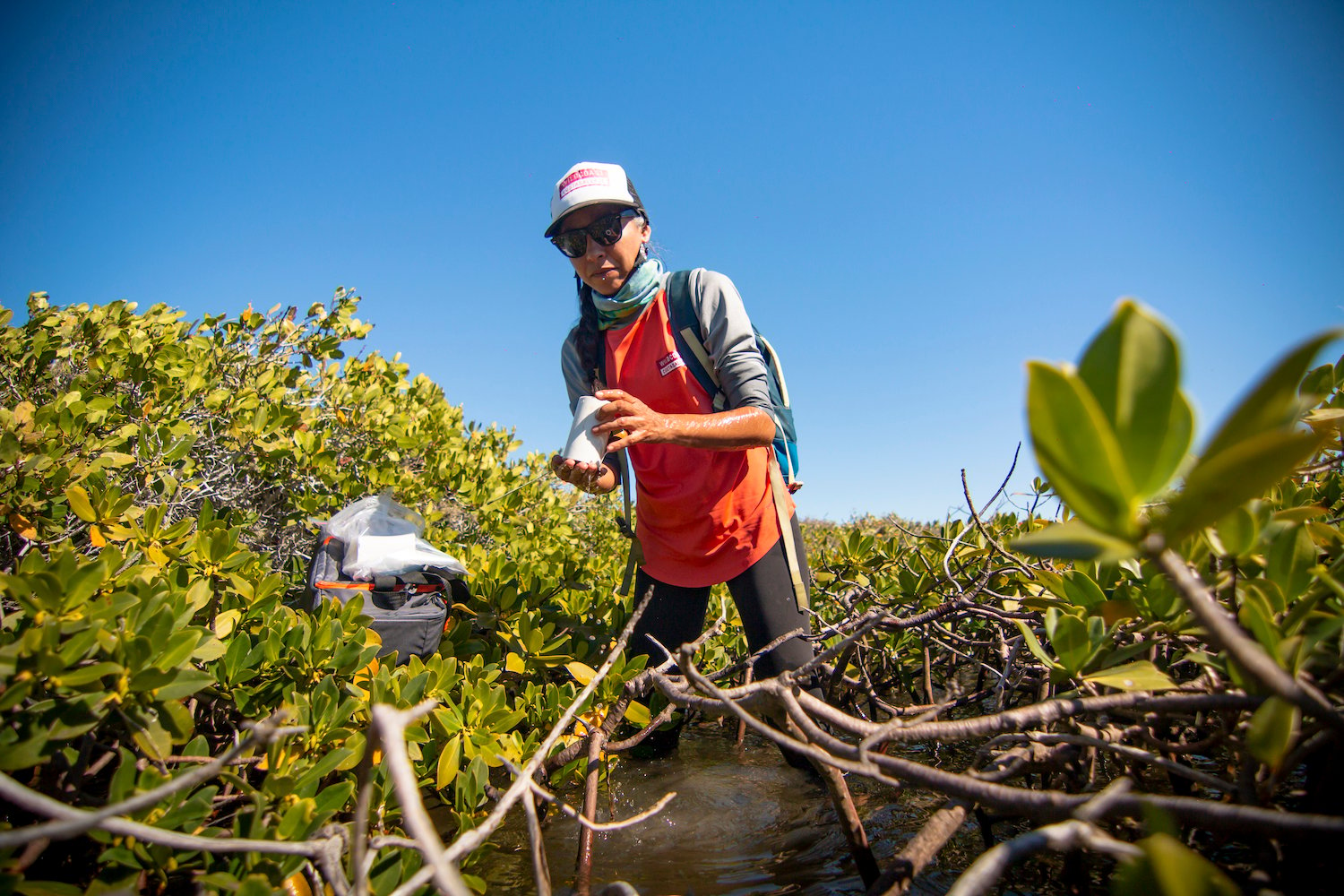
In 2012, Wildcoast teamed up with NGOs and government officials to designate and protect important keystone coastal regions, like rocky reefs, kelp forests, and wetlands. Matlahuayl State Marine Reserve, which roughly translates as “land of many caves” in the area’s Indigenous Kumeyaay language, houses pregnant leopard sharks who come to bask in the warm waters, a tactic that shortens their gestation period by two months. Swami’s is the only kelp and eelgrass habitat between La Jolla and Palos Verdes.
The health of MPAs depends on compliance of no-take zones—areas where you cannot pull anything from the water, including fish. MPA Watch, San Diego’s citizen science group, monitors on land. Lifeguards and state park officials also supervise from shore. Wildcoast uses boats and radars to ensure no one fishes inside the MPA boundary.
For now, Wildcoast’s efforts appear to be mostly working. On a recent holiday weekend, Mulligan explains, they’d encountered a few boats fishing in the MPA, but most folks said they just didn’t know there was a boundary they couldn’t cross.
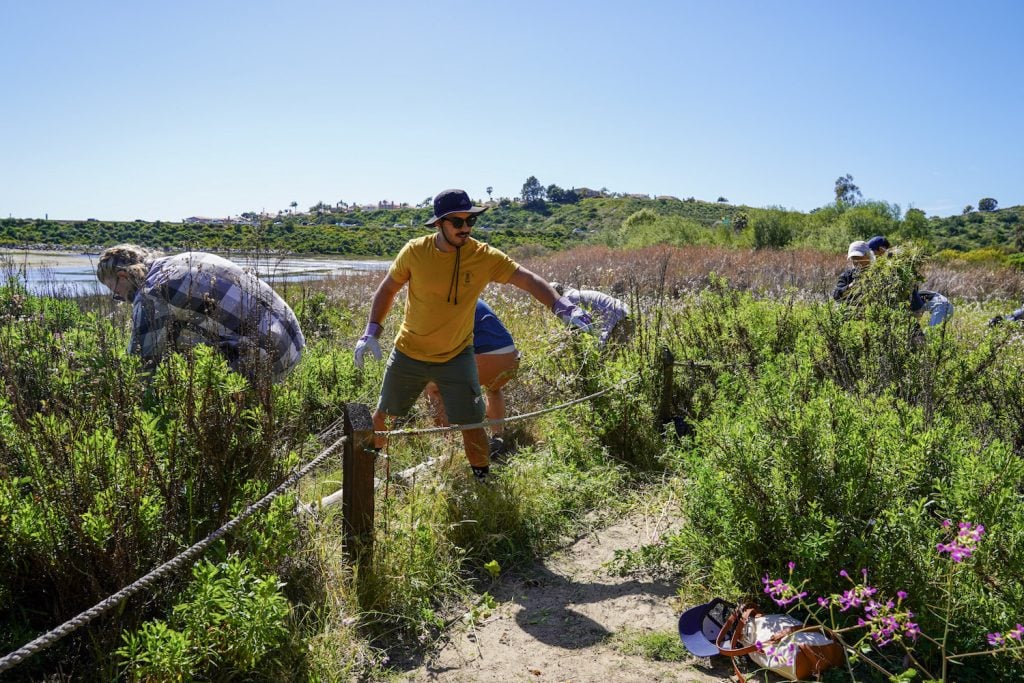
Mulligan often approaches these teachable moments with data, citing a 2022 Decadal Management Review proving that species diversity in MPA intertidal habitats is higher and more stable than outside MPAs and fish are more abundant, are larger, live longer, and produce more offspring. Another study showed MPAs may be more resilient to heatwaves, too. And, because species that become abundant in the MPAs leave the areas’ boundaries and increase populations in the surrounding waters, their success creates a domino effect.
Just before we head back into Mission Bay, Captain the dog lifts onto two legs and starts howling. A massive pod of dolphins leaps into our wake. There have to be 50 small cetaceans surrounding us, playing together, finding the dolphin equivalent of joy. Mulligan kicks off her shoes, gleeful.
“This never gets old,” Cooper says. His sunkissed face explodes into a grin.
Mulligan points at the dolphins vaulting around the boat. “They are why we do this.”
My tour of San Diego’s MPAs takes me to all but one: the Tijuana River Mouth State Marine Conservation Area. Once a gorgeous southern California wildland with perfect surf, today the area is an environmental travesty plagued by pollution.
Despite Wildcoast’s knack for pulling off feats of conservation in unlikely places, even Dedina, former mayor of Imperial Beach, cannot yet do away with the 60 million gallons of raw sewage seeping into the ocean each day. This year, South County waters have been too polluted to enter for more than 1,000 days. The situation is now the longest-lasting environmental disaster in US history.
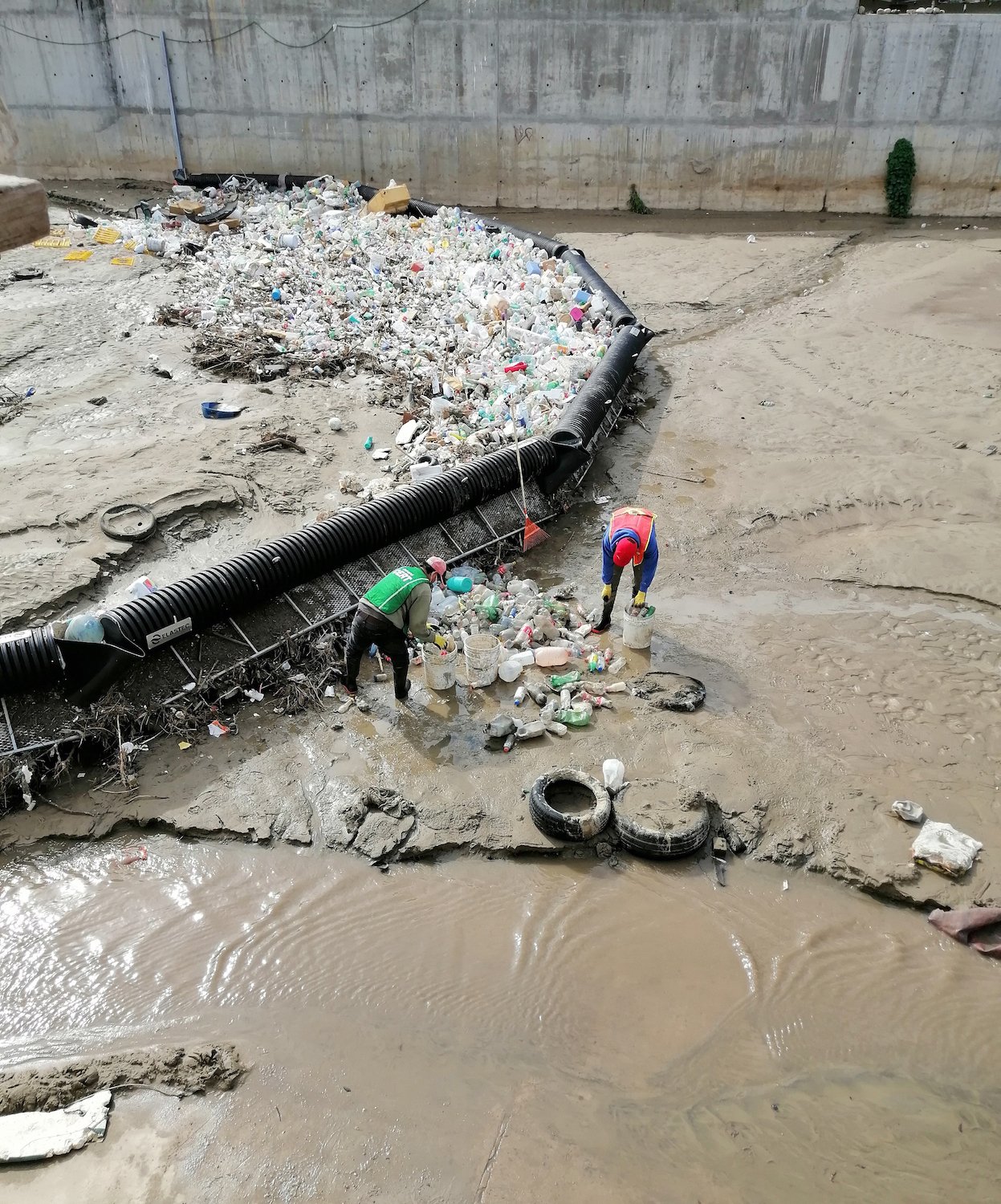
Still, Wildcoast is doing what it can. The nonprofit’s marine debris manager in Tijuana, Rosario Norzagaray, is leading an educational campaign to teach locals not to toss garbage into the river. In addition, in 2021, her Wildcoast team installed a trash boom, a durable structure that catches river debris before it reaches the ocean. To date, they have collected over 250,000 pounds of garbage, repurposing old tires into playgrounds, building materials, and even structural foundations to halt hill erosion. In October, they placed a second boom, with hopes to add more in the coming years.
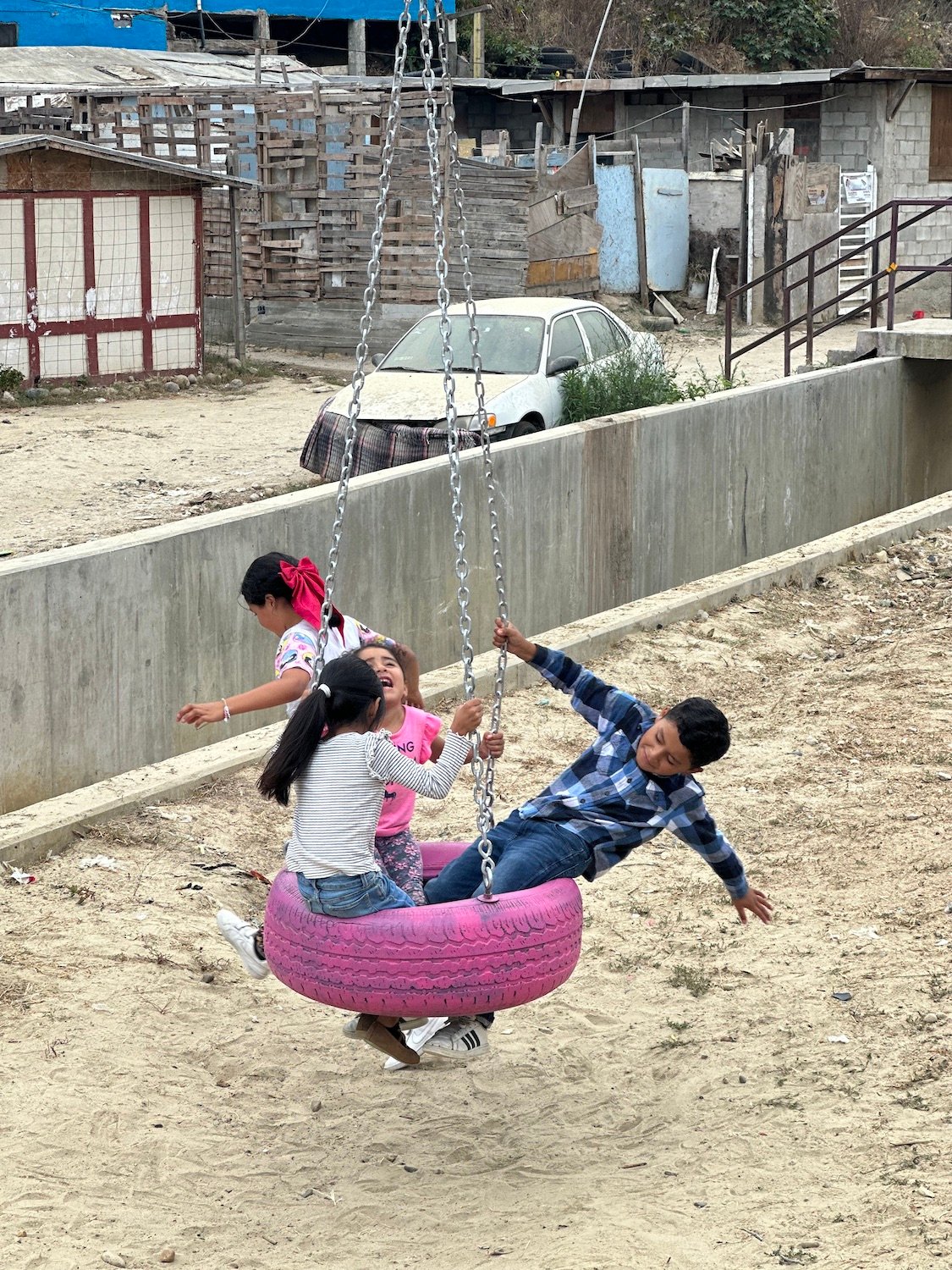
In addition, Norzagaray and her team have incentivized plastic as currency, adding a financial benefit to encourage residents to fight pollution in their neighborhoods. “Educating locals and installing trash booms doesn’t just empower communities,” Crevoshay says. “We’re stopping trash from floating up to San Diego.”
All this traveling through our region with Wildcoast shifted something in me. I’m no kayaker, but I’ve started regularly snorkeling, swimming, and paddle boarding in La Jolla. The ocean is no longer a stranger to me. There’s treasure here; I like to engage with it. And when I do, I often remember something Dedina told me.
“We cannot allow the problem to overwhelm the solution,” he said. “You can support efforts to safeguard and steward the place in San Diego that brings you joy, or you can ground yourself in despair. Why not ground yourself in solving the problem?”
Editor’s Note: The print version of this article, published November 2024, mistakenly stated that San Diego has six MPAs and misstated the amount of garbage collected by Wildcoast’s trash boom. We have also removed an incorrect quote.

Writer, author, dancer, explorer and educator Michele Bigley recently relocated to San Diego from the Bay Area. Her work has appeared in the New York Times, Afar, Wired, Sierra, Via, Westways, Los Angeles Times and many more. Follow her adventures at @michelebigley
San Diegans are finding connection in gardens, shared produce, neighborhood gatherings, and simply sitting outside
Front yards. They used to be the most controlled part of a home—or not. They could be tidy with manicured lawns, have raised vegetable beds with food for sharing, or act as an overflow of things that didn’t quite make it inside. Thank you, capitalism, and the American habit of endless consumption. In Lemon Grove, where I live, it’s not uncommon to see a mechanic running a business from his front yard or a family selling birria on Saturdays from theirs. The front-yard genre is broad.
But in communities across San Diego County, the most exposed part of a house—the strip between public and private life—is being turned into something eminently usable, visible, and hang-outable. At first glance, this may seem decorative, but in creating an intentional space, particularly one that’s visible to neighbors and passersby, it’s also the release of a pressure valve.
Let’s not gloss it over: American life has taken a hard right at high speed; two wheels have lifted off the pavement as we careen toward who-knows-what, and our nervous systems are making a sound best described as zoinks!
People are trying to (re)build connection in an increasingly isolated culture, (re)find beauty in the midst of endless anxiety, and (re)create a system friendly for critters. Many of us are remembering that, Oh yeah—we’re biological creatures.

Landscape designer Andrea Doonan, of Andrea Doonan Horticulture + Design, is a certified arborist with more than 20 years of experience collaborating with homeowners and renters. She rejects sterile, white picket fence designs and places a strong emphasis on edible gardens and usable outdoor spaces. When we speak, she mentions the unusually wide range of plant and animal life in the relatively small size of our region, making us a “biodiversity hotspot.” (San Diego is the most biodiverse county in the Lower 48.) Because of this, we have a unique system of endangered species that rely on plants to survive.
“More and more, people are introducing native landscapes to connect to nature and support birds, butterflies, and bees,” Doonan says. “I’m very passionate about getting people to unplug and ground.”
Whether it’s for a love of all creatures, our climate, or water conservation, Doonan describes a broader shift toward habitat-driven spaces that are both aesthetic and ecological. For her clients, this can mean replacing turf with native planting, adding seating areas, or even rethinking the front walk as an active, planted threshold rather than just a green lawn. “There’s this idea that people want to make a difference,” she says. “But they also want a place to entertain, recreate, and ground.”
At the center of this is a simple but increasingly urgent question: How can small design choices ripple outward into community life?

For Doonan’s client Lee Miller, that shift is fully expressed. After remodeling the interior of his Pacific Beach home, Miller focused on the backyard, thinking that would be the place for his soon-to-be-born daughter to eventually play. The front yard of his corner property was the last detail to be completed.
Miller said he wanted “a very full, very natural look versus having everything measured.” He knew what he liked when he saw it, but it was Doonan who translated his ideas and guided the creation of a wildlife-friendly space with full-grown orange, plum, and pluot trees. “We have lots of birds, lots of bees, lots of lizards,” Miller says. “There’s nothing better than walking outside and eating fruit off a tree.”
The front yard has become where Miller’s family spends time—often more than the backyard. He and his daughter, who’s now 5, explore the space together, checking what’s growing, learning about their little ecosystem, and chasing lizards. It’s where his daughter plays, where she’s built her own fairy garden, and where neighborhood parents and kids tend to gather at the end of the day.

For her own Normal Heights home, Doonan designed a front yard that includes a seed library, raised beds, native plants, and a sitting area where she and her husband spend time. “I’m meeting my neighbors because I put two chairs and some plants in the front yard,” she says. “I’m sharing produce with them.”
That exchange has become part of the landscape itself, and she points to small systems (like seed libraries) as ways of circulating plant material and knowledge directly between people. In real life. Person to person.
More and more, Doonan says, when we’re talking about solving the big problems, it’s important to remember that everything starts local. Even “guerilla gardening”—small acts of informal planting and care in overlooked sections of land, such as parking strips—makes a difference. Tossing some seeds and adding a bench to the sidewalk strip out front can create a “pocket park” or “a mini-mini park.” In that framing, the front yard stops being an ornamental backdrop and starts becoming an infrastructure for connection.
Landscape architect Bret Belyea frames this front-yard movement (my term, not his) as social repair. “It’s a handshake to your neighbors and passersby,” he says. “It says something about who you are.”
Of course, plant choices matter, but not only for ecological reasons. Native and climate-appropriate plantings become part of how neighborhoods re-establish contact with each other, even without formal planning. What he describes is an aesthetic, but it’s also relational in the way a yard can signal openness rather than withdrawal, invitation rather than separation, and connection rather than, “Get off my lawn, ya damn kids!”
Hanging out in the front yard rather than sequestering in the back is a signal to outsiders that they’re really not outsiders at all. Or, at least, they don’t have to remain so.

Not every front yard in this shift toward social spaces has a professional’s influence. Some are created through labor, trial and error, and nostalgia. For Grace Wanjiru, the memory of her childhood in Gitaru, Kenya, led her to beautifully DIY the hell out of the front part of her half-acre Encanto property. When she bought her home nearly two decades ago, it was essentially just a little house plunked down on a giant plot of dirt. She had a blank slate and plenty of memories from which to create something that would imbue the space with peace and hospitality.
The designer-led yards are often framed through an academic understanding of ecology, structure, and intentional planting strategies, and Wanjiru did much of the same thing through instinct. When she’d visit her mother, who lives just outside of Nairobi, she was reminded of the abundant beauty and vibrancy of a childhood spent running free, climbing trees, and being connected to nature. It was important to Wanjiru that her then-young daughters, both now in their early 20s, have that experience.

Wanjiru’s goal was to create the feeling of home, not as replication but as translation. “When you throw a seed in Kenya, something grows,” Wanjiru tells me. “Here, the dirt is horrible for plants. I still wanted green and color. I wanted nature—birds and insects. I grew up with nature, but here: No.”
With an understanding of what would and wouldn’t grow in San Diego, Wanjiru was able to achieve a sense of home with succulents and native plants she purchased at Walmart. She created a large courtyard with a fence built of wood and corrugated metal. Inside, she added a hammock and a bird bath, which Wanjiru settled on after gophers ate through seven different plants; a table with an open cookbook, a bottle of wine, three glasses; a weathered dresser—once in her daughter’s room—that now sits opposite the table and contains Wanjiru’s many seeds. And, of course, strung lights.
The space feels rustic, comforting, personal, emotional, and magical. It feels like love.
Wanjiru likes to host small groups of her friends and family, keeping it intimate but accessible. “This is the kind of house you just call: ‘What are you doing? Are you making your African tea? Can we just come over?’ Because this is what they do [in Kenya],” she tells me. “And so I always want to have that, because I think for foreigners living in America, that’s one of the things we struggle with. We don’t have that kind of community.”
Craving a communal feeling, Wanjiru built it herself. And her kids grew up climbing the jacaranda tree and playing in the garden.
“We still gather out there,” she says. “We read in the hammock, talk, connect.”

Perhaps the most important part of a front yard is a garden, whether it’s a space for entertaining and gathering, retreating and grounding, discovering and playing, resting and people-watching. The science backs up what gardeners have long known: Spending time around plants can be profoundly restorative. A 2024 review of dozens of studies found that gardening is consistently associated with better mental health, greater well-being, and improved quality of life, also linking interaction with plants and green spaces to better nervous system regulation.
For Doonan, this is part of why the conversation around gardens is bigger than aesthetics. “Gardens are for everyone,” she says. “I think it’s a right for all of us to have access to gardens.” “All of us” means homeowners and renters, people with sprawling yards and people with apartment balconies, people with large budgets and people growing herbs in containers from the discount rack at Home Depot.
In my conversation with Belyea, I tell him about a little house I passed in Oceanside this past spring. The owners set out free avocado clippings from their tree for anyone to take. “This is people’s way of putting an olive branch out,” he says. “And it just happens to be an avocado branch.” Maybe that’s what this front-yard shift is really about. Maybe it’s about trying to remember how to live alongside one another again. A hammock beneath string lights. Kids chasing lizards through native plants. Someone slowing to ask what’s growing. A neighbor stopping by and staying longer than they planned to. All of it, a pocket of softness in a culture that’s trying its damndest to make us harden.
Aaryn Belfer is a writer and editor specializing in nonfiction across art, architecture, and culture. Once upon a time, she wrote a provocative column for San Diego CityBeat (RIP). She was a runner up in the 2025 Matchbook Stories contest at the San Diego Central Library and is irrationally happy about it. Currently in her Soft Girl Era, Aaryn has expensive taste in (mostly flat) shoes and will choose a great art exhibit or live jazz concert over almost anything else. Except, possibly, Javier Bardem.
Enrique "Oz" Espinoza turned a high school tradition into a growing San Diego creative club built on collaboration
Back when Enrique Espinoza was a student at Southwest High and San Ysidro High, his mom couldn’t afford to buy him the school yearbook. So he made his own. Every spring, he brought a new marbled composition book to pass around, collecting signatures, photos, and messages from friends. By senior year, he was finally able to get his hands on the “real” yearbook, but at that point, he preferred the personal, collaborative project he’d started: a record of how people could come together to create something from nothing.
Espinoza—“Oz” to friends—got serious about photography a couple years later at Southwestern College, shooting for esport leagues and connecting with other artists all the while. Then in 2024, his childhood friend Charlie Knowles, cofounder of Bica Coffee Shop in Normal Heights, got in touch: He was looking to host meetups for creatives at the café, and he remembered how much people enjoyed contributing to Oz’s DIY yearbooks back in high school. Why not make more?
So Yearbook Creative Club launched on November 23, 2024, at Bica, with the goal to connect local artists, and ultimately make a book showcasing one another’s work. Since that first meeting, the club has become a social hub for creatives, also running art shows, galleries, a holiday toy drive, and a booth at the inaugural San Diego Bazaar winter marketplace. Yearbook also often collaborates with Camera Exposure, Southern California’s largest used camera store and photo studio, which has been a nexus for San Diego photographers in Normal Heights for nearly 40 years.
And though Oz provided the spark, he emphasizes that the club is, at its heart, a group endeavor: six photographers form the “Yearbook Committee”—including entrepreneur baker Samra Lovelady and Brian Eastman, chief experience designer of San Diego hospitality collective CH Projects—but everyone with an artistic eye is welcome. In Camera Exposure’s blog, Developing Stories, writer Austin Siragusa characterized Yearbook as “a community-first collective that deters gatekeeping and neutralizes imposter syndrome in favor of an open-door policy to foster trust and skill-sharing, regardless of follower count and portfolio length.”
The club published Yearbook Vol. 1—a limited-edition, entirely self-funded, 170-page glossy hardcover with the same spirit as Oz’s high school books—last April, celebrating with a launch party and gallery at the headquarters of Tribal Streetwear in San Diego’s East Village. About half of the 30 artists represented in the book are local; the rest are extended contacts from New York, Miami, and San Francisco. “Yearbook is San Diego-based,” Oz says. “San Diego is the home, but art is everywhere, and I want to be sure that San Diego is in that conversation of bringing artists together.”

The cover artist for Vol. 1, Gary Lockwood, gave a copy to Dante Rowley, manager of retail and visitor experience at the Museum of Contemporary Art San Diego (MCASD). Turns out, Rowley knew Oz from his days running the gallery and streetwear store Rosewood in the East Village, and he promptly reached out to see how MCASD and Yearbook could collaborate.
The museum began hosting a series of bimonthly photo walks around La Jolla in partnership with Yearbook.
Anyone interested in improving their camera skills is invited: Rowley says they always have a good mix of beginners and more experienced photographers, which leads to helpful conversations about how to get one’s aperture settings just right, or tips on how to compose the best shot.
The museum began hosting a series of bimonthly photo walks around La Jolla in partnership with Yearbook. Anyone interested in improving their camera skills is invited: Rowley says they always have a good mix of beginners and more experienced photographers, which leads to helpful conversations about how to get one’s aperture settings just right, or tips on how to compose the best shot. The walks are scheduled to end at the museum in time to segue into another event: March’s walk led into a live jazz band performance; May’s led into the museum’s entry-fee-free Second Sunday.
Yearbook Vol. 2 came out in late May 2026 with a release party of over 300 attendees and a partnership with 100 Thieves. This volume features a greater variety of media, including digital illustration, graffiti, and tattoo art. The club is also planning to publish an additional book in partnership with MCASD, composed exclusively of work taken during this year’s photo walks—anyone who participates is welcome to submit. Rowley says he hopes to celebrate that book’s launch with a community gallery, as part of an ongoing effort to show that art museums are not just reserved for the great, dead Old Masters. There’s space for you and me, too.

Yearbook meets several times a year at Bica, and Oz says there are always new faces and drop-ins from other local photography groups, such as Girls on Film and Beers and Cameras. Several lapsed amateurs have told him that simply showing up and feeling welcome has inspired them to pick up their camera again.
As more people seek a digital detox by turning back to screen- or AI-free art forms—Talker Research reported this January that 50 percent of adults are turning to a more analog life via paper books, vinyl records, and actual cameras (not the one in your phone)—Oz says that most people he knows still shoot on film, which has a relatively low barrier to entry. “A film camera is a lot friendlier on your wallet,” he says. “For, like, $150 you can get something comparable to a $900 digital camera.”
And though he admits he’s usually “a digital guy,” Oz notes that working with film is an antidote to digital fatigue and endless scrolling. “A lot of people like that process,” he says. “There’s a philosophy that comes with shooting on film that makes you want to slow down and appreciate the shot.”
The next Yearbook Creative Club photo walk is July 12 at 1 p.m. at MCASD in La Jolla, led by Enrique Espinoza and Brian Eastman.
Dan Letchworth is the copy chief of San Diego Magazine. His print column Dansplaining explores San Diego trivia, and his theater review blog Everyone’s a Critic was a finalist for best online column in the 2019 National City & Regional Magazine Awards.
We found a handful of inspiring people who live in, and truly know, these 'hoods and asked them how they’d spend their time out and about
Growing up in Carlsbad, I never quite understood why people vacationed there. What, so you want to check out the field where I have soccer practice? Pay my orthodontist a visit? Carlsbad just felt like a town by the beach, no better or worse than any other in the country. It took going to college out of state for me to actually understand just how rare a place like Carlsbad is.
Thanksgiving break my freshman year, my first time coming home after three months in the Midwest, my shoulders dropped. I rolled down the windows and drove to lifeguard tower 37—the hangout magnet for Carlsbad’s youths (and, in the summer, tourists)—and the smells of the ocean woke me right up like smelling salts do. I finally got it.
Carlsbad isn’t just a stopover town on your way to something better. It is the destination. Travel + Leisure named Carlsbad one of the top 50 places around the world to travel in 2026. From the whole globe, the travel magazine picked my home. Sure, we’ve got the Flower Fields and Legoland—but now it’s the smaller ships and indier dreams that are giving it street-level character.
It’s not just Carlsbad, either. People have talked about the “North County bubble” for decades—a force field that prevents its residents from traveling south of the 56. It’s often used derogatorily, and it’s a fairly accurate burn.
For decades, living up in North County meant giving up on culture, or at least culture within close proximity. But now, the main expansion of San Diego culture is happening up north. Central San Diego restaurants have started taking notice and are expanding into the area—spurred no doubt by Oceanside’s food boom and the Jeune et Jolie–Campfire–Wildland–Lilo constellation in Carlsbad. City Heights burger joint Key & Cleaver opened a new spot in Oceanside; the owners of Parc Bistro-Brasserie in Bankers Hill opened Parc Lounge in Rancho Santa Fe. Possibly the strongest market indicator is that Sam Fox—one of the most successful restaurateurs west of the Rockies—has started focusing on North County for his concepts. In 2025, he opened both The Henry in Carlsbad and Culinary Dropout in Del Mar.
For the ultimate insider guide, we found a handful of inspiring people who live and create and truly know six North County neighborhoods—San Marcos, Escondido, Oceanside, Leucadia, Rancho Santa Fe, and Vista—and asked them how they’d spend a dream day out and about in their town.

San Marcos is in full renaissance mode. The biggest story is that the grand North City vision is starting to peek through the scaffolding. It’s essentially the North County Downtown that’s been written in the tea leaves and discussed whenever someone gets stuck in traffic at the 5/805 merge: a 200-acre, pedestrian-friendly, mixed-use face-changer that’s slated for 2,600 homes, 350,000 square feet of retail and restaurants, 250 hotel rooms, and about a million square feet of offices and labs. Its most recent manifestation is 222 North City—a 12-story residential tower with over 450 residences, rooftop garden, pool cabanas, art installations, and almost 20,000 square feet of ground-floor retail (Necessity Coffee, Buona Forchetta, Draft Republic, Milonga Empanadas, and a grocery store anchor on its way).
Which means Restaurant Row is no longer burdened with being the primary caregiver for the hungry or the socially inclined. Patricia Prado-Olmos has watched the city morph during her nearly three-decade tenure at CSUSM, having spent the past six years as the school’s chief community engagement officer. She also just announced her forthcoming retirement at the end of the 2026–2027 school year, so she’ll have even more time to haunt local haunts.
Those in the know call the university “Cal State StairMaster” from the Sisyphean amount of stairs on the hillside campus. So, any day at or around CSUSM should start with a homestyle carbo-load (biscuits and gravy) from Mama Kat’s.

“There’s something about this breakfast spot that immediately puts me in a good mood,” she says. Mama Kat’s is also known for its pie (strawberry-rhubarb), which is breakfast if you change your perspective.
After a few hours on campus—with a break to pet the university’s official therapy goldendoodle, Frank, who helps ease finals tremors or apprehension of on-campus stairs—Prado-Olmos will wander into North City, just steps away. She says the almond croissant and coffee at Christophe Rull Patisserie rival Parisian cafés: “It feels like the kind of place you’d stumble across in a much bigger city.”
Rull, a Michelin-trained pastry chef who’s done stints on Netflix (Bake Squad) and Food Network (Super Mega Cakes, Halloween Wars), opened his patisserie last fall. The hype hasn’t cooled off yet: Get there early because the crowds do.
Emma Veidt is an editor at San Diego Magazine. She earned her bachelor's and master's degrees from the Missouri School of Journalism. She loves running, hiking, and rock climbing, but really, she mostly loves encounters with the street cats around North Park.
A customized memory-filled explosion gift box is a creative way to show someone you care
Finding a gift that feels truly personal can be surprisingly difficult. In a sea of generic options — flowers, gift cards, candles, and the like — Xplosion Box offers something more lasting: a customized keepsake built around the photos, messages, and memories that matter most.
Founded by Southern California entrepreneur Jay Vijay, Xplosion Box LLC creates fully customized explosion gift boxes that arrive professionally designed, printed, assembled, and ready to gift. Each box opens layer by layer to reveal personal photos, heartfelt messages, pull-out albums, origami-style photo pockets, and hidden notes, turning a simple gift into an emotional reveal.

The brand was built for people who want to give something meaningful without spending hours printing photos, cutting paper, folding cardstock, or assembling a DIY project. Customers simply choose a box, upload their favorite photos, add personal messages, and the Xplosion Box team transforms those details into a polished keepsake that feels thoughtful, personal, and beautifully made.
Xplosion Box offers personalized gift boxes for birthdays, anniversaries, weddings, graduations, Mother’s Day, Father’s Day, Valentine’s Day, Christmas, proposals, bridesmaid gifts, long-distance relationships, and thoughtful “just because” moments.

Customers can choose from flexible customization options starting at $27. The Mini Surprise Box includes 10 photos, three message cards, and one hidden secret note, while the Mega Surprise Box offers a fuller keepsake experience with 40 photos, three message cards, and one hidden secret note.
What sets Xplosion Box apart is its high level of customization combined with convenience. Filled with personal photos, custom text, decorative details, and layered surprises, each box gives customers the freedom to create a gift that feels one-of-a-kind — without having to make it themselves.
At its core, Xplosion Box helps people turn favorite photos, stories, and words into something tangible: a keepsake that can be opened, revisited, and remembered long after the occasion has passed. asion has passed.
New editor Emma Veidt gives an introduction and her ode to the once-sleepy, now slept-on North County
I am fairly sure they don’t let you graduate from Carlsbad High School without a W-2 from Legoland. Being a Legoland MC (Model Citizen, the employee’s moniker) is a rite of passage for all of us who grew up in North County. If you spent a day at the theme park in the 2010s, I probably pointed you toward the Granny Apple Fries or measured your height at a ride entrance.
And now we meet again. I can still point you to quality fries.
This is my first full issue as the new print editor for San Diego Magazine. But it’s not my first time here: I was an editorial intern for these pages back in 2018 (see photo). To be a part of a constant study of the city, its people, its culture, then finding the most compelling stories and bringing them to life—it was incredibly impactful and solidified my decision to pursue all of this (local, print magazine journalism) as a career. Since my internship, I’ve gotten my bachelor’s and master’s degrees from the Missouri School of Journalism and worked for nearly five years at Backpacker magazine. And I’m back at San Diego Magazine, baby. There’s a real magic to narrating the lives lived and dreams dreamt in the place that built me. I am excited to be a part of building the culture of where I’m from. And, born in Tri-City Medical Center and raised in Carlsbad, I can’t think of any other place than our North County issue for me to make my grand entrance as an editor.

To me, North County isn’t just where I’m from; it’s home. Throughout the years, I have run thousands of miles (I did the math) up and down the 101 between Oceanside and Cardiff. I’ve spent thousands of dollars (an estimation, too painful to do the actual math) on BRCs—beans, rice, and cheese burritos—from Lola’s, Juanita’s, and the late, great Pollos Maria.
The stretch of land between Camp Pendleton and the 56 is easy to love. We’re quieter and a little more zenned out than our lower-latitude neighbors, sure, but we’re neither sleepy nor boring.
Do you think Scrojo, the Belly Up’s punked-out poster artist featured on page 68, could last a day somewhere boring?
What I’ve always loved about North County is that the culture shifts every couple of miles as you reach a new town. For years, the media seemed to cast the realm above the merge as a two-toned monolith: sleepy surf towns to the west, suburbs and country living to the east. The nuance of each section seemed flattened or clumped. I think you’ll see the vastly different cultures of North County in this issue—but all distinctly San Diego. Which is to say a little mellower, fewer airs, come as you are.
It’s hard to imagine that the dusty trails and vibrant, muraled alleyways of Escondido are just miles from the barefoot surfers roaming Leucadia. Even though the SDM editorial staff is made up of two lifelong locals and other longtime residents, we don’t pretend to be the experts on every street. What a good city media company does is find the people who are experts, who have a unique hyper-local perspective—and give them the stage.
So we picked six North County neighborhoods—Oceanside, Vista, San Marcos, Leucadia, Rancho Santa Fe, and Escondido—and reached out to artists, community leaders, business owners, anyone making their neighborhood brighter, and we had them describe their perfect day out and favorite things that give their neighborhoods meaning and culture. These itinerary curators included San Marcos’ Patricia Prado-Olmos, Leucadia’s Jeff Schade, Oceanside’s Aaron Crossland, Escondido’s Suzanne Nicolaisen, Rancho Santa Fe’s Charo Garcia-Acevedo, and Vista’s Steve Glaudini. If there’s anyone who lives and breathes North County, it’s them. Check out their recommendations in our feature on page 56.
This month, we’re also going back in time almost 15 years to the Big Bay Boom. Yes, that meme-ified Fourth of July fireworks show where enough pyrotechnics for a 17-minute show went off at once over San Diego Bay. Content Chief Troy Johnson remembers the day and dug back through the story for a hilarious locals’ take on the big debate: Was it the worst fireworks show of all time, or the greatest? (Page 38.)
Before I leave you to our hard work, a sentimental note. When my parents moved from St. Louis to San Diego in the early ’90s, my mom subscribed to San Diego Magazine to learn about her new neighborhood. Now, over three decades later, I’m here—on this planet and in these pages. I thought about my parents a lot as we worked on this issue. Maybe there are a couple new San Diegans reading this magazine for the first time. Maybe that’s you.
Well then, to both of us, I say, “Welcome.” Let’s do this.
Emma Veidt is an editor at San Diego Magazine. She earned her bachelor's and master's degrees from the Missouri School of Journalism. She loves running, hiking, and rock climbing, but really, she mostly loves encounters with the street cats around North Park.
Dance to the American Rhythm, shop after-hours at the Summer Sera, and catch the Big Bay Boom fireworks show
Before, during, and after the Fourth of July, San Diegans can commemorate America’s 250th anniversary with an abundance of stars, stripes and local celebrations. America The Beautiful: 250 at The Rady Shell and Lamb’s Players Theatre’s revival of American Rhythm will look back at the many songs which define our country. Liberty Station’s Anchored in Freedom celebration and the Independence Day Carnival offer community-centered fun and loads of family-friendly activities. And who can possibly forget the Big Bay Boom, which will resume its reign over San Diego Bay as the state’s biggest fireworks show. Outside of the holiday festivities, this week brings the yearly return of Little Italy’s Summer Sera and the Athenaeum Summer Festival, as well as a slate of championship matches for All Elite Wrestling.
Food & Drink | Concerts & Festivals | Theater & Art Exhibits | More Fun Things to Do

Sip on refreshing beverages and savor a panoramic rooftop view this Friday from 6-8 p.m. during the 21-plus Sunset & Spritz at Margaritaville Hotel San Diego Gaslamp Quarter’s 5 O’Clock Somewhere Bar. There will be a live DJ (until 9 p.m.), appetizers, pool and cabana access, a photo booth, and a cash bar (until 11 p.m.). To accentuate the summer theme, guests are invited to dress in white, pink, and orange attire. Tickets are $29 and come with a welcome aperol spritz.
616 J Street, Gaslamp
Bring a patriotic palette to the Fairmont Grand Del Mar for The 250 Grand Tasting Menu at Amaya this Friday and Saturday from 5-8:30 p.m. Patrons will be treated to a five-course tasting menu, curated to exhibit a selection of standout regional flavors and culinary concepts that have shaped our country’s distinct food heritage. The meal will also include beverage pairings with each course, such as wine, cocktails, and artisanal drinks. Reservations are $330 per person (with tax and 20% gratuity) on OpenTable.
5300 Grand Del Mar Court, Del Mar
Don Toliver thrives at being the life of the party (and the “After Party”). His fifth album Octane, released in February, is indicative of his thrill-seeking nature. As with his earlier releases, Octane sees Toliver operating in the space between hip-hop and R&B, with warbling vocals and blaring beats that are best heard at a high volume. This Tuesday at 7:30 p.m., Toliver will play at Pechanga Arena, with rappers SoFaygo, Chase B and SahBabii—who had a guest verse on Octane standout “K9”—as special guests. Tickets start at $156 for this concert.
3500 Sports Arena Boulevard, Midway
What makes musicals like Wicked, Cats, Chicago, and Jersey Boys so timeless is the legion of excellent songs that makes fans out of those who’ve never even watched the show. This Friday at 7:30 p.m. during Blockbuster Broadway! at The Rady Shell, conductor Evan Roider, the San Diego Symphony Orchestra, and veteran vocalists Alex Getlin, Jessica Hendy, Scott Coulter, and John Boswell (also on piano) will perform an all-star theater soundtrack. In addition to the shows named above, audiences can expect songs from A Chorus Line, The Phantom of the Opera, Annie, and more. Tickets range from $57 to $129 for this concert.
222 Marina Park Way, Embarcadero
One night after recognizing the brilliance of Broadway, The Rady Shell will ring in the United States’ landmark anniversary with America The Beautiful: 250 this Saturday at 7:30 p.m. Conductor Byron Stripling, joined by a five-performer ensemble and the San Diego Symphony Orchestra, will lead a night of ballads that best resemble the red, white, and blue, including songs sourced from the Great American Songbook. After the show, concertgoers are invited to watch the nearby Big Bay Boom from their seats. Tickets range from $71 to $139 for this concert.
222 Marina Park Way, Embarcadero
Ryan Hardison is a freelance arts and entertainment writer and recent graduate of San Diego State. When he's not staring at his laptop, he's likely eating an adobada burrito or getting sunburnt at the beach.
The Unconscious Moderation app is helping health-conscious professionals take an honest look at their drinking, without pressure, and without quitting as the only option.
San Diego runs on optimization. Early mornings, clean eating, training logs, sleep scores. The people here take their health seriously and the results usually show. Most of them also have two drinks most nights, not because anything is wrong, but because the day was long and the glass is right there and it has always been right there.
That routine doesn’t get the same scrutiny as the rest of the stack. It doesn’t feel like something to examine. It feels like a reward.
Which is exactly what your brain has decided it is. When something reliably moves you from one state to another, your brain files it under things to repeat. Do it consistently enough and the cue stops requiring a decision. It’s 6pm, the laptop is closed, and some part of your brain has already placed the order.
Most habit-change tools work on the number. They count drinks, set weekly targets, send check-in texts. That’s useful for seeing what the pattern looks like. It doesn’t tell you where the pattern came from, or change it at that level.
Unconscious Moderation works underneath the habit. The app uses guided hypnotherapy sessions, structured journaling, and daily movement to address the subconscious associations that make reaching for a drink feel like the obvious next thing. The journaling isn’t a diary. It’s built to surface what your brain is actually reaching for, so you can meet that need directly rather than through a substitute.
The program runs 90 days. At day 30, you choose your own direction: cut back, drink more intentionally, or stop altogether. The app treats both as equally valid outcomes. The point isn’t to follow a rule you set on a Sunday. It’s to understand the pattern well enough that whichever path you choose, you’re choosing it clearly.
The people who tend to get the most out of it are not in crisis. They’re the ones who have tried tracking apps and found the count drifting back up regardless. They know exactly how much they drink and why. The awareness just hasn’t moved the habit. At some point, the work needs to happen somewhere the count sheet can’t reach.
San Diego’s wellness culture already knows that surface numbers tell only part of the story. What you eat matters, but so does why. How much you sleep matters, but so does the quality. The same logic applies here.
Learn more at um.app, or download the Unconscious Moderation app on the App Store or Google Play.