Featured articles
Food News
Food News
Food & Drink
Featured articles
Things to Do
Things to Do
Everything SD
Featured articles
Things to Do
Things to Do
Everything SD
Featured articles
podcast-ep
podcast-ep
podcast-ep
Featured articles
Food & Drink
Everything SD
Everything SD
Featured articles

Food News
Things to Do
Things to Do
Ready to know more about San Diego?
SubscribeReady to know more about San Diego?
How one of San Diego’s prominent health care centers fought their way through the first days of the pandemic
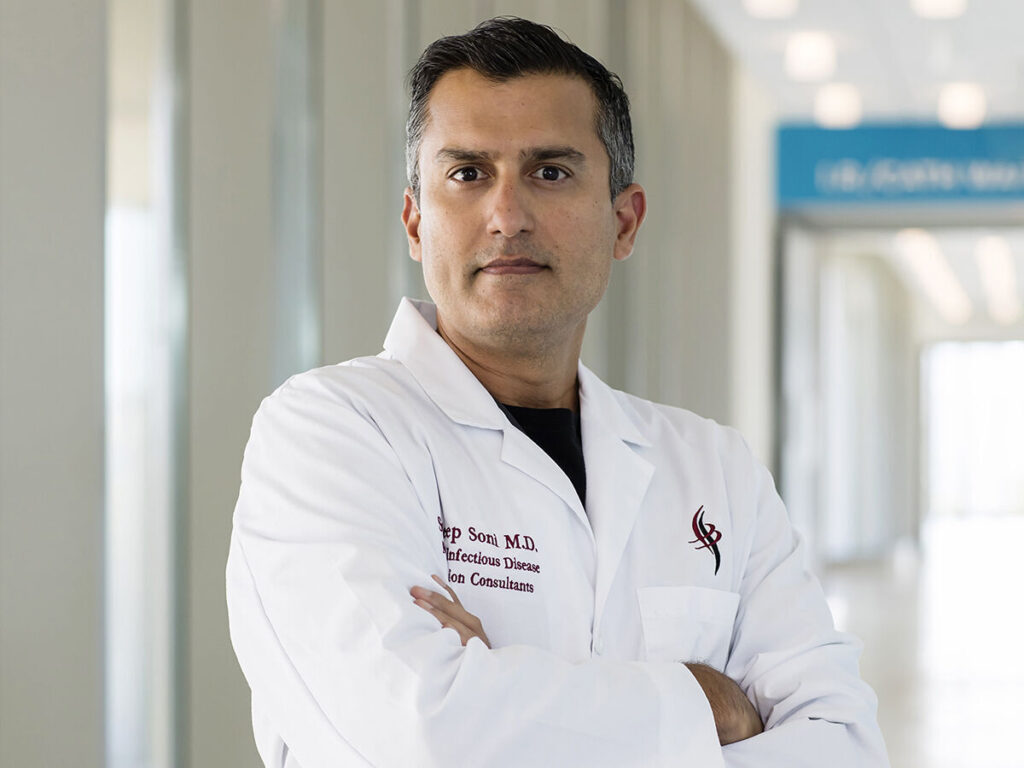
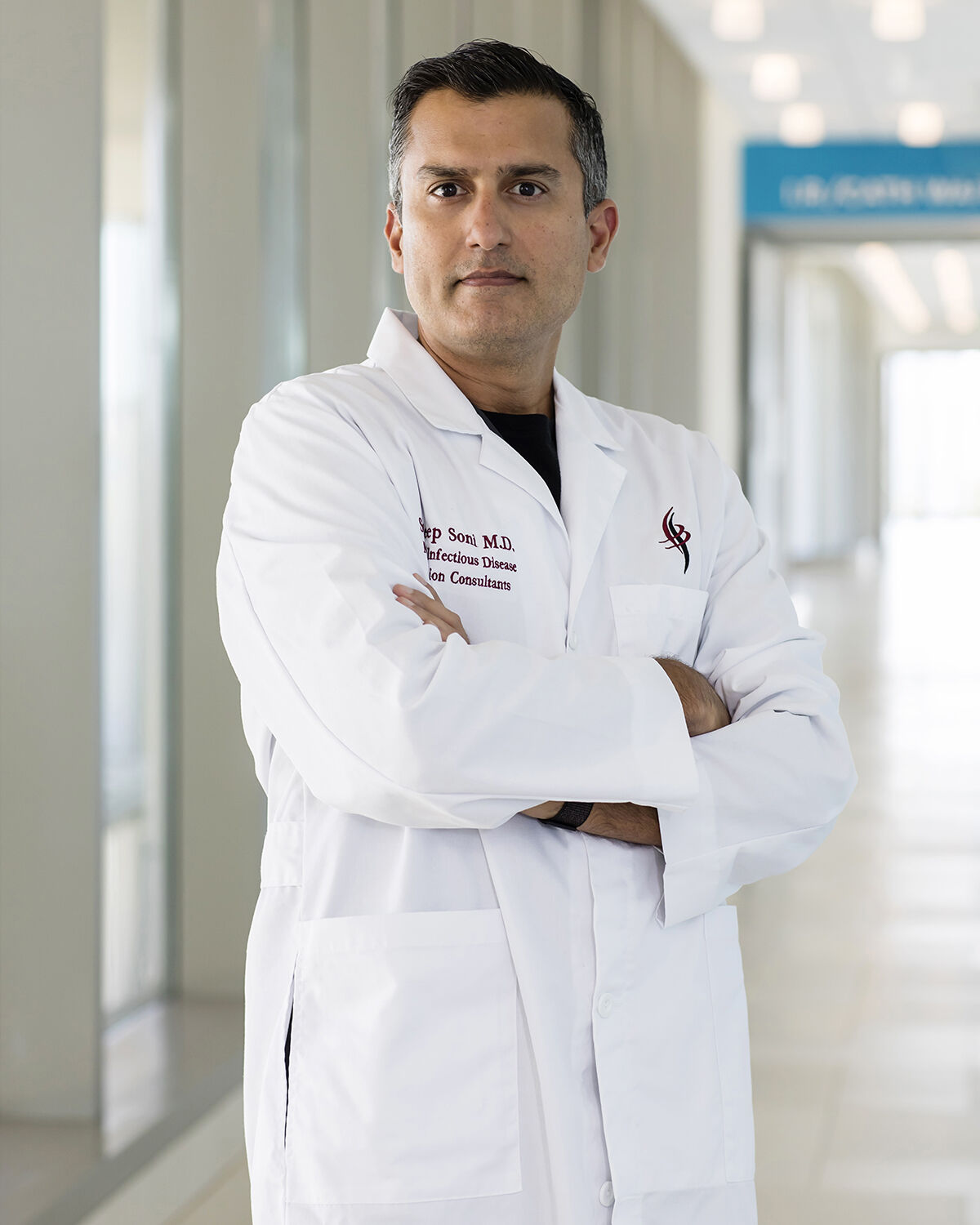
Palomar Health’s infectious disease specialist and medical director, Dr. Sandeep Soni
Jenny Siegwart
Palomar Health admitted its first COVID-19 patient March 13, only two days after the World Health Organization declared the novel coronavirus a global pandemic. However, at both its Poway and Escondido medical centers, preparation had been ongoing for months. Hospital directors produced coronavirus protocols beginning in January, with a strong focus on treating those infected without letting the illness spread to staff or any other patients in the building. They succeeded.
As of press time, Palomar Health had administered 1,075 positive COVID-19 tests since early February, and admitted 389 patients. Yet not a single patient or staff member contracted the virus while on campus during this time.
Leading the effort was infectious disease specialist and medical director Dr. Sandeep Soni, who, like most first responders, felt personally invested in preventing further spread of the coronavirus. “My wife is a critical care specialist at Palomar Health,” he says. Their biggest concern was “making sure we’re not taking everything home to our family.”
Working closely with Dr. Soni was Valerie Martinez, a nurse with three decades’ experience who serves as Palomar’s infection control officer, directing a team of infection preventionists. “We used to be called ‘infection control personnel,’” she clarifies, “but we changed our name across the US to ‘infection prevention,’ because we want to prevent rather than have to go in and try to control it.”
First priority, says Soni, was to increase the hospitals’ number of negative pressure rooms. These rooms are equipped with ventilation systems that keep airborne contagions isolated by siphoning the air flow through filtered exhaust vents that lead outside the building.
Palomar’s two campuses had 27 such rooms between them at the beginning of the year. But its facilities operations department went to work around the clock to convert an additional 57.
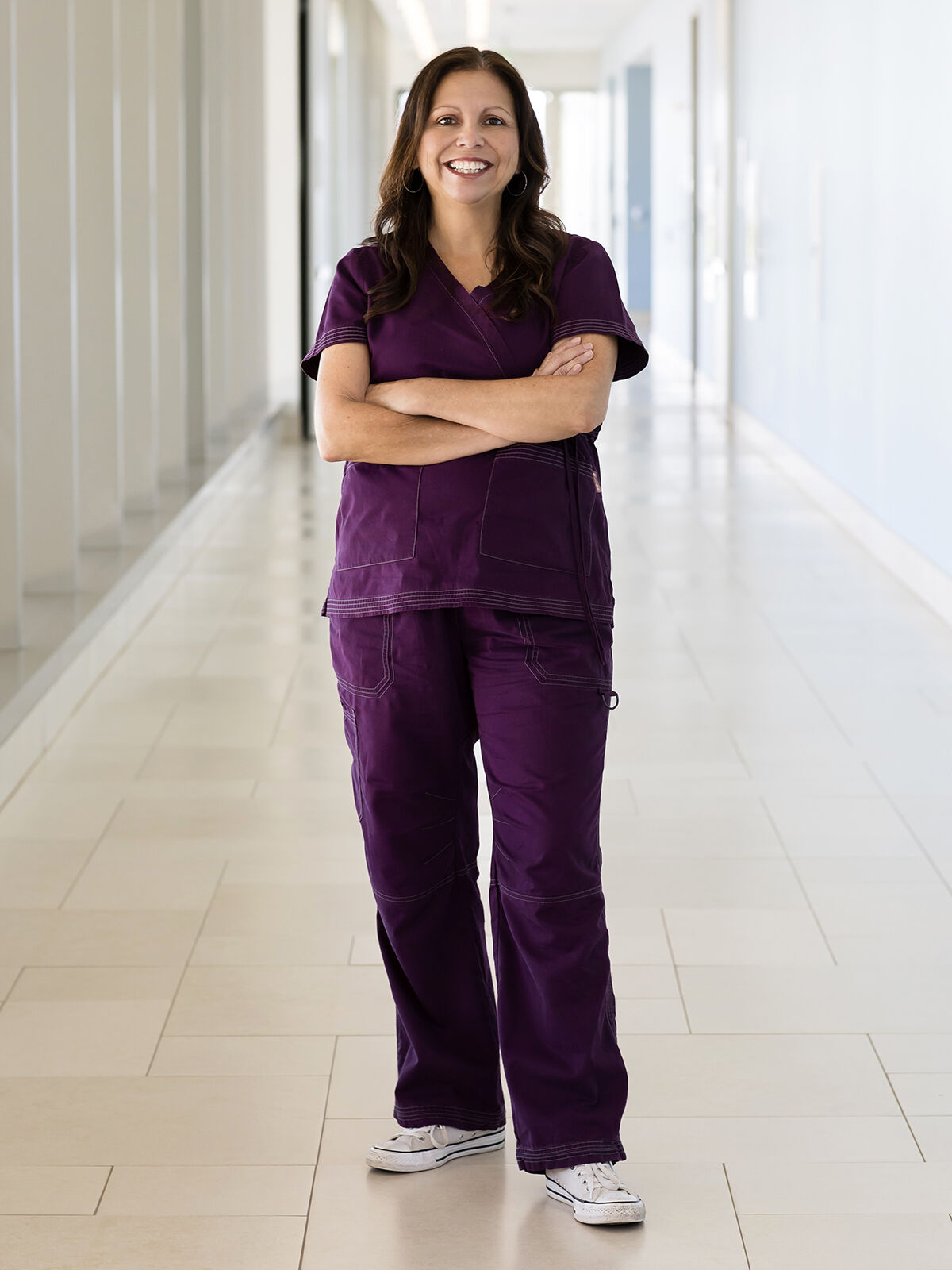
Valerie Martinez, infection control officer at Palomar Health.
Jenny Siegwart
In normal times, negative pressure rooms might isolate patients with tuberculosis, or other well-studied infectious diseases. At this point, very little was known about this coronavirus—the CDC wouldn’t advise that its transmission is primarily airborne until May—and the Palomar team was able to disregard public health guidelines calling for only conditional use of negative pressure rooms. Instead, it isolated every patient possible in this way, primarily on its Escondido campus.
They also required facial coverings for everyone entering the hospital from the outset, “before it was a directive from county public health,” notes Martinez. This early action looks prescient now, due not only to the well-publicized risk of asymptomatic spreaders, but also that of presymptomatic carriers. “You can transmit the virus about 48 hours before you start showing symptoms,” she explains.
But Soni and Martinez didn’t have to act on foresight. They based many of their decisions on their experience with another coronavirus. “We had to go through this when SARS was on the map a few years ago,” Soni says. “We put those protocols in place because they were very similar.”
Year-round, Martinez and her team work closely with the county to identify the presence of viruses and bacteria before they spread. But more immediately, they work with the hospitals’ environmental services staff—its cleaning crews.
While the facilities department worked to keep hospital air free of coronavirus, Maria Zaragoza-Magno and 124 other custodial employees were implementing best practices to eradicate it from surfaces. On a daily basis, they don protective gear and thoroughly sanitize the rooms of COVID-19 patients, including those on ventilators. Zaragoza-Magno and her colleagues already possessed the skills needed to safely clean isolation rooms before the pandemic, and now they’ve taken additional measures, like using oxycide, a specialized disinfectant, on high-touch surfaces like faucet handles, light switches, and call buttons.
Dr. Soni points out that the work of environmental services staff carries as much risk of infection as that of doctors and nurses. “They still have to gear up, gown up, put on N95 masks, and go into that room,” he says. “They’ve stepped up.” From top to bottom, the roughly 700 employees at work in the two Palomar hospitals on any given day have all faced the risk of picking up the illness and taking it home to their families. “I don’t think there’s a group of nurses or physicians who have not worked with COVID-19 patients.”
Since the pandemic started, the number of non-coronavirus patients in the hospital has steeply declined, most likely because people are avoiding seeking treatment due to fear of catching the virus. For better or for worse, this has left specialists from other departments available to step in to help with COVID-19’s myriad complications, from thickening blood (thrombosis) to loss of elasticity in the lungs (fibrosis).
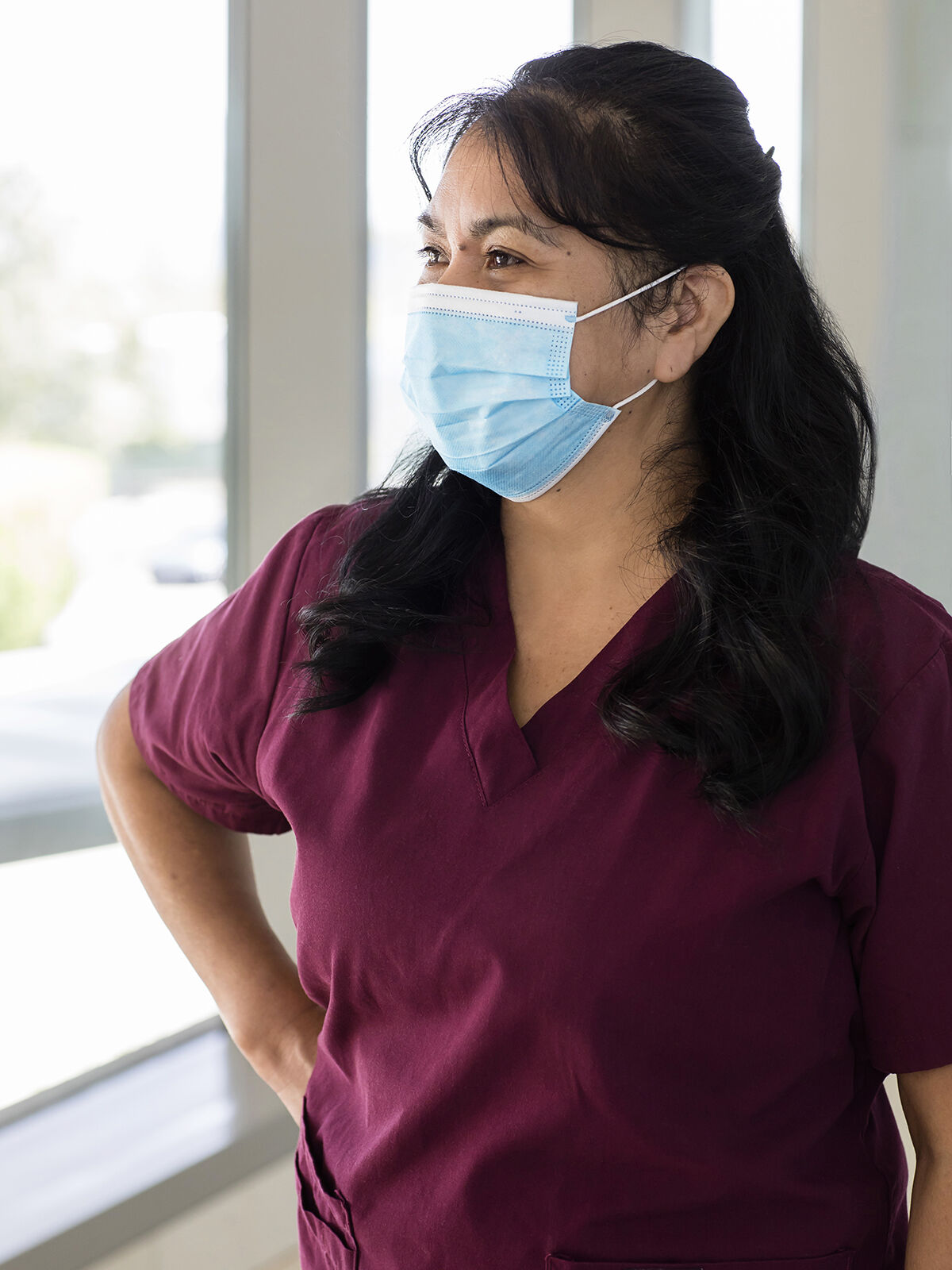
Maria Zaragoza-Magno is one of 125 environmental health services workers dedicated to sanitizing the isolation rooms.
Jenny Siegwart
As professional and public understanding of this confounding new illness changed, at times drastically, Soni credits department leaders with helping develop and implement new protocols on the fly. “I think, as a patient, you’re coming into the hospital expecting your physicians to know everything,” he says. “But we were kind of in a no-man’s land.”
A committee of department heads worked together, seven days a week, deliberating over email threads in response to new data and treatment guidance. The pharmacy team fought to secure medications, lab directors sought materials to reduce test result times from days to hours, anesthesiologists implemented plasma transfusion plans, the heads of emergency and critical care kept teams up to date, and the IT staff kept the hospitals’ internal systems updated so providers could successfully order and track shifting courses of treatment.
Soni also lauds the Palomar Health board of directors, who, by May’s end, had spent $4 million to keep the medical centers supplied with materials necessary for both prevention and treatment. In addition to the cost of negative pressure rooms, protective gear, and hard-to-find medications, Palomar Health boosted the number of ventilators on hand from 40 to 160.
Meanwhile, less-invasive treatments have evolved from pursuing unproven long shots (like hydroxychloroquine) to banking on a four-pronged combination supported by the latest research: anticoagulants to prevent thrombosis; plasma infusions from COVID-19 survivors to accelerate immune system response; the corticosteroid dexamethasone to reduce inflammation; and the go-to antiviral drug remdesivir, which has only recently become readily available to all patients who need it.
As September began, 47 Palomar Health patients had died from COVID-19, so the system stood at an 88 percent survival rate, versus 78 percent in San Diego overall. Soni observes that the results have improved since this spring, but he already has his mind set on the upcoming flu season. “How is your body going to react?” he wonders. “That’s the big unknown right now. That’s what keeps me up at night.”
Nevertheless, Martinez stresses that people who need treatment for ailments other than COVID-19 should feel confident and safe in visiting the hospital. “It is safe to come in,” she says.
The annual list is chosen by SDCMS and voting physicians who refer those within and outside of their specialty
Front row, left to right: Paul D. Kim, MD, Ramin Raiszadeh, MDBack row: Stephanie Haua, PA-C, Josephine Turner, Administrator, Sophea Bergen, PA-C, Davina Lam, PA-C
For almost two decades, the San Diego County Medical Society (SDCMS) has worked collaboratively with San Diego Magazine to recognize physicians who are held in the highest regard by their peers. Votes and nominations are open to all physicians in San Diego. The voting physicians are asked to vote for physicians within and outside their specialty to whom they would refer their friends and family. Through this process we have identified 747 physicians in 98 specialties.In a synchronized effort, SDCMS confirmed every individual nominee’s Medical Board of California licensing and current practicing status. Through this exhaustive process, 747 physicians are being honored this year. Many of them have also been recognized for multiple years since we began publishing this list. (These physicians have the number of years they have been selected listed in brackets behind their name.)I must point out that many superb physicians are not represented on this list. The selection criteria are strict, with only a few percent of physicians selected in each specialty. Many physicians received multiple votes from their peers but did not reach the threshold to be on the list. The best choice of physician for a patient should include many factors. All physicians in San Diego work collaboratively to provide the very best care for all of their patients.We welcome and encourage all San Diego County physicians to participate in their county and state medical societies as we work toward the SDCMS vision: “Physicians United for a Healthy San Diego.” We appreciate the assistance of all of the physicians who voted, and we thank San Diego Magazine for their support.Congratulations to all of our 2022 Top Doctor selectees,Toluwalasé (Lasé) Ajayi, M.D.President 2022-2023, San Diego County Medical Society
* Brackets denote the number of years chosen as a Top Doctor
Mark Christopher Takata, MD [7]Scripps Clinic Medical Group
10666 N Torrey Pines Rd, MS 213
La Jolla, CA 92037
(858) 554-8984
Dalia Abadeer Banks, MD [4]
UC San Diego Health
9500 Gilman Dr, MC 0898
La Jolla, CA 92093
(858) 657-6510
Alexander M Girgis, MD [1]
Anesthesia Service Medical Group
3626 Ruffin Rd
San Diego, CA 92123
(858) 534-8930
Timothy Michael Maus, MD [3]
UC San Diego Health
9500 Gilman Dr, MC 0898
La Jolla, CA 92093
(858) 657-6510
Peter Maclean Hoagland, MD [12]
San Diego Cardiac Center
3131 Berger Ave, Suite 200
San Diego, CA 92123
(858) 244-6800
Brian E Jaski, MD [17]
San Diego Cardiac Center
3131 Berger Ave, Suite 200
San Diego, CA 92123
(858) 244-6800
Hirsch Sumir Mehta, MD [5]
San Diego Cardiac Center
3131 Berger Ave, Suite 200
San Diego, CA 92123
(858) 244-6800
Justin Thomas Parizo, MD [1]
San Diego Cardiac Center
3131 Berger Ave, Suite 200
San Diego, CA 92123
(858) 244-6800
Marcus Anthony Urey, MD [1]
UC San Diego Health
9300 Campus Point Dr, MC 7411
La Jolla, CA 92037
(858) 657-7000
Andrew Allen White, MD [5]
Scripps Clinic Medical Group
3811 Valley Centre Dr, MS S99
San Diego, CA 92130
(858) 764-9010
Todd Allen Austin, MD [4]
Anesthesia Service Medical Group
3626 Ruffin Rd
San Diego, CA 92123
(858) 565-9666
George A Brooker, DO [2]
Anesthesia Service Medical Group
3626 Ruffin Rd
San Diego, CA 92123
(858) 565-9666
Christopher William Cary, MD [11]
Anesthesia Service Medical Group
3626 Ruffin Rd
San Diego, CA 92123
(858) 565-9666
Nina Chaya, MD [3]
Anesthesia Service Medical Group
3626 Ruffin Rd
San Diego, CA 92123
(858) 565-9666
Chien-Hsiang Chow, MD [2]
Anesthesia Service Medical Group
3626 Ruffin Rd
San Diego, CA 92123
(858) 565-9666
Jed Adam Cohn, MD [1]
Anesthesia Service Medical Group
3626 Ruffin Rd
San Diego, CA 92123
(650) 723-6412
William T Connell, MD [9]
Anesthesia Service Medical Group
3626 Ruffin Rd
San Diego, CA 92123
(858) 565-9666
David Wayne Dockweiler, MD [17]
Anesthesia Service Medical Group
3626 Ruffin Rd
San Diego, CA 92123
(858) 565-9666
Branden Michael Engorn, MD [2]
Anesthesia Service Medical Group
3626 Ruffin Rd
San Diego, CA 92123
(858) 565-9666
Blake Christopher Fowler, MD [5]
Anesthesia Service Medical Group
3626 Ruffin Rd
San Diego, CA 92123
(858) 565-9666
David Dennis Frankville, MD [4]
Anesthesia Service Medical Group
3626 Ruffin Rd
San Diego, CA 92123
(858) 565-9666
Jonathan Joseph Gray, MD [5]
Anesthesia Service Medical Group
3626 Ruffin Rd
San Diego, CA 92123
(858) 565-9666
Douglas Preston Grove, MD [5]
Anesthesia Service Medical Group
3626 Ruffin Rd
San Diego, CA 92123
(858) 565-9666
Paul James Himaya, MD [3]
Anesthesia Service Medical Group
3626 Ruffin Rd
San Diego, CA 92123
(858) 565-9666
Hetal H Hosalkar, MD [6]
Grossmont Surgery Center
8881 Fletcher Pkwy, Suite 100
La Mesa, CA 91942
(619) 698-0930
Gloria Wen-Song Hwang, MD [2]
Anesthesia Service Medical Group
3626 Ruffin Rd
San Diego, CA 92123
(858) 565-9666
San Diego is a hotbed of medical trials, which often unearth the future of medicine. Here are the big ones being tested right now.
clinical trials
Illustrations by Ileana Soon
For those with an arm or a mouth to spare, San Diego scientists are in need. They’re armed with pills and injections that may contain the future of healthcare, the big breakthrough. They may protect people from a virus like Covid-19, treat a disease such as diabetes, or offer insight into the next steps toward a cancer cure.
“The advances of tomorrow will come from clinical trials being conducted today,” says Dr. Thomas Buchholz, chief scientific officer at Scripps Health. This city is a hot spot for clinical trials, a vital component of medical research. At least 2,400 are currently underway in the San Diego region, testing treatments for conditions ranging from psoriasis to phantom limb pain. That’s 7 percent of all active clinical trials in the nation.
“San Diego has a robust portfolio of trials, largely due to the excellence of our health care systems and the strength of our scientific and biotechnology communities,” says Dr. Buchholz. In fact, pharmaceutical companies turned to hundreds of San Diegans to test five Covid-19 vaccines that are now authorized for use around the world: Moderna, Pfizer-BioNTech, AstraZeneca, Johnson & Johnson/Janssen, and Novavax.
Being a part of the future has its pros and cons. Subjects often get paid, and they may gain access to cutting-edge treatments. But experimental medications may not work as well as existing drugs or cause serious side effects. In many trials, some patients get placebos instead of real medications. This is a routine part of the process to determine whether there’s any benefit to the drugs, but it may leave sick patients without a treatment that turns out to be effective.
Despite the risks, clinical trials attract participants who hope to help usher in a healthier future. And in some cases, clinical trials are the best option for patients with life-threatening diseases. “Some cancers become resistant to the standard approaches, and clinical trials can offer the greatest hope in this setting,” says Buchholz.
Here’s a look at several important clinical trials that are underway in the San Diego region.
Scripps MD Anderson Cancer Center is testing whether it’s feasible to adjust the time that certain breast cancer patients require radiation. Subjects will receive the same cumulative radiation dose, but they’ll be randomly assigned to get it over 3 or 5 weeks. Researchers will study how the patients fare and explore whether the shorter treatment period improves their quality of life.
People with atrial fibrillation, a kind of irregular heartbeat, typically start treatment by taking blood thinners to prevent clots. But blood thinners can cause bleeding and bruising. At Sharp Chula Vista Medical Center and Scripps Memorial Hospital, cardiologists are recruiting patients to undergo implantation of a Watchman FLX left atrial appendage closure device as a first-line treatment. The device prevents blood clots from escaping a part of the heart where they may form between heartbeats.
Patients whose depression doesn’t respond to medication often turn to transcranial magnetic stimulation (TMS), in which short magnetic pulses stimulate nerve cells. UCSD is testing TMS in patients who have depression with anhedonia—an inability to feel pleasure. The goal is to expand personalized medicine, in which patients get treatments that are the ideal options for their specific conditions.
Rady Children’s and UC San Diego are working to understand how long Covid—wide-ranging symptoms including fatigue, joint pain, headaches, “brain fog,” fever, shortness of breath, anxiety, depression, chronic cough, sleep problems, and more that last beyond infection—is affecting children and young adults up to age 25. The study also hopes to identify more concrete risk factors for developing the condition, the incidence of which is not currently known but is estimated to occur in about 10-30% of people who have had acute Covid-19 infections. Participants do not need to have had Covid-19 or suffered long-term effects after infection to participate in this $1.5 billion, four-year-long nationwide study that is in part funded by the National Institutes of Health.
UCSD is tracking 465 people who work on the La Jolla campus for over two years in the wake of the opening of a new San Diego Trolley station. The researchers expect they’ll find that access to public transit improves health by boosting well-being, lowering depression, and improving quality of life.
Troy Johnson introduces our annual Top Doctors issue and shares his recent waiting room scare
jasper-johnson-pub-note.jpg
About four weeks ago, Claire noticed a large white spot on the roof of our son Jasper’s mouth—about the size of a nickel. She stuck her finger in there, tried to see if it was food or one of the many nonsensical objects that naturally migrate into childrens’ mouths.
It didn’t budge. She brought him to me in a panic. I tried to get my finger in there to dislodge it. Felt hard, but didn’t budge or rub off. Over the next few days, family and friends tried. This white spot was part of him.
With a child at Jasper’s stage of development—nine months old, eight teeth, strong jaw, and strong opinions about adults prodding their fingers in his face—it was hard to get a great look at it without him properly freaking out, wailing, biting, calling the cops. We managed to make him laugh, and snapped a blurry pic. Sent it to everyone we knew. A flurry of Google searches revealed he had at least a few dozen diseases.
My dad, a retired dentist who over 50 years saw almost every form of mouth trauma, was stumped. He showed it to other dentists. All of them, baffled. Was it exposed bone? A malformed palate? My dad said he “didn’t think it was malignant, because there’s no inflammation around the edges.” He was right. Jasper’s mouth was just a normal pink little baby mouth. And he remained happy, content, active, never complained when he ate or stuck a remote control in his mouth.
I have a natural optimism. I tend to not freak out until a few independent sources suggest I should lose it. “It’ll probably go away in a couple days,” I offered.
It didn’t go away. The “what ifs” started to eat holes in us. Claire made an appointment with an ear-nose-throat (ENT) specialist. They could see Jasper a week later. That week was a terrible week. Each time Jasper laughed you’d see that spot. So every time he laughed it was an awful mix of joy and terror.
The first ENT specialist was stumped; said he’d never seen anything like it in all his years. He suggested Jasper get an MRI and a CT scan immediately. Claire had a pretty strong hell-no reaction to that advice. She was not going to radiate our son without a second opinion.
jasper-johnson-and-troy.jpg
So we went to Rady’s, one of the best children’s hospitals on the planet. The ENT there was fantastic, but he was also stumped. He managed to get his finger in there before being bit, said it merely felt like the roof of Jasper’s mouth. But it wouldn’t budge and no part of it came off when scratched or prodded. Without causing the child undue stress, the best solution was to put Jasper under anesthesia to let the doctors get a good look at it, have it biopsied.
We agreed. At some point, you have to trust the smartest person in the room. Another stretch of days passed between then and the procedure. Each day, Claire aged 27 years. On the day of his procedure, it had been three weeks since this terrible white spot first entered our lives. The nurses and staff were kind and helpful, seemed to intuitively know how to prevent parents from free-falling into madness. We watched as nurses wheeled him into the operating room, which cratered us.
In the waiting room, I saw the other families. Nothing puts your own minor concerns into perspective like standing in the waiting room of a children’s hospital; some families here were going through things I don’t believe I could ever have the emotional fortitude to withstand.
After about ten minutes, the nurse emerged. The doctor was ready to see us. We were ushered into a consultation room. Longest few minutes of our lives. Finally, the doctor entered. He placed a specimen jar on the table. Inside, I could see the white spot.
“It’s a sticker,” he says.
Like a Scratch n Sniff. Or one that identifies “this apple is Gala.” It was the best sticker in the world. One that could fuse in a wet environment, and despite a very active young tongue wiggling about—managed to adhere perfectly to Jasper’s mouth and would not relinquish its job. After weeks of chewing and drinking, it didn’t even dissolve. Even if we had known it was a sticker, we would have had to put Jasper under, because, the doctor said, “it was stuck so well I had to pry it out a bit—it took some work.”
At the news, I start to laugh uncontrollably. The sheer relief. I look at Claire. She gives me a look that clearly states the time for laughing has not yet arrived. I cease and desist.
Later, in the car, she says, “I turned 100 today.”
Jasper was a little tired for the rest of the day, but fine and sticker-free. The next morning, completely happy and his normal self.
The point of this story is, at every step in this process, I was comforted by one thing. As a native San Diegan, seeing the national rankings and reports come out every year—I just know San Diego has some of the best doctors on the planet. Rady’s, Scripps, Palomar, Sharp, UCSD, Kaiser, Tri-City, docs with private practices. At every turn of this emotional roller coaster, I knew that Jasper’s health was safest right here.
The point of this story is also to say there is a sticker company we should all invest in—or burn to the ground.
Troy Johnson is the magazine’s award-winning food writer and humorist, and a long-standing expert on Food Network. His work has been featured on NatGeo, Travel Channel, NPR, and in Food Matters, a textbook of the best American food writing.
Stake Chophouse & Bar brings contemporary classics and old-school service to the heart of Coronado
Stake Chophouse & Bar isn’t your average steakhouse. Blue Bridge Hospitality’s Coronado outpost is a modern interpretation of a big-city steakhouse nestled in the heart of the small coastal community. The team at Stake has reimagined the whole steakhouse experience. By prioritizing a seasonal farm-to-table sourcing philosophy, a personalized guest experience, and unique service touches, like a formal steak presentation and a bespoke knife selection process, Stake distinguishes itself in a sea of steakhouses.
Exceptional steaks, including Wagyu from Japan, Australia, and the U.S., and fresh seafood flown in daily form the core of Stake’s culinary identity. The menu features a five-course omakase-style steak experience highlighting house favorites, plus an array of cuts, and classic steakhouse staples—think a wedge salad, baked potato, or pasta carbonara—refined for a contemporary palate without losing their traditional appeal. Stake focuses on seasonal sourcing from the region’s best family farms and specialty purveyors, and incorporates intentionally unexpected touches to create something truly unique.
“I challenge our chefs and myself to take it a step further in sourcing,” says Chef Ronnie Schwandt. “It’s important to us to highlight different farms, unique one-off farms—whether it’s cattle, strawberries, a local fisherman or from anywhere in the United States, we’re always trying to find that niche.”
Beyond the menu, Stake emphasizes outstanding service, says Vinny Spatafore, Director of Hospitality Operations. Staff maintains detailed notes, allowing them to remember guests by name, recall previous orders such as a favorite martini (also memorable for the customer since it’s served in an extra tall, distinctly-shaped glass), and celebrate special occasions like birthdays and anniversaries.
“When you have those points of topic that you remember about a guest, they appreciate that,” he says. “Our servers are really good with that—we have a couple servers who have been here since the beginning and they’ll remember somebody from years ago, their name, their kids’ names, where they live. I’m really thankful to have a great front of house staff.”
Award-winning wines, rare whiskeys, special events, and a complementary black car service that provides transportation for guests throughout Coronado add to Stake’s appeal.
Schwandt stresses that Stake offers more than a meal; they aim to give patrons something unforgettable.
“It starts when you walk up the stairs and are greeted by the hostess—that sets the tone for the night. Then you’re greeted by a server, who may know you by name, and can guide you through the menu and curate as they get to know you,” says Schwandt. “Most people leave kind of blown away; they leave feeling like they just had an experience. That’s the goal, right? Whether you’re serving smash burgers or high-end steak, you want somebody to leave thinking, Wow, that was awesome.”
For the newbies, the experts, and the doomscrollers
Best for: Beginners
Price: $12/month or $50/year
Balance starts with the basics, walking you through foundational tools like body scanning and breath focus in five in-depth sections. Once you master those techniques, you can personalize your practice to what works best for you with as little or as much guidance as you need.
Best for: Experienced users
Price: $13/month or $70/year
Ever wanted Harry Styles to whisk you off into dreamland? The Calm app makes it happen. In addition to its extensive library of freeform practices—ideal for the more skilled users—you can also select a sleep session narrated by celebrities like Laura Dern, Matthew McConaughey, and the former One Direction star.
Best for: Managing anxiety and stress
Price: $13/month or $70/year
Headspace makes meditation look fun, with cool illustrations and an app that’s easy to navigate. Their library consists of a wide variety of meditative practices to address specific issues, including anxiety, stress, work, and kids. Session lengths vary, so you can sneak in a meditative moment even if you have only three minutes on hand.
The Chopra Center is making it easier than ever to take your self-care on the go. Their new app, launched in September, has guided meditation, helpful articles, and personalized tips for your personal growth and overall well-being.
Can’t get into meditation? Try mindfulness instead. The trick is to tackle one task at a time and to focus on being fully present in just that one task. Whether it’s washing your car, going for a walk, or sweeping the floors, you can still give your mind a break from the busyness without sitting down and saying “om.”
Top Doctors 2020 / Mindful Apps
Our annual list of the top talent defining the future of San Diego’s health care
Castle Connolly Top Doctors is a health care research company and the official source for Top Doctors for the past 25 years. Castle Connolly’s established nomination survey, research, screening, and selection process, under the direction of an MD, involves many hundreds of thousands of physicians as well as academic medical centers, specialty hospitals, and regional and community hospitals all across the nation.
The online nominations process, located at castleconnolly.com/nominations, is open to all licensed physicians in America, who are able to nominate physicians in any medical specialty and in any part of the country, as well as indicate whether the nominated physicians are, in their opinion, among the best in their region in their medical specialty or among the best in the nation in their medical specialty. Once these nominations have been made, Castle Connolly’s physician-led team of researchers follows a rigorous screening process to select top doctors on both the national and regional levels.
Careful screening of doctors’ educational and professional experience is essential before final selection is made among those physicians most highly regarded by their peers. The result: We identify the top doctors in America and provide you, the consumer, with detailed information about their education, training, and special expertise in our paperback guides, national and regional magazine “Top Doctors” features, and online directories.
Doctors do not and cannot pay to be selected and profiled as Castle Connolly Top Doctors.
Physicians selected for inclusion in this magazine’s “Top Doctors” feature also appear online at castleconnolly.com, or in conjunction with other Castle Connolly Top Doctors databases online on other sites and/or in print.
Castle Connolly was acquired by Everyday Health Group (EHG), one of the world’s most prominent digital health care companies, in late 2018. EHG, a recognized leader in patient and provider education, attracts an engaged audience of over 53 million health consumers and over 780,000 US practicing physicians and clinicians to its premier health and wellness websites. EHG combines social listening data and analytics expertise to deliver highly personalized health care consumer content and effective patient engagement solutions. EHG’s vision is to drive better clinical and health outcomes through decision-making informed by highly relevant data and analytics. Health care professionals and consumers are empowered with trusted content and services through Everyday Health Group’s flagship brands, including Everyday Health, What to Expect, MedPage Today, Health eCareers, PRIME Education, and our exclusive partnership with MayoClinic.org and The Mayo Clinic Diet. Everyday Health Group is a division of J2 Global Inc. (NASDAQ: JCOM), and is headquartered in New York City.
Fred Berger, MD
Scripps Clinic La Jolla
9850 Genesee Ave., Ste 420
La Jolla, CA 92037
(619) 298-3251
Karen S. Loper, MD
Children’s Healthcare Medical Associates
550 Washington St., Suite 300
San Diego, CA 92103
(619) 297-5437
John M. Kelso, MD
Scripps Clinic Carmel Valley
3811 Valley Center Dr. Floor 4 Suite A
San Diego, CA 92130
(858) 764-9010
Stephanie A. Leonard, MD
Asthma, Allergy & Immunology
3030 Childrens Way, Floor 2-North
San Diego, CA 92123
(858) 966-5961
John D. Pauls, MD, PhD
Sharp Rees-Stealy Medical Group
300 1st Ave., Floor 1
San Diego, CA 92101
(619) 446-1515
Marc A. Riedl, MD
UC San Diego Health
Angioedema, Allergy & Immunology Center
8899 University Center Ln., Suite 230
San Diego, CA 92122
(858) 657-5350
Andrew A. White, MD
Scripps Clinic Carmel Valley
3811 Valley Center Dr. Floor 4 Suite A
San Diego, CA 92130
(858) 764-9010
Katharine M. Woessner, MD
Scripps Clinic Carmel Valley
3811 Valley Center Dr., Floor 4 Suite A
San Diego, CA 92130
(858) 764-9010
Charles A. Athill, MD
San Diego Cardiac Center
3131 Berger Ave., Suite 200
San Diego, CA 92123
(858) 244-6800
Hanh M. Bui, MD
Blue Coast Cardiology
3909 Waring Rd., Suite A Oceanside, CA 92056
(760) 592-4317
Gregory K. Feld, MD
UCSD Sulpizio Cardiovascular Center
9434 Medical Center Dr.
La Jolla, CA 92037
(858) 657-8530
Douglas N. Gibson, MD
9898 Genesee Ave., Floor 3
La Jolla, CA 92037
858-824-5004
Ali R. Hamzei, MD
San Diego Cardiovascular Associates
9834 Genesee Ave., Suite 300
La Jolla, CA 92037
(858) 824-2900
Alborz Hassankhani, MD, PhD
Pacific Arrhythmia Service
8851 Center Dr., Suite 405
La Mesa, CA 91942
(619) 668-0044
Kurt S Hoffmayer, MD
UCSD Sulpizio Cardiovascular Center
9434 Medical Center Dr.
La Jolla, CA 92037
(858) 657-8530
Manish K. Wadhwa, MD
San Diego Heart & Vascular Associates
501 Washington St., Suite 512
San Diego, CA 92103
(619) 297-0014
Eric D. Adler, MD
Sulpizio Cardiovascular Center
9434 Medical Center Dr.
La Jolla, CA 92037
(858) 657-8530
A healthy helping of the breakthroughs, milestones, and on-the-rise practices sweeping San Diego's medical community
San Diego’s Top Doctors 2019