Featured articles
Food & Drink
Food & Drink
Food & Drink
Featured articles
Everything SD
Everything SD
Features
Featured articles
Things to Do
Everything SD
Everything SD
Featured articles
podcast-ep
podcast-ep
podcast-ep
Featured articles
Features
Features

Features
Featured articles
Food & Drink
Charitable SD
Everything SD
Ready to know more about San Diego?
SubscribeReady to know more about San Diego?
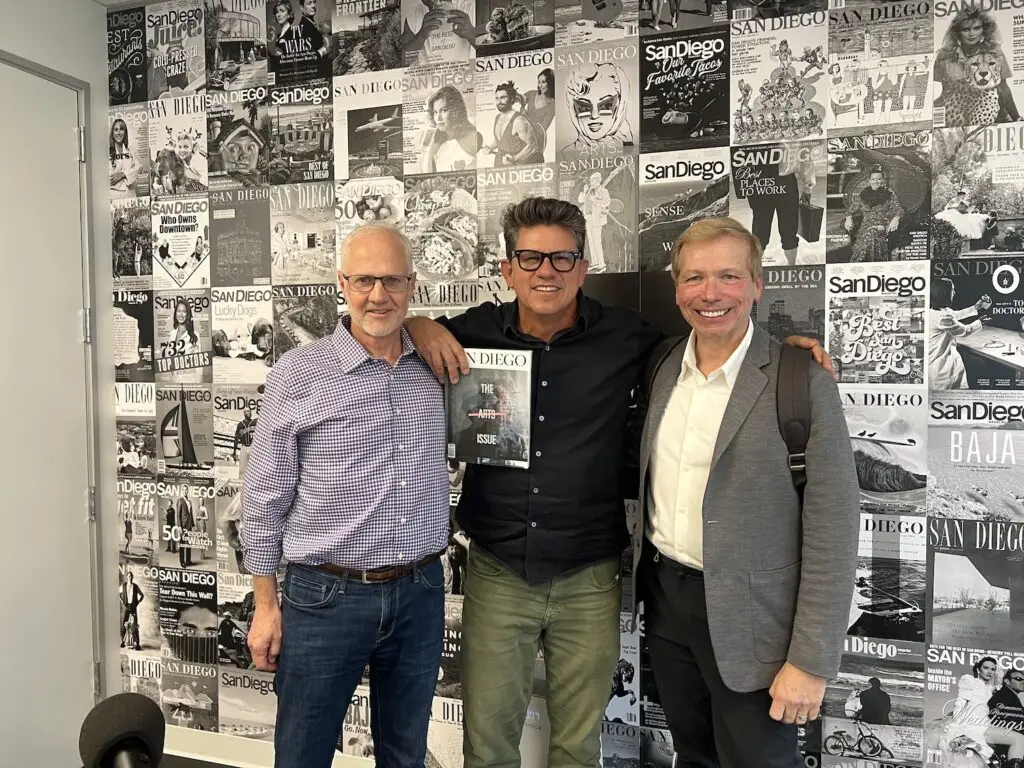
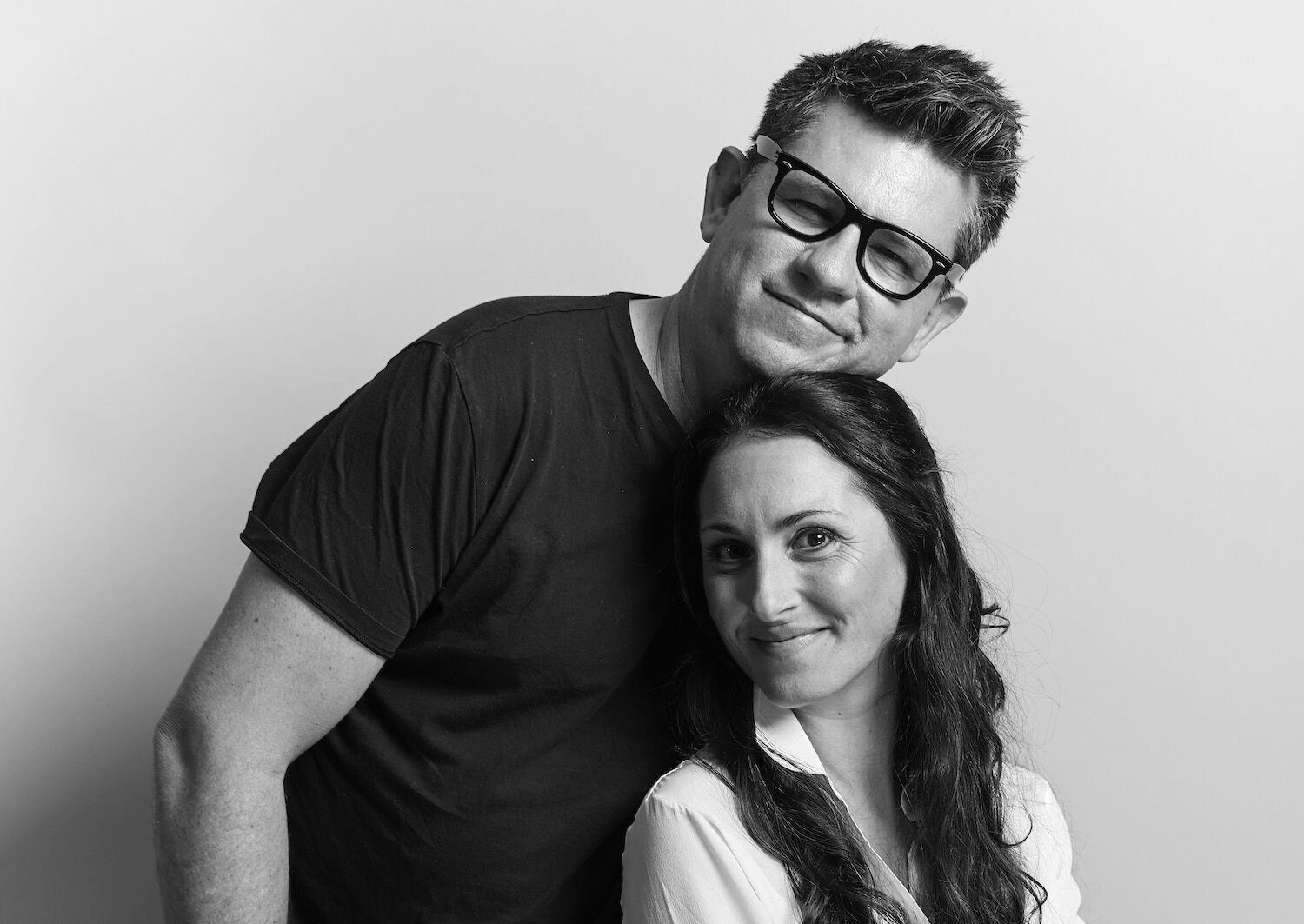
Claire and Troy Johnson look back on the last seven plus decades of San Diego Magazine
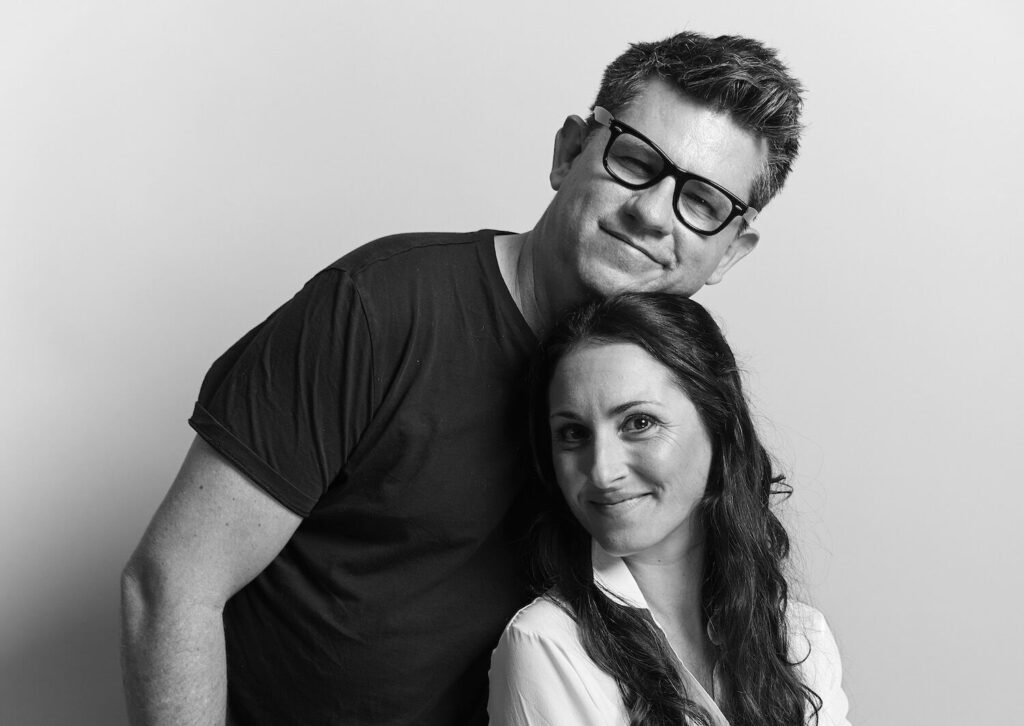
San Diego Magazine owners Claire and Troy Johnson
Photo Credit: Matt Furman
San Diego Magazine was established in 1948 by Edwin Self, an ambitious local known for his saucy opinions on the state of San Diego journalism. Gloria Self, Edwin’s fashion-and-wine-loving wife, signed on as co-publisher soon after. The pair formed the perfect cocktail of personalities to document this coastal city’s society and culture. We imagine the two of them in their chic and sophisticated living room, martinis in hand, signing papers that would launch one of the most successful and long-lived regional magazines in the country.
The way people consume information has changed considerably since those days, as have the population and diversity of our city. Media engagement has ebbed and flowed across platforms, but local media’s purpose remains—it serves to capture the soul of a city. At SDM, we see local media as the connective tissue between communities. We recognize that we must present information that our readers want in the ways you want it, and we are striving for excellence across all media platforms.
In print, we tell stories of this city through beautiful photography and memorable, voicey writing. On our website—which is getting a facelift as we speak—we showcase all of our diverse content, including our award-winning podcasts, like Happy Half Hour, which just scored the Society of Professional Journalism’s 2022 best podcast award. In our newsletters, we curate our most compelling work for you every week.
On our social media platforms, we share new, up-to-the-minute information and engage directly with our audience. Our Instagram account also just won the first-place SPJ social media award, proof that what people want is good storytelling—no matter the size of the screen.
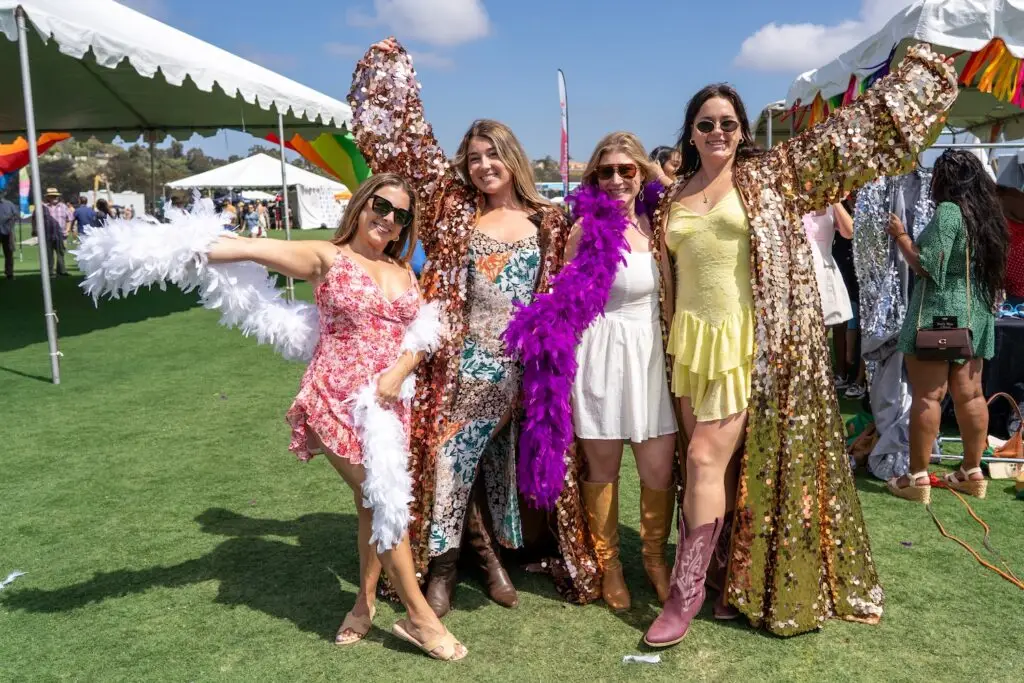
And at our events, all of our publishing comes alive. Through parties both big and small, we’re able to physically present our work to our readers while bringing you world-class dining and social experiences. We invite you to join us at an event this year, see what we have cooking, and get to know our huge, extended community of storytellers and fans.
The Selfs never could have envisioned this rapidly changing digital media landscape in 1948, but we like to think they would be proud of our stewardship and the direction we’re taking SDM. All day, we’re out there telling the stories of the people, businesses, and neighborhoods that create our city. The goal is to learn from each other, grow together, and evolve.
To Edwin Self, we are grateful you had this wild idea 75 years ago, and we will continue the legacy of sharing saucy, quality stories with journalistic integrity. To Gloria Self, we, too, love fashion and wine parties. We’re hosting a few of our own soon: on August 18, we’re throwing ourselves a big birthday party at the annual Best of San Diego event, and the brand-new Del Mar Wine and Food Festival debuts in September. Both events are set to be epic.
To all of you, our subscribers, listeners, followers, and event-goers, thank you for giving these stories a home. We are determined to continue to explore and uplift the creative energy and the collective art of this city—the culinary, visual, literary, and performance art that feeds our souls and teaches us about SD. And thank you to the businesses and community that support us. Because of you, San Diego Magazine will live to see another 75 years.
Troy Johnson is the magazine’s award-winning food writer and humorist, and a long-standing expert on Food Network. His work has been featured on NatGeo, Travel Channel, NPR, and in Food Matters, a textbook of the best American food writing.
Executive editor Mateo Hoke celebrates the human urge to venture out into the unknown in this month's Travel issue
July Travel Edition Pub Note
Welcome aboard our summer travel issue. We’re happy to have you along for the ride as we celebrate the human urge to venture out into the unknown. This is a fun issue to tuck into your carry-on and read in the air.
Truthfully, I don’t enjoy getting on planes. But I love getting off of them to explore new places. See, I came into this world wanting to experience as much of it as I possibly can. There’s a fire burning in my belly that refuses to calm until I’ve learned how to say “howdy” in every dialect of every language, lit a candle in every temple, and stepped in every river. Twice. Until I’ve tasted every dish in every back alley and home kitchen in every city, small town, and village and hiked every mountain and breathed in every vista and contemplated every remaining glacier. Sounds like a compulsion, I know. But really it’s a hunger to learn. It’s why I became a reporter, to better understand this world and the people in it.
Travel, I’ve found, is a great teacher. Immersing ourselves in unfamiliar places often means being pushed out of our comfort zones, which is where important lessons can be learned. Ever been sweating and lost in a city in which you don’t speak or read the language, and still found your way? Traveling builds a unique kind of confidence.
But it’s important to remember that while travel can be a valuable learning experience, it’s also a great privilege. Traveling means different things to different people. Many have to wander to survive.
As we go to press, the humanitarian crisis at the SD-Mexico border is simmering after hitting a boiling point. In May, more than 1,000 people seeking asylum landed in various makeshift migrant camps in the desert outside Jacumba Hot Springs while waiting to be processed by US Border Patrol. Families with children in the cold desert at night, without blankets, food, or water, and no shelter in the heat of the day. Some of them had traveled for weeks.
On page 38, you’ll find our exclusive cover story about a newly revamped hotel in Jacumba Hot Springs, slated to reopen its doors this month after being acquired by a newly minted hospitality group of creative designers. It’s a cool, visually engaging piece we thought might inspire our readers to pack their bags.
But there’s much more to the story now. Because when the various people working to get the hotel open found themselves on the front lines of the border crisis, they stepped up to collect and deliver supplies to the people in the camps.
Jeff Osborne is part of the group behind the hotel project. “We just started organizing,” he told me. “Buying blankets, food, water. Our office became our crisis headquarters. Everyone in the local community was dropping off whatever we needed. We had over 3,000 individually packaged survival kits by the end.”
Talk about hospitality.
“I think we brought a lot of relief to people who were in some really awful conditions,” Osborne said.
It takes true courage to travel penniless across continents in search of safety or a better life, or simply because you don’t have anywhere else to go. It’s not a type of traveling I’ve ever had to do, and as someone who’s spent a lot of time on the road, I respect it tremendously.
So while celebrating our wanderlust in this issue, I also want to celebrate the travelers who were camped in the desert and the lessons we can learn from their determination. Travel, after all, is a great teacher, even if we’re not the ones on the move.
Mateo Hoke is a journalist and author. His books include Six by Ten: Stories from Solitary, and Palestine Speaks: Narratives of Life Under Occupation.
Executive editor Mateo Hoke celebrates San Diego's newest baby big bird and shares what to expect from our May North County issue
Wildlife specialist Brittany Vega, making a core memory.
Photo Credit: Mateo Hoke
Let’s be honest—all babies are precious, but not all babies are cute. Lucky for us all, though, we happen to have one that’s both in this month’s Sacred Space story: an endangered California Condor, fresh from the shell.
It was 5:31 a.m. on a Monday when the call came through. Baby was hatching, so SDM‘s videographer, Jeremy, and I high-tailed it out to Escondido to be there as the first condor of the year emerged at the San Diego Zoo Safari Park.
Condors are critically endangered. In the ’80s, less than two dozen remained. Two dozen. Those aren’t great odds. It’s taken incredible efforts on the part of indigenous tribes, US Fish and Wildlife, the SD Zoo, and other partners of the California Condor Recovery Program to bring these special birds back from the brink. There are now more than 500. And now, there’s one more.
A handful of us stood half-circled around the incubator. Two were wildlife specialists, including 33-year-old Brittany Vega, working her first day in the bird program. She teared up as she held the baby condor, weighing it and helping ensure it was cleaned properly to avoid infection.
Just imagine.
“It was a core memory. Getting to watch a chick hatch in real time and hold it during its first few breaths of life brought on overwhelming excitement and joy,” she said later. “It was definitely a struggle to hold back tears.”
You weren’t the only one, Brittany. It was incredible.
It’s with similar excitement that we’re exploring North County in this month’s issue of SDM. And we’re not just talking about the coast. North County is so much more than sunsets and surfers. We’re feasting in Escondido and Vista. We’re contemplating the importance of vibrant third places while revisiting the North County Fair and seeing what $2 billion builds in San Marcos.
But don’t worry, we haven’t forgotten the unique culture of the coast. We’re bringing you inside a new, slightly denser mode of building in Encinitas. We’re celebrating NoCo music, biking the 101, exploring what’s new in the food scene, and getting an inside view of O’side. We’ve also put together a funky little lookback of North County ads and coverage from our archives as we continue celebrating 75 years of SDM.
And, as you may have noticed, that condor isn’t the only bird in this issue. Check out the maximalist, wallpaper-worthy watercolor cover our art director Samantha Lacy painted. Sam is from Encinitas and chose to highlight species native to the coasts and marshlands of North County. It’s fun to get lost in.
And so is North County. So off we go.
P.S. Public visits to the condor breeding program facilities are strictly prohibited, but you can peek inside with more photos and a vid of the baby’s momentous birth.
Mateo Hoke is a journalist and author. His books include Six by Ten: Stories from Solitary, and Palestine Speaks: Narratives of Life Under Occupation.
Troy Johnson ponders the ever-changing nature of dining out during the morning hours
The duck hash from Craft & Commerce.
It’s a simple, revolutionary product improvement. Identify the hole in the market, fill it with hollandaise and bubbles. At some point in American history, breakfast became an alternative form of Novocaine; eating it made us feel nothing. We don’t take any pride in cooking it. We often eat it mid-text.
We’ve been told in the old days you could blissfully read the paper, casually chew eggs, idly chat about current events and offshore tax shelters with your kids. The storm of tasks politely waited to assault you until you walked through the office door.
But the modern world is far too rushed for casual egg chewing. Our phones ping the to-do list to our brains about an hour before we wake. Plus, according to the medical community, breakfast must be jam-packed with micronutrients and proteins if we want to have the right kind of mental clarity and energy required to succeed and invest in the right crypto.
And so breakfast became the most humorless, dry, healthy, utilitarian meal of the day. It’s eating as a job.
That’s why, when local restaurants seriously started investing in morningfood, it felt like such a revelation. Adding a quality cocktail (or even dimestore near-Champagne)? What a release! What a rebrand! It was like that famed Apple Macintosh commercial in 1984—where an auditorium full of bored, ashen post-apocalyptic blokes are watching a bony dictator talk on screen in black-and-white, then are bolted back to life by a woman in colorful dolphin shorts throwing her sledgehammer at the whole shebang. Brunch (and the improvement of morningfood, in general) is that fun hammer.
Another reason brunch has boomed in recent years is because it executed another classic move of the rebrand—took something that was rarefied as a “massive spend, a special occasion thing” and democratized it. Not a ton. It’s still going to set you back. But brunch used to only exclusively be served at big-date restaurants and resorts. You didn’t even order à la carte—just paid for a ticket like the carving station was a T-Swift show.
Then the neighborhood joints and moms and pops got into the morningfood action. Turns out you could do brunch without charging a billion dollars. Especially if cooks lean heavily on baked goods, since flour and sugar don’t break the bank like fancy proteins do (although the current Fabergé price of eggs is raining on this a bit). Brunch is like so many things in the world that started off prohibitively expensive and then boomed when the price came down for us commoners (air travel, cars, TVs, even vacuum cleaners and tea).
And finally, the joie de day drinking can’t be overstated. It’s not about obliteration. Just mellow buzzes at unconventional times. The day has now been chalked up to nonproductivity. Anti-productivity. And honestly, that feels great. So a wet brunch is a liberation of an entire day.
The buzz is different when the sun is out. It inverts your circadian rhythms. Your body mistakenly thinks it is Saturday night. Oh no, body, it’s laundry time. Plus, daytime is when to-do’s are done. Our bodies and brains are primed for executing laborious yet necessary life tasks. And for this one glorious day, the only to we’re tasked with doing is not talking about or doing to’s. In fact, don’t even talk to us about work or exercise. The psychic baggage of your desire to be a productive member of society is bumming out the flavor of this hash.
This issue is dedicated to the people of the morningfood. The people who freed us of our dead-hearted breakfast routine. The people who liberate days.
Troy Johnson is the magazine’s award-winning food writer and humorist, and a long-standing expert on Food Network. His work has been featured on NatGeo, Travel Channel, NPR, and in Food Matters, a textbook of the best American food writing.
NOW CFO provides scalable, on-demand accounting and finance support to companies ranging from pre-revenue startups to billion-dollar businesses
Entrepreneurs typically launch businesses because they’re passionate about a product or service, not because they want to manage its finances. While working to carve out a niche in their respective industries and drive their companies forward, many business owners find themselves bogged down by day-to-day accounting. Their existing accounting tools don’t provide the necessary visibility or insight, and they don’t have the time or resources to hire additional staff or a chief financial officer. That’s where NOW CFO comes in.
For more than 20 years, NOW CFO has been pairing businesses across the country with experienced accounting and finance professionals. Its outsourced model allows clients to customize solutions that match their individual needs, size, and financial challenges, whether that’s fractional or interim support, project-based services, or full-time placement.
NOW CFO’s clients range from startups preparing for rapid growth to established companies that need additional financial leadership without the commitment or expense of building an in-house team. However, many of these companies don’t fully understand their needs until they experience a “trigger” event: preparing for an acquisition or capital raise, navigating a first-time audit, or another period of transition. With a team of over 300 consultants nationwide, NOW CFO can start quickly and match the right expert to the right business.

“It’s important for companies to have financial visibility, and we can help them avoid a lot of the potholes that companies often run into,” says Mariah Block, a partner at NOW CFO’s San Diego branch. “Roughly half of our clients have an in-house finance person or department, and we’re resourced for more bandwidth when they need an extra set of hands at the staff or senior accountant level, or the controller or CFO level. Some clients use this a few hours a month and others use multiple people close to full-time. Our model is solution-based and customizable. We’re like a faucet you can turn on and off.”
With NOW CFO, there’s no one-size-fits-all approach. Solutions are based on the client’s individual goals, challenges, needs, and budget, meaning a client never pays for more than they need. Whether it’s a few hours of executive-level guidance or a full accounting team to support daily operations, NOW CFO meets businesses where they are and grows alongside them.
“We pride ourselves on providing our clients with the right resources at the right rate and being able to evolve as their needs evolve,” says Block.
And clients appreciate on-demand access to cost-effective support designed to improve performance and profitability.
Luxury car storage service Auto Concierge has partnered with NOW CFO to support growth over the past year. The arrangement began with a staff accountant who covered a leave of absence, but as the client’s needs changed, they also added a controller role. This allowed Auto Concierge to put effective processes in place and navigate operational challenges. Lori Church, Auto Concierge’s chief operating officer, says NOW CFO has been an “outstanding resource” and a “true strategic partner.”
“From the controller to the bookkeeper, every professional they’ve placed has brought a high level of expertise, responsiveness, and professionalism to our organization. Their team took the time to understand our business of high-profile clients and needs, adapted quickly to our fast-paced environment, and became a trusted extension of our team,” she says. “As Auto Concierge continues to grow, having a reliable financial partner like NOW CFO has allowed us to strengthen our financial and business operations while remaining focused on delivering exceptional service to our clients.”
Content chief Troy Johnson muses on what it means to find home in our February Design issue
hairy chair pub note
It was checkered, made of some rough cloth. Almost hairy. I remember someone rocking it back and forth, always. You pulled the wooden lever on the side and it expanded to become a great, kinda hairy cradle to nap or end days. And that old, plush rocking chair was the “home” within our home.
At age seven, when I decided to cut my own hair the day before school photos—removing an oh-dear-god-sized chunk from the front, so that I looked like the lead singer of an off-brand new wave band—mom rocked me until I stopped crying. I can still think of that chair and feel an old centering.
And I can still see the decorative carvings of the coffee table from my childhood. And the latte-colored hutch where mom kept her German beer steins—ornate chalices that looked like tiny castles built for monk booze. Still see the sheen from the glazed clay bowls we bought from a potter whose shop was up in the hills of Fallbrook, down some dirt road I can still hear crackling and popping under our tires.
Our home was a modest one-story in suburban San Diego. It wasn’t an architectural wonder filled with expensive things. Just important things. Things that came into our house without any emotional power or meaning or baggage, and we slowly but surely imbued them with all of those things.
Now, at our place in OB, high above the stairs there’s a stained glass depicting a seagull, aloft on a strong wind and beach-house cliches. Never fancied myself a stained glass guy. As a kid raised in church, makes me want to count my sins and juggle my guilts. But it casts the whole downstairs in a groovy baby blue light, and that’s the hue I now associate with our family, with my strongest love. We have a couch we loathe, but its scratchy discomfort has become part of our story. We have photos of New York, where my wife, Claire, is from. Her first concept of home.
Point is, inhabiting a well-designed place isn’t a frilly concept. Environmental psychologists say our homes give us a vital sense of control, dependability. Every day we go out into the world and encounter all kinds of unpredictabilities and chaos. Home is the antidote for that guessing game. We know where the snacks are. We can navigate it without thinking; we’ve created our own supremely comfortable nooks within it. Anyone who’s been camping for days in the dirt without a mattress or warm water on command knows how ecstatic—near spiritual—it feels to make it home, shower, and climb into your side of the bed.
Creating spaces is a pretty basic, ancient human instinct. The earliest evidence of humans decorating the rooms they lived in seems to be the ancient Egyptians, who hung animal skins and decorative urns in their mud huts.
But I’ll bet it started way before that. Soon as we grabbed the hand of evolution and yanked ourselves out of the rivers and oceans, once our brains grew beyond a jumble of basic instincts, I bet we decorated the crannies we crawled into, tried to shape them into something not just livable but memorable.
While we’re generally more agnostic about our homes in the West, many Eastern cultures claim to have an emotional if not spiritual interdependence with their homes. That is why designers talk of “energies” and feng shui. Home is a living entity with a rather large say in our own emotional well-being.
A 2008 study by Pew Research asked people where “in their heart” they considered to be home. Only 22 percent said it was where they currently lived. So I guess, until the rest of us get there, we’re just temporarily occupying spaces and making them feel like our own.
And that doesn’t mean being the possessor of all the things—just the things that give us a sense of us. Some of my prized home/design/living objects I’ve found in garage sales and in the generosity of friends; some of my prized objects I saw the value in, saved for, bought with a clenching and a gasp. I’ve been in multimillion dollar homes that took my breath away, and multimillion dollar homes that looked like the very concept of ersatz has vomited.
When Claire first moved to San Diego, she and I lived in a rented one-bedroom that was the perfect amount of magic. Whether browsing the Cedros Design District or the Swap Meet design district, or whether it’s one of a kind or a billion of a kind—if it speaks to you, listen.
For this Living & Design issue, we explored the way modern San Diego designers and creatives are building spaces that speak: one about creating a walkable future of neighborhoods in Carlsbad; another an absolute gawking of what one of the top architects can create with a rarefied budget; a creative company who designs the functional beauty of some of the city’s top restaurants; and a list of favorite home objects from the director of a modern art compound.
For the cover, we asked San Diego graffiti artist Maxx Moses to show us his personal version of home in his trademark dreamy collage style. Raised in Yonkers, NY, he’s been local for 15 years and teaches local kids graffiti art in his studio in Encanto.
Hope the ideas in here help you find your own almost hairy chair.
Troy Johnson is the magazine’s award-winning food writer and humorist, and a long-standing expert on Food Network. His work has been featured on NatGeo, Travel Channel, NPR, and in Food Matters, a textbook of the best American food writing.
San Diego Mag's executive editor discusses this next year for the mag as it celebrates its 75th year of storytelling in 2023
Jan 2023 pub note
Junior year of high school, I was summoned from English class to the principal’s office. Escorted by school security, I walked slow, like someone who knows they’re about to find themselves in the deep end of a port-o. My stomach bubbled with anxiety, turning completely sour as I entered the office to see my dad already there, seated and waiting. The mood, instantly serious. Quickly I learned we were gathered to discuss whether or not I would be expelled.
I’d been ratted out. For a number of weeks, I had written, printed, and surreptitiously distributed an underground newspaper—a single-side, four-column, 8×11 screed titled Amendment One. In it, I anonymously railed against the perceived injustices of high school life, using choice expletives to call out by name the vice principals who policed our hallways like law enforcement rather than as educators. Like so many American schools, ours was underperforming, our district underfunded. School was rough. Our school newspaper, a joke. Needing an outlet, I made my own.
Half of what I wrote was libelous, the other half naive and poorly written, but I had the fight in me. I believed in the power of writing then as I do now.
That trouble I brought upon myself was the beginning of a writing career that has spanned two decades, two books, and now fortunately, brings me to San Diego Magazine as the new executive editor, helping content chief Troy Johnson lead our editorial vision into the new year alongside managing editor Jackie Bryant, digital editor Nicolle Monico, and art director Samantha Lacy. It’s an exciting time to be here. With new-ish ownership and an extended team any media org would be fortunate to have, we have big plans for 2023. We’re bringing new stories, new perspectives, and new ways of thinking about San Diego.
And we’re celebrating a major milestone.
This year marks SDM’s 75th birthday, rarefied air for a regional magazine, and a true testament to our readers and this region. We hope you’ll join us as we celebrate all year long, both in our pages and at monthly events.
To pay homage to just how far this magazine-slash-media company has come, we’re sharing vintage covers throughout the year, along with contemporary remakes we’ve commissioned from local artists. We want to honor and examine where we’ve come from, while continuing to build on this legacy, both for the magazine and for the city.
In the print issue on page 18, you’ll find the very first SDM cover from October 1948, paired with a present-day rendering we commissioned. The original cover depicts an illustration of the Majestic Hotel, at the time, one of San Diego’s most notable gathering places. The remix features Petco Park, one of today’s most iconic San Diego spots and hub of community spirit.
Speaking of covers, ours have been vibrant lately. We’re doing work we’re proud of, and this month is no exception. Tired of seeing only young women associated with wellness, we asked local social media star and busy dad, Sholom Ber Solomon, if he’d let us slather him with seaweed goo while he relaxed next to the pool at the Fairmont Grand Del Mar. People of all hirsuteness levels deserve care, after all, and he is fabulously photogenic. A natural cover star.
We can’t wait for what’s to come. Luckily, I didn’t get kicked out of school, but it’s been an interesting road from the principal’s office.
Here’s to the next 75,
Mateo Hoke, Executive Editor
Mateo Hoke is a journalist and author. His books include Six by Ten: Stories from Solitary, and Palestine Speaks: Narratives of Life Under Occupation.
It’s a Self-Care Summer. Because your best self is our favorite self.
If you’re anything like us, it can be easy to get so caught up in taking care of everyone else, that your own needs get lost in the ether. But while this may be a cliché, that doesn’t make it any less true: You can’t give your best self to other people unless you’re taking care of yourself.
Sometimes, that looks like stopping in for your regular acupuncture or chiropractic appointment. Other days, it means giving your body the fresh, organic fuel it needs to truly feel and function at its best. And some other times still, it involves leaving your responsibilities behind for a weekend to pamper yourself at an incredible resort and spa.
Only you can decide what your truly need. We’re just here to help you find the best ways to get it.

Island living meets desert luxury at the Tommy Bahama Miramonte Resort & Spa in Indian Wells. When you step onto the 11-acre property, you’ll be surrounded by sweeping view of the Santa Rosa Mountains with olive trees and fragrant citrus groves decorating the grounds. In other words, everything about this relaxed but refined resort is primed to help you let go of the stress from home and enjoy easy sun-soaked days and gorgeous starry nights.
The rooms blend calming, woven textures with Tommy Bahama’s signature tropical prints and feature private lanais, making it easy unwind the moment you walk in the door. If you book one of the four Villa Suites, you’ll be treated to exclusive Tommy Bahama furniture and unique personal touches to further that feeling of instant ease.
At the award-winning Spa Rosa, the expert team will help reset and recharge your body and mind using methods and rituals inspired by the desert. The 12,000-square-foot retreat includes outdoor soaking pools, eucalyptus steam rooms, and outdoor cabanas, as well as massages, facials, and body masks—all aimed at creating a day dedicated to you. We’re particularly partial to the Day Long Escape, an indulgent all-day affair of CDBs soaks, renewing scrubs, life changing massages, and transformative facials.
Following your treatment, continue the experience with a meal on the patio at Grapefruit Basil. We love the Hamachi Crudo, a light, citrus-forward dish featuring premium yellowtail, house-made ponzu, creamy avocado, and fresh seasonal garnishes.
Whether you’re strolling the gardens, relaxing beside its saltwater pools, or indulging in a restorative treatment, you’ll be able to escape in style and relax in luxury at the Tommy Bahama Miramonte Resort & Spa.

There’s no shortage of ways to stay active in San Diego—but if you really want to enjoy everything the city has to offer, you’ve got to make sure you’re giving your body its tune-ups. Enter: Healcove Chiropractic. The board-certified chiropractors and wellness professionals at Healcove are experts at addressing that stage where you’re not injured, exactly, but you’re not at 100%, either. Maybe you’re feeling a bit tense or stressed out. Or it could be that you’re not quite moving the way you want to. Sometimes, it’s just that the accumulation of days, weeks, or even years of daily strain is starting to take a toll. No matter what stage you find yourself at, the Healcove Chiropractic team can provide integrated, preventative care centered on long-term, science-backed approaches that ensure you can always stay active and live the life you want to live pain-free.
This starts by providing truly individualized care. Every patient can expect a thorough 60-minute consultation session that includes a posture and movement screening. This allows the team to develop a completely personalized plan. That plan might include chiropractic care, acupuncture, or massage therapy, as well as functional fitness training, vibration and sound therapy, and Dynamic Neuromuscular Stabilization, a clinical rehabilitation method that retrains the body’s stabilization systems. Whatever the team recommends, you can be sure that it’s tailored to meeting your body’s needs today and the future.
There’s a reason that San Diego Magazine named Healcove the “Best Chiropractor in San Diego”—don’t wait until you’re struggling with an injury to find out why. Book an appointment today for holistic, integrated care that helps ground and heal your body before it reaches a crisis point.

West Coast wellness culture meets the community feel of Southern Appalachia at Juice Holler. Juice Holler’s menu consists of made-to-order smoothies and smoothie bowls, as well as grab-and-go cold-pressed juices, wellness shots, salads, and more. It operates from the blissfully simple premise that fueling up with food and drink that’s guilt-free and good your body should be simple, accessible, and, above all else, delicious. And if you haven’t yet made it out to the Encinitas café, which opened just this year, let us be the first to tell you: Juice Holler delivers on each and every of these fronts.
We love the Supercharger smoothie, a mood-lifting and body-fueling option made with banana, almond butter, blue spirulina, maca, grass-fed whey protein, raw cacao nibs, medjool dates, and coconut milk. We’re also partial to the Thrive Alive smoothie bowl, where avocado, mango, sea moss, spirulina, mint, coconut milk, and agave are mixed and topped with coconut, chia seeds, strawberry, mango, and chocolate drizzle. The wellness shots include the Detoxifier, a cleansing blend of kale, cucumber, lemon and spirulina, plus a shot specially designed to fight inflammation (named, fittingly, Anti-Inflammation). Probiotic overnight oats, lemon turmeric bars, and strawberry shortcake chia pudding are other standouts on the grab-and-go menu.
Much of the vibe feels beachy North County chic—think green tile with orange and pink accents, grounded with greenery and natural wood—but Juice Holler founder Kelly Sergott, a longtime Encinitas local, has also enfused the space with her Kentucky roots. In Appalachia, a holler is small valley between hills and mountains, where nature reigns, community is king, and nourishment comes right from the land. At Juice Holler, Sergott has created a holler for the busy modern times, using local ingredients to create a spot for people to come together and enjoy fresh, fast, feel-good fuel for their day.

We’ve all had that experience with a medical professional where we’ve felt rushed, ignored, or misunderstood—and ultimately, like we didn’t get the answers that we needed. But at Everwell, the holistic acupuncture practice located in Solana Beach, the care team wants to transform your understanding of what healthcare can look like.
Patients at Everwell experience care rooted in intentional listening and radical empathy—and trust us, those aren’t just corporate buzzwords. This place actually puts those ideas into practice. You will always be given the time you need to tell your story— initial in-take appointments are two hours long—and you can rest assured that your story will be believed. Every single question and concern will be addressed by a dedicated practitioner who wants to find the specific solutions that work best for you, and you’ll receive care that’s aimed at healing the body, mind, and spirit.
Everwell’s highly trained, doctorate-level practitioners blend evidence-based acupuncture with the practice of classical Chinese medicine. (If you’ve never tried acupuncture before or aren’t sure if the team will be a fit, we’d highly recommended Everwell’s complimentary 20-minute consultations.) Research shows that by stimulating specific points on the body, acupuncture activates a natural healing response in the body, helping to restore balance, regulate the nervous system, and improve overall wellbeing. This allows the practice to address an incredibly wide range of conditions from chronic pain and autoimmune disorders to digestive issues, from stress and burnout to headaches migraines, fertility and postpartum struggles, hormonal imbalances, sleep concerns and more.
At Everwell, you can expect to feel heard, trusted, respected, and cared for. This is a space that doesn’t want to be just another healthcare provider you visit; it wants to provide patients with dedicated partner who will be there for their entire health journey.