


Food & Drink
5 Must-Try Meals in San Diego Right Now
Read article

Featured articles
Food & Drink
Food & Drink
Food News
Featured articles

Things to Do

Everything SD

Everything SD
Featured articles
Things to Do

Things to Do

Things to Do
Featured articles

podcast-ep

podcast-ep

podcast-ep
Featured articles

Features

Features

Features
Featured articles
Food & Drink

Partner content
Food & Drink

Here's our coast-to-coast guide with over a dozen itineraries that will make you want to book a ticket ahora.
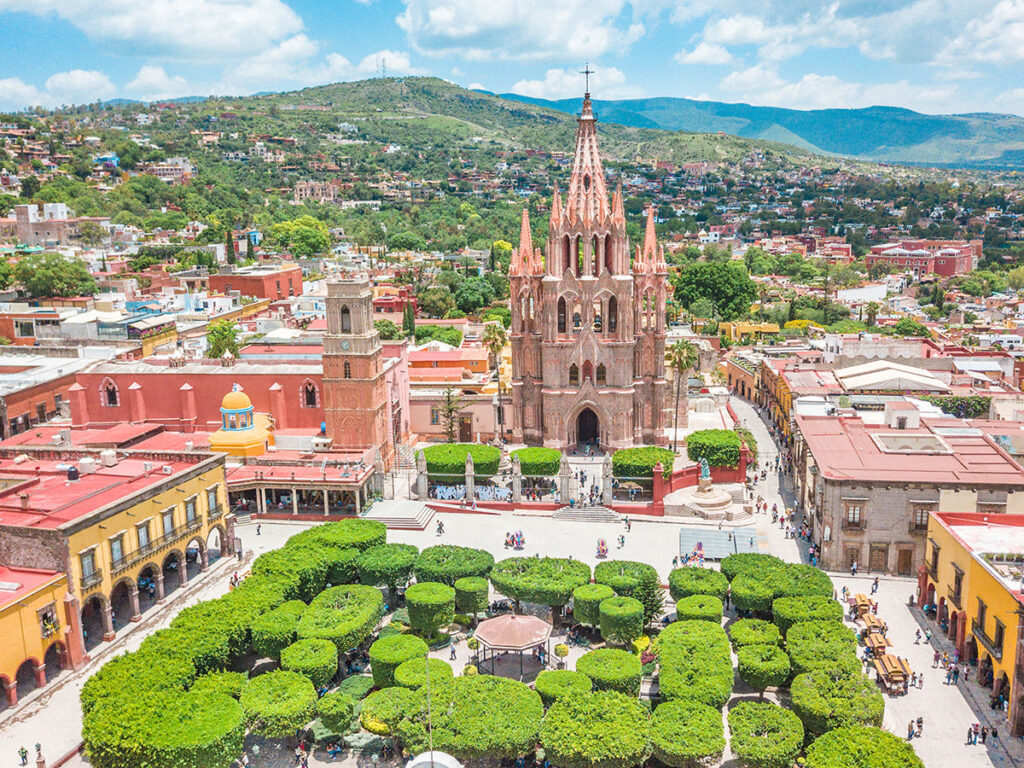
There’s never been a better time to explore our next-door neighbor. It’s now a breeze to hop on a flight out of Tijuana airport, and Mexican airlines have launched many new nonstops, making much of the country more accessible than ever to San Diegans. That’s why we went beyond Baja to cover the country from coast to coast. It’s not a comprehensive guide, but a good jumping-off point to experience the magical parts of the country. Through these pages, take a quick tour of Mexico starting at the jungles and shores on its Caribbean side, then work your way west back home. ¡Vámonos!
Cancún || Oaxaca City || San Miguel de Allende
Mexico City || Guadalajara || Mazatlán || Puerto Vallarta
Los Cabos || Loreto || Ensenada || Rosarito || Valle de Guadalupe || Tijuana
There’s more to this Caribbean paradise than clubs filled with spring breakers—if you know where to stay.
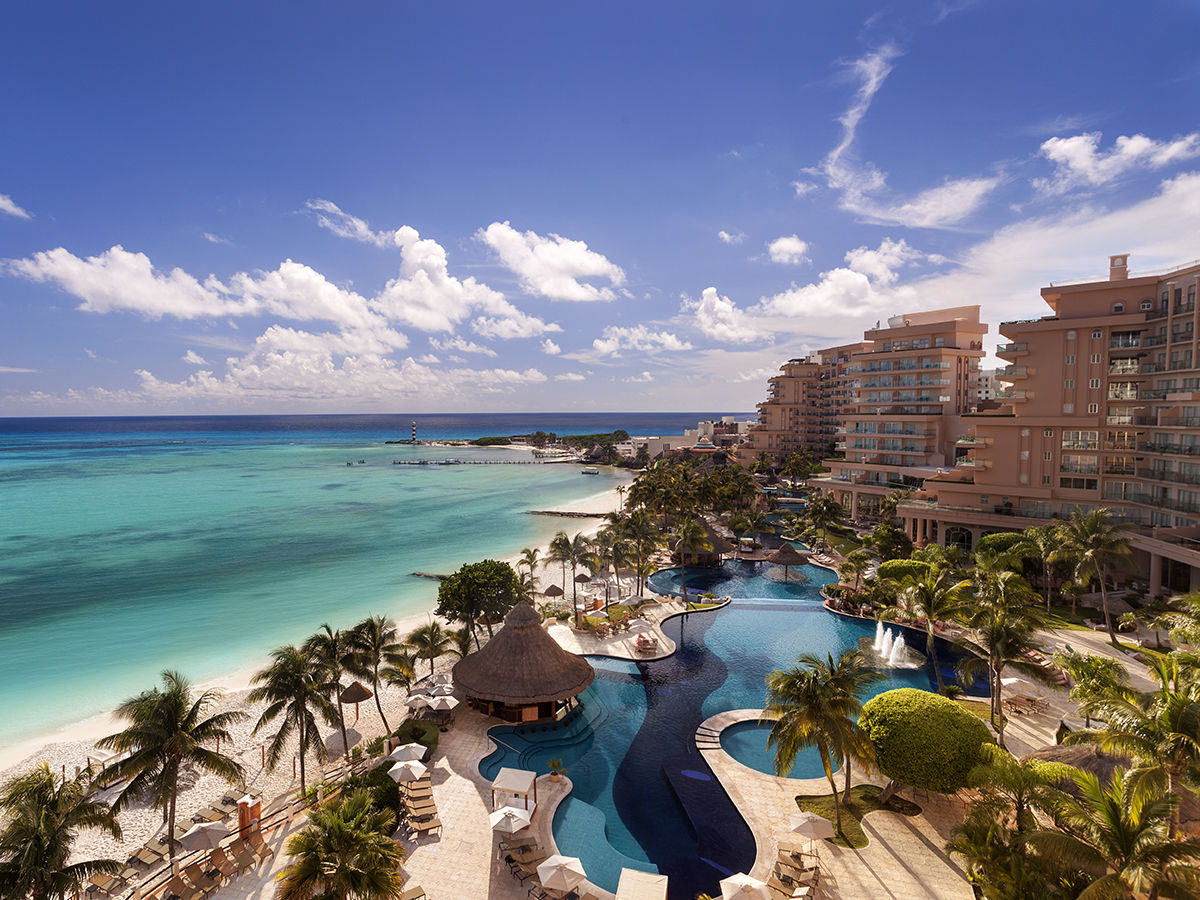
Guide to Mexico – Cancún
“Just play it cool, Letchworth,” my wife says as we exit our airport shuttle. “You belong here as much as anyone else.” I immediately fail this test when a bellhop asks if he can take my heavy suitcase, and on instinct I say, “Oh, no thanks! I can manage.” To his credit, he nods and waits until I’m distracted—by the two glasses of Champagne at check-in—to whisk it off anyway. We’re not at the Interstate Frontage Road Super 8 anymore, Toto.
This is just the first taste of a consistent standard of luxurious attendance at Grand Fiesta Americana Coral Beach (rooms from $347). Kohleun and I pride ourselves on being seasoned travelers, but as our 20s waned, so did our capacity for sleeping on the floor of the Amtrak observation car. On our first trip as a couple, it took only one night sharing a hostel room with six backpackers to realize we could afford to raise our standards a little.
And yet, stepping into our king-size suite, which could hold both my old studio apartments and opens onto a perfect Caribbean horizon, I’m still out of my depth. We’ve gotten the resort’s new premium package, “Ú,” whose amenities are so numerous we keep stumbling across their brochures like a scavenger hunt.
“Complimentary 30-minute WaveRunner ride for two?” I boggle.
“Unlimited access to the Gem Spa!” Kohleun prioritizes.
And just as I tear into the minibar’s unlimited supply of peanut-butter crackers, she waves the room service menu at me and says, “Let’s think bigger.”
It’s easy to imagine how differently this trip might’ve gone back when we were living on barista and adjunct-professor money and still had iron livers. We passed by that scene on our way in: the all-night Señor Frog and Friends party district. Since the drinking age in Mexico is 18, Cancún’s Hotel Zone is notorious for attracting American coeds looking for a spring break they’ll never remember.
But we’re here to give Cancún a second look, from the perspective of someone who can appreciate finer things at a more deliberate pace. And the Grand Fiesta Americana doesn’t disappoint: Its philosophy of service is to anticipate their guests’ every need.
Overhearing us mention wanting to go into town, a lobby rep offers a primer on local public transit. At Le Basilic restaurant, the servers not only place our napkins in our lap but replace them whenever we leave the table. In the “Grand Club” VIP beach section, an attendant bounds up with fresh towels whenever we emerge from the sea. There’s even somebody waiting by the back doors to wash the sand from our feet. Middle-class guilt flaring, it’s all we can do to make it rain with tips.
They must be on top of Quintana Roo’s reported seaweed problem, too, as both the hotel’s private beach and the closest public one are equally pristine. I embark on the Gem Spa’s Ten-Step Hydrotherapy Program with an open mind (and a stomach full of carbs, which step one, The Steam Room, expressly warns against). Kohleun loves step three, The Clay Room. I’m skeptical of step six, The Ice Room (aka “rub a snowball on yourself”), but the uninterrupted device-free time to be present, the hourlong massage add-on, and the concluding nap under a warm blanket turn my biological clock back a year.
Granted, you don’t have to leave the country (or even the county) to vacation like royalty. So what does Cancún have for the over-30 crowd that you can’t see anywhere else? The Mayan cities of Chichen Itza and Tulum are 138 and 84 miles away, respectively, but since we can’t spare a day trip on our brief stay, we get our archaeology fix at the nearby Museo Maya and at El Rey, a village with surviving temple walls, lintels, and colonnades from the sixth century, now home to an iguana kingdom.
Back at the hotel, our dinners on both nights are the pinnacle of the whole experience. La Joya restaurant’s tequila tasting pairs an añejo, a blanco, and a reposado with the proper vessel and chaser to bring out their full character. I’m no food critic, but I can tell you that their traditional Mexican cuisine was delicious and artfully presented—helped in part by the 10-piece mariachi band who had a new song for every table. Curiously, their fanciest venue, Le Basilic, is French. A live grand piano player serenades us through all five courses there, the final gilded punctuation on my nagging delirium of Whose life is this?
But by the time we leave, I’ve come to a different perspective on Five-Diamond travel. This standard of luxury may be routine for some of our fellow guests, but for most of them, a place like this is something they’ve saved up for and looked forward to for a long time. The aspiring Instagram star from Korea, who models three different swimsuits while her new husband gamely fixes the tripod in the sand; the Indian family whose five kids make dinosaur noises in the pool—these guests have learned well that money is best spent on experiences, not things. And it’s plain on their faces that they’ll remember this one for a long time.
Kohleun was right; we do belong here—and so does anyone else. —Dan Letchworth
Oaxaca’s state capital is not only one of Mexico’s most affordable destinations, its culinary scene and natural wonders are priceless.
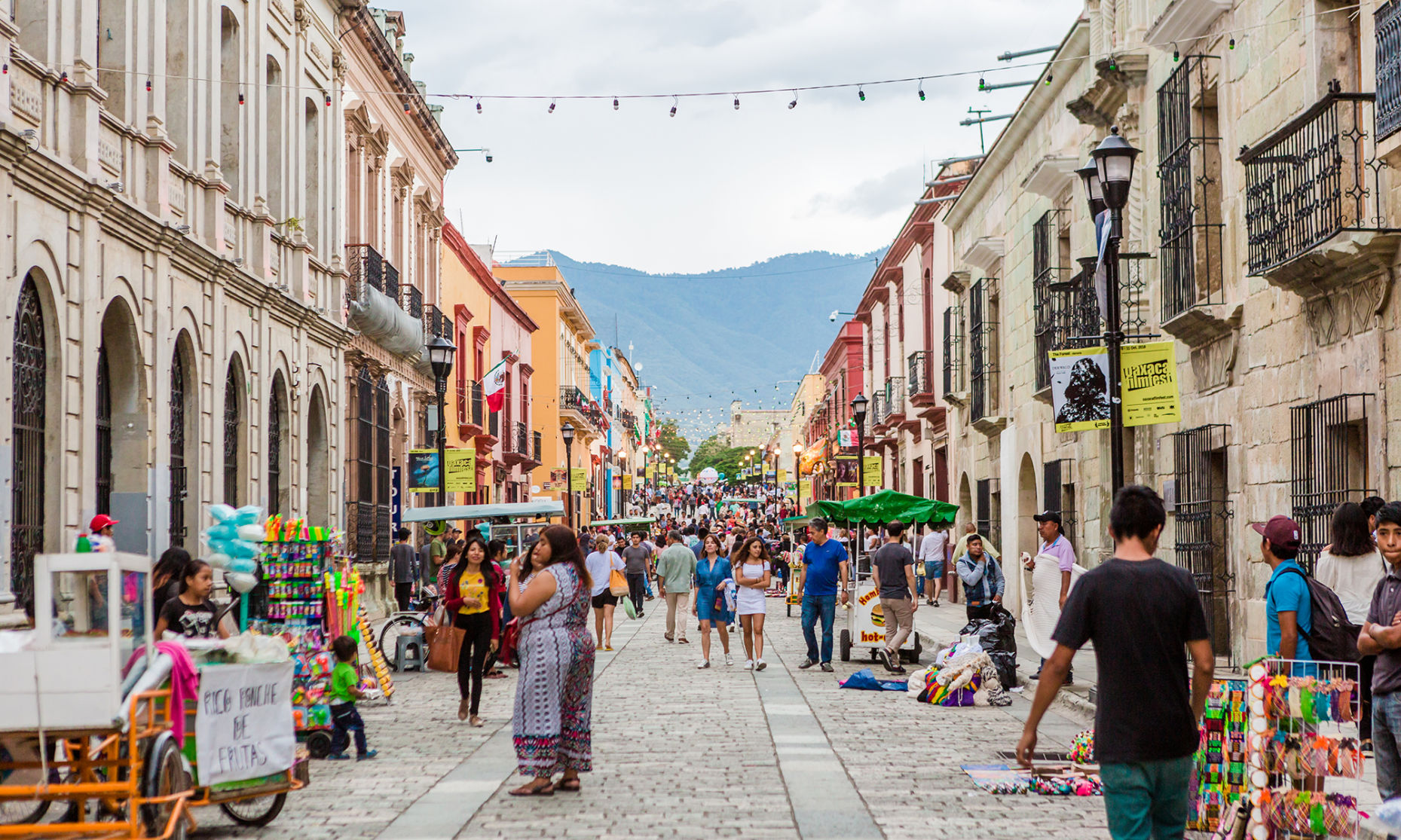
Guide to Mexico — Oaxaca City Street
There’s no shortage of lodging in Oaxaca City. You can spot a colonial building turned boutique hotel on almost every block of this walkable metropolis, but there’s a few stays that reign supreme. Built as a convent in the 1500s, Quinta Real Oaxaca has 91 rooms, a pool, and a courtyard that looks miraculously untouched by time. Within its walls, you’ll find peace and quiet, despite its primo location in the heart of the city. For a boutique option, book one of the six suites at Casa Antonieta. It does draw a younger crowd, thanks to its contemporary decor combined with the Instagrammable Spanish Colonial design that’s been kept intact. And foodies should look no further than Casa Oaxaca. The seven-room hotel’s most renowned for its restaurant of the same name, led by chef Alejandro Ruiz, whom you can book a culinary tour or cooking class with during your stay. If you’re hoping to sleep on the cheap, there’s vacation property rentals aplenty, starting around $30 per night.
When in Oaxaca, you go to the markets to get up close and personal with the local ingredients. At Mercado 20 de Noviembre, you can find all the regional staples prepared right in front of you—tlayuda (a huge fried tortilla smeared with refried beans and typically topped with chorizo and other veggies), tejate (a frothy chocolate drink made from corn), and tangy chapulines (grasshoppers). But the real draw here is that you can grill your own meats.
To put some pep back in your step, wander into one of the city’s many stylish cafés. Café Brújula has a bookstore attached to it, and Café Nuevo Mundo and Café Café have a menu with vegan and vegetarian options. Go to Expendio Tradición for a lunch or dinner shared-plates experience, and don’t pass up the ceviche (served with nuts and jicama for crunch) or the memela, a fried masa cake smothered with refried beans and sampling of proteins.
For fine-dining, book a reservation at Criollo, a restaurant founded by chef Enrique Olvera (of Pujol fame) that uses only local ingredients. Due to that, they serve only a seven-course prix-fixe menu that changes daily. For another upscale option, book a reservation at Los Danzantes, an open-air restaurant—with an upstairs bar, Selva, to boot. Order the Selva cocktail, which is topped with a piece of Oaxacan cheese that’s meant to be a little appetizer before your real feast.
No matter where you get your fill, there are many mezcalerias in Oaxaca City to enjoy a digestif or nightcap.
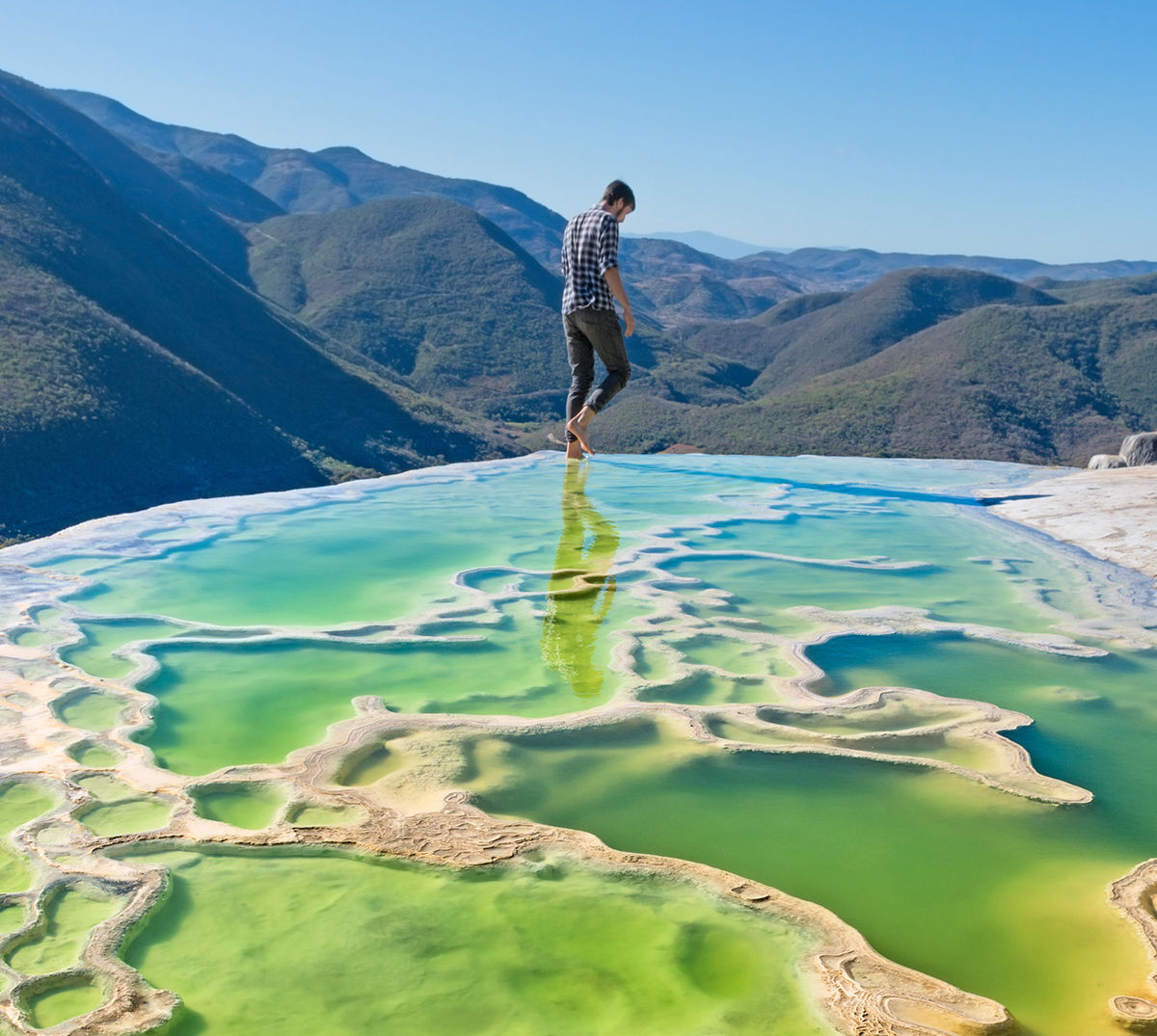
Guide to Mexico — Oaxaca City
“Shop till you drop” (hopefully at a mezcaleria) is many visitors’ mentality in Oaxaca City. The town’s brimming with street vendors selling their wares, from clay pottery to colorful clothing. You can find them at Mercado Benito Juarez, neighboring Mercado 20 de Noviembre, and in front of Templo de Santo Domingo during the day. But to put your money right where the makers make, visit Mujeres Artesanas de las Regiones de Oaxaca. The women’s collective sells textiles sewn on site. When you’re ready to give shopping a break, pay a visit to one of the city’s many museums, like Museo de las Culturas, Museo Textil (Oaxaca is known for its textiles), or the Jardín Etnobotánico—but for a real natural wonder, book a tour or drive yourself to Hierve el Agua (photo below). About two hours from the city, this “petrified waterfall” has pools of liquid water on top, where you can take a dip or an incredible pic. There’s also the option to do a one-mile hike to see the awe-inspiring formation from below and the wild air plants along the path.
Lastly, spirit lovers shouldn’t miss the “World Capital of Mezcal,” Santiago Matatlan, about an hour from Oaxaca City and totally unassuming. On the drive out, you’ll spot clouds of smoke across the agave fields (earthen pit roasting gives mezcal its smoky flavor and is the key to agave cooking). Once in the village, make Gracios a Dios your first stop. The mezcaleria recently underwent a modern makeover and also makes its own gin. Many bottle shops dot the main drag, so you can grab more spirits to take home. Salud to that! —Sarah Pfledderer
Set at 6,000 feet and about 150 miles outside of Mexico City, this beguiling, Colonial-era town (and UNESCO World Heritage Site) is famous for its stunning architecture and boasts a Pueblo Mágico designation. Here you’ll discover progressive gastronomy, lively rooftop bars, vibrant marketplaces, and galleries galore.
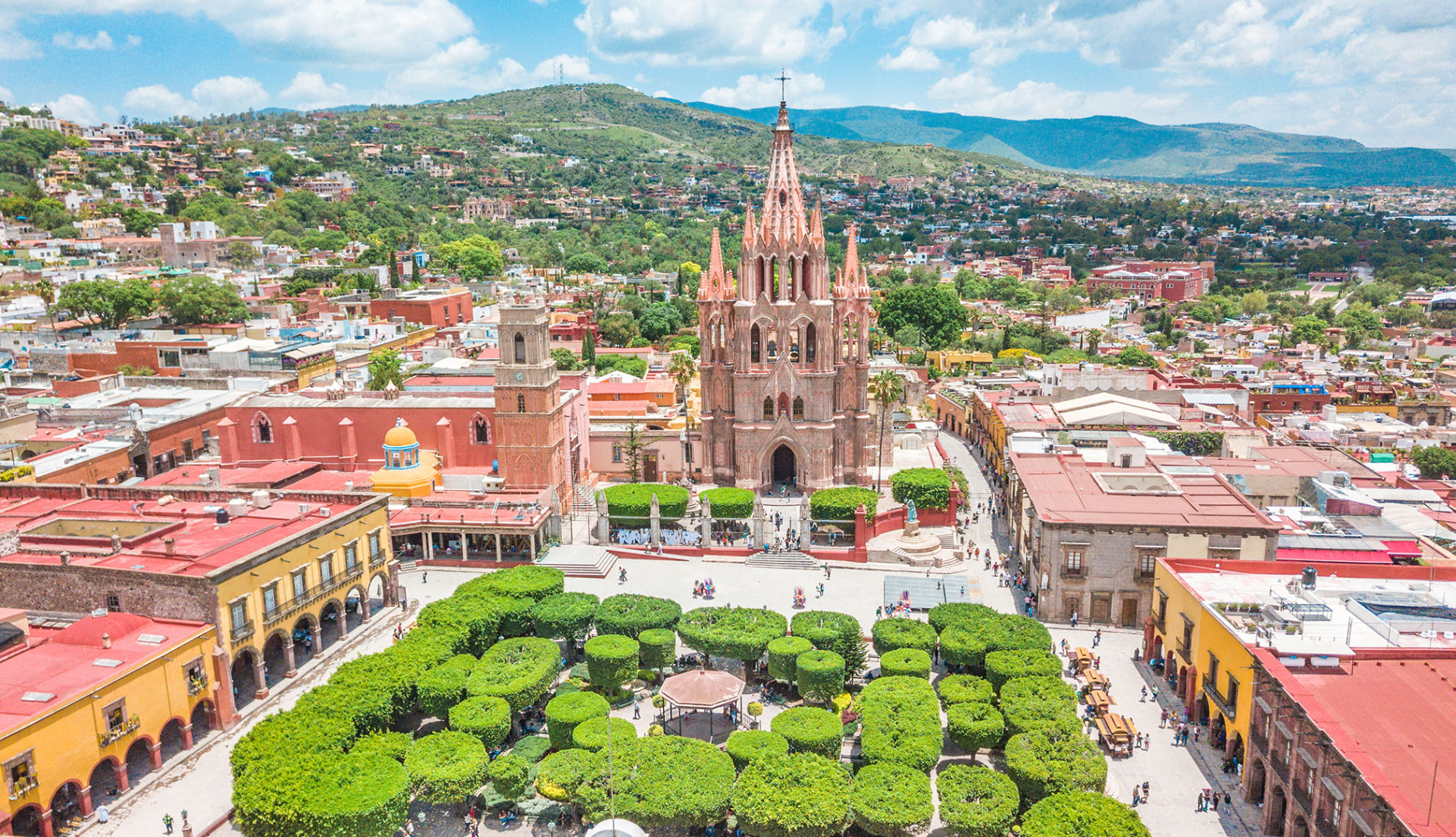
La Parroquia de San Miguel Arcángel
Located in the heart of the historic city, the luxurious Rosewood San Miguel de Allende has 67 Spanish hacienda-style guest rooms with terraces or balconies—and a rooftop with unbeatable sunset views of La Parroquia de San Miguel Arcángel, the town’s famed Gaudi-esque neo-Gothic church. A new crop of boutique hotels have transformed several colonial mansions into intimate stays. Hotel Amparo, a five-room hideaway that’s an easy walk from El Jardín (the city center), is bedecked in midcentury furnishings, local art, and a high-end coffee bar to boot. Enjoy small-batch French wines and Creole bites on the roof or sip an Aperol spritz on the terrace surrounded by greenery, fountains, and birdsong. For a touch of the modern, Hotel Matilda sports minimalist deluxe rooms, a rooftop infinity pool, and an exciting collection of contemporary Latin art.
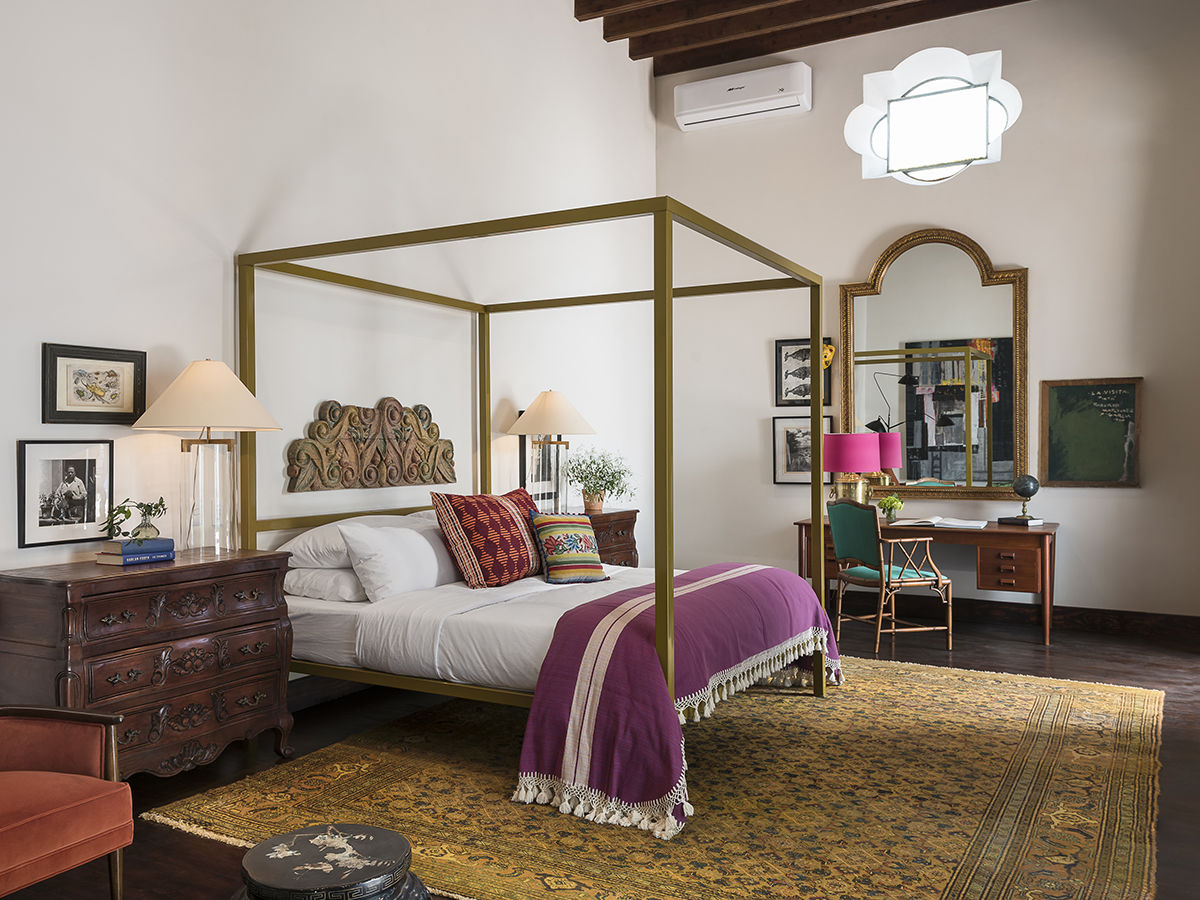
Hotel Amparo
In the shadows of the towering Parroquia church, Quince draws a crowd for its rooftop DJ scene, mind-bending views, and playful menu. Start with tuna sashimi in jalapeño ponzu sauce from the sushi bar, then follow with lamb barbacoa dumplings or roasted ají pepper pork loin served in a corn husk. Enrique Olvera of Pujol fame fired up the San Miguel dining scene with Moxi at Hotel Matilda back in 2011, and today it’s still a radical palate pleaser with inventive dishes like red mole and pork belly, or tender octopus atop risotto with huitlacoche—a corn fungus delicacy. Chef Marco Cruz puts a contemporary spin on Mexican cuisine at Nomada, offering an insanely affordable yet delish six-course tasting menu on Wednesdays: esquites (toasted corn) with capers, epazote mayo, and black truffles; crème brûlée topped with beet puree; artisanal Mexican beer, wine, and mezcal. Marlin tacos, rooftop beats, and more electrifying late-night views of the city make La Única another must-stop. For a sugar fix, Café San Agustín serves up the city’s best churros and dipping chocolates.
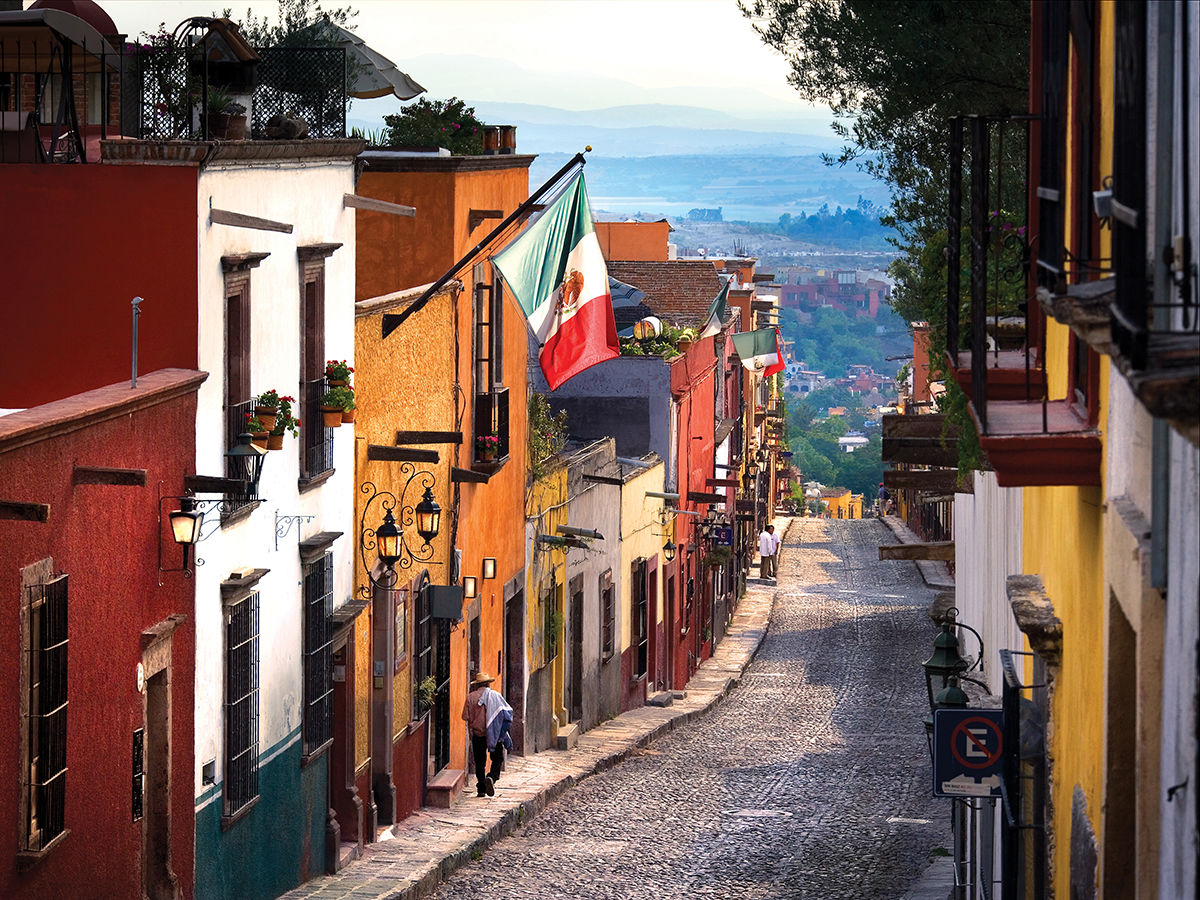
A streetscape in San Miguel de Allende
Stroll the central plaza or post up on a park bench in El Jardín to take in the parade of people and sights, like the traditional walking serenades (callejoneadas), wedding parties who dance through the streets behind giant bride-and-groom papier-mâché puppets called mojigangas, accompanied by mariachis and tequila-laden donkeys festooned in paper flowers. There’s threads by up-and-coming Mexican designers at La Colektiva HojaSanta, handmade ceramics and tableware at Trinitate, bags and boots at Talula de la Lune, shawls, blankets, and ponchos at boho-chic Mixta, and aromatic potions and lotions at La Victoriana.
Meander through Fábrica la Aurora, a former textile factory that now houses galleries, cafés, art studios, and fabrics. Then, eat your way through the sprawling Mercado de Artesanías, where locals sell grilled street corn, tamales, and handmade sweets, along with jewelry, rugs, pottery, and more. Peruse the collection of vintage and handcrafted Mexican toys at Museo la Esquina, or peek inside La Parroquia to see its chandeliers and Baroque architecture. Finally, head to Casa Dragones. Behind the massive wooden doors awaits a stylish tasting room in the former 17th-century stables of the queen’s cavalry—a magical place to sip refined tequila and hear the tale of Mexico’s break from Spain. —Ann Wycoff
San Miguel’s less touristy neighbor is a former silver mining town that’s now a wonderland of the arts and rich in culture. Here are 7 ways to enjoy it.
1. Check in to Casa del Rector, then take a dip in the infinity pool with a mezcal margarita in hand and drink in the town’s patchwork of color and the mountain views.
2. Discover Don Quixote. Head to the Museo Iconográfico del Quijote and take in the artwork and sculptures of Cervantes’ favorite character. Every fall, the city holds Festival Internacional Cervantino, a celebration of art, literature, theater, film, and dance.
3. Pay homage to Diego Rivera. Explore the famed muralist and painter’s birth house and see some of his earlier work at the Museo Casa de Diego Rivera, and then go café hopping in nearby Plaza de San Fernando.
4. Ride the funicular up to Monumento al Pipila, a colossal statue of a War of Independence hero at one of the best viewpoints in town. Afterward, get lost while wandering back down through the city’s colorful alleyways.
5. Get spooked at El Museo de Las Momias, Guanajuato’s mummy museum next to the old cemetery.
6. Catch a performance at one of the town’s three gorgeous theaters: Cervantes, Juárez, or Principal.
7. Eat sweet corn and jalapeño fritters at Los Campos, enjoy live jazz or flamenco at La Capellina, then cap the evening with a mango chai cone at Estación Gelato.
This city of 8.8 million people has everything you’d expect from a buzzing metropolis—history, shopping, and five-star food—but a trip to Ciudad de México also promises plenty of nature to make for a balanced urban getaway.
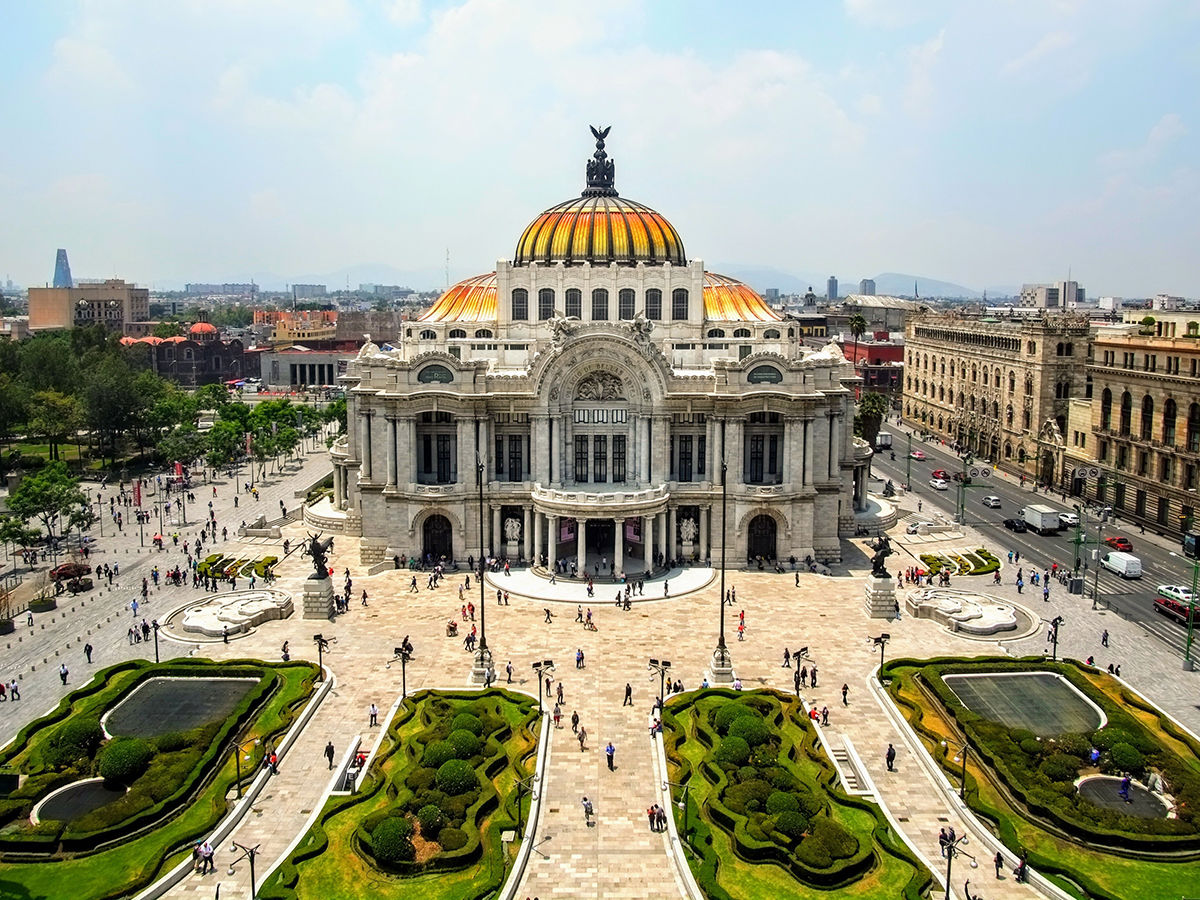
Palacio des Bellas Artes
Considering its mix of fine dining and thousands of street vendors, booking a trip to Mexico City entails meal planning. Start in the Colonia Roma neighborhood at either of two locations of Panadería Rosetta. Despite its European ethos and flaky croissants, you can also snack on traditional Mexican pastries like conchas and guava danishes. Contramar is a quintessential Mexico City seafood and mezcal experience, where chef-owner Gabriela Cámara turns out octopus aguachile and mouthwatering tuna tostadas with crispy leeks in the hip Condesa neighborhood. Traveling with picky eaters? Mercado Roma food hall is packed with something for everyone, from tacos and empanadas to pizza and burgers. Come dinnertime, there are lots of high-end experiences in the swanky Polanco neighborhood, like the Chef’s Table–featured Pujol, but we love the lower key but still stellar vibe at Quintonil, where Jorge Vallejo (a Pujol protégé) and his wife, Alejandra Flores, have cultivated a sophisticated yet approachable menu of Mexican classics with plenty of vegetarian options that earned the restaurant 11th place on 2018’s World’s 50 Best Restaurants (yes, you need a reservation). No matter how full you are, save room for hot, crispy churros dipped in chocolate, caramel, or condensed milk sauces at Churrería El Moro (multiple locations).
Mexico City has all the big-name hotels—from Marriott to the new Sofitel—around busy Avenida Paseo de la Reforma, but the city specializes in design-centric options that make for a more unique stay. There’s hip minimalism and a rooftop pool at Hotel Habita in Polanco, the peaceful Chaya B&B housed in a 1920s building near the city center, and the intimate, four-room Nima Local House Hotel (occupying a literal old house) in Roma Norte that includes breakfast with your room rate.
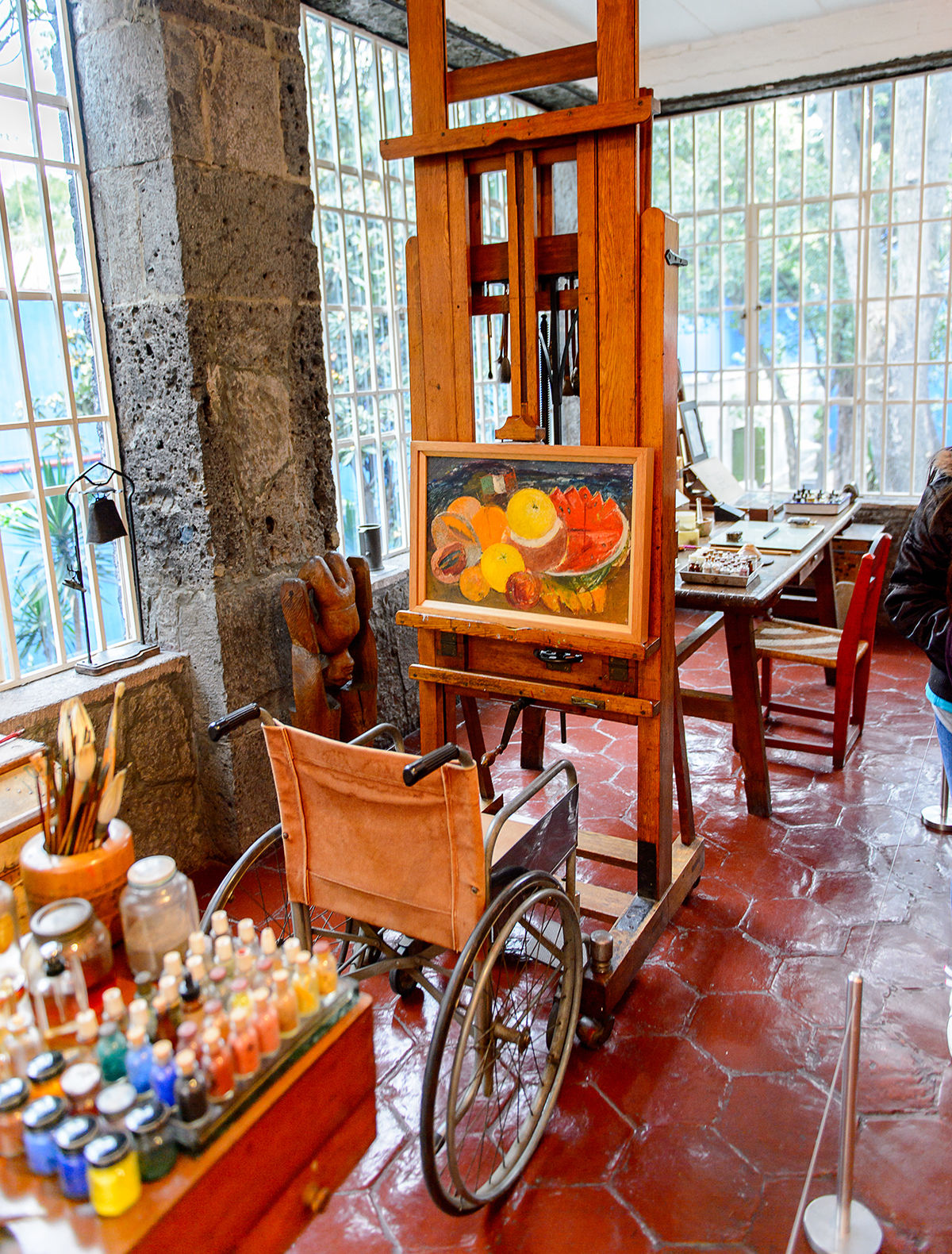
Frida Kahlo Museum
A stroll through the Zócalo, the historic city plaza, offers plenty to see in one shot, including grand churches, the Estela de Luz monument, and the Palacio Nacional. The impressive government building requires a passport for entry and is home to Diego Rivera’s famous History of Mexico mural. (Seeing the work and home of his wife, Frida Kahlo, at her eponymous museum in Coyoacán is also a must, but you’ll need a reservation.) At Castillo de Chapultepec, explore nooks and crannies in the former fortress of Mexican leaders, with preserved rooms, artifacts, paintings, and manicured gardens on a hilltop that offers a bird’s-eye view of the city. And as urban as it may be, Mexico City is surprisingly green. Bosque de Chapultepec, twice the size of New York’s Central Park, has tree-lined paths for walking and running.
Make time to see the Ballet Folklórico at the stunning Palacio des Bellas Artes. The traditional folk dance shows take the stage Wednesday evenings and Sunday mornings most times of the year, and you can buy tickets at the box office about an hour before showtime. Find more culture at Mercado Ciudadela, a nearly 60-year-old market of Mexican handicrafts. They do sell some requisite cheesy souvenirs, but there are quality textiles and home decor, too.
Your hotel or a local tour company can book tours to Teotihuacán, a UNESCO World Heritage Site one hour from the city. Here, you can see (and climb) the famed pre-Aztec pyramids built between the first and seventh centuries. Bring a hat, sunscreen, and sunglasses—there’s little to no shade. –Archana Ram
The capital of Jalisco state, Guadalajara is in many ways also the capital of Mexican culture. Locals have diligently preserved traditions that were born here, from tequila production and mariachi music to charrería, a rodeo-like competition that’s become Mexico’s national sport.
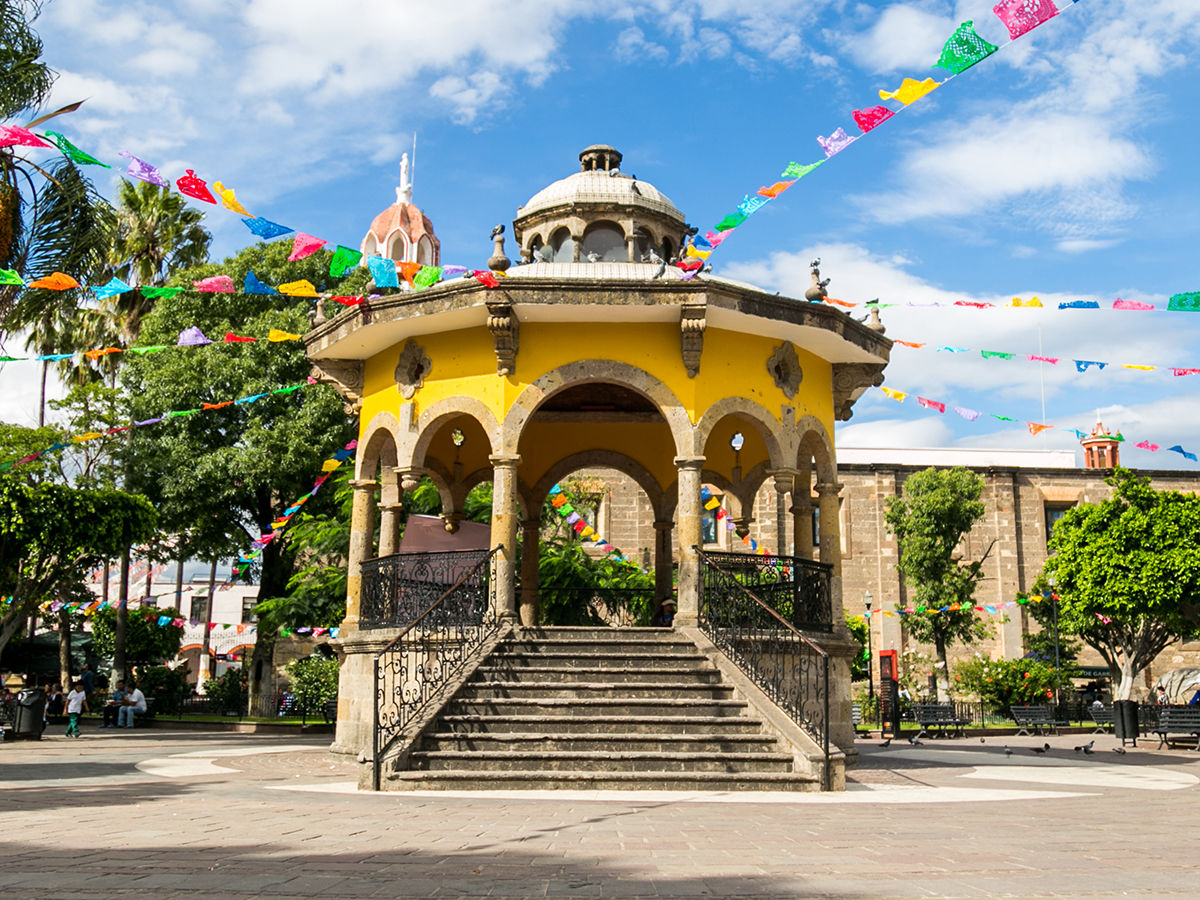
Tlaquepaque
Originally a private residence in the 1940s, Casa Habita is in the heart of Guadalajara’s hip and walkable Colonia Lafayette neighborhood, where tree-lined streets point you toward cool concept shops and romantic architecture. When it opens next month, the shiny new 11-room Casa Rébora is expected to be an even bigger draw, with its 24/7 restaurant and bar decked out in nothing but pink. Or find a home base in Tlaquepaque—a Pueblo Mágico in the metropolitan area’s southern outskirts, about 30 minutes away—at the richly designed Juana Bautista. The restored 16th-century colonial mansion played a part in Mexico’s independence.
Find unrivaled people-watching at the city’s oldest cantina, La Fuente, which serves no-frills drinks like tequila shots and ice-chilled beer bottles (there is no fridge) and not much else. By day, snack on street food like verduro gordo (steamed veggies topped with Cotija cheese, mayo, and spicy salsa macha) or the local torito (meat, onions, cilantro, and beans in a flour tortilla, smothered in cheese and baked until bubbly) at roving carts and in market stalls.
For dinnertime, make reservations at Hueso, where the menu changes daily and everyone sits together as compañeros among thousands of chef-collected animal bones that line the whitewashed walls. Last year, one of the owners opened Veneno, an earth-toned, cavelike space perfect for sipping cazuela (a typical Guadalajaran alcoholic punch) and a boozy spin on tejuino, a staple beverage made from fermented corn. When a hankering for late-night nibbles hits, head to Guilty, a bar and restaurant that would feel right at home in North Park—with masterfully made $5 cocktails.
For an elegant afternoon out, join the well-heeled families of Guadalajara at Casa Luna, a whimsical restaurant with live music and toothsome fare tucked inside one of Tlaquepaque’s old mansions.
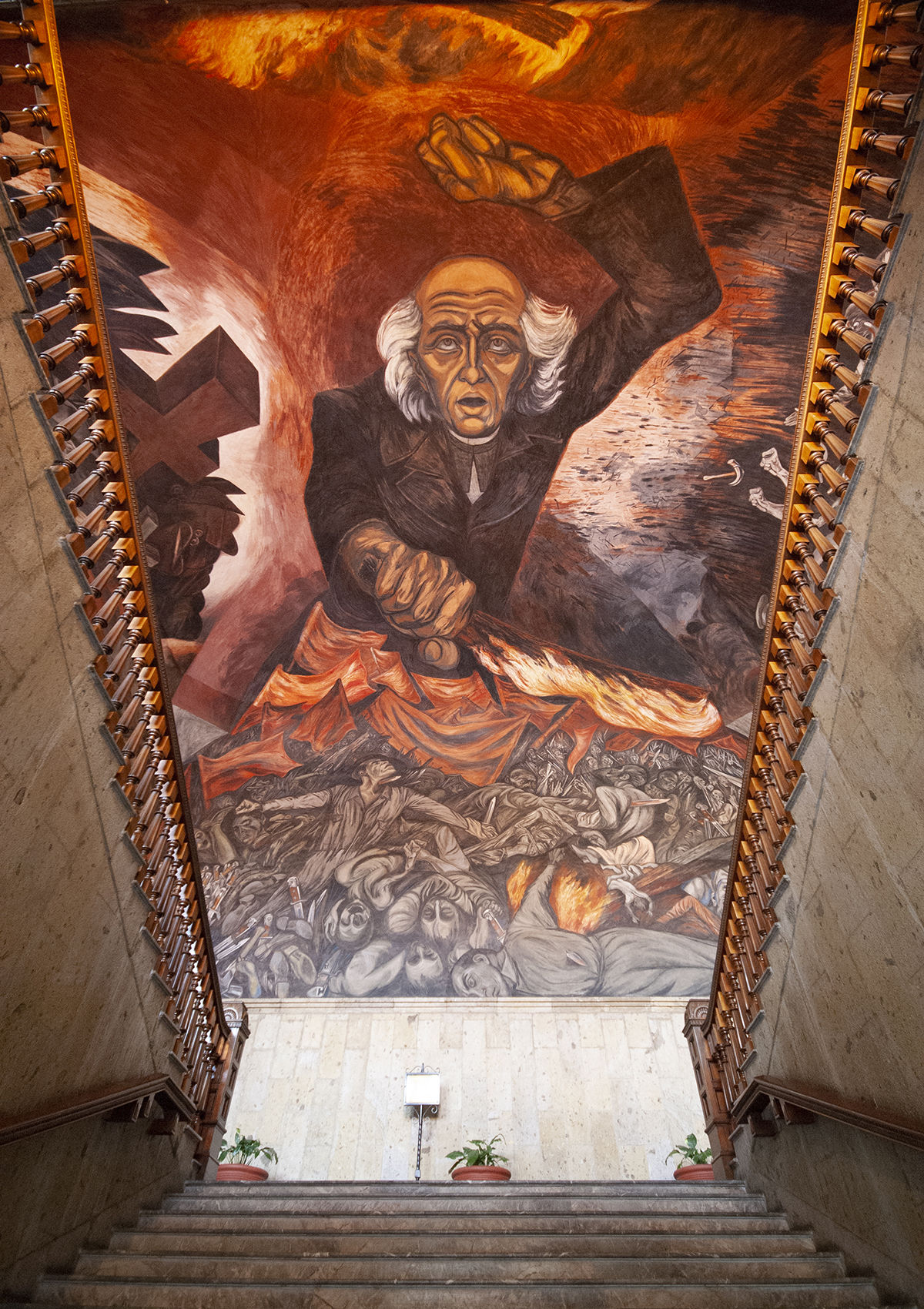
Palacio de Gobierno
By law, tequila can be made only in certain areas, and almost all of the blue-agave-based spirit comes from Jalisco. On Saturdays, the José Cuervo Express and Tequila Herradura Express trains celebrate this, departing Guadalajara for the drink’s namesake town, taking passengers on indulgent daylong tours of the distillation process from piña to glass.
In Guadalajara, experience unique Mexican culture at Lienzo Charros de Jalisco, where highly regarded, immaculately dressed charros compete on horseback every Sunday, while onlookers cheer, sip tequila, and sing along with mariachis. Known as charrería, the rodeo-like competition honors the country’s animal husbandry traditions and is on UNESCO’s Representative List of the Intangible Cultural Heritage of Humanity.
Tour neoclassical architecture and landmarks of political history simultaneously in Centro Histórico, where the controversial, larger-than-life frescos of muralist José Clemente Orozco (a contemporary of Diego Rivera) depict the struggle between indigenous populations and Europeans during the Mexican Revolution. He painted an astounding 57 frescos in just two years at Instituto Cultural Cabañas, a World Heritage Site, but don’t skip the Palacio de Gobierno, a gorgeous 18th-century government building where a masterpiece overlooks the grand staircase.
Wander for hours through Mercado Libertad (locally called “San Juan de Dios”), Latin America’s largest indoor market. No matter what you’re on the hunt for—bruja (witch) herbs, Mexican candies, leather goods, huarache sandals, woven bags, studded saddles, an extra duffel for souvenirs—you’ll find it here while hopelessly (and joyfully) lost in the labyrinth. —Hannah Lott-Schwartz
In this beachfront colonial city in Sinaloa, days spent on tranquil seas and golden sands can be followed up with strolls in the Centro Histórico and nights at the opera. Despite widespread violence in other areas of the state, travelers to this resort city have little to fear—and so much to gain—on its forgotten shores.
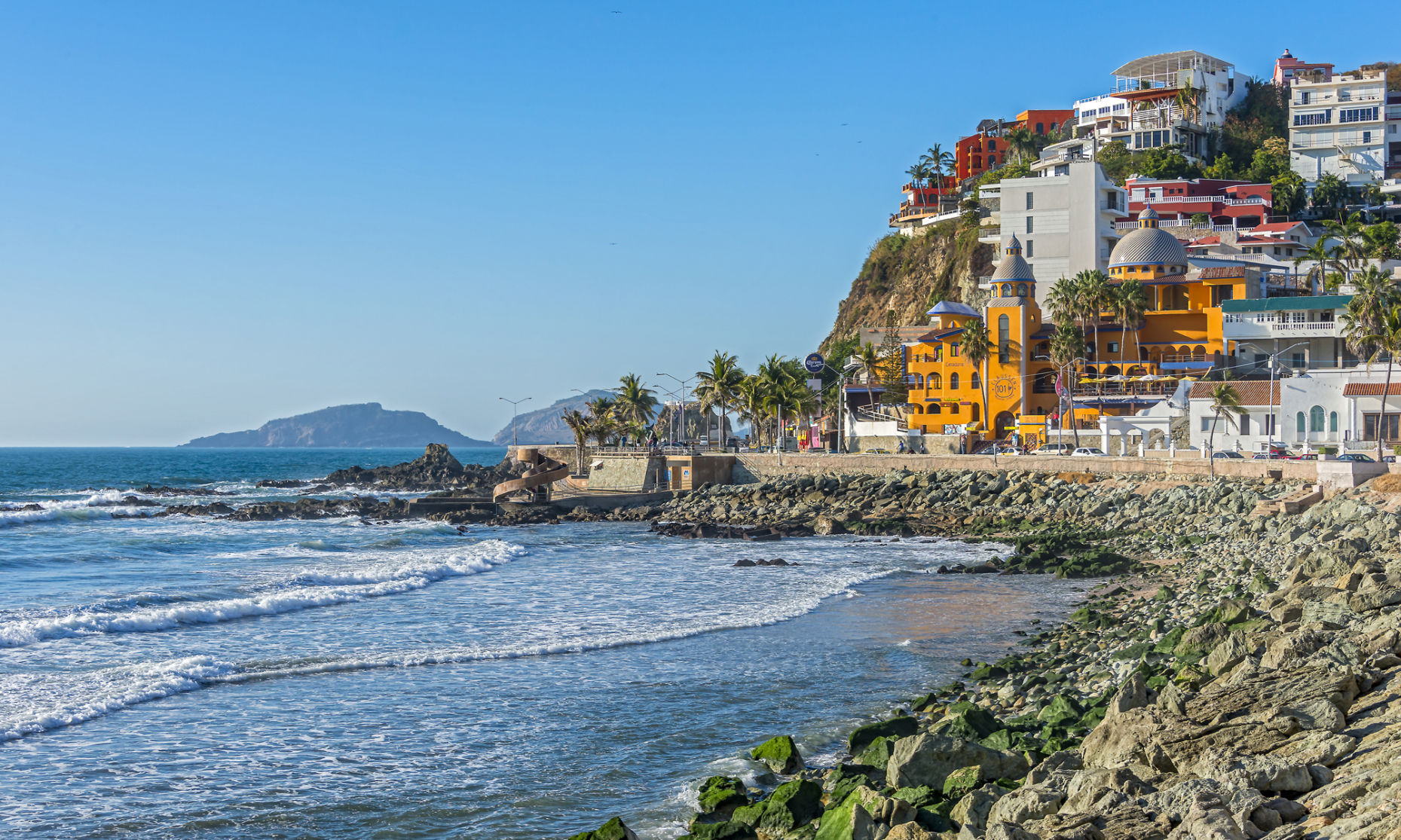
The Malecón
Nearly a century has elapsed since Mexico’s first beach resorts sprang up in this Pacific Coast port city, luring Ernest Hemingway. In the interim, Los Cabos, Puerto Vallarta, and Cancún stole the show. Worse, the city’s location in the cartel-violence-plagued state of Sinaloa tarnished its image.
But over the years, vast sums have been invested to restore the Pearl of the Pacific’s luster. The historic district has been exquisitely restored. The 13-mile Malecón, the world’s second longest waterfront walkway, has been revitalized. An impressive new aquarium and central park are under construction. And ever more high-rise hotels pierce the sky.
After a period of diminishing calls, cruise ships have returned, too: 130 docked in Mazatlán last year. Two-thirds of the city’s 3.5 million visitors are Mexicans, so you’ll find yourself rubbing elbows with travelers exploring this intriguing corner of their own country.
Welcome to the Shrimp Capital of the World. Aguachile and ceviche are the reigning dishes here. Be warned: Sinaloans do not shy from heat. You can get your first taste of aguachile from vendors right on the beach in the Golden Zone. Another local classic is camarones a la diabla, shrimp in a fiery red sauce of tomatoes and pureed guajillo and chile de árbol peppers. Beyond a bounty of mariscos, Sinaloa is famous for chilorio, slow-cooked shredded pork made with citrus, ancho chiles, and apple cider vinegar. Along with Pacífico beer, brewed here since 1900, meals are washed down with ToniCol, a local vanilla-infused cream soda.
Whether for dinner or just drinks, plan an evening at El Presidio Cocina de México. Through a corridor off a side street, enter a 170-year-old mansion transformed into an enchanted courtyard. Dine on modern Mexican dishes like pork shank in banana leaf or duck confit burritos in the shade of towering banyan trees. In the heart of the historic district, Casa 46’s marlin tacos and lobster chimichangas pair fine dining with a seductive view of Plazuela Machado.
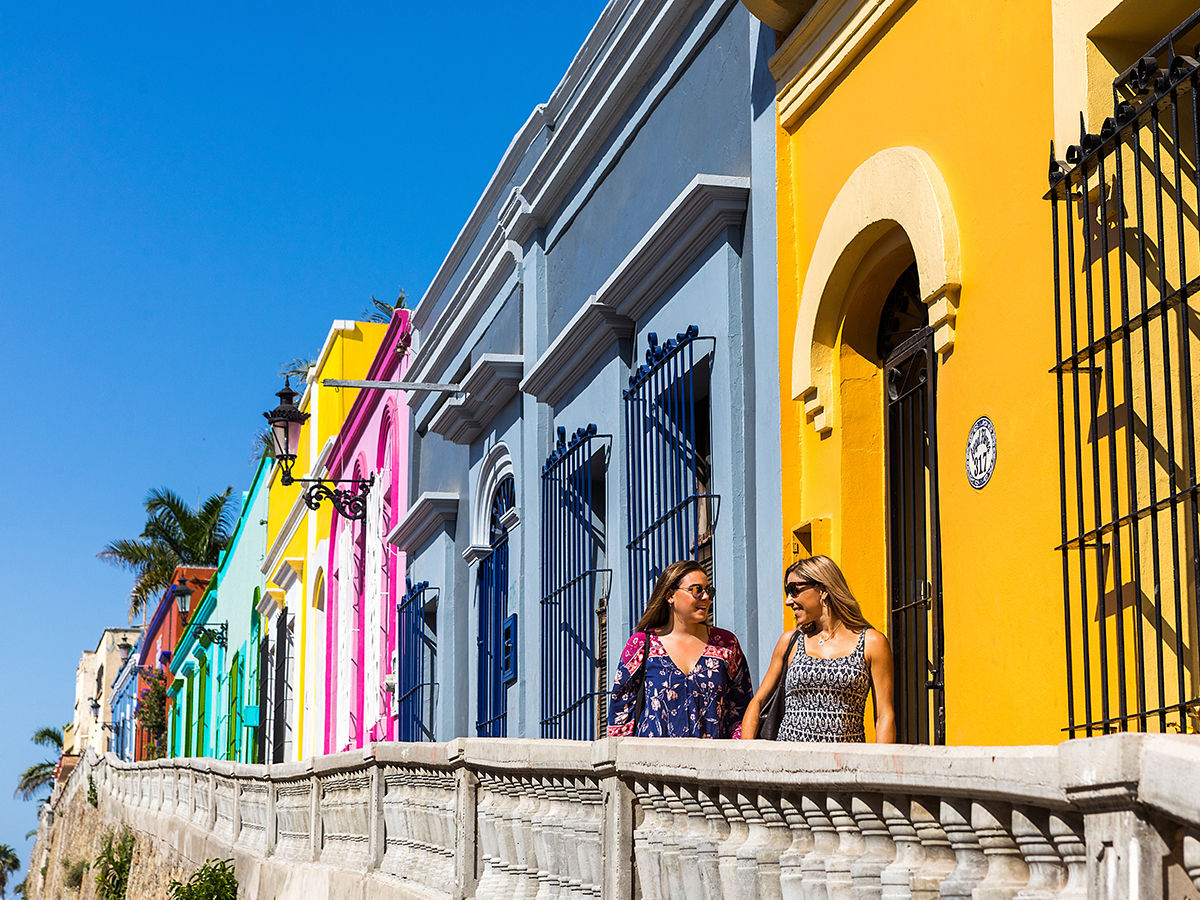
Homes lining Calle Angel Flores
The name of the tourist-friendly Golden Zone came from 49ers headed to California, but it may as well have been inspired by its miles of soft sand. Mazatlán’s resorts tower above the beach here, cutting an impressive skyline. The air is filled with the brassy sound of banda music, serenading beachgoers. It’s a wonderful home base, if touristy and slightly removed from the historic core. Travelers will find deluxe amenities at Golden Zone resorts like the El Cid El Moro Beach Hotel (double rooms from $115) or Pueblo Bonito Mazatlán Beach Resort (double rooms from $175). Many Golden Zone rooms feature kitchenettes to accommodate families. For boutique digs closer to the historic core that still offer ocean views, check out the eight-room Casa Lucila Hotel Boutique at the southern end of the Malecón (rooms from $260).
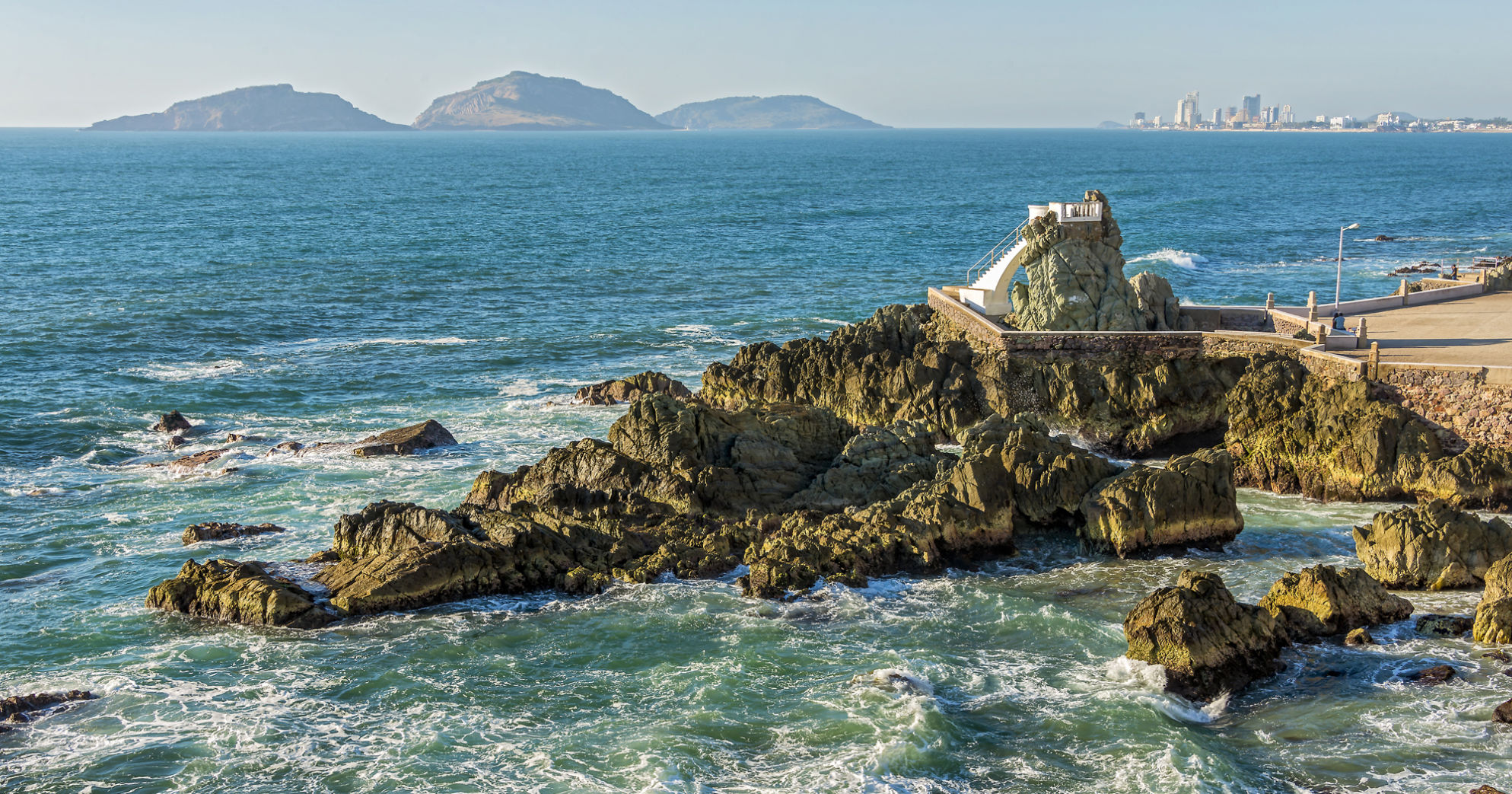
Glorieta Rodolfo Sanchez Taboada Park
Founded in 1531, Mazatlán is busy port city of a half million residents. To feel it out, flag down a pulmonía—one of the open-air taxi carts that are unique to Mazatlán. Take a ride along the city’s main artery: the impressive Malecón. (There are also bikeshare stations). Connecting the historic district and the resort-studded Golden Zone, it packs in so much of what there is to love: a stunning coastline, endless cafés serving mariscos, and Old World architecture.
At Olas Altas Beach, find a century-old renovated saltwater swimming pool with an eye-catching corkscrew slide. Continue to the Glorieta Rodolfo Sánchez Taboada park, where cliff divers plunge into the sea. A short stroll away, next to the leafy Plaza de la República, stands one of Mexico’s architectural treasures: Mazatlán’s Basilica Cathedral. Begun in 1856 and still the city’s main house of worship, it encompasses Gothic, Moorish, and Baroque styles, and holds a trove of ornate art and stained glass windows. Before dark, locate the super-photogenic jewel-toned homes along Calle Angel Flores.
Dating to the 1830s, the Centro Histórico, or Old Town, is a mélange of French, Italian, and German Neoclassical architecture. Art galleries, boutiques, and cafés pack the cobblestone streets. (At night, the sidewalks are lit by recessed ground lights, lending the quarter a spellbinding glow.) At its center lies the dreamy, tree-lined Plaza Machado. Steps away is the Ángela Peralta Theater, named for a beloved soprano who led a tragic life. The three-level Italian Romantic opera house, built in 1874, fell into disrepair decades ago but has since been impeccably restored. It’s a gorgeous place to take in dance, music, or theater performances.
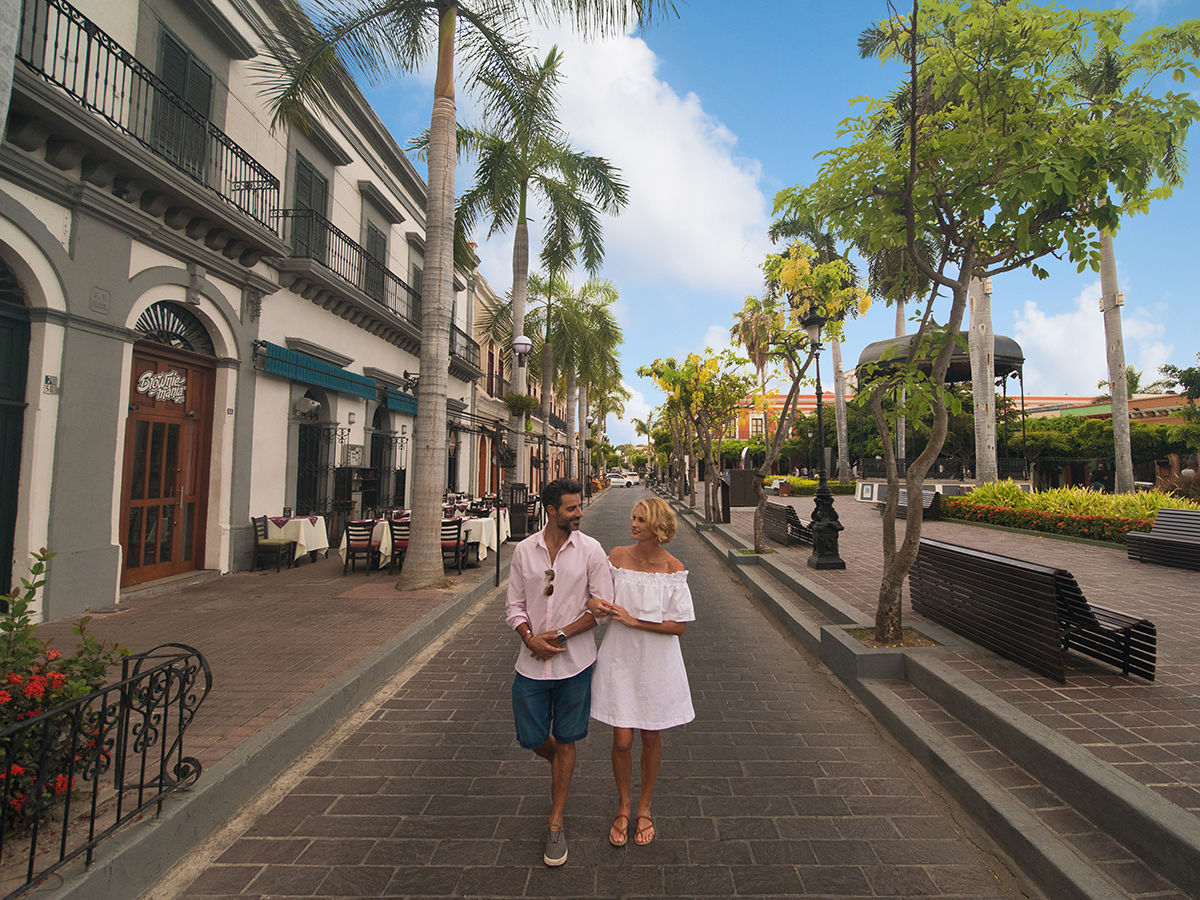
Plaza Machado
On the beach, keep an eye out for whales and sea turtles, like the protected olive ridleys that lay their eggs on shores to the north. From August to December, tourists can join conservationists to release baby turtles from the Verde-Camacho Turtle Sanctuary. The jungly Isla de Venados sports an irresistible stretch of white sand; it and neighboring Isla de Pájaros lie less than a mile offshore. Both are ecological sanctuaries accessible by sailboat, banana boat, or personal watercraft, for rent on the beach. You can hire a guide to show you around while you keep a lookout for tropical seabirds like the blue-footed booby.
Haul in some marlin and sailfish on deep sea fishing trips, which are popular here in the Billfish Capital of the World (another of Mazatlán’s monikers). Diehard surfers won’t find Cabo-quality waves, but rideable surf turns up year-round, with the best swells in summer. As the name suggests, Olas Altas Beach provides consistent conditions in a picturesque urban setting.
Less of a spring-break hot spot than it was in years past, Mazatlán’s nightlife isn’t of the plastic-yard-glass variety. However, revelers flood the city each February to celebrate Carnaval, the third largest in the hemisphere. –Chase Scheinbaum
Beyond the docks of the shrimp fleet, the harbor tapers into narrow waterways fringed with dark green mangrove trees. Just a few miles from the city, this tidal lagoon is an important nursery for the region’s famed crustaceans. Recognized as critical for many critters, it’s a protected habitat well worth a half-day visit provided by King David Tour Company. You board a tractor outfitted with bench seats, and it delivers you to a stretch of wind-lashed beach that may as well be a deserted island.
Mazatlecos are avid baseball fans. Catch their team, the Venados, at the recently renovated Estadio Teodoro Mariscal.
The verdant Sierra Madre mountains are home to charming pueblos like El Verano, population 250. Just 45 minutes away, it caters to adventure lovers—with a taste for tequila. Veraneando Adventure arranges tours, including transportation from Mazatlán, that’ll take you zip-lining over gorges choked in cardon cactus, floating the lazy Presidio River, or revving ATVs over rocky trails. Afterward, soak in a hot spring and get a tasting tour of the town’s agave distillery.
If you haven’t been in a while, here’s five reasons to revisit this resort town.
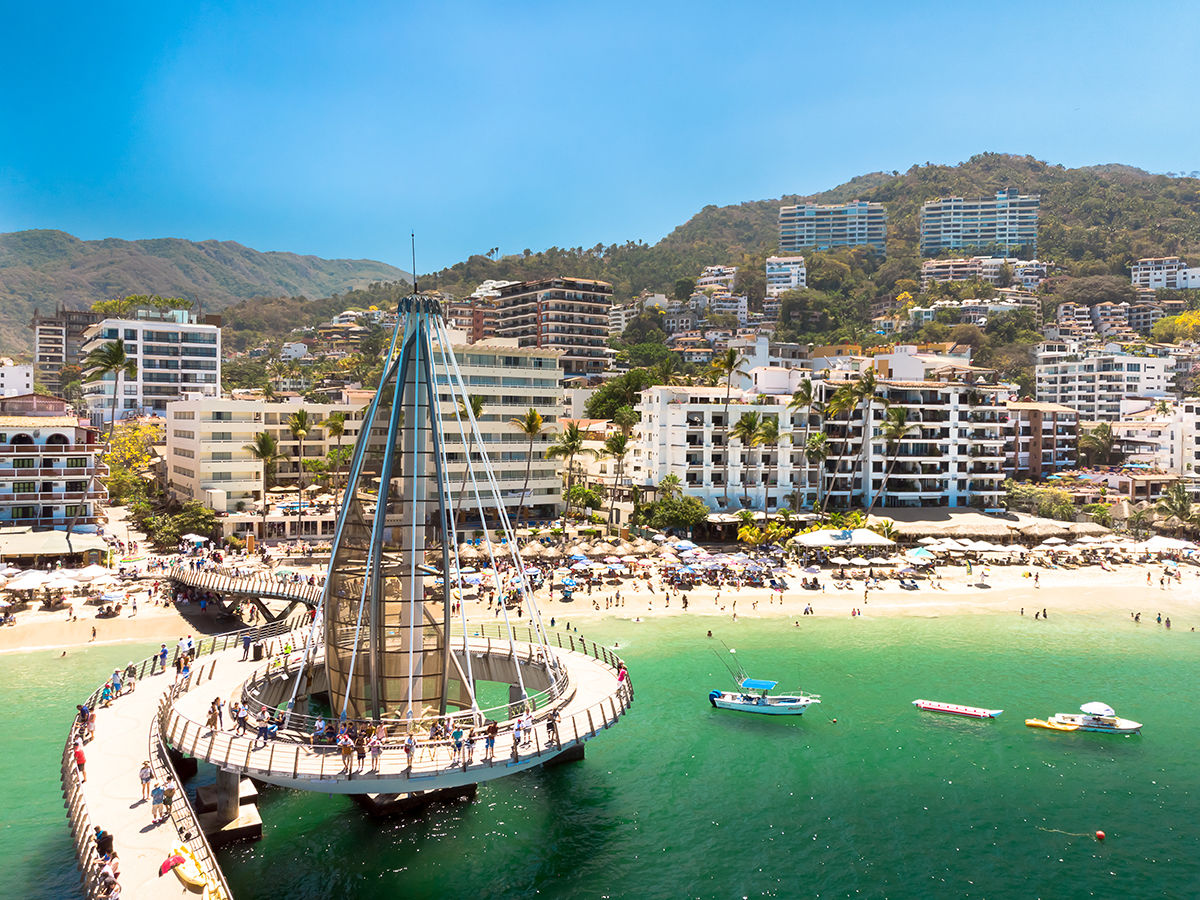
Playa Los Muertos pier in Puerto Vallarta
Puerto Vallarta has long been known for its tropical beauty, amazing dining, and fantastic resorts. Now, plush new hotels are popping up in Vallarta proper, putting a new twist on a consistent favorite. The ultra-luxurious adults-only Hotel Mousai debuted recently with a disappearing-edge rooftop pool and an all-inclusive package touting eight different dining options. The Garza Blanca Preserve Resort & Spa features birdwatching and hiking tours spread over 85 acres, and a bevy of multi-bedroom suites that sleep up to eight guests. Trendy restaurants have popped up as well, including La Leche, which sports an all-white interior and is popular for its namesake roasted duck. For a fun and filling outing, try the walking Taco Tour, which hits eight different culinary establishments downtown in a battle of who-makes-it-best. An old standard, the Iguana Restaurant & Tequila Bar set inside Elizabeth Taylor’s former home-turned-hotel, is still out-of-this-world delicious. Plus, this spot offers the most impressive mariachi band you will ever experience live. —Jon Bailey
Want a more private slice of paradise? Find it one hour north of Puerto Vallarta proper.
While Puerto Vallarta is packed with all-inclusive resorts and has a bustling main strip, Punta Mita on the Riviera Nayarit is the exact opposite. The 1,500-acre point and several of the white-sand beaches on its scalloped edges are privately owned (some big-name investors include Bill Gates), and the region has become a haven for tech executives. If you want privacy and days that sway as slowly as palm fronds in the breeze, this is your place in the sun.
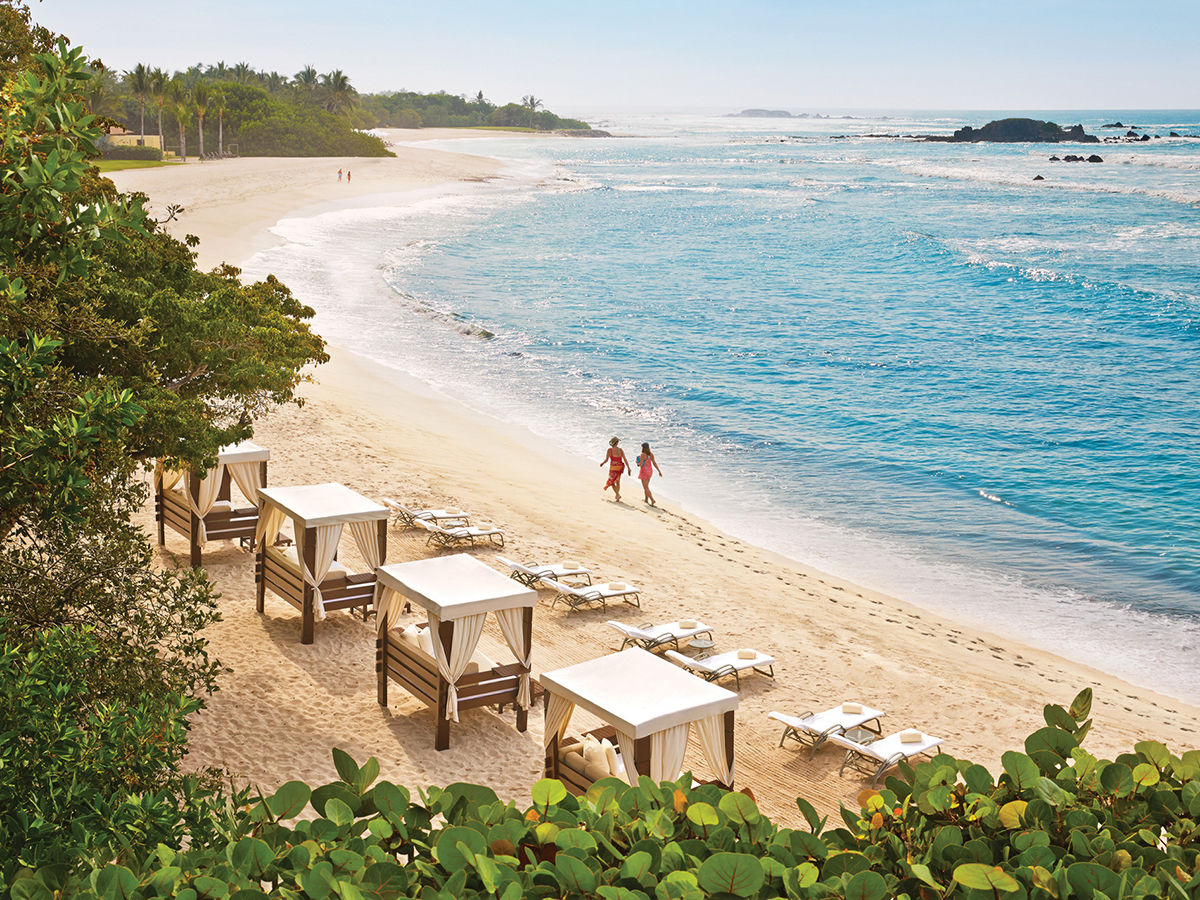
Punta Mita
The Four Seasons Resort Punta Mita and The St. Regis Punta Mita are the main places to hang your (beach) hat, and both are right on Banderas Bay. Every room at the St. Regis comes with butler service and the resort is known for its golf courses, whereas the Four Seasons has a younger vibe with fun bars and trendy restaurants, like Dos Catrinas. The new two-story restaurant overlooks the Pacific and has mezcal tastings and shareable plates like soft-shell crab tacos. Seafood lovers, take note: Every day at 11 a.m., a small boat docks at the beach fronting the resort, where chefs come to purchase the catch of the day.
Fill your days by the infinity pool and watch the resident green iguanas snack on bits of pineapple, take a bike ride through garden trails, or just hang out in a comfy beach cabana. If you prefer to stay active, the Apuane Spa has fitness classes, like a yoga session where the instructor plays the flute during savasana, and an intense suspension training developed by a Navy SEAL. — Marie Tutko
This destination isn’t just for spring breakers anymore. The rocky coastlines and cactus-filled hillsides in “the capes” are morphing into a new Monte Carlo, with hotels that scream luxury, roads traversed by fleets of Escalades, and an airport packed with private jets. But you can still have a low-key stay in either Cabo San Lucas or San Jose del Cabo and experience local culture.
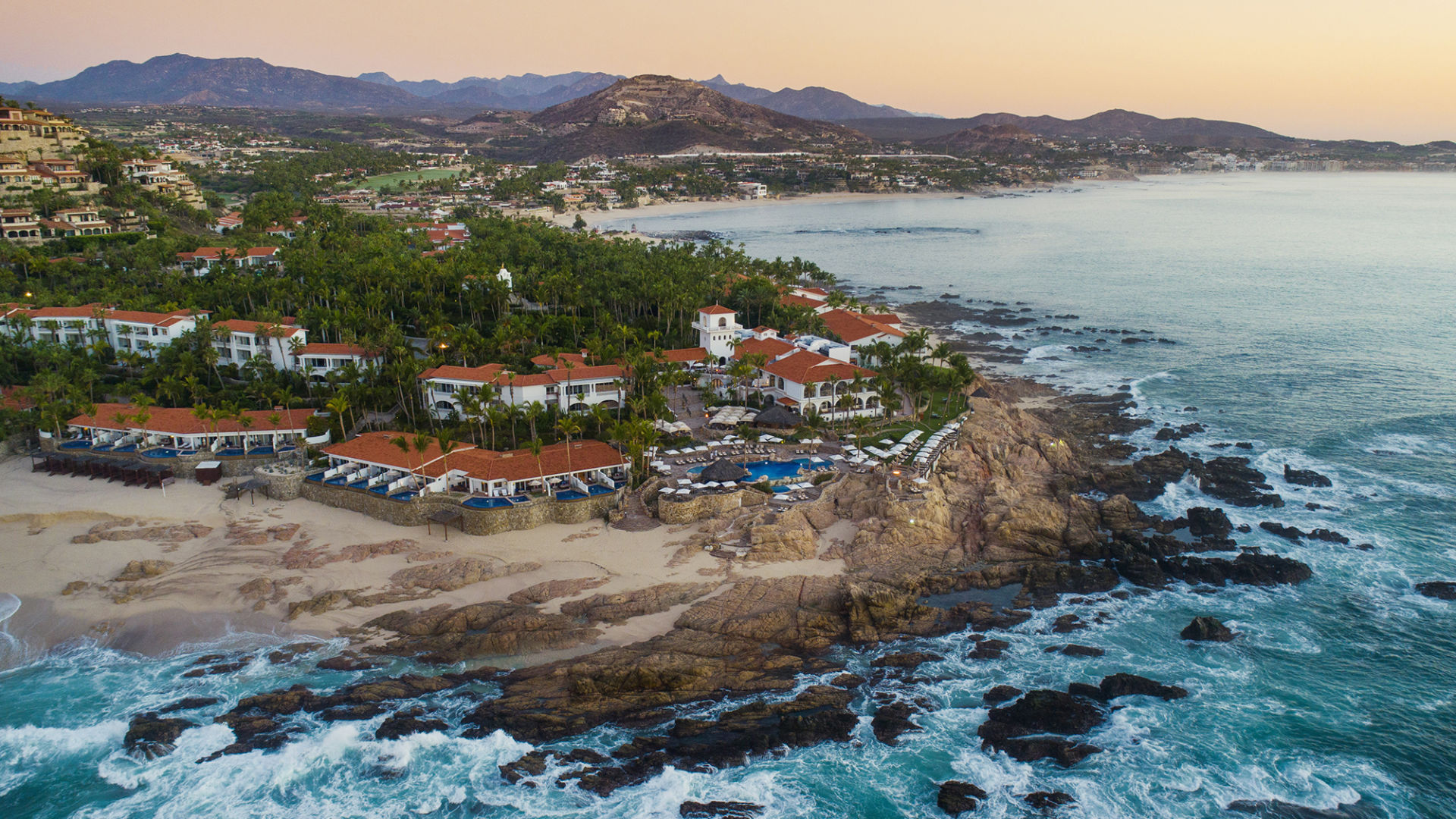
Guide to Mexico — Los Cabos
The hotels at the southern tip of Baja really are the star—most visitors pick a resort, unplug, and don’t leave the grounds for a few days. Last year alone, 10 new luxury properties were built in both capes, and seven more are debuting soon, including the Park Hyatt, Caesars Palace, and St. Regis.
Perched on a quiet beach in Cabo San Lucas, the Nobu Hotel has a Malibu Farm restaurant, its rooms have onsen (Japanese soaking tubs), and it attracts celebrities during the annual Los Cabos Film Festival. Garza Blanca has an all-inclusive plan for food and drinks, eight pools, and six restaurants. The rebranded Waldorf Astoria Los Cabos Pedregal is close to the marina and downtown San Lucas.
About 19 miles east in San Jose del Cabo, the grand dame of luxury properties is One&Only Palmilla. Celebrities have been staying here since the ’50s for its private access to Pelican Beach, and today it’s known for obliging service (all guests have access to a butler) and tastings of its exclusive tequila line from Clase Azul.
Viceroy Los Cabos is one of the most visually stunning properties here: Its rooms are surrounded by water and connected by elevated pathways. Montage Los Cabos is right on the best beach in the region, Santa Maria Bay, which has calm waters since it’s protected by cliffs. Book a kayak or stand-up paddleboard excursion on the bay at sunrise, then sip a margarita at the pool’s swim-up bar.
If you’re a foodie who loves high-end restaurants and celebrity chefs, then this is your town. One&Only’s sushi restaurant, Seared, has Jean-Georges Vongerichten’s name attached to it, and he visits the property a few times a year for special dinners. Montage started a new quarterly culinary series where acclaimed chefs come and cook for guests on the hotel’s sprawling lawn—the most recent included Michelin-starred Jon Yao from Kato in LA. Manta restaurant at The Cape hotel is helmed by chef Enrique Olvera. One of the most sought after tables in the region is Flora Farms, an organic restaurant set on a working farm that’s been here for two decades—reservations book up months in advance. For something edgy, La Revolucion in downtown San Jose del Cabo is a modern eatery that turns into a nightclub after dark. They smoke all their meats in-house—get the tacos kastakan, a cross between chicharrones and carnitas—and if you’re brave, head to the bar and order a shot of sotol (a cousin of mezcal) that’s been preserving a dead rattlesnake in a jar on the counter.
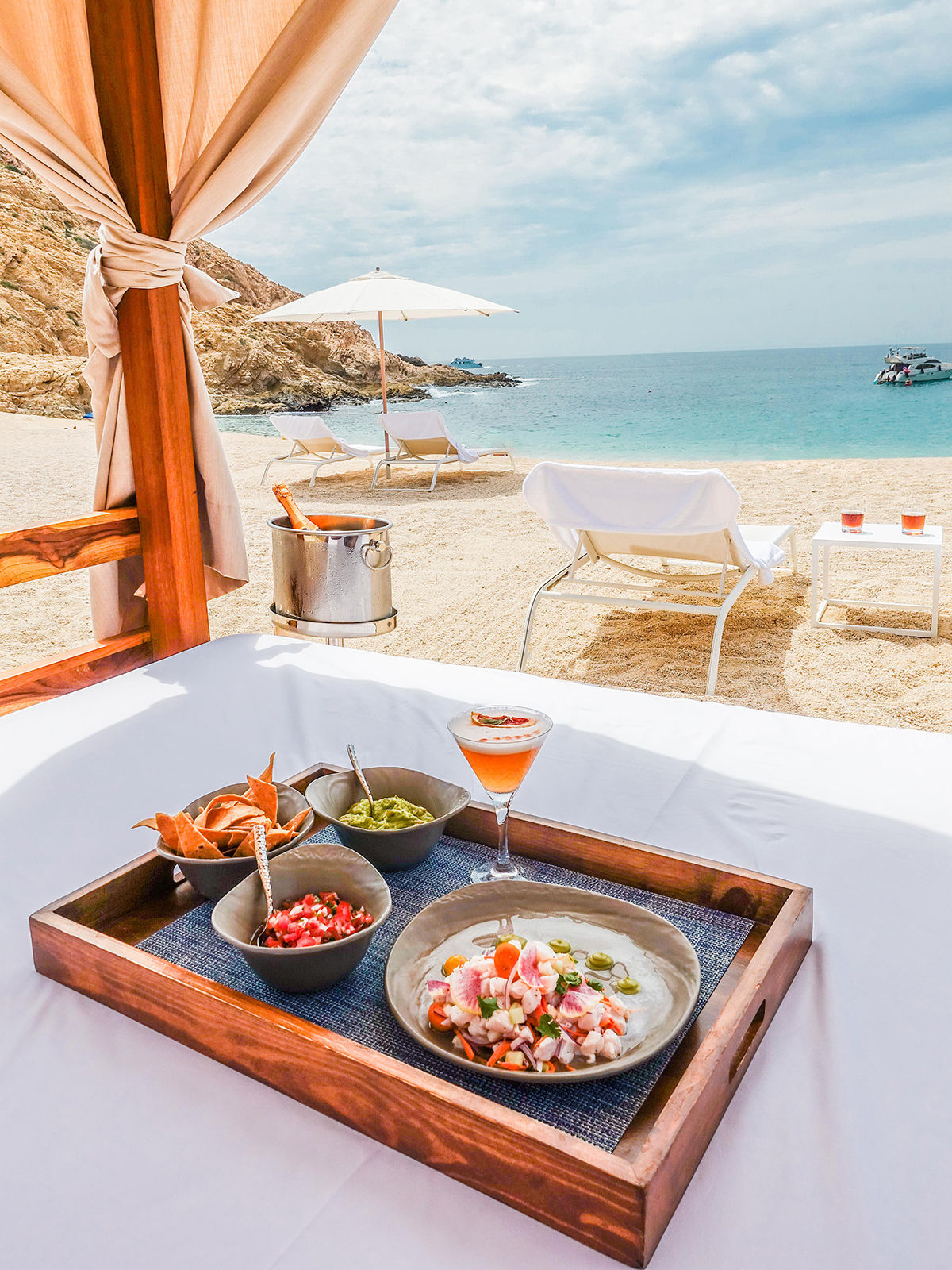
Guide to Mexico — Los Cabos Beach
Carve out time in the afternoon to see the famous limestone arch, or El Arco, at Land’s End, where the Sea of Cortez meets the Pacific Ocean. To get to the rock formation at the end of the peninsula, rent a water taxi from the Cabo San Lucas Marina, or book a tour through your hotel, then stop at Lovers Beach for swimming and lounging on the sand. You can book a whale-watching tour during the winter months, when humpback and gray whales migrate here.
Take a day to explore outside the tourist zones and wander around downtown San Jose del Cabo. Start at Plaza Mijares, the lively town square anchored by San Jose del Cabo Church, first built in the early 1700s. Then head to Calle Alvaro Obregon, a cobblestone artery lined with galleries. Step into Cabokero, and watch as Ricardo Quero elaborately paints cow skulls with a syringe. November through June, there’s an art walk in the neighborhood every Thursday night. —Marie Tutko
Jacques Cousteau called it one of his favorite places on the planet, and there’s no reason to argue.
Back in the day, this quaint fishing village was home to a few intrepid fishermen, and one or two tiny hotels. Fortunately, today it’s not terribly different—except for the modern conveniences, several luxury resorts, and a bevy of golf courses that rival the best in the world.
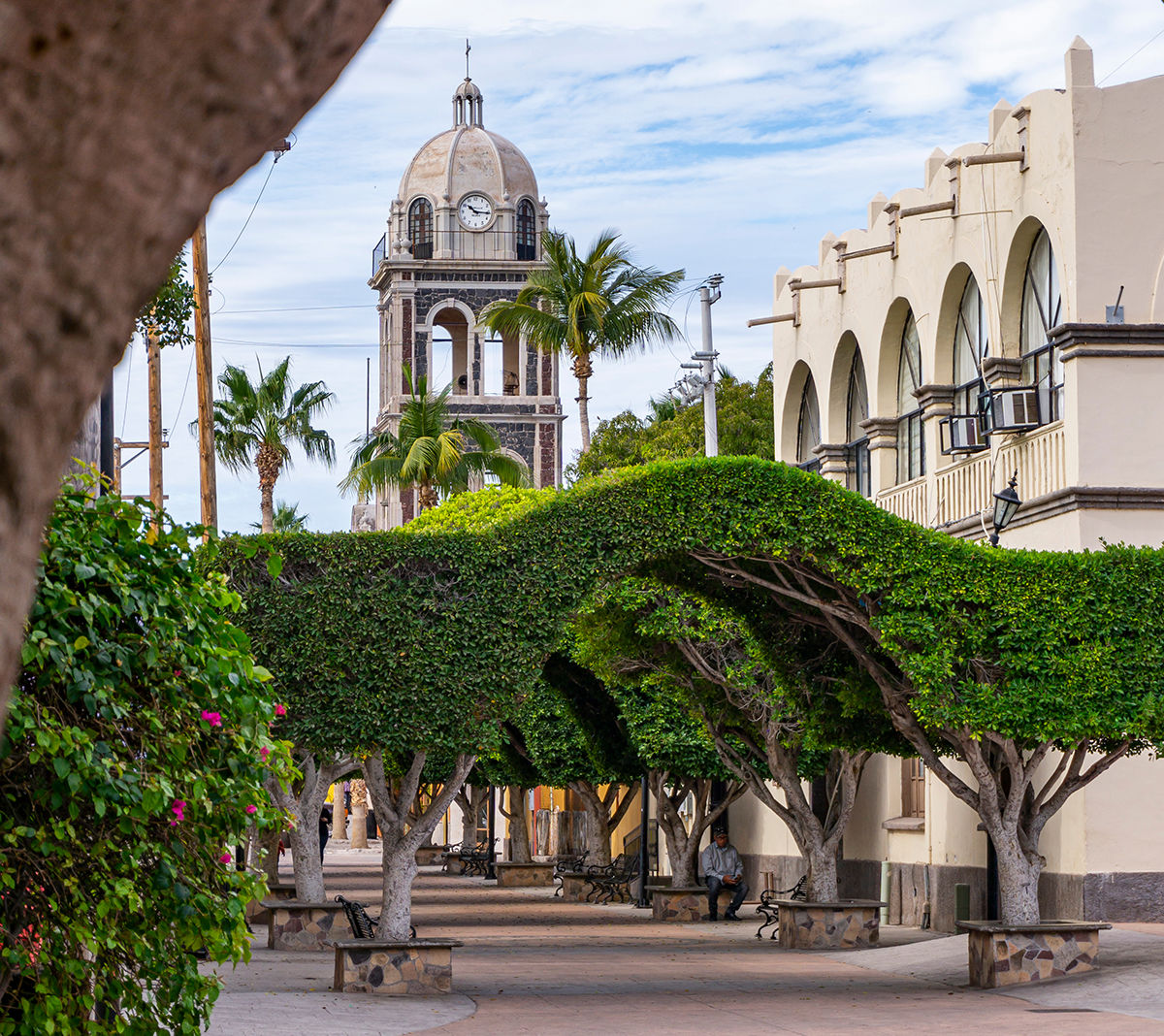
Guide to Mexico — Loreto
If sunny plazas, church bells, and leisurely strolls through cobbled streets is your vibe, book a room at Posada de Las Flores Hotel & Spa downtown. The rosy pink hacienda-style hotel is small and stylish, with a rooftop pool and Colonial furnishings that make it feel like someone’s stately home. Tumble out of bed for strong coffee laced with cinnamon and take in the views of Loreto’s main city plaza and nearby mission. The very first founded by Saint Junípero Serra during his voyage up the California coast, the Misión de Nuestra Señora de Loreto has been standing guard over the town since 1697.
For a more country-club setting, try the suites at Villa del Palmar Resort 30 minutes south of downtown. Five pools, three restaurants, a spa and enormous rooms serve up postcard-perfect views from every angle. Villa del Palmar boasts the No. 1 golf course in Mexico, TPC Danzante Bay, designed by Rees Jones. The 17th hole is particularly notable—par 3 and 170 yards, but the green sits on top of a rocky plateau that plunges hundreds of feet into the surf below.
Fresh seafood is the primary focus of every menu in Loreto. Try Los Olivos at La Mision Hotel, where simply prepared and perfectly seasoned fillets come straight from the fishing boats in the marina. Another local specialty is the famous paletas (Mexican ice pops) from La Michoacana near Loreto town plaza. Try several unusual combinations like mango chile lime, guava, and cucumber.
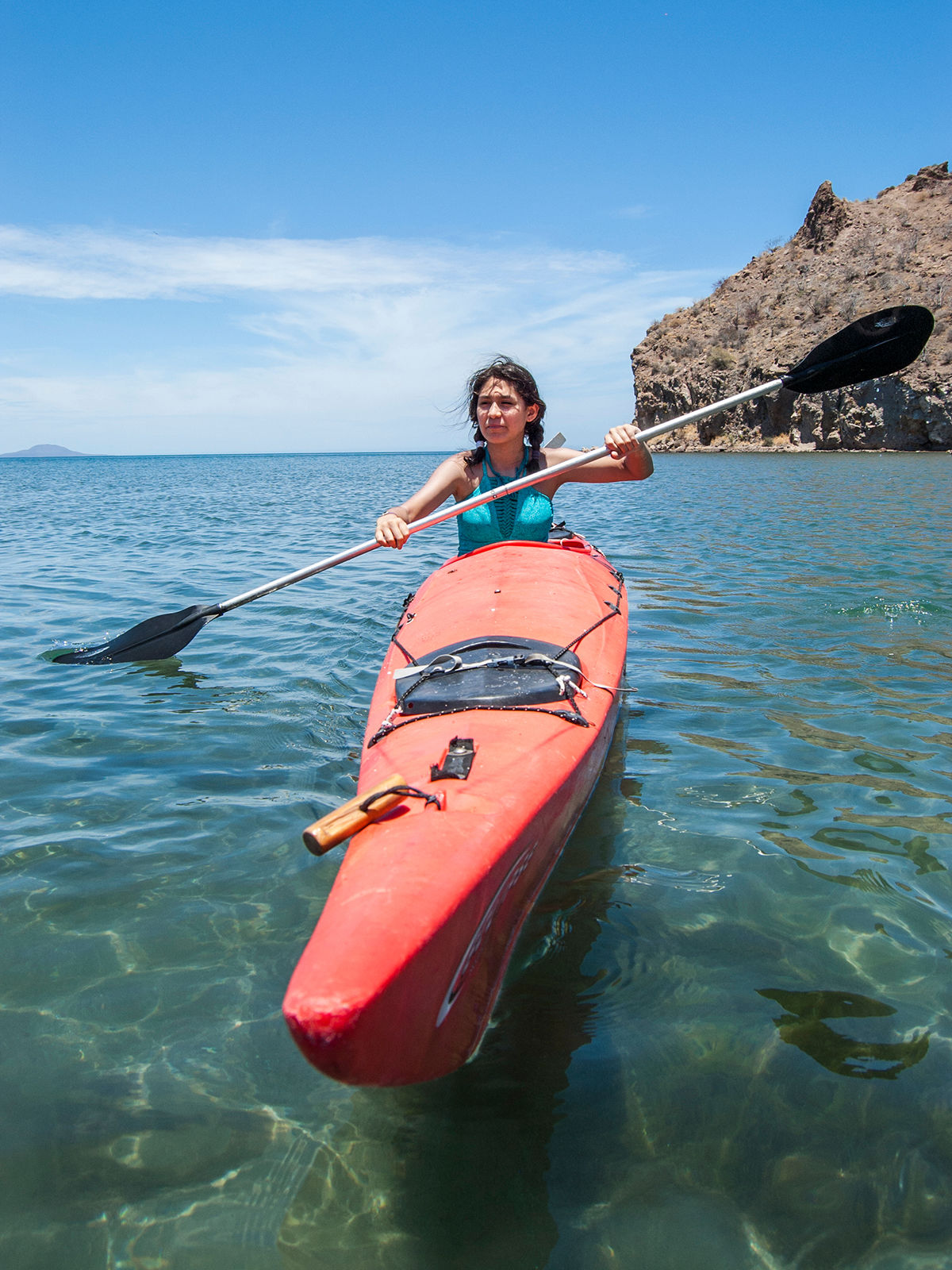
Guide to Mexico — Loreto Kayak
Visitors come to Loreto Bay to enjoy its front-door location on the Sea of Cortez. Board a charter boat easily at the marina, where scuba, snorkel, and fishing enthusiasts will go crazy for the clear, warm waters. It’s one of the richest underwater environments in the world, teeming with some 900 varieties of fish and more than 2,000 marine invertebrates. A UNESCO World Heritage Site, the Sea of Cortez is also home to more species of whales and dolphins than anywhere else on the planet. Wild Loreto Tours takes visitors on boats to spots up and down the coast and to nearby islands daily. —Jon Bailey
The capital of Baja California Sur is a prime destination for unique ocean experiences
La Paz means “peace,” and this serene coastal city provides just that, thanks to its small, navigable size and blue panoramas. But you won’t have the luxury of lazing about, because there are so many bucket-list activities to check off. Situated on the Sea of Cortez, La Paz draws divers from all over the world, as it’s one of the few places where you can swim alongside California sea lions (about an hour’s boat ride away to Isla Espíritu Santo) and majestic, friendly whale sharks (just 15 minutes from shore). Both encounters are quite heady, but the whale sharks will stay with you for life. You can take them through companies like Cortez Club. Depending on the time of year, divers can also see Mobula rays (June to August), hammerheads (September to November), and hundreds of other species. Another must-visit is the pristine beaches of Balandra Bay and, if there’s time for a side trip, driving one hour across the Baja peninsula to explore its little Pueblo Mágico, Todos Santos.
The popular hotel beyond the main strip in La Paz remains the CostaBaja Resort & Spa, but foodies may want to stay right in town at one of the many affordable vacation rental homes. The central zone has a slate of great options for every meal—don’t miss the romantic Sorstis Restaurante, the super-fresh Nim, and, for mezcal tasting, La Miserable.
A trip in the winter means you’ll need a wetsuit, but you will score access to both whale sharks (October to April) and the highly sociable sea lions, which you can pet (September to June). If you fly out of San Diego or even LAX, you’ll make as many as two or three stops over 18 or more hours to get there. But if you fly from Tijuana, you’ll be there in less than two hours. —Erin Meanley Glenny
Scuba divers, snorkelers, fishermen, foodies, and families
The gourmet hot dog is all the rage, with toppings that go way beyond ketchup and mustard, like bacon, cheese, pico de gallo, and mayo or guac.
Long adored by surfers, fish taco lovers, and cruise ship passengers, this beach town is just within reach of San Diego (and a quicker drive than going north to LA).
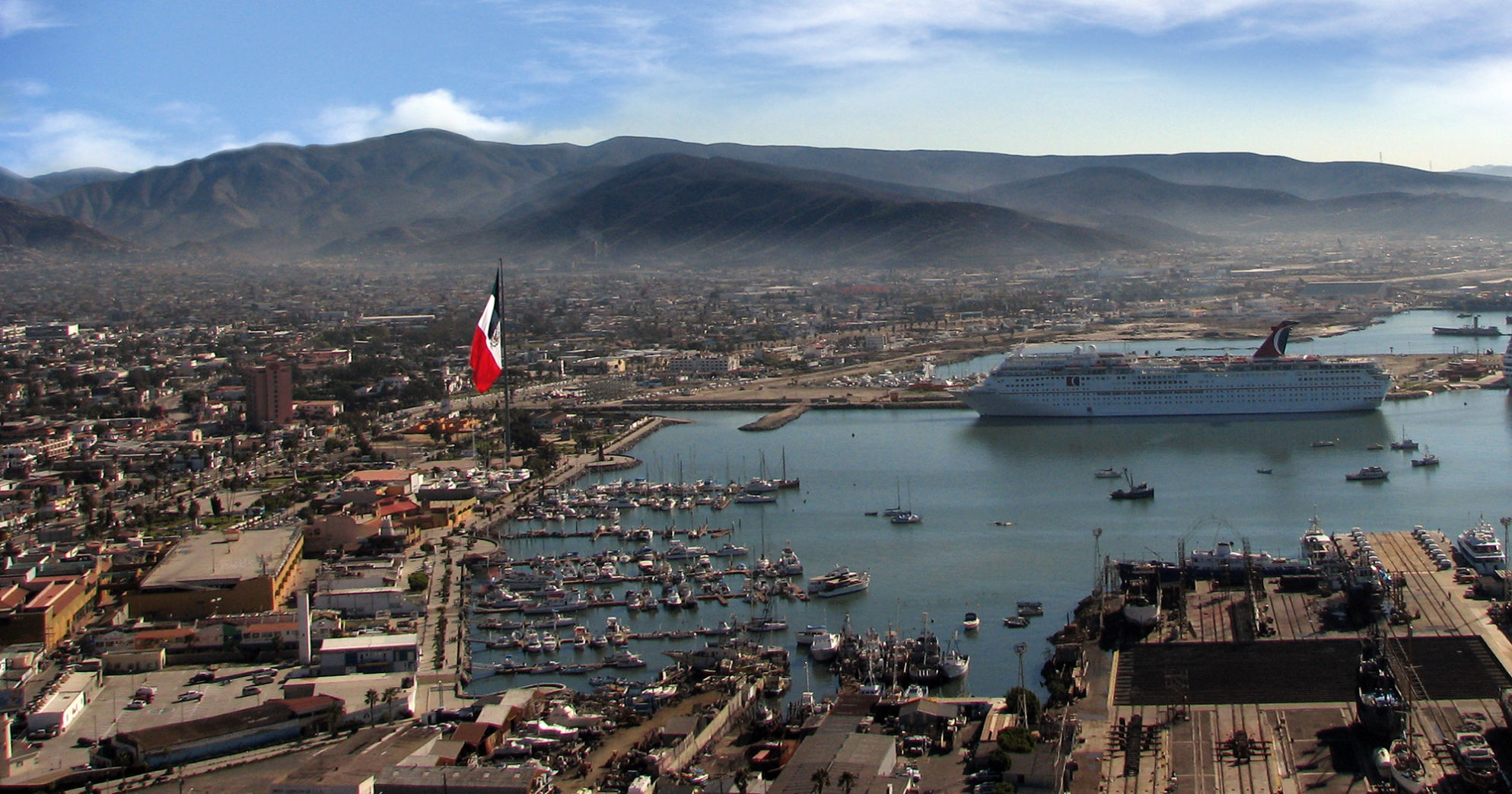
Guide to Mexico – Ensenada City
This bustling port is a seafood haven and charming cultural hub. Start at the walkable Mercado Negro—an open-air bazaar of fresh-from-the-boat fish and crustaceans—then head out to sample the catch. People still line up at the seafood cart La Guerrerense for ceviche tostadas, but it’s worth sitting down at the same owner’s Sabina Restaurante for grilled octopus or shrimp tacos. Old school Punta Morro still delivers whitewater views, upscale eats, and damn good bloody marys at Sunday brunch, while the tree-shaded patio of Boules remains a locals’ favorite for leisurely lunches of mushroom risotto or yellowtail sashimi. At the award-winning Wendlandt Cervecería, order up their Super Harry Polanco, an imperial red ale and gold medalist, or head to microbrewery Agua Mala for Mako Pale Ale and teriyaki oysters. For cheap and cheerful street fare, try the tortas al pastor at Trailero, fish tacos at Don Zefe, and shrimp at Tacos Mi Ranchito el Fenix.
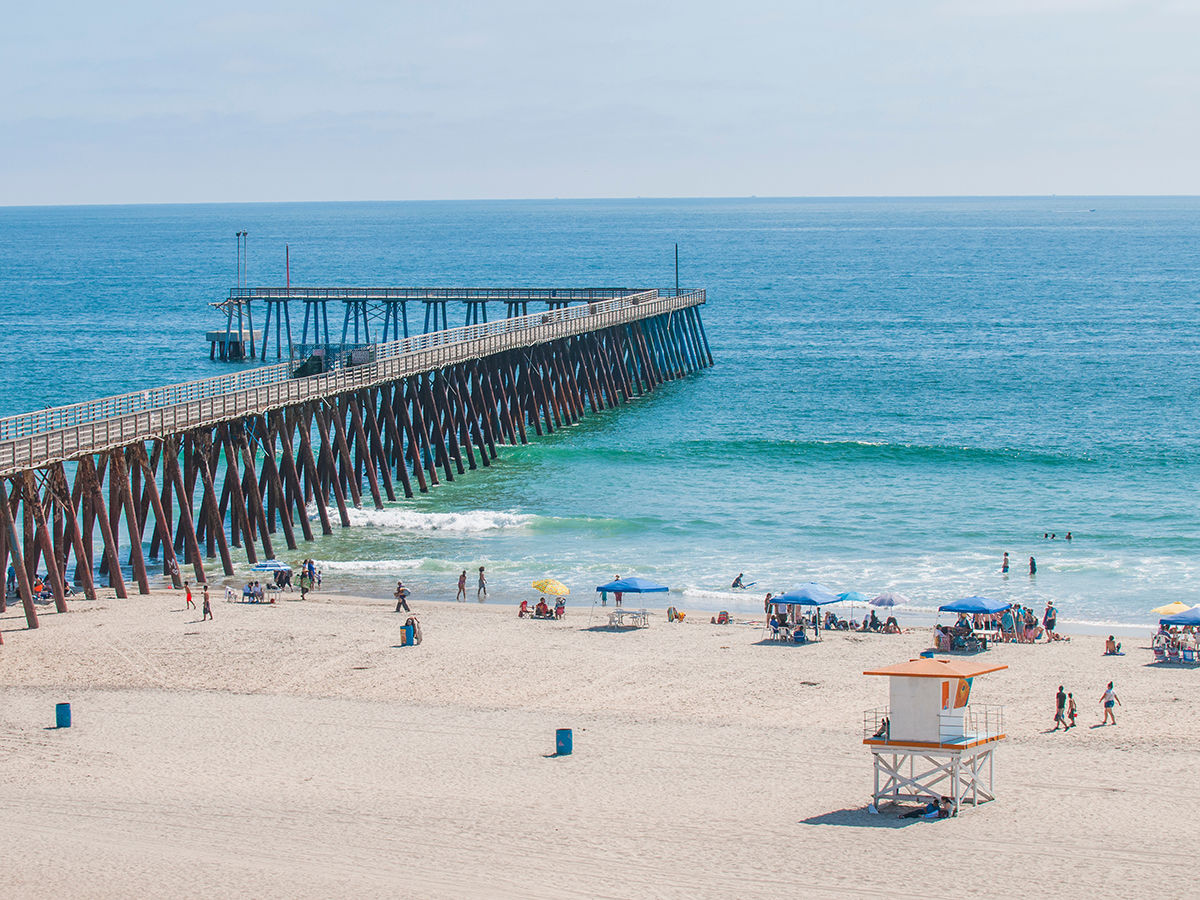
Guide to Mexico – Ensenada Beach
After eating all that seafood you may be inspired to catch your own on an adventure with Sergio’s Sportfishing. Or explore the city’s storied past at the Riviera de Ensenada, the glamorous hotel and casino turned cultural center, then sip a margarita at Bar Andaluz, a 1930s jazz haunt and one of the claimed birthplaces of the margarita. For an art fix, check out CEART, home to rotating exhibits, dance workshops, cinema, music, and more. —Ann Wycoff
You can be on this shoreline in just 45 minutes by car.
An easy day trip from San Diego, this friendly beach town is just 10 miles south of the border. Bring your board and surf off the pier or go diving near the sunken patrol boat Uribe 121. Rent Jet Skis or paddleboards at Rosarito Ocean Sports, or if you prefer terra firma adventures, they’ll saddle up camels or horses for beach rides.
Once the stomping ground of Old Hollywood, the historic Rosarito Beach Hotel calls for a frothy margarita at its bar, but if you’re spending the night, cliffside Las Rocas has a lovely infinity pool, a decent spa, and memorable chilaquiles for breakfast. Authentic Neapolitan thin-crust pizza can be found at Ollie’s, a quaint Italian eatery with a fully exposed brick oven kitchen. Ready for dessert? The same owners just opened Brown Dog Gelato next door. For freshly made tortillas, juicy steaks, and local wines, grab a table at El Nido. Tequila connoisseurs should pop into the Mercado del Mar, a spot that’s home to more than 500 unique bottles and a noteworthy butchery. If you’re in the mood to gallery hop, standouts include Ugi Gallery and Kota Art Gallery, and La Iguana for handcrafted ironworks by artisan Edgar Orozco. —Ann Wycoff
Word’s out on Valle de Guadalupe. Everyone’s singing its praises, from the New York Times to chefs like Rick Bayless. But what’s most exciting about this epicurean scene is that it keeps evolving. Here are the latest things to love about Baja’s wine country.
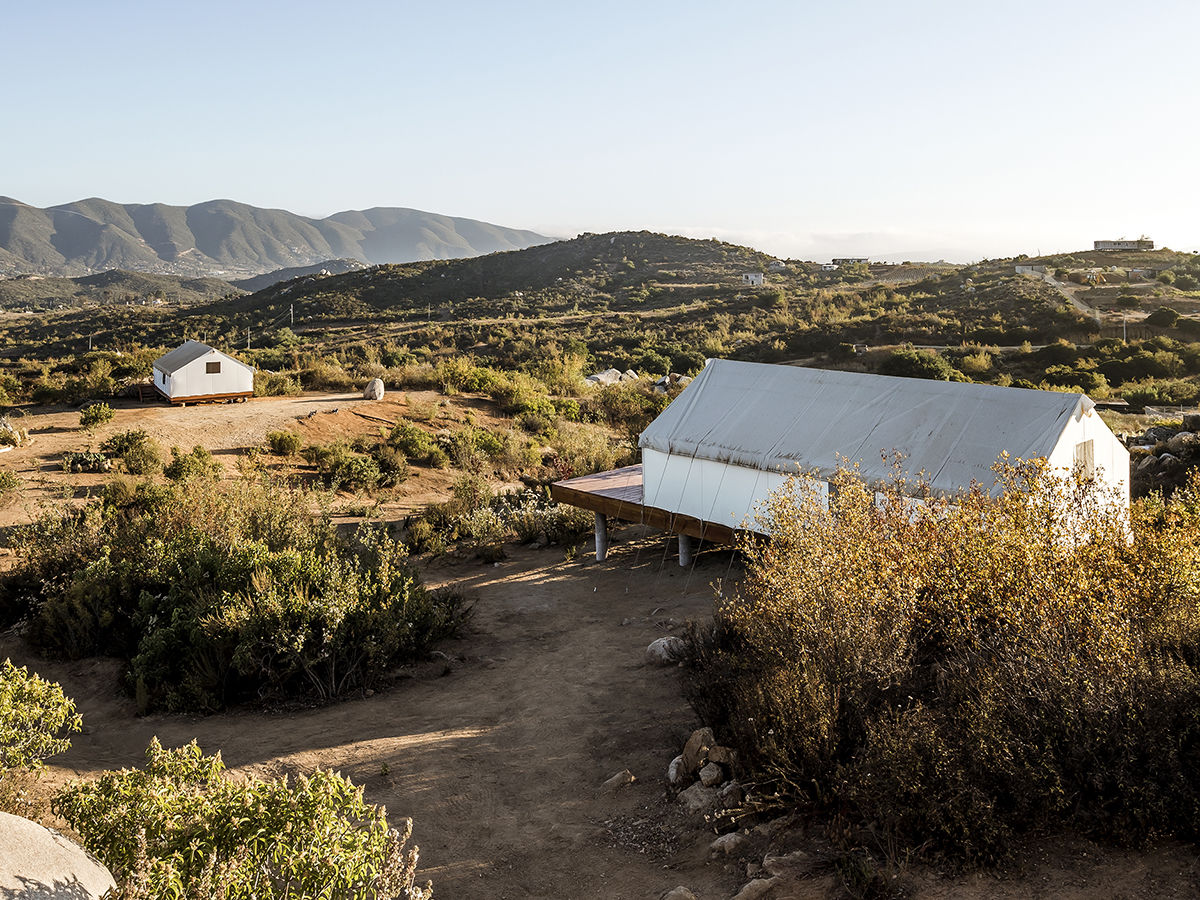
Casa Misiones
Michelin-starred chef Drew Deckman has long led the culinary charge here, with his namesake restaurant and bustling outdoor kitchen, but now he’s added sushi into the mix. Master sushi chef Toshi Tsutada (ex–Sushi Ota) has joined the team to collaborate on Baja Omakase at Deckman’s en El Mogor, offering guests a chance to enjoy local sustainable seafood in the company of grapevines. A lovely terrace hosts a dozen seats at this alfresco sushi bar, where guests are wowed by a 12-course, prix-fixe omakase menu.
While Cuatro Cuatros and its safari-style tents win props for being the area’s original glampground, the trend is now popping up across the valley. You can sleep under the stars in one of ten bubble tents set up next to vineyards at eco-friendly Campera, or hunker down in an Airstream at Valley Nomads. Four luxury tents with lounge decks and cabanas await in a boulder-dotted landscape at Casa Misiones. Maglén Resort has striking modern glamping cubes with outdoor hammocks and fire pits. At pet- and baby-friendly Lumi, choose between cozy cabins with rooftop decks or six simple tents with queen-size beds. It’s owned by a Mexican and Finnish couple, so naturally they have a fabulous sauna.
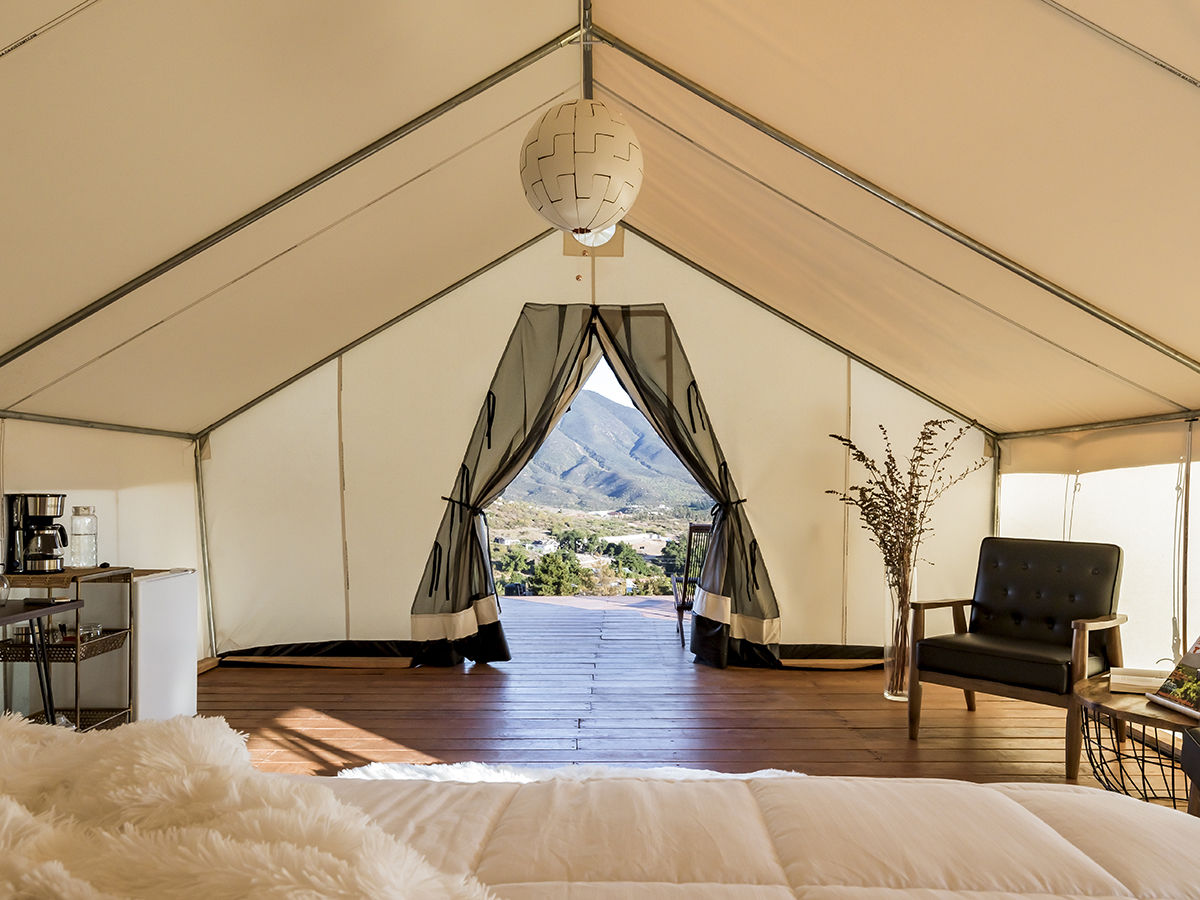
Casa Misiones
The hottest lounge setting at sunset can be found at Bar Bura, but this lofty mountaintop perch just outside the Valle gets booked up quickly, so Cuatro Cuatros cleverly created a new cocktail scene down below at Bar Noa. The bars are built inside beached wooden fishing boats, so you can sip a margarita, sangria, or mojito on the deck, overlooking the property’s circular vineyards.
At Lunario, a new greenhouse-style gem at La Lomita Winery, chef Sheyla Alvarado presents a farm-fresh six-to-eight-course tasting menu. You’ll find a rustic vibe, warm service, and made-from-scratch cuisine by chef Alfredo Villanueva at Villa Torel, set hillside on the Bodegas Santo Tomás outpost in the valley. At Brote, rising talent chef Miriam Moreno has built a menu honoring the wines of legendary vintner Victor Torres Alegre of Vinícola Torres Alegre y Familia. Tucked behind the pyramids of Clos de Tres Cantos, Ariete offers a romantic alfresco setting and artistic plates. Lantern lit and set beneath a massive tree canopy, Primitivo may be off the beaten path, but it’s worth the search to experience Chef Carolina’s wood-fired seafood, grilled meats, and fresh greens.
The wine scene continues to evolve. At Bruma, savvy winemaker Lulú Martínez Ojeda is expanding the vineyards and planting certified vines from France (see the restaurant review on page 40). Paolo Paoloni, winemaker and owner of Villa Montefiori, is building a new restaurant on-site, while Monte Xanic welcomes new winemaker José Antonio Calderón from Napa. Vena Cava’s Phil Gregory is adding natural wines including ambers and pét-nats (sparkling wines) to his repertoire. Bodegas Magoni just released a new line of reserve wines—be sure to try their tempranillo. —Ann Wycoff
Little itineraries for where to stay, eat, drink, relax, and otherwise act like a local in the city just across the border
Guide to Mexico — Tijuana
This historic hotel first opened its doors in 1930 and is best known for its restaurant’s invention of the Caesar salad, which it prepares tableside today (rooms from $48). It’s located on the famous Avenida Revolución, which in the last several years has been made over with new breweries, chic rooftop bars, and a new rapid public bus line that takes you across the city. Avenida Revolución 1079, Zona Centro
It’s a café, juice bar, and deli all rolled into one, using farm-to-table ingredients for classic Mexican dishes such as chilaquiles, with vegan options. Don’t pass up one of the refreshing cold-pressed juices, each aptly named for their purpose (Peace, Energy, Skin Tonic). The rustic decor drives home its feel of your local mom-and-pop shop. Avenida Brasil 8930, Colonia Madero (Cacho)
El Punto is the gastro park that rarely gets mentioned in Tijuana, overshadowed by Telefónica. It stays true to the foodies with no fluff: just 11 different food trucks serving up everything from sopes and flautas to barbecue, Italian, and Chinese food. Paseo del Río 6642, Rio Tijuana 3ra Etapa
This bohemian restaurant has live music and outdoor seating, and is known for its selection of wines and Italian food. It gets busy at night, so make a reservation at 011-52-664-608-1656 if calling from the US. Prolongación Paseo de los Heroes 13990, Alfonso Corona del Rosal
This modern, pet-friendly hotel averages about $55 per night and is within walking distance of some of the most prominent breweries and taprooms in Tijuana. Bulevar General Rodolfo Sánchez Taboada 9170, Zona Río
This brewery was one of the first to produce craft beer in Tijuana, in 2000. Take a tour of their operations and taste over 12 beers, from pilsners to IPAs. Bulevar Fundadores 2951, Juárez
This indoor-outdoor space is half taproom and half tapas eatery, with a menu that includes craft beers from around Mexico and food specials, such as sliders and tortas ahogadas, that’ll cost you 21 pesos, just a little over $1. Avenida Colima 2293, Colonia Madero (Cacho)
This town square in Zona Río is a maze of over 15 breweries, taprooms, gastropubs, and eateries. You’ll find your taste of cervezas artesanales with well-known Tijuana craft beer companies such as Border Psycho, Cervecería Insurgente, and Mamut Brewing Co. Erasmo Castellanos Quinto 9440, Zona Río
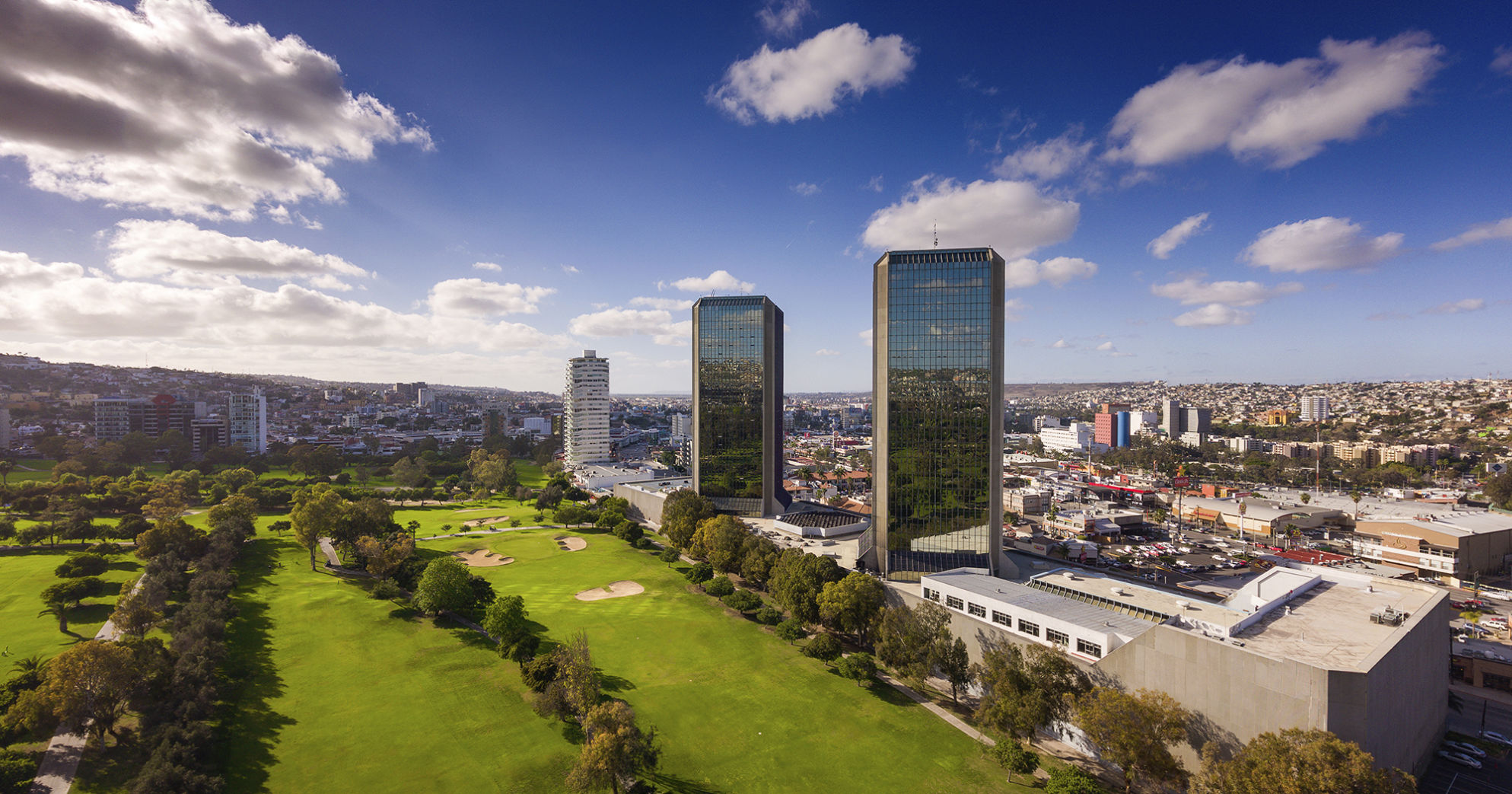
These iconic twin towers are on one of the city’s central boulevards, Agua Caliente (rooms from $85). Staying here also gives you access to Tijuana’s country club, next door, with golf, tennis, and an Olympic-size swimming pool, making the hotel ideal for any sports fan. Bulevar Agua Caliente 4558, Aviación
The Tijuana Country Club first opened in 1927 and was the home of PGA tournaments from the 1930s through the 1950s. Over the years, the 18-hole golf course has grown into a complex with tennis courts, an aquatic center, and a spa. Bulevar Agua Caliente 11311, Aviación
This area of Tijuana, just walking distance from the Grand Hotel and Club Campestre, is home to the Agua Caliente Racetrack for greyhound racing (occurs daily) and the recently renovated Estadio Caliente, where Tijuana’s professional soccer team Club Xolos plays (January–May). Fans can tour the facilities and keep placing their bets even on days when there are no events planned—by gambling at the casino on site. Bulevar Agua Caliente 12027, Hipódromo
Tijuana is home to AAA Lucha Libre and The Clash Lucha Libre, a couple of the top wrestling circuits in the world. Unlike the WWE, these matches are best two out of three. Watch the masked characters in their high-flying, action-packed dramas on the first and last Fridays and Saturdays of the month.
This hotel is geared toward business travelers, but the artwork of Frida Kahlo and other Mexican artists makes it the perfect place to stay for any art aficionado. Rooms average $40 per night (including a breakfast buffet), and an Uber or taxi ride between here and the border or the Tijuana Cultural Center is just $2. Bulevar General Rodolfo Sánchez Taboada Norte Exterior 13, Zona Río
Inaugurated in 1982, the Centro Cultural Tijuana (CECUT, pronounced “say-KOOT”) is the city’s art and culture headquarters. It hosts various exhibitions throughout the year, plus concerts, conferences, movies, documentaries, workshops, and a 360-degree Imax theater similar to the Fleet Science Center in Balboa Park. Paseo de los Héroes 9350, Zona Río
Better known as “La Mona,” this 55-foot concrete nude statue, which doubles as a home extension, was built in honor of the city’s centennial in 1989. It was sculpted by self-taught architect Armando Muñoz Garcia and originally colored white with a blue ribbon wrapped around her forearm to signify the scarcity of water. She received a colorful makeover by 11 artists from all over the word in 2015 and today stands accessible from a public street near the Tijuana airport. Calle Ensenada 17, Colonia Aeropuerto
This independent theater stages intimate productions, mainly by its resident company, Tijuana Hace Teatro. With a seating capacity of just 35, it offers a unique theater experience that often makes the audience part of the show. Unión 2191, Zonaeste
This hotel, an extension of the NewCity Medical Plaza (a medical tourism complex), offers signature spa treatments, saunas, a fitness center, pool, yoga sessions, calming nature spaces, and guest rooms with terraces and suites. Paseo del Centenario 4210, Zona Río
This place offers seven types of massage packages. Prices start at $25 for 30 minutes and go up to two hours for $70. Bulevar Salinas 10755, Colonia Aviación
Facials, waxing, and tanning services start at 500 pesos, or approximately $27. Susol is known for having the only licensed and certified tanning beds and spray tans in Tijuana. Plaza Sonora 3805, Chapultepec
If you’re looking for an inexpensive place to get a manicure or pedicure with the same options and customer service you’d expect in San Diego, this high-end salon’s two locations come recommended. They give you complimentary fruit tea, and you can make reservations through their Facebook page. Bulevar Agua Caliente 8470 and Avenida Negrete 8470, Zona Centro
