




When local resident Sameh Emghaoech immigrated to the United States from Syria in 2012 for college, he began working as a business analyst until the pandemic hit in 2020. Then, like so many others, he decided to try his hand at baking and began making Syrian baklava.
Syrian cuisine is one of the world’s most ancient culinary traditions, going back further than most recorded history. Even its capital, Damascus, is considered to be the oldest continuously inhabited city in the world, dating back to 3000 BCE.
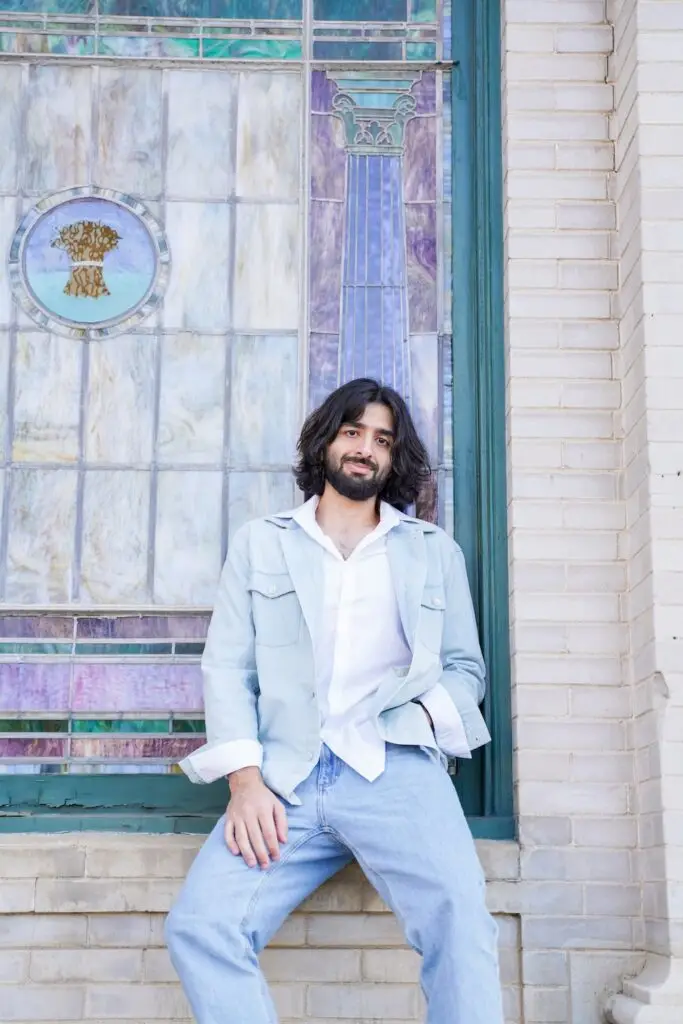
Inspired by Damascus’ Arabic name “Dimashq,” Emghaoech soon opened his new pop-up venture: Dimashq Baklava. “We say baklawa in Arabic, but here baklava is common because it’s the Turkish pronunciation,” he explains.

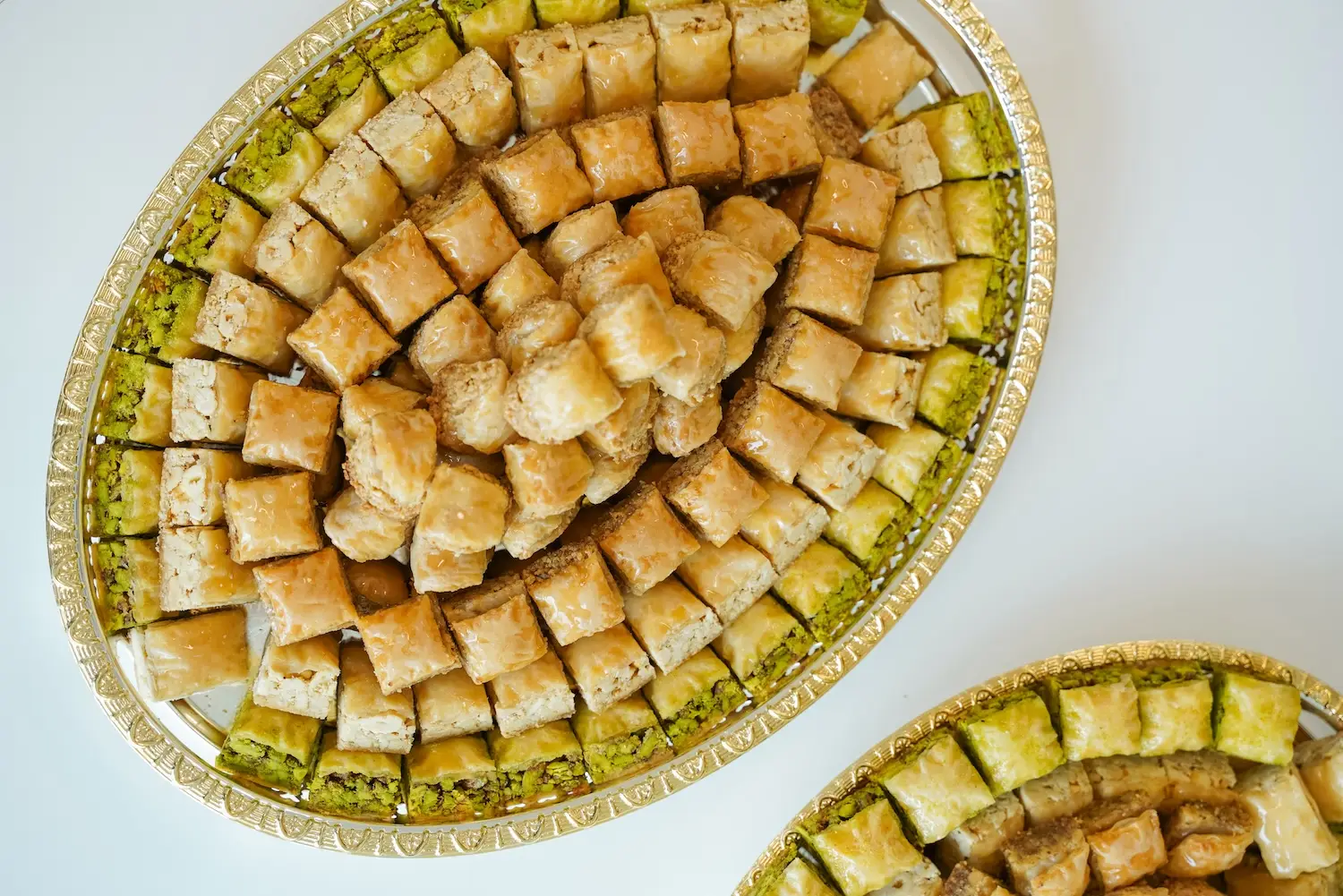
He began experimenting making his own phyllo (“filo” in Arabic) pastry dough from scratch, a process that can take up to five hours for a large amount. One batch of square-cut baklava contains 28 individual thin, flaky layers of phyllo dough. This doesn’t even account for the time to prepare the filling, bake, finish, or pack the baklava.
“It’s basically an entire day thing,” he says.
Bite into a square of Syrian baklava and it may feel lighter, crispier, and slightly less sweet than you expect. Syria is especially revered for its cashew baklava, as opposed to the more familiar Turkish pistachio baklava or Greek walnut baklava. If you couldn’t already tell, it’s an incredibly technical and time-consuming process, but the result is a bite-sized, shelf-stable product that can safely ship and stay fresh if stored for months.
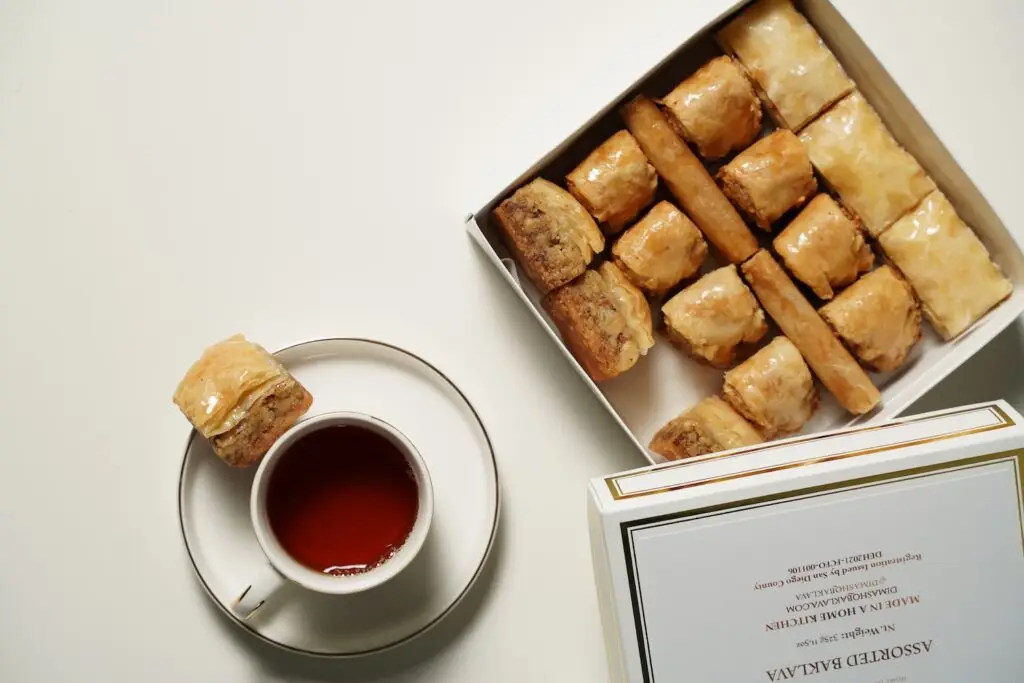
Despite the time and labor-intensive nature, Emghaoech believes it’s more important than ever to share his home country’s dessert heritage.
As of January 1, 2026, the United States instituted a total ban on all Syrian visas, immigrant and non-immigrant alike. “For example, my mom wants to visit us now. She can’t,” he says. He has a brother in California, a sister in Utah, and the rest of his family is still in the Middle East. “[Today], I wouldn’t be able to come and do what I’m doing.”

Now, he’s focused on scheduling more pop-ups around San Diego, which he posts on Instagram, and developing an online store to ship anywhere in the United States. He’s open to growing the business a bit more, but only to the point where he still handmakes every batch. After all, small business is the traditional Syrian way.
“I like the idea of when people buy from you, you’re the person who’s making it,” he says. “My work is not really separate from who I am.”
San Diego Restaurant News & Food Events
Rasoi Brings Modern Regional Indian Cuisine To San Diego
Although based in Burlingame, Asif and Jessica Aslam believe that opening the second location of their family-owned restaurant Rasoi in San Diego rather than the Bay Area feels like a natural next step. “We’ve always loved the community, the food culture, and the energy there,” says Asif, pointing to the diversity of cuisines around the city. He describes Rasoi as elevated, soulful Indian cuisine rooted in tradition but presented in a modern, approachable way, with flavors inspired by family recipes and regional Indian cooking.
Some signature dishes include slow-braised butter chicken, tandoori specialties like paneer, chicken, prawns, and fish, housemade naan, and rotating seasonal specials, and he estimates they’ll be able to open the doors at 10299 Scripps Trail, Suite B in Scripps Ranch in mid-April. After taking a look at its menu, I’ll definitely be ready for some lamb vindaloo and kulfi for dessert whenever Rasoi arrives.
PARTNER CONTENT


Beth’s Bites
- Can we finally admit that despite our hopes and dreams, The Red Fox Room is not ever going to re-open again? It never fully recovered its signature sultriness when it relocated from its original location to make room for Quixote as part of the $31 million LaFayette Hotel full revamp by CH Projects. Frankly, it probably should have gone quietly into the night then with a bit more dignity, but hindsight is 20/20. It’s time to pour out a dirty martini for our fallen friend.
- Salt & Straw found a permanent place in my heart when it not only remixed the Choco Taco as the Tacolate, but actually managed to improve on a nostalgic icon—which is no easy feat, let me tell you. The fancy flavor ice cream chain is opening its fourth San Diego location this spring on Coronado at 1302 Orange Avenue (following Little Italy, Westfield UTC, and One Paseo), and all I can say is I hope it brings a big enough stash of the Tacolate.
- I love a good collaboration (if you haven’t heard me say it a zillion times before) and on February 16, Gilly’s House of Cocktails will host a fun one. Alexis Soler of Old Glory in Nashville and Erick Castro of Gilly’s are coordinating a bi-coastal bar swap, with Alexis behind the stick at Gilly’s on February 16, and Erick heading to Nashville on April 26. If Castro’s name sounds familiar, he’s not just the guy who owns Gilly’s—he also co-founded Polite Provisions, still co-owns Raised by Wolves, and was named Drinks Professional of the Year at VinePair’s Next Wave Awards in 2024. Yee to the haw.
Listen Now: The Latest in San Diego’s Food and Drink Scene
Have breaking news, exciting scoops, or great stories about new San Diego restaurants or the city’s food scene? Send your pitches to [email protected].
