Featured articles
Things to Do
Food & Drink
Food & Drink
Featured articles
Everything SD
Things to Do
Everything SD
Featured articles
Things to Do
Things to Do
Things to Do
Featured articles
podcast-ep
podcast-ep
podcast-ep
Featured articles
Everything SD
Everything SD
Everything SD
Featured articles
Everything SD
Things to Do
Food & Drink
Ready to know more about San Diego?
SubscribeReady to know more about San Diego?
Little Italy success story set to take over Eddie's
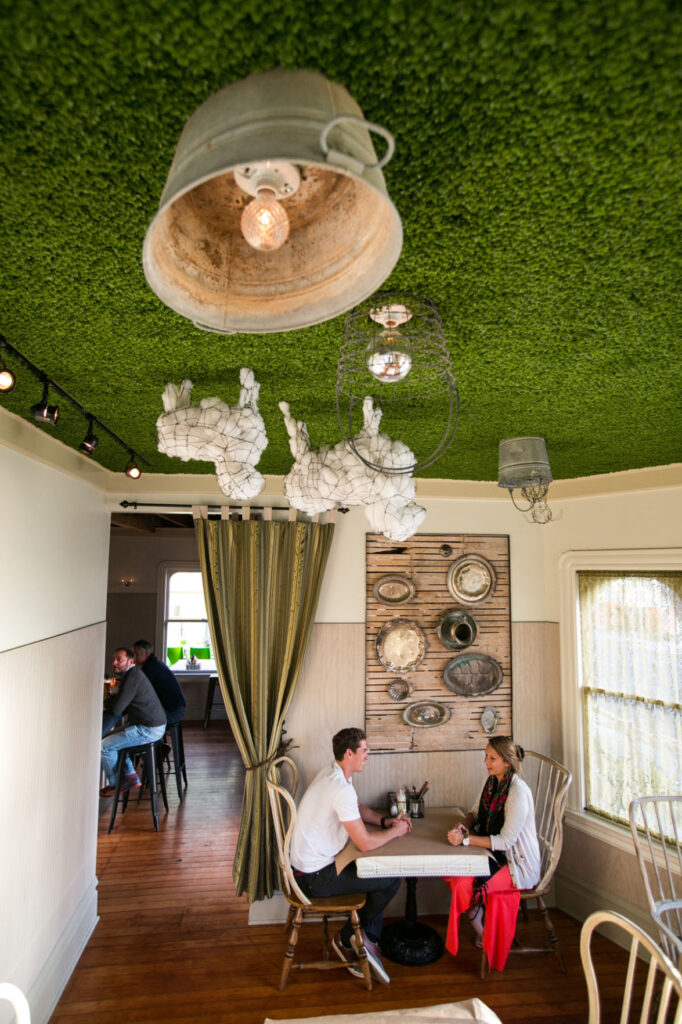
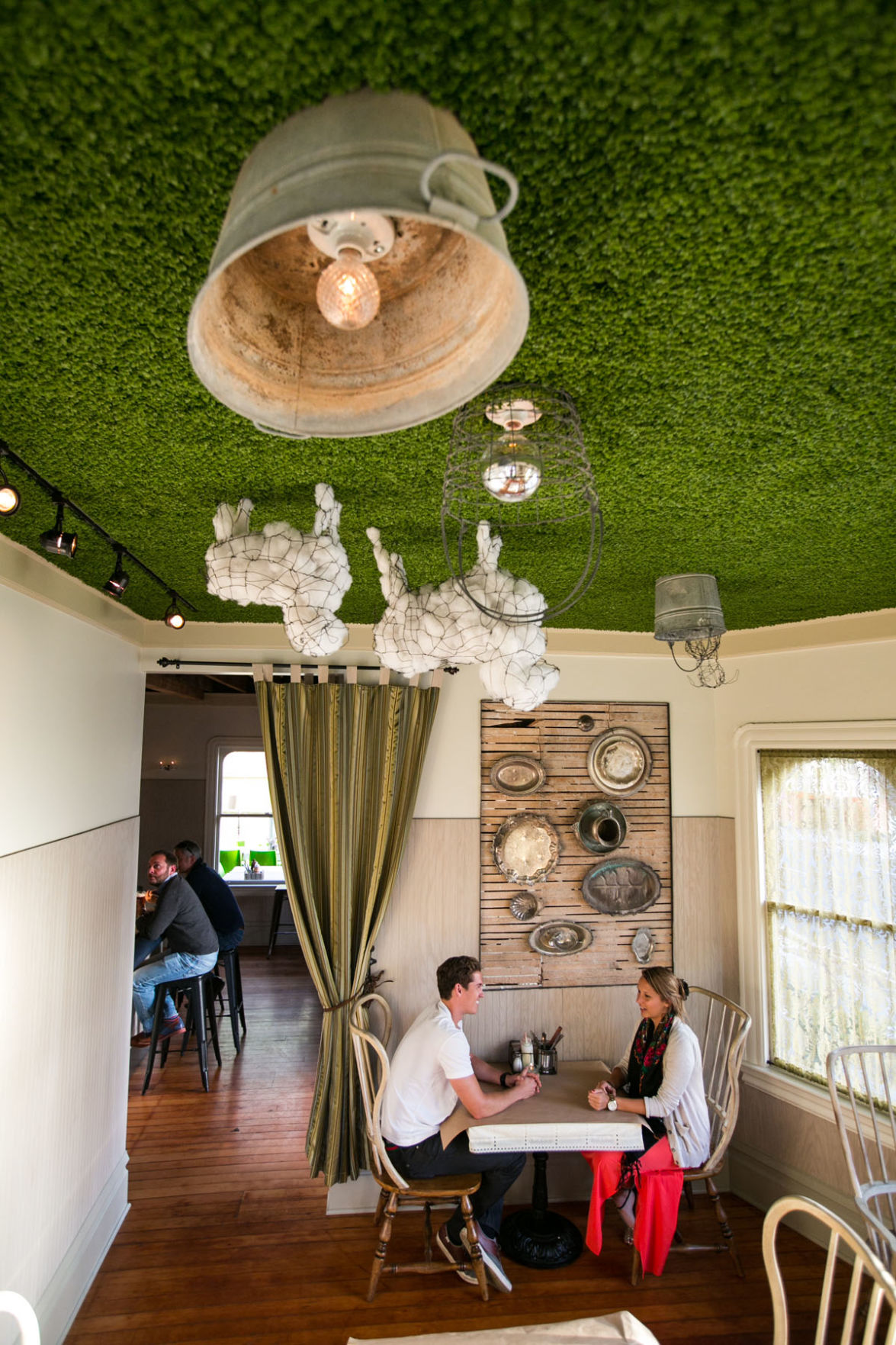
Queenstown Public has been a real strong part of Little Italy’s rejuvenation. Designed by the talented Michael Soriano of Onairos Design and owned by the guys who created Bareback Grill, they took a historical residential home and turned it into a neighborhood bistro. The vibe strikes a proper balance between crocheting-grandmother chic and modern decor. They also made a killer lamb burger.
Now they’re going to double-down with a similar house-restaurant concept in North Park. Eddie’s Philadelphia Steaks & Hoagies—on 30th Street at the corners of Myrtle and Capps, catty-corner from Lefty’s Pizzeria—called it a day in late August. Now the single-story house is registered to BBG SD5 LLC, which is Matt Baker and PJ Lamont—the owners of Queenstown.
So Queenstown North Park is a go. It might have a different name when said and done, but sounds like the spirit will be the same.
Queenstown Public, Little Italy.
Sam Wells (samwellsphoto.com)
The acclaimed restaurant will shutter after two years, while the family's Little Italy tasting room relocates to the University Avenue space
San Diego has lost a number of ambitious concepts lately—Vulture and Dreamboat in University Heights, Wildflour Delicatessen in Liberty Station, Deckman’s in North Park, Matsu in Oceanside. All have different reasons for closing (some outgrew their space, some overshot their costs), but none of them suffered for quality. Ditto for the next casualty. On July 19, Cellar Hand in Hillcrest will close its doors.
Unlike the other closures, there’s actually a silver lining. The Perr family, who owns both Cellar Hand and Pali Wine Co., announced they will relocate Pali’s tasting room from Little Italy to take over the vacated Cellar Hand space.
Cellar Hand opened just over two years ago with a promise to source 100 percent of their produce locally. Ambitious, but admirable. Logan Kendall, the original executive chef, launched with a menu centered around lots of funky fermentation, tinned fish preserved in-house, a bevy of fun dips like labneh and whipped tahini, and a ridiculously fantastic pork chop from Thompson Heritage Farms. Wine Enthusiast named the 120-seat eatery one of the top 50 wine-focused restaurants in the country in 2025—not a shock, considering the mega wine chops behind the project.
Following Kendall’s tenure, chefs Ashley McBrady and then Sable-Tanya Wentwoord took over the reins, keeping things rolling with expanded brunch offerings, chef’s dinners, and all the usual accoutrements of a hyped spot. Before joining the Pali Wine/Cellar Hand team, Wentwoord worked and staged at multiple James Beard Award–recognized and Michelin-starred restaurants in Boulder, Colorado (Frasca Food and Wine); San Francisco, CA (Coi, Che Fico); Providence, Rhode Island (Persimmon); and Fredericksburg, Tex. (Southold Farm + Cellar). She will continue to head the food program at Pali Wine Co.
Bad luck or bad timing, the reasons behind closing Cellar Hand don’t really matter. But I, for one, will really miss that pork chop.

Still, Cellar Hand’s loss is Pali Wine Co.’s gain, or at least a small balm on the sting of closure. The tasting room in Little Italy opened 10 years ago, bringing its Central Coast wine and vibes to an area smack in the middle of a craft beer boom. When it came time to renew the lease, the Perrs say the landlord did the landlord-y thing and tried to nearly double the rent. (Tale as old as time—just ask Wildwood Flour.)
Rather than suffer a double-whammy, the Perr family instead decided to shift their focus (and finances) to the heart of their businesses: wine. And despite losing a very cool rooftop patio in one sizzling hot neighborhood, they are gaining a pretty prime spot in a different sizzling hot neighborhood with a not-too-shabby patio of its own accord. (One more silver lining: no more jet noise from the airport!)
By moving Pali Wine Co. to where Cellar Hand used to be, they could at least keep a toehold in San Diego, says Nick Perr, managing partner. His family has made wine in Santa Barbara county for over two decades, with 10 of those years in the San Diego market—an investment they refused to lose. “That’s why it’s impossible to separate our winery from our San Diego community,” he explains, adding that the new location will allow Pali Wine Co. to offer programming designed around the nearby Hillcrest farmers market.
Guests can expect the same wine selection, wine club perks, private tastings, and similar food offerings Pali Wine Co. offers in Little Italy to transfer to Hillcrest. And maybe, if we’re lucky, they’ll bring back the pork chop (please?)
“We are extremely proud of what we accomplished at Cellar Hand,” said Perr in a statement. “Running an independent restaurant with real values is hard, and we gave it everything we had.”
Cellar Hand will permanently close on July 19. Pali Wine Co. will cease operations at 2130 India Street on July 19 and will move to 1440 University Avenue.
Pali’s new location in Hillcrest will soft open on August 12 with a grand opening on August 22. Operating hours will be Wednesday through Friday, 2 p.m. to 10 p.m.; Saturday, noon to 10 p.m.; and Sunday, noon to 9 p.m. Happy hour will run Wednesday through Sunday (hours to be determined).
Beth Demmon is an award-winning writer and podcaster whose work regularly appears in national outlets and San Diego Magazine. Her first book, The Beer Lover's Guide to Cider, is now available. Find out more on bethdemmon.com.
Offering everything from smashburgers to sundaes, the latest food hall from Tiger Hospitality opens its doors this weekend
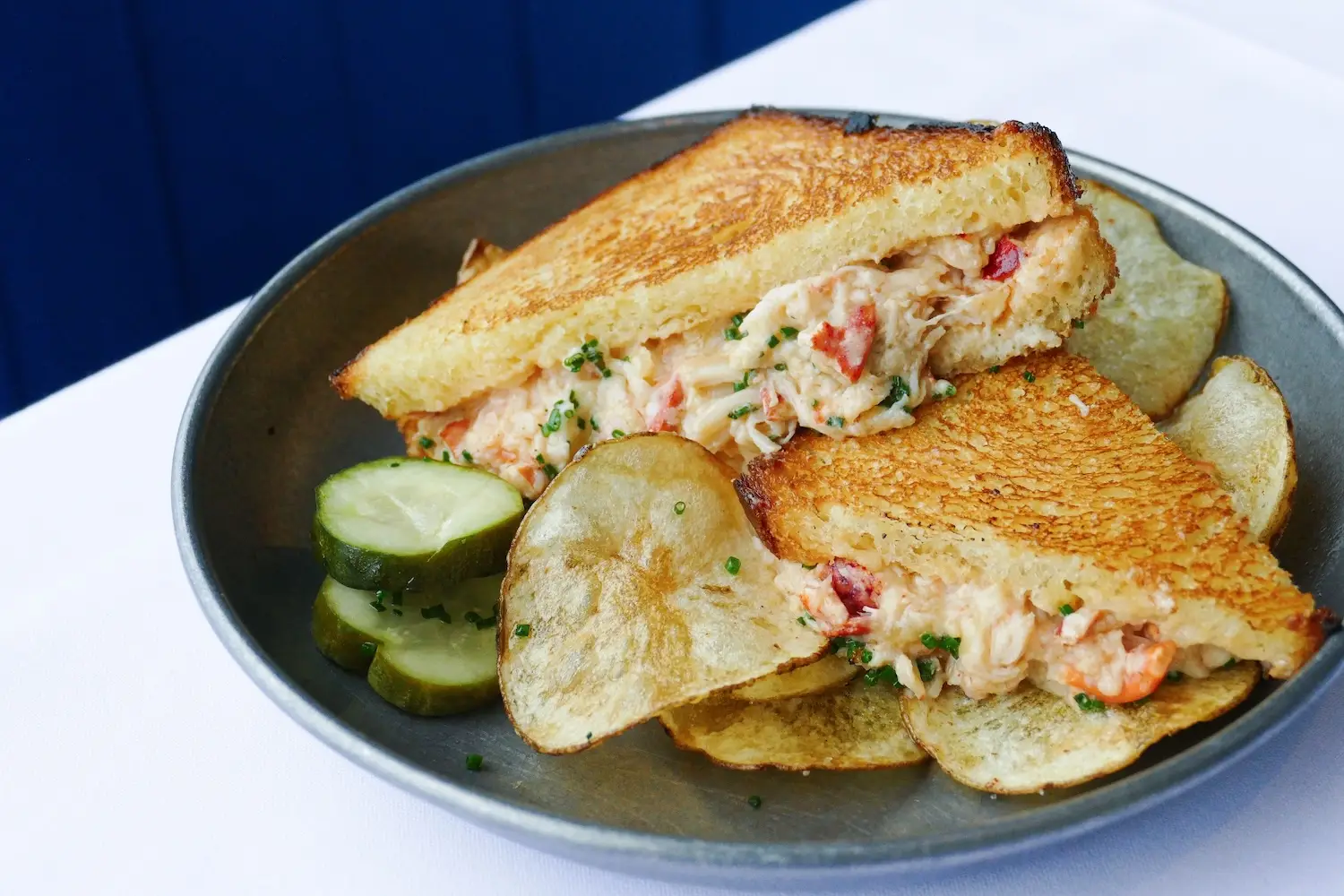
Omakase and fixed-price menus are one way hospitality businesses are addressing our collective food decision-making fatigue. But on the opposite end of the spectrum, some restaurateurs are offering a bonanza of totally unrelated options for people ordering on a whim. Why not pair a lobster grilled cheese sandwich, açaí bowl, and ridiculously loaded hot dog?
Starting June 27, diners can satisfy their spur-of-the-moment appetites at Global Fork in Little Italy, the latest food hall from Southern California-based Tiger Hospitality.
Six different food concepts will be featured in the 4,685-square-foot, indoor-outdoor space along the Piazza della Famiglia promenade. The space’s inaugural lineup includes a mix of Tiger Hospitality-owned concepts (Cosmos Burger, La Vida, Lobster Lab, and Prik Ki Nu Thai) and outside operators (Seattle-based Moto Pizza and Handel’s Homemade Ice Cream). The space next door, Good Enough Cocktail Club, is another Tiger-backed brand, operated by the team behind Same Same and Amor y Magia in Carlsbad.
Cosmos Burger serves smashburgers stacked with classic toppings, while Lobster Lab focuses on seafood favorites including lobster rolls, shrimp rolls, and lobster mac n’ cheese. Prik Ki Nu Thai adds Thai street food to the mix, with traditional noodle, rice, and stir-fry dishes. And for those looking for something on the lighter side, La Vida offers things like smoothies, salads, and wraps.

Moto Pizza focuses on Detroit-style square pizza with Filipino influences and, despite the name, is not affiliated with Mr. Moto Pizza. Handel’s, which began in Ohio in 1945, will offer dozens of flavors ranging from staples like chocolate and vanilla to rotating specialties packed with candies, cookies, and other mix-ins. (Handel’s already has a number of locations across San Diego, with a La Mesa store coming later this year.)
Some of these vendors already operate at Miramar Food Hall, the other Tiger-owned food hall in San Clemente. And some of them will also appear in Station8, the next food hall slated to open in UC San Diego’s Theatre District Living and Learning Neighborhood later this fall. But if you ask me, reviving the space that housed the Little Italy Food Hall before its closure last February is a far better outcome than leaving empty suites smack in the middle of an area saturated with fantastic food options. Plus, where else can you order a slice of beef adobo pizza alongside squares of caviar toast and a banana split?
Global Fork opens June 27 at 550 W. Date Street, Suite B, in Little Italy. Initial operating hours are from 9 a.m. to 9 p.m., seven days a week, but vendor hours may differ.

Listen Now: The Latest in San Diego’s Food and Drink Scene
Have breaking news, exciting scoops, or great stories about new San Diego restaurants or the city’s food scene? Send your pitches to [email protected].
Beth Demmon is an award-winning writer and podcaster whose work regularly appears in national outlets and San Diego Magazine. Her first book, The Beer Lover's Guide to Cider, is now available. Find out more on bethdemmon.com.
For its 10th anniversary, North Park Beer Co reinvents the kitchen at its flagship location
When Kelsey and Amanda McNair opened North Park Beer Company in 2016—they knew their strengths. Kelsey was an accomplished and award-winning homebrewer several times over (his West Coast IPA Hop-Fu! has won more awards than any IPA in homebrew history). Amanda’s design sensibility and business acumen helped bring the now-signature mid-century aesthetic to life alongside Basile Studio.
They also knew their shortcomings.
“When I leased this location, I knew it had to have food,” explains McNair. But he’d never owned, run, or even worked in a restaurant. Rather than winging it, he partnered with Mastiff Kitchen, who for 10 years provided housemade sausages, giant Bavarian pretzels, chicken wings, and “pig fries” loaded with al pastor sausage, crispy pork belly, slow roasted pork, harissa aioli, cotija cheese, and cilantro.
Now, NP Beer Co’s two satellite tasting rooms have successfully launched their own food programs. In Bankers Hill, you can get one of the best smashburgers in town, plus 24-hour brined crispy chicken wings, twice-fried hand-cut cheesy bacon garlic fries, or a pulled pork sandwich on a toasted Martin’s potato roll. In its Crown Point location, McNair brought his pie obsession to life with New York-style pizza that uses Bianco di Napoli tomatoes and Ezzo pepperoni (the “cuppy” kind).
So when Mastiff’s lease came up for potential renewal, McNair decided it was time to bring the entire operation at NPBC HQ under one umbrella. For the first time, North Park Beer Company will launch its own food program at its flagship location in early June.
Director of culinary ops Sam Navarro says the menu will focus on global pub fare. “If you were going to different parts around the world and drinking beers, what would you be consuming?” he asks. In England, you could wash down a plate of fish and chips with a malty ale. In Japan, crispy chicken karaage goes marvelously with a dry Japanese lager. And tacos also go with beer—any beer.

Those will all be on the new menu, which is broken into sections for shareables (the huge space draws huge herds), salads, tacos, and mains. Highlights include the chicken karaage on Tokyo fries (Togarashi-seasoned, twice-fried Kennebec potato fries with miso aioli, tonkatsu sauce, sriracha drizzle, and topped with scallions and furikake), coconut curry fries, Nacho-Fu! nachos (with totopos chips, queso fundido, pickled jalapenos and onions, chipotle lime crema, cotija cheese, cilantro, and salsa verde)—plus vegetarian and vegan options.
Tacos range from Baja fish tacos to a traditional conchinita pibil—pork shoulder marinated for a day in its homemade adobo, then wrapped in banana leaves and roasted for a few hours, served with picked red onion, radish, and cilantro. “[We] want to be true to what it is and do it the best way possible we can, so you can take a trip to those locations around the world without leaving San Diego,” he says.
Some of the burgers are previous specials from Bankers Hill that have been “knock it out of the park hits,” says McNair, and now have a permanent place on the North Park menu. The Tokyo Smash features two smashed beef patties with Swiss cheese, ponzu-marinated and seared pork belly, miso aioli, and quick pickled cabbage. Another is the French Onion Smash with a veal-based aioli, caramelized onions, crispy fried onions, and melted cheese.“It’s like taking a bite into French onion soup in a burger,” promises Navarro.
Anyone lamenting the loss of Mastiff’s pork nugs, weep not—they’re still available at Mastiff in La Mesa and NPBC is introducing a shareable Chashu-style pork belly with maple-miso caramel, black sesame seeds, scallions, chili crisp, and pickled vegetables.
Official launch will coincide with North Park Beer Company’s 10th anniversary party on Tuesday, June 23 (soft launching beforehand). They’ll bring back some of the original beers for the shindig, including styles they haven’t brewed in eons.
“It feels natural to do this at this point in time,” he says. “This whole thing is really going to complete the vision for this location.”
PARTNER CONTENT
Listen Now: The Latest in San Diego’s Food and Drink Scene
Have breaking news, exciting scoops, or great stories about new San Diego restaurants or the city’s food scene? Send your pitches to [email protected].
Beth Demmon is an award-winning writer and podcaster whose work regularly appears in national outlets and San Diego Magazine. Her first book, The Beer Lover's Guide to Cider, is now available. Find out more on bethdemmon.com.
This month, the 2026 San Diego Business Impact Awards recognized local businesses making an impact in clean energy, biotech, hospitality, and beyond
Renewable energy companies building hundreds of power plants. Biotech startups using artificial intelligence to create personalized medicine for children with rare diseases. Hospitality companies quietly powering thousands of local events. Consumer brands growing from beach-town startups into national businesses. These are the kinds of companies driving San Diego’s economy today, and the businesses recognized at this year’s San Diego Business Impact Awards offer a snapshot of where the region is headed.
Hosted July 23 by San Diego Regional Economic Development Corporation (EDC) and JPMorganChase, the second annual awards event honored four local companies for innovation, growth, and economic impact. More than 100 nominations from San Diego’s middle-market businesses were reviewed by a 10-person judging committee, with winners selected across four categories: startup, early-stage innovator, rising star, and established heavyweight.
Two-time honoree Jimbo Someck, founder of Jimbo’s organic grocery stores, also joined the event for a fireside chat on buying local, supporting emerging brands, and giving back to the community.
“San Diego’s strength comes from its makers and builders—the resilient people who endure great risks and overcome obstacles to build and scale a company,” says Aaron Ryan, San Diego Region Manager and Middle Market Banking at JPMorganChase & Co. “These awards aren’t just recognition; they spotlight the talent, grit, and innovation shaping our region’s future. By celebrating those who create and build, we foster connections and fuel the growth that keeps San Diego thriving.”

Heavyweight honoree SOLV Energy has grown alongside the country’s rapid investment in renewable power. “It’s an exciting time for SOLV Energy as we are experiencing significant growth,” says CEO George Hershman. “The business has doubled over the last year and has almost double-digit growth since its inception.”
The Rancho Bernardo-based company designs, builds, operates, and maintains utility-scale solar and energy storage facilities. Since its founding in 2008, SOLV Energy has built more than 500 power plants.
Growth has translated directly into hiring. About 200 employees work from the company’s local headquarters, including roughly 20 interns. “Our intern program is a big part of the way that we grow our workforce,” Hershman says. “Last year, 43 percent of our interns became full-time employees. We believe San Diego is a great community to build and grow a high-tech infrastructure and technology company because of the incredible workforce—the ability to attract top talent and draw from world-class universities.”

Startup honoree La Jolla Labs is tackling one of medicine’s biggest challenges by developing personalized RNA therapeutics for patients with rare diseases—many of them children with neurological disorders like ALS. Using proprietary artificial intelligence and machine learning tools, the biotech company develops treatments tailored to each patient’s specific genetic mutation.
CEO Tamar Grossman says the recognition reflects how far the company has come despite limited resources. “We’re honored to be recognized for our ability to change and save patients’ lives and turn our lean startup into a clinical company with very minimal resources,” she says.
Grossman credits San Diego’s concentration of research institutions—including UC San Diego, the Salk Institute, and Scripps Research—with creating a pipeline of talent and collaboration. “San Diego is one of the world-leading centers for technology, genomics, and RNA therapeutics,” she says. “We have over 30 RNA therapeutics companies here, and we support each other and help with anything related to drug discovery.”
She says that collaborative spirit extends beyond formal partnerships. “You can walk around Torrey Pines, go into a café, and find colleagues from the industry and have an ad hoc conversation,” Grossman says. “That’s something very unique to San Diego.”

While Snake Oil Venue Company may not be a household name, chances are many San Diegans have attended one of its events. The early-stage innovator honoree has expanded from beverage catering and mixology consulting into venue management, operating Julep Venue in Mission Hills, Bramble Bay Venue in Imperial Beach, Vesper Venue, the Chapel at Liberty Station, and five outdoor venues throughout Liberty Station—more than 500,000 square feet of event space altogether.
“We do a lot of launch parties for corporations and new products,” says CEO Mike Esposito. “I really like working on the entrepreneur side of things, where new businesses are entering the San Diego market and looking to make a splash.”
Snake Oil has executed more than 16,000 events, employed more than 1,000 people, and partnered with more than 900 local vendors, including caterers, florists, photographers, entertainers, and other hospitality businesses. The company also works with many of San Diego’s nonprofits, museums, and cultural institutions. “We get to celebrate people’s most important moments,” Esposito says. “Whether that’s a wedding, celebration of life, or quinceañera, we’re fortunate to be involved in the community in so many different ways.”

Rising star honoree ALOHA Collection is proof that a simple idea can grow into a thriving company. Founded by two roommates who wanted a better way to carry wet swimsuits after a day at the beach, the lifestyle brand has grown into a business while maintaining strong year-over-year growth.
Now headquartered in Carlsbad, ALOHA Collection employs more than 100 people and operates its California flagship store in Encinitas, which is slated for a remodel. With roots in Hawaii, the company is known for its lightweight, splash-proof travel bags that have become a familiar sight on beaches in San Diego and beyond.
“‘Aloha’ is part of our name, but it’s also how we move through the world,” says CEO Lynna Barnard. “It’s how we show up for people, the way we travel, the way we give back.” Since day one, the company has maintained a 5 percent giveback to Hawaii conservation efforts, contributing millions of dollars over the years.
“I think what’s so inspiring about ALOHA Collection, and the founders in particular, is when you dream big, those dreams can come true when you work hard and trust in the universe,” Barnard says. “It’s inspiring to be a role model for other people wanting to start businesses from humble beginnings. Start small and watch it grow.”
Together, businesses like these form a cornerstone of San Diego’s economy—not only through the jobs and revenue they generate—but through the local workers they hire, vendors they support, and investments they make in the region. Their growth doesn’t happen in isolation; it ripples outward, strengthening the broader business community and the people who call San Diego home.

North Park’s Encontro has been secretly serving these buttery loaves with the Sarkisian family’s original recipe
If you lived in or around San Diego in the early ’90s, there’s a good chance you remember the legendary breadsticks at Pat & Oscar’s. Yes, I’m talking about those warm, glorious, soft, bizarrely addictive breadsticks served fresh to order with a side of dipping sauce that no one could resist. Gluten intolerance be damned.
I’m sure adults of that era ordered reasonable amounts of breadsticks and conducted themselves with at least the appearance of manners. But if you were between middle and high school age, it’s more likely you ripped through heaps of them like a pack of starving piranhas fighting over an abandoned carcass. It’s not like the restaurant was going to run out of them, but what if they did? Worst case scenario.
The breadsticks were the reason many people went to Pat & Oscar’s and what many people remember most after Sizzler bought the concept in 2000 and basically sucked the magic out of the family-owned business.
If your inner breadstick fiend hasn’t felt that same satisfaction in the better part of 30 years, prepare your salivary glands for a walk down memory lane. They still exist, and are ready to be devoured—straight from the Encontro kitchen in North Park.
Around 10 years ago, Encontro chef and owner Jason Hotchkiss catered the 60th anniversary party for Pat and Oscar Sarkisian—yes, that Pat and Oscar. Their son John was Hotchkiss’ business partner (and the original owner of Encontro before Hotchkiss and his sister Linde bought it in 2019) and helped design and set up some of the Sarkisian family restaurants. Rather than relegate Pat & Oscar’s classic recipes to the black hole of restaurant recipes lost in time, John had given some of them to Hotchkiss, who, somewhat nervously, decided to make the breadsticks for the party.
“Oscar’s eating the bread, and he goes, ‘Oh, my God, where’d you get this recipe?’” he recalls. “I said, ‘It’s yours.’ And he said, ‘No, this is much better.’”
Oscar would know—Encontro’s version is (mostly) true to the original in that it’s still all the same ingredients and cooked fresh to order, but pumped up with a bit more yeast, extra sea salt sprinkled on top, and served with a side of truffle or honey butter. But to guests yearning to relive the era of dial-up internet and Beanie Baby mania, Encontro’s golden buttery braid is a welcome (and incredibly close) re-creation.
To this day, Hotchkiss has guests who come in just for the bread and the memories it sparks—things like Little League parties, post-soccer game hangouts, family dinners, dates, and other formative experiences.
“People come in and they’re like, ‘Oh, my God, I can’t believe this. This brings back so many different memories that I have,’” he says. “I love being a part of that.”
Before influencers, foodie culture, and iPhones capturing every meal we eat, family-run restaurants like Pat & Oscar’s were local treasures. This is probably the closest you’ll ever get to those bygone days of breadstick glory. That is, unless you hike up to the only other place you can still find the original breadsticks—the last remaining Sarkisian family business, Oscar’s Brewing Company in Temecula. (Hilariously, the URL breadstick.com literally redirects to the Oscar’s Brewing Company website.) So if you’re ready to time-travel to the past via a portal of buttered, braided bread, Encontro has you covered.
Listen Now: The Latest in San Diego’s Food and Drink Scene
Have breaking news, exciting scoops, or great stories about new San Diego restaurants or the city’s food scene? Send your pitches to [email protected].
Beth Demmon is an award-winning writer and podcaster whose work regularly appears in national outlets and San Diego Magazine. Her first book, The Beer Lover's Guide to Cider, is now available. Find out more on bethdemmon.com.
Chop Suey Lounge & Ginger Roots will reimagine The Peking Cafe as a lounge and chef’s table experience
The neon lights of Pekin Cafe Chop Suey restaurant in North Park have gone unlit for seven years. During that span, the neighborhood has seen massive changes—some good (the iconic New Orleans-style building on 30th finally got a new tenant), some marquee (top chef Brad Wise opened his French steakhouse), some mixed bag (the bike lane debate continues), and some bad (massive rent increases).
But come December, if things go well, the landmark sign will light up once more to mark the opening of Chop Suey Lounge & Ginger Roots, a new take on the historic space from founding partners Jacquelyn Kelly and Jason Bess.
When the Fong family first opened The Pekin Cafe in 1931, chop suey was a dish on the rise. During the Gold Rush of 1848-1855, at least 20,000 Chinese immigrants came to California to work as miners and build the Central Pacific Railroad. When California began charging non-U.S. citizens extra fees to continue mining for gold, many immigrants began settling elsewhere or opening other businesses, like laundromats, pharmacies, and yes—restaurants.
But when President Chester A. Arthur passed the wildly racist Chinese Exclusion Act in 1882 to restrict Chinese laborers from entering the U.S. (which wouldn’t be repealed until 1943), merchants figured out an ingenious loophole. By opening restaurants and rotating management responsibilities, new arrivals became eligible for merchant visas, completely avoiding the labor designation (and thus, the exclusion act). It was known as the “Lo Mein Loophole.”
This fueled a huge boom of Chinese restaurants, especially in New York City and the West Coast. To accommodate a variety of Chinese and American palates, these new restaurateurs began to offer a mix of nostalgic dishes from back home as well as fusion dishes to appeal to a wider audience.
An entirely new Chinese-American cuisine was born.
Chop suey, which roughly translates to “mixed pieces” or “odds and ends,” either originated in New York City or San Francisco, depending on who you ask. Either way, it’s a Chinese-American invention—meat and eggs mixed with vegetables over rice and topped with a thick, gravy-like sauce. It’s been so popular since the mid-19th century that the Fongs decided to plaster it on the front of their North Park building in even bigger letters than the actual name of the restaurant (which was later renamed The Peking Cafe).
From 1931 to 2019, three generations of the Fong family served old-school Chinese-American classics in an interior lit by tasseled palace lanterns—which only half-illuminated a collection of squeaky red high-backed booths. When the last generation retired, the family held onto the space, waiting for the right successor to come along. They found it in Kelly and Bess.
The pair describe the dual concept as an elevated lounge vibe in the front (Chop Suey Lounge) and private chef’s table tasting menu experience in the back (Ginger Roots). Kelly has over 15 years of experience in hospitality, including eight years at CH Projects with multiple stints as a general manager and director of operations.
“We met the Fong family, and it was just like, ‘Oh my God How can we preserve this and tack on to their legacy that they’ve already had for 88 years?’” she says. “[This] combines everything I love”—like first-time ownership, the ability to reimagine an icon, and the chance to mix high-end food and cocktails with entertainment by acquiring a space with a cabaret license.
Bess’ background is in construction. They’re working with interior designer Sally Rodrigues of Crave Design Company and architect Chris Bord from Room & Bord to rebuild the 3,500-square-foot space. For food, the vision is to serve upscale, Chinese-inspired finger foods in the front mid-century lounge space—along with live music and entertainment. In the reservation-only chef’s table at Ginger Roots, guests will get a different Pan-Asian-inspired tasting menu.
Neither one is of Asian descent, but both express a lifelong enthusiasm for Chinese-American food that started when they were growing up in New York. Figuring out a way to honor both the legacy of the space and the history of Chinese-American culinary tradition in a respectful way is their biggest challenge, Bess admits, but doing a lot of research “and finding strategic partners to help us do that was really key.”
At the very least, it feels like a full circle moment. For Chop Suey in particular, to once more have the opportunity to act as a conduit of culture convergence to create something familiar, yet completely new. (Just please keep at least some of the red booths, please.)
Chop Suey Lounge & Ginger Roots opens December 2026 at 2877 University Avenue in North Park.
Listen Now: The Latest in San Diego’s Food and Drink Scene
Have breaking news, exciting scoops, or great stories about new San Diego restaurants or the city’s food scene? Send your pitches to [email protected].
Beth Demmon is an award-winning writer and podcaster whose work regularly appears in national outlets and San Diego Magazine. Her first book, The Beer Lover's Guide to Cider, is now available. Find out more on bethdemmon.com.
Hypertension is the leading cause of cardiovascular disease and premature death in women
It’s estimated that 44% of women in the U.S. have high blood pressure, also known as hypertension, but many don’t know it. The disease often has no symptoms, and when symptoms do present, they can appear similar to many other conditions. High blood pressure increases the risk for heart disease and stroke, so it’s critical that it’s detected and treated early. And for women at risk of developing high blood pressure, prevention is key. Click here for the basics of high blood pressure and how Scripps physicians at Scripps use screenings not just as a diagnostic tool, but as part of routine preventive care.
For more nutrition, wellness, and healthy living tips, sign up for the San Diego Health newsletter here.