Featured articles
Food & Drink
Features
Food & Drink
Featured articles
Features
Things to Do
What's next
Featured articles
Featured articles
Food & Drink
Features
Guides
Featured articles
Food & Drink
Partner content
Features
Ready to know more about San Diego?
SubscribeReady to know more about San Diego?
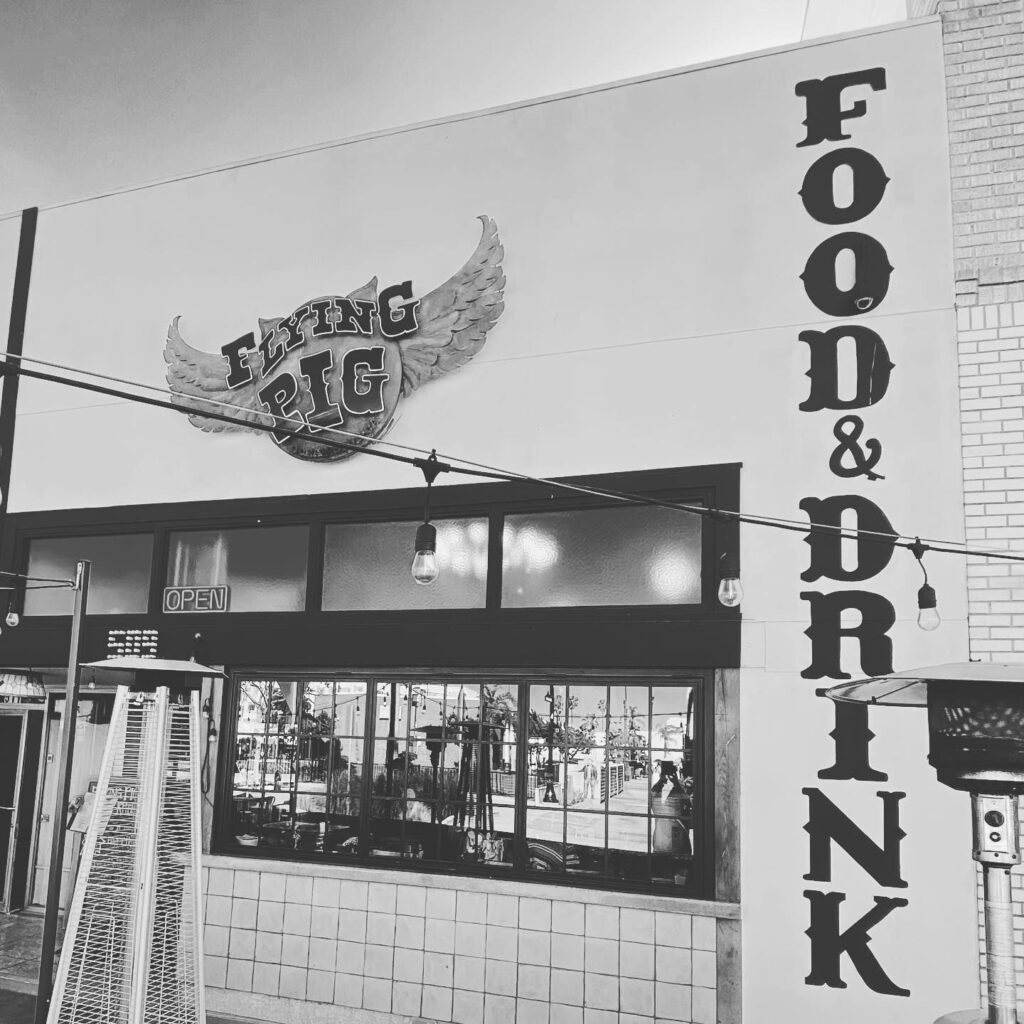
Oceanside icon The Flying Pig doubling down for a wine bar and bottle shop next door
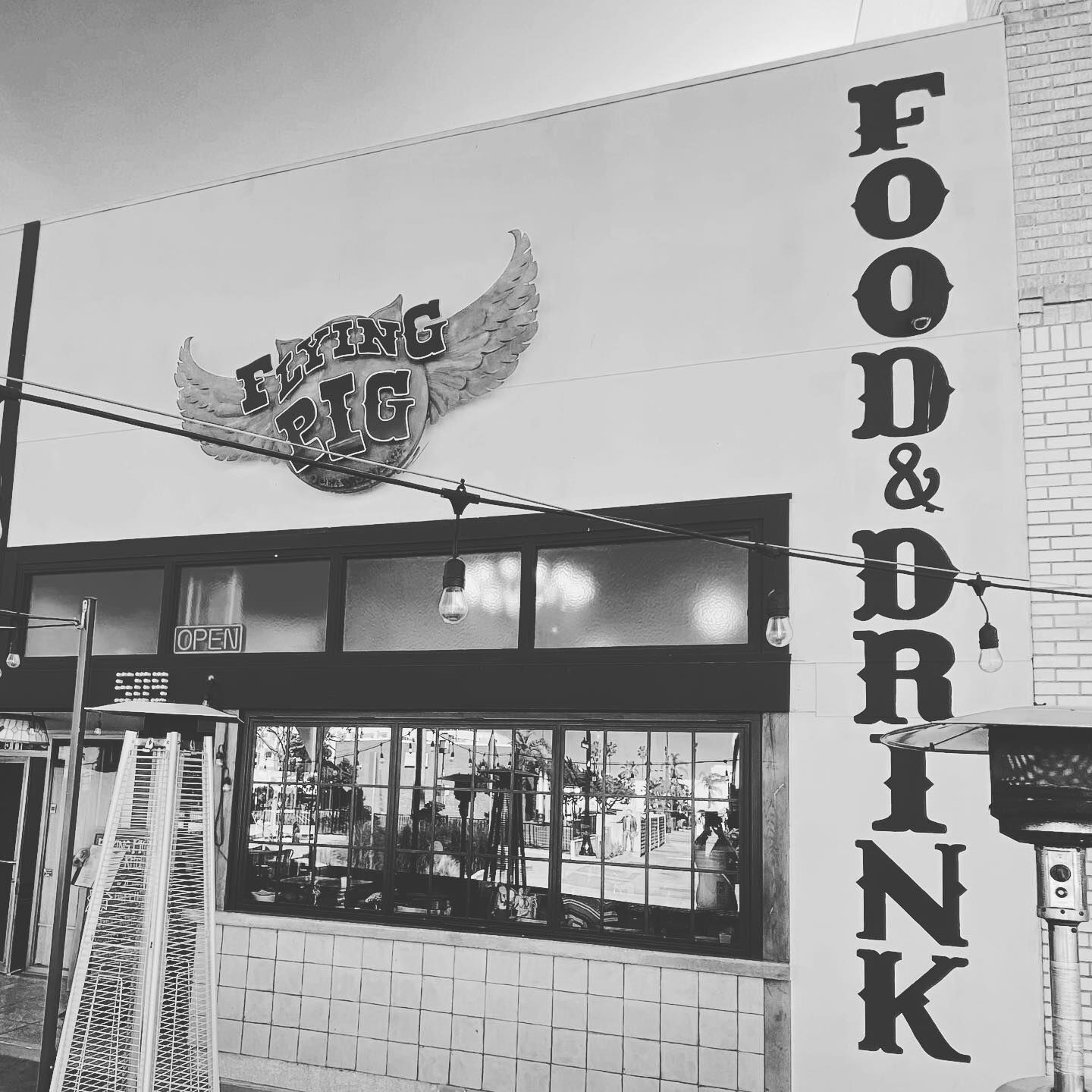
flying-pig-exterior.jpeg
Sure, Oceanside’s food scene is hot now. It’s the epicentre of San Diego’s whoa. But wasn’t always that way. And Flying Pig Pub + Kitchen was one of the originals that got it kicked off, when they hung vinyl records in a little warehouse-y spot on South O and started serving killer pork belly and grits.
The Pig went through the crap like all of us did for a few years. They moved locations. But now they’re expanding into the space next door and growing, as it should be.
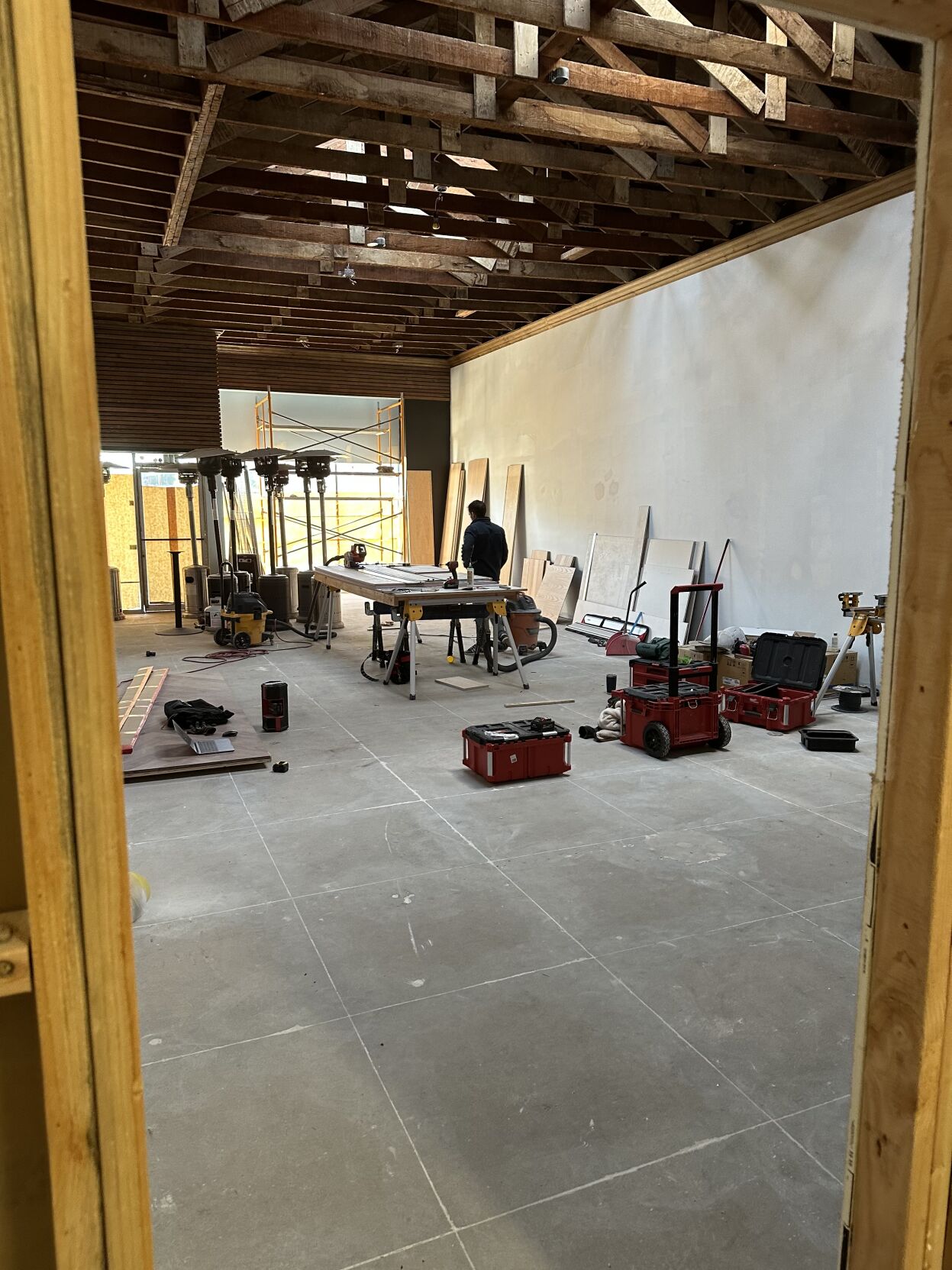
flying-pig-pub-construction.JPG
Roddy and Aaron Browning were built for this.
I spent my teenage years perfecting the rip on my jeans and undergoing residency at the orthodontist while the husband-and-wife duo spent their teens learning the ins and outs of the restaurant industry (Roddy was a server at James Beard-baiting restaurant, Market Del Mar).
When inspiration struck to open the Pig, they curated an Austin-vibey space where salty, sun-kissed local beach kids and couples could dig into chef-inspired plates in an approachable, homestyle setting. A place where deviled eggs take their rightful place alongside handmade pasta and Duroc pork chops.
After moving from their original location (which now houses Matsu), and a tough stint in Vista, they relocated all things Pig onto Mission Ave, right above Downtown. And now they’re taking over the Sandy Toes Gift Store next door, which they’ll turn into Swine Wine Bottle Shop and East Wing Lounge—vintage everything, woods, leathers (all reused), a splash of gold.
The plan? To sell more wine, lots of it. By the glass, the bottle, the case. Buy a glass of wine from the bottle shop in the front, head a few steps further inside to the lounge anchored by a 12-seater chef’s table. The back third of the venue will be a dedicated kitchen prep space for The Pig. While there’s no word on an exact opening date or operating hours, Aaron hopes to have the new venue up and running in the next month.
Have breaking-news, exciting scoops, or great stories about San Diego’s food scene? Send your pitches to [email protected].
Jared Cross is a writer who grew up near the US-Mexico border in San Diego. He credits this experience with refining his appetite for food and culture.
After 20 years and thousands of meals as a food critic, San Diego Mag Content Chief Troy Johnson picks the city's top standouts
His ascent has been stealth and humble, which fits the man. When Liberty Station was struggling to convince people it existed over a decade ago, Sicilian chef Accursio Lota’s food at Solare Ristorante was a tractor beam for food people who sniff out hidden talent like truffle dogs. In 2017, he won the World Pasta Championship (a legit competition from global pasta brand Barilla) and struck out on his own, opening his and his wife’s from-scratch pasta trattoria in North Park (Cori Pastificio). Gambero Rosso—the Italian version of Michelin, the most respected source—has clamored for the restaurant since it opened, naming it “New Opening of the Year” and this year giving it their highest award, “Tre Forchette” (Three Forks), only knighted on a handful of US restaurants.
So this year, Lota opened his grandest thing—Dora Ristorante—and it pulls everything together. Steps from San Diego’s world-class theater, La Jolla Playhouse, it’s laden with brass and large-format murals, tile work and mosaics—like the one on the wood-burning oven that blisters, chars, and smokes a good portion of the menu. Their housemade focaccia is a new street drug (try it with the puttanesca, his grandmother Dora’s recipe). The olive oil-cured sardines make “sustainable seafood” and ethics not taste like a compromise. Dora might finally be the one to solve the “where do I eat before the world premiere at LJP” dilemma.

The yuzu-colored building that helped build North Park’s modern food culture is alive again. Years ago, the ornate French Quarter–inspired spot on 30th Street was home to chef Matt Gordon’s Urban Solace (duck macaroni and cheese). Then it laid conspicuous and fallow until a few months ago when Bacari took it on. It’s an LA transplant, but they’re proving forgivable of that trespass. Chef and co-founder Lior Hillel cooked at Jean-Georges before opening the first of this Venetian-style restaurant in 2008 with brothers Danny and Robert Kronfi (Bobby started his food venture with a pop-up dinner series in his college apartment at USC).
For dinner, it’s house-baked bread, crudo and shrimp ceviches, Mediterranean street corn, lamb hummus, shawarma, and glazed pork belly. Weekend brunch is bellinis and French toast and burekas (famed Jewish stuffed puff pastry), and chef Noa’s cauliflower (caramelized with chipotle). It’s Italian-ish with a heavy dose of pan-Mediterranean and Middle Eastern. Doesn’t hurt that they left the iconic exterior as is, adding chandelier-farmhouse insides with charm that echoes two of the city’s dearly departed (Jayne’s Gastropub, Cafe Chloe).

Much tolerance for friends who hate mussels because they look too biological. But if they manage to dislike À L’ouest’s—served over ice with vadouvan curry aioli and chili crisp—then you’ve successfully identified your brokemouth friend and should try bicycling or crafting with them to bond instead of eating in public places. It should be on everyone’s short list for dish of the year.
Chef Brad Wise and his team have earned their rep over multiple concepts—Trust, Fort Oak, Cardellino, Wise Ox, Rare Society. But he’s been eyeing this corner of North Park since before he opened his first (Trust, in 2016). North Park has been rising for a while, and À L’ouest feels like the missing piece—an indoor-outdoor brasserie stunner on the marquee spot of 30th and University, which long sat boarded up and vacant like a neighborhood missing a front tooth.
As with his other concepts, woodpile is king; smoldering red oak boosts the flavor of just about everything. Get the spätzle with braised rabbit, maitake mushroom, secret de compostelle (the famed Basque sheep’s milk cheese), and black truffle. Or the chicken liver parfait with persimmon, fennel aigre-doux (sweet-sour), and chives on toast. Or, like everyone else in there—the steak frites.

Chef Travis Swikard’s first solo restaurant, Callie in East Village, proved how details can make the most composed of us blubber a little in fine places—from citrus left in ovens overnight to blacken and transform, to the Scripps Oceanographic Institute saltwater he keeps his spot prawns thriving in until ordered, to the days-long fermentation and stone-ground dukkah that turn carrot shavings into a statement piece.
Now, he’s focusing on French food with a fitter, less buttery San Diego heart. Fleurette is his doubling-down, a SoCal riff on the food he learned under mentors Daniel Boulud and Gavin Kaysen. The French gave us the mother sauces, and Fleurette showcases the lightest and brightest evolutions. Like the anchoïade on his beef tartare, which uses famed Italian anchovy sauce colatura di alici, mixed with cured egg yolks over tiny, uniform-sized cubes of raw, USDA Prime Flannery beef.
There is soubise (onion sauce), a sauce vierge (tomatoes and herbs), and a fennel marmalade on the duck liver and bone marrow pâté. Although the structure is stunningly pure glass, Fleurette’s in a location—an office park on the edge of La Jolla, near UTC—that few chefs would be able to pull off. But Swikard’s Michelin-bound house of saucework pulls hard.

The Escondido taqueria from Rosarito-born-and-trained chef Juan González and farmer Megan Strom took the county by storm this year. The married couple started as a popup four years ago, hosting farmside dinners before taking up residency at Vino Carta in Solana Beach. Strom was working a small, 5-acre heirloom bean farm in Valley Center owned by Mike Reeske (aka “The Bean Man”) when he retired and sold them the plot.
The huge bonus was that the sale included Reeske’s famed collection of beans, curated over 20 years. The couple planted other things and now grow much of what they serve in the form of tacos and burritos at a permanent spot in Escondido: Mesa Agrícola.
The menu’s bone simple: housemade tortillas in your choice of taco or burrito norteños (which are smaller, like burritos de hielera) that change constantly and often topped with guisados (Mexican braises or stews) like lamb and garbanzo, birria, chicharrón, mushrooms al ajillo, rajas, you name it. And, of course, some of the best beans honoring the local legend of Reeske.

San Diego is now the recipient of national food buzz. The dark ages—during which we learned how to sear ahi and asada some carne and called it a day—felt prolonged, and they were. The problem was never ingredients. San Diego County always had the best raw dinner materials (more small farms per capita than any county in the US, seafood right there); it just didn’t have a critical mass of highly trained chefs to do them justice. Easy to understand the chef dearth.
For a very long time, if you wanted to be a serious chef you had to go to the restaurant superplexes of New York, San Francisco, or Chicago (which imported their raw ingredients from places like San Diego). But now—credit farmers or Alice Waters or Dan Barber or Michael Pollain or the reasonable conclusion that food picked right here tastes better than food picked way over there—some of the most talented chefs are moving to the ingredients, not the other way around.
In San Diego, we got Richard Blais, Swikard, and now Elijah Arizmendi, who cut his teeth in Vegas with Joel Robuchon (plus Boulud and Thomas Keller) and was chef de cuisine at NYC’s L’abeille when it got its first Michelin star. His debut restaurant in La Jolla—with partners Brian Hung and Melissa Yang—is a dark, moody multicourse tasting-menu hideaway with one of the best egg dishes in the city.
Troy Johnson is the magazine’s award-winning food writer and humorist, and a long-standing expert on Food Network. His work has been featured on NatGeo, Travel Channel, NPR, and in Food Matters, a textbook of the best American food writing.
We asked, you voted, and food critic Troy Johnson chose his favorites—these are the top food and drink people and places in the city
Some keep lists of favorite books, of quotes, of enemies whose time shall come. At SDM we keep vast, nuanced, hotly debated lists of the best food and drink in the city. Menus are our smut novels. From Michelin stars to mom and pops, our list constantly evolves over hundreds of new bites tried every year. Here’s the 2026 list from food critic Troy Johnson and 129,000-plus votes from our readers, who really, really know their food.
Troy Johnson is the magazine’s award-winning food writer and humorist, and a long-standing expert on Food Network. His work has been featured on NatGeo, Travel Channel, NPR, and in Food Matters, a textbook of the best American food writing.
The Latin-inspired restaurant melds Venezuelan and Mexican influence with Southern California culture
John Lennon believed all you need is love, but one restaurant team wants to provide guests with love and magic. This June, Shawn Seaman, Mike Mayaudon, and Ryan Mencik will open Amor y Magia (“love and magic”) next to Little Victory Wine Bar in Carlsbad.
The group has been working on the concept for two years, building a Latin American–inspired menu that takes cues from Mencik’s Filipino and Mayaudon’s Venezuelan heritages, as well as San Diego’s proximity to Mexico.
Spain colonized the Philippines from 1565 to 1898 and Mexico from 1521 to 1821, leaving a deep influence throughout both countries’ cuisines. “I want to balance tradition with creativity by honoring the roots of Latin America and Latin cuisine, but also pushing the boundaries with experimentation,” says Mencik, Amor y Magia’s executive chef.
The group’s past projects, Same Same in Carlsbad and Good Enough Cocktail Club in Little Italy, give a taste of that boundary-pushing ideology. (One is a proudly irreverent technicolor Thai-fusion extravaganza, while the other is a listening bar cosplaying as a tattoo studio and pleasantly affordable cocktail lounge. Both are worth a visit.)

Amor Y Magia’s menu will include a rotating raw bar with fish crudo and ceviche caught by local fishermen, as well as a few salads and sides like elote, pao de queijo (small Brazilian cheese rolls made with Oaxacan cheese, garlic aioli, and chives), and tajadas (fried plantains with nata, a sweet dairy cream, and queso llanero, or “cowboy cheese.)”
Since most Latin American cultures prize the ritual of gathering together as much as the food itself, Mencik says the menu will lean on shareable plates—around seven or eight starters and entrees, a few of which come directly from his and Mayaudon’s childhoods.
“The dish that I’m most excited about is a dish that I grew up eating when I was a kid—and you don’t really find it anywhere around here. It’s called a cachapa,” says managing partner Mayaudon. “A cachapa is like a corn savory pancake, usually topped with queso de mano.” Queso de mano is a soft, fresh cheese from Venezuela with a mild flavor similar to mozzarella.
Over the past two decades or so, people have begun folding the cheese in the middle, but he prefers it the more traditional style—the pancake served flat, with butter and cheese on top. “We’re still working out whether or not we want to add the pork to it, but for me, that’s a great core item.”

Mencik points to the grilled half chicken dish as one of his highlights, served with pickled mango, jalapeño, bell pepper, lime, Merkén (a traditional Chilean spice blend with salt, toasted coriander, and smoked cacho de cabra chili peppers) and humita (an Argentinian corn purée). Despite Merkén’s popularity in Chile, the team hasn’t been able to source the chili peppers in the US. So, they’re currently growing their own—around a 100-day process, he estimates.
Amor Y Magia’s beverage program falls under a similar fusion theme, with plays on traditional cocktails like Jaguar’s Milk, which riffs off a Brazilian Batida de Coco, or house-made Peruvian chicha morada, with purple corn, fruit, spices, and Oaxacan whiskey. Seaman, who will be the general manager as well as a managing partner with Mayaudon, adds they also plan to have a global wine list that extends beyond Spanish and Latin American wines, with selections from California, France, and beyond.
Most of the tables in the gothic, Spanish Revival-inspired restaurant are on the covered patio, which seats 60 guests. Inside, there’s a 12-person bar and four-person chef’s counter. Amor y Magia will feel different from their other projects—intentionally, Seaman says. “Our goal is to open a bunch of different places with different vibes and different settings,” he says. With some luck, and maybe some magic, this is just the start for the team.
Amor Y Magia opens at 505 Oak Avenue, Suite C in mid-June 2026. Initial operating hours will be Monday through Saturday, 4 p.m. to 10 p.m. (subject to change).
Listen Now: The Latest in San Diego’s Food and Drink Scene
Have breaking news, exciting scoops, or great stories about new San Diego restaurants or the city’s food scene? Send your pitches to [email protected].
Beth Demmon is an award-winning writer and podcaster whose work regularly appears in national outlets and San Diego Magazine. Her first book, The Beer Lover's Guide to Cider, is now available. Find out more on bethdemmon.com.
Tips from the trusted experts at Mauzy Cooling, Heating, Plumbing, and Electrical
San Diego summers can be brutal. But since the hottest period is typically late summer into early fall, San Diegans still have time to prepare. The pros at Mauzy Cooling, Heating, Plumbing, and Electrical are standing by to help homeowners fortify their homes against the elements and ensure their air conditioning is as frosty as the penguins that serve as the company’s mascots.
Many homeowners underestimate the load their AC system faces, especially in the inland valleys where temperatures regularly top 100 degrees. San Diego regularly sees multi-day heatwaves each summer, and a system that struggles on the first day will likely fail by the third. Longer run times, unusual sounds or smells, and uneven cooling from room to room are all signs that your system may not survive the next hot spell.
Systems typically last 12 to 17 years, but there are exceptions. If a system is approaching that, or is already there, a professional evaluation is recommended before summer really heats up. A good rule of thumb: If you can’t remember when your system was last serviced, it’s due.
“As technology changes, systems become smarter and smarter,” says Sean O’Connor, an install manager at Mauzy with 42 years of experience. “There are a lot of people out there who will say a system’s only good for 10 years. I don’t buy that—these systems are built to last as long as they’re taken care of.”
There are also a few steps homeowners can take between services to extend the life of their system. Regularly changing a dirty filter—especially if you have kids or pets—and keeping an outdoor unit clean can help head off problems in the future, says O’Connor.
Also, be realistic about whether it’s time to replace a unit. O’Connor likens pouring money into salvaging a faulty unit with patchwork repairs and replacement parts to “tripping over a dollar to pick up a dime.” When one part fails, others are sure to follow, and newer parts may not be compatible with older units. Mauzy recommends homeowners use the 50% rule: If a repair costs more than 50% of the system’s replacement value, and the equipment is over 10 years old, replacement is usually the better long-term value. And don’t forget the ducting. An older house that was built with heat and later had air conditioning added may not have sufficient airflow, regardless of how good the system is.
Last but not least, homeowners should know who to trust when it comes to their homes. Built on three generations of professional integrity, Mauzy has grown into not just a leader for cooling, heating, plumbing, and electrical services, but a leader in the community known for supporting local nonprofits across an array of causes. To ensure complete peace of mind, Mauzy stands behind a comprehensive 12-point guarantee that outlines its commitment to outstanding service, quality equipment, expert technicians who understand how the local microclimates affect HVAC performance, and no upsells or surprises on the bill.
“We go the extra mile. That’s what sets us apart,” O’Connor says. To get a free quote today, visit mauzy.com.

Award-winning brewer and North County native Mike Aubuchon’s long-awaited brewery set to open this April
Mike and AJ Aubuchon share one very important trait: Patience. The Aubuchons are the husband-and-wife team behind Koakai Brewing Company, a brewery that’s been in the works for roughly two years. Like many other food and drink businesses, they’ve faced delay after delay after delay. Lesser people would have given up—or at least seemed a lot more annoyed about it. I wouldn’t blame them one bit.
But the excitement in AJ’s voice is palpable. It’s like the night before Christmas for the duo, whose patience is about to pay off. Koakai is finally slated to open in Oceanside in mid- to late-April next to the Aubuchons’ other business, Kyoto Japanese Market.

A North County native, Mike started his beer career in the bottle shop at Pizza Port Carlsbad before becoming a cellarman, then assistant brewer at the chain’s Ocean Beach shop. When the Carlsbad brewhouse needed a head brewer, he went back to his hometown and started racking up hardware at competitions like The Great American Beer Festival, where he won bronze in 2015, silver in 2017, and gold in 2020. He stayed for a little over 10 years before helping launch brewing operations at Heritage BBQ & Beer Co., now Hill Street Brewing.
Originally from Kyoto, Japan, AJ worked in restaurants from her teens until she moved to Oceanside to attend MiraCosta College. She also worked alongside Mike at Pizza Port, bartending, learning about craft beer, and making connections with other people in the industry—relationships they plan to bring into their operations through collaborative brews.
“Koakai” has a double meaning: “warrior for the sea” in Hawaiian and “a little red” in Japanese. “My maiden name in Japanese is Kaiho and that means ‘saving the ocean,’” AJ explains, adding that when she first met Mike, a lifelong ocean lover, he was working as a professional surfboard shaper. “Also, my husband has a lot of Irish in his heritage, so our kids—we have four children—they all have a kind of reddish tint in their hair… so it kind of means heritage and family.”

Koakai’s inaugural lineup will feature a flagship Japanese lager, German schwarzbier, West Coast IPA, hoppy pilsner, Mexican lager, XPA, and a few collaborations like a West Coast IPA with RahrBSG, a craft malt supplier, and yet another IPA made with specialty hops, this one a collab with Cannonball Creek Brewing Company from Colorado. They’ll likely add more drinks later, such as a house seltzer, and dry Irish stouts on nitro, and even feature some imported Japanese sake.
Patrons will be able to pick up food—items like onigiri, Japanese-style sandwiches, bento boxes, and sushi—from Kyoto Japanese Market next door. The brewery’s kitchen will offer fresh sushi as well as its signature blend of Japanese, Hawaiian, and Central Texas-style barbecue, similar to what the market currently serves on weekends (think sticky ribs, charcoal-grilled steaks, and yakitori-style chicken). Some of the dishes are based on AJ’s childhood favorites, like hambagu, a Japanese hamburger steak.
“It’s almost like a hamburger patty, but it’s more like meatloaf,” she explains. “It has a lot of different ingredients, caramelized onions, ginger, garlic, bread crumbs, and eggs.”
A lot—and I mean a lot—has changed in the craft beer world since the Aubuchons entered the scene, and they know it’s not an easy landscape for them right now. But they’ve both been around the beer block a time or two. They’re ready. “It’s our time to show people what we’ve learned and what we can do,” says AJ.
Koakai Brewing Company opens at 559 Greenbrier Drive, Suite B, in Oceanside in mid- to late April 2026.

Listen Now: The Latest in San Diego’s Food and Drink Scene
Have breaking news, exciting scoops, or great stories about new San Diego restaurants or the city’s food scene? Send your pitches to [email protected].
Beth Demmon is an award-winning writer and podcaster whose work regularly appears in national outlets and San Diego Magazine. Her first book, The Beer Lover's Guide to Cider, is now available. Find out more on bethdemmon.com.
Chef David Lay’s menu for Kettle On Coast is a unique and ambitious concept for the former Petite Madeline space
Givino Rossini knows there are already a lot of great specialty coffee shops in San Diego. He likes to think he runs two of them already: Kettle On Grand in Escondido and Kettle On Main in Fallbrook. But rather than open another conventional coffee shop—with a few fun pastries and community events like DJ nights—he decided to kick it up a notch for his third location in Oceanside, Kettle On Coast.
“This is going to lean a lot more restaurant than fast-casual coffee shop,” he explains. The space, which housed Petite Madeline Bakery until March 15, comes with a full kitchen—something the first two Kettle Ons don’t have. And the menu won’t be typical coastal California avocado toasts and acai bowls. Chef David Lay, who’s worked at restaurants like the Michelin Bib Gourmand Kettner Exchange as chef de cuisine and at Juniper & Ivy as chef de partie, is spearheading the kitchen, developing to-go breakfast and lunch menu along with a pastry and coffee program.

“I describe the food as rooted in African diasporic flavors and traditions, with influences from the Mediterranean and the Levant [the land bridge between Africa and Eurasia]. The opening menu is really meant to be an introduction to some of those ingredients, spices, and techniques in a way that feels approachable,” Lay explains. “But the long term vision is to continue exploring African culinary traditions more deeply as the menu evolves.”
The opening menu includes items like French toast with a cinnamon sugar crust, Moroccan tres leches, and crème fraîche; miso cheddar grits with a sunny-side-up egg, berbere (an Egyptian spice blend), and chives; Aleppo fried chicken with chermoula (a North African sauce and marinade somewhat similar to chimichurri), tahini, preserved lemon relish, and herbs; and a grilled mochi with honey, berbere, and crème fraîche for dessert. Guests will order at the counter and either take their food to go or have it delivered to their table.

Kettle On Coast will soft-open in early April, initially rolling out between nine and 15 of Lay’s menu items and ramping it up from there. Rossini expects to have everything in place for a grand opening in early summer and hopes to introduce the same sort of community-specific events to Oceanside as he has in Escondido and Fallbrook.
“Each location has its own unique kind of concept and energy around that space,” he says. “We kind of tailor each space to what we feel is missing or what’s needed in that community.” In Escondido, it’s been events like skate competitions, while Fallbrook has put on poetry readings. But in Oceanside, the future is yet to be written.
Kettle On Coast will soft-open at 223 N. Coast Hwy. in Oceanside in April 2026. Initial operating hours will be Monday through Friday, 7 a.m. to 2 p.m., and Saturday and Sunday, 7:30 a.m. to 2:30 p.m.

I only got really into boba tea in the last couple of years, but once you go full “QQ,” you never go back. For those unfamiliar with the concept, QQ is a Taiwanese term referring to the springy, chewy texture of elastic-y foods that seem to bounce against your teeth—things like fish balls, tendon, or boba pearls. It’s not everyone’s cup of tea (pun intended), but if it’s yours, tons of tea shops have sprung up around San Diego to satisfy a wide range of flavor cravings, from classic milk tea to out-there options like matcha-mango with cheese foam and popping pearls.
If you’re not sure where to start, Boba Religion in Convoy District is celebrating its one-year anniversary on March 21-22, giving patrons a chance to try the shop’s Vietnamese-sourced tea, coffee, matcha, and other specialty drinks with a buy-one, get-one-free promotion on Saturday and buy-one, get-one-half-off on Sunday. So, whether you’re a QQ fan already or QQ-curious, this weekend might be a good time to give the squishy, fun to chew pearls a try.

Listen Now: The Latest in San Diego’s Food and Drink Scene
Have breaking news, exciting scoops, or great stories about new San Diego restaurants or the city’s food scene? Send your pitches to [email protected].
Beth Demmon is an award-winning writer and podcaster whose work regularly appears in national outlets and San Diego Magazine. Her first book, The Beer Lover's Guide to Cider, is now available. Find out more on bethdemmon.com.
Discover San Diego’s Top Lawyers — the region’s most trusted legal professionals across diverse practice areas.
Daniel A. Kaplan is a founding partner of Panakos LLP with more than three decades of civil litigation experience in both state and federal courts. Mr. Kaplan pursues and defends legal claims on behalf of companies, entrepreneurs, and business owners in high-stakes disputes. He focuses on business disputes including breach of contract, unfair competition, trade secret theft, securities disputes, fraud/misrepresentations, and employment matters.
“The best advocacy combines preparation, perspective, and a client relationship built on trust and candor.” — Daniel A. Kaplan
His clients include real estate investors, private and public corporations, and individuals seeking sophisticated legal counsel. Known for practical judgment and strategic advocacy, he works closely with an experienced and diverse legal team to protect, enforce, and defend his clients’ interests.
555 W. Beech Street, Ste. 500, San Diego, California 92101
619-8000-LAW
Panakos.law