Ready to know more about San Diego?

Subscribe
Food & Drink JUNE 9, 2023

Interview With an Icon: Chef Rick Moonen

One of the world’s foremost sustainable seafood chefs heading to San Diego to cook with the city’s top chefs at Marine Room
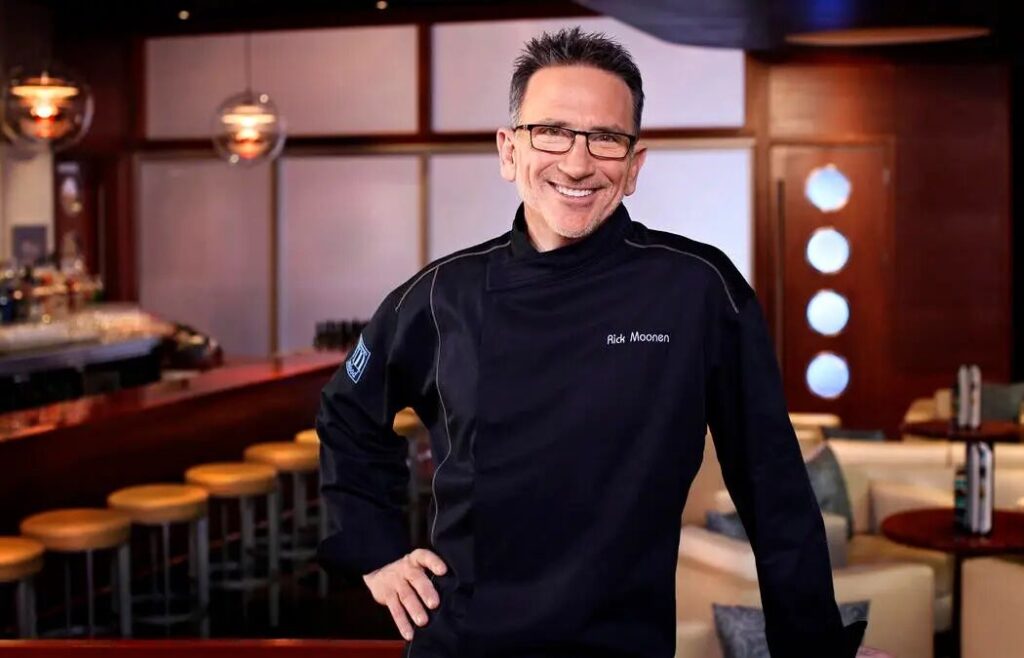
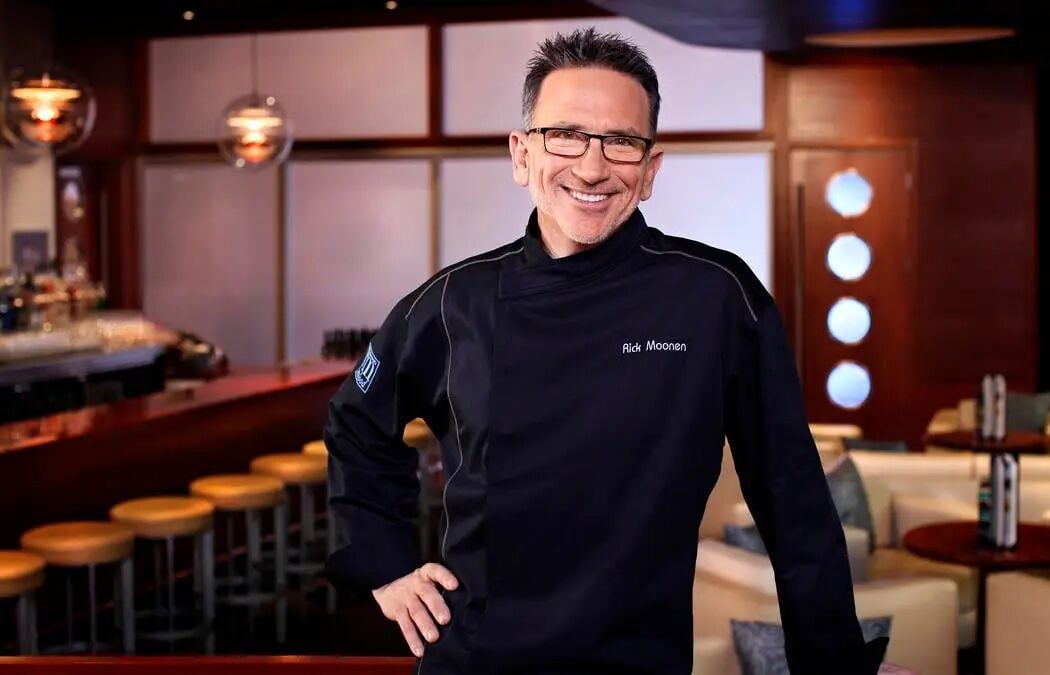
Interview With an Icon: Chef Rick Moonen
Courtesy of Rick Moonen
Rick Moonen

Rick Moonen

Courtesy of Rick Moonen

Despite being a seemingly self-intuitive thought, it must be stated: our oceans do not contain an infinite food supply, and our interactions with the ocean affect its longevity.

“The ocean has been abused for years. The reality is we haven’t taken great care of it. People don’t see the problems because they’re covered by a big shiny blue blanket that looks like a postcard,” says Chef Rick Moonen (RM Seafood, RX Boiler Room). He’s teaming up with some of this region’s finest culinary talent for “A Conscious Catch” fundraiser Tuesday, June 13, from 6-9 p.m. at the Marine Room in La Jolla. Proceeds will go to the locally based Walter Munk Foundation for the Oceans.

Chefs include The Marine Room’s Executive Chef Mike Minor and Chef De Cuisine Alex Pailles, Travis Swikard (Chef & owner, Callie), Carlos Anthony (Executive Chef Herb & Wood), William Eick (Chef & owner, Matsu), and Laura Warren (Executive Pastry Chef Puffer-Malarkey Collective).

Their collective mission is to alert the public about and advocate for sustainable fishing practices over a meal anchored by locally sourced, seasonal ingredients paired with wines from Grgich Hills Estate.

Moonen is an early adopter. It’s a message he’s been preaching for more than three decades. His authenticity and longstanding awareness led to the adoption of the nickname “The Godfather of Sustainability.”

“I’ve been an outspoken chef for many decades. I became a poster child for sustainability, not necessarily because I wanted to, but because I care about where our food comes from. I learned about fishing gear and how bad it is for fish reproduction,” he says. “The fish are going to naturally find the best places for reproduction, and those places end up becoming the best places to fish, and sadly they’re often polluted.”
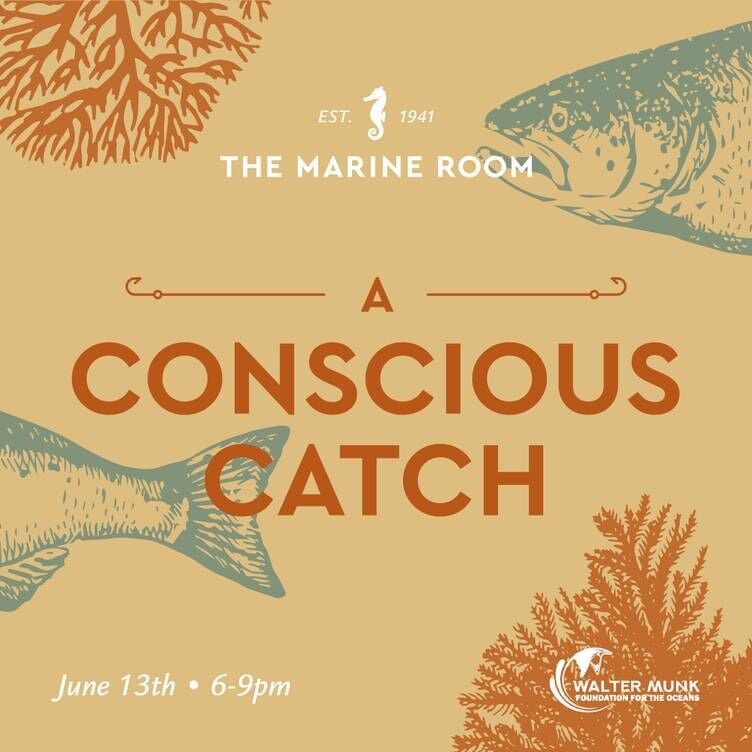
A Conscious Catch

A Conscious Catch

Prime fishing locations have inherited millions of tons of discarded fishing equipment (known as ghost gear) and are known to smother reefs, endanger native fish populations, and can persist in a marine environment for up to 600 years.

There’s also bycatch, the incidental capture of a species. “You can’t target what you catch. You get what comes up,” Moonen says.

But how do you educate the public about issues hidden beneath the sea?

“The better you can communicate with people about what’s on their plate and how it got there, the better chef you’ll be. In the ‘90s, the sensitivity around sourcing didn’t seem as important. But innovative chefs began telling people where their food came from by listing it on the menu,” Moonen says.

He also recommends resources like Forever Oceans and the Monterey Bay Aquarium‘s Seafood Watch. “It comes in handy for people in Middle America who may feel like they don’t have access to sustainable seafood, but still want to do the right thing,” Moonen says.

And the next time you’re dining out, there’s a simple habit you can begin implementing.

“Start asking where your fish comes from or where it was farm raised, and even if you don’t receive an answer, at least you started a chain reaction. If 10 people asked a night, restaurants would have to start doing something,” Moonen explains.

And this isn’t about badgering your server or condemning your local fishermen and suppliers. It’s about sparking conversations that spread awareness about healthier sourcing practices.

“I try to keep it simple. I try to keep the story understandable. I want people to know the ocean’s problems are not always the same. The problems are fluid,” he says. “We have to celebrate the good news, and when we see conditions have improved a bit, we can’t ease up or the problems come back.”

Have breaking-news, exciting scoops, or great stories about San Diego’s food scene? Send your pitches to [email protected].

Jared Cross

About Jared Cross

Jared Cross is a writer who grew up near the US-Mexico border in San Diego. He credits this experience with refining his appetite for food and culture.

Food News

Subscribe to our newsletters

Select Options

By subscribing you confirm that you agree with our Terms and Conditions and Privacy Policy.

Food & Drink AUGUST 14, 2026

A New Cinnamon Roll Obsession is Baking in South Bay

Sinner Buns is building a following for its slow-made, seriously gooey weekend treats

A New Cinnamon Roll Obsession is Baking in South Bay
Courtesy of Sinner Buns

When I was pregnant, my food craving was singular and intense. If I didn’t eat at least one thing doused in cinnamon every day (ideally, more than one), I was—to put it gently—a complete monster. 

Since then, my obsession has tempered somewhat. But cinnamon buns still perch high on my top treats list, so I’m always on the lookout for the next great place to indulge. IMO, The Huddle in Mission Hills’ mondo cinnamon roll remains top-tier, but after eyeing the ooey, gooey goodies from Sinner Buns, we might have a contender. 

Originally from Ukraine, Daria Nadar had already done everything one can do at a bakery—business operations, wholesale contracts, actually baking, you name it—so during the pandemic, she started dabbling with perfecting her cinnamon rolls. After she got a couple fans over social media, she threw her first pop-up to see how they’d be received. She sold out.

After a few false starts with a couple storefronts and business deals, Nadar officially launched Sinner Buns in October 2025 with her partner Filipe Pazi. After making it through an unexpectedly hectic season stuffed with holiday orders, the team closed temporarily to get everything in line and reopened this April. Business has remained in full swing ever since. 

There are only so many ingredients in a cinnamon roll, but “the process is what makes it special,” she says, adding they use fresh yeast rather than powder and a 48-hour process for each batch of brioche dough made to order. (Thus the need for pre-orders.) Customers can preorder until Thursday each week for pickup Friday, Saturday, or Sunday from Sinner Buns’ ghost kitchen at 780 Hollister Street, just east of Imperial Beach.

You can also catch her at various pop-ups around San Diego, the next one taking place on Saturday, August 22 at Infusion Lab Coffee in Pacific Beach. Eventually, Nadar opens to offer nationwide shipping (once she figures out the logistics and quality control) and one day, her own storefront. 

But it’ll be on her terms, not the whims of social media. “We already learned how to not only rely on virality of the product, because you go viral and then it fades,” she says. “It’s a slow burner, and I know eventually, it’s going to grow much more.”

Courtesy of San Diego Spirits Festival

San Diego Restaurant News & Food Events

Beth’s Bites

  • Get spirited away at the 17th annual San Diego Spirits Festival. If you understood that reference, I regret to inform you that it is not a Studio Ghibli watchathon, but it’s still a win with a bonanza of craft makers pouring libations at the Museum of Contemporary Art in La Jolla for two full days. On September 26-27, try sips, glugs, and guzzles from brands like Condesa Gin and Uncle Nearest (with some bites to wash it all down, of course). Could you ask for a more picturesque venue? Spoiler alert: no.
  • You love to see a longtime employee take the reins of a beloved local institution. That’s exactly what happened at Konito’s Cafe in Pacific Beach, which is currently transitioning to Pablo’s Cafe, which is now under new ownership. (Yes, his name is Pablo.) Will their breakfast sandwich still slap? Guess we’ll have to go find out. 
  • I’ve yet to visit Tigawok, the small California-based chain serving mini bowls like Kung Pao chicken and Mapo tofu. But the latest storefront (and the first in San Diego) is now soft open in La Jolla, and it’s only a matter of time before their Sichuan shredded chicken gets in my belly.

Listen Now: The Latest in San Diego’s Food and Drink Scene

Have breaking news, exciting scoops, or great stories about new San Diego restaurants or the city’s food scene? Send your pitches to [email protected].

Beth Demmon

About Beth Demmon

Beth Demmon is an award-winning writer and podcaster whose work regularly appears in national outlets and San Diego Magazine. Her first book, The Beer Lover's Guide to Cider, is now available. Find out more on bethdemmon.com.

Food & Drink AUGUST 13, 2026

Love Pupusas Brings Salvadoran Home Cooking to San Diego

From her Rancho Peñasquitos kitchen, Yanira Majano is sharing family recipes through San Diego’s growing home-restaurant movement

Love Pupusas Brings Salvadoran Home Cooking to San Diego
Courtesy of Catalina Offshore Products

When San Diego launched Micro Enterprise Home Kitchen Operations (MEHKO), it changed everything. Riverside County first established the experimental program in 2019, with San Diego introducing its own countywide pilot program in 2022 and granting it permanent status in 2024. The new category allowed people to launch at-home retail food operations—basically, home restaurants—with special requirements and restrictions to ensure food safety and smooth operations. Over two dozen counties across California have since adopted their own versions with over 1,200 permits issued, around 100 of them in San Diego alone.

Some have a dizzyingly long waitlist (Warung RieRie), others are still getting their name out there (The Hidden Gazebo Eatery), and still others use MEHKO for pickups rather than fully opening their home as an onsite dining facility. Love Pupusas falls into that category.

Yanira Majano came with her family from El Salvador to the United States when she was 11 years old, bringing a love of cooking and desire to share the country’s cuisine along with her. “There’s a lot of similarity [between Salvadoran food and] Central, South America, even Baja Mexico,” she says. Salvadoran cooking tends to be less spicy than some Mexican cuisines, with an emphasis on ingredients like corn, staples like yucca root (cassava), meats like crispy pork (chicharrón), and sides like curtido, a tangy cabbage slaw that’s typically either naturally fermented or vinegar-based. 

And of course, the signature dish of El Salvador—pupusas. 

In San Diego, Salvadoran food lacks the widespread availability of other Latin American cuisines like Mexican or Peruvian food, but Majano says she’s seen pupusas gain popularity over the past few years. But she likes to think her recipes, which have been passed down by her mother and kitchen partner Martha, contain a certain special something.

Some pupuserías use rice flour to create the handheld stuffed tortillas, but she prefers the more traditional gluten-free corn flour. Still, it’s what’s inside that really counts. “That’s where we put our own touch,” she explains. Most of Majano’s pupusas come with cheese and different fillings like carnitas, black beans, mushrooms, or zucchini, but she also offers vegan options. Every one comes with a side of curtido and salsa, each made fresh daily.

Showing people the magic of home-cooked food might not have been possible without the MEHKO program or The Cook Alliance, a MEHKO support and advocacy coalition. Opening a brick-and-mortar restaurant requires a huge amount of start-up capital—at least six figures, generally. Not exactly pocket change. “But when the MEHKO program started in 2022, I said, ‘Oh my God, this is for me,’” says Majano. 

Now with four years under her belt, she says she’d love to bring Love Pupusas to more food festivals, host more pop-ups, and eventually open a food truck to keep serving the humble dish of her homeland, taking pride in every bite. “[I put] a lot of love in everything I do. You see it when you taste the food,” she promises. 

Pre-order Love Pupusas for next day pickup in Rancho Peñasquitos between noon and 5 p.m.

San Diego Restaurant News & Food Events

Beth’s Bites

  • It’s not the end of the road for Catalina Offshore Products—just the end of an address. The local family-owned fish market announced that come September, they are moving from their longtime location in the Morena District to The Old San Diego Seafood Building at 1842 McKinley Avenue in National City. Normal business operations will resume in October with the same retail market fully stocked with premium seafood and local catches, so it’s not goodbye, it’s just “see you later.” (And yes, 5202 Lovelock Street is still open until moving day.)
  • Don’t come at me with complaints about autumnal seasonal creep—I got an email this week about holiday shopping. In August. In comparison, the 2026 release of Karl Strauss Oktoberfest seems right on time. For the 38th year in a row, ahead of the Munich-inspired festivities, the 5 percent ABV malty amber lager is now available in bottles, with draft coming to the brewpubs in September. Despite the lack of chill in the air, there’s no reason why your fridge can’t be stocked with this frosty German delight.

Listen Now: The Latest in San Diego’s Food and Drink Scene

Have breaking news, exciting scoops, or great stories about new San Diego restaurants or the city’s food scene? Send your pitches to [email protected].

Beth Demmon

About Beth Demmon

Beth Demmon is an award-winning writer and podcaster whose work regularly appears in national outlets and San Diego Magazine. Her first book, The Beer Lover's Guide to Cider, is now available. Find out more on bethdemmon.com.

Food & Drink AUGUST 4, 2026

Restaurant Review: Mitch’s Seafood

SDM readers asked food critic Troy Johnson to kick tires on a classic, which is how he found himself surrounded by birds at Mitch’s Seafood

Restaurant Review: Mitch’s Seafood
Photo Credit: Dee Sandoval

The bird has a plan. You stand between that bird and that plan. For the remainder of your ceviche, you’ll identify as collateral damage.

There are many other nearby birds with the same plan, absolutely sucking at trying to be nonchalant about it. The pigeons are by far the boldest on account of what we can all agree just by looking at them is sheer stupidity. They come right up and ask with their red murder clown eyes: “Can bite?”

Pelicans are the silverback gorillas of this bird gang, hulking and alpha. They periodically flaunt the acreage of their wingspan in the same way a schoolyard bully puffs out his chest. One could casually land on your plate and maintain constant eye contact as it slowly enjoyed your fish taco. You share this tacit awareness with it. But it doesn’t approach because there are always a couple off-duty fishermen eating at Mitch’s Seafood. Those salty dogs have been forced to beat the shit out of a pelican or two in their day, and they and the pelican also know that.

The snowy egrets pretend to not really want your food. They seductively lord on the tops of the sportfishing boats moored in front of the restaurant, fully aware of how hot they are—svelte fashion models, Ozempic with wings. They just turn their faces to the wind so that it blows their fabulous hair. They seem to expect tourists to be overcome by their avian Brad Pittness and just throw swordfish sandwiches to them in tribute. They refuse to demean themselves like the gulls do.

Photo Credit: Dee Sandoval

The gulls are shameless menaces. The linebackers of seabirds—a lot quicker than you expect given their big butts, full of schemes and microaggressions. They stand at a distance and mad-dog everyone, intimidate with their beaks the color of old bananas. Fear is not a seagull emotion. When they take a plate—and they will take a plate—there is so much flapping and fighting. They desperately bite and claw at fishermen’s stews like zombies who finally caught up to Rick Grimes. We see one that’s missing a foot.

At some point you will hear a baby cry. It’s not a baby. It’s a gull, who has learned to mimic the sound of human babies in distress so that parents feel the great evolutionary ache—and throw fries at the crying.

“Watch out for the crab cakes,” says a server to every person she drops them to. “Those are their favorite.”

The birds have opinions on the menu. And their presence at Mitch’s is better than any Yelp review. Think they’d risk life and limb for some recently unboxed frostbite tilapia down at the local skate rink? Yeah, probably so.

Photo Credit: Dee Sandoval

But these birds know the backstory of three longtime local fishing families who own Mitch’s: Brian Kiyohara and his wife, Viola; Randy Toussaint and his wife, Tracy; and namesake Mitch Conniff. Conniff cut his teeth as a young sous chef at Jsix (a long-gone restaurant that was, 20 years ago, a slow-food star under chef Christian Graves). Then he was executive chef of American Angler, the long-range Baja fishing vessel co-owned by Kiyohara.

It was on the Angler that Mitch reportedly looked at the restaurant that was previously in this location—on stilts over the water at Point Loma Sportfishing Dock—and said to Kiyohara, “Wouldn’t it be cool if a restaurant in that space used local fish from local boats and local people like us?”

And that’s how Mitch’s was born. Its doors opened in 2008.

The real story of Mitch’s is the wheelbarrows. Every morning, the crew rolls them along Driscoll’s Wharf down to Tunaville—the market also owned by local fishing families (including Conniff). The shop has a parking spot for local boats, who bring their daily haul there every morning. Mitch’s crew fills the wheelbarrows with fresh fish and wheels them back to the kitchen. Within hours or a day or so, some of it will be lunch, dinner, and bird crack.

Photo Credit: Dee Sandoval

There are no reservations at Mitch’s. More often than not, there’s a long line snaking out the door. It moves fast. Their tiny kitchen is remarkably efficient. Locals know to go for breakfast (get the crab avocado toast) or in the off-hours (11 a.m., 3 p.m.—just not noon and 6 p.m.). There’s a small-ish indoor dining room, tables that appear more lacquer than wood. It’s a shrine to local fishers, the wall’s a family photo album of tan locals beaming with pride over a record catch, pleasantly fatigued boat captains, sun-gnarled deckhands. Leave your partner in the line, and go peruse, get a sense for the humans out there in local waters, leaving their families for days and weeks and months at a time to provide. It’s a core San Diego way of life that built this city (tuna money poured the concrete at Point Loma High), once robust and now rare.

The prized seats are on the deck. Thirty or so metal bar stools are ponied up to a small counter attached to the wooden rail. Bendy metal rods cascade from the roof like eyelashes. “They were put in to deter the birds,” a server tells me. “It worked for about a week.”

The swordfish sandwich is just about perfect and a mission statement of the place—humble and simple, like fishing. A big-ole torta, a grilled filet not cooked to sawdust like American restaurants once did, with tomato, tartar sauce, and cilantro. It shouldn’t taste as good as it does, but clean local fish cooked well on bread is satisfying in an essential, basal way. Plus, that tartar sauce blows lesser tartars away. Conniff swaps out the pickle and onion for garlic, fresh parsley, and cilantro, so that it tastes closer to an herbed Baja crema. It should be criminalized and governed by people who make laws to atone for the lack of our own self-regulation.

Photo Credit: Dee Sandoval

The bowl of mussels and clams are the can’t-miss of Mitch’s—somewhere between French moules marinières, New England steamers, and Baja shellfish pots. The science: As shellfish steam, they release their own briny liquor, meaty ocean broth in a shell. The chef’s job is to complement that gift without clobbering it. Mitch’s uses white wine for acid and leeks (a milder, sweeter, more flavorful onion), Dijon, and butter. Their clams and mussels are bigger than normal, which brings stronger flavor, making that broth one of the best in the city, sopped with the baguette.

From the cold case, get the shrimp aguachile with housemade chips—a small bowl, green as radiator fluid, the chili water a light-pain blend of habaneros (the best tasting chili by a long shot), serranos, lime, and the soft, fat glove of avocado. They also serve a campechana—a Baja mariscos specialty with shrimp, Dungeness crab, octopus, and oysters in cocktail sauce and clamato. Important note here: Don’t eat either of these dishes right away. They come out fridge-cold (there are laws about storing raw seafood), which muzzles the flavor. Order them to sit. After 20 minutes, dig in.

The crab cakes get mixed reviews, but ours are delicious. They lean cake more than crab, which isn’t what you’d expect from a fisherman-chef’s stilt house, but that’s personal preference.

Photo Credit: Dee Sandoval

You’re going to order the fresh fish plate, blackened, because you’re good at ordering. It’s the truest expression of fisherman and fish. And what you’ll receive is a shockingly spartan plate—a paprika-crusted filet, a ramekin of slaw, some herb pistou. It is excellent, even if the universal governing body of wooden-spooned grandmas would suggest it needs a rice, a tater, a proper side dish.

My argument is that the slaw is side dishing. Coleslaw is, by and large, the great American fail. Most restaurants treat it like the younger sibling their parents made them bring along on a date. At Mitch’s, they treat slaw with respect. Starts with traditional cabbage, but then gets both fresh orange and lime juice, jicama, grilled corn, and cilantro. It’s Baja meets San Diego picnic food.

If, as dictated by the most basic laws of food criticism, I needed to find quibbles with Mitch’s, fine. I’ll be that guy who walks into a runaway hit dream of three local fishing families and pretends everything isn’t entirely perfect. I’ll express them in wishes.

I wish the baguette with the clams and mussels was lightly charred. The broth is nearly sweet, and sweet loves a good burn.

Photo Credit: Dee Sandoval

I wish there was an obscene amount of slaw with the fish plate. It’s that good, and the plate looks a bit bare.

I wish there was one housemade sauce in the condiment basket. You’ve got Heinz, Tabasco, Tapatío—all of which are fine and should stay. While I realize the kitchen is limited and the line of customers is eternal, Mitch’s would go up an even higher notch if there were squeeze bottles of one killer original dressing—housemade crema, a mojo, macha, or just an unending supply of that garlicky tartar. It feels a tad crimey to go through all this effort to source local fish and cook them well, and then top it with a sauce that has no San Diego or Baja or Mitch in it.

I honestly didn’t expect Mitch’s to be as good as it still is. Everything we ate (except maybe an octopus taco with tentacle bits fried into nubs) was good to excellent. The constant onslaught of locals and tourists and the excruciating intricacies of operating a business in California should have exhausted the will to live by now, let alone cook.

There’s a reason the birds are still outside, with crimes in their eyes and menu preferences.

Troy Johnson

About Troy Johnson

Troy Johnson is the magazine’s award-winning food writer and humorist, and a long-standing expert on Food Network. His work has been featured on NatGeo, Travel Channel, NPR, and in Food Matters, a textbook of the best American food writing.

Studio S AUGUST 10, 2026

The Secret to a Home That Feels Just Right

Behind every beautiful space is a thoughtful process, and ASID San Diego is helping homeowners understand the value of professional design.

The Secret to a Home That Feels Just Right
Courtesy of ASID

A perfectly designed home rarely happens by accident. Those kitchens that feel effortless and rooms that seem to tell a story the second you walk in? They’re usually the work of someone who knows exactly what they’re doing.

It’s knowing which ideas will actually work, which materials will hold up over time, and how to turn a collection of choices into a space that feels intentional. That’s where a professional interior designer comes in.

For the American Society of Interior Designers (ASID) California San Diego Chapter, the goal is to help people see interior design as more than just the finished look. Behind every well-designed space is a process built on technical expertise. Designers are educated in everything from professional software and construction details to building codes, space planning, materials, and functionality.

Courtesy of ASID

“People don’t always realize how much goes on behind the scenes,” Kirsten Recce , current president of the ASID California San Diego Chapter, says. “Our designers are not just doing furniture placement and color selection and picking out new fluffy pillows. That’s not what they’re trained for.”

ASID members bring formal education, continued learning, and industry knowledge to their projects, helping create spaces that are not only beautiful, but designed to work. A paint color that changes completely depending on the lighting. A material that looks beautiful in a showroom but doesn’t make sense for everyday life. A layout that photographs well but doesn’t function for the people living there. These are the details where professional guidance can make all the difference.

Still, one of the biggest misconceptions about hiring an interior designer is that it’s reserved for massive renovations, luxury homes, or people who already know exactly what they want. The process can feel intimidating. Where do you begin? Is a designer worth the investment? What if you only need help with one room?

ASID’s answer: start with one hour.

ASID’s Spruce Up events break down one of the biggest barriers between homeowners and professional design: knowing where to begin. Held twice a year, the community program gives homeowners the chance to work directly with an ASID designer through a one-hour, $125 consultation in their own home. Whether you’re looking for advice on furniture placement, window treatments, kitchen and bath updates, remodeling ideas, vacation rentals, color selections or something else entirely, the upcoming September 2026 event offers an approachable way to get expert guidance before committing to a full project. Signups are open through Sept. 7, with consultations taking place Sept. 21 through Oct. 31. Proceeds benefit ASID San Diego’s educational and community programs. Register here!

Courtesy of ASID

“It’s a great opportunity for people who are in that exploratory phase,” Recce says. “Maybe they’re not sure they want to hire an interior designer yet, or they think it sounds daunting or expensive. This gives them a chance to discover what working with a designer is actually like.”

Design is personal. A good designer isn’t just creating a beautiful room; they’re helping create a space that fits the way someone lives.

“We’re a resource to all of San Diego County,” Recce says. “It doesn’t cost anything to pick up the phone and call and ask. We’ll answer.”

Follow ASID San Diego on Instagram, LinkedIn, and Facebook for updates on upcoming events, or connect with the chapter directly at [email protected] or 619-548-8847.

Partner Content
Food & Drink JULY 23, 2026

San Diego’s Biggest Summer Seafood Party Is Coming Back 

Dockside Night Market returns to Tuna Harbor Dockside Market on August 6 for one night only

San Diego’s Biggest Summer Seafood Party Is Coming Back 
Photo Credit: James Tran

Ask any local, human or shark—San Diego summer doesn’t really start until August. After June Gloom lifts and children file back into the halls of academia, our coastline comes to life with more space on the sand and a water temperature that finally rises above muscle-clenchingly frigid. 

What better way to welcome Local’s Summer than by celebrating the bounty of the sea? At least, that’s what the gang at Puffer Malarkey Collective (PMC) figured when they launched Dockside Night Market four years ago. 

Despite being born and raised in San Diego, Lillian Dang (the event’s co-producer and marketing director for PMC) says she didn’t know how abundant our local seafood scene was until she left and came back. “We are spoiled here,” she says, pointing not only to our plentiful produce from local farms, but also our sea-borne treasures. 

When she and her co-producer Lucien Conner (PMC’s director of operations) brainstormed over what they felt the city’s food scene lacked, they realized: “What’s missing is an event that really celebrates the local seafood,” explains Dang.

Photo Credit: Enrique Espinoza

Dockside Night Market is meant to be a “San Diego summer party on the pier,” she says, bringing together local fishermen and local chefs to highlight the fruits of the local seas. Chefs from some of San Diego’s best restaurants clamor to be a part of the 15-chef-max roster, including Travis Swikard (Callie and Fleurette), David Sim (Kingfisher), Aidan Owens (Herb & Wood), Chianne Mallari (Herb & Sea), Tara Monsod (Animae), Jacob Ruck and Eric Bost (Jeune et Jolie), not to mention Mabel’s Gone Fishing, Bica, The Lion’s Share, Nine-Ten, Marisi… you get the idea. 

Part of the intrigue is not knowing exactly what seafood will appear—in past years, there’s been uni, bluefin tuna, halibut, black cod, but it ultimately comes down to what’s fresh and what’s available. And with a chef lineup like that, it’s fun to imagine what sorts of surprises await. (If you’d like a small hint, there are calendars of seasonal availability in the area.)

The one-night-only annual event takes place at Tuna Harbor Dockside Market on Tuna Harbor Pier (598 Harbor Lane), the same spot as the weekly fish market every Saturday from 8 a.m. until 1 p.m. or sellout (it’s usually the latter). VIPs get in at 6 p.m. and general admission is 7 p.m., and 100 percent of all ticket profits go to support the San Diego Fishermen’s Working Group, a 501(c)(3) nonprofit created to support the best interests of the region’s commercial fishermen. There’s also four cash bars and a live DJ (but leave the kids and pets at home).

“I think this is an event that can only happen in San Diego,” says Dang. Our city’s culinary cache is on the rise, and our proximity to some of the best fishing waters in the world make it a pretty dynamic duo. “It’s curated, it’s intimate, it’s all the things,” she promises. 

Dockside Night Market takes places on Thursday, August 6, from 6 p.m. to 10 p.m. at Tuna Harbor Dockside Market.

Courtesy of Town & Country Resort

San Diego Restaurant News & Food Events

Beth’s Bites

  • The future of one of San Diego’s quintessential restaurants is up in the air. For 50 years, Kearny Mesa’s 94th Aero Squadron has slung its signature champagne brunch buffet, lunch, and dinner from a WWI-inspired restaurant and events space that looks like it was dropped straight from the French countryside. Recently and without fanfare, the restaurant added a message to its website that reads “Our restaurant is closed until further notice. We apologize for the inconvenience.” Mysterious, alarming, and vague—one can only hope it takes flight once more. 
  • Apparently July is “National Pickle Month,” and if I’d known sooner, I would have celebrated accordingly (by stealing all the leftover pickles from people’s plates at lunch). I’m already deeply devoted to TNT’s pickle pizza any month of the year, but Town and Country Resort in Mission Valley is joining the briny fun with two specials at the lobby bar Monkeybar through the end of June—the Monkeybar Spicy Pickletini (vodka, spicy pickle juice, dry vermouth, the the resort’s housemade Riki Tiki hot sauce) and the “What’s the Big Dill” pizza, a not-terribly-creatively-named pie with mozzarella, red sauce, dill pickles, bacon bites, and a dill garnish. I’ll admit I haven’t had a pickle pie with red sauce before, so I’m interested in checking it out for that novelty alone. (Have you tried either? I’m genuinely curious how they are, so drop me a line at [email protected] to let us know!)
  • Since 2009, restaurateur Tracy Borkum’s Urban Kitchen Group restaurant collective has operated places like Cucina Urbana, The Kitchen at MCASD, and more, racking up local likes and an IYKYK reputation for solid food at decent prices. Now, all three of her Cucina locations (San Diego, Newport Beach, and Irvine) are offering new price-conscious specials that help ease the financial stress for people who just want to eat some damn good food without going broke. One example: for $145, their Sunday Supper special feeds four people with a family-style Italian feast of focaccia, salad, a whole spatchcock chicken, veggies, polenta, a choice of Rigatoni Bolognese or Bucatini Amatriciana, and tiramisu to finish things up. For a casual pizza and wine night, their happy hour bar special from 2 p.m. to 4 p.m. gets you a margherita or pepperoni pizza, plus a bottle of red or white wine for $45. Simple? Yes. Savings? Also yes. Scrumptious? Undoubtedly.

Listen Now: The Latest in San Diego’s Food and Drink Scene

Have breaking news, exciting scoops, or great stories about new San Diego restaurants or the city’s food scene? Send your pitches to [email protected].

Beth Demmon

About Beth Demmon

Beth Demmon is an award-winning writer and podcaster whose work regularly appears in national outlets and San Diego Magazine. Her first book, The Beer Lover's Guide to Cider, is now available. Find out more on bethdemmon.com.

Food & Drink JULY 17, 2026

Chula Tacos Is Opening a New Ocean Beach Location

The fast-growing taqueria will open its third restaurant on Newport Avenue after a viral social media moment fueled its rapid expansion

Chula Tacos Is Opening a New Ocean Beach Location
Courtesy of Chula Tacos

When Rigo Munoz opened a weekends-only taco stand on Market Street in 2018, at first, he was just hoping to sell his tacos to however many customers he could. That low-key, word of mouth approach worked well for a couple years. Very well. 

“Then, the line started,” he laughs. He began to double his sales week after week, until an influencer from Tijuana paid them an undercover visit in 2024. Munoz was hanging out in his backyard the next Monday when his phone started pinging and ringing off the hook. “So I go onto my social media and there, lo and beyond, the video already had 10,000, 12,000 views in like, less than an hour,” he says. The next day, there was a line of customers waiting for him before he opened at 5 p.m. The Chula Tacos revolution sparked there. 

Now, he’s ready to open his third location on August 1 at 4994 Newport Avenue in Ocean Beach. It wasn’t an easy or straightforward path—the city shut down his original location citing too much noise and traffic. But Munoz was looking ahead, already in talks with a restaurateur to take over his space at 1719 Palm Avenue in the Nestor neighborhood of southeast San Diego. From the time he got shut down to getting the keys of his first brick-and-mortar was less than two days. 

The second location in Chula Vista caught fire on Valentine’s Day and is slated to reopen later this fall (689 H Street). Munoz says he also plans to open a fourth location somewhere between the Ocean Beach and Morena Boulevard areas, but has aspirations for more.

“I’d like to become the In-N-Out of tacos,” he says. He’s actively looking for places that could support either a drive-thru or the typical fast-casual taqueria style, but no matter what, he’s going to keep his menu simple. 

Each location has the same menu, except labio, which are ox lips, and beef intestines. They’re top-sellers at Palm Avenue, but might not translate as well to the OB crowd, he says. But guests can still get their fix of vampiro tacos, tacos de trompo, and from-scratch horchata and jamaica. 

Chula Tacos is best known for its kekas (pronounced keh-kuhs), which are extra-large quesadillas stuffed with your choice of meat. “It’s a hefty thing,” Munoz promises. It’s such a trademark that he filed for a patent, which is still pending. 

Building a taco empire has been a long time coming. Munoz first started making tacos at age 12, and has operated a number of cafes, delis, and other businesses on both sides of the border ever since. “We’re a family business,” he says. He’s been trying to hit that mother lode for years—and all it took was one video to light the fuse.

The newest location of Chula Tacos opens August 1 at 4994 Newport Avenue, Suite A in Ocean Beach. Hours of operation are 11 a.m. to midnight daily.  (Opening date subject to change.) 

Courtesy of Oceanside Sustainable Food Festival

San Diego Restaurant News & Food Events

Beth’s Bites

  • Everyone (clap) watches (clap, clap) women’s sports! (Thunderous applause!) San Diego’s first women’s sports bar, One of Us, opened this week in the former URBN Pizza space in North Park. I stopped by the preview and can confirm the Big Ass Fan is still there, but now there are tons of TVs lining the walls ready to broadcast women’s soccer, basketball, volleyball, and all the other sports events you could ever dream of. (And yes, they’ll be showing the men’s World Cup on Sunday, because I guess people watch men’s sports, too.) 
  • Rolando’s ears must have been burning, because a month after interviewing chef Coral Strong of the now-closed Garden Kitchen, Campus Burgers announced plans to turn the formerly hyperlocal farm-to-table restaurant into a spot for affordable smashburgers. I’m sure the local college kids will appreciate the $1.99 smashburger special—although let’s face it, in today’s expensive times, everyone is ready for a wallet-friendly outing. 
  • A few months ago, I gave Navore Market’s farm-to-front door delivery service a try and as a longtime former CSA subscriber, I have to admit it felt nice to leave the produce purchasing to the pros. But as of July 12, you can now head to Navore’s second community pickup hub at Mission Valley YMCA (5505 Friars Road) every Sunday from noon to 4 p.m. Having a centralized drop-off point makes it easy for farmers, and buyers don’t have to commit to a subscription—sounds like a farm-to-table win to me. 
  • Keeping on with the farm-to-table news, the 4th annual Oceanside Sustainable Food Festival is scheduled for July 25 in downtown Oceanside, bringing 50-plus vendors together for a day of global food and drink, artisan products, home goods, live music, and more. The event usually draws in a couple thousand people, so might I suggest arriving close to the 11 a.m. kickoff for the best chance at maximizing your nom?

Listen Now: The Latest in San Diego’s Food and Drink Scene

Have breaking news, exciting scoops, or great stories about new San Diego restaurants or the city’s food scene? Send your pitches to [email protected].

Beth Demmon

About Beth Demmon

Beth Demmon is an award-winning writer and podcaster whose work regularly appears in national outlets and San Diego Magazine. Her first book, The Beer Lover's Guide to Cider, is now available. Find out more on bethdemmon.com.

Partner Content AUGUST 12, 2026

Theranostics: New Hope for Patients with Metastatic Cancers

Innovative treatment could offer cancer patients new options with fewer side effects

Theranostics: New Hope for Patients with Metastatic Cancers
Courtesy of Scripps Health

Chemotherapy and radiation have long been considered gold standards of cancer treatment, but they can cause severe side effects. A promising new approach called theranostics—a combination of “therapeutics” and “diagnostics”—could offer patients with certain types of metastatic cancers new hope. It’s a two-step process that uses a drug that binds to specific receptors on cancer cells. Advanced imaging detects this radioisotope, allowing doctors to then use a second radioisotope that binds to the cancer cells and destroys them. Click here to learn more about how specialists at Scripps Cancer Center are using theranostics.

For more nutrition, wellness, and healthy living tips, sign up for the San Diego Health newsletter here.

Partner Content

Eat Like a Local (Who Knows a Guy).

Restaurant news, culinary storytelling, and Troy Johnson’s sharp takes delivered straight to your inbox twice a month.

Close the CTA

Contact Us

1230 Columbia Street, Suite 800,

San Diego, CA

