










We gotta talk about Lucien’s egg show.
A staff member unveils the caviar tableside, opening the box like a jeweler presenting stones that have bedazzled some of the most famed fallopian tubes in marine history. The “25” on the inside of the lid is massive. The caviar brand, N25 (German-based; sourced from Yunnan, China), wants you to know the exact northern latitude where these eggs started their long journey to this moment, this ceremonial dispensing into your lucky mouth.

(Before we go further, it’s important to note that N25 is not contributing financially to my existence in any way. I just love a solid educational hyperventilation on food ingredients, and this one in particular is instructive of the experience-slash-obsession that is Lucien, a 30-seat, tasting menu–only restaurant in La Jolla. The three partners who own it worked at high levels of the most rarefied restaurants in New York and other parts of the country. Among them is chef-partner Elijah Arizmendi, who, before this, was chef de cuisine at L’abeille when it earned its first Michelin star.)
Anyway, each egg of N25 caviar goes through a four-part audition process. Only 10 to 25 percent of the entire harvest will make the cut. That’s fairly standard for high-quality foods and drinks—tequila, for instance. Imagine a long hose in the shape of a wave. After distillation, that entire hose is filled with booze that is technically tequila. The bottom of the hose contains enamel-stripping gasoline, and as you go up the wave, you get an increasingly better product. Gas-station brands will take the whole batch and shove it into a bottle. The result is as you’d imagine—like you crammed your used gym clothes into a suitcase with your special-occasion tux. Premium tequila makers will only bottle the very best stuff, selling the lesser liquid to brands who specialize in wince-fuel destined for rush-week bloodstreams.
N25 only selects large, fatty pearls of caviar that can stand up to the rigors of the aging process. They’re then cured in mineral salt, which draws out the moisture, intensifying the flavor—but not so much that it tastes like you’re licking the bottom of a forgotten dingy in the crime part of the harbor. The caviar is aged in sub-zero temps for three to 12 months. An ID tag on the back of the box allows you to trace the caviar all the way back to the individual sturgeon, a sort of 23andMe for the luxury food space. The ID also offers details on the size of each roe in that tin, plus color and texture and flavor characteristics—like wine-tasting notes for caviar people.
Oh, wait, there’s more. The caviar is not even the star of the Lucien egg show.
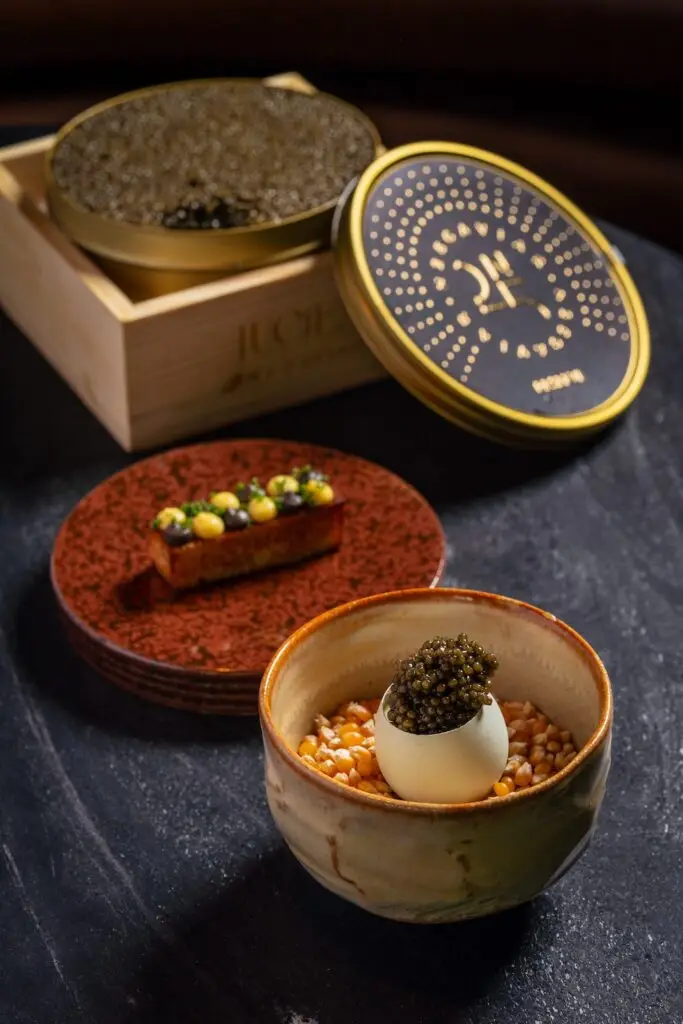
Because on your table in front of that unrealized school of fish is 80 percent of an eggshell, sitting upright in a bed of rare, hard, white heritage Amber Eden grains, which can be traced back to Persia, where Adam and Eve smote God with their choice in fruit. (Note: Don’t attempt to eat that decorative pile of raw wheat—apparently some guests have, to predictably WTF dental trauma.) The egg’s top has been surgically removed, revealing a bone-white cream. The server spoons a mid-size dollop of N25 onto the top, essentially giving it a zillenial perm made of caviar and producing a fertility shrine for Michelin inspectors.
Inside that egg is the eighth through 12th wonders of the world. Eating this should flood you with enough happiness to prevent you from posting dumb political hot takes on the internet for at least 24 hours.
The “ouef” is a magic trick pulled frequently from the hats of Michelin chefs (Thomas Keller, most famously), for good reason. First, it looks as though you’ve come to a mount of culinary talent, where food is profoundly transformed and priced accordingly, and the server’s handed you a damn egg from the fridge.
The egg is the single most humble, farmy object—one that us average so-and-sos cook very averagely multiple times a week. But, here, inside that raw grocery pellet is the most un-you concoction imaginable: a multi-layer dip of silken, fluffy food clouds (okay, fine, it’s just dashi custard and chantilly cream) and possibly the highest possible manifestation of the egg arts, all due respect to chawanmushi.
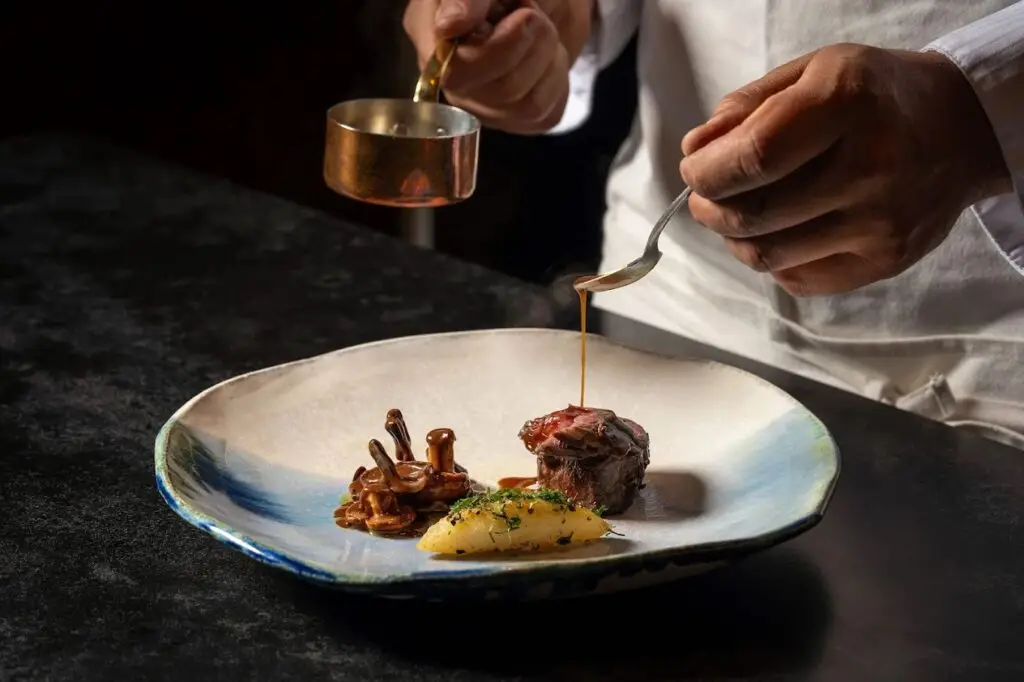
Scrape your spoon inside; make sure to get all of the layers. It is rich, so rich, and I want some bread with it. Lucky for me, there’s a bite-sized loaf of buckwheat bread (made with Amber Eden) topped with grilled banana and nori, which is the second-most delicious thing you will have at Lucien—if it ever appears again, since Lucien’s menu changes with the wind and seasons and is never really the same.
Here’s why I spent so much time reviewing a damn egg: Placing that humble American farm totem in the art spotlight that hangs above each table of this highly ambitious restaurant—and metamorphosing it in such a remarkable way—says just about everything you need to know about Lucien; Arizmendi; and the other partners, Brian Hung and Melissa Lang.
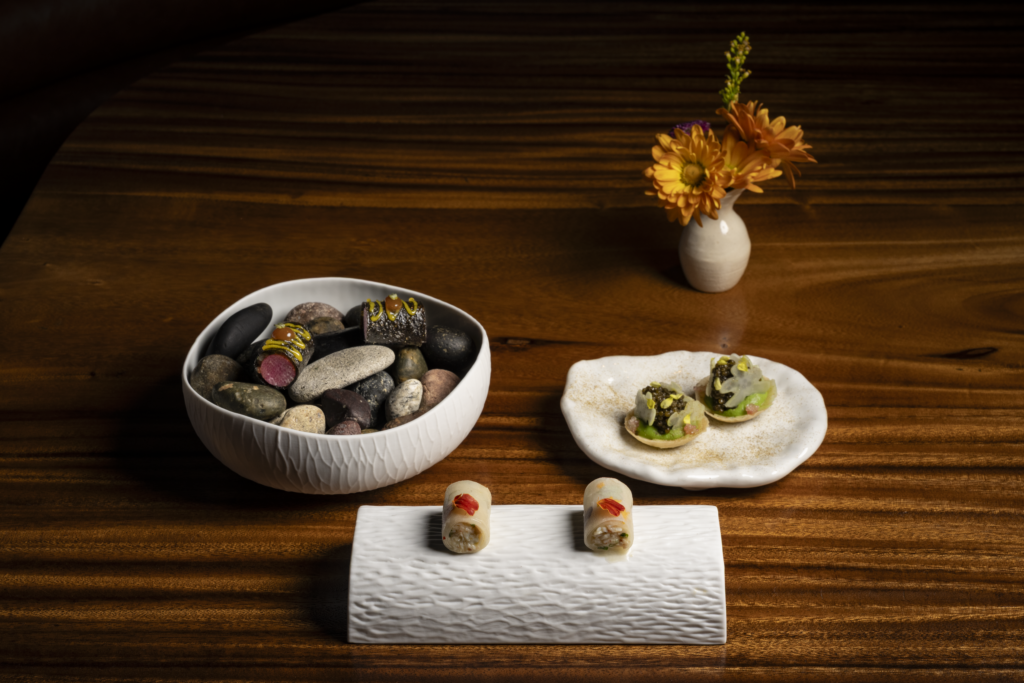
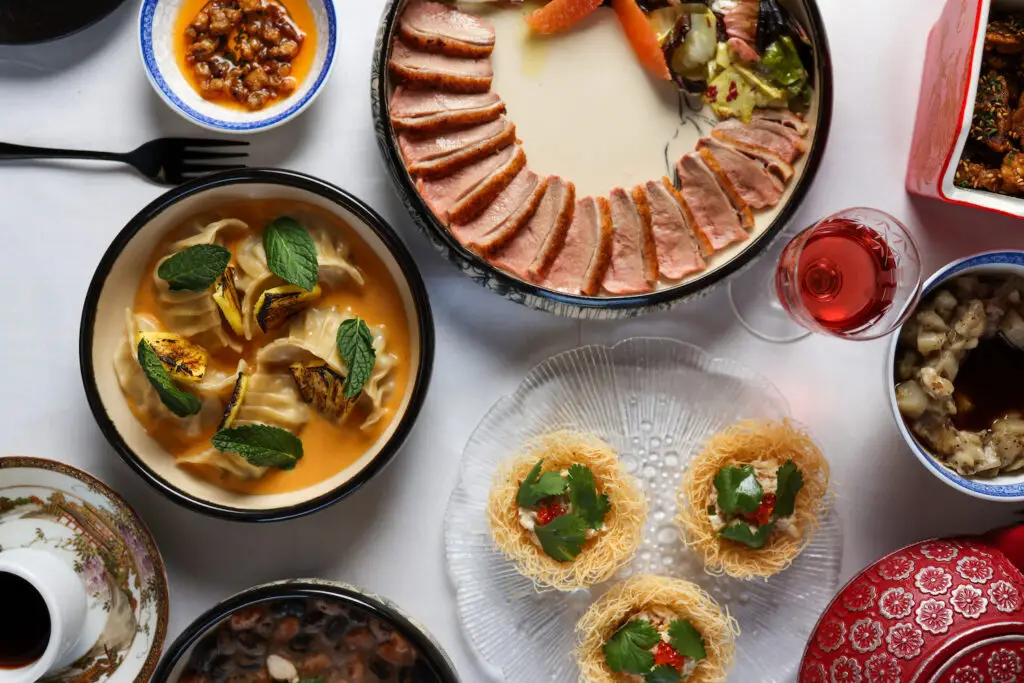
Dinner here is meal as manifesto. Arizmendi and his kitchen crew (half of whom seem to have moved from New York to San Diego to join him on this venture, which says something either about Arizmendi or, more boringly, about our weather) are crafting a 12- to 16-course tasting menu of tiny treats using the most peak-of-peak-season, rare, raw ingredients from farms that specialize in things grown in sacred loams and eggs laid by hens with self-care instincts, probably. The Lucien experience is less of a meal and more of a live-action, audience-participation documentary about sublimely good ingredients from across the globe but mostly from local dirt and waters and whatever field Arizmendi wanders to forage.
Okay, so now let’s talk about Lucien’s highly interesting design mistake or genius way to facilitate overhearing insider-trading tips during dinner.
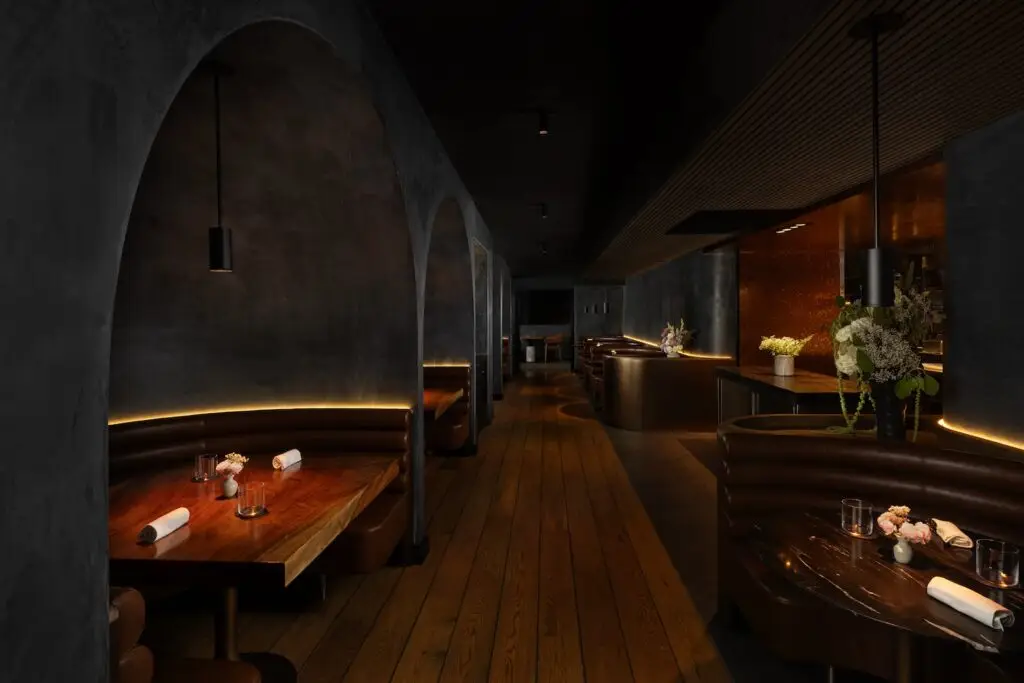
The booths in the restaurant are half-domed, as if you’re dining in exactly half a snowglobe or a moody cantina booth suited mostly to hiring Han Solo to fly your mercenary ship. Visually, very cool. And each half-dome is the most wildly successful whispering gallery in the world—a more delicious version of St. Paul’s Cathedral. A man seated 25 feet away from us murmurs something to his dining companion, and I hear every syllable as if I have bugged his table and am listening through an ear piece. Secrets are slutty here. Sweet nothings become sweet everyones. I can hear the chefs on the line having what used to be hush-hush conversations, which must suck for them (complaining about diners is one of the prized relief valves of a fairly grueling industry which, to the chefs’ credit, they don’t do). By the end of the meal, I am clairvoyant. I can hear synapses forming thoughts.
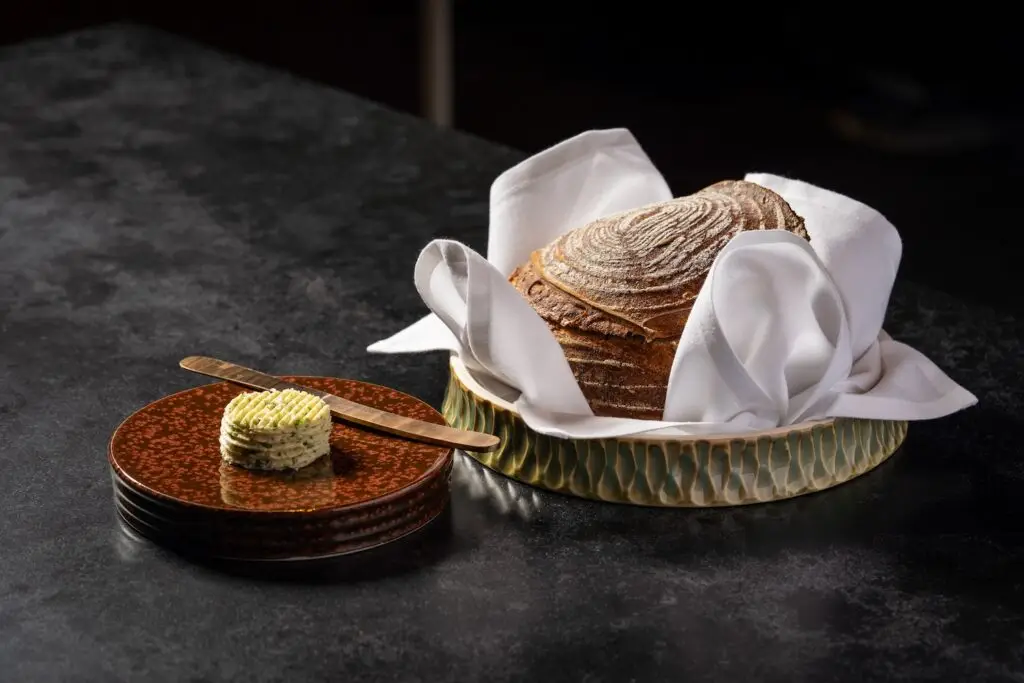
And since I started this review off with deifying praise of what mortals can do to an egg, let’s balance it out with a tempering. As I mentioned, the housemade bread uses that Amber Eden grain. It’s dense but flavorful. The cultured seaweed butter it’s served with is one of the most jarring ordeals my mouth has been through (and it’s been a lab mouth for American restaurant culture for many years). The best way I can describe it is “butter as low tide.” When you hear the word “butter,” you expect a warm, emotional embrace of semisolid milk fat melting in live-time in your mouth. Instead, you get specks of (albeit immaculately sourced) beach flotsam mucking up the hug.
Lucien doesn’t serve it cold, per se. But it’s also not that room-temp, near-melting-point pat with a dash of sea salt you expect in Michelin-style shops (likely because compound butters need to be stored cooler in order to carry their payload).
Side science discussion: The closer you can serve food to the temperature of the human mouth, the better it tastes. How our mouths detect flavors is a whole litany of biological processes. But our taste buds’ main amplifiers of three main tastes—sweet, bitter, and umami—are microscopic proteins called TRPM5 (transient receptor potential melastatin) channels. These flavor dials are real hothouse flowers. When food is not warm enough, they pretty much refuse to work. But when food is served around 98.5 degrees, it’s estimated their ability to process flavors increases by over 100 times. That’s why ice cream doesn’t taste nearly as sweet until it starts to melt in your mouth and, honestly, why soft-serve (served at a warmer temp) whoops major ass on traditional ice cream. It’s also why mediocre beer companies request that you drink their products ice-cold, so you can’t taste their mouth treason.
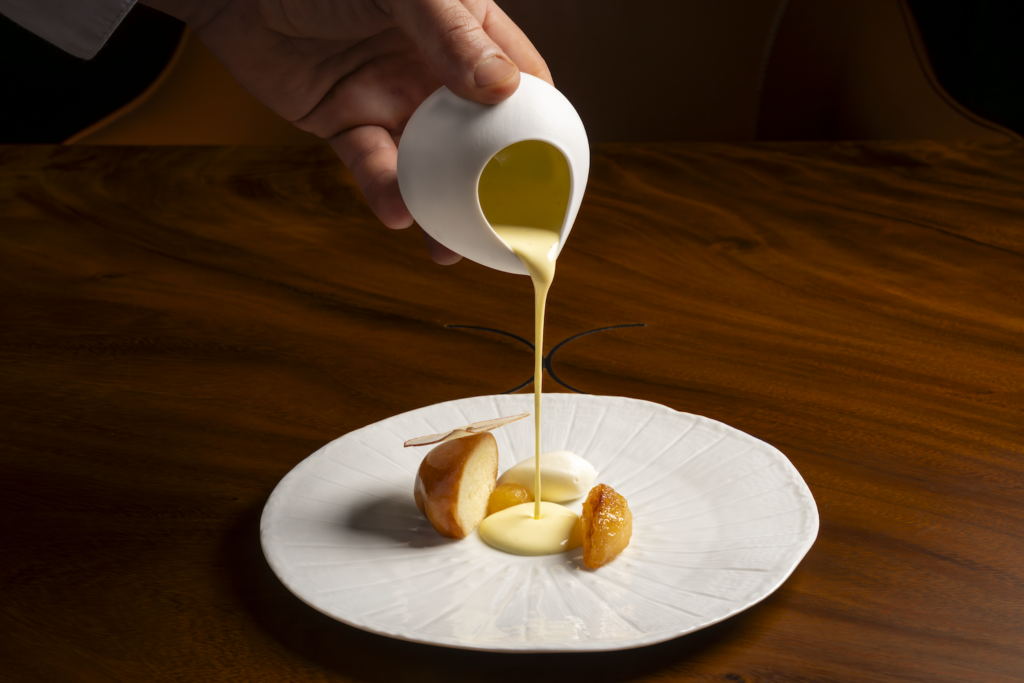
The reason I bring this up is because even though I’m not particularly enjoying the experience of this seaweed butter, it’s exactly what I want when I sign up for Lucien. I want risk. Lucien’s unique and pricey thrill is to pierce the safely oxygenated atmosphere of the usual restaurant experience (“here’s a flatbread and a thing with birria and melted cheese”) and get you out into uncharted food space. If you’re receiving a tasting menu and nothing makes you uncomfortable or maybe even say “oh, hell no” at least briefly, then the chef is giving you the khaki, unlimited breadsticks version of the experience.
PARTNER CONTENT


Years ago, at famed chef and restaurateur David Chang’s Momofuku Ko, the tasting menu was, as expected, largely fantastic. And one dish tasted almost exactly a replica of hot, wet, effervescent garbage. (Note: I’m sure someone with a different mouth than my own was freaking out over this dish—like, finally, someone had heard their prayers about wanting to eat compost in a formal setting.)
The point is, seemingly half of New York’s most talented young cooks, sommeliers, and hospitality pros have moved to San Diego and are putting on a show in La Jolla at Lucien. Some dishes are sublimely good, some miss like a Radiohead b-side, and your secrets are so unsafe.
