Ready to know more about San Diego?

Subscribe
Food & Drink JUNE 13, 2015

Slaughterhouse Rules

Why San Diegans can't eat their own, locally raised meat
Slaughterhouse Rules

As it stands now, San Diegans can’t eat most meat raised in the county. Not unless they want to buy an entire animal.

Local food is a good thing. First, it means our city is tending to its own land and has an idea of its health. Second, it carries on an almost lost tradition (growing your own food) and teaches the basic life skill of getting dinner to the table—especially now that Home Ec has been replaced by Java Scripting in the American curriculum. Third, anytime you spend money in your own community, your community improves. Fourth, food not shipped thousands of miles tastes better. Fifth, it’s easier to ensure the people making your food share your ethics—whether organic, grass-fed, biodynamic, sustainable, fair trade, etc. Sixth, well there are lots of reasons.

The ideal? Create a large, interwoven network of local people who are growing, ranching and creating great-tasting food that treats the environment, animals and people in an ethical manner where they’ll thrive for generations.

Pie, meet sky, right?

Talk is cheap. The hard part is bringing together the people who can really make that happen, or get us closer.

That’s the goal of the Berry Good Food Foundation (BGFF), a nonprofit started this year by Michelle Lerach. A longtime proponent of sustainable food ways in San Diego, Lerach has hosted her “Berry Good Night” dinner series since 2009. Every year, the dinner pulls farmers, ranchers, chefs, eaters, politicians, moneymakers, policy advocates, purveyors and advocates together in her backyard (a massive estate, overlooking Black’s Beach). The idea is to foster relationships that will lead to real, tangible progress. (Disclosure: I’m an advisor to the BGFF board).

Maybe that’s teaching eaters and chefs to use the whole animal (thus reducing waste). Or bringing farmers together to brainstorm ways to improve the lives of farm workers. Or spearheading a local USDA-approved slaughterhouse so that San Diegans are able to buy meat raised in their own backyard.

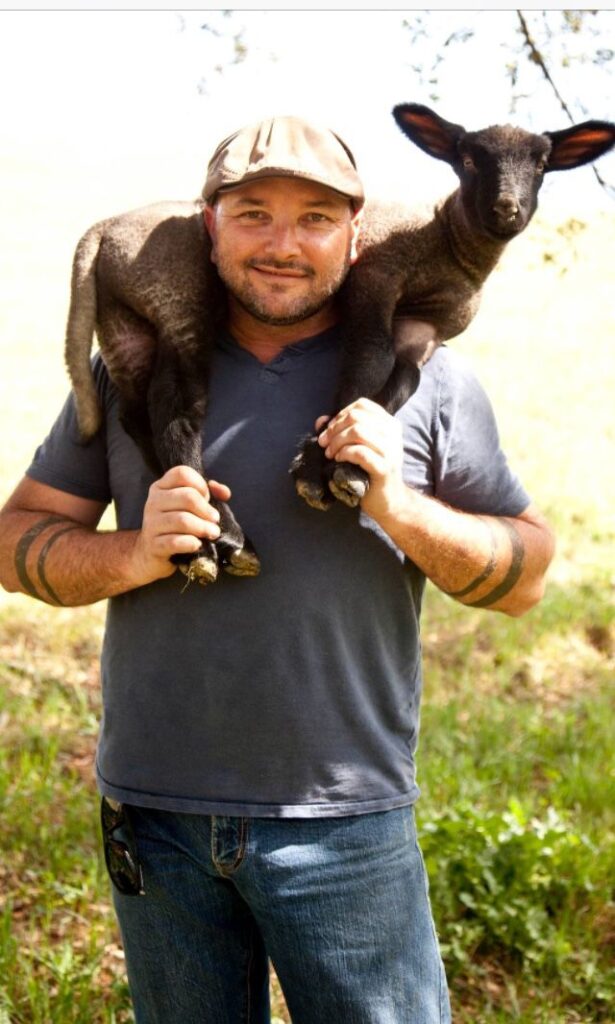
The latter is a concern of Jack Ford, owner/rancher of Taj Farms and Ranch Coordinator for the BGFF. Over the last 10 years, Ford has raised sheep, goats, poultry, and pigs on his acreage in Valley Center, using food from the farm or his neighbors, and treating his animals with respect. “Every living thing deserves a quality of life and death,” he says.

Ford’s meat is top quality. And San Diegans can’t buy it at any retail outlet. In fact, San Diegans can’t really buy much locally raised meat at all. Why? In order to sell meat retail, ranchers must have their animals slaughtered at a USDA-approved facility. San Diego doesn’t have one. The closest is in Riverside.

San Diego’s last slaughterhouse—Talones in Escondido—shut down last year. Sure, some local ranchers send their animals up north to USDA plants. But most don’t bother.

Ford fills us in on the problem, and a potential solution:

WHERE DO YOU SELL MOST OF YOUR MEAT NOW?

I don’t send any of my animals to USDA plants. Everything is harvested on the farm. Without it going to a government audit, I have to sell the animal live. Technically, the slaughter, cut and wrap of the animal needs to be done by the new owner. My biggest market are individuals who are buying for their community. I sell them the animal whole. These are people who don’t want to ingest any meat from an animal who’s had a bad life. They don’t want to buy anything from China. They’re stewards of the environment. Everything is relationship bound.

WHERE’S THE CLOSEST SLAUGHTERHOUSE?

For ruminants (goat beef and cattle), there’s one in Riverside. There’s Pico Rivera in L.A. But you have to have a minimum number of cattle to be able to use them. There are state places, but you can’t retail anything that goes through state. It has to be USDA to sell retail.

WHY DON’T YOU SEND YOUR ANIMALS THERE?

I used to send them to the USDA plant in Riverside. But then I thought, ‘Why am I working so hard at breeding and raising these animals, giving them a quality of life, and then scaring them to death when I drive them to this place, shoving them into something that smells like a public swimming pool?’ Is what comes out the other side really something I can be proud of? All living things should have a quality of life and a quality of death. During the drive to the slaughterhouse, pigs will lose 15 percent or more of their body mass because of the stress. That’s why you don’t see pig farms south of Porterville.

DOES SAN DIEGO NEED A USDA-APPROVED SLAUGHTERHOUSE?

The food scene needs one. Farm to table then can have a local retail outlet for good, local meat. Ranchers in San Diego can send it there and sell to restaurants and markets. It would open up a whole new market. It would then allow crop farmers to add more biodynamics to their farms.

WHAT’S THE SOLUTION?

I think the Talones location in Escondido will probably work at some point. That’s been inactive for a little over a year, but hasn’t been USDA approved for over 15 years. There are individuals and foundations with the resources to accomplish this problem. I’m currently working on putting these minds together. It would have to be run by a co-op, a foundation and not for profit. The location of Talone’s is perfect. It’s surrounded on one side by railroad tracks and on one side by the freeway. It would be hard for PETA to get in there. It would be easy to defend the castle.

WHY HASN’T ANYONE DONE IT YET?

The community is disjointed. It hasn’t ever been a priority for anybody here because they’re all small producers and worked around it and not taken it seriously. It hasn’t been a priority for consumers yet because people have situational ethics with food. People go into Trader Joe’s to buy tomato sauce that’s certified organic, but it’s grown in a sub equatorial country where women don’t have reproductive rights. We’ve dumbed down home economics and dumbed down food and it’s removed the ritual for our lives. Anytime you spend money in your community, your community gets better.

WHY DOESN’T THE USDA SANCTION MORE LOCAL OPERATIONS?

The government would like to only have three USDA plants for our whole country. They are constantly trying to consolidate the number of USDA-approved plants. They’d rather have these major factory farms where you have the processing plants right there. Who are all of the people who run the USDA? It’s the people who run Monsanto and the drug companies. We’ve gotten into this cycle we take pharmaceuticals to counteract the pharmaceuticals in our food.
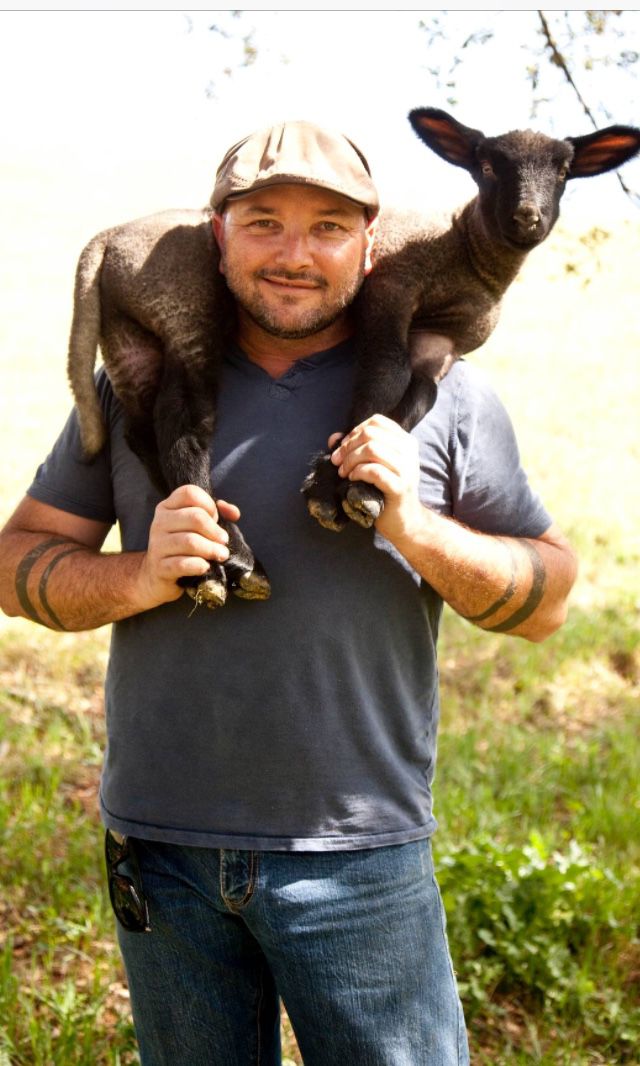
Jack Ford of Taj Farms.

Subscribe to our newsletters

Select Options

By subscribing you confirm that you agree with our Terms and Conditions and Privacy Policy.

Food & Drink AUGUST 11, 2016

Eat Food With Eyes

It's not gross, it's food

Eat Food With Eyes

I recently posted a photo of a great dish I had at Herringbone in La Jolla. A fresh ceviche, served Peruvian style, with the head and tail of the fish on the plate. And an alarming amount of my social media friends responded with this:

“Oh no! Food with eyes!”

“I can’t eat dinner that’s looking at me!”

“Gross!”

I get it. I empathized. Years ago, I had the same damn reaction. But as someone whose job it is to take a deep look at how, what and why we eat what we do, this response also disturbed me.

In college, I met my first hunter. I was a suburban kid, a lover of animals, the kind of tender ronie who stopped strangers to pet their dogs. I thought my hunter friend was a monster. My logic was comically flawed: Why would a human choose to kill an animal? Had he never seen a Disney movie or cuddled with a Labrador? And yet, I’d grown up enjoying bacon, burgers, steak, chicken. I’d eaten the passenger load of Noah’s ark a few times over. But here’s the thing: Having never even set foot on a farm, I thought of those foods as products at the grocery store, not animals.

Sure, I knew it came from animals. But never having to see the actual animal, or connect with it, that was just an intellectual fact. Not an emotional one.

The friend in question shot deer, mostly. He explained to me that deer were overpopulated, and hunting is how he had grown up. He and his family didn’t do it for trophy. I’m sure part of them did it for sport. But they ate all of the meat, all the parts. They stewed the bones. Nothing went to waste.

Still. Bambi killer.

And now I realize. He was the most authentic, honest omnivore on the planet. Compared to him, I was the sadly common meat eater who buried his head in the sand.

Hunters should be the most respected people on the planet. Not trophy hunters, obviously. Anyone who hunts animals for the prize or wall display is a gross, gaudy, gold-plated link on the evolutionary chain.

But 90-plus percent of us in America eat meat. Why don’t we want to eat meat with eyes? Why does it shock us, and turn our stomach?

Because we’ve become too detached from the process. Most of us don’t fish, hunt, or ranch anymore. The food industry protects us from emotionally difficult action of killing an animal so that we can eat. We only see it as a glistening, beautiful product under a sheath of cellophane. It’s a product, no different than buying an iPad. There’s no photo of a pig or a steer that says, “And here’s Babe, the animal that died so that you can eat!He liked tummy rubs and mud!”

What’s the big deal about that? Why should we bother to look our dinner in the eye?

Because as omnivores, if we care about ethics, I’d like to think we have a moral responsibility to be attached to the animal. We need to reconnect to the meat-making process. When we’re removed from the process, we don’t have to think of protein as a former living thing. The industry removes the moral, ethical and emotional part of meat eating, and just leaves the pleasurable part (eating).

And that leads to a couple of negative outcomes for us. First, a disinterest, or outright ignorance, of how our food animals are treated and whether or not they had a decent quality of life. Do some light research on CAFOs (Contained Animal Feeding Operations) and you’ll quickly see why that matters.

Second, it leads to over-eating and waste; to ordering a triple cheeseburger and only eating half because we have no respect for or tangible knowledge of the animal that gave its life. In 2014, America wasted enough food to fill the Empire State Building 91 times. Ninety-one.

And, finally, to get a little mystical—it takes out the spiritual side of eating. For millions of years, we had to hunt our food and connect with it—see its alive eyes, its animated spirit—before bringing that to an end. That imbued our mealtime with a connectivity to life, death and our natural environment.

Without that connection to our food animals, meals are just pleasure and sustenance. I’d argue that without the toil, the hunt or the gather, eating is only a fraction as meaningful and fulfilling as it could be.

This is a theme I’ve hit on in these pages before. But it’s one that “ceviche with eyes” reminded me of. And it’s worth repeating. As eaters, we should want to connect to our food. Even if it’s just eating food with the eyes still on the plate.

Eat food with eyes. It’s not gross. It’s real.

Eat Food With Eyes

Food & Drink JUNE 18, 2015

Let Us Eat Meat

Dear USDA. I want to eat meat from my local rancher, please help.

Let Us Eat Meat
Photo by Jaime Fritsch of Meat San Diego

So I had what I felt was a brilliant food idea this week. Turns out it’s not new. And it’s probably impractical and possibly even crap. But it’s a start to a solution to a major problem with San Diego’s food system.

The idea stems from my recent interview with local rancher Jack Ford about the fact that San Diego doesn’t have a local USDA-approved slaughterhouse.

That means, by and large, we San Diegans can’t eat our own meat. We’re talking ethically raised meat. Hormone- and antibiotic-free meat. Delicious, healthy meat. Animals that were cared for, given a good life, and killed by expert ranchers in the most humane way possible.

And yet we can’t eat it. On a gut level, that seems wrong, doesn’t it?

As someone who cares about food, ecology and local culture, I want to groupthink a solution. It’s one of the action items for the Berry Good Food Foundation, for which I’m an advisor.

In order for meat to be sold at restaurants or retail, the animals must be loaded into trucks and driven hundreds of miles to the nearest USDA-approved slaughterhouse in Riverside, or Modesto. During the drive, the animals get so stressed out that their meat gets tainted from cortisol. Ford reported his pigs would lose 15 percent of their body weight (or more) from the stress.

So most ranchers don’t bother. And that means San Diegans can’t eat local meat. You can, but you have to buy the whole, half or quarter animal live, hire the farmer to kill it for you, then have it professionally butchered or do it yourself. Or you can buy a half-or quarter-animal through a meat co-op like Meat San Diego. Many consider buying whole animals the pinnacle of ethical meat eating: using every part and developing a direct relationship with the farm. But let’s face it: not everyone has the $300 or the freezer room for such bulk buys.

There has to be a better solution, right?

I’ve seen ethical ranchers humanely kill their own animals. I’ve eaten meat from dozens of these animals. I’ve never gotten sick. Not once.

In fact, I’ve studied both USDA-approved slaughterhouses and ethical local ranches. Knowing what I know, I’d rather serve my family meat from an animal that was killed in the dirt at a quality local ranch. Years of my own research points to it being healthier, safer meat.

And the USDA says I can’t eat it.

This is not an anti-USDA screed. It’s a pro-solution screed. The USDA does some things very right. They save lives. But I think we’re being overprotective in regards to local meat. (In fact, my argument is that in their effort to “protect” people, the USDA is actually preventing them from eating the healthier meat).

That brings me to my idea. What about an “At Will Restaurant Program?” The USDA allows restaurants or retailers to buy local meat that was killed directly on the ethical, local ranch. The restaurant would announce to diners that it serves non-USDA meat. Us diners could sign a waiver, absolving the restaurant of any liability.

Can’t I just tell the USDA that I want to eat this meat? Thanks for trying to protect my health, USDA sir. But, as someone who studies food, I’ve concluded that animals raised and killed on responsible local ranches is safer, more environmentally friendly and healthier than what you’re forcing me to eat.

“It wouldn’t work, it’s too political,” says Derek Stephens, a local meat consultant. “I think the health department does a great job. The amount of people we feed and the amount of people who get sick is impressive. Even if you sign a contract, someone’s going to find a way around that contract.”

“I love the romanticism of it all,” says Jeff Jackson, executive chef of A.R. Valentien, one of San Diego’s first champions of local bounty. “But I would be very concerned that people would make people sick. I used to work at restaurants where hunters would come up to the kitchen and drop off a deer or a wild boar that they’d just killed. It was great. But you do not have young chefs who are classically trained anymore. Very few have gone through the rigors of that classical French kitchen and really know the science. I’d worry that they’d start making salumi and people start dropping dead outside of the restaurant.”

That said, A.R. Valentien does occasionally get customers who caught their own fish, and ask Jackson and his chef de cuisine Kelli Crosson to cook it. The restaurant makes the diner sign a legal waiver, and they do. That’s completely legal.

So why can’t we all sign waivers for beef, pork, lamb, goat, chickens—everything?

“I’d totally do it,” says Jeff Rossman, chef-owner of Terra American Bistro. “As a chef I’m going to be all for it. As a restaurant owner, I’ve got to think about people shutting me down. But if there were no repercussions, I’d totally do it.”

Jackson’s notion of inexperienced chefs killing us with their mishandling of meat is a very real concern.

So how about another solution? In cities like San Diego that don’t have a USDA slaughterhouse, how about the USDA sanctions a few of our top, ethical, humane ranches to do on-ranch killings and sell the meat to retail and restaurants?

The problem with slaughterhouses on a small scale is that they’re not profitable. San Diego’s ranching industry isn’t big enough to supply the necessary break-even volume. And figuring we’re short on water and grass in San Diego, we wouldn’t want that many food animals on our local lands. In order for San Diego to eventually get a slaughterhouse—or even a mobile slaughterhouse, like the one the USDA helped fund for the New York ranching community—it would most likely have to be a nonprofit endeavor. A city service of sorts.

Maybe one of our big philanthropic people or organizations—like Conrad Prebys, Joan and Irwin Jacobs, Darlene Shiley, Ernest and Evelyn Rady, the Joan Kroc Foundation or the Leichtag Foundation—will see the importance of healthy, local meat and fund the operation.

How phenomenal would it be if the Kroc family—whose fortune came through McDonald’s burgers—funded a route for local, sustainable, progressive meat culture in San Diego?

Here’s the truth. Right now, a lot of San Diego’s top restaurants are serving “illegal” local meats. They are serving “illegal” cheese made in-house. They are serving “illegal” charcuterie. I have not heard of a single person getting sick from these illegal efforts. Why don’t we pave a route to legalizing locally slaughtered meat?

I’ve been trying to navigate the USDA’s hierarchy to find the right person to speak to about this issue. I’ll have an update tomorrow hopefully.

For now, I open this discussion up to San Diego’s food thinkers. What possible solutions are there?

Let Us Eat Meat

Photo by Jaime Fritsch of Meat San Diego

Food & Drink APRIL 9, 2014

FROM THE DEPTHS

One of America's top chefs lost it all. Food brought him back.

FROM THE DEPTHS
FROM THE DEPTHS

Patrick Glennon

Patrick Glennon

“Do you know who he is?”

People often whisper this when talking about Patrick Glennon. As vice president of sales for Santa Monica Seafood, Glennon is one of the foremost sustainable seafood experts in the country. That’s accomplishment enough. But a few months ago, he posted photos of his trip to cook at the James Beard House. Then he competed on Alton Brown’s Food Network show, Cutthroat Kitchen. He easily dispatched a few contestants, then barely (and debatably) lost in the finals.

How many fish salesmen cook at that level? Who exactly was Glennon? I started asking around. One local restaurant lifer explained: “Two decades ago, he was the Grant Achatz or William Bradley.”

Knowing both fishing and kitchen life, it’s not terribly surprising that two of the biggest names in San Diego seafood have this common thread: Booze, in life-withering amounts. Both Glennon and Tommy Gomes (Catalina Offshore) nearly drank themselves to death, got sober, then poured that once-misdirected energy into good, honest work until they became the faces of an industry. Glennon doesn’t live in San Diego, but as fishmonger to top chefs and hyperactive culinary activist, he’s in local kitchens every week. His name is synonymous with top-notch seafood.

“Paddy was telling me…” a chef might say of some new study on sustainable seafood. Or “I got Paddy barking in my ear about how there’s no way my diver scallops are actually diver scallops…” another will smile, knowing Glennon’s right.

Chefs trust Glennon because he was once one of the top up-and-coming chefs in the country. He trained in France under greats Alain Ducasse, Jacques Maximin and Bruno Cirino. An early pilot for the American version of Iron Chef was filmed at The Mirage in Vegas, featuring William Shatner as the host and Glennon as “the American chef” (the pilot was slated for TMC, but never aired). After a long, almost-famous run in SoCal that involved bribing cops, brandishing automatic weapons atop Mick Fleetwood’s restaurant, and some groundbreaking cooking—Glennon found himself hundreds of thousands in debt, working in a fish freezer for minimum wage, and reeking of booze.

This is how one of America’s most promising chefs lost everything, and fought his way back.

You trained under some French greats for eight years. You came back to America in the 80s as a hugely talented young chef and went to… Newport Beach?

Yeah. I was forbidden by the French guys to work for some of the top American chefs of that era, like Wolfgang Puck. They wanted me to use my training for myself and not to make those guys any bigger. The French guys considered the American chefs culinary thieves. Jean-Louis Palladin was in charge of placing me coming back from France. I stayed at the Watergate for a week and then—the biggest mistake I made—I told him I wanted to go back to Newport. I should’ve gone to Chicago or New York City. The pool of opportunity got small quick.

Where’d you cook in Southern California?

I was the chef de cuisine for Ritz-Carlton Four Seasons during the ’80s and early ’90s. I was also the chef for the Le Meridian hotel in Coronado. The Meridians were known to have the best restaurants in the country at the time. [Mister A’s longtime chef] Stéphane Voitzwinkler was there; he was part of the entourage of young cooks we brought over from France. Tim Connelly of [San Diego farm] Connelly Gardens grew everything for me. We had a tasting menu—people hadn’t seen that before. We had to explain it to them. We’d put anchovies on the plate and people would get mad because it’s bait food. We were way ahead of our time for San Diego and Top 5 Zagat in the country. [Top French chef] Michel Richard came down from L.A. with a group of 12 French chefs just to have a meal with us. In the kitchen it was all the Frenchies and me. We’d have our trucks already packed and ready to go—after dinner service we’d go across the border and surf in Mexico for the weekend. It was a different time.

“During the riots, we were on the rooftops with semiautomatics.”

Then you went Hollywood?

I got big money thrown at me to open this place in L.A. for one of the head models of Guess Jeans, called Bilboque. Stefan came with me. Iman, Madonna, Stallone, Rod Stewart—they were regulars. But even with all these celebrities and notoriety, it was very short-lived. They said my salary was $175K. But we weren’t seeing any money. After three months of not getting paid, we jacked all the equipment and sold it to pay my crew. I was fine with them not paying me, but not paying my crew? Irish carjack.

That’s where you hooked up with Jean-Francois Meteigner?

Jean Francois and I took over all the hotels owned by Severyn Ashkenazy—the Bel Age, Mondrian, Hermitage.

I heard there are celebrities in Los Angeles.

It was wild. We did Pamela and Tommy’s wedding at the Bel Age. I cooked in John Travolta’s home. Same with Guns N Roses. We cooked for New Kids on the Block, Sting, Vanilla Ice, the Stones. But then the recession hit. No one wanted to hire us because we were high-paid chefs during a recession. So I partnered with [longtime New York pastry shop owners] The Ferraras. They wanted to open restaurants in L.A. We had a small farm in Topanga where we lived and smoked pot and drank all day. We farmed at least 40 percent of the food we cooked. This is when alcohol started to catch up to me.

When that didn’t pan out, you teamed up with Mick Fleetwood?

Yeah. I partnered with Mick to open Fleetwood’s. I was chef-owner. We had a show on VH1 that was Mick jamming with everyone, like Marky Mark. Little Feat was our house band. But we ran into liquor license problems from the get-go. The grand jury thought we were mafia. They pulled our liquor license on a technicality that went back 40 years before we bought the building. We did Michael Jackson’s release party. We’d pay the fire and police department not to show up.

Sounds pretty above-board.

Pretty much all the business we were doing was illegal, since we didn’t have the license to gather or sell liquor. This was during the riots. When the riots happened, we were on the roof with semi-automatics.

From rock venue with semi-automatics you joined… Disney?

Mick and I were in “keep the lights on” mode. That’s when I left high-end cuisine and started chasing Cheesecake Factory style money. These guys came in one day and asked me to rebuild the spider Encounter restaurant at LAX with some Disney designers. That was fu**ing horrific. We rebuilt that with John Rivera Sedlar. I was still cooking on the line and in charge of everything else—working 100 hours a week and keeping myself numb with alcohol the entire time. I think that’s when I lost my culinary soul—and my soul, period. I don’t even remember those years. It was a decade of blur.

So you got out?

Yeah. I went to Vermont. My wife at the time was not mentally stable. I thought I’d find a nice place for her. I went to New England Culinary Institute, where I was chef-instructor for fine dining restaurants. I used to train and handpick the kids for Daniel and Le Cirque. I built my own seafood distribution business there called Paddy the Fishmonger—market, distributor, restaurant. Alcoholism took that down.

What lured you back?

I was on the golf course one day and the phone rang. It was Jean-François. He wanted me to take over L’Orangerie in Beverly Hills. They brought me in as a consultant with Ludo Lefebvre was in the kitchen.

What was the final straw for you as a professional chef?

I opened up Hollywood & Vine Diner with a group that was supposed to build-out concepts. The builder overshot the build-out by millions. We opened the doors with no money. I couldn’t be in another restaurant with no money. That was the end of my road with alcohol. I was blacking out. I couldn’t be on the line without alcohol.

How’d you get out?

My fish vendor said, “You’re better than this—let’s get you out of this industry.” I started working nights icing fish for minimum wage on the docks. I didn’t get sober right away, believe me. I finally got sober in 2005. I figure I was about a month from death. I thought I was done. Eventually, I worked my way up and became the fish monger to the star chefs.

You’ve become known as a “culinary activist”—an absolute bulldog about sustainable, eco-friendly seafood. Three things a consumer can do? 

First, buy US-caught fish, which is all under sustainable management. It doesn’t mean that Georges Bank is going to be recovered, but it does mean that anything from that area is in a rehabilitating, science-based recovery program.   Second,   Look up your fish on Monterrey Bay Aquarium’s site, www.seafoodwatch.org. They even have an app now. Third, look for the MSC (Marine Stewardship Council) certification. You’ll see it in most stores, from Whole Foods to Costco and Wal-Mart. It’s a really well-managed, science-based organization.

“Sometimes a restaurant might call it grouper or sole on the menu, but it’s really swai—a Vietnamese catfish from Mekong River waters I wouldn’t drink.”

What’s the worst (most unsustainable) fish that people buy way too often?

Improperly farmed salmon. It’ll say “Atlantic salmon.” But unless the menu or the store is specific about the actual farm it came from, it’s most likely not from a sustainable farm. Chefs pay a premium for sustainably farmed fish—so they’re gonna put the name on the label or menu. They wouldn’t try to sell you a Cadillac by calling it “a car.” So “Atlantic salmon” basically means the same thing as “car.” It means nothing. If it says the farm, good chance it’s a sustainable operation.

What’s the biggest form of seafood fraud you see?

Mixing species. Sometimes a restaurant might call it grouper or sole on the menu, but it’s really swai—a Vietnamese catfish from Mekong River waters I wouldn’t drink. It’s often the seafood company who’s lying to the chefs, so it’s my job to try to educate them without “schooling” them. For instance, I’ll be bidding to sell a chef No. 1 ahi tuna and they’ll say ‘No thanks, I’m getting an insanely good price.’ I’ll have them take me to the walk-in cooler and show me the fish. It’s almost never No. 1 ahi. Or the chef thinks they’re getting Loch Duart salmon, but what they’re getting is actually Canadian salmon. If the fish was sold to them whole, they’d be able to tell by looking at it. But in filet form, it’s hard to tell them apart unless you taste it. So sellers can mislabel it and sell it for a higher price. A program such as MSC is a good way to insure what they are getting.  Another big one is “diver scallops.” The amount of diver scallops that are actually caught by a diver is less than nothing and most of that stays in the fishing community. Plus, it’s seasonal. Divers aren’t going to go out in the Atlantic Ocean from late October to the beginning of April. Even “day boat scallops”—there are a very limited number of day boats.

Intentional fraud, or ignorance?

I’d say it’s 50/50 the guys who claim to be sustainable really are doing it right, and the others are just saying they are to make you feel good. A lot of big corporate restaurants will put one or two sustainable, farm-specific items on the menu to make you feel good. But the other 99 percent of the menu is unsustainable.

Your sausage company, Europa Specialty Sausage, is served in Whole Foods and Caesar’s Palace, St. Regis Monarch. Why aren’t you retired driving a sausage-shaped speedboat in the Caymans right now?

It’s not so profitable when you have six kids. My final run in the restaurant business, took me into the couple hundred thousand in tax debt.

Were you hesitant to start cooking again?

In the end, a voice spoke to me and said, ‘If you cook for charity and environmental awareness, there’s a lot to be done.’ Everything I do is for straight charity—helping farmers, ranchers and fishermen survive. At the Beard House, I personally shook the hand of every farmer, fisherman or diver whose food we served. With each plate presentation, we included a bio for every one of them. We served Skuna Bay Salmon, which is Canada’s answer to top-end Scottish salmon. The farmers live on the water with the fish 24/7. They take the top farms, and then take the top of the top fish from those farms. The fish box is taped at the farm and not opened until the chef opens it at the restaurant. If you buy Scottish salmon, you have no idea if it’s salmon.

You don’t have a restaurant, you’re not trying to “make it” as a chef. Why cook on TV?

My number one driving force is protecting what’s left of our food source. I realized I needed a bigger soap box than just that of a sausage producer and salesperson. My initial thing was auditioning for Top Chef. I tried out three times. Each time I got near the final test and they’d ask what restaurant I cooked for. And I just cook for charity. They couldn’t quite get their heads around it.

How was the Cutthroat Kitchen experience?

It was great. I left with a bitter taste for about a week. I didn’t feel I lost in the finals. I think it was very hard for the editors of that show to make it look like I deserved to lose. Are you doing ridiculous shit? Absolutely. But you have to be able to cook. It was like WWE meets Iron Chef.

And the Beard House?

Man, that was it for me. It really came full circle. After alcohol got the best of me and 10 years later to be in that house cooking next to those awesome chefs—I proved to myself I’ve still got some tools left.

You’re working on a documentary film, too?

It’s called Hail, Caesar. It’s the journey of a Caesar salad and all the ingredients that are in it—GMOs, imported produce, to-go containers, the chemicals used to clean the plates. There are a lot of sustainability issues in just one single salad. There are tons of improperly purchased items in a restaurant. And the thing is—they don’t just sell it once. They sell that salad 3,000 times a year. The amount of waste, the chemicals they produce, the jobs they pull from the local economy and give to internationals… it’s massive.

Where does sleep fall in your value system?

My nickname used to be RPM. I don’t work 40-hour weeks. I talk to chefs at 11PM, and I talk to them at 5AM.

After all the years of hard living, how are you physically?

For as busted up as my body is, I work out five or six days a week, I fight in the masters division of amateur boxing. www.olddogboxing.com. We get 1,000 people at the fights. For me, to get my body to the level it’s at is a miracle—no matter how ‘off’ my metabolism will always be. I fight now with a martial arts world champion. He kicks the shit out of me, but I can handle it.

Studio S JULY 7, 2026

Xplosion Box: A Customized Keepsake Your Loved Ones Won’t Forget

A customized memory-filled explosion gift box is a creative way to show someone you care

Xplosion Box: A Customized Keepsake Your Loved Ones Won’t Forget
Hero image – Birthday Explosion Gift Box

Finding a gift that feels truly personal can be surprisingly difficult. In a sea of generic options — flowers, gift cards, candles, and the like — Xplosion Box offers something more lasting: a customized keepsake built around the photos, messages, and memories that matter most. 

Founded by Southern California entrepreneur Jay Vijay, Xplosion Box LLC creates fully customized explosion gift boxes that arrive professionally designed, printed, assembled, and ready to gift. Each box opens layer by layer to reveal personal photos, heartfelt messages, pull-out albums, origami-style photo pockets, and hidden notes, turning a simple gift into an emotional reveal. 

The brand was built for people who want to give something meaningful without spending hours printing photos, cutting paper, folding cardstock, or assembling a DIY project. Customers simply choose a box, upload their favorite photos, add personal messages, and the Xplosion Box team transforms those details into a polished keepsake that feels thoughtful, personal, and beautifully made.

Xplosion Box offers personalized gift boxes for birthdays, anniversaries, weddings, graduations, Mother’s Day, Father’s Day, Valentine’s Day, Christmas, proposals, bridesmaid gifts, long-distance relationships, and thoughtful “just because” moments. 

Customers can choose from flexible customization options starting at $27. The Mini Surprise Box includes 10 photos, three message cards, and one hidden secret note, while the Mega Surprise Box offers a fuller keepsake experience with 40 photos, three message cards, and one hidden secret note. 

What sets Xplosion Box apart is its high level of customization combined with convenience. Filled with personal photos, custom text, decorative details, and layered surprises, each box gives customers the freedom to create a gift that feels one-of-a-kind — without having to make it themselves. 

At its core, Xplosion Box helps people turn favorite photos, stories, and words into something tangible: a keepsake that can be opened, revisited, and remembered long after the occasion has passed. asion has passed.

Partner Content
Food & Drink APRIL 9, 2014

FROM THE DEPTHS

One of America's top chefs lost it all. Food brought him back.

FROM THE DEPTHS

Patrick Glennon

Patrick Glennon

“Do you know who he is?”

People often whisper this when talking about Patrick Glennon. As vice president of sales for Santa Monica Seafood, Glennon is one of the foremost sustainable seafood experts in the country. That’s accomplishment enough. But a few months ago, he posted photos of his trip to cook at the James Beard House. Then he competed on Alton Brown’s Food Network show, Cutthroat Kitchen. He easily dispatched a few contestants, then barely (and debatably) lost in the finals.

How many fish salesmen cook at that level? Who exactly was Glennon? I started asking around. One local restaurant lifer explained: “Two decades ago, he was the Grant Achatz or William Bradley.”

Knowing both fishing and kitchen life, it’s not terribly surprising that two of the biggest names in San Diego seafood have this common thread: Booze, in life-withering amounts. Both Glennon and Tommy Gomes (Catalina Offshore) nearly drank themselves to death, got sober, then poured that once-misdirected energy into good, honest work until they became the faces of an industry. Glennon doesn’t live in San Diego, but as fishmonger to top chefs and hyperactive culinary activist, he’s in local kitchens every week. His name is synonymous with top-notch seafood.

“Paddy was telling me…” a chef might say of some new study on sustainable seafood. Or “I got Paddy barking in my ear about how there’s no way my diver scallops are actually diver scallops…” another will smile, knowing Glennon’s right.

Chefs trust Glennon because he was once one of the top up-and-coming chefs in the country. He trained in France under greats Alain Ducasse, Jacques Maximin and Bruno Cirino. An early pilot for the American version of Iron Chef was filmed at The Mirage in Vegas, featuring William Shatner as the host and Glennon as “the American chef” (the pilot was slated for TMC, but never aired). After a long, almost-famous run in SoCal that involved bribing cops, brandishing automatic weapons atop Mick Fleetwood’s restaurant, and some groundbreaking cooking—Glennon found himself hundreds of thousands in debt, working in a fish freezer for minimum wage, and reeking of booze.

This is how one of America’s most promising chefs lost everything, and fought his way back.

You trained under some French greats for eight years. You came back to America in the 80s as a hugely talented young chef and went to… Newport Beach?

Yeah. I was forbidden by the French guys to work for some of the top American chefs of that era, like Wolfgang Puck. They wanted me to use my training for myself and not to make those guys any bigger. The French guys considered the American chefs culinary thieves. Jean-Louis Palladin was in charge of placing me coming back from France. I stayed at the Watergate for a week and then—the biggest mistake I made—I told him I wanted to go back to Newport. I should’ve gone to Chicago or New York City. The pool of opportunity got small quick.

Where’d you cook in Southern California?

I was the chef de cuisine for Ritz-Carlton Four Seasons during the ’80s and early ’90s. I was also the chef for the Le Meridian hotel in Coronado. The Meridians were known to have the best restaurants in the country at the time. [Mister A’s longtime chef] Stéphane Voitzwinkler was there; he was part of the entourage of young cooks we brought over from France. Tim Connelly of [San Diego farm] Connelly Gardens grew everything for me. We had a tasting menu—people hadn’t seen that before. We had to explain it to them. We’d put anchovies on the plate and people would get mad because it’s bait food. We were way ahead of our time for San Diego and Top 5 Zagat in the country. [Top French chef] Michel Richard came down from L.A. with a group of 12 French chefs just to have a meal with us. In the kitchen it was all the Frenchies and me. We’d have our trucks already packed and ready to go—after dinner service we’d go across the border and surf in Mexico for the weekend. It was a different time.

“During the riots, we were on the rooftops with semiautomatics.”

Then you went Hollywood?

I got big money thrown at me to open this place in L.A. for one of the head models of Guess Jeans, called Bilboque. Stefan came with me. Iman, Madonna, Stallone, Rod Stewart—they were regulars. But even with all these celebrities and notoriety, it was very short-lived. They said my salary was $175K. But we weren’t seeing any money. After three months of not getting paid, we jacked all the equipment and sold it to pay my crew. I was fine with them not paying me, but not paying my crew? Irish carjack.

That’s where you hooked up with Jean-Francois Meteigner?

Jean Francois and I took over all the hotels owned by Severyn Ashkenazy—the Bel Age, Mondrian, Hermitage.

I heard there are celebrities in Los Angeles.

It was wild. We did Pamela and Tommy’s wedding at the Bel Age. I cooked in John Travolta’s home. Same with Guns N Roses. We cooked for New Kids on the Block, Sting, Vanilla Ice, the Stones. But then the recession hit. No one wanted to hire us because we were high-paid chefs during a recession. So I partnered with [longtime New York pastry shop owners] The Ferraras. They wanted to open restaurants in L.A. We had a small farm in Topanga where we lived and smoked pot and drank all day. We farmed at least 40 percent of the food we cooked. This is when alcohol started to catch up to me.

When that didn’t pan out, you teamed up with Mick Fleetwood?

Yeah. I partnered with Mick to open Fleetwood’s. I was chef-owner. We had a show on VH1 that was Mick jamming with everyone, like Marky Mark. Little Feat was our house band. But we ran into liquor license problems from the get-go. The grand jury thought we were mafia. They pulled our liquor license on a technicality that went back 40 years before we bought the building. We did Michael Jackson’s release party. We’d pay the fire and police department not to show up.

Sounds pretty above-board.

Pretty much all the business we were doing was illegal, since we didn’t have the license to gather or sell liquor. This was during the riots. When the riots happened, we were on the roof with semi-automatics.

From rock venue with semi-automatics you joined… Disney?

Mick and I were in “keep the lights on” mode. That’s when I left high-end cuisine and started chasing Cheesecake Factory style money. These guys came in one day and asked me to rebuild the spider Encounter restaurant at LAX with some Disney designers. That was fu**ing horrific. We rebuilt that with John Rivera Sedlar. I was still cooking on the line and in charge of everything else—working 100 hours a week and keeping myself numb with alcohol the entire time. I think that’s when I lost my culinary soul—and my soul, period. I don’t even remember those years. It was a decade of blur.

So you got out?

Yeah. I went to Vermont. My wife at the time was not mentally stable. I thought I’d find a nice place for her. I went to New England Culinary Institute, where I was chef-instructor for fine dining restaurants. I used to train and handpick the kids for Daniel and Le Cirque. I built my own seafood distribution business there called Paddy the Fishmonger—market, distributor, restaurant. Alcoholism took that down.

What lured you back?

I was on the golf course one day and the phone rang. It was Jean-François. He wanted me to take over L’Orangerie in Beverly Hills. They brought me in as a consultant with Ludo Lefebvre was in the kitchen.

What was the final straw for you as a professional chef?

I opened up Hollywood & Vine Diner with a group that was supposed to build-out concepts. The builder overshot the build-out by millions. We opened the doors with no money. I couldn’t be in another restaurant with no money. That was the end of my road with alcohol. I was blacking out. I couldn’t be on the line without alcohol.

How’d you get out?

My fish vendor said, “You’re better than this—let’s get you out of this industry.” I started working nights icing fish for minimum wage on the docks. I didn’t get sober right away, believe me. I finally got sober in 2005. I figure I was about a month from death. I thought I was done. Eventually, I worked my way up and became the fish monger to the star chefs.

You’ve become known as a “culinary activist”—an absolute bulldog about sustainable, eco-friendly seafood. Three things a consumer can do? 

First, buy US-caught fish, which is all under sustainable management. It doesn’t mean that Georges Bank is going to be recovered, but it does mean that anything from that area is in a rehabilitating, science-based recovery program.   Second,   Look up your fish on Monterrey Bay Aquarium’s site, www.seafoodwatch.org. They even have an app now. Third, look for the MSC (Marine Stewardship Council) certification. You’ll see it in most stores, from Whole Foods to Costco and Wal-Mart. It’s a really well-managed, science-based organization.

“Sometimes a restaurant might call it grouper or sole on the menu, but it’s really swai—a Vietnamese catfish from Mekong River waters I wouldn’t drink.”

What’s the worst (most unsustainable) fish that people buy way too often?

Improperly farmed salmon. It’ll say “Atlantic salmon.” But unless the menu or the store is specific about the actual farm it came from, it’s most likely not from a sustainable farm. Chefs pay a premium for sustainably farmed fish—so they’re gonna put the name on the label or menu. They wouldn’t try to sell you a Cadillac by calling it “a car.” So “Atlantic salmon” basically means the same thing as “car.” It means nothing. If it says the farm, good chance it’s a sustainable operation.

What’s the biggest form of seafood fraud you see?

Mixing species. Sometimes a restaurant might call it grouper or sole on the menu, but it’s really swai—a Vietnamese catfish from Mekong River waters I wouldn’t drink. It’s often the seafood company who’s lying to the chefs, so it’s my job to try to educate them without “schooling” them. For instance, I’ll be bidding to sell a chef No. 1 ahi tuna and they’ll say ‘No thanks, I’m getting an insanely good price.’ I’ll have them take me to the walk-in cooler and show me the fish. It’s almost never No. 1 ahi. Or the chef thinks they’re getting Loch Duart salmon, but what they’re getting is actually Canadian salmon. If the fish was sold to them whole, they’d be able to tell by looking at it. But in filet form, it’s hard to tell them apart unless you taste it. So sellers can mislabel it and sell it for a higher price. A program such as MSC is a good way to insure what they are getting.  Another big one is “diver scallops.” The amount of diver scallops that are actually caught by a diver is less than nothing and most of that stays in the fishing community. Plus, it’s seasonal. Divers aren’t going to go out in the Atlantic Ocean from late October to the beginning of April. Even “day boat scallops”—there are a very limited number of day boats.

Intentional fraud, or ignorance?

I’d say it’s 50/50 the guys who claim to be sustainable really are doing it right, and the others are just saying they are to make you feel good. A lot of big corporate restaurants will put one or two sustainable, farm-specific items on the menu to make you feel good. But the other 99 percent of the menu is unsustainable.

Your sausage company, Europa Specialty Sausage, is served in Whole Foods and Caesar’s Palace, St. Regis Monarch. Why aren’t you retired driving a sausage-shaped speedboat in the Caymans right now?

It’s not so profitable when you have six kids. My final run in the restaurant business, took me into the couple hundred thousand in tax debt.

Were you hesitant to start cooking again?

In the end, a voice spoke to me and said, ‘If you cook for charity and environmental awareness, there’s a lot to be done.’ Everything I do is for straight charity—helping farmers, ranchers and fishermen survive. At the Beard House, I personally shook the hand of every farmer, fisherman or diver whose food we served. With each plate presentation, we included a bio for every one of them. We served Skuna Bay Salmon, which is Canada’s answer to top-end Scottish salmon. The farmers live on the water with the fish 24/7. They take the top farms, and then take the top of the top fish from those farms. The fish box is taped at the farm and not opened until the chef opens it at the restaurant. If you buy Scottish salmon, you have no idea if it’s salmon.

You don’t have a restaurant, you’re not trying to “make it” as a chef. Why cook on TV?

My number one driving force is protecting what’s left of our food source. I realized I needed a bigger soap box than just that of a sausage producer and salesperson. My initial thing was auditioning for Top Chef. I tried out three times. Each time I got near the final test and they’d ask what restaurant I cooked for. And I just cook for charity. They couldn’t quite get their heads around it.

How was the Cutthroat Kitchen experience?

It was great. I left with a bitter taste for about a week. I didn’t feel I lost in the finals. I think it was very hard for the editors of that show to make it look like I deserved to lose. Are you doing ridiculous shit? Absolutely. But you have to be able to cook. It was like WWE meets Iron Chef.

And the Beard House?

Man, that was it for me. It really came full circle. After alcohol got the best of me and 10 years later to be in that house cooking next to those awesome chefs—I proved to myself I’ve still got some tools left.

You’re working on a documentary film, too?

It’s called Hail, Caesar. It’s the journey of a Caesar salad and all the ingredients that are in it—GMOs, imported produce, to-go containers, the chemicals used to clean the plates. There are a lot of sustainability issues in just one single salad. There are tons of improperly purchased items in a restaurant. And the thing is—they don’t just sell it once. They sell that salad 3,000 times a year. The amount of waste, the chemicals they produce, the jobs they pull from the local economy and give to internationals… it’s massive.

Where does sleep fall in your value system?

My nickname used to be RPM. I don’t work 40-hour weeks. I talk to chefs at 11PM, and I talk to them at 5AM.

After all the years of hard living, how are you physically?

For as busted up as my body is, I work out five or six days a week, I fight in the masters division of amateur boxing. www.olddogboxing.com. We get 1,000 people at the fights. For me, to get my body to the level it’s at is a miracle—no matter how ‘off’ my metabolism will always be. I fight now with a martial arts world champion. He kicks the shit out of me, but I can handle it.

Food & Drink NOVEMBER 20, 2013

G’NIGHT: Sea Rocket Bistro

North Park's local sustainable seafood joint to close next month

G’NIGHT: Sea Rocket Bistro

After five-plus years in North Park, the owners of Sea Rocket Bistro—the sustainable seafood bistro that followed in the footsteps of local-food champions, The Linkery (which also closed a few months ago)—have announced their final day of service will be Dec. 8. Partners Dennis Stein and Elena Rivellino have sold the space to a local woman who plans to close for a few months, remodel and reopen her own concept. “After over half a decade working to bring our locally-inspired menu to life, we’ve had to accept that the costs of doing business this way exceed the restaurant’s ability to make money,” Rivellino writes in a heartfelt goodbye to Sea Rocket patrons. Stein will focus on his other business, UPS stores, while Rivellino will look for work somewhere else that contributes to the food community/environmental policy/green design. With local uni as a specialty and local sardines as a staple, one local food supplier recently told me, “Everyone talks about being local and sustainable, but Sea Rocket is one of the only ones actually walking the walk.” Seems hardline progressiveness still isn’t the easiest business model.

G’NIGHT: Sea Rocket Bistro

Partner Content JULY 10, 2026

Health & Wellness Summer 2026

It’s a Self-Care Summer. Because your best self is our favorite self.

Health & Wellness Summer 2026

If you’re anything like us, it can be easy to get so caught up in taking care of everyone else, that your own needs get lost in the ether. But while this may be a cliché, that doesn’t make it any less true: You can’t give your best self to other people unless you’re taking care of yourself.

Sometimes, that looks like stopping in for your regular acupuncture or chiropractic appointment. Other days, it means giving your body the fresh, organic fuel it needs to truly feel and function at its best. And some other times still, it involves leaving your responsibilities behind for a weekend to pamper yourself at an incredible resort and spa.

Only you can decide what your truly need. We’re just here to help you find the best ways to get it.

Tommy Bahama Miramonte Resort & Spa

Island living meets desert luxury at the Tommy Bahama Miramonte Resort & Spa in Indian Wells. When you step onto the 11-acre property, you’ll be surrounded by sweeping view of the Santa Rosa Mountains with olive trees and fragrant citrus groves decorating the grounds. In other words, everything about this relaxed but refined resort is primed to help you let go of the stress from home and enjoy easy sun-soaked days and gorgeous starry nights.

The rooms blend calming, woven textures with Tommy Bahama’s signature tropical prints and feature private lanais, making it easy unwind the moment you walk in the door. If you book one of the four Villa Suites, you’ll be treated to exclusive Tommy Bahama furniture and unique personal touches to further that feeling of instant ease.

At the award-winning Spa Rosa, the expert team will help reset and recharge your body and mind using methods and rituals inspired by the desert. The 12,000-square-foot retreat includes outdoor soaking pools, eucalyptus steam rooms, and outdoor cabanas, as well as massages, facials, and body masks—all aimed at creating a day dedicated to you. We’re particularly partial to the Day Long Escape, an indulgent all-day affair of CDBs soaks, renewing scrubs, life changing massages, and transformative facials.

Following your treatment, continue the experience with a meal on the patio at Grapefruit Basil. We love the Hamachi Crudo, a light, citrus-forward dish featuring premium yellowtail, house-made ponzu, creamy avocado, and fresh seasonal garnishes.

Whether you’re strolling the gardens, relaxing beside its saltwater pools, or indulging in a restorative treatment, you’ll be able to escape in style and relax in luxury at the Tommy Bahama Miramonte Resort & Spa.

Healcove Chiropractic

There’s no shortage of ways to stay active in San Diego—but if you really want to enjoy everything the city has to offer, you’ve got to make sure you’re giving your body its tune-ups. Enter: Healcove Chiropractic. The board-certified chiropractors and wellness professionals at Healcove are experts at addressing that stage where you’re not injured, exactly, but you’re not at 100%, either. Maybe you’re feeling a bit tense or stressed out. Or it could be that you’re not quite moving the way you want to. Sometimes, it’s just that the accumulation of days, weeks, or even years of daily strain is starting to take a toll. No matter what stage you find yourself at, the Healcove Chiropractic team can provide integrated, preventative care centered on long-term, science-backed approaches that ensure you can always stay active and live the life you want to live pain-free.

This starts by providing truly individualized care. Every patient can expect a thorough 60-minute consultation session that includes a posture and movement screening. This allows the team to develop a completely personalized plan. That plan might include chiropractic care, acupuncture, or massage therapy, as well as functional fitness training, vibration and sound therapy, and Dynamic Neuromuscular Stabilization, a clinical rehabilitation method that retrains the body’s stabilization systems. Whatever the team recommends, you can be sure that it’s tailored to meeting your body’s needs today and the future.

There’s a reason that San Diego Magazine named Healcove the “Best Chiropractor in San Diego”—don’t wait until you’re struggling with an injury to find out why. Book an appointment today for holistic, integrated care that helps ground and heal your body before it reaches a crisis point. 

Juice Holler

West Coast wellness culture meets the community feel of Southern Appalachia at Juice Holler. Juice Holler’s menu consists of made-to-order smoothies and smoothie bowls, as well as grab-and-go cold-pressed juices, wellness shots, salads, and more. It operates from the blissfully simple premise that fueling up with food and drink that’s guilt-free and good your body should be simple, accessible, and, above all else, delicious. And if you haven’t yet made it out to the Encinitas café, which opened just this year, let us be the first to tell you: Juice Holler delivers on each and every of these fronts.

We love the Supercharger smoothie, a mood-lifting and body-fueling option made with banana, almond butter, blue spirulina, maca, grass-fed whey protein, raw cacao nibs, medjool dates, and coconut milk. We’re also partial to the Thrive Alive smoothie bowl, where avocado, mango, sea moss, spirulina, mint, coconut milk, and agave are mixed and topped with coconut, chia seeds, strawberry, mango, and chocolate drizzle. The wellness shots include the Detoxifier, a cleansing blend of kale, cucumber, lemon and spirulina, plus a shot specially designed to fight inflammation (named, fittingly, Anti-Inflammation). Probiotic overnight oats, lemon turmeric bars, and strawberry shortcake chia pudding are other standouts on the grab-and-go menu.

Much of the vibe feels beachy North County chic—think green tile with orange and pink accents, grounded with greenery and natural wood—but Juice Holler founder Kelly Sergott, a longtime Encinitas local, has also enfused the space with her Kentucky roots. In Appalachia, a holler is small valley between hills and mountains, where nature reigns, community is king, and nourishment comes right from the land. At Juice Holler, Sergott has created a holler for the busy modern times, using local ingredients to create a spot for people to come together and enjoy fresh, fast, feel-good fuel for their day.

Everwell Acupuncture

We’ve all had that experience with a medical professional where we’ve felt rushed, ignored, or misunderstood—and ultimately, like we didn’t get the answers that we needed. But at Everwell, the holistic acupuncture practice located in Solana Beach, the care team wants to transform your understanding of what healthcare can look like.

Patients at Everwell experience care rooted in intentional listening and radical empathy—and trust us, those aren’t just corporate buzzwords. This place actually puts those ideas into practice. You will always be given the time you need to tell your story— initial in-take appointments are two hours long—and you can rest assured that your story will be believed. Every single question and concern will be addressed by a dedicated practitioner who wants to find the specific solutions that work best for you, and you’ll receive care that’s aimed at healing the body, mind, and spirit.

Everwell’s highly trained, doctorate-level practitioners blend evidence-based acupuncture with the practice of classical Chinese medicine. (If you’ve never tried acupuncture before or aren’t sure if the team will be a fit, we’d highly recommended Everwell’s complimentary 20-minute consultations.) Research shows that by stimulating specific points on the body, acupuncture activates a natural healing response in the body, helping to restore balance, regulate the nervous system, and improve overall wellbeing. This allows the practice to address an incredibly wide range of conditions from chronic pain and autoimmune disorders to digestive issues, from stress and burnout to headaches migraines, fertility and postpartum struggles, hormonal imbalances, sleep concerns and more.

At Everwell, you can expect to feel heard, trusted, respected, and cared for. This is a space that doesn’t want to be just another healthcare provider you visit; it wants to provide patients with dedicated partner who will be there for their entire health journey.

Partner Content

Eat Like a Local (Who Knows a Guy).

Restaurant news, culinary storytelling, and Troy Johnson’s sharp takes delivered straight to your inbox twice a month.

Close the CTA

Contact Us

1230 Columbia Street, Suite 800,

San Diego, CA