Featured articles
Featured articles
Featured articles
What's next
Featured articles
Featured articles
Featured articles
Ready to know more about San Diego?
SubscribeReady to know more about San Diego?
The one I missed for S.D. Mag's best-of-pizza issue.
For 2013’s “Best Pizza” issue of SD Mag, I went carb hunting. I ate at over 40 different pizza joints in San Diego, all of which had been hailed by some trusted source as the slice that would finally make my life make sense. My head was filled with an El Niño of mozzarella-fueled endorphins. But there was one place that I had heard rave reviews about, and I simply couldn’t visit. Maybe it was gluten fatigue. Maybe it was because I had a hard time believing a pizza joint in an office park near a mall could make a transcendent pie. I used to drink wine coolers in an office park when I was a teenager, but have found very little appealing about them since.
My oversight was Regents Pizzeria. And, well, I finally made it. It is, as heralded, damn good pie. Food Network once hired me to search America for the best pizza. You can temper your jealousy because they canceled my show. But that trip was fantastic, and I got to learn a lot of the secrets to the best pizza. The ovens. The flours with just the right gluten content. The flor di latte mozzarella. The olive oil and the cured meats.
Most pizza joints specialize in either the New York, Neapolitan or Chicago style. Regents does both New York and Chicago. It’s like that kid who played the flute and the sax in band. And they do both very, very well. You should go try it for yourself to decide if I’m full of it or not. I’m sure a transplant from the Bronx is reading this right now saying “this guy don’t know expletive about pizza.”
They’ve got a huge selection of craft beers (30-plus). UCSD students are the main décor. They have a new, bigger space now, on account of people saying yes after they ate at their original location (50 feet away). Here’s what we tried, and what we loved (plus one that we didn’t).
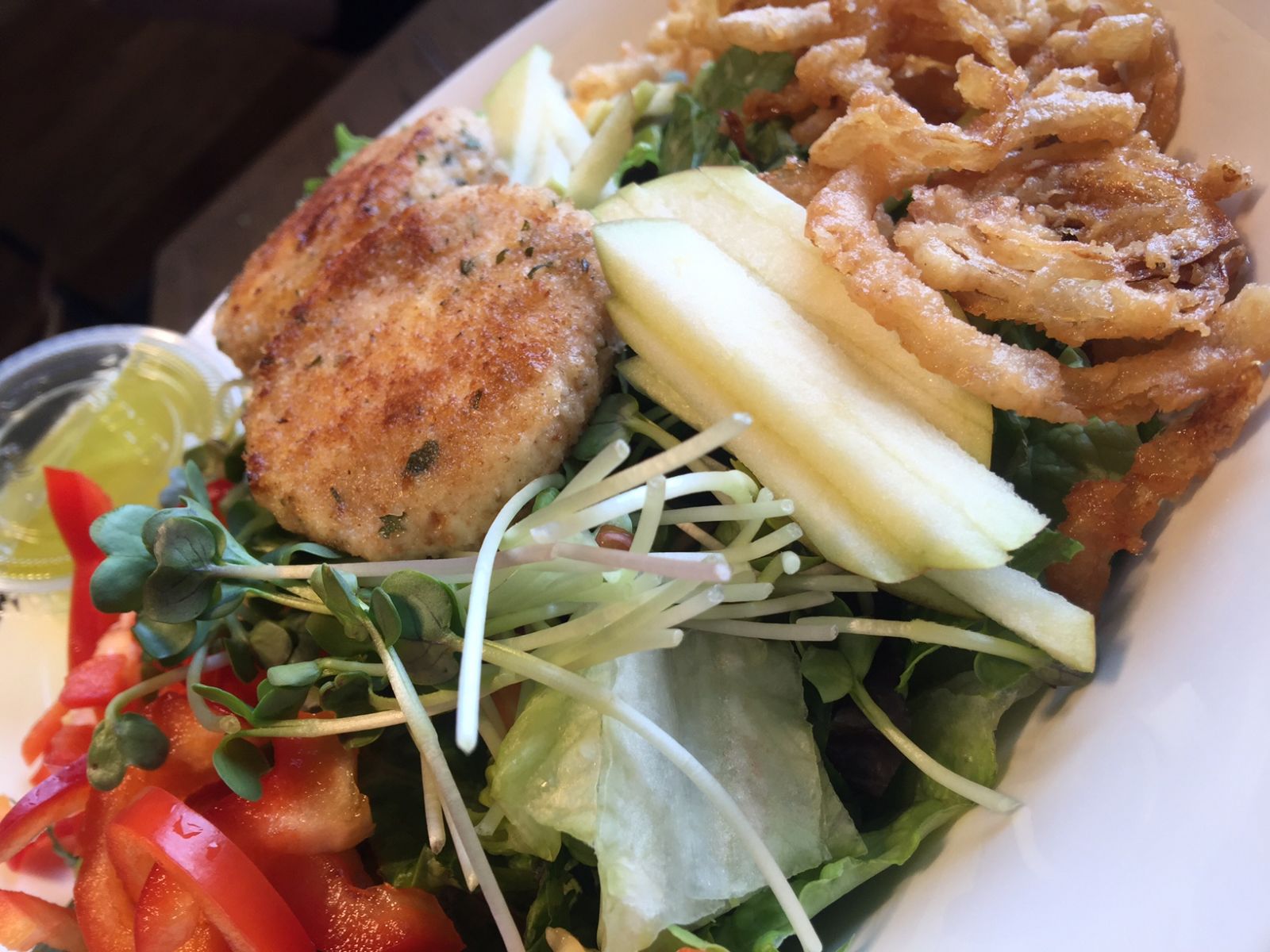
TOASTED GOAT CHEESE SALAD
TASTE IT: Regents Pizzeria
Toasted? Seems more fried to me. And the only way you can go wrong with fried goat cheese is to not eat fried goat cheese. They do a lemon-lime vinaigrette that cuts through the milkfat, along with onion strings, apple slices, kaiware sprouts (sprouted micro-versions of daikon radishes) and red bell. If keeping to NYE resolutions or warding off dorm butt, this is a very nice option.
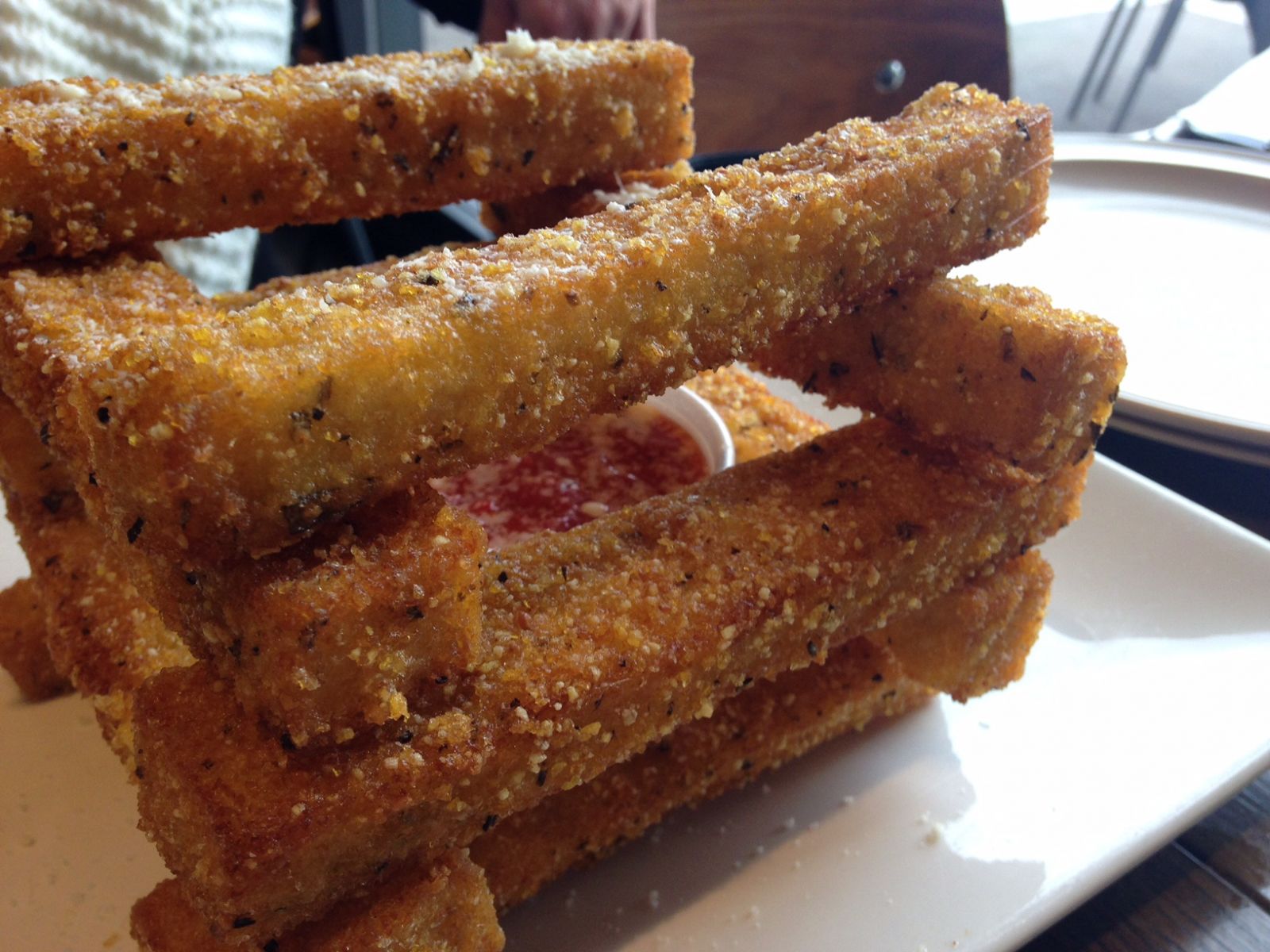
POLENTA FRIES
TASTE IT: Regents Pizzeria
Jenga fries. It looks impressive on a table. There’s a great polenta crunch. But we weren’t floored with ‘em. A tad too much rosemary. Rosemary is the Gilbert Godfrey of herbs. You can use it, but you also need to hush it.
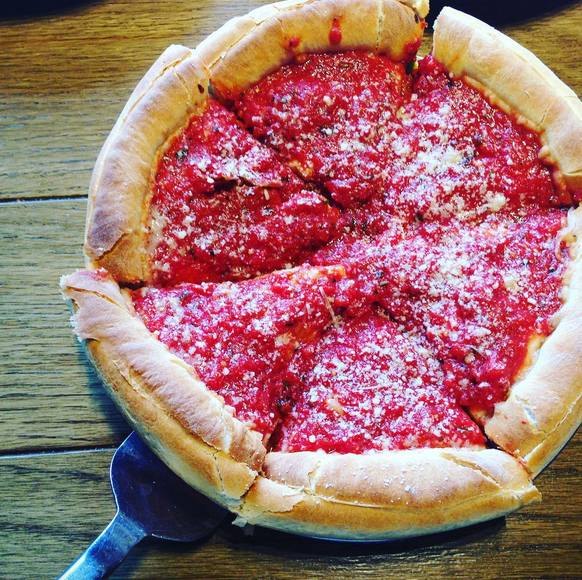
THE CHICAGO DEEP DISH
TASTE IT: Regents Pizzeria
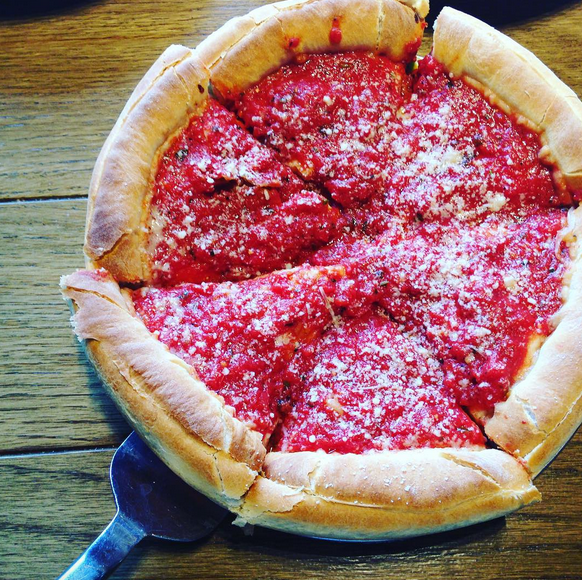
The problem with many deep dishes is that they get too wet. There’s so much sauce, so much sausage, so much cheese—all of which give off moisture when baked. Regents manages to pre-cook and dehydrate some of the ingredients so that it’s not a soupy mess, yet still juicy enough. Many places, like the famous Gino’s East in Chicago, use cornmeal. Regents does not, which is a preference (even if it wouldn’t be mine). Yet it’s still very good. Like a meat Napolean with pepperoni, sausage, bell peppers, onions, mushrooms and their tangy sauce. Very good.
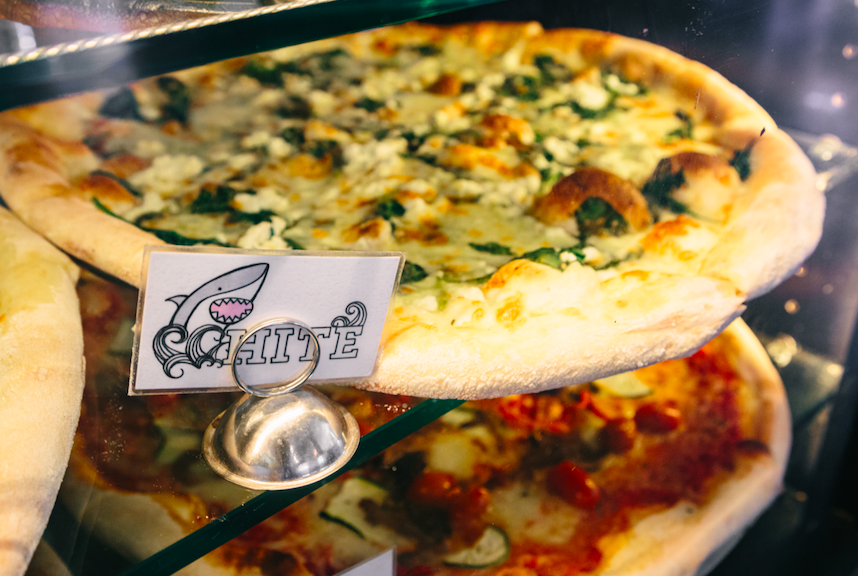
THE WHITE NEW YORK PIZZA
TASTE IT: Regents Pizzeria
It’s absolutely phenomenal. Fresh spinach, both ricotta and mozzarella cheeses with a rosemary-garlic olive oil sauce. It’s that cheese and the addictively good olive oil sauce (using quality olive oil is an absolute necessity for a good pie, worth all the cost, and they do). This one made me do the whole inappropriate food moaning thing.
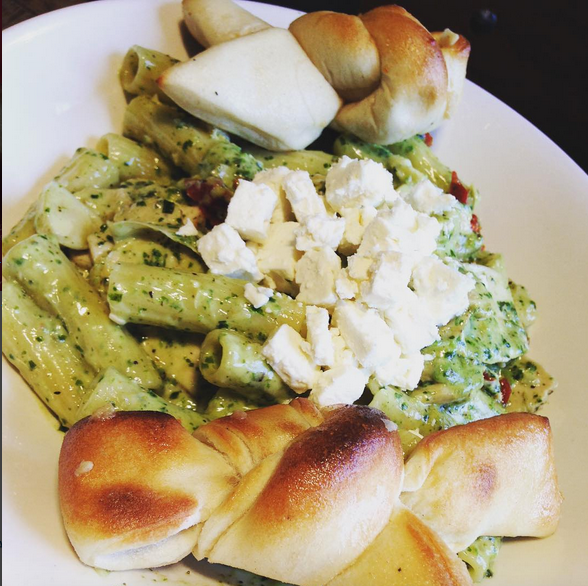
THIS PESTO DISH
TASTE IT: Regents Pizzeria
It’s just creamy pesto. But it’s delicious pesto, with herb flecks giving the occasional bolt of fresh flavor through the creamy mixture. Adding cream to pesto is like adding butter to butter (since pesto already has the fat of olive oil and nuts), but it’s tasty with tang from both artichoke hearts and sundried tomatoes. Sometimes taste trumps creativity, and the need for yes trumps the need for less. Well done.
THE PIZZA PAZZA
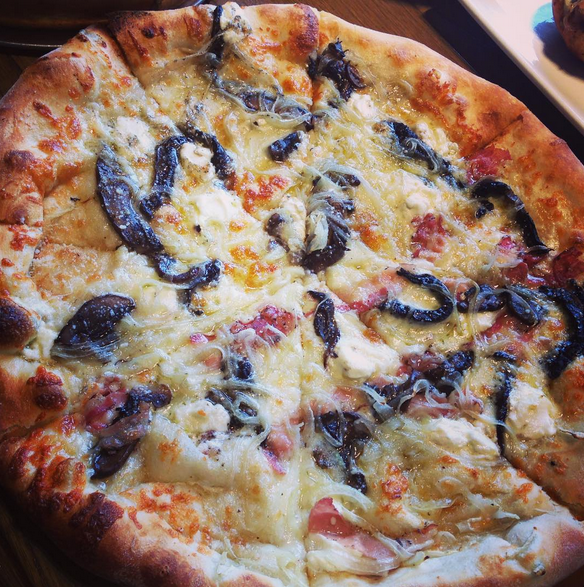
TASTE IT: Regents Pizzeria
Aged mozzarella blend, goat cheese, marinated portabello mushrooms, onions, pancetta, white truffle oil and parmesan. Truffle oil is a scary proposition. It’s the Drakkar Noir of the food world, and some chefs apply too much like a 13-year-old boy. This is perfectly done, with just enough of a hint to give it that truffle intoxication. But it all comes down to the crust of a pizza, and that’s where Regents goes very, very right.
THIS BRASS MONKEY
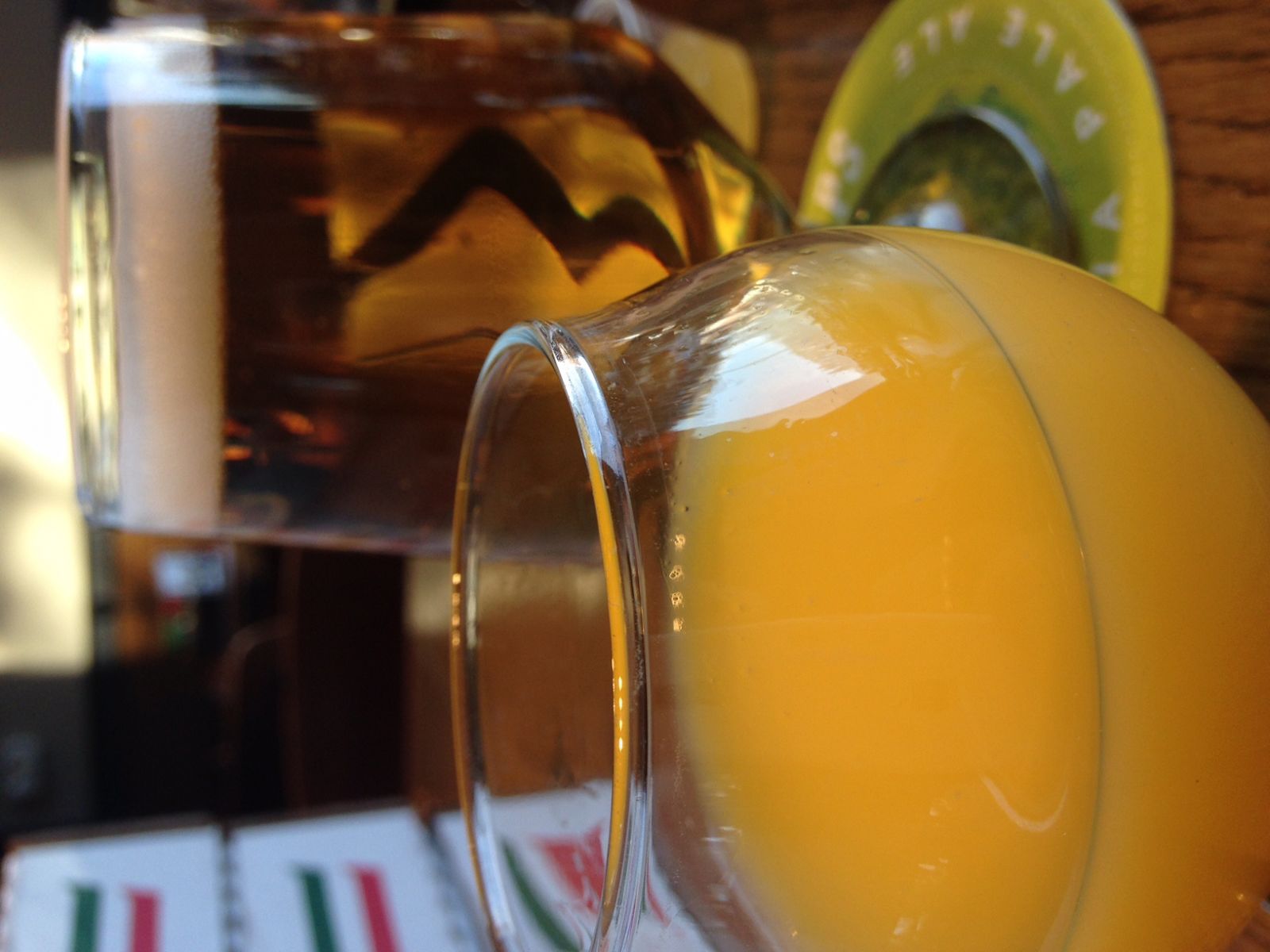
TASTE IT: Regents Pizzeria
Yes, the picture is sideways. Sue me. This is a blog, and I’m not 16 enough to figure out the tech. And, yes, the drink from the Beastie Boys song. Brass Monkey is a legendary not-so-great-neighborhood drink made of malt liquor and orange juice. Noble Aleworks in L.A. makes a malt liquor (yes, like Olde English or Colt 45), and right now Regents serves it with a side of orange juice. Mix the two together, and it tastes vaguely like your drunk uncle has just taken a sip of your Orange Julius. Decently righteous.
Regents Pizzeria, 4150 Regents Park Row, 858-550-0406.
TASTE IT: Regents Pizzeria

Your one-stop shop for food and drink happenings around town this week
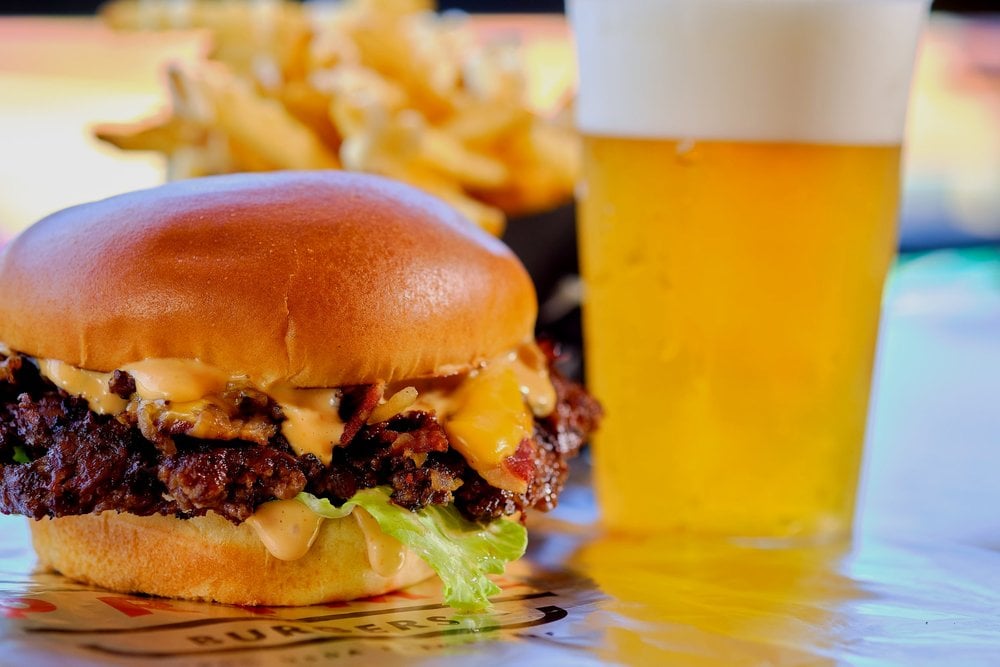
Tanner’s Burgers is going to be very, very big. Possibly Crack Shack big. And they’re about to open their first brick and mortar in San Diego—in South Oceanside at the Freeman Collective. Chef/partner Brandon Rogers worked at French Laundry, then was chef de cuisine at Benu when it earned its three-star Michelin. But he cut his teeth in San Diego, and came back to partner with family-run good-meat company Brandt Beef for this project.
The burger was the runaway hit of last year’s Del Mar Wine + Food Festival, winning the culinary competition. The debut spot is set to open March-ish. Listen to the podcast where Rogers and Brandt co-owner Eric Brandt explain the whole project to food critic Troy Johnson.
Hotel Indigo San Diego – Gaslamp Quarter’s Borrego Kitchen and Cocktails Rooftop Restaurant is in the middle of a revamp and is expected to open in May, just before the summer rooftop season kicks off. The ninth floor rooftop restaurant will focus on American Southwest flavors like yucca, prickly pear, and candied desert flowers. As for the cocktails and mocktails on the menu, the bar will carry the same desert theme and blend ingredients like aloe, sage, cacti, and even frybread.

The Amalfi Llama is debuting its first San Diego location at The Collection at UTC (second location after Miami) in March and adds to the live-fire scene (using wood instead of gas, a la Fort Oak, Sandpiper, Herb & Wood, etc.). Menu and ingredients are inspired by coastal cuisine from Patagonia to the Mediterranean. The large 7,000-square-foot space, with an outdoor patio, will let guests see their food cooked in real-time as the chefs use a live-fire grill and a wood-burning oven.
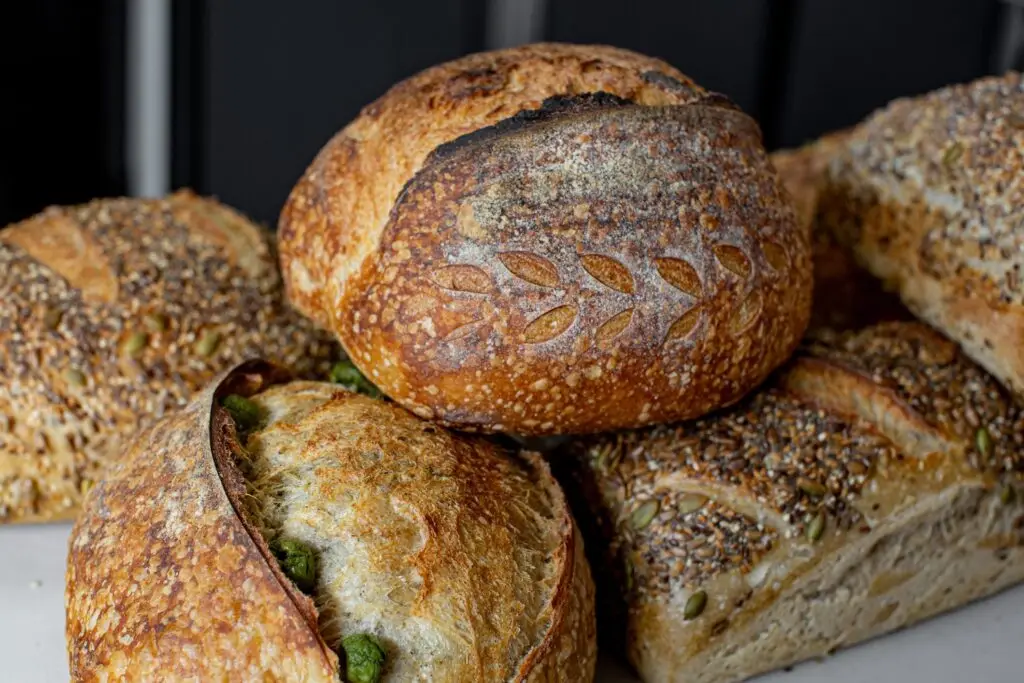

Choose your meat to cook over the wood fire, like a Wagyu tomahawk or a Patagonian roasted chicken. Or, try one of their wood-fired pizzas like the Positano using soppressata, finocchiona and hot honey. They’ll also have some woodsy cocktails (along with lighter options)—like Woodland Place using a Buffalo Trace palo santo-infused bourbon, amaro nonino, cacao, bitters and smoke.

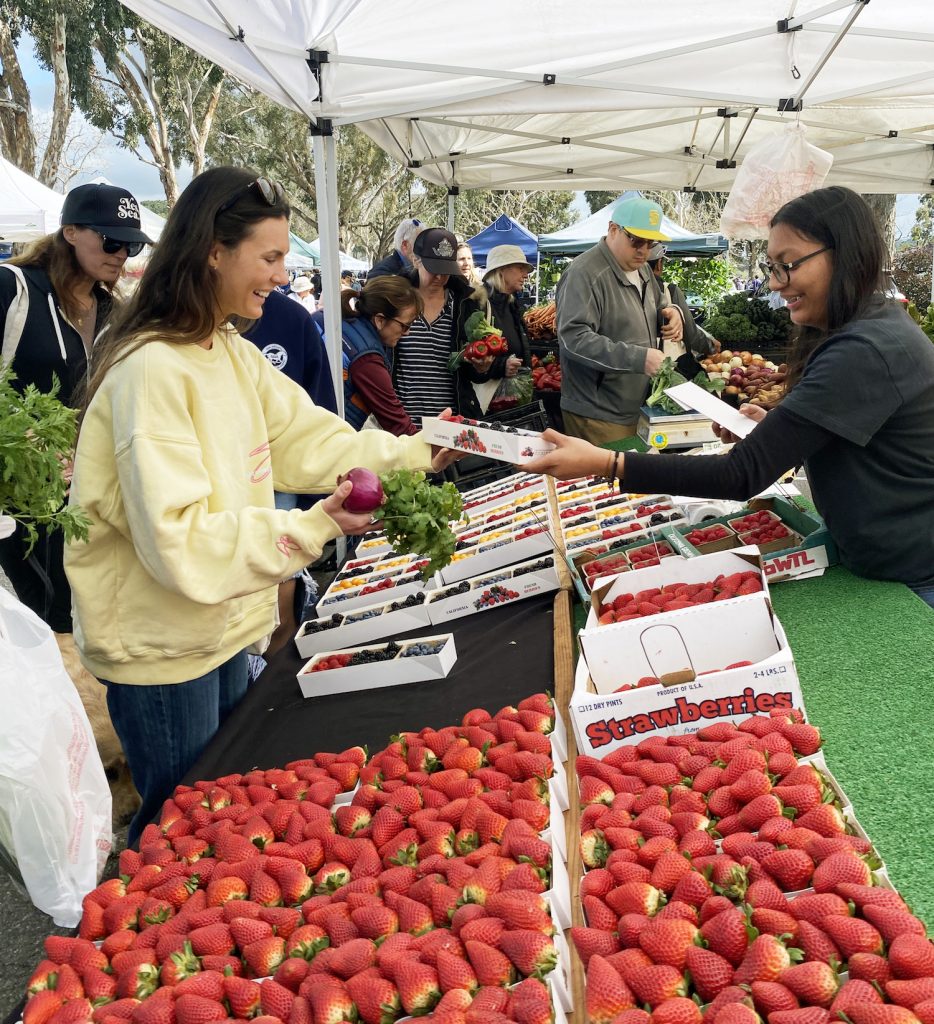
Cardiff Farmer’s Market is celebrating its one year anniversary on Saturday, March 2 with a special birthday celebration between 10 a.m. – 2 p.m. The first 150 people will get a free sweet from Chaupain Bakery and each purchase you make will give you a chance to win $100 in “Market Bucks” to use at the farmer’s market.
Rise and Shine Hospitality Group’s (Breakfast Company, Breakfast Republic) handle added a coffee roaster to their roster—Ox Coffee opened in Mission Valley. The idea behind the name is the coffee’s as strong as an ox.
Elena Gomez is an Emmy-nominated reporter who has spent much of her journalism career working in broadcast news in San Diego and Los Angeles. She joined the San Diego Magazine team as a freelance writer in 2020.
Local steak house vacating spot in La Jolla after 15 years
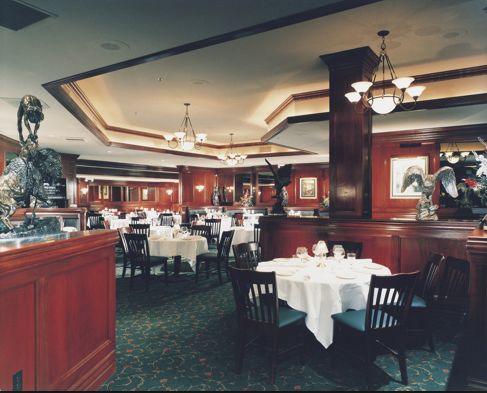
After 15 years of top-shelf Manhattans, tuxedo service and gratis Philly cheesesteaks at happy hour (one of the best happier hour deals in the country), Donovan’s Steakhouse is leaving its spot across from the Westfield UTC mall.
“Donovan’s did not come to terms with the Irvine Company, our landlord,” says spokesperson Alberto Mancero. “For this reason, we will be moving the store to another location. We cannot provide further details about the new location at the moment. We expect the move to happen early in 2015.”
People close to Donovan’s speculate that the San Diego-based concept will relocate into the Prospect area of La Jolla.
The UTC location couldn’t have been easy in the last few years. It wasn’t long ago that mall food was so mediocre and overpriced that top-quality restaurants like Donovan’s could do well setting up shop nearby. But then online retail started draining customers away from brick-and-mortar retail. To counteract that, malls like Fashion Valley, Del Mar Highlands, Flower Hill Promenade and UTC joined the national trend of upgrading their food programs to attract customers.
Over the last few years, UTC has added multiple anchor restaurants like Tender Greens, Seasons 52, Eureka! and Veggie Grill. As malls continue to pull the dining action back to the food court, adjacent restaurants like Donovan’s (and nearby PF Chang’s) will no doubt feel the pinch.
Steak houses, especially, are having a hell of a time. First the economy leapt out the window, grabbing steakhouses on its way out. Then Americans continued to eat less meat. Couple those two with the fact that beef prices are on a vertical climb, and it’s no breeze to sell slabs of elite protein.
Donovan’s still has their locations in Downtown San Diego and Phoenix.
“We thank Donovan’s for their time at The Plaza and wish them continued success in a new location and at their downtown restaurant,” says Michael Lyster, VP of Communications at Irvine Company. “We are working to bring in a fresh, new restaurant that we think will create a buzz with office customers and the community and look forward to sharing details as they come available.”
OUTGOING: Donovan’s UTC
Local steak house vacating spot in La Jolla after 15 years
After 15 years of top-shelf Manhattans, tuxedo service and gratis Philly cheesesteaks at happy hour (one of the best happier hour deals in the country), Donovan’s Steakhouse is leaving its spot across from the Westfield UTC mall.
“Donovan’s did not come to terms with the Irvine Company, our landlord,” says spokesperson Alberto Mancero. “For this reason, we will be moving the store to another location. We cannot provide further details about the new location at the moment. We expect the move to happen early in 2015.”
People close to Donovan’s speculate that the San Diego-based concept will relocate into the Prospect area of La Jolla.
The UTC location couldn’t have been easy in the last few years. It wasn’t long ago that mall food was so mediocre and overpriced that top-quality restaurants like Donovan’s could do well setting up shop nearby. But then online retail started draining customers away from brick-and-mortar retail. To counteract that, malls like Fashion Valley, Del Mar Highlands, Flower Hill Promenade and UTC joined the national trend of upgrading their food programs to attract customers.
Over the last few years, UTC has added multiple anchor restaurants like Tender Greens, Seasons 52, Eureka! and Veggie Grill. As malls continue to pull the dining action back to the food court, adjacent restaurants like Donovan’s (and nearby PF Chang’s) will no doubt feel the pinch.
Steak houses, especially, are having a hell of a time. First the economy leapt out the window, grabbing steakhouses on its way out. Then Americans continued to eat less meat. Couple those two with the fact that beef prices are on a vertical climb, and it’s no breeze to sell slabs of elite protein.
Donovan’s still has their locations in Downtown San Diego and Phoenix.
“We thank Donovan’s for their time at The Plaza and wish them continued success in a new location and at their downtown restaurant,” says Michael Lyster, VP of Communications at Irvine Company. “We are working to bring in a fresh, new restaurant that we think will create a buzz with office customers and the community and look forward to sharing details as they come available.”
OUTGOING: Donovan’s UTC
Earlier this year, Fit quietly dropped "athletic" from its brand, from Fit Athletic Clubs to simply Fit, and started calling itself something new: a social wellness club.
There’s a version of San Diego that lives in two extremes. On one side, the 5 a.m. crowd: biohackers, marathoners, people who’ve already logged a cold plunge before your alarm goes off. On the other, the after-dark crowd, the ones chasing sunset happy hours and late dinners with friends. Everyone seems to be either optimizing or unwinding, and most of us feel like we’re failing at both.
Fit, San Diego’s reigning Best Gym for the third year running, has built its entire identity around erasing that divide.
Walk into one of Fit’s three San Diego locations on a Tuesday afternoon and the lines blur fast. Someone’s mid-set on the squat rack. Someone else has a laptop open at a café table a few feet away, half-working, half-people-watching. A group is trading plans for the weekend’s event by the recovery lounge. Nobody’s in a rush to leave.
“We’re not competing for the same people,” says Emily Waybright, Public Relations Manager at Fit, addressing the arrival of a national luxury gym chain in San Diego this year. “We don’t really feel like we’re in the gym category. It’s this unique thing.”
That unique thing has a name now. Earlier this year, Fit quietly dropped “athletic” from its brand, from Fit Athletic Clubs to simply Fit, and started calling itself something new: a social wellness club.
It’s a small wording change with a bigger idea behind it. Fit was never built around escaping the workday. It was built around the people who genuinely like what they do, and who want workouts, work, and friendships to happen in the same place instead of three separate ones. Because sometimes red light therapy with a stranger turns into weekend plans.
Fit’s philosophy traces back to its founder, who started the brand nearly two decades ago after failing to find a gym he actually wanted to belong to. He looked instead to the old-school country club, where people came for a shared interest and stayed for the community. His version was made for a younger generation, minus the golf, plus the loud music.
Which makes it a little ironic that the very award putting Fit back in the spotlight this year is Best Gym.
What does the best traditional gym look like when the definition of a gym is becoming less traditional? It’s a fair question, and Fit’s answer is that the fitness industry itself is shifting. The 45-minutes-in, 45-minutes-out model is giving way to something closer to a genuine third space, the kind of role the office and the bar used to play before remote work and changing nightlife habits rearranged how people spend their time
For Fit, community isn’t a marketing add-on to fitness. It’s the through-line. Members aren’t just paying for a treadmill; they’re paying for an entire day of social wellness that’s built on performance, recovery, connection, and a plan for the next event on the calendar. That’s a much harder membership to walk away from.
Ambition and ease aren’t opposites here, they exist side by side, where passion and play share the same morning. On September 12, Fit is hosting Sol, a full day wellness festival at Fit Social. The morning focuses on wellness classes and vendors and then the evening is a full party with multiple DJ sets and an open bar. Think of it as a kick-off to locals’ summer in San Diego.
Ready to see what a social wellness club actually looks like? Visit fitclubs.com, or follow along at @thefitclubs on Instagram.
At The Delicate Squash, Shannon English is rethinking cookies, cakes, and pastries with seasonal ingredients and natural sweeteners
Midway through my phone conversation with Shannon English, owner of The Delicate Squash, I hear an alarm shrilling in her background.
“Sorry, I’ve got to pull some cookies out of the oven right now!” she apologizes. After a few beats, she picks the phone back up and laughs. “I feel like I’m bouncing around all over the place.”
After hearing her run through a list of her professions and current hobbies, I’d have to agree. English runs The Delicate Squash, a gluten- and dairy-free bakery; teaches cooking demos; pops up at farmers markets; wrote a book of poetry (Deep Water came out this month from Beyond the Veil Press); hosts a monthly open mic night; dipped her toe into ballet; recently joined a running club; volunteers at local farms; and finally, teaches at a play-based, nature-based preschool.
I’m tired just talking to her.
Surprising no one, English seems to have unlimited energy and enthusiasm for all this work, notably in education. Early childhood education is one of the most pivotal times for nurturing lifelong learning, but she also aims to educate the public on how to eat cleaner, feel better, and support your local food systems. She started The Delicate Squash in late 2023 after discovering she has a chronic illness, going through the typical standards of care and even strict elimination diets, to no avail.

“I’m not going to say I found a diet that has ‘cured’ me, but I have found that taking a more mindful approach to a lot of things, including diet, has made symptoms far more manageable for me,” she says.
Even people with dietary restrictions deserve a little treat from time to time, but she had a hard time finding anything that tasted good and made her feel good. Thus, The Delicate Squash was born.
All of her baked goods avoid gluten and dairy, and use natural sweeteners like coconut sugar or maple syrup as well as herbs, fruits, foraged flowers, and other natural flavorings. Her signature cookie, the “Delicate” cookie, is a sea salt dark chocolate cookie that’s soft, a little salty, a little sweet, and made with oatmeal to keep it gluten-free. Other crowd favorites are thumbprint jam cookies with jams made from scratch with change seasonally; breakfast pastries like orange, dark chocolate and cardamom scones; brownies; orange and black sesame banana bread; seasonal pies; and custom and seasonal cakes (currently, the late summer flavor is a dark chocolate coconut milk ganache with berry jam).
English says some people are surprised she can produce such a variety of goods with the dietary restrictions she adheres to. “A lot of feedback I get is ‘I could never do that,’” she says. But if she can do it, she assures me that anyone can. “I like to say ‘practice makes progress, not perfection.’”
Her advice? Focus more on being present than presentation, and don’t be afraid to experiment to keep things interesting. And if that doesn’t work, you can always hit her open mic night to ask for tips.
Customers can order from The Delicate Squash’s online store, check her upcoming schedule of pop-ups, or find her goods at various independent retailers around San Diego.
Escondido is getting in on the listening bar phenomenon. On September 5, musicians Mat Rakers, Kevin Capacia, and Billy Petty will open Plot Armor, a Japanese-style vinyl listening bar that Rakers says they aim to feel “curated and intelligent.”
“Currently, there are not a lot of ‘cool’ spots in Escondido,” he says. Backed by The San Diego Music And Art Company and The Escondido Music And Art Company, Plot Armor will soon offer sake, wine, beer, and soju cocktails, plus Japanese non-alcoholic options and cold brew. Eventually, they’ll add Japanese-inspired snacks, but the focus will be creating a small place (very small—the seating capacity is 20) where vinyl junkies can come listen, linger, and libate.

Listen Now: The Latest in San Diego’s Food and Drink Scene
Have breaking news, exciting scoops, or great stories about new San Diego restaurants or the city’s food scene? Send your pitches to [email protected].
Beth Demmon is an award-winning writer and podcaster whose work regularly appears in national outlets and San Diego Magazine. Her first book, The Beer Lover's Guide to Cider, is now available. Find out more on bethdemmon.com.
After a blind taste test, these four desserts came out on top—see the winners here
Basque grandmothers have not been making it for centuries. If you’re a millennial, there’s a strong possibility you’re older than the dessert itself. Yet somehow in less than 40 years, the Basque cheesecake—a half-pudding, half-cake creation with a top that looks like a mistake—managed to ooze its way onto menus all over the world.
It became the undisputed dessert star of San Diego’s restaurant world this year. So we invited 19 of the top restaurants, pastry chefs, and bakers to bring their best to the San Diego Magazine office for a blind taste test to find the best in the city.
First, a little history and context.
In 1987, after failing to find a job as an electrician, Santiago Rivera started working as a bartender at his parents’ unassuming pintxo bar La Viña, in San Sebastián, Spain. He was a naturally curious, self-taught cook who spent his free time testing recipes, tinkering with ingredients, and tweaking techniques.
So when it came to the cheesecake—which hadn’t changed much since its invention (a rudimentary version was served at the first Olympics in Greece 4,000 years ago, and the modern New York version in 1872)—he got radical with it.
He removed the crust (partly just to speed up the process because time is money for a small business). Without the crumbly crust, the experience was far creamier, less granulated. Then he cranked the oven to 400 degrees, nearly 100 degrees hotter than the normal baking temperature.
The result? The top became deeply caramelized, almost burnt, while leaving the center luxuriously soft and loosely set. The restaurant became a legend because of this breakthrough in the dairy arts, and his father never let him stop making it after that.
Now, 67 years after the restaurant’s opening, La Viña stands out for the unceasing line spilling onto the street, and the remarkable amount of curd cultists standing nearby, hovering over cream-smeared plastic containers. It’s the kind of scene that makes you stop and think: What the hell are they eating?
Now, the blind tasting. To keep things fair, the contenders were divided into four categories: Restaurant Traditional, Restaurant Flavored, Bakery Traditional, and Bakery Flavored. (It’s a tad unfair to pit a baker who specializes in the one glorious thing against a restaurant that cooks dozens of things.) Each entry was served blind and judged on texture, flavor, and number of vaguely inappropriate food moans.
The logistics were chaotic, to say the least. Our fridge—not a walk-in, sadly—was packed to the brim. Each cake was sliced, secretly labeled, and shuffled onto plates while the team gathered in the conference room. The whole shebang was not in any way sponsored by Lactaid, despite our various attempts to convince them of this ripe marketing opportunity.
The judging became gloriously unhinged. We heard it all, from “I don’t care how the cheesecake gets in my mouth, it just needs to happen,” and “Is it supposed to be this jiggly?” to “Kind of a baby throw-up situation,” “Straight cheese,” and “I’m getting vague socks there.”
But four Basque cheesecakes stood out among the rest, earning themselves the title of Best Burnt Basque Cheesecake in San Diego.

A restaurant for the people. Rosarito native chef Juan González and Megan Strom are the ideal married couple to be running a farm-to-table joint. She’s been a farmer for decades, selling top-notch produce to some of the best restaurants in California—which is how the two met. A couple years ago, she started working at the small organic farm in Valley Center run by Mike Reeske, who had spent decades breeding the perfect heirloom beans for SoCal’s climate. He recently retired, and gifted those strains to Strom—who grows them (and other crops) for their tiny Escondido taco/burrito shop specializing in guisados (Mexican stews).
A Basque cheesecake in a taco shop? You bet. Juan’s got family roots in Spain and has cooked in Spanish kitchens.
Mesa Agricola’s winning Basque is by far the most “burnt” of all contenders—so much so that an Instagram follower declared it a mistake. But as Chef Juan notes, there’s an art to hitting the sweet spot where “the bitterness of the char balances the richness and sweetness without turning it into ‘chicharrón.’” Plus, char is a core charm of Baja cooking. It’s the perfect Basque for the people who prefer setting their campfire marshmallows fully on fire.

With red leather booths and a retro steakhouse vibe, Moe’s in Mission Beach is a good cheat day destination. The menu is flavor maximalism—dry-aged steaks, housemade pastas, brown liquors, and sides like the lobster truffle mac ’n’ cheese. Pastry chef Eli Peralta (whom some might remember as the creator of The Patio on Lamont’s “Twisted Elvis”—a peanut butter-banana brûlée stunner) brings that same intensity to the dessert menu.
Baked at sister restaurant Molly’s (6 feet away), his Basque is served on a bed of caramel with walnut brittle and a dollop of whipped cream, an indulgent recipe that converted the pastry chef himself. “I wasn’t crazy about cheesecakes,” Eli admits. “Then I started making different flavors, and I started to like them.” He’s not the only convert: During our blind tasting, one judge likened the cake to crème brûlée, concluding, “I don’t even like crème brûlée, but I like this.”

Every creative pursuit starts with a muse—and Lada Sadovnyk’s has been the Basque cheesecake for years. In Ukraine, she baked them for friends and family gatherings, never imagining she would one day build an entire bakery around them in the US. “When we moved to San Diego,” she explains, “I kept thinking, ‘What can I do? What do I really love to do?’”
The answer is pretty fantastic.
After obsessing over proportion and techniques, chasing that molten center and deeply caramelized top, what began as an online recipe evolved into something entirely of her own.
She moved from her home kitchen to a rented commercial kitchen close to Sports Arena. The orders kept coming, and so did the pressure. “At one point, I was thinking about divorcing my husband,” she says with a laugh (while sitting next to him). The grind paid off: Today, Muse Cheesecakes bakes roughly 1,200 cheesecakes a month and is planning to open its first brick-and-mortar home in Pacific Beach.
For our competition, the expectations met reality. Muse has made a quick name in San Diego as the Basque to beat. In a blind taste test, there’s no bias, no reputational shine to sway a room. The response on reveal: “Oh, of course.”

Husband-and-wife duo Alex and Anastasia Kiperband pulled off the number of failures (and then some) that are required of any search for the best recipe. After adjusting baking temps, sugar rations, and experimenting with different brands of cream cheese and heavy cream—they finally landed on something worthy of a business license.
“When we started this business in America, we were really nervous,” Anastasia says, co-owner of Bite Cheesecakes & Bakery.
Once they won over those first customers, their confidence grew enough to start tinkering. When Dubai chocolate took social media by storm, they developed their own version, making the pistachio paste from scratch before layering the buttery kataifi pastry beneath a glossy chocolate shell to create its signature Dubai Chocolate Basque Cheesecake.
“In a lot of situations, we’re converting cheesecake haters to cheesecake lovers,” they say. “That’s probably the best feedback that we get.”
Camila Ibarra Gallego is a CaliBaja native pursuing a master's degree in culinary journalism at the Basque Culinary Center. Shaped by the culturally rich, bicultural megaregion, she's passionate about sniffing out stories that connect people, territory and culture through food. When she's not tumbling down internet rabbit holes, you can find her pretending to be a wine connoisseur at a local wine bar or nose-deep in a good book.
Laika Nur, MD, takes her love of volleyball from the court to the clinic as team physician for the San Diego Mojo
Growing up, Laika Nur, MD, Scripps Clinic sports medicine specialist, loved watching beach volleyball when the Association of Volleyball Professionals tour came to her hometown of Chicago. A talented volleyball player herself, she remembers sitting in the stands all day, and once, even got a couple autographs. Years later, Dr. Nur was attending a professional event focused on women’s sports, and the discussion turned to a new professional women’s volleyball league. The general manager and coaching staff for San Diego’s team, the Mojo, happened to be in attendance, and Dr. Nur took the opportunity to ask them if they needed a team doctor. Flash forward to the Mojo’s inaugural 2024 season, when Dr. Nur officially became the team physician. Click here to read more about Dr. Nur and how she incorporates lessons she learned on the court into her practice.
For more nutrition, wellness, and healthy living tips, sign up for the San Diego Health newsletter here.