Featured articles
Food & Drink
Food & Drink
Food & Drink
Featured articles
Things to Do
Everything SD
Everything SD
Featured articles
Things to Do
Things to Do
Things to Do
Featured articles
podcast-ep
podcast-ep
podcast-ep
Featured articles
Everything SD
Everything SD
Everything SD
Featured articles
Food & Drink
Things to Do
Everything SD
Ready to know more about San Diego?
SubscribeReady to know more about San Diego?
Jane Lynch and SDM’s food critic sit down for a very fast, pleasantly awkward meal at Hell’s Kitchen
Jane Lynch celebrates her inauguration as the mayor of Funner, California.
I just catalyzed Jane Lynch’s fall from vegetarianism. She tried my scallops. It’s like watching a friend dial an ex they’d sworn off. Not on my watch, Jane! I think but do not say.
She can eat whatever she’d like. She’s Jane Damn Lynch, star of screen and stage. She said “cocaine” to Paul Rudd a few times in a movie. Just kept hammering that word, squeezing it for all its comedic pulp. And each time she said it, the scene got funnier. The funny should have died far before it did, but she just kept it alive, juggled the funny.
No, wait. She’s clarifying. Neither I nor Gordon Ramsay have ruined anything, she says (we’re dining in Hell’s Kitchen, Ramsay’s signature restaurant at Harrah’s Resort SoCal, a fairly big deal). We do not have that power over Jane Damn Lynch. She’s been tinkering recently with chicken and seafood, she explains. The chicken-and-fish-only exception has always struck me as odd. Is the line, “Don’t eat it if you can ride it?” But Jane Damn Lynch will not be questioned. Her body, her seafood.
Not that I would have taken any perverse pride in altering the life of a famous and talented person like Jane Damn Lynch. We’d just been talking about why she had gone plant-based a few years prior. “I watched a video of these doctors in their 60s talking about how they went plant-based,” she says, sipping a lavender zero-proof cocktail from a menu of mocktails in her honor at Hell’s Kitchen (Jane Damn Lynch’s been sober a while now). “I noticed how young and healthy they all looked and I thought, Hmmm… maybe there’s something to it.”
I had spent the last day researching her life in preparation for our meal together. And I had not read about her protein trysts. So I thought I’d derailed her. I have derailed things in the past. There is a history of derailing.
Jane Damn Lynch is here on official business. She is now mayor of Funner, California. It’s an ad campaign for Harrah’s Resort SoCal —quite honestly, one of my favorite campaigns (created by local agency, 62Above). First of all, they actually renamed the town. It’s not a nickname or a branding rephrase. It’s the legal operating name of the town. I’m not sure what it takes to rename a town, but I’m guessing money.
Then they named David Damn Hasselhoff the first mayor of this now nonfictional province of gambling and lazy rivers and resort massages and concerts and pool parties. Yes, him of beefy Baywatch slow-motion beach jogging. The Night Rider, a man who isn’t just cheesy (and hot), but actually possesses the cheese, inhabits and owns his emotional fromage, so that what in lesser mortals might be a negative becomes an attribute, a bankable character trait.
The mayorship of Funner is not a democracy. If you’re famous and funny and are okay with going to a SoCal casino for 15-minute meals with media hacks—some of whom take their job far more seriously than I am able to—you get the keys to slot machine city. They hand you an arm falcon, put you on billboards all over San Diego.
Their mayor before Jane was Rob Riggle. He played the role perfectly, his jaw like human skin stretched around an anvil—just a massively proud mandible that projects a certain level of bone structure–based confidence. He had an air of grapes and palm fronds and baccarat.
“Rob was the spoiled boy king,” Mayor Jane Damn Lynch says. “I’m more of the people. And yet I’m tall enough that I’m not really of the people. I walk around, I glad-hand, I float above. I act like I’m one of you, but of course I’m not. I’m six feet tall. I’m regal. I’m a celebrity. I’m not you, you’re not me. You want to be me, and I’m delighted by that.”
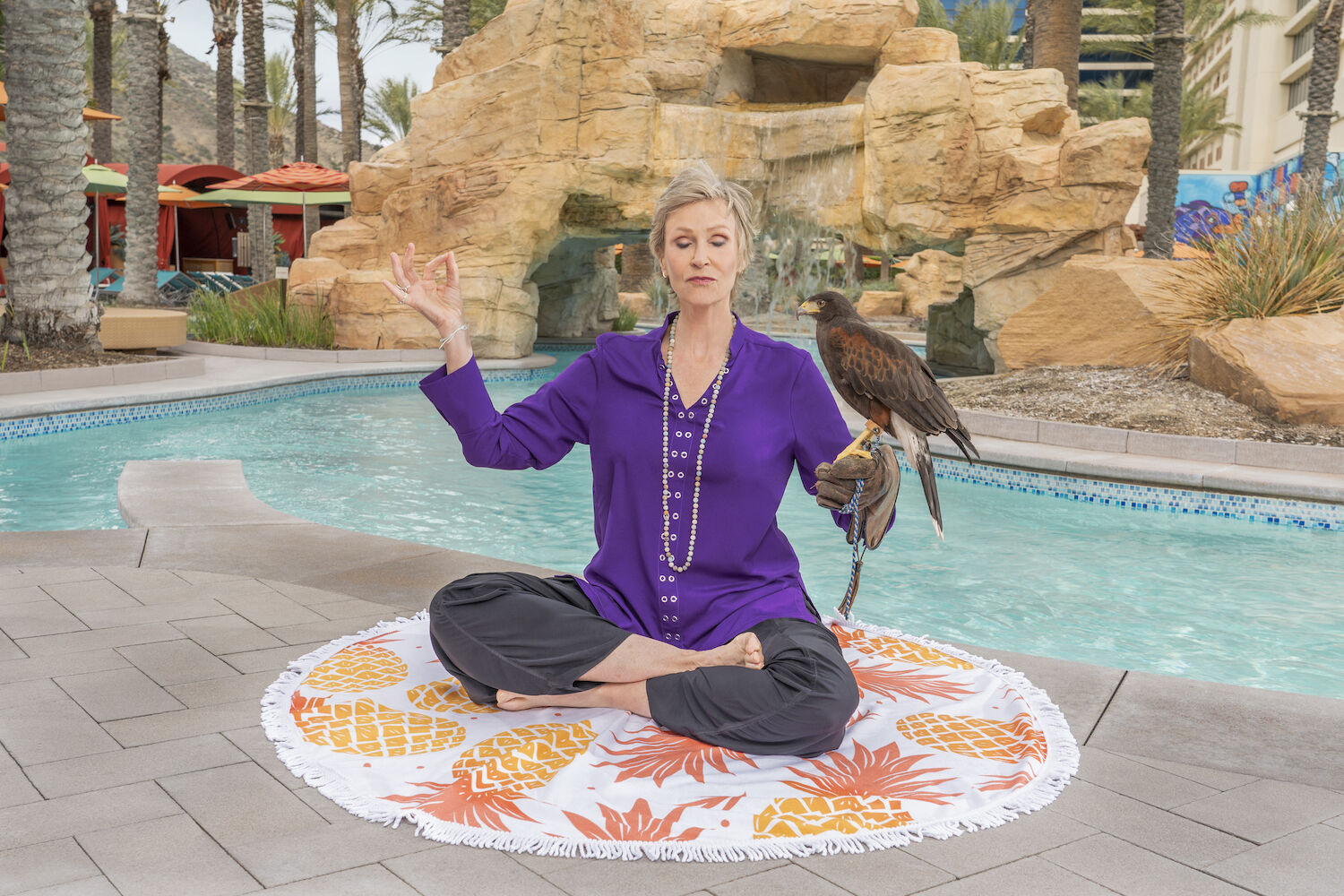
Jane Lynch’s mayoral duties include falcon-holding and zen-chasing at Harrah’s Resort & Casino—plus awkward lunches with media pundits.
There it is. That classic Jane Damn Lynch unselfconscious plainspeak, the aristocratic deadpan that makes her character in Marvelous Miss Masel such a vicious treat. I was waiting for that morsel of playacting. She knew I was waiting for it. She gave it to me, a small preapproved gift for her media interviews. I refrain from saying, “Do the cocaine thing.” Composure loosely adheres to me.
Jane Damn Lynch is dressed in a purple pantsuit. She looks like she could do some damage with a profit and loss statement, but opts to have shorter people do that. Like, with a wave of her hand, beefy men would whisk you off her premises. But, until she dictates your removal, she’s game to share some beet salad.
All you need to really know about Jane Damn Lynch is that she’s lovely. She is, as she says, elevation-tall. She has textbook posture. She is refreshingly real when she talks, doesn’t seem to be tiptoeing just in case I’m a “gotcha” media hack waiting for her to slip into a luscious scoop. And these days every public figure—especially funny people whose job it is to sidle up to the line of unacceptable and pull back at just the right moment before they say something that incinerates their career and gets them tied to a stake in the public square of social media—has reason to not answer with their honest thoughts and feelings at all.
In the days of cancel, if smart, every famous person would answer like baseball players to every question they’re ever asked. Just say, “Well, I just trust God has a plan,” when pressed about whether they’d like Coke or Pepsi.
The most fascinating thing about my meal with Jane Damn Lynch was the process. When celebrities come to San Diego, especially as part of a media campaign, they tap certain local writers and creatives who might do an interesting job spreading the word. They offer morsels of Jane Damn Lynch personal time.
Usually this results in a social media pic, a lighthearted blurb on the local news to show that San Diego is a place where famous people come, that while you’re kissing good luck charms and praying to dead relatives while you pull the brass appendage on the slot machine, Jane Damn Lynch is walking on the same extremely soft carpet that you are walking on. You’re sharing the room with a shiny human.
But these 15 minute interviews are always fairly awkward for both of you and yield very little substance aside from mutual observations of awkwardness. It’s media as speed dating. Or speed acquaintancing. You spend the first three to four minutes making small talk and trying to establish some sort of baseline connection with Jane Damn Lynch.
You’re trying to prove that you’re the kind of person that can be trusted, that she can go ahead and drop the Big News, the Jane Damn Lynch news that will get San Diego Magazine—this media company my wife and I bought in a state of passion and possibly economically suspect idealism—trending on Google, read by everyone who’s ever loved Jane Damn Lynch. They’ll not only sign up for a thousand-year subscription to go along with their permanent SDM neck tat, but they might also come here to Hell’s Kitchen to try their very good beef wellington (a 1950s classic that’s been revived, it’s basically a full fancy steak baked in a puff pastry, a wonderfully marsupial steak design).
You only get a few minutes with celebrities like Jane Damn Lynch because being a celebrity is like being constantly followed by a flock of birds that are pecking away at the thing you have the least of: time. There are 24 hours in a day and 300 of those hours have been requested of celebrities by various organisms, including me.
Thirty nonprofits would like you to speak at their big annual fundraiser. Ten media outlets would like an all-day shoot in your family home—and, weirdly, just for quirk, a tour of your bathroom. A passerby has thoughts on your last movie and would like to express them in descending order of importance, so if your spouse wouldn’t mind if they borrowed a couple minutes. Just a couple, like 30 or so, if you don’t politely remove yourself.
I’ve been in media for so long that I’ve given up on 15 minute interviews. But I am a bit fanboyed by Jane Damn Lynch. She just seems like the kind of person you could road trip with. She’d have fun thoughts on gas station jerky.
So when Lynch’s people contacted me, I pitched them a short video idea: “The Mayor and a Food Critic Go to Hell” (since I feel like hell is a place many people would like politicians and food critics to at least visit). We’d share a meal, film the banter back and forth. I’d do my food critic thing with the dishes and zero-proof offerings of Hell’s Kitchen (they also have wine and cocktails and all the things, but it’s 1 p.m. on a weekday and I for sure don’t want to get half-buzzed and end up burdening Jane Damn Lynch with the story about the time I wet myself on national TV), casually spelunk through Jane Damn Lynch’s thoughts on life. The video goes viral, SDM buys Meta, Mark Zuckerberg becomes my trusted intern.
News came back from Jane Damn Lynch’s people. They’re in! And, and, and! I get 45 minutes! What a luxurious time treat! As the date of our lunch gets closer, less fun emails arrive. The first says no video will be allowed. Since that was the concept, it’s deflating. The magic of Jane Damn Lynch is seeing her deadpan face as she says something lovely or wrecks your world a bit with her smarts. I’m a person on TV. She’s a far more famous and talented person on TV. It could’ve been great!
But we’re adaptable. Okay, I say, then let’s do an audio recording so that people can hear Jane Damn Lynch sparkle. We’ll release it as a special podcast. News comes back. No go on the audio.
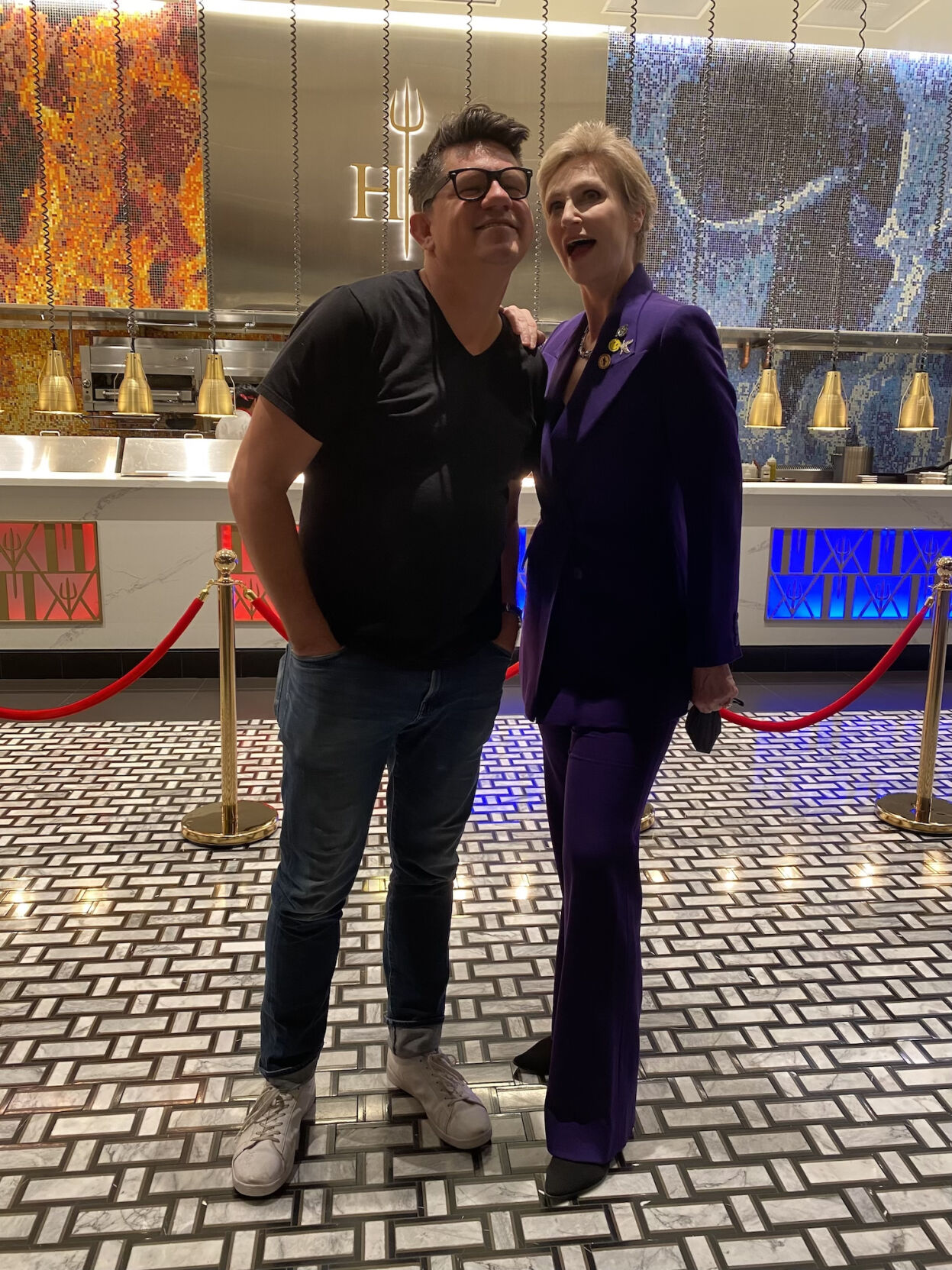
Troy Johnson and Jane Lynch pose for a photo mere moments after agreeing to launch a chain of daytime restaurants together (just kidding).
At this point, I nearly pull out of the brief lunch with Jane Damn Lynch. As righteously cool as it would be—and I’m going to get to eat Gordon Ramsay food, for chrissakes—we’ve got a company to run. I’m not sure it’s the best use of my time. As I’m about to cancel, my vision fills with an image of Sue Sylvester striding in her tracksuit like a dark lord of physical education down the halls of whatever the high school was called in Glee. I don’t cancel on Jane Damn Lynch.
About 15 minutes into our lunch—Hell’s Kitchen is lovely, exactly the big flashy kind of restaurant I want when I visit a casino, and the service and food are very good—I see Jane Damn Lynch’s people start to shuffle a bit off to the side. They seem to be sending code to Jane Damn Lynch. She’s doing her best to stay tuned into our conversation, and this is where I get the juiciest bit I’m going to get today:
“If I never act in a TV show or film again, I’m totally okay with that,” she says.
DID YOU HEAR THAT, INTERNET?! Jane Lynch says she would be fine NEVER ACTING AGAIN! There is a vague impression that she might be done acting but that’s really missing the point and misconstruing her words because she’s just kinda saying that she’s grateful for what she’s got and has a keen sense of inner peace if it all ended today! Put all the viral on this article! Send it to the moon! You’ll have my acquisition offer next week, Mark!
A slight activity, a buzzing, a “next, please” vibe starts to take hold of Jane’s people off on the side. My liaison, a very good PR person named Mary Ann, comes over to the table. “We have two more minutes,” she says. I look at my recorder. It’s only been 20 minutes! I was told 45! Some wire has been crossed and now there’s panic.
Jane Damn Lynch and I were having a grand old time. I was luxuriously backstroking in her minutes, which she’s graciously sharing—and now, bam! I’m thefted minutes! I need to get a few really usable insights into her life and thoughts on Funner and mayorship. Pressure’s on.
So I pull the classic pro move that I’ve learned over many years of journalism: I choke.
At some point in trying to bridge the gap and seal that human connection in speed-media—the clock is ticking, you have two minutes, time for the journalism hail mary—you will find yourself talking about something you have no good reason to share. Like some random fact about a sibling or how you enjoy Pez as a concept but struggle with the chalkiness. Some odd secret about your life will fall out of your mouth despite neither party requesting nor really wanting access or exposure to that info. I think I tell Jane Damn Lynch a story. I’m not sure. Kinda blacked out.
“Well, I’m a fan of fun,” she says of her Funner mayorship. “They came to me and said, ‘We’re actually in a town called Funner, California.’ And I was like, ‘I have to be the mayor of this town.’ Funner, is that a word? It’s a word in my heart.”
Anyway, she’s very polite, a consummate pro. She gives me far more minutes than she was asked to give. I am the bird on her minutes, and I respect how much she’s indulging my pecking at them. After we say our goodbyes—and, as you’ve learned by now, I didn’t get a real story from Jane Damn Lynch aside from maybe this longwinded story about trying to get a story from Jane Damn Lynch—she actually comes back to the table and gives me more time. We casually chat about how we love our wives and how I grew up with a gay parent. We dabble in light politics.
Then a production crew starts to mic her up so that she can film new mayor videos for Funner, California. Our minutes have expired, and she is now being asked to distribute the minutes elsewhere.
As I’m leaving, I yell to her, “HEY, JANE! HAVE YOU EVER CONSIDERED OPENING A CHAIN OF DAYTIME RESTAURANTS CALLED JANE LUNCH?”
“I HAVE NOT!” she says, not skipping a beat. “I DON’T HAVE ANY PLANS TO DO THAT! THAT ONE IS YOURS; YOU CAN GO FOR IT!”
PARTNER CONTENT
So Jane Damn Lynch and I will not be going into business with each other, either. But the scallops were great.

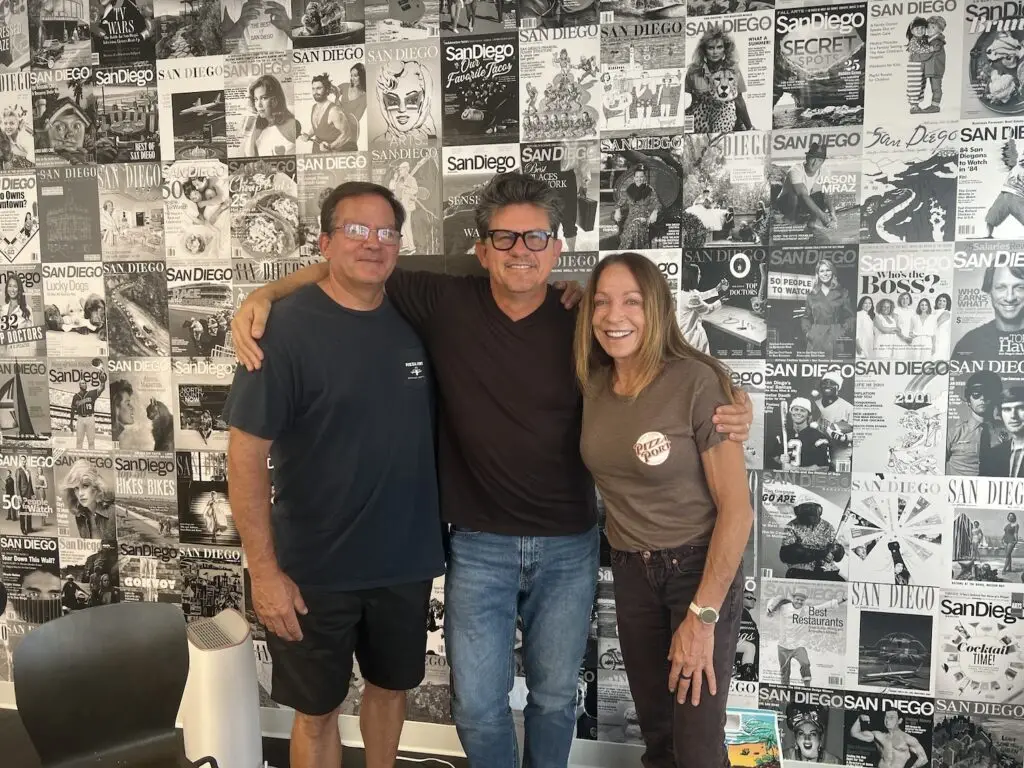
Troy Johnson is the magazine’s award-winning food writer and humorist, and a long-standing expert on Food Network. His work has been featured on NatGeo, Travel Channel, NPR, and in Food Matters, a textbook of the best American food writing.
San Diego’s big new steakhouse is hot, cold, and extremely at your service
A meal in a steakhouse is a wild little spike on the EKG of our mortal pizza lives.
Steakhouses are a place for birthdays with zeroes in them and wrap parties for long careers. They’re where big-deal clients are ornately wooed. They’re home to proposals both sacred and profane, where trusty anniversary gin is properly dirtied. All our various big life things are toasted, individually but simultaneously, through blood and bottle, under a single roof with a lot of butter.
In other words, more than the usual or recommended amount of emotions are pinned to dinner at the new Steak 48 in Del Mar. It’s a house of cheers and tears.
Sure, some come just because they’re hungry and like nice things. There are regulars who, through achievement or the natural flow of money down a bloodline, can casually dine in this strata of $500 checks and $100 tips. You often see them at the bar, their radiant epidermises the result of skin creams rare and exotic, some combo of shea butter and narwhal breath that’s illegal in many countries.

The rest of us have not yet victoriously pinned NASDAQ to the mat, are not collectors of infinity pools. But we’d like to try that on for size for a moment, and that’s important for the steakhouse. We’re middle-class Janes and Joes who have socially agreed to suspend economic disbelief for one night of carnivore dinner theater. In our daily lives, we responsibly count and monitor the outflow of our chits and eat our crucifers. Tonight, we take capitalism for a fleshy joy ride.
There are moments of pause. For instance, the waiter suggests my wife, Claire, try a Bernie Madoff–priced glass of Dom Serene Evenstad pinot ($68). I politely tachycardia.
Not because I’m cheap—I am cheap, but my cheapness knows its place. Looking for deals at a steakhouse is like trying to score drugs in church. Tonight, we’re gonna spend like we’re all launching SpaceX from our porticos at dawn.

All of this is why the most important thing about a steakhouse is the hospitality. Most of us spend our lives dutifully attending to demands, be it from bosses or banks or our lord-savior smartphones. At steakhouses, we’re splurging to be obsessively yet unobtrusively taken care of.
And Steak 48—the new arrival from Scott Troilo and the Arizona-based Mastro family (brothers Jeffrey and Michael and father Dennis), which first made its name with the wildly popular Mastro’s before selling it to Landry’s in 2013—are determined to serve you within an inch of your life.
A million people work here. Four attendants greet us at the host stand—less a welcome than a help ambush. You are swept up in a mild tornado of excellently trained wish caddies.
I recognize the bartender; she used to manage one of San Diego’s Michelin-starred restaurants. She’s getting her PhD, she explains—but, the point is, few restaurants have bartenders who used to run a Michelin.
Another night, our server is exactly who a steakhouse server should be—formal but not taxidermied, opinionated in all the right ways, a Vegas kinda funny. He has memorized every menu item and the perfect preparation and most common alterations. He may have invented steak.
Near the end of our meal, I ask if they’ve got the warm butter cake—Mastro’s famed dessert—and he says, “Have you ever opened a cease-and-desist letter? We have the warm vanilla cake, sir.”
The dude is a delight. And Steak 48 will win every service award.
Perched on the corner of Del Mar Highlands Town Center, Steak 48 is massive (12,500 square feet), with a wing built for corporate buyouts that includes its own bar and video screens. You enter first into the sunken main lounge, past a wall hung with hatchets, which is the edgiest thing about the design.
I’m a fan of minimalism or maximalism; Steak 48 casts their vote for in-betweenism. It won’t wow or offend. Granted, this place once housed Burlap, which was designed like a burlesque dinner party trying to entice a vice raid. Pendulums gotta swing.

There is a glass booth that stares directly down the line of their cold bar, which gives you a nifty view into the kitchen. The lights in the main bar and dining area are set to deep dusk with a billion LED candles. It’s like dining in a midnight Catholic prayer service, which sets a dreamy mood.
You know the Steak 48 concept—apps, chops, raw bar, caviar, “other” mains (Chilean sea bass, lamb, veal, scallops), potatoes five ways, volume-play desserts. A 3,000-bottle wine cellar (heavily West Coast reds and international whites and sparklings, both little-knowns and superstars like Opus and Quintessa). Their pours are benevolent and house party–sized (nine-ounce glasses of wine, five-ounce martinis—and they make a perfect dirty).
Your dinner plate lands at 300 or 400 degrees—the idea being that your first bite is as warm as your last. (But the reality being that any nicely pink cut of meat set down will not sear but turn a boiled-gray hue.
This is a longstanding hole in this approach—because, while I’m sure this next sentence will unsettle plant-based friends, I need the sight of blood on my steak. It activates something ancient in my marrow, and that lizard-brain bloodlust makes the steak taste better. Gray steak just looks like a mistake that only presidents prefer. Plus, just-warm beef is better than hot beef.)

We order the New York strip, their base model. Anyone with a heating surface can make a Miyazaki A5 Wagyu taste like euphemisms. The trick is working magic with the lowly gateway steak. And it’s good, seared and cooked to temp. Steak 48 specializes in corn-fed steaks— which are more marbled, sweeter, and richer than grass-fed (your mouth will always say yes to more fat).
We top the meat with soft, whipped truffle butter. It’s the river Styx of Steak 48: Whatever you dip in it becomes a bit closer to godliness. The greatest sauce, though, is “officially” served with seafood, but you should use it everywhere—olive oil with herbs and tomato.
Sides are hot and cold. The crème brûlée corn is topped with turbinado sugar, torched and caramelized. It is soup candy, a delicious bugle call to insulin manufacturers. Also try the whipped praline sweet potatoes. Again, they are a dessert in an appetizer costume with mascarpone cheese, candied pecans, and streusel crisp.
The wild mushrooms aren’t sautéed nearly enough. If not sizzled into submission, the forest sponges retain their bland, unseasoned moisture. And the creamed spinach would be more honest if named “spinached cream”—too heavy on the gloop.
That speaks to a weakness that pops up a lot on Steak 48’s menu. The big hits are so dependent on cream, butter, cheese, and sugar. The Maine lobster escargot is very tasty, but you’re not really tasting lobster or anything except truffle mornay sauce (to be fair, escargot and lobster are both traditionally drowned in butter). The other issue Steak 48’s gotta figure out is temperature.

Our red wine comes so cold. It is cabernet served like it’s sauvignon blanc. Red wine should be stored at 57 degrees Fahrenheit but served closer to 68, just below room temperature. I throw no shade at how people prefer to drink their wine. If you love Screaming Eagle with a couple ice cubes in it, I’ll grab the ice tongs for you. You like it with just a touch of salt and a dash of cigar ash? Cheers, weirdo.
But if you just enjoy red wine in the missionary position, as I do—good juice near room temp in a clean glass—then order your wine an hour before you come to dinner at Steak 48 and ask them to let it sit out on the bar for a while.
Same with the crab salad. Ours arrives nearly blast- chilled. Cold temps bury flavors. That’s a good thing when serving sorry ingredients or college beer. But this is very good crab. We ignore it and let it warm a touch, and it’s delicious—lumps of meat atop fresh avocado (another food that should never be served cold) and a slice of heirloom tomato, seasoned with a little basil pistou.

Get the hasselback potato, a 1950s Americana staple that was wrongly left for dead. It’s a whole spud, partially sliced so that it resembles an extreme-sports armadillo, baked until the exterior edges are crisp but the middle is tender and doused with truffle butter and chive cream sauce. Also order the hamachi crudo (served at the perfect temp) with hearts of palm, tapenade, and white soy.
Steak 48 isn’t out to set a new frontier for the genre. The steakhouse is a classic American song, one unexpected in San Diego, where our eating habits strike fear in the hearts of plants more than steer. But in times of uncertainty—as we finally normalize viral pandemics only to watch the formless mothership of AI ingest not only our roles in society, but our cultural identity and basic uniqueness as a species (no biggie)—an old song can soothe souls.
And Steak 48 sings it decently.
Troy Johnson is the magazine’s award-winning food writer and humorist, and a long-standing expert on Food Network. His work has been featured on NatGeo, Travel Channel, NPR, and in Food Matters, a textbook of the best American food writing.
Where to eat, drink, shop, and play in this North County gem
San Marcos has a variety of delectable dining options conveniently located downtown in Old California Restaurant Row. This Spanish-style plaza houses a dozen chain and regional restaurants, many of which are open for outdoor dining, including mainstay Fish House Vera Cruz, gold-rush-inspired Old California Mining Company, and North County’s first microbrewery, San Marcos Brewery & Grill. Just up the street you’ll find Mama Kat’s. This charming café named for the owner’s mother offers breakfast favorites, specialty coffees, pastries, and pies.
Fish House Vera Cruz
Justin Halbert
San Marcos has some tasty drink options, too. Meadiocrity’s sweet honey wine supports local beekeepers and helps hives thrive. Visitors to Sunshine Mountain Vineyard can enjoy its varietals on a patio overlooking the lush, rolling hillsides.
Antique Village
Justin Halbert
Tucked amid the warehouses and showrooms along Furniture Row is Antique Village, a one-stop shop for vintage jewelry, collectibles, coins, china, toys, memorabilia, and more from over 60 vendors. San Marcos also caters to crafters and creators with stores like Yarning for You, Grand Country Quilters, Quilt in a Day, and Discount Hobby.
Double Peak
Justin Halbert
Affectionately known as “San Parkos,” this city is blanketed with green space and trails for hiking, biking, and horseback riding. Double Peak, accessible via scenic Discovery Lake, is one of the most popular treks. At the top of this 1,000-foot climb in the San Elijo Hills, hikers are treated to views stretching from the mountains to the sea. Not a hiker? Not a problem. There are plenty of outdoor options for you, too. Head to Lake San Marcos for a day on the water. Lakehouse Hotel & Resort rents motorboats to cruise along the calm waters, and you can even explore the lake by gondola by booking an advance tour with The Black Swan Gondola Company. End the day with a cold one at Decoy Dockside, the resort’s restaurant, which has two spacious decks.
Discovery Lake
Nearby Elfin Forest is a hiker’s paradise and Halloween-lover’s delight. Legend has it that shadowy apparitions, a wicked witch, and a ghostly woman in white roam this rugged reserve after dark. However, after-hours visits are strictly off-limits for a dangerous practical reason: Mountain lions and the other wildlife who call the reserve home need to do what they do undisturbed.
Mama Kat’s
Justin Halbert
<i>San Diego Magazine</i>'s staff shares historic North County photographs and features from its last 75 years
1949 Boat Houses San Diego Magazine
Consider it a glossy version of scrapbooking. We’re getting wistful over how many times North County has graced our pages over our 75-year tenure serving this city—and we should be.
In digging through the annals of SDM history, we’ve found that North County has been cropping up since the beginning. In 1949, we featured a couple who owned homes in Encinitas constructed to look like boats, but not seaworthy in the slightest. This was the first of many profiles that cemented North County as the county’s leader in design.
Through the ’50s, ads were placed beckoning our readers to dine with the likes of Bing Crosby in the racetrack- adjacent town of Del Mar. The ’70s saw North County open up as a leisure and entertainment destination, promoting townhome living and new restaurants, which parallels its current cultural climate. The issues of the ’80s and ’90s brought more of North County as the region itself grew in population and economic appeal.
As we wax this North County nostalgia on the page, take in these snippets of the past knowing that we are focused on including every inch of this county, which is why we dedicate an issue to this sprawling swath of culture—that just so happens to have a pretty amazing view.
It must be the coastal breeze that makes every North County resident a little bit of a skipper. And in 1949, they might have worn those dapper nautical hats, too. But we’re not talking house boats bobbing along the bay. We’re talking a hull as a full-on house on dry, Encinitas land, as owned by the eccentric and aquatic Mr. & Mrs. Aden D. Gilder.
1951 Cantina La Tienda San Diego Magazine Ad
Thought Golden Hill was the destination for indoor BBQing and icy martinis? Think again. The original home of the Turf Club was, in fact, Del Mar. Catntina La Tienda, a Mexican Restaurant owned by Bing Crosby, was the first iteration of the space. But after a move across the highway, it was rebranded as the Turf Club. In 1982, we highlighted the rise of the dining scene in Del Mar, which included this much loved spot as a 24-hour eatery—where racetrack folk could still get an “eye-opener” from the bar at 6 a.m. if the mood, or need, should strike.
1966 Land Barons San Diego Magazine Ad
Let’s face it—some of our archival ads celebrate societal shortcomings rather than countering them. “Land baron” doesn’t quite have the same ring to it these days, but, in 1966, Rancho California promoted the chance to start your North County inland dynasty.
1968 2 Kids Country Road San Diego Magazine
This isn’t the first time we’ve looked back. For SDM’s 20th anniversary, the editors ran a selection of archival pics, including this charming shot of NoCo tots.
1972 Del Mar San Diego Magazine
In 1972, Del Mar had a restaurant boom with five new eateries along its coast. Highlighted in this issue were The Turf Club, a Catholic- church-turned-restaurant called Albatross, GRB (The Golden Rollin Belly, of course), Firepit, and the recently shuttered Bully’s North.
1976 Pacific Villas San Diego Magazine Ad
Not a quite condo, not yet a mansion. This dream of middle-class living was alive and well in 1976. The groovy thing? They’re still around and in demand. Have your own 1,442-square-foot slice of the ’70s for just shy of an estimated $800K.
1997 X-games San Diego Magazine
If our embedded skateboarding culture wasn’t a big enough draw, maybe the backdrop of Oceanside sealed the deal. Back in 1997, we chronicled the athletes and North County spectators who flocked to see the extreme in action at the third annual X Games, where last month’s cover star and North County resident, Tony Hawk, took home the gold for a “perfect run” in the Skateboard Vert with a score of 97.5.
1981 KKOS 96FM San Diego Magazine Ad
In its ’80s heyday, this Carlsbad airwaver played the pop gamut, from Adult Contemporary to Top 40, on its 95.9 dial. They were also, apparently, pretty cozy with easy listening’s adult beverage of choice. We can imagine it now: Slathering on Zinka and cracking a brew on South Ponto Beach with our transistor on in the background. This J. Geils Band anthem’s for you, North County.
1997 North County San Diego Magazine
Tell us something we don’t know. Deep diving into the upper regions of our county, writer Tom Blair extolled the virtues of each little pocket, from Del Martians and their cigarette smoke ban (progress for the era) to the leisure of frou- frou blended libations and polo in Rancho Santa Fe and the migrant workers living in nearby Escondido. Shoutout Gertrude Stein.
1997 Baby Rhino San Diego Magazine
Forget Romper Room—in 1997 it was “Rhino Boom” in Escondido with four newborn Indian rhinoceroses arriving at the San Diego Wild Animal Park that November. Much like the recent condor birth at the park, this was a big deal. Constantly upholding zoological excellence, the Wild Animal Safari Park is a long-standing staple of North County education and culture.
1999 Legoland San Diego Magazine
The Danish seem to do everything right. Between pastries, their status as one of the top three happiest countries in the world, and the Lego (Danish for “play well”) company selecting Carlsbad as their third theme park location, they are slowly winning our allegiance. Writer Rob Akins hyped up this great plastic hope as a way to bring jobs and tourism to this agrarian enclave of San Diego.
Stake Chophouse & Bar brings contemporary classics and old-school service to the heart of Coronado
Stake Chophouse & Bar isn’t your average steakhouse. Blue Bridge Hospitality’s Coronado outpost is a modern interpretation of a big-city steakhouse nestled in the heart of the small coastal community. The team at Stake has reimagined the whole steakhouse experience. By prioritizing a seasonal farm-to-table sourcing philosophy, a personalized guest experience, and unique service touches, like a formal steak presentation and a bespoke knife selection process, Stake distinguishes itself in a sea of steakhouses.
Exceptional steaks, including Wagyu from Japan, Australia, and the U.S., and fresh seafood flown in daily form the core of Stake’s culinary identity. The menu features a five-course omakase-style steak experience highlighting house favorites, plus an array of cuts, and classic steakhouse staples—think a wedge salad, baked potato, or pasta carbonara—refined for a contemporary palate without losing their traditional appeal. Stake focuses on seasonal sourcing from the region’s best family farms and specialty purveyors, and incorporates intentionally unexpected touches to create something truly unique.
“I challenge our chefs and myself to take it a step further in sourcing,” says Chef Ronnie Schwandt. “It’s important to us to highlight different farms, unique one-off farms—whether it’s cattle, strawberries, a local fisherman or from anywhere in the United States, we’re always trying to find that niche.”
Beyond the menu, Stake emphasizes outstanding service, says Vinny Spatafore, Director of Hospitality Operations. Staff maintains detailed notes, allowing them to remember guests by name, recall previous orders such as a favorite martini (also memorable for the customer since it’s served in an extra tall, distinctly-shaped glass), and celebrate special occasions like birthdays and anniversaries.
“When you have those points of topic that you remember about a guest, they appreciate that,” he says. “Our servers are really good with that—we have a couple servers who have been here since the beginning and they’ll remember somebody from years ago, their name, their kids’ names, where they live. I’m really thankful to have a great front of house staff.”
Award-winning wines, rare whiskeys, special events, and a complementary black car service that provides transportation for guests throughout Coronado add to Stake’s appeal.
Schwandt stresses that Stake offers more than a meal; they aim to give patrons something unforgettable.
“It starts when you walk up the stairs and are greeted by the hostess—that sets the tone for the night. Then you’re greeted by a server, who may know you by name, and can guide you through the menu and curate as they get to know you,” says Schwandt. “Most people leave kind of blown away; they leave feeling like they just had an experience. That’s the goal, right? Whether you’re serving smash burgers or high-end steak, you want somebody to leave thinking, Wow, that was awesome.”
Must-visit restaurants, shops, and attractions in San Diego’s North County
One of the great joys of San Diego is the way its culture shifts between neighborhoods. We all contain multitudes—and there’s a SD borough for every self. We can unleash our inner Carrie Bradshaw amid the high rises of downtown. Relive our halcyon college days in hard-partying PB. Cultivate the cocktail taste of a film noir detective at a North Park whiskey bar.Sometimes, though, we want to leave city life behind for the slower pace of smaller coastal ’burbs, where we can wake to the sound of crashing waves and make leisurely plans over diner coffee. Of course, in SD county, things can slow down, but they’re never boring.Just north of downtown San Diego is a collection of towns that are rich in history and full of unique attractions. From surf museums to three-star Michelin restaurants and family-friendly activities, North County celebrates Southern California’s creativity and sense of community.Here are the top must-visit spots to eat, adventure, shop, and stay in North County San Diego, California:
Courtesy of 101 Cafe
An Oceanside staple, the 101 Cafe has been serving diner-style food since 1928. The retro, easygoing eatery is a local-favorite spot to enjoy a hearty omelet, stack of pancakes, and a good ‘ole cup of joe.
Photo Credit: Eric Wolfinger
There’s no menu at Southern California’s first and only three-star Michelin restaurant, Addison. Instead, diners place their palates in the capable hands of chef William Bradley and explore a seasonal, nine-course tasting that celebrates California ingredients and cuisine.
Satisfy your sweet tooth at Cali Cream. The Encinitas ice cream shop is known for their vast selection (50-plus flavors!) and generous scoops. With a second shop located in the Gaslamp Quarter, Cali Cream is a must-visit for a sunny day treat.
Courtesy of Campfire
Inspired by the California landscape and its produce-forward flavors, Campfire is a rustic spot built on the spirit of bringing people together. The Carlsbad eatery lives up to their name, preparing meals on a custom 12-foot hearth. Led by chef Eric Bost, Campfire offers fun cocktails, vegan options, and s’mores for dessert.
If you’re looking for a cozy breakfast and lunch joint, then Claire’s on Cedros is the place to go. Try meals like the brioche breakfast grilled cheese sandwich, blackberry-stuffed french toast, and salted caramel waffles, all made with locally sourced ingredients. Claire’s Too, the restaurant’s coffee shop and bakery, is a great quick stop for grab-and-go goodies.
Courtesy of Golden Coast Mead
Golden Coast Mead sells delicious, preservative-free sips made from fermented honey. Serving dry, sour, sweet, and spiced versions of mead, the Oceanside shop prides itself on innovative flavors—and its commitment to saving the bees.
Courtesy of Encinitas Visitors Center
Bringing coffee shop cuteness to Encinitas is Ironsmith Coffee Roasters. The team focuses on sourcing high-quality coffee beans and providing rejuvenating drinks. Need a little treat? Ironsmith serves Wayfarer Bread pastries and sourdough loaves on Sundays.
Courtesy of Pizza Port
While Pizza Port has made its mark in San Diego with multiple spots, the original location is nestled in Solana Beach. Siblings Gina and Vince Marsaglia opened the restaurant in 1987, launching their line of craft brews five years later.
Carlsbad watering hole Rouleur Brewing Company is a local, cycling-inspired craft brewery that keeps charity and philanthropy top of mind. They’ve collaborated with orgs such as Curebound, a local nonprofit striving to raise money for cancer research.
In 1946, Tony and Catalina Gonzales transformed their family home into a cozy Mexican restaurant called Tony’s Jacal. Today, their daughters, grandchildren, and great-grandchildren run the business, cooking up the couple’s original recipes for turkey tacos and chile rellenos.
A San Diego legend, the Belly Up Tavern has been North County’s hottest venue for live music since the 1970s. Located in Solana Beach, the venue has hosted a laundry list of talented artists and bands, including Etta James, The Red Hot Chili Peppers, and the Rolling Stones.
Courtesy of the California Surf Museum
Jordyn Berg is a freelance writer whose favorite topics include food and travel. A Pacific Northwest native, she delights in exploring the best of San Diego, by searching for hidden gems, experiencing must-try restaurants, and soaking in the city’s amazing views.
The return of malls in San Diego County heralds better third places for American teens
Hot Topic, daycare for hardcores.
My daughter and her preteen friends hang out at Target. Not to go shopping; they just walk its aisles in herds, cruise the place, look for other groups of preteens. Maybe get trinkets. The big red bullseye has become their social space. They will come of age right next to the shampoo and the affordable clothes and the TP.
I can’t tell you how sad this makes me. These kids have tech that makes Atari game systems look like cave paintings from the Mr. Belvedere era. Plenty of diseases have been eradicated or tamed for them. But their third places really, really suck.
For those unfamiliar with the term, a third place—coined by sociologist Ray Oldenburg—means a separate space just to be other than home and work or, in the case of these kids, school. Good hangout spots, Oldenburg wrote in 1989, are “the people’s own remedy for stress, loneliness, and alienation.” They’re “gathering places where community is most alive and people are most themselves.”
Target, while a quality retailer, is not much of a third place. It’s a place you go to get the cream that will undo the rash, the place for bed sheets and starter electronics and birthday toys for kids you don’t really know.
And these 11-year-old girls choose to go hang there. They do laps, gossiping and pointing and laughing and exploring the world through the lens of a highly successful and functional mass-market retailer. Granted, it has a Starbucks. (My daughter has made it clear that this Starbucks is not the real thing, that the drinks taste watered down or like an off-brand extension.) But still, I can’t help but feel that this really blows.
This is all due to the death of the American mall and other factors that could take up another essay in a different issue. Because up until the 2000s, we had the whole Fast Times at Ridgemont High experience in suburban San Diego thanks to the indoor wonderland known as North County Fair.
Our buddy Oldenburg argued that true third places exist “outside the cash nexus.” But for junior highers with about 10 dollars of babysitting money to our names, the mall was exactly that—just a self-contained, relatively safe place where we could all stumble through puberty as a publicly shared spectacle.
Where we could learn the ropes of group socialization outside of a school setting. School socializations is not like after-school socializations. In school, you’re allotted specific times and breaks and sent to a single uninspired area with a little free time between snacks and lunch to contemplate preteen-ness with cohorts in that terrifying journey.
In malls, there is no preordained order to things, just a bunch of wild lights and a multitude of new impulses and stimuli you must learn to navigate together on the fly. (Also, maybe an arcade.)
We’d wander its long, highly illuminated gallery of shops and learn about what adults like, what we might like as we got older and aged and weird shit started happening to our bodies and brains and souls. We’d walk through Nordstrom to find out what rich people wore. We’d giggle at the Victoria’s Secret store. We’d get exposed to kicks culture at the shoe store. The food court was where we’d get our first taste of multicultural cuisine—Belgian fries, almost-Chinese fast food, you name it. At the nauseatingly odorous store, we’d wonder what kind of extra-dry humans need all this lotion.
“Get in loser, we’re going shopping.”
The mall was like a massive, incredibly diverse, neon curio of capitalism. Even if capitalism is late-stage and all the cool kids are leaning toward socialism these days, the old market-driven society still governs. The mall was bumper bowling for adolescence. We could observe herd mentality; peruse the current desirable objects of life in capitalistic culture; and discuss, gawk, commune, and learn to navigate the sociological milieu that, within seven years or so, we’d be forced to contend with on our own.
And because it was so massive, the mall gave us SPACE to get lost, wander, make mistakes, tell secrets, harmlessly make out, or get rejected in somewhat private… It was the magical third place for American preteens and teens.
And now that’s been reduced to a single, big-box retailer best known for cleaning supplies and blenders. Jeff Bezos failed my daughter and a hundred million American teens, and he should feel compelled to write a formal apology on Medium.
But! This is all changing. The American mall is coming back! UTC Westfield has become its own city, many of its retailers giving way to restaurants, bars, activity spaces (like bowling and go-karts), and places that offer sociability, group activities, and interactive humaning—something we’re all missing.
You go there on the weekends now and it’s packed again, thriving. And to my point, its public relations team asked that we refer to it as a “center,” rather than a “mall,” because Westfield sees itself as more of a “lifestyle destination.”
And they’re not alone. One Paseo is like its own Cape Cod-ian village; across the street, Del Mar Highlands is like Fast Times for the breathwork crowd; Westfield Mission Valley is the pre-movie social race track.
And now, they’re remaking North County Mall in Escondido, formerly known as my beloved North County Fair. Allegedly, and keeping with this nouveau mall formula, it’ll have stronger retailers and more entertainment options, like new restaurants and possibly a movie theater.
I realize they can’t make it exclusively for preteens and teenagers, because those kinds of humans are broke, and that’s a terrible business model. But they really should consider the preteen and teen, and make it a safe, invigorating place for them—a well-designed bazaar of essential and discretionary choices for their future income. A glimpse into the desires of the fully formed, capitalist adult citizen.
A place better than Target. No disrespect to Tarzjhaay. I quite honestly doubt the benevolent overlords common daily needs even wanted this. They’re just serving as an involuntary nanny for our kids because Bezos killed the mall.
Well, now, you son of a bitch, the mall is back. You can gobble up all the retail sales, you can own three-quarters of the world, but you underestimated our innate need to walk around in a group and awkwardly become human together.
Troy Johnson is the magazine’s award-winning food writer and humorist, and a long-standing expert on Food Network. His work has been featured on NatGeo, Travel Channel, NPR, and in Food Matters, a textbook of the best American food writing.
Scripps study shows that some patients may be able to taper their dose and maintain results
While glucagon-like peptide-1 (GLP-1) receptor agents have been used to treat Type 2 diabetes for more than 20 years, their recent emergence as weight-loss wonder drugs marked a new frontier in medicine. But their effectiveness has left some patients wondering what to do once they’ve reached their goal. Stopping the medication could mean regaining some, if not all, of the weight. A Scripps Clinic internal medicine physician recently conducted a small study of whether GLP-1 patients who had reached their goal weight could maintain that weight by taking their regularly prescribed injection every other week instead of weekly. Spoiler alert: 30 of 34 patients did. Read more about the study here and what that may mean as pharmaceutical companies roll out oral GLP-1s.
For more nutrition, wellness, and healthy living tips, sign up for the San Diego Health newsletter here.