Ready to know more about San Diego?

Subscribe
Food & Drink NOVEMBER 11, 2022

Vegan Food Pop-Up Expands to North Park

The farmers-market-style event is now featured in three San Diego locations with nearly 100% plant-based businesses
Vegan Food Pop-Up Expands to North Park
Vista Weekly Popups

Vista Weekly Popups

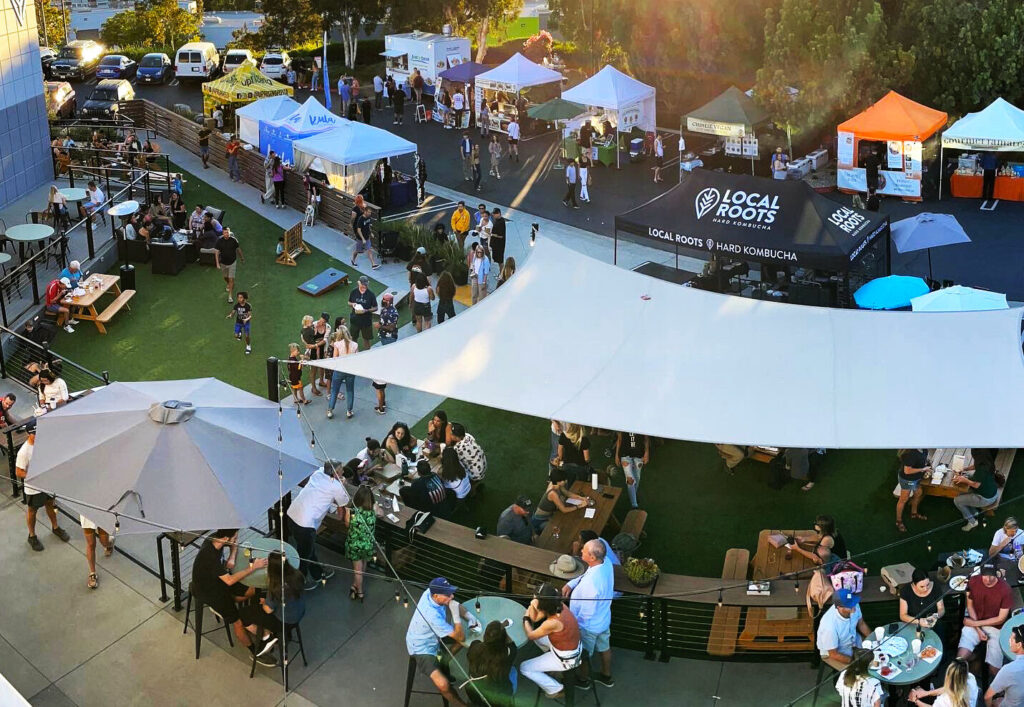
The plant-based food scene is growing throughout San Diego. And a big part of this growth is Vegan Food Pop-Up, which now boasts three monthly locations, thanks to the November 12 arrival of its Saturday market in North Park. The farmers-market-style event attracts vendors from all over Southern California, bringing everything from sushi to dog treats (including donuts and jewelry), all of it made within the bounds of a plant-based lifestyle.

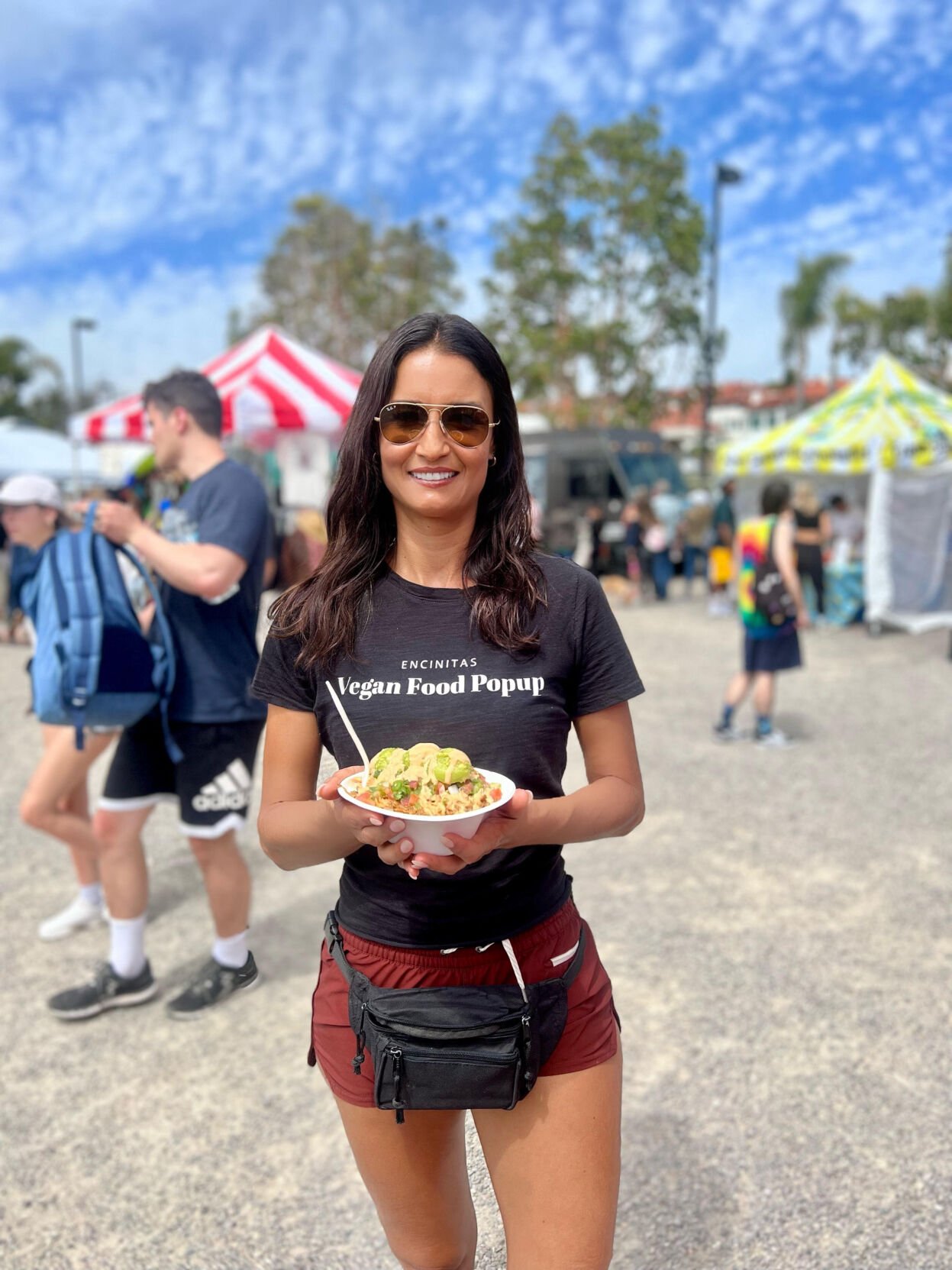
Organizer Michelle May launched Vegan Food Pop-Up as a bimonthly event in Encinitas back in 2019. Now having made it past a few Covid-era speed bumps, VFP is expanding toward a goal of hosting a market somewhere in the county every weekend.

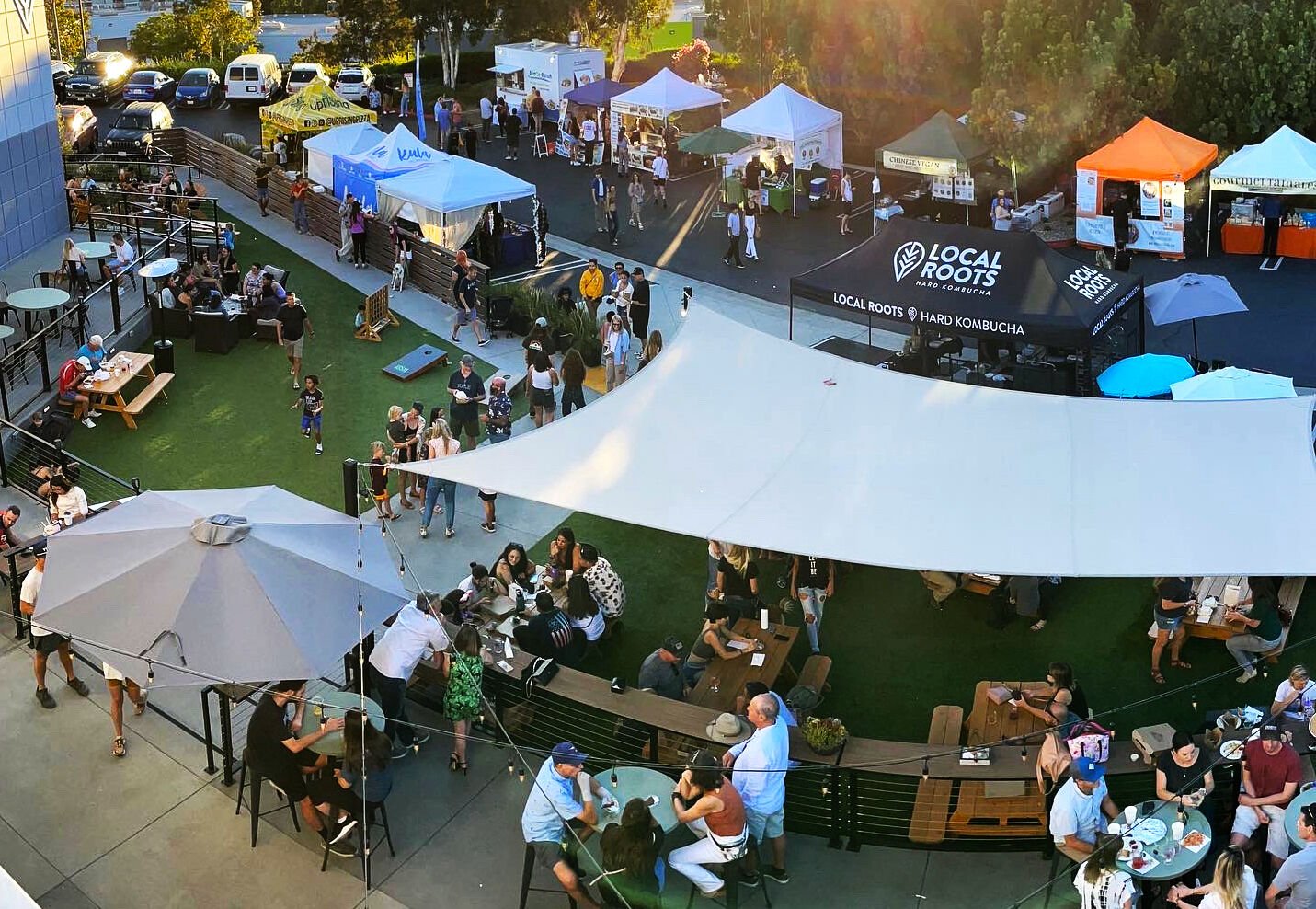
The market is currently scheduled to pop up the first Saturday of every month at the Heritage Museum in Encinitas (12 p.m.-4 p.m.), every third Friday at the Local Roots kombucha brewery in Vista (5 p.m. to 9 p.m.), and every second Saturday at the North Park Mini Park (12 p.m. to 4 p.m.), which was recently installed behind the Observatory music venue.

But May—who also operates vegan space ice cream and coconut jerky brand Seva Foods—is not finished. Approaching holidays in November and December preclude launching a fourth weekend in 2022, but the vegan entrepreneur is already on the hunt for additional spots. She says, “I’m hoping that by January we’ll be ready to announce at least one more new location.”
Michelle May Vegan popups

Michelle May Vegan popups

In addition to bringing the plant-based market to additional communities, one of the reasons May wants to increase the number of market days is that she says she’s got a waiting list of vendors wanting to participate. “There’s just such a hunger (pun intended) for these kind of events that it’s been really easy to book them,” she explains.

The pop-up expands mostly by word of mouth. In a tight-knit Southern California vegan community, Los Angeles and Orange County-based vendors have grown to appreciate San Diego’s reliable vegan demand. To the north, May speculates, a higher frequency of vegan events leads to uneven attendance and increased competition between vendors. They’re willing to come south, she says, because “They tend to do better at the pop-up than they do at some of the regular markets in L.A.”

May does her part by carefully curating each event to prevent overlap and prevent food waste. “I’m straddling this very fine line of wanting a great user experience for my attendees,” she says, “I don’t want them to wait in line too long or—God forbid—get there and all the food’s gone.” She invites roughly 50 vendors to the Encinitas market, while Vista and North Park run smaller, about 30 a piece. A few core vendors appear at every market, including plant-based fish substitute SeaCo Catch, Vegan Mirai Sushi, and Maribel y Olivia Cocina, purveyors of vegan Mexican dishes such as jackfruit and mushroom birria.

The vendor drawing the longest lines at each event is OC-based food truck The Donuttery. “I don’t think you can mention the pop-up without talking about The Donuttery,” May says, “They are without a doubt the most popular vendor that we have… the line is usually nonstop.”

While most of the food vendors represent 100 percent plant-based businesses, May is open to omnivores that serve vegan-friendly menus. One example, Sabor Piri Piri Kitchen, appears regularly at farmers markets serving traditional dishes of Mozambique, but for the pop-up it forgoes chicken curries for the broccoli, black eyed peas, and collard greens of its vegan menu.

the-donuttery.jpeg

the-donuttery.jpeg

Similarly, the baker behind market mainstay Bonjour Patisserie has found ways to produce plant-based versions of traditional French pastries including croissants and crème brûlées. “He’s worked really hard to source some really high-quality vegan butters,” says May, noting Bonjour will be one of the vendors appearing in North Park.

Clearly, culinary diversity is a priority at all the pop-ups, but perhaps the best reason to attend regularly is that vendors at the pop-up have been the first to introduce local vegans to a growing spate of plant-based meat alternatives coming to market. The past year has witnessed the introduction of meat replacements by Omni Foods, Next Meats, and Nature’s Fynd, which makes sausage and cream cheese out of mushrooms. Attendees can be the first to try these meaty treats, in addition to activities like tarot card readings, henna painting, and reiki massage.

Ian Anderson

About Ian Anderson

Based in San Diego, Ian Anderson writes contemplative features about food, drinks, travel, and culture. On the side, he authors left coast road trip guidebooks, and is currently at work on a collection of autobiographical essays, Stories from Before We Were Connected. He did not form British prog rock band Jethro Tull in 1967.

Subscribe to our newsletters

Select Options

By subscribing you confirm that you agree with our Terms and Conditions and Privacy Policy.

Food & Drink FEBRUARY 6, 2025

Vegan Darling Ready to Reopen in North Park

Donna Jean joins Evolution Fast Food this month in the former Village space

Vegan Darling Ready to Reopen in North Park
Photo Credit: Sam Rishe

The triangular building one block west of North Park’s iconic water tower has been a revolving door of restaurants for years. Its most recent tenants, The Village, caused a stir during the pandemic by defying stay-at-home orders. Before that, Anthem Vegan held on for about a year, preceded by Lil B’s Urban Eatery (whose space-age gaudiness I actually loved). Johnny R’s Family Restaurant mesmerized passersby with its rotating sign before my time. 

The TL;DR is that El Cajon Boulevard has a long history of feeding hungry crowds of vegans, carnivores, and everyone in between. 

Soon, it’ll host a partnership a long time in the making, when local vegan concept Donna Jean joins similarly plant-based Evolution Fast Food on Thursday, February 13 for the next chapter of both the space and the businesses.

When Donna Jean first got word they had to vacate their Bankers Hill location they’d occupied since 2017, it led to a bit of a scramble to find a new spot, says director of operations Leslie Funabashi. “Rent has increased dramatically in San Diego,” she says. It was pure chance they heard about the former Village location becoming available, even before it was listed online. “It was just kind of a lucky break, and it all ended up working out.”

Evolution Fast Food faced a similar involuntary eviction notice after 15 years in Hillcrest, but with one shared owner already operating both businesses, it made sense to join forces. Evolution opened in the North Park location this past December, and Donna Jean got their keys to the shared space just this week. Despite the tight timeline, Funabashi says they’ll be open for Valentine’s Day, one of their busiest holidays. 

Because of both pent-up demand and the popularity of Valentine’s Day, she says Donna Jean is aiming to open for to-go orders by this weekend. However, with some accelerated construction projects like a new patio and pizza oven installation, she’s not 100 percent sure and urges guests to double-check their Instagram page to confirm. 

“If we do end up opening to-go, that will be all over my social media,” she promises. But reservations for both Valentine’s Day and the rest of February are now open on Donna Jean’s website. “I recommend that, because I already have a huge amount of requests,” she warns.

Funabashi says they anticipate greater success than the space’s predecessors, thanks in part to both the symbiotic relationship between the two businesses as well as the building’s size. It proved to be a hindrance for a single business, but “there’s a huge kitchen space in this restaurant, like it was already almost made for two concepts to exist together,” she explains. Donna Jean will command most of the indoor seats for onsite dining, while Evolution’s more grab-and-go style will have a few counter seats as well as their own small patio. 

San Diego restaurant Pali Wine Co. featuring Valentine's Day Dinner specials in 2025

Besides the venue, much will stay the same. Donna Jean’s hours are still lunch and dinner Wednesday through Sunday, weekend brunch, dinner on Monday, and closed Tuesdays. (There’s a chance it’ll open for lunch on Mondays eventually, but Funabashi says that’s a future maybe.) While they’ve been closed, the group took the opportunity to evaluate how to best serve their customers in both San Diego and Los Angeles. 

“We’ve made some changes to our pricing to be more affordable for people,” she says, emphasizing that this doesn’t mean relaxing their quality standards. Steps like making their own carrot cashew instead of buying it and adding new pasta options to the menu will allow Donna Jean to remain an everyday option for people, not just for special occasions—or just for vegans. “We want to be able to be accessible to as many people as possible,” she says. “We’re looking forward to being a part of such a vibrant neighborhood.”

Courtesy of Olivewood Gardens

San Diego Restaurant News & Food Events

Support Olivewood Gardens’ Mission At The Seedling Soireé

Olivewood Gardens, the nearly eight-acre garden and interactive learning center in the heart of National City, is one of those incredible resources that (I personally feel) not enough people know about. If you’re interested in learning about their mission or supporting their efforts to change the city’s relationship with food and nature, their annual Seedling Soireé on Saturday, May 31 is a great time to pony up. Join chefs, gardeners, farmers, and other local experts for a night of drinking, dining, and bidding on items during their fundraising auction. Can’t make the event? Pop by their weekly produce stand on Thursday mornings to pick up fresh produce at whatever price you can afford.

Beth Demmon

About Beth Demmon

Beth Demmon is an award-winning writer and podcaster whose work regularly appears in national outlets and San Diego Magazine. Her first book, The Beer Lover's Guide to Cider, is now available. Find out more on bethdemmon.com.

Food & Drink JULY 14, 2022

Teach Me Something: How to Cook Plant-Based Dishes in a Carnivore World

We spoke with local chefs and restaurateurs to get the best tips for making mouth-watering veggie dishes

Teach Me Something: How to Cook Plant-Based Dishes in a Carnivore World
Civico 1845
Civico 1845

Civico 1845

Civico 1845

Let’s be honest. Plant-based cooking in some states is a pretty grim experience, bordering on an ordeal (i.e. South Dakota, where not much grows except cows). But San Diego is the “farm” in farm-to-table (very literally—my editor tells me that when Alice Waters and Jeremiah Trotter and Wolfgang Puck were starting the movement in California, the farm they often pulled from was Chino in Rancho Santa Fe). San Diego’s weather and soil yields an unnaturally long growing season that blows the mind of any recently transplanted chef. Plus, San Diego County’s more than 5,000 farms rank tops of any county in the U.S.

End result? An infinite array of vegetables. And better ones. Now that it’s summer, we’re talking peak plant—with stone fruits, strawberries, tomatoes, oranges, you name it.

Even so… and no matter how far the plant-based arts have come, there is still a stubborn resistance movement among some San Diegans.

“They automatically think no cheese, no butter, no meat, means no flavor,” says Pietro Gallo, executive chef of Civico 1845 in Little Italy. “It really all comes down to salt, seasoning and sauces, just like any carnivorous dish.” The Italian restaurant relaunched its vegan menu in May (an Italian restaurant with a full vegan menu is still a rarity), adding dishes like linguine al verde, topped with spinach pesto, marinated red beets, zucchini, lemon zest, and roasted hazelnuts.

On behalf of the reticent omnivores, I sought the advice of Gallo and other San Diego plant-based specialists on how to eat more plant-based at home, while still being excited about eating as a human practice.

Tip One: Soak Your Veggies

Olive oil, balsamic vinegar, and citrus. Bathe those veggies—all of that marinating will inject them with a ratcheted-up flavor and natural fats. “Give your vegetables time to absorb those flavors and they completely transform into something new and delicious,” Gallo says. “There is a lot of citrus in Calabrian cooking in general.”

Tip Two: Shop Local, Duh

Having access to some of the world’s best fruits and vegetables, do the logical thing and ascertain them. Even the most average cuts of meat will taste pretty delicious thanks to the presence of fat. But no marinade can salvage bad veggies (for instance, tomatoes that are picked unripe in Florida, packed onto trains, gassed to ripen, and landing in California weeks later). Plants start to deteriorate in flavor and nutrients the second they’re plucked from the ground, so the best plants are obviously at farmers markets—scattered all across the county, from Oceanside to Imperial Beach. That’s the key to the main dishes and vegan baked goods at plant-forward Parakeet Cafe, says co-owner Carol Roizen. Like the just-dense-enough vegan banana oat muffin, which are indistinguishable from the traditional versions.

Tip Three: Spice It Up

The spice rack is the cook’s toolbox. Lean into it, especially with plants. Also, get fresh herbs which taste far more “alive” and fresh. Powerhaus Pizza in Pacific Beach specializes in high-protein and alternative pizza crusts like whole-grain with ground flax and plant protein. And owner Anisha Blodgett and her team use a healthy amount of fresh basil, garlic, and lemon juice. For their Margherita pizza, she doesn’t just use basil—she covers the entire pie with it.

Tip Four: Texture, Texture, Texture

When cooking at home, I use pepitas (pumpkin seeds) on everything, from egg and cheese breakfast tacos with a squeeze of Sriracha to oatmeal. “I like using different kinds of nuts, like sunflower or pumpkin seeds, sprinkling on different textures and adding to the flavor profile,” Blodgett says. Readers can also roast veggies for a crispier texture, puree for silkiness, hand-mash for somewhere in between.

Tip Five: Keep It Simple

Roizen saves her simplest and most salient point for last.“Start with the food that you already love,” she suggests—then add plants. “For example, if you love lasagna, maybe find a recipe to make it with mushrooms instead of meat, you might be surprised how good it tastes.”

Ligaya Malones grew up in Kaua’i, Hawai’i and is a San Diego-based writer covering the intersection of food, travel, and culture. Her work has appeared in publications including Food52, Condé Nast Traveler, Lonely Planet, and Salt & Wind Travel.

Food & Drink JUNE 26, 2020

Vegan Death Metal Restaurant Adapts with “Crypt Sessions”

Kindred recasts half their restaurant for elaborate seven-course pop-ups

Vegan Death Metal Restaurant Adapts with “Crypt Sessions”
Photo courtesy of Kindred

It’s maddening enough rebuilding your restaurant for pandemic dining. Everyone’s give-up instinct is inflamed. Many of your trusted business practices have been deep fried into oblivion, and owners have to create new ones from the ashes. They have to reinvent with skeleton crews, since the shutdown meant most staff was laid off. It’s at that point that all employees become co-architects of an entirely new model.

“There was an empowering of our staff to step up and own our solutions,” says Kory Stetina, owner of South Park’s vegan death metal restaurant, Kindred. “Including efforts they made to help our other staff out, working with grants and getting employee meals set up.”

Dining During COVID / Kindred Food

Dining During COVID / Kindred Food

Photo courtesy of Kindred

Stetina and his crew’s solution? “Kindred Crypt Sessions,” where they transformed half their space into a restaurant-within-a-restaurant for a series of seven-course pop-up dinners (five food courses, two cocktail courses). So much of Kindred’s appeal depends on the art of its decoration (from the ornate grandma-on-psychedelics wallpaper, to the massive black demon head lording over the dining room). The thought of making it a cubicle farm of social-distance Plexiglas crushed their soul a bit.

“We were a bit skeptical that it would be a diluted version of itself,” he says.

Dining During COVID / Kindred Interior

Dining During COVID / Kindred Interior

Photo courtesy of Kindred

Crypt Sessions solves this. By selling tickets ahead of time, Stetina can send the “do’s and don’ts” over email, and doesn’t have to clutter up the environment with handmade lists of rules. Guests enter through a separate side alcove. A few tables in the middle of the dining room have been turned into a plant installation, a lush way to ensure six feet. A chandelier in the bar has been interspersed with pulsing gothic candlelight. Flowers abound. Their pagan church windows are propped open for airflow.

“It’s the answer to ‘What if we throw out all our normal rules of efficiency and really reach for our most experimental and ambitious sense of identity?’” Stetina explains. “We envisioned guests getting lured into our space to have a private meal from these fictitious mystics that dwell inside Kindred.”

What the hell does that mean? Well, Kindred is San Diego’s version of a prog-rock band, infusing their food and drinks with Tolkienian backstory. Practically, it means using more primitive sourcing methods (foraging for local pine for one of their cocktails), ancient cooking methods (grilling, which also helps speed up the cooking process), and older-world spirits (sherry, brandy, fortified wine, Chartreuse). Menus like old archeological stone carvings. Anything to cast the vibe of the night back a few hundred years, to anywhere but now.

Dining During COVID / Kindred Cocktail

Dining During COVID / Kindred Cocktail

Photo courtesy of Kindred

It also gives the cooks a creative license they didn’t have before coronavirus, when they were too slammed to tinker. “The hope is that we strip away our constraints and do some really fun and wild things with our menu,” he says. “Start to think about some of these dishes as part of our eventual reopening.”

For Stetina, the best part about the Crypt Sessions is, because the more elaborate food requires a ton of prep, he’s been able to hire back almost 100 percent of what he calls the “heart of the house”—the kitchen staff.

“The day I had to furlough my employees was by far the worst day of my professional career,” he says, noting that through the Crypt Sessions and the daily takeout and partial dine-in service, he’s been able to hire about 60 percent of his total staff back. “The good side of all this is the conversation and understanding between restaurants and customers has become more real. We’ve been far more transparent with our financials. They’ve shown a greater desire to learn. They’re asking, ‘How can we help?’”


Kindred

1503 30th Street, South Park

Dining During COVID / Kindred Feature

Photo courtesy of Kindred

Troy Johnson

About Troy Johnson

Troy Johnson is the magazine’s award-winning food writer and humorist, and a long-standing expert on Food Network. His work has been featured on NatGeo, Travel Channel, NPR, and in Food Matters, a textbook of the best American food writing.

Vegan
Studio S JULY 25, 2026

These San Diego Companies Are Driving the Region’s Next Wave of Growth

This month, the 2026 San Diego Business Impact Awards recognized local businesses making an impact in clean energy, biotech, hospitality, and beyond

These San Diego Companies Are Driving the Region’s Next Wave of Growth
Photo Credit: Matt Furman

Renewable energy companies building hundreds of power plants. Biotech startups using artificial intelligence to create personalized medicine for children with rare diseases. Hospitality companies quietly powering thousands of local events. Consumer brands growing from beach-town startups into national businesses. These are the kinds of companies driving San Diego’s economy today, and the businesses recognized at this year’s San Diego Business Impact Awards offer a snapshot of where the region is headed.

Hosted July 23 by San Diego Regional Economic Development Corporation (EDC) and JPMorganChase, the second annual awards event honored four local companies for innovation, growth, and economic impact. More than 100 nominations from San Diego’s middle-market businesses were reviewed by a 10-person judging committee, with winners selected across four categories: startup, early-stage innovator, rising star, and established heavyweight.

Two-time honoree Jimbo Someck, founder of Jimbo’s organic grocery stores, also joined the event for a fireside chat on buying local, supporting emerging brands, and giving back to the community.

“San Diego’s strength comes from its makers and builders—the resilient people who endure great risks and overcome obstacles to build and scale a company,” says Aaron Ryan, San Diego Region Manager and Middle Market Banking at JPMorganChase & Co. “These awards aren’t just recognition; they spotlight the talent, grit, and innovation shaping our region’s future. By celebrating those who create and build, we foster connections and fuel the growth that keeps San Diego thriving.”

Photo Credit: Matt Furman

Building the Infrastructure Behind Clean Energy

Heavyweight honoree SOLV Energy has grown alongside the country’s rapid investment in renewable power. “It’s an exciting time for SOLV Energy as we are experiencing significant growth,” says CEO George Hershman. “The business has doubled over the last year and has almost double-digit growth since its inception.”

The Rancho Bernardo-based company designs, builds, operates, and maintains utility-scale solar and energy storage facilities. Since its founding in 2008, SOLV Energy has built more than 500 power plants.

Growth has translated directly into hiring. About 200 employees work from the company’s local headquarters, including roughly 20 interns. “Our intern program is a big part of the way that we grow our workforce,” Hershman says. “Last year, 43 percent of our interns became full-time employees. We believe San Diego is a great community to build and grow a high-tech infrastructure and technology company because of the incredible workforce—the ability to attract top talent and draw from world-class universities.”

Photo Credit: Matt Furman

Developing Medicine One Patient at a Time

Startup honoree La Jolla Labs is tackling one of medicine’s biggest challenges by developing personalized RNA therapeutics for patients with rare diseases—many of them children with neurological disorders like ALS. Using proprietary artificial intelligence and machine learning tools, the biotech company develops treatments tailored to each patient’s specific genetic mutation.

CEO Tamar Grossman says the recognition reflects how far the company has come despite limited resources. “We’re honored to be recognized for our ability to change and save patients’ lives and turn our lean startup into a clinical company with very minimal resources,” she says.

Grossman credits San Diego’s concentration of research institutions—including UC San Diego, the Salk Institute, and Scripps Research—with creating a pipeline of talent and collaboration. “San Diego is one of the world-leading centers for technology, genomics, and RNA therapeutics,” she says. “We have over 30 RNA therapeutics companies here, and we support each other and help with anything related to drug discovery.”

She says that collaborative spirit extends beyond formal partnerships. “You can walk around Torrey Pines, go into a café, and find colleagues from the industry and have an ad hoc conversation,” Grossman says. “That’s something very unique to San Diego.”

Photo Credit: Matt Furman

Powering San Diego’s Special Celebrations

While Snake Oil Venue Company may not be a household name, chances are many San Diegans have attended one of its events. The early-stage innovator honoree has expanded from beverage catering and mixology consulting into venue management, operating Julep Venue in Mission Hills, Bramble Bay Venue in Imperial Beach, Vesper Venue, the Chapel at Liberty Station, and five outdoor venues throughout Liberty Station—more than 500,000 square feet of event space altogether.

“We do a lot of launch parties for corporations and new products,” says CEO Mike Esposito. “I really like working on the entrepreneur side of things, where new businesses are entering the San Diego market and looking to make a splash.”

Snake Oil has executed more than 16,000 events, employed more than 1,000 people, and partnered with more than 900 local vendors, including caterers, florists, photographers, entertainers, and other hospitality businesses. The company also works with many of San Diego’s nonprofits, museums, and cultural institutions. “We get to celebrate people’s most important moments,” Esposito says. “Whether that’s a wedding, celebration of life, or quinceañera, we’re fortunate to be involved in the community in so many different ways.”

Photo Credit: Matt Furman

Growing a Beach-Town Brand into a National Business

Rising star honoree ALOHA Collection is proof that a simple idea can grow into a thriving company. Founded by two roommates who wanted a better way to carry wet swimsuits after a day at the beach, the lifestyle brand has grown into a business while maintaining strong year-over-year growth.

Now headquartered in Carlsbad, ALOHA Collection employs more than 100 people and operates its California flagship store in Encinitas, which is slated for a remodel. With roots in Hawaii, the company is known for its lightweight, splash-proof travel bags that have become a familiar sight on beaches in San Diego and beyond.

“‘Aloha’ is part of our name, but it’s also how we move through the world,” says CEO Lynna Barnard. “It’s how we show up for people, the way we travel, the way we give back.” Since day one, the company has maintained a 5 percent giveback to Hawaii conservation efforts, contributing millions of dollars over the years.

“I think what’s so inspiring about ALOHA Collection, and the founders in particular, is when you dream big, those dreams can come true when you work hard and trust in the universe,” Barnard says. “It’s inspiring to be a role model for other people wanting to start businesses from humble beginnings. Start small and watch it grow.”

Together, businesses like these form a cornerstone of San Diego’s economy—not only through the jobs and revenue they generate—but through the local workers they hire, vendors they support, and investments they make in the region. Their growth doesn’t happen in isolation; it ripples outward, strengthening the broader business community and the people who call San Diego home.

Photo Credit: Matt Furman

Partner Content
Food & Drink MARCH 2, 2020

Destination: Kindred

The thriving South Park hangout is a vital crossroads of food cultures

Destination: Kindred

If this is vegan brunch, I might bid a pretty unemotional farewell to bacon some day. If this is the vegan scene, it’s drastically more awesome than haters would like to believe. For years, I’ve considered veganism a very good thing and reflexively generalized vegans as smug, sanctimonious blowhards.

To be fair, the badgering went both ways. Vegans (some, not all) accused omnivores of being murderers driven only by our own gluttony, environmental nihilists ushering in doomsday with every callous bite. Omnivores (some, not all) in turn belittled vegans as sickly looking crusaders, just another wacky religious sect, the Scientologists of food. Eventually, I assumed we’d get to a less judgmental middle ground. Someone would give San Diego an exciting vegan restaurant and bar that was less a territorial pissing and more of a come-all plant party.

Kindred in South Park is that place. It’s a restaurant for any human, really, who likes cool things. I’ve been a fan for years. I hadn’t, however, ventured in with their late morning crowd and seen the full evolution. Now that the food is catching up with (or caught up with) the cocktails, Kindred is a force.

Their breakfast strudels are some intoxicating carbs. Our favorite is the savory shaved seitan with tapioca mozzarella and pickled peppers. It’s spicy, meaty, cheesy, bready. The cinnamon and brown sugar strudel with candied pecans and coconut syrup is flaky on the outside, pure molten, thick, and gooey cinnamon roll inside. The pancakes with bruléed bananas, bourbon butterscotch, and whipped coconut cream aren’t good for your waist size, but they are good for your soul. Their hash is also very good, with fried potatoes, black beans, smoked coconut (vegan bacon), soy curls, maitake mushrooms, charred kale, jicama salsa, and Creole aioli.

The vibe has always been modern art. It’s the massive shiny-black demon head that lords over the main dining area. What an elegant, imposing beast. It’s the ornate pink wallpaper that appears cute and grandmotherly until a closer inspection reveals illicit scenery. It’s the gothic windows and the two-top tables that look like desks pulled from pagan Sunday school, or sidecars for Wiccan motorcycles. It’s the sludgy heavy metal on the speakers offset by the flood of fresh, natural light pouring in.

Destination Kindred

Previously, plant-based restaurants had a reputation as antiseptic prayer rooms for self-serious wellness people. Kindred owner Kory Stetina decided not to do that, and enlisted art-restaurant makers Consortium Holdings (Morning Glory, Born & Raised) to build a noisier temple for more entertaining urges.

In doing so, he positioned Kindred to be the Casbah or CBGB of vegan food and drink.

Because the plant-based movement is not just here to stay—it’s remodeling a sizable wing of the restaurant industry. Overall, the stats are still small. Gallup reports that about 5 percent of Americans claim to be vegetarian, and 3 percent vegan. But a report by The Economist in late 2018 raised eyebrows when it reported a full quarter—25 percent—of Americans in the 25-34 age demo claim to be either vegetarian or vegan.

There’s a good chance some of those people secretly cheeseburger in the dark. But even if they’re pretending to be plant-based, that means the lifestyle is now an aspiration, a status badge for an entire age demo.

If your eyes are open, you know it’s at least partially real. Meatless Mondays have been growing in number for years. Serena Williams and Tom Brady are vegan. So are Ellen Degeneres, Bill Clinton, Joaquin Phoenix, Paul McCartney—just lots of famous people. Plant-based meat companies like Impossible and Beyond are booming. Some of the world’s top chefs have plant-based menus (at French Laundry, we preferred the plant-based menu) or even entire restaurants (like ABCV from Jean-Georges in New York).

In San Diego, Kindred is the weird and fuzzy center of the movement. It’s not a trap meant to get omnivores drunk on Prohibition cocktails and guilt them into declaring legumes the one true god. At least from an outsider’s perspective, there doesn’t seem to be any agenda aside from being an exciting restaurant. And it’s pulling this off.

Kindred’s vision of the future isn’t the only one, but it is one of them. And their brunch is excellent whether you’re omnivore, vegan, or merely ambivalent and hungry.

Destination Kindred 3

Kindred, 1503 30th St., South Park

Troy Johnson

About Troy Johnson

Troy Johnson is the magazine’s award-winning food writer and humorist, and a long-standing expert on Food Network. His work has been featured on NatGeo, Travel Channel, NPR, and in Food Matters, a textbook of the best American food writing.

Archive JUNE 20, 2019

Four favorites to try at Scoop San Diego ice cream fest

Summer is a dish best served cold

Four favorites to try at Scoop San Diego ice cream fest
Photo courtesy of Scoop San Diego

San Diego’s newest food festival is the ice cream-crazed Scoop San Diego, a half-day bonanza of 2-ounce ice cream, gelato, and vegan ice cream samples. Close to two dozen shops from all over San Diego—including the likes of An’s Dry Cleaning, Holy Paleta, and Snoice—will be on hand.

The inaugural event takes place on June 23 from 11 a.m. to 4 p.m. at North Park Way between 30th Street and Granada Ave.

Individual tickets ($20) buy 10 samples, while shareable tickets ($35) buy one sample from each vendor and can be shared with an unlimited number of people.

Not only is Scoop San Diego dog-friendly—dog ice cream will be available—but it’s for a good cause. The event benefits the Monarch School, whose students will serve an ice cream of their making (overseen by Stella Jean’s Ice Cream) created with produce grown in their school garden.

Here are a few of our faves to look for:

Bing Haus

The Southeast Asian-style rolled ice cream takes shape before your eyes as it gets poured onto a cold plate, mixed with toppings like fruit and cookies, then scraped into tight rolls.

Holy Paleta

Angelica Gonzalez trained in Mexico City and Guadalajara before creating the distinctly Mexican flavors (like mango chamoy and avocado mango), as well as frozen takes on some classics (like Key Lime, cookies and cream, and banana Nutella) for her Bonita-based popsicle business.

An’s Dry Cleaning

From-scratch gelato in refined flavor combinations like watermelon mint, rice milk cinnamon, and honey blueberry. So good you won’t mind if you get a few drops on your freshly laundered clothes.

Stella Jean’s

Making their signature Earl Grey citrus tea cake is a two-day process that requires steeping the milk with tea, baking tea cake with Thai butterfly pea flowers (for color), and folding it all together with blueberry compote.

Four favorites to try at Scoop San Diego ice cream fest

Photo courtesy of Scoop San Diego

Partner Content JULY 21, 2026

You….Elevated: San Diego Magazine’s Guide to Aesthetics 2026

San Diego aesthetic medicine providers help you look—and feel—your best

You….Elevated: San Diego Magazine’s Guide to Aesthetics 2026
SDM-SS_ AestheticProcedures_2026

San Diego is home to world-class aestheticians, plastic surgeons, and dermatologists who can help turn back the hands of time and revitalize tired, damaged skin. Enhancing your look is a spectrum. Treatments range from noninvasive procedures like lasers or injectables to the big guns, like a deep-plane facelift—many with better results and less downtime than ever thanks to advanced techniques and technology. Whether you’re a Botox beginner or an aesthetic medical care veteran, San Diego aestheticians and aesthetic medicine providers can help you look and feel like the best version of yourself.

Changes Plastic Surgery & Spa

Changes Plastic Surgery & Spa is San Diego’s premier destination for aesthetic surgery, led by world-renowned plastic surgeon Dr. Michael Rossi. Celebrated for his artistry, precision, and natural-looking results, Dr. Rossi is known for creating customized Mommy Makeovers that help women restore confidence and reclaim their bodies after pregnancy. His expertise also extends to comprehensive post-weight loss body contouring, addressing excess skin and skin laxity with sophisticated surgical techniques tailored to each patient’s unique anatomy and goals. From breast and body rejuvenation to deep plane facelifts and eyelid surgery, every treatment plan reflects Dr. Rossi’s commitment to surgical excellence, personalized care, and transformative results that look as beautiful as they feel.

Cosmetic Laser Dermatology

At Cosmetic Laser Dermatology, the board-certified, internationally acclaimed team has the power to erase 10+ years of aging in a single treatment. The center’s 60+ laser, light, and energy devices do it all—refining texture and tone, calming acne, minimizing pores, and erasing that ill-advised spring break tattoo of yesteryear. Their dermatologists take it further by stacking multiple devices in one session for synergistic results—the philosophy behind their signature Take5 and Take10 treatments, the latter capable of removing a decade-plus of aging in just one visit. Add a full suite of injectables, body sculpting, and vein treatments for every skin type and tone, and it’s no wonder the practice’s medical director was named the #1 cosmetic dermatologist in America by Newsweek two years running.

Cultivé Medical Aesthetic

If it’s subtle, lasting results you’re after, Cultivé Medical Aesthetics has you covered. Cultivé purposely combines aesthetics and wellness. The Bankers Hill practice offers a full menu of services designed to improve skin health and support the three pillars of aesthetic aging: skin tone and texture, volume loss, and laxity. Cultivé offers a wide range of aesthetic treatments, including collagen boosting powerhouse Morpheus8, biostimulators like Sculptra and Radiesse, PRP therapy, laser hair removal, VI peels, and regenerative skincare treatments. They also provide wellness-focused services such as hormone replacement therapy, IV therapy, and medical weight management programs.

Starlite Aesthetics and Wellness 

Starlite Aesthetics and Wellness focuses on enhancing natural beauty through science-backed treatments tailored to each client’s goals. Michelle Langston, MSN, APRN, FNP-BC, founded Starlite on the principle that aesthetic medicine should be precise, personal, and rooted in wellness. The boutique aesthetic practice in La Jolla combines modern medical aesthetics with holistic wellness principles for refined results personalized to each patient. Langston has spent more than a decade honing her skills in advanced injectables, regenerative therapies, and anti-aging care. Starlite offers regenerative therapies rooted in science, promoting skin rejuvenation using a multiple modality approach. Service offerings include RF microneedling, wrinkle relaxers, facial balancing and more.


The “It” List

In the rapidly advancing field of aesthetic medicine, it can be hard to tell what’s worth the hype. Here are some of the latest, most advanced, and most popular options out there.

Morpheus8: This combination of microneedling and radiofrequency (RF) energy activates your skin’s own collagen and elastin without the downtime associated with some
laser treatments. It can be used to reduce wrinkles, tighten skin, improve skin tone, contour the jawline, and minimize acne scars.

Exosome Therapy: This cutting-edge treatment uses protein-packed nanoparticles to trigger repair and rejuvenation at the cellular level. Often used post-microneedling or lasers, exosomes penetrate deep into the skin to stimulate collagen production.

Post-GLP-1 Skin Removal: Rapid fat loss prompted by GLP-1 medications, including semaglutide, tirzepatide, and retatrutide, can leave users with sagging skin. Skilled surgeons can remove excess skin and reshape the figure.

Treatment Stacking: Sometimes it’s the more the merrier when it comes to aesthetic procedures. Combining multiple non-surgical treatments in a single session allows users to address several issues efficiently, with less downtime.

Partner Content

Eat Like a Local (Who Knows a Guy).

Restaurant news, culinary storytelling, and Troy Johnson’s sharp takes delivered straight to your inbox twice a month.

Close the CTA

Contact Us

1230 Columbia Street, Suite 800,

San Diego, CA