The unprecedented experience of the first two years of this decade has required organizations to adapt fast and pivot quickly to support their workforce through a global public health pandemic. As companies emerge from the crisis, they now face critical challenges. How do companies embrace new dynamic working to their advantage? And what does this mean for the future of commercial real estate?
To provide answers to these questions, JLL has surveyed 1,100 strategic leaders around the globe on the issues influencing their decision making.Here are our five key takeaways for San Diego businesses.
1. Hybrid working is here to stay
Strategic decision-makers should not ignore the lasting impact of hybrid work. It should now be considered a permanent feature of the working landscape. With 55% of employees currently working in some hybrid fashion, it is important for San Diego organizations to recognize that this flexibility is essential to attracting and retaining talent.
2. Investing in quality office space
While hybrid working options will be critical, organizations also need to ensure their space is optimized to encourage employees to spend time in the office. Our survey participants tell us they want their future office to be a collaborative, creative space that fosters employee wellbeing and maximizes productivity.
The emphasis on quality office space in San Diego has placed a near-record-high 37% premium on Class A product compared to Class B, with rents rising by 3.4% year-over-year. The flight to quality office can be seen throughout San Diego and across the country.
3. Environmental and social aspirations
Organizations must increase investment in ESG (environmental, social and governance) solutions as environmental and social aspirations are now mainstream. 77% of leaders polled say their employees will increasingly expect the workplace to have a positive impact on the environment. As a result, green credentials and decarbonization roadmaps are at the forefront of decision-makers’ thinking.
San Diego has some of the most aggressive Net Zero Carbon targets in the country with a full Net Zero commitment by 2035. To reach this goal, the city has implemented changes like requiring new residential and commercial developments to have an all-electric reach code starting in 2023. They have also set a 2030 target to phase out 45% of natural gas from existing buildings with the commitment increasing to 90% by 3035.
JLL 2
4. Intelligent technology investments
As corporates look to elevate the performance of every aspect of their organization, it follows that improved access to technology and greater visibility of data leads to better decision-making. 59% of leaders polled say they either do not regularly capture/report real estate data or only do so intermittently. Deeper investment in technology will be key to unlocking new opportunities to boost performance and productivity for local businesses.
5. Real estate needs are becoming more complex
Most organizations are not equipped to tackle the new challenges of the future of work alone. They will increasingly seek input from specialists aligned to their priority areas of investments, and our research reveals that decision-makers are looking to augment their internal capabilities through working with external partners.
Click here to download the full survey results and report.
About JLL
At JLL San Diego, we have a team of over 100 local professionals who specialize in helping clients buy, lease, sell, build and manage a variety of assets including office, industrial, retail, residential and hotel real estate.
With over 1,300 lease transactions totaling 18.1 million square feet and $5 billion in sales under our belt since 2019 – our trusted advisors have the local market knowledge and insight you need to address changing business demands, challenges, and risks.
Click here to find out more about how we can help you prepare for the future of work.
.
Studio S
SEPTEMBER 11, 2026
Vi at La Jolla Village – Senior Living in the Heart of Everything
At Vi at La Jolla Village, residents don't have to choose between security and adventure, connection and independence. They get all of it.
Today’s seniors are more connected than ever, with a renewed focus on retirement as a time of discovery and enriching experiences. The ultimate reward for a retirement well-earned is the wisdom to appreciate it all, and what better place to enjoy that unique perspective than Vi at La Jolla Village, in the heart of San Diego.
All-access pass to good living.
As a Continuing Care Retirement Community (CCRC), Vi provides access to a connected and fulfilling community while making it easy to plan for future care, should the need ever arise. With a care plan in place, residents enjoy greater financial predictability and long-term value, freeing them to focus on making the most out of retirement.
Resort-style amenities at the epicenter of a cultural hub like San Diego offer a retirement experience unlike any other. Paired with exceptional dining, spacious accommodations and dedicated staff, the best of maintenance-free living is all around. And with the introduction of Vista 360 Well-Being, Vi’s panoramic approach to wellness, there are more ways than ever for residents to access it all.
The harmony of mind, body and community.
Courtesy of Vi at La Jolla Village
The key to longevity is striking the right balance in maintaining an active lifestyle with an active mind in a fulfilling community. With newly renovated community spaces and restaurants, Vista brings a variety of opportunities for residents to elevate their well-being through Vi-exclusive “Signature Experiences.”
Vista Enrich takes an evidence-based approach to brain vitality, keeping residents at the forefront of cognitive health through exergaming (exercising + gaming), nutritional plans and informative workshops. It is also home to The Brain Vitality Studio, an innovative facility dedicated to cognitive fitness that has garnered national recognition.
Vista Discover invites residents into stimulating educational experiences, from chef-led cooking demos and guided wine tastings to lectures at local universities and intimate lectures following cultural outings.
While Vista Enrich focuses on brain health and Vista Discover engages residents intellectually, Vista Explore cultivates a sense of adventure through curated travel and local excursions. But broadening one’s horizons doesn’t always require a plane ticket. One recent event brought a taste of the world right to the community: an onsite “jazz cruise” featuring live music and global cuisine served at a series of themed “ports” all within the community’s own ballroom.
“Location, location, location”
Courtesy of Vi at La Jolla Village
One of the biggest perks of life at Vi at La Jolla Village is its proximity to just about everything. With easy access to transportation and local attractions just steps away, residents can explore and engage with their community at their own pace.
“There are trolley and bus stops within a 5-minute walk that will get you to the beach, UCSD Campus, medical appointments, downtown La Jolla or San Diego, et cetera. We rarely use our car,” said resident Tom Yager.
With the best of San Diego just steps away, residents don’t just live in the city, they live within reach of everything that makes it special.
The best of all worlds.
Courtesy of Vi at La Jolla Village
At Vi at La Jolla Village, retirement isn’t a chapter to slow down; it’s an invitation to discover more. Tailored community experiences created by Vista, paired with the vibrant pulse of San Diego just outside the door, mean that residents don’t have to choose between security and adventure, connection and independence. They get all of it.
This is what an all-access pass to good living looks like: the comforts of an elevated lifestyle, a community built for growth and a city made for discovery – all in one place.
To learn more about Vi at La Jolla Village or for details on available floor plans, visit ViatLaJollaVillage.com/SDM.
Meet San Diego’s leading healthcare professionals, delivering exceptional medical and dental care through innovation, expertise, and dedication to patients.
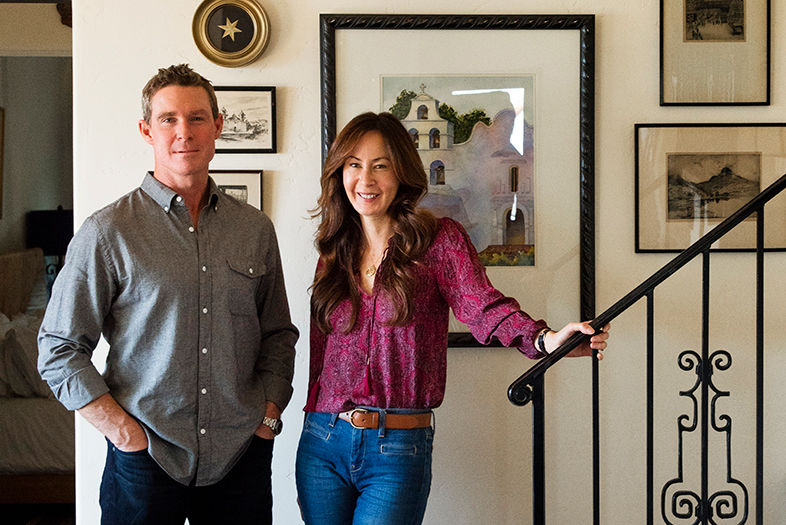
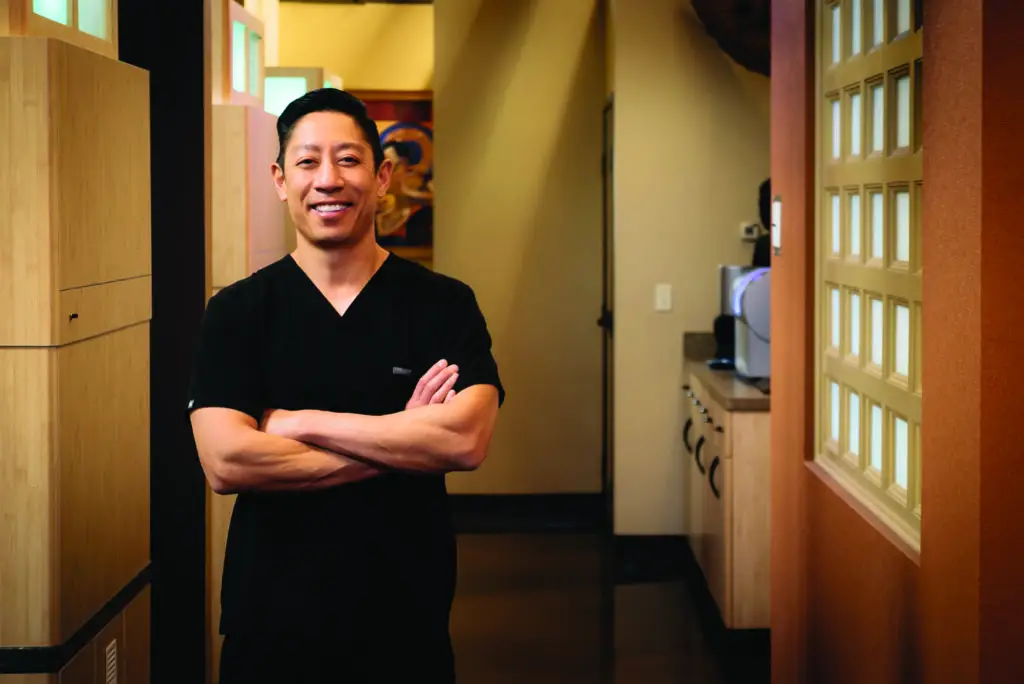
At Sutra Dental Spa in La Mesa and Coronado Dental Group, dentistry feels less like an appointment and more like a self-care day. Led by nationally recognized cosmetic dentist Jimmy C. Wu, DDS, both practices combine advanced dental technology with a relaxing space.
“Our top priorities are safety, comfort, effective treatment, and results that look and feel natural,” says Dr. Wu, founder of Sutra Dental Spa and cosmetic dentist for over 25 years. “We’re proud to offer the most advanced dental technologies and techniques available in a calming, even meditative, environment.”
Patients can turn to both practices for everything from routine dental care to cosmetic services such as porcelain veneers and teeth whitening, as well as full mouth reconstruction and single-visit smile makeovers and crowns. At Sutra Dental Spa, the experience goes a step further, with Asian-inspired art, a Zen oxygen bar, aromatherapy pillows, and even in-appointment massage therapy.
“Dentistry has always been thought of as something you have to do versus something you want to do,” says Dr. Wu. “My goal is to change that perception for everyone.”
Visit
Sutra Dental Spa 7851 University Avenue, Suite 206, La Mesa, California 91942 | 619-589-6060 sutrads.com
Coronado Dental Group 1301 Ynez Place, Coronado, California 92118 | 619-435-6227 coronadodentalgroup.com
Faces of Healthcare 2026: Spine & Brain Institute of San Diego
Meet San Diego’s leading healthcare professionals, delivering exceptional medical and dental care through innovation, expertise, and dedication to patients.
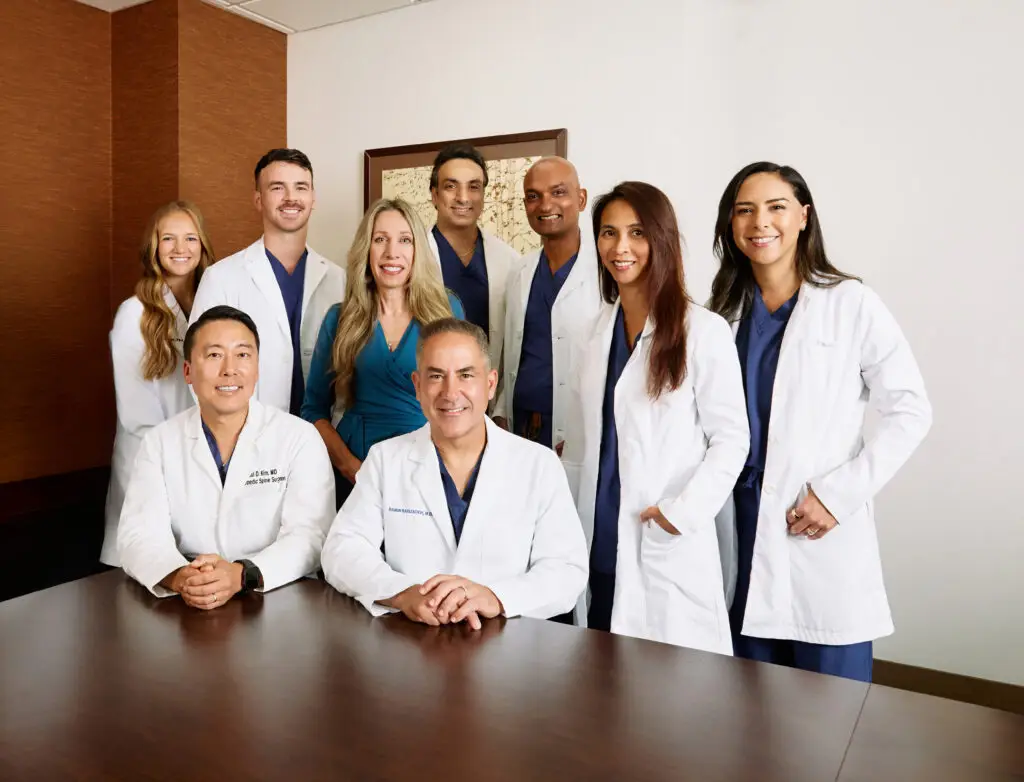
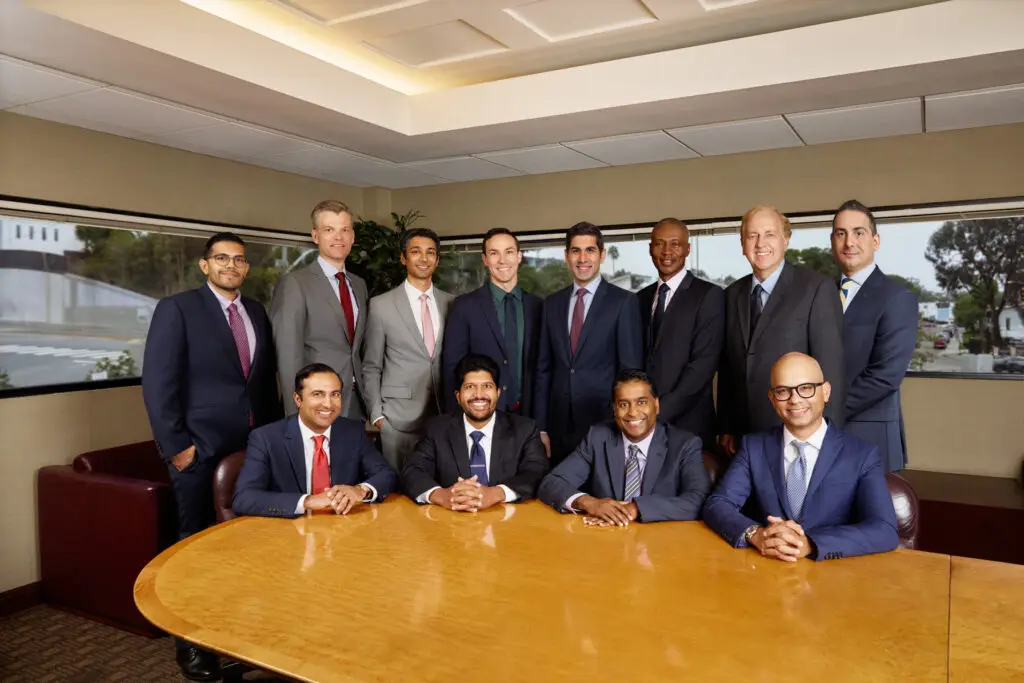
Ramin Raiszadeh, MD; Paul D. Kim, MD; Sunil Jeswani, MD; Sabareesh Natarajan, MD; Evan Nigh, MD
At Spine and Brain Institute of San Diego, every patient gets innovative, advanced care.
Dr. Ramin Raiszadeh, president and co-owner, is a board-certified orthopedic spinal surgeon who specializes in disc-replacement surgery. Co-owner Dr. Paul D. Kim handles complex disorders across the cervical, thoracic, and lumbar spine, leaning on nonsurgical and minimally invasive techniques. He’s known for being upfront with patients. Dr. Sunil Jeswani brings a thoughtful, hands-on approach to complex cranial and spinal conditions, from brain tumors and cerebral aneurysms to arteriovenous malformations and spinal deformities. Dr. Sabareesh Natarajan is one of few neurosurgeons in Southern California with dual board certification in neurosurgery and neurointerventional surgery—an expert in vascular disease and brain tumors. Dr. Evan Nigh, a board-eligible orthopaedic spine surgeon, has published research in peer-reviewed journals and presented at national conferences.
“Sharp Grossmont Hospital has become the epicenter for spine surgery in this country,” says Dr. Raiszadeh. “Here, the nation’s most talented neurosurgeons and spine surgeons perform the entire spectrum of neural axis surgeries, setting the gold standard for care.”
Visit
6719 Alvarado Rd, Suite 308, San Diego, CA 1671 West Main St, Suite A, El Centro, CA 2125 Citracado Parkway, Suite 310, Escondido, CA 6260 El Camino Real, Suite 201 Carlsbad, CA 619-265-7912 | sbiosd.com
Faces of Healthcare 2026: San Diego Eyelid Specialists
Meet San Diego’s leading healthcare professionals, delivering exceptional medical and dental care through innovation, expertise, and dedication to patients.
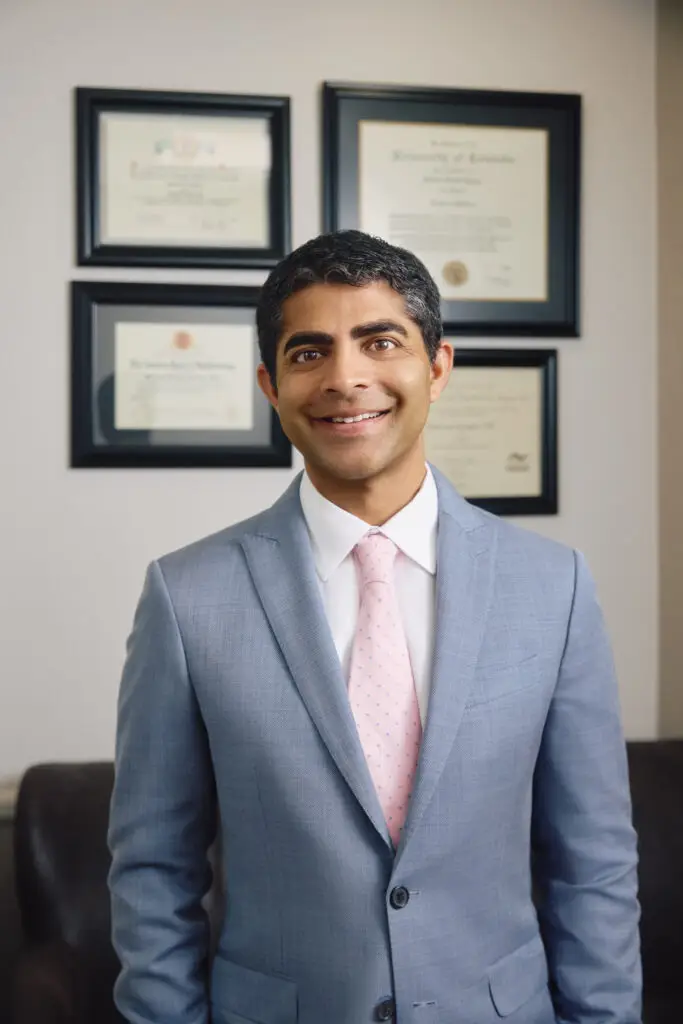
True luxury lies in mastery. At San Diego Eyelid Specialists, Dr. Srinivas Iyengar has devoted his career to a single pursuit: the artistry of eyelid surgery, elevated to its most refined form.
A fellowship-trained oculoplastic surgeon, Dr. Iyengar belongs to a rarefied tier of his field. He serves as a board examiner for the American Society of Ophthalmic Plastic and Reconstructive Surgery—the credential by which other surgeons are measured—and holds dual Top Doctor recognition for over 10 years from his physician peers in both ophthalmology and plastic surgery. His expertise has taken him around the world, teaching advanced techniques through ORBIS International and the Flying Eye Hospital.
His signature philosophy, Volumetric Harmony, reflects a discerning eye for proportion and balance, restoring youthful elegance while honoring the individuality of every face.
From his boutique offices in Encinitas and La Jolla, Dr. Iyengar offers a bespoke surgical experience for those who accept nothing less than exceptional. For the eyes, there is no substitute for a true eyelid expert.
Visit
8950 Villa La Jolla Drive, B206, La Jolla, California 92037 477 North El Camino Real, A304, Encinitas, California 92024 858-432-2700 | @eyelidmd | sandiegoeyelids.com
Faces of Healthcare 2026: San Diego Cardiac Center
Meet San Diego’s leading healthcare professionals, delivering exceptional medical and dental care through innovation, expertise, and dedication to patients.
San Diego Cardiac Center provides truly comprehensive cardiovascular care, from prevention to heart transplantation. This year, 12 of their physicians were recognized as Top Doctors, including Dr. Brian Jaski, a heart failure and heart transplant specialist who has been in practice for 41 years. During that time, he oversaw San Diego’s first heart transplantation and has been voted a Top Doctor by his peers in 21 of the past 23 years.
With affiliations across the Sharp and Scripps hospital systems, San Diego Cardiac Center provides care at locations in Kearny Mesa, El Cajon, and Chula Vista. Their physicians specialize in preventive cardiology, electrophysiology, interventional cardiology, advanced heart failure, structural heart disease, peripheral arterial disease, venous disease, cardiovascular diagnostics, and clinical research.
As one of San Diego’s longest-standing private medical groups, they’re committed to one goal: helping our patients feel better and live longer.
San Diego Cardiac Center’s Vein Clinic provides comprehensive evaluation and treatment for superficial and deep vein conditions, including specialized care for venous insufficiency, DVT and pulmonary embolism. Diagnostic testing, procedures, and follow-up care are provided in-house, with personalized treatment plans ranging from conservative management to minimally invasive options.
Visit
3131 Berger Avenue, San Diego, CA 92123 300 S. Pierce St, Suite 102, El Cajon, CA 92020 750 Medical Center Ct, Suite 10, Chula Vista, CA 91911 sdcardiac.com
Faces of Healthcare 2026: San Diego Association of Physicians of Indian Origin
Meet San Diego’s leading healthcare professionals, delivering exceptional medical and dental care through innovation, expertise, and dedication to patients.
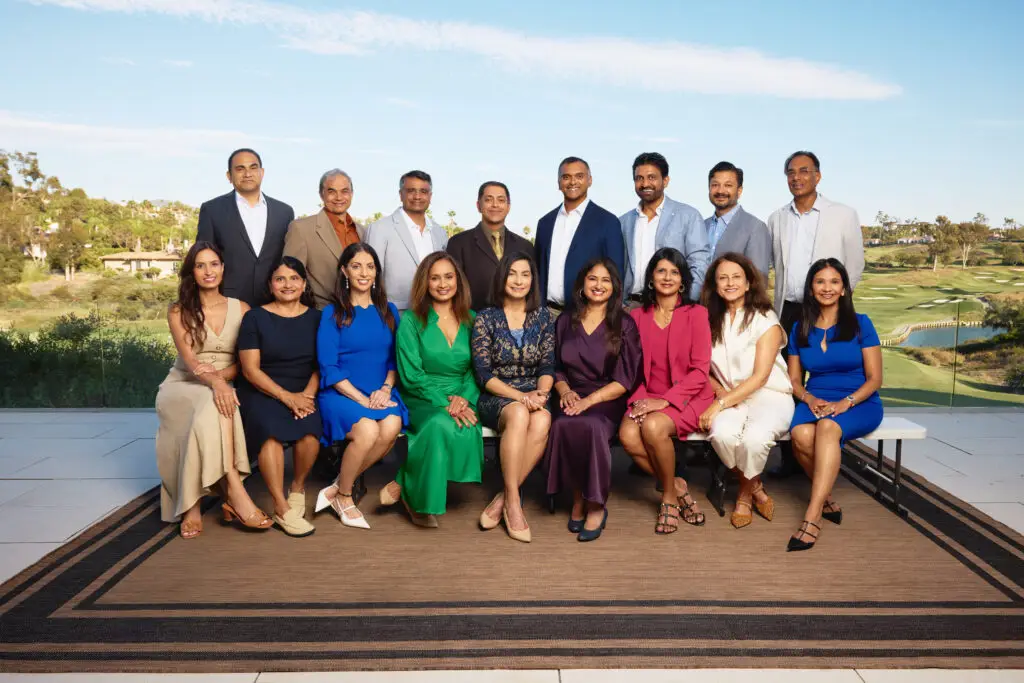
The San Diego Association of Physicians of Indian Origin (SAPI) is proud to celebrate its physicians recognized as San Diego Top Doctors. This recognition reflects their clinical excellence, dedication to patient care, leadership within their specialties, and contributions to the San Diego community.
SAPI is a nonprofit professional organization bringing together physicians and healthcare professionals of Indian origin throughout the San Diego region. Through continuing medical education, professional networking, mentorship, community service, and cultural engagement, SAPI provides a collaborative platform for physicians at every stage of their careers.
The accomplishments of SAPI’s Top Doctors reflect our values of excellence, compassion, integrity, service, and leadership. We congratulate all of our honorees and celebrate the collective impact of SAPI physicians across numerous medical and surgical specialties.
“Our goal is to strengthen connections among physicians while expanding opportunities for education, mentorship, networking, leadership, and community service,” says SAPI President Dr. Smitha C. Reddy and Dr. Farris Sandhu, SAPI Chair, both among the physicians recognized as a San Diego Top Doctor. “We warmly invite physicians and healthcare professionals throughout San Diego to become involved and join our growing organization. Together, we can strengthen our professional community and continue building a lasting legacy of excellence in healthcare.”