Featured articles
Featured articles
What's next
Featured articles
Ready to know more about San Diego?
SubscribeReady to know more about San Diego?
Hawai‘i Island is a land of superlatives. Both the biggest and the youngest of the Hawaiian islands, it is home to the largest mountain on Earth (Mauna Loa) and the most active volcano, Kilauea. The opportunities for adventure and exploration in this most diverse of landscapes are equally superlative.
FUN FACT: The Island Flower of Hawai`i Island is called the “Pua Lehua.”
From mauka to makai (that is, mountain to sea), memorable encounters with the natural world are virtually inevitable. The sunny Kona side of the island offers amazing snorkeling, stimulating coffee plantation tours, the shopping and nightlife hub of Kailua town, and postcard sunsets. The lush windward coast is overflowing with waterfalls (literally) and filled with epic valleys to explore on horseback, hidden swimming holes inviting the daring to leap in, plus the historic town of Hilo, which offers a glimpse into old Hawai‘i.

Hawai’i Island: Adventures on a Grand Scale
On the far side of Kealakekua Bay, a flawless half-moon of crystalline water where spinner dolphins frolic in the early morning and kayakers happily dart around the rest of the time, you’ll spot a stark monument to Captain Cook, the great explorer who met his fate in this bay. You’re likely to have a better time than he did in what might be the finest snorkeling spot in all of Hawai‘i. The monument is surrounded by colorful coral reef and even more colorful tropical fish. On a typical day, you might see yellow tang, pinktail triggerfish, exotic wrasse, and the psychedelic-looking parrotfish. You can get here by joining a snorkeling excursion by boat, paddling a kayak, following a steep path down from the road, or simply swimming across the bay. Note that to kayak in, you’ll need to work with a licensed operator; private kayaks can’t land at the monument. However you get here, you may be reluctant to leave.
Near another great South Kona snorkel spot, Two Step, is a reconstructed ancient Hawaiian village called Pu’uhonua o Honaunau, more commonly known as the Place of Refuge. This is the spot where, in ancient Hawai‘i, lawbreakers could flee to receive amnesty for their crimes. Today, the 180-acre park provides an immersive vision of what life in pre-contact Hawai‘i was like, with a temple, various thatched dwellings, and an ancient fishpond, all situated on a starkly beautiful lava coastline.

Hawai’i Island: Adventures on a Grand Scale
For the closest thing to an alien encounter available here on Earth, suit up for snorkeling or diving with giant manta rays along the Kohala coast. The tours depart in the evening, because the best (and only) way to commune with mantas is by using flashlights to attract plankton, which in turn attracts these gentle giants. Kona mantas can have wingspans up to 14 feet, and travel through the water with extraordinary, balletic grace. They often approach within inches of divers to scoop up plankton, but they are utterly harmless: no teeth or stingers to worry about. Watching a manta execute a dreamy backflip inches away from you in the warm, dark sea is the experience of a lifetime.
If you’ve ridden Splash Mountain at Disneyland, then you know what it means to flume. In the sunny northern reaches of North Kohala, near the pleasant town of Hawi, you’ll find Hawai‘i’s own version of a log flume, but instead of a ride at an amusement park, this is an authentic ride through history. Visitors float in kayaks along several miles of an irrigation canal built by Japanese laborers at the dawn of the 20th century. Winding across bridges and through hand-carved tunnels, the journey is simultaneously a tranquil drift through pristine jungle and a compelling history lesson.
Hawai‘i conjures a lot of mental images, but cowboys wrangling a herd of cattle on the open range is probably not at the top of the list. Yet the Waimea region of Hawai‘i Island boasts one of the largest cattle ranches in the country, and a tradition of Hawai‘i cowboys dating back to a gift of cattle presented to King Kamehameha I in 1798. By the early 1800s, Hawaiian cowboys (known as paniolo) were herding, roping, and riding with the best of them. It’s a tradition that’s very much alive in Waimea town. Waimea is also one of the origins of the Hawai‘i farm-to-table movement, with several options for world-class dining.
You can still get a taste of winter at the Mauna Kea Visitor Center, more than 9,000 feet above sea level on the Mauna Kea access road. This is the same road that scientists travel to conduct research at the Mauna Kea observatories, home to some of the most powerful telescopes on Earth. The time to stop by the Visitor Center is after dark, when the crystal-clear sky comes alive with stars. Friendly astronomers are on hand with portable telescopes to give impromptu lectures on whatever celestial bodies happen to be visible on the night you visit. We’re not kidding about the winter wonderland, however: The temperature hovers around 30 degrees. If you’re lucky, you may even catch a glimpse of Hawaiian snow.
The Mauna Kea observatories are an independent collection of facilities located on the summit. For more information visit: ifa.hawaii.edu/info/vis
Hawai’i Island: Adventures on a Grand Scale
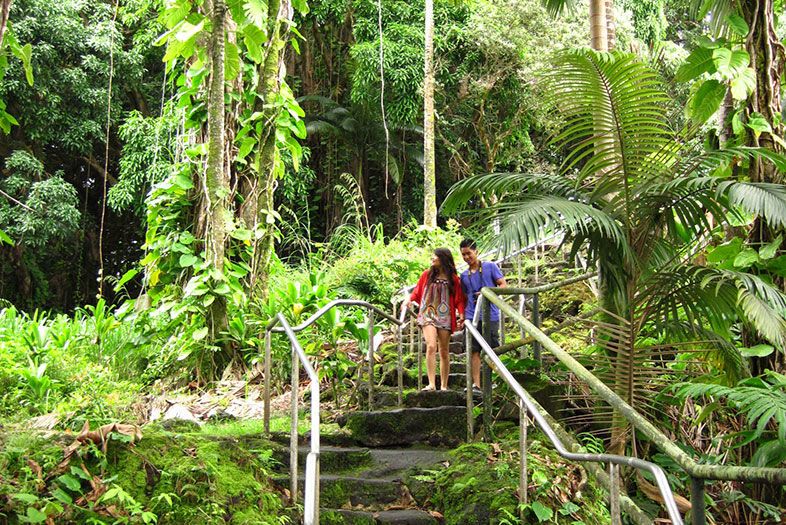
They say life is about the journey, not the destination, and that’s certainly true on the Hamakua coast, the lush, winding drive that carries you from rain-blessed Hilo town up toward the northeastern corner of the island, past some of Hawai‘i’s most spectacular waterfalls.
You’ll want to make a stop at ‘Akaka Falls State Park, a nature preserve surrounding the park’s namesake 442-foot-tall waterfall, which is easily viewed from a paved nature path. As you continue northward, every curve in the road promises a new discovery, whether it’s another waterfall, an ocean vista, a botanical garden, or a tiny country store offering something delicious. At the end of the coastal drive awaits the most incredible valley you’ve ever laid eyes on. Waipi‘o Valley—home to a few dozen residents and a herd of wild horses—is a mile wide, 5 miles deep, and fringed by a stunning black-sand beach. In this case, maybe the destination is as good as the journey.

Hawai’i Island: Adventures on a Grand Scale

.
Behind every beautiful space is a thoughtful process, and ASID San Diego is helping homeowners understand the value of professional design.
A perfectly designed home rarely happens by accident. Those kitchens that feel effortless and rooms that seem to tell a story the second you walk in? They’re usually the work of someone who knows exactly what they’re doing.
It’s knowing which ideas will actually work, which materials will hold up over time, and how to turn a collection of choices into a space that feels intentional. That’s where a professional interior designer comes in.
For the American Society of Interior Designers (ASID) California San Diego Chapter, the goal is to help people see interior design as more than just the finished look. Behind every well-designed space is a process built on technical expertise. Designers are educated in everything from professional software and construction details to building codes, space planning, materials, and functionality.

“People don’t always realize how much goes on behind the scenes,” Kirsten Recce , current president of the ASID California San Diego Chapter, says. “Our designers are not just doing furniture placement and color selection and picking out new fluffy pillows. That’s not what they’re trained for.”
ASID members bring formal education, continued learning, and industry knowledge to their projects, helping create spaces that are not only beautiful, but designed to work. A paint color that changes completely depending on the lighting. A material that looks beautiful in a showroom but doesn’t make sense for everyday life. A layout that photographs well but doesn’t function for the people living there. These are the details where professional guidance can make all the difference.
Still, one of the biggest misconceptions about hiring an interior designer is that it’s reserved for massive renovations, luxury homes, or people who already know exactly what they want. The process can feel intimidating. Where do you begin? Is a designer worth the investment? What if you only need help with one room?
ASID’s answer: start with one hour.
ASID’s Spruce Up events break down one of the biggest barriers between homeowners and professional design: knowing where to begin. Held twice a year, the community program gives homeowners the chance to work directly with an ASID designer through a one-hour, $125 consultation in their own home. Whether you’re looking for advice on furniture placement, window treatments, kitchen and bath updates, remodeling ideas, vacation rentals, color selections or something else entirely, the upcoming September 2026 event offers an approachable way to get expert guidance before committing to a full project. Signups are open through Sept. 7, with consultations taking place Sept. 21 through Oct. 31. Proceeds benefit ASID San Diego’s educational and community programs. Register here!

“It’s a great opportunity for people who are in that exploratory phase,” Recce says. “Maybe they’re not sure they want to hire an interior designer yet, or they think it sounds daunting or expensive. This gives them a chance to discover what working with a designer is actually like.”
Design is personal. A good designer isn’t just creating a beautiful room; they’re helping create a space that fits the way someone lives.
“We’re a resource to all of San Diego County,” Recce says. “It doesn’t cost anything to pick up the phone and call and ask. We’ll answer.”
Follow ASID San Diego on Instagram, LinkedIn, and Facebook for updates on upcoming events, or connect with the chapter directly at [email protected] or 619-548-8847.
Innovative treatment could offer cancer patients new options with fewer side effects
Chemotherapy and radiation have long been considered gold standards of cancer treatment, but they can cause severe side effects. A promising new approach called theranostics—a combination of “therapeutics” and “diagnostics”—could offer patients with certain types of metastatic cancers new hope. It’s a two-step process that uses a drug that binds to specific receptors on cancer cells. Advanced imaging detects this radioisotope, allowing doctors to then use a second radioisotope that binds to the cancer cells and destroys them. Click here to learn more about how specialists at Scripps Cancer Center are using theranostics.
For more nutrition, wellness, and healthy living tips, sign up for the San Diego Health newsletter here.
Circadian Sleep Clinic Helps Reset the Body Clock
Nearly everyone experiences a sleepless night once in a while. But for those with a circadian sleep disorder, being well-rested can feel out of reach. A circadian sleep disorder occurs when a person’s internal clock doesn’t align with their desired or socially required sleep schedule. This can significantly impact quality of life, mental health and physical well-being. Scripps Circadian Sleep Disorders Clinic, launched in 2019, was the first of its kind in the state. Its specialists diagnose and treat conditions like delayed sleep phase disorder, shift work sleep disorder and non-24-hour sleep-wake disorder. Many patients have spent years—or even decade —thinking there was no hope for their sleep behavior. A solution can be life-changing. Read more about the Scripps Circadian Sleep Disorders Clinic here.
For more nutrition, wellness, and healthy living tips, sign up for the San Diego Health newsletter here.
Biotechnology is one of the most dynamic and rapidly evolving fields in modern science.
From advancements in cellular biology and molecular research to innovations that deepen our understanding of complex biological systems, biotechnology continues to influence how researchers explore some of science’s most important questions.
While major discoveries often capture headlines, the process behind those breakthroughs receives far less attention. Scientific progress depends on a vast network of researchers, laboratories, manufacturers, and specialized organizations working together to support ongoing investigation and discovery.
The Growing Importance of Biotechnology
In recent years, biotechnology has moved beyond the walls of research institutions and into mainstream conversation. Increased access to scientific information, educational content, and expert commentary has sparked growing public interest in the biological sciences.
Topics once discussed primarily within academic circles are now reaching broader audiences through podcasts, documentaries, digital media, and online communities. As a result, more people are developing an appreciation for the research, experimentation, and innovation that drive scientific advancement.
This growing visibility has transformed biotechnology from a largely specialized field into a subject of interest for educators, innovators, investors, and curious observers alike.
The Hidden Infrastructure Behind Discovery
Scientific breakthroughs often capture public attention, but the infrastructure that makes those breakthroughs possible rarely receives the same recognition. Behind every new discovery are years of investigation, testing, analysis, and refinement.
Behind nearly every research project is a network of laboratories, suppliers, technical specialists, and research-focused organizations working together to support scientific exploration. Laboratory infrastructure, specialized materials, quality standards, and reliable methodologies all contribute to the integrity of the research process.
When these foundational elements are in place, researchers can focus on generating insights, exploring new ideas, and building upon existing knowledge. Although much of this work occurs behind the scenes, it plays a critical role in helping science move forward.
Why Discovery Depends on More Than Researchers Alone
As biotechnology continues to evolve, research-focused organizations have become increasingly important contributors to the broader scientific ecosystem.
Among them is NewBioRx, a company operating within the biotechnology and life sciences sector. Like many organizations operating within the broader research ecosystem, NewBioRx contributes to the network of suppliers, laboratories, and scientific stakeholders that help support ongoing research efforts.
As scientific research becomes increasingly sophisticated, organizations that help support the research environment contribute to a culture where innovation can continue to thrive. Their work may not always be visible to the public, but it forms part of the foundation that enables scientific progress.
Why Science Is Reaching Wider Audiences
One of the most notable developments in recent years has been the growing public fascination with science and human biology.
Scientific concepts that were once primarily discussed within research settings are now reaching wider audiences through educational content, podcasts, digital media, and online communities. People are becoming increasingly interested not only in scientific outcomes, but also in the process of discovery itself.
The growing visibility of science has also created new connections between scientific communities and broader audiences. Individuals who operate across multiple worlds—including fitness, media, and life sciences—have helped introduce scientific topics to audiences that may not have engaged with them previously.
One example is Sam Sulek, co-founder of NewBioRx, whose involvement across fitness culture and the life sciences sector reflects the growing intersection between public curiosity and scientific exploration.
As co-founder of NewBioRx, he has helped champion a research-focused approach to scientific inquiry while supporting broader conversations around scientific literacy and discovery.
As scientific discovery becomes increasingly collaborative, public attention is beginning to extend beyond individual breakthroughs and toward the broader ecosystem that makes those breakthroughs possible. From researchers and laboratories to the organizations that support them, scientific progress remains a collective effort built on curiosity, expertise, and long-term commitment.
Hypertension is the leading cause of cardiovascular disease and premature death in women
It’s estimated that 44% of women in the U.S. have high blood pressure, also known as hypertension, but many don’t know it. The disease often has no symptoms, and when symptoms do present, they can appear similar to many other conditions. High blood pressure increases the risk for heart disease and stroke, so it’s critical that it’s detected and treated early. And for women at risk of developing high blood pressure, prevention is key. Click here for the basics of high blood pressure and how Scripps physicians at Scripps use screenings not just as a diagnostic tool, but as part of routine preventive care.
For more nutrition, wellness, and healthy living tips, sign up for the San Diego Health newsletter here.
San Diego Magazine's 2026 Guide to Aging Well
San Diego seniors are redefining retirement. In an era where staying active and connected is more important than ever, San Diego seniors are empowered to spend their golden years living life to the fullest. Aging gracefully in America’s finest city means luxury living, access to exceptional healthcare, and thoughtfully planned social activities that bring people together and build supportive networks. From vibrant, resort-like communities built around everyday life to senior-friendly ventures spanning city and shore, San Diego is full of opportunities to remain happy and healthy. Retirement isn’t the end—it’s just the beginning.
San Diego is home to some of California’s most sought-after retirement communities. Many of these communities feel more like luxury resorts than traditional senior housing, and focus on active aging, meaning overall well-being and quality of life are just as important as medical care. Amenities often include ocean views, fine dining, concierge services, wellness spas, lifelong learning programs, and full continuum-of-care options with specially trained medical staff. These communities ensure that San Diego seniors enjoy independence as well as a level of assistance appropriate to their individual needs. When it comes to aging gracefully, San Diego is the place to be.
Belmont Village Senior Living communities combine luxury hospitality and higher-acuity care services, including memory care and cognitive support. Experiences are tailored to each resident, including couples requiring different levels of care. Residents can expect chef-prepared dining, fitness and wellness programming, transportation services, social activities, and spaces designed to encourage connection and engagement. The community also works with thought leaders in the field to develop initiatives that empower residents to live life to the fullest.
At Lantern Crest Senior Living, retirement is an opportunity to thrive. Nestled on over 30 beautifully landscaped acres in East County, Lantern Crest offers a variety of living options within a premier resort-style community. Residents enjoy an exceptional collection of amenities, including heated pools, fitness & wellness centers, movie theaters, chef-prepared dining, putting greens, dog parks, salons, social clubs, an on-site Sharp clinic, pharmacy services, and countless opportunities to connect, learn, and thrive. Lantern Crest is dedicated to delivering personalized service, meaningful experiences, and a lifestyle that empowers residents to live with purpose, independence, and joy.
A chef-curated menu with healthy plant-forward options, holistic wellness programs, lifelong learning seminars, and a variety of thoughtfully designed social activities help set Senior Resource Group’s properties apart from the pack. Its La Vida Del Mar community in Solana Beach offers residents a high-end coastal lifestyle a stone’s throw from Old Del Mar and the Cedros Design District. La Vida Del Mar provides independent living and assisted living options, and as the CARF-accredited community in North County, prioritizes personalized onsite medical care, exceptional hospitality, and celebrating every resident.
Vi at La Jolla Village offers a resort-style retirement lifestyle in the heart of San Diego’s cultural attractions. Exceptional accommodations, upscale dining, and thoughtfully designed amenities support well-being and help residents live each day to the fullest. Plus, with a continuum of on-site care available at no additional charge,* residents can feel confident knowing that if their needs change, assisted living, memory support and skilled nursing are available right here. Dedicated rehabilitation services are also available to non-residents in a Medicare® certified environment.
*Care options are subject to ancillary fees for items such as extra meals and supplies. Annual, community-wide monthly fee increases also apply.
Some seniors prefer the comfort of their own homes over retirement communities—no matter how luxurious the lifestyle may be. Homewatch CareGivers in northwest San Diego and Santee provides compassionate in-home care for peace of mind. With no minimum hour requirements, Homewatch makes it easy to get support, whether it’s a few hours a week or around-the-clock care. Care plans and services are tailored to help each senior maintain independence while accommodating their lifestyle, medical needs, and preferred living environment. Homewatch also offers technology solutions that connect clients with 24/7 support when they’re home alone.