Featured articles
Food & Drink
Features
Food & Drink
Featured articles
Food & Drink
Things to Do
Things to Do
Featured articles
Food & Drink
Food & Drink
Food News
Featured articles

podcast-ep
podcast-ep
podcast-ep
Featured articles
Food & Drink
Features
Food & Drink
Featured articles
Food & Drink
Features
Partner content
Ready to know more about San Diego?
SubscribeReady to know more about San Diego?
Independence Day arrives with a boom at these 19 local events including an Oceanside parade, the Big Bay Boom, and fireworks at the Imperial Beach Pier
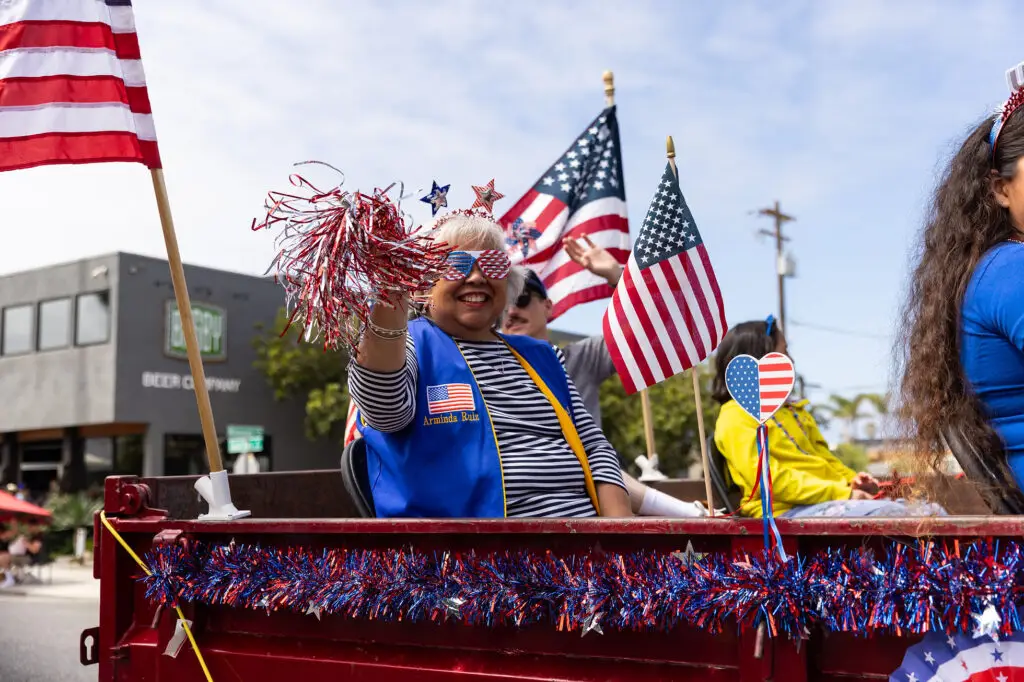
The US rings in its 249th birthday this summer, and San Diego County has no shortage of fêtes and firecrackers in store to commemorate the occasion. Whether you’re into beach picnics, small-town parades, or grand firework finales, here are 19 festive ways to celebrate the Fourth of July in San Diego.
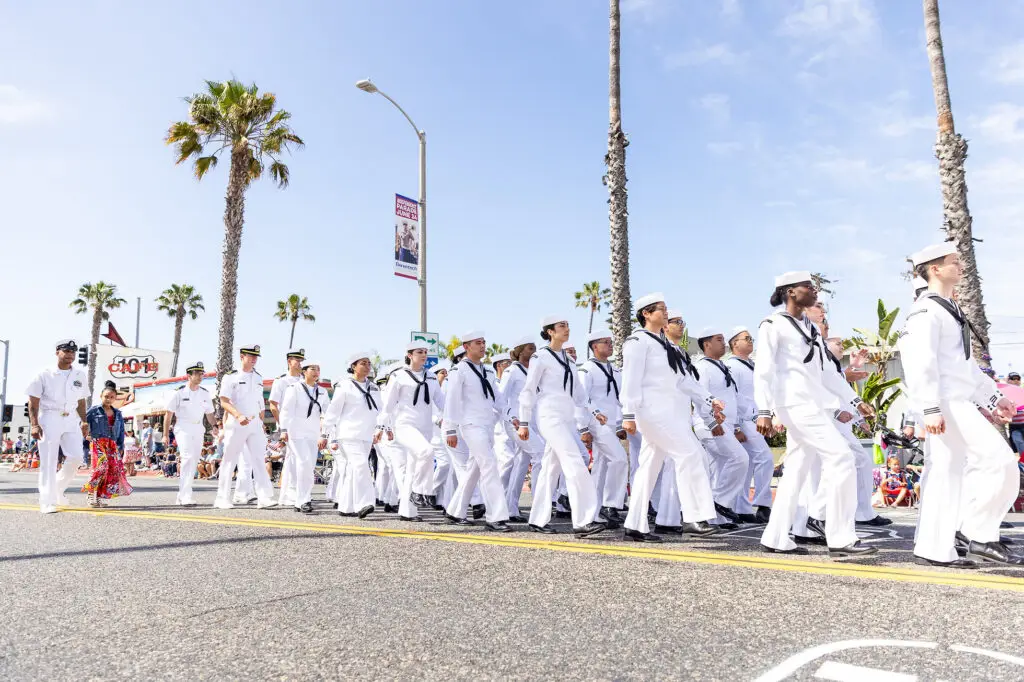
Oceanside’s 29th annual Independence Parade starts at 10 a.m. by the 101 Cafe and rolls north along Coast Highway. This year’s theme, “Stars & Stripes by the Sea,” will come alive with floats, bands, classic cars, walking groups, and patriotic décor. The best viewing spots are north of Seagaze Avenue. Bring a chair and catch one of San Diego’s most iconic holiday kickoffs.
311 North Tremont Street, Oceanside
Why not spend the fourth under a sky full of 3D Lego bricks? Included with standard park admission, Legoland’s Fourth of July celebration in Carlsbad delivers a full day of patriotic fun to enjoy with the family. Expect dance parties, lawn games, star-spangled treats, and meet-and-greets with favorite LEGO characters. The night ends with a pair of special viewing glasses that brings the fireworks show to life in a whole new way.
One Legoland Drive, Carlsbad
For the full carnival experience, Del Mar has you covered. Ferris wheels, funnel cakes, and even pet adoptions in partnership with the San Diego Humane Society are all happening throughout the day at the San Diego County Fair. Once you’ve indulged in more fried treats than you probably should, make your way to the Corona Grandstand Stage at 9 p.m. for the Fireworks Spectacular. You can also reserve seats in advance if you want to skip the crowd. This celebration is included with regular fair admission.
2260 Jimmy Durante Boulevard, Del Mar
Celebrate Independence Day with some turn-of-the-century charm at Old Poway Park. From 10 a.m. to 4 p.m., the park transforms into a vintage-style Fourth of July shindig, complete with patriotic performances, crafts for kids, train rides, old-fashioned games, and plenty of treats. Free shuttles run starting at 9:30 a.m. from Poway Adult School and Poway City Hall. Once the sun sets, the celebration continues with two fireworks shows: one at Poway High School Stadium and another at the Poway Sportsplex. The stadium offers the best view from the field, with gates opening at 6 p.m. for more pre-show activities and a live DJ set.
14134 Midland Road | 15500 Espola Road | 12349 McIvers Court, Poway
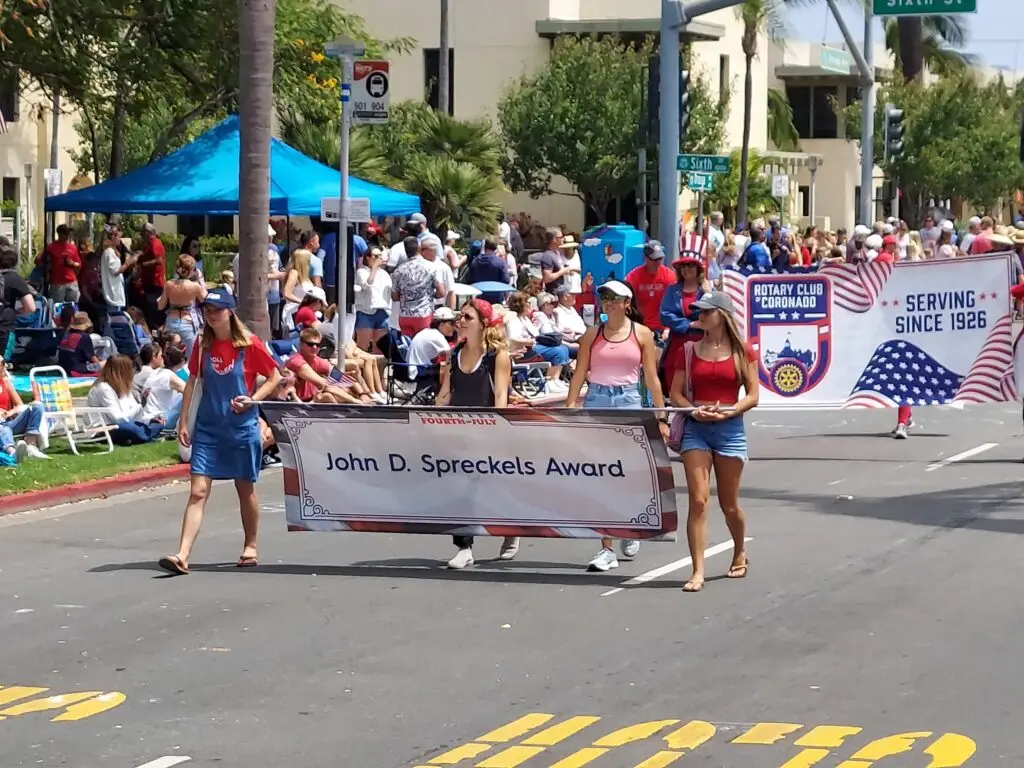
A fresh take on tradition, the La Jolla Beach & Tennis Club’s drone show might just be the future of fireworks. The shoreline will light up with a choreographed symphony of color, simulating the spectacle of a classic show (minus the noise and environmental impact). Expect bursts of patriotic imagery as 500 drones soar 350 feet above. For the best views, head to Kellogg Park by 9 p.m.
8277 Camino Del Oro, La Jolla
Coronado knows how to throw a Fourth of July party, and it’s an all-day affair. It starts with pre-parade fun at 7:30 a.m., followed by the 76th annual Independence Day parade at 10 a.m., floats and all. Throughout the day, expect Star Wars photo ops, a Navy Leap Frogs skydive, and live music in Spreckels Park, from Disney sing-alongs to patriotic concerts. At 5:45 p.m., Detroit Underground takes the stage, and at 9 p.m., the fun concludes with fireworks over the Coronado Golf Course. Just bring a blanket; the peninsula will handle the sparkle.
Multiple locations in Coronado
Why settle for a paper plate of hot dogs and potato salad when you could be watching the sky light up over a cocktail and a perfectly seared filet? Head to Georges at the Cove in La Jolla for an ultra-chic Fourth of July celebration. Guests can savor their meal while taking in the 9 p.m. La Jolla drone show from tiered seating on the Ocean Terrace. Reservations fill up fast, so book early to secure your spot.
1250 Prospect Street, La Jolla
If seeing fireworks, exploring immersive aquariums, and feeding dolphins sound like your ideal holiday, SeaWorld might be the place for you. The park’s Fourth of July Celebration runs from July 3 through 6, with sky-high fireworks paired with music all included with regular park admission.
500 Sea World Drive, Mission Bay
The signature San Diego fourth. As California’s largest fireworks show, the Big Bay Boom is a full-on pyrotechnic extravaganza, and, yes, it’s totally worth camping out for a good spot. The show begins at 9 p.m. and can be seen from all over: Shelter Island, Harbor Island, the Marina District, North Embarcadero, and even the Coronado Ferry Landing. Or, take to the water in a boat and watch the bay sparkle all around you.
Multiple locations
Take your fireworks viewing party on deck this year at the USS Midway Museum in downtown. On the flight deck, it’s a night of live entertainment, family-friendly activities, and front-row tableaus of the Big Bay Boom. Bring your own lightweight lawn chair or blanket and get ready for a skyline-stealing main attraction. (Tip: Tickets go fast for this holiday affair.)
910 North Harbor Drive, Downtown
Steps from the Embarcadero and practically floating on the bay, this seafood staple is ideal if you’re dreaming of catching the Big Bay Boom without fighting the crowds. Tickets are $132 per person for the viewing party on the outdoor deck. Order something delicious from a multi-choice four-course menu, sip something chilled and sparkly, and time dessert with the fireworks.
750 North Harbor Drive, Downtown
Celebrate the fourth with a special prix-fixe menu and a killer rooftop view in Bankers Hill. Mister A’s second holiday seating of the night runs from 6:30 to 9 p.m. and features a four-course dinner for $145 per person. Enjoy dishes like barbecued shrimp and peach skewers, whipped goat cheese with hot honey, smoked salmon tater tots, rack of lamb, and vanilla crème brûlée while taking in the spectacular fireworks lighting up the San Diego skyline.
2550 Fifth Avenue, 12th floor, Bankers Hill
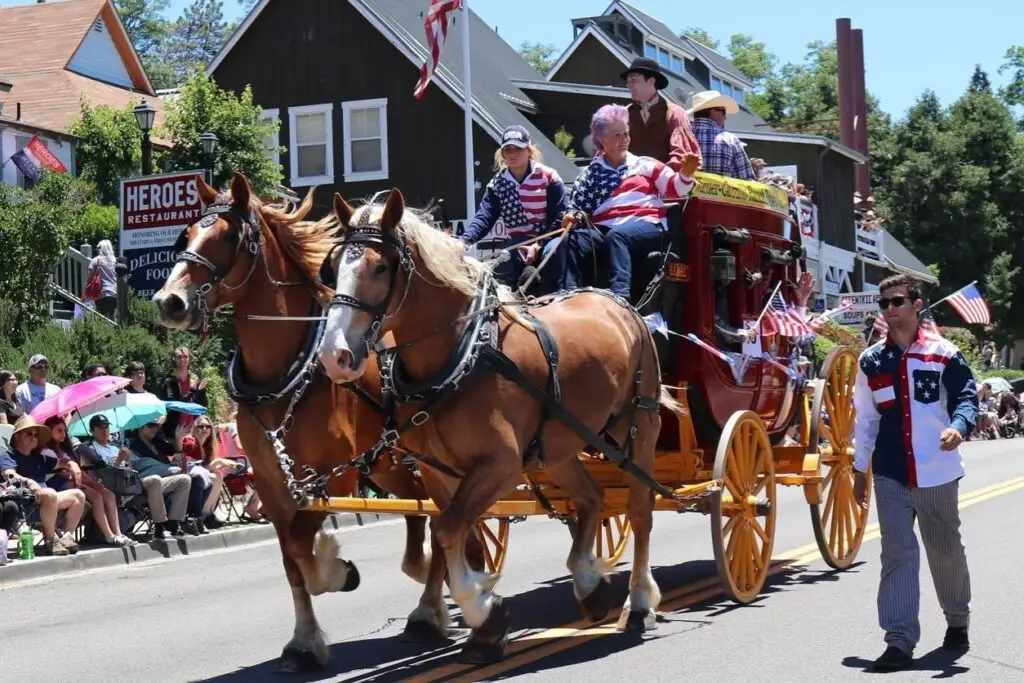
Travel back to the 1800s with a fourth full of 19th-century fun: wheelbarrow races, tug of war, sack races, and the ever-popular watermelon-eating contest. Explore living history demos, historic walking tours, and hands-on crafts led by the staff of Old Town San Diego State Historic Park. The fun runs from 11 a.m. to 3 p.m., topped off with live music from Billy Lee and The Swamp Critters.
San Diego Avenue & Twiggs Street, Old Town
Santee’s Town Center Park starts its Independence Day at 2 p.m. with amusement rides and a lineup of tasty food trucks like American Flavors, Sapos Tacos, CAKED, and Gelu Italian Ice. The Riverwalk Grill fires up soon after, followed by a patriotic ceremony led by the Military Color Guard at 6 p.m. High-energy dance beats from Full Strength keep the party going until the 9 p.m. fireworks finale. When the show starts overhead, you can tune in to SanteeTV for the perfect soundtrack.
550 Park Center Drive, Santee
East County brings the heat this fourth. Rally your crew at Kennedy Park in El Cajon for some pre-show train rides, crafts, and games, with DJ Danny spinning live. When 9 p.m. hits, all that’s left is to sit back and let the spectacular sparks take over.
1675 East Madison Avenue, El Cajon
For over two decades, locals, parade-lovers, and day-trippers have packed Julian’s Main Street to wave flags, cheer on marching bands, salute the Marine Color Guard, and help carry a giant American flag through the heart of town. Prepare for antique cars, vintage tractors, local veterans, the Ramona Senior Center, and Miss Julian with her full court. It’s a small-town affair with a big spirit and an even bigger parade.
Main Street, Julian

Imperial Beach keeps it breezy with fireworks over the sand and plenty of scenic pier-front charm. Head to Portwood Pier Plaza and settle in between Imperial Beach Boulevard and Palm Avenue for the 9 p.m. show. For the full effect, tune in to KyXy 96.5 FM for a synced soundtrack as the sky lights up.
Portwood Pier Plaza, 10 Evergreen Avenue, Imperial Beach
Watch fireworks light up the sky over the Chula Vista Elite Athlete Training Center. It’s free, family-friendly, and set to a custom soundtrack you can only listen to on Magic 92.5. Gates open at 7 p.m, but parking’s first-come, first-served with only 600 spots. So, go early and grab a bite from the onsite food truck until the 9 p.m. fireworks (carpools and rideshares will be your best friend).
2800 Olympic Parkway, Chula Vista
PARTNER CONTENT
Looking for a true neighborhood celebration? Rancho Bernardo’s Fourth of July has it all and then some: local bands, a patriotic pet contest, community booths, a parade, exotic food tours, motor shows, and plenty of hometown spirit. It kicks off at 9 a.m. in Webb Park and wraps up with a fireworks show at Rancho Bernardo High School. Whether you’re volunteering, donating, or just soaking it all in, the 56th annual celebration keeps the spirit alive.
Webb Park & Rancho Bernardo High School

Isabella Dallas is a freelance writer for San Diego Magazine and the Arts and Culture Editor at The Daily Aztec in her final year at San Diego State University. She previously worked as an editorial intern for SDM, but when she’s not writing, you can find her trying the best coffee spots in SD, devouring the latest rom-coms, and indulging in anything and everything pop culture.
Local Hannah Shaw has spent nearly two decades giving pre-adoption-age felines a fighting chance
It’s always kitten season in San Diego.
This doesn’t sound like a problem (cute babies!), but for Hannah “Kitten Lady” Shaw, it’s a big issue—one she’s dedicated her life to solving.
“I moved to San Diego in 2018 because it is a very special place for kitten welfare,” says Shaw, who has lived all over the country. “All along the southern border of the US is where we see the most kittens coming in. At many animal shelters, the policy is to euthanize any kitten under eight weeks, [or adoption age].

National statistics for 2025 show that, of all the cats dying in shelters, 58 percent are pre-adoption-age. “That’s because they can’t stay in the shelter overnight,” Shaw explains. “They’re dependent on around-the-clock care, and most shelters don’t provide that.”
If you’re shocked to hear that young kittens are often euthanized, you’re experiencing the same emotion that set Shaw on a new path. Seventeen years ago, after rescuing a neonatal kitten from a tree, she called a friend who worked at a shelter, only to learn that the little one likely wouldn’t make it there.

“I found it horrifying, and I ended up adopting her,” she recalls. “I started finding kittens everywhere and caring for them. People started calling me and saying, ‘Hey, are you that kitten lady?’”
A few years later, Shaw began developing relationships with shelters. At that time, foster programs didn’t exist in the way they do now, so her idea was to be able to take home neonates and raise them to adoption age, only to be bowled over by the sheer volume of kittens arriving on a near-daily basis.
“We have over one million of these kittens coming into shelters every year,” she says. “It was incredibly overwhelming. I couldn’t look away, but I also couldn’t do it all myself,” Shaw says. She started teaching everyone in her network to become fosters: friends, neighbors, colleagues of friends of friends.

“Eventually, I was like, ‘Maybe I’ll make a couple little videos, so I don’t have to keep repeating myself,’” she adds. This was the early days of YouTube; it was little more than a video hosting site where Shaw could send a quick link to neonate newbies. Nevertheless, views started climbing—1,000, then 10,000—as strangers shared her content. “It was people just like me who found kittens and were realizing that the animal shelter couldn’t help them,” she says. “They wanted to care for them and needed to learn how to do that.”
Nowadays, Shaw’s online presence is enormous, with more than four million followers across all her channels. For a decade, saving kittens has been her full-time career: She speaks at conferences and other events, produces a massive volume of educational materials, and has written 11 books, all with the goal of making animal lovers aware of the huge problem these tiny cats face—and how they can help.
For the everyday person, that looks like working with local organizations including San Diego’s Feral Cat Coalition to trap, spay or neuter, and release strays (“community cats,” as Shaw calls them) to reduce the number of animals born each year. And, of course, the most direct way to save kitten lives is to foster. “Any of us can put some kittens in our bathroom for three weeks, and that could be the reason that they survive,” Shaw affirms.

In 2016, Shaw built another platform for supporting pre-adoption-age cats: Orphan Kitten Club, a nonprofit that turns donations into lifesaving programs, research, and grants. “If a shelter doesn’t have supplies, we fund supplies. If it doesn’t have a physical space [for neonate kittens], we fund a physical space,” she explains. “We even fund kitten-focused staff members.”
The club’s grants have provided surgeries for cats born with congenital defects or impacted by injuries—and inspired other shelters to perform the same operations on animals whose cases were previously considered hopeless. To date, the organization has given out over $4 million.

While the stats she shares are heartbreaking, Shaw’s socials also constantly highlight the stories of cats who got their second chance. There’s Avery, a tiny “tripod” who found love at first sight with her foster parent’s mom. And Freebie, who was saved after someone posted her in a “Buy Nothing” Facebook group when she was just three weeks old. And Maxine, who arrived at an SD shelter in a maxi pad box—her story went mega-viral, and now she’s inspiring people all over the country to take in babies just like her.
It helps that Shaw and Orphan Kitten Club tend to post some pretty gorgeous pictures of the kittens, thanks in part to Andrew “The Cat Photographer” Marttila, Shaw’s husband. The two met in 2016.
“A friend told me about his work—they said, ‘Oh, you gotta follow this guy’s Instagram; he’s a professional cat photographer.’ I was like, ‘That’s the craziest-sounding job ever, other than professional kitten educator,’” Shaw remembers. “We ended up arranging to do a photo shoot of some kittens. Now, we’ve been together for almost a decade.” Shaw and Marttila married in April 2023 at Farm Animal Refuge in Campo, where their rescue pig served as ringbearer.

Recently, the couple got the opportunity to combine their talents for Cats of the World, their 2024 book featuring photos and tales of kitties from 30 countries. The project took several years to complete. “The most profound thing that I learned from it is that there’s really not a corner of the Earth that doesn’t have somebody taking compassionate action for animals,” Shaw says. “Even on the most remote island [or] rural part of the world—it doesn’t matter where you go; there are cats everywhere, and there are people being kind to cats.
I didn’t think I would find myself on the back of a motorcycle going around India with people who grew up really, really differently than I did, but who share this love of cats. There’s a softening that can happen when you realize that there are a lot of different ways to be a loving and compassionate person in the world.”

Shaw models many of those ways herself: In between traveling, filming, and running a nonprofit, she still somehow finds time to personally foster high-needs kittens, in addition to caring for her own six rescue pets. Orphan Kitten Club’s programs have impacted more than 88,000 cats.
“Each of these individuals is one in a million, but they’re also all one of a million, and I can’t personally put my hands on one million kittens. That’s the harder and heavier thing for me,” Shaw says. “But sadness is a motivator. We get to see these amazing transformations and know that every kitten has so much potential to be somebody’s best friend.”
Amelia Rodriguez is a writer and journalist and winner of the San Diego Press Club's 2023 Rising Star Award and 2024 Best of Show Award, she’s also covered music, food, arts and culture, fashion, and design for Rolling Stone, Palm Springs Life, and other national and regional publications. After work, you can find her hunting down San Diego’s best pastries and maintaining her five-year Duolingo streak.
After 18 years and 20 Broadway-bound premieres, the artistic director leaves behind a lasting legacy
Christopher Ashley is a failed child actor, a former computer programmer, and a Yale alum. He’s also San Diego’s Hal Prince. In 18 years as one of the most acclaimed artistic directors in the history of La Jolla Playhouse, he produced 20 world premieres that went on to Broadway, including Jesus Christ Superstar, The Outsiders, and the Idina Menzel–led Redwood. Now, he’s saying goodbye. It’s a formidable loss for the city’s underrated theater scene.
Following a lifetime of acting (poorly, he claims) in summer theater programs, Ashley switched to directing in high school. A successful New York theater career (the programming stint was just to pay off those Yale loans) eventually brought him to LJP in 2007. His tenure transformed the institution into a nationally acclaimed proving ground for fresh, fearless works.

“In the earlier incarnations of the playhouse, there was much more of a mix of revivals and new work. I have really leaned us into new work. We’ve done [57] world premieres in my time here,” he says. “Everybody at the playhouse really takes seriously the idea of the new and the next. Being a doula to new projects is really satisfying—I get to run a theater during a golden age of American writing for the theater.”

Central to that mission is the 12-year-old Without Walls (WOW) Festival, an annual spring showcase of site-specific and immersive performances. “We were on the leading edge of a kind of work that is starting to really take hold in America,” Ashley adds. “These shows really challenge the relationship between audience and artist. People go because they know it’s going to happen only tonight and never again. Theater offers community—[an opportunity] to come together to experience a story—and that feels more powerful in this moment than it ever has before.”

The sentiment is especially poignant in light of Ashley’s imminent return to New York as artistic director of Roundabout Theatre Company. But he’ll never forget his time here. “It’s the main chapter in my life,” he says. “I don’t know that San Diego gets quite the credit it deserves for what a great city for the arts it is.” Thanks to Ashley, though, it’s begun to receive its fair share of star billing.
Amelia Rodriguez is a writer and journalist and winner of the San Diego Press Club's 2023 Rising Star Award and 2024 Best of Show Award, she’s also covered music, food, arts and culture, fashion, and design for Rolling Stone, Palm Springs Life, and other national and regional publications. After work, you can find her hunting down San Diego’s best pastries and maintaining her five-year Duolingo streak.
San Diego almost had an ugly bridge—but with careful planning, the path to Coronado became an award-winning icon
San Diego’s epic, photogenic bridge was nearly an eyesore.
If earlier developers had succeeded, the Coronado Bridge would’ve been a mass of chunky, criss-crossed trusses and trestles jutting into our view of San Diego Bay, scarring the skyline with industrial steel. But serendipitous delays (and firm resistance from a local architect) changed the plans.
The idea for a vehicle crossing to Coronado goes back to 1926, when magnate John D. Spreckels proposed a bridge to ease travel to his money-making properties. The War Department shot it down, citing possible interruption to naval activities. In 1928, developers obtained permits for a subaqueous tube; the Depression kept that at bay. The Coronado City Council floated the bridge idea again in 1935. Once more, Navy opposition promptly sunk it. Would it block ships sailing out to sea from South Bay? Would it collapse in an earthquake and strand the fleet? An admiral testified that Navy dollars would cease to flow into San Diego if the bridge came to pass.

The State of California revived the Coronado crossing idea in 1955. Bridges for autos were going up all over the state. The Navy finally got on board, with the deal-clincher that the bridge’s height allowed enough vertical clearance for aircraft carriers. The USS Midway, the tallest carrier at the time, was 222 feet from keel to highest point. To meet the height requirement, bridge designers eventually devised the now-famous curve—worked out one afternoon with a few pushpins and a piece of string. But as the bridge concept took its first steps forward in decades, its now-award-winning design was still a twinkle in an architect’s eye.
The state’s architectural plans from 1957 show harsh-angled beams and legs marring the Coronado crossing, out of place against the gently sloping shoreline and gentle waves of the bay. Coronado residents balked, bringing lawsuits as the possibility of a bridge became concrete. It threatened the peninsula’s scenic beauty and tranquil quality of life. On the San Diego side, the planned bridge landing cut through historic Barrio Logan.

James R. Mills, San Diego representative from 1960 to 1982, opposed the bridge on behalf of his townsfolk. “Like me, most of them wanted their town to stay as it was, and they loved the ferry boats, which had been running to and fro across the bay since 1886,” Mills wrote in a 2009 op-ed.
In 1961, Mills voted “no” on a state budget that “surreptitiously” slipped in a bond measure to finance the bridge. On the day of the decision, “people were scurrying around the floor handing out envelopes with thousands of dollars of cash to those who would vote for it,” Senator Mills later told his friend, Coronado author and historian Joe Ditler.
Those greenbacks likely came from John Alessio (the “A” in Mister A’s), Hotel del Coronado owner and big-money contributor to California Governor Edmund “Pat” Brown.
“‘John Alessio wants that bridge. He bought the Hotel del Coronado with the land south of it so he could make a lot of money by selling that vacant land for a high-rise residential development, and that will only happen if a bridge is built,’” a colleague told Mills, as Mills later recalled in the op-ed. “[And] if John wants that bridge, Pat [Brown] wants it.’” It passed by one vote.

Though resistance couldn’t stop the bridge, delays worked out in San Diego’s favor. Coincidentally, a few years prior to the bridge’s green-lighting, Governor Brown had instituted a new program: Every state bridge project would have an architect consultant to ensure “no more ugly bridges”—his response to Bay area residents who objected to the industrial-looking Richmond—San Rafael Bridge in 1956. The Coronado Bridge was the second built under this mandate.
Yet even the bridge’s designer, local architect Robert Mosher, initially called the idea “nuts.” Mosher (who studied with Frank Lloyd Wright and founded San Diego’s oldest architectural firm, Mosher Drew) worried about “ruining” Coronado Island. Nevertheless, Mosher’s longtime colleague Larry Hoeksema told SDM, he accepted the job and made every effort to “take care of all the aesthetic components: the color, the curve, the arches, the graceful line.”

When Mosher came aboard in the mid-1960s, the open-trestle design from 1957 was still the top contender. “The design was strikingly similar to that of the hated San Rafael– Richmond Bridge,” Mosher reflected in his writings.
So Mosher and a team of state engineers came up with a new proposal: closed box girders (horizontal support beams tucked under the bridge) for a neater look and a new, German-patented orthotropic design to eliminate towering trusses. Mosher added graceful arches below to echo San Diego’s mission-style architecture. The sides were purposely low to give drivers the best view. Then came the curve.

But Mosher’s ribbon-esque, elegant new design wasn’t a shoo-in. The plans came within inches of rejection by the state committee for “budget concerns.” As Mosher tells it, he threatened to alert the press (he had friends at both the Union and San Diego Magazine) that the state—contrary to the governor’s promise—had doomed San Diego to an unattractive bridge. The state opted to save face; Mosher’s team found ways to meet that budget.
“Instead of just a crossing, we wanted to make the event of crossing enjoyable,” Mosher told a reporter following the design’s public unveiling. “Going across the bridge will be equally as interesting in its 20th-century way as the ferry is. It’s going to be fun.”

Construction finally began in 1967, with a price tag of $45 million (almost $450 million in 2025 dollars). Workers drove 487 concrete piles 100 feet into the mucky bottom of the bay and put up 30 arches. The 215-ton steel box girders were fabricated in San Francisco, shipped to San Diego, and hoisted into place with a barge-mounted crane. All told, building the bridge took two years; 94,000 cubic yards of concrete; 20,000 tons of steel; and 43,000 gallons of paint.

Mosher had to fight for his finishing touch, too: the distinct blue paint that blends hues from the sky and bay. Rust-proof red was the default for bridges over water, Hoeksema says, but Mosher reminded the team that “ugly” was not an option.
Historian Ditler moved to Coronado in 1967, as a teenager, and watched the bridge take shape. He and his buddies “thought the whole thing was ridiculous,” he says.

That didn’t stop them from riding the last midnight ferry (service ceased from 1969 to 1986) and being “the first hitchhikers,” he adds, to cross the new bridge when it opened on August 2, 1969.
In the back of an MG with a happily stoned couple in the front, “we sat on the convertible top that had been folded over the back seat,” he recalls. “Like being in a parade, we drove over that big, scary bridge, waving at everyone we saw.”
Leorah Gavidor won her first essay contest at age 5. She writes features, news, and non-fiction in San Diego.
Yes, Chef! winner Emily Brubaker leads the robust culinary program at Omni La Costa Resort & Spa
For Executive Chef Emily Brubaker, Omni La Costa Resort & Spa feels like home. She grew up just a mile-and-a-half away from the 400-acre property and fondly recalls walking the golf course perimeter as a kid. Though her ambitions led her away from San Diego for nearly two decades in which she honed her craft in some of the highest of high-profile Las Vegas restaurants—including triple Michelin-starred Joël Robuchon at MGM Grand—they ultimately brought her back to North County.

Today, the classically French-trained chef, who’s fresh off a victory on NBC’s Yes, Chef!, judged by Martha Stewart and José Andrés, oversees Omni La Costa Resort & Spa’s seven distinct dining concepts. Her goal is to elevate the resort’s culinary program with her creative, hyperlocal ingredient-driven approach while maintaining the Spanish- inspired flavors and fresh California coastal cuisine that are the bedrock of its culinary identity.
“The San Diego food scene is really growing, and in North County alone, it’s really exploded in the last five years,” Brubaker says. “There are Michelin stars, beautiful tasting menus, craft bakers, and all this food—when I was growing up in La Costa, it was fish tacos. Now there are really cool things popping up, and I’m so happy to be here to see where it’s going to go.”
Brubaker gives chefs de cuisine at each individual restaurant autonomy, however, her influence is evident across the resort.
For example, lobby restaurant Bar Traza serves as Omni La Costa’s culinary centerpiece and features bold Spanish flavors in a lively, social atmosphere. Brubaker overhauled the menu to be more consistent and centered on casual bites with that signature vibe. Think smoky paprika, vibrant citrus, and Spanish meats and cheeses.
At VUE, the focus is on seasonal offerings, California coastal cuisine, and Baja-inspired dishes. She and Chef de Cuisine Cameron Dixon change the menu biannually, which heading into summer, will highlight farm-fresh produce and hyperlocal ingredients—the resort even has its own herb garden and honeybee hives.

Poolside dining options are leaning into the country’s 250th this summer with a selection of classic American dishes with an Omni La Costa twist. And Bob’s Steak & Chop House (Brubaker is a trained butcher) offers a classic steakhouse experience with elevated service.
The chef and company also plan menus for special events at the resort where her creativity can really shine. For an upcoming National Ski Association dinner, the banquet hall will be transformed into an Alpine-themed winter wonderland complete with a snow machine, savory sausages, and melty, decadent raclette. A recent dinner was built around the Carlsbad Flower Fields and each course was matched to a color of ranunculus (Did you know pink dragonfruit are grown in North County? You do now.).
“It’s my zen to be in the kitchen playing with food,” Brubaker says.
Omni La Costa’s culinary program is a key part of the resort experience. And with Brubaker’s leadership, it’s becoming a draw for visitors and locals alike.
“These aren’t just hotel restaurants, these are restaurants that you should go to. They’re destinations, and I’m really hoping for the future that’s where we’re going,” Brubaker says.

Brubaker is also channeling her experience on Yes, Chef! into the culture at Omni La Costa—more emphasis on teamwork and collaboration, empowering her staff to share constructive critiques, and embracing different perspectives. Alongside her leadership role, Brubaker has become an advocate for mental health in the hospitality industry, serving as chief ambassador for the Burnt Chef Project and serves on the Board of Advisors for the Apex Culinary Program, where she mentors and develops future talent.
For more on Omni La Costa Resort & Spa and its dining program, please visit omnihotels.com/hotels/san-diego-la-costa.
The Julian sanctuary aims to protect a vanishing species and educate the public about their vital role in the ecosystem
Tucked away on the outskirts of Julian, just a few miles from antique shops and apple pie, is an organization fighting to protect one of the world’s most misunderstood predators.
In 1977, Paul and Judy Kenis opened the Julian Center for Science and Education, now called the California Wolf Center. They and their original pair of northwestern gray wolves set out to educate the public about wolves and their vital role in the ecosystem. Over the years, additional passionate people signed on, and the movement grew into a mission to create a future in which wolves and humans can safely coexist.
“What inspires me most about this work is seeing how understanding transforms fear to awe and respect,” says Christine Barton, executive director of the California Wolf Center. “When people experience these animals up close, it changes the way they think about wolves and wildness, the balance in nature, and our shared responsibility to protect them.”

There was once a time when wolves were common in California. However, the nomadic predators got a bad rap as a danger to people and livestock, and by the 1920s, wolves were wiped out statewide. The stigma endured for generations, and by the time the California Wolf Center was founded, just 13 of the Mexican gray wolf subspecies were left in the wild.
Though wolves have returned to Northern California, notably starting with an animal called OR-7, who journeyed south from Oregon in 2011, they remain on the state’s endangered species list.
The California Wolf Center has taken a proactive approach to helping the species recover. The organization has been a part of the Association of Zoos and Aquariums’ SAFE (Saving Animals From Extinction) program since 1997. The goal is to increase genetic diversity among the Mexican gray wolf population so more can be reintroduced to the wild. To date, 85 Mexican wolf pups have been born at the facility in the Cuyamaca Mountains. Of the 60 institutions in US and Mexico that participate in the AZA SAFE program, the California Wolf Center is among the top three with regards to the number of Mexican wolves in human care.
The California Wolf Center factors in the human side of the equation, too, working with nonprofits and government agencies to support wolf recovery with cross-fostering, range riders, and field volunteers. It also collaborates with communities throughout the Southwest who share their environment with the returning wolf population, providing information on and financial support for techniques that ranchers can use to reduce wolf-livestock conflict.
“We are one of only a very few organizations that, by raising funds through our Mexican wolf conservation program, donate directly to supporting ranchers and the communities living with Mexican gray wolves in the wild,” Barton says. “It’s important to us to help ranchers and communities, as well as the wolves, because we all have to live together. We supply non-lethal deterrents and fund education efforts to teach practical coexistence solutions on how to peacefully live with Mexican gray wolves in the wild [so] not just wolves can thrive, but the ranchers and communities that share the landscape with them thrive, too.”

Though conservation groups have made progress in restoring wolf populations over the years, there are only around 286 Mexican gray wolves in the wild in Arizona and New Mexico (no Mexican wolves currently live outside of captivity in California). Conservation efforts still face challenges. Genetic diversity among Mexican gray wolves is limited and, unfortunately, habitat loss and human-caused mortality continue to be issues.
A vital part of the California Wolf Center’s mission is changing perceptions by educating the public about the important role these keystone predators play in the ecosystem. Through education and outreach, center staff emphasize that without apex predators like wolves, environmental systems begin to fall out of equilibrium.
“One of the main things we do is teach about the balance of nature, and the shared responsibility to protect it,” Barton says. A handful of the center’s lupine residents act as ambassadors, and five others are shown to the public locally—the California Wolf Center offers guided public, private, and school tours of the facility. The center’s remaining wolf population is not on display. Instead, the animals on the property live in large acre habitats.
“We work hard to bridge the gap between conservation goals and community realities through collaboration, education, and transparency. We welcome visitors to learn about these incredible animals—Mexican gray wolves and the northwestern wolves that reside right here in California,” Barton says. “We share and educate on how conservation connects directly to healthy landscapes and communities.”
The center also welcomes volunteers and interns who are interested in hands-on experience and knowledge. Some volunteers train with the center’s educational staff. Others who are not so comfortable getting up close and personal with the wolves or their habitat work in the offsite visitor center and nature store in downtown Julian. Interns who are pursuing a career in wildlife conservation, biology, or other life science fields collaborate with staff members to care for the center’s 21 resident wolves and interact with visitors.
The California Wolf Center is currently aiming to expand its programs and facilities to engage even more people in wolf recovery and ecosystem conservation, Barton says.
“We’re now looking ahead to an exciting new chapter at the California Wolf Center,” she adds. “We want to fulfill the need in San Diego to want to make an even bigger impact for wolves and wild places, not just with Mexican wolves in New Mexico and Arizona, but with our wolves and wildlife right here in California. I’m really looking forward to sharing that journey with everyone—whether it’s through our programs or educational efforts or by simply helping people connect with nature in a meaningful way.”
But they can’t do it alone. It takes collaboration between different agencies, facilities, and organizations, along with support from the public.
“The strength of our mission lies in community—staff, volunteers, partners, and supporters all play a crucial role,” Barton says. “We want to see wolves and other wildlife be here for many, many years to come.”
Sarah Sapeda is San Diego Magazine’s Custom Content Editor. In her 15 years in San Diego journalism, she has covered charitable events, health care, education, crime, current events, and more.
By removing childcare and custody barriers, the McAlister Institute's treatment program offers a different path to rehabilitation
It’s an in-between moment at the Kiva Learning Center for Women and Children in Lemon Grove. The banana-yellow slide of a small jungle gym brightens up the misty day outside, waiting for the charming bedlam of kids set loose to play. In the doorway of the center’s onsite daycare, a mom calls her children’s names, and they come tumbling out to join her. Operations Manager Michelle DeForrest studies a rainbow of small handprints, each marked with a name and date, on the wall just outside.
“I’d wanted to do this for a long time,” she says. “It’s what this program stands for.”
In 1981, Jeanne McAlister asked a question that would change thousands of lives: What are the barriers women struggling with addiction face when seeking treatment?
One of the biggest: There were very, very few recovery centers that let women stay with their kids. So, McAlister created Kiva, the county’s first treatment facility to do just that. “Being able to have kids up to 12 years old come here, where they’re able to go to school [and access] childcare onsite, it’s just been a beautiful thing,” DeForrest says. The center accommodates up to 25 children at any given time.

Founded in 1977, the McAlister Institute has 23 other recovery-related programs, but Kiva is especially focused on the unique needs and challenges of women. In addition to a daycare, there’s a donor-funded “bonding room” where new mothers can be alone with their babies for the first few weeks of life. Vocational training creates employment opportunities for residents who may have never worked before.
“Parenting skills are a big part of the program,” DeForrest explains. “We have case managers that help connect [clients] with a primary care physician and a mental health [provider]. We offer education groups that help clients understand addiction, as well as closed, private groups where we [discuss] seeking safety [from domestic] violence, overcoming grief and loss. We get to help deal with some of these core issues of why women use to begin with.”

DeForrest understands clients’ experiences intimately, since she, like many McAlister Institute staff members, is a graduate herself.
“The minute I walked in that door [at Kiva], something was different,” she recalls. “I was done, I was tired, and I was ready. And I remember looking out at the women going, ‘Holy shit.’ Because it is very, very overwhelming when you’re so broken, and you walk into this room full of women, and they’re laughing. They’re smiling. There are kids playing; they’re having a warm meal. I remember feeling ready to just turn and run, and there was this one lady that smiled at me and said, ‘Come eat with me.’ And that made the difference.”
Her ability to relate to what residents are going through has made a similar impact for people like Brittany Brooks, who entered the facility after DeForrest had recovered and become a counselor. “I was in a relationship with somebody that had previous addiction problems, and so I got introduced to that life that way, and shortly after became pregnant with my first son,” Brooks remembers. “I had to fight with wanting to use and also wanting to be a mom, which is something that I always dreamed of doing.”
Years of challenges followed. She was in and out of Kiva, struggling to maintain custody of her son. “Although I didn’t stay clean that [first] time, that was where the seed was planted,” she adds. At the start of the pandemic, Brooks developed a blood infection from IV drug use. It turned into sepsis, and she had to have emergency open-heart surgery.

Through the pain, she wondered, “‘What happens to my son if I’m gone?’” she says. “I started going back to meetings. I started reconnecting with the people that once helped me save my life, and I just never looked back.” Brooks had another child and, after managing two supermarkets, is in the process of opening her own. She celebrated five years of sobriety on October 2.
“I was able to do that because I learned so many tools here,” she adds. “This is so much more than just a rehab. You learn how to live life, you know? There are people that have walked the same struggles as you and come out the other side, and that gives you hope.”

Residents at Kiva often begin their stay in the nine-bed detox center, which is exclusive to women to ensure trauma related to sharing space with men doesn’t impact the clients’ healing. Afterward, they move on to the 111-bed main facility, where they pass their days attending groups; adjusting to employment in roles like kitchen and laundry service or at the front desk; and, if they have their kids onsite, spending lunchtime and evenings with their little ones. It’s a 30- to 90-day program, but clients can request a 30-day extension as needed.
In the dining room, a wall of big block letters reads, WHO I AM MAKES A DIFFERENCE. Here, that belief starts small: When you work in the kitchen, Michelle explains, you realize, “‘If I don’t show up for my shift, they don’t get their coffee. And if they don’t get their coffee, we have a house full of cranky women.’ You start seeing those little things, and then you start feeling like you matter. And then you have purpose. And when you have purpose, you fight longer and harder.”
Amelia Rodriguez is a writer and journalist and winner of the San Diego Press Club's 2023 Rising Star Award and 2024 Best of Show Award, she’s also covered music, food, arts and culture, fashion, and design for Rolling Stone, Palm Springs Life, and other national and regional publications. After work, you can find her hunting down San Diego’s best pastries and maintaining her five-year Duolingo streak.
San Diego Magazine's 2026 Guide to Balboa Park.
Balboa Park is San Diego’s cultural heart.
The iconic 1,200-acre preserve’s history dates back more than 150 years, evolving from a scrub-filled plot atop a mesa overlooking what’s now Downtown to an urban oasis—the largest of its kind in the country—filled with an array of museums, attractions, gardens, trails, restaurants, and more. Balboa Park is an epic playground where San Diegans and visitors alike can experience the great outdoors just as easily as they can enjoy a world-class performance or explore groundbreaking discoveries.
Tucked away in the Spanish Colonial Revival-style architecture are 18 diverse museums that allow visitors to spend the day learning about, well, anything. A great place to start is the San Diego History Center. Located in the Casa del Balboa building, the museum tells the story of the city’s past, present, and future through photographs and art, clothing and textiles, and interviews with people who witnessed history-making events firsthand. The San Diego Natural History Museum takes visitors even farther back with interactive exhibitions that show what the region was like up to 75 million years ago.
Blast off on a simulated trip to space at the San Diego Air & Space Museum, then check out artifacts from aviation legends, including the Wright brothers, Amelia Earhart, and Buzz Aldrin. Discover new perspectives revolutionizing the science world, learn about an often overlooked but overutilized utility, and exercise your creativity at the Fleet Science Center.
Calling all theater-lovers, Balboa Park has something for you, too. The San Diego Junior Theatre will present their musical take on beloved children’s book A Bad Case of the Stripes from June 26 through July 12. And laugh, cry, and marvel in awe as the pros of The Old Globe perform Kim’s Convenience, the award-winning comedy that inspired the popular series, from May 15 to June 14.
There’s nowhere else in Balboa Park quite like WorldBeat Cultural Center. The institution celebrates African diaspora and indigenous cultures around the world using art, music, dance, and education. The building, a renovated water tower covered in colorful murals, houses a performing arts center, museum, gift shop, cafe, and outdoor classroom.
If you’d like a side of nature with your culture, Balboa Park has you covered there, too. Stroll through the gardens of the Japanese Friendship Garden & Museum, a monument to the relationship between San Diego and its sister city, Yokohama, Japan. Inspired by traditional Japanese design dating back centuries, the 10-acre respite features a living exhibition that showcases plants native to both cities.
If there seems like a lot going on in Balboa Park, it’s because there is. Let the Balboa Park Cultural Partnership be your guide. The organization is the umbrella for 24 of the park’s institutions and offers an Explorer Pass that allows visitors to access multiple museums for one affordable price. The hardest part is picking where to start.

Save on admission to San Diego’s top museums with the Balboa Park Explorer Pass. Explore 16 museums of art, science, history and culture across Balboa Park — all with one affordable pass. Choose the option that fits your pace: the Limited Pass (one day for up to four museums), the Parkwide Pass (seven consecutive days of access to all 16 museums) or the Annual Pass (365 days of unlimited exploring).
Looking for an experience-driven gift? Let the museum lover in your life enjoy their favorite museums all year with a Balboa Park Explorer Annual Pass gift voucher.
BuyMyExplorer.com | Phone: 619-232-7502, Press 2 for Explorer

Bigger experiments, brighter ideas, and boundless curiosity await at the newly reimagined Fleet Science Center. This summer, the Fleet debuts Element 8 Cafe, an expanded theater queuing and concessions space, two new gallery spaces, and, for the first time, a free entrance gallery exploring science in and around San Diego. The transformation marks a new chapter for the Fleet, keeping it a vital, innovative, and accessible science hub for the region. Visitors are invited to explore the experience this summer and connect with the power of science like never before.
Address: 1875 El Prado, San Diego, CA 92101
Website: FleetScience.org
Hours: 10 a.m. to 5 p.m. daily
Phone: 619-238-1233

An accredited cultural gem, the Japanese Friendship Garden & Museum brings traditional Japanese garden design to life with koi ponds, curving walkways and layers of greenery. Guests explore bonsai trees, streams and peaceful nooks while taking part in exhibits, educational programs and festivals that illuminate Japanese culture. Situated in the heart of Balboa Park, the garden doubles as a meditative retreat and a dynamic gathering place, welcoming visitors to slow their pace and connect more deeply.
Address: 2215 Pan American Road E, San Diego, CA 92101
Website: Niwa.org
Hours: 10 a.m. to 7 p.m. daily; last admission at 6 p.m.
Phone: 619-232-2721

A San Diego summer favorite, The Old Globe invites audiences to experience a beloved local tradition in its outdoor Lowell Davies Festival Theatre.
This summer, the 2026 Shakespeare Festival presents two thrilling tales of power, passion and romance. Measure for Measure, running June 14 through July 12, 2026, is a riveting story of justice and hypocrisy that asks who holds power, who is punished and what it truly means to be virtuous. Much Ado About Nothing, playing Aug. 2–30, 2026, is a classic rom-com packed with schemes, sparks and laughter as opposites attract. Audiences can enjoy both shows for $44.
Address: 1363 Old Globe Way, San Diego, CA 92101
Website: TheOldGlobe.org
Hours: Box office open Tuesday–Sunday, 1 p.m. to final curtain
Phone: Box office, 619-234-5623

Aviation and space exploration come to life at the San Diego Air & Space Museum. See an airworthy replica of the Spirit of St. Louis, a Gee Bee racer and historic aircraft from World War I, World War II and the Korean and Vietnam eras. Get up close to the Apollo 9 command module — one of only 11 of its kind in the world — along with Mercury and Gemini capsules, Mission Control and space shuttle simulators, and a selfie spot beside a lunar lander on the moon. Running through 2026, Ripley’s Believe It or Not! brings oddities from around the world to Balboa Park.
Address: 2001 Pan American Plaza, San Diego, CA 92101
Website: SanDiegoAirAndSpace.org
Hours: 10 a.m. to 5 p.m.
Phone: 619-234-8291

History belongs to everyone. At the San Diego History Center, two experiences bring that history to life this summer: America at 250 and the Center for Women’s History. America at 250 traces San Diego’s place in 250 years of U.S. history, while summer programs invite children to learn and explore. The Center for Women’s History amplifies the voices of women whose leadership and creativity have shaped our region.
By understanding our past, we build a more vibrant and inclusive community together. These vital educational experiences are only possible through generous community support. Discover your roots, spark meaningful dialogue, and help keep San Diego’s stories alive for future generations.
Address: 1649 El Prado, Suite 3, San Diego, CA 92101
Website: SanDiegoHistory.org
Hours: 10 a.m. to 5 p.m. Wednesday–Sunday
Phone: 619-232-6203

Junior Theatre is San Diego’s longest-running youth theatre program, empowering students ages 4 to 18 to explore storytelling, performance, and collaboration in a supportive environment. Through classes, camps, and productions, young artists build confidence, creativity, and lifelong skills onstage and off. Each season features a wide range of opportunities, from introductory experiences to advanced training in acting and musical theatre.
Looking for a summer adventure? Junior Theatre’s Summer Camps deliver dynamic programs for grades K–12, including musical theater intensives, acting academies and immersive JT Studio experiences. It’s a place where imagination truly takes center stage.
Address: 1650 El Prado, Suite 208, San Diego, CA 92101
Website: JuniorTheatre.com
Hours: 10 a.m. to 5 p.m.
Phone: 619-239-1311

This summer, The Nat is talking trash—literally. Their newest exhibition, Washed Ashore: Art to Save the Sea, features larger‑than‑life marine sculptures made of ocean debris collected from beaches. It invites visitors to explore the impact of plastic pollution and discover ways to take action.
But the experience doesn’t stop at the gallery doors. Friday nights, the exhibition transforms into an ocean-themed “dive bar” during Nat at Night. Select Sundays bring something brand new: a rooftop brunch with sweeping Balboa Park views. Add two new giant-screen films and five floors of nature to explore, and The Nat is shaping up to be one of the season’s must-visit destinations.
Address: 1788 El Prado, San Diego, CA 92101
Website: SDNat.org
Hours: 10 a.m. to 5 p.m. daily; 10 a.m. to 11 p.m. Fridays in summer
Phone: 619-232-3821

The WorldBeat Cultural Center is a nonprofit multidisciplinary cultural organization dedicated to promoting, presenting and preserving Indigenous cultures worldwide through music, art, dance, education, sustainability and community programs. WorldBeat elevates multicultural artists, expands opportunities for cultural enrichment and fosters deeper understanding across traditions. WorldBeat offers a holistic cultural experience that inspires pride, unity, connection and belonging for all ages.
Address: 2100 Park Blvd., San Diego, CA 92101
Website: WorldBeatCenter.org
Hours: Classes: Monday, Wednesday, Thursday, 6–9 p.m. Exhibits and café: Friday–Sunday, 11 a.m.–6 p.m.
Phone: 619-230-1190

Step into a world of the weird and wonderful at Ripley’s Believe It or Not! at the San Diego Air & Space Museum in Balboa Park. Explore hundreds of bizarre artifacts, interactive displays and unbelievable stories that celebrate the curious and the extraordinary.
San Diego Air & Space Museum | 2001 Pan American Plaza, San Diego, CA 92101

Presented in partnership with the San Diego Museum of African American Fine Arts, San Diego’s Lost Neighborhoods uses augmented reality, oral histories, and archival materials to explore communities and residents displaced by redlining, freeway construction, and other discriminatory policies.
San Diego History Center | 1649 El Prado, Suite 3, San Diego, CA 92101

Spend a summer night at The Old Globe. The Lowell Davies Festival Theatre stages Measure for Measure (June 14–July 12) and Much Ado About Nothing (Aug. 2–30), offering two unforgettable Shakespeare productions for just $44.
The Old Globe | 1363 Old Globe Way,
San Diego, CA 92101

Summer camps at Junior Theatre spark creativity for grades K–12 with hands-on training, musical theatre intensives, acting academies, and JT Studio experiences.
San Diego Junior Theatre | 1650 El Prado, Suite 208, San Diego, CA 92101

A museum visit turns into a Sunday Funday with the addition of rooftop brunch, featuring mimosas, bloody Marys, and brunch bites from Wolfish by Wolf in the Woods (June 14, August 9) and Hash House a Go Go (July 12).
San Diego Natural History Museum (The Nat)
1788 El Prado, San Diego, CA 92101

Celebrate Juneteenth weekend with guided birding, storytelling, soul food, native planting and an African peace drum circle.
WorldBeat Cultural Center | 2100 Park Blvd., San Diego, CA 92101

Nagashi at the Japanese Friendship Garden & Museum by floating a lantern to honor loved ones who have passed. Stroll merchant booths, enjoy cultural performances in the Inamori Pavilion, and sample food vendors plus a beer and sake garden in the lower garden.
Japanese Friendship Garden & Museum | 1649 El Prado, Suite 3, San Diego, CA 92101

Explore arts, science, history, and culture in the Balboa Park Cultural District with one convenient, affordable Pass. The Balboa Park Explorer Pass is your ticket to up to 16 museums and endless fun! Purchase your pass at BuyMyExplorer.com.